Continuing Case Solution
Chapter 19
(a)
Memorandum
To: Eric Conner and Phil Martin, CM2
From: L. Harbach
Re: Income Taxes
Date: February 4, 2013
According to GAAP (see FASB ASC 740-10-05-05), the framework for the
Temporary Differences
FASB ASC 740-10-05-7 describes the concepts of temporary differences:
A temporary difference refers to a difference between the tax basis of an asset or
liability, determined based on recognition and measurement requirements for tax
positions, and its reported amount in the financial statements that will result in
Examples of temporary differences:
(1) Accelerated depreciation for income tax and straight-line for financial
reporting can cause a temporary difference between the book and tax
value of the asset. This temporary difference is caused by the timing
Continuing Case Solution
15
(2) Revenue collected in advance and reported on the cash basis for income
tax but on the accrual basis for financial reporting can cause a temporary
Permanent Differences
Permanent differences are caused by items that (1) enter into pre-tax financial
Examples of permanent differences:
Interest received on state and municipal obligations; expenses incurred in
Continuing Case Solution
16
(b)
Memorandum
To: Eric Conner and Phil Martin, CM2
From: L. Harbach
Re: Adjusting Entry for Income Tax Expense
Date: February 4, 2013
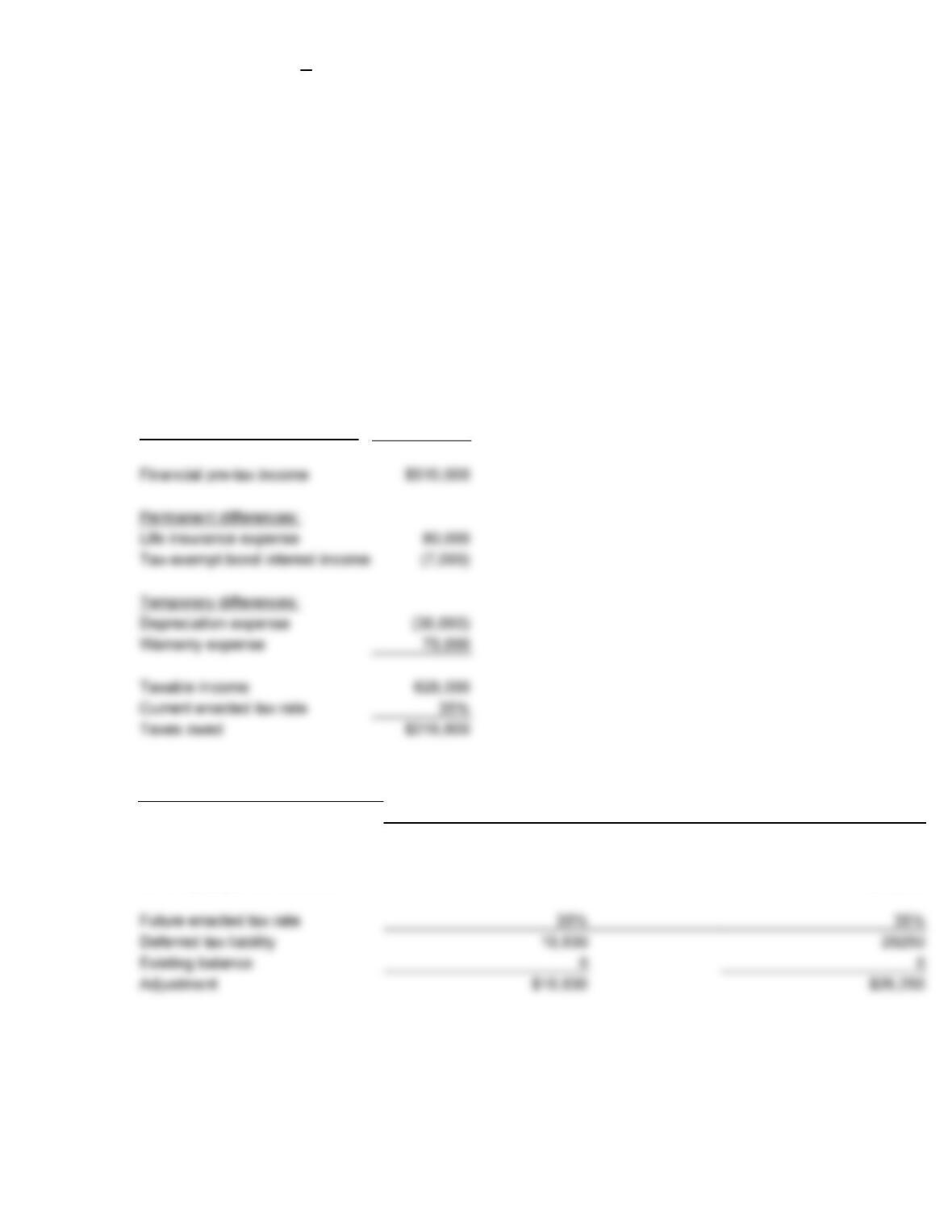
Looking at the various business activities that the company anticipates for 2013, I
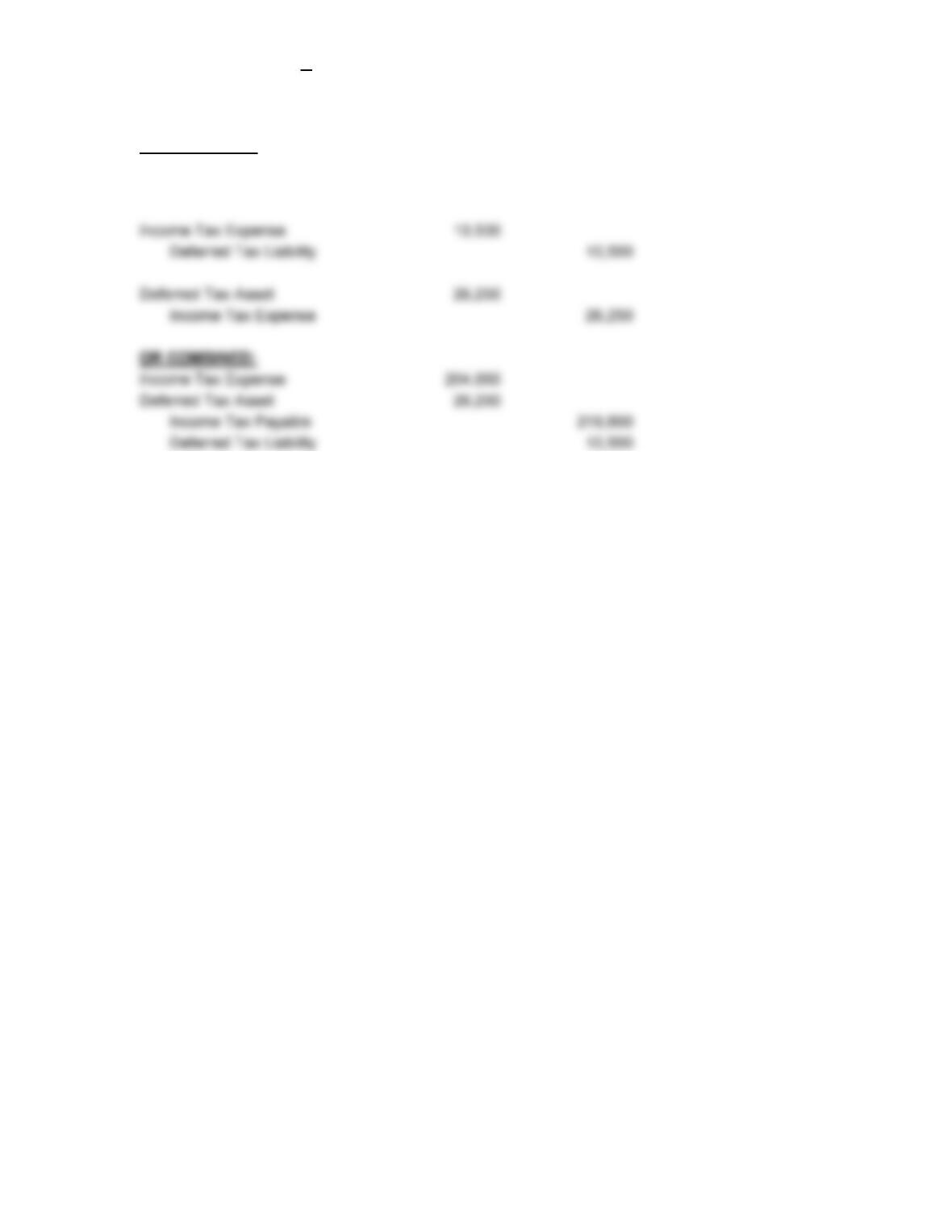
have detailed the income tax adjusting journal entry (combined) that will be
required. Below are the calculations for current and deferred income taxes; on
the next page are the individual journal entries as well as the combined journal
entry.
Current Income Tax Calculation 2013
Future Future
Deferred Tax Calculations Taxable Deductible
Amount (deferred tax liability)
Amount (Deferred Tax Asset
)
Fixed asset book value difference $30
,000
Warranty payable difference
$75,000
,500
0
0
,500
$26,250
$510,000
80,000
75,000
628,000
$219,800
Continuing Case Solution
17
Journal Entries:
Income Tax Expense
219,800
Income Tax Payable
219,800
,500
26,250
26,250
26,250
219,800
Continuing Case Solution
18
Additional Activities: Extend your accounting knowledge
(a)
Memorandum
To: Eric Conner and Phil Martin, CM2
From: L. Harbach
Re: Income Taxes
Date: February 8, 2013
Deferred tax assets are recognized for all deductible temporary differences.
These assets represent the increase in taxes refundable (saved) in future years
FASB ASC 740-10-30-5 dictates when the valuation allowance is to be used:
Reduce deferred tax assets by a valuation allowance if, based on the weight of
The ultimate decision of whether a valuation allowance account is required is up
to management. The following excerpts from the FASB Codification, list the
positive and negative evidence that must be weighed in making this decision.
The following examples of negative evidence (evidence indicating it is more likely
than not that a deferred tax asset will not be realized) are listed in FASB ASC
740-10-30-21:
Forming a conclusion that a valuation allowance is not needed is difficult when
there is negative evidence such as cumulative losses in recent years. Other
examples of negative evidence include (but are not limited to) the following:
Continuing Case Solution
FASB ASC 740-10-30-22 lists the following evidence that would support the
assertion that a deferred tax asset is more likely than not to be realized:
Examples (not prerequisites) of positive evidence that might support a conclusion
that a valuation allowance is not needed when there is negative evidence include
(but are not limited to) the following:
a. Existing contracts or firm sales backlog that will produce more than
Finally, FASB ASC 740-10-30-23 addresses the role of judgment in determining
the need for a valuation allowance:
An entity shall use judgment in considering the relative impact of negative and
positive evidence. The weight given to the potential effect of negative and positive
evidence shall be commensurate with the extent to which it can be objectively
verified. The more negative evidence that exists, the more positive evidence is
Continuing Case Solution
20
(b)
Memorandum
To: Eric Conner and Phil Martin, CM2
From: L. Harbach
Re: Earnings Management
Date: February 8, 2013
Some managers take the opportunity to manage earnings by creating a valuation
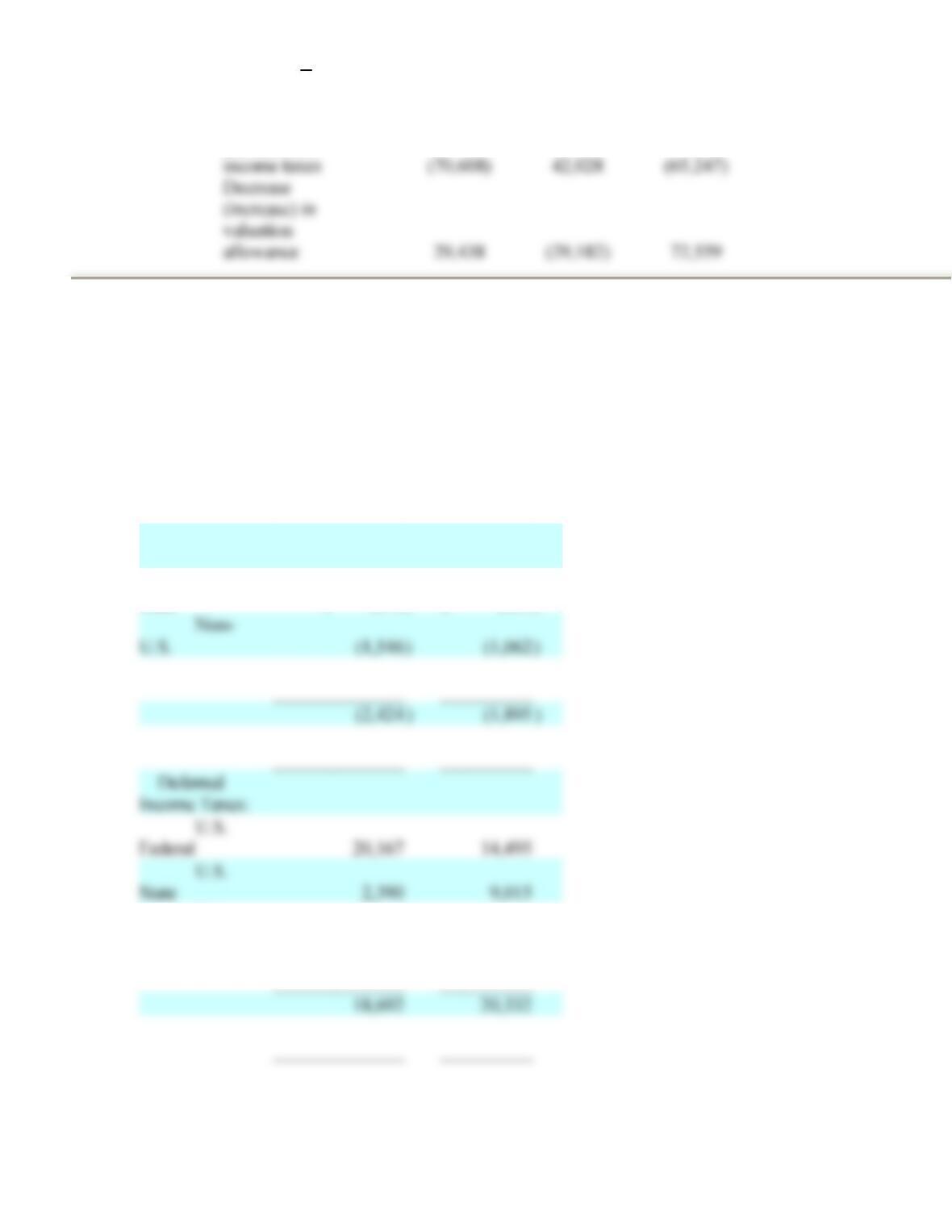
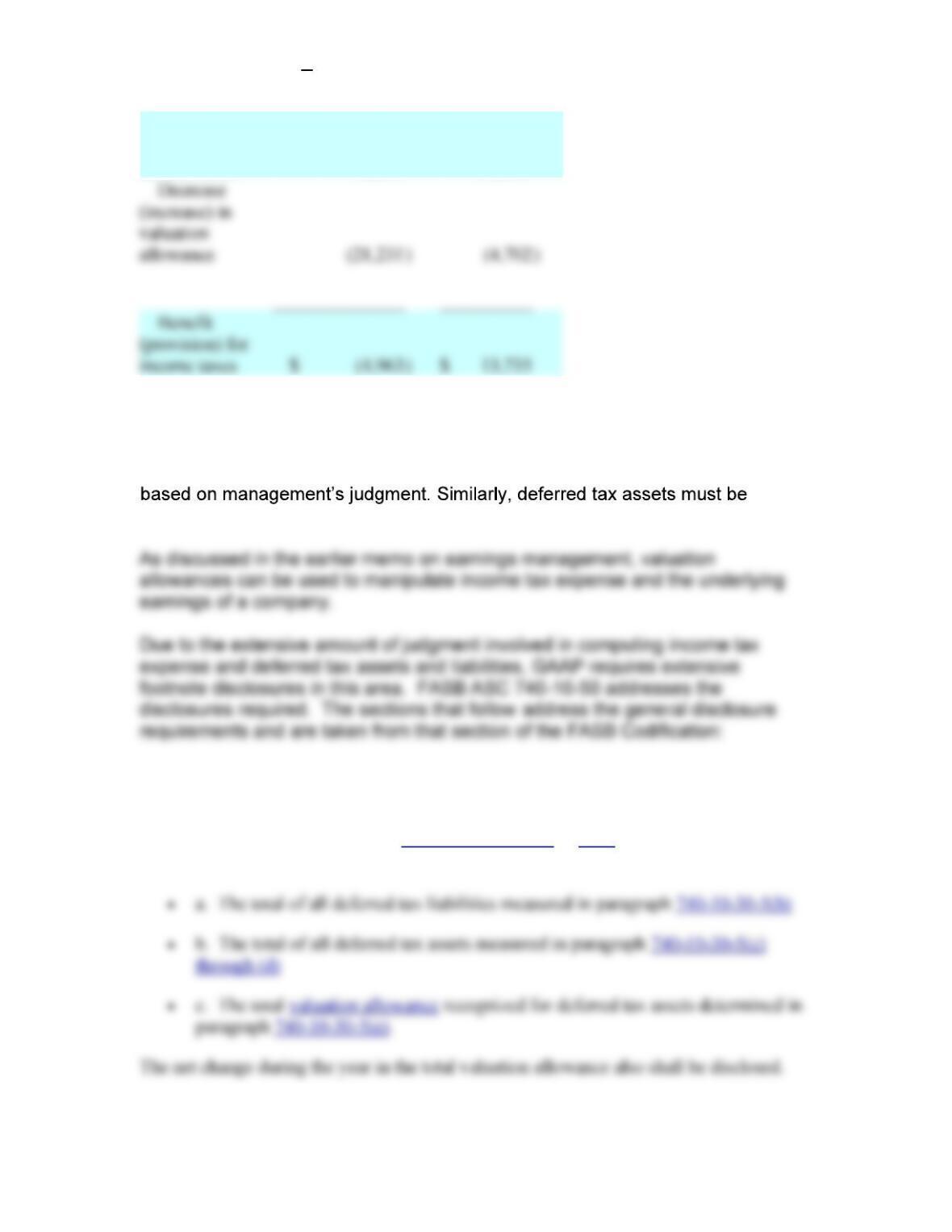
Below is Iomega Corporation
The income tax benefit (provision) consisted of the following:
Years Ended December 31,
2002
2001
2000
(In thousands)
Current
Taxes:
U.S. Federal
$
–
$
–
$
1,041
–
)
)
2
)
(1,919
)
(1,860
)
(3,311
)
Deferred
Income
Taxes:
U.S. Federal
(60,484
)
39,058
(50,731
)
U.S. State
)
4,329
)
(68,689
)
43,888
(61,936
)
Continuing Case Solution
21
Total current
and deferred
Benefit
(provision)
for income
taxes
$ (41,170
)
$ 12,846
$ 7,312
Years Ended December 31,
2004 2003
(In thousands)
Current
Income Taxes:
U.S.
State
$
(878
) $ (833
)
)
)
)
)
Federal
20,167
14,495
Non-
U.S.
(3,
865
)
(3,178
)
18,692
20,332
)
)
)
Continuing Case Solution
22
Total current
and deferred
income taxes
16,268
18,437
(c) There is substantial judgment is determining income tax expense because
much of the expense is based on deferred tax assets and liabilities created from
temporary differences. The time when these temporary differences reverse is
evaluated for future benefits.
> Statement of Financial Position Related Disclosures
50-2 The components of the net deferred tax liability or asset recognized in an entity’s
statement of financial position shall be disclosed as follows:
Continuing Case Solution
23
50-3 An entity shall disclose both of the following:
a. The amounts and expiration dates of operating loss and tax credit
> Income Statement Related Disclosures
50-9 The significant components of income tax expense attributable to continuing
operations for each year presented shall be disclosed in the financial statements or notes
thereto. Those components would include, for example:
effects of other components
g.
Adjustments of a deferred tax liability or asset for enacted changes in tax laws
or rates or a change in the tax status of the entity
h. Adjustments of the beginning-of-the-year balance of a valuation allowance
because of a change in circumstances that causes a change in judgment about the
>
Income Tax Expense Compared to Statutory Expectations

24
50-11 The reported amount of income tax expense may differ from an expected
amount based on statutory rates. The following guidance establishes the disclosure
requirements for such situations and differs for public and nonpublic entities.
There are additional disclosure requirements for public entities (FASB ASC 740-10-50-