Solution 18.51
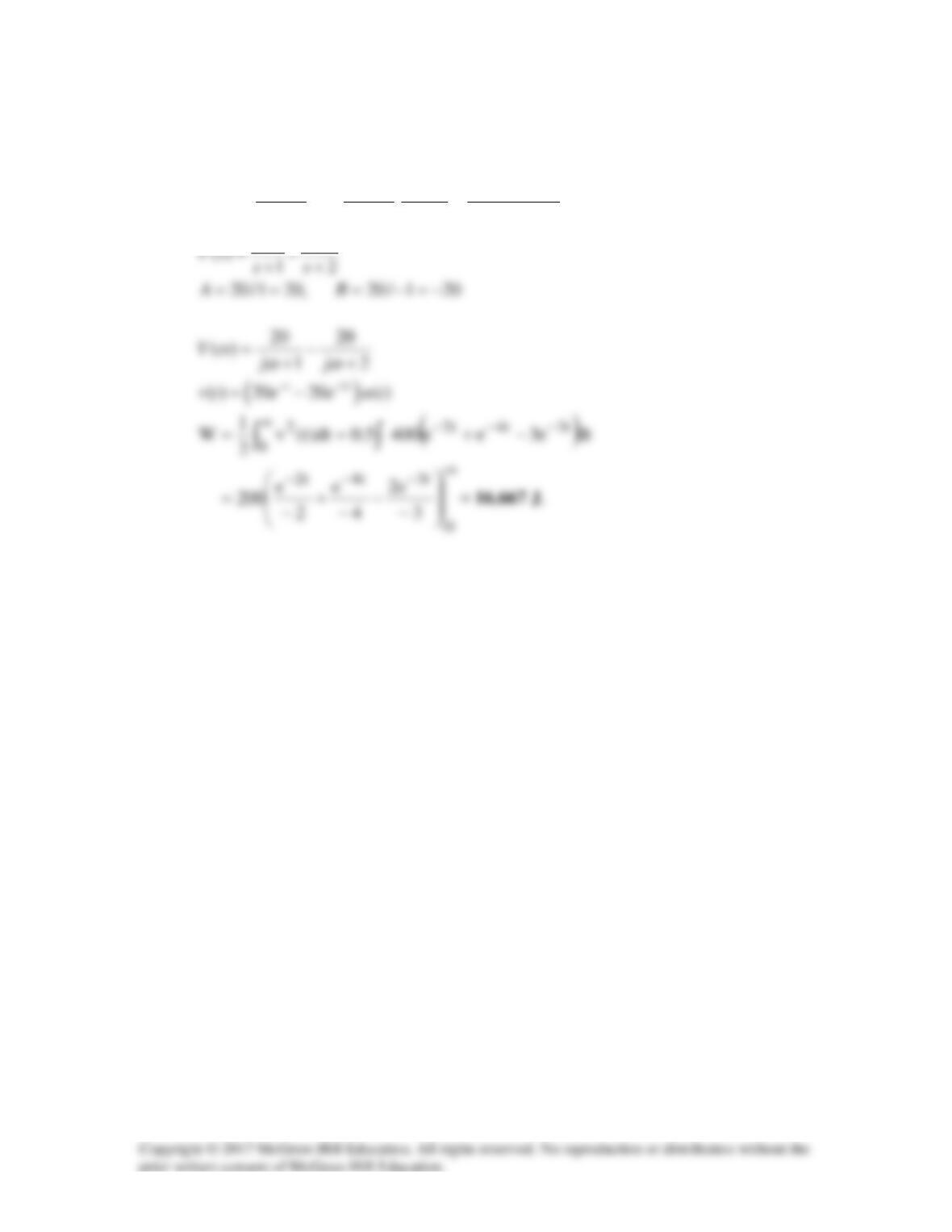
In the frequency domain, the voltage across the 2-Ω resistor is
2 2 10 20
() ,
2 2 1 ( 1)( 2)
s
V V sj
j j j ss
ωω
ω ωω
= = = =
+ + + ++
AB
Solution 18.52
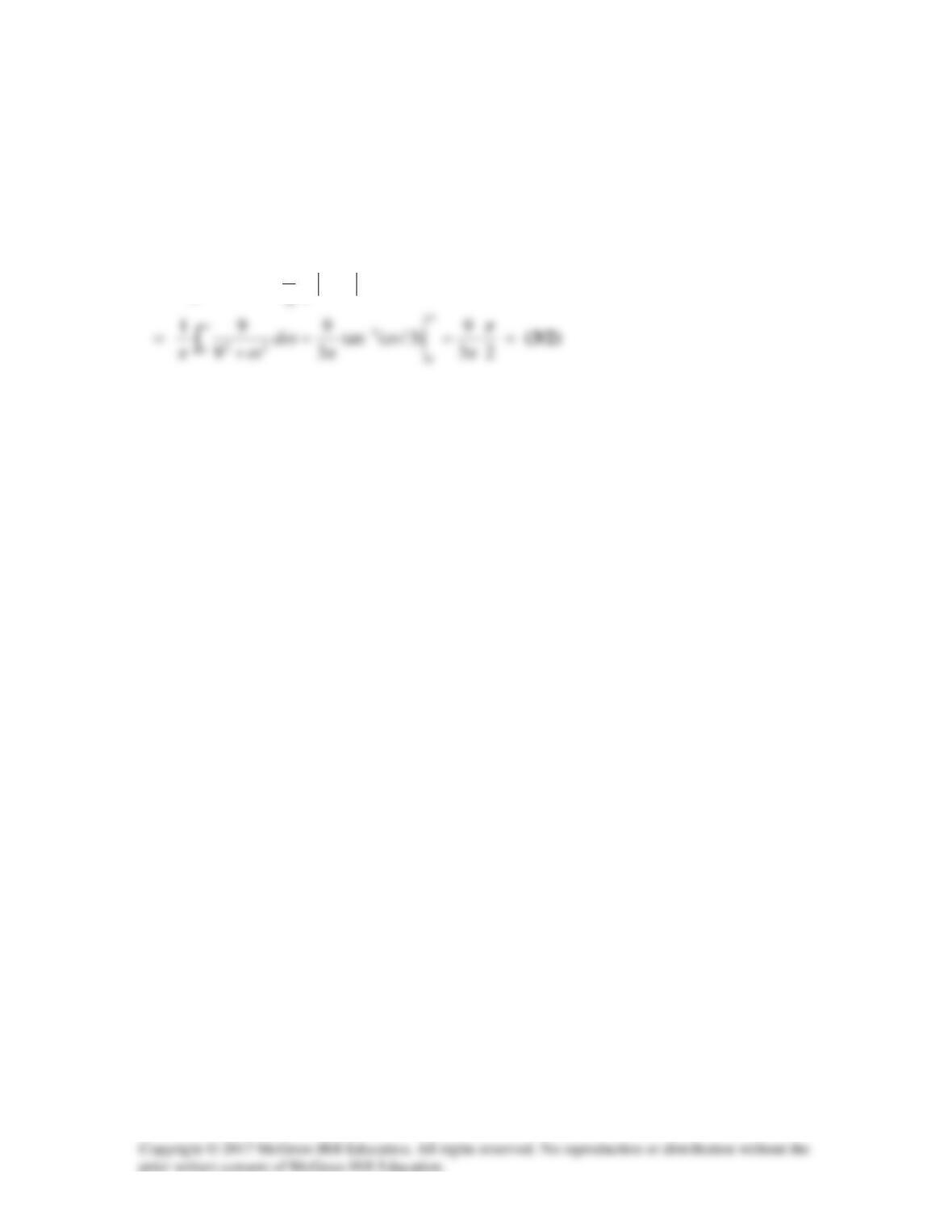
For F(ω) = 3/(3+jω), find
2()J f t dt
∞
−∞
=
∫
.
Solution
J =
∫∫
∞∞
ωω
π
=
0
2
0
2
d)(F
1
dt)t(f2
Solution 18.53
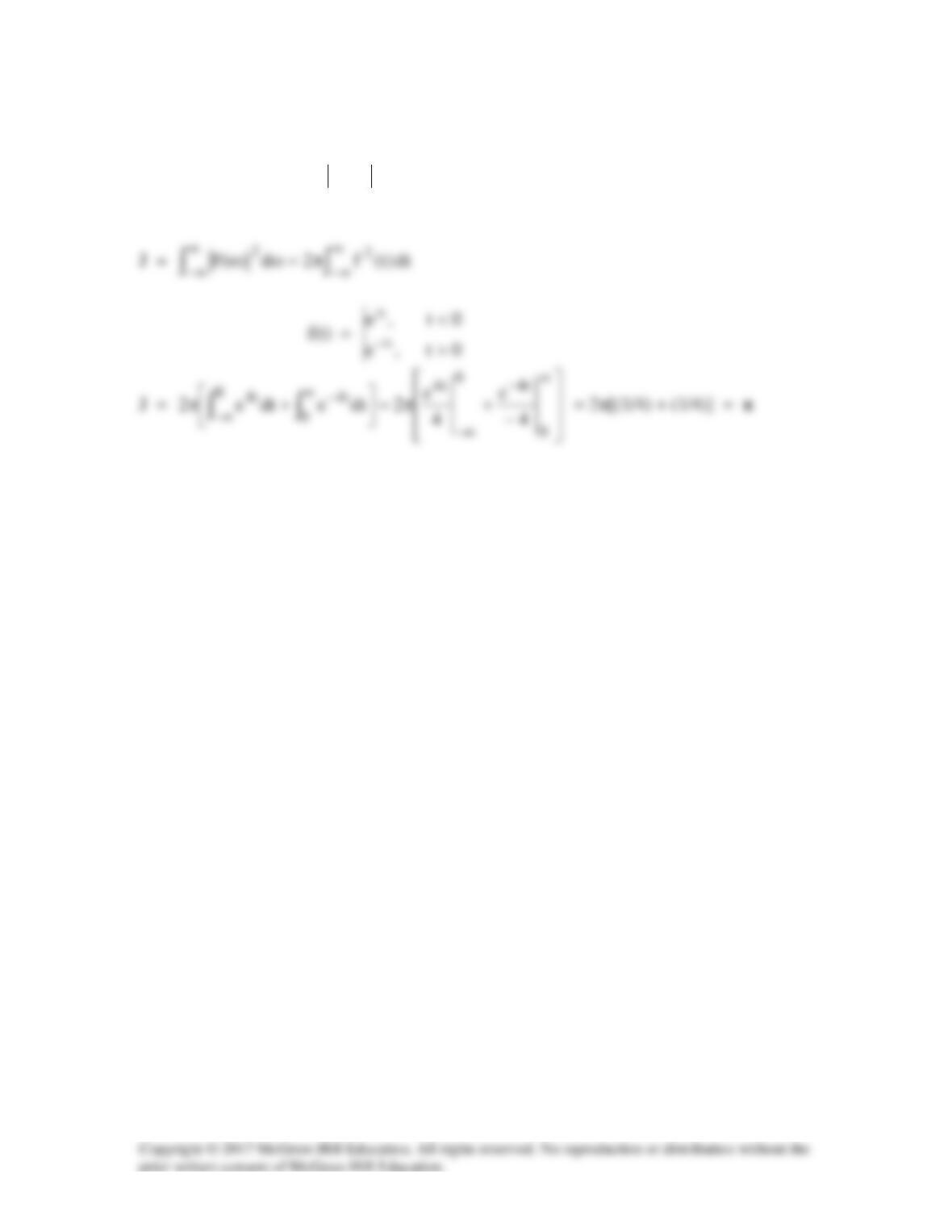
If f(t) = e–2|t|, find
2
()J Fd
ωω
∞
−∞
=∫
.
Solution 18.54
Design a problem to help other students better understand finding the total energy in a
given signal.
Although there are many ways to solve this problem, this is an example based on the
same kind of problem asked in the third edition.
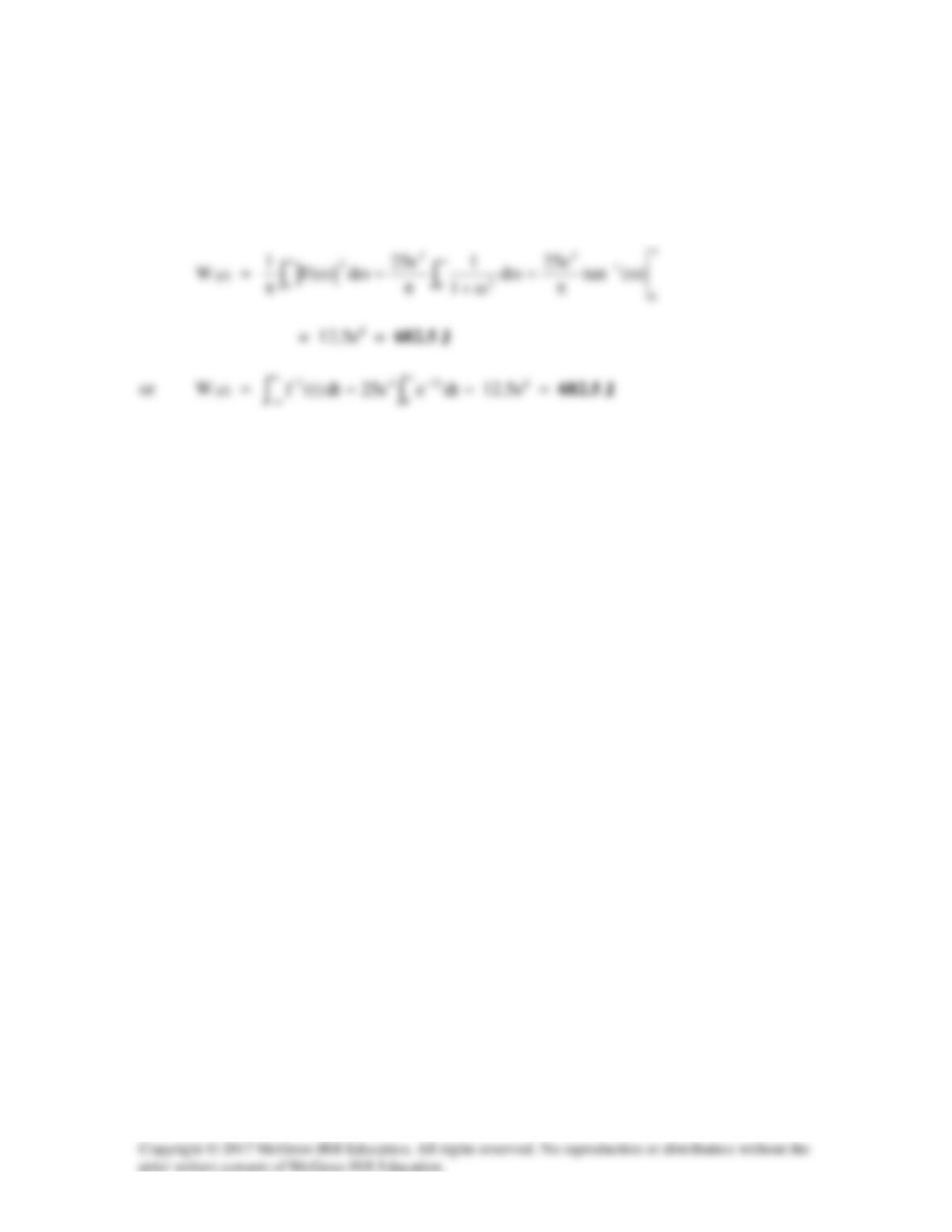
Problem
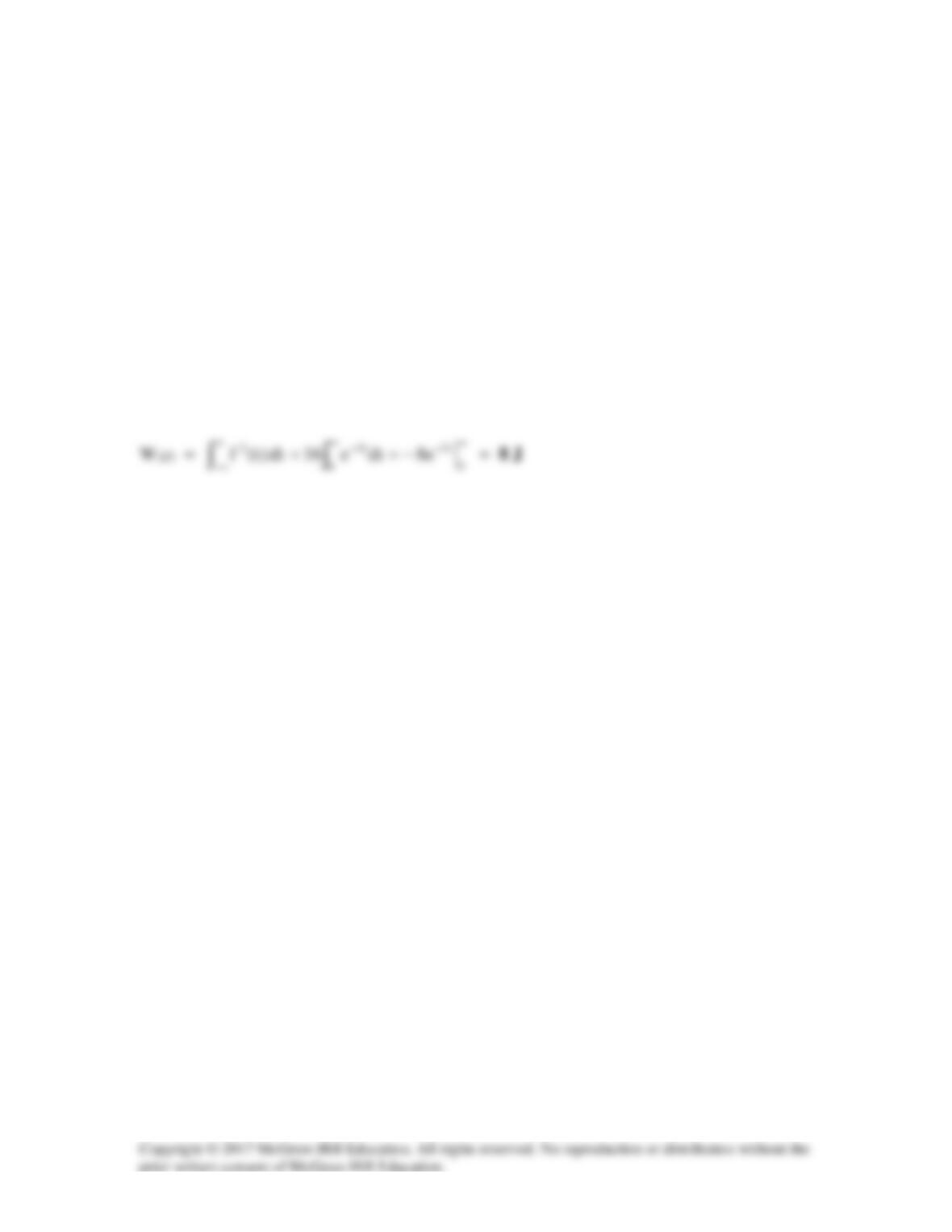
Given the signal f(t) = 4 e–t u(t), what is the total energy in f(t)?
Solution
Solution 18.55
f(t) = 5e2e–tu(t)
F(ω) = 5e2/(1 + jω), |F(ω)|2 = 25e4/(1 + ω2)
Solution 18.56
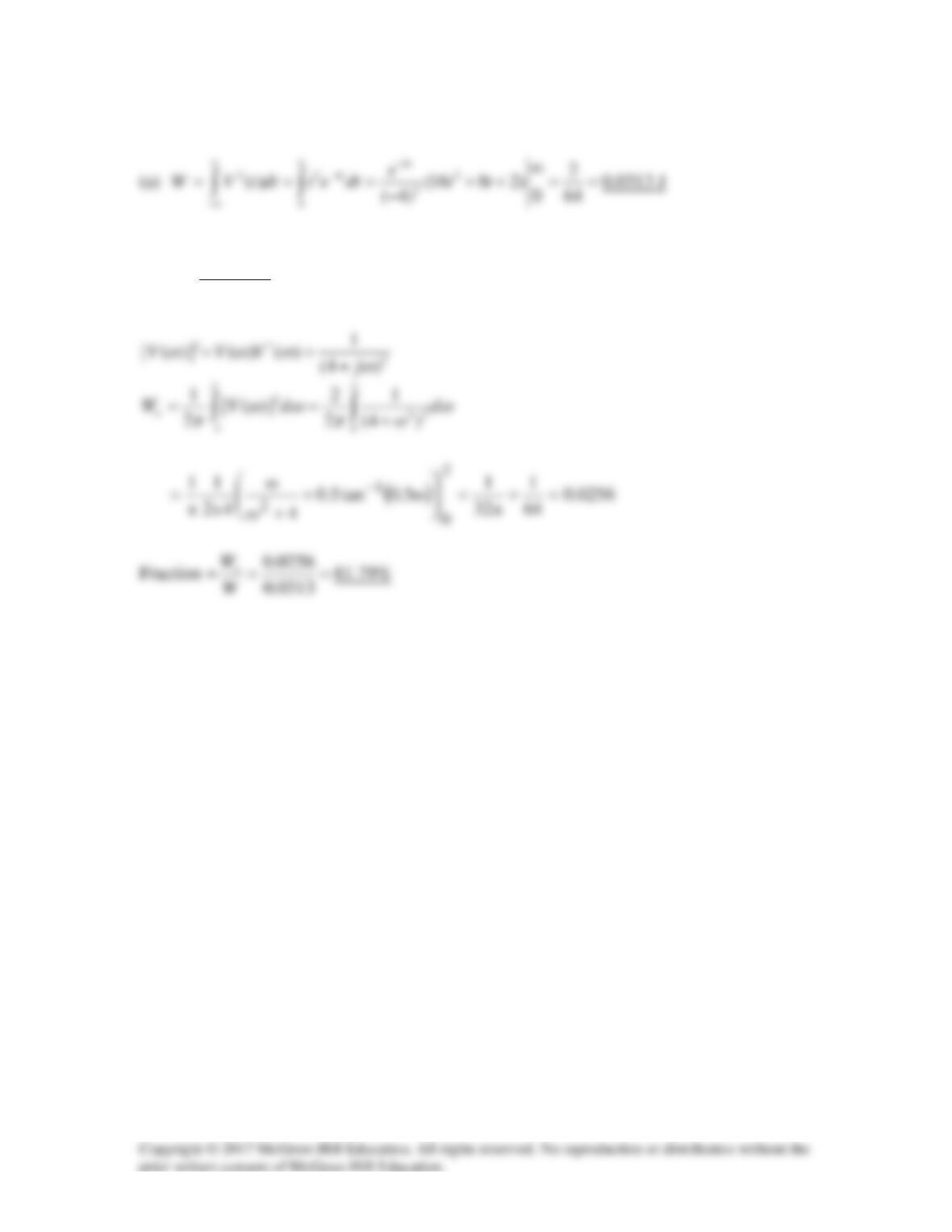
(b) In the frequency domain,
2
1
() (2 )
Vj
ωω
=+
Solution 18.57
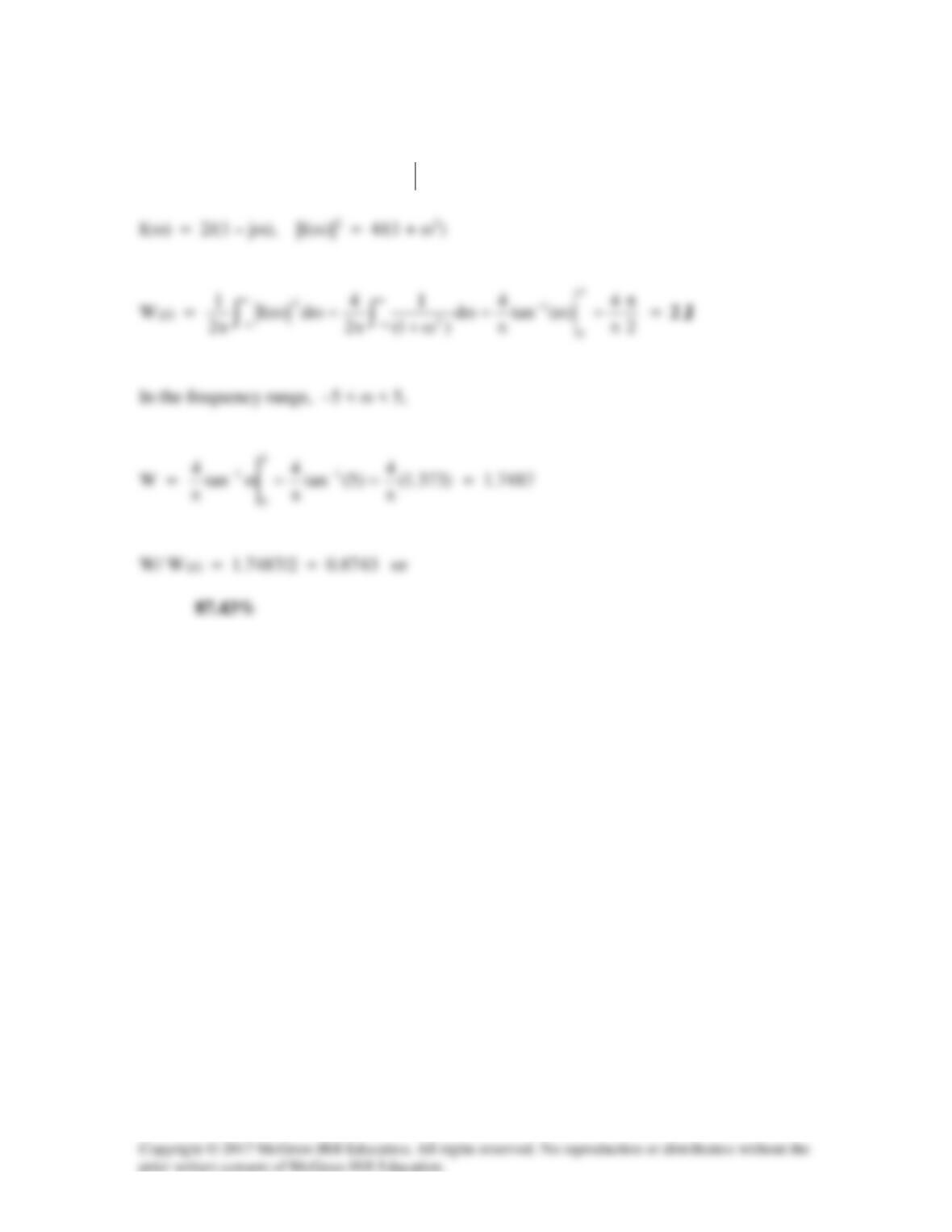
W1Ω =
0
t2
0t22 e2dte4dt)t(i ∞−
∞−
∞
∞− == ∫∫
= 2 J or
Solution 18.58
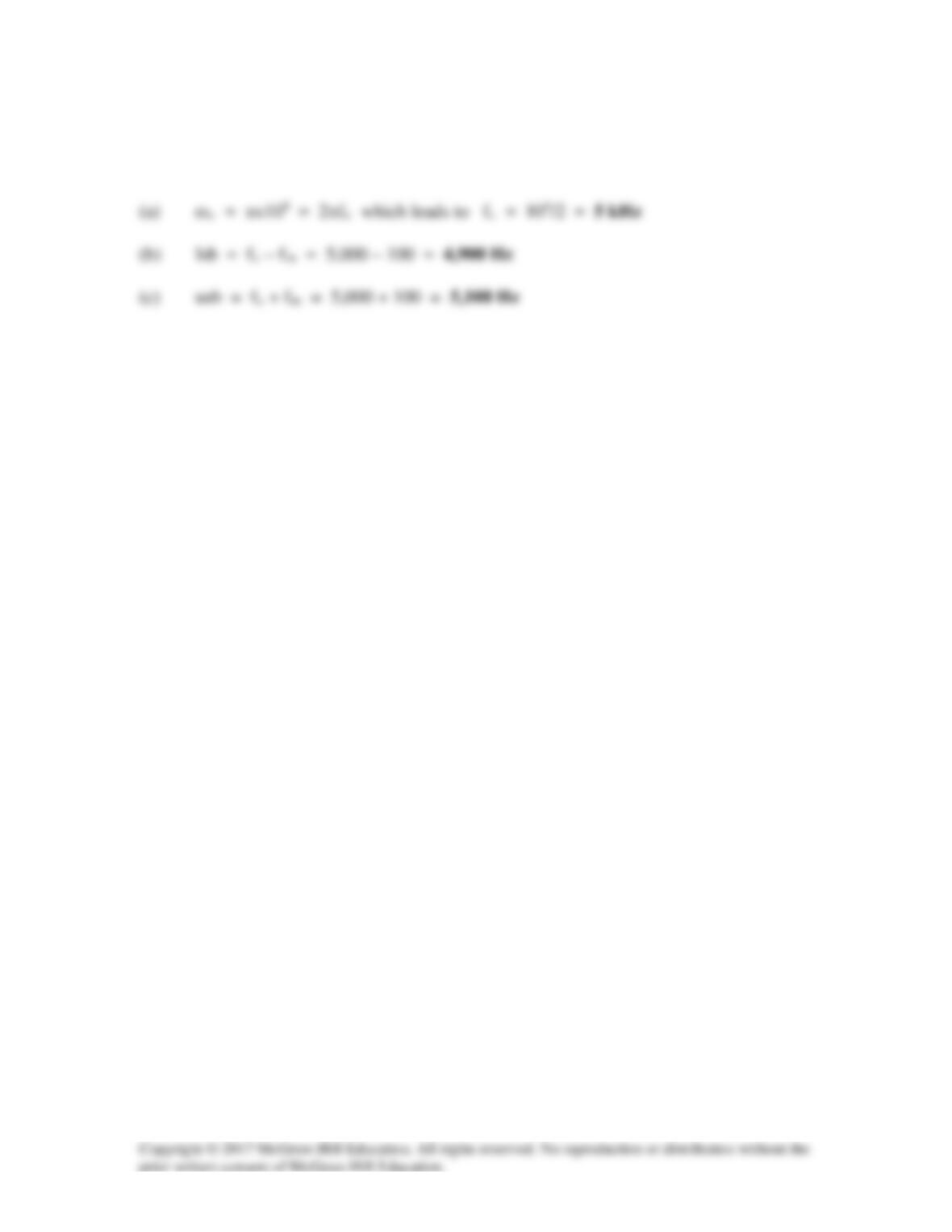
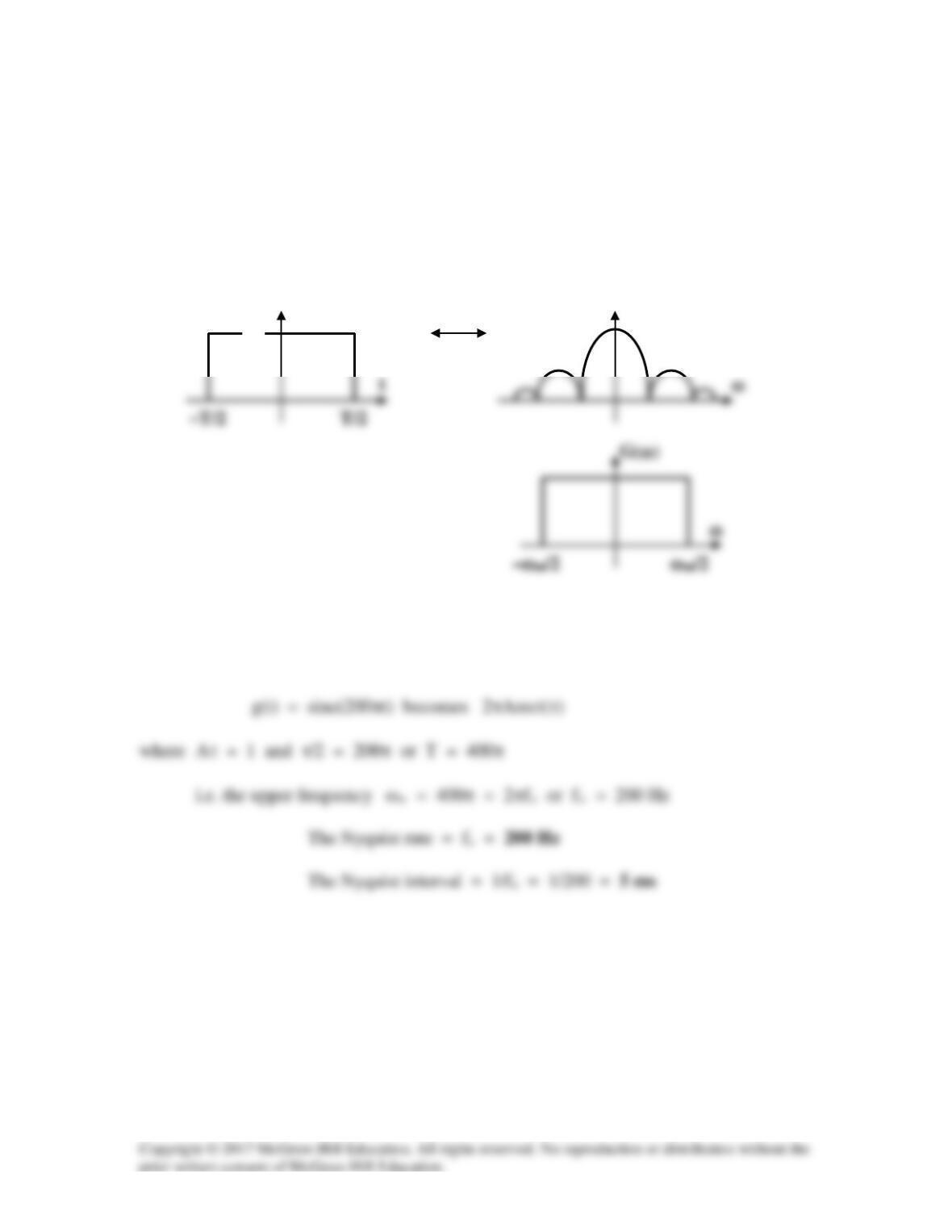
ωm = 200π = 2πfm which leads to fm = 100 Hz
Solution 18.59
ω+
−
ω+
=
ω+
−
ω+
=
ω
ω
=ω j4
3
j2
5
2
j4
6
j2
10
)(V
)(V
)(H
i
o
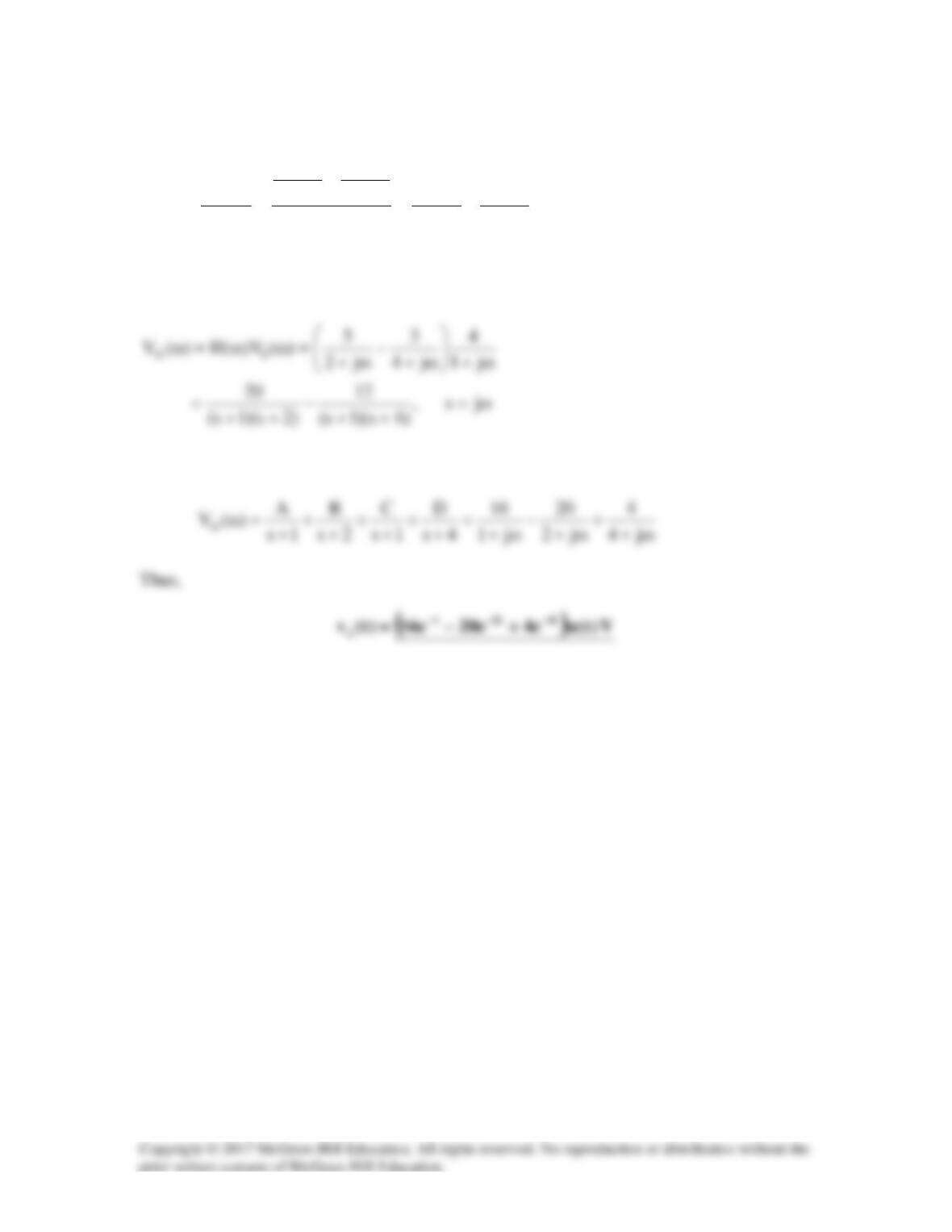
Using partial fraction,
Solution 18.60
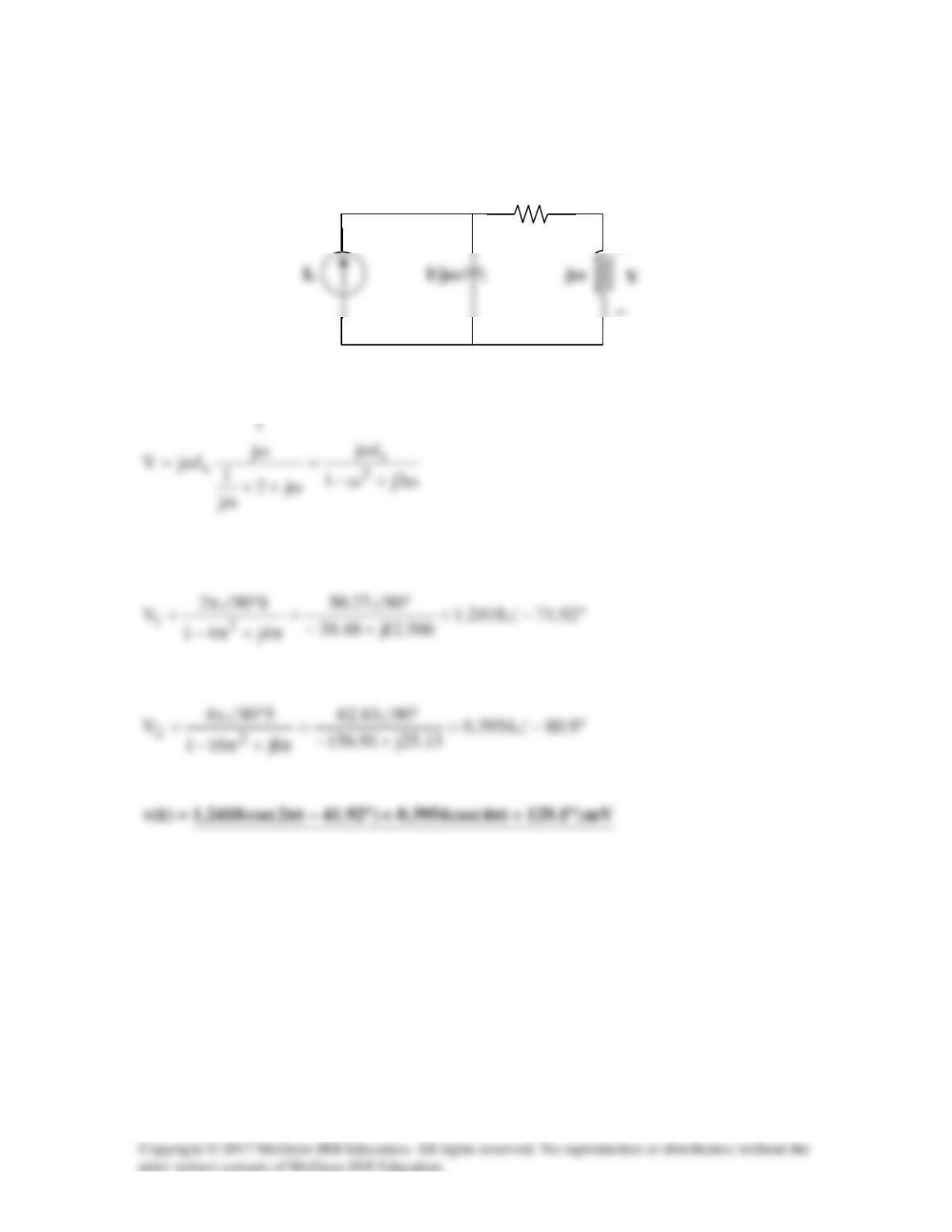
.componentDCnoisthere,inductortheacrossappearsvoltagetheSince
2
+

Solution 18.61
() (2 cos ) ()
o
yt t xt
ω
= +

Solution 18.62
For the lower sideband, the frequencies range from

Solution 18.63
Since fn = 5 kHz, 2fn = 10 kHz
i.e. the stations must be spaced 10 kHz apart to avoid interference.

Solution 18.64

Solution 18.65

Solution 18.66
ω = 4.5 MHz
Solution 18.67
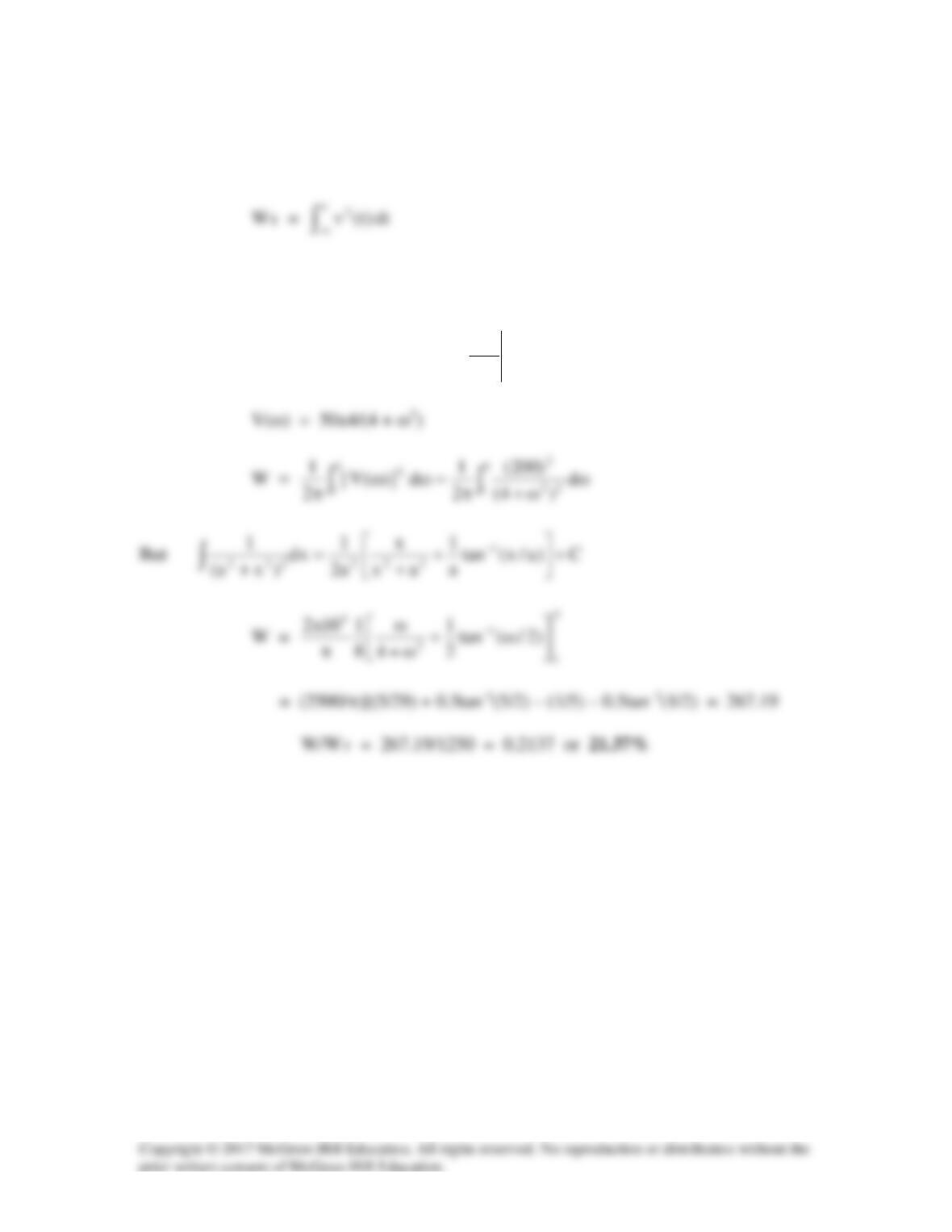
We first find the Fourier transform of g(t). We use the results of Example 17.2 in
conjunction with the duality property. Let Arect(t) be a rectangular pulse of height A and
width T as shown below.
Arect(t) transforms to Atsinc(ω2/2)
According to the duality property,
Aτsinc(τt/2) becomes 2πArect(τ)
f(t)
A
F(ω)
Solution 18.68
The total energy is
Since v(t) is an even function,
WT =
∞
−
∞−
−
=
∫
0
t4
0
t4
4
e
5000dte2500
= 1250 J
Solution 18.69
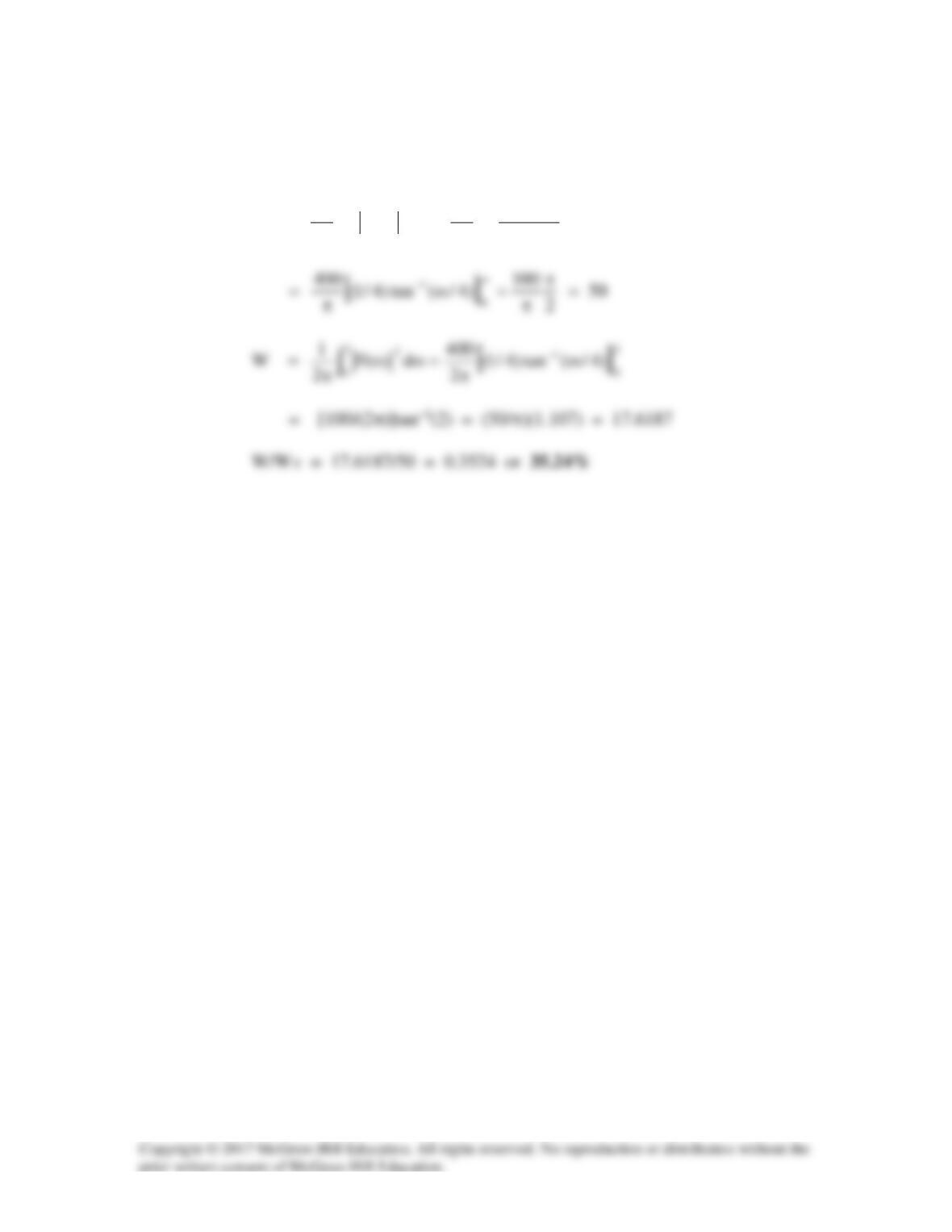
The total energy is
WT =
∫∫
∞
∞−
∞
∞−
ω
ω+
π
=ωω
πd
4
400
2
1
d)(F
2
1
22
2