Solution 18.15
(b) Let
ω−
=ω−δ= j
e2)(G),1t(2)t(g
=ω)(F
F
∫∞−
tdt)t(g
Solution 18.16
Determine the Fourier transforms of these functions:
(a) f(t) = 8/t2
(b) g(t) = 4/(4 + t2)
Solution
(a) Using duality property
Solution 18.17
Find the Fourier transforms of:
(a) 2cos 2t u(t)
(b) 0.5sin 10 t u(t)
Solution
(a) Since H(ω) = F
( ) ( ) ( )
[ ]
000
)(cos2
ωωωωω
−++= FFtft
(b) G(ω) = F
[ ]
( ) ( )
[ ]
000 25.0)(sin5.0
ωωωωω
−−+= FFjtft
Solution 18.18
(a)
[()] ()
jt
oo
Fft t ft t e dt
ω
∞
−
−= −
∫
(b) Given that
11
() [()] ()
2
jt
ft F F F e d
ω
ω ωω
π
∞
−
−∞
= = ∫
1
‘() () [()]
2
jt
j
f t F e dt j F F
ω
ωω ωω
π
∞
−
−∞
= =
∫
Chapter 18, Solution 19.
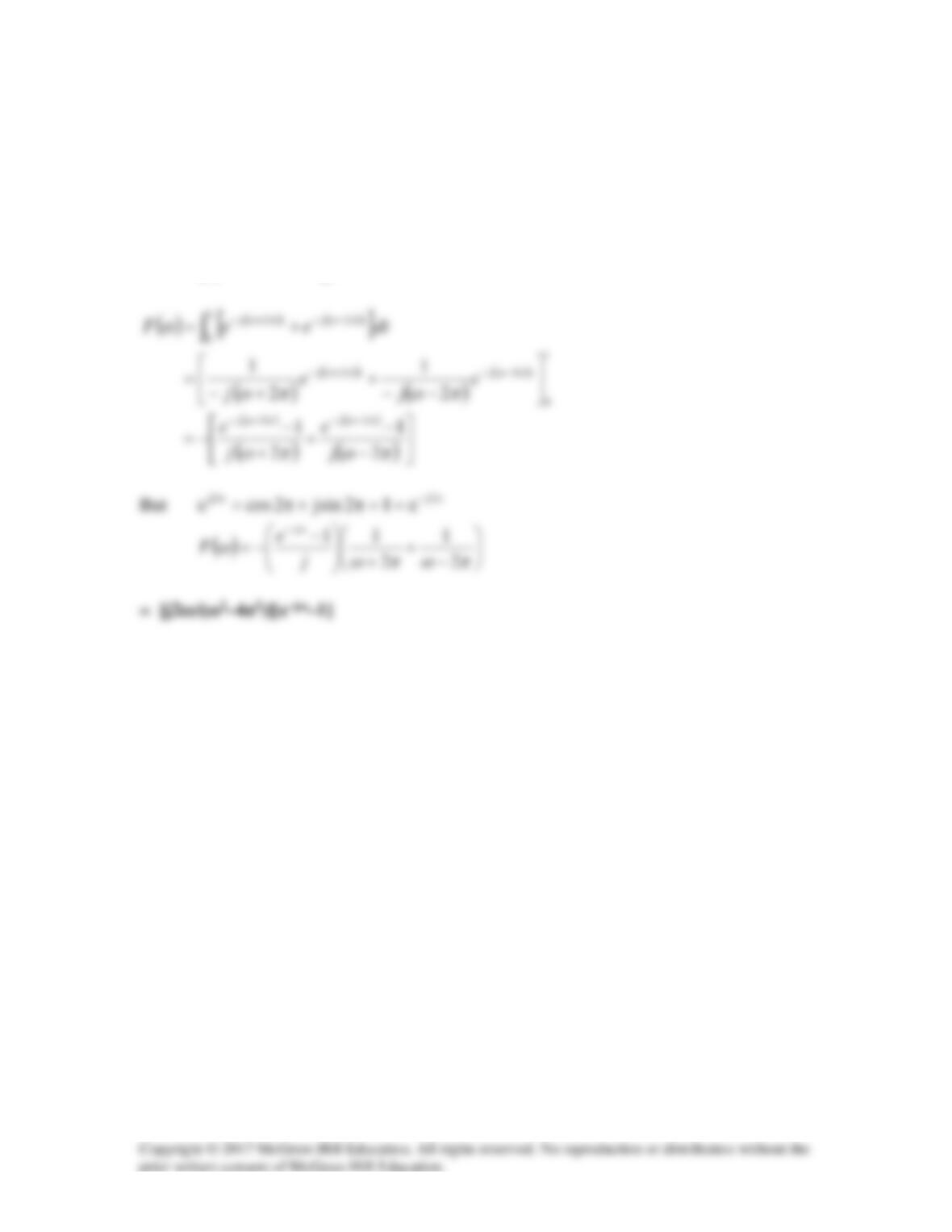
Find the Fourier transform of f(t) = 2cos 2
π
t[ u(t) – u(t–1)].
Solution
( )
( )
∫ ∫
∞
∞−
−−
+== dteeedtetfF
tjtjtjtj
ωππω
ω
1
0
22
)(
Solution 18.20
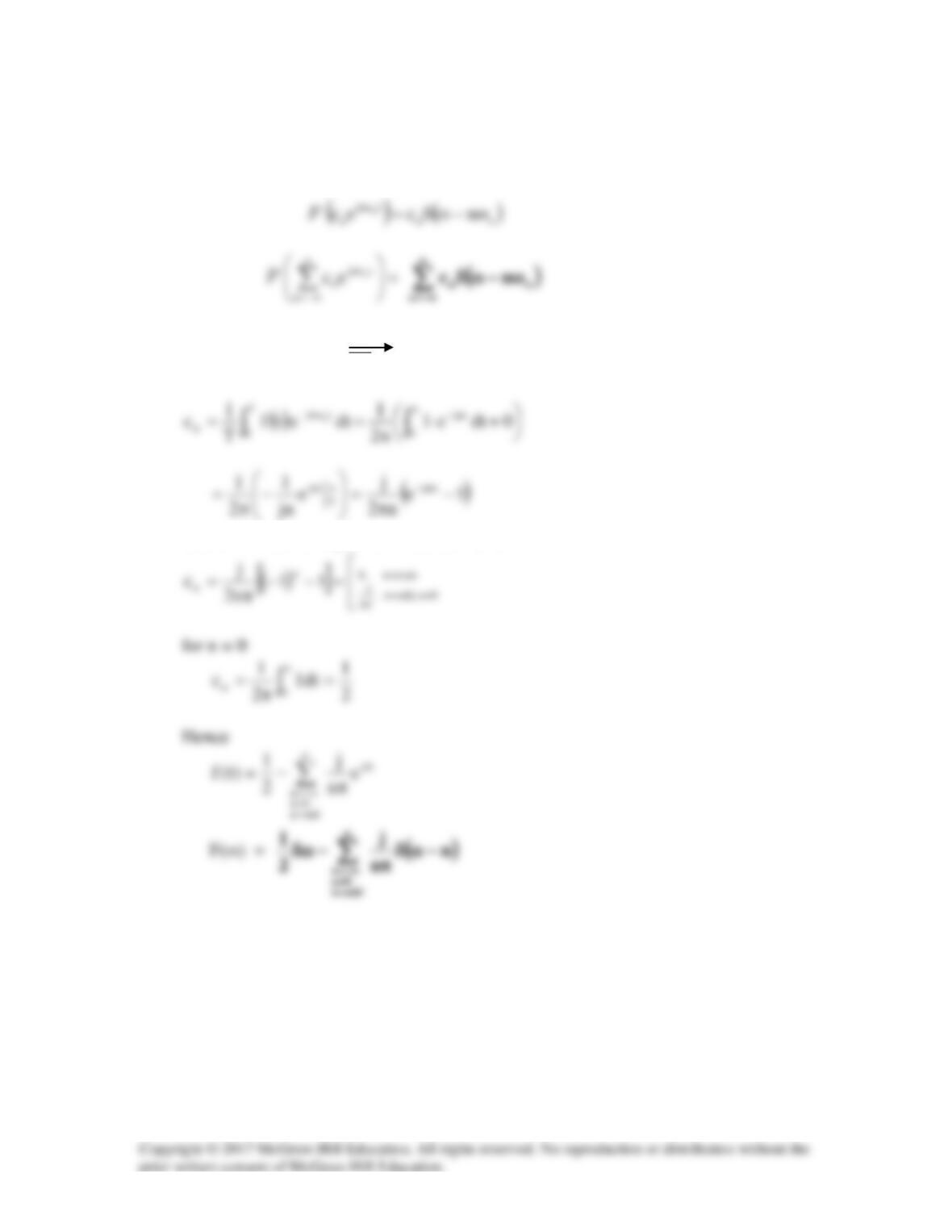
(a) F (cn) = cnδ(ω)
(b)
π= 2T
1
T
2
o
=
π
=ω
But
njn
)1(ncosnsinjncose−=π=π+π=
π−
Solution 18.21
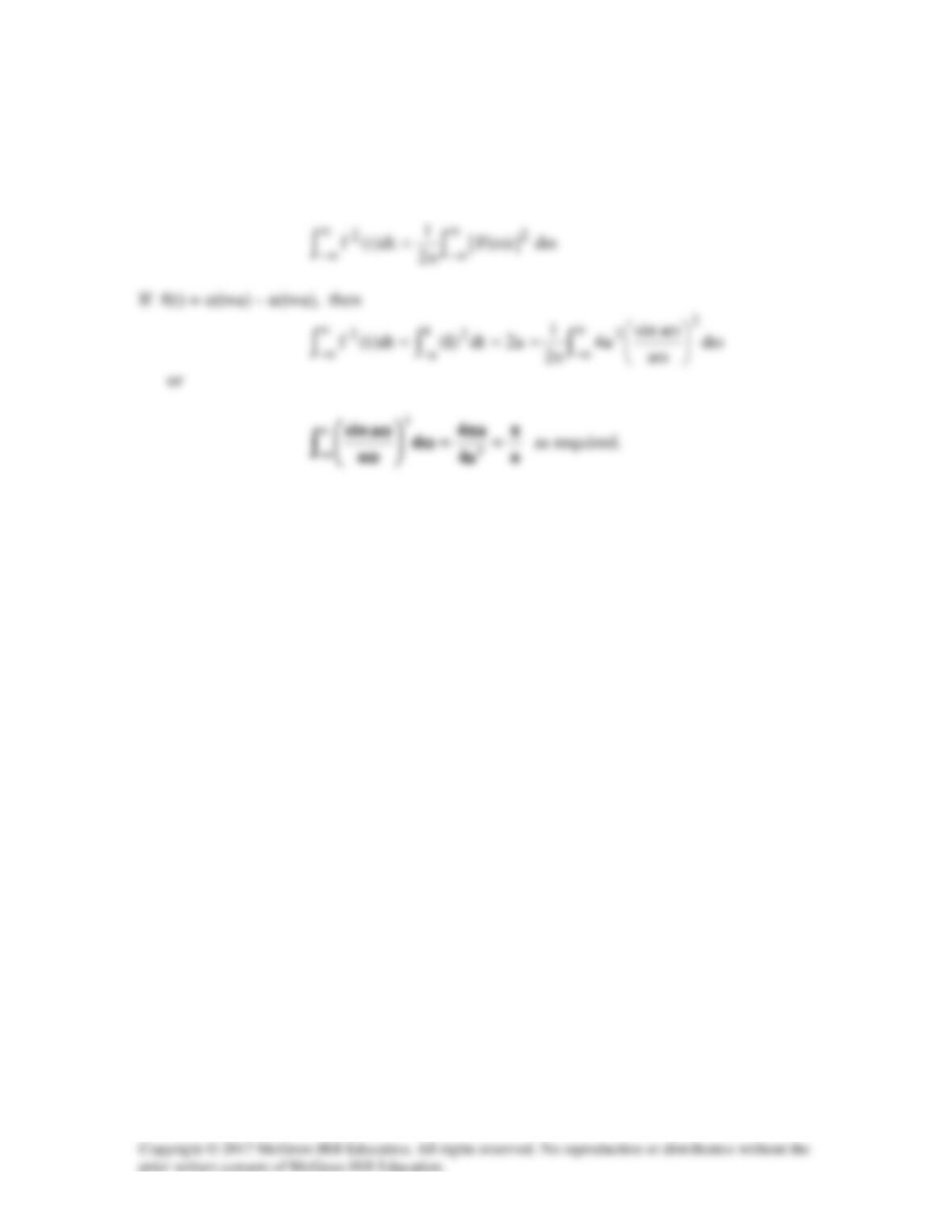
Using Parseval’s theorem,
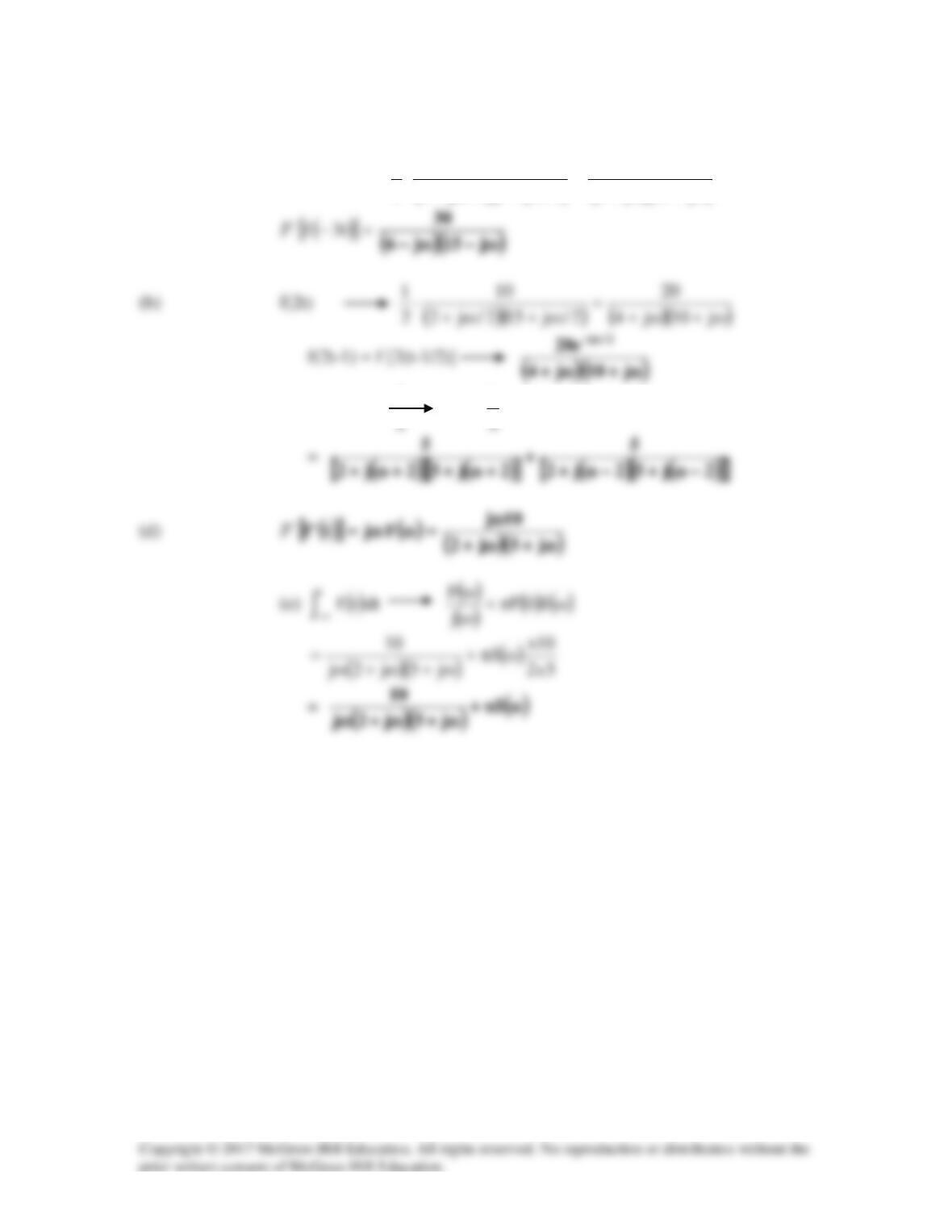
Solution 18.22
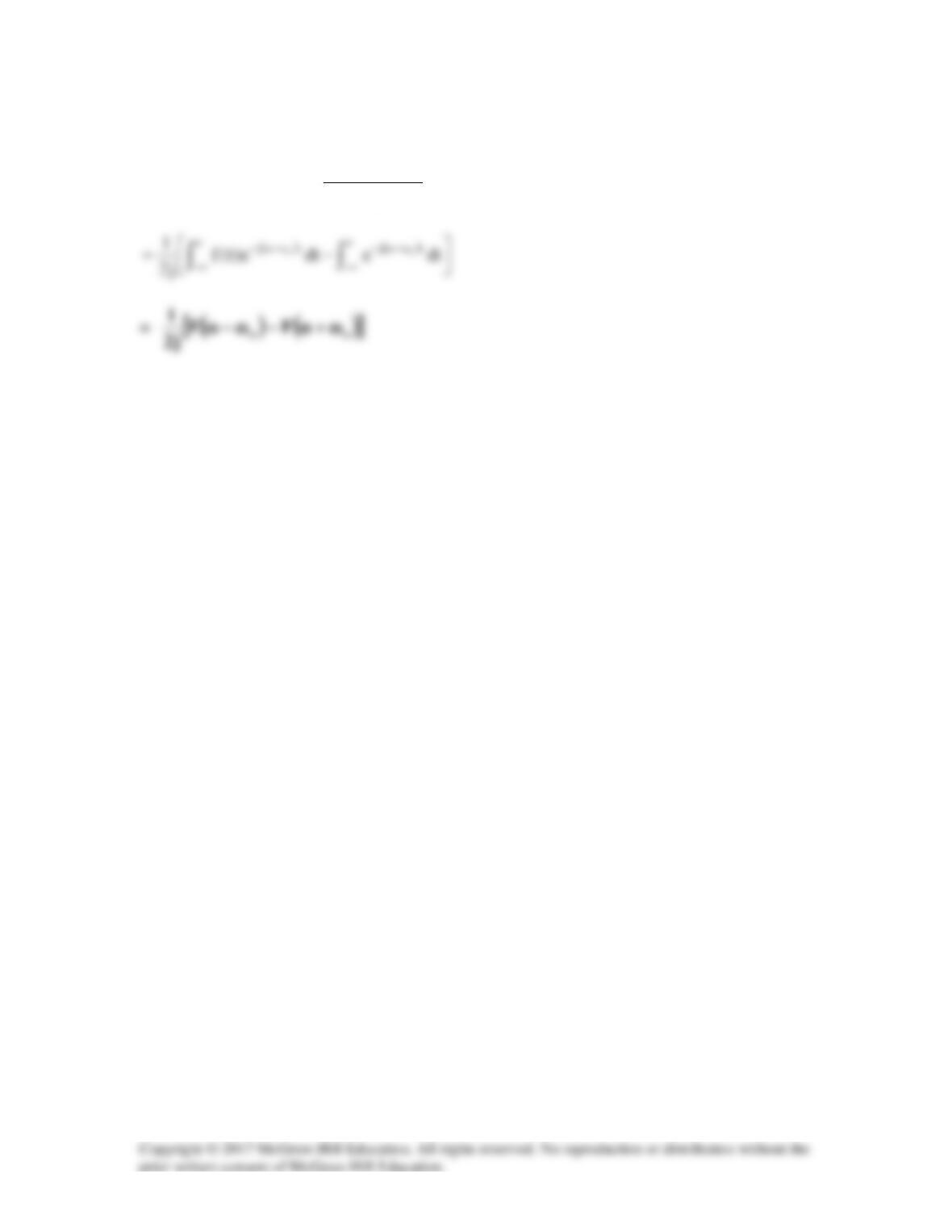
F
[ ]
( )
∫∞
∞−
ω−
ω−ω −
=ω dte
j2
ee
)t(ftsin)t(f tj
tjtj
o
oo
Solution 18.23
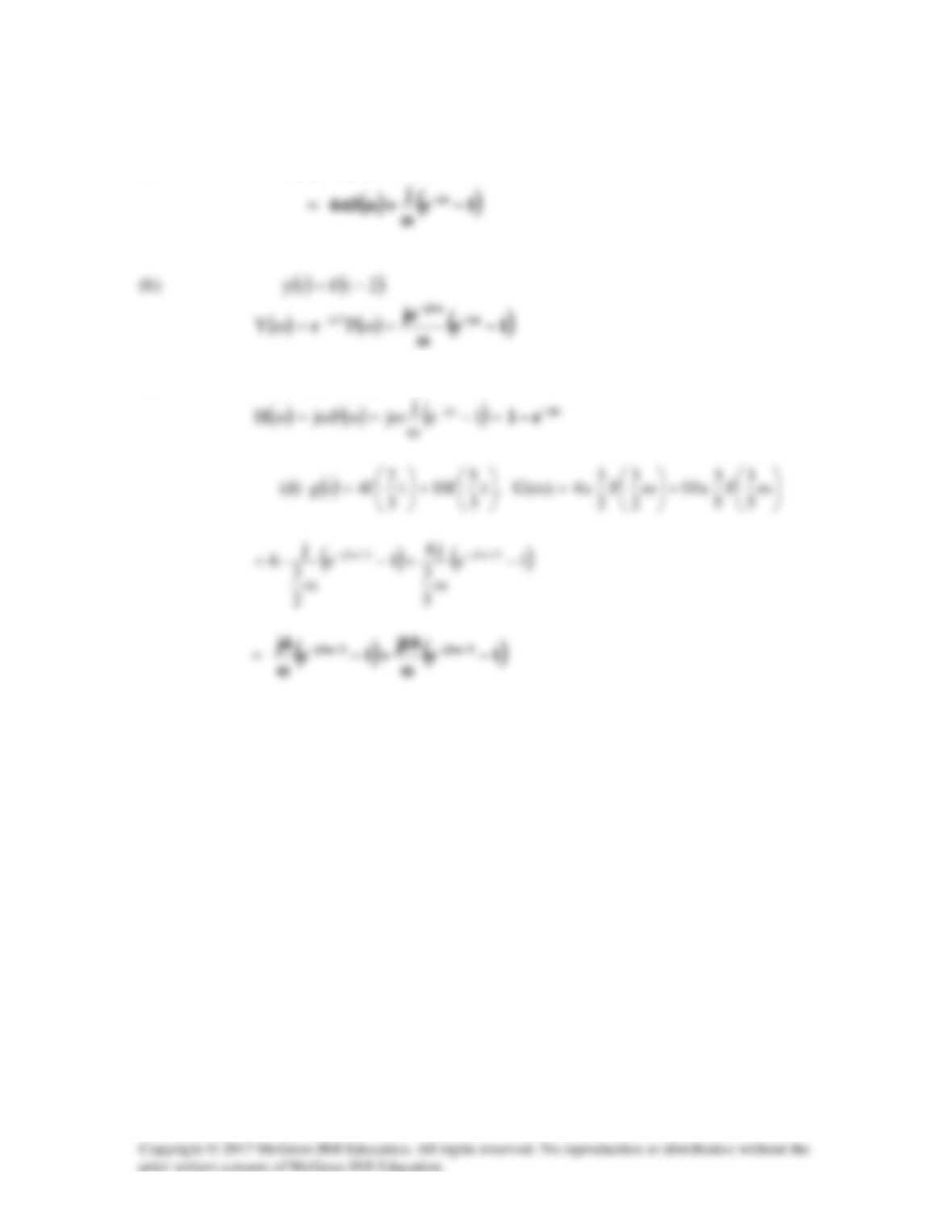
(a) f(3t) leads to
( )( ) ( )( )
ω+ω+
=
ω+ω+
⋅j15j6
30
3/j53/j2
10
3
1
(c) f(t) cos 2t
( ) ( )
2F
1
2F
1+ω++ω
Solution 18.24
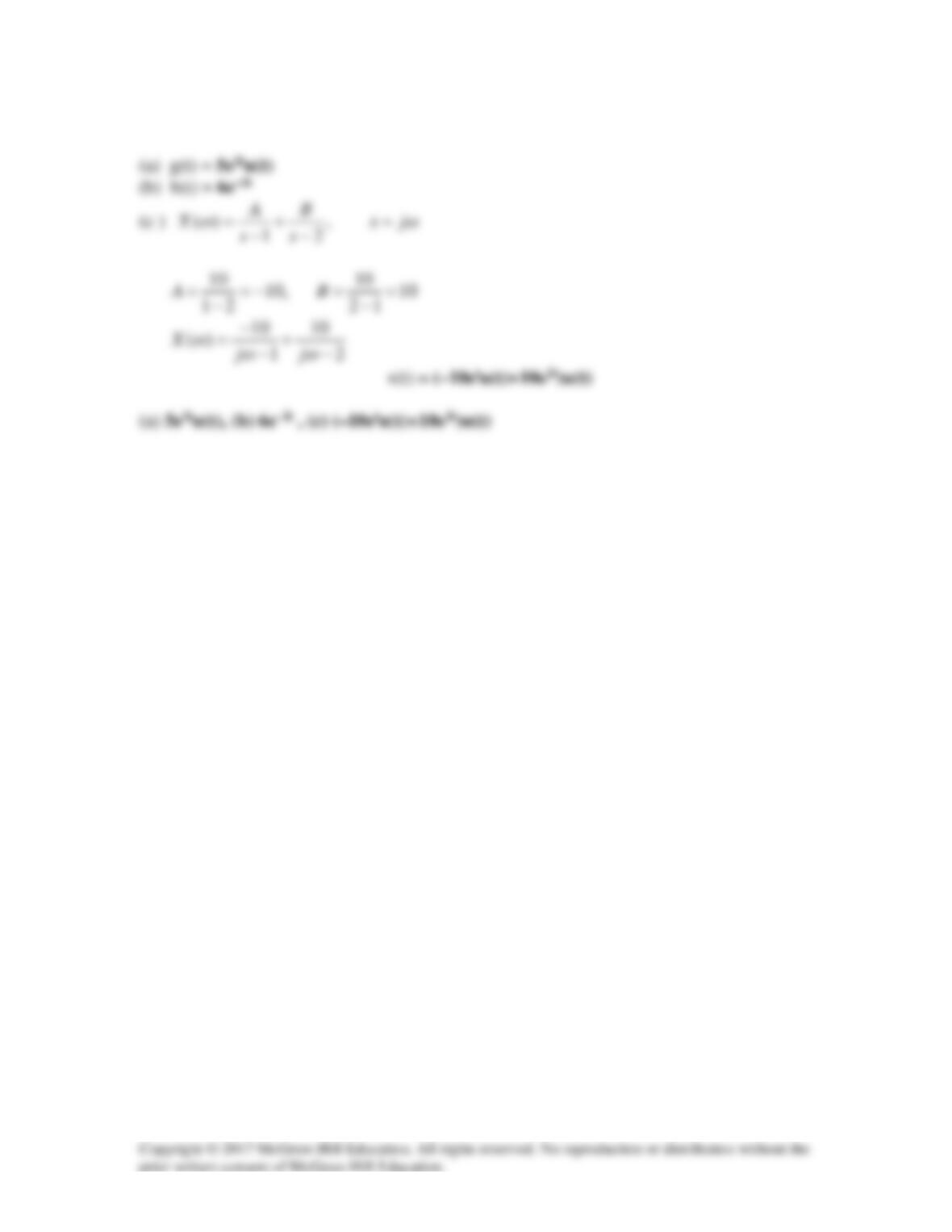
(a)
( ) ( )
ω=ω FX
+ F [3]
(c) If h(t) = f ‘(t)
Solution 18.25
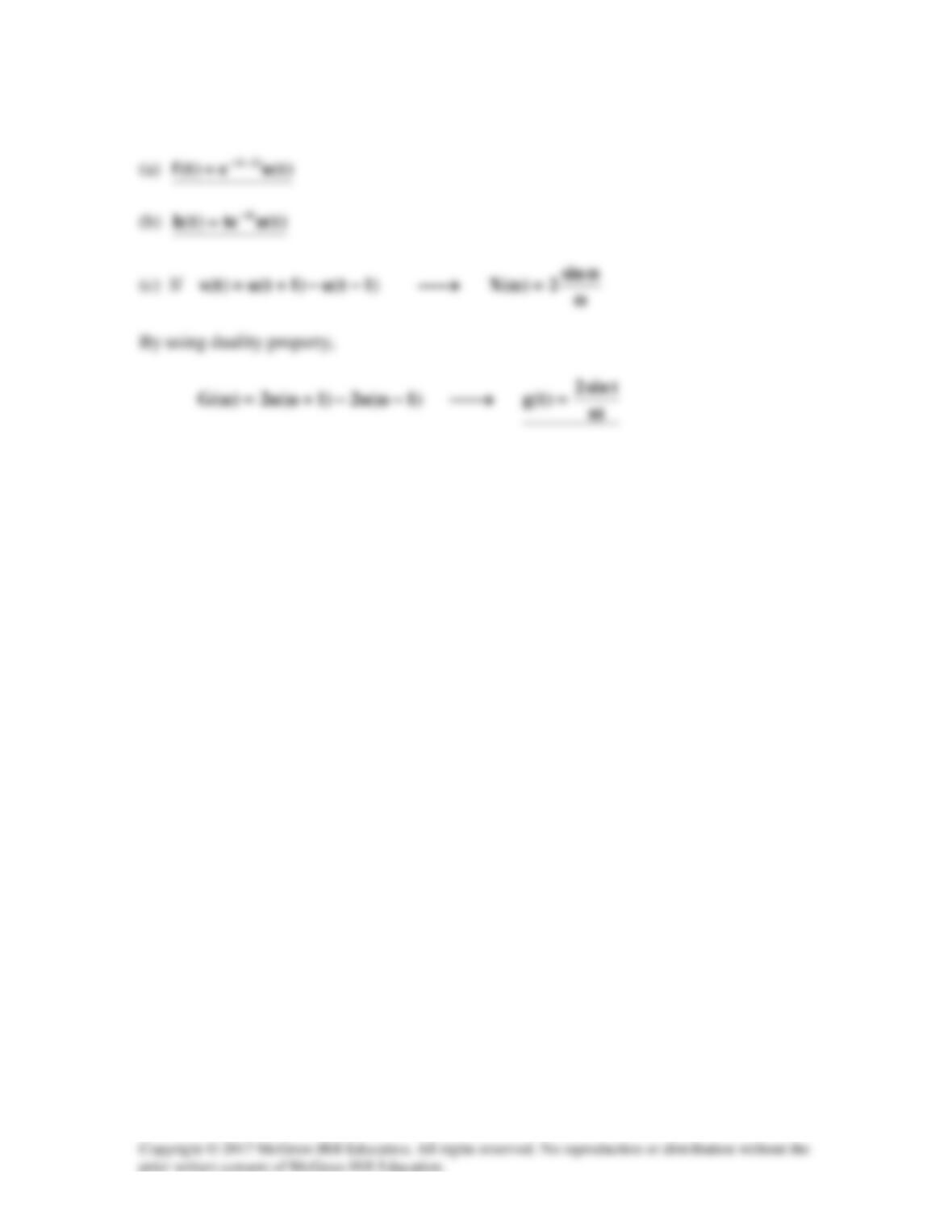
Solution 18.26
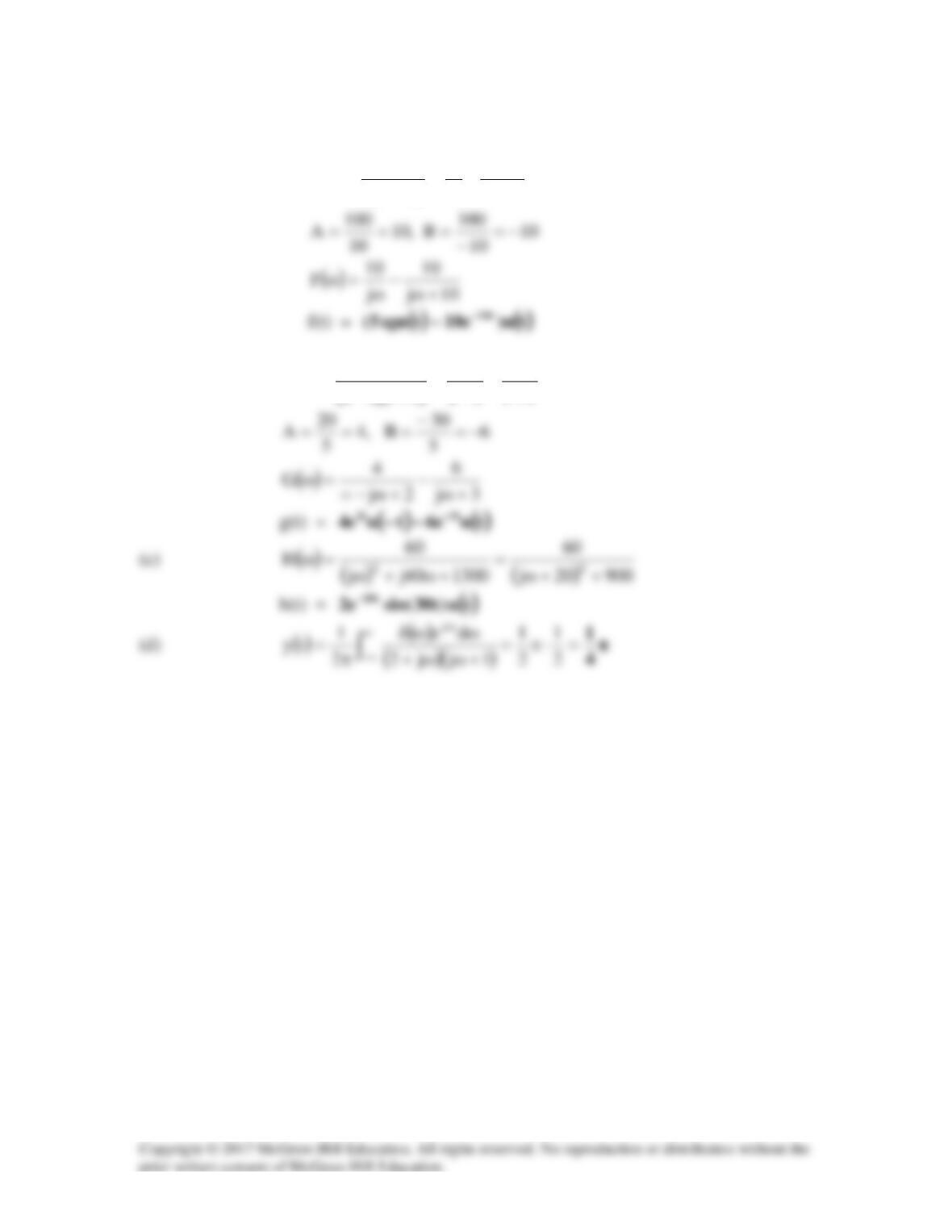
Solution 18.27
(a) Let
( ) ( )
ω=
+
+=
+
=js,
10s
B
s
A
10ss
100
sF
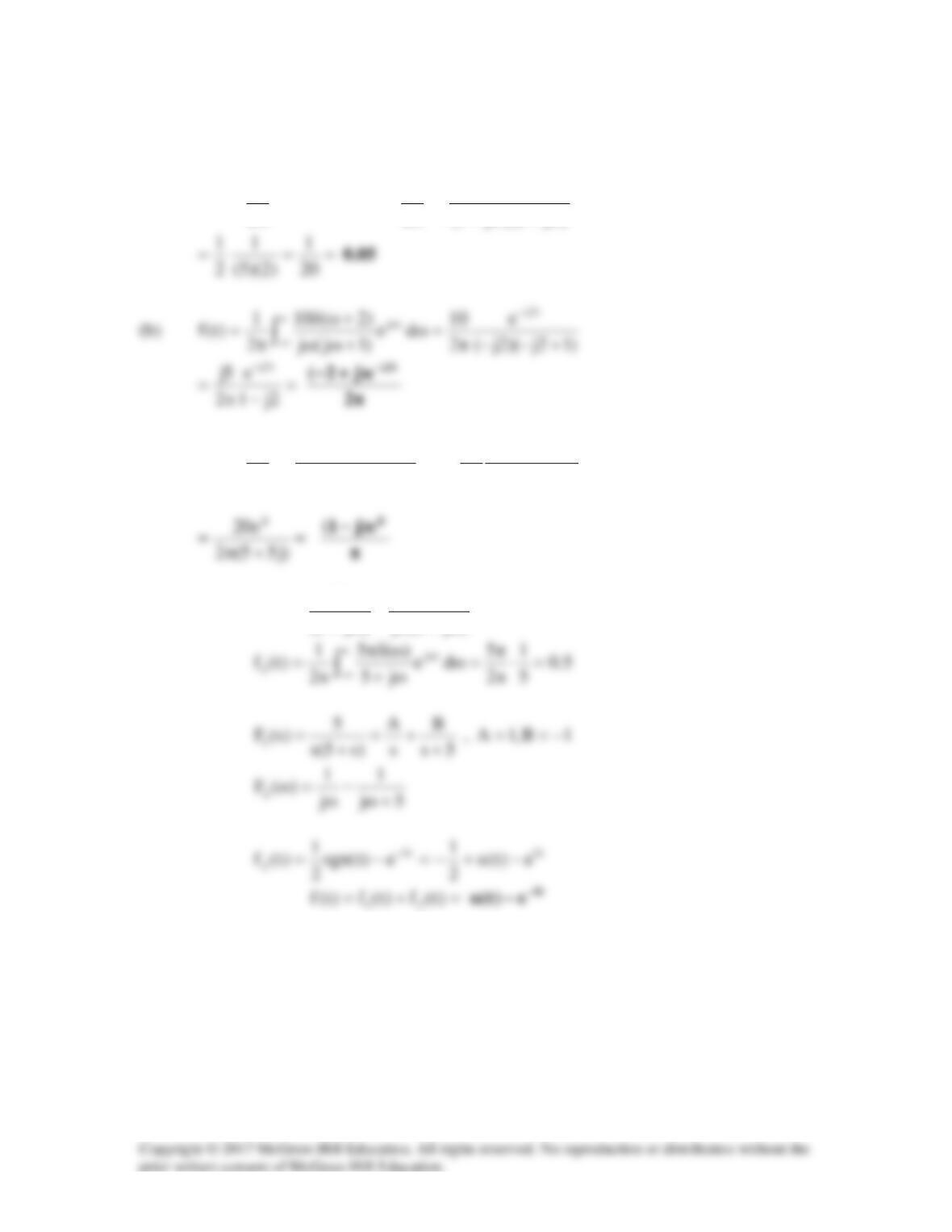
(b)
( ) ( )( )
ω=
+
+
−
=
+−
=js,
3s
B
s2
A
s3s2
s10
sG
Solution 18.28
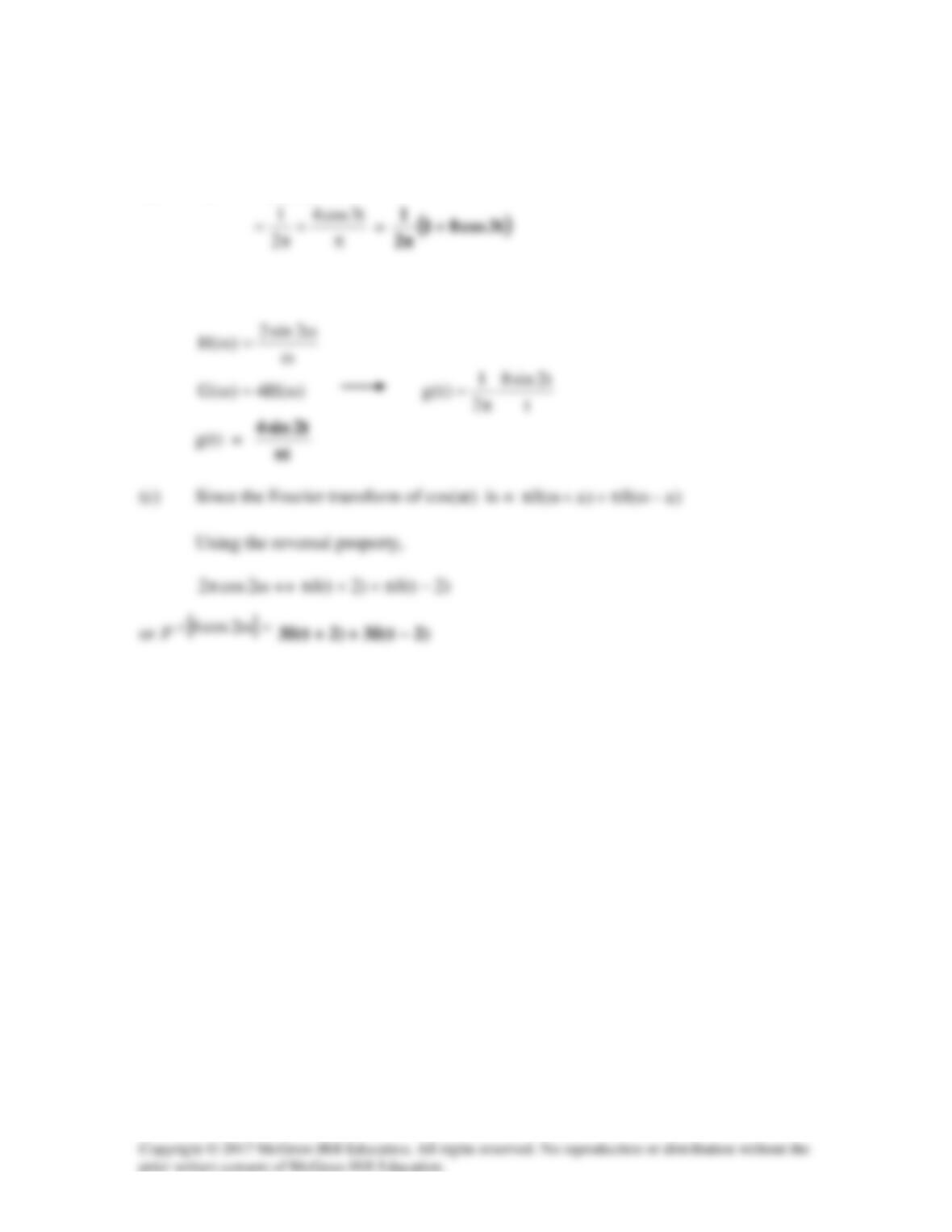
(a)
∫∫ ∞
∞−
ω
∞
∞−
ω
ω
ω+ω+
ωπδ
π
=ωω
π
=d
)j2)(j5(
e)(
2
1
de)(F
2
1
)t(f
tj
tj
+−−π
(c)
∫
∞
∞−
ω
++π
=ω
ω+ω+
−ωδ
π
=)j3)(j2(
e
2
20
d
)53)(j2(
e)1(20
2
1
)t(f
jttj
(d) Let
)(F)(F
)j5(j
5
)j5(
)(5
)(F 21 ω+ω=
ω+ω
+
ω+
ωπδ
=ω
=
Solution 18.29
(a) f(t) = F -1
+ωδ )]([
F -1
[ ]
)3(4)3(4 −ωδ++ωδ
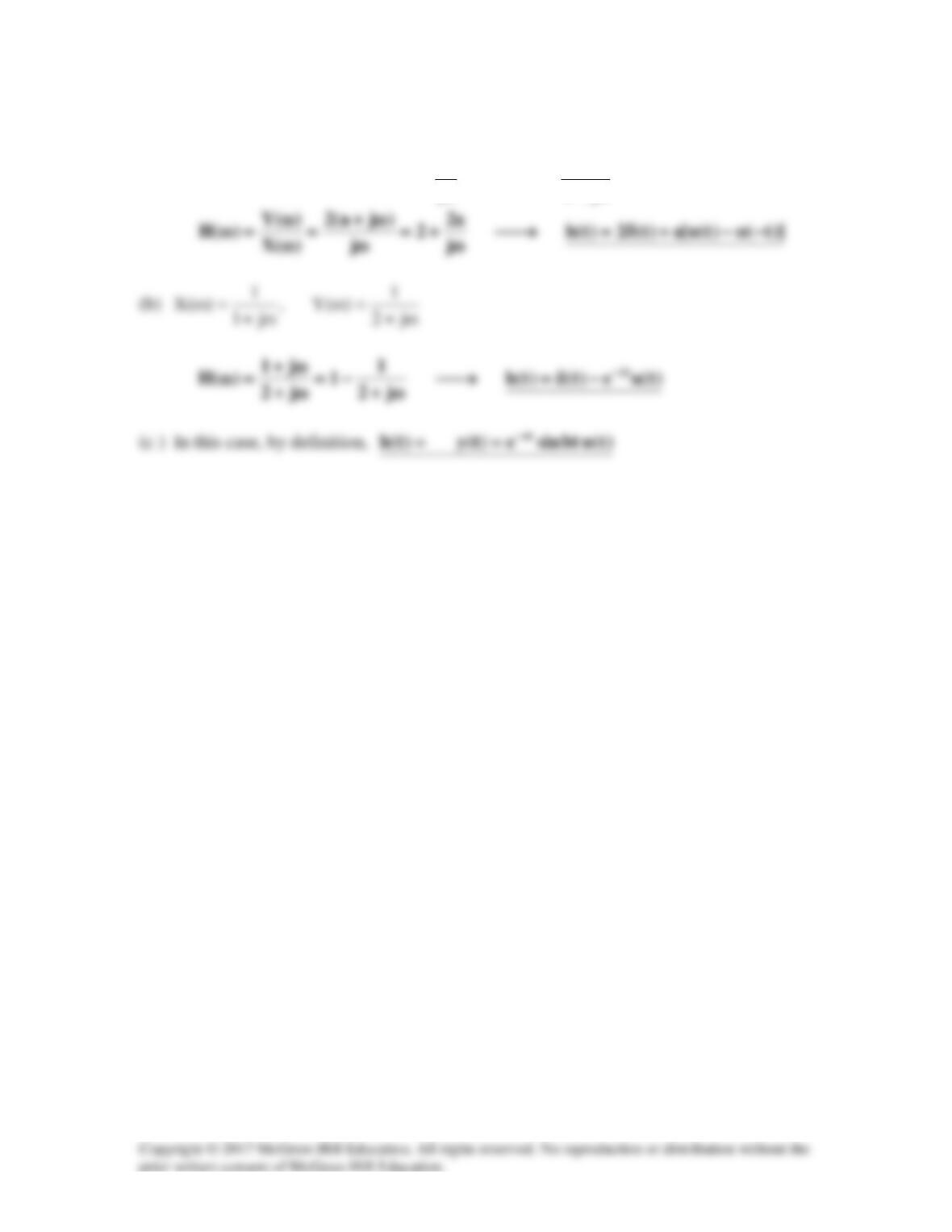
(b) If
)2t(u)2t(u)t(h −−+=
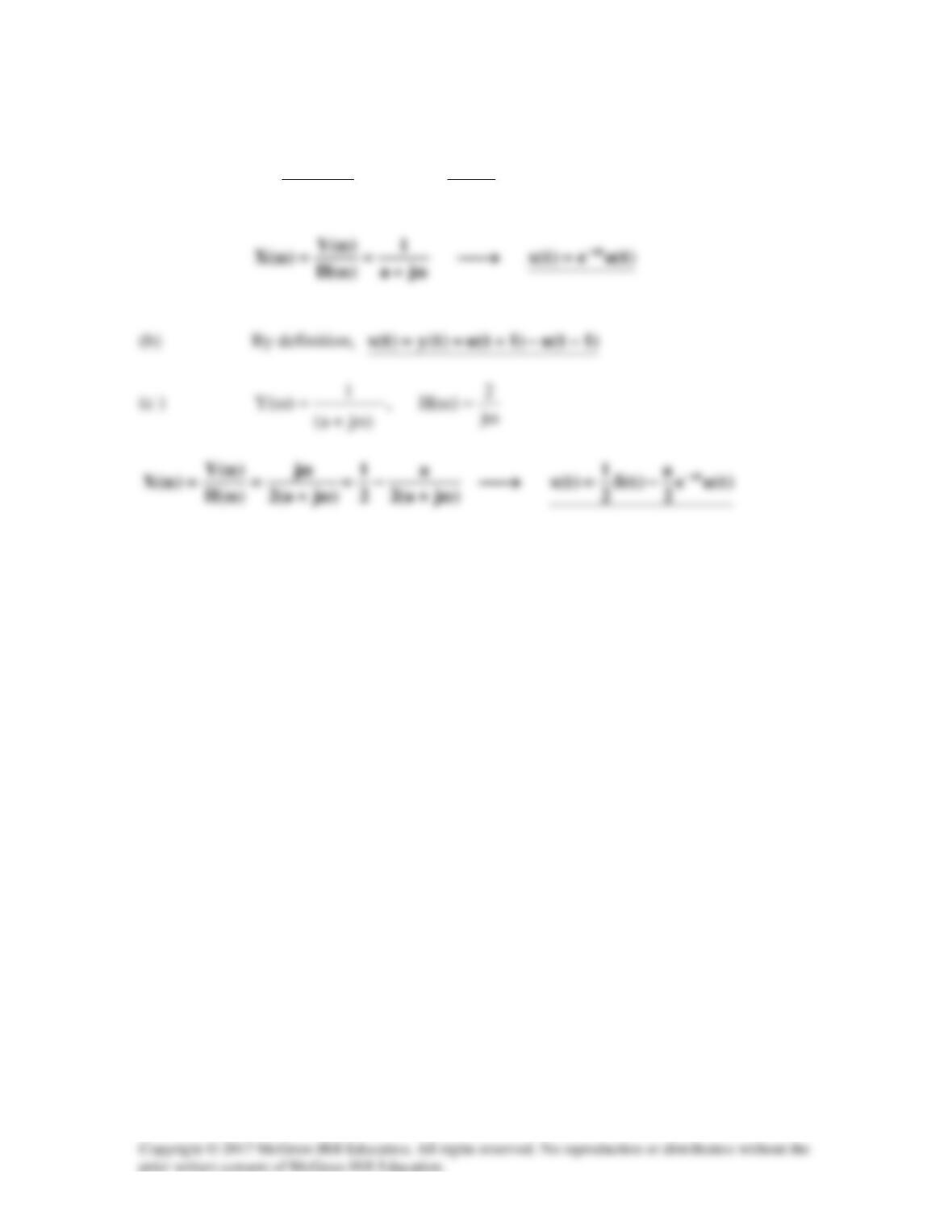
Solution 18.30
(a) ω+
=ω
ω
=ω→= ja
1
)(X,
j
2
)(Y)tsgn()t(y
Solution 18.31
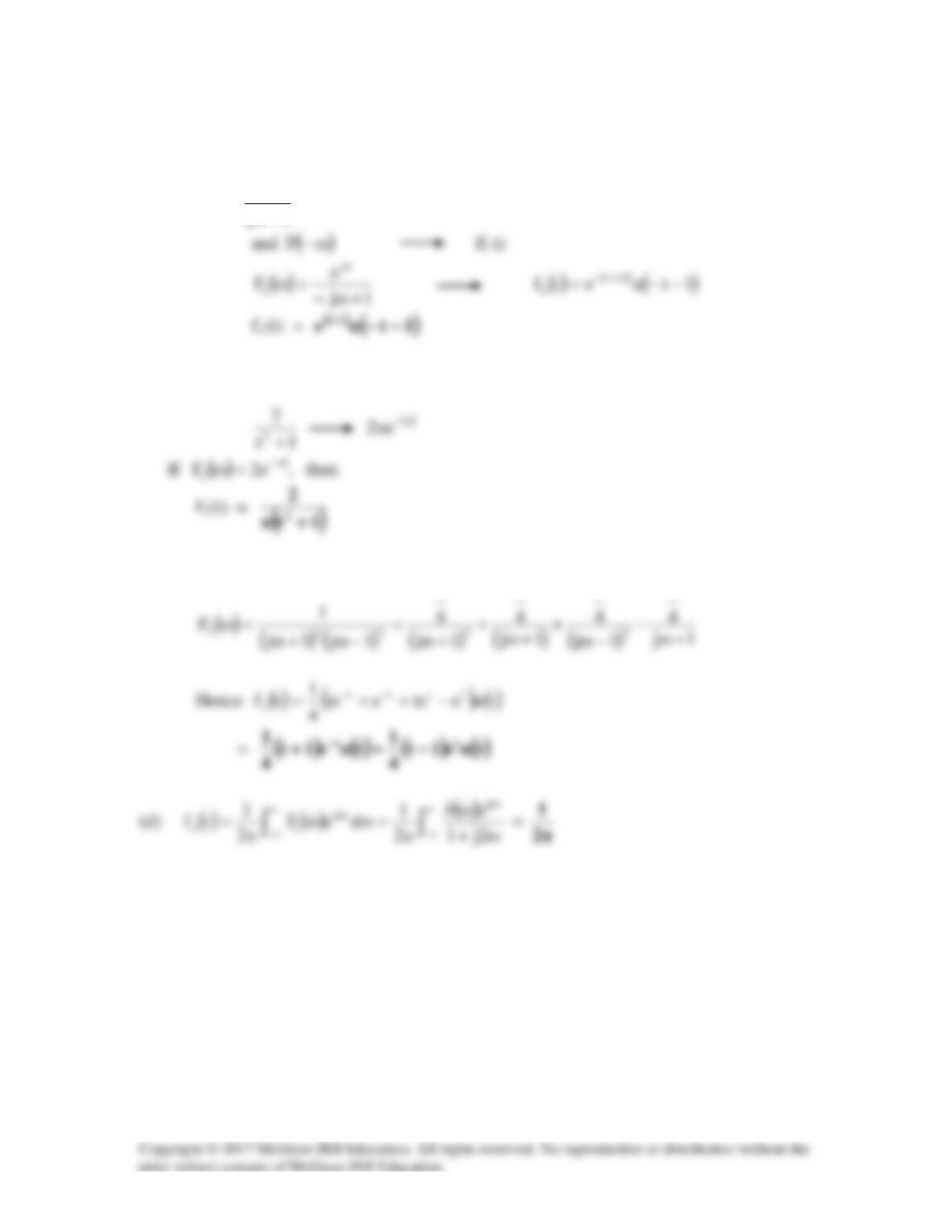
(a)
ω+
=ω
ω+
=ω ja
1
)(H,
)ja(
1
)(Y
2
Solution 18.32
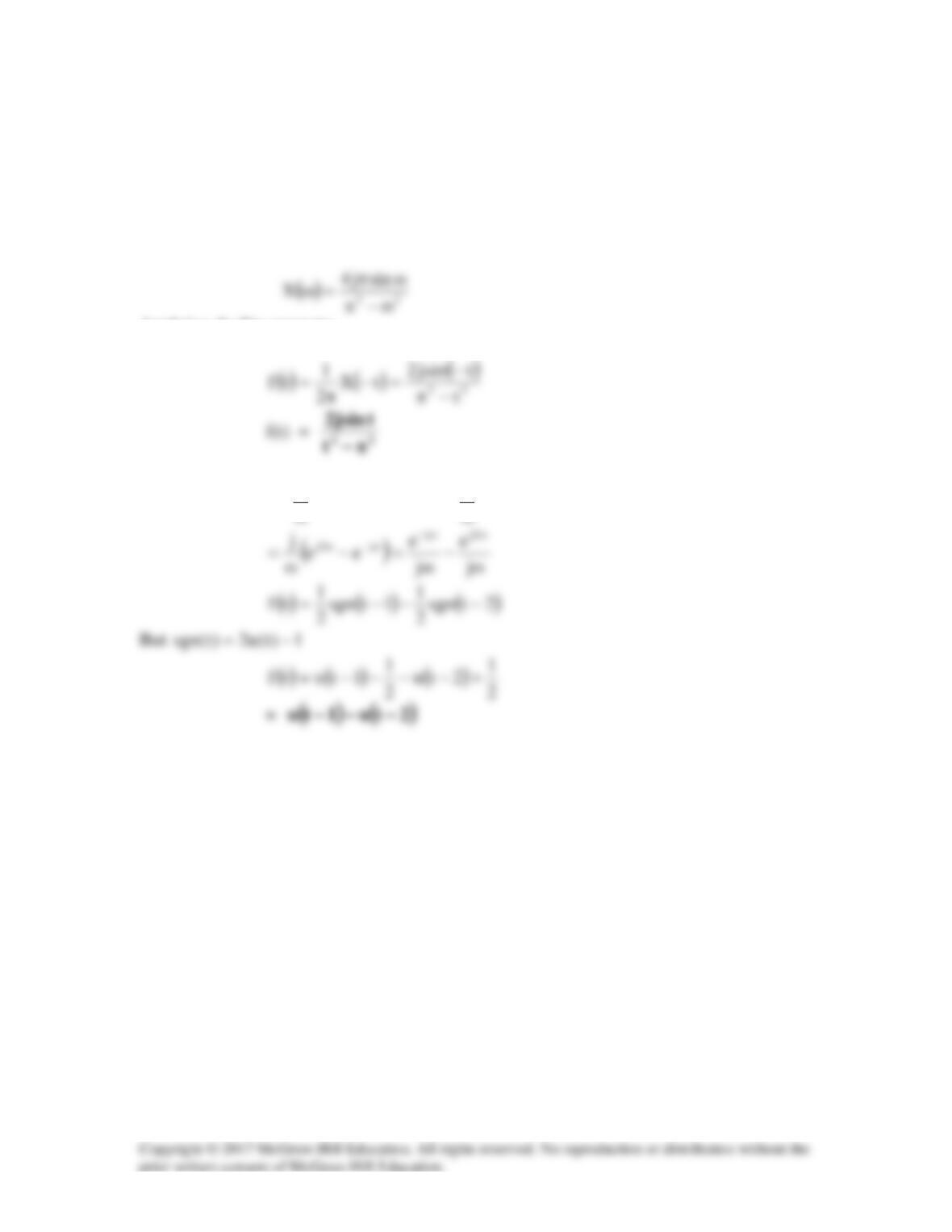
(a) Since
1j
ej
+ω
ω−
( )
)1t(ue 1t −
−−
(b) From Section 17.3,
(b) By partial fractions
1
1
1
1
Solution 18.33
(a) Let
( ) ( ) ( )
[ ]
1tu1tutsin2tx −−+π=
From Problem 17.9(b),
Applying duality property,
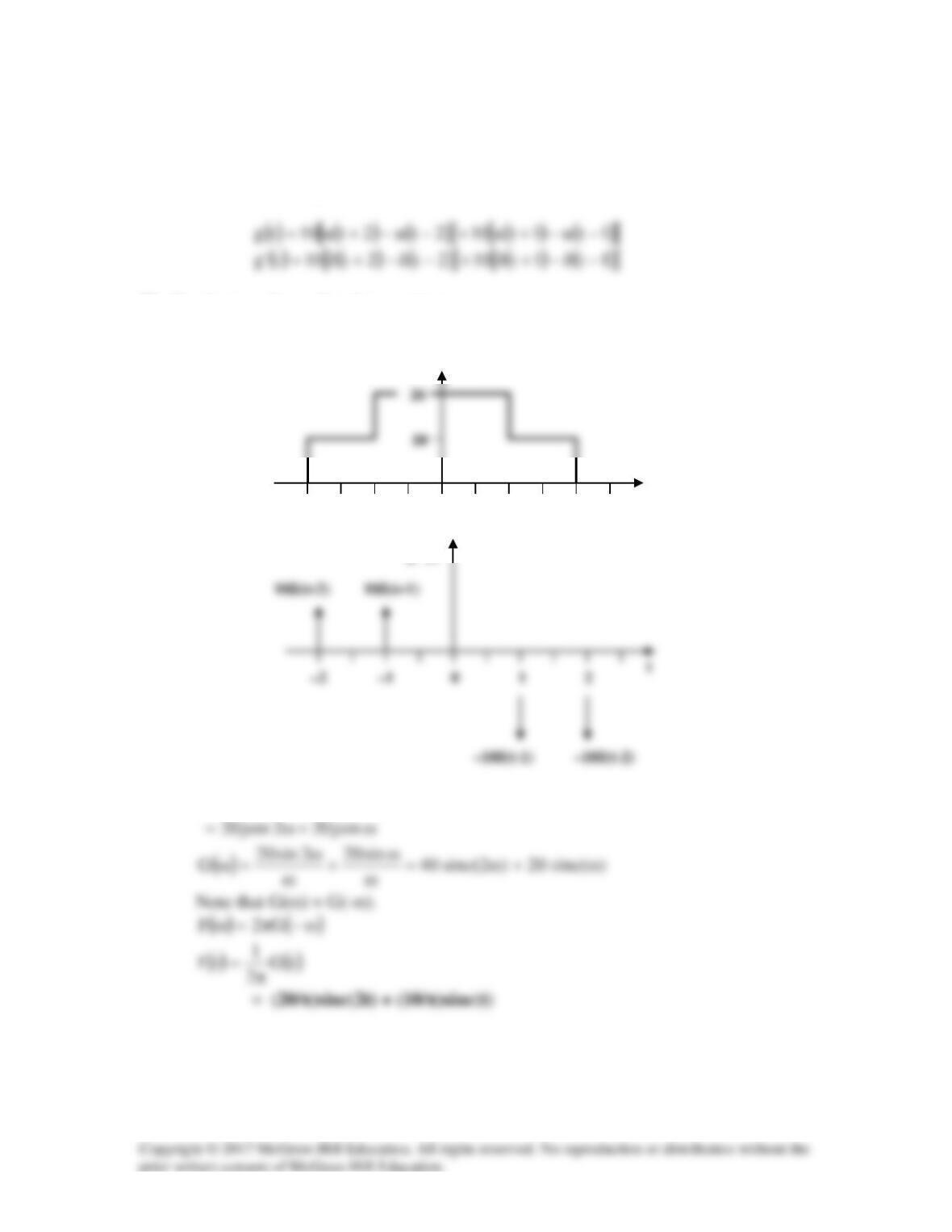
(b)
( ) ( ) ( )
ω−ω
−ω−ω
=ω sinjcos
j
2sinj2cos
j
F
Solution 18.34
First, we find G(ω) for g(t) shown below.
The Fourier transform of each term gives
0
t
2
1
–2
–1
( )
( ) ( )
ω−ωω−ω −+−=ωω jj2j2j ee10ee10Gj
0
g(t)
t
2
1
–2
–1
g ‘(t)