CHAPTER 18
Activity-Based Costing
ASSIGNMENT CLASSIFICATION TABLE
Learning Objectives
Questions
Brief
Exercises
Do It!
Exercises
A
Problems
*1. Discuss the difference
between traditional costing
and activity-based costing.
1, 2, 3, 4, 5
1, 2
1
1, 2, 3, 4, 5,
10, 11
1A, 3A,
4A, 5A
*2. Apply activity-based
costing to a manufacturer.
6, 7, 9, 10,
11, 12
3, 4, 5, 6, 7
2
1, 3, 4, 5, 6,
7, 8, 9, 10,
11
1A, 2A, 3A,
4A, 5A
*3. Explain the benefits and
8, 13, 14, 15,
16, 17, 19
8, 9, 10, 11,
3
9, 10, 11, 12,
1A, 5A
*4. Apply activity-based
costing to service
9, 12
4
ASSIGNMENT CHARACTERISTICS TABLE
Problem
Number
Description
Difficulty
Level
Time
Allotted (min.)
1A
Assign overhead using traditional costing and ABC;
compute unit costs; classify activities as value- or
non-value-added.
Moderate
35–45
Assign overhead to products using ABC and evaluate
Assign overhead costs using traditional costing and ABC;
5A
Assign overhead costs to services using traditional
Moderate
35–45
BLOOM’ S TAXONOMY TABLE
Correlation Chart between Bloom’s Taxonomy, Learning Objectives and End-of–Chapter Exercises and Problems
Learning Objective
Knowledge
Comprehension
Application
Analysis
Synthesis
Evaluation
*1. Discuss the difference
between traditional costing and
activity-based costing.
Q18-1
Q18-2
Q18-3
Q18-4
Q18-5
DI18-1
BE18-1
BE18-2
E18-1
E18-2
E18–10
E18–11
P18–1A
E18-3
E18-4
E18-5
P18–3A
P18–4A
P18–5A
**3. Explain the benefits and
limitations of activity-based
costing.
Q18–18
DI18-4
E18–14
E18–17
Q18–20
Q18-8
Q18–13
Q18–14
A18–15
Q18–16
Q18–17
DI18-3
BE18–11
BE18–12
E18-9
E18–10
E18–11
P18–1A
BE18-8
BE18-9
BE18–10
E18–12
E18–13
E18–16
P18–5A
Q18–11
ANSWERS TO QUESTIONS
1. Direct labor is a valid basis for allocating overhead when: (a) direct labor constitutes a significant
Questions Chapter 18 (Continued)
19. Greater accuracy in cost allocation is achieved by recognizing the four levels of activity. Some
SOLUTIONS TO BRIEF EXERCISES
BRIEF EXERCISE 18-1
BRIEF EXERCISE 18-2
Under ABC, overhead costs are shifted from the high-volume products to
BRIEF EXERCISE 18-3
BRIEF EXERCISE 18-4
BRIEF EXERCISE 18-5
BRIEF EXERCISE 18-6
BRIEF EXERCISE 18-7
BRIEF EXERCISE 18-8
BRIEF EXERCISE 18-9

BRIEF EXERCISE 18–10
BRIEF EXERCISE 18–11
BRIEF EXERCISE 18–12
SOLUTIONS TO DO IT! REVIEW EXERCISES
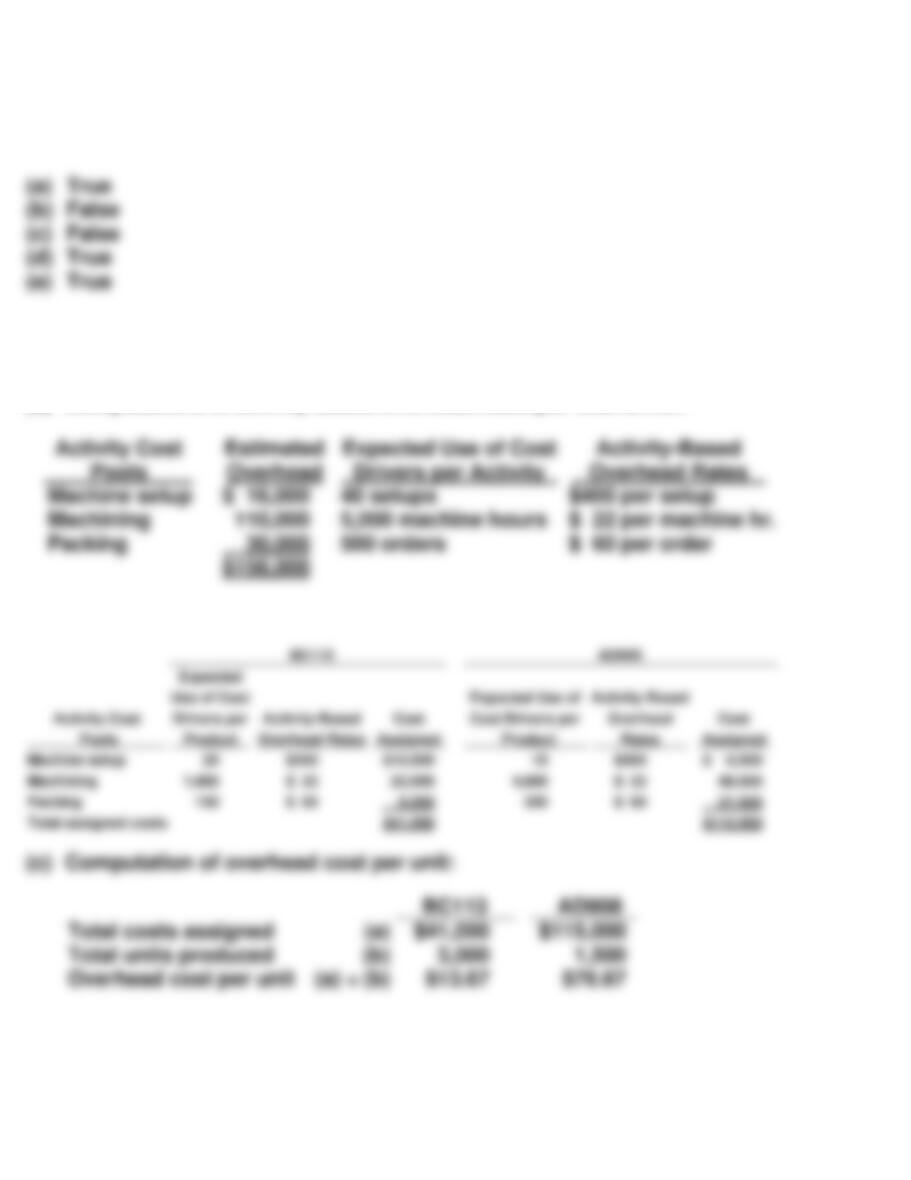
DO IT! 18-1
DO IT! 18-2
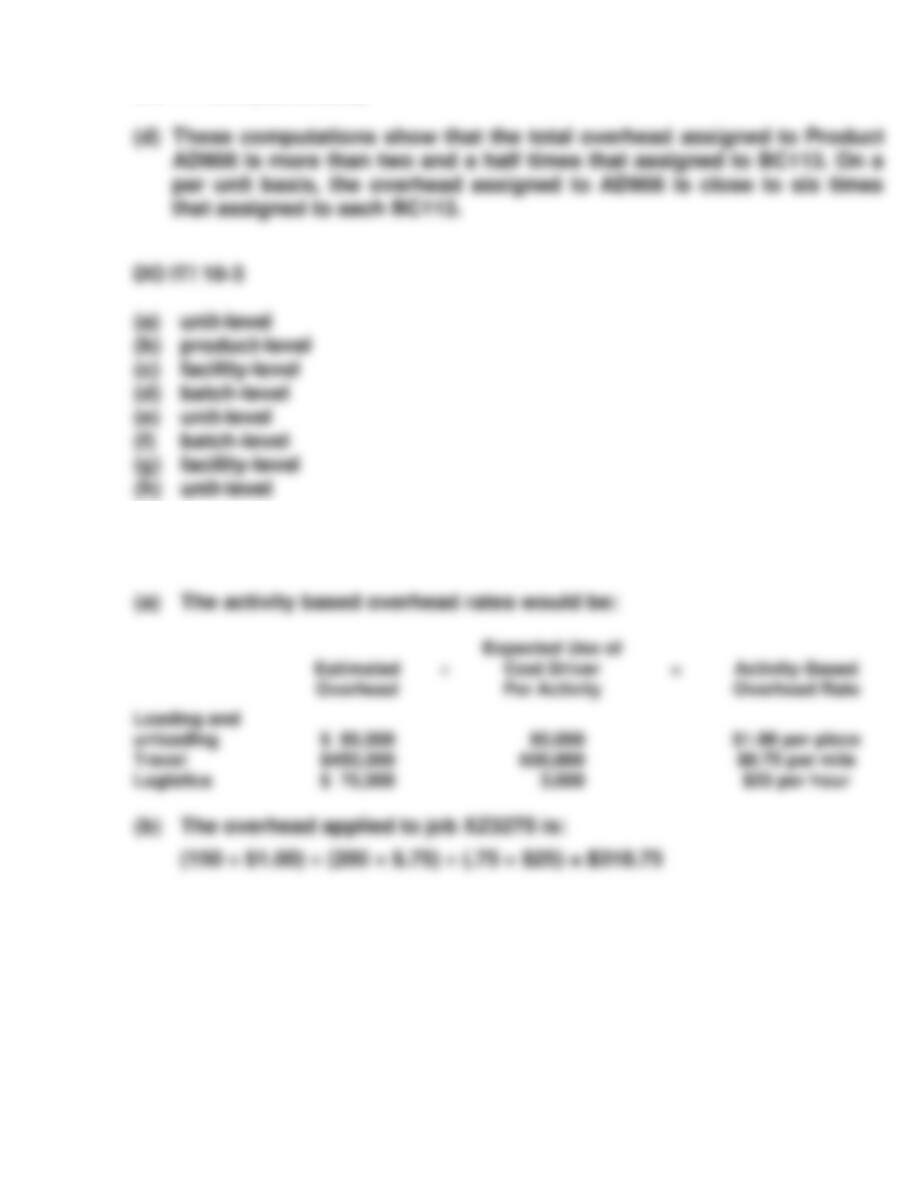
(a) Computations of activity-based overhead rates per cost driver:
(b) Assignment of each activity’s overhead cost to products using ABC:
DO IT! 18-2 (Continued)
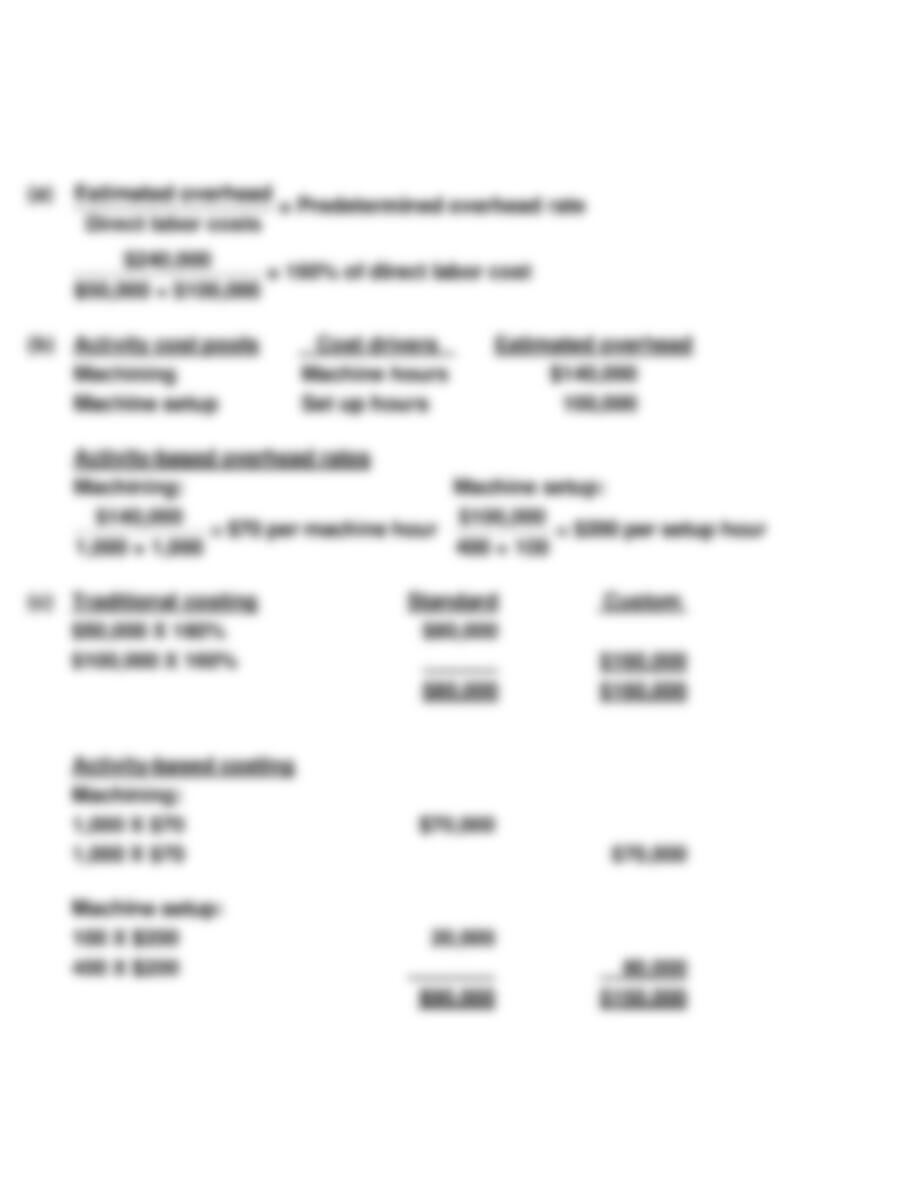
DO IT! 18-4
SOLUTIONS TO EXERCISES
EXERCISE 18-1
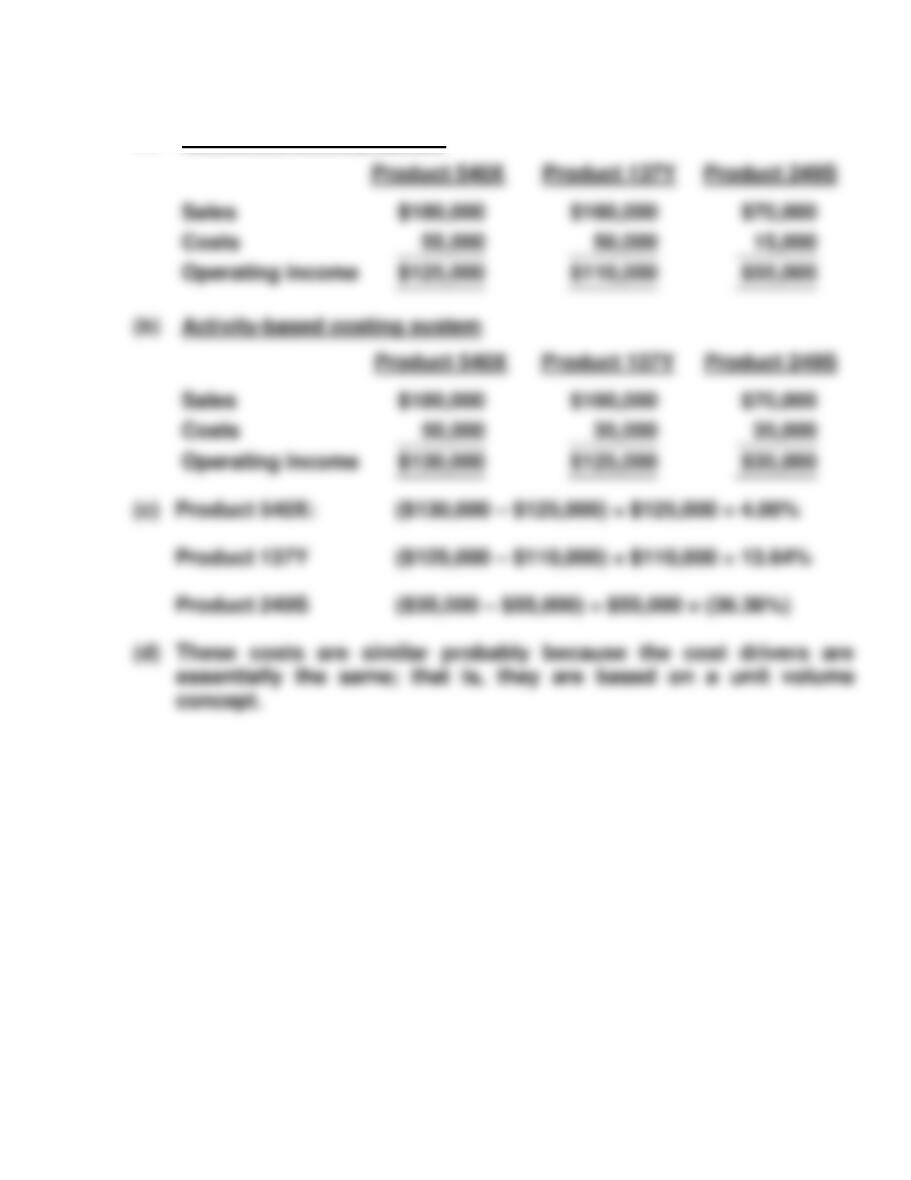
EXERCISE 18-2
(a)
Traditional costing system
(b)
Activity-based costing system
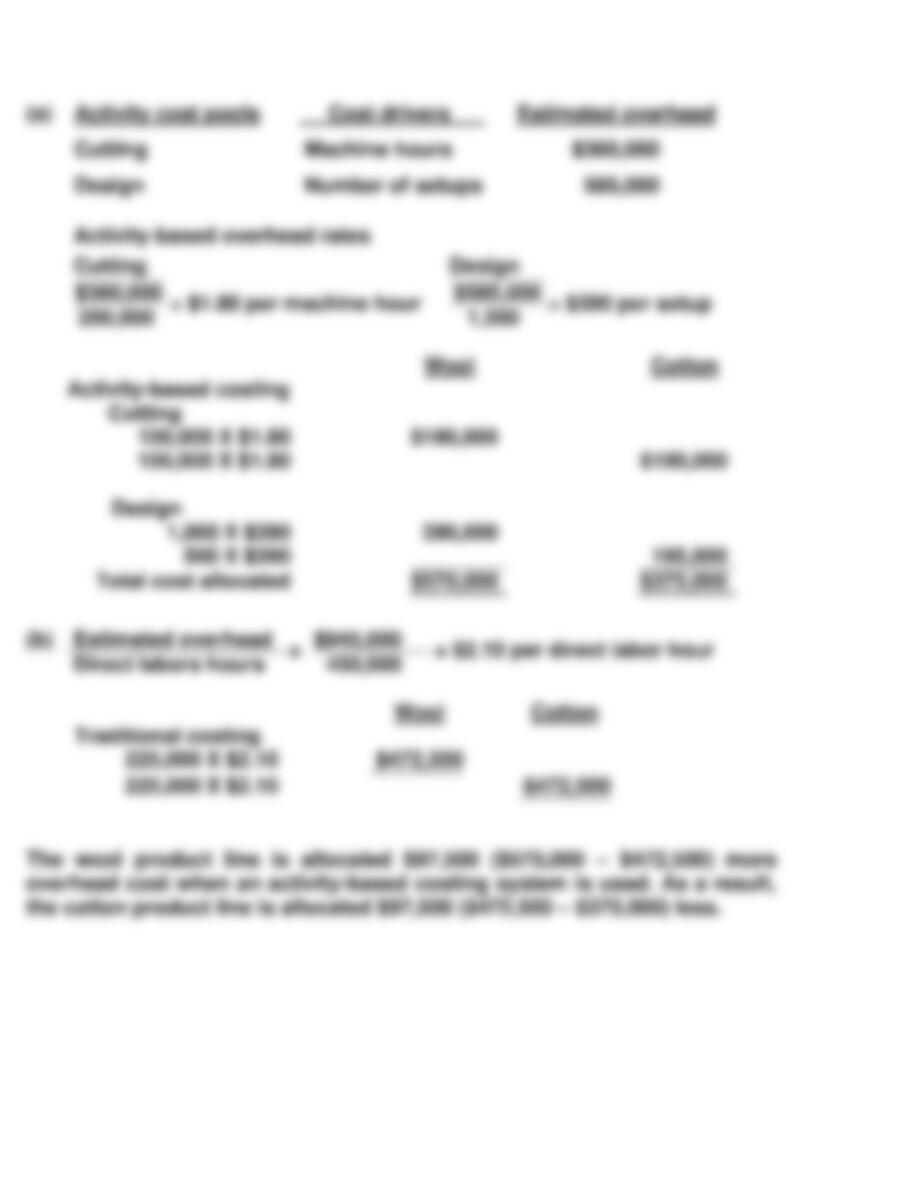
EXERCISE 18-3
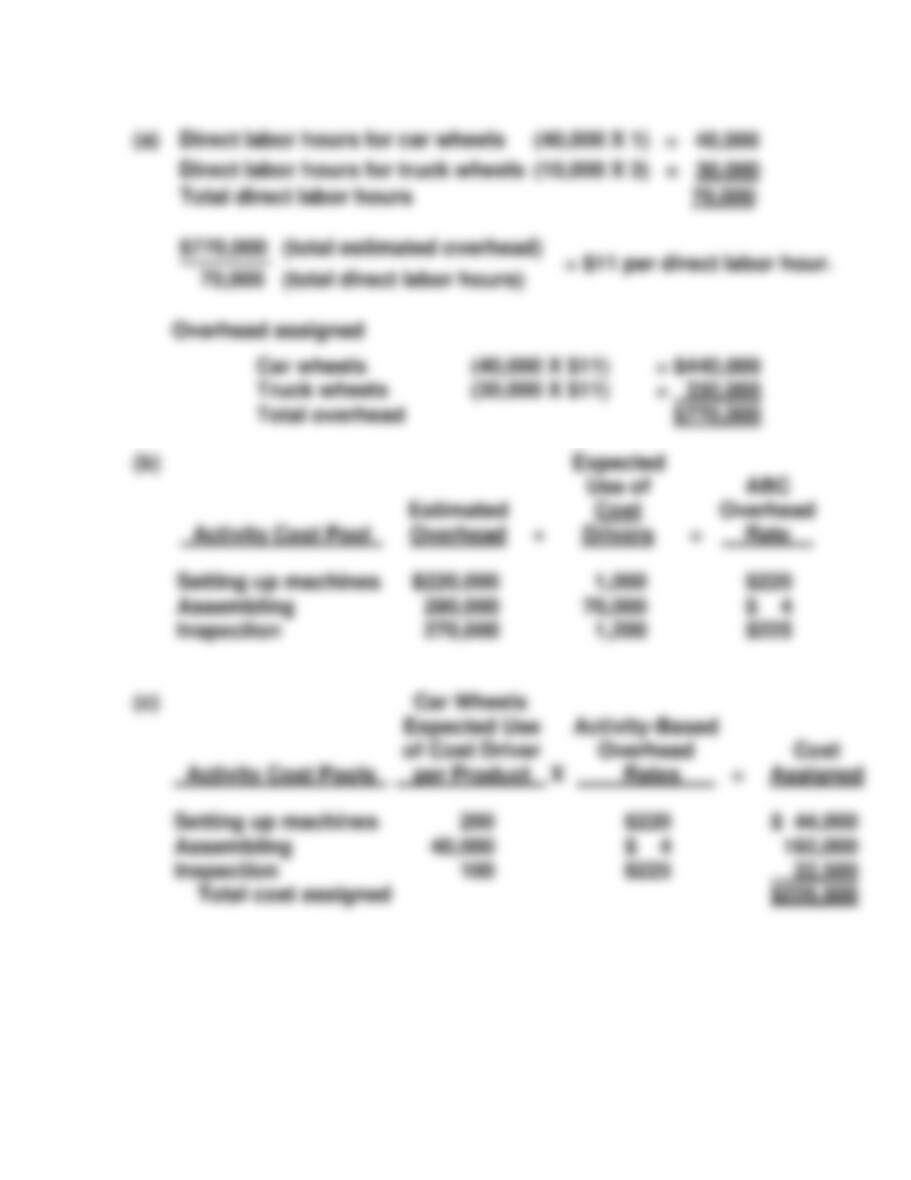
EXERCISE 18-4
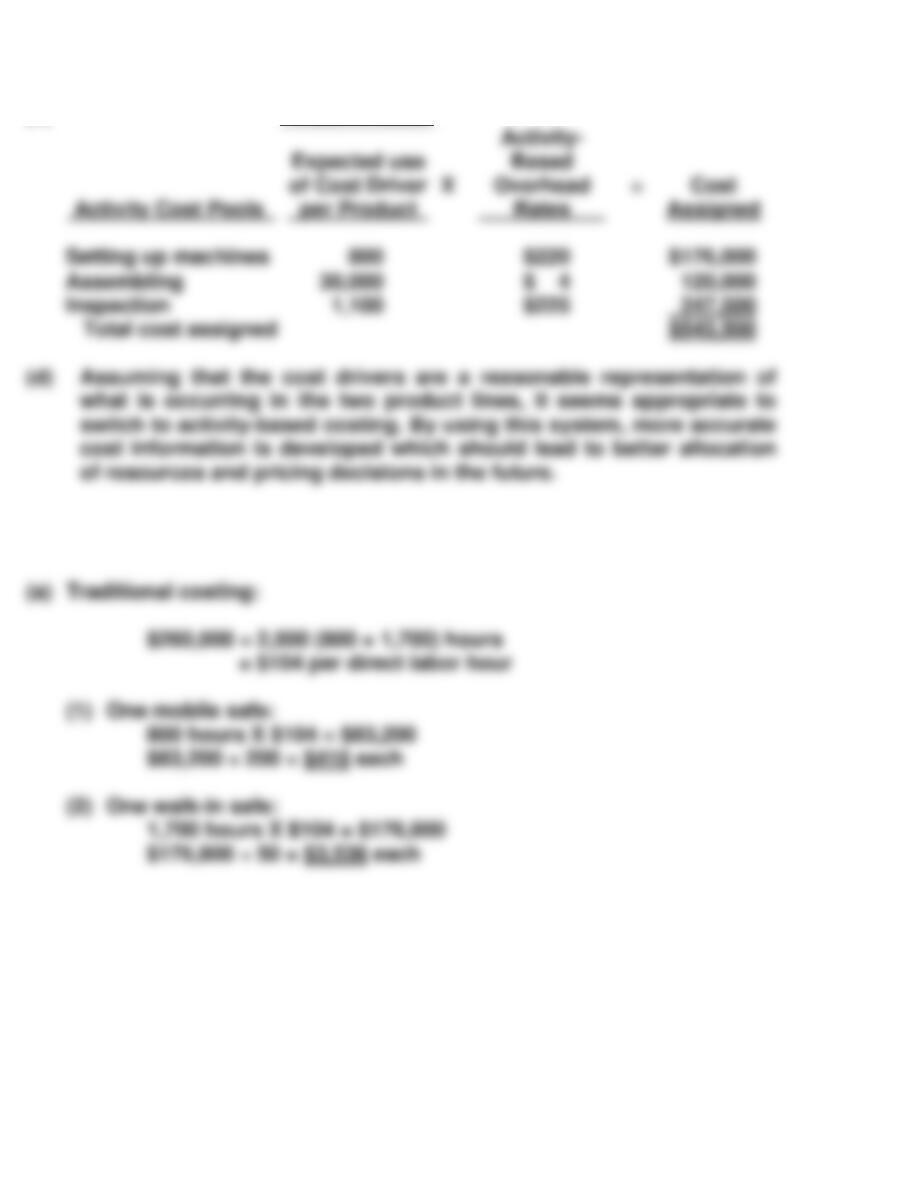
EXERCISE 18-4 (Continued)
(c)
Truck Wheels
EXERCISE 18-5
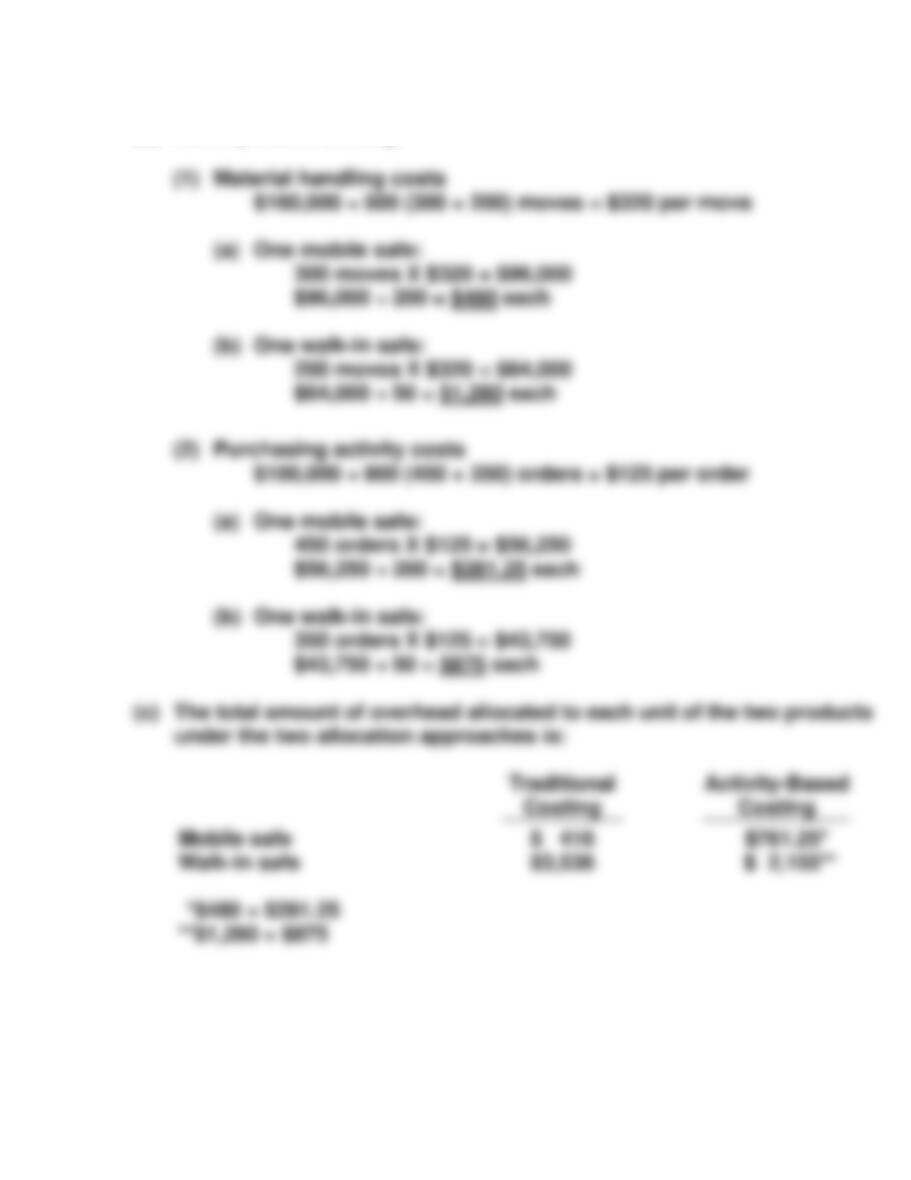
EXERCISE 18-5 (Continued)
(b) Activity-based costing:
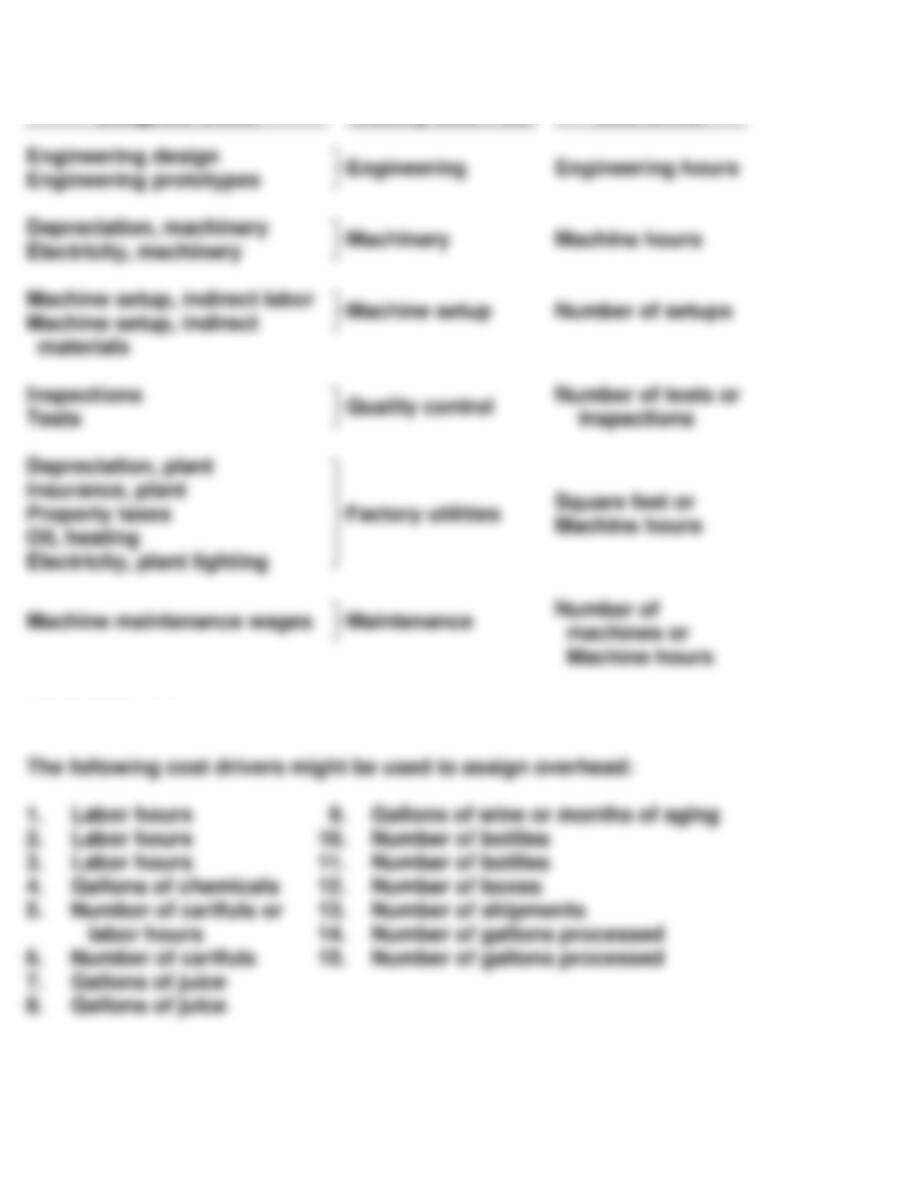
EXERCISE 18-6
Budgeted Costs
Activity Cost Pool
Cost Driver
EXERCISE 18-7
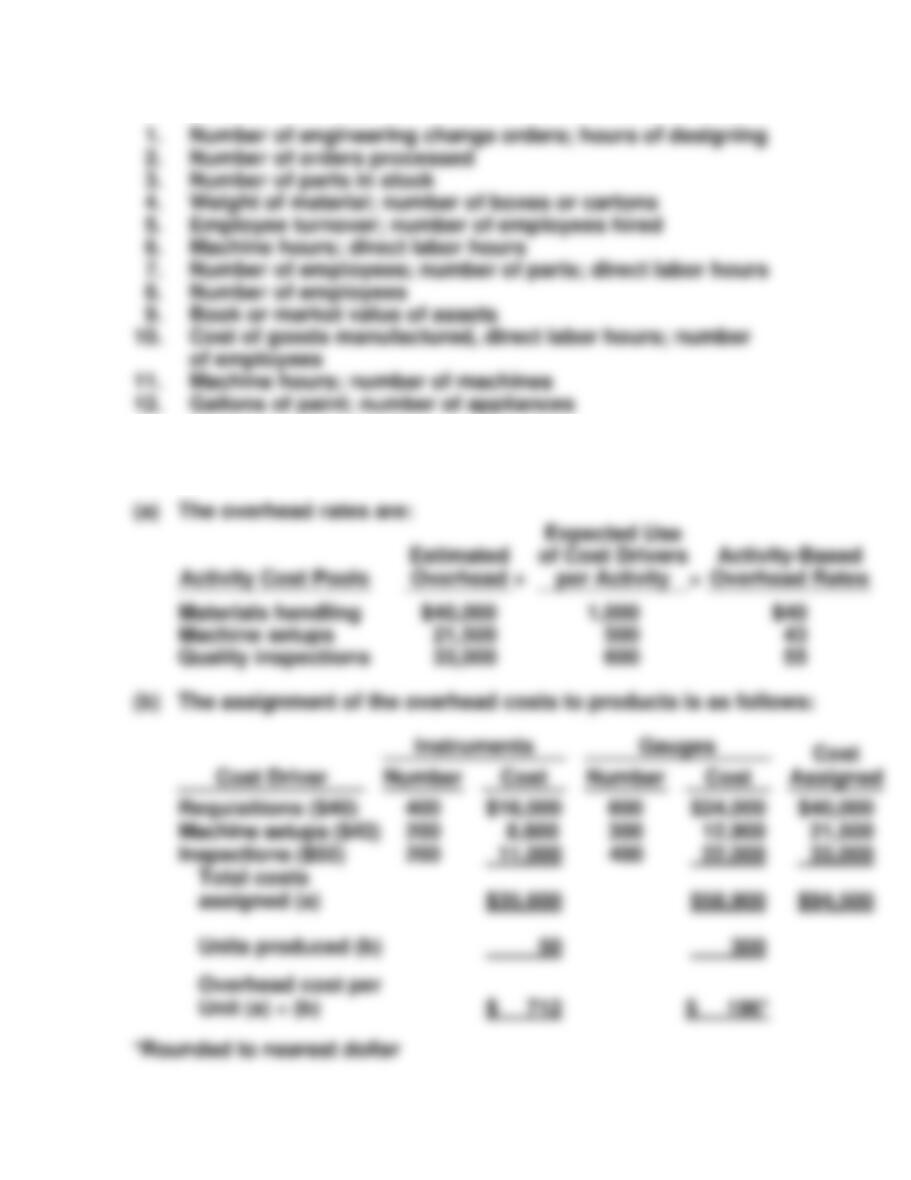
EXERCISE 18-8
EXERCISE 18-9
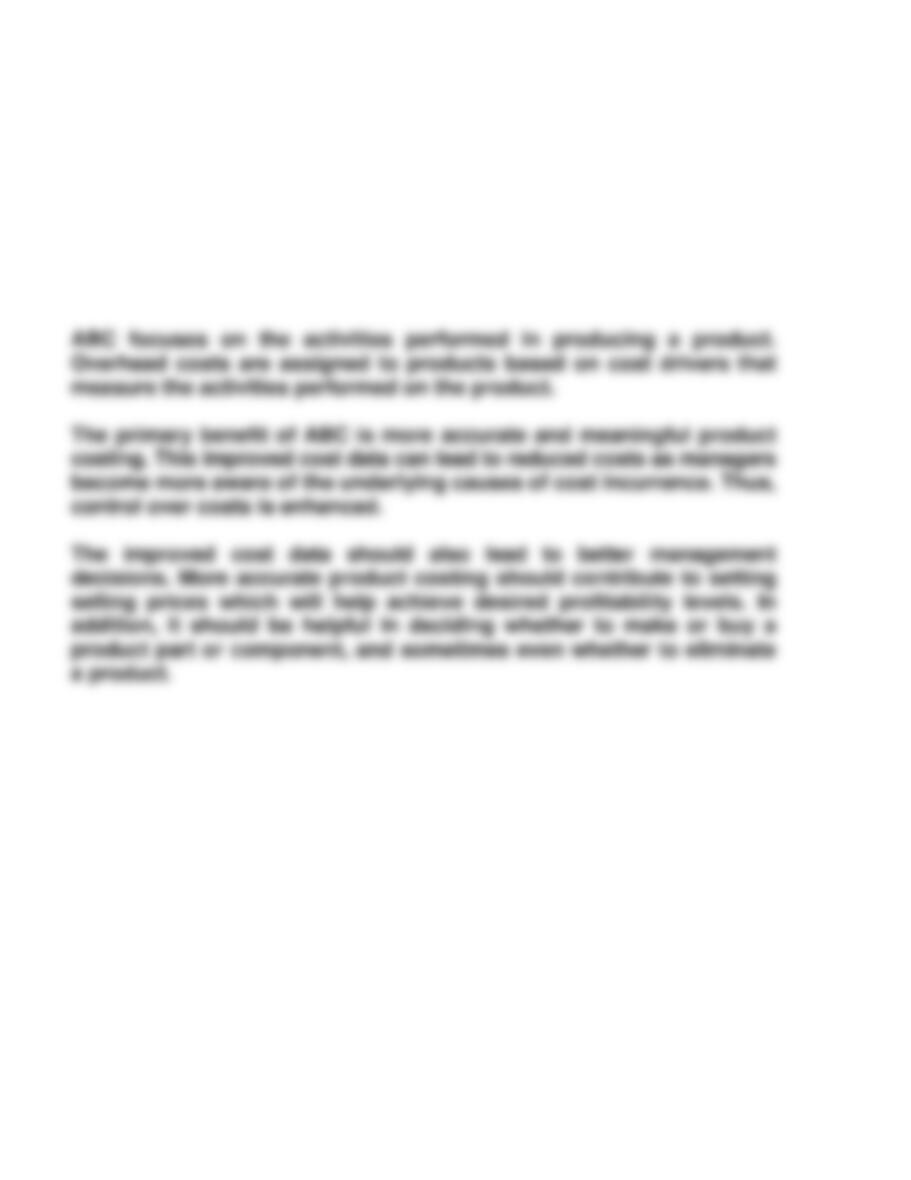
EXERCISE 18-9 (Continued)
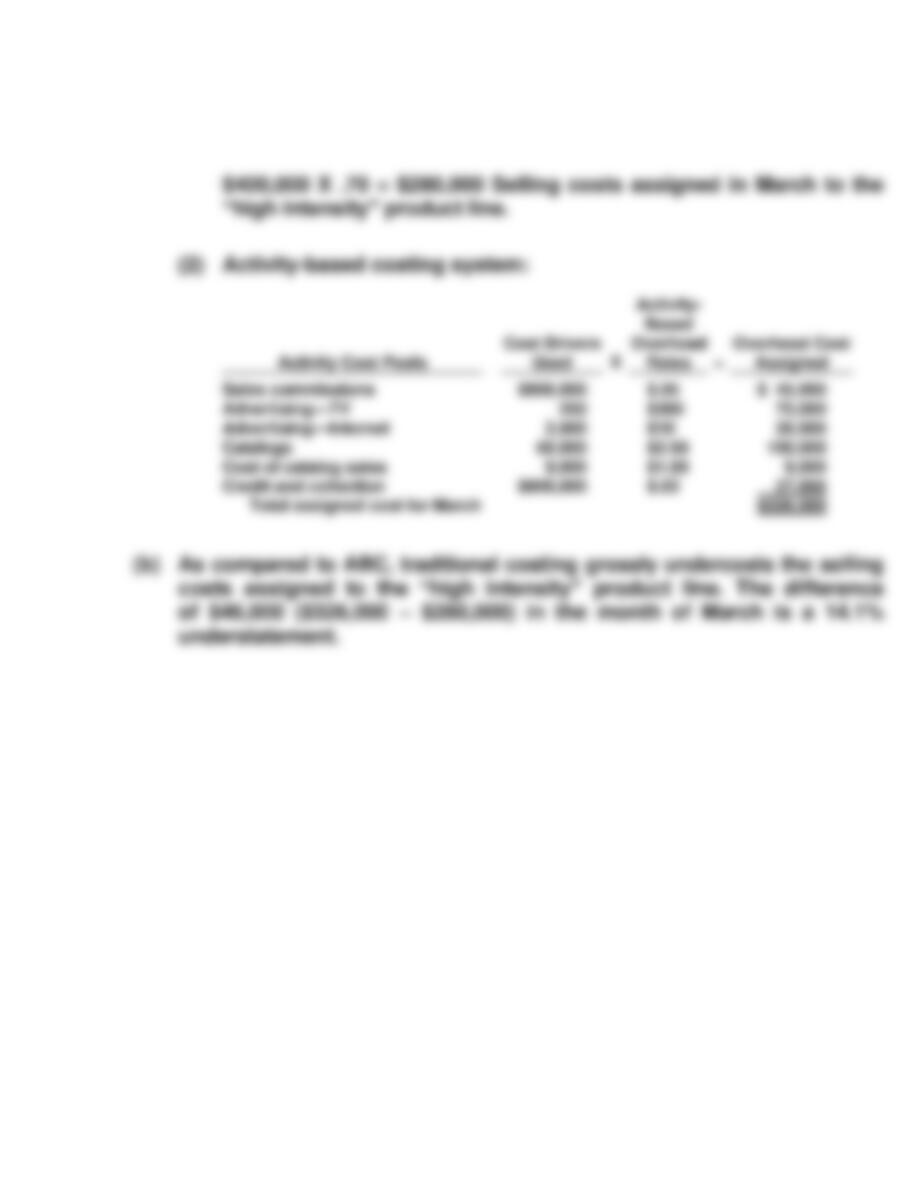
(c) MEMO
To: President, Air United, Inc.
From: Student
Re: Benefits of activity-based costing (ABC)
EXERCISE 18-10
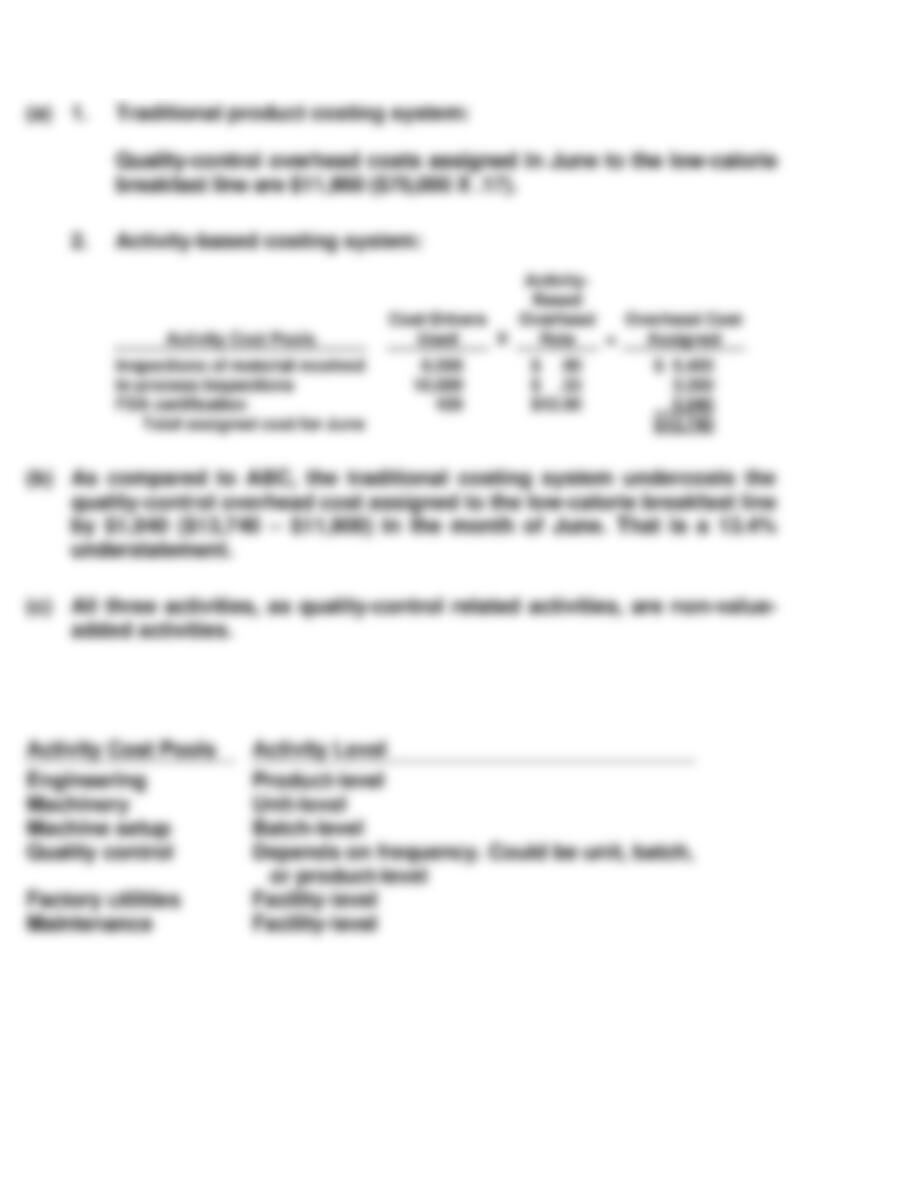
(a) (1) Traditional product costing system:
EXERCISE 18-11
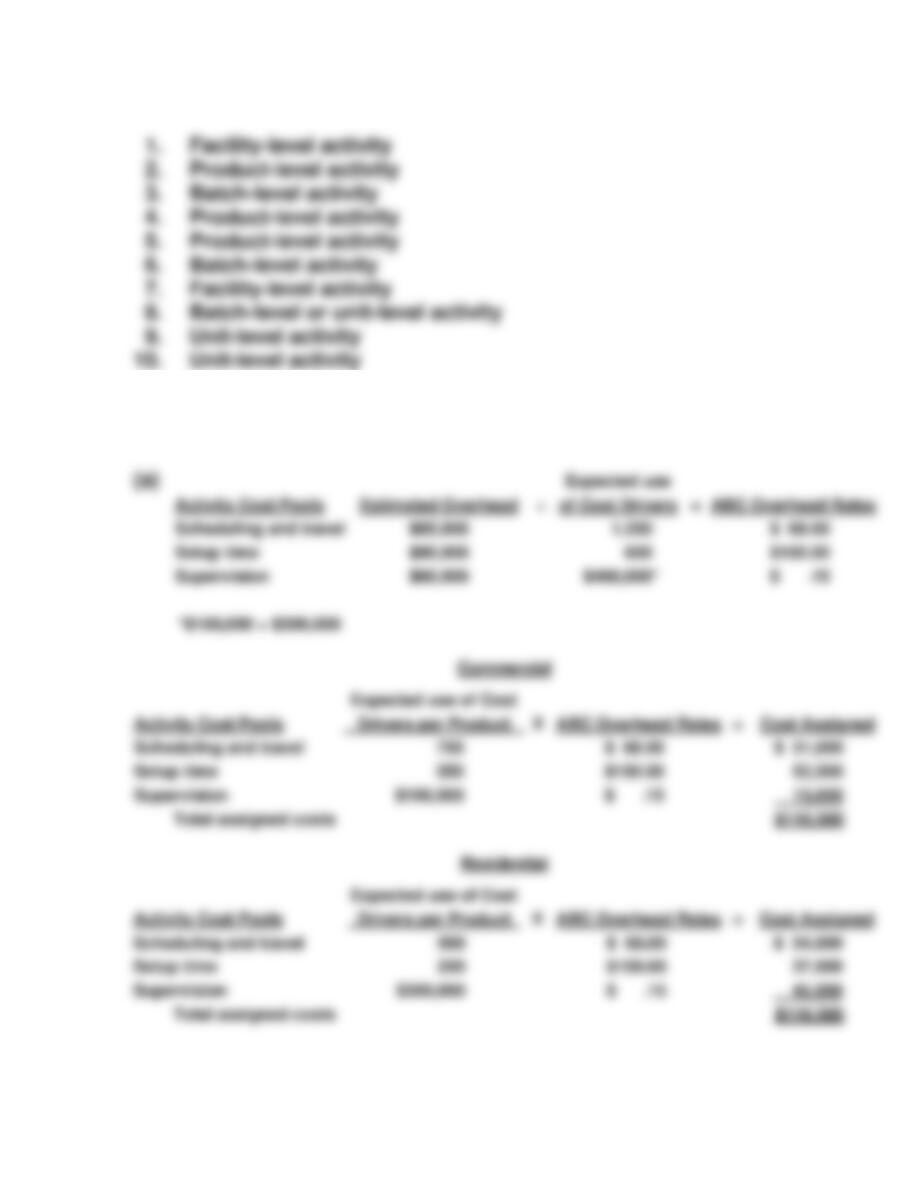
EXERCISE 18-12
EXERCISE 18-13
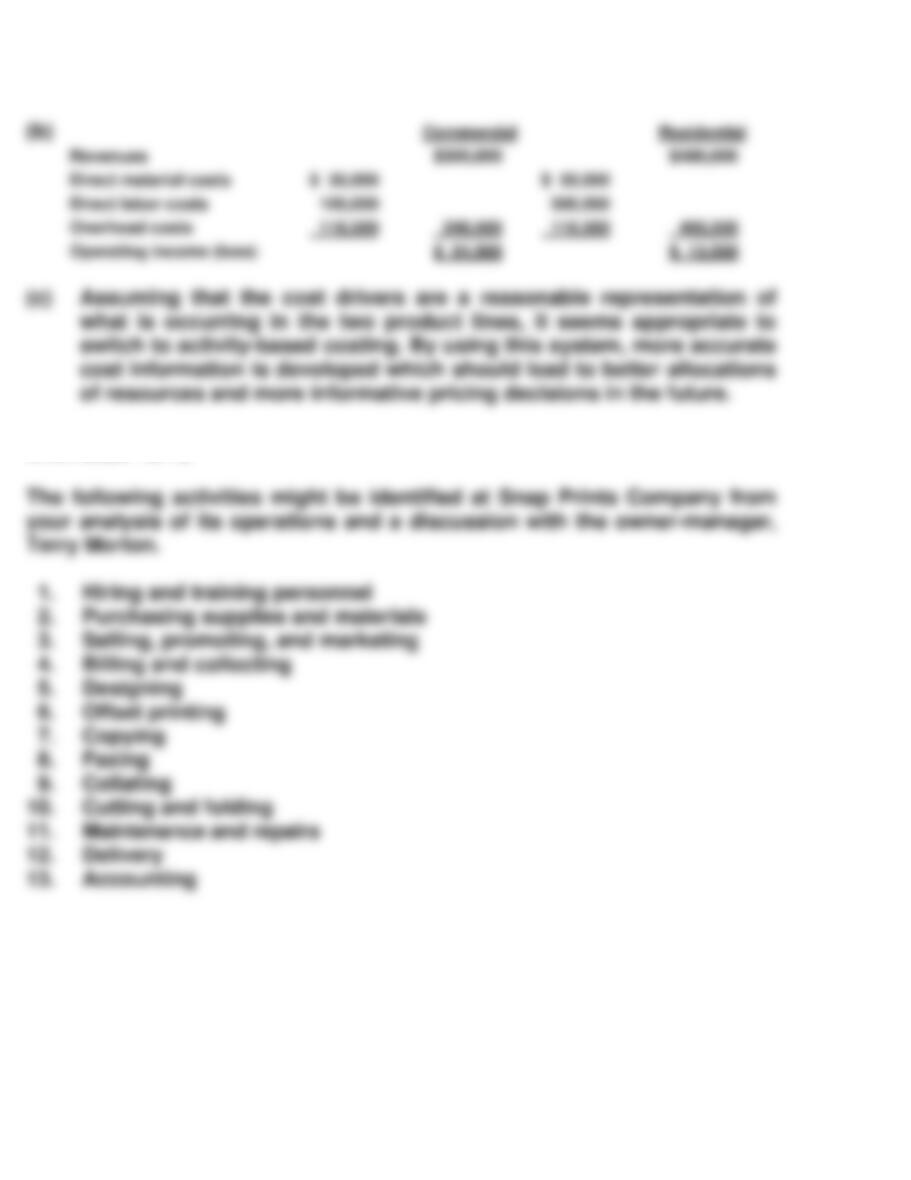
EXERCISE 18–14
EXERCISE 18–14 (Continued)
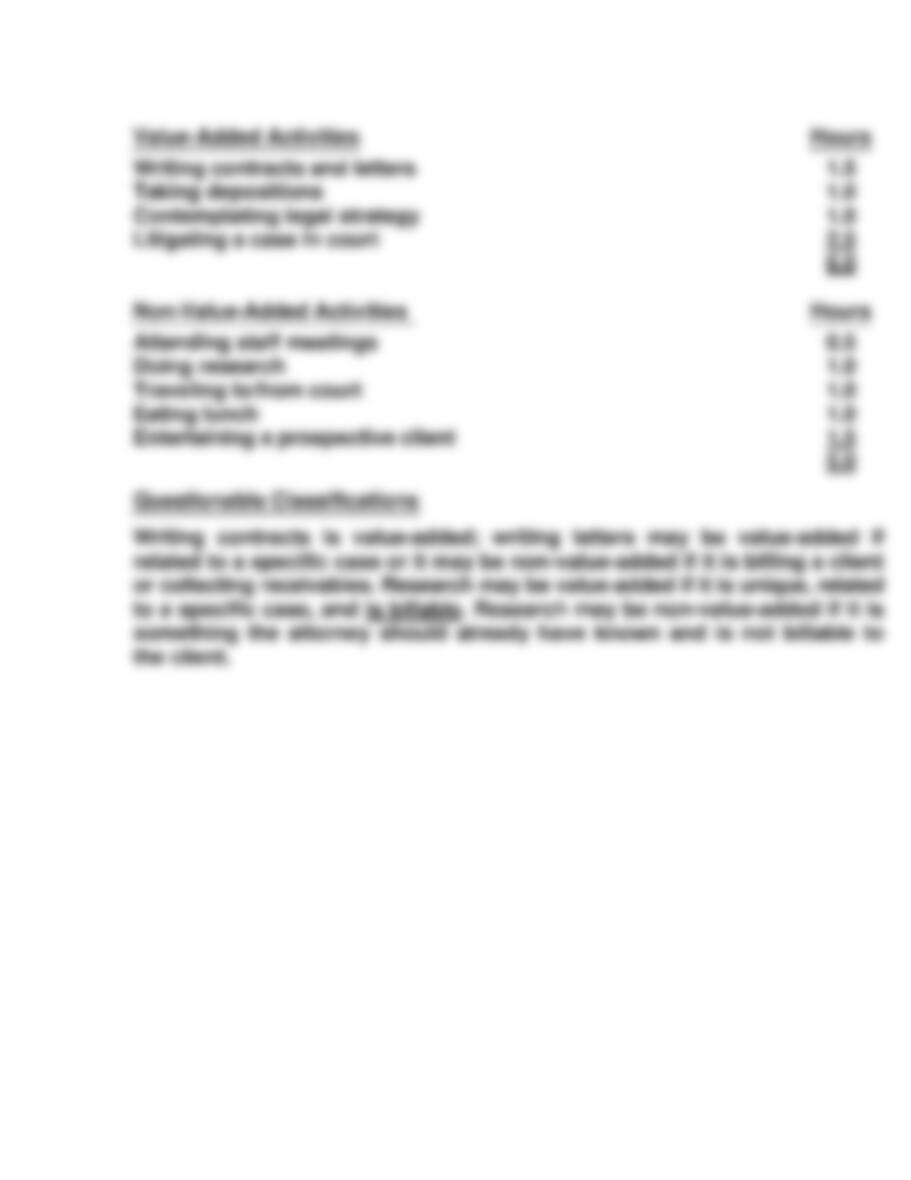
EXERCISE 18–15
EXERCISE 18-16
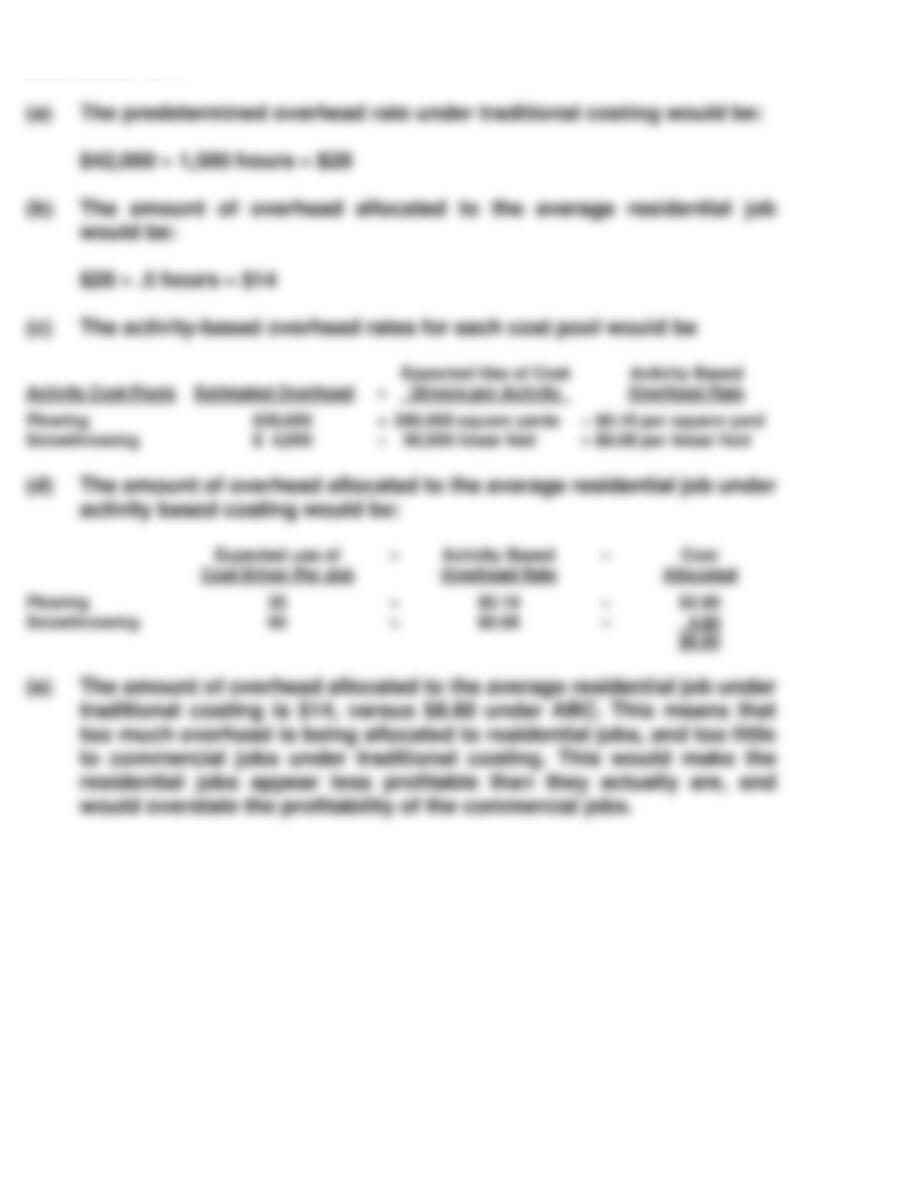
EXERCISE 18-17
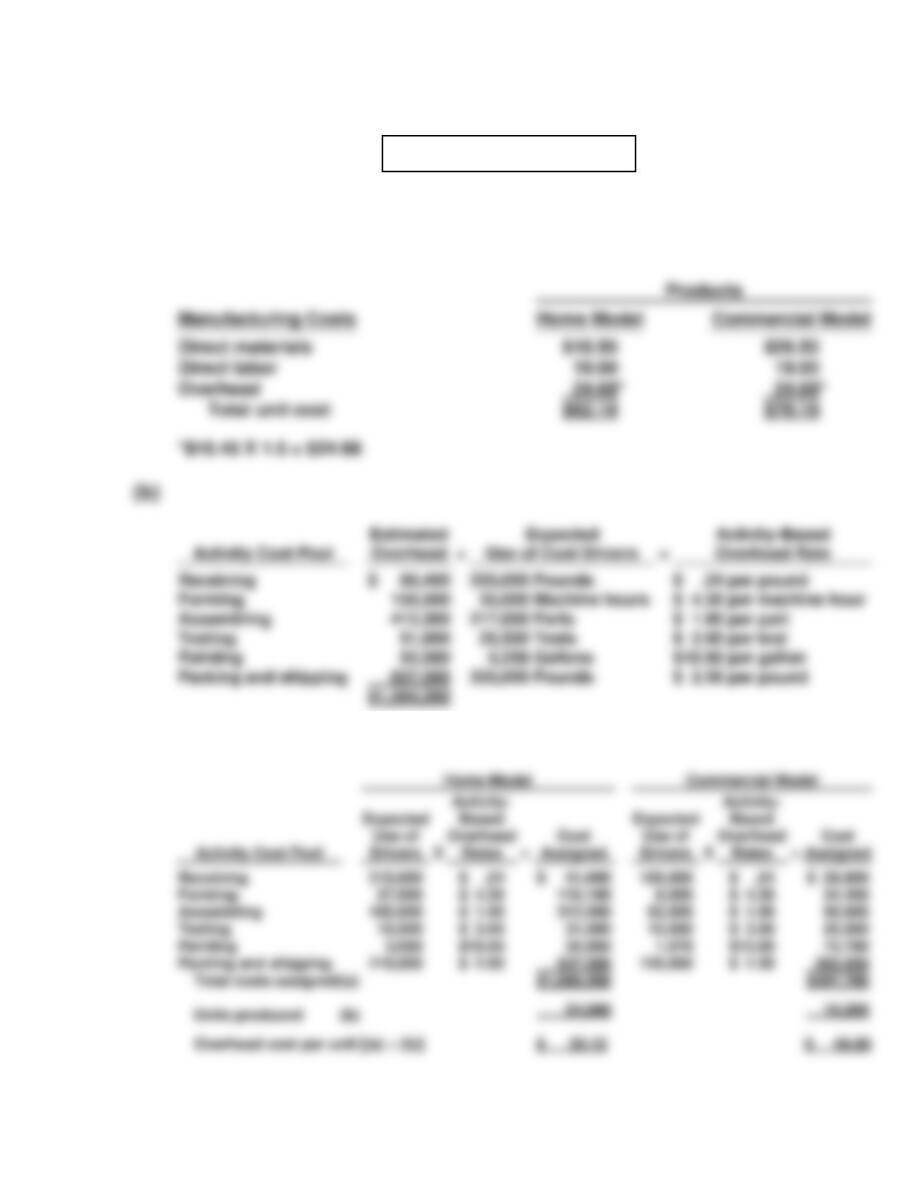
SOLUTIONS TO PROBLEMS
PROBLEM 18–1A
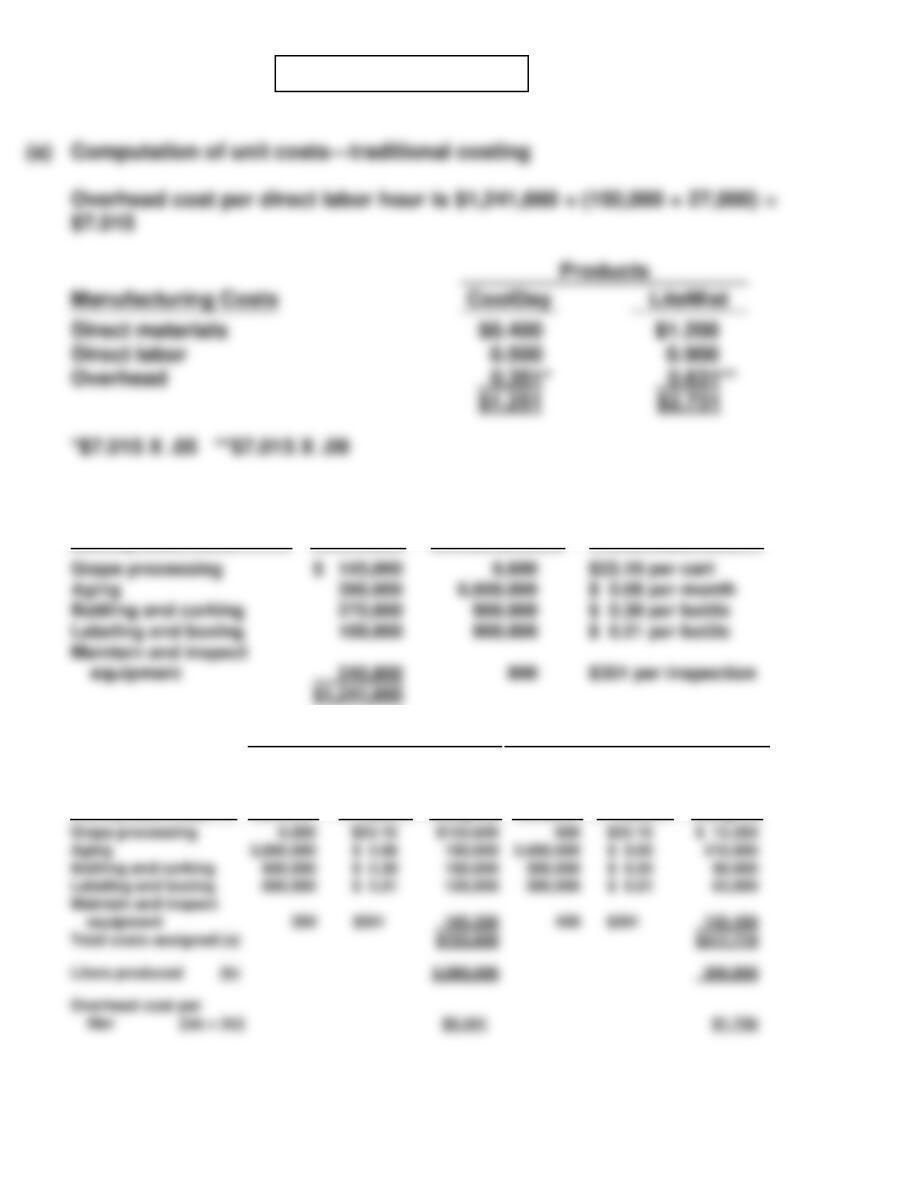
(a) Computation of unit costs—traditional costing.
(c)
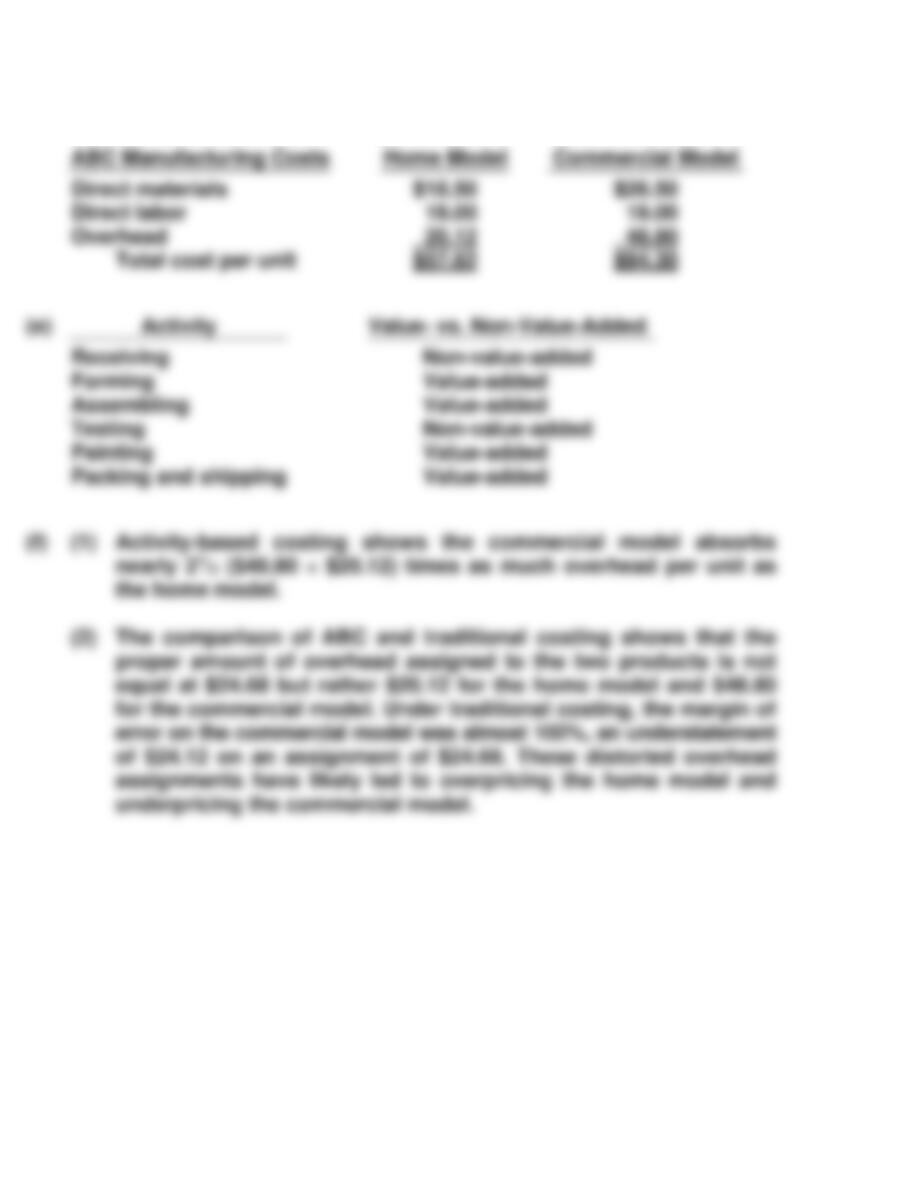
PROBLEM 18-1A (Continued)
(d)
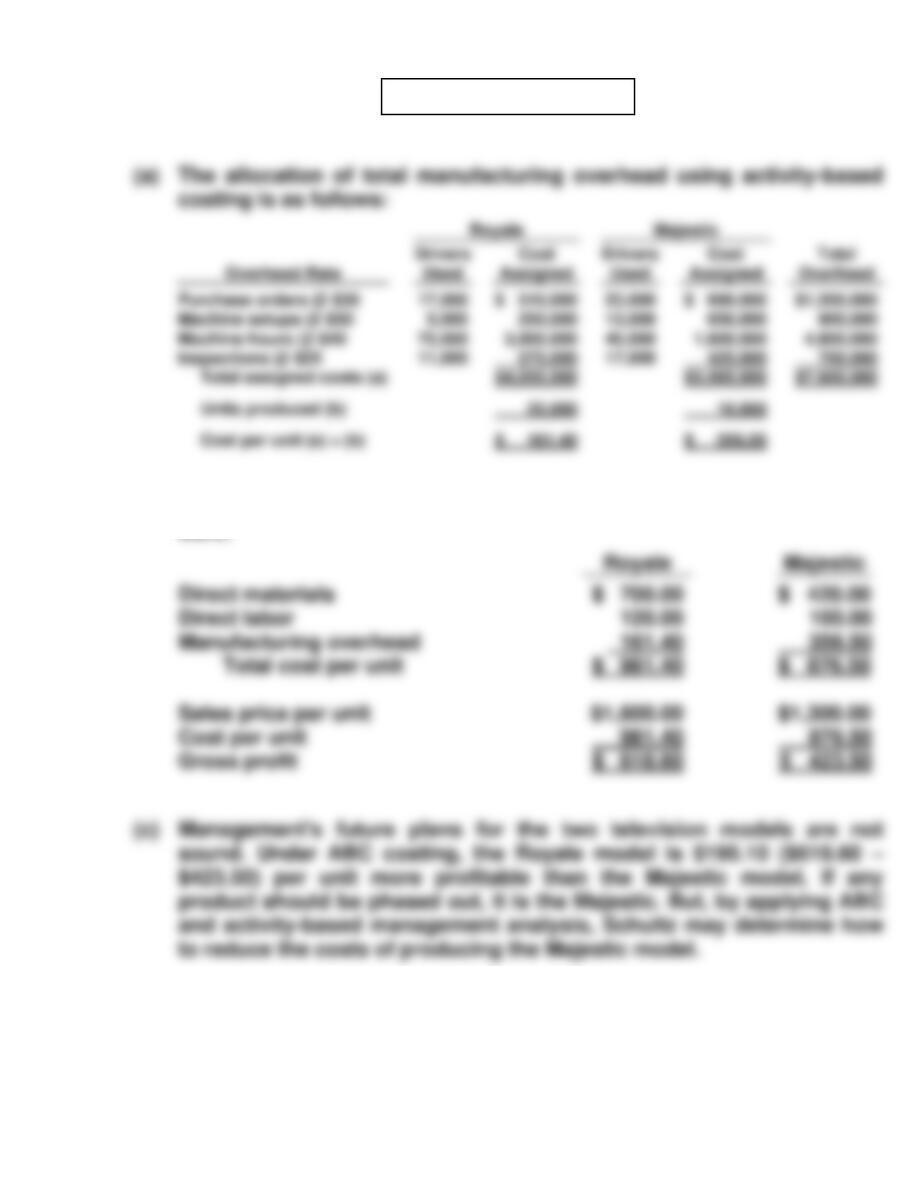
PROBLEM 18–2A
(b) The cost per unit and gross profit of each model under ABC costing
were:
PROBLEM 18–3A
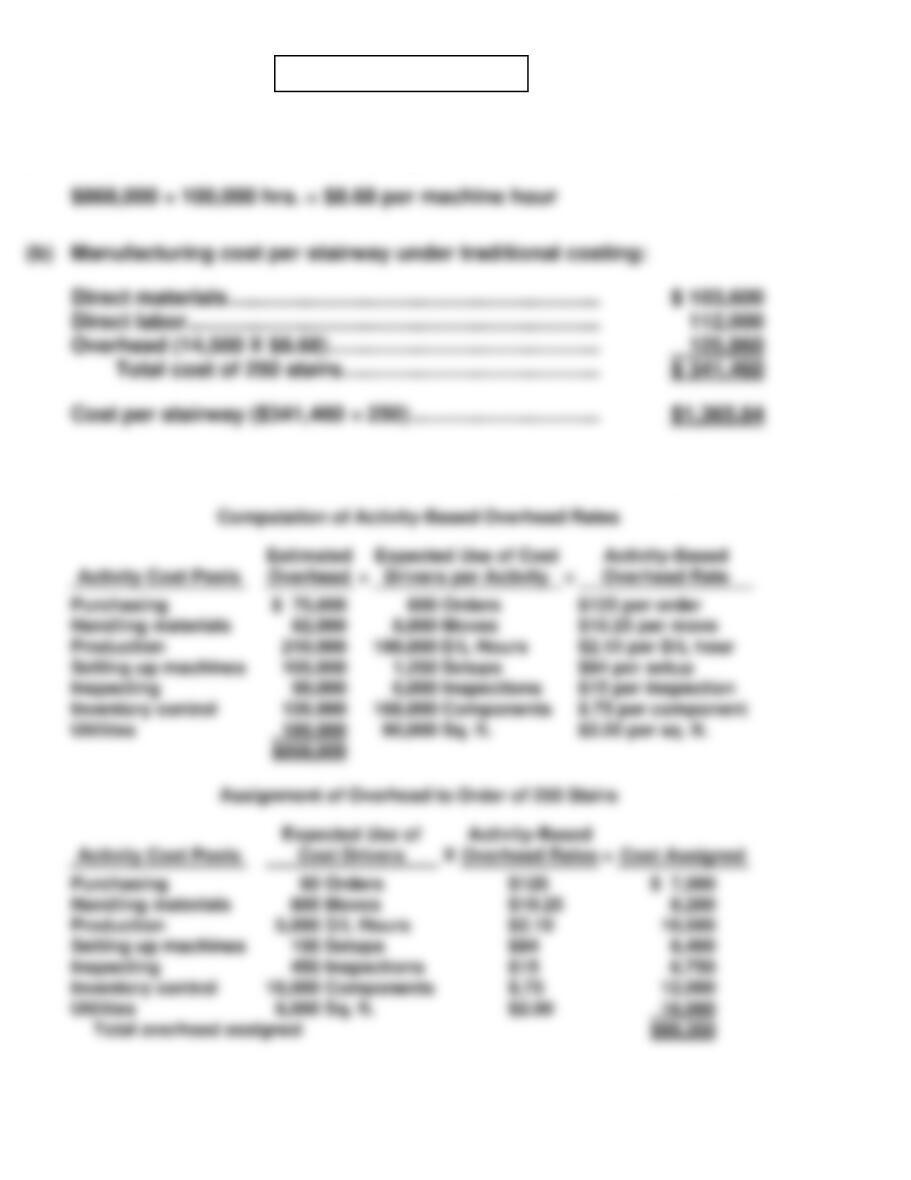
(a) Predetermined overhead rate using machine hours:
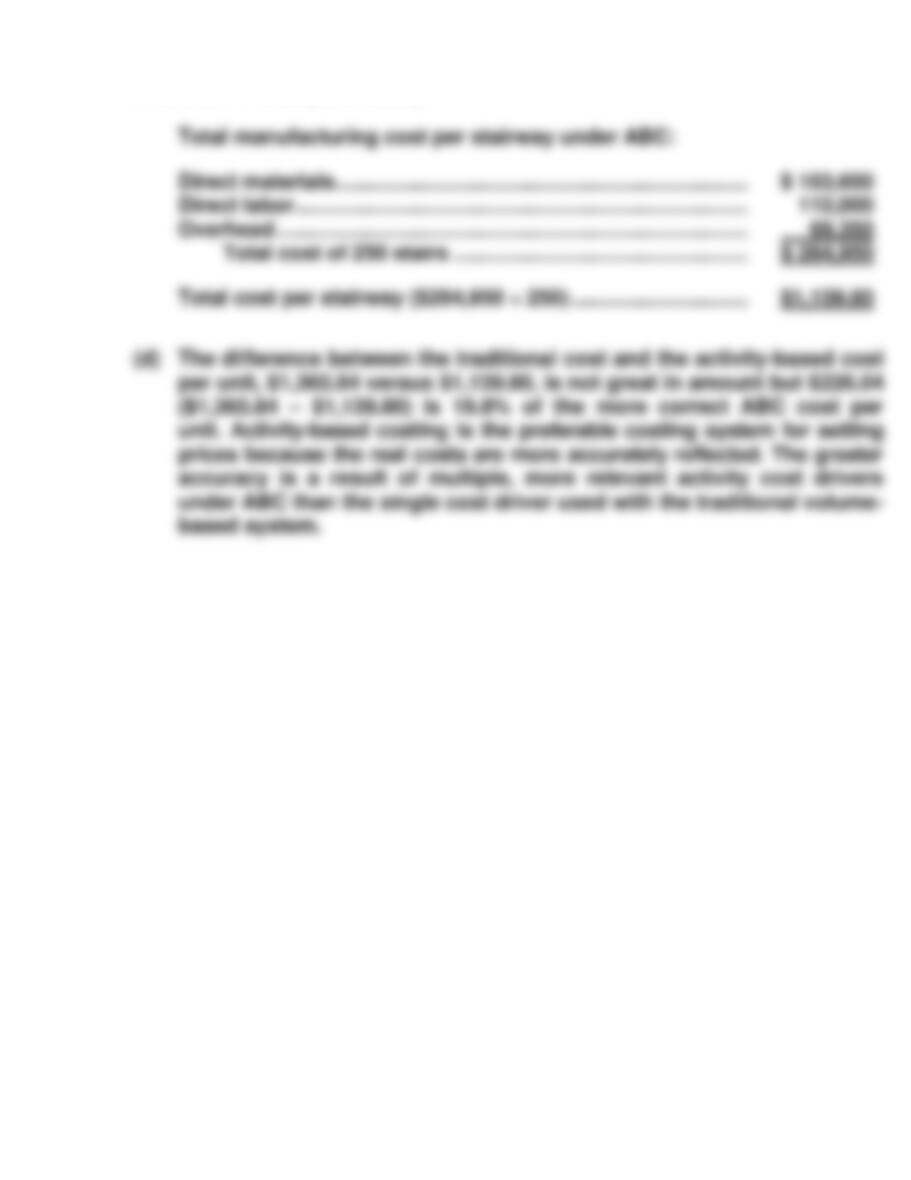
(c) Manufacturing cost per stairway under activity-based costing:
PROBLEM 18-3A (Continued)
PROBLEM 18-4A
(b)
Activity Cost Pools
Estimated
Overhead
÷
Expected Use
of Cost Drivers
=
Activity-Based
Overhead Rates
equipment
(c)
CoolDay
LiteMist
Activity Cost Pools
Expected
Use of
Cost
Drivers
X
Activity-
Based
Overhead
Rates
=
Cost
Assigned
Expected
Use of
Cost
Drivers
X
Activity-
Based
Overhead
Rates
=
Cost
Assigned
PROBLEM 18-4A (Continued)
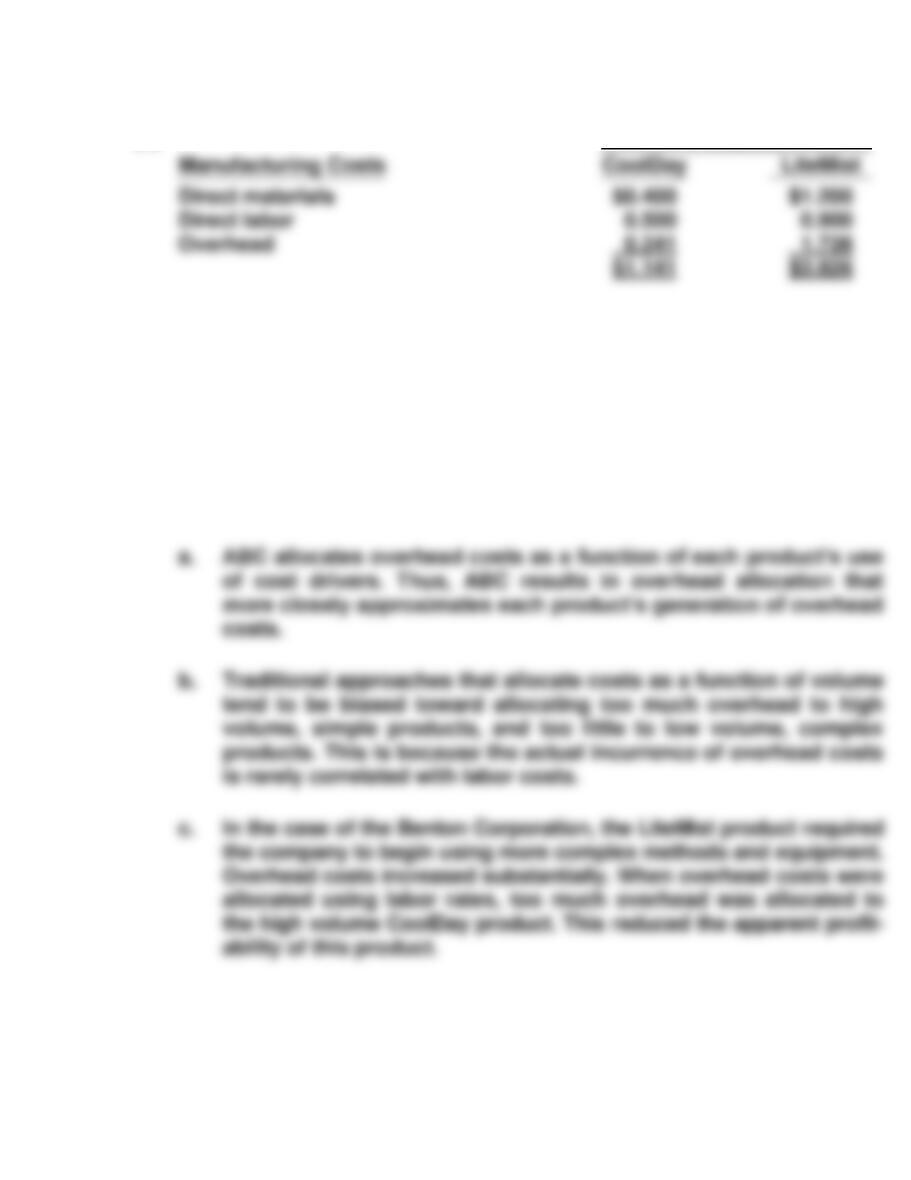
(d)
Products
(e) To: Mr. Jack Eller
From: Student
Subject: Product costs using traditional approach versus ABC
The memorandum covers the following points:
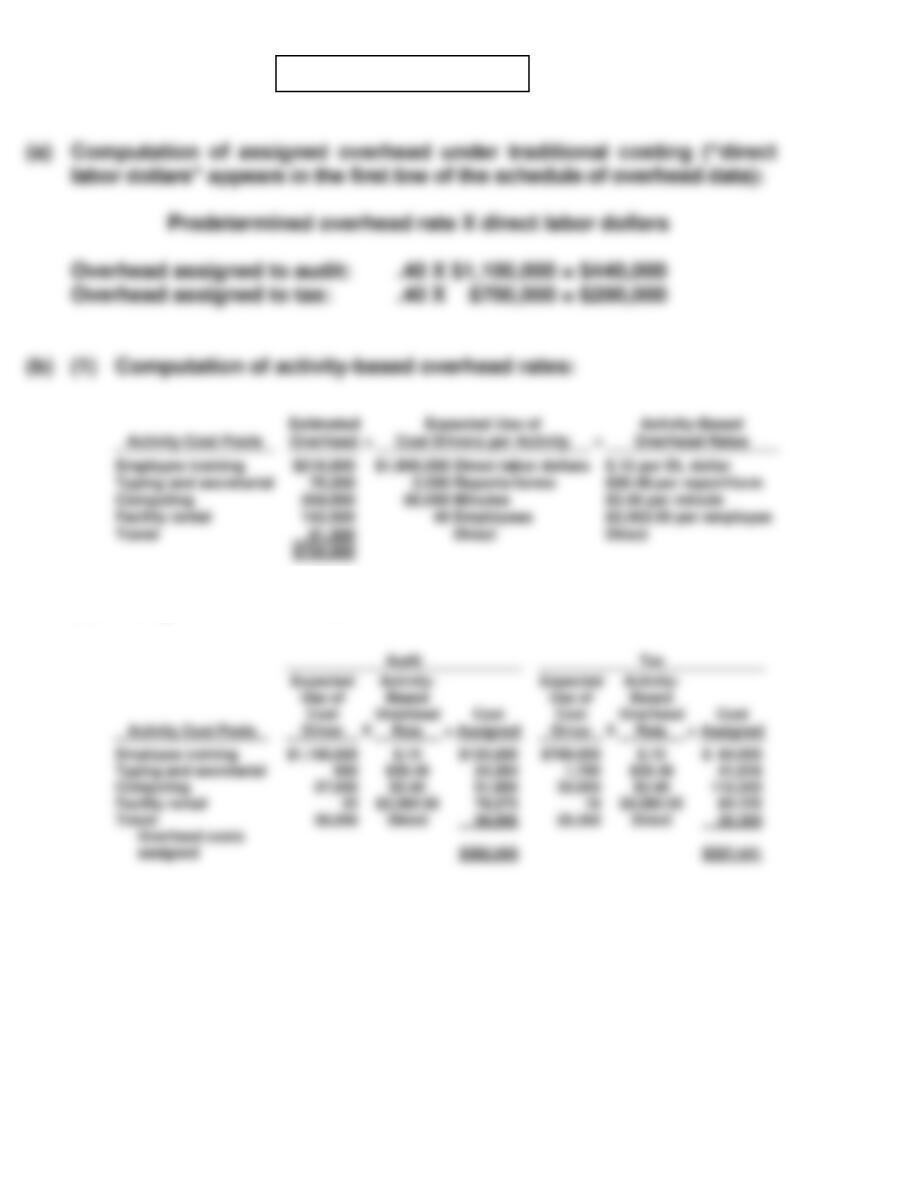
PROBLEM 18–5A
(2) Assignment of overhead to audit and tax services:
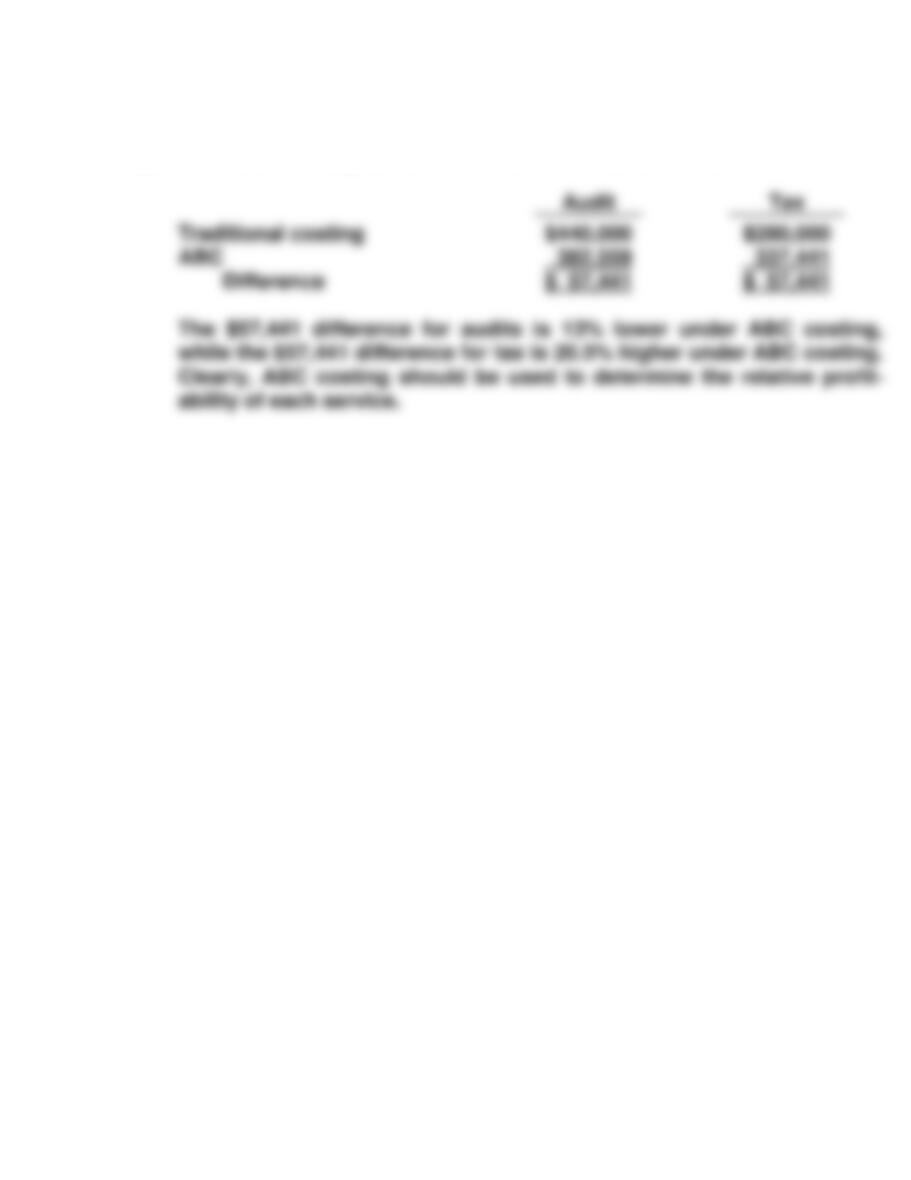
PROBLEM 18-5A (Continued)
(c) Overhead is assigned to the two service lines as follows:
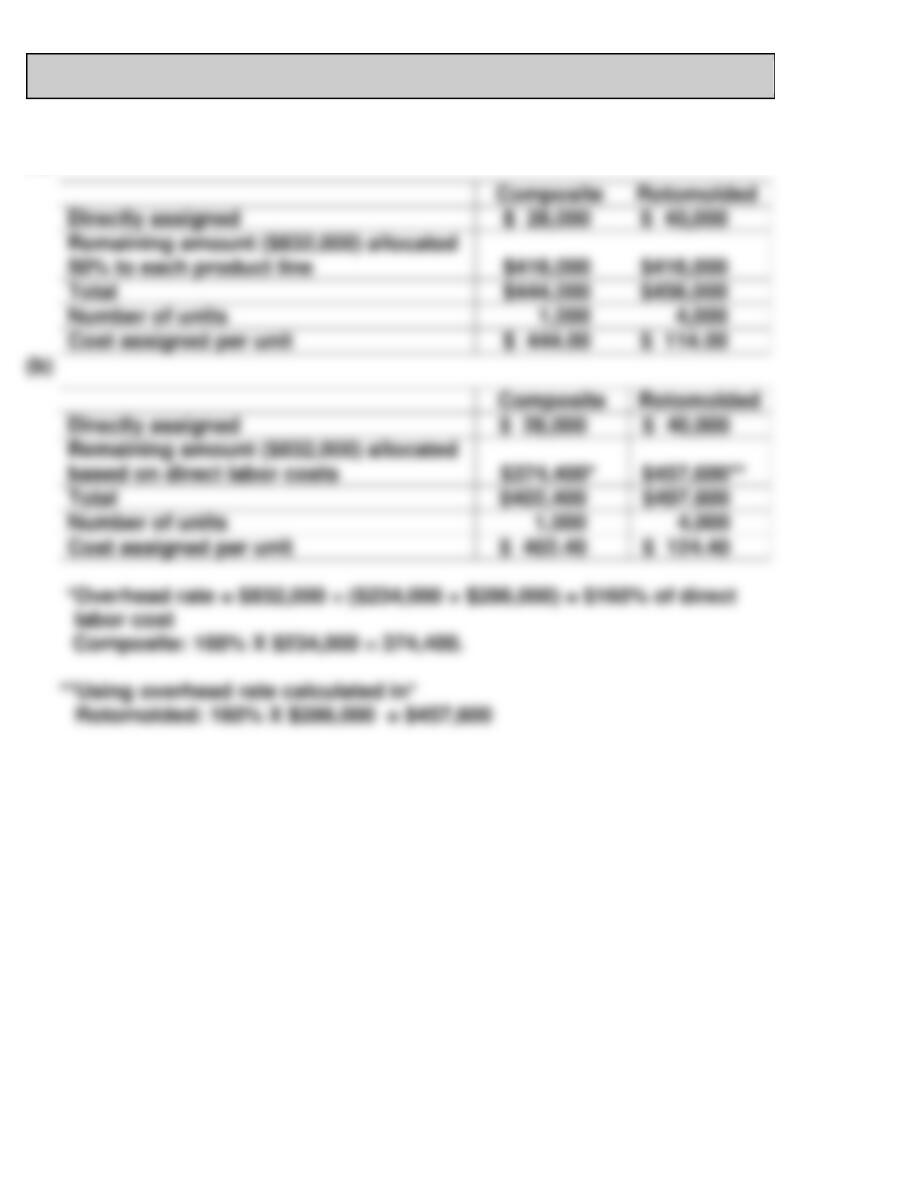
CD18 CURRENT DESIGNS
(a)
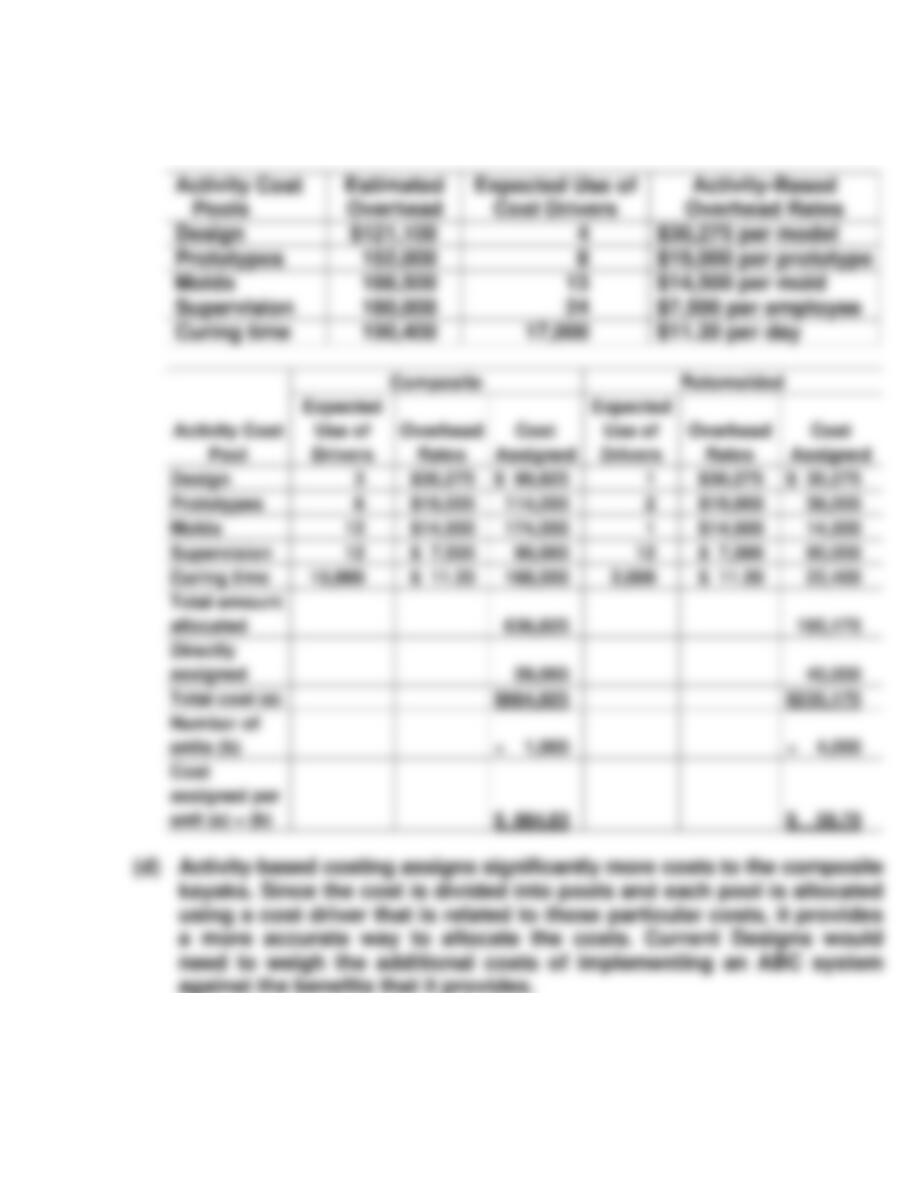
CD18 (Continued)
(c)
against the benefits that it provides.
BYP 18-1 DECISION-MAKING ACROSS THE ORGANIZATION
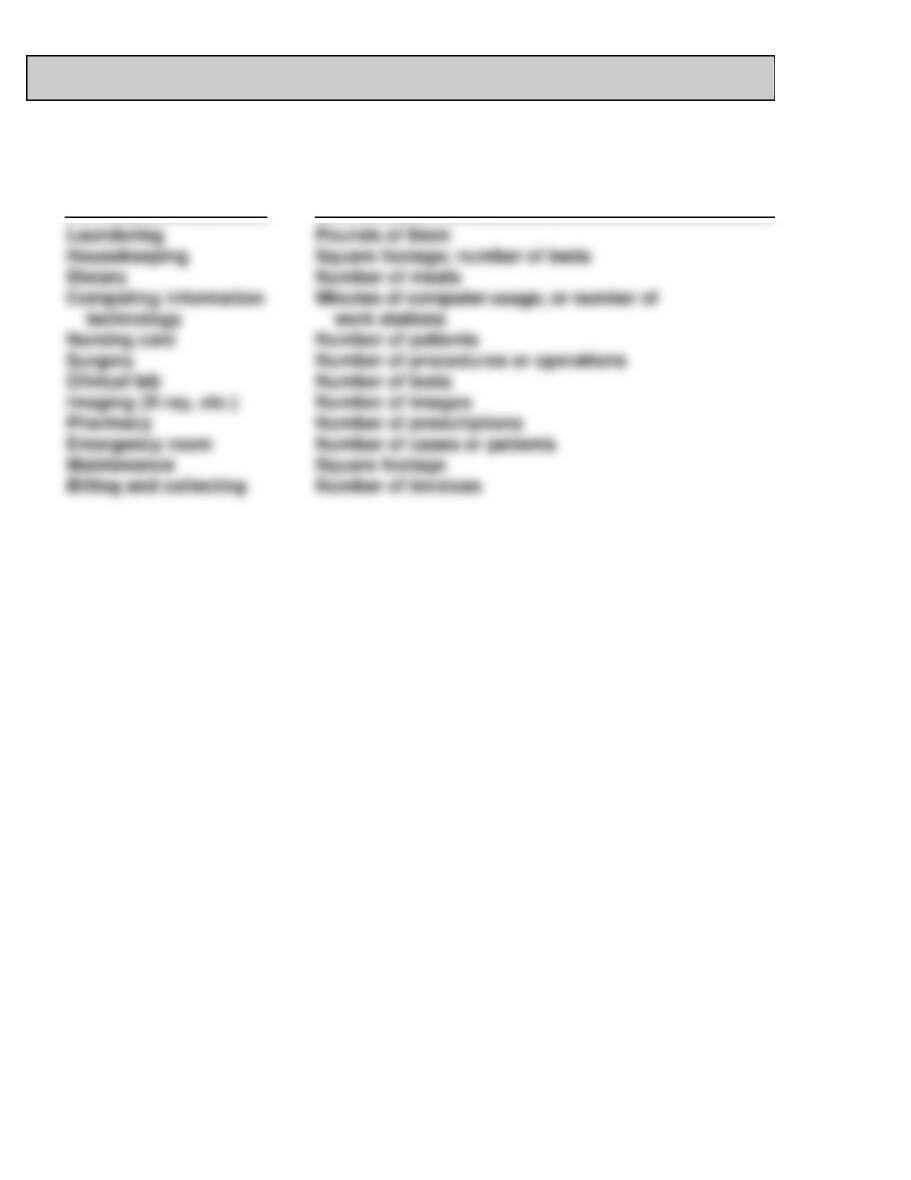
The following activities and cost drivers might be submitted:
(a) Activities
(b) Cost Drivers
BYP 18-2 MANAGERIAL ANALYSIS
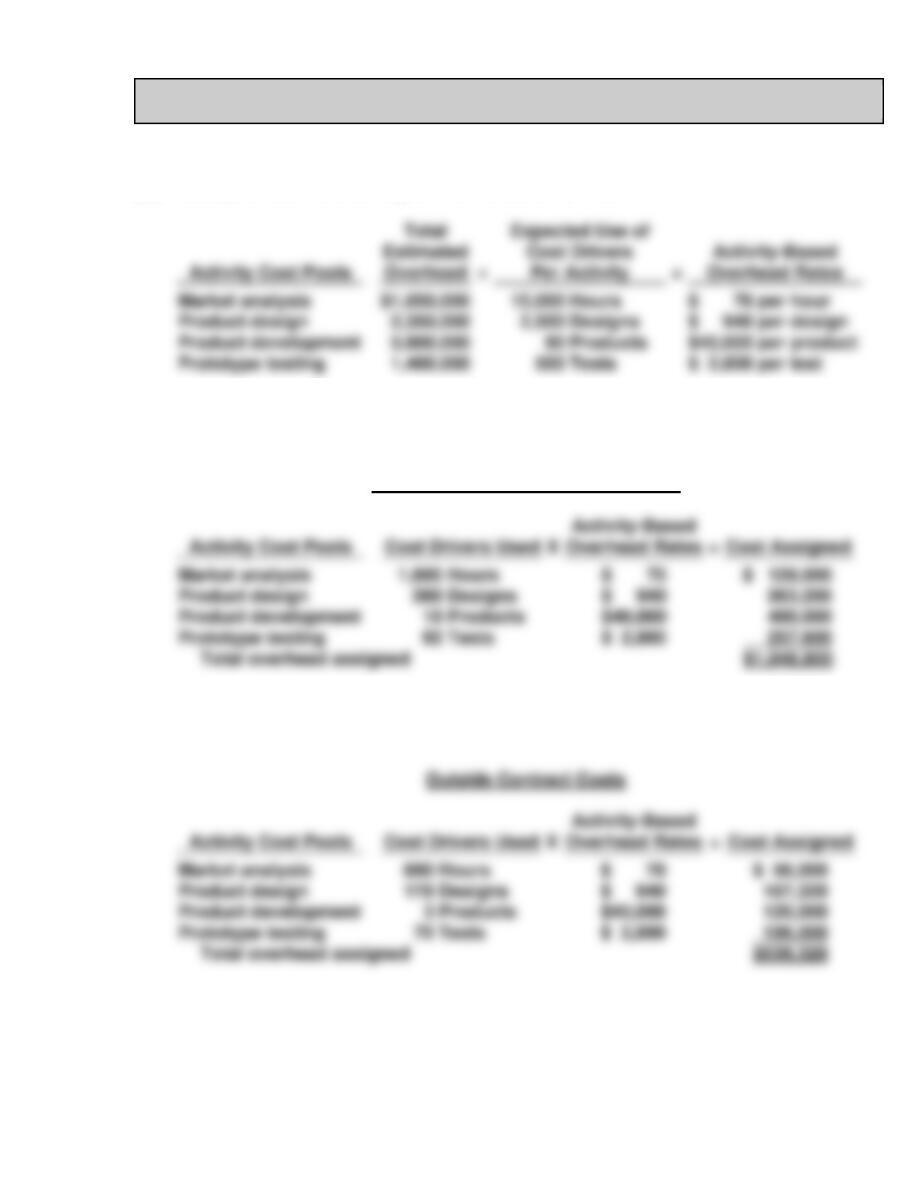
(a) Computation of activity-based overhead rate:
(b) Charges to in-house manufacturing department:
In-House Manufacturing Department
(c) Charges to outside R & D contractor:
BYP 18-2 (Continued)
BYP 18-3 REAL-WORLD FOCUS
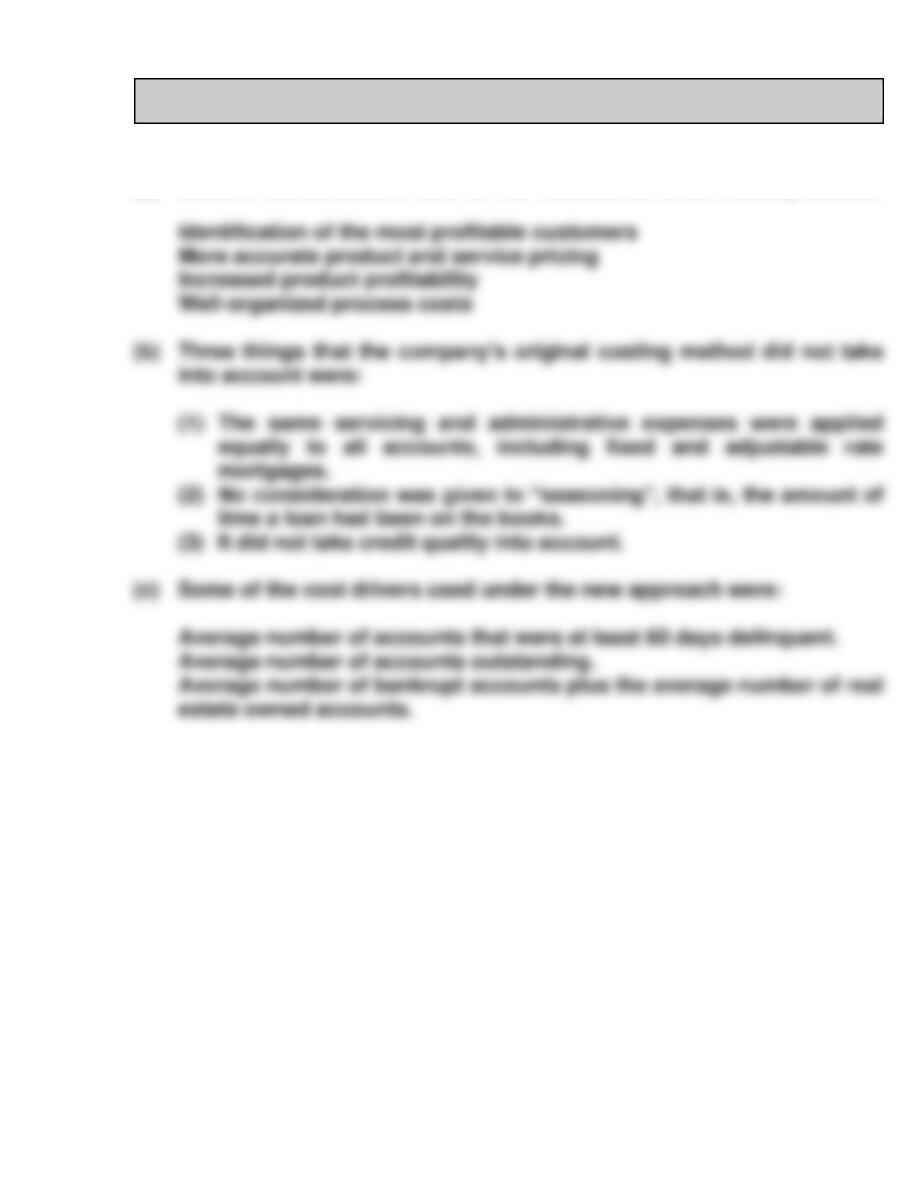
(a) Some of the benefits of ABC for the financial services industry include:
BYP 18-4 ETHICS CASE
(a) The stakeholders (parties affected by Curtis’s and Ed’s actions) in this
case are:
BYP 18-5 ALL ABOUT YOU
(a) The three main tools for time management for students are:
BYP 18-6 CONSIDERING YOUR COSTS AND BENEFITS