18–94
ACCOUNTING, ANALYSIS, AND PRINCIPLES
Accounting
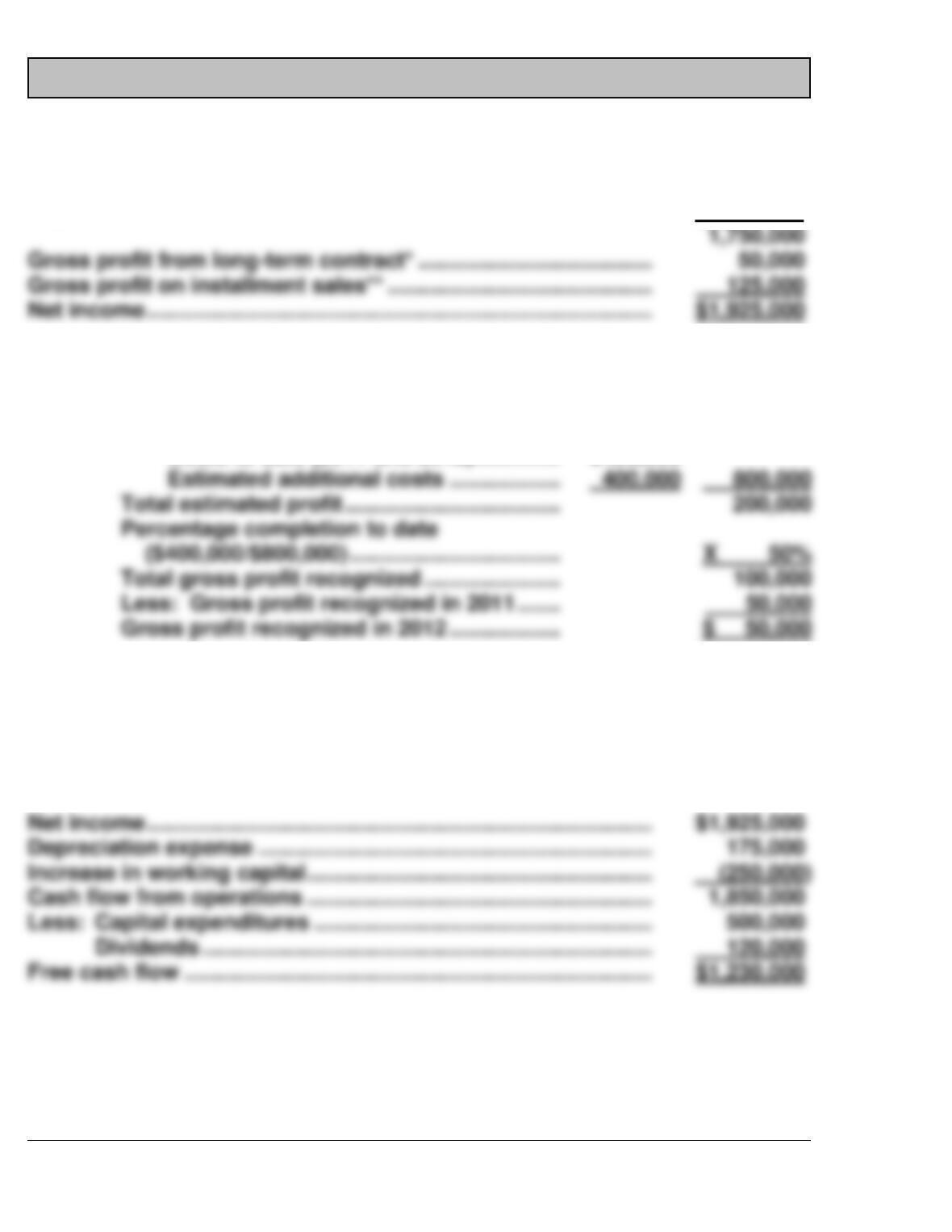
Sales revenue ………………………………………………………………….. $9,500,000
Expenses ………………………………………………………………………… 7,750,000
* Gross profit from long-term contract
Contract price ……………………………………….. $1,000,000
Costs:
Costs to date (2011 and 2012)………….. $400,000
**$500,000 X 25% = $125,000
Analysis
18–95
ACCOUNTING, ANALYSIS, AND PRINCIPLES (Continued)
Principles
Both methods attempt to report revenues that faithfully represent the
operations of the company so that future earnings and cash flows can be
predicted (relevance). With percentage-of–completion, companies use subjec-
representation carries the day in the case of installment-sales accounting.
18–96
PROFESSIONAL RESEARCH
(a) See FASB ASC 605–15-15 (Predecessor Literature—FAS 48: Revenue
Recognition When Right of Return Exists)
(b) According to FASB ASC 605-15–15:
15-2 The guidance in this Subtopic applies to the following transactions:
a. Sales in which a product may be returned, whether as a
matter of contract or as a matter of existing practice, either by
b. Sales by a manufacturer who repurchases the product subject
to an operating lease with the buyer.
(c) According to FASB ASC 605-15–25:
> Sales of Product when Right of Return Exists
25-1 If an entity sells its product but gives the buyer the right to return
the product, revenue from the sales transaction shall be recog–
nized at time of sale only if all of the following conditions are met:
18–97
PROFESSIONAL RESEARCH (Continued)
c. The buyer’s obligation to the seller would not be changed in
the event of theft or physical destruction or damage of the
product.
e. The seller does not have significant obligations for future
performance to directly bring about resale of the product by
the buyer.
considered returns for purposes of this Subtopic.
(d) According to FASB ASC Codification 605-15-25:
25-3 The ability to make a reasonable estimate of the amount of future
returns depends on many factors and circumstances that will
vary from one case to the next. However, any of the following
factors may impair the ability to make a reasonable estimate:

18–98
PROFESSIONAL RESEARCH (Continued)
c. Absence of historical experience with similar types of sales of
similar products, or inability to apply such experience because
18–99
PROFESSIONAL SIMULATION
Measurement
Computation of net income for 2013:
Revenues………………………………………………………….. $5,500,000
Expenses ………………………………………………………….. 4,200,000
**$220,000 X 18% = $39,600
Journal Entries
Construction in Process ……………………………. 100,000
Materials, Cash, Payables …………………… 100,000
18-100
PROFESSIONAL SIMULATION (Continued)
Financial Statements
NOMAR INDUSTRIES, INC.
Balance Sheet
December 31, 2013
Current Assets
Explanation
Given these facts, a more appropriate revenue recognition policy would be
the cost-recovery method. Using the cost-recovery method, given the un-
IFRS CONCEPTS AND APPLICATION
IFRS18-1
The general concepts and principles used for revenue recognition are
IFRS18-2
The cost-recovery method is preferable when the lack of dependable
estimates or inherent hazards cause forecasts to be doubtful.
IFRS18-3
IFRS18-4
The two basic methods of accounting for long-term construction contracts
are: (1) the percentage-of-completion method and (2) the cost-recovery
method.
18-102
IFRS18-4 (Continued)
(2) The buyer can be expected to satisfy all obligations under the
contract.
IFRS18-5
Under the cost-recovery method, revenue is recognized up to the amount
of costs. However, no gross profit is recognized in the income statement
until the contract is complete.
IFRS18-6
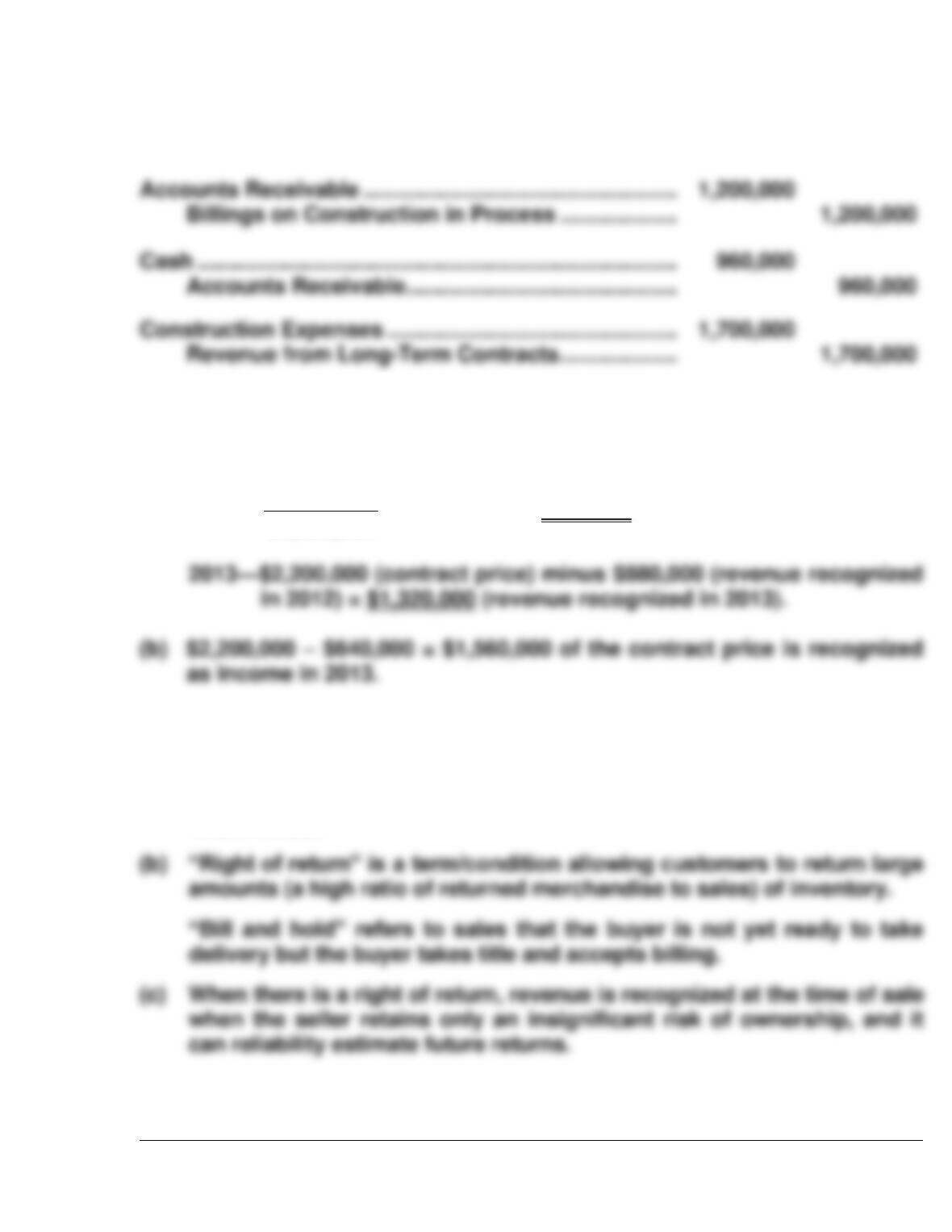
Construction in Process ………………………………….. 1,700,000
Materials, Cash, Payables …………………………. 1,700,000
18-103
IFRS18-7
Construction in Process ………………………………………. 1,700,000
Materials, Cash, Payables. …………………………….. 1,700,000
IFRS18-8
(a)
2012—
$640,000
X $2,200,000 = $880,000
$1,600,000
IFRS18-9
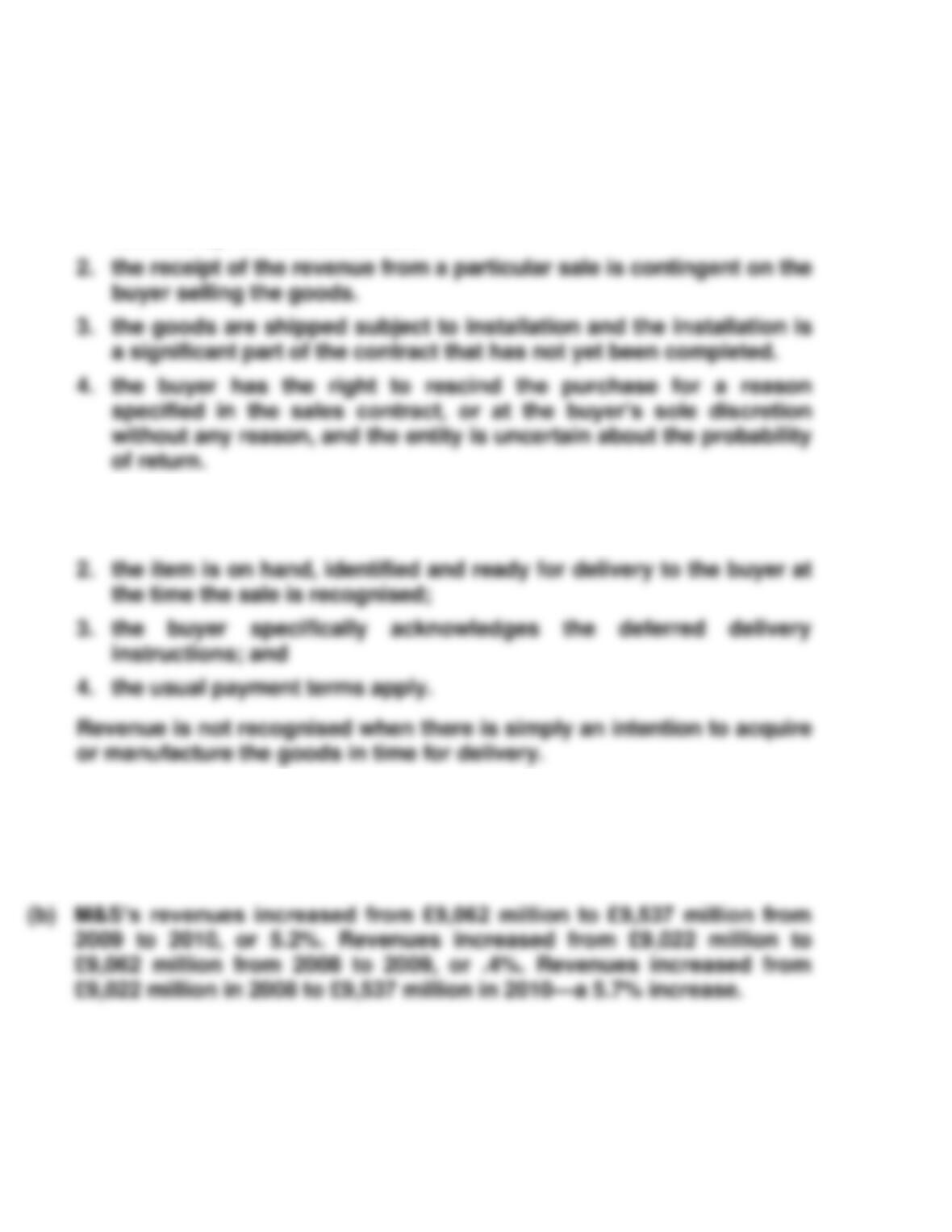
(a) IAS 18, paragraphs 15-19 addresses revenue recognition when right of
return exists.
18-104
IFRS18-9 (Continued)
(d) An entity does not recognise revenue if it retains significant risks of
ownership. Examples of situations in which the entity may retain the
significant risks and rewards of ownership are:
1. the entity retains an obligation for unsatisfactory performance not
covered by normal warranties.
(e) The seller recognises revenue when the buyer takes title, provided:
1. it is probable that delivery will be made;
IFRS18–10
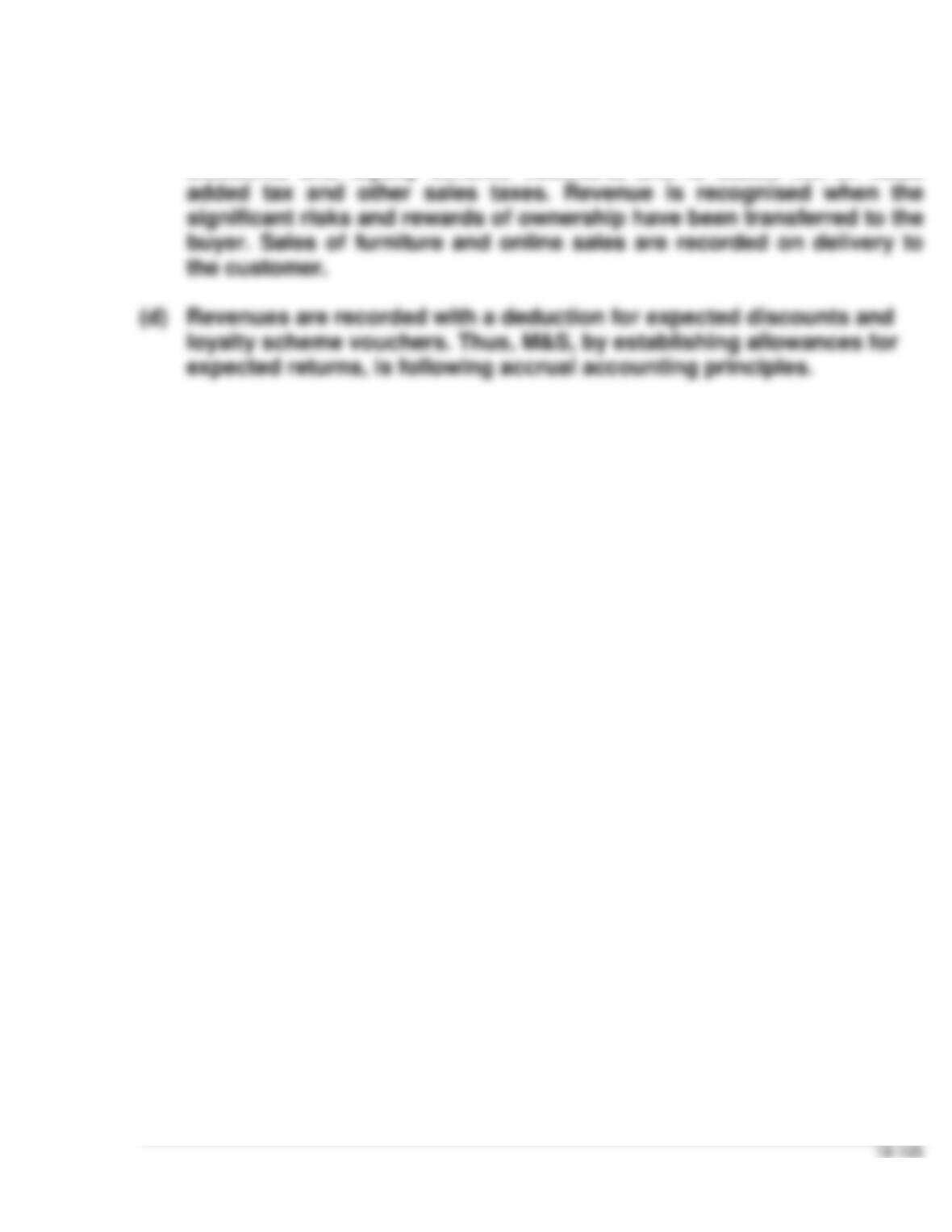
(a) 2010 Revenues: £9,537 million.
IFRS18-10 (Continued)
(c) M&S’s revenue comprises sales of goods to customers outside the
Group less an appropriate deduction for actual and expected returns,
discounts and loyalty scheme vouchers, and is stated net of value