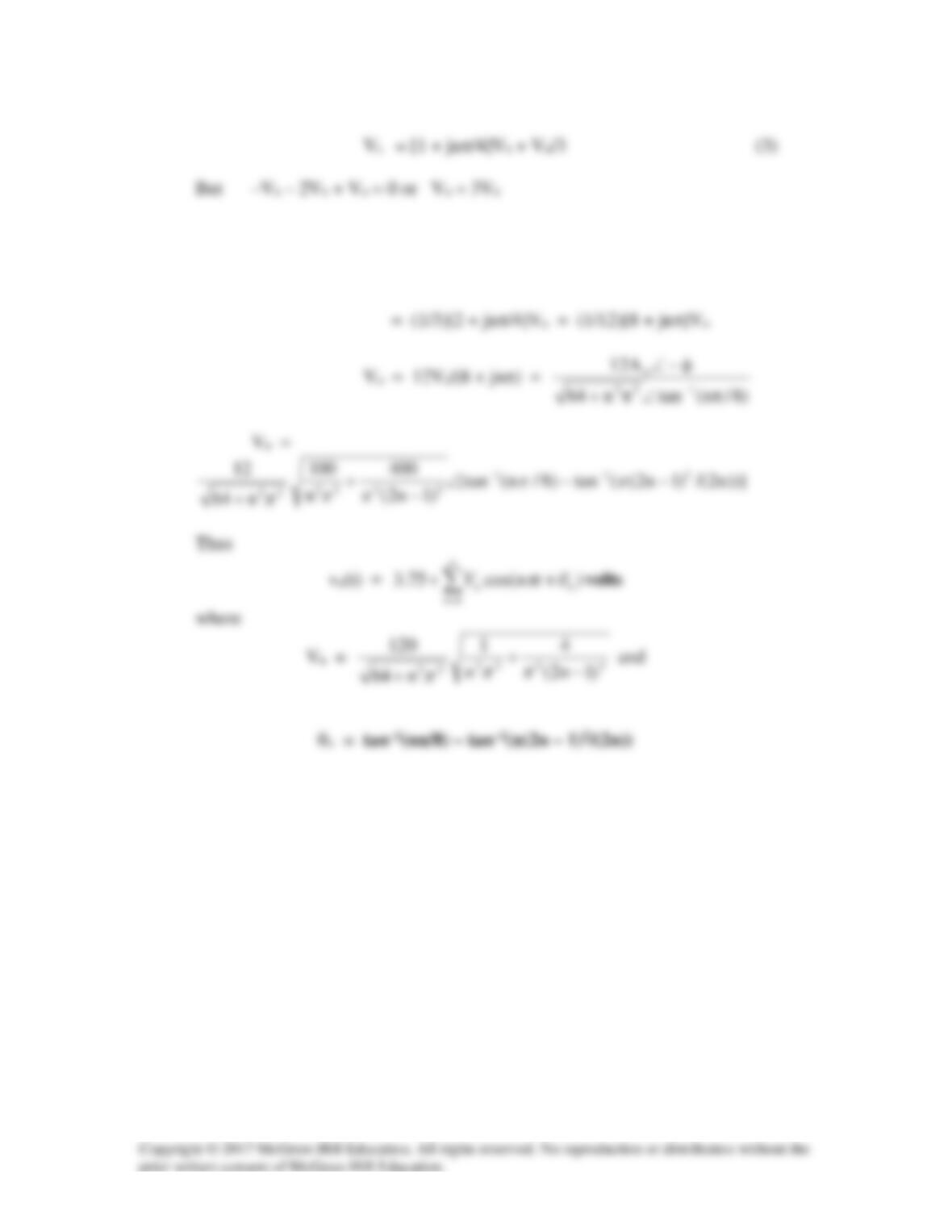
Substituting this into (3),
Vs = [1 + jnπ/4]Vx + Vx = [2 + jnπ/4]Vx
Solution 17.41
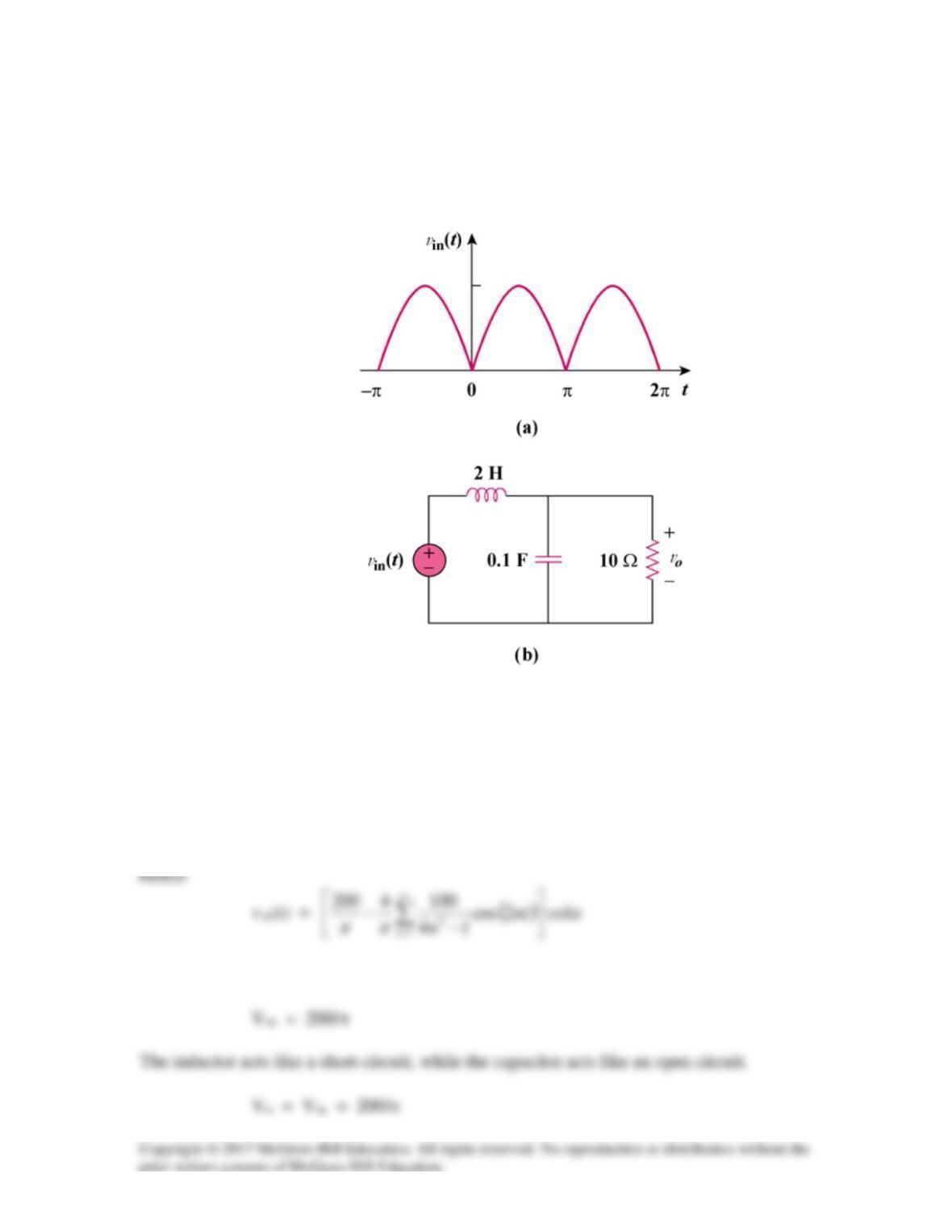
The full-wave rectified sinusoidal voltage in Fig. 17.77(a) is applied to the lowpass filter
in Fig. 17.77(b). Obtain the output voltage vo(t) of the filter.
Figure 17.77
For Prob. 17.41.
Solution
For the full wave rectifier,
T = π, ωo = 2π/T = 2, ωn = nωo = 2n
For the DC component,
100
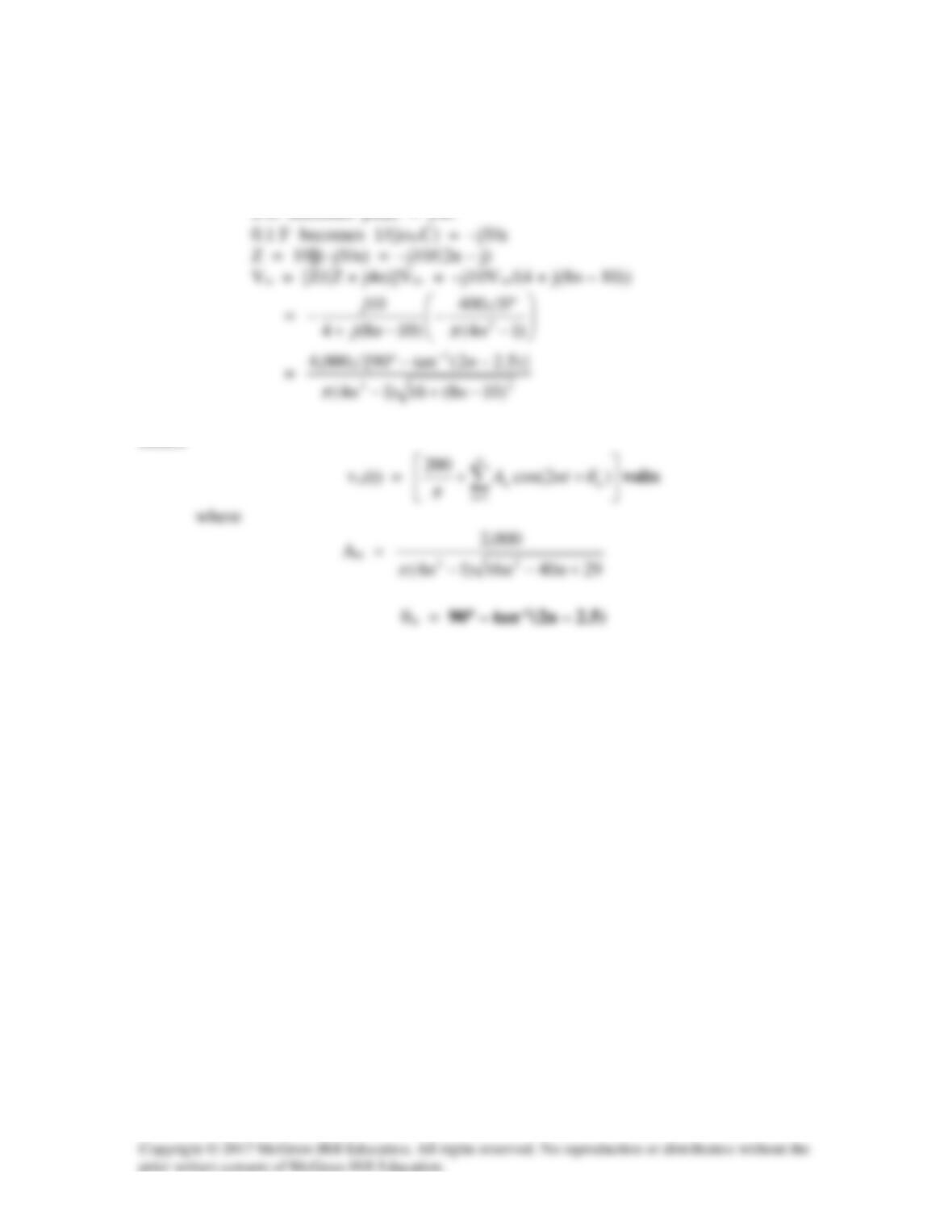
For the nth harmonic,
Vin = [–400/(π(4n2 – 1))]∠0°
2 H becomes jωnL = j4n
Hence
Solution 17.42
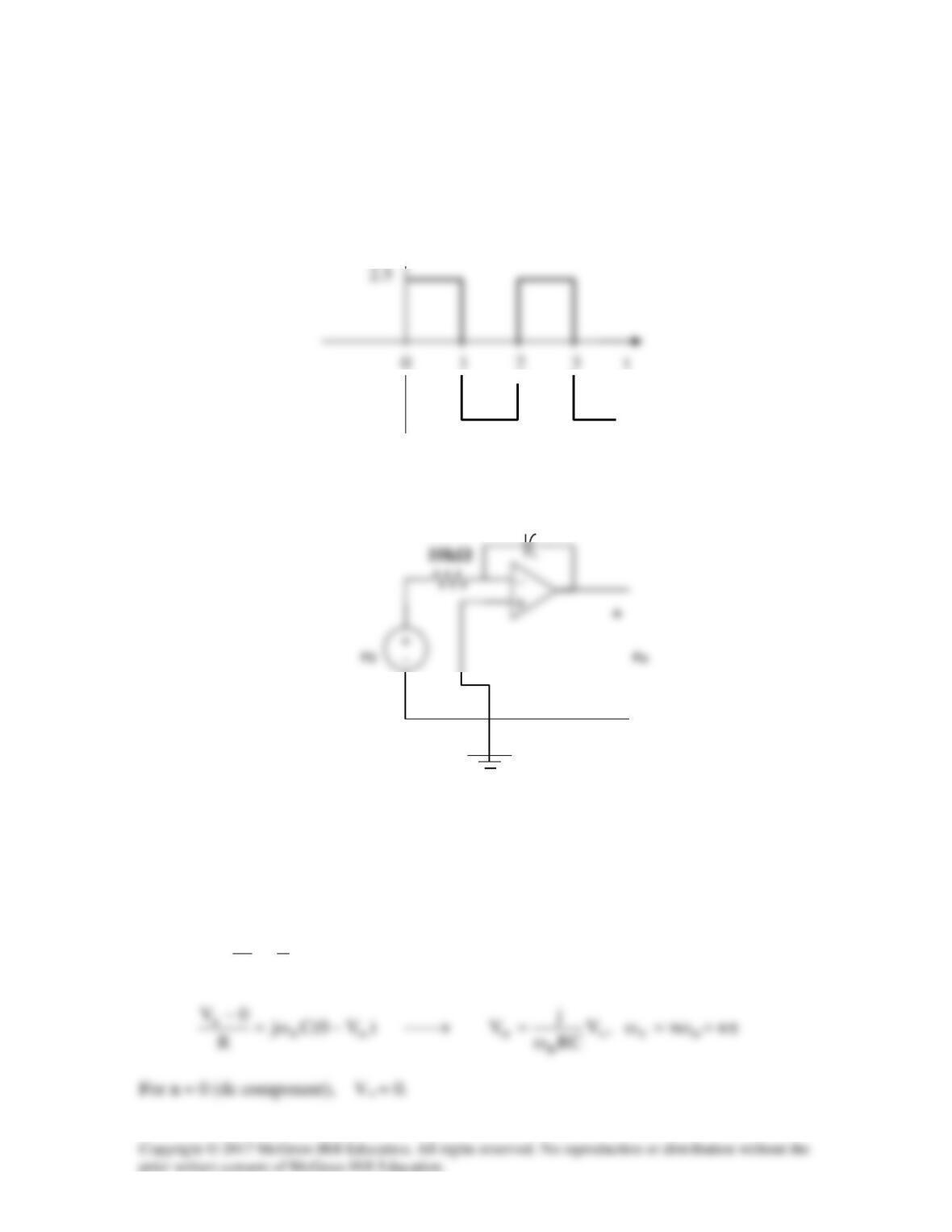
When the square wave in Fig. 17.78(a) is applied to the circuit in Fig. 17.78(b), find the
Fourier series of vo(t)
2.5
Figure 17.78
For Problem 17.42
Solution
∑
∞
=
==
1
1–2kn ,sin
110
k
stn
n
v
π
π
v
s
(t)
–2.5
(a)
40nF
(b)
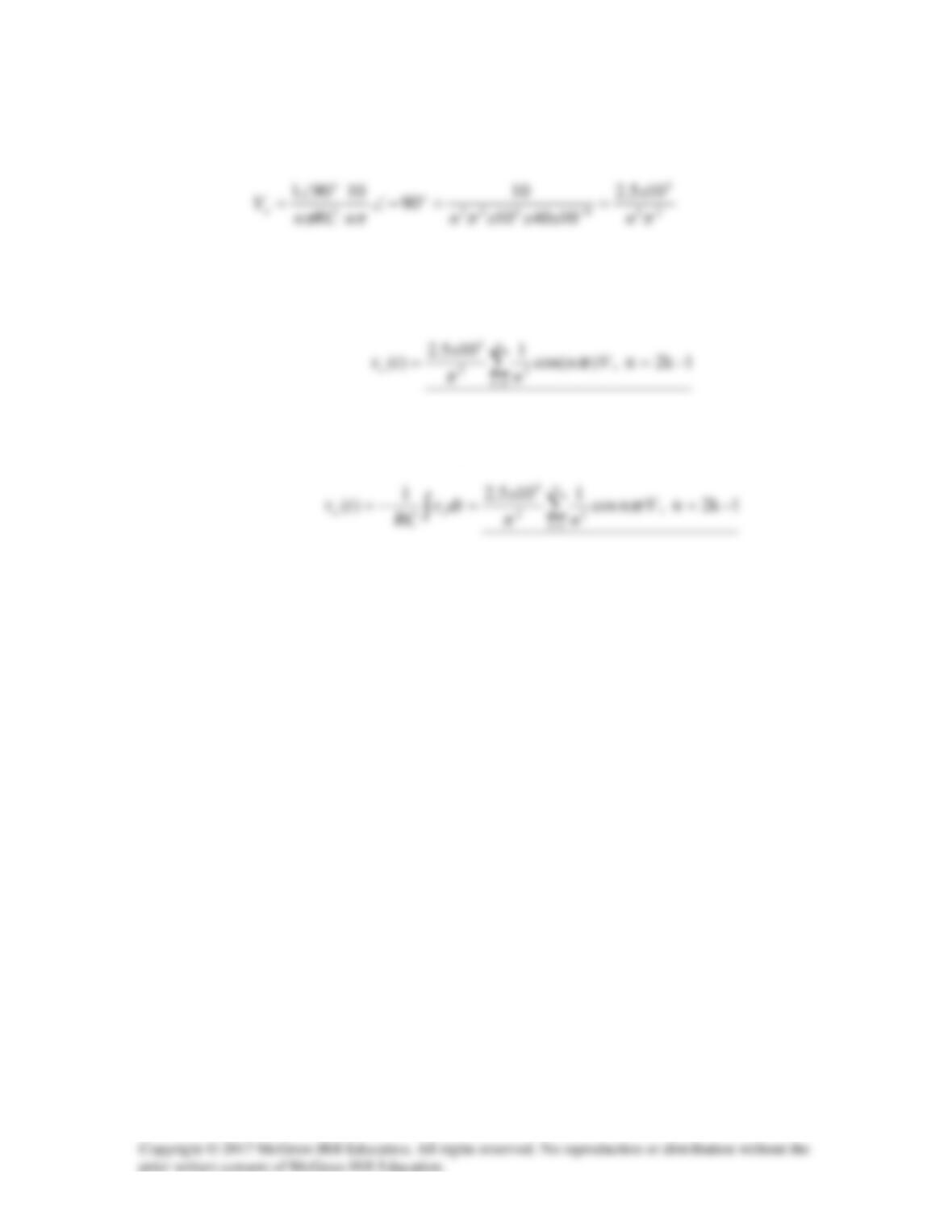
For the nth harmonic,
Hence,
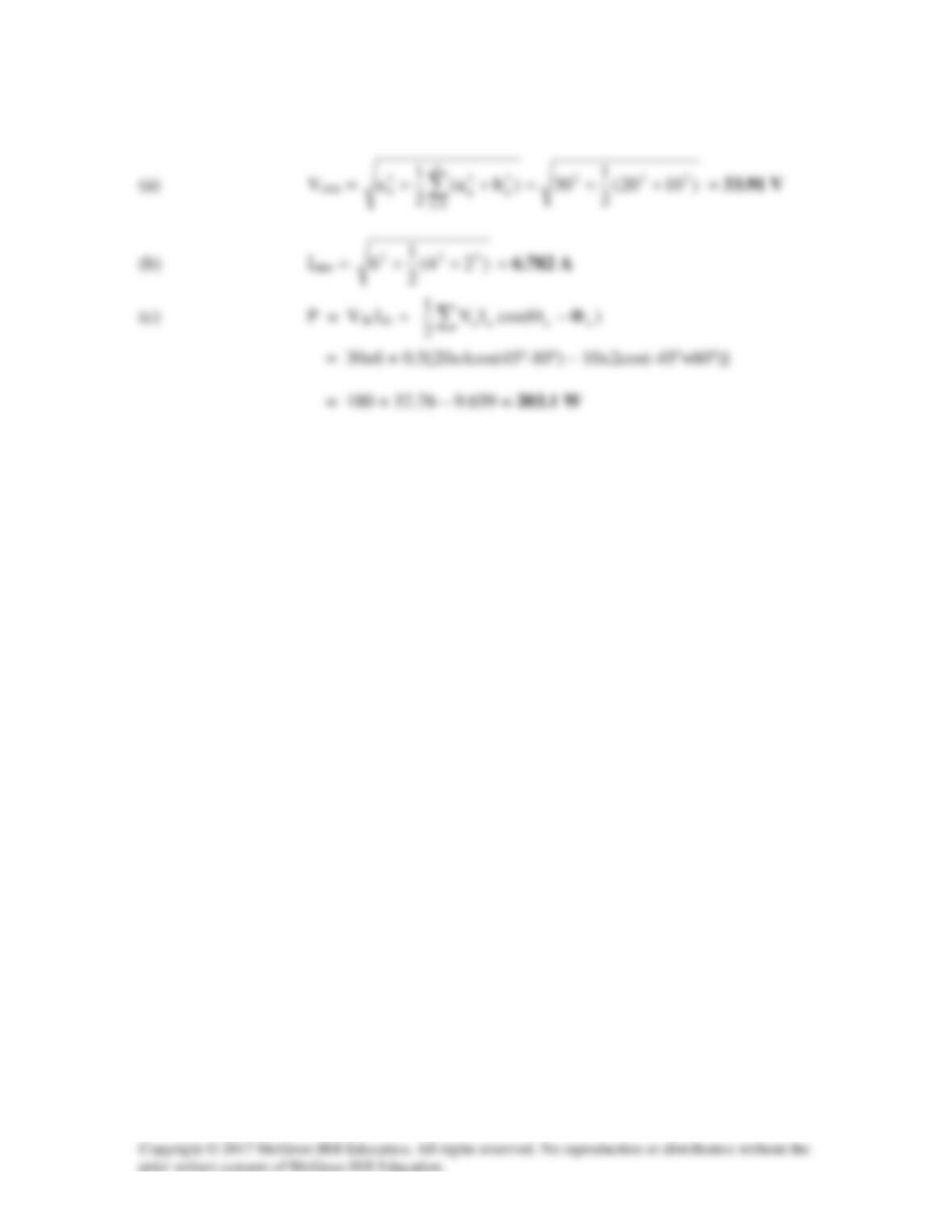
Alternatively, we notice that this is an integrator so that
Solution 17.43
Solution 17.44
Design a problem to help other students to better understand how to find the rms voltage
across and the rms current through an electrical element given a Fourier series for both
the current and the voltage. In addition, have them calculate the average power delivered
to the element and the power spectrum.
Although there are many ways to solve this problem, this is an example based on the
same kind of problem asked in the third edition.
Problem
The voltage and current through an element are respectively
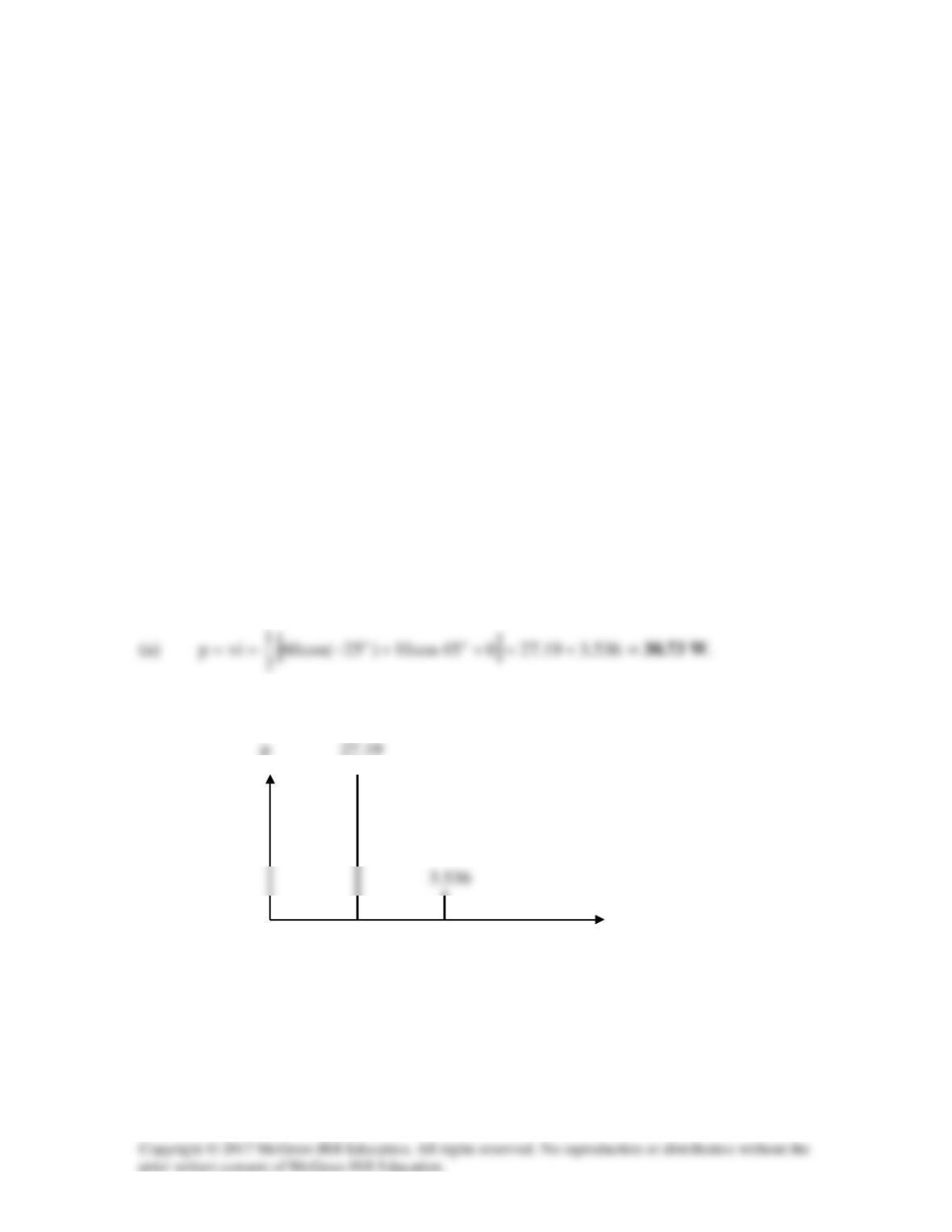
v(t) = [30 cos (t + 35°) + 10cos(2t – 55˚) + 4 cos(3t – 10°)] V
i(t) = [2 cos (t–10˚) + cos(2t – 10°)] A
(a) Find the average power delivered to the element
(b) Plot the power spectrum.
Solution
(b) The power spectrum is shown below.
0 1 2 3
ω
Solution 17.45
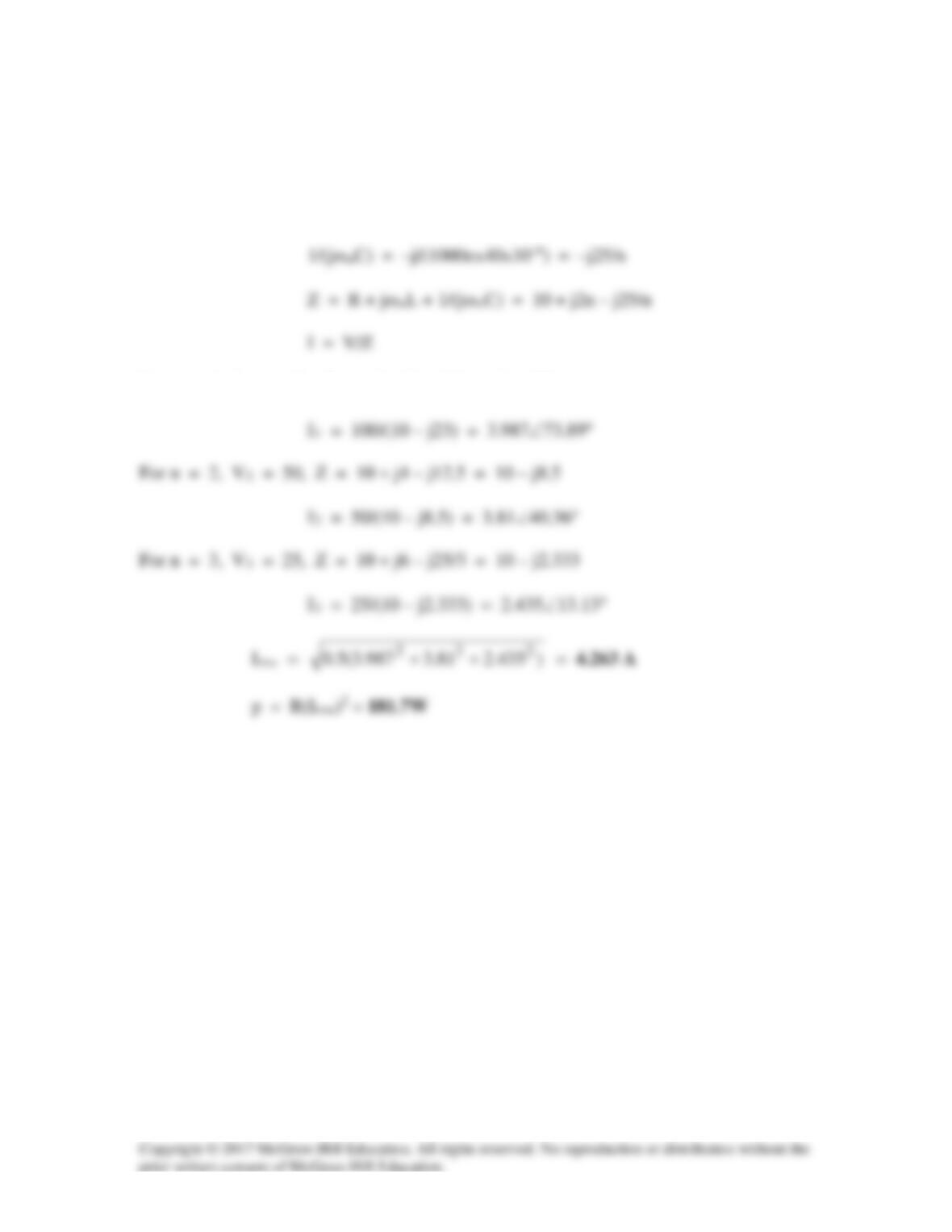
ωn = 1000n
jωnL = j1000nx2x10–3 = j2n
For n = 1, V1 = 100, Z = 10 + j2 – j25 = 10 – j23
Solution 17.46
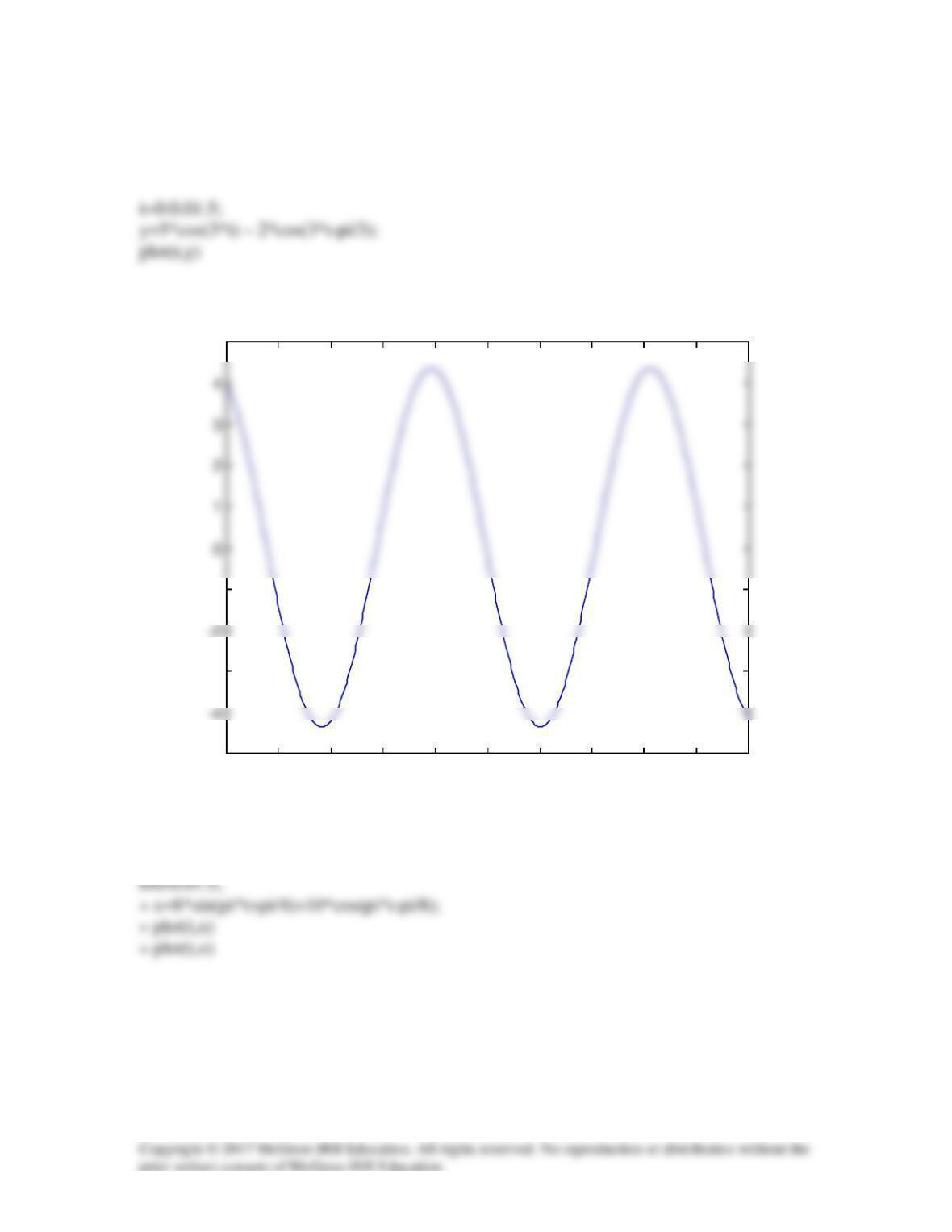
(a)The MATLAB commands are:
00.5 11.5 22.5 33.5 44.5 5
-5
-3
-1
5
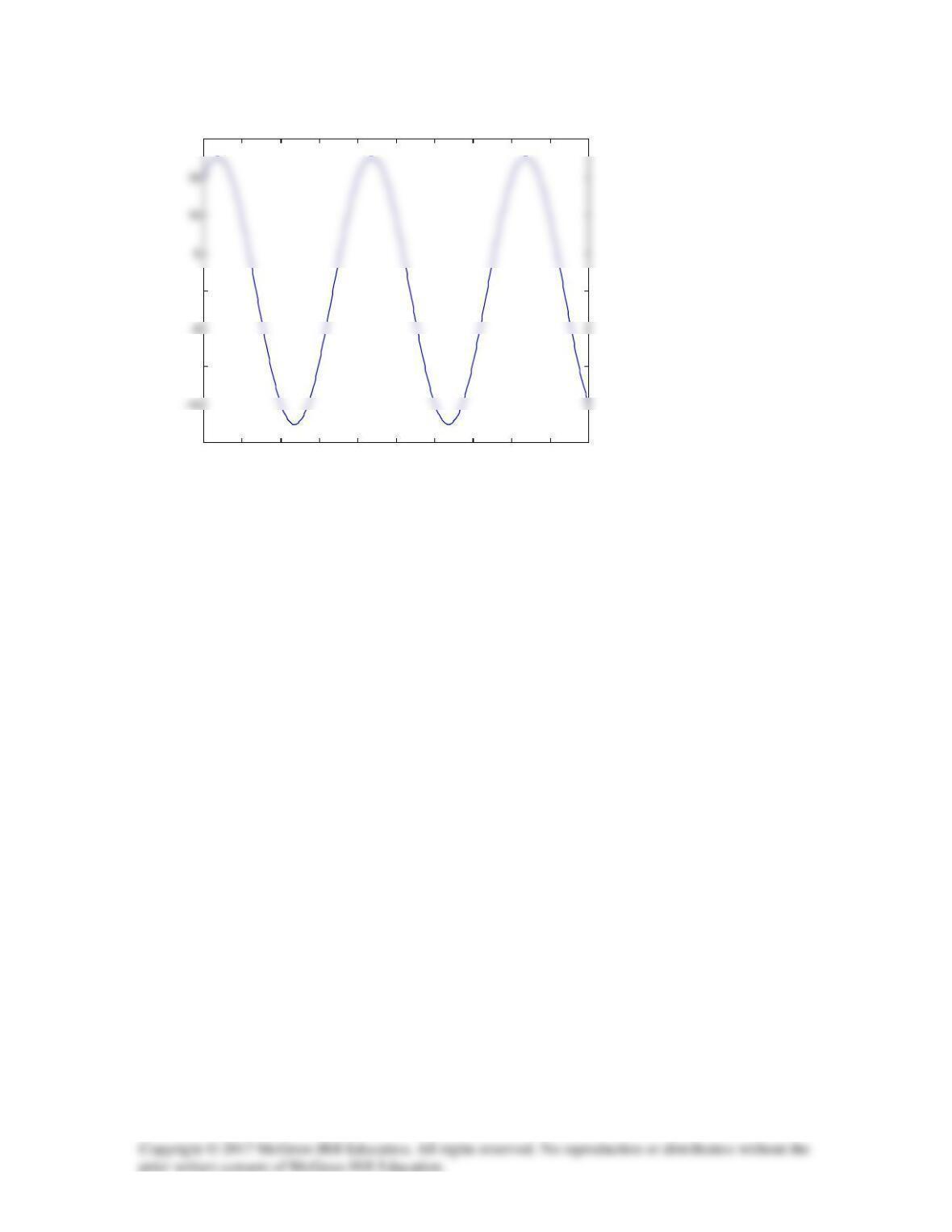
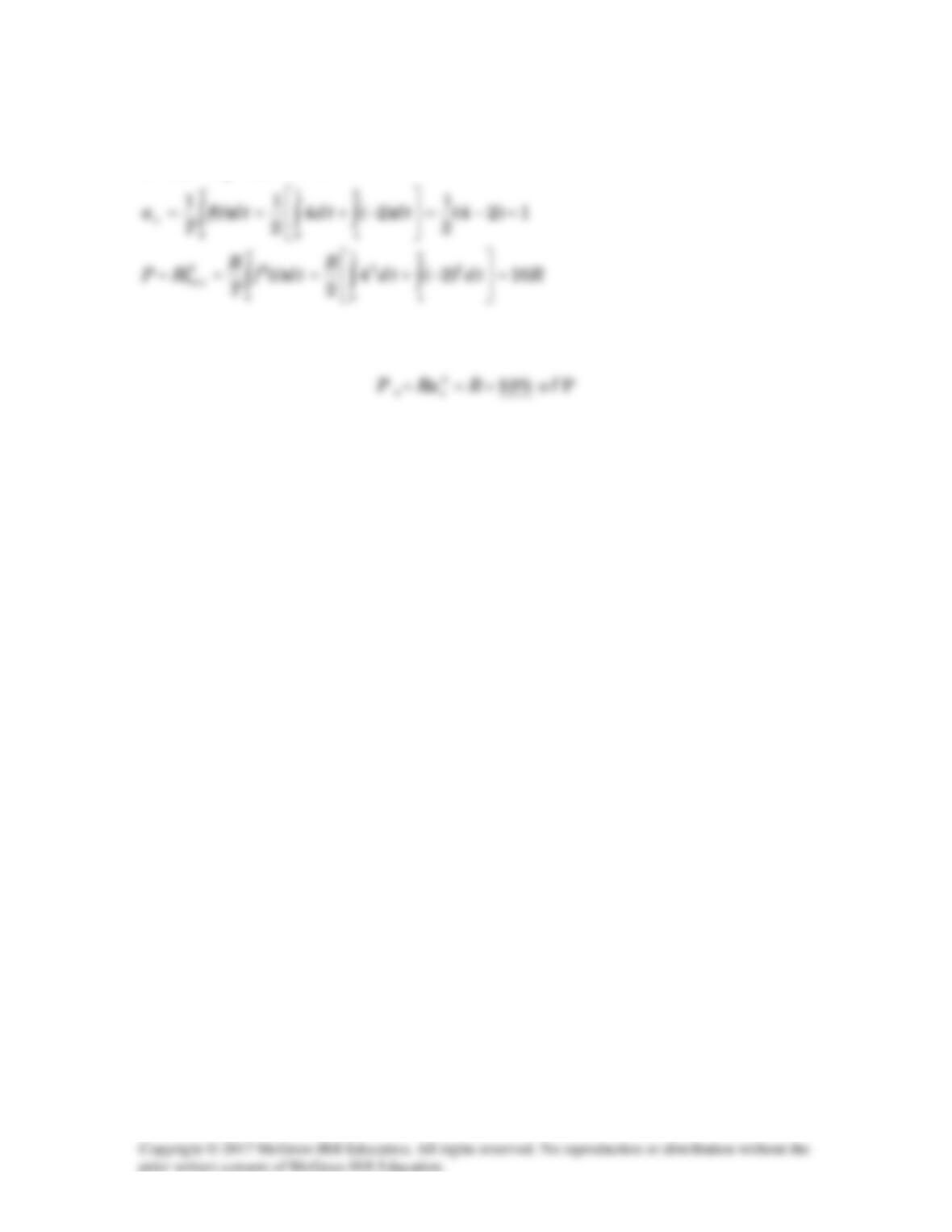
(b) The MATLAB commands are:
00.5 11.5 22.5 33.5 44.5 5
-20
-10
0
20
Solution 17.47
2, 2 /
o
TT
ωπ π
= = =
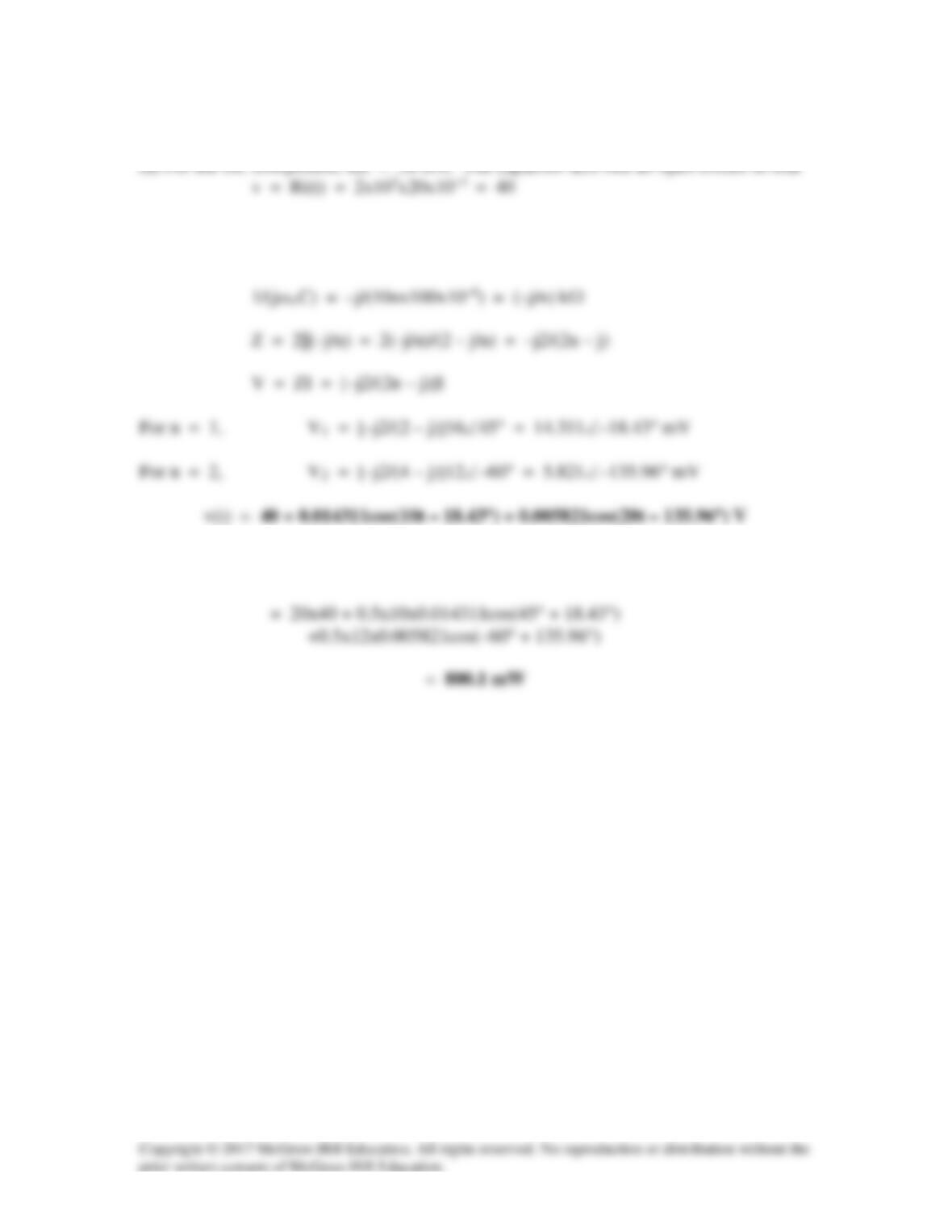
The average power dissipation caused by the dc component is
Solution 17.48
For the AC component,
ωn = 10n, n = 1,2
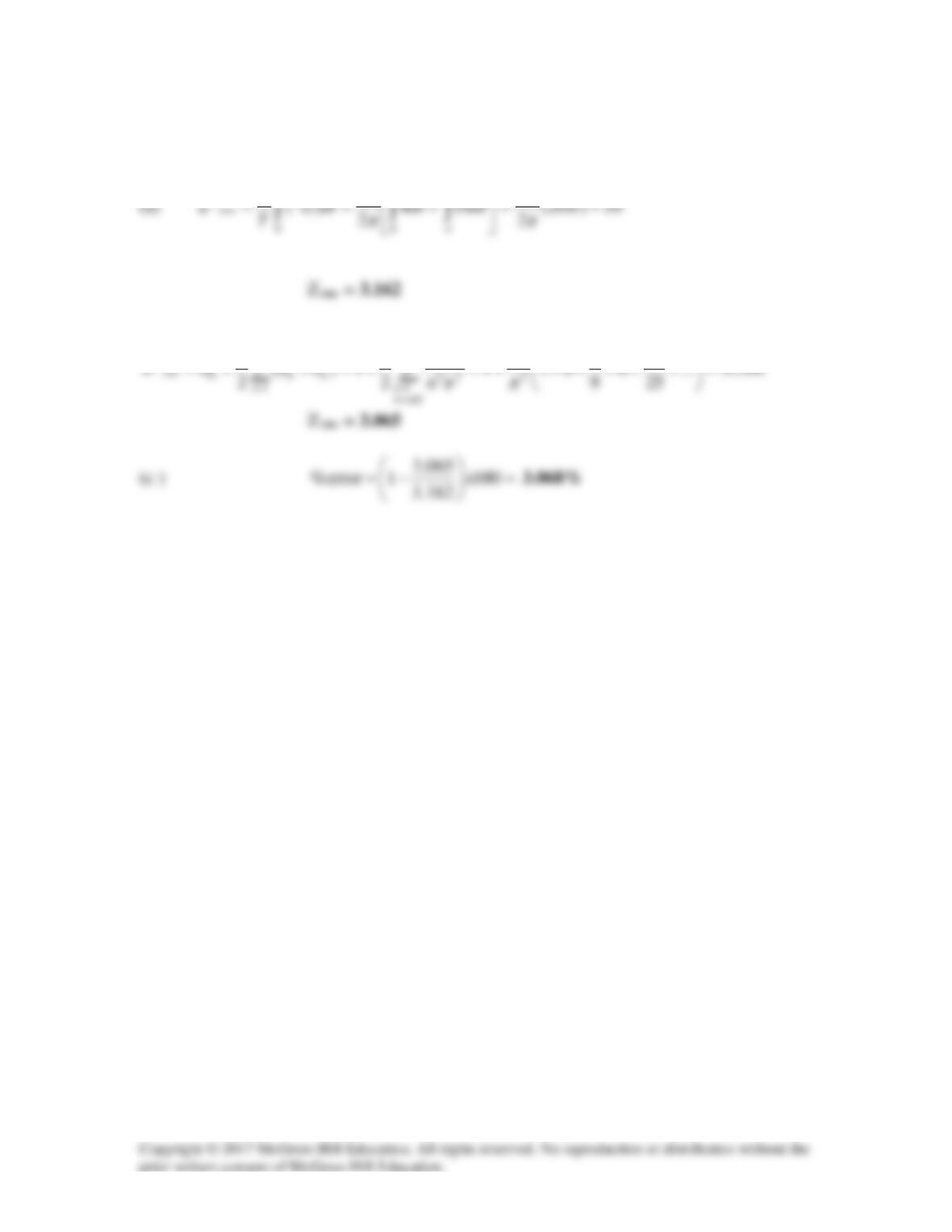
(b) p = VDCIDC +
∑
∞
=
φ−θ
1n
nnnn )cos(IV
2
1
Solution 17.49
1
1
1
2
22
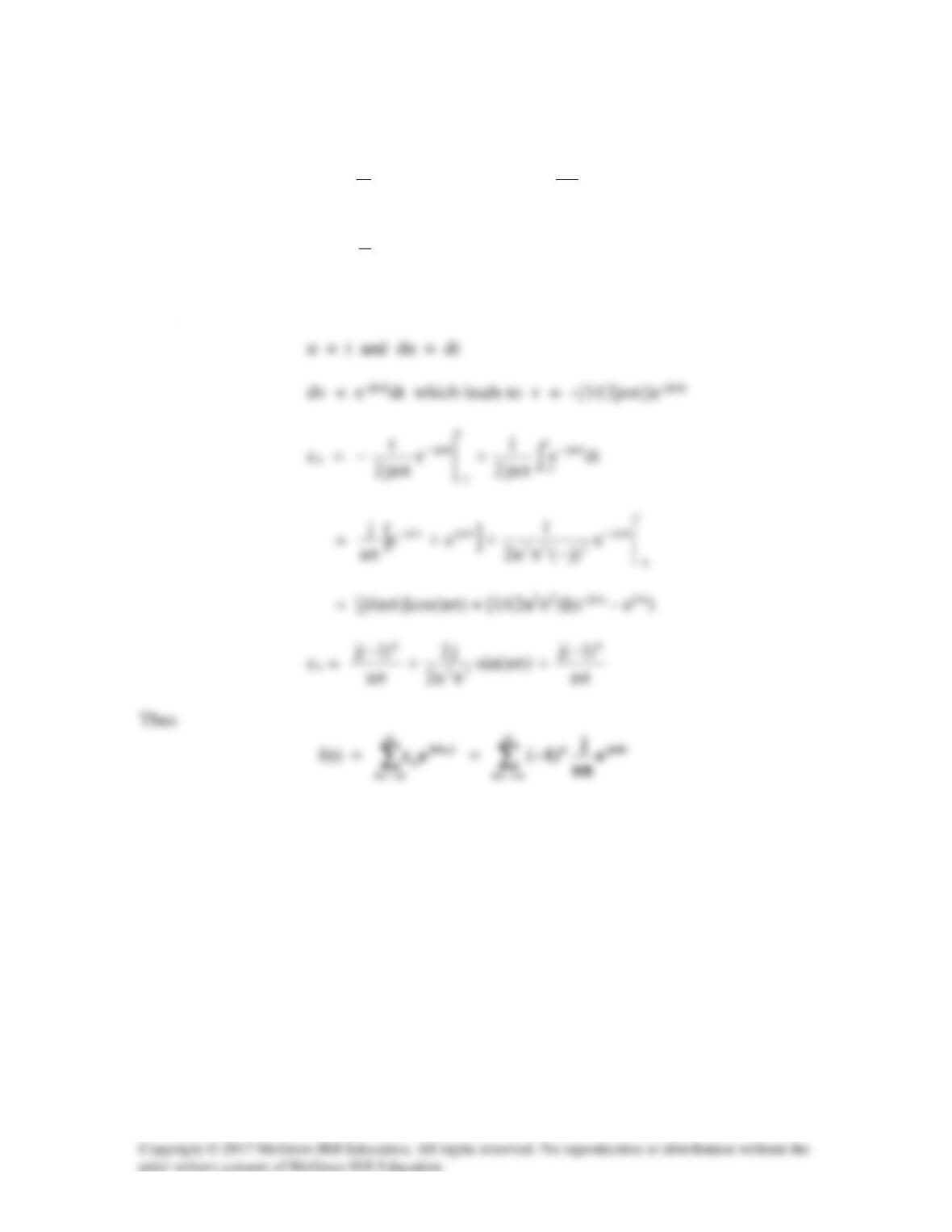
+== ∫ ∫∫
π π
T
(b)
1
1
72
144
1
1
222
2=
++++++=+=++=
∞
∞
Solution 17.50
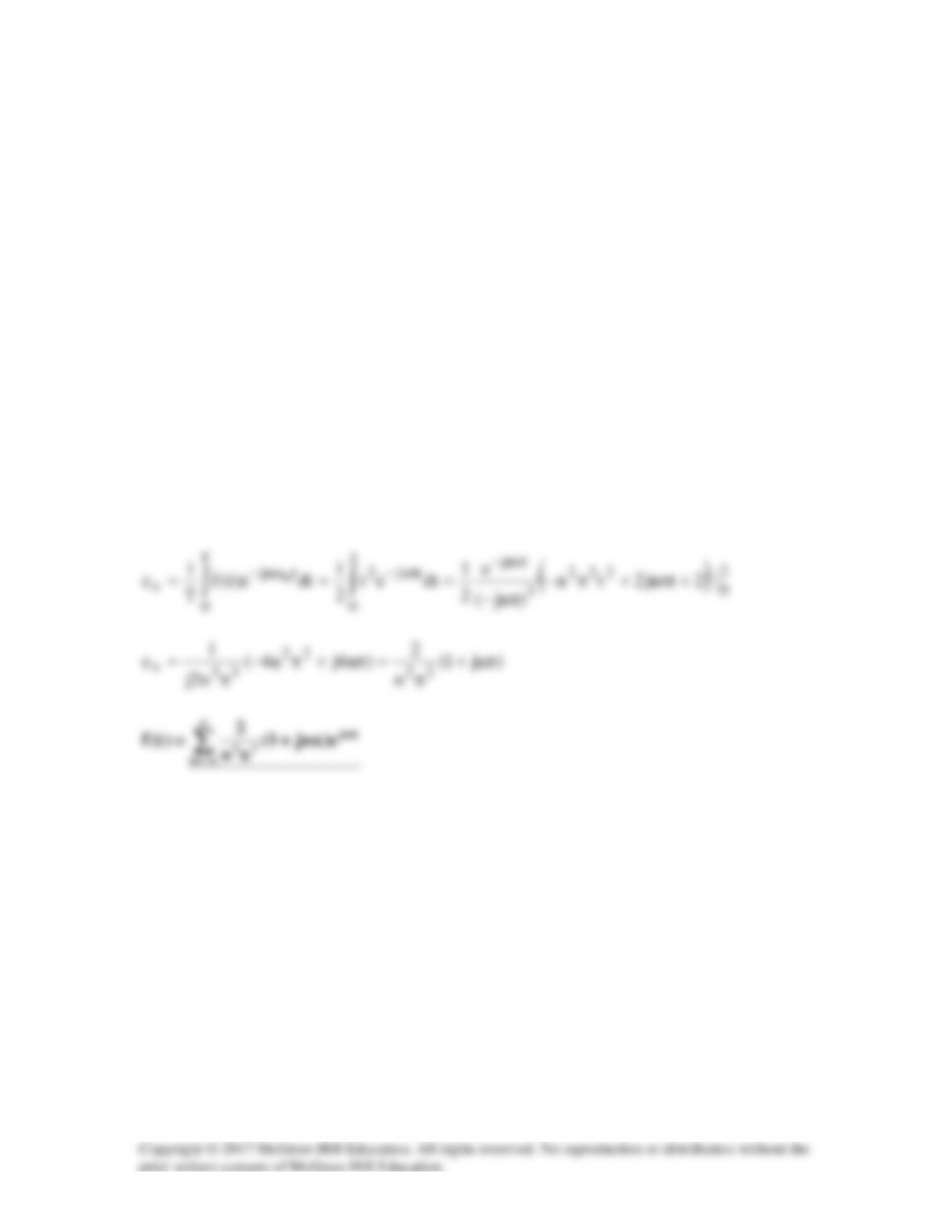
cn =
∫π==ω
ω−
T
0o
ntj
1
n2
,dte)t(f
T
1o
=
∫
−
π−
1tjn
dtte
2
1
Using integration by parts,
Solution 17.51
Design a problem to help other students to better understand how to find the exponential
Fourier series of a given periodic function.
Although there are many ways to solve this problem, this is an example based on the
same kind of problem asked in the third edition.
Problem
Given the periodic function
f(t) = t2, 0 < t < T
obtain the exponential Fourier series for the special case T = 2.
Solution
π=π=ω= T/2,2T o
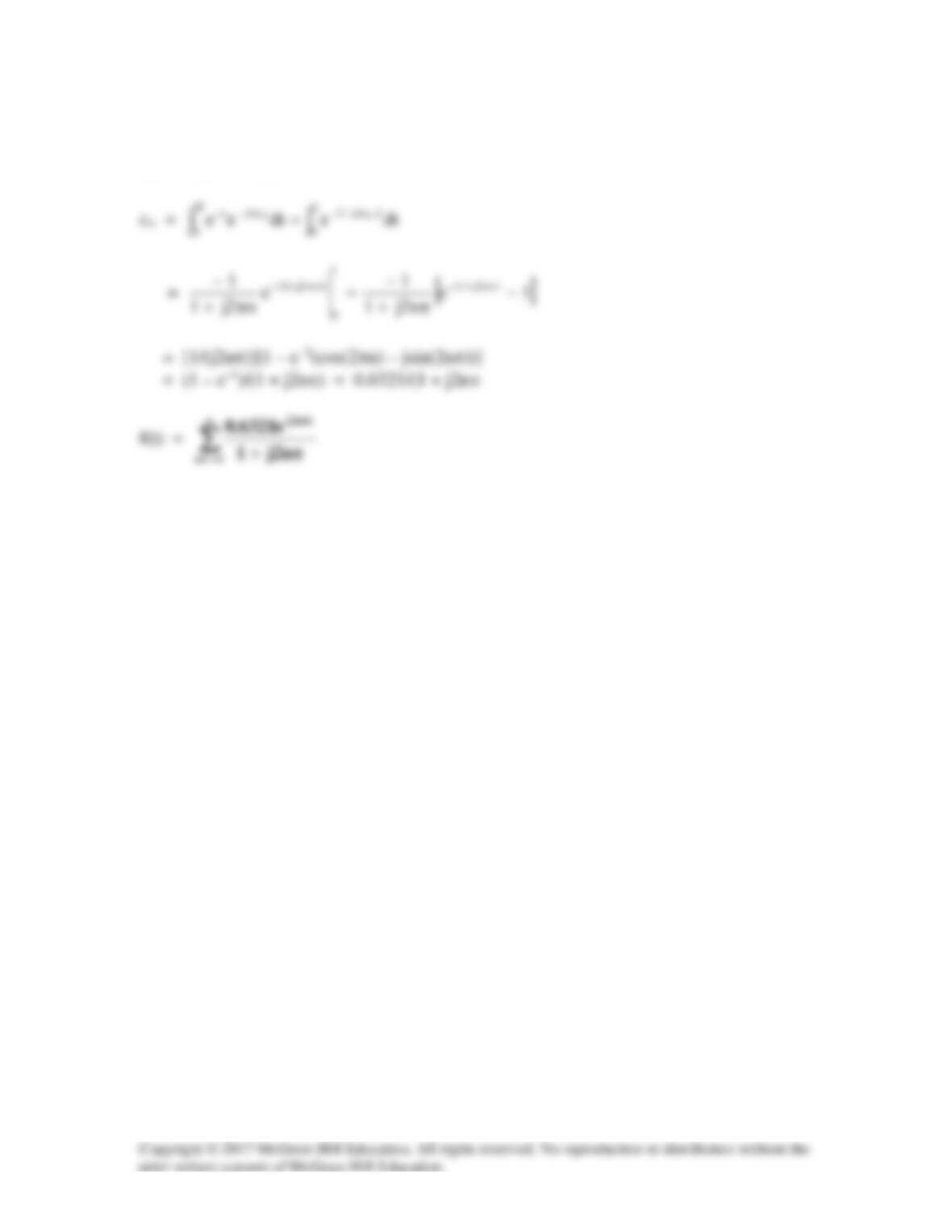
Solution 17.52
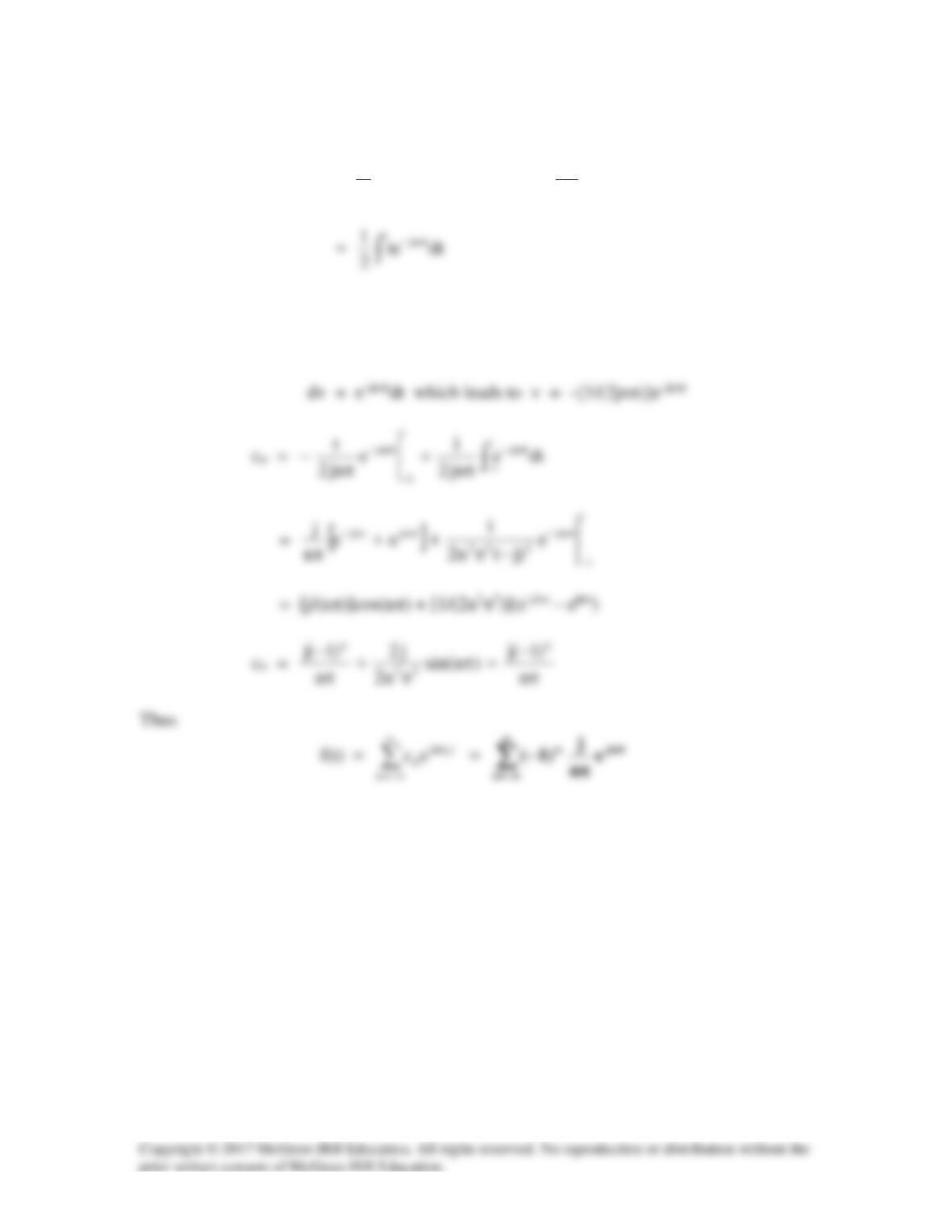
cn =
∫π==ω
ω−
T
0o
ntj
1
n2
,dte)t(f
T
1o
Using integration by parts,
u = t and du = dt
Solution 17.53
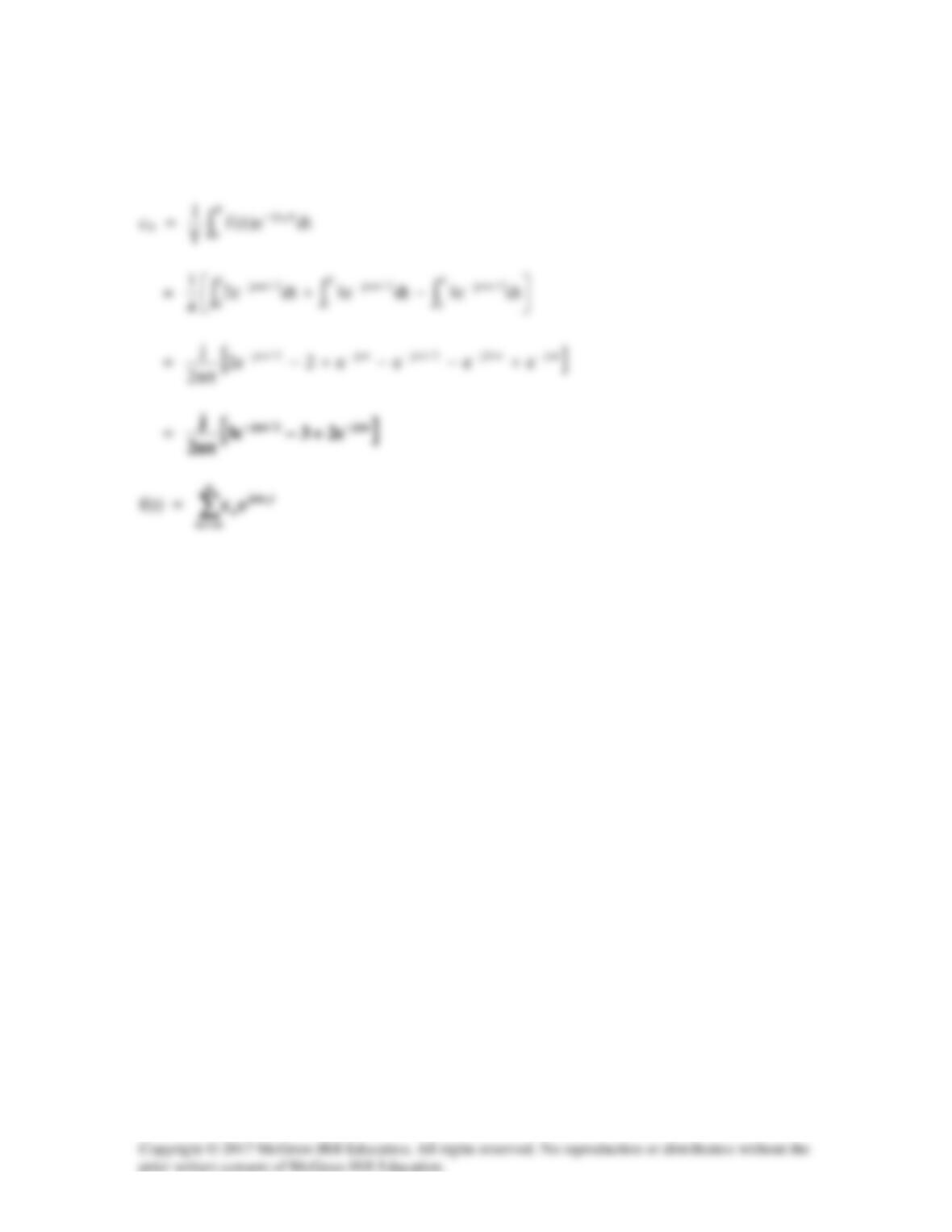
ωo = 2π/T = 2π
Solution 17.54
T = 4, ωo = 2π/T = π/2
Solution 17.55
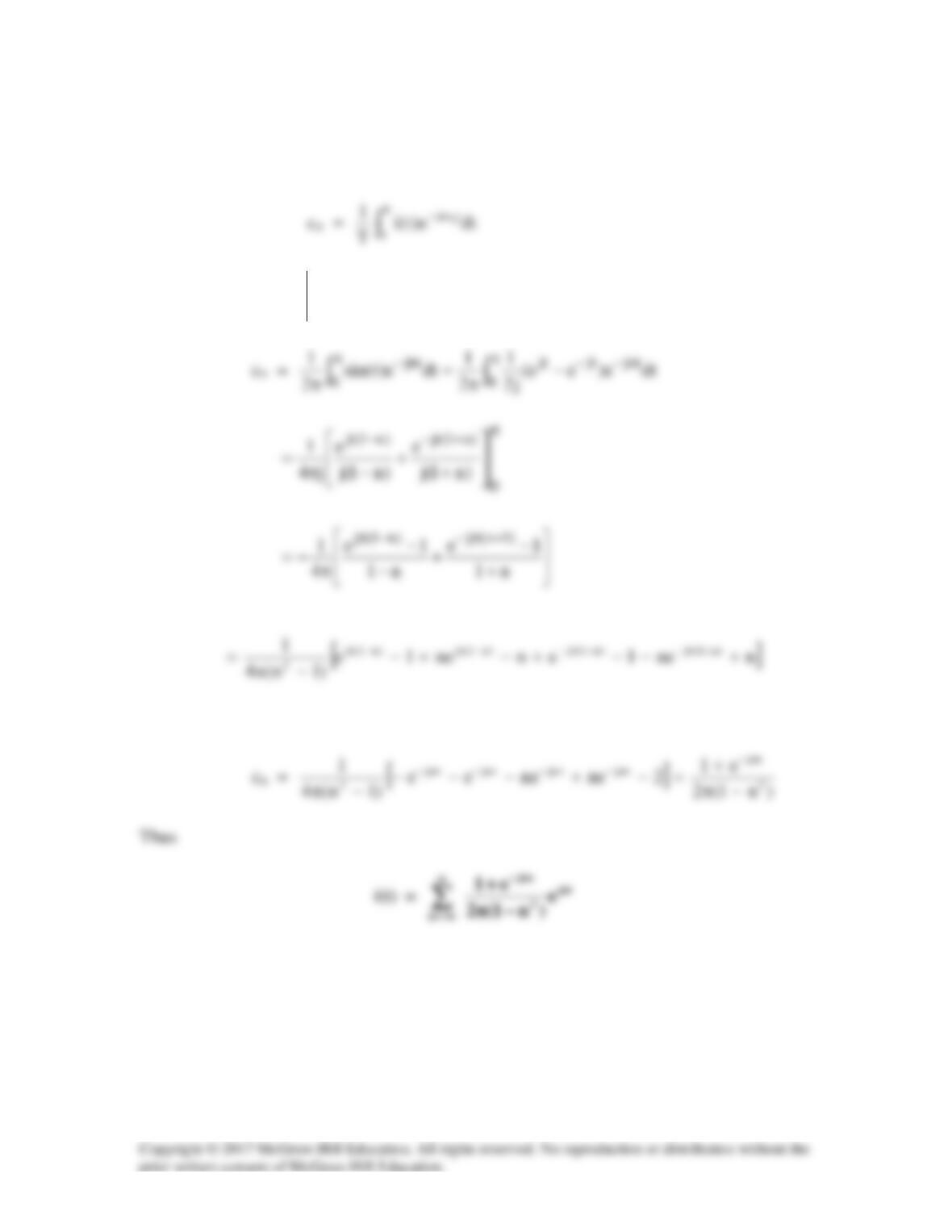
T = 2π, ωo = 2π/T = 1
But i(t) =
π<<π
π<<
2t,0
t0),tsin(
But ejπ = cos(π) + jsin(π) = –1 = e–jπ
Solution 17.56
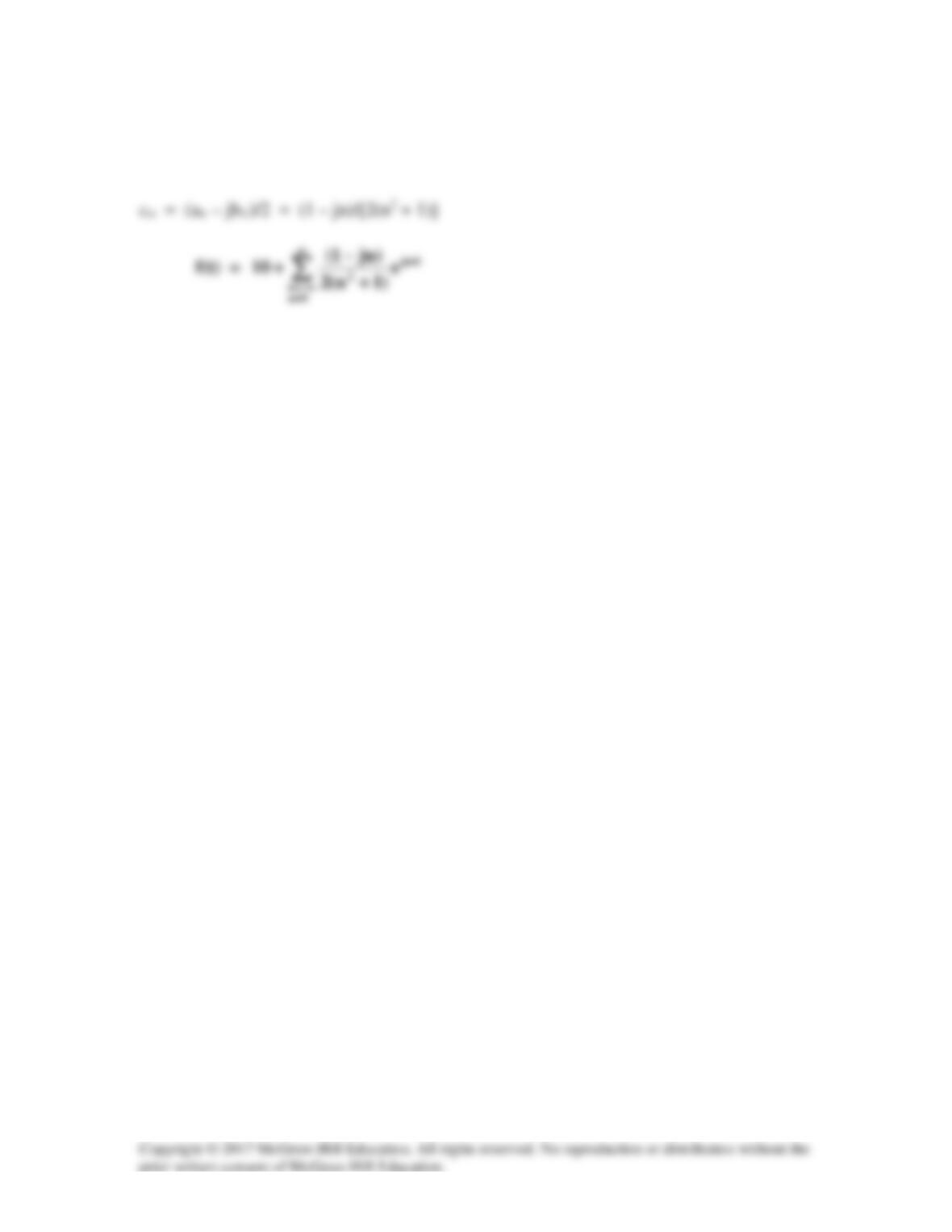
co = ao = 10, ωo = π