Solution 17.15
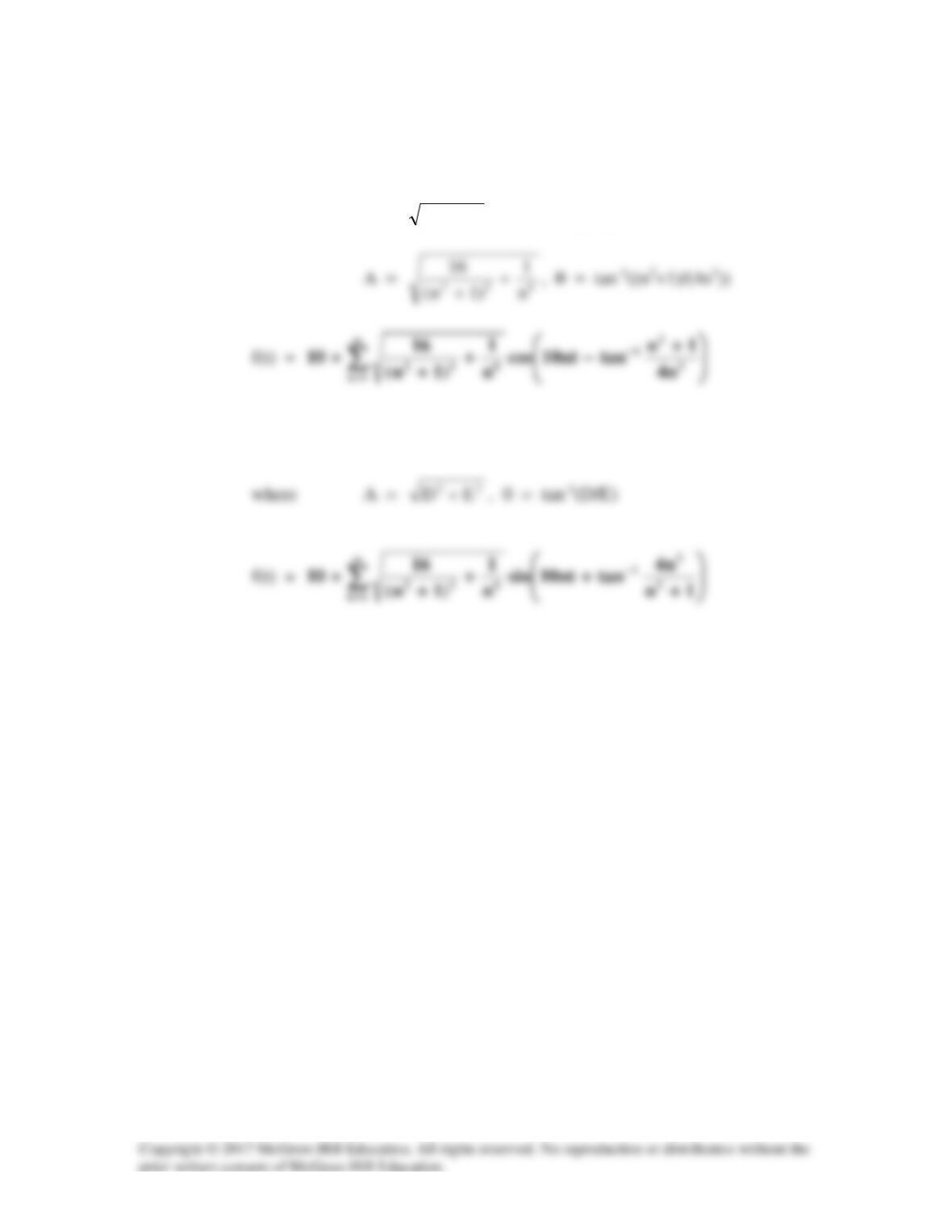
(a) Dcos ωt + Esin ωt = A cos(ωt – θ)
where A =
22 ED +
, θ = tan-1(E/D)
(b) Dcos ωt + Esin ωt = A sin(ωt + θ)
22 ED +
Solution 17.16
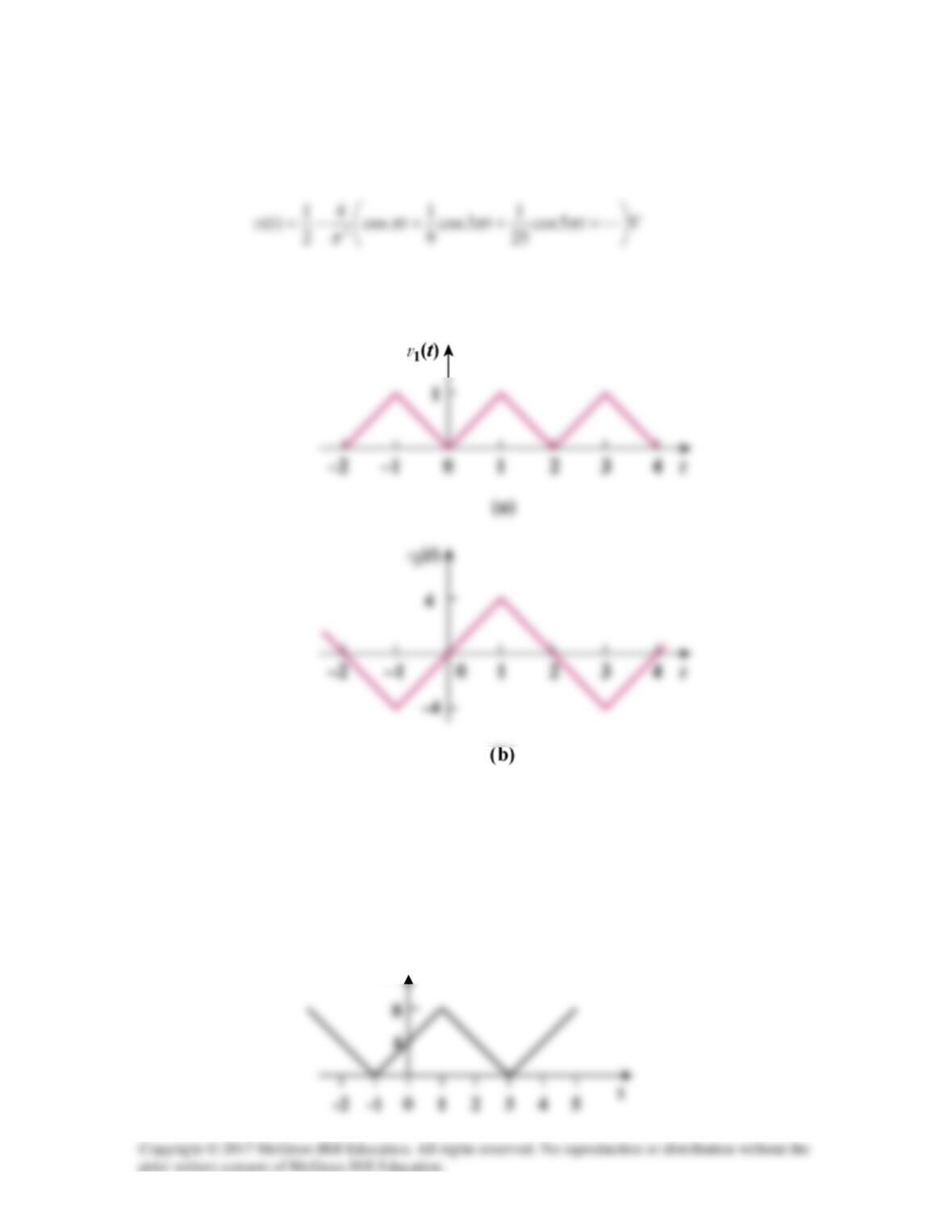
The waveform in Fig. 17.55(a) has the following Fourier series:
Obtain the Fourier series of v2(t) in Fig. 17.55(b).
Figure 17.55
For Prob. 17.16.
Solution
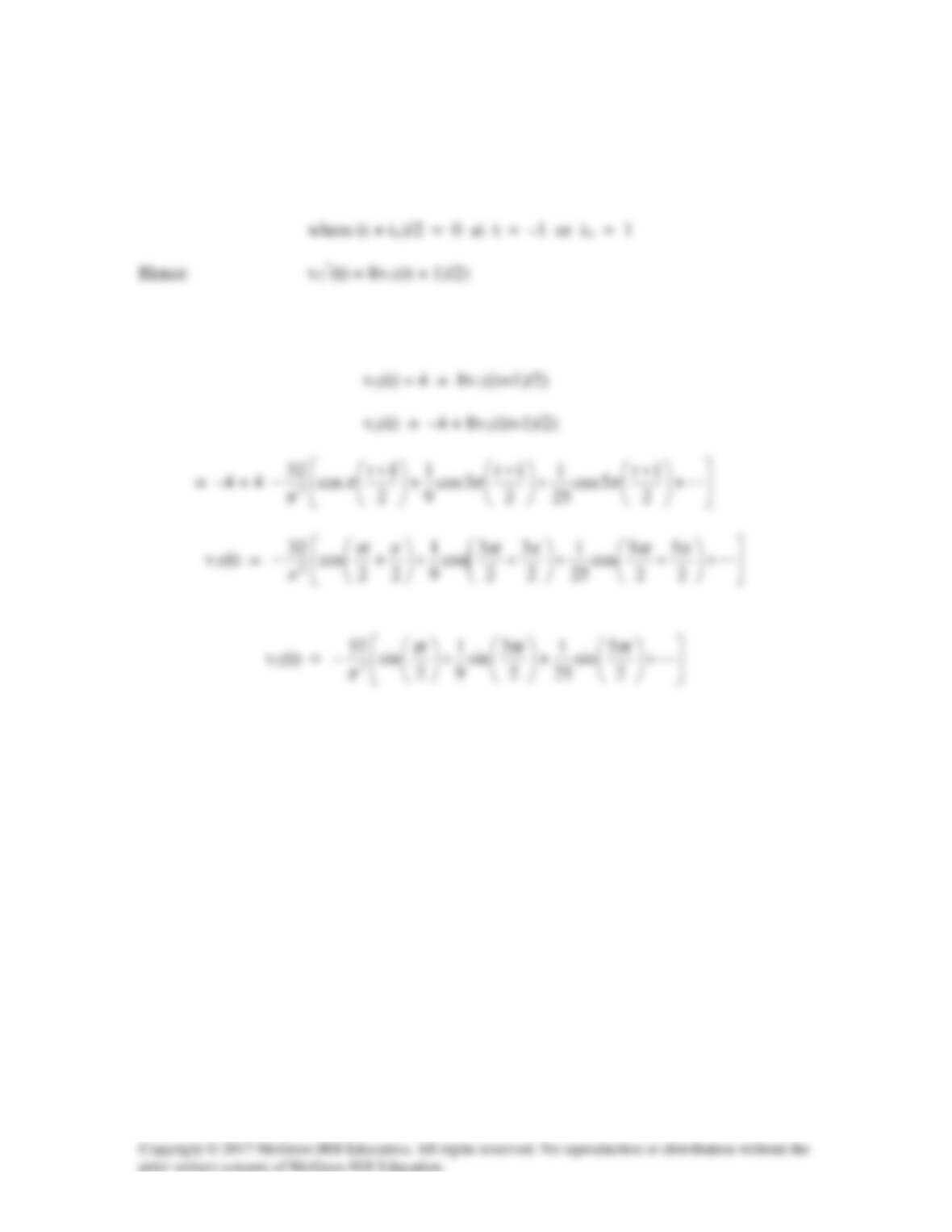
If v2(t) is shifted by 4 along the vertical axis, we obtain v2*(t) shown below, i.e. v2*(t) =
v2(t) + 4.
v2*(t)
Comparing v2*(t) with v1(t) shows that
v2*(t) = 8v1((t + to)/2)
But v2*(t) = v2(t) + 4
Solution 17.17
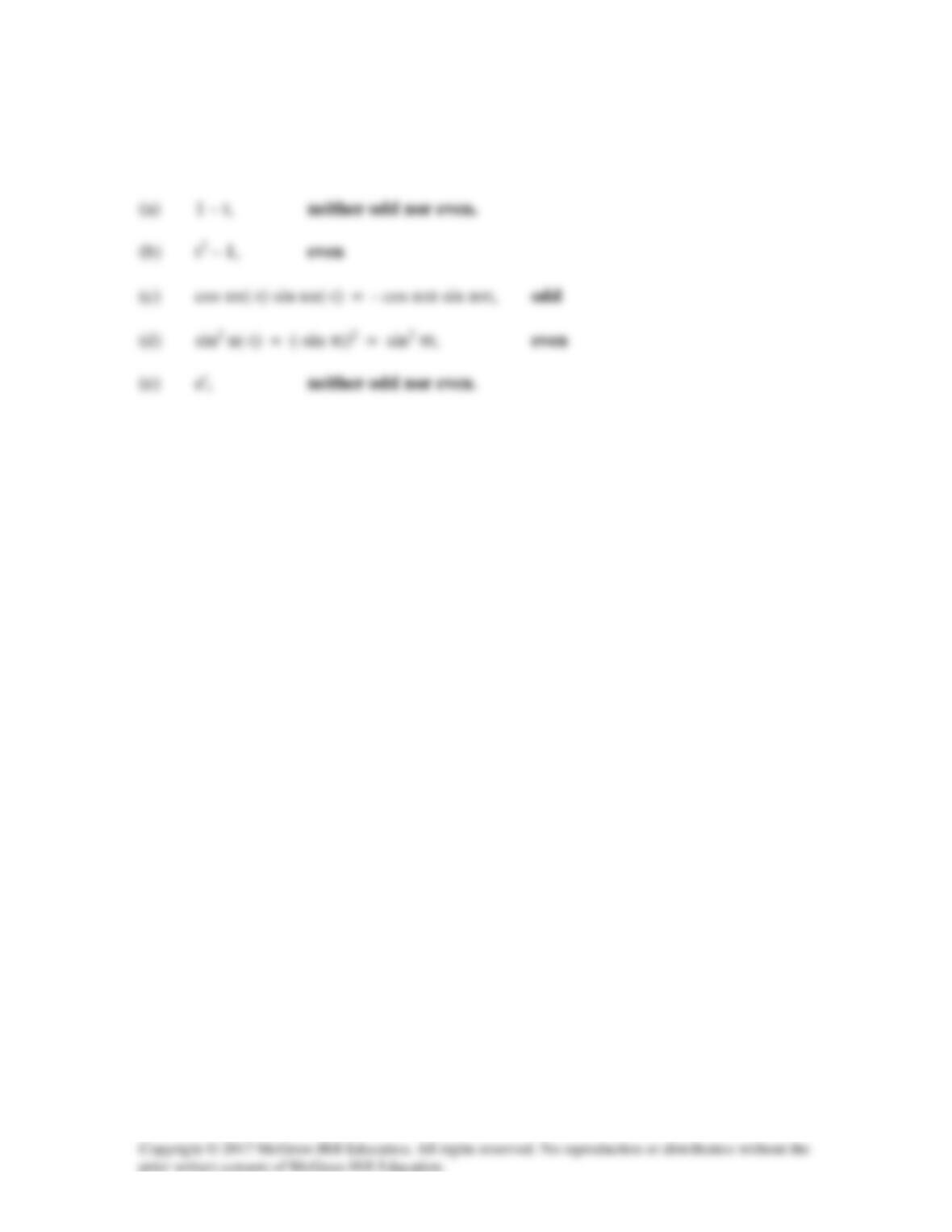
We replace t by –t in each case and see if the function remains unchanged.
Solution 17.18
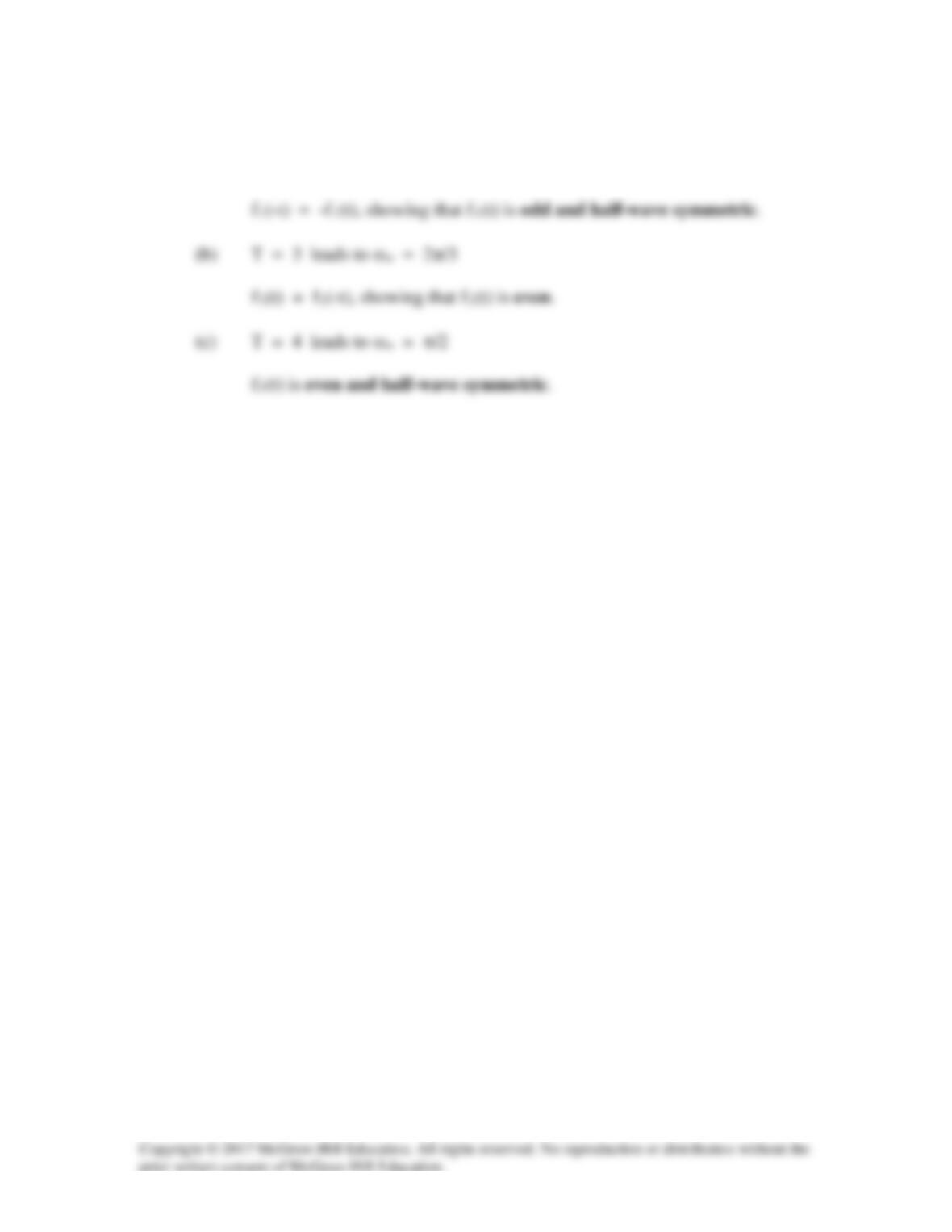
(a) T = 2 leads to ωo = 2π/T = π
Solution 17.19
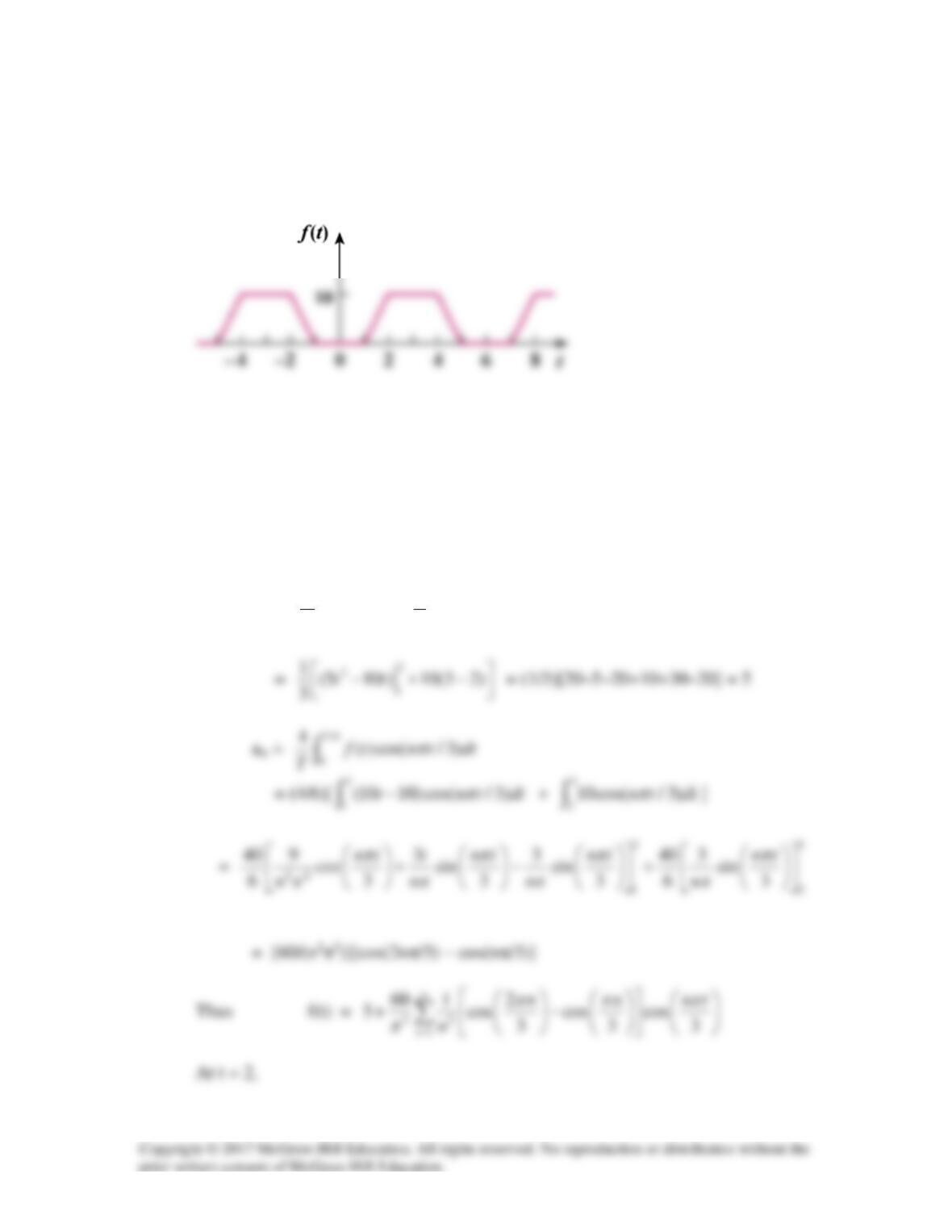
Obtain the Fourier series for the periodic waveform in Fig. 17.57.
Figure 17.57
For Prob. 17.19.
Solution
This is an odd function.
12 2
2
0
00 1
12
1 1 1 1 10
( ) 10 10(2 ) 5 (2 ) 2.5
4 4 4 42
01
T
t
a f t dt tdt t dt t t
T
= = + −= + − =
∫∫∫
1 12 2
5 10 5
t
Solution 17.20
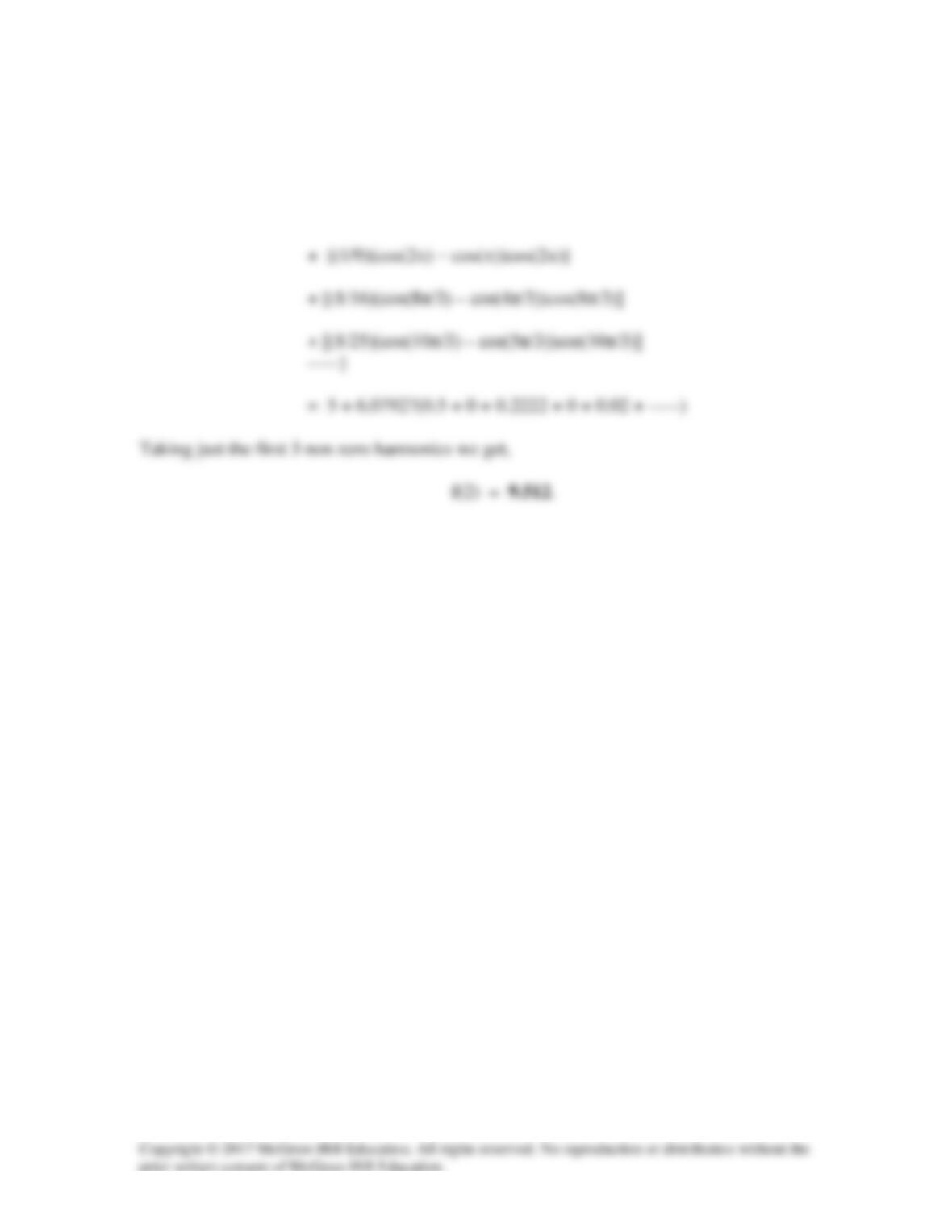
Find the Fourier series for the signal in Fig. 17.58. Evaluate f(t) at t = 2 using the first
three nonzero harmonics.
Figure 17.58
For Prob. 17.20.
Solution
This is an even function.
bn = 0, T = 6, ω = 2π/6 = π/3
ao =
/2 2 3
01 2
22
( ) (10 10) 10
6
Tf t dt t dt dt
T
= −+
∫∫∫
f(2) = 5 + (60/π2){[(cos(2π/3) − cos(π/3))cos(2π/3)]
+ [(1/4)(cos(4π/3) − cos(2π/3))cos(4π/3)]
Solution 17.21
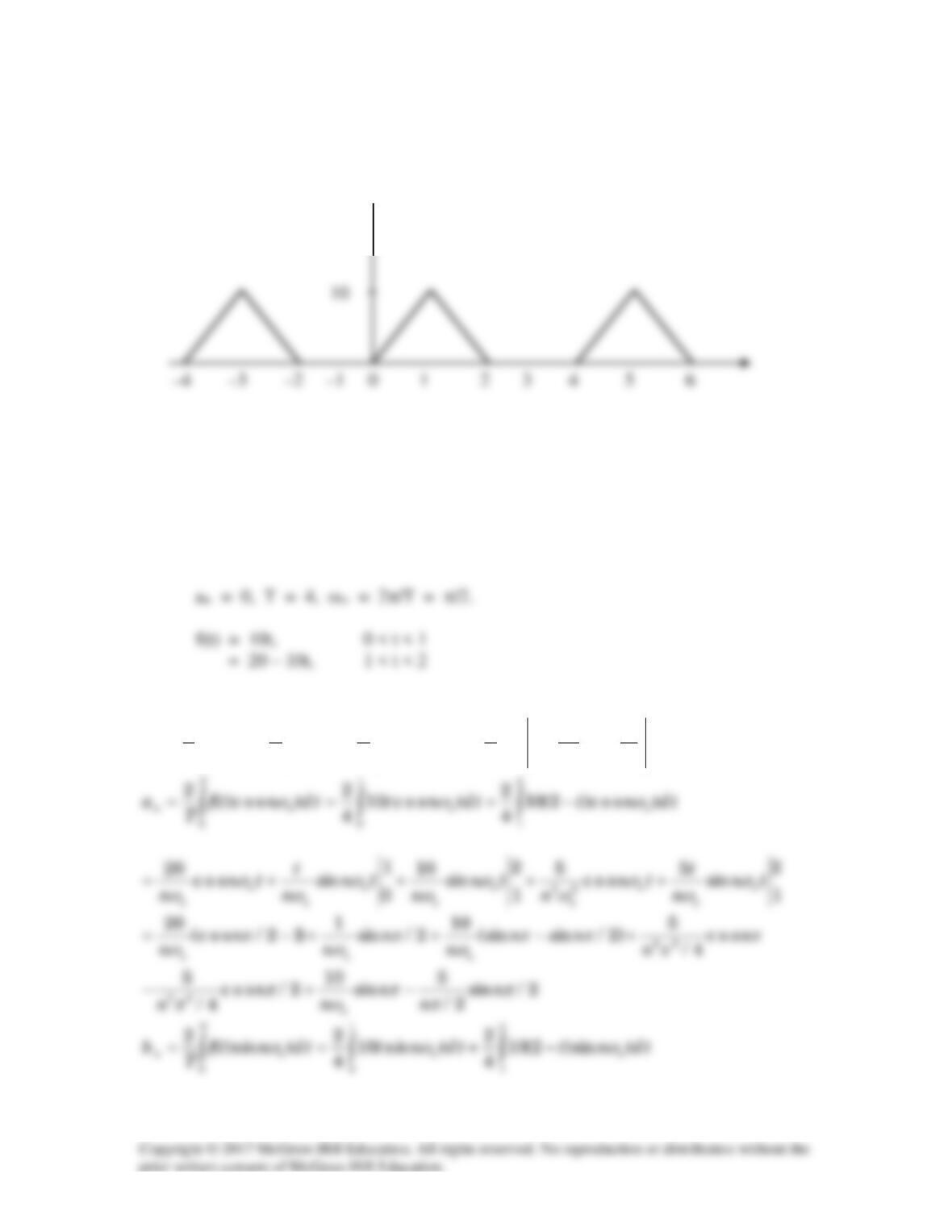
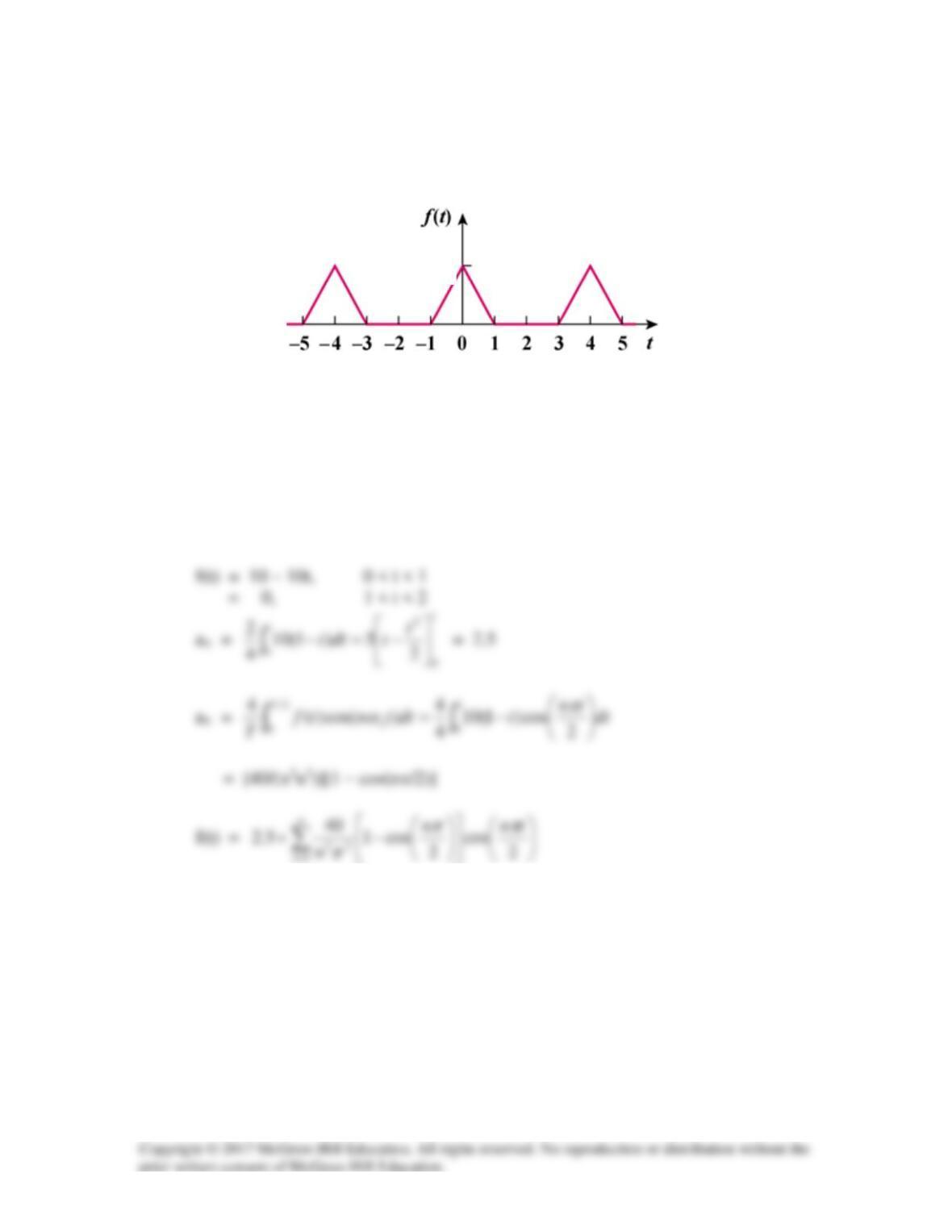
Determine the trigonometric Fourier series of the signal in Fig. 17.59.
Figure 17.59
For Prob. 17.21.
Solution
This is an even function.
bn = 0, T = 4, ωo = 2π/T = π/2.
10
Solution 17.22
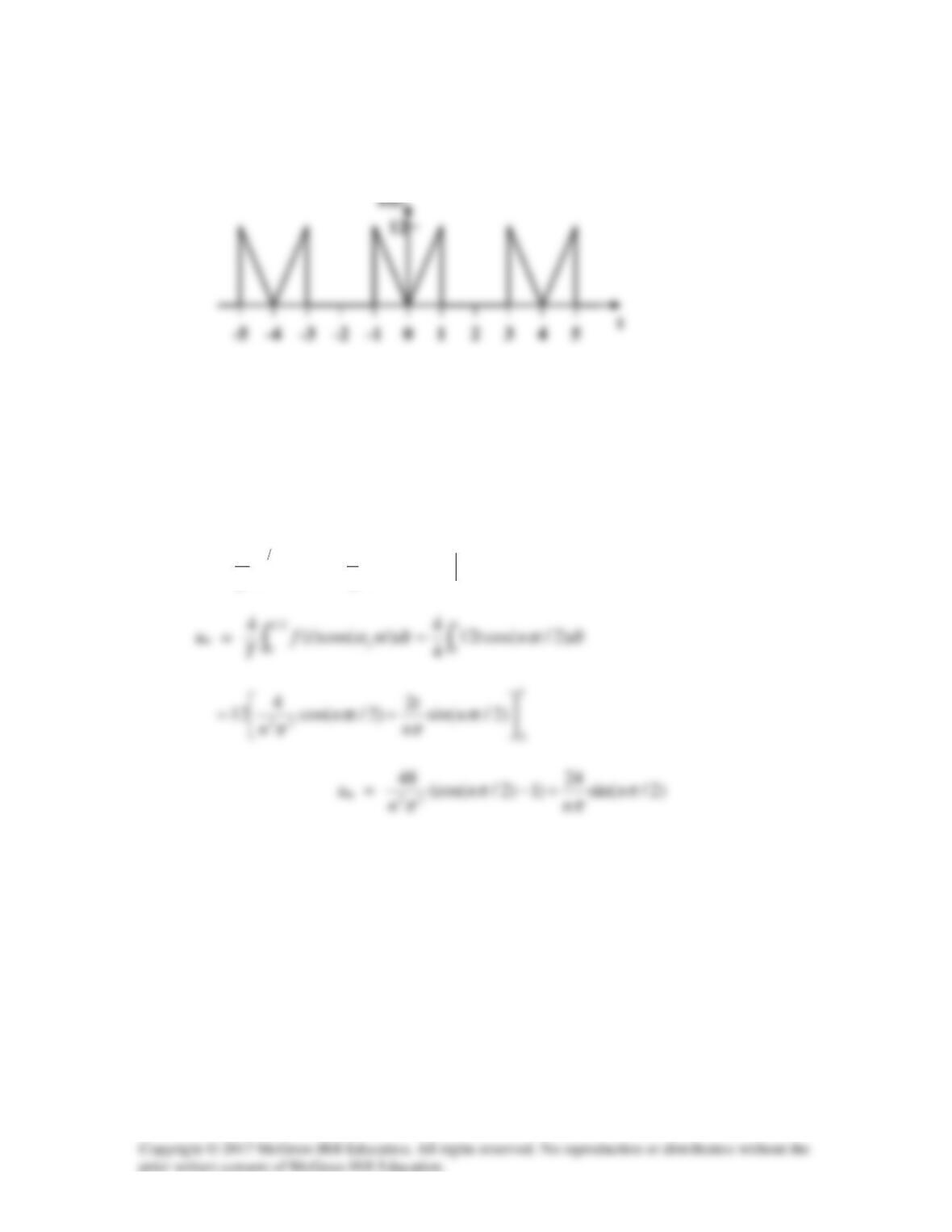
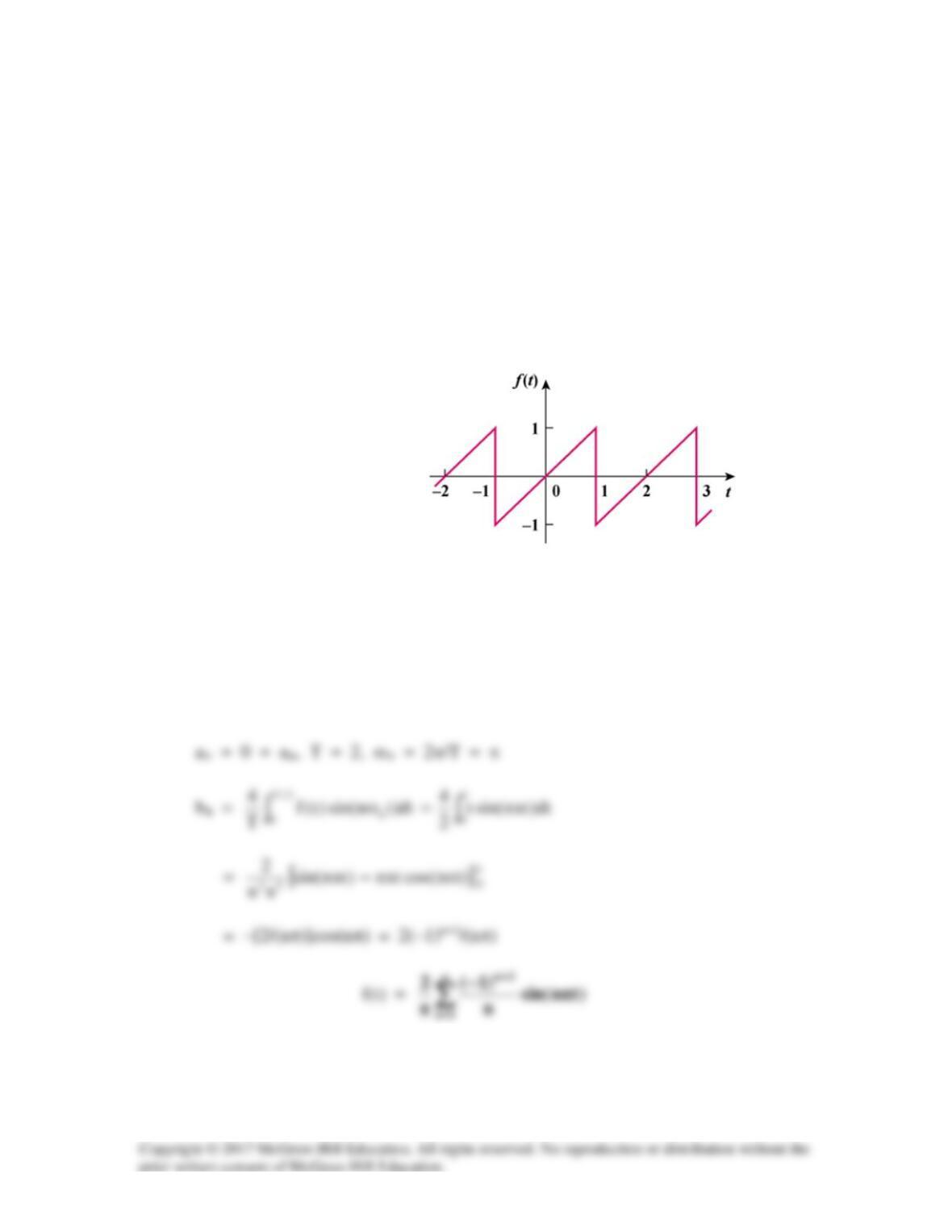
Calculate the Fourier coefficients for the function in Fig. 17.60.
Figure 17.60
For Prob. 17.60
Solution
This is an even function, therefore bn = 0. In addition, T=4 and ωo = π/2.
ao =
===
∫∫
1
0
2
1
0
2
0
312
4
2
)(
2ttdtdttf
T
T
3
Solution 17.23
Using Fig. 17.61, design a problem to help other students to better understand finding the
Fourier series of a periodic wave shape.
Although there are many ways to solve this problem, this is an example based on the
same kind of problem asked in the third edition.
Problem
Find the Fourier series of the function shown in Fig. 17.61.
Figure 17.61
Solution
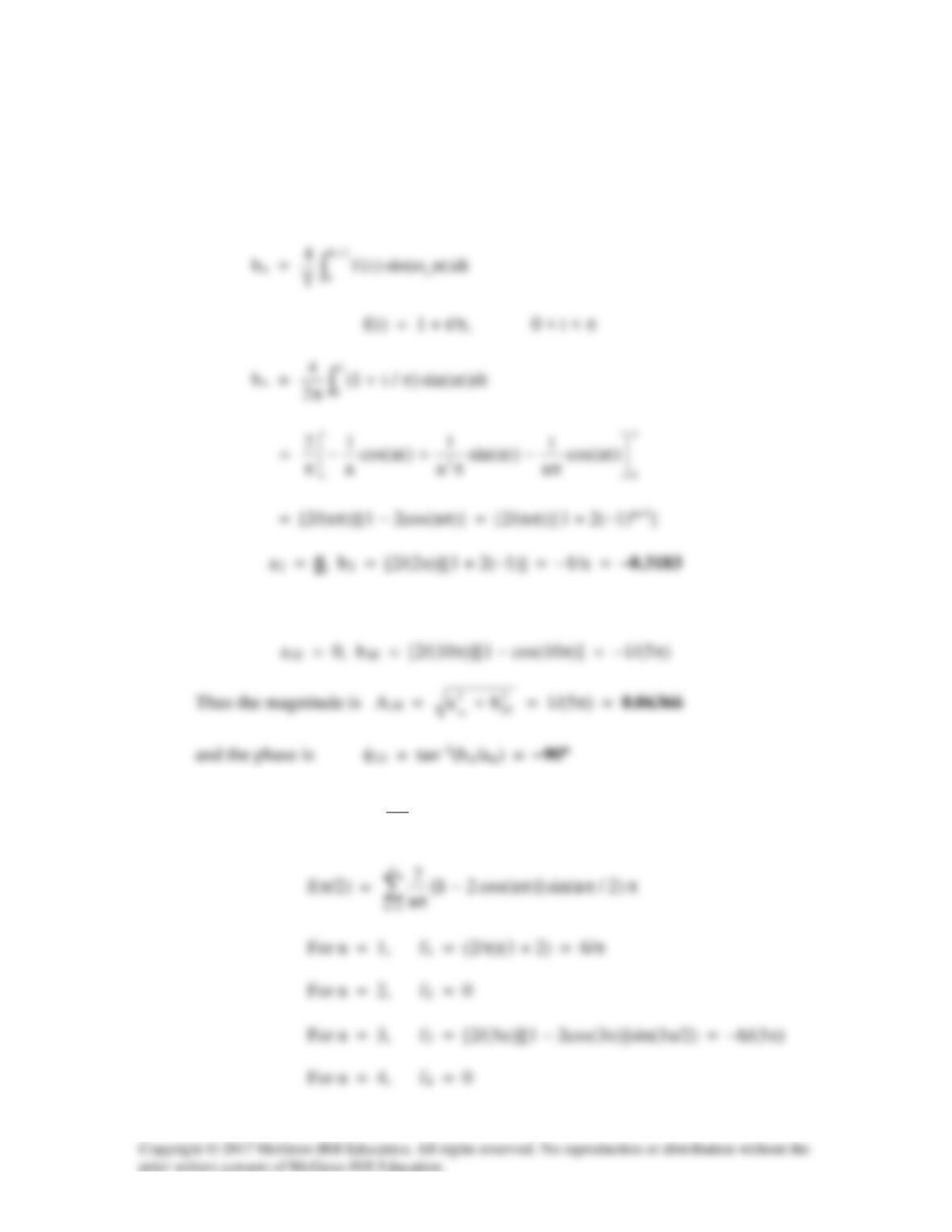
f(t) is an odd function.
f(t) = t, −1< t < 1
Solution 17.24
(a) This is an odd function.
ao = 0 = an, T = 2π, ωo = 2π/T = 1
(b) ωn = nωo = 10 or n = 10
(c) f(t) =
∑
∞
=
π−
π
1n
)ntsin()]ncos(21[
n
2
π
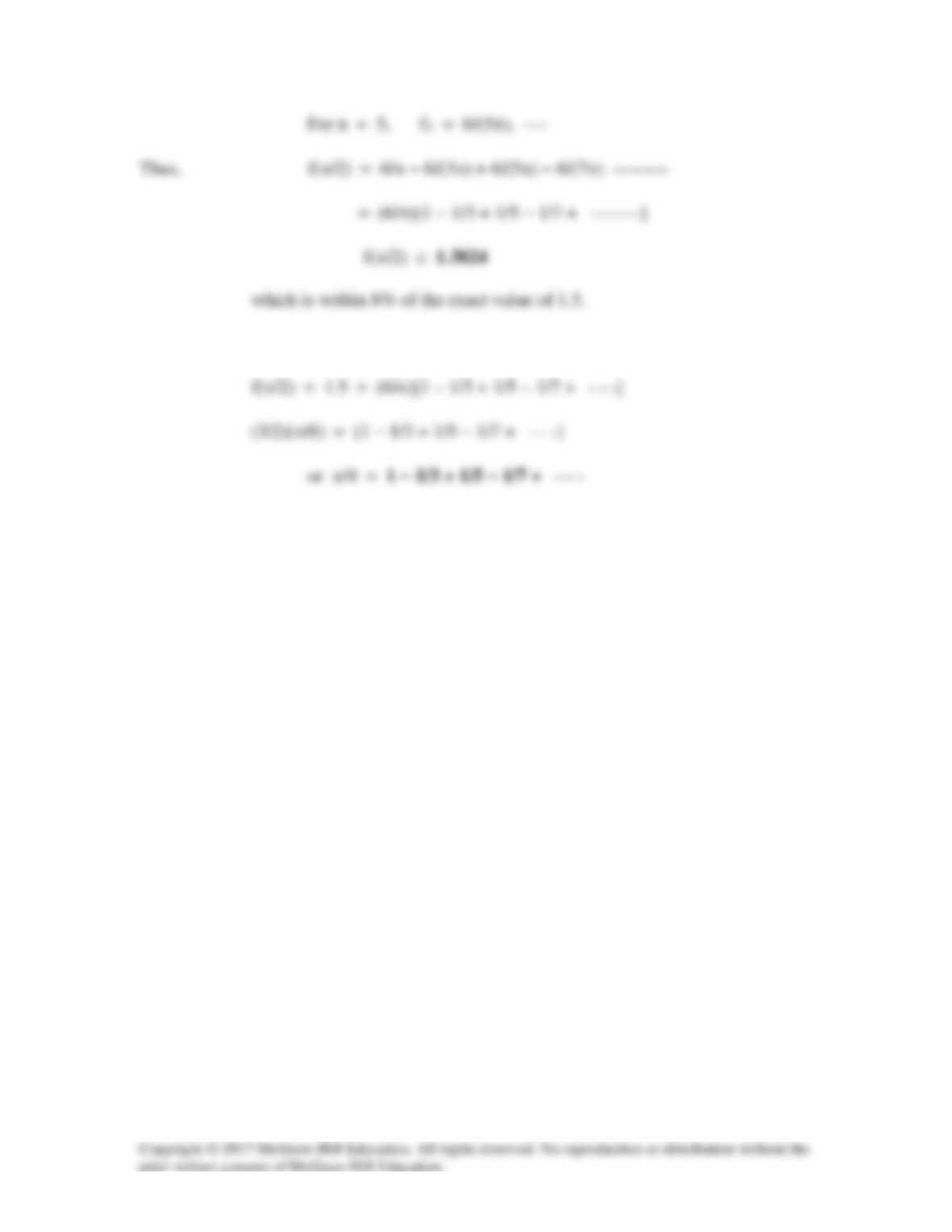
(d) From part (c)
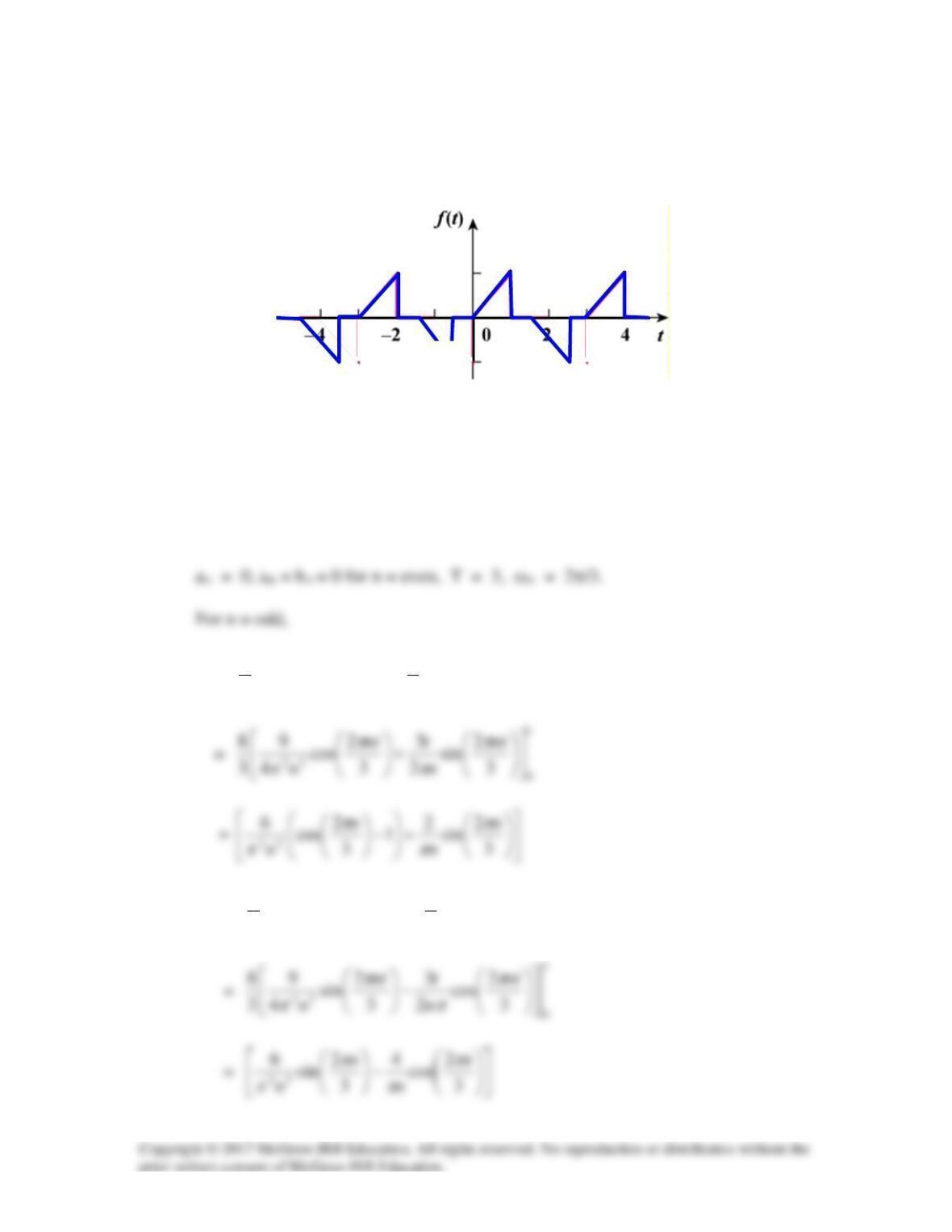
Solution 17.25
Determine the Fourier series representation of the function in Fig. 17.63.
Figure 17.63
For Prob. 17.25.
Solution
This is a half–wave (odd) function since f(t−T/2) = −f(t).
an =
∫∫ =1
00
5.1
00cos2
3
4
cos)(
3
4tdtnttdtntf
ωω
b n =
∫∫
=
1
0
5.1
0
)3/2sin(2
3
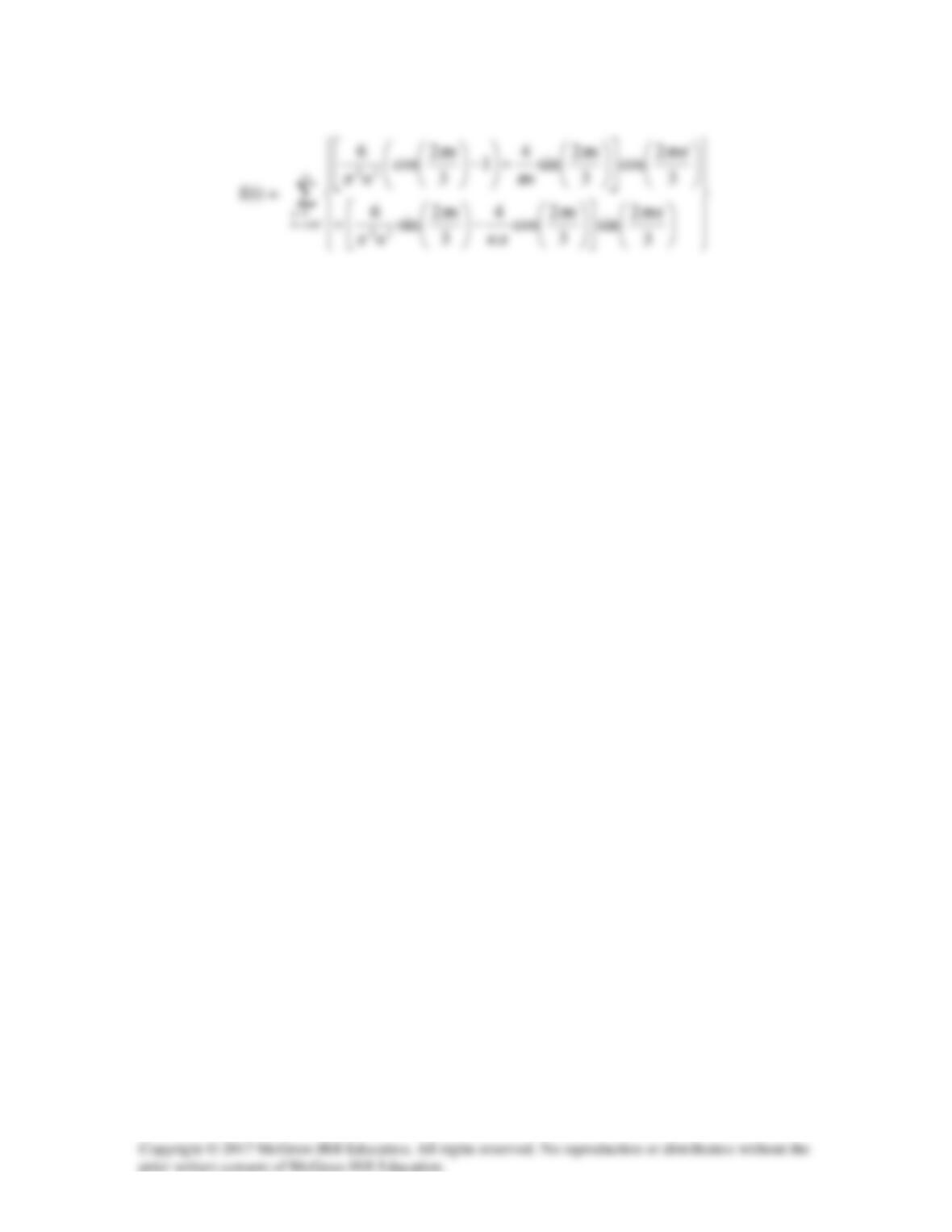
4
)sin()(
3
4dtnttdttntf
o
πω
2
–2
Solution 17.26
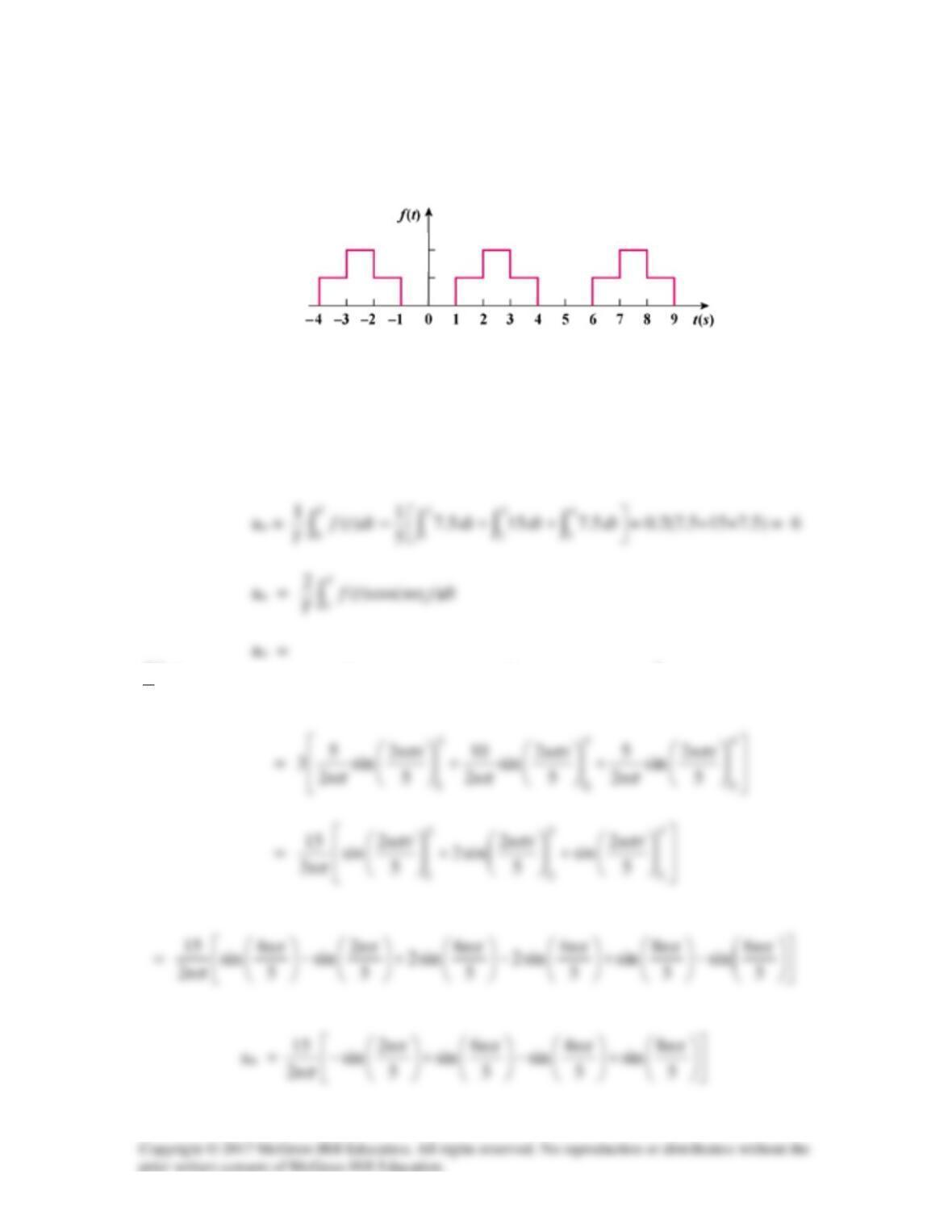
Find the Fourier series representation of the signal shown in Fig. 17.64.
Figure 17.64
For Prob. 17.26.
Solution
T = 5, ωo = 2π/T = 2π/5
2 34
1 23
27.5cos(2 / 5) 15cos(2 / 5) 7.5cos(2 / 5)
5n t dt n t dt n t dt
ππ π
++
∫ ∫∫
15
7.5
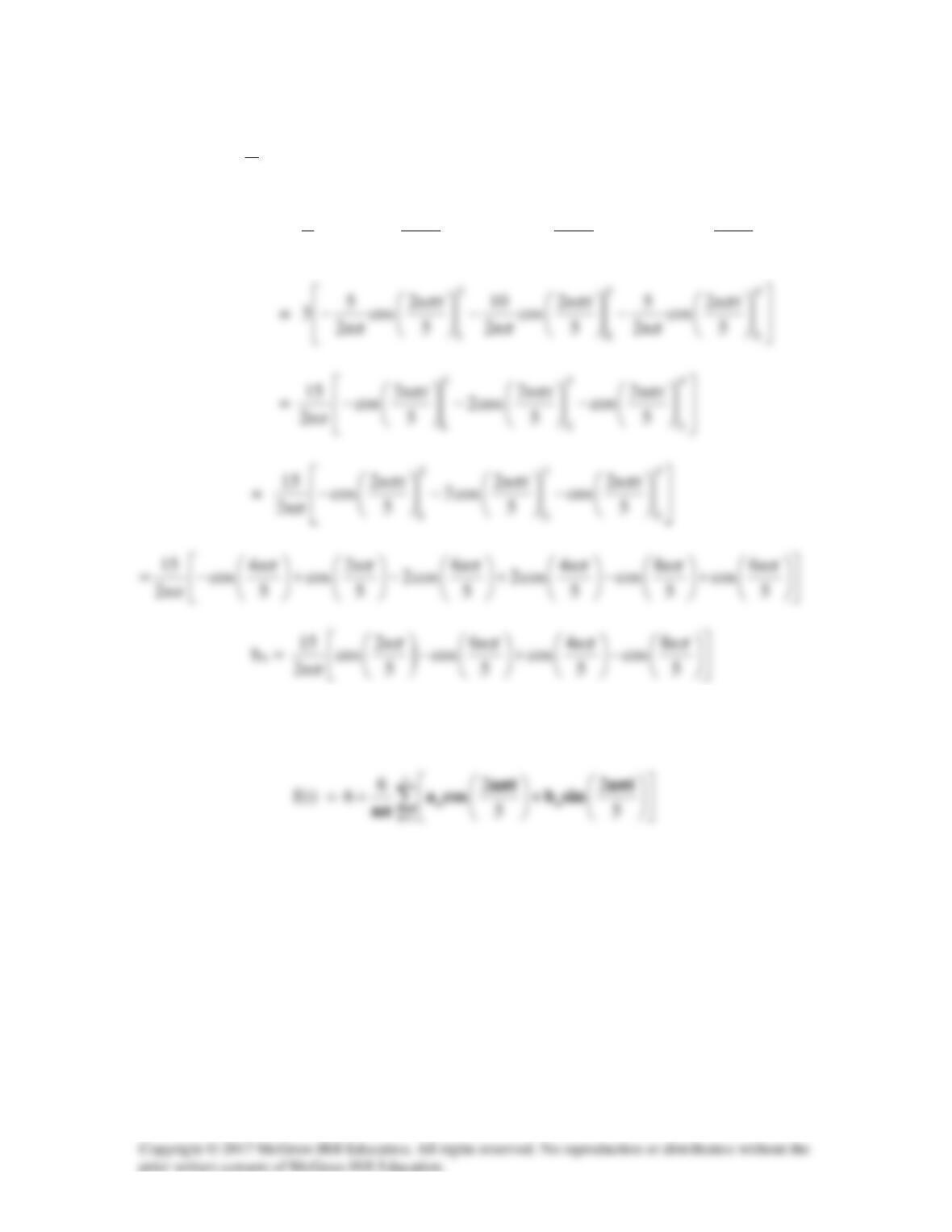
bn =
0
2( )sin( )
T
o
f t n t dt
T
ω
∫
=
2 34
1 23
22 2 2
7.5sin 15sin 7.5sin
55 5 5
nt nt nt
dt dt dt
ππ π
++
∫ ∫∫
Hence,
Solution 17.27
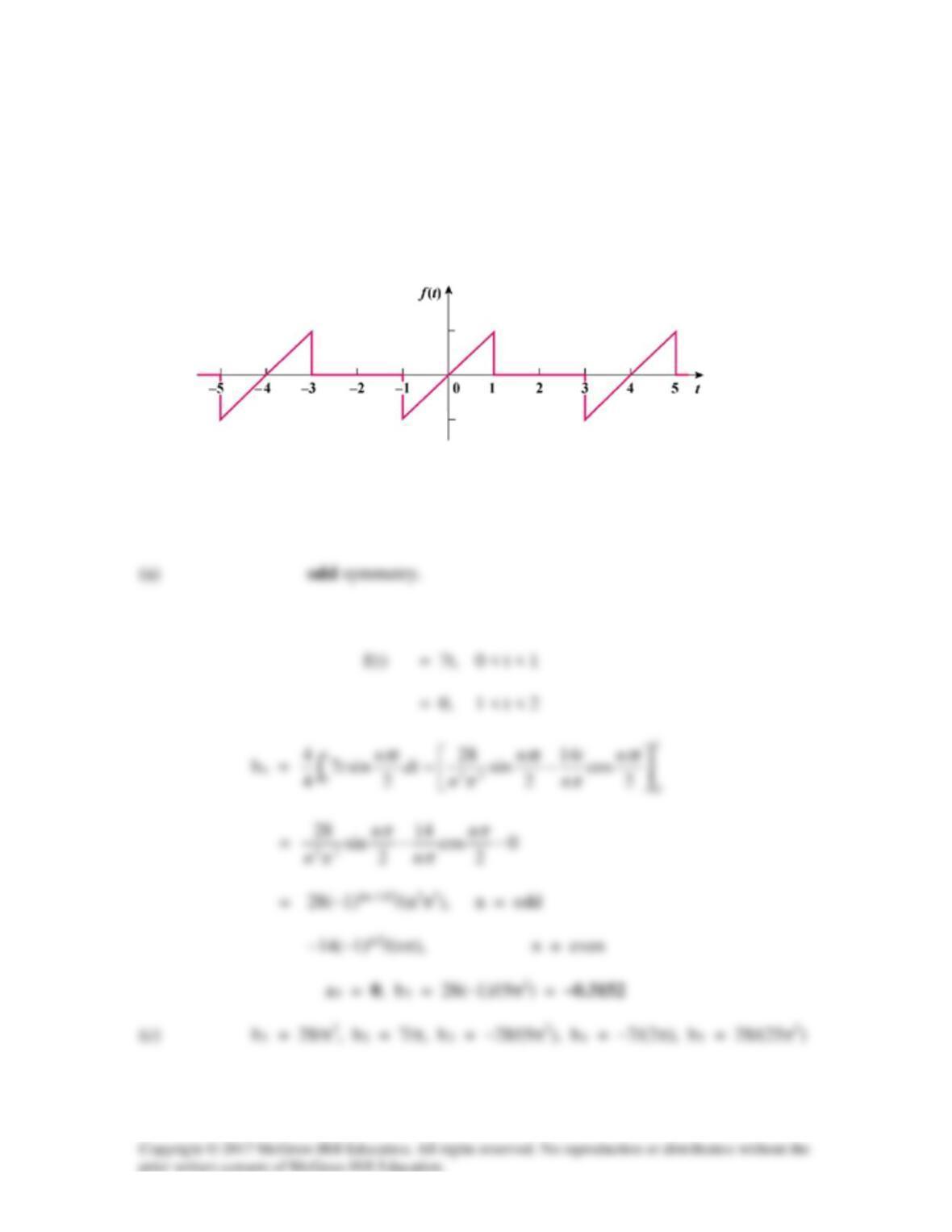
For the waveform shown in Fig. 17.65 below,
(a) specify the type of symmetry it has,
(b) calculate a3 and b3,
(c) find the rms value using the first five nonzero harmonics.
Figure 17.65
For Prob. 17.27.
Solution
(b) ao = 0 = an, T = 4, ωo = 2π/T = π/2
–7
7