Solution 17.1
(a) This is periodic with ω = π which leads to T = 2π/ω = 2.
1
Solution 17.2
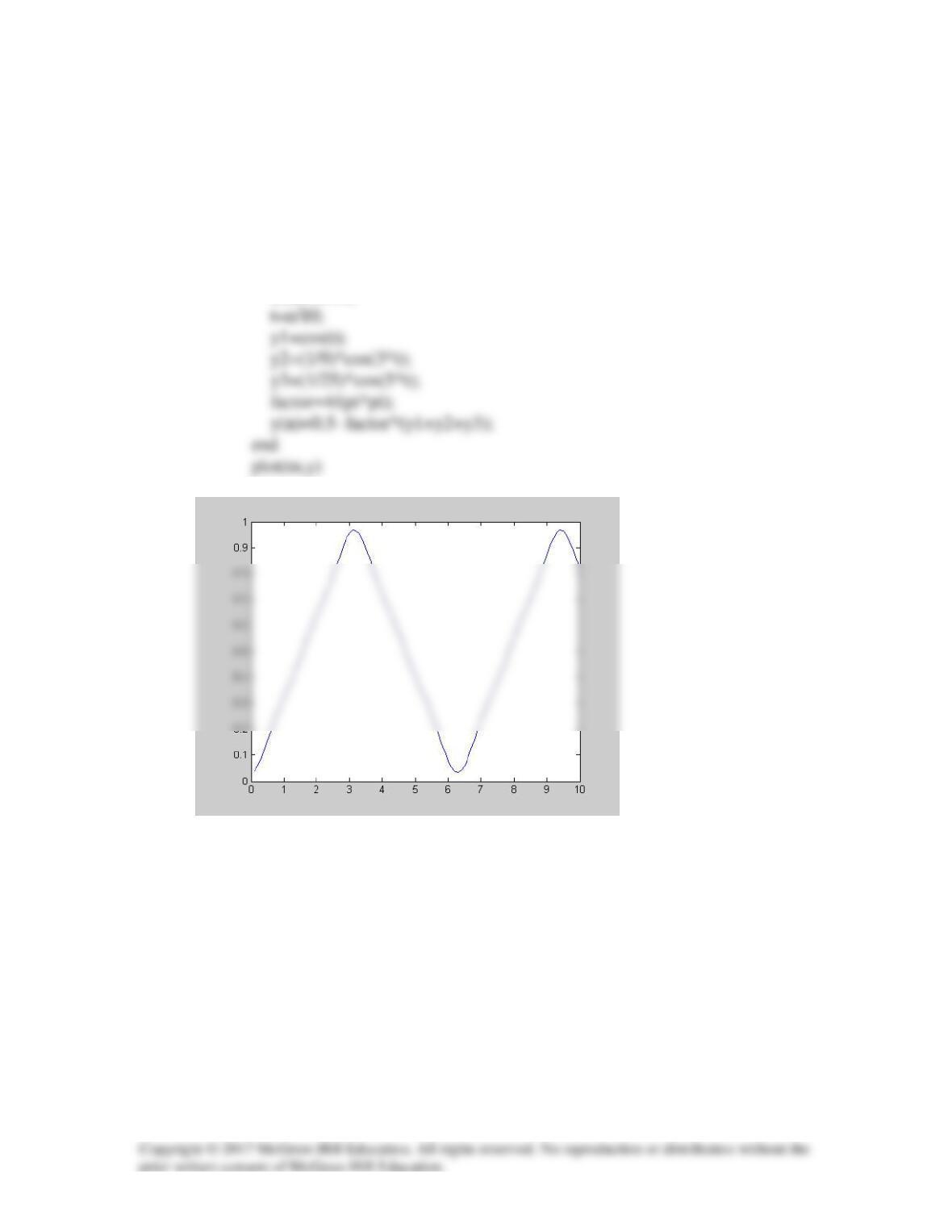
The function f(t) has a DC offset and is even. We use the following MATLAB code to
plot f(t). The plot is shown below. If more terms are taken, the curve is clearly indicating
a triangular wave shape which is easily represented with just the DC component and
three, cosinusoidal terms of the expansion.
for n=1:100
tn(n)=n/10;
Solution 17.3
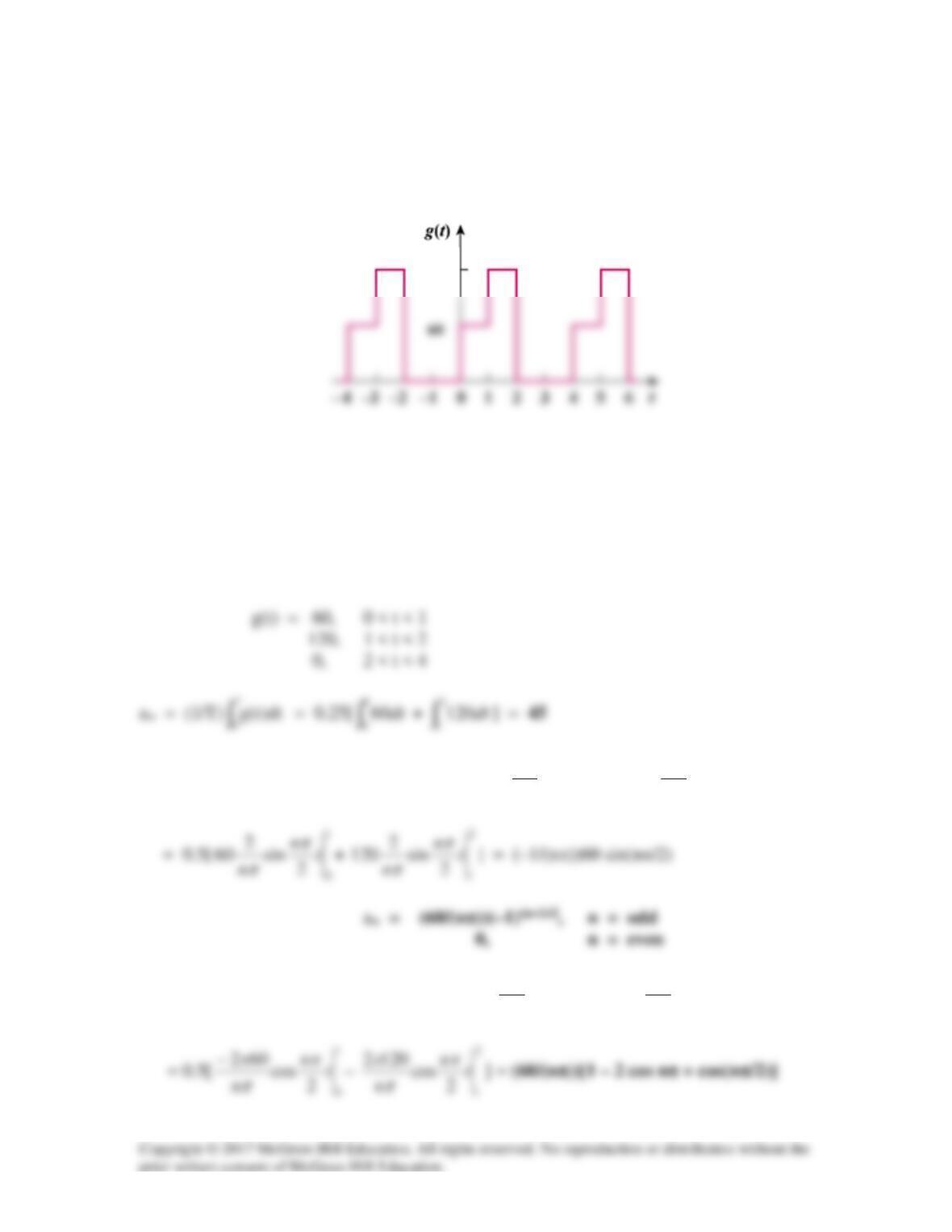
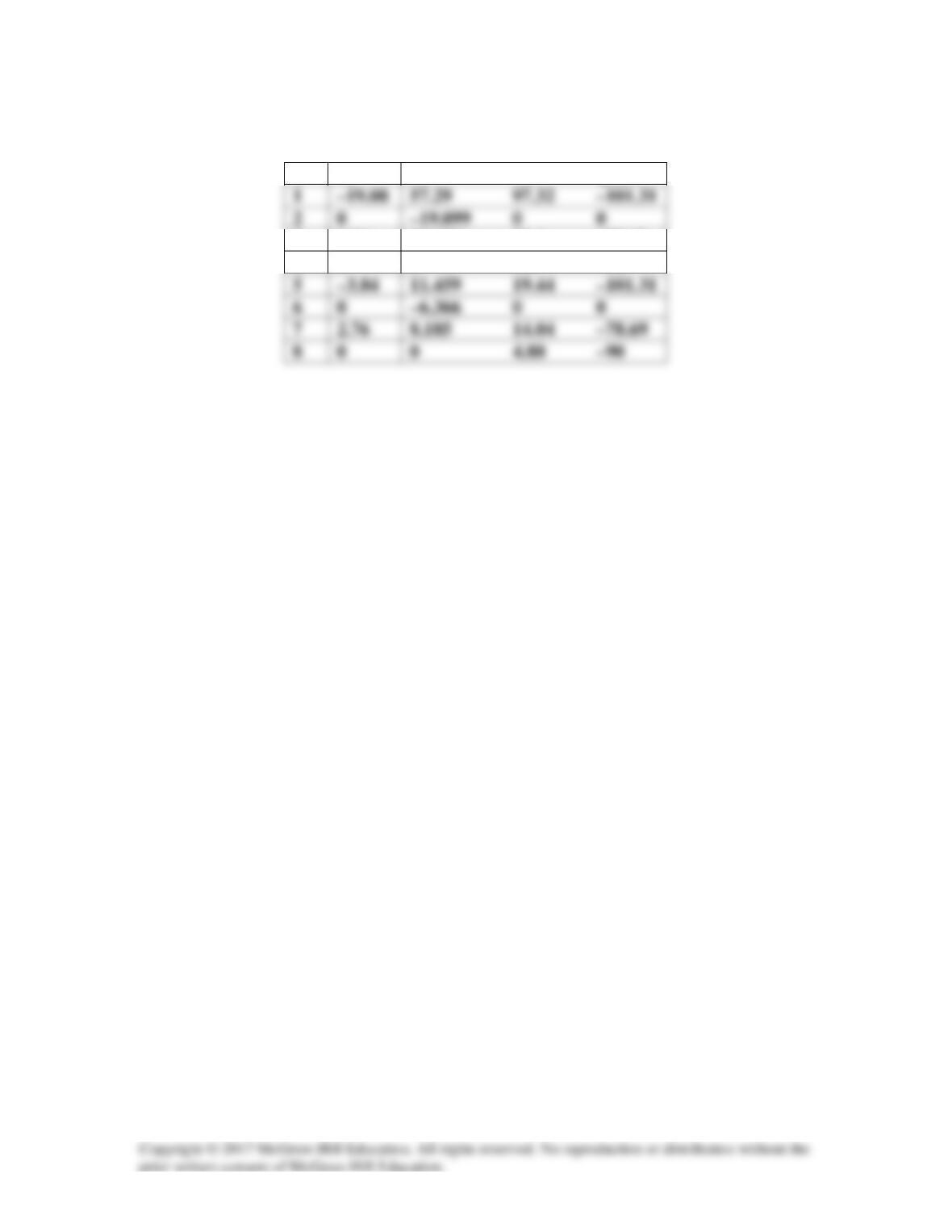
Give the Fourier coefficients a0, an, and bn of the waveform in Fig. 17.47. Plot the
amplitude and phase spectra.
Figure 17.47
For Prob. 17.3.
Solution
T = 4, ωo = 2π/T = π/2
an = (2/T)
∫
ω
T
0o
dt)tncos()t(g
= (2/4)[
∫1
0)
2
cos(60 dtt
n
π
+
∫2
1
)
2
cos(120 dtt
n
π
]
bn = (2/T)
∫ω
T
0odt)tnsin()t(g
= (2/4)[
∫
1
0
)
2
sin(60 dtt
n
π
+
∫2
1
)
2
sin(120 dtt
n
π
]
12
0
n
an
bn An phase
1
–19.08
57.29 97.32 –101.31
2
0
–19.099 0 0
3
6.36
19.099 32.4 –78.69
4
0
0 9.6 –90
5
–3.84
11.459 19.44 –101.31
6
0
–6.366 0 0
7
2.76
8.185 14.04 –78.69
8
0
0 4.80 –90
0
π
2π
3π
4π
8π
6π
7π
5π
ω
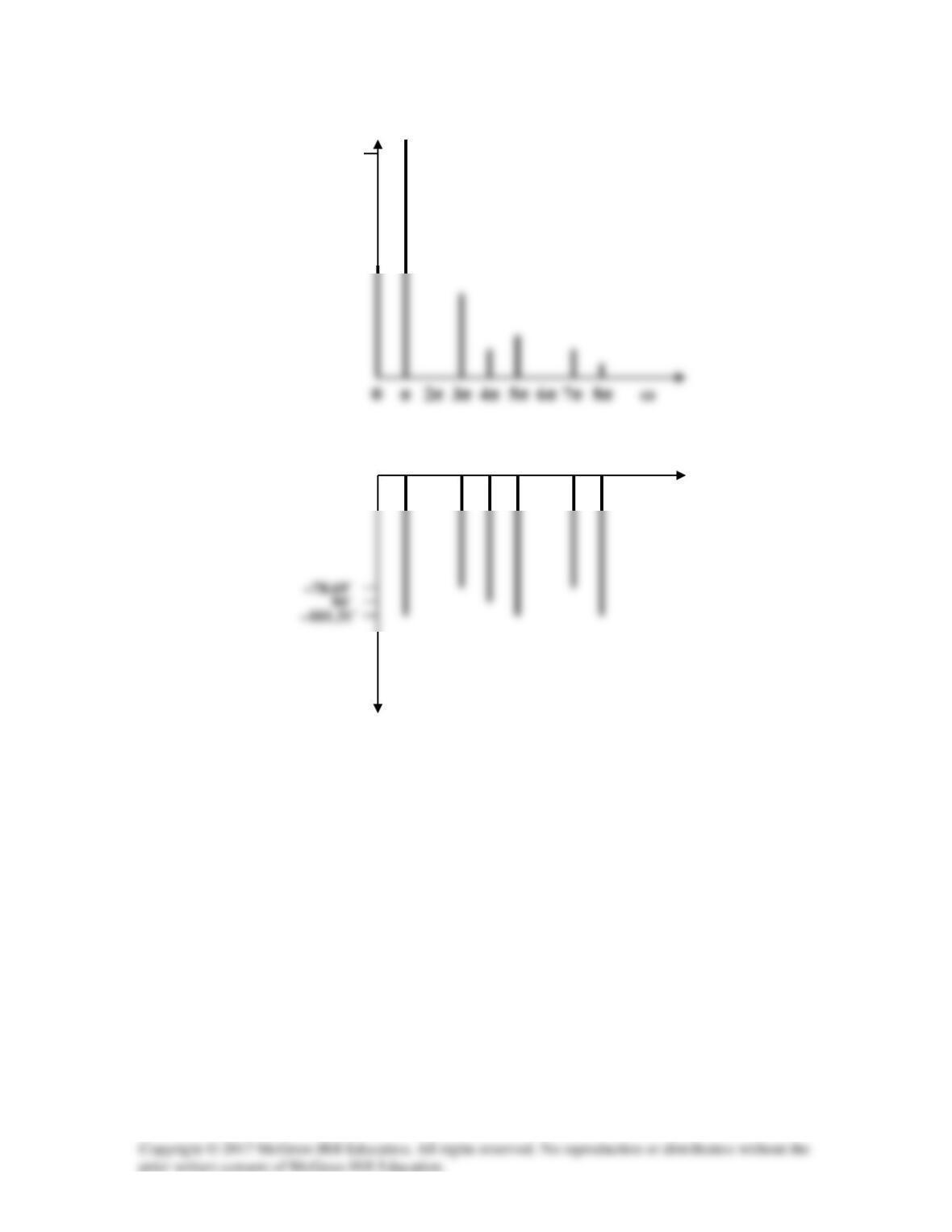
Figure D. 35
For Prob. 17.3.
8
A
n
0
π
2π
3π
4π
8π
6π
7π
5π
φ
ω
Solution 17.4
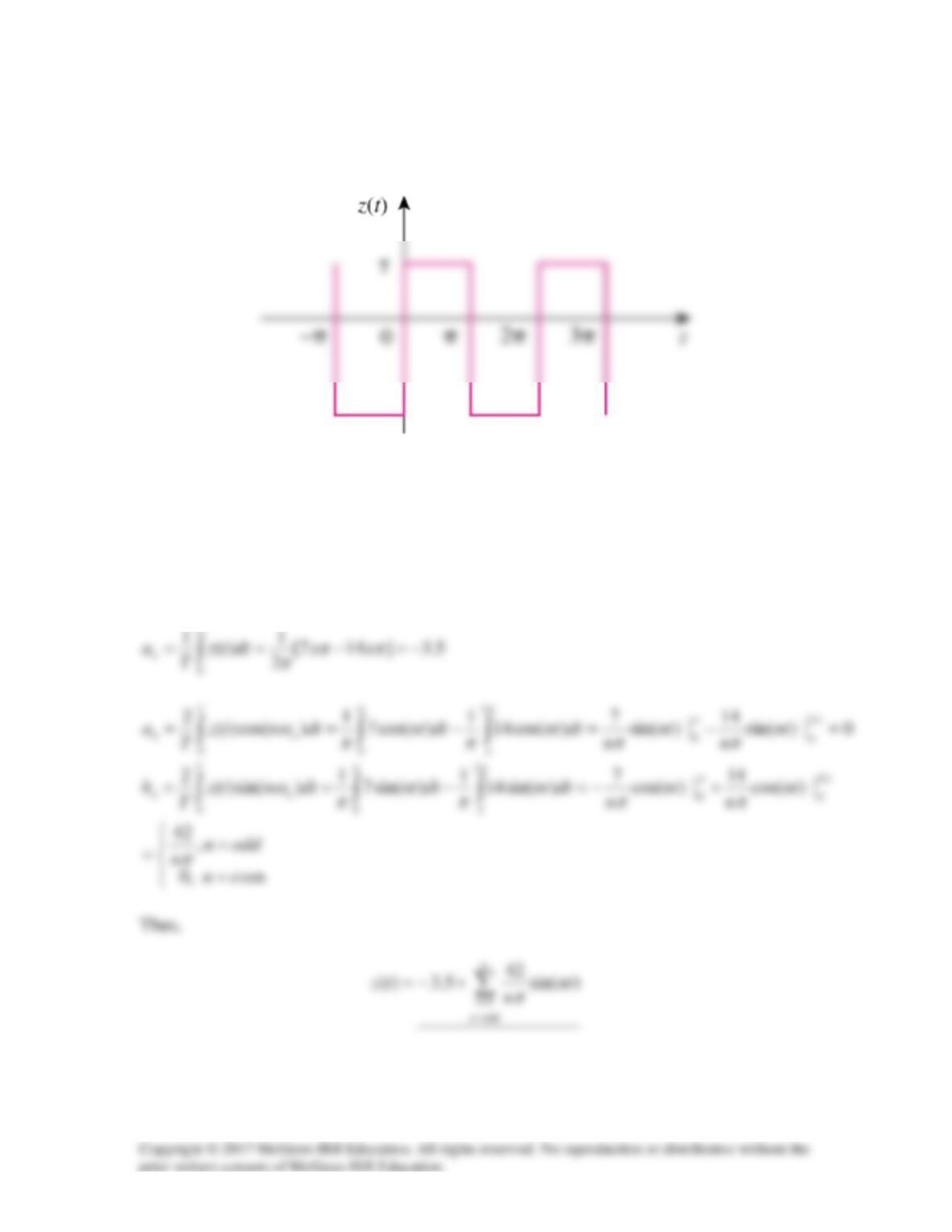
f(t) = 10 – 5t, 0 < t < 2, T = 2, ωo = 2π/T = π
0
0
an = (2/T)
∫
ω
T
0o
dt)tncos()t(f
= (2/2)
∫π−
2
0
dt)tncos()t510(
2
0
bn = (2/2)
∫
π−
2
0dt)tnsin()t510(
2
0
2
Solution 17.5
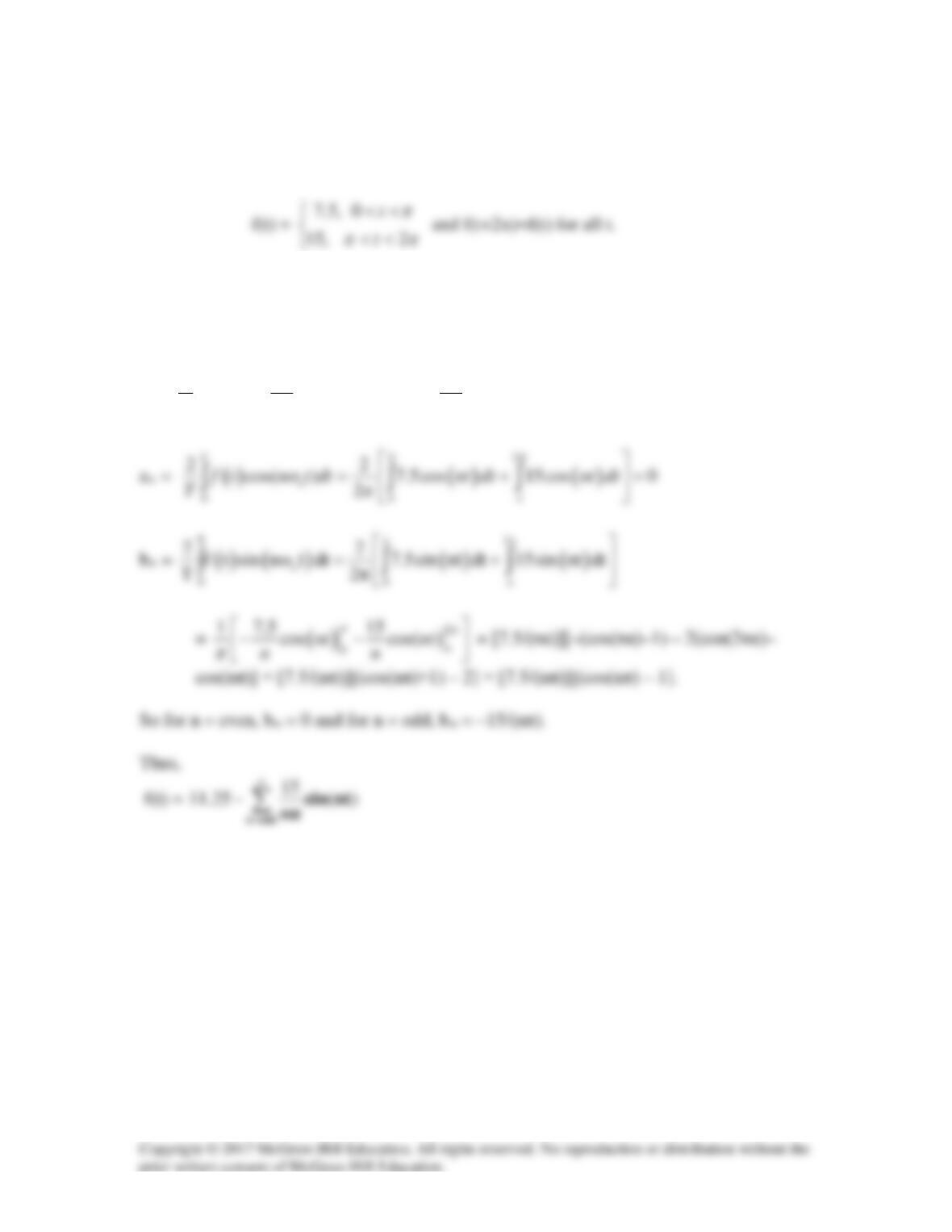
Obtain the Fourier series expansion for the waveform shown in Fig. 17.49.
7
Figure 17.49
For Prob. 17.5.
Solution
1T/2,2T =π=ωπ=
–14
Solution 17.6
Find the trigonometric Fourier series for
Solution
T=2π, ωo=2π/T = 1
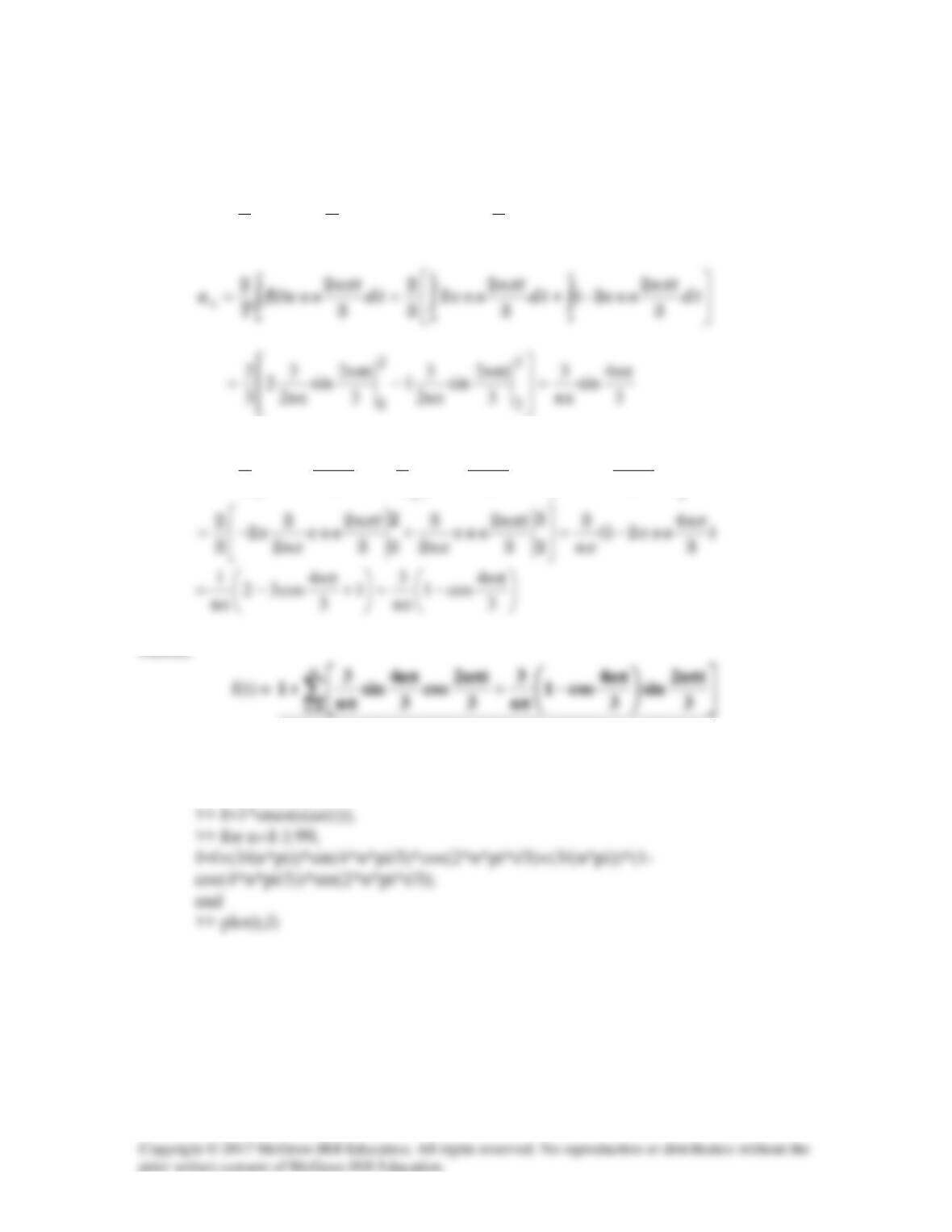
ao =
( ) ( )
Tπ 2π
00π
11 1
f t dt 7.5dt 15dt 7.5π 15π
T2π 2π
= += +
∫ ∫∫
= 11.25
Solution 17.7
3, 2/ 2/3
o
TT
ωπ π
= = =
23
0 02
11 1
( ) 2 ( 1) ( 4 1) 1
33
T
o
a f t dt dt dt
T
= = +− = −=
∫ ∫∫
23
0 02
2 2 22 2
( )sin 2 sin ( 1)s
33 3 3
T
n
nt nt nt
b f t d t dt in dt
T
π ππ
= = +−
∫ ∫∫
We can now use MATLAB to check our answer,
>> t=0:.01:3;
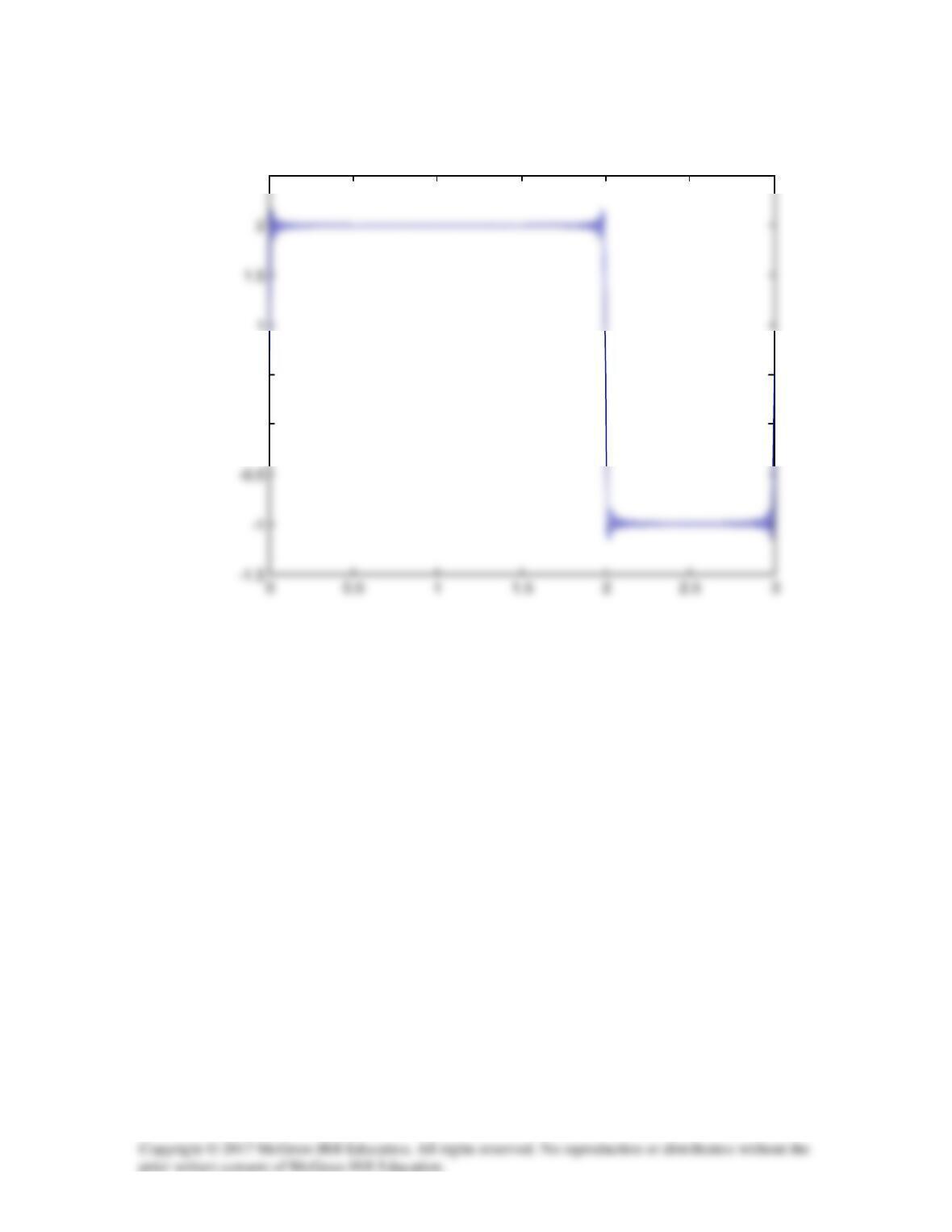
Clearly we have nearly the same figure we started with!!
0
0.5
1
2.5
Solution 17.8
Using Fig. 17.51, design a problem to help other students to better understand how to
determine the exponential Fourier Series from a periodic wave shape.
Although there are many ways to solve this problem, this is an example based on the
same kind of problem asked in the third edition.
Problem
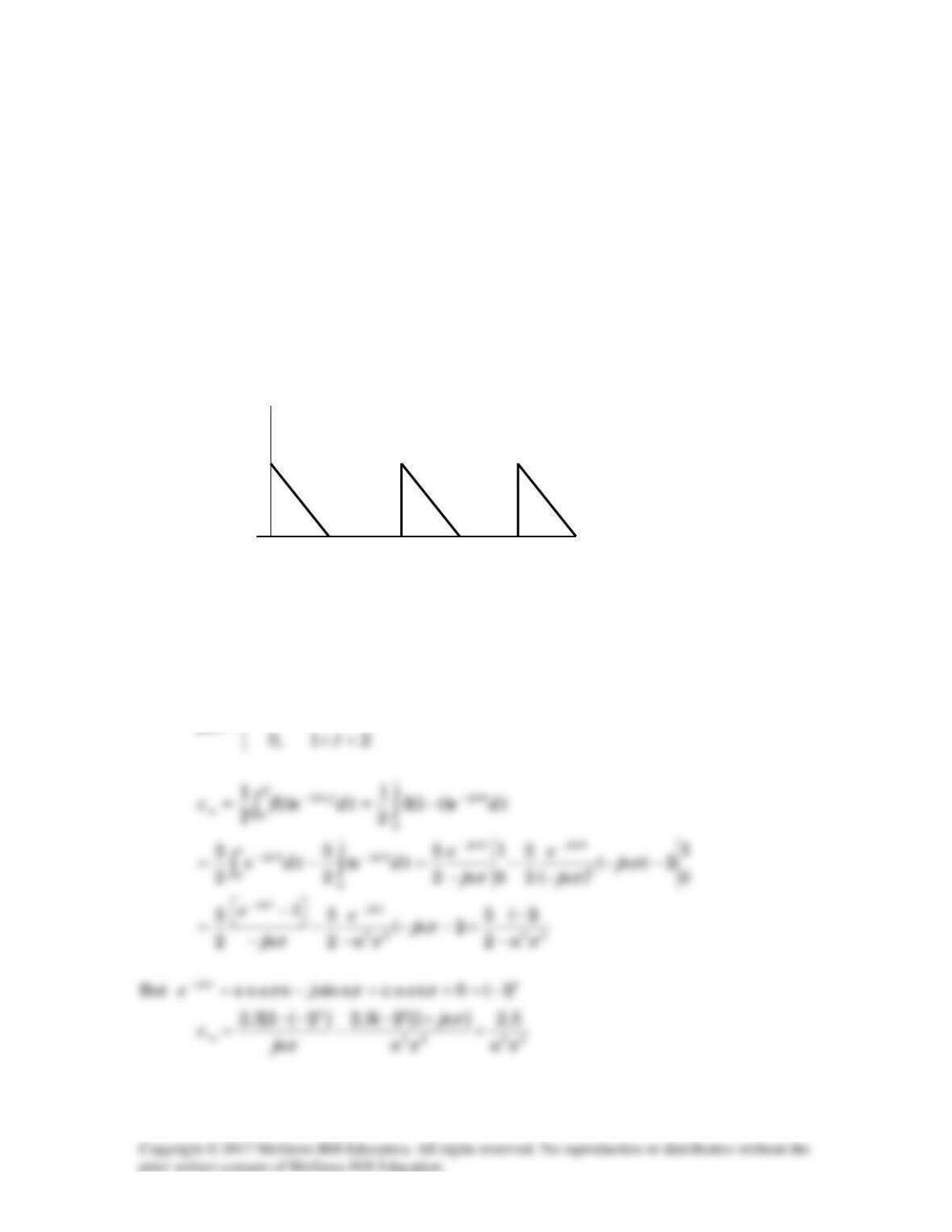
Obtain the exponential Fourier series of the function in Fig. 17.51.
f(t)
5
t
0 1 2 3 4 5
Figure 17.51 For Prob. 17.8.
Solution
2, 2 /
o
TT
ωπ π
= = =
5(1 ) , 0 1
() 0, 1 2
tt
ft t
− <<
=<<
Solution 17.9
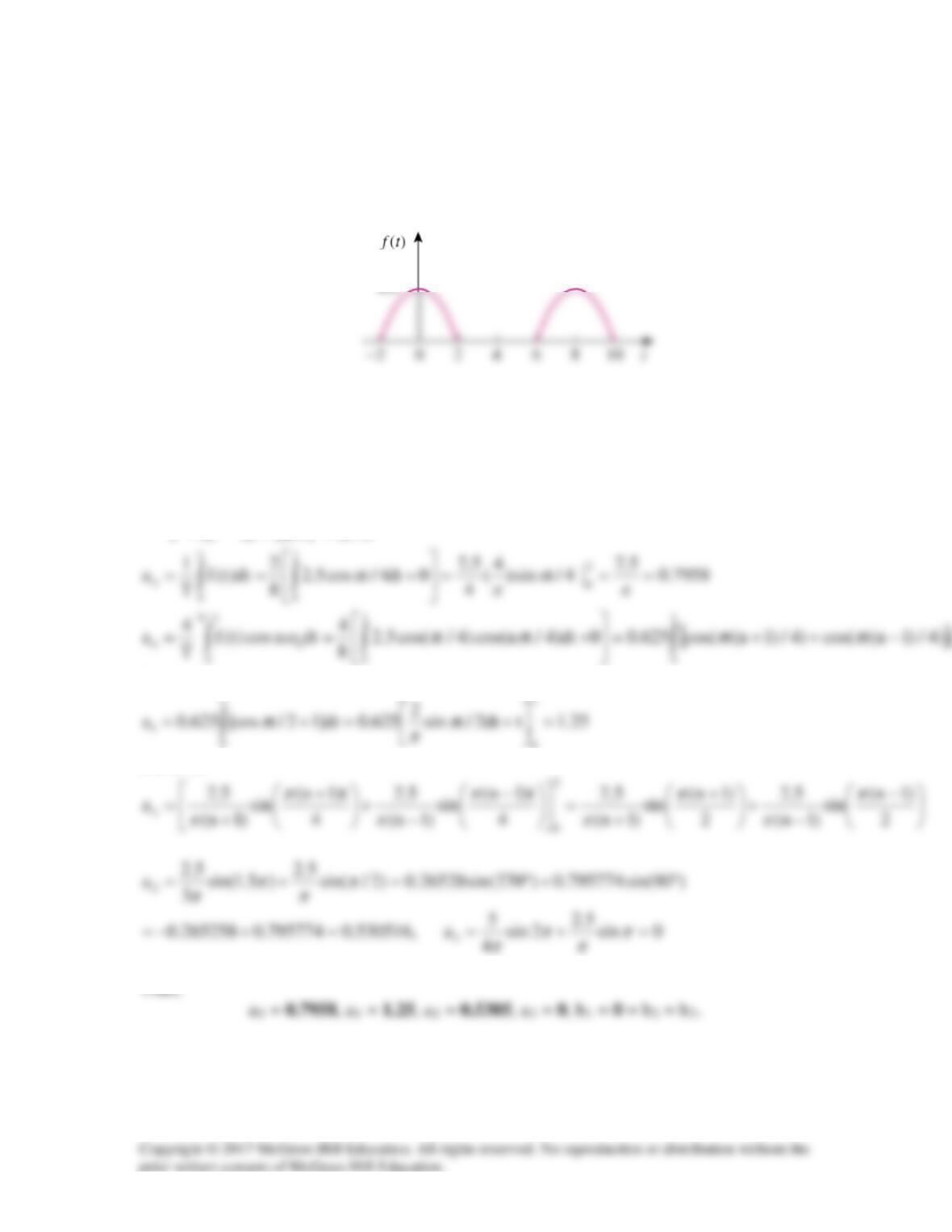
Determine the Fourier coefficients an and bn of the first three harmonic terms of the
rectified cosine wave in Fig. 17.52.
Figure 17.52
For Prob. 17.9.
Solution
f(t) is an even function, bn=0.
4//2,8
ππω
=== TT
For n = 1,
0
For n>1,
2.5
Solution 17.10
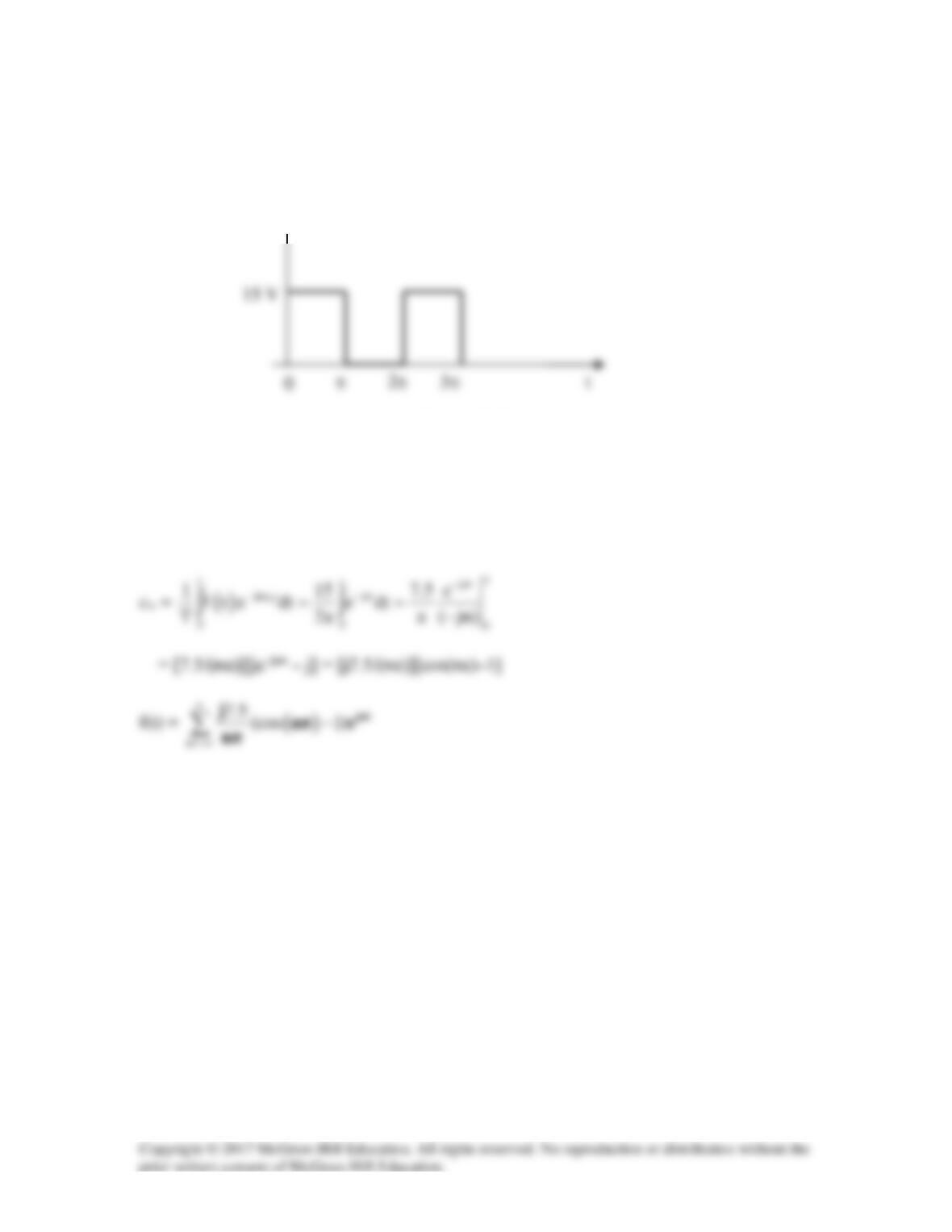
Find the exponential Fourier series for the waveform in Fig. 17.53.
v(t)
Figure 17.53
For Prob. 17.10.
Solution
πω π
= = =2, 2 / 1
o
TT
Solution 17.11
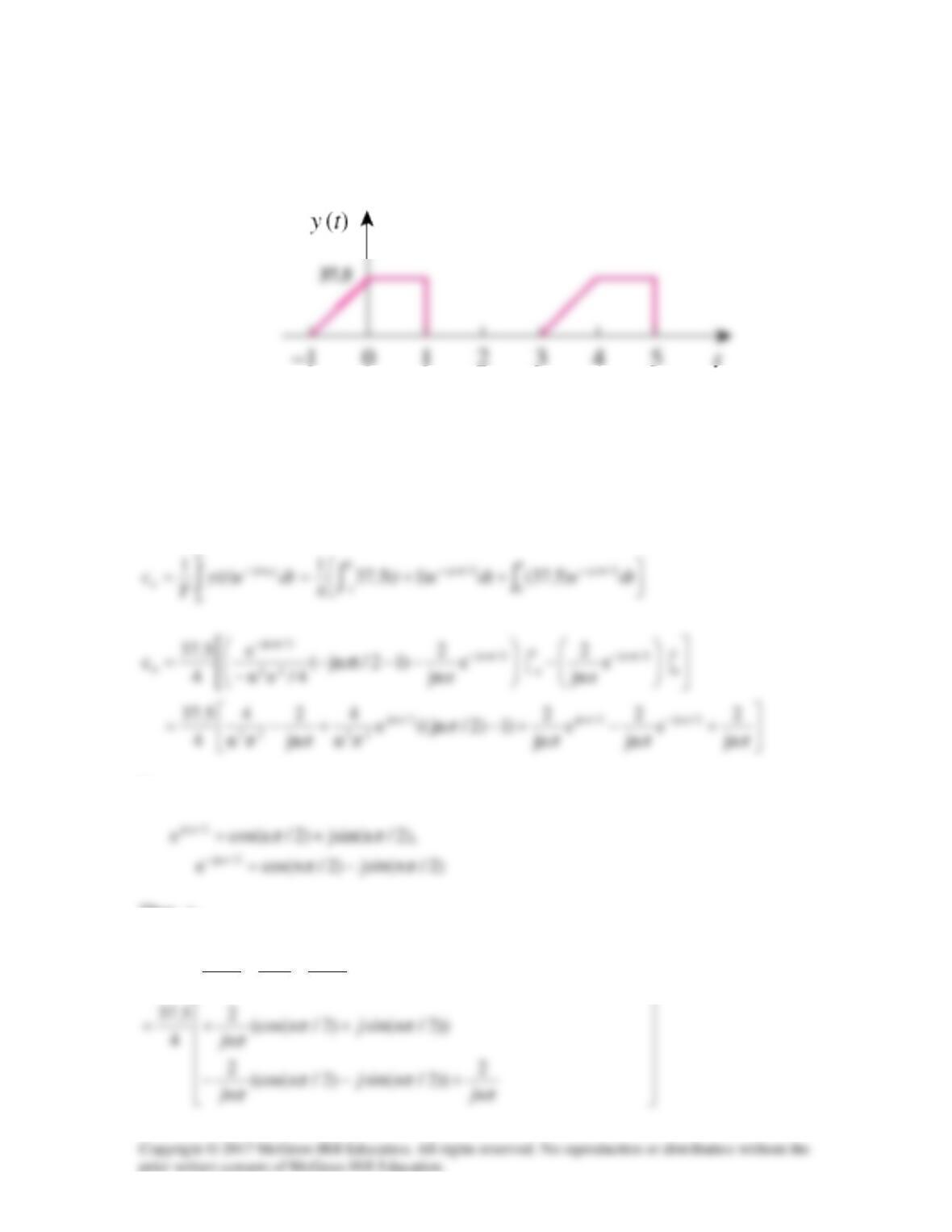
Obtain the exponential Fourier series for the signal in Fig. 17.54.
Figure 17.54
For Prob. 17.11.
Solution
2/T/2,4T
o
π=π=ω=
But
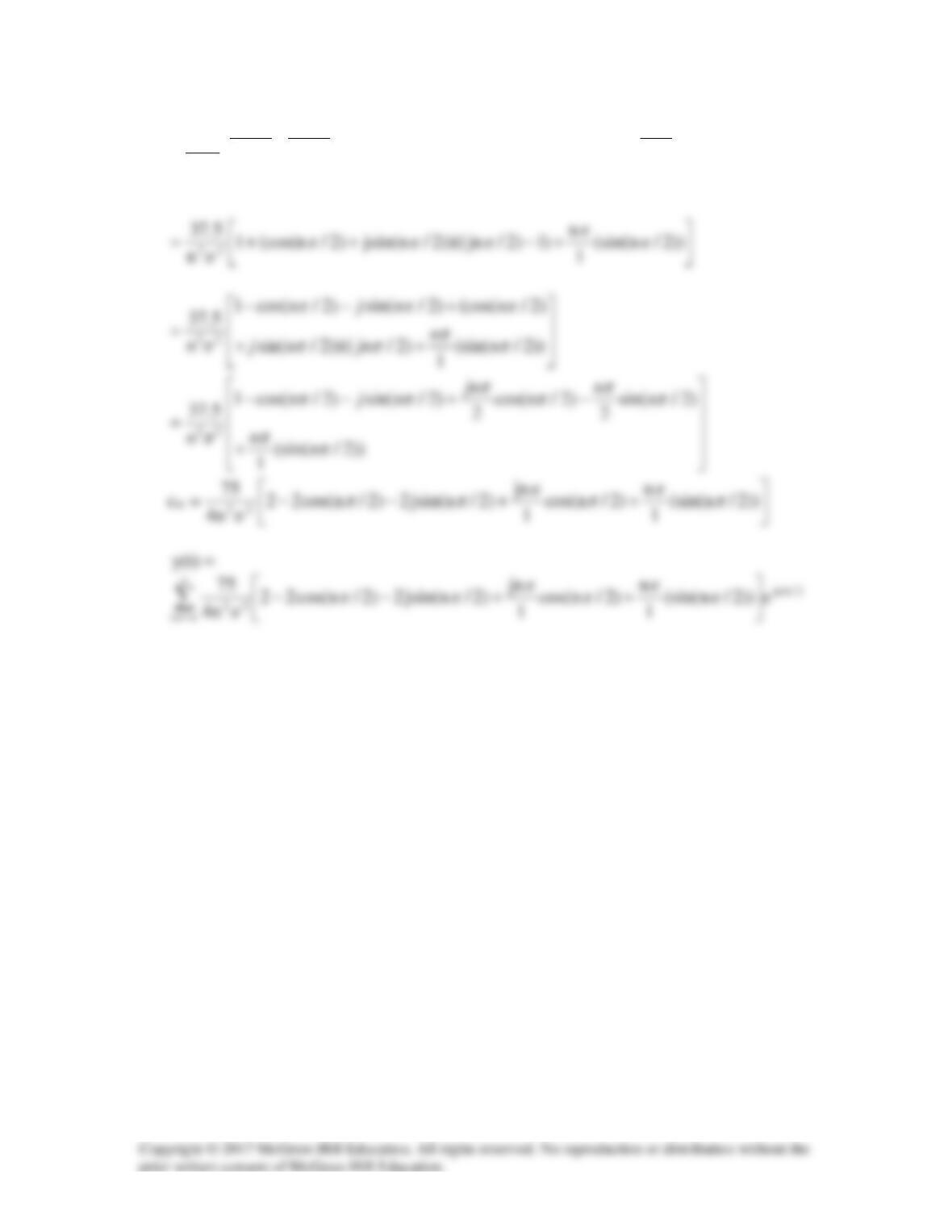
Thus, cn
22 22
424
(cos( / 2) sin( / 2))(( / 2) 1)
n j n jn
n jn n
π ππ
π ππ
−+ + −
+−++
=))2/nsin(j(
jn
4
)1)2/jn))((2/nsin(j)2/n(cos(
n
4
n
4
4
5.37
2222
π
π
πππ
ππ
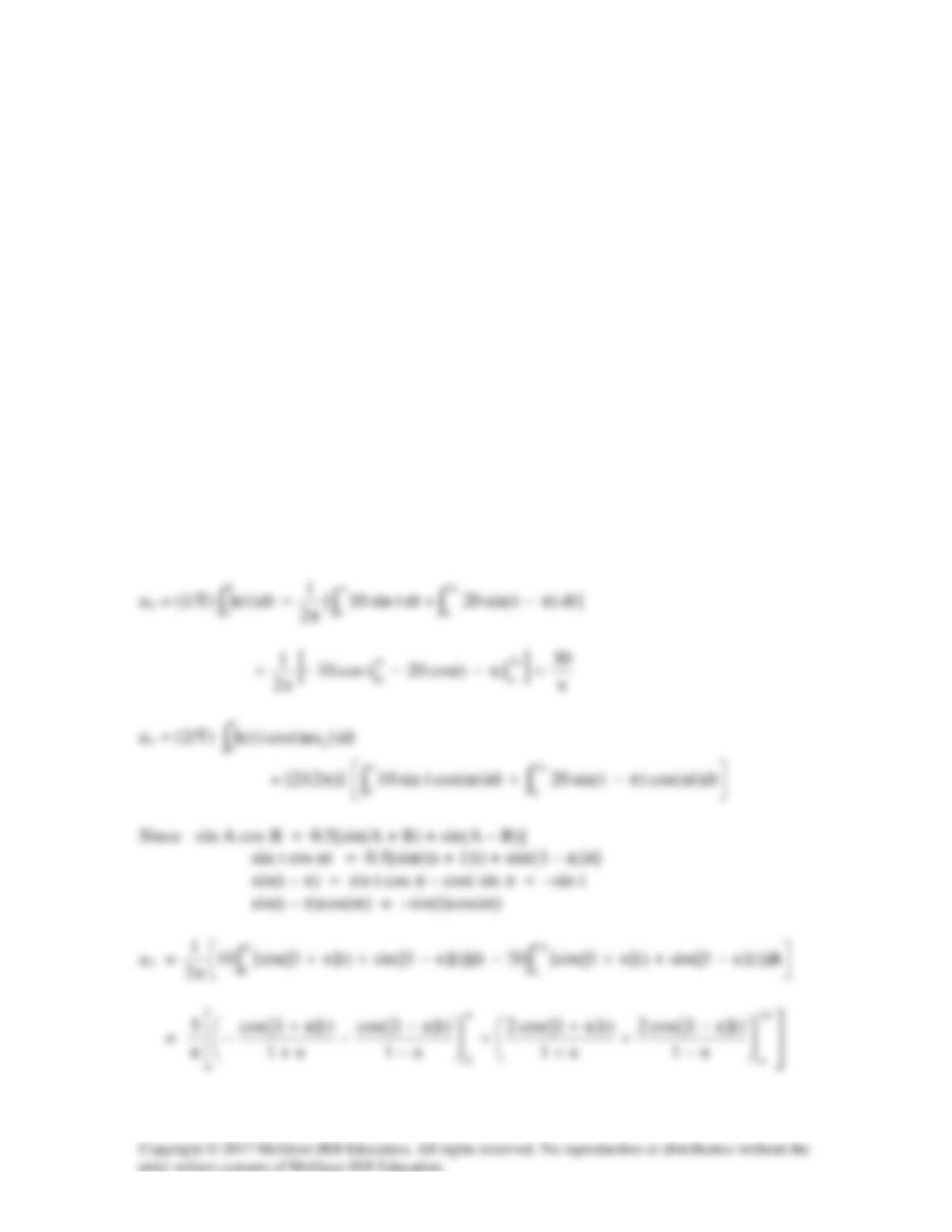
Solution 17.12
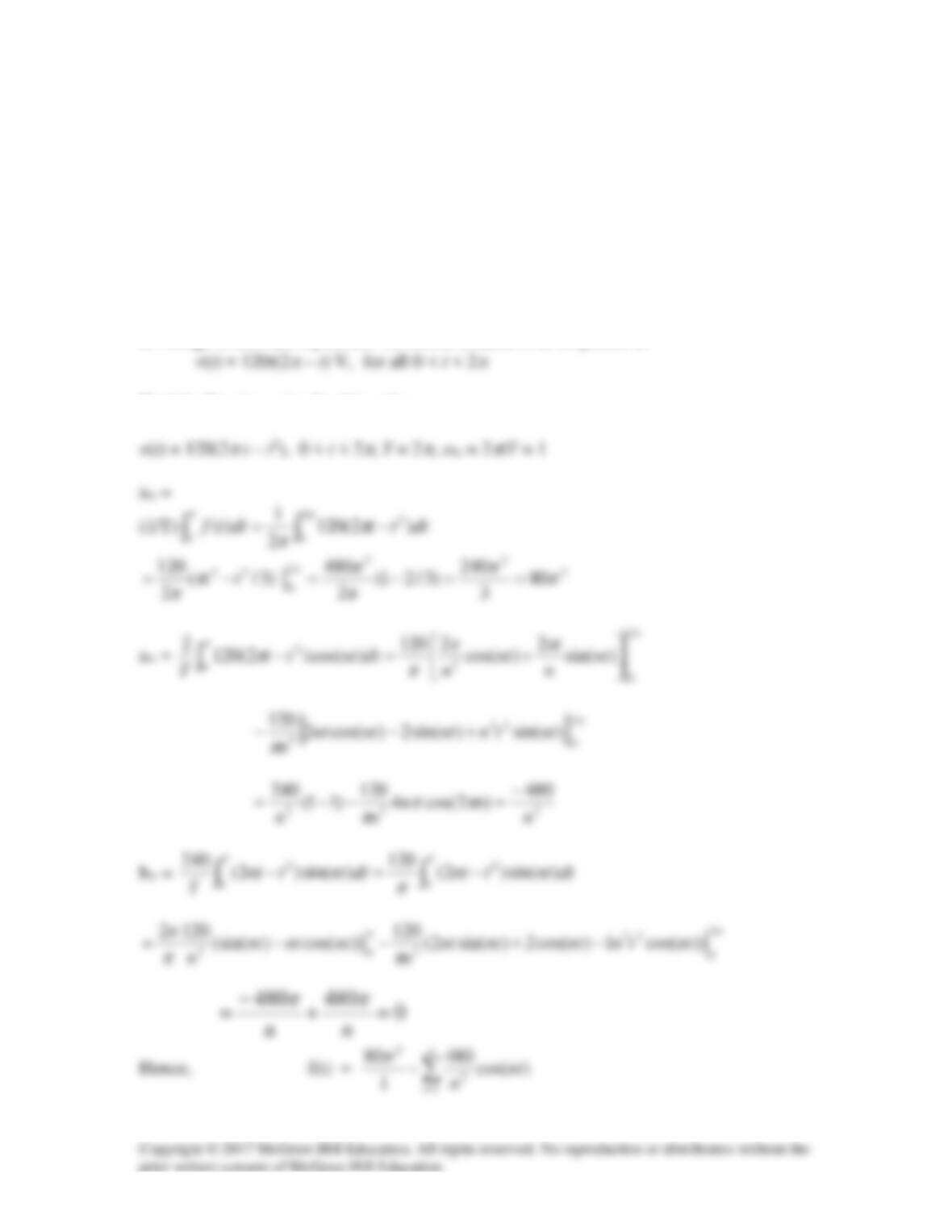
A voltage source has a periodic waveform defined over its period as
v(t) = 120t(2
π
– t)V, 0 < t < 2
π
Find the Fourier series for this voltage.
Solution
A voltage source has a periodic waveform defined over its period as
Find the Fourier series for this voltage.
Solution 17.13
Design a problem to help other students to better understand obtaining the Fourier series
from a periodic function.
Although there are many ways to solve this problem, this is an example based on the
same kind of problem asked in the third edition.
Problem
A periodic function is defined over its period as
10sin , 0
() 20sin( ), 2
tt
ht tt
π
ππ π
<<
=− <<
Find the Fourier series of h(t).
Solution
T = 2π, ωo = 1
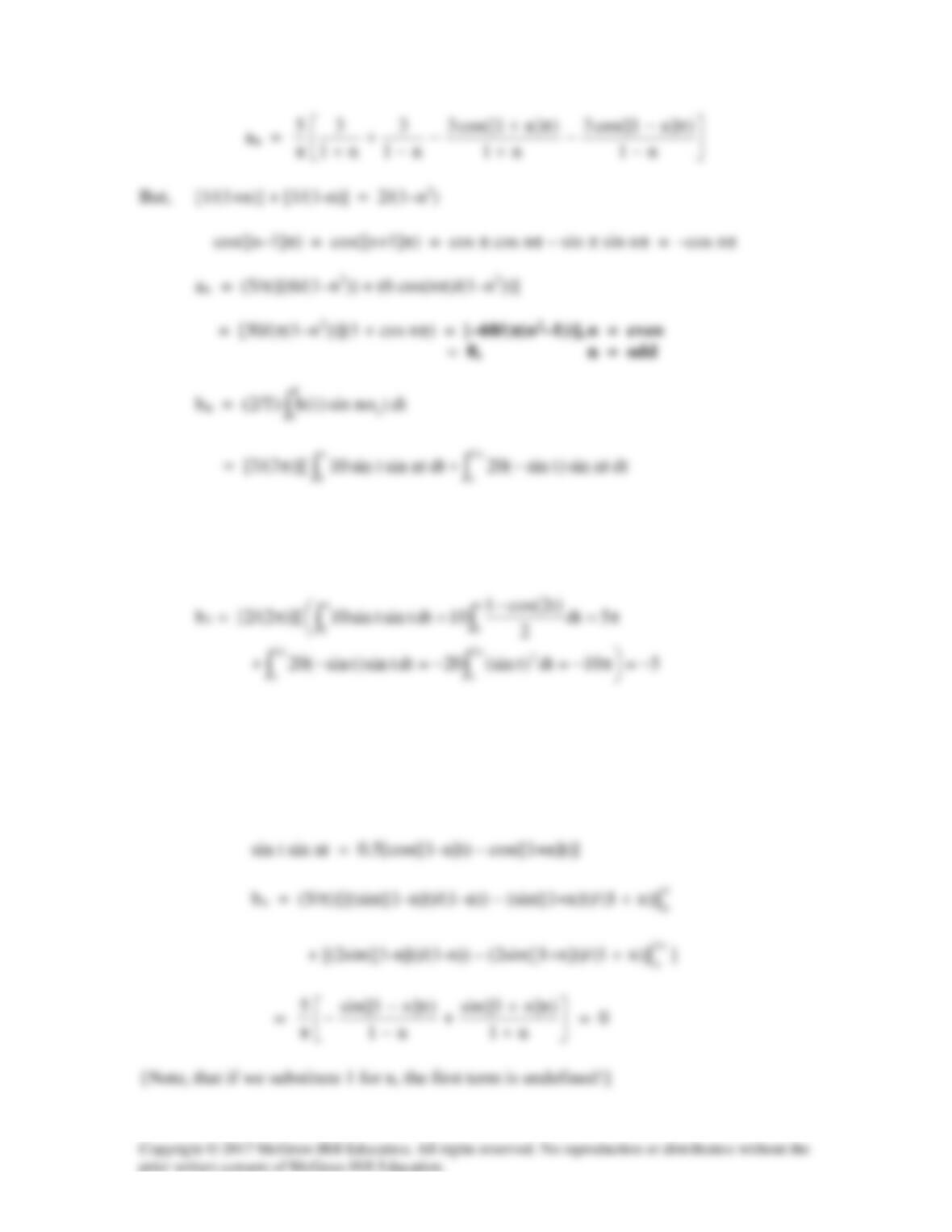
This is an interesting function which will have a value for b1 but not for any of the other
bn terms (they will be zero).
Now we can calculate the rest of the bn for values of n = 2 and greater than 2. We note
that,
sin A sin B = 0.5[cos(A–B) – cos(A+B)]
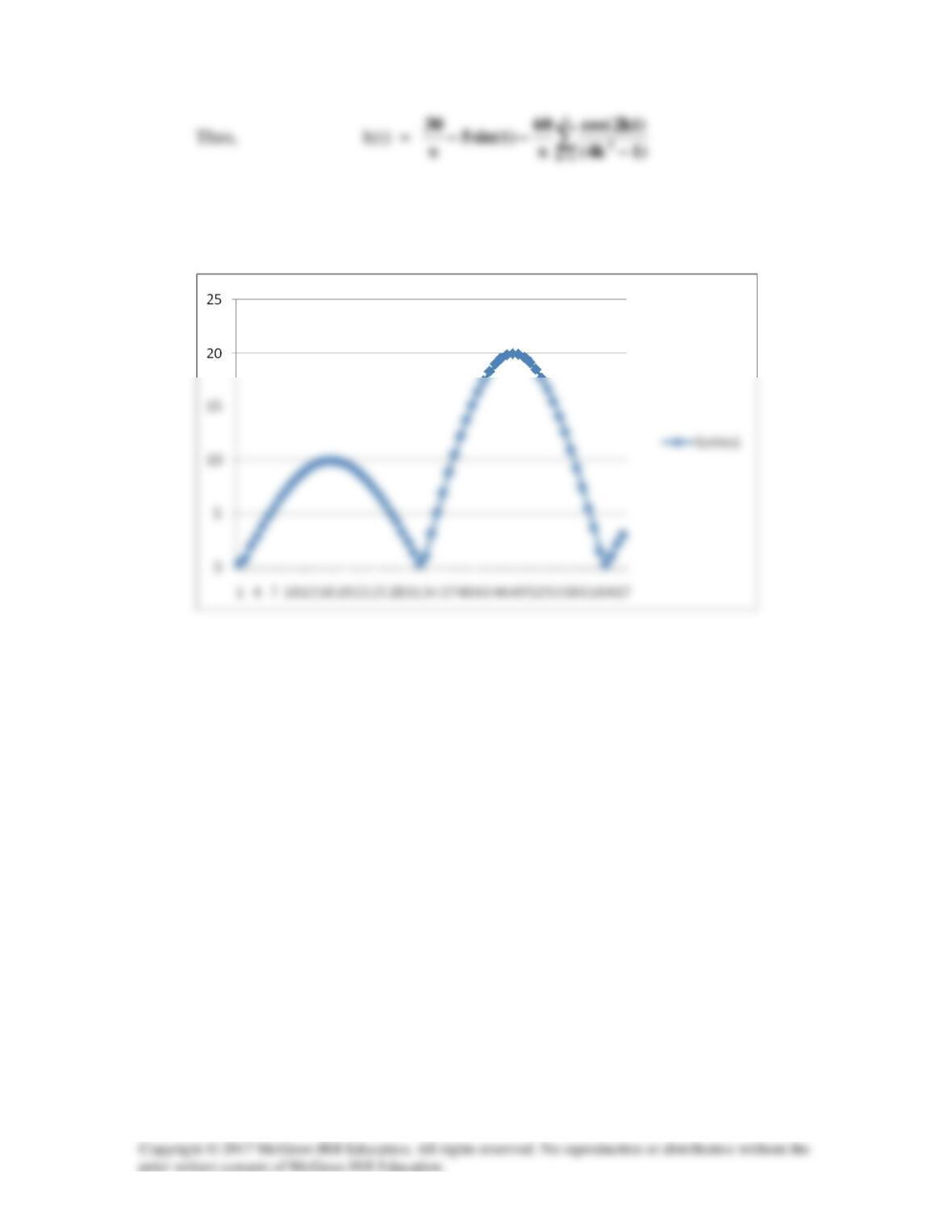
This does make a very good approximation!
Solution 17.14
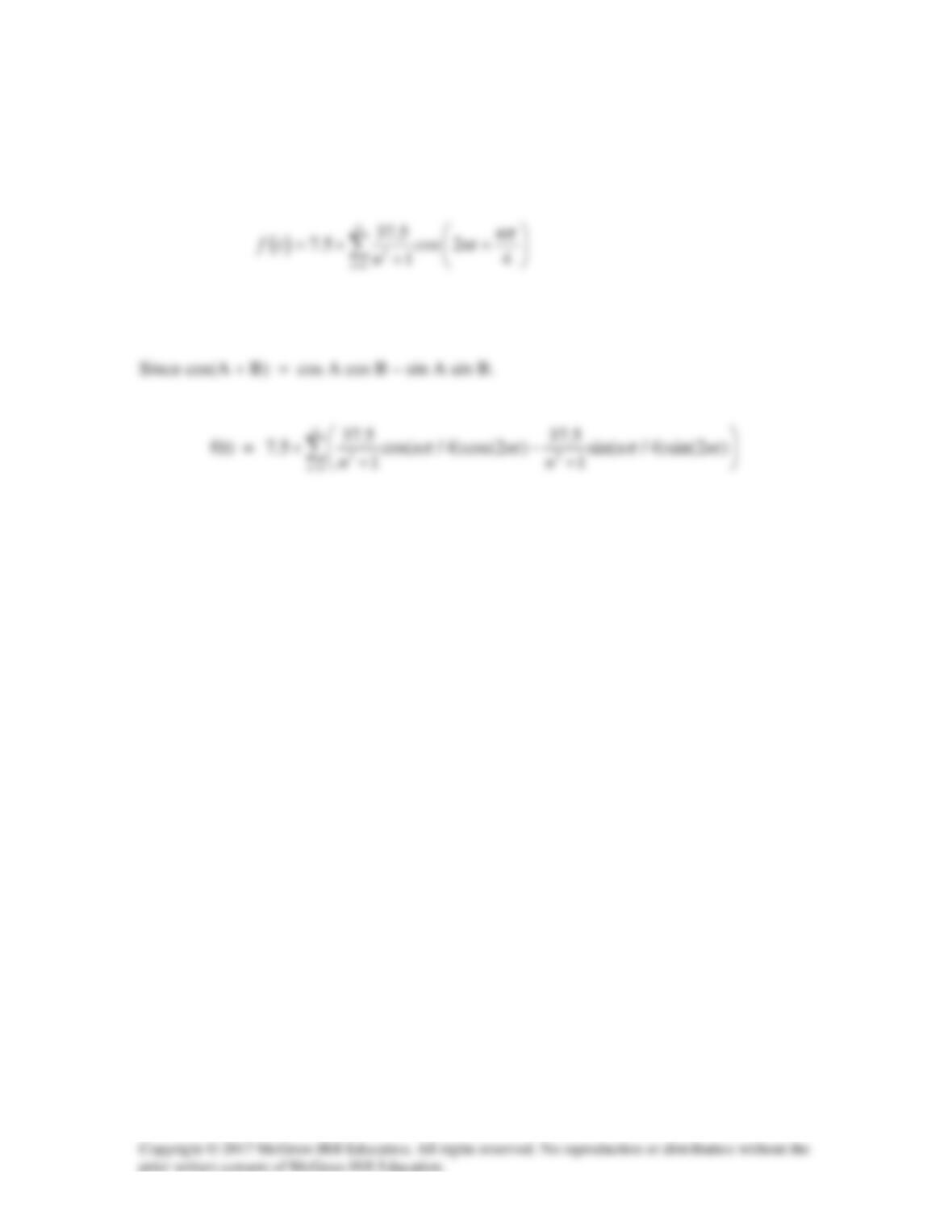
Find the quadrature (cosine and sine) form of the Fourier series
Solution