PROFESSIONAL SIMULATION (Continued)
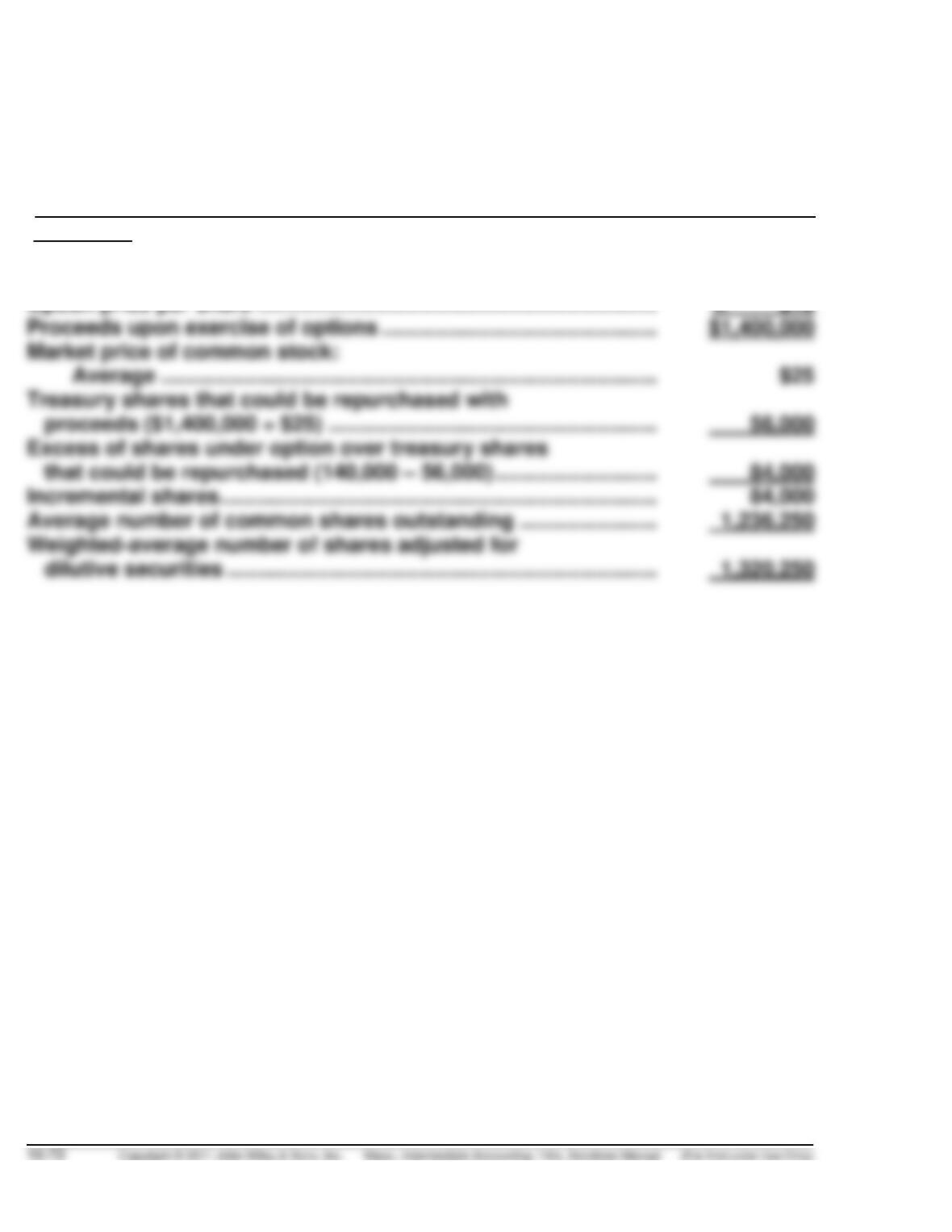
Schedule A
*Computation of weighted-average number of shares adjusted for dilutive
securities
Average number of shares under options outstanding …………… 140,000
IFRS CONCEPTS AND APPLICATION
IFRS16-1
The primary IFRS reporting standards related to financial instruments,
including dilutive securities is IAS 39 “Financial Instruments: Recognition and
IFRS16-2
IFRS and U.S. GAAP are substantially the same in the accounting for dilutive
securities, stock-based compensation, and earnings per share. For example,
The main differences concern (1) the accounting for convertible debt. Under
U.S. GAAP all of the proceeds of convertible debt are recorded as long term
debt. Under IFRS, convertible bonds are “bifurcated”, or separated into the
equity component—the value of the conversion option—of the bond issue and
IFRS16-3
(a) Norman makes the following entry to record the issuance under U.S. GAAP.
Cash …………………………………………………………
400,000
Bonds Payable ………………………………….
400,000
IFRS16-3 (Continued)
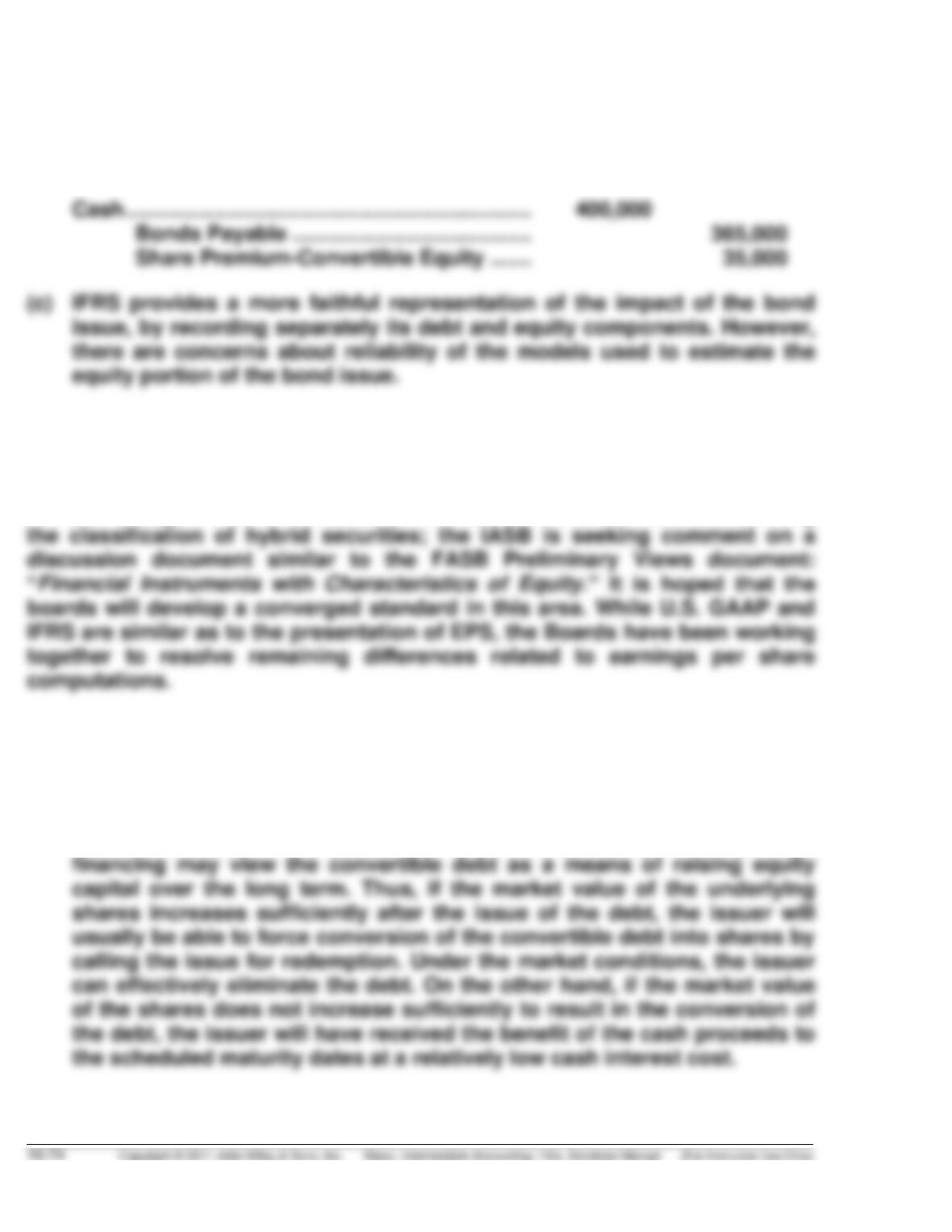
(b) Under IFRS, Norman must “bifurcate” (split out) the equity component—the
value of the conversion option—of the bond issue. Under IFRS, the
convertible bond issue is recorded as follows.
IFRS16-4
The FASB has been working on a standard that will likely converge to IFRS in
the accounting for convertible debt. Similar to the FASB, the IASB is examining
IFRS16-5
(a) From the point of view of the issuer, the conversion feature of convertible
debt results in a lower cash interest cost than in the case of non-
convertible debt. In addition, the issuer in planning its long-range
IFRS16-5 (Continued)
(b) The purchaser obtains an option to receive either the face amount of the
debt upon maturity or the specified number of shares upon conversion. If
IFRS16-6
The view that separate accounting recognition should be accorded the
conversion feature of convertible debt is based on the premise that there is an
economic value inherent in the conversion feature or call on the ordinary
shares and that the value of this feature should be recognized for accounting
purposes by the issuer. It may be argued that the call is not significantly
different in nature from the call contained in an option or warrant and its issue
relied upon to govern the conclusion.
IFRS16-7
The book value method used by the company to record the exchange of
convertible debentures for ordinary shares can be supported on the grounds
that when the company issued the convertible debentures, the proceeds could
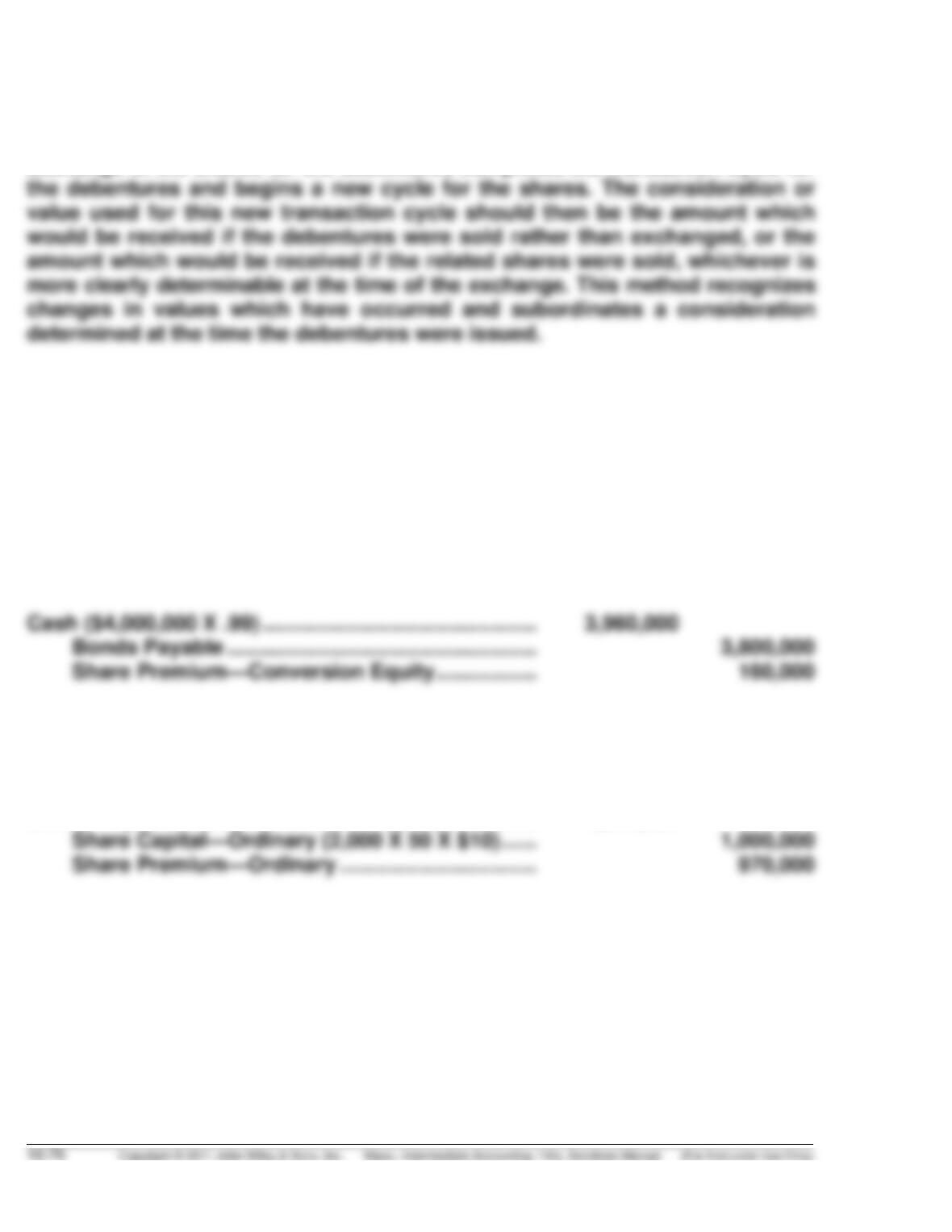
IFRS16-7 (Continued)
On the other hand, recording the issue of the ordinary shares at the book
value of the debentures is open to question. It may be argued that the
exchange of the shares for the debentures completes the transaction cycle for
IFRS16-8
Cordero would account for the discount as a reduction of the cash proceeds
and an increase in compensation expense. The IASB concluded that this
benefit represents employee compensation.
IFRS16-9
IFRS16–10
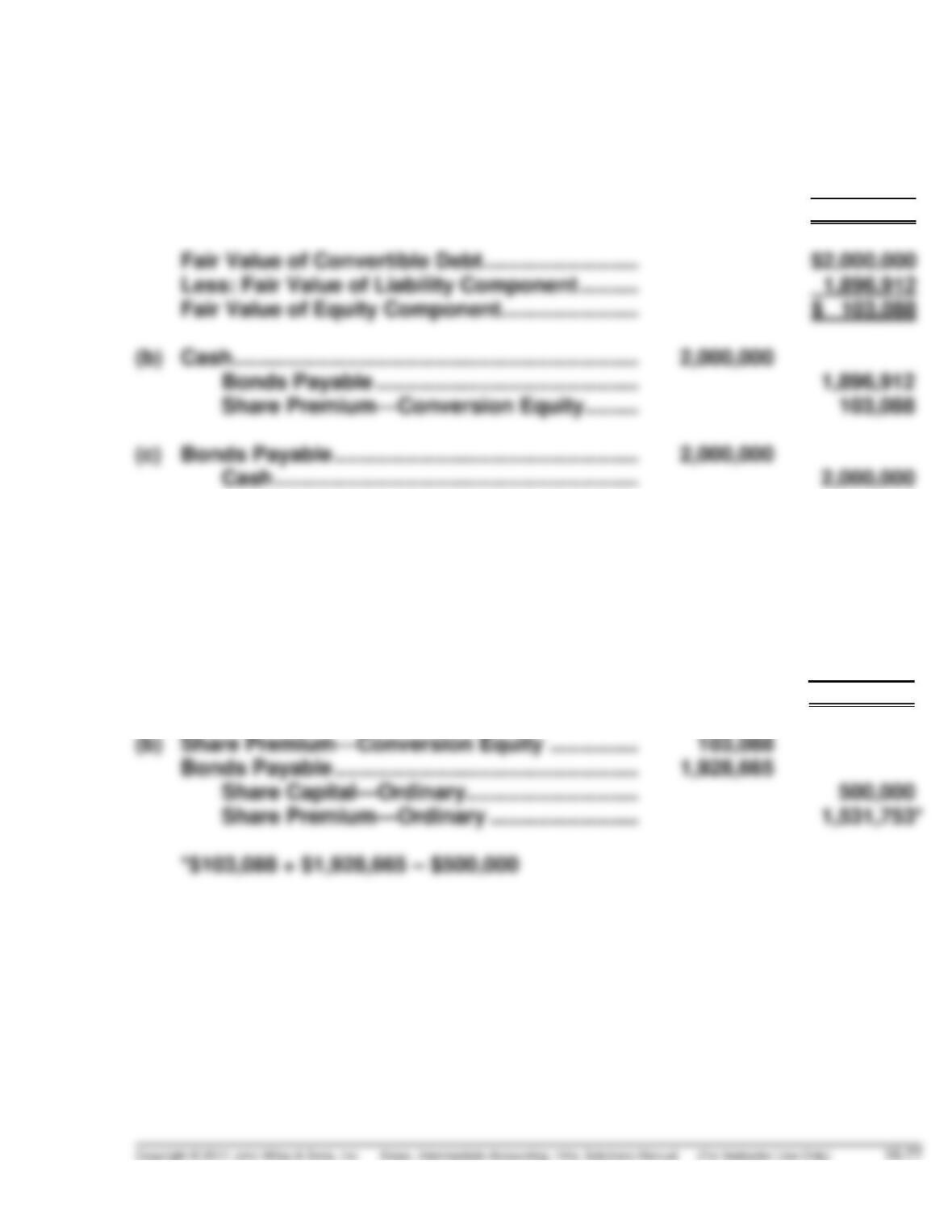
Share Premium—Conversion Equity …………………… 20,000
Bonds Payable …………………………………………………… 1,950,000
IFRS16-11
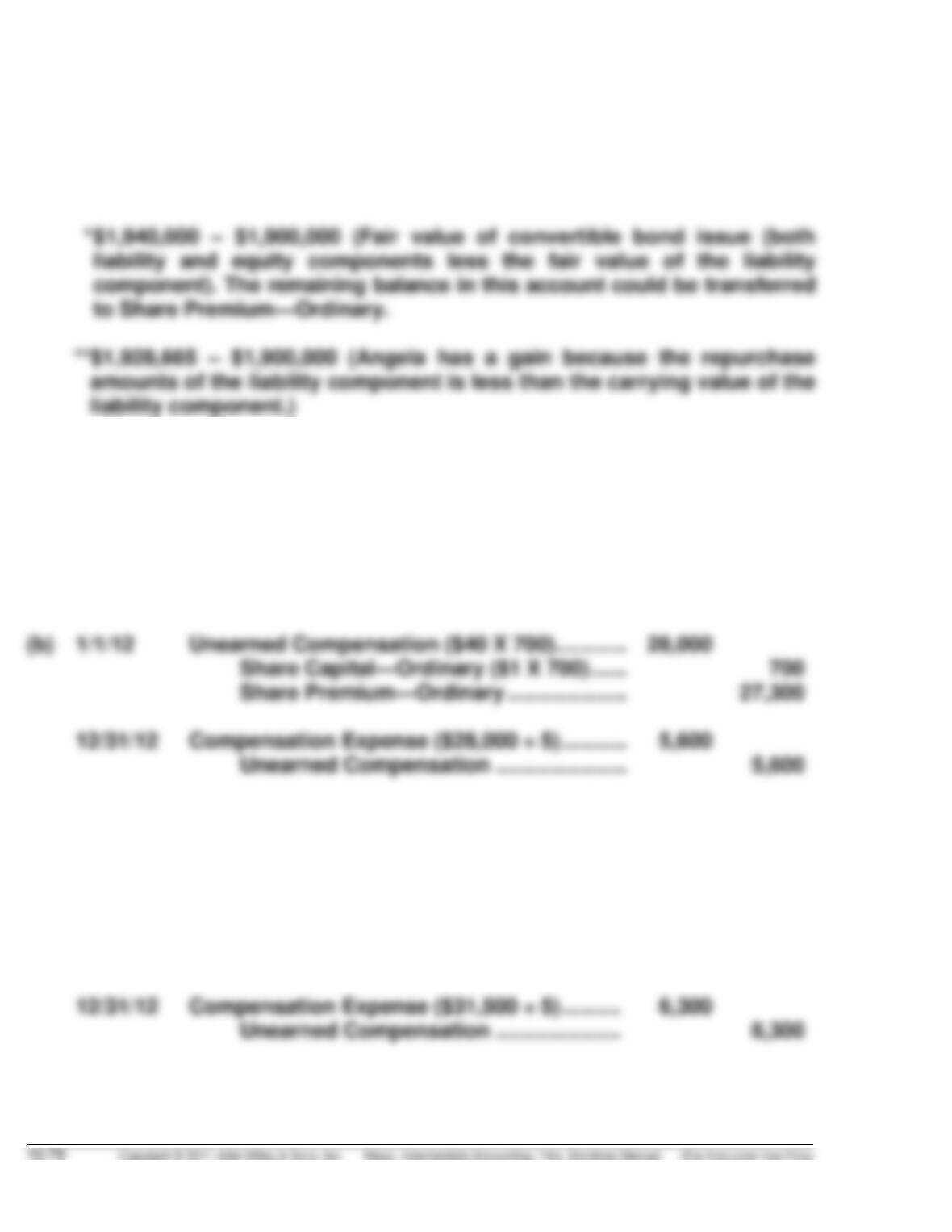
(a) Present Value of Principal:
($2,000,000 X .79383) ……………………………….. $1,587,660
Present Value of Interest Payments:
($120,000 X 2.57710) ………………………………… 309,252
Present Value of the Liability Component ……. $1,896,912
IFRS16–12
(a) Carrying Value of Bonds, 1-1-11
(from Ex. 16–1(a)) …………………………………….. $1,896,912
Discount Amortized in 2011
[($1,896,912 X .08) – $120,000)] …………………. 31,753
Carrying Value of Bonds, 1-1-12 ………………….. $1,928,665
IFRS16-12 (Continued)
(c) Share Premium—Conversion Equity ……………. 40,000*
Bonds Payable …………………………………………… 1,928,665
Cash …………………………..……………………….. 1,940,000
Gain on Repurchase …………………………….. 28,665**
IFRS16–13
(a) 1/1/12 No entry
12/31/12 Compensation Expense ($6 X 5,000 ÷ 5) …… 6,000
Share Premium—Share Options ……….. 6,000
(c) No change for part (a), unless the fair value of the options change.
For part (b):
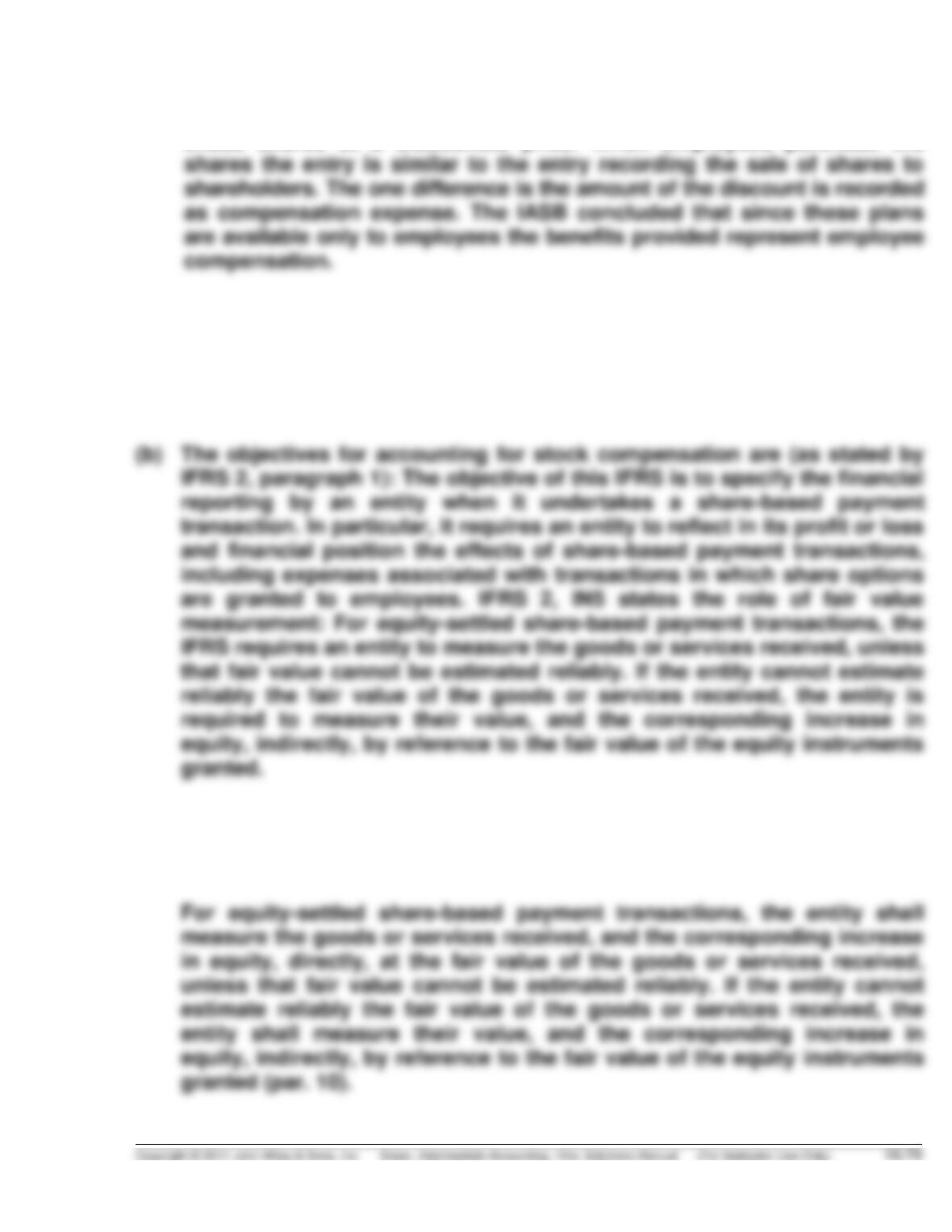
1/10/12 Unearned Compensation ($45 X 700)……….. 31,500
Share Capital—Ordinary ($1 X 700) ….. 700
Share Premium—Ordinary ………………. 30,800
IFRS16-13 (Continued)
(d) Employee share-purchase plans generally permit all employees to pur–
chase shares at a discounted price. When employees purchase the
IFRS16–14
(a) IFRS 2 addresses the accounting for share-based payment compensation
plans.
(c) When the goods or services received or acquired in a share-based payment
transaction do not qualify for recognition as assets, they shall be recog–
nised as expenses (par.8).
IFRS16-14 (Continued)
To apply the requirements of paragraph 10 to transactions with employees
and others providing similar services,† the entity shall measure the fair
value of the services received by reference to the fair value of the equity
Typically, shares, share options or other equity instruments are granted
to employees as part of their remuneration package, in addition to a cash
salary and other employment benefits. Usually, it is not possible to
measure directly the services received for particular components of the
employee’s remuneration package. It might also not be possible to
measure the fair value of the total remuneration package independently,
IFRS16–15
(a) (1) Under M&S’s share-based compensation plan no options were granted
during 2010.
(2) At April 3, 2010, 6,397,261 options were exercisable by eligible
managers.
IFRS16-15 (Continued)
(5) The accounts to which the proceeds from these option exercises are
credited are Share Capital and Share Premium.
(6) The number of outstanding options at April 3, 2010, is 6,397,261 at an
average exercise price of 336.8p.