CHAPTER 16
Job Order Costing
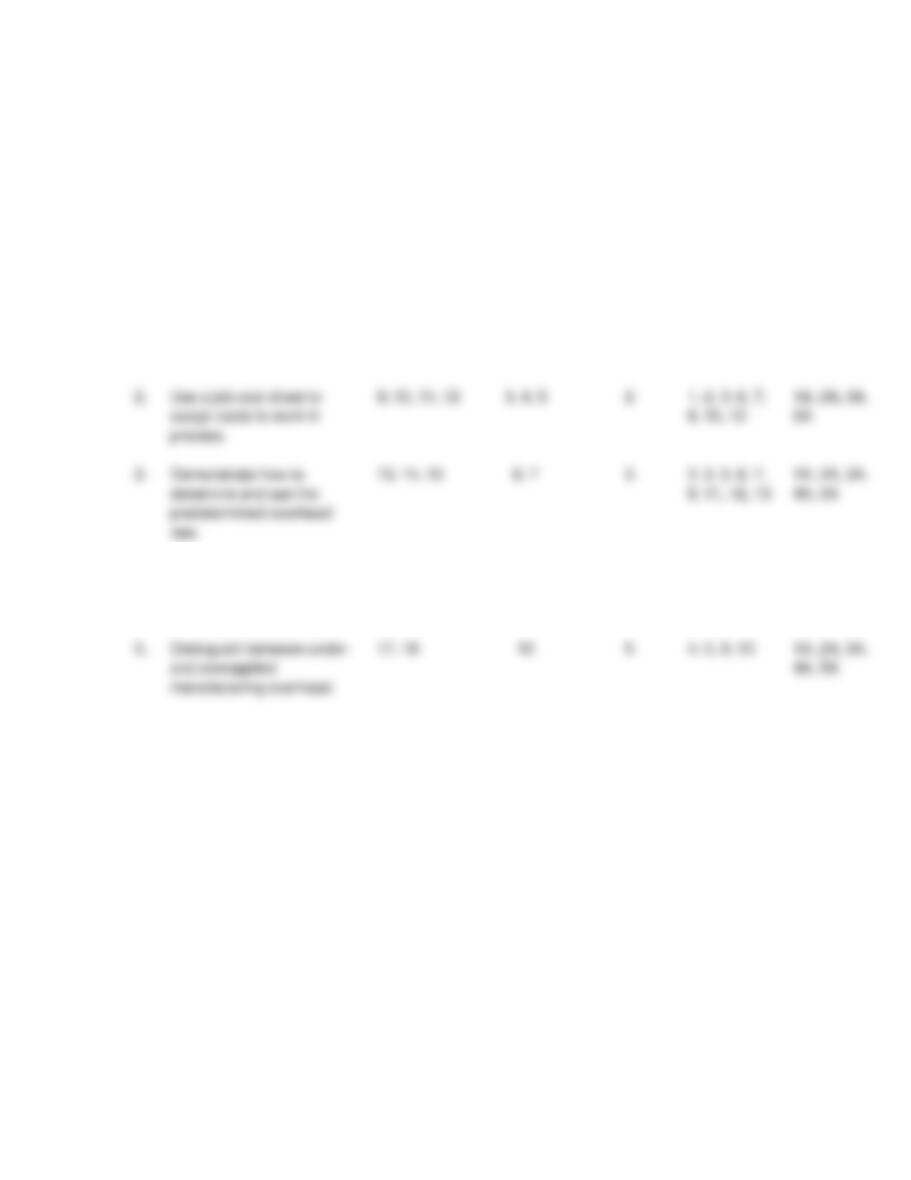
ASSIGNMENT CLASSIFICATION TABLE
Learning Objectives
Questions
Brief
Exercises
Do It!
Exercises
A
Problems
1. Describe cost systems and
the flow of costs in a job
order system.
1, 2, 3, 4, 5,
6, 7, 8
1, 2
1
1, 2, 3, 4, 6,
7, 8, 9, 11
1A, 2A, 3A,
5A
4. Prepare entries for
manufacturing and service
jobs completed and sold.
16
8, 9
4
2, 3, 6, 7, 8,
10, 11, 12
1A, 2A, 3A,
5A
5. Distinguish between under–
and overapplied
manufacturing overhead.
17, 18
5
4, 5, 9, 13
1A, 2A, 3A,
4A, 5A
2. Use a job cost sheet to
assign costs to work in
process.
9, 10, 11, 12
2
1, 2, 3, 6, 7,
8, 10, 12
1A, 2A, 3A,
5A
predetermined overhead
rate.
8, 11, 12, 13
4A, 5A
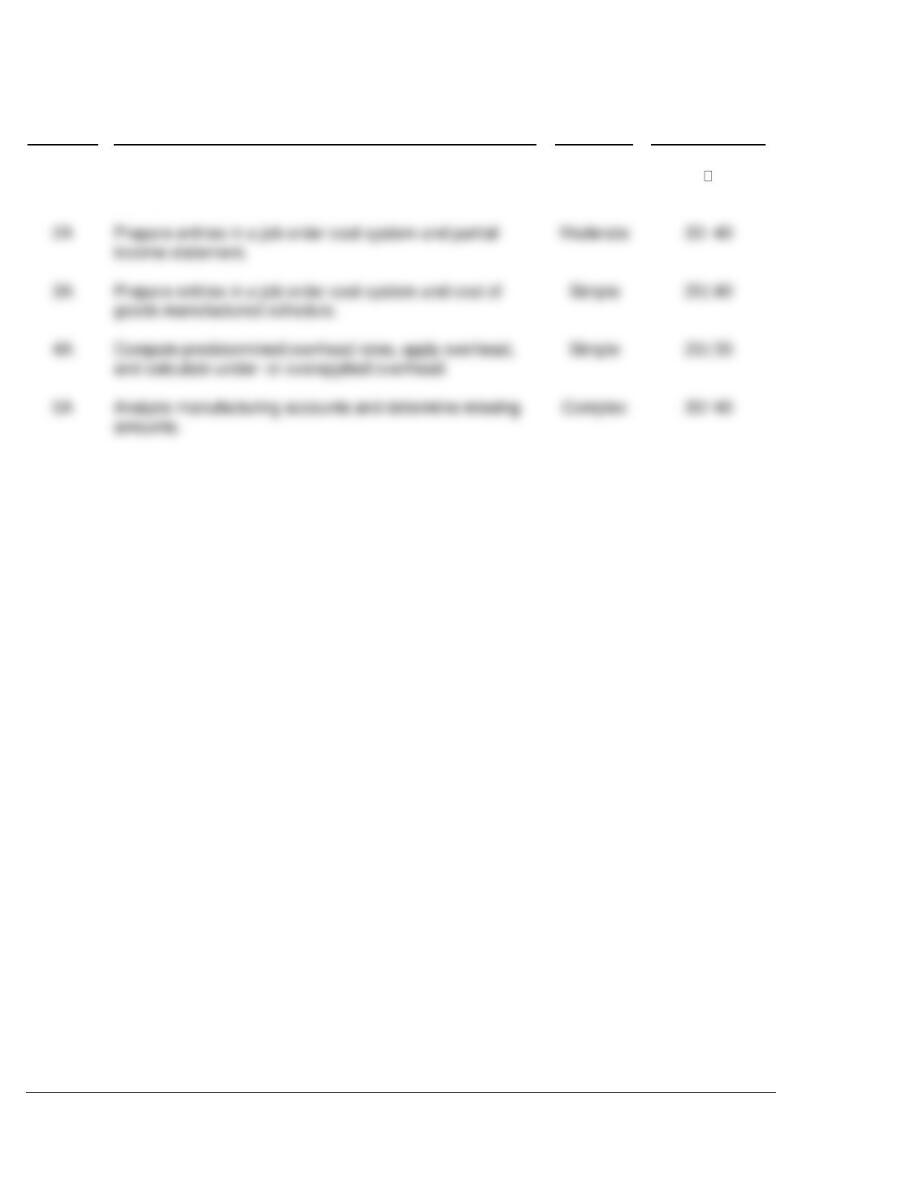
ASSIGNMENT CHARACTERISTICS TABLE
Problem
Number
Description
Difficulty
Level
Time
Allotted (min.)
1A
Prepare entries in a job order cost system and job cost
sheets.
Simple
30 40
2A
Prepare entries in a job order cost system and partial
income statement.
30 40
3A
Prepare entries in a job order cost system and cost of
goods manufactured schedule.
Simple
30 40
5A
Analyze manufacturing accounts and determine missing
amounts.
30 40
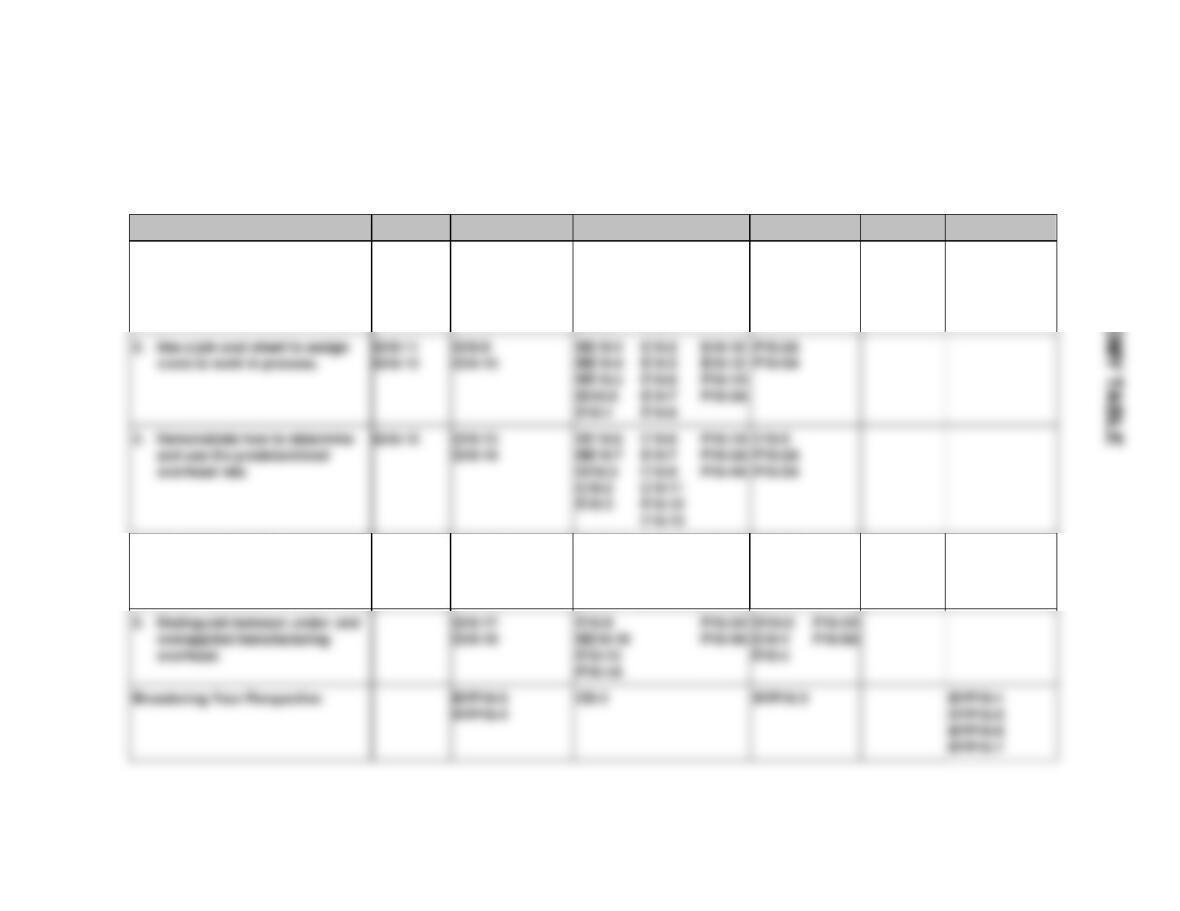
BLOOM’ S TAXONOMY TABLE
Correlation Chart between Bloom’s Taxonomy, Learning Objectives and End–of-Chapter Exercises and Problems
Learning Objective
Knowledge
Comprehension
Application
Analysis
Synthesis
Evaluation
1. Describe cost systems and the
flow of costs in a job order
system.
Q16-5
Q16-7
Q16-8
Q16-1 Q16-4
Q16-2 Q16-6
Q16-3 BE16-1
BE16-2
DI16-1
E16-1
E16-2
E16-3
E16-6
E16-7
E16-8
E16-9
E16–11
P16-1A
P16–3A
E16-4
P16–2A
P16–5A
4. Prepare entries for
manufacturing and service jobs
completed and sold.
Q16–16
BE16-9
BE16-8
DI16-4
E16-2
E16-3
E16-6
E16-7
E16-8
E16–10
E16–11
E16–12
P16–1A
P16–3A
P16–2A
P16–5A
Q16–17
E16-9
P16–3A
DI16-5
BYP16-3
BYP16-1
BYP16-7
BE16-4
E16-1
E16-3
E16-8
E16–12
P16–1A
P16–5A
E16-2
E16-3
E16–11
E16–12
E16–13
ANSWERS TO QUESTIONS
1. (a) Cost accounting involves the measuring, recording, and reporting of product costs. A cost
accounting system consists of manufacturing cost accounts that are fully integrated into the
2. (a) The two principal types of cost accounting systems are: (1) job order cost system and
(2) process cost system. Under a job order cost system, costs are assigned to each job or
batch of goods; at all times each job or batch of goods can be separately identified. A job
order cost system measures costs for each completed job, rather than for set time periods.
Under a process cost system, product-related costs are accumulated by or assigned to
3. A job order cost system is most likely to be used by a company that receives special orders, or
custom builds, or produces heterogeneous items or products; that is, the product manufactured or
the service rendered is tailored to the customer or client’s requests, needs, or situation. Examples
of industries that use job order systems are custom home builders, commercial printing companies,
motion picture companies, construction contractors, repair shops, accounting and law firms,
hospitals, shipbuilders, and architects.
9. The source document for materials is the materials requisition slip and the source document for
labor is the time ticket. The entries are:
Materials
Labor
Raw Materials Inventory
Factory Labor
Questions Chapter 16 (Continued)
10. The purpose of a job cost sheet is to record the costs chargeable to a specific job and to determine
the total and unit costs of the completed job.
14. The relationships for computing the predetermined overhead rate are the estimated annual overhead
costs and an expected activity base such as direct labor hours. The rate is computed by dividing
the estimated annual overhead costs by the expected annual operating activity.
15. At any point in time, the balance in Work in Process Inventory should equal the sum of the costs
shown on the job cost sheets of unfinished jobs. Alternatively, posting to Work in Process Inventory
may be compared with the sum of the postings to the job cost sheets for each of the manufacturing
cost elements.
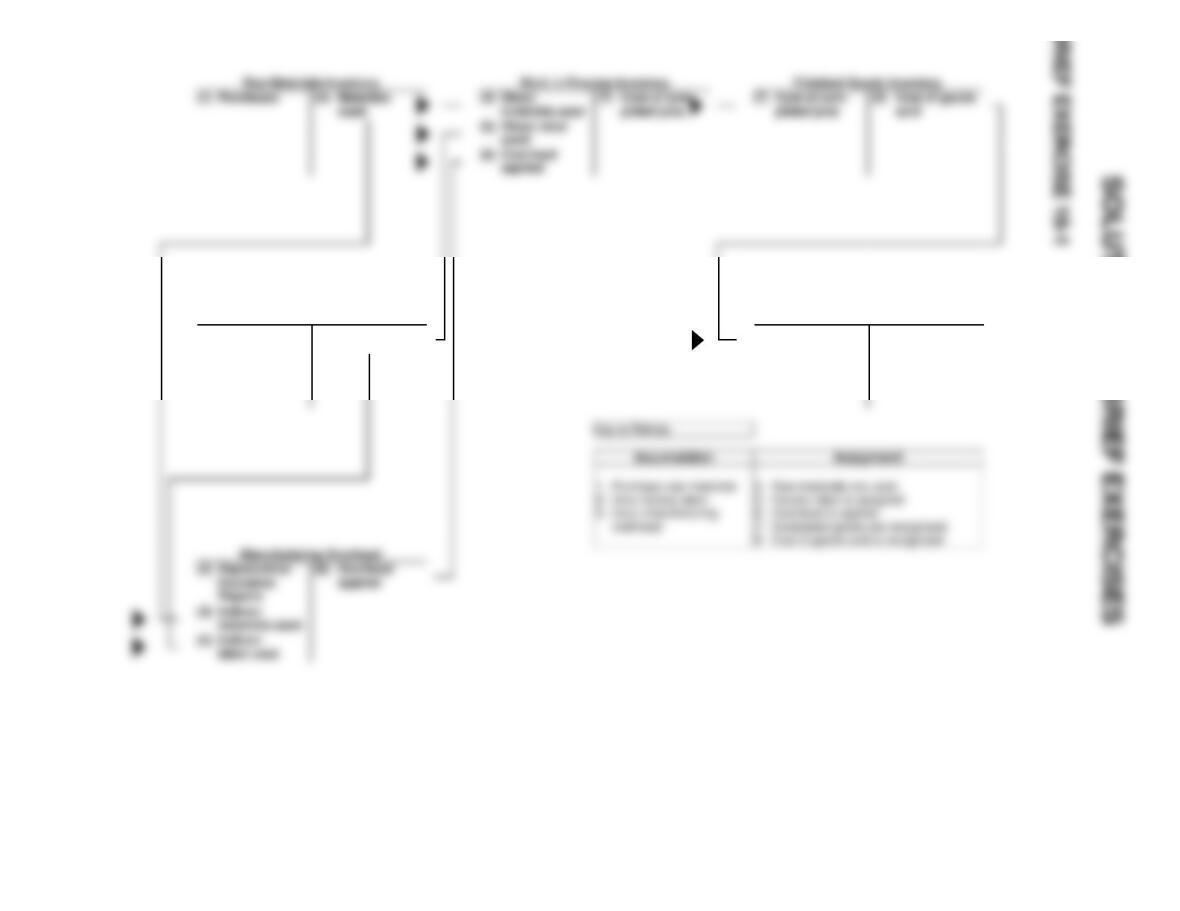
BRIEF EXERCISE 16-1
Factory Labor
Cost of Goods Sold
(2) Factory labor
incurred
(5) Factory labor
used
(8) Cost of goods
sold
(5) Indirect
(5) Direct labor
(6) Overhead
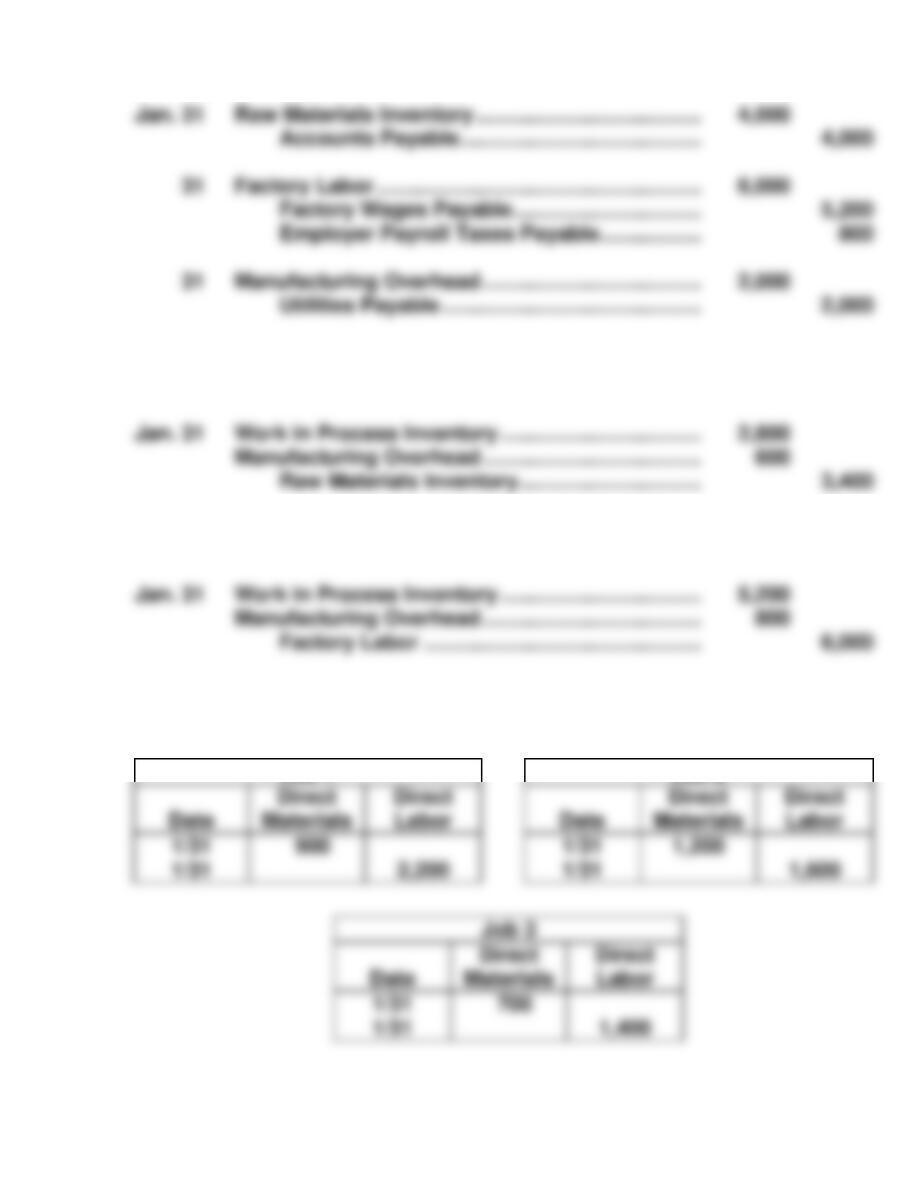
BRIEF EXERCISE 16-2
BRIEF EXERCISE 16-3
BRIEF EXERCISE 16-4
BRIEF EXERCISE 16-5
Job 1
Job 2
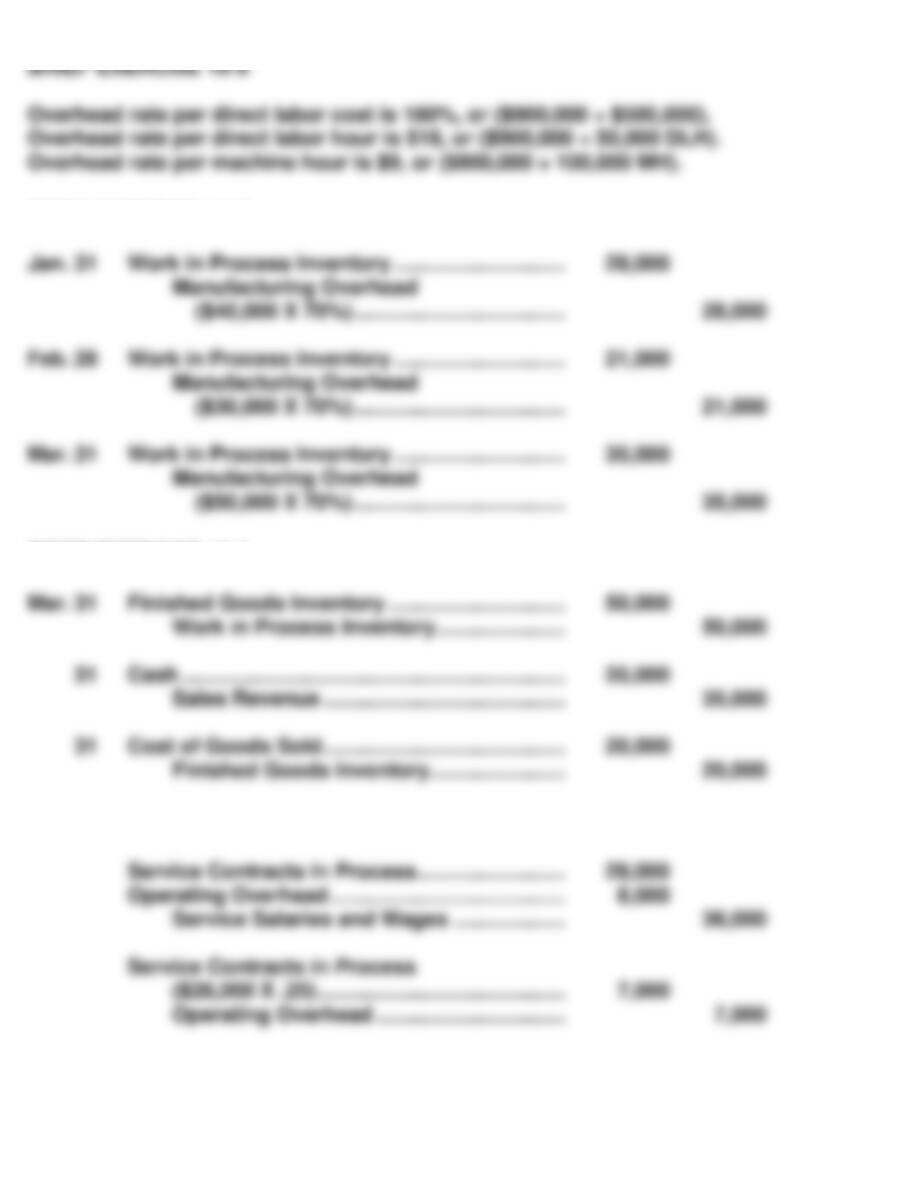
BRIEF EXERCISE 16-7
BRIEF EXERCISE 16-8
BRIEF EXERCISE 16-9
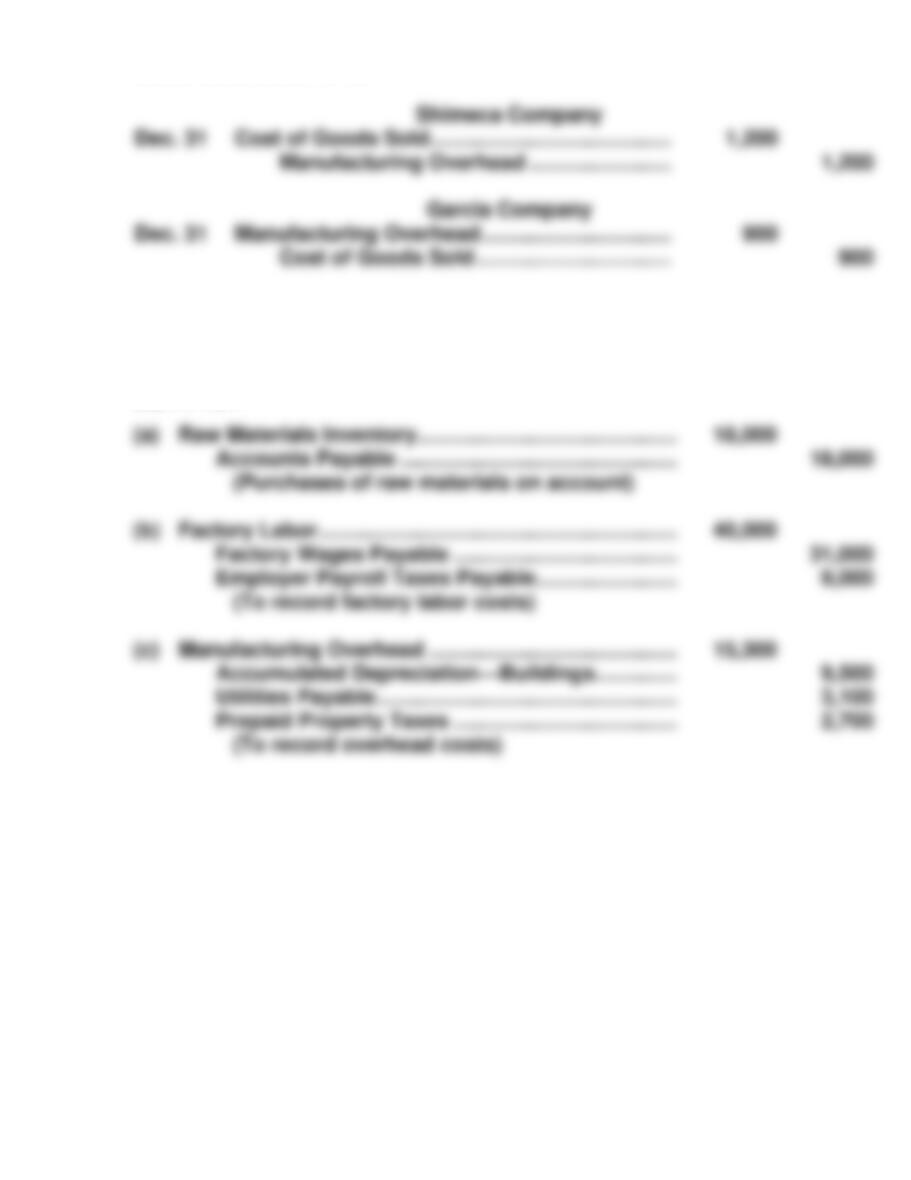
BRIEF EXERCISE 16–10
SOLUTIONS FOR DO IT! REVIEW EXERCISES
DO IT! 16-1
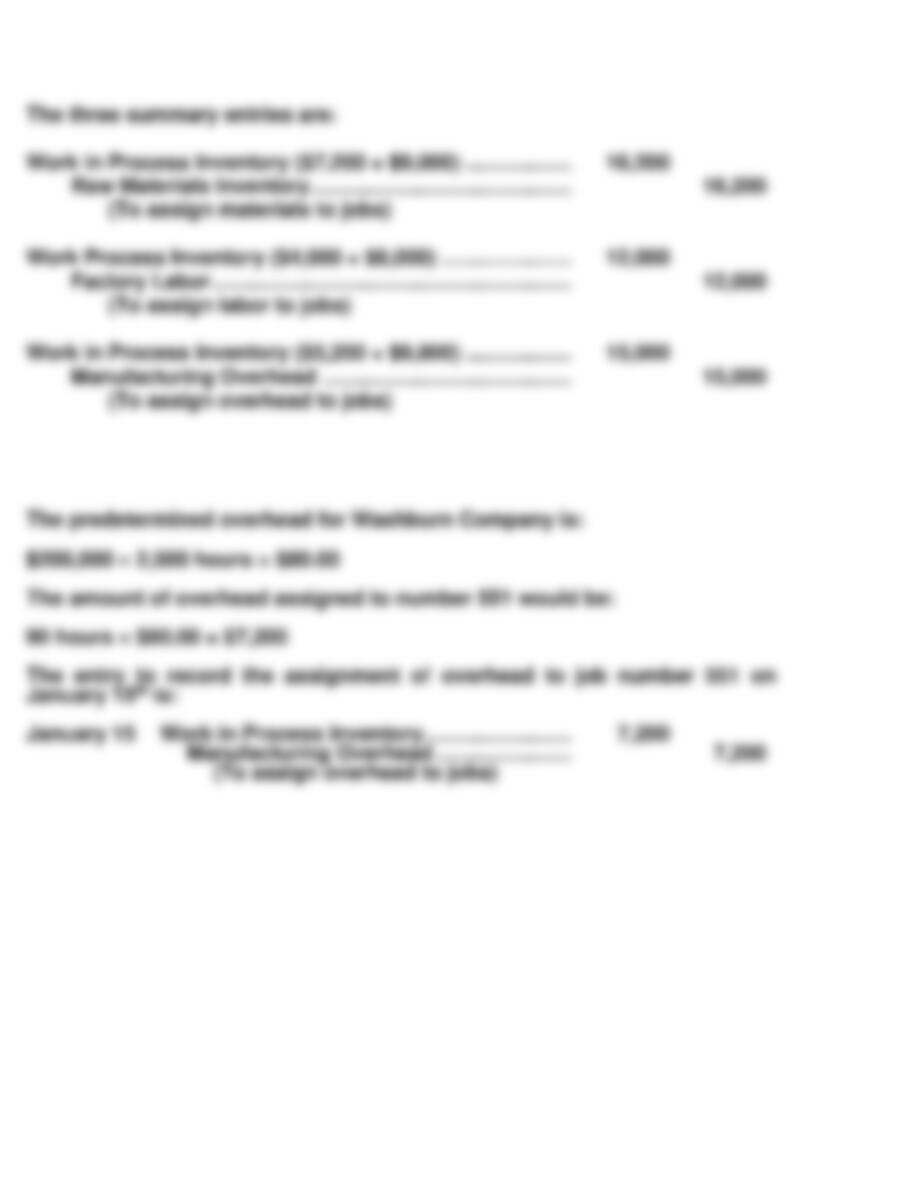
DO IT! 16-2
DO IT! 16-3
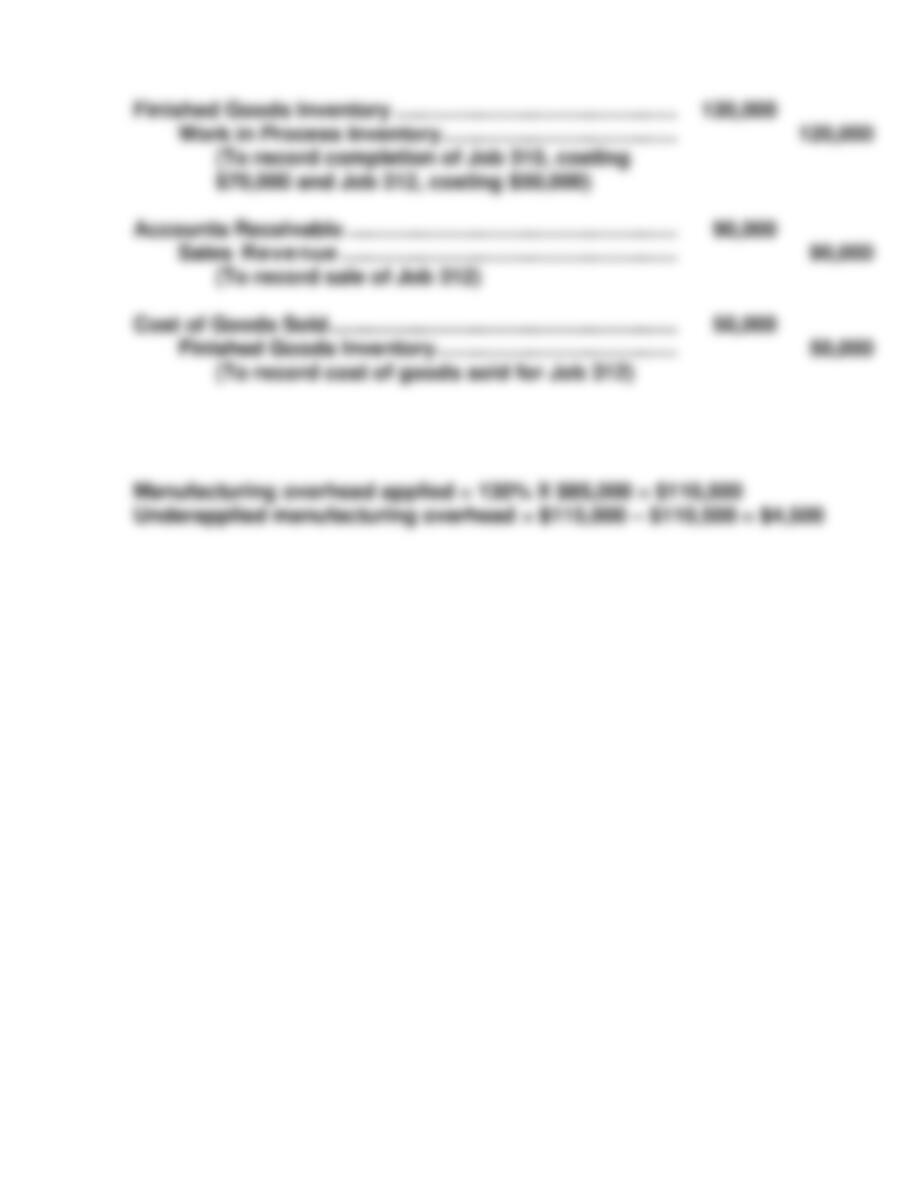
DO IT! 16-4
DO IT! 16-5
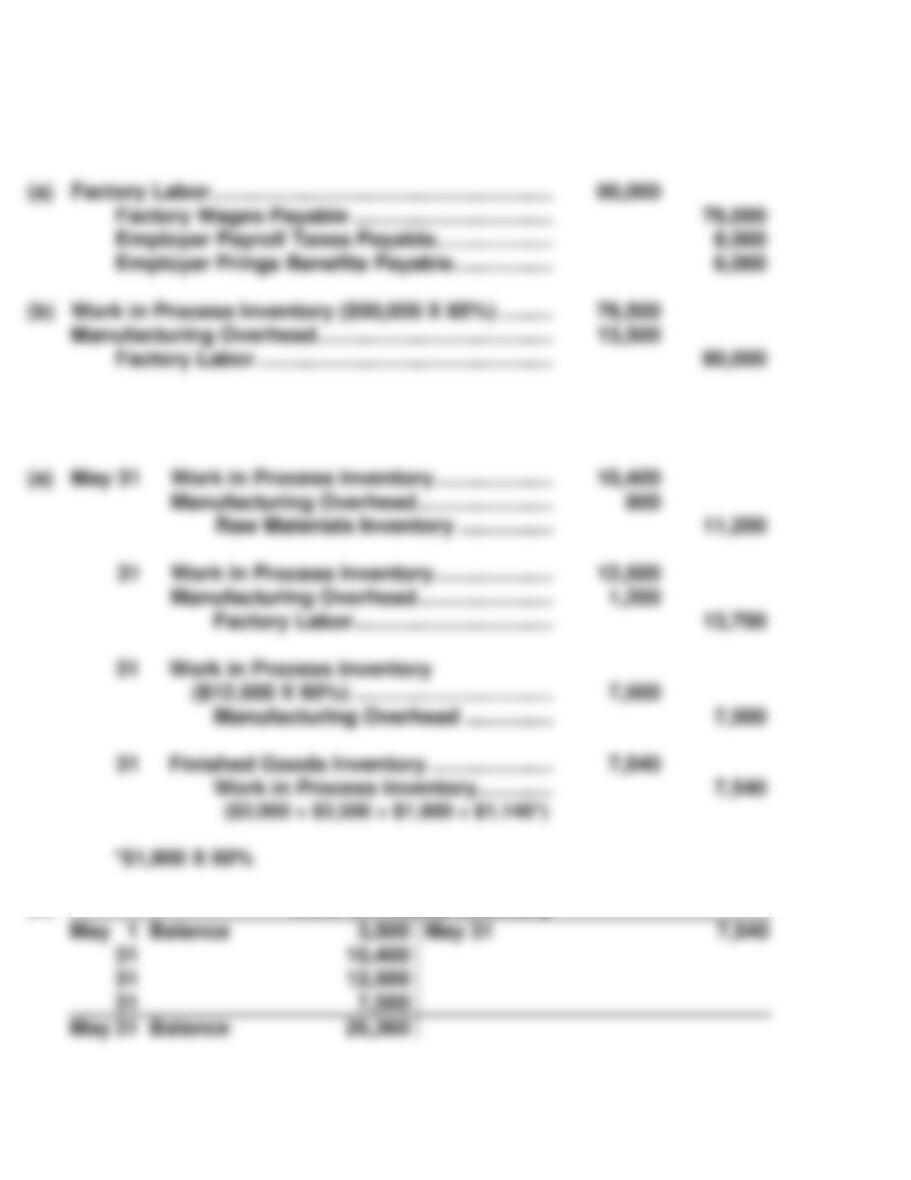
SOLUTIONS TO EXERCISES
EXERCISE 16-1
EXERCISE 16-2
(b)
Work in Process Inventory
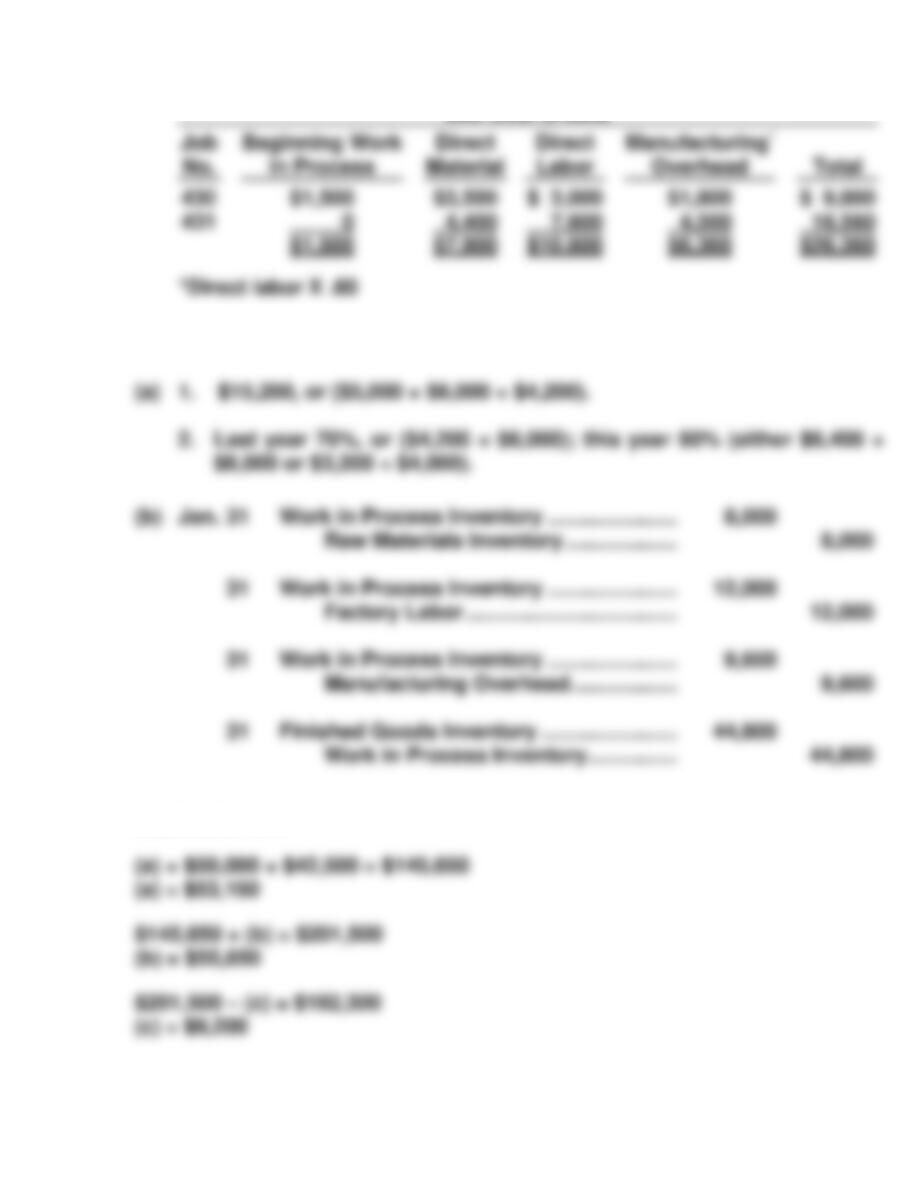
EXERCISE 16-2 (Continued)
Job Cost Sheets
EXERCISE 16-3
EXERCISE 16-4
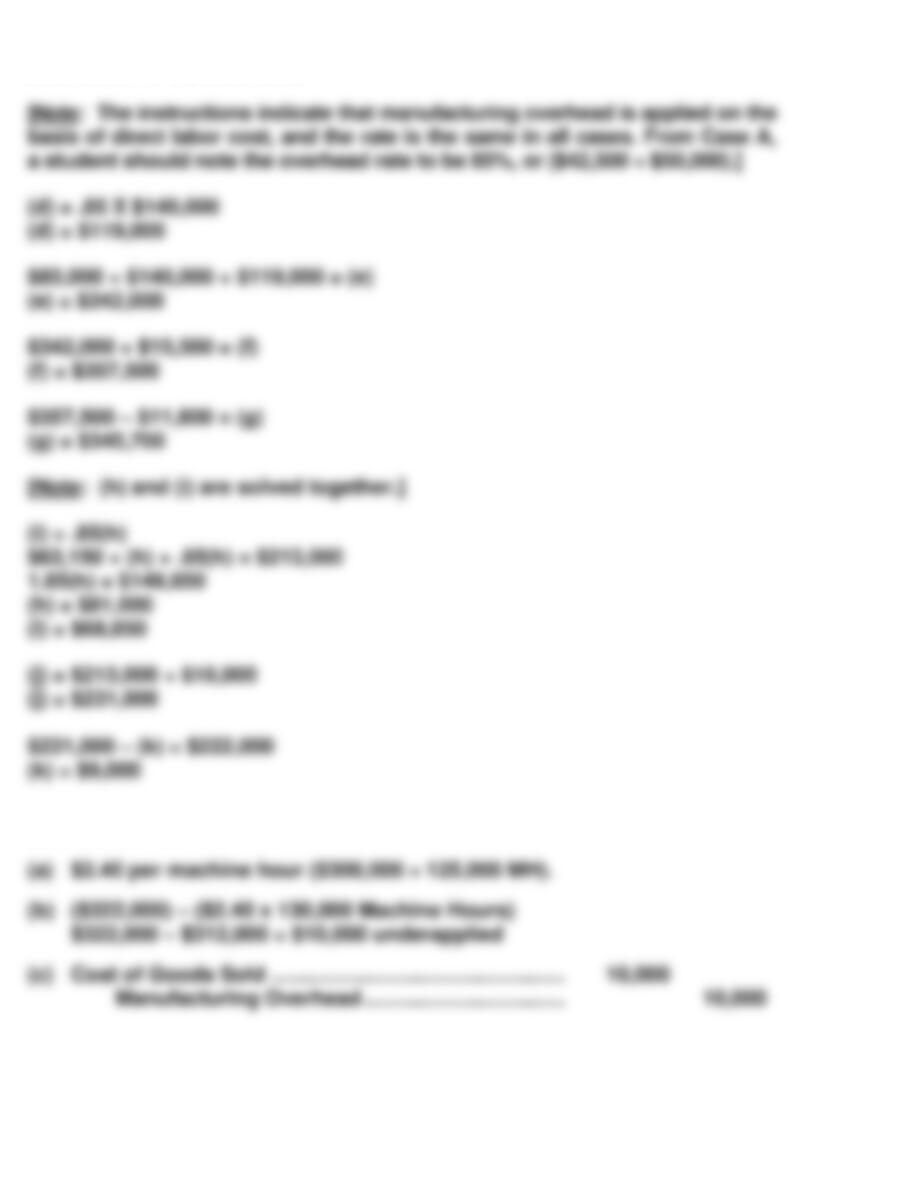
EXERCISE 16-4 (Continued)
EXERCISE 16-5
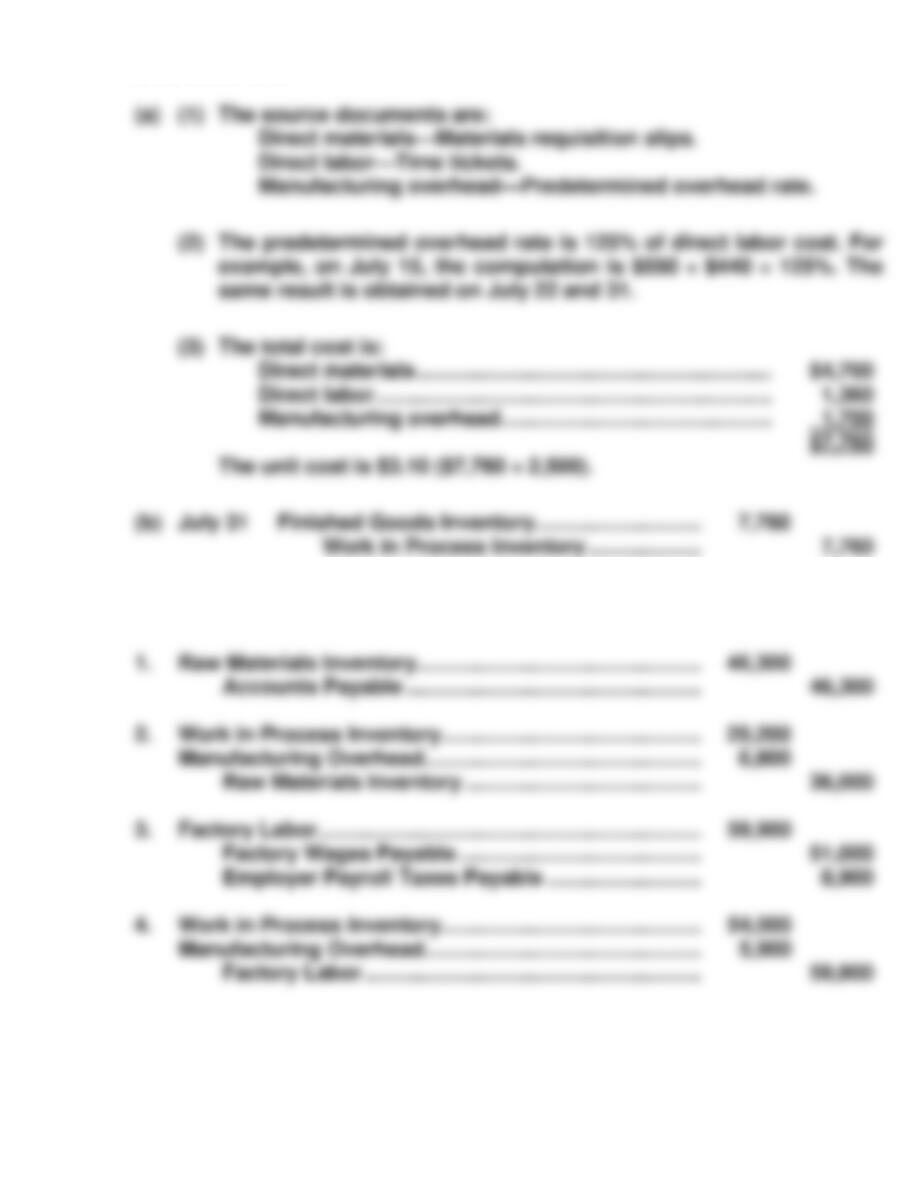
EXERCISE 16-6
EXERCISE 16-7
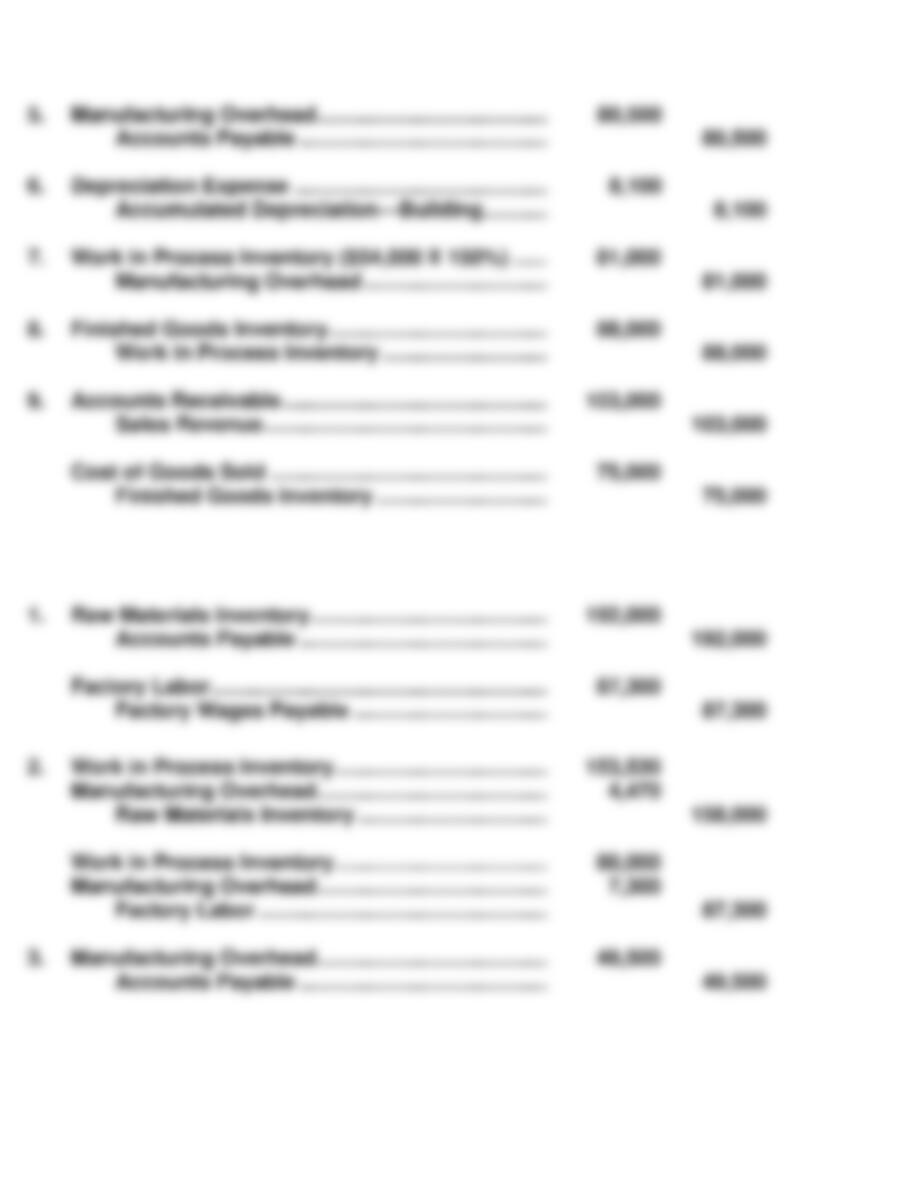
EXERCISE 16-7 (Continued)
EXERCISE 16-8
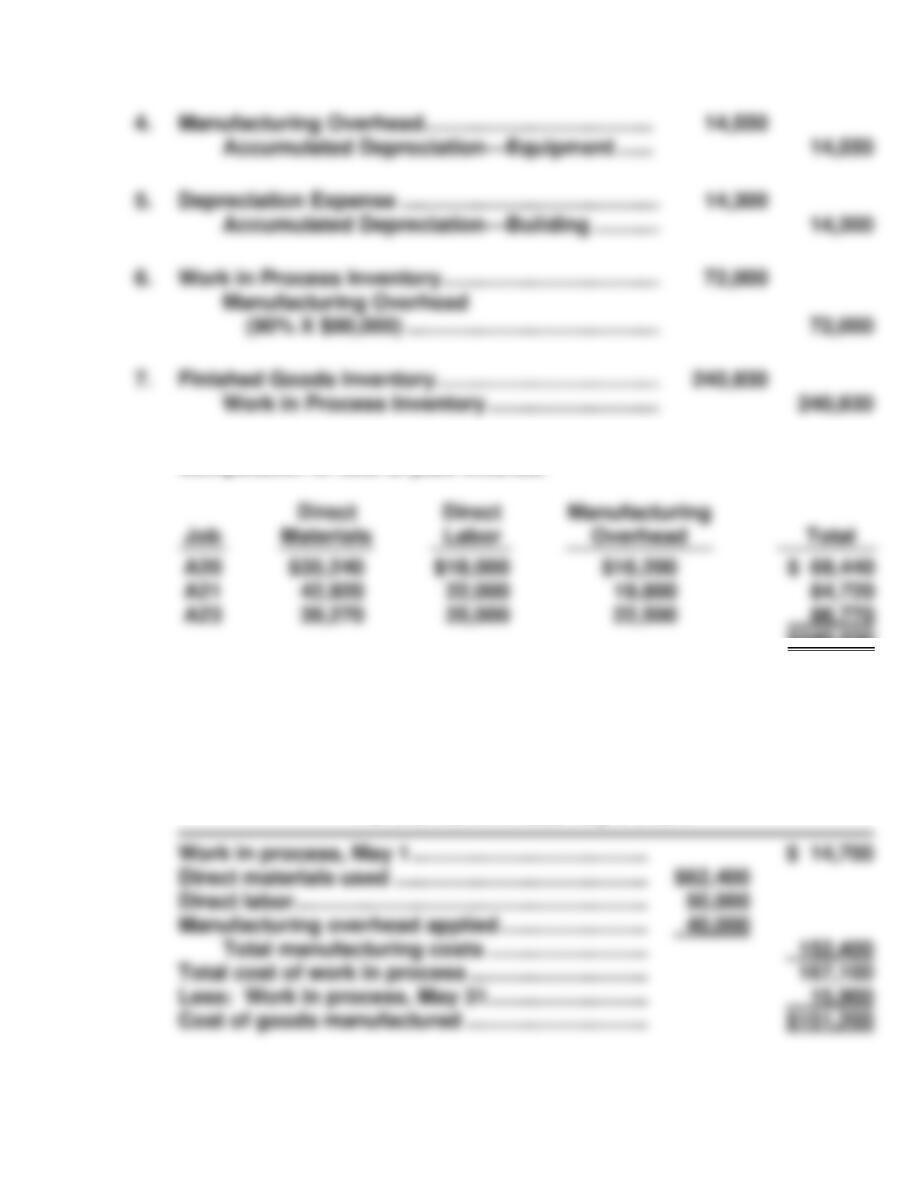
EXERCISE 16-8 (Continued)
Computation of cost of jobs finished:
$240,930
EXERCISE 16-9
(a) LOPEZ COMPANY
Cost of Goods Manufactured Schedule
For the Month Ended May 31, 2017
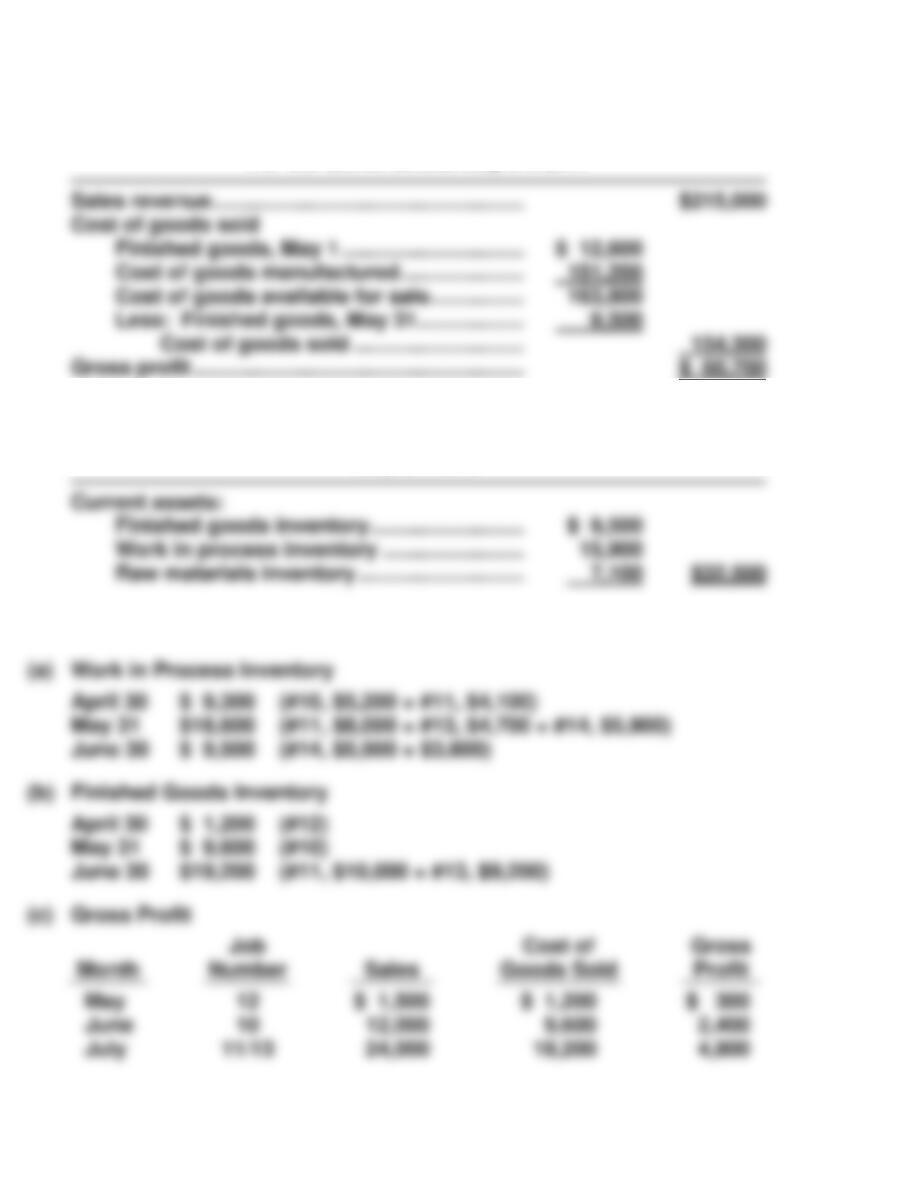
EXERCISE 16-9 (Continued)
(b) LOPEZ COMPANY
(Partial) Income Statement
For the Month Ended May 31, 2017
(c) LOPEZ COMPANY
(Partial) Balance sheet
May 31, 2017
EXERCISE 16–10
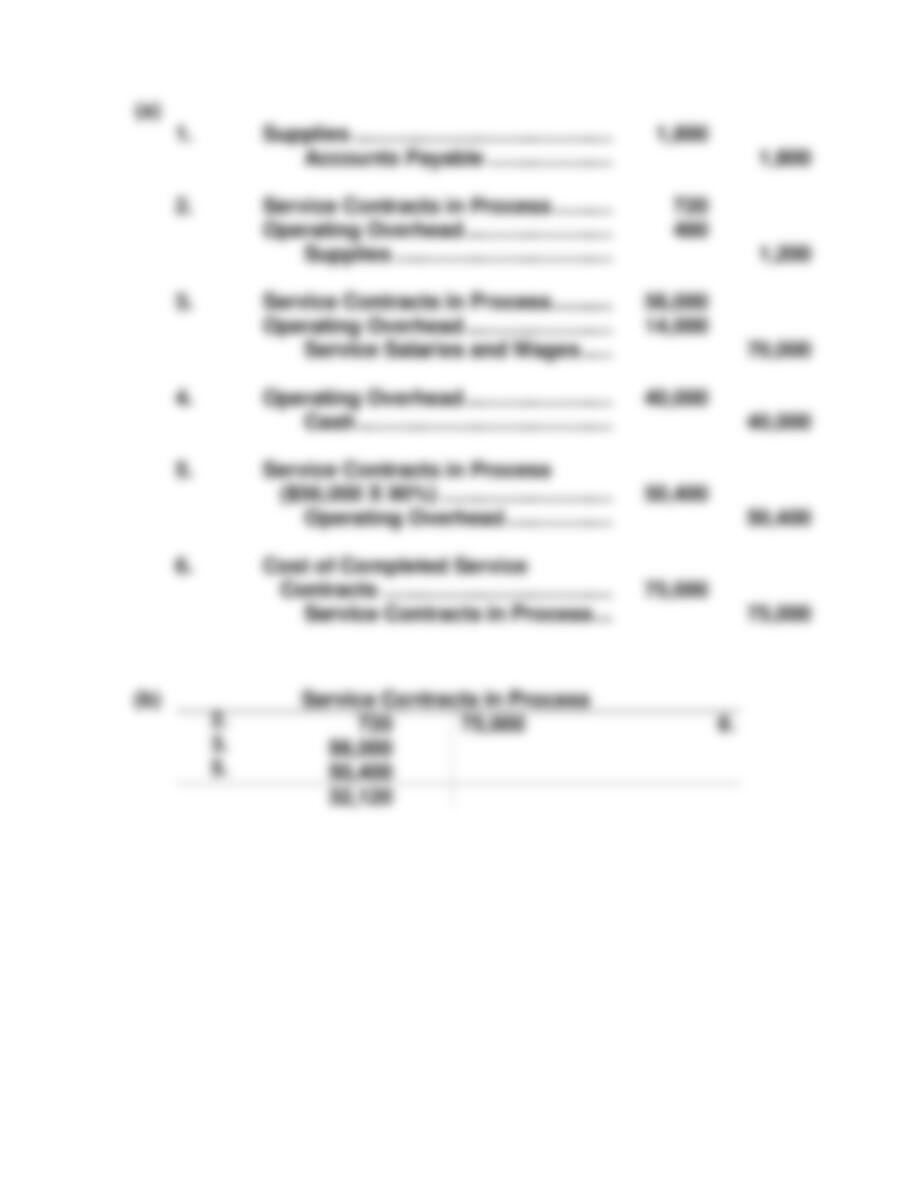
EXERCISE 16–11
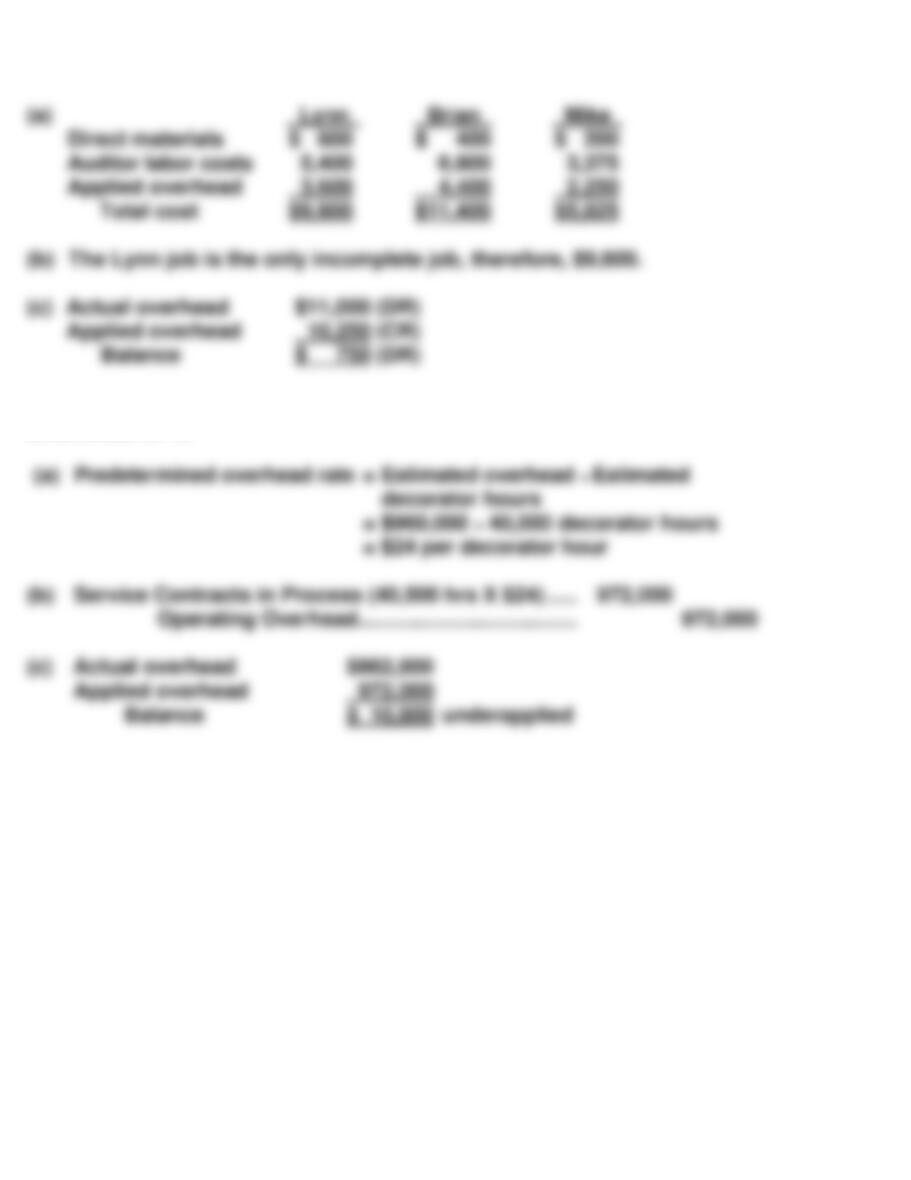
EXERCISE 16–12
EXERCISE 16–13
SOLUTIONS TO PROBLEMS
PROBLEM 16–1A
PROBLEM 16-1A (Continued)
PROBLEM 16-1A (Continued)
(g)
Finished
Goods Inventory
PROBLEM 16–2A
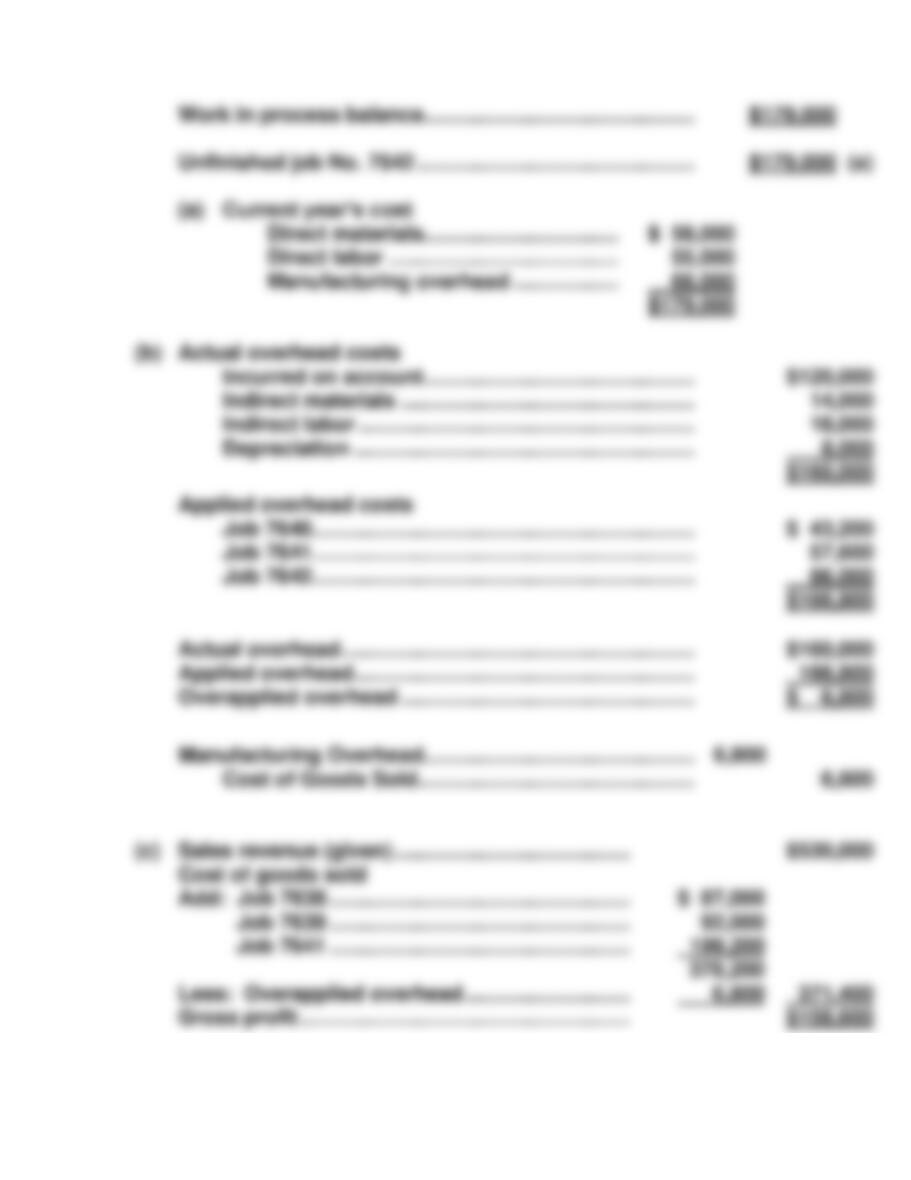
PROBLEM 16-2A (Continued)
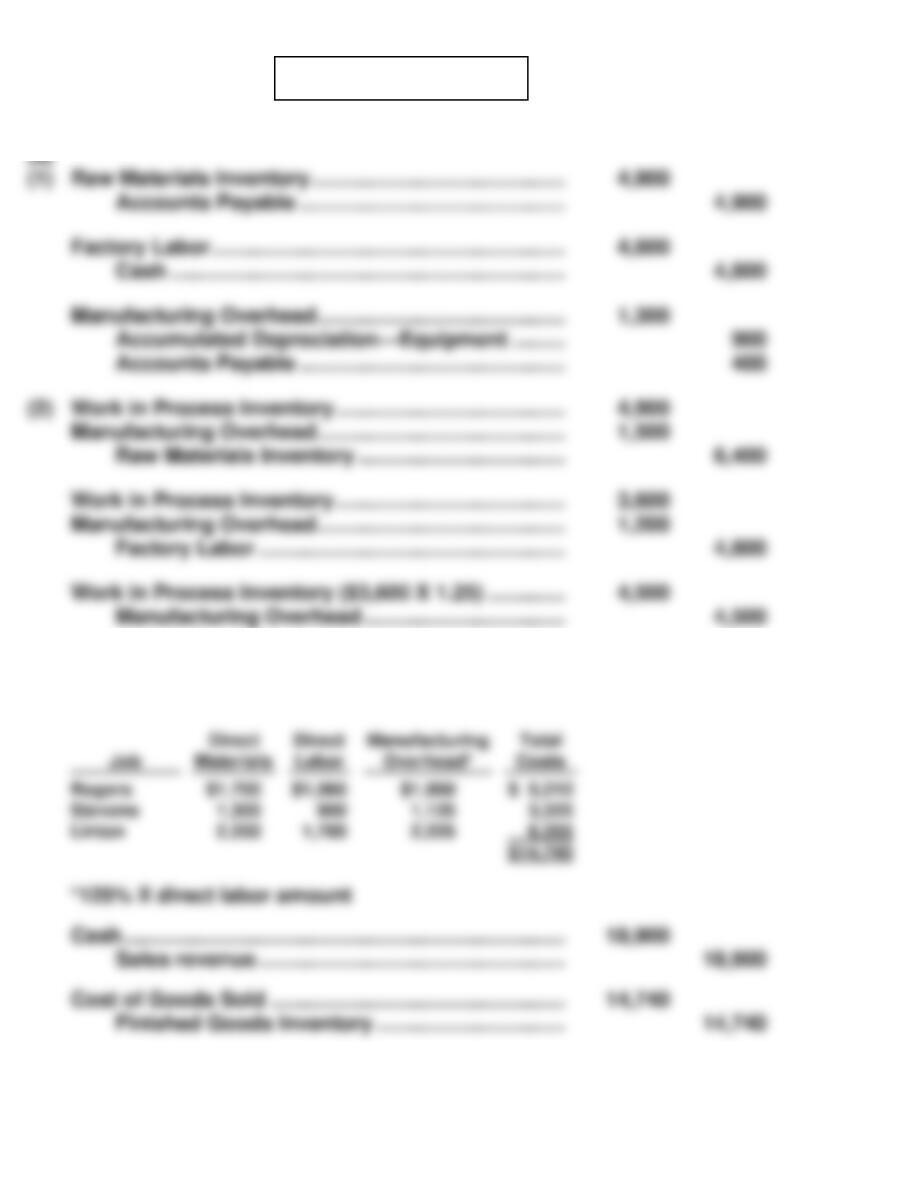
PROBLEM 16–3A
(3) Finished Goods Inventory …………………………………. 14,740
Work in Process Inventory …………………………. 14,740
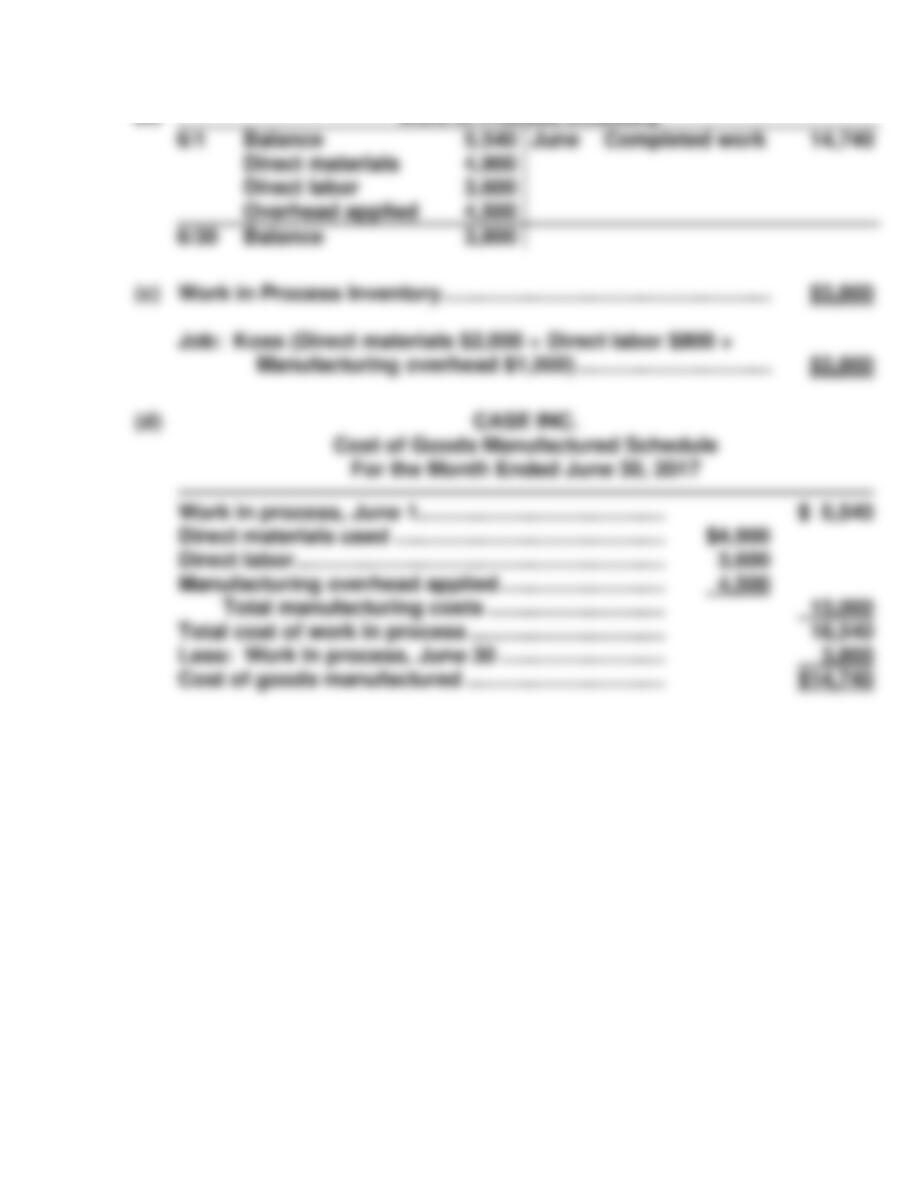
PROBLEM 16-3A (Continued)
(b)
Work in Process Inventory
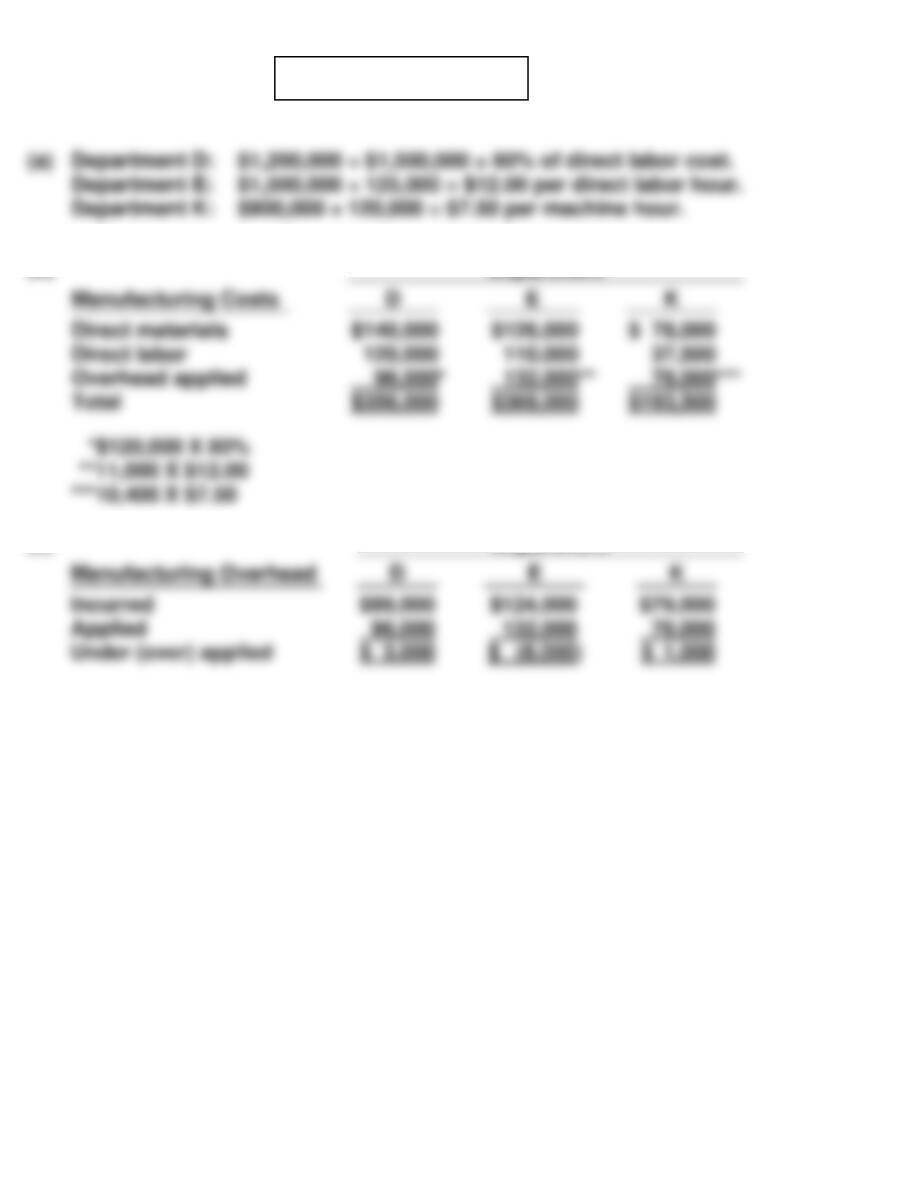
PROBLEM 16–4A
(b)
Department
Manufacturing Costs
Total
(c)
Department
Manufacturing Overhead
Under (over) applied
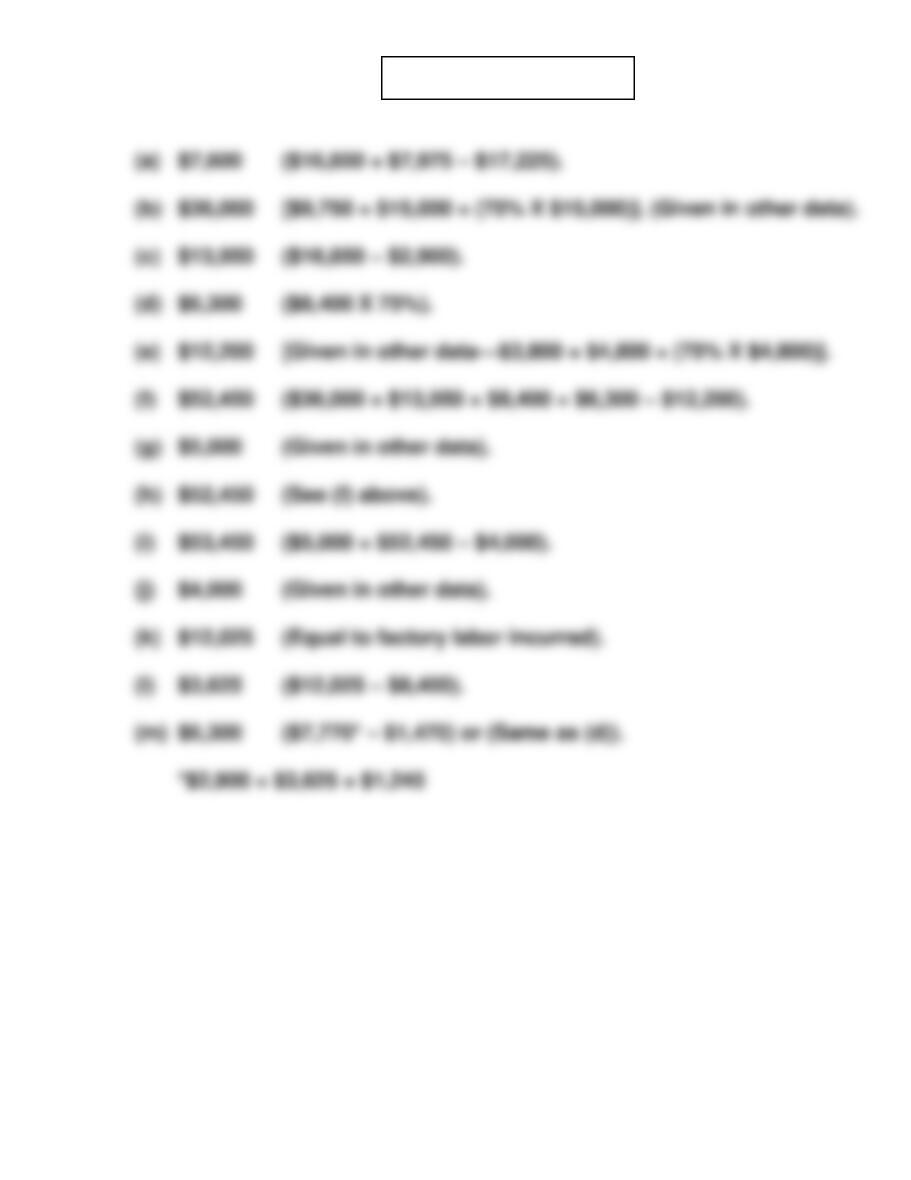
PROBLEM 16–5A
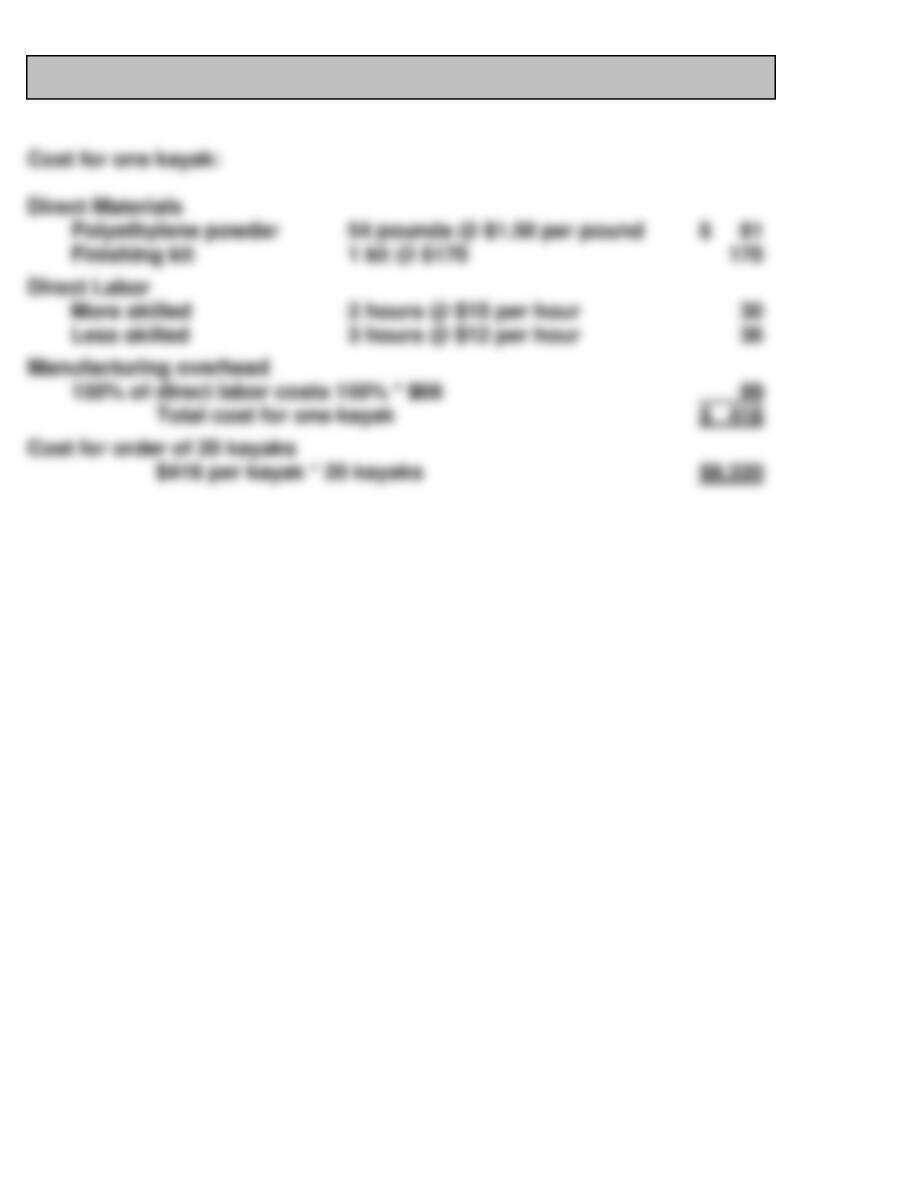
CD16 CURRENT DESIGNS
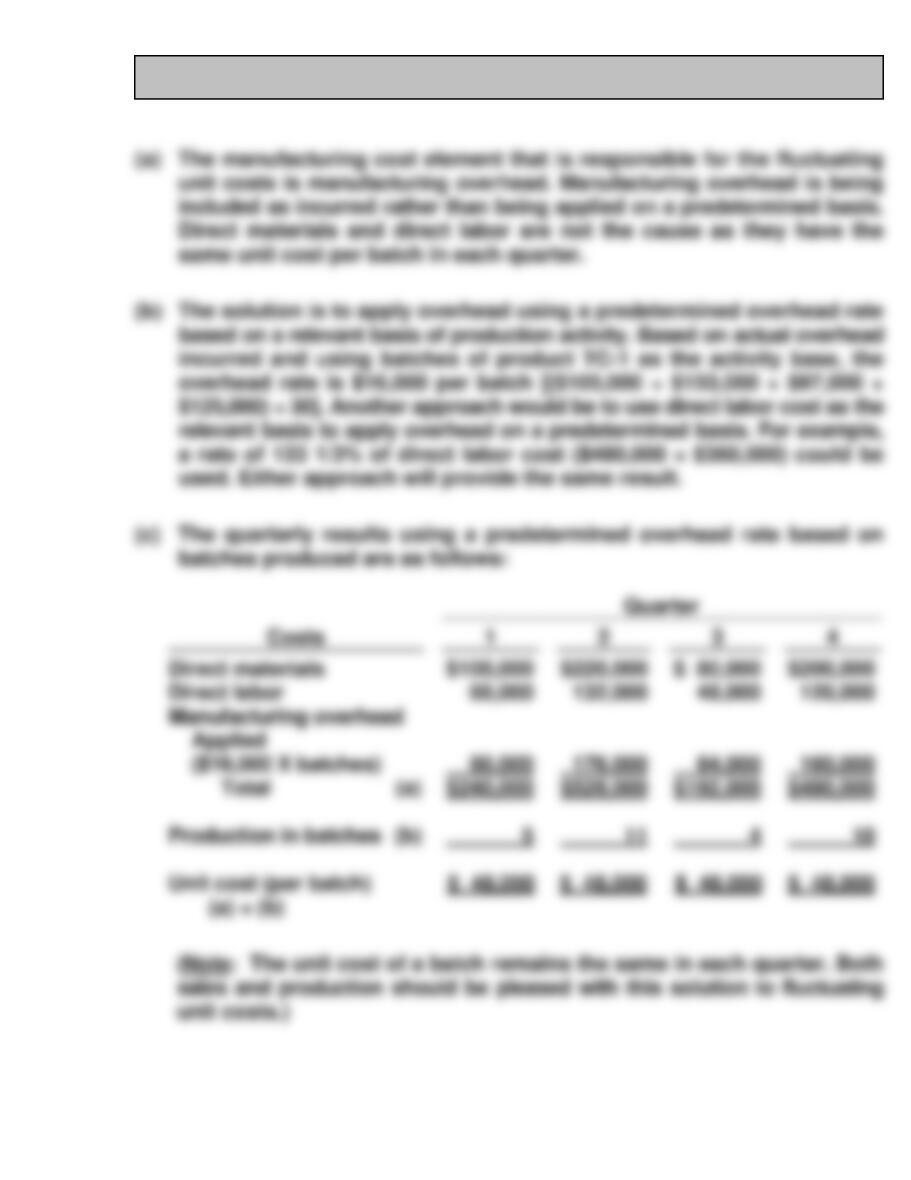
BYP 16-1 DECISION-MAKING ACROSS THE ORGANIZATION
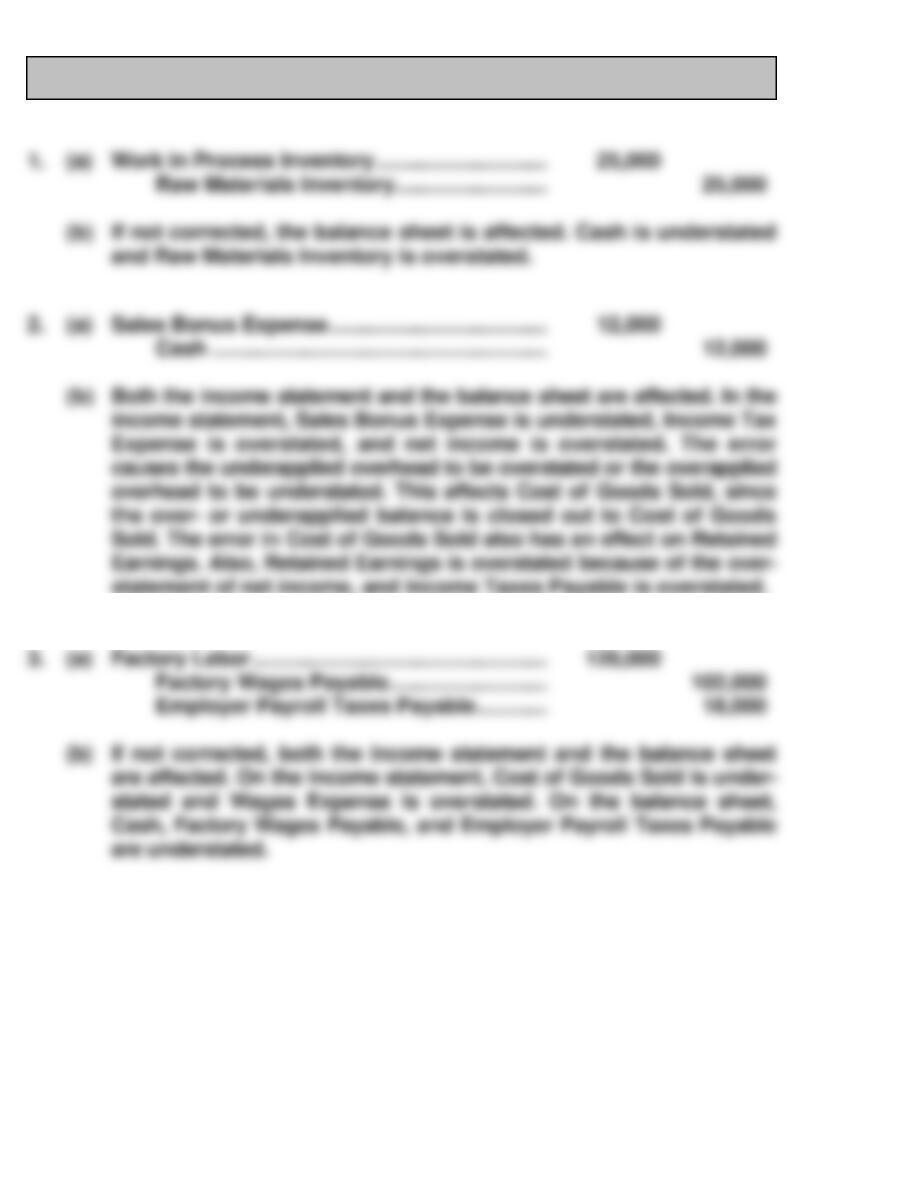
BYP 16-2 MANAGERIAL ANALYSIS
statement of net income, and Income Taxes Payable is overstated.
BYP 16-2 (Continued)
BYP 16-3 REAL-WORLD FOCUS
BYP 16-4 COMMUNICATION ACTIVITY
Williams Company
Date
Nancy Kopay
123 Cedar Lane
Altoona, Kansas 66651
Dear Ms. Kopay:
BYP 16-4 (Continued)
BYP 16-5 ETHICS CASE
BYP 16-6 ALL ABOUT YOU
BYP 16-7 CONSIDERING YOUR COSTS AND BENEFITS