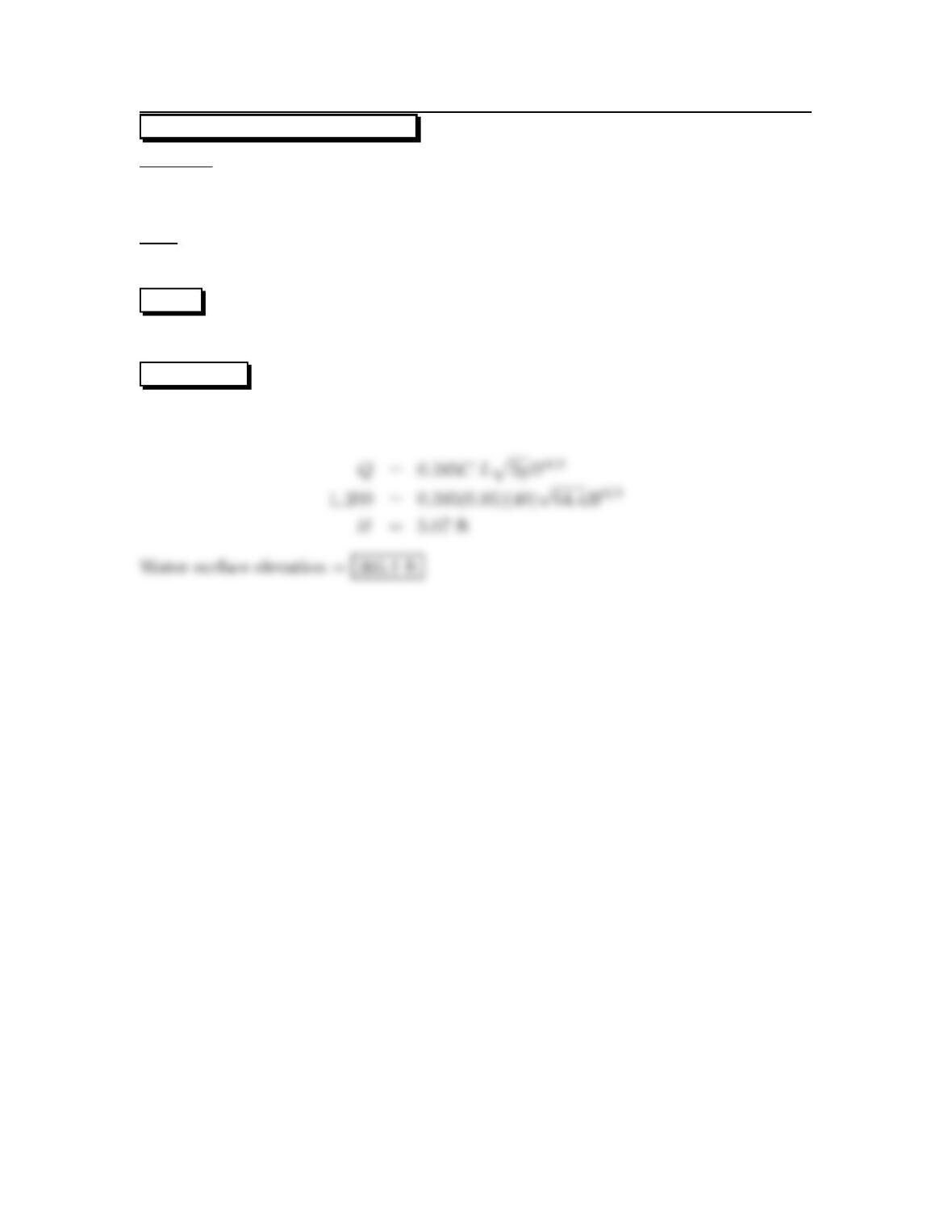
15.38: PROBLEM DEFINITION
Situation:
Water flows over a broad-crested weir.
Additional details are given in the problem statement.
Find:
The water surface elevation in the upstream reservoir (ft).
PLAN
Apply the Broad crested weir—Discharge equation.
SOLUTION
From Fig. 15.13 (EFM10e), C≈0.85
Broad crested weir—Discharge equation
41
15.39: PROBLEM DEFINITION
Situation:
Water flows in a rectangular channel.
Twosituationsareofinterest: anupstepandadownstepinbottomelev,eachof
30 cm.
V=3m/s
Initial depth = 3m
Find:
(a) Change in depth and water surface elevation for upstep of 30cm (m).
(b) Change in depth and water surface elevation for the downstep of 30cm (m).
(c) Maximum size of upstep so that no change in upstream depth occurs (m).
PLAN
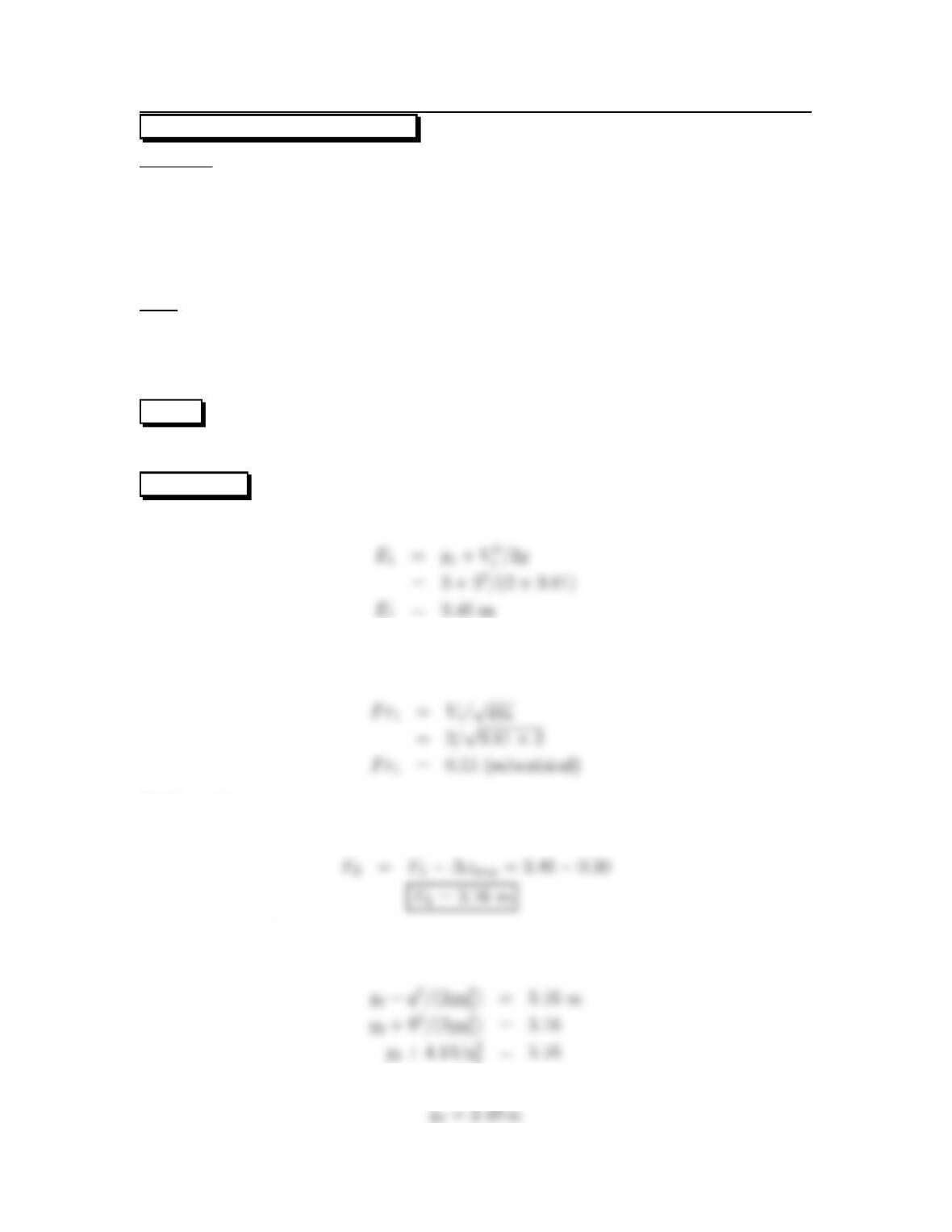
Apply the specificenergyequationandchecktheFroudenumber.
SOLUTION
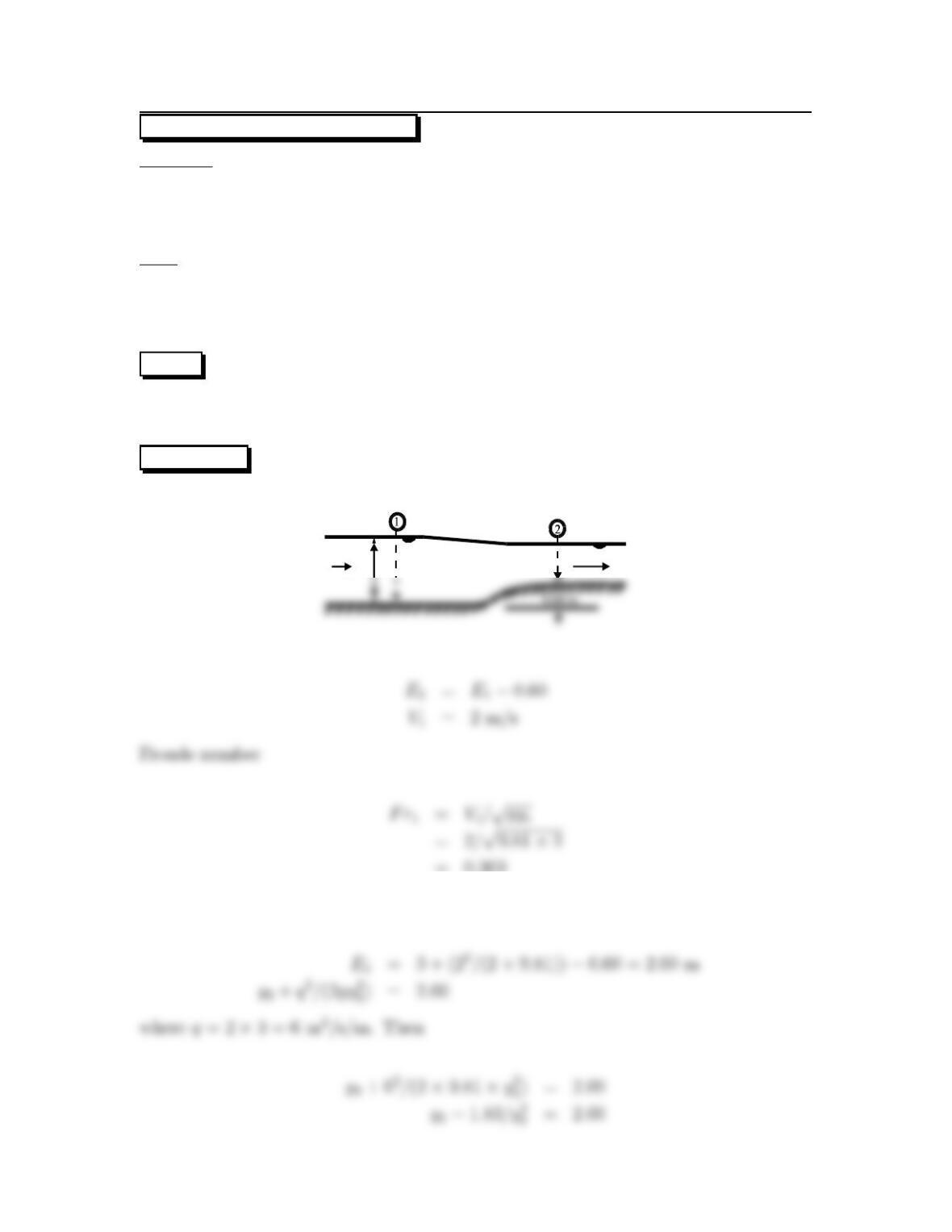
(a) Specific Energy Equation prior to upstep
Froude number
Apply upstep
SpecificEnergyEquation
Solving for y2yields
42
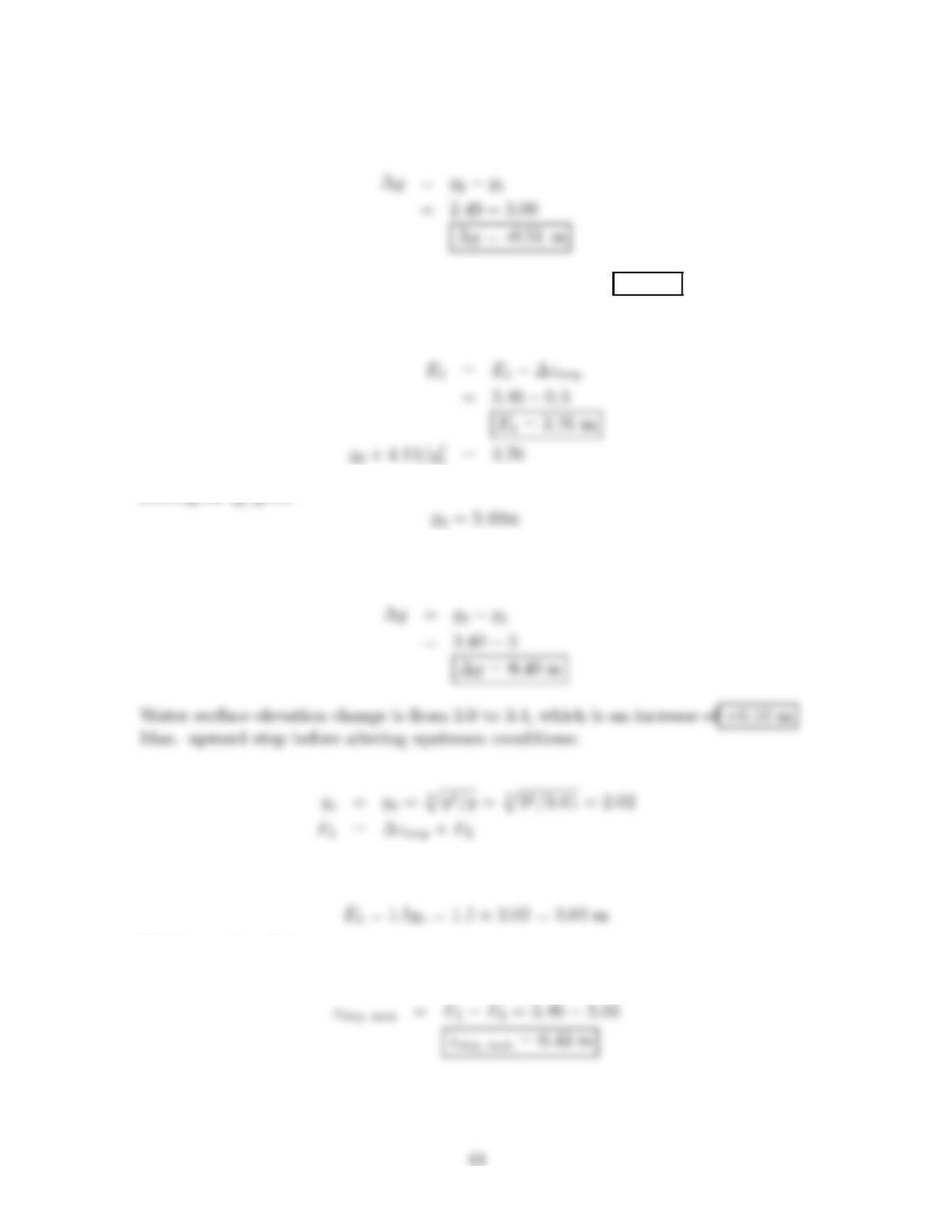
Then, for change in depth
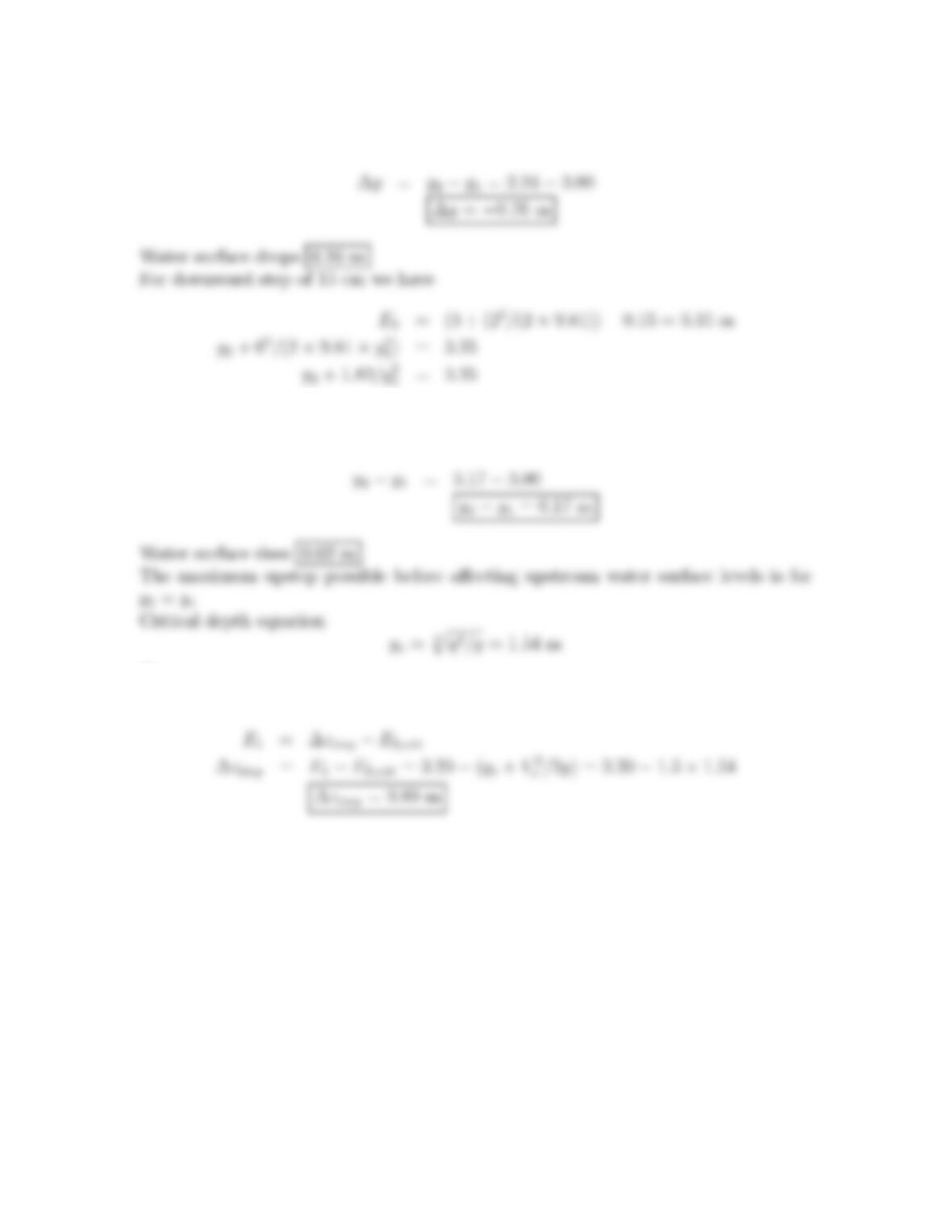
So water surface drops from 3.0 to 2.49, which is a drop of 0.21 m.
For a downstep
Solving for y2gives
Then
where
Maximum size of step
15.40: PROBLEM DEFINITION
Situation:
Water flows in a rectangular channel.
Two situations are of interest: an upstep and a downstep.
Additional details are provided in the problem statement.
Find:
(a) Change in depth and water surface elevation for the upstep (m).
(b) Change in depth and water surface elevation for the downstep (m).
(c) Maximum size of upstep so that no change in upstream depth occurs (m).
PLAN
Apply the specificenergyequationbyfirst calculating Froude number and critical
depth.
SOLUTION
For the upstep
=0.369
SpecificEnergyEquation
44
Solving, one gets y2=2.24 m. Then
Solving: y2=3.17 mor
Then
45
15.41: PROBLEM DEFINITION
Situation:
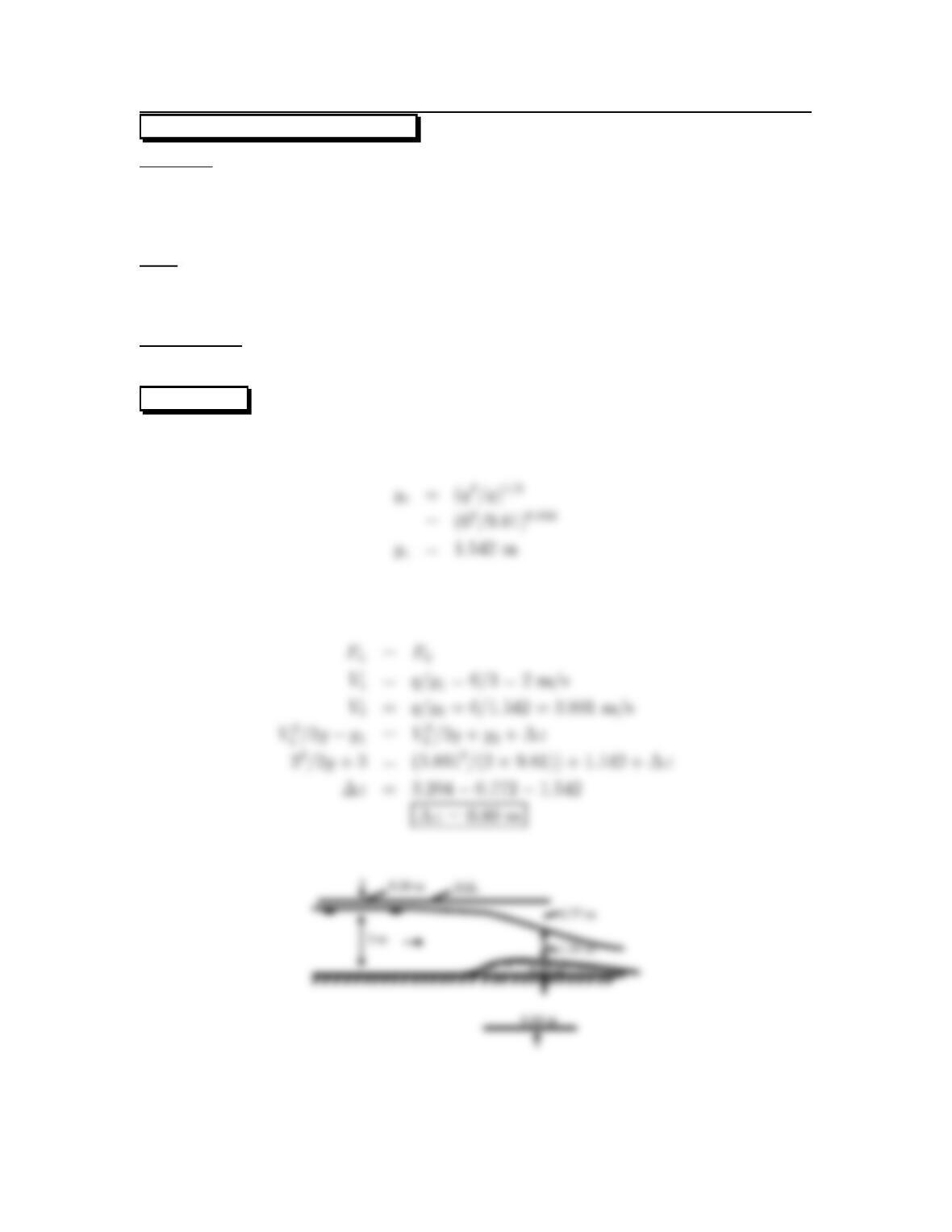
Water flows over a gradual upstep, shown in figure.
Desired: Unit flowrate q=6m2/sec .
Upstream depth y1=3m
Find:
Maximum value of ∆zto permit a unit flow rate of 6 m2/s without increasing the
upstream depth (m).
Assumptions:
No energy loss.
SOLUTION
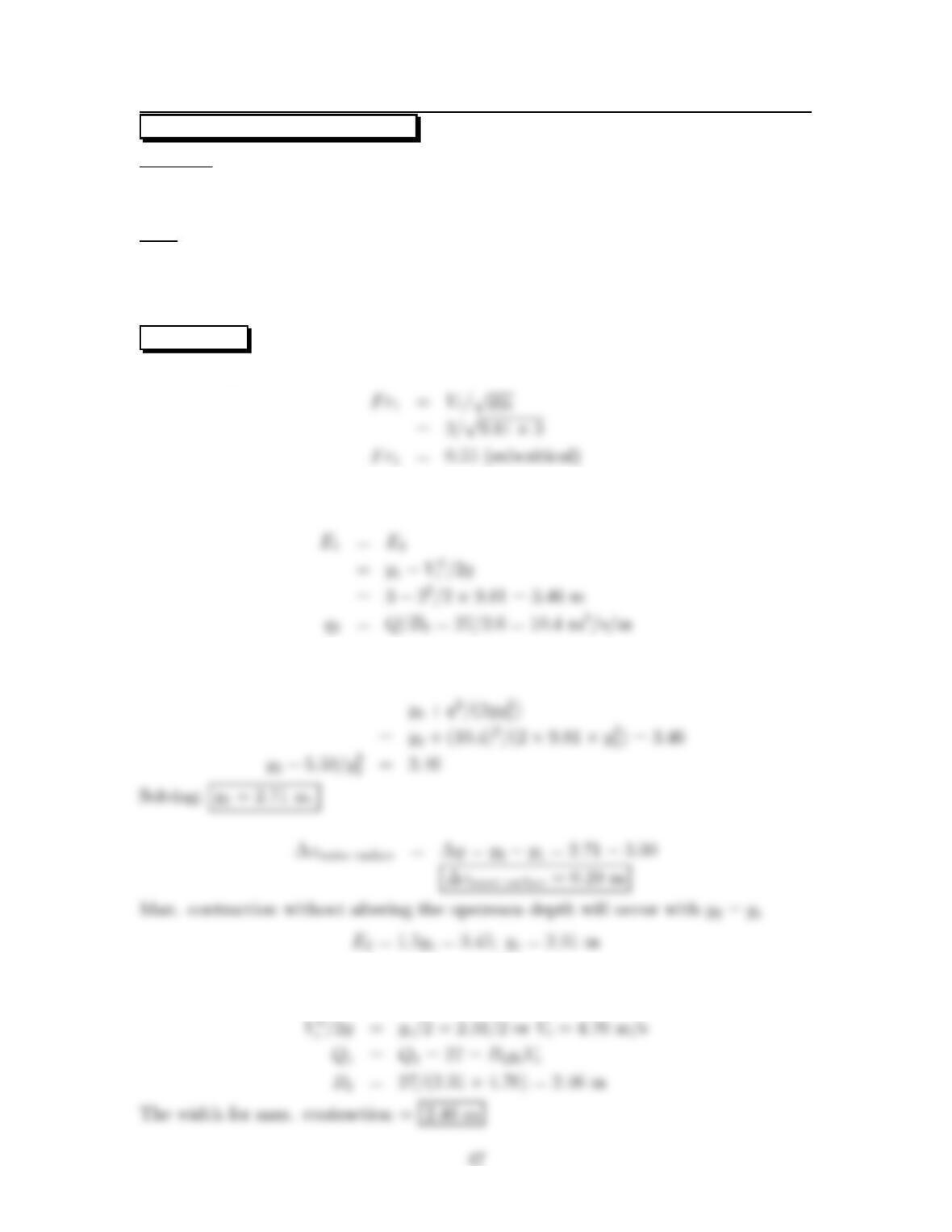
Critical depth equation
where ycis depth allowed over the hump for the given conditions.
SpecificEnergyEquation
46
15.42: PROBLEM DEFINITION
Situation:
A rectangular channel has a gradual contraction in width–additional details are
provided in the problem statement.
Find:
(a) Change in depth (m).
(b) Change in water surface elevation (m).
(c) Greatest contraction allowable so that upstream conditions are not altered (m).
SOLUTION
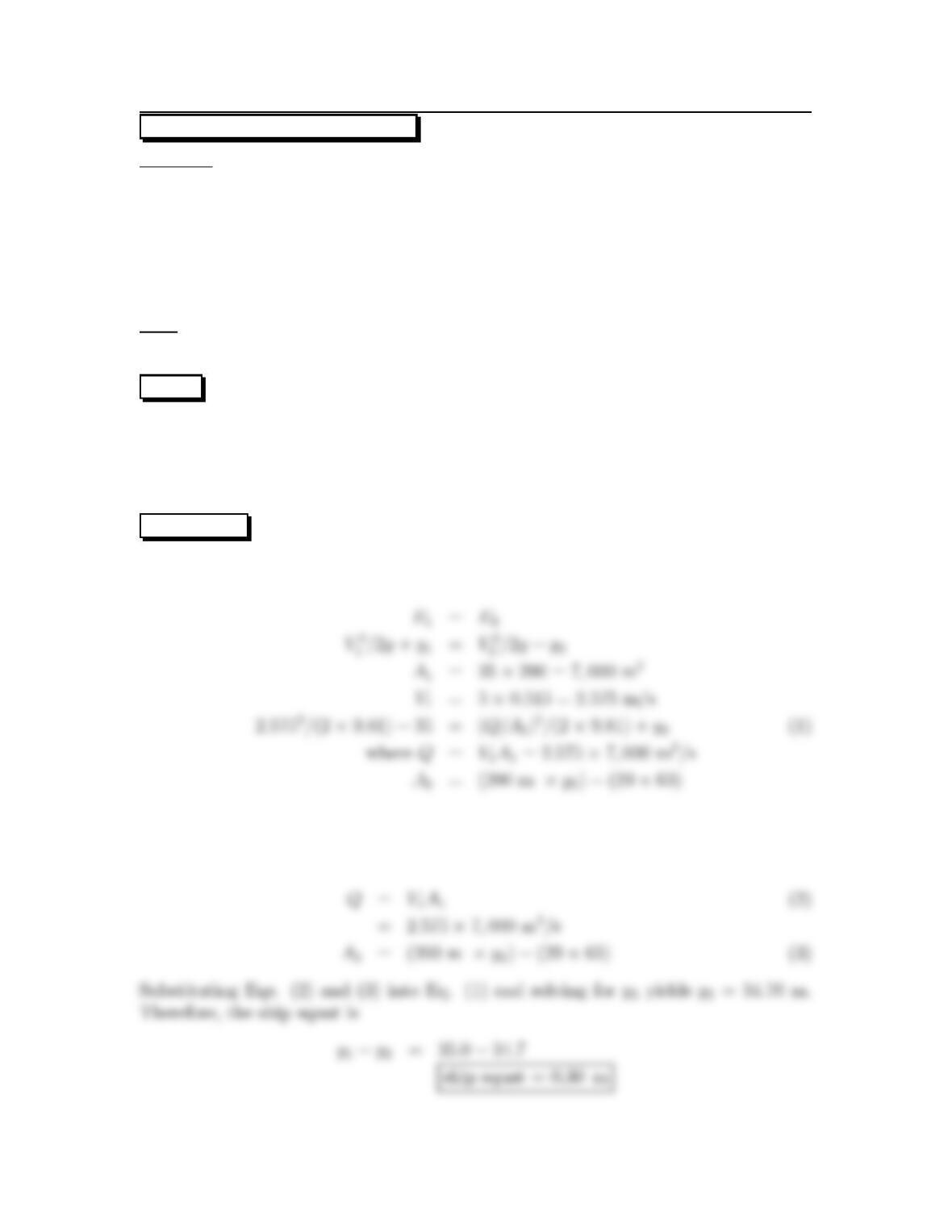
Froude number
SpecificEnergyEquation
Then
Then
15.43: PROBLEM DEFINITION
Situation:
“Ship squat” problem when the draft of vessels approaches the depth of the ship
channel.
Ship reduces the cross-sectional area available for flow in the channel.
Ship is lower when moving than it would be if it were stationary.
Vship =5kt =2.575m/s; y1= 35m; channel width = 200 m
Draft of ship is 29m when fully loaded; width ship = 63m; length ship = 414m
Find:
The change in elevation or “ship squat” of a fully loaded supertanker (m).
PLAN
Reference the water velocity to the ship, and apply the energy equation.
Apply the specific energy equation from a section in the channel upstream of the ship
to a section where the ship is located.
Then apply the flow rate equation and solve for y2.
SOLUTION
SpecificEnergyEquation
Flow rate equation
48
15.44: PROBLEM DEFINITION
Situation:
A rectangular channel has a small reach that is roughened with angle irons–
additional details are provided in the problem statement.
Find:
Determine the depth of water downstream of angle irons (ft).
PLAN
Apply the momentum principle for a unit width.
SOLUTION Momentum principle
49
15.45: PROBLEM DEFINITION
Situation:
Water flows out of a reservoir into a steep rectangular channel–additional details
are provided in the problem statement.
Find:
Discharge (m
3/s).
Assumptions:
Negligible velocity in the reservoir and negligible energy loss. Then the channel
entrance will act like a broad crested weir.
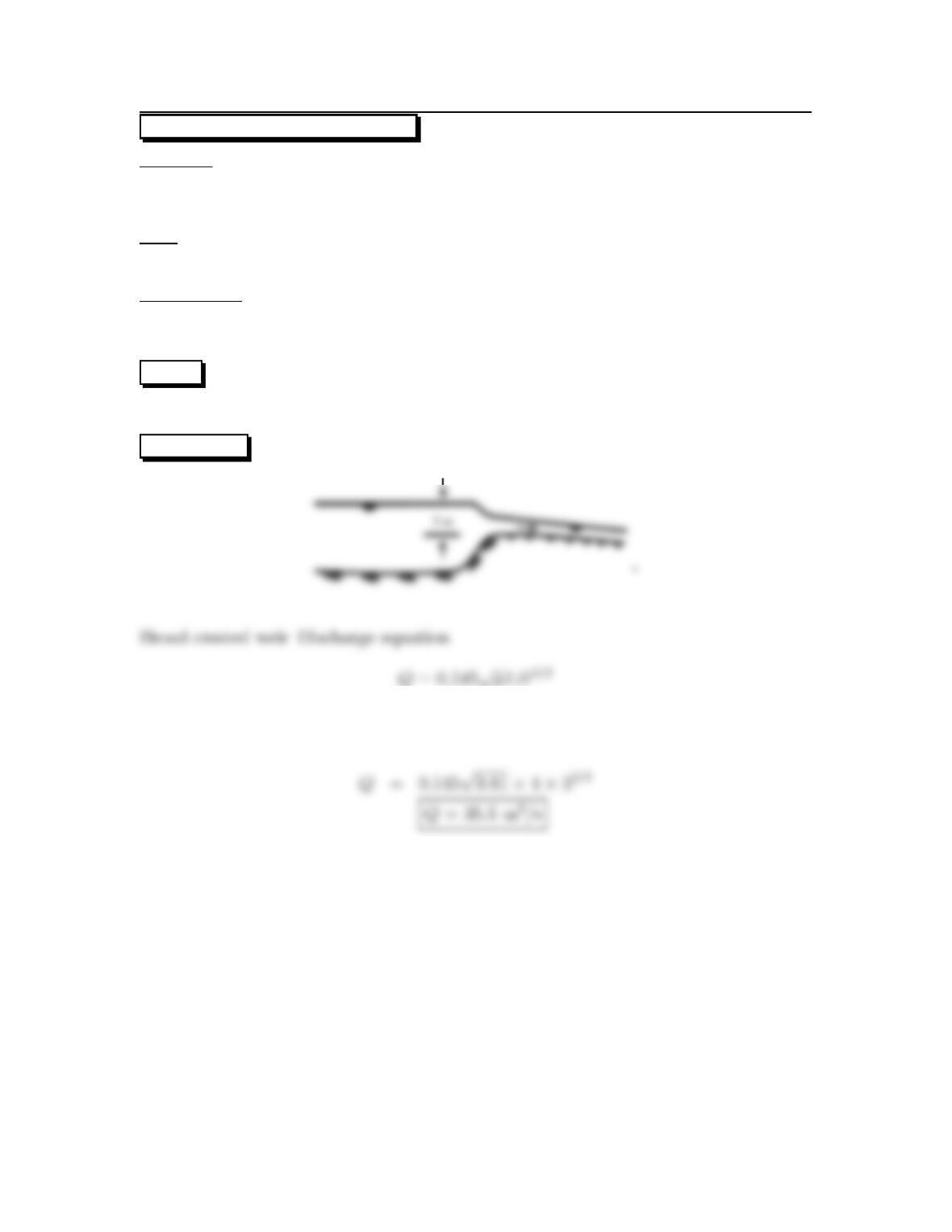
PLAN
Apply the Broad crested weir—Discharge equation.
SOLUTION
where L=4mandH=3m. Then
50

15.46: PROBLEM DEFINITION
Situation:
A small wave is produced in a pond.
Pond depth = 6 in.
Find:
Speed of the wave (ft/s).
PLAN
Apply the wave celerity equation.
SOLUTION
Wave celerity
51

15.47: PROBLEM DEFINITION
Situation:
A small wave travels in a pool of water.
Depth of water is constant.
Wave speed = 1.5m/s.
Find:
Depth of water (m).
PLAN
Apply the wave celerity equation.
SOLUTION
Wave celerity
52

15.48: PROBLEM DEFINITION
Situation:
As ocean waves approach a sloping beach, they curve so that they are aligned
parallel to the beach.
Find:
Explain the observed phenomena.
PLAN
Apply the wave celerity equation.
SOLUTION
As the waves travel into shallower water their speed is decreased.
53

15.49: PROBLEM DEFINITION
Situation:
For a hydraulic jump, __________. (Select all of the following that are
correct.)
a. the flow changes from subcritical to supercritical.
b. the flow changes from supercritical to subcritical.
c. significant energy is lost.
d. the height of the water abruptly increases from the upstream to the downstream
cross-section.
e. the downstream and upstream depth are related quantitatively in terms of the
upstream Fr.
f. the energy equation is a better tool for analysis than the momentum equation.
SOLUTION
a. No
54
15.50: PROBLEM DEFINITION
Situation:
Abaffled ramp is used to dissipate energy in an open channel–additional details
are provided in the problem statement.
Find:
(a) Head that is lost (ft).
(b) Power that is dissipated ( hp).
(c) Horizontal component of the force exerted by ramp on the water (lbf).
Assumptions:
The kinetic energy correction factors are ≈1.0.xpositive in the direction of flow.
PLAN
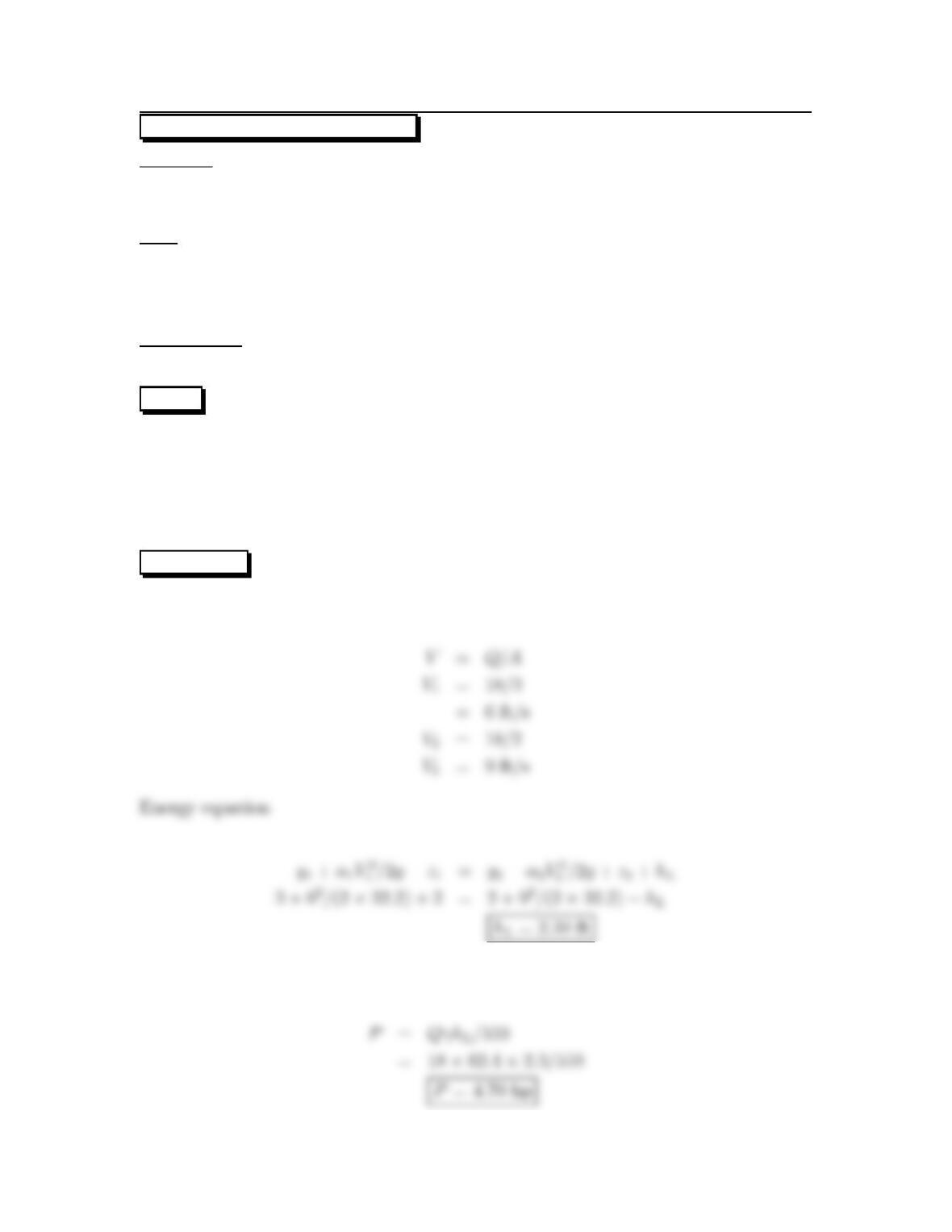
Let the upstream section (where y=3ft) be section 1 and the downstream section
(y=2ft) be section 2. Solve for the velocities at 1 and 2 using the flow rate equation.
Then apply the energy equation and power equation. Determine the force of ramp
by writing the momentum equation between section 1 and 2. Let Fxbe the force of
the ramp on the water.
SOLUTION
(a) Flow rate equation
(b) Power equation
55

(c) Momentum principle, for horizontal component
56
15.51: PROBLEM DEFINITION
Situation:
Water flows out a reservoir, down a spillway and then forms a hydraulic jump near
the base of the spillway.
Flow rate is q=2.9m
3/sper mof width.
Additional details are provided in the problem statement.
Find:
Depth downstream of hydraulic jump (m).
PLAN
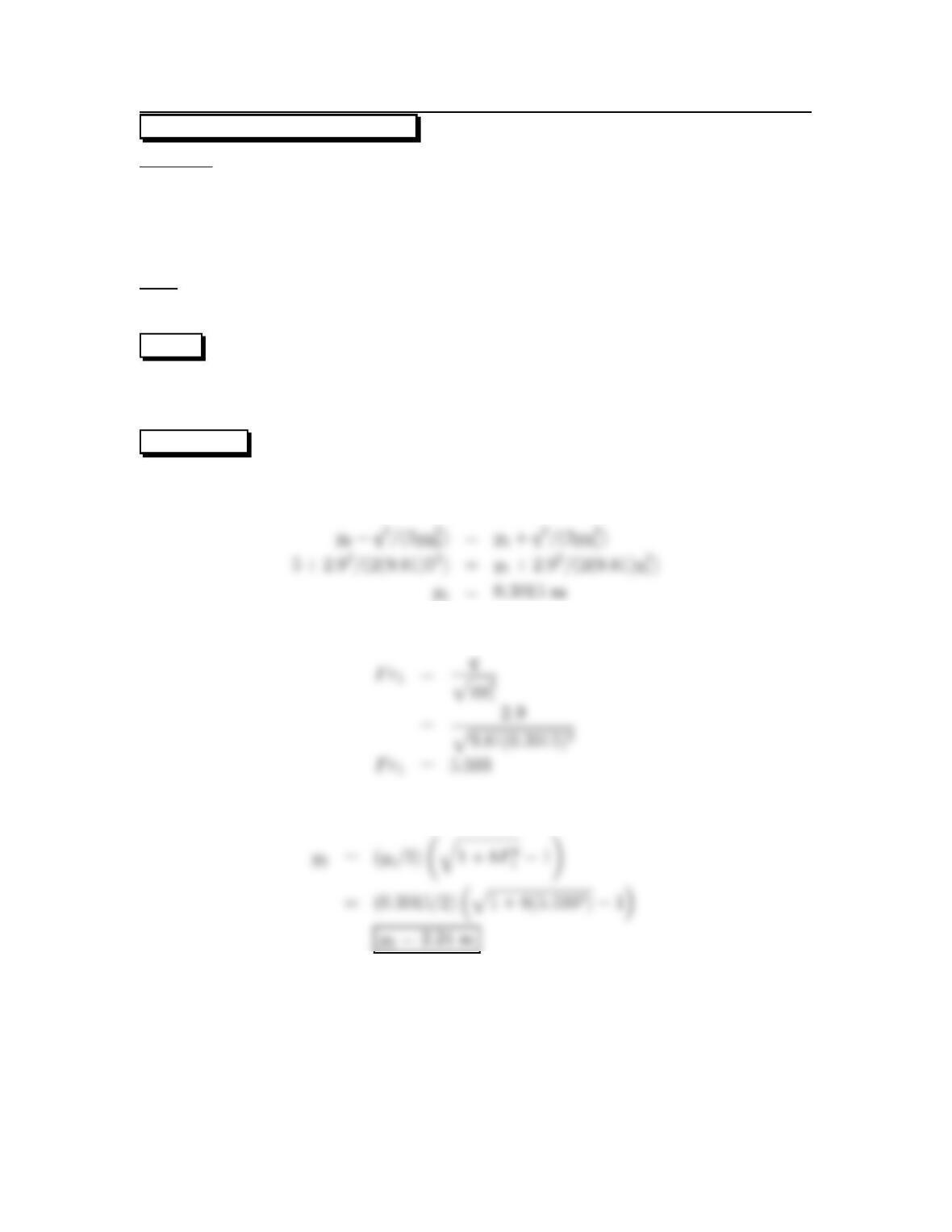
Apply the specific energy equation to calculate y1. Then calculate Froude number
in order to apply the Hydraulic jump equation.
SOLUTION
SpecificEnergy
Froude number
Hydraulic jump equation
57
15.52: PROBLEM DEFINITION
Situation:
Water flowsoutasluicegate
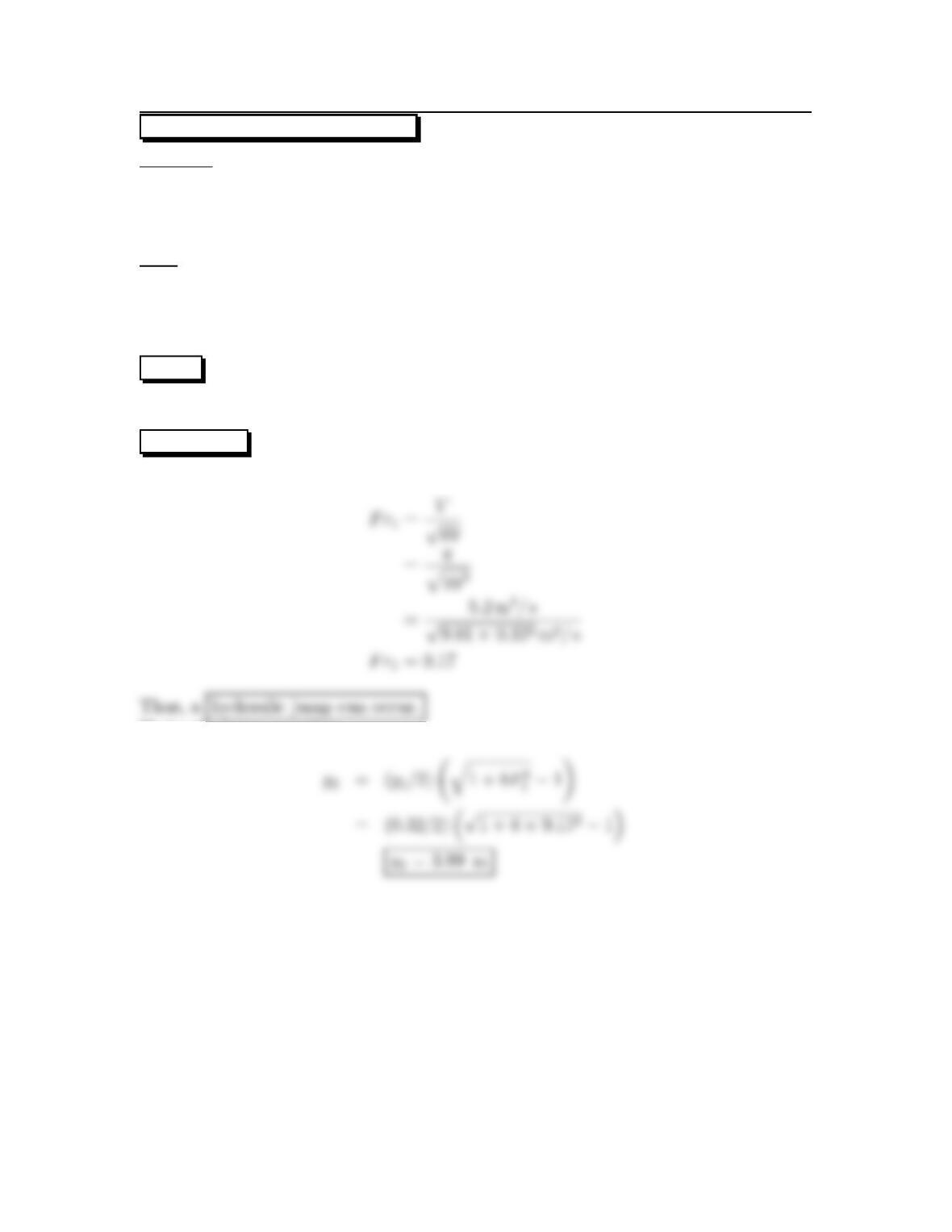
Depth = 32 cm
Q=5.2 m3/s per meter
Find:
(a) Determine if a hydraulic jump can exist.
(b) If the hydraulic jump can exist, calculate the depth downstream of the jump
(m).
PLAN
Calculate Froude number, then apply the hydraulic jump equation.
SOLUTION
Froude number
Hydraulic jump equation
58
15.53: PROBLEM DEFINITION
Situation:
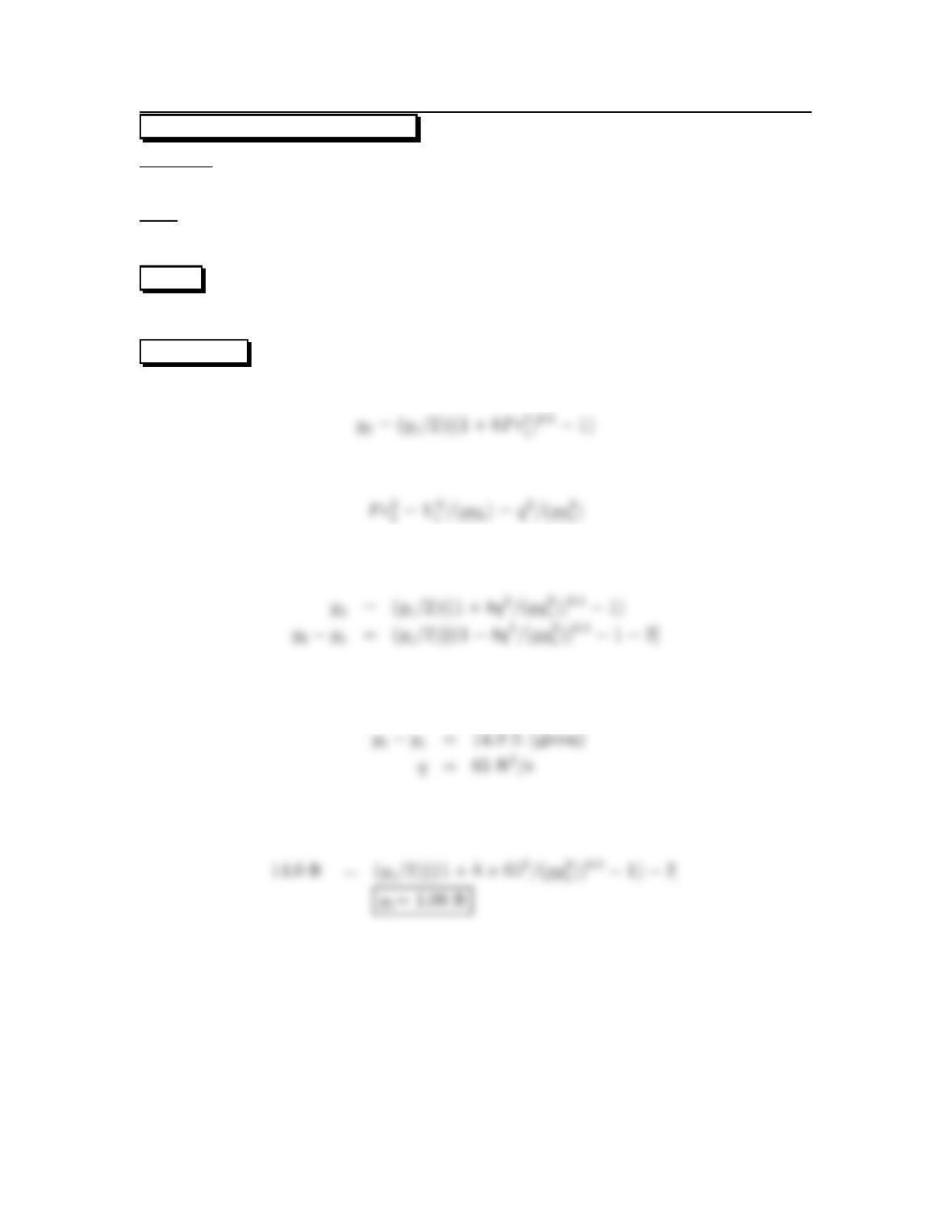
A hydraulic jump is described in the problem statement.
Find:
Depth upstream of the hydraulic jump (ft).
PLAN
Apply the hydraulic jump equation.
SOLUTION
Hydraulic jump equation
whereFroudenumber
Then
However
Therefore
59
15.54: PROBLEM DEFINITION
Situation:
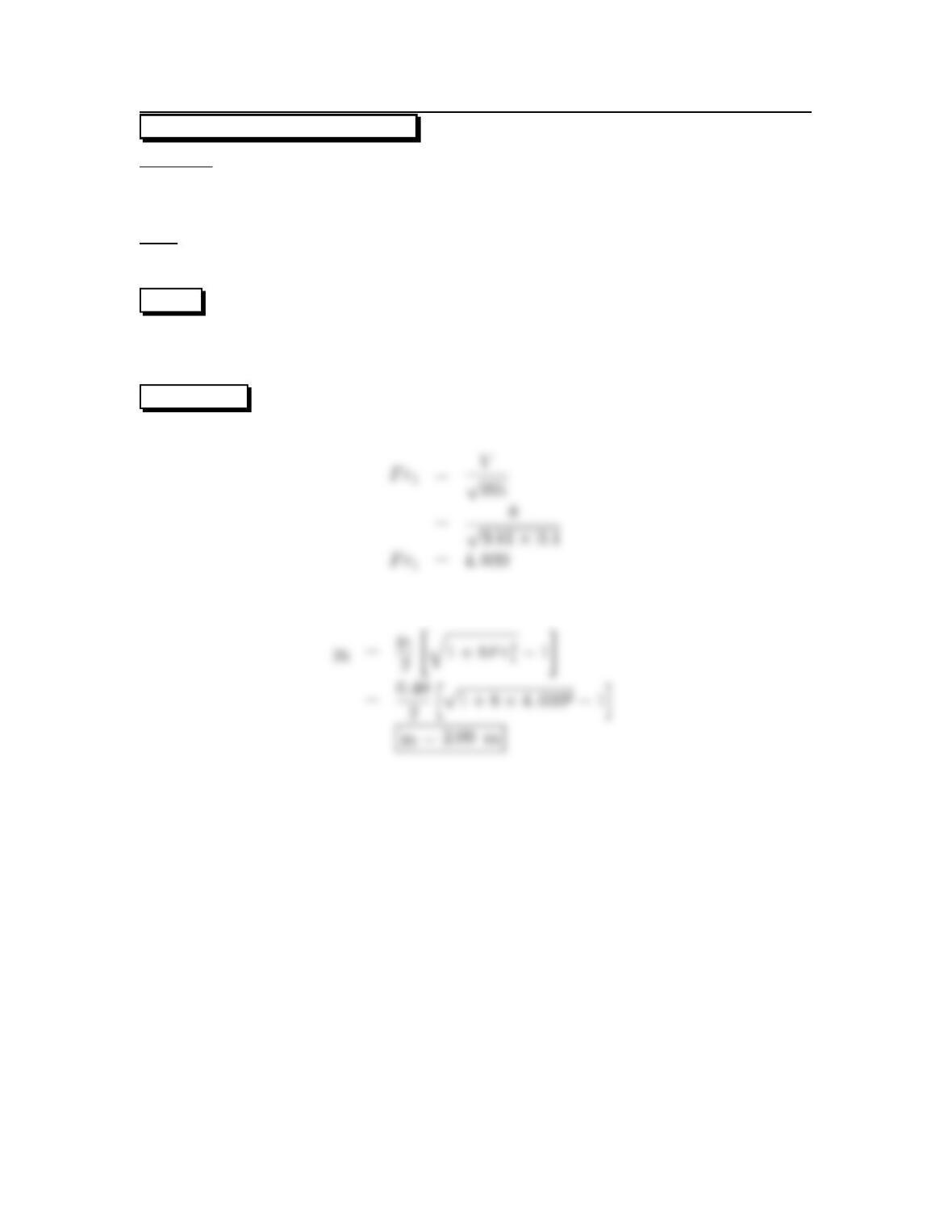
An obstruction in a channel causes a hydraulic jump.
On the upstream side of the jump: V1=8m/s,y1=0.40 m.
Find:
Depth of flow downstream of the jump (m).
PLAN
Calculate the upstream Froude number. Then apply the Hydraulic jump equation
to find the downstream depth.
SOLUTION
Froude number
Hydraulic jump equation
60