15.55: PROBLEM DEFINITION
Situation:
A hydraulic jump is described in the problem statement.
γ=9,810 N/m2,B
3=5m.
y1=40cm =0.40 m, V=10m/s.
Find:
Depth of flow downstream of jump (m).
SOLUTION
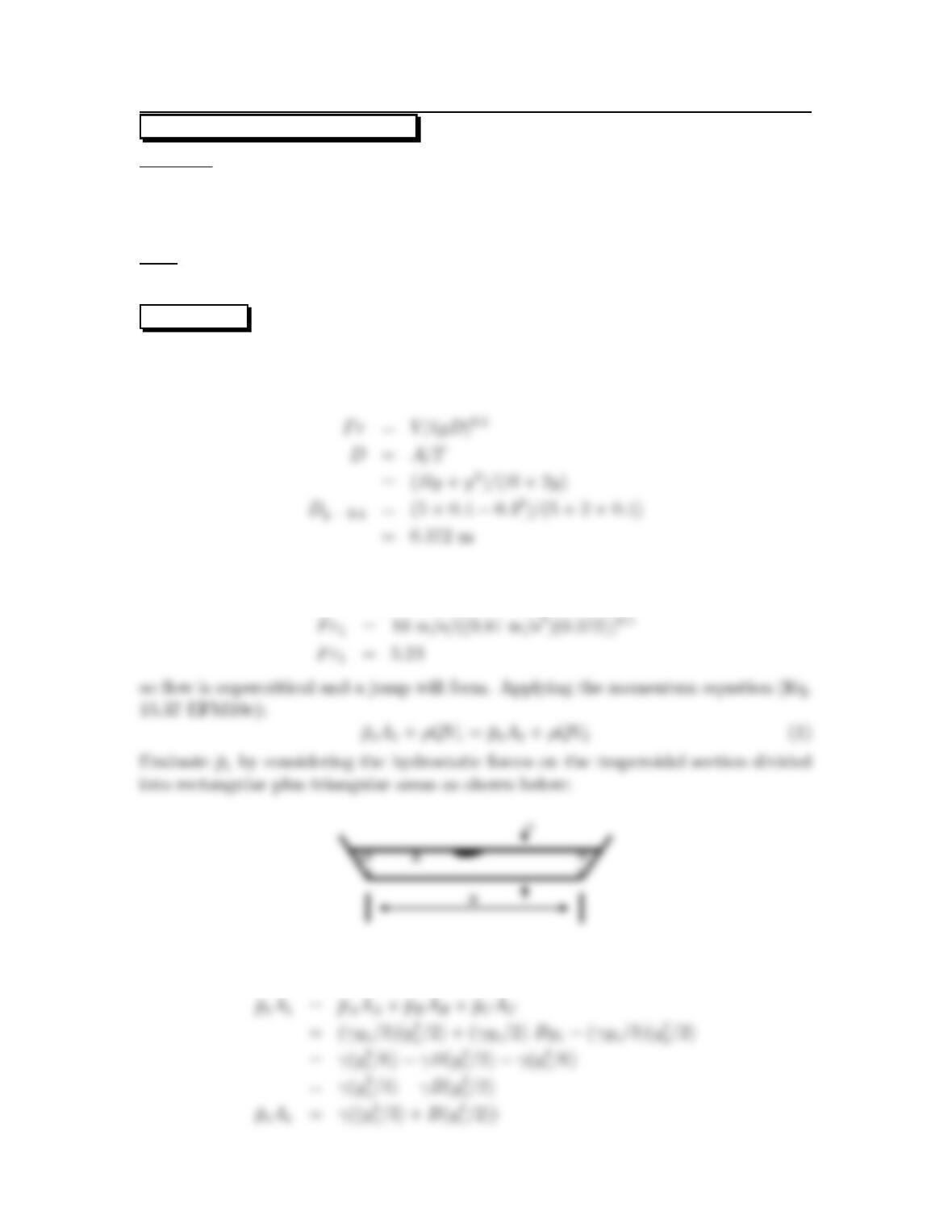
Check Fr upstream to see if the flow is really supercritical flow. Then apply the
momentum principle.
Then
Then
61
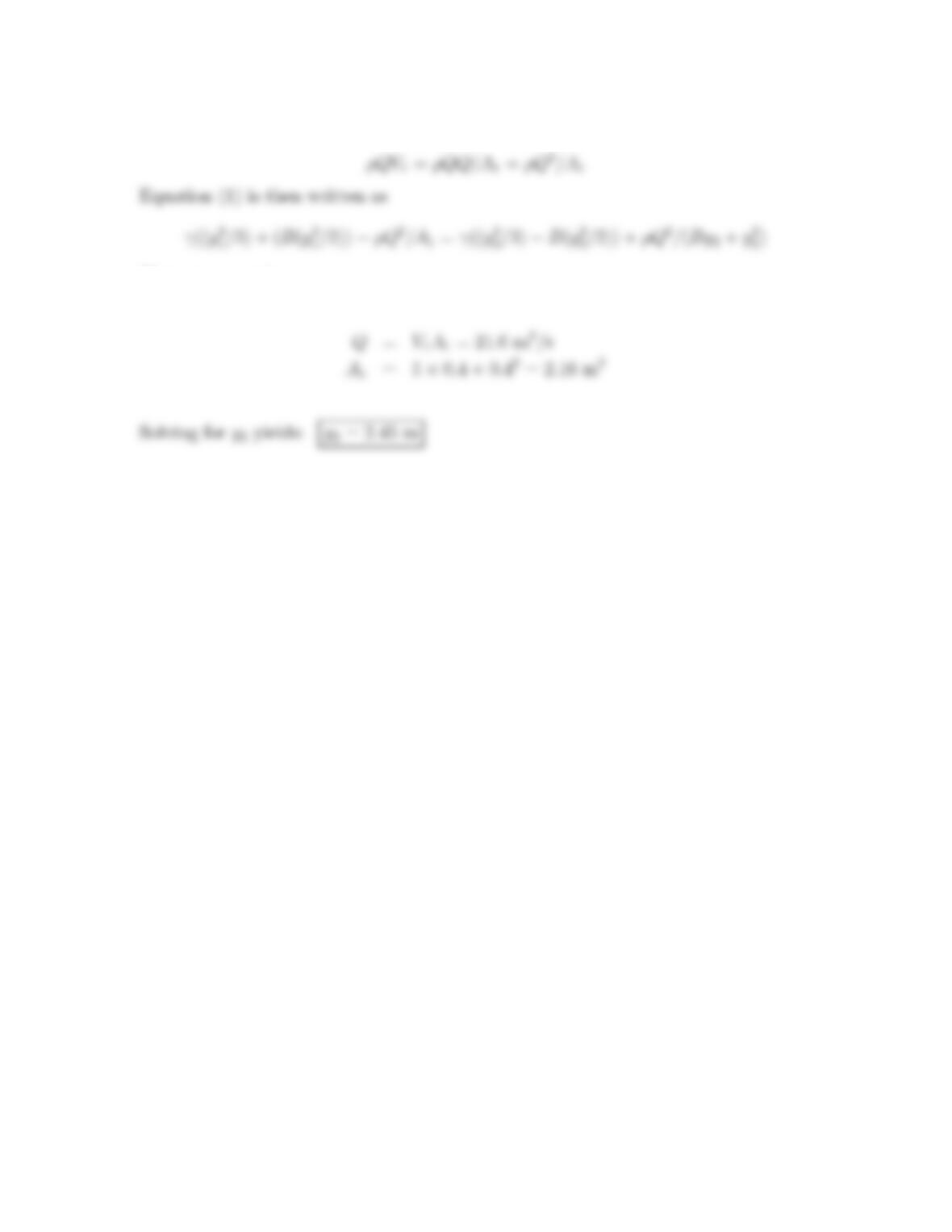
Also
Flow rate equation
62
15.56: PROBLEM DEFINITION
Situation:
A hydraulic jump occurs in a wide rectangular channel.
The upstream depth is y1=0.5ft.
The downstream depth is y2=10ft.
Find:
Discharge per foot of width of channel ¡ft3/s/ft¢.
PLAN
Apply the Hydraulic jump equation to solve for the Froude number. Next, use the
value of the Froude number to solve for the discharge q.
SOLUTION
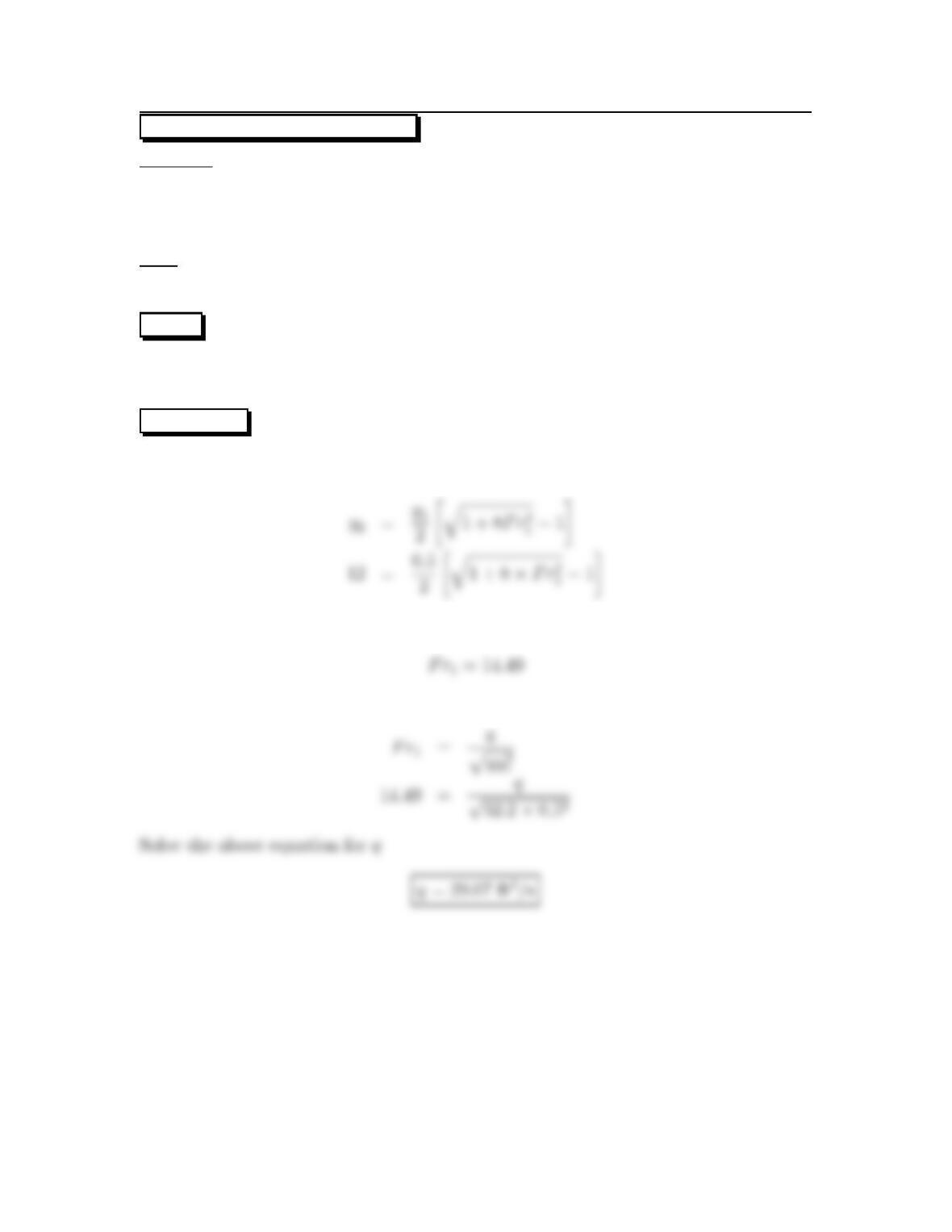
Hydraulic jump equation
Solve the above equation for Froude number.
Froude number
63
15.57: PROBLEM DEFINITION
Situation:
A rectangular channel has three different reaches–additional details are provided
in the problem statement.
Find:
(a) Calculate the critical depth and normal depth in reach 1 (ft).
(b) Classify the flow in each reach (subcritical, critical or supercritical).
(c) For each reach, determine if a hydraulic jump can occur.
PLAN
Apply the critical depth equation. Determine jump height and location by applying
the hydraulic jump equation.
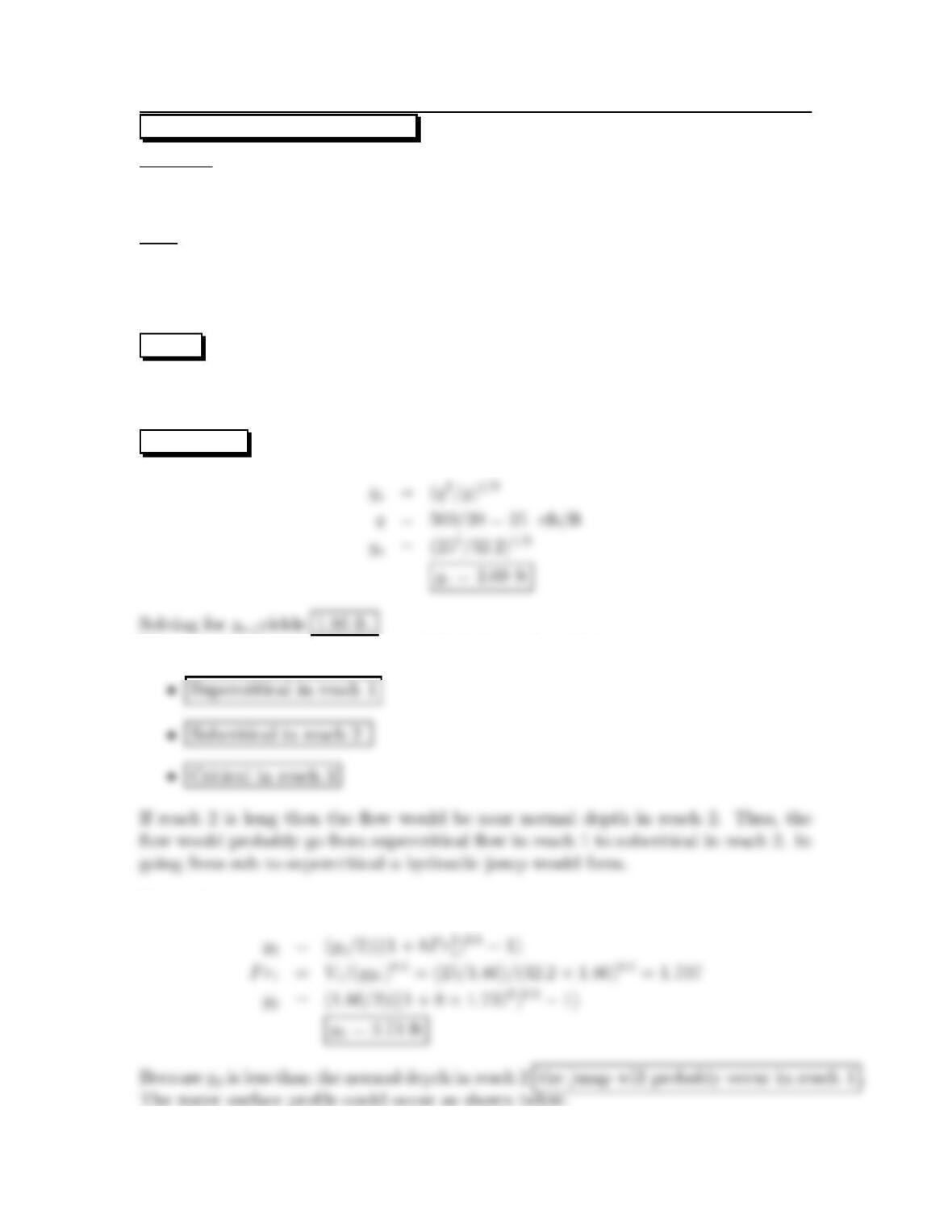
SOLUTION Critical depth equation
Thus one concludes that the normal depth in each reach is
Hydraulic jump equation
64
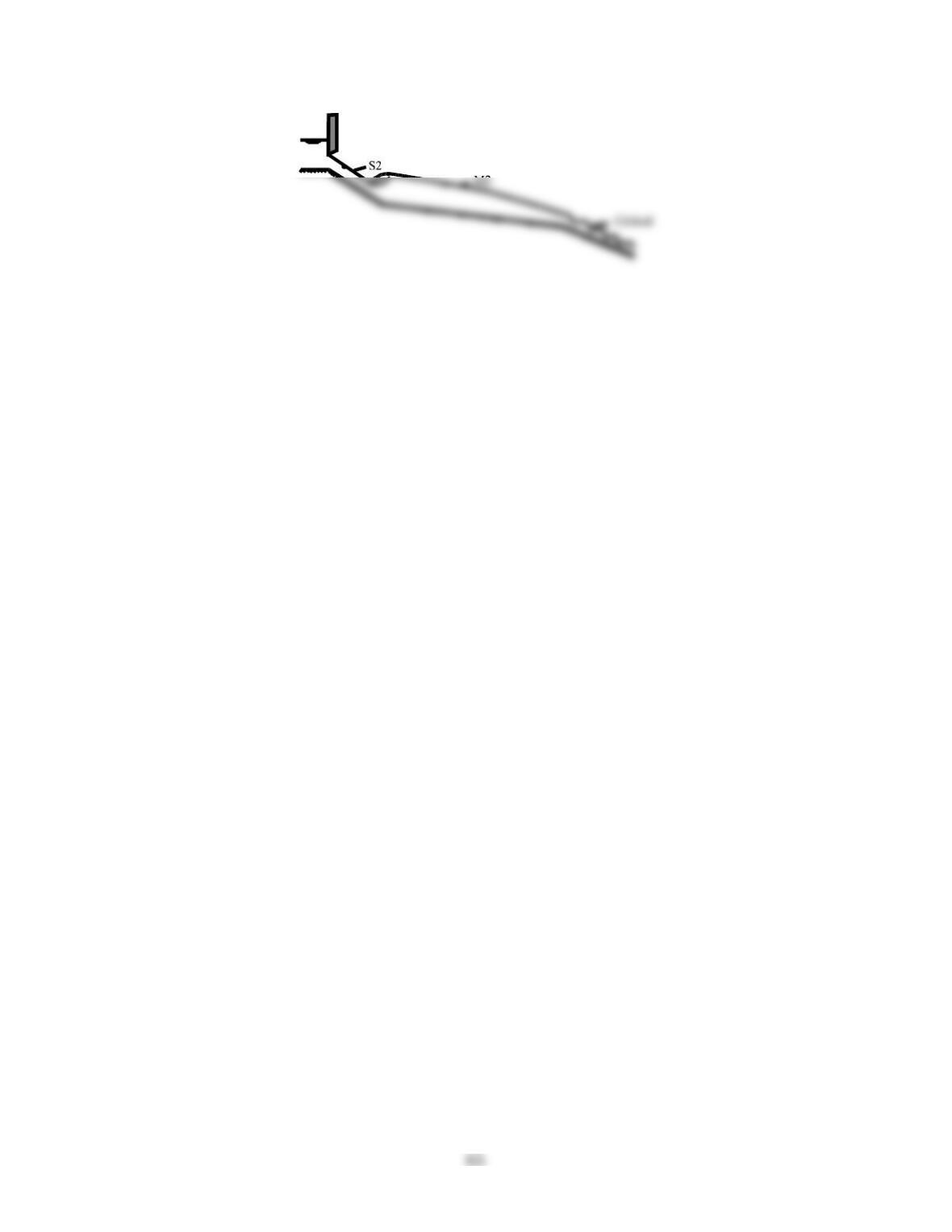
15.58: PROBLEM DEFINITION
Situation:
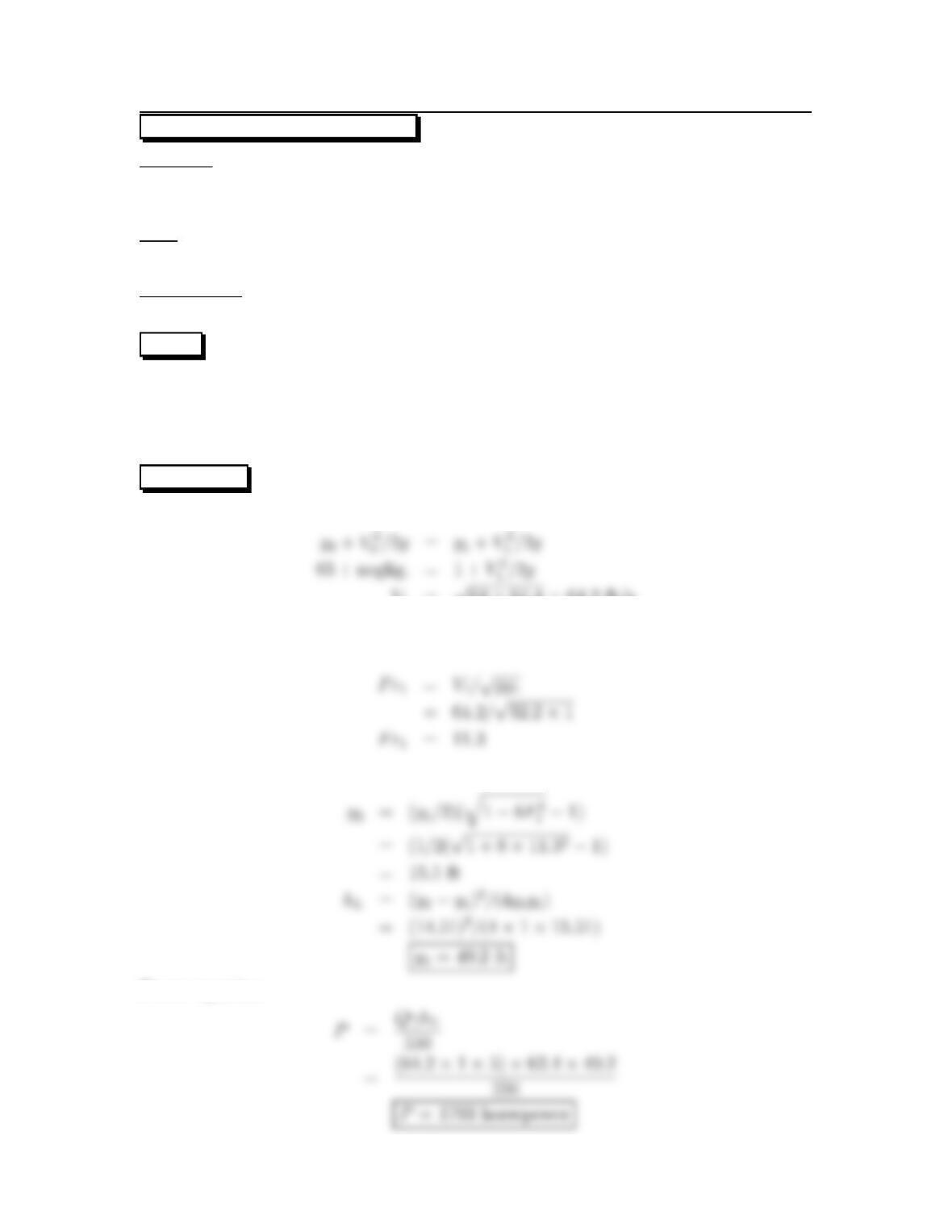
Water flows out a sluice gate and then over a free overfall–additional details are
provided in the problem statement.
Find:
(a) Determine if a hydraulic jump will form.
(i) If a jump forms, locate the position.
(ii)If a jump does not form, sketch the full profile and label each part.
(b) Sketch the EGL
PLAN
Check Froude numbers. Then determine y1for a y2of 1.1 m by applying the hydraulic
jump equation.
SOLUTION Froude number
A hydraulic jump will form because flow goes from supercritical to subcritical.
Hydraulic jump equation
Therefore the jump will start at about the 29 m distance downstream of the sluice
gate. Profile and energy grade line:
66
15.59: PROBLEM DEFINITION
Situation:
Water flows out of sluice gate and then through a hydraulic jump–additional
details are provided in the problem statement.
Find:
Horsepower lost in hydraulic jump (hp).
Assumptions:
Negligible energy loss for flow under the sluice gate.
PLAN
Apply the Bernoulli equation from a location upstream of the sluice gate to a location
downstream. Then, calculate the Froude number and apply the equations that govern
a hydraulic jump. Calculate the power using P=QγhL/550, where the number
“550” is a unit conversion.
SOLUTION
Bernoulli equation
V1=√64 ×64.4=64.2ft/s
Froude number
Hydraulic jump equations
Power equation
67

15.60: PROBLEM DEFINITION
Situation:
Water flows in a rectangular channel.
A sill installed on the bottom of the channel forces a hydraulic jump to occur.
Additional details are provided in the problem statement.
channel width = 8 m
y1=32cm
Find:
Estimate the height of hydraulic jump (the height is the change in elevation of the
water surface) (m).
Assumptions:
n=0.012.
PLAN
Calculate Froude number in order to apply the Hydraulic jump equation.
SOLUTION
Froude number
Hydraulic jump equation
69
15.61: PROBLEM DEFINITION
Situation:
Water flows in a rectangular channel.
A sill installed on the bottom of the channel forces a hydraulic jump to occur.
Additional details are provided in the problem statement.
Find:
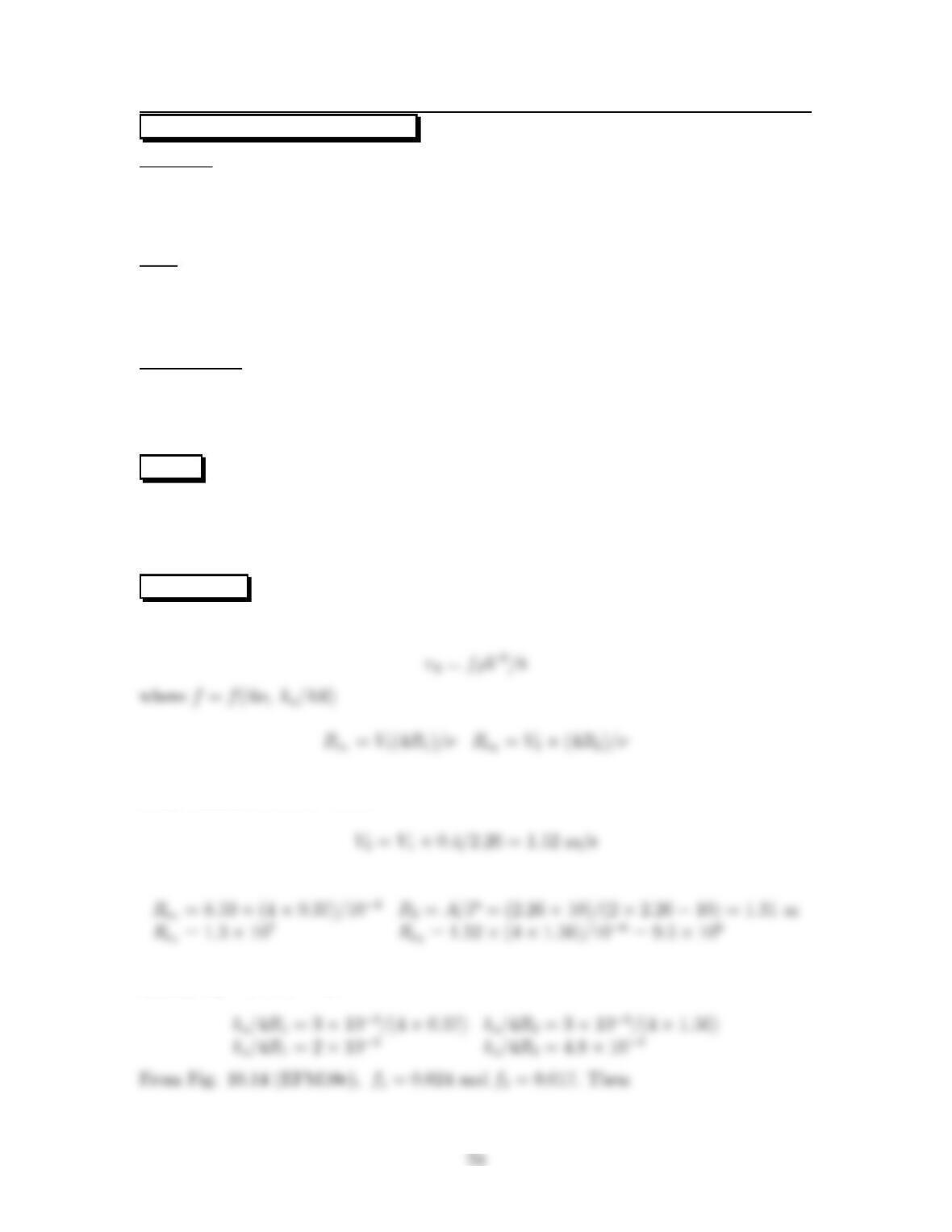
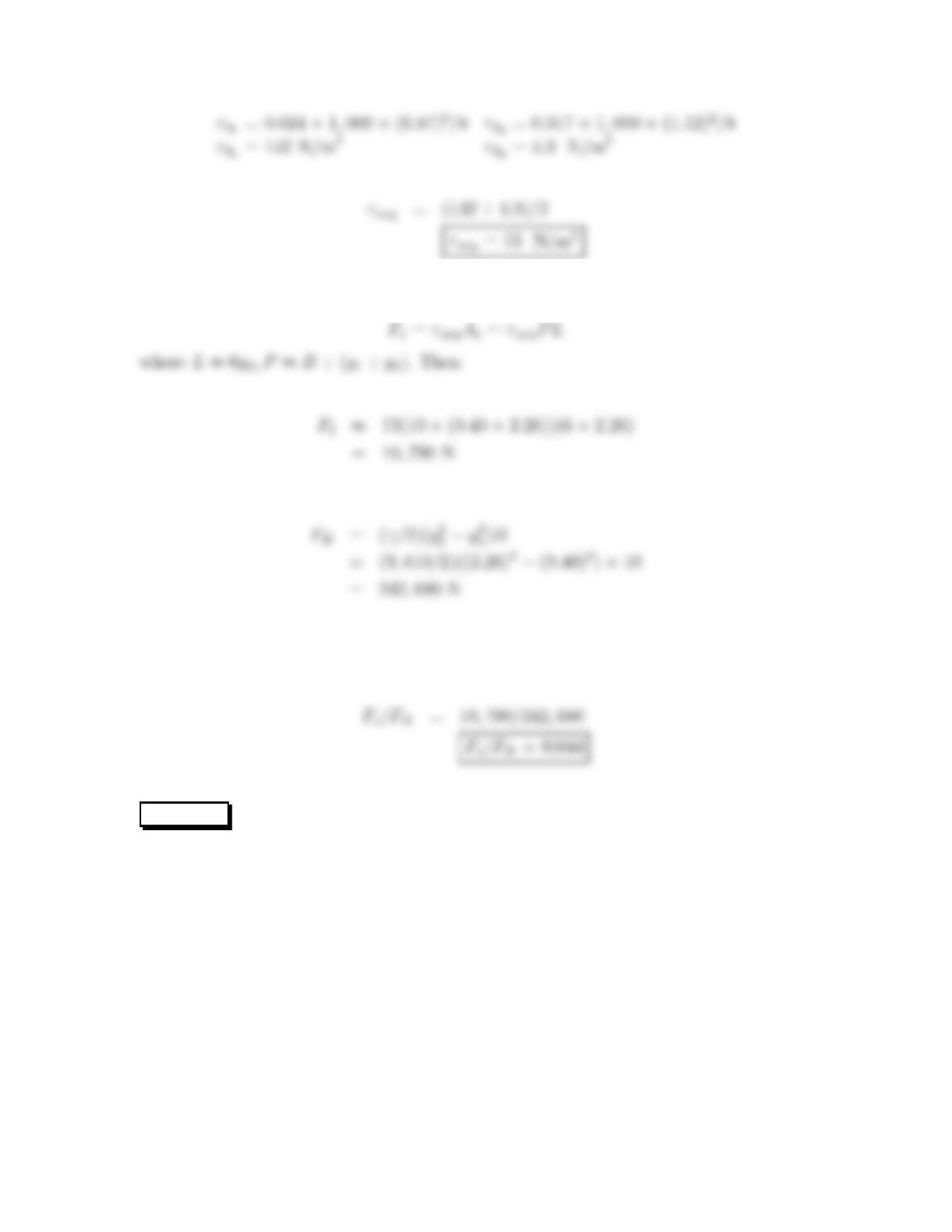
(a) Estimate the shear force associated with the jump (N/m2).
(b) Calculate the ratio Fs/FH,whereFsis shear force and FHis the net hydrostatic
force acting on the jump.
Assumptions:
(a) The shear stress will be the average of τ01(associated with uniform flow ap–
proaching the jump), and τ02(associated with uniform flow leaving the jump).
(b) The flow may be idealized as normal flow in a channel.
PLAN
Apply the local shear stress Equation (10.11, EFM10e) and calculate the Reynolds
numbers. Then find V2by applying the same solution procedure from Problem 15.60
(EFM10e). Then estimate the total shear force by using an average shear stress.
SOLUTION
Local shear stress
From solution to Prob. 15.60
Assume ks=3×10⁻³m
Then
Thus
REVIEW
The above estimate is probably influenced too much by τ01because shear stress will
not be linearly distributed. A better estimate might be to assume a linear distribution
of velocity with an average fand then integrate τ0dA from one end to the other.
71
15.62: PROBLEM DEFINITION
Situation:
Water flows out of a sluice gate–additional details are provided in the problem
statement.
Find:
(a) Determine the type of water surface profile that occurs downstream of the sluice
gate.
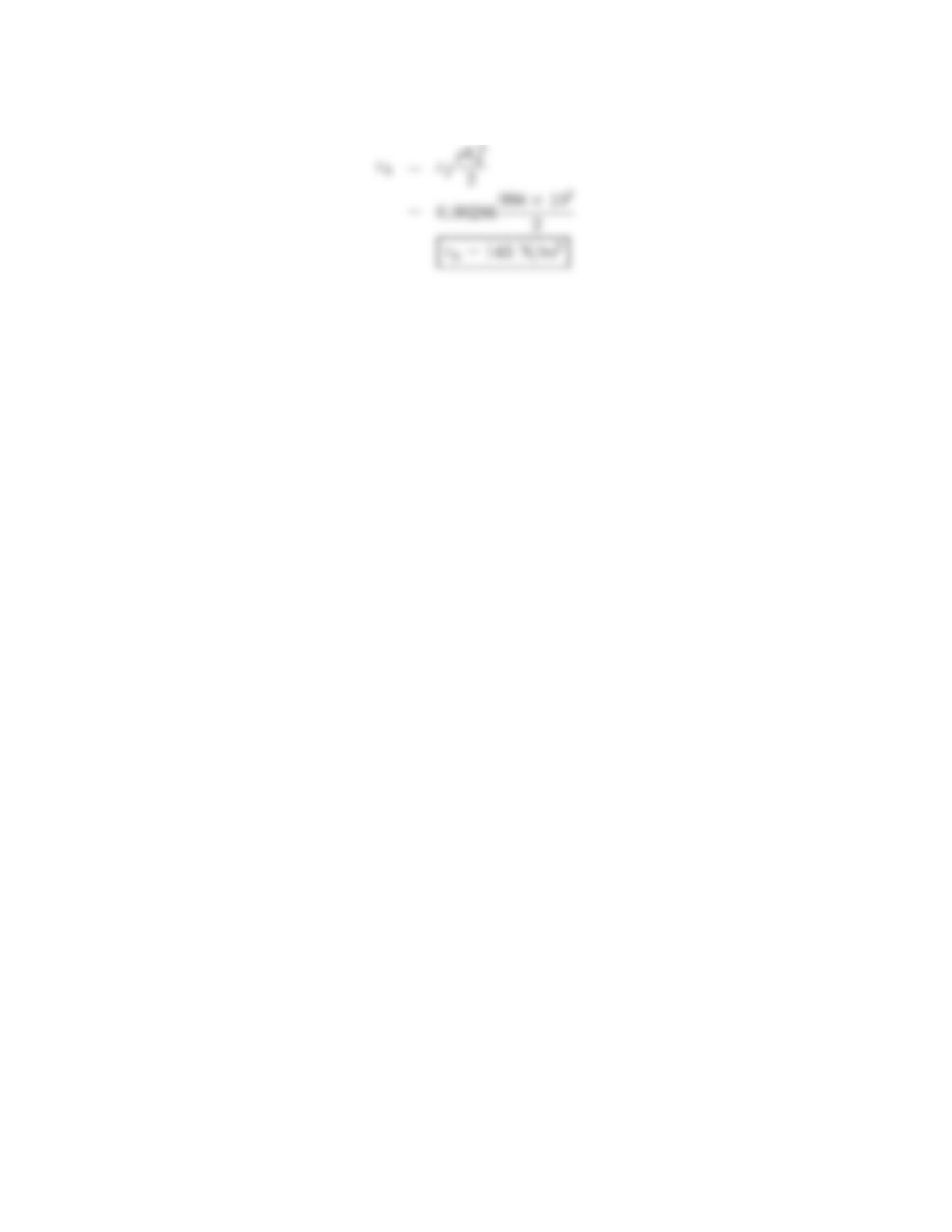
(b) Calculate the shear stress on bottom of the channel at a horizontal distance of
0.5 m downstream from the sluice gate (N/m2).
Assumptions:
The flow can be idealized as a boundary layer flow over a flat plate, with the leading
edge of the boundary layer located at the sluice gate.
PLAN
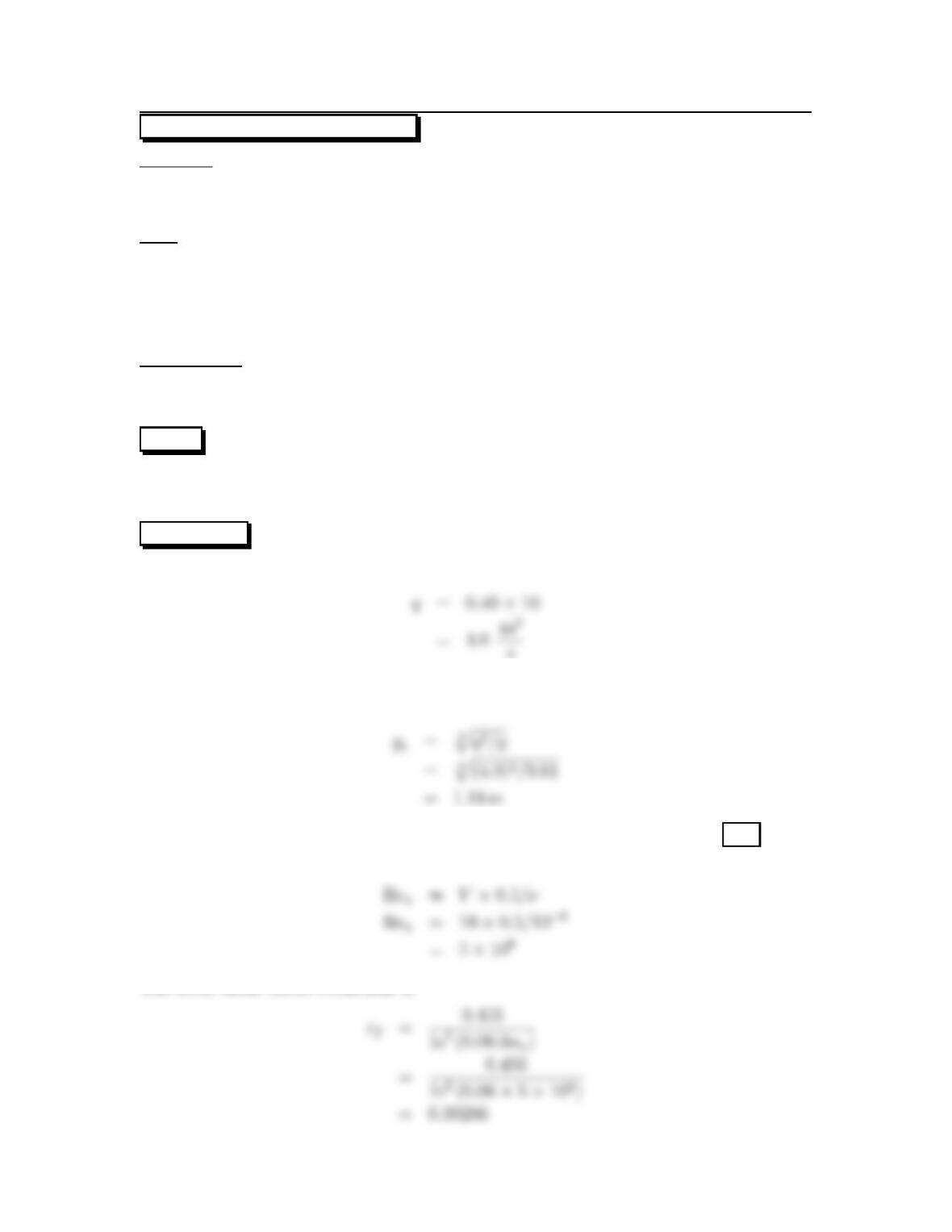
Apply the hydraulic jump equation by first calculating qapplying the flow rate equa–
tion. Then apply the local shear stress equation.
SOLUTION
Flow rate equation
s
Hydraulic jump equation
Then we have y<y
n<y
c; therefore, the water surface profile will be an S3.
Reynolds number
The local shear stress coefficient is
72
Local shear stress
73
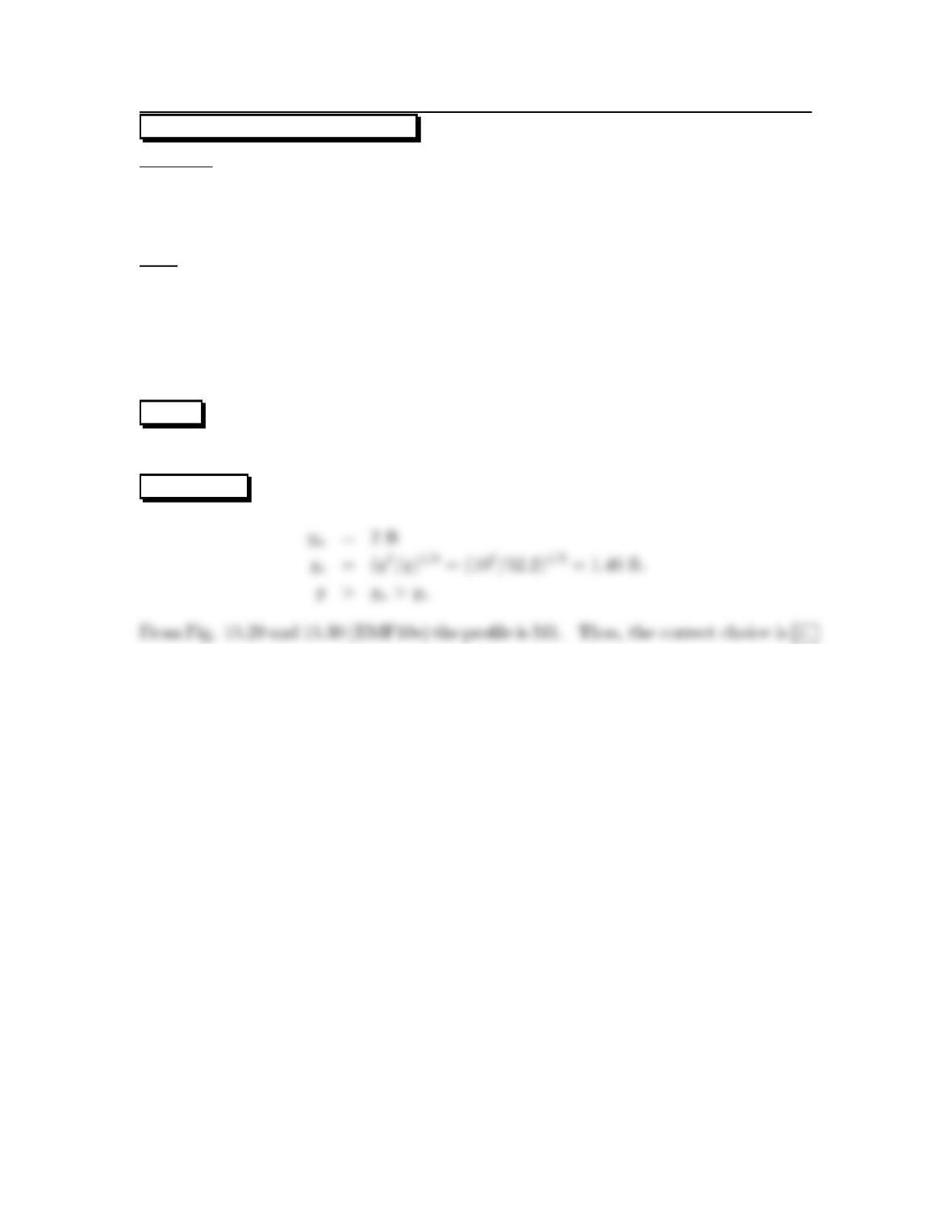
15.63: PROBLEM DEFINITION
Situation:
Water flows in a rectangular channel
Q=100ft3/s
yn=2ft yactual =4ft width = 10 ft
Find:
Classify the water surface profile as
a.) S1
b.) S2
c.) M1
d.) M2
PLAN
Use principles of water classification for gradually-varied flow
SOLUTION
74

15.64: PROBLEM DEFINITION
Situation:
Water surface is labeled with a question mark in figure in text.
Find:
Classify the water surface profile as one of the following:
a.) M2
b.) S2
c.) H2
d.) A2
PLAN
Use principles of water classification for gradually-varied flow
75
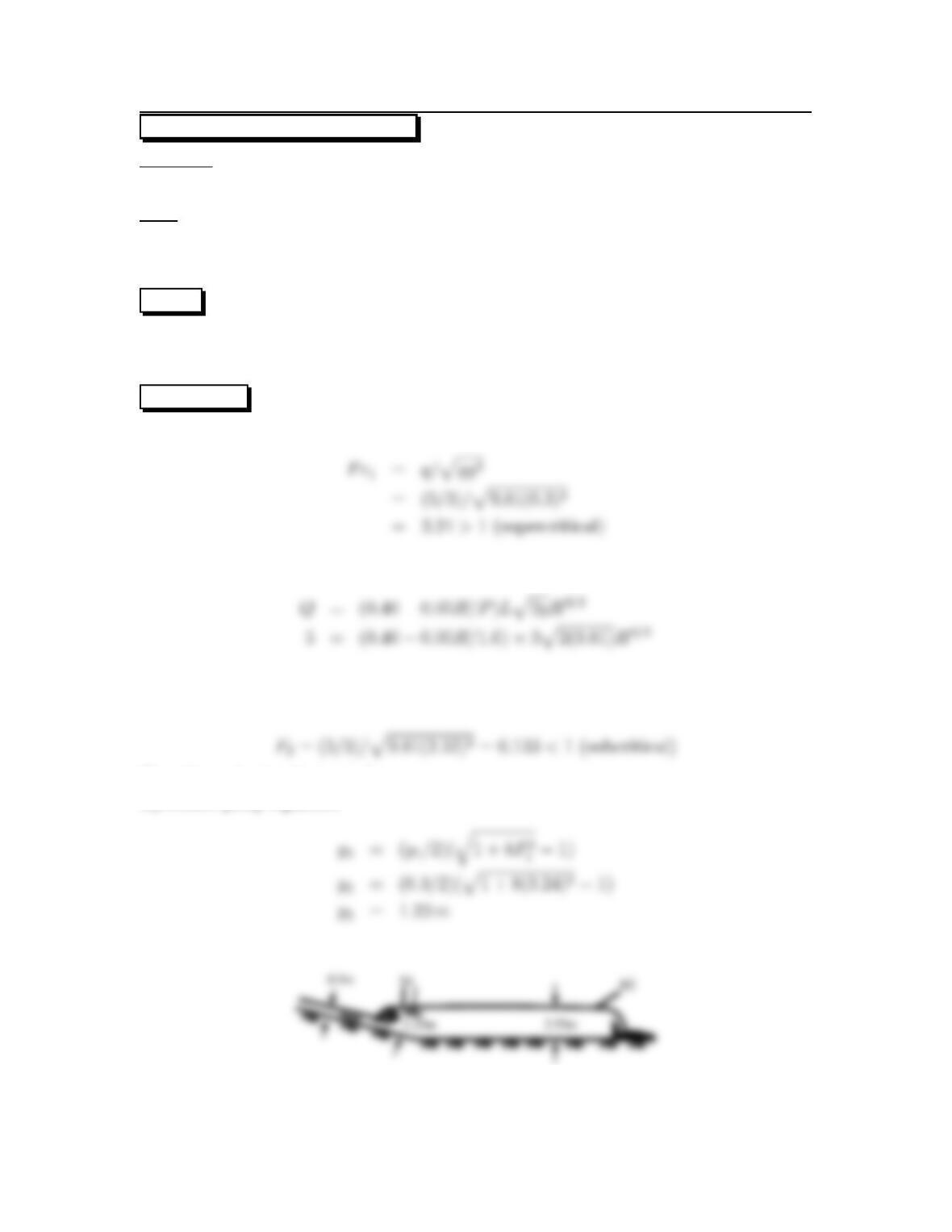
15.65: PROBLEM DEFINITION
Situation:
The problem statement shows a partial sketch of a water-surface profile.
Find:
(a) Sketch the missing part of the water profile.
(b) Identify the various types of profiles.
PLAN
Check the Froude number at points 1 and 2. Apply the Broad crested weir—Discharge
equation to calculate y2for the second Froude number.
SOLUTION
Froude number
Broad crested weir—Discharge equation
Solving by iteration gives H=0.917 m. Depth upstream of weir =0.917 + 1.6=2.52
m
Therefore a hydraulic jump forms.
Hydraulic jump equation
76