15.66: PROBLEM DEFINITION
Situation:
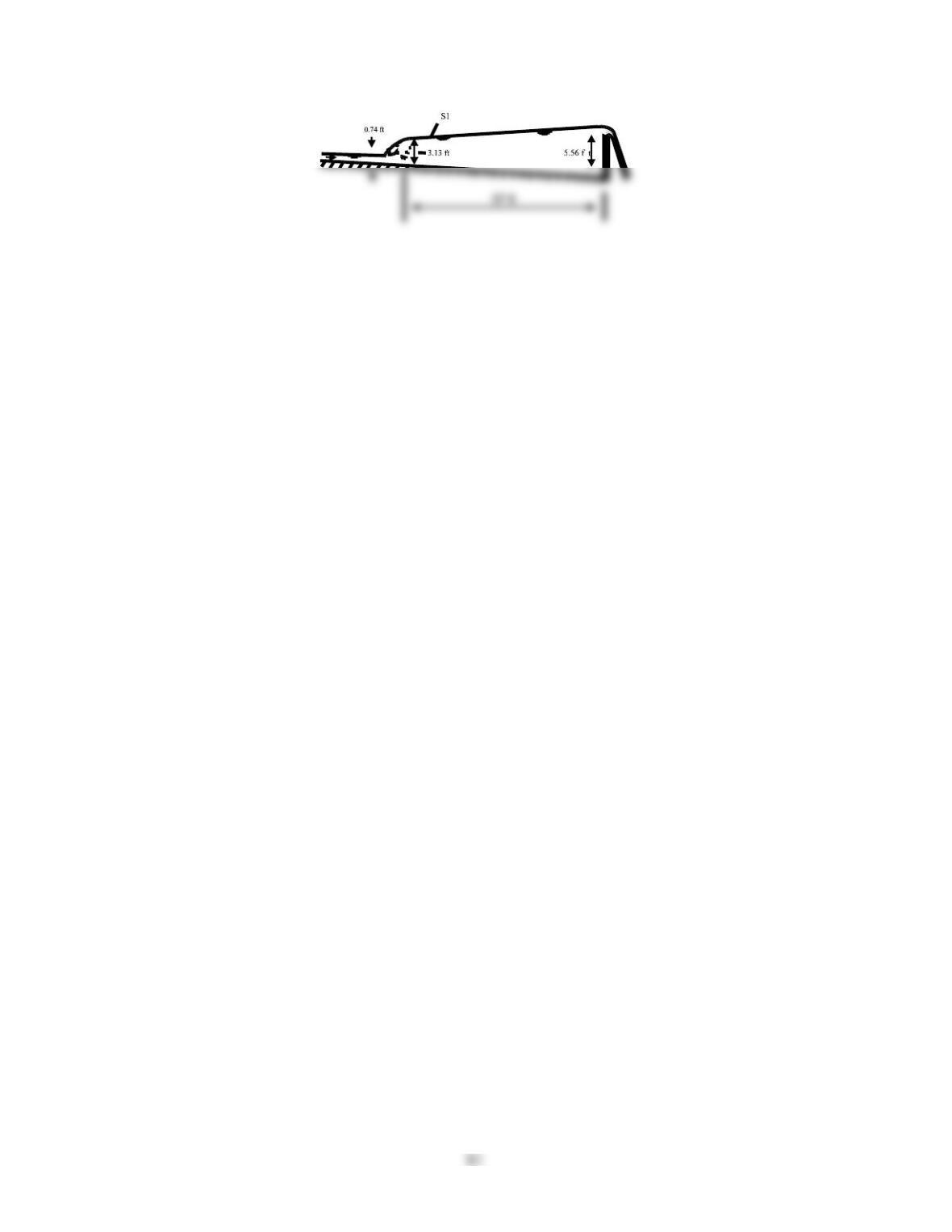
Rectangular channel ends with a free overfall
Channel is very long width = 10 ft So=.0001 Q=120cfs
One mile upstream the flow is uniform
Find:
Determine the classification of the water surface just before the brink of the overfall.
SOLUTION
The profile might be an Mprofile or an Sprofile depending upon whether the slope
is mild or steep. However, if it is a steep slope the flow would be uniform right to
the brink. Check to see if Mor Sslope. assume n=0.012
With b=10ft we can solve for yto obtain y=5.2ft.
Flow rate equation
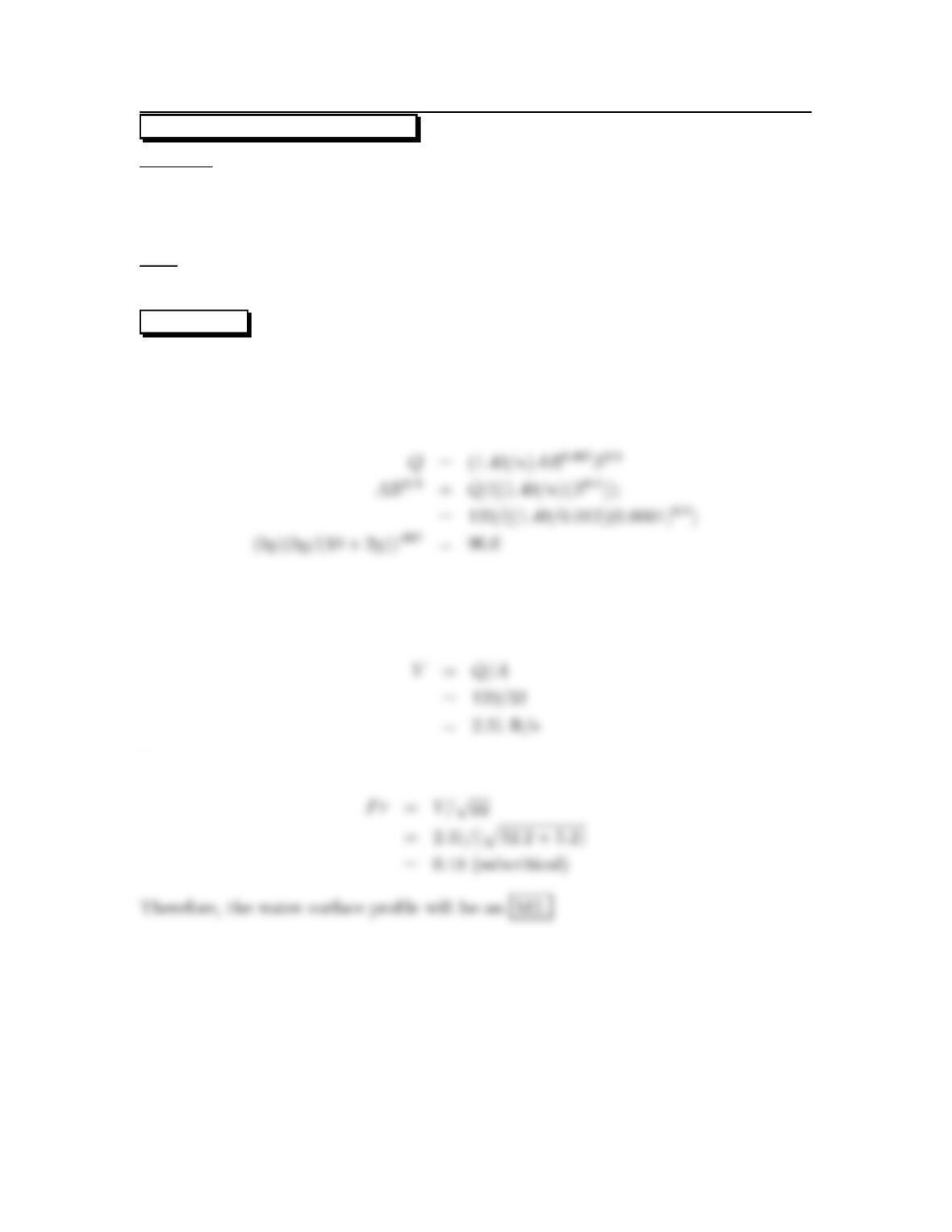
Froude numb er
77
15.67: PROBLEM DEFINITION
Situation:
Water flows out a sluice gate and thorough a rectangular channel.
A weir will be added to the channel.
Additional details are provided in the problem statement.
Find:
(a) Determine if a hydraulic jump will occur.
(b) If a jump form, calculate the location.
(c) Label any water surface profiles that may be classified.
SOLUTION
Rectangular weir equation
where K=0.40 + 0.05H/P. By trial and error (first assume Kthen solve for H,
etc.) solve for Hyield H=2.06 ft.
Flow rate equation
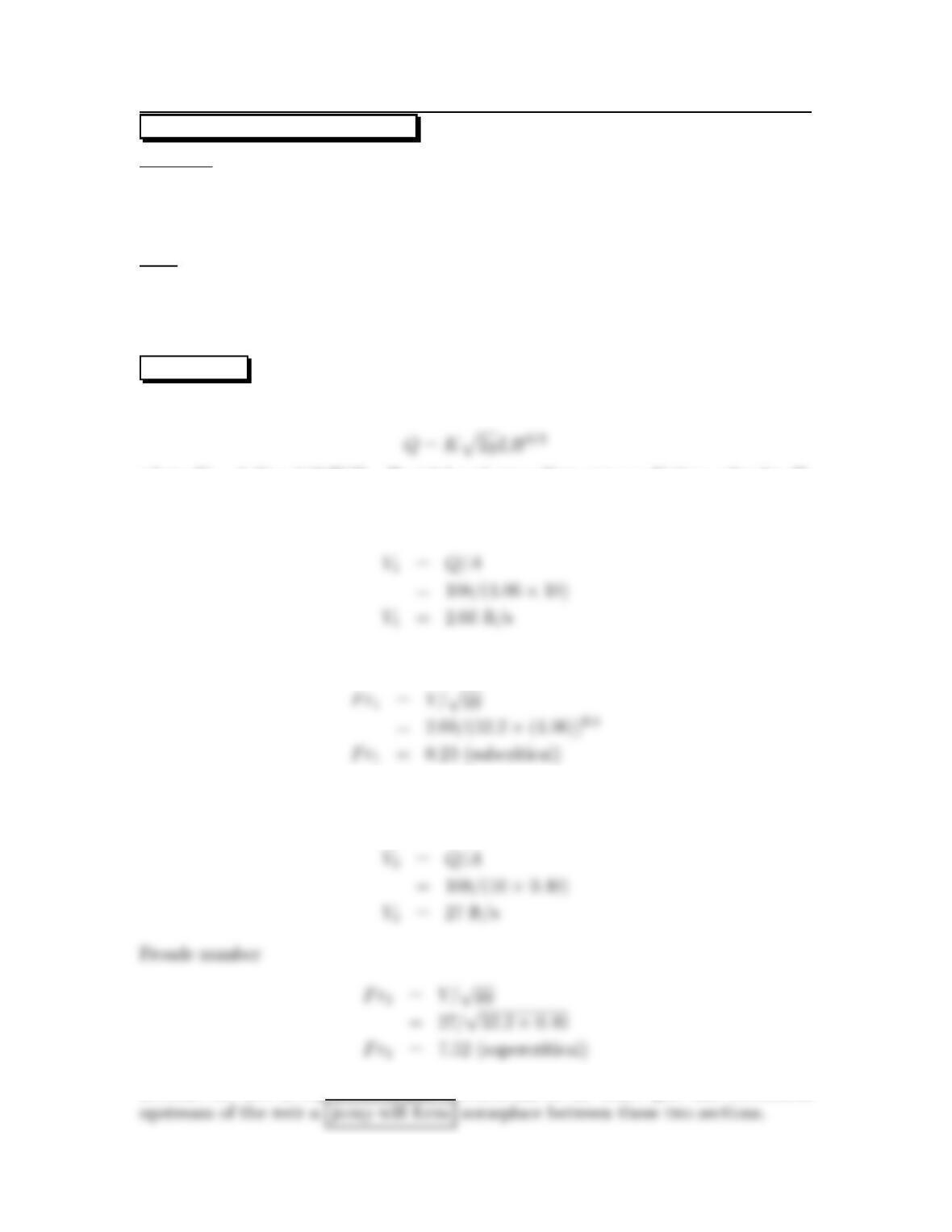
Froude numb er
The Froude number just downstream of the sluice gate will be determined:
Flow rate equation
Because the flow is supercritical just downstream of the sluice gate and subcritical
78
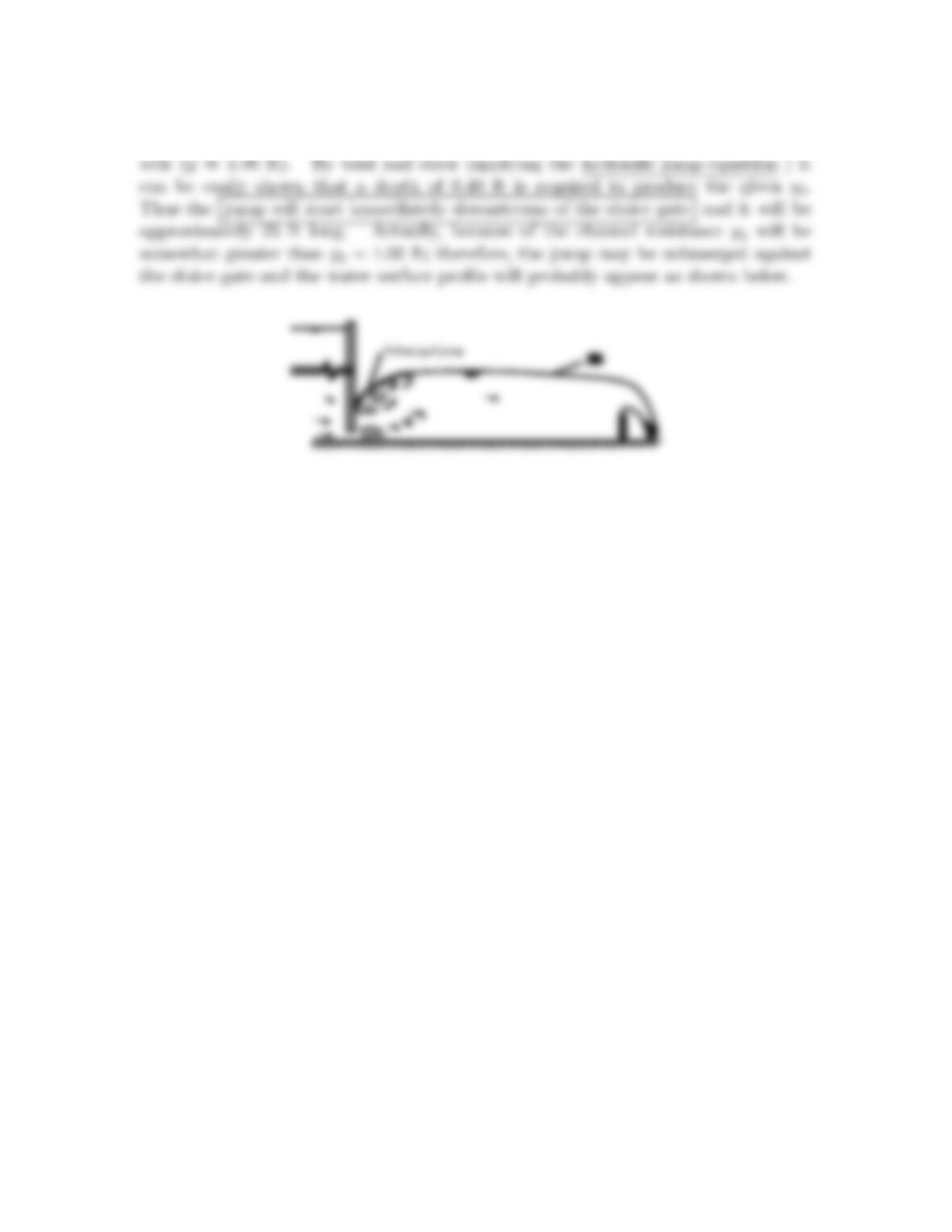
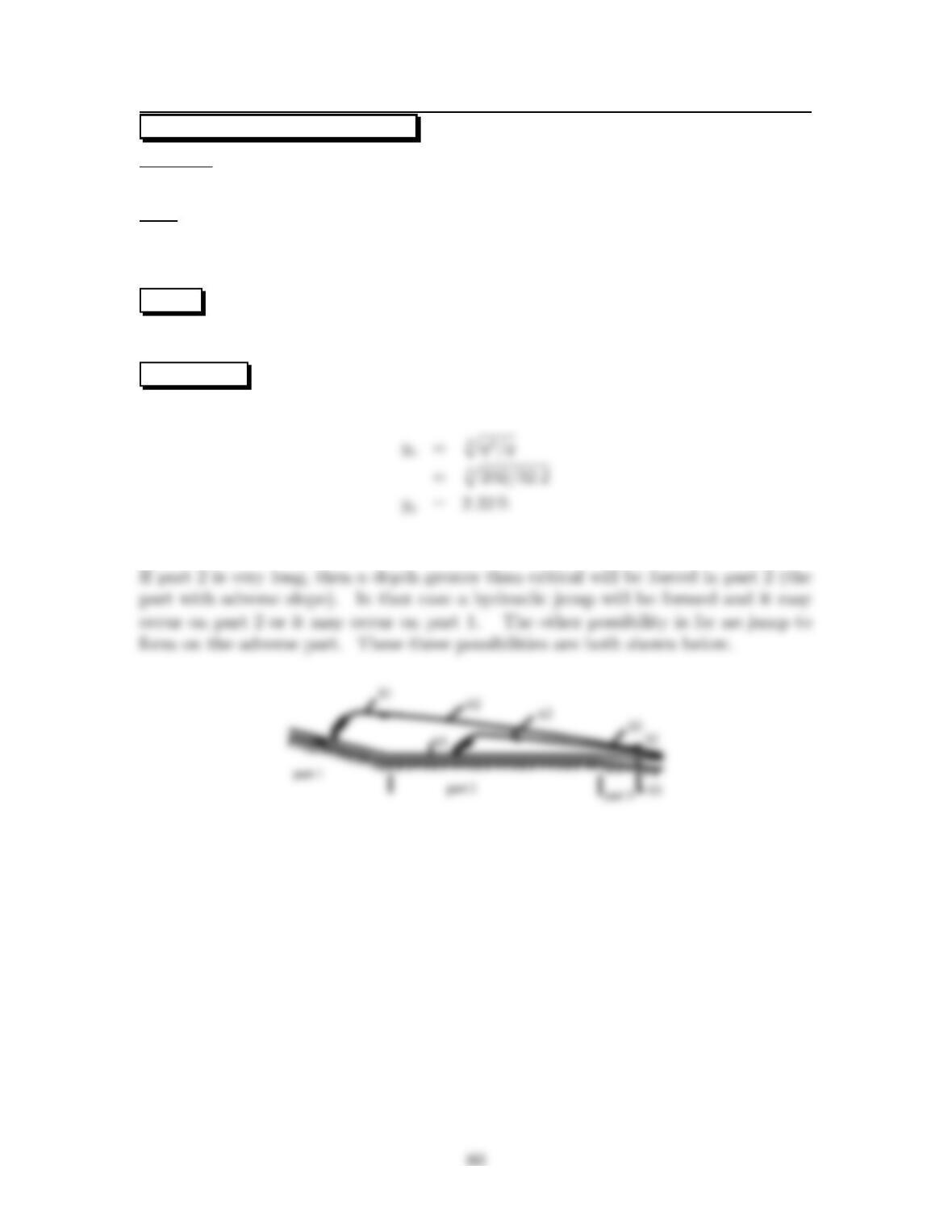
Now determine the approximate location of the jump. Let y2=depth downstream
of the jump and assume it is approximately equal to the depth upstream of the
79
15.68: PROBLEM DEFINITION
Situation:
A rectangular channel is described in the problem statement.
Find:
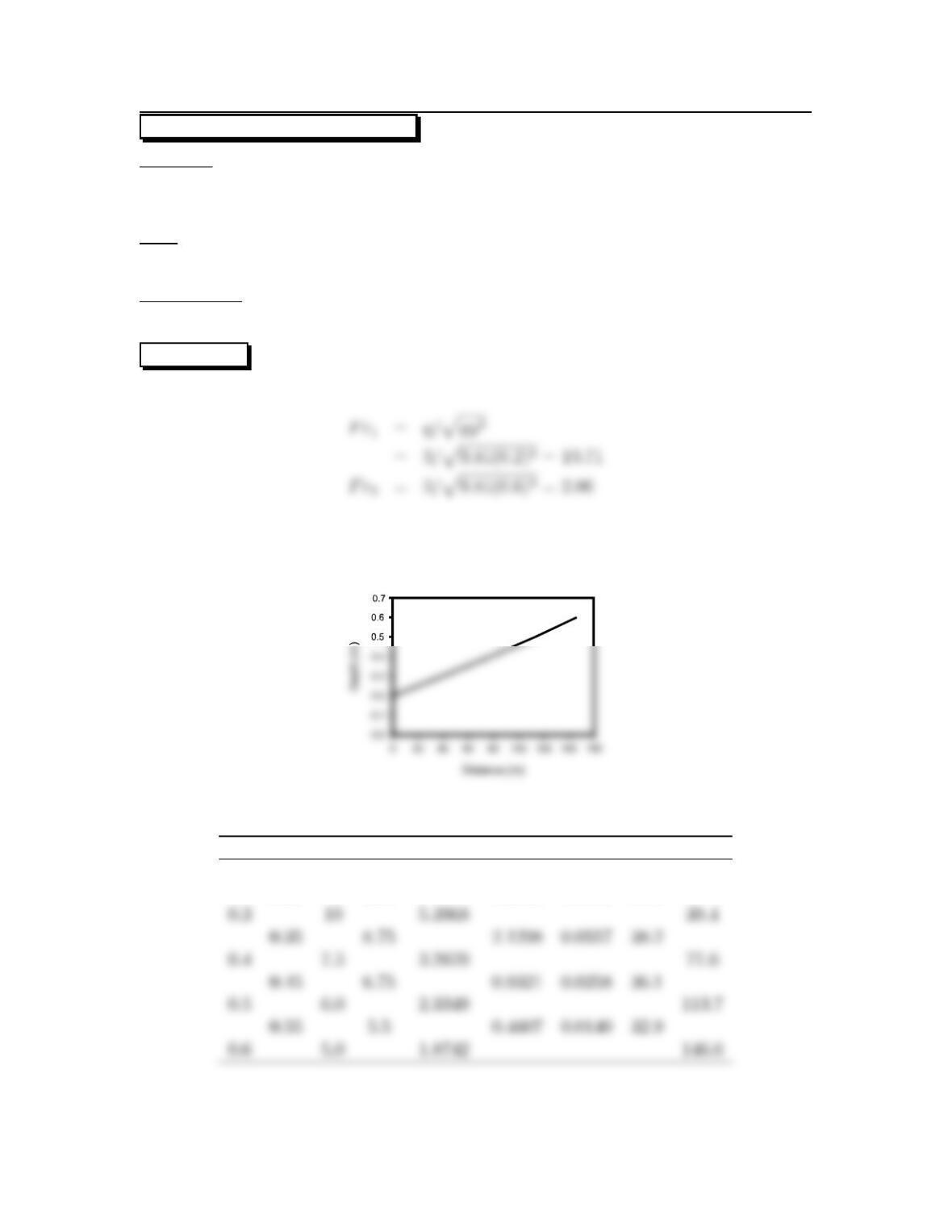
(a) Sketch all possible water-surface profiles.
(b) Label each part of the water-surface profile with its classification.
PLAN
Apply the critical depth equation to determine if a hydraulic jump will form.
SOLUTION
Critical depth equation
Thus the slopes in parts 1 and 3 are steep.
15.69: PROBLEM DEFINITION
Situation:
Water flow through a sluice gate and down a rectangular channel is described in
the problem statement.
Find:
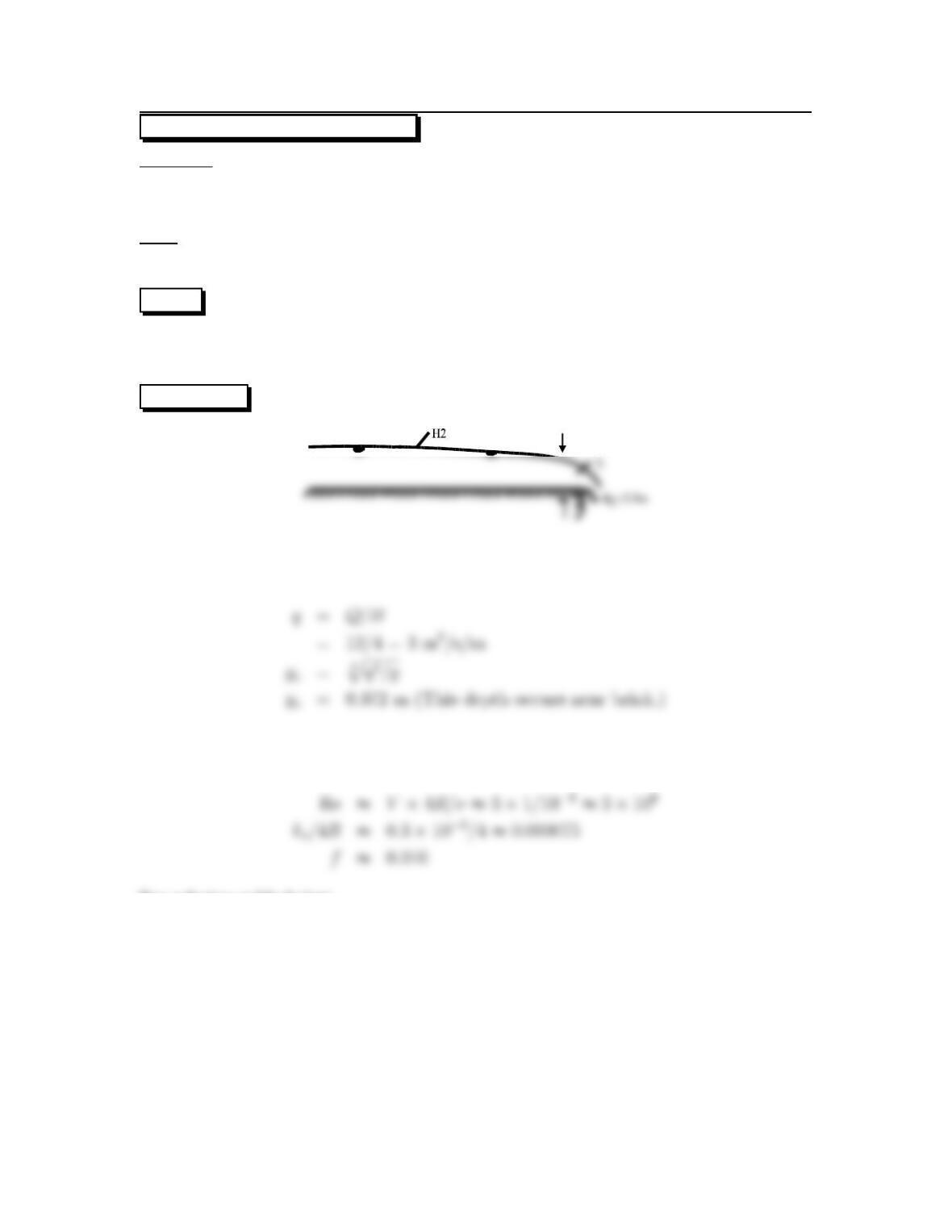
Sketch the water surface profile until a depth of 60 cm. is reached.
Assumptions:
The value of fis constant with a value of 0.02 (given).
SOLUTION
Froude numb er
Therefore the profile is a continuous H3profile.
y¯yV ¯
VE∆ES
f∆xx
0.2 15 11.6678 0
0.25 12.5 6.2710 0.1593 39.4
81
15.70: PROBLEM DEFINITION
Situation:
A horizontal channel ends in a free outfall–additional details are provided in the
problem statement.
Find:
Water depth 300 m upstream of the outfall (m).
PLAN
Apply the critical depth equation. Then carry out a step solution for the profile
upstream from the brink.
SOLUTION
Reynolds number
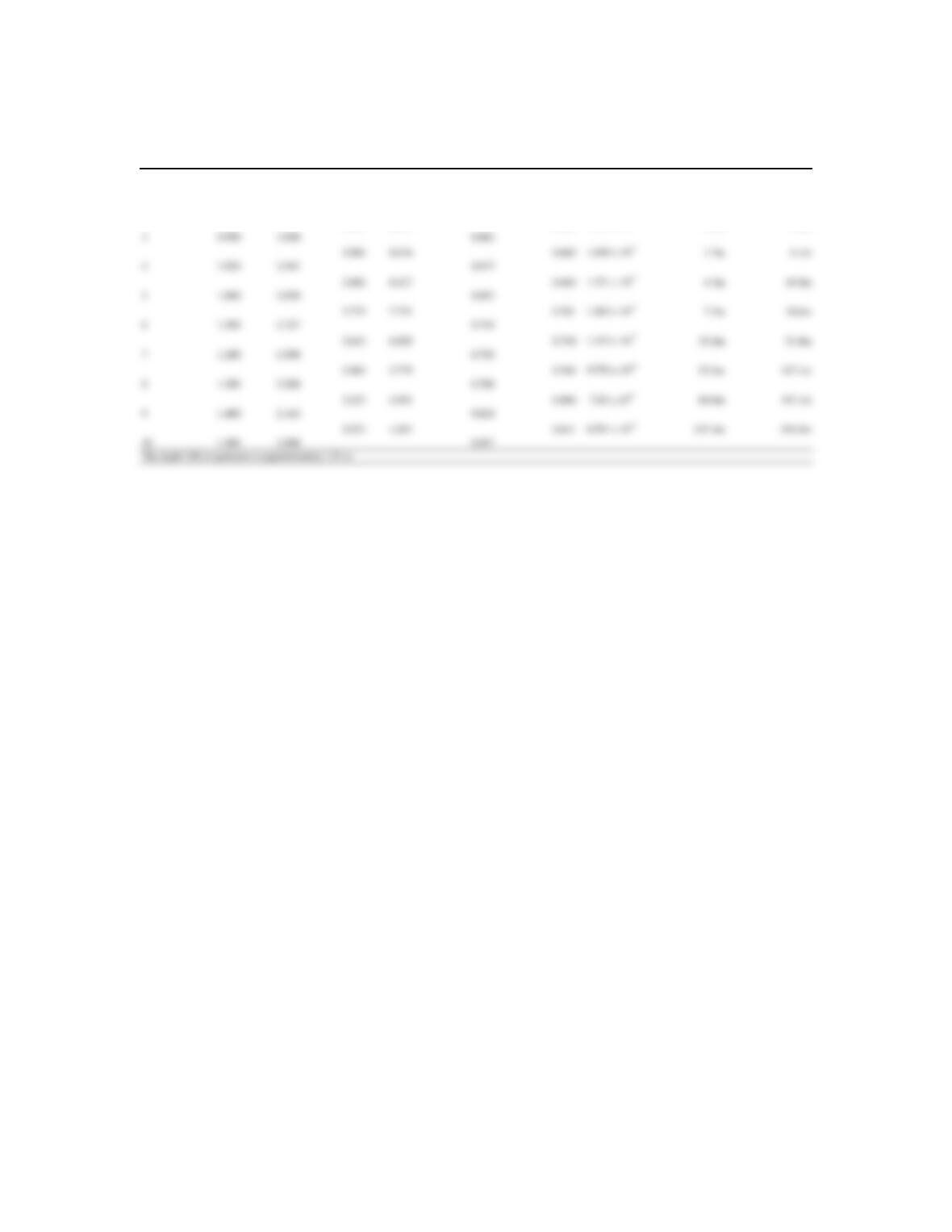
See solution table below.
82
Section number
upstream of yc
Depth
y,m
Velocity at
section V,m/s
Mean Velocity
in reach
(V1+V0)/2 V2
Hydraulic Radius
R=A/P,m
Mean Hydraulic
Radius
Rm=(R1+R2)/2
sf=fV2
mean/
8gRmean
Δx=((y2+V2
2/2g)-
(y1+V1/2g))/Sf
Distance upstream
from brink x,m
1 at y=yc0.972 3.086 0.654 3.9m
3.073 9.443 0.656 1.834 x 10⁻³ 0.1m 4.0m
2 0.980 3.060 0.658
3.045 9.272 0.660 1.790 x 10⁻³ 0.4m 4.4m
Solution Table for Problem 15.51
83
15.71: PROBLEM DEFINITION
Situation:
Water flows through a sluice gate, down a channel and across a hydraulic jump.
Additional details are provided in the problem statement.
Find:
(a) Determine the water-surface profile classification
i) Upstream of the jump.
ii) Downstream of the jump.
(b) Determine how the addition of baffleblockwilleffect the jump.
SOLUTION
Upstream of the jump, the profile will be an H3.
84
15.72: PROBLEM DEFINITION
Situation:
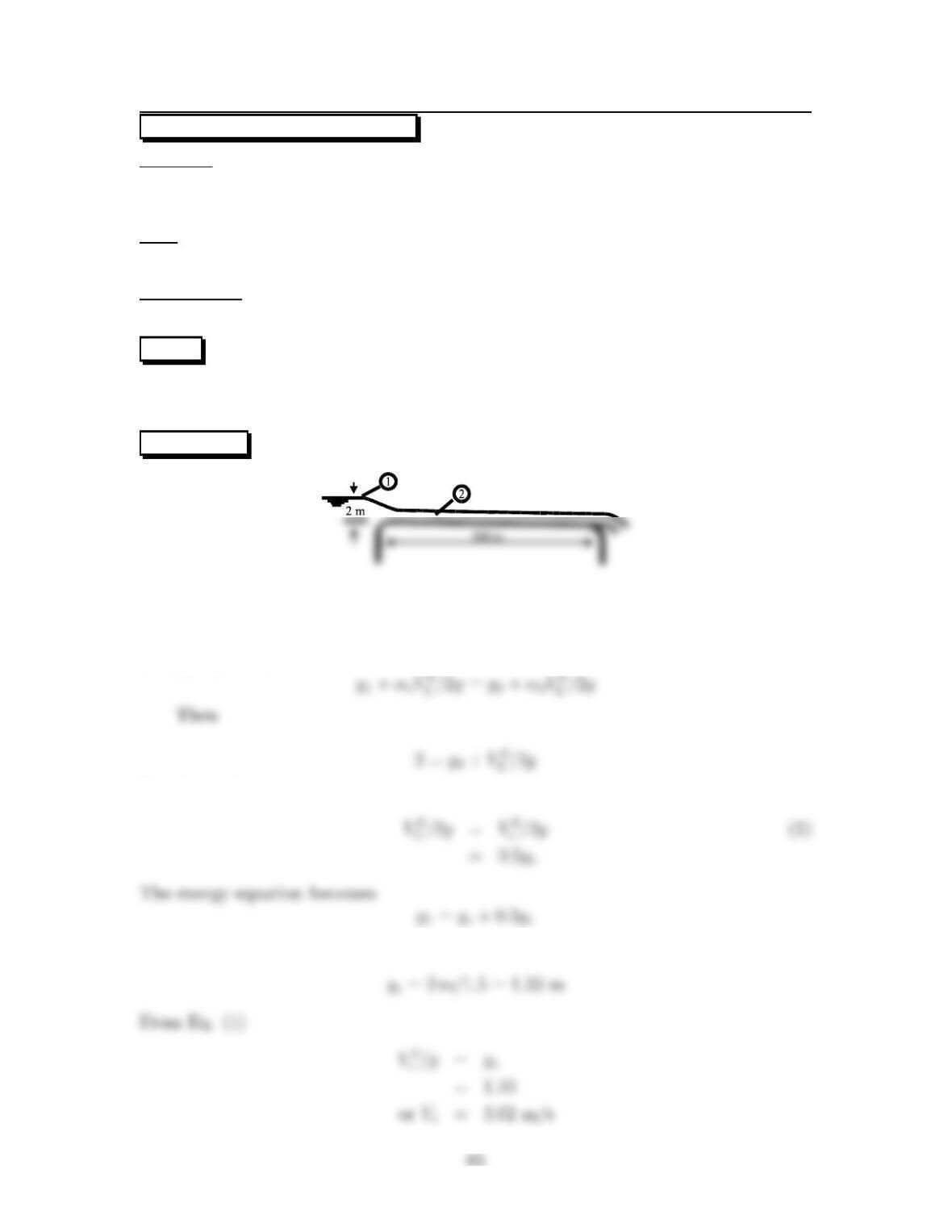
Water flows out of a reservoir, down a spillway and then over an outfall.
Additional details are provided in the problem statement.
Find:
Discharge in the channel (m
3/s).
Assumptions:
V1=0and α2=1.0.
PLAN Apply the energy equation from the reservoir, (1), to the entrance section
(2) and set the Froude number equal to 1 (critical flow) to solve for ycand Vc.Then
calculate the discharge by applying the flow rate equation.
SOLUTION
The channel is steep; therefore, critical depth will occur just inside the channel en-
trance.
Energy equation
Froude numb er
Let y1=2mand solve for yc
Flow rate equation
86
15.73: PROBLEM DEFINITION
Situation:
Water flows out a reservoir and down a channel.
Find:
(a) Estimate the discharge (m
3/s).
(b) Describe a procedure for calculating the discharge if the channel length was
100 m.
Assumptions:
Uniform flow is established in the channel except near the downstream end. n=
0.012 .
PLAN
Apply the energy equation from the reservoir to a section near the upstream end
of the channel to solve for V. Then apply the flow rate equation to calculate the
discharge.
SOLUTION
(a) Energy equation
Also
where
(b) With only a 100 m-long channel, uniform flow will not become established in the
channel; therefore, a trial-and-error solution is required. Critical depth will occur
87
15.74: PROBLEM DEFINITION
Situation:
During flood flow, water flows out of a reservoir.
Find:
Calculate the water surface profile upstream from the dam until the depth is six
meters.
PLAN
Apply the critical depth equation. Then carry out a step solution for the profile
upstream from the dam.
SOLUTION
52.17 0.1917 52.170 0 52.17
51.08 0.1958 2.168 0.00287 -5,429
50 0.20 50.002 –5,430 52.17
15 0.6667 9.962 0.11326 -25,631
10 1.00 10.051 -106,280 52.51
9 1.1111 1.971 0.5244 -5,671
88
15.75: PROBLEM DEFINITION
Situation:
Water flows in a wide rectangular concrete channel.
Additional details are provided in the problem statement.
Find:
Determine the water surface profile from section 1 to section 2.
Assumptions:
n=0.015,K=0.42,k
s=0.001 ft so ks/4R=0.00034.
PLAN
Determine whether the uniform flow in the channel is super or subcritical. Determine
ynandthenseeifforthisyntheFroudenumberisgreaterorlessthanunity. Then
apply the hydraulic jump equation to get y2. Then apply the Rectangular weir
equation to find the head on the weir. A rough estimate for the distance to where
the jump will occur may be found by applying Eq. (15.43, EFM10e) with a single
step computation. A more accurate calculation would include several steps.
SOLUTION
Froude numb er
Solving for yngives yn=0.739 ft and
Now find sequent depth:
89
Rectangular weir equation
so
A better estimate is
The single-step calculation is given below:
Assuming ks=0.001 ft so ks/4R=0.00034.
and
Thus, the water surface profile is shown below:
90