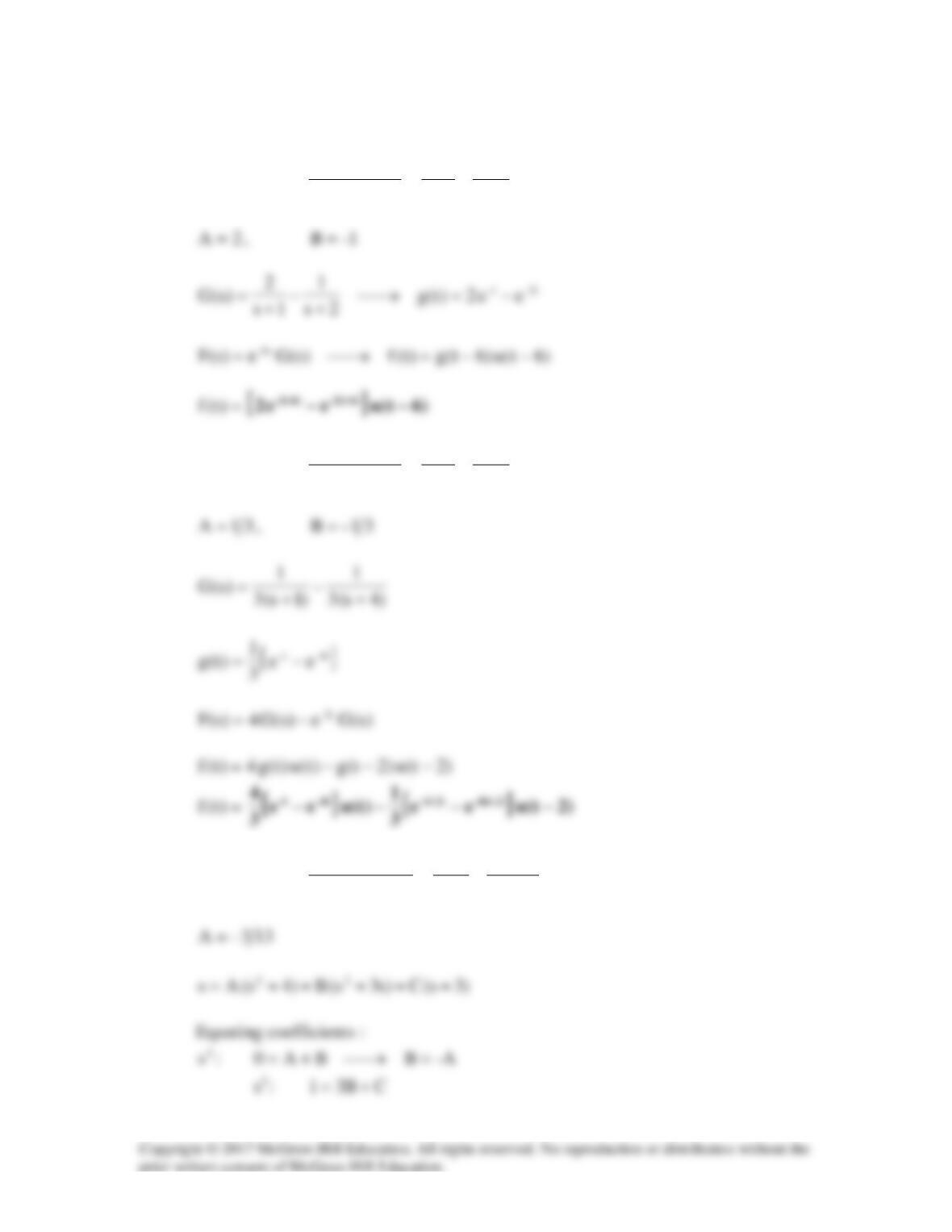
Solution 15.35
(a) Let
2s
B
1s
A
)2s)(1s(
3s
)s(G +
+
+
=
++
+
=
(b) Let
4s
B
1s
A
)4s)(1s(
1
)s(G +
+
+
=
++
=
(c) Let
4s
CBs
3s
A
)4s)(3s(
s
)s(G
22
+
+
+
+
=
++
=
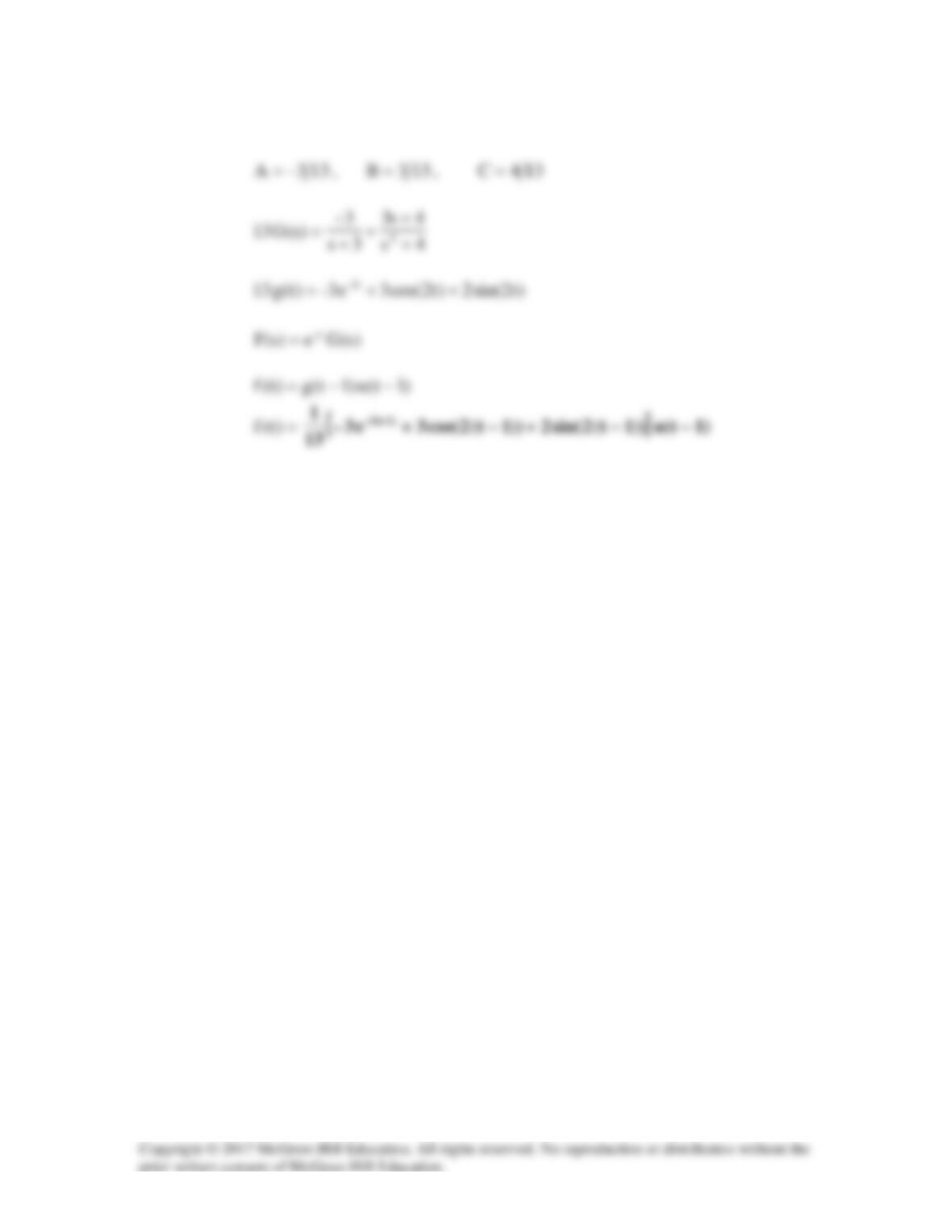
0
s
:
C3A40 +=
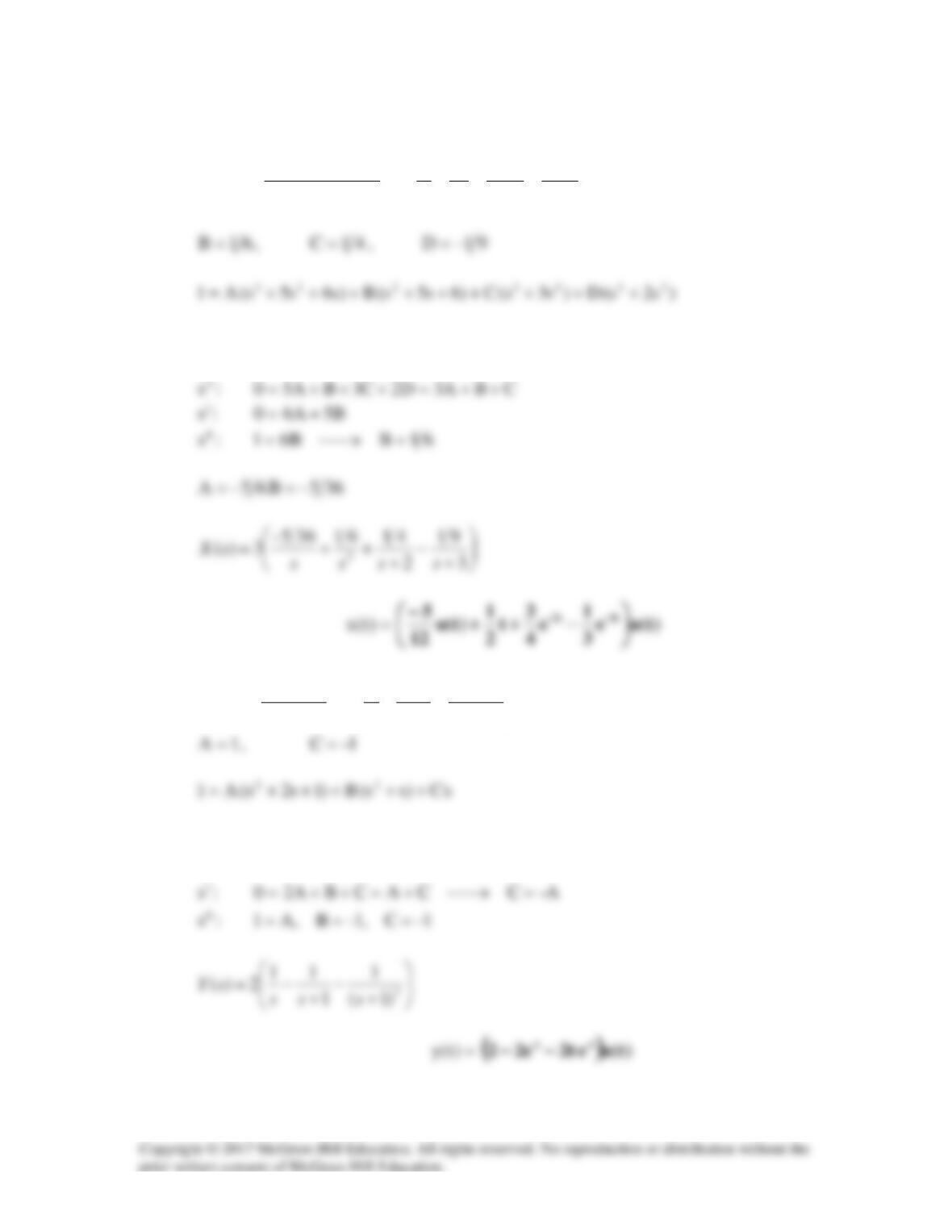
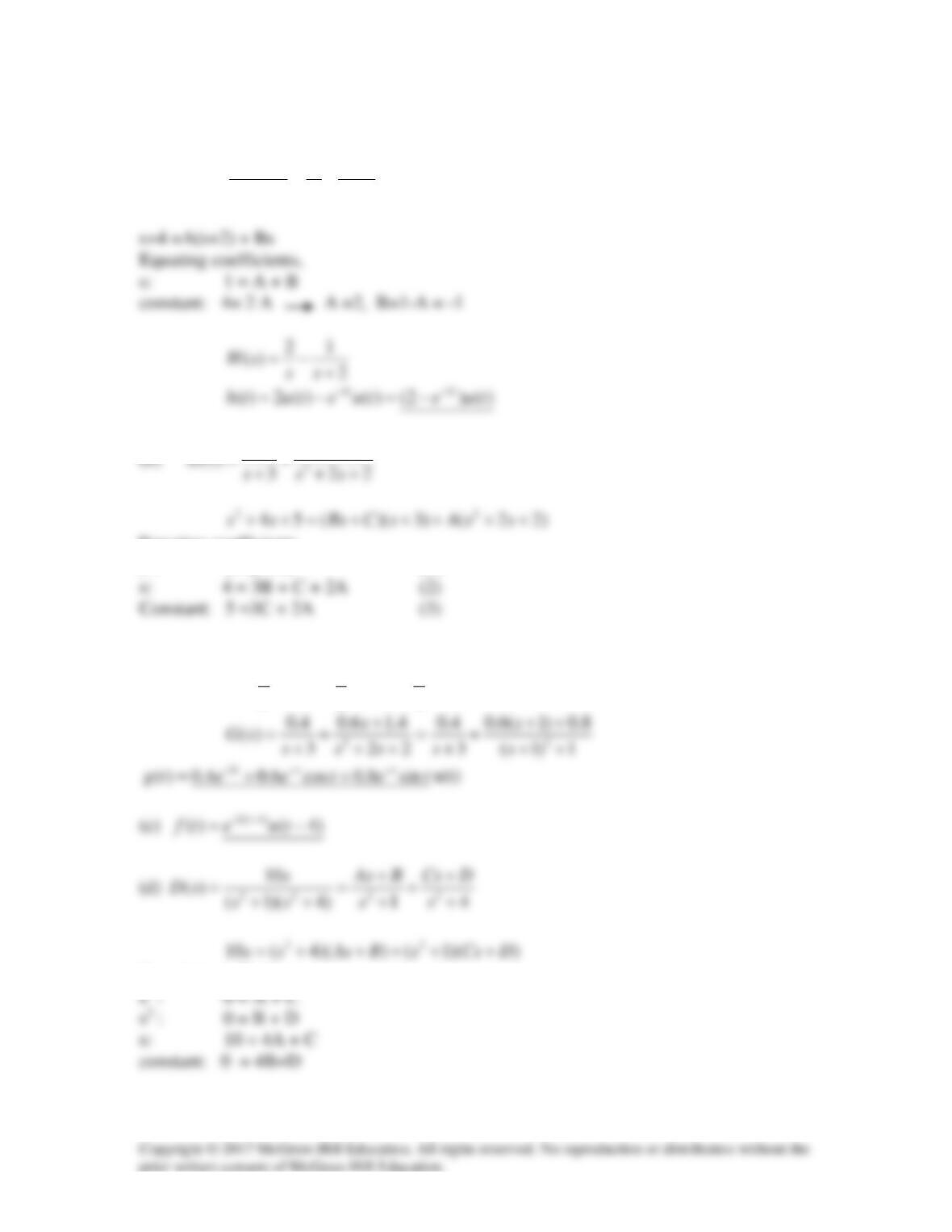
Solution 15.36
(a)
+
+
+
++=
++
=32
3
)3)(2(
1
3)(
22
s
D
s
C
s
B
s
A
sss
sX
Equating coefficients :
3
s
:
DCA0 ++=
(b)
+
+
+
+=
+
=
22
)1(1
2
)1(
1
2)( s
C
s
B
s
A
ss
sY
Equating coefficients :
2
s
:
-ABBA0 =→+=
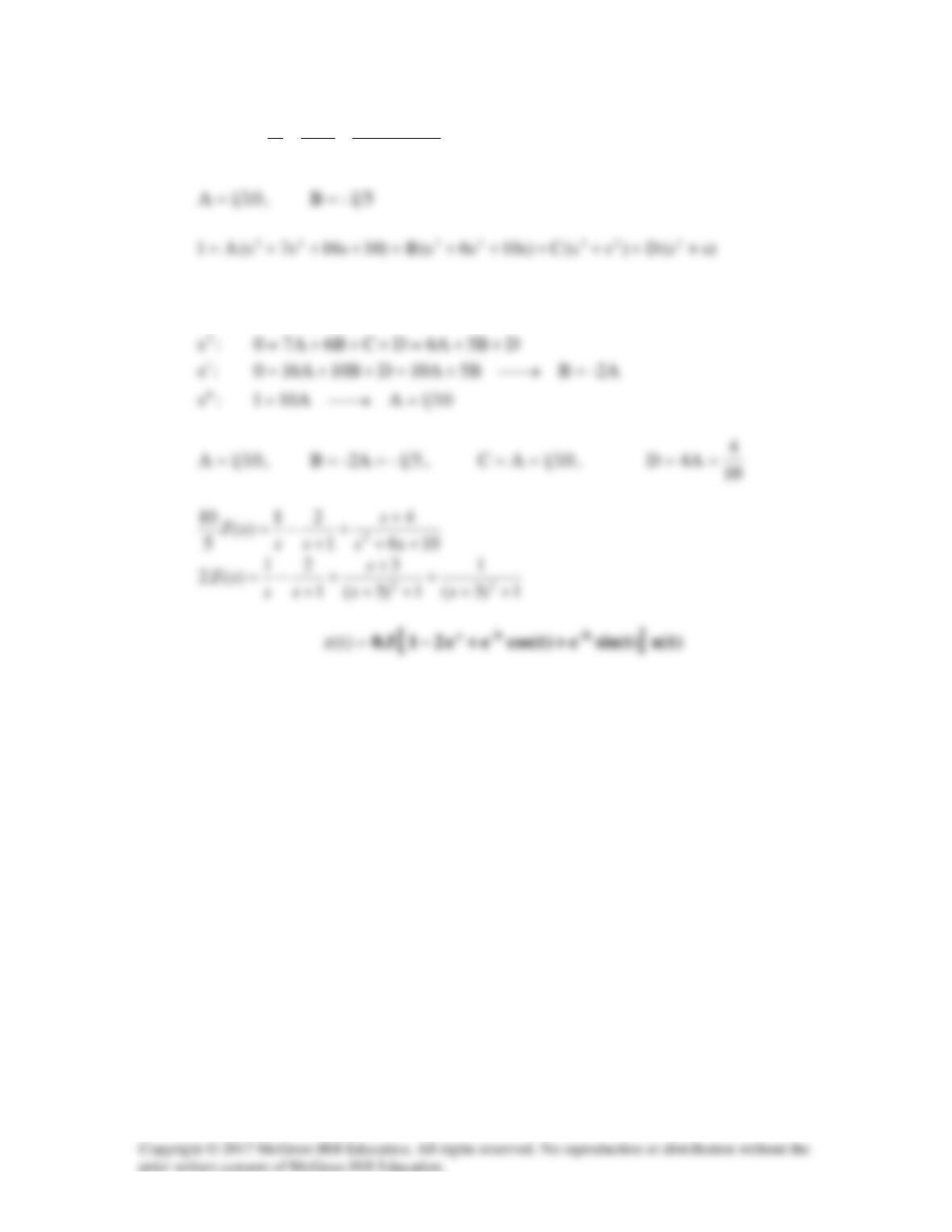
(c)
++
+
+
+
+= 1061
5)(
2
ss
DCs
s
B
s
A
sZ
Equating coefficients :
3
s
:
CBA0 ++=
Solution 15.37
(a)
4
() ( 2) 2
s AB
Hs ss s s
+
= = +
++
A Bs C
+
Equating coefficients,
s2: 1= B + A (1)
Solving (1) to (3) gives
237
,,
555
ABC= = =
Equating coefficients,
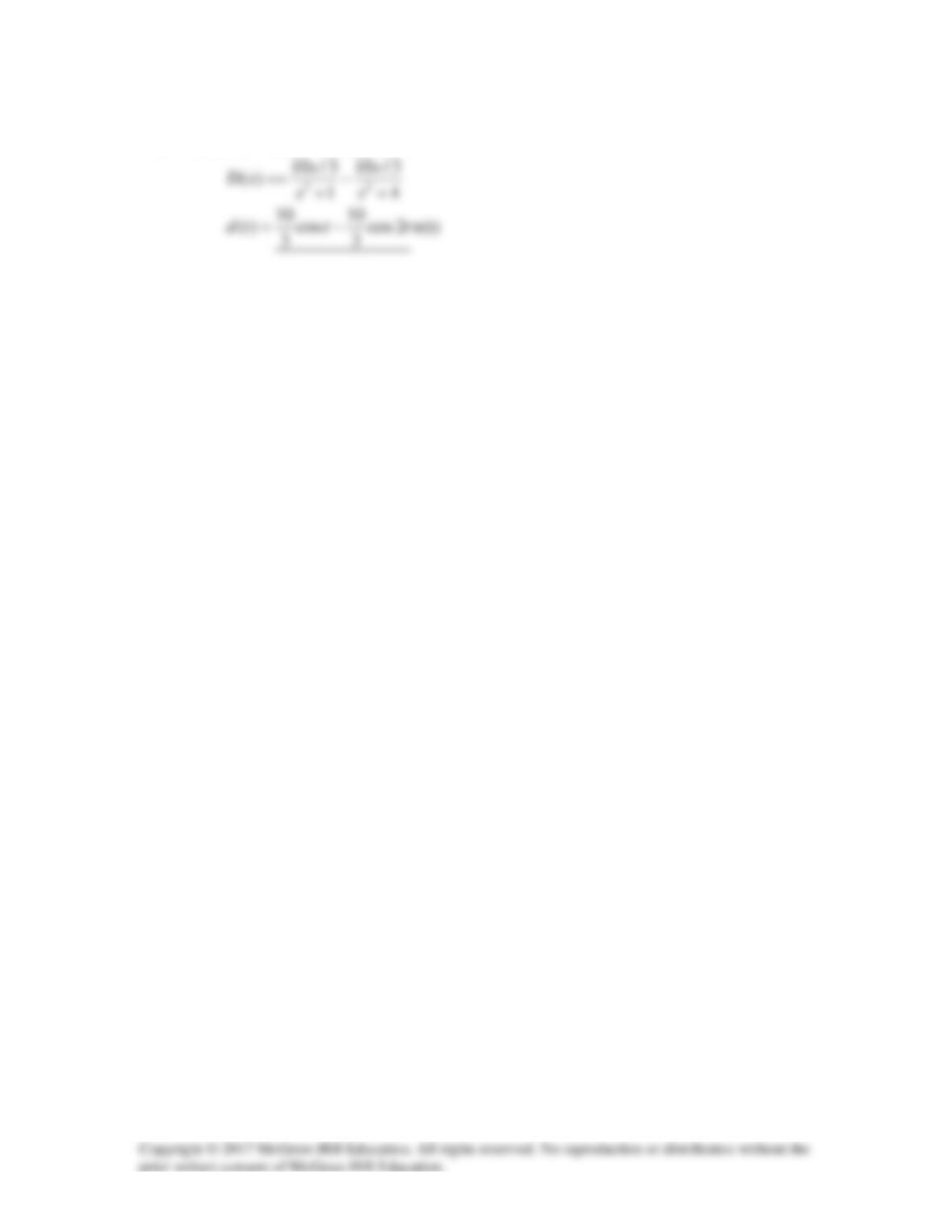
Solving these leads to
A = -10/3, B = 0, C = -10/3, D = 0
Solution 15.38
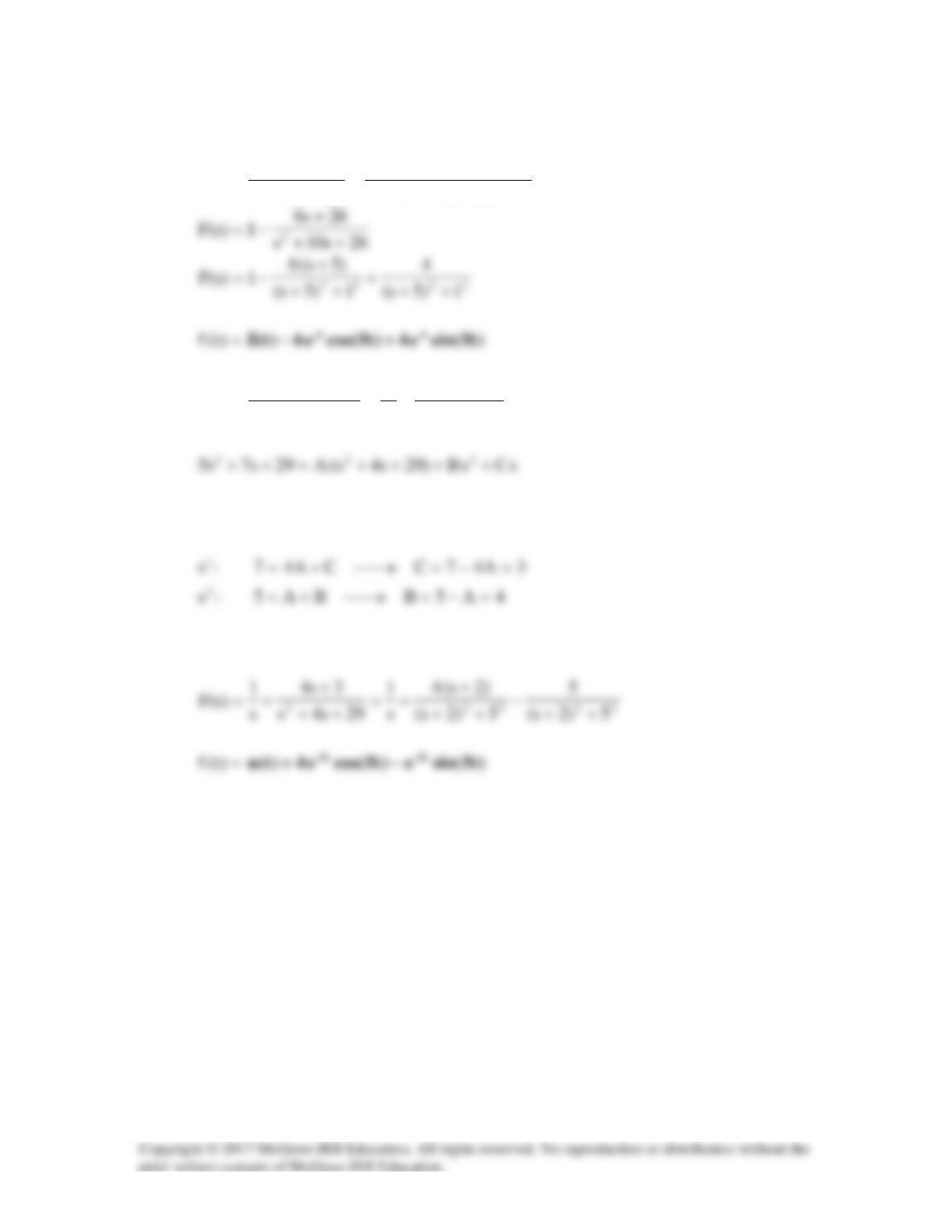
(a)
26s10s
26s626s10s
26s10s
s4s
)s(F
2
2
2
2
++
−−++
=
++
+
=
(b)
29s4s
CBs
s
A
)29s4s(s
29s7s5
)s(F 22
2
++
+
+=
++
++
=
Equating coefficients :
0
s
:
1AA2929 =→=
1A =
,
4B =
,
3C =
Solution 15.39
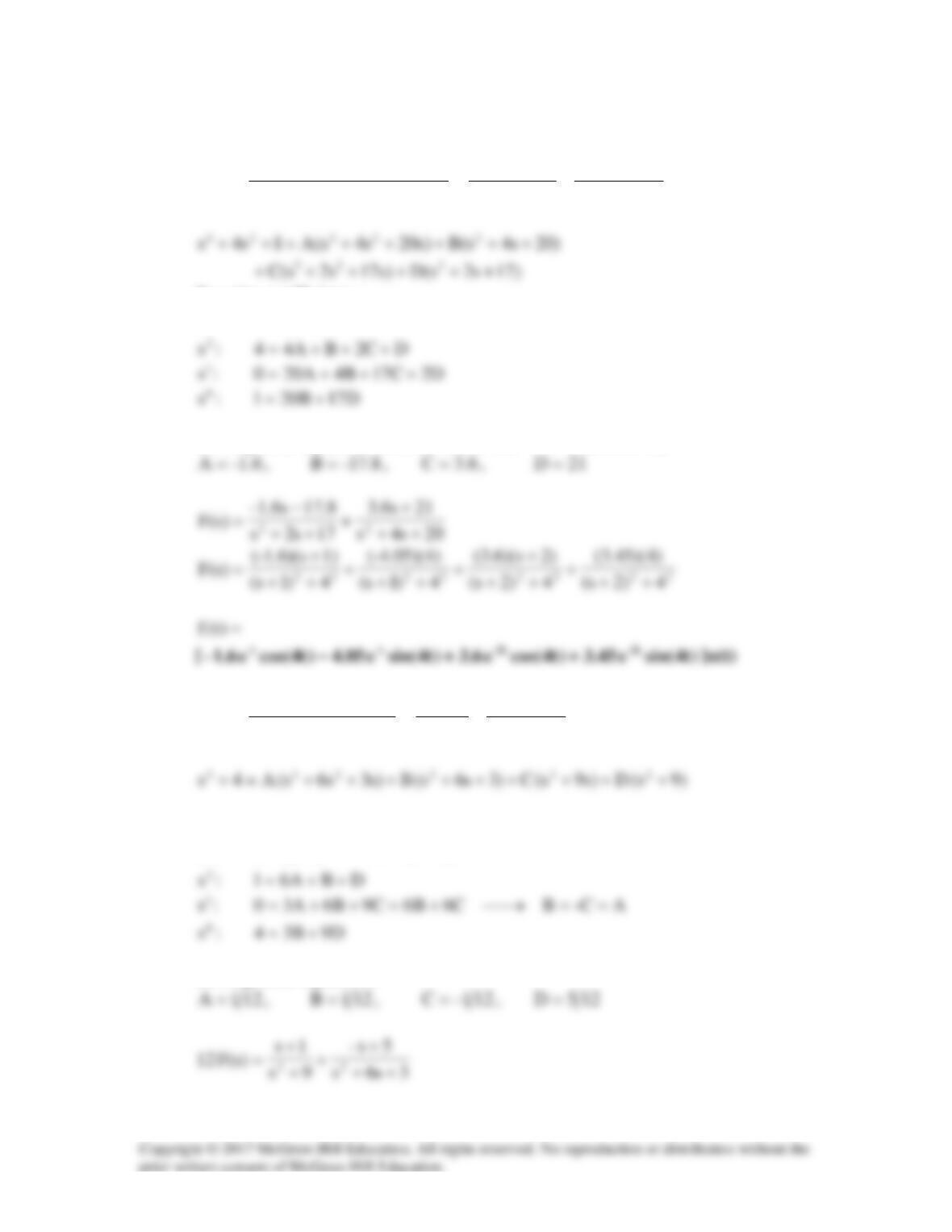
(a)
20s4s
DCs
17s2s
BAs
)20s4s)(17s2s(
1s4s2
)s(F
2222
23
++
+
+
++
+
=
++++
++
=
Equating coefficients :
3
s
:
CA2 +=
Solving these equations (Matlab works well with 4 unknowns),
(b)
3s6s
DCs
9s
BAs
)3s6s)(9s(
4s
)s(F
2222
2
++
+
+
+
+
=
+++
+
=
Equating coefficients :
3
s
:
-ACCA0 =→+=
Solving these equations,
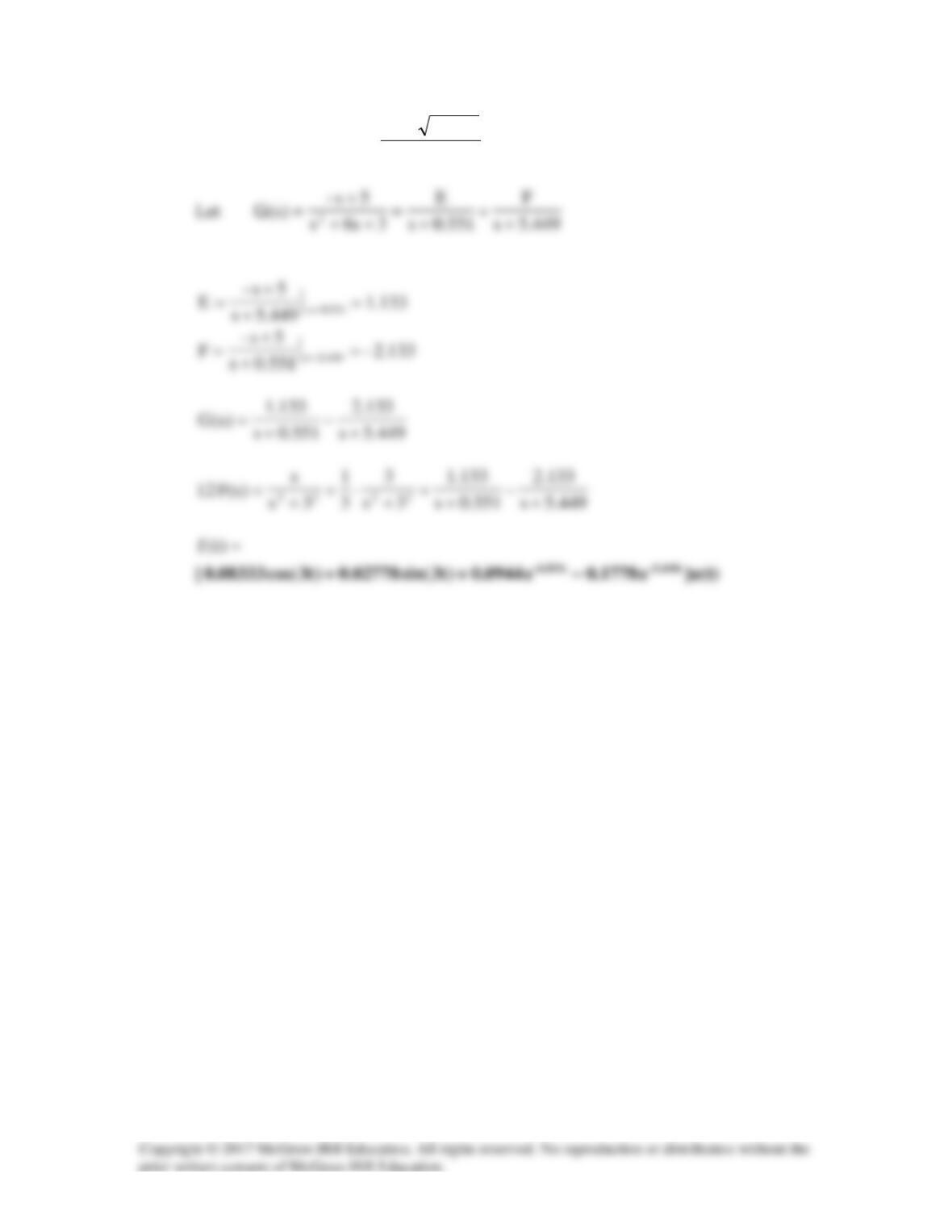
5.449–-0.551,
2
12–366–
03s6s2=
±
→=++
Solution 15.40
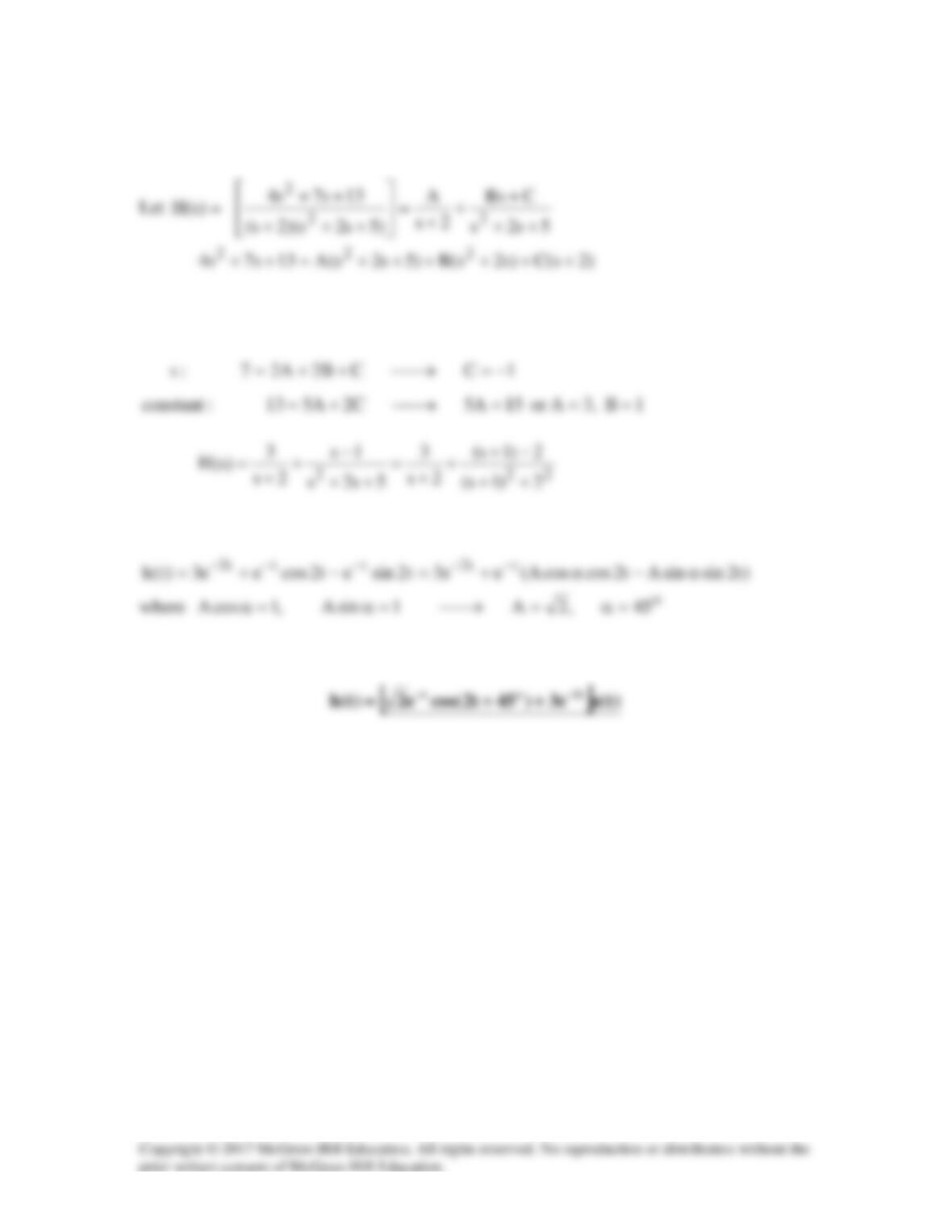
Equating coefficients gives:
BA4:s2+=
Hence,
Thus,
Solution 15.41
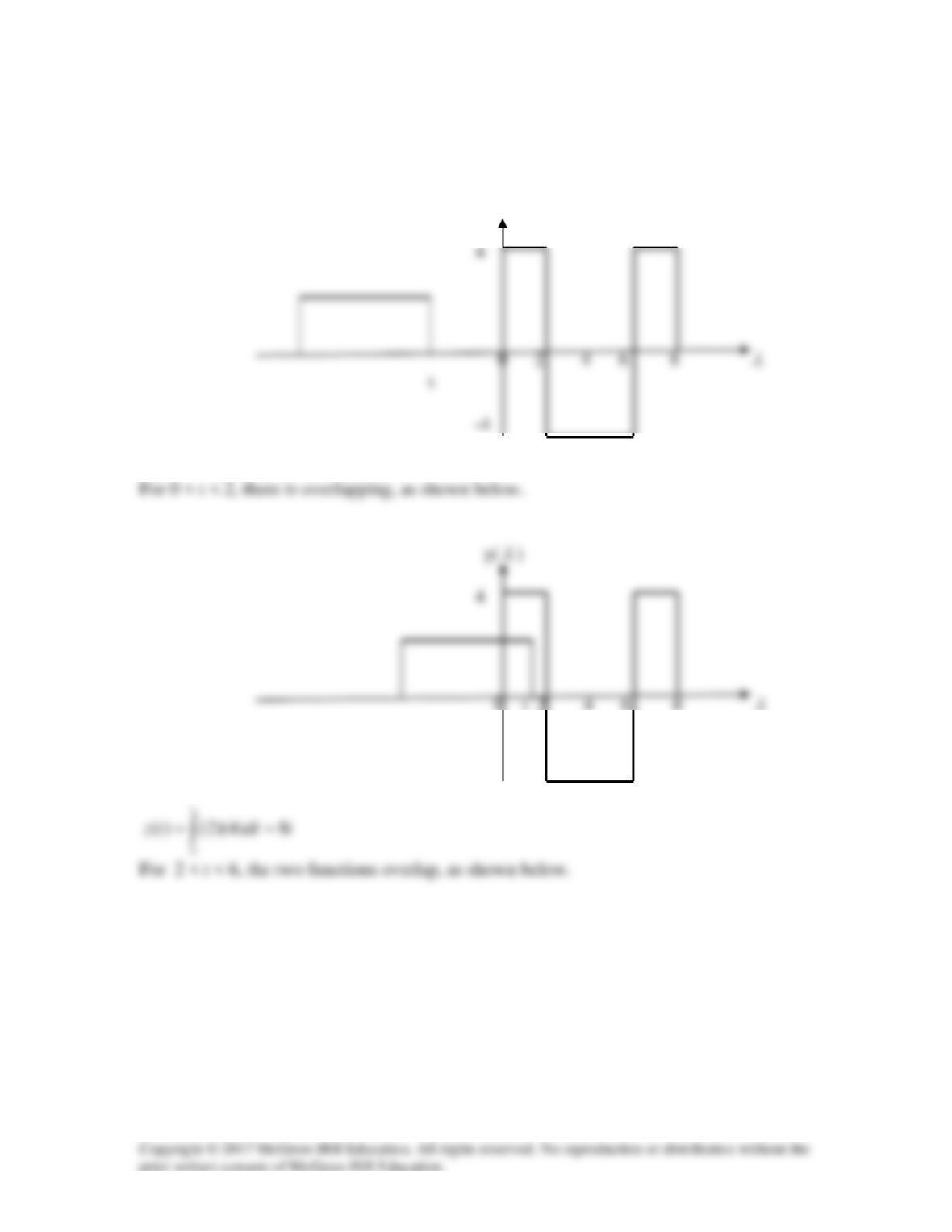
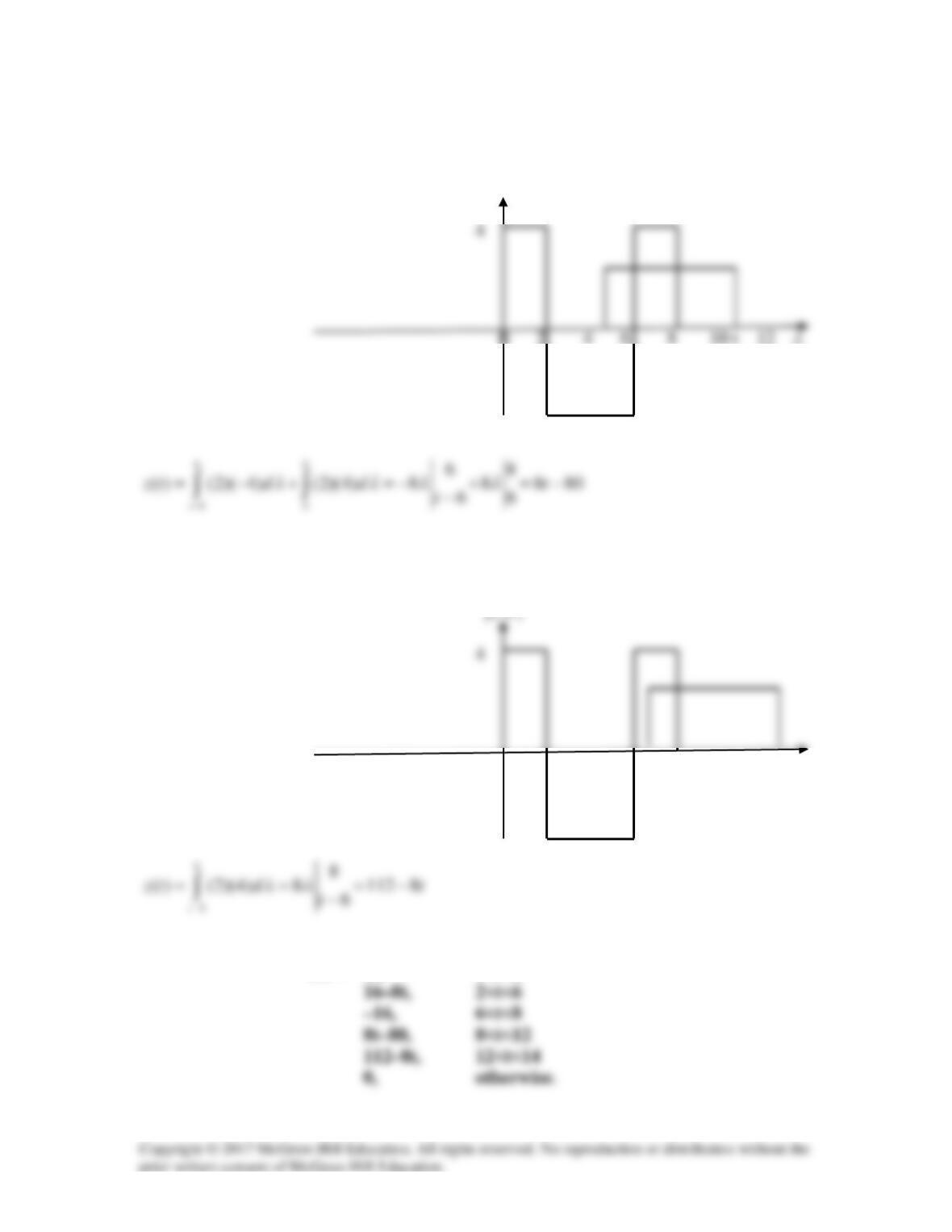
We fold x(t) and slide on y(t). For t<0, no overlapping as shown below. x(t) =0.
y(
λ
)
λ
λ
λ
-4
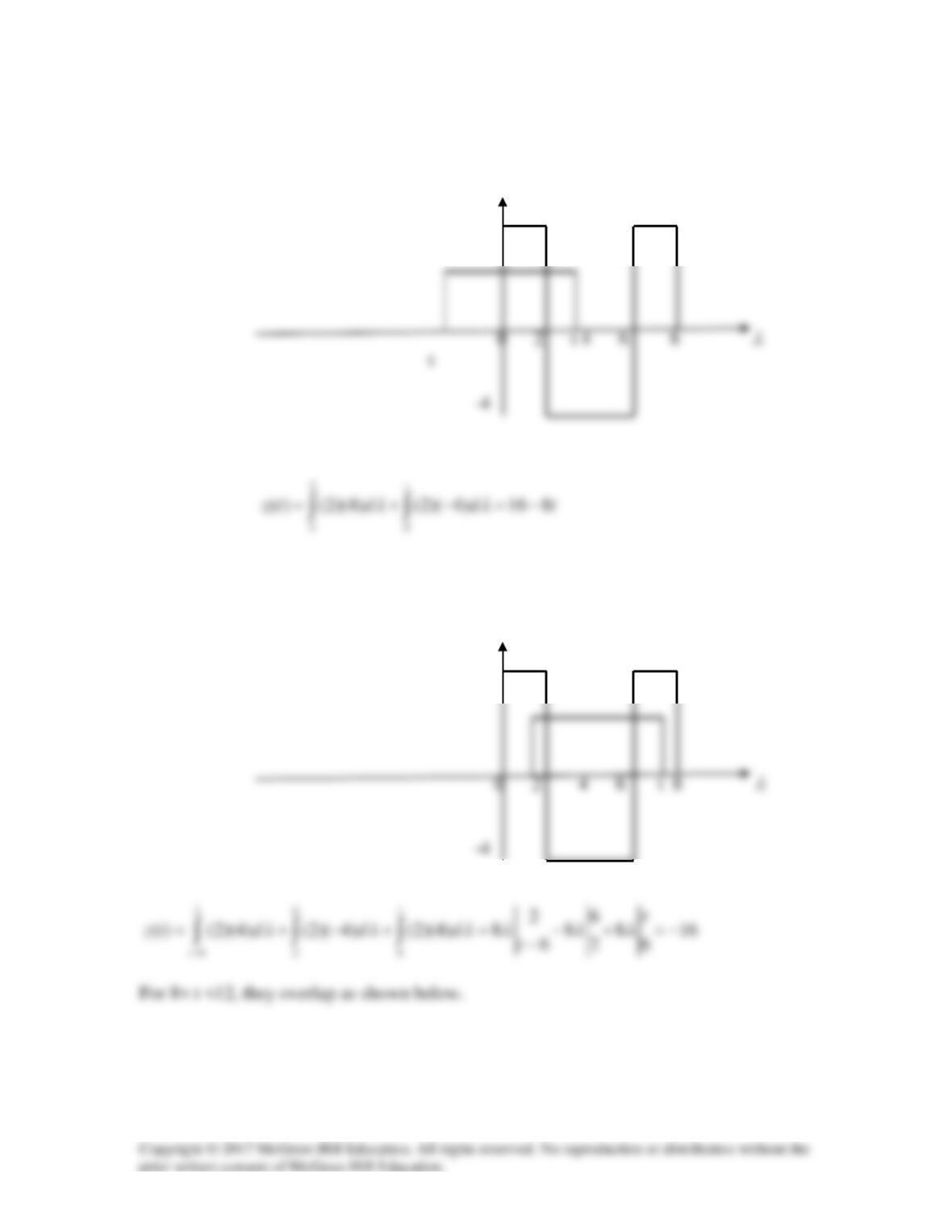
y(
λ
)
4
λ
For 6<t<8, they overlap as shown below.
y(
λ
)
4
y(
λ
)
λ
-4
For 12 < t < 14, they overlap as shown below.
λ
0 2 4 6 8 10 12 t
λ
-4
Hence,
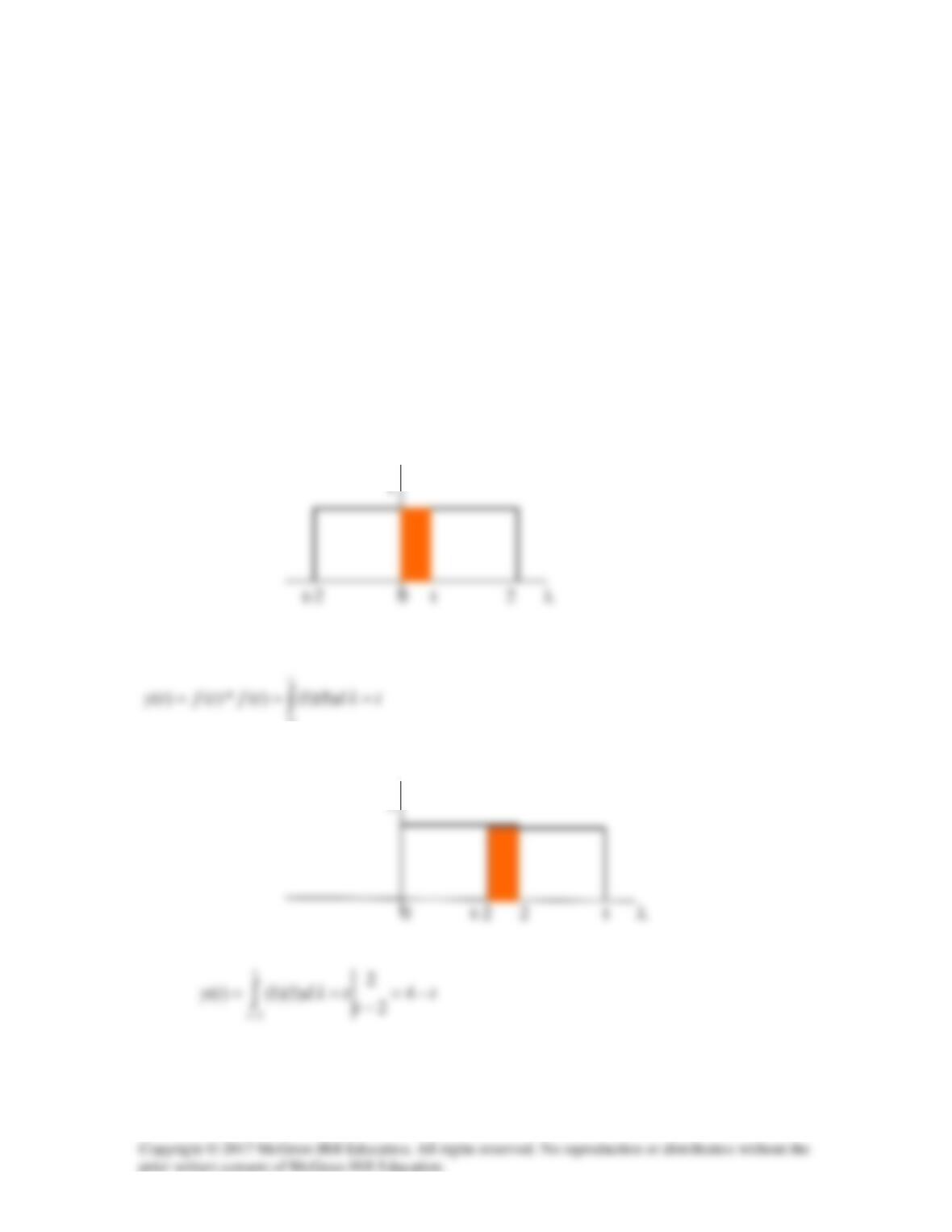
z(t) = 8t, 0<t<2
1
Solution 15.42
Design a problem to help other students to better understand how to convolve two
functions together.
Although there are many ways to solve this problem, this is an example based on the
same kind of problem asked in the third edition.
Problem
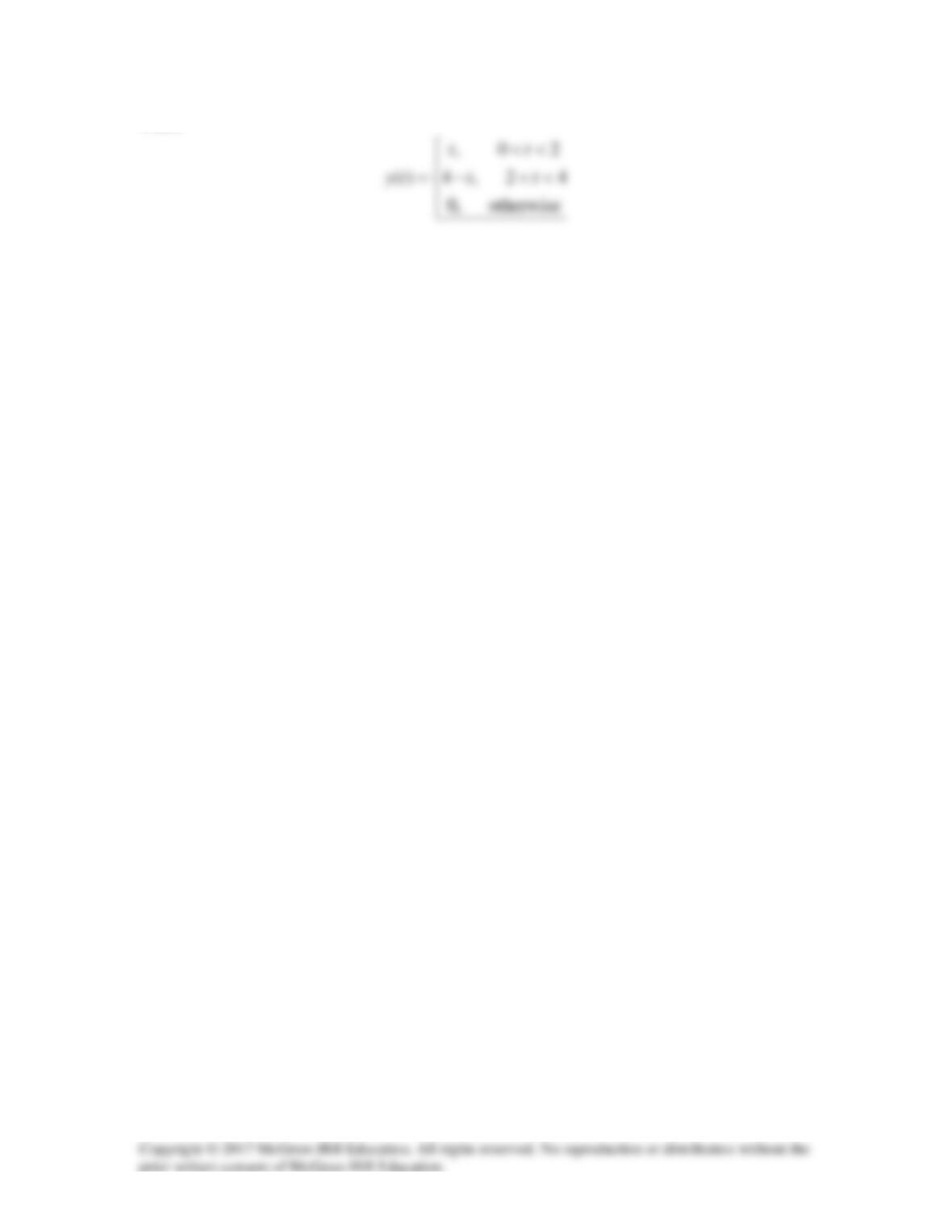
Suppose that f(t) = u(t) – u(t–2). Determine f(t)*f(t).
Solution
For 0<t<2, the signals overlap as shown below.
0
For 2 < t< 4, they overlap as shown below.
2
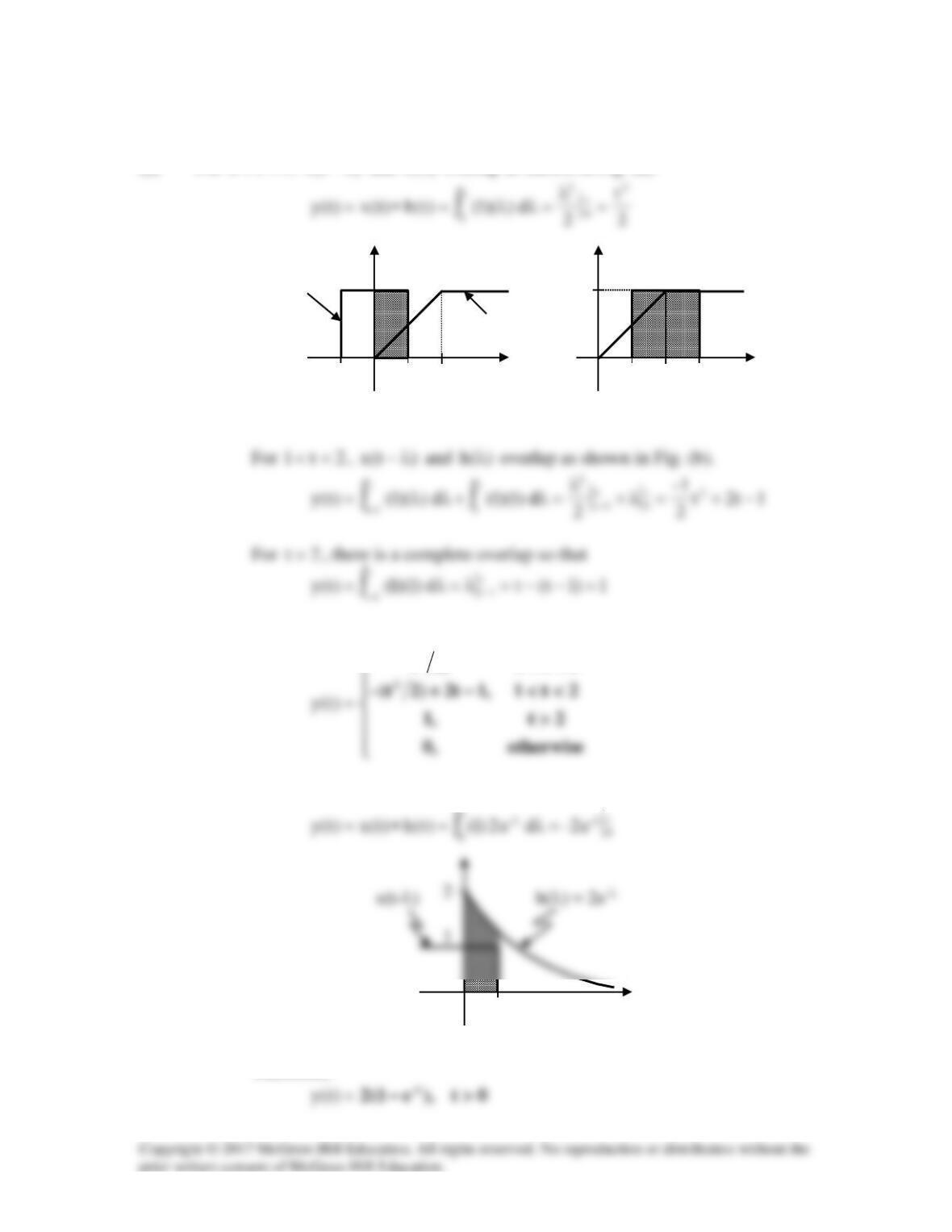
Thus,
Solution 15.43
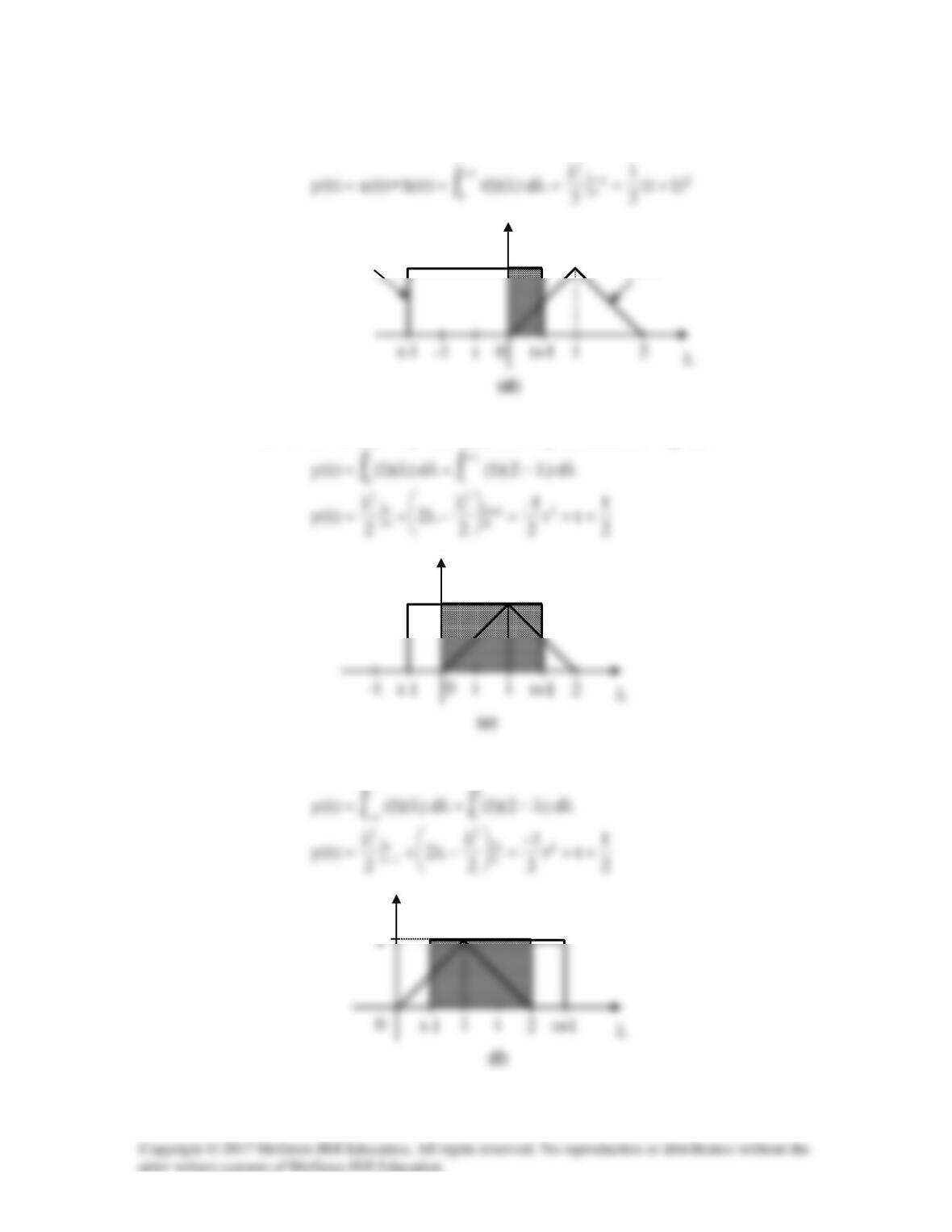
(a) For
1t0 <<
,
)t(x λ−
and
)(h λ
overlap as shown in Fig. (a).
)t(x λ
)(h λ
Therefore,
<<
1t0,2t
2
(b) For
0t >
, the two functions overlap as shown in Fig. (c).
1
2
Therefore,
(c)
0
t
λ
0
(b)
1
t
t-1
λ
1
0
(a)
x(t – λ)
h(λ)
1
t
t-1
λ
1
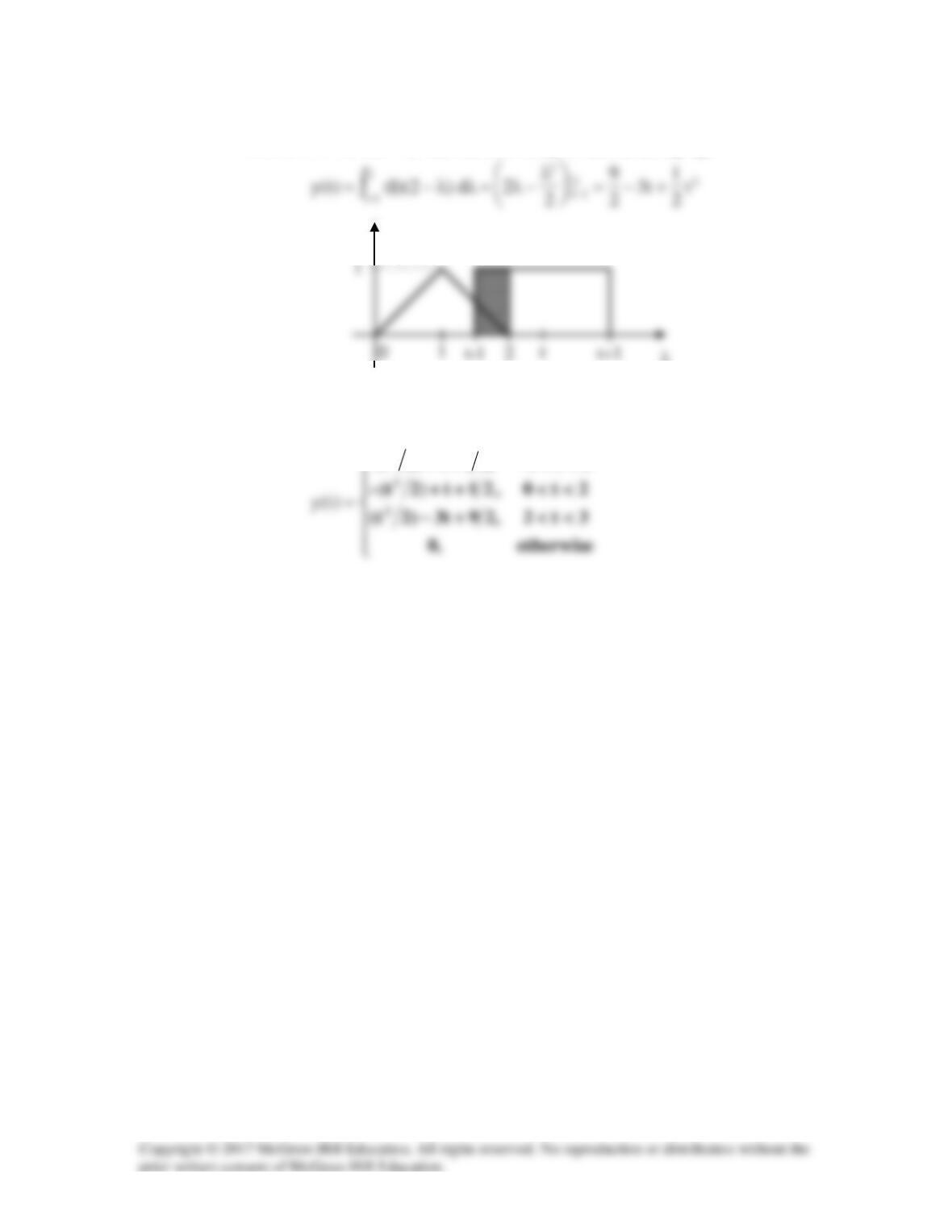
(c) For
0t1– <<
,
)t(x λ−
and
)(h λ
overlap as shown in Fig. (d).
For
1t0 <<
,
)t(x λ
−
and
)(h λ
overlap as shown in Fig. (e).
For
2t1 <<
,
)t(x λ−
and
)(h λ
overlap as shown in Fig. (f).
1
x(t – λ)
h(λ)
1
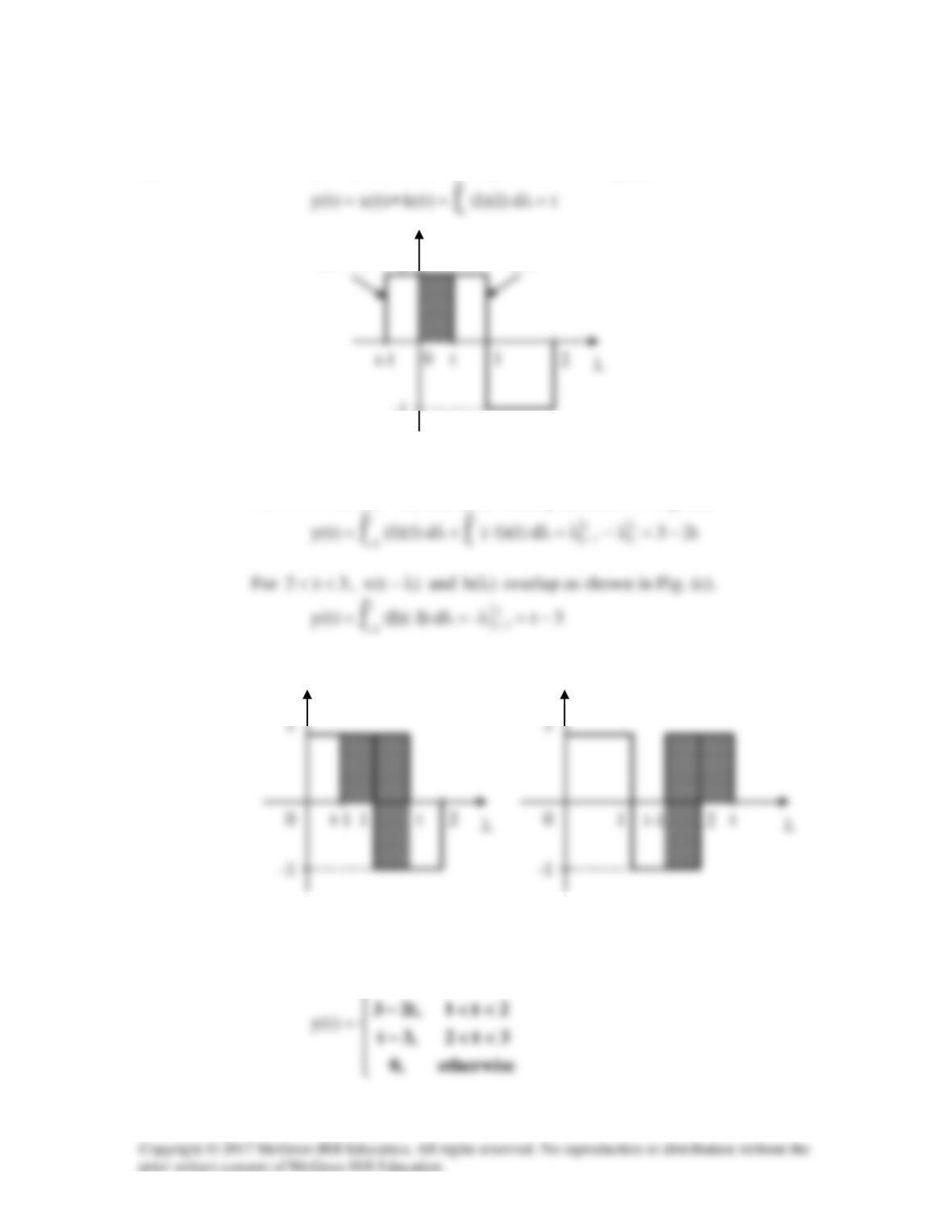
For
3t2 <<
,
)t(x λ−
and
)(h λ
overlap as shown in Fig. (g).
Therefore,
<<++
0t1–,21t)2t(
2
(g)
λ
Solution 15.44
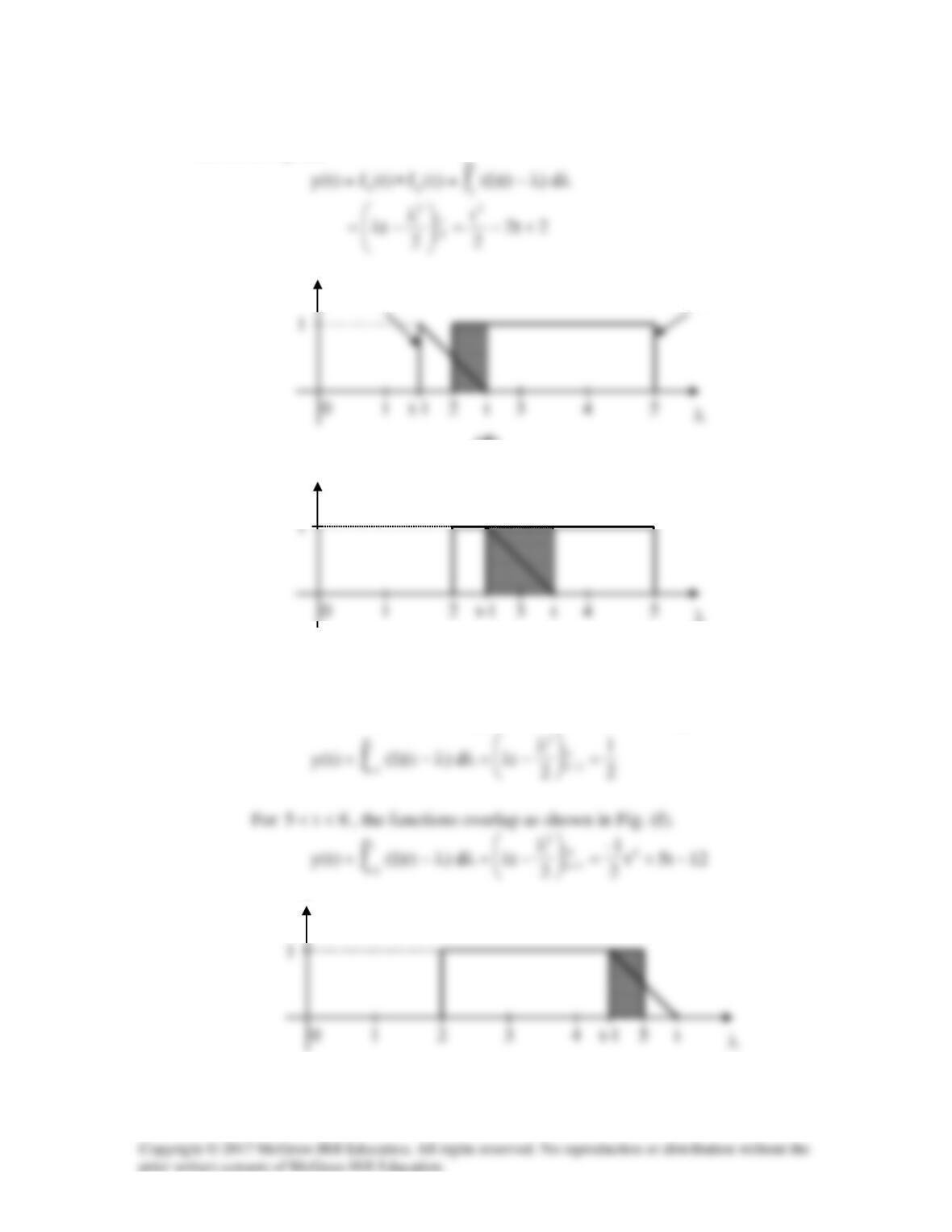
(a) For
1t0 <<
,
)t(x λ−
and
)(h λ
overlap as shown in Fig. (a).
For
2t1 <<
,
)t(x λ
−
and
)(h λ
overlap as shown in Fig. (b).
)(h λ
Therefore,
<<
1t0,t
1
(a)
-1
1
x(t – λ)
h(λ)
0
1
1
0
1
t-1
2
1
(c)
(b)
(b) For
2t <
, there is no overlap. For
3t2 <<
,
)t(f1λ−
and
)(f
2
λ
overlap, as
shown in Fig. (d).
For
5t3 <<
,
)t(f1λ−
and
)(f
2
λ
overlap as shown in Fig. (e).
λ
(d)
f1(t – λ)
f2(λ)
(e)
λ
(f)