Solution 15.1
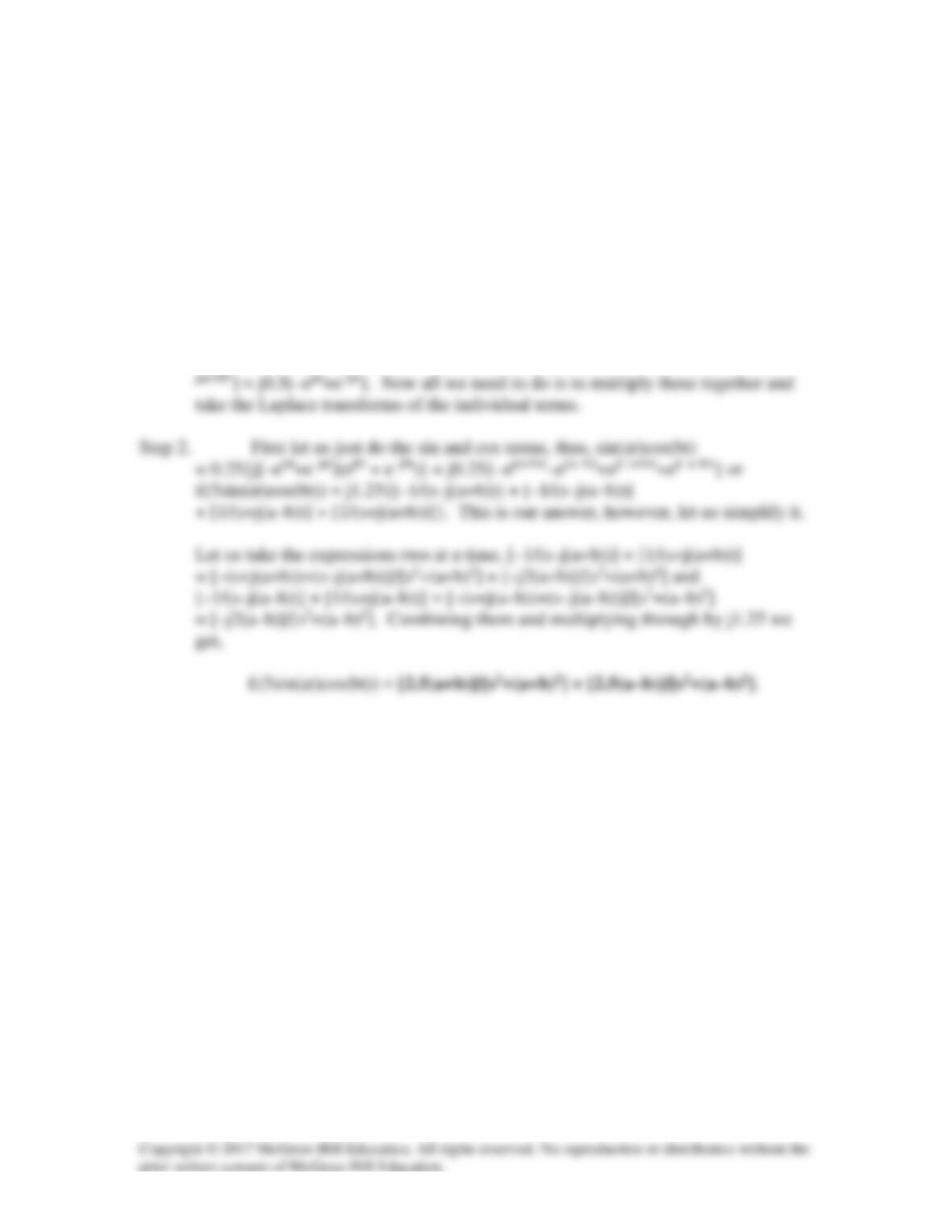
Find the Laplace transform of 5 sin(at)cos(bt). [Hint: using the exponential
representation for both functions may make this problem easier.]
Solution.
Step 1. Although we could work with trigonometric identities and the Laplace
transforms for sin and cos, it is easier to follow using the exponential forms for
sin and cos.
We note that cos(bt) = 0.5(ejbt + e–jbt) and sin(at) = cos(at–90°) = 0.5[ejat–90°+e–
Solution 15.2
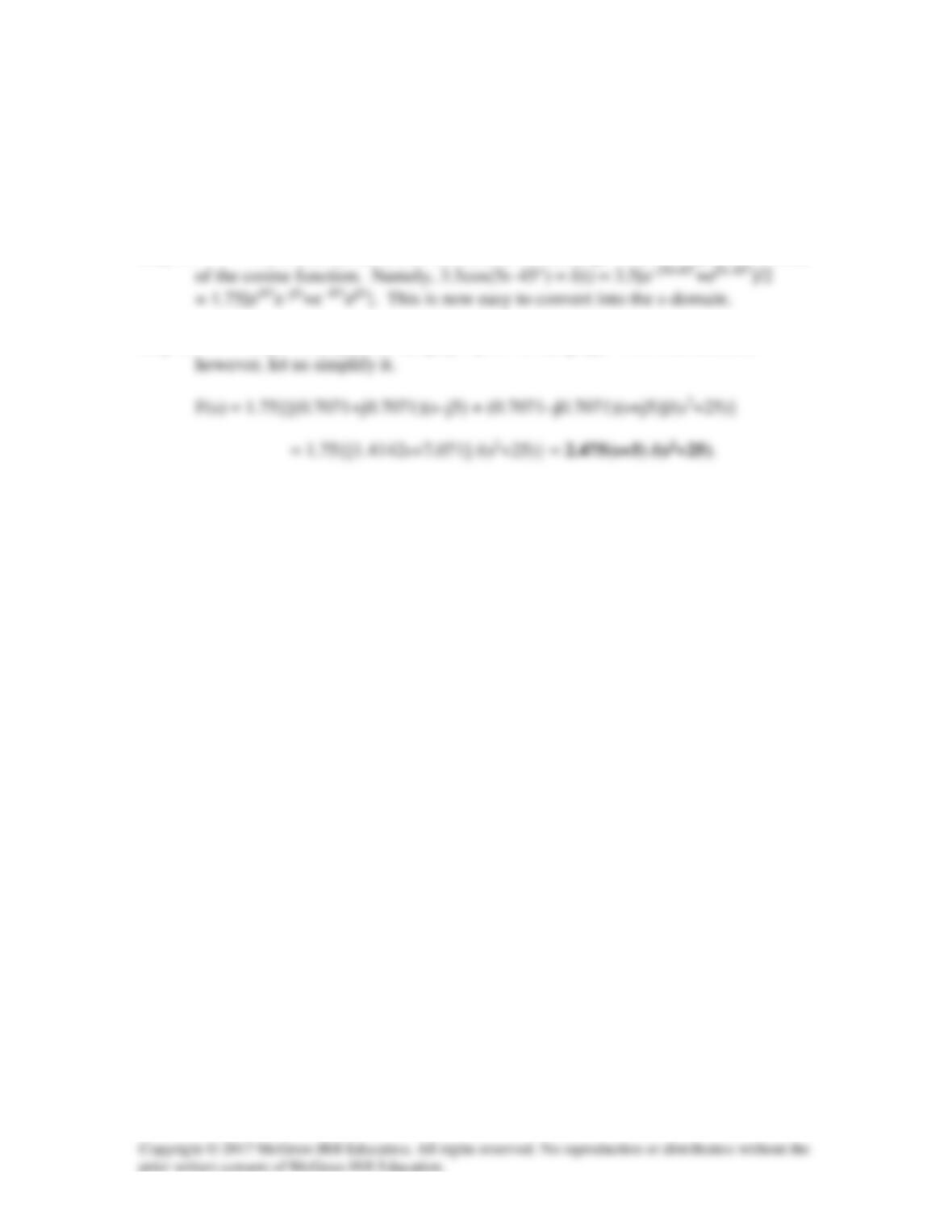
Determine the Laplace transform of 3.5cos(5t–45°).
Solution
Step 1. We could use the tables to find this but let us go with the exponential form
Step 2. F(s) = 1.75{[1∠45°/(s+j5)] + [1∠–45°/(s–j5)]}. This is an answer,
Solution 15.3
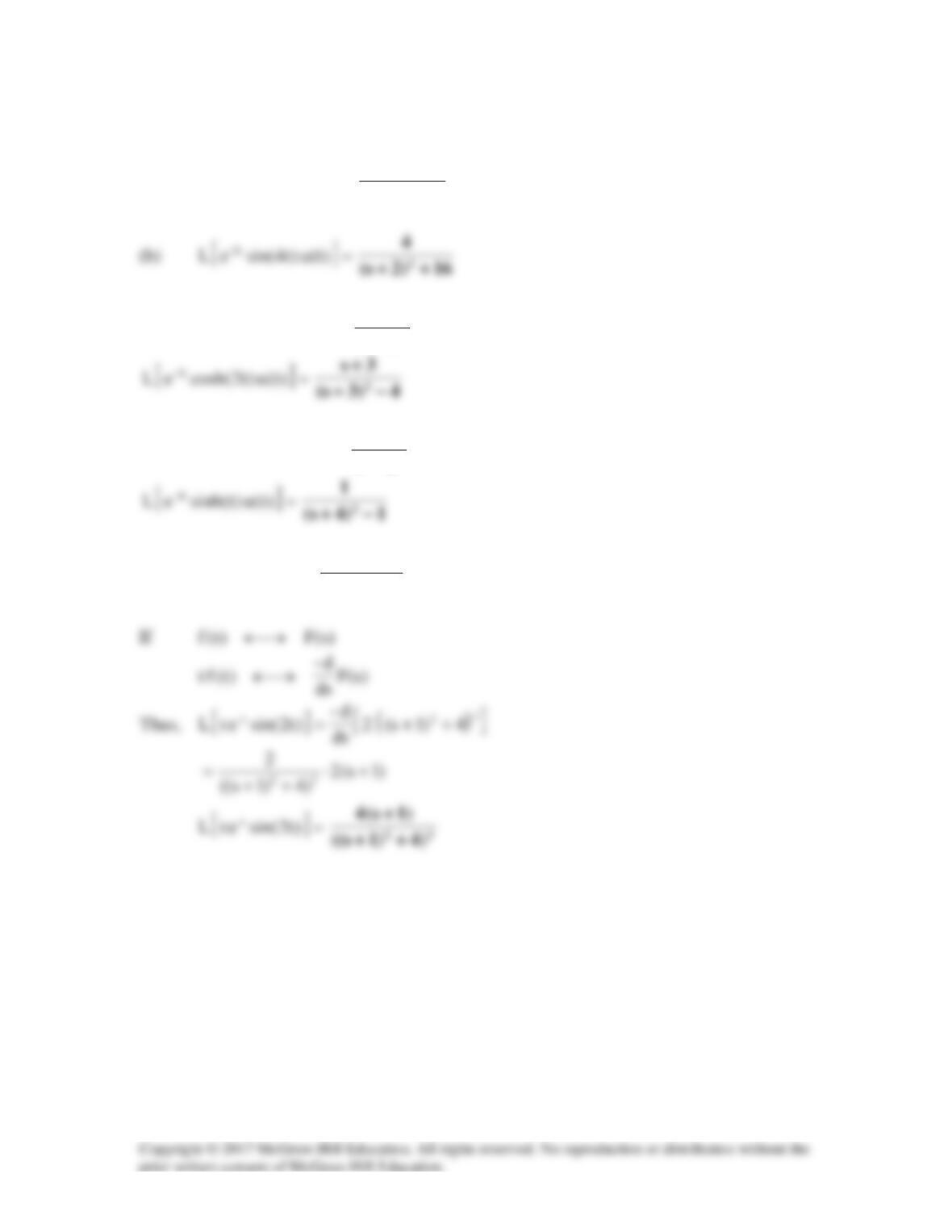
(a)
[ ]
=)t(u)t3
cos(e
-2t
L
9)2s(
2s
2
++
+
(c) Since
[ ]
22 as
s
)atcosh( −
=L
4)3s(
3s
(d) Since
[ ]
22 as
a
)atsinh( −
=L
(e)
[ ]
4)1s(
2
)t2sin(e2
t–
++
=L
Solution 15.4
Design a problem to help other students better understand how to find the Laplace transform of
different time varying functions.
Although there are many ways to solve this problem, this is an example based on the same kind
of problem asked in the third edition.
Problem
Find the Laplace transforms of the following:
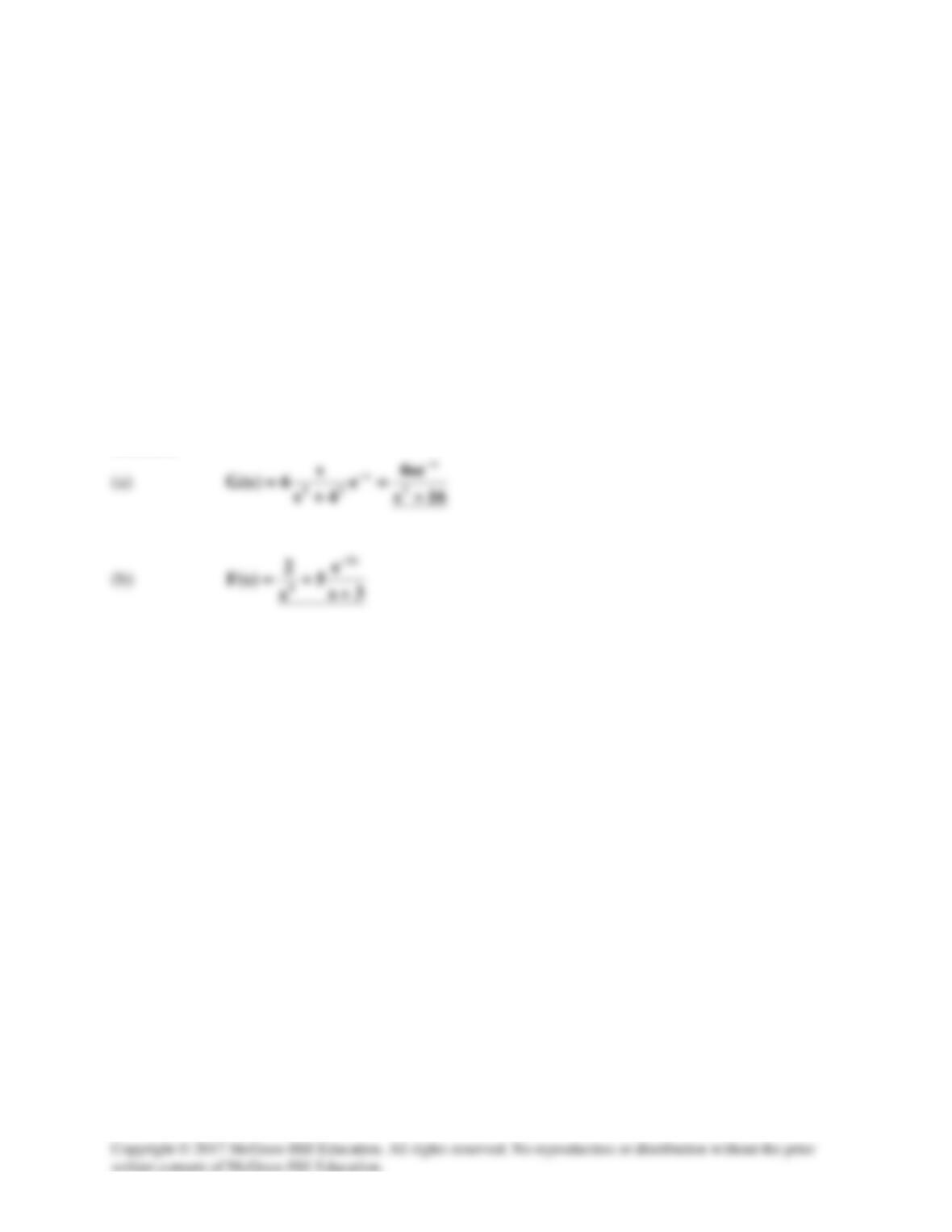
(a) g(t) = 6cos(4t – 1)
(b) f(t) = 2tu(t) + 5e–3(t – 2)u(t – 2)
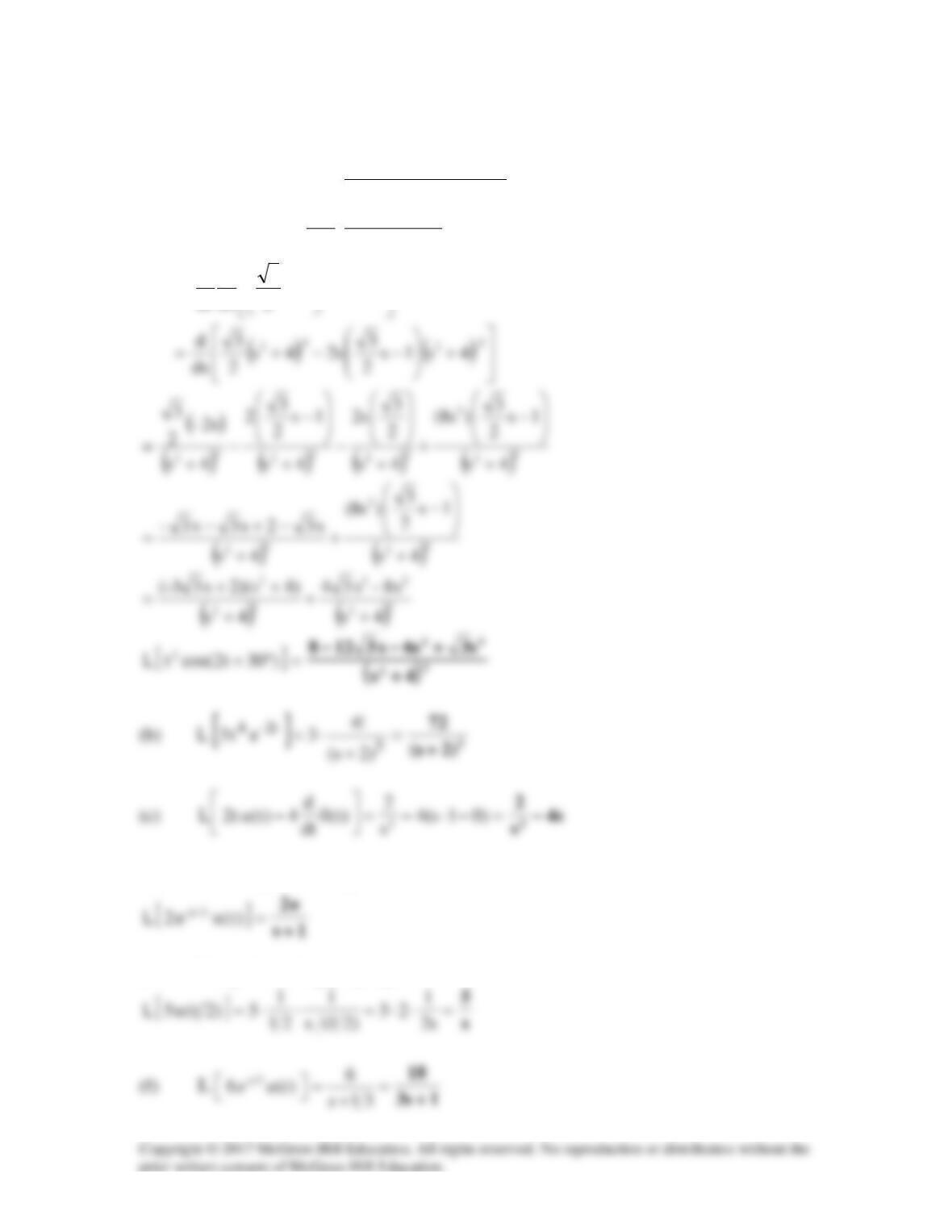
Solution
Solution 15.5
(a)
[ ]
4s
)30sin(2)30cos(s
)30t2cos( 2+
°−°
=°+L
[ ]
+
−°
=°+ 4s
1)30cos(s
ds
d
)30t2cos(t22
2
2
L
( )
+
−= 1–
24s1s
2
3
ds
d
ds
d
(d)
)t(ue2)t(ue2 -t1)–-(t =
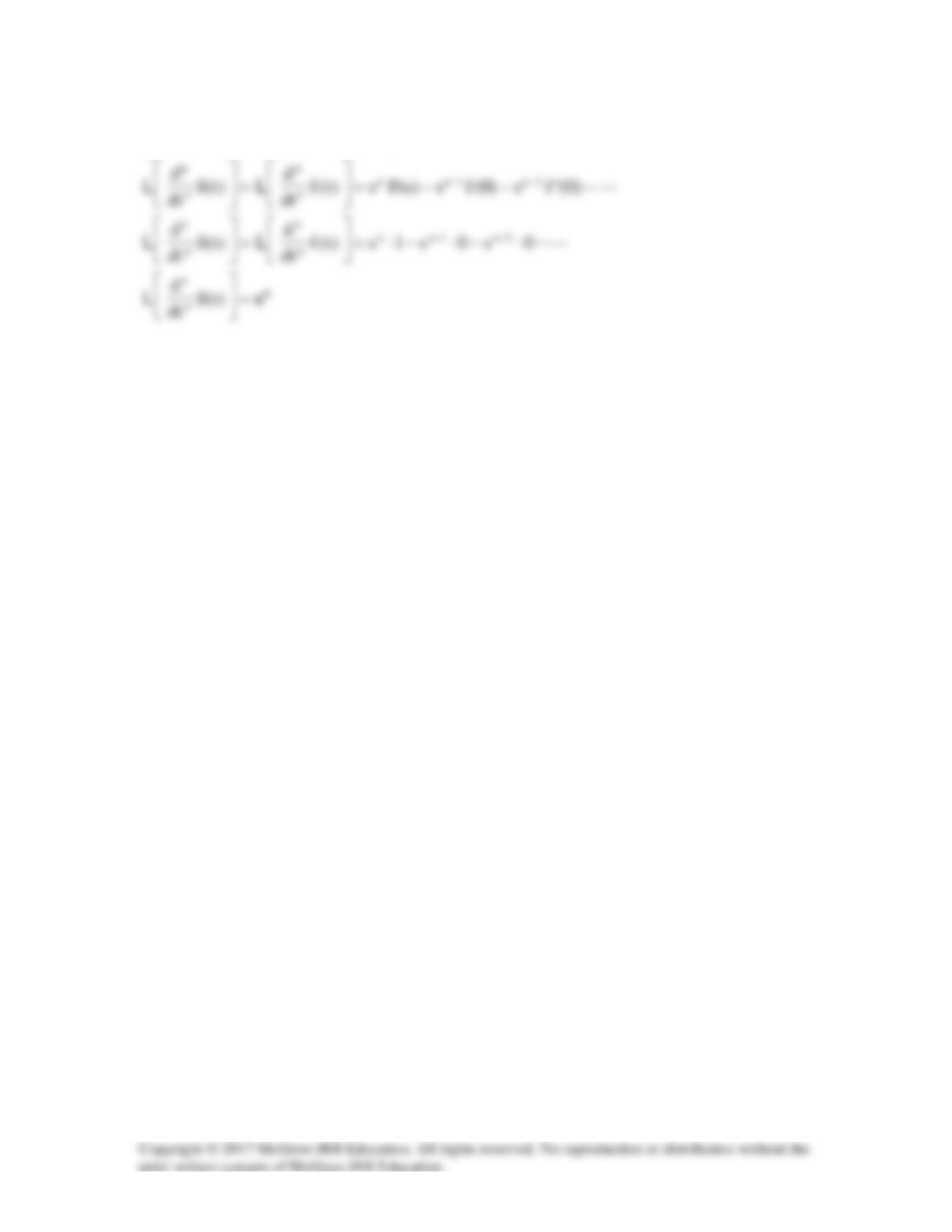
(e) Using the scaling property,
(g) Let
)t()t(f δ=
. Then,
1)s(F =
.
Solution 15.6
Find G(s) given that g(t) = 2r(t) – 2r(t–2).
Solution
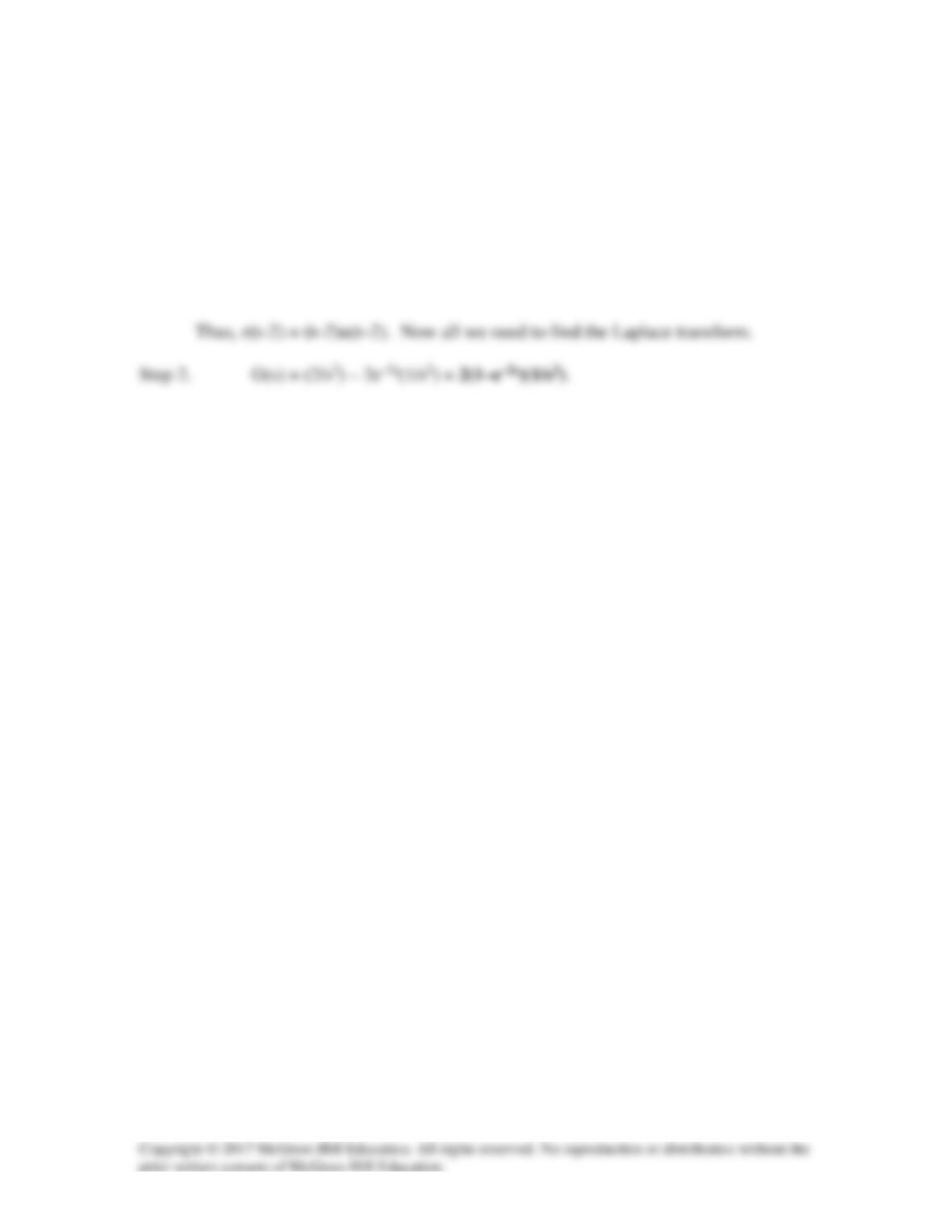
Step 1. To make this easier to solve we just use the relationship that r(t) = tu(t).
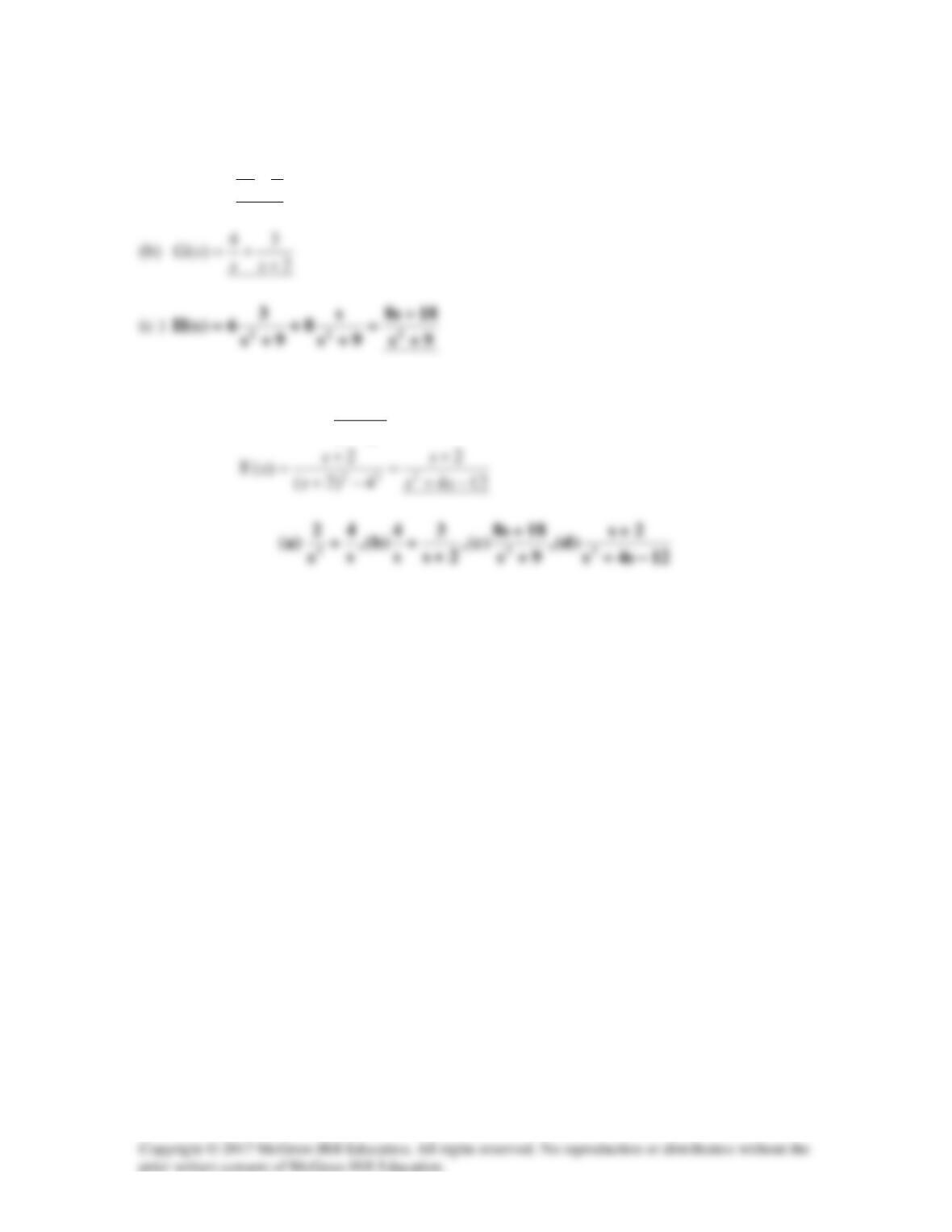
Solution 15.7
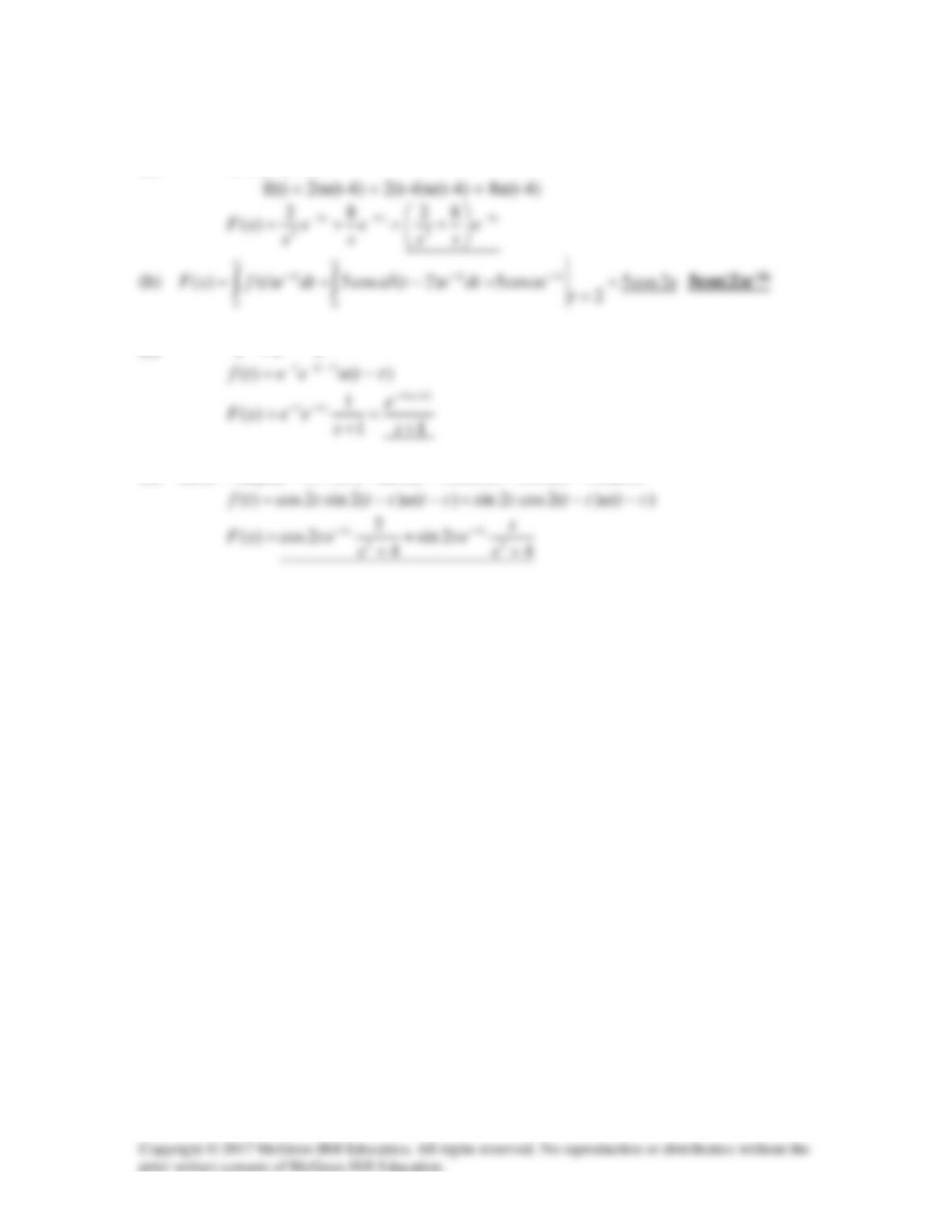
(a)
2
24
()Fs ss
= +
(d) From Problem 15.1,
22
{cosh } s
L at sa
=−
Solution 15.8
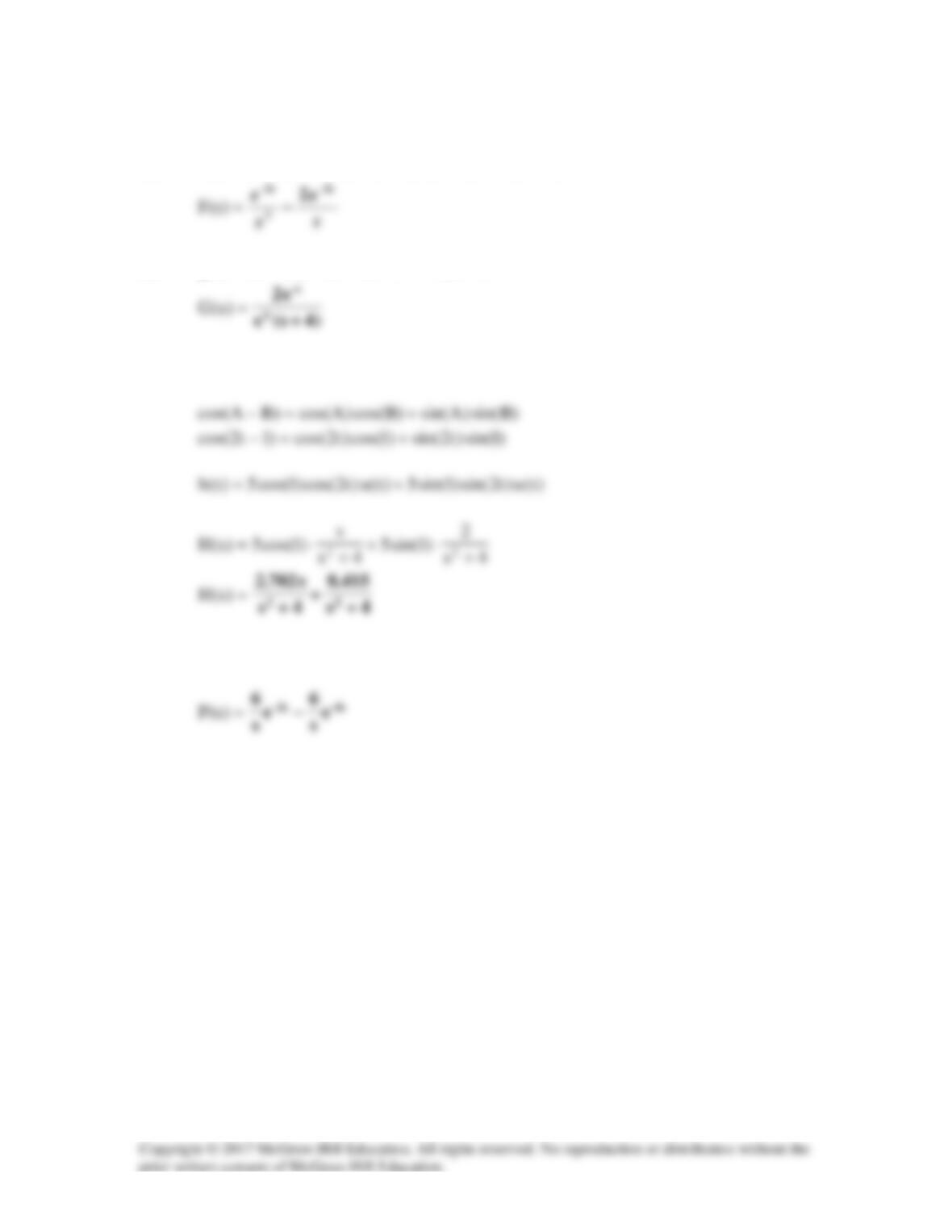
(a) 2t=2(t-4) + 8
(c)
()tt
eee
ττ
− −− −
=
(d)
sin 2 sin[2( ) 2 ] sin 2( ) cos 2 cos 2( )sin 2tt t t
ττ τ τ τ τ
= −+ = − + −
Solution 15.9
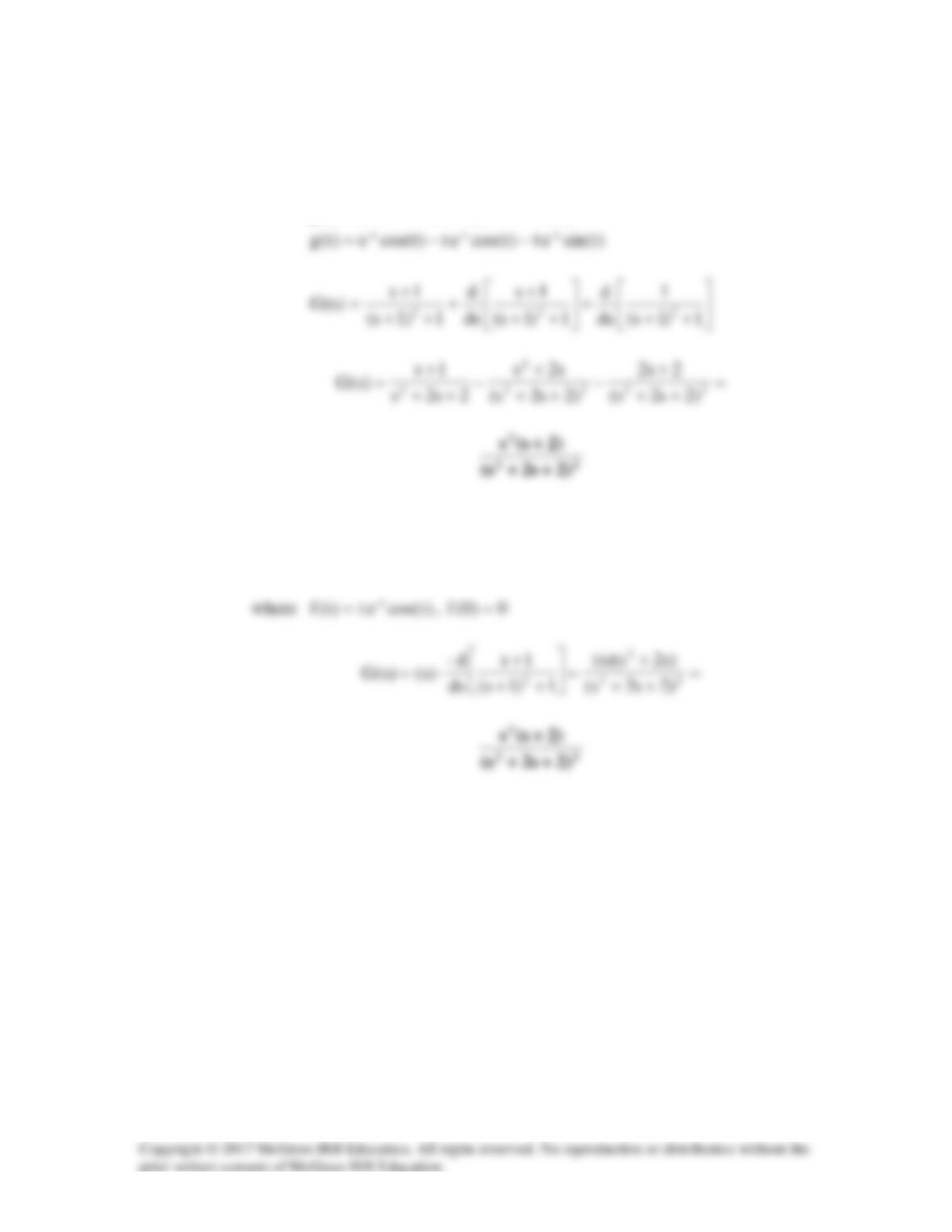
(a)
)2t(u2)2t(u)2t()2t(u)4t()t(f −−−−=−−=
(b)
)1t(uee2)1t(ue2)t(g 1)–-4(t-4-4t −=−=
(c)
)t(u)1t2cos(5)t(h −=
(d)
)4t(u6)2t(u6)t(p −−−=
Solution 15.10
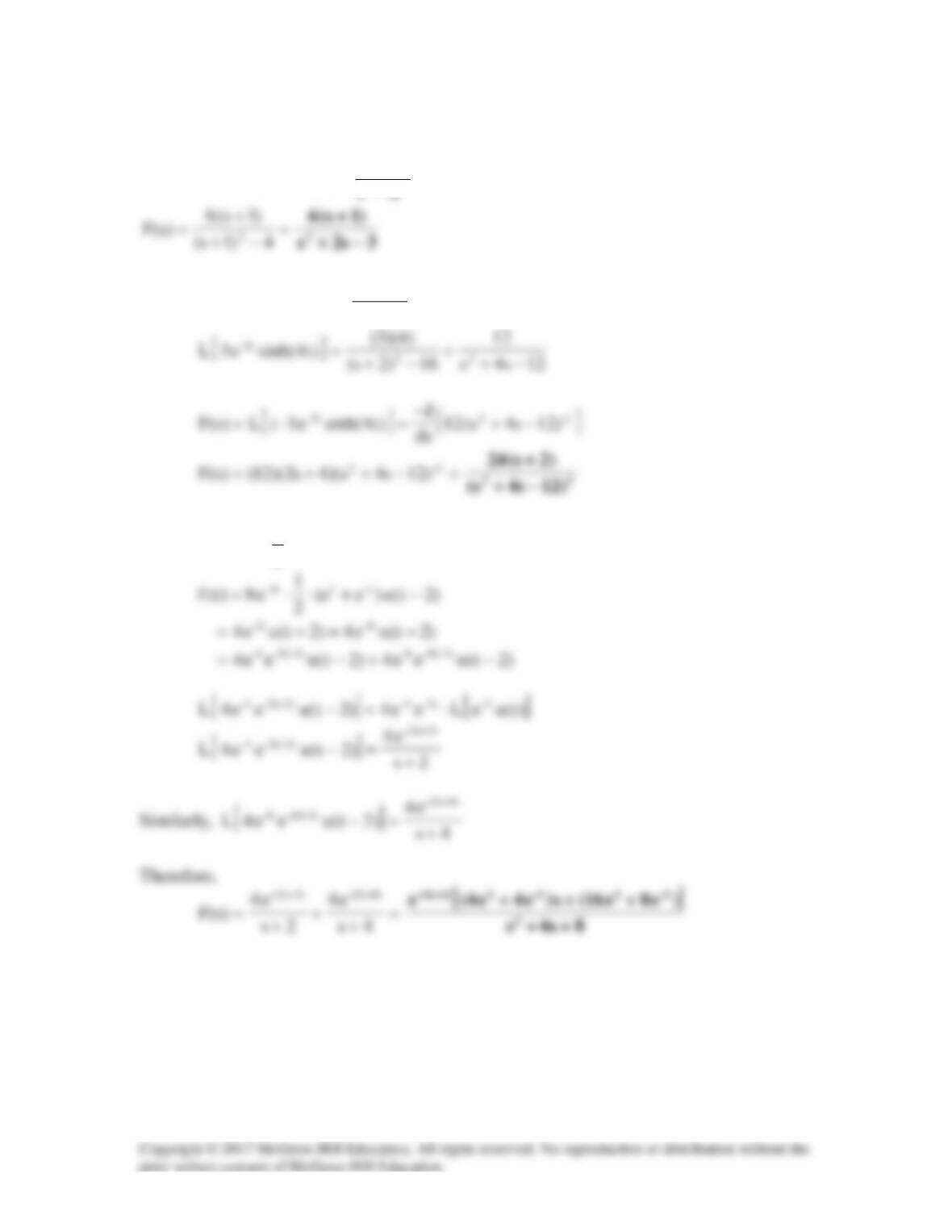
(a) By taking the derivative in the time domain,
)tsin(et)tcos()ee-t()t(g
-t-t-t
−+=
(b) By applying the time differentiation property,
)0(f)s(sF)s(G −=
Solution 15.11
(a) Since
[ ]
22 as
s
)atcosh( −
=L
(b) Since
[ ]
22 as
a
)atsinh( −
=L
(c)
)ee(
2
1
)tcosh( t–t +⋅=
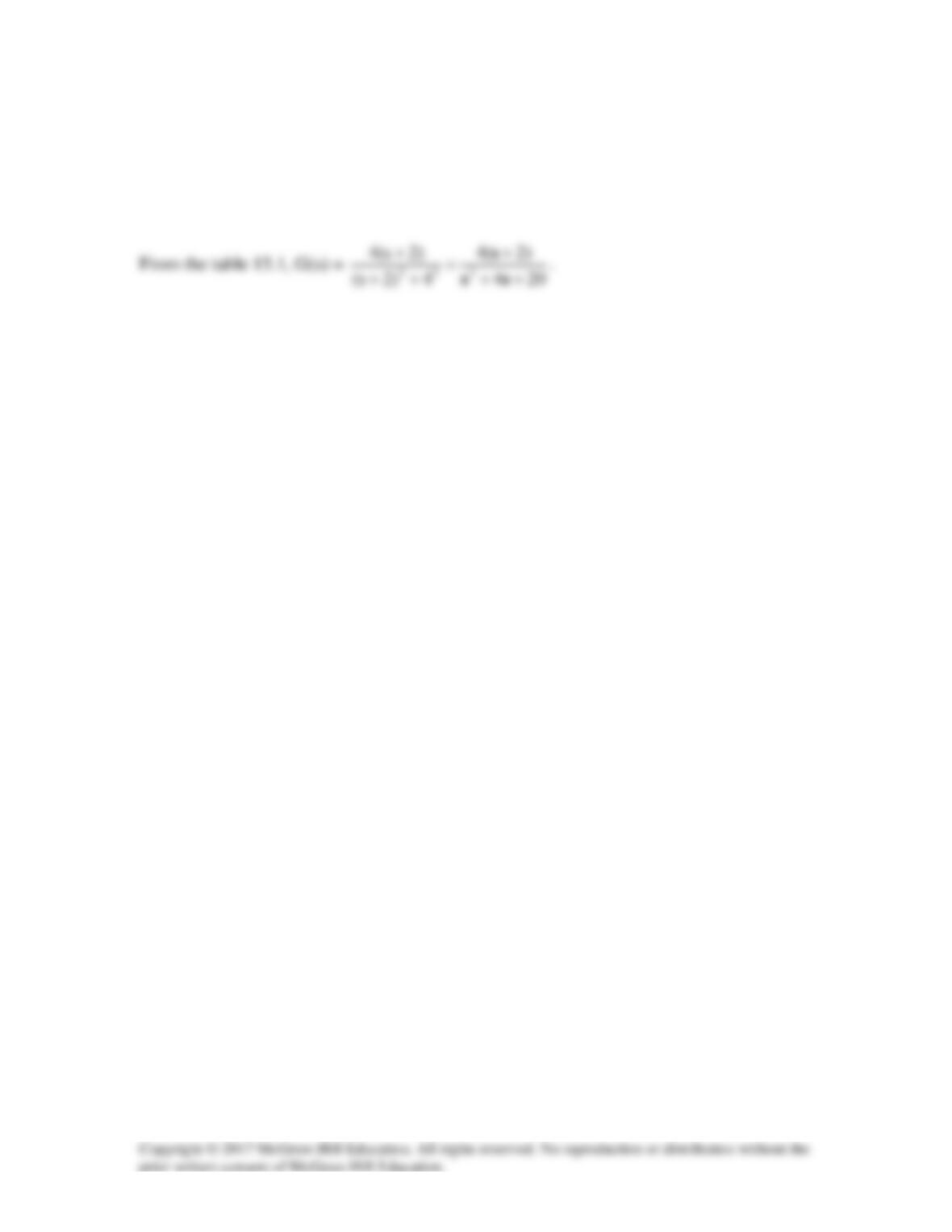
Solution 15.12
If g(t) = 4e–2t cos(4t), find G(s).
Solution
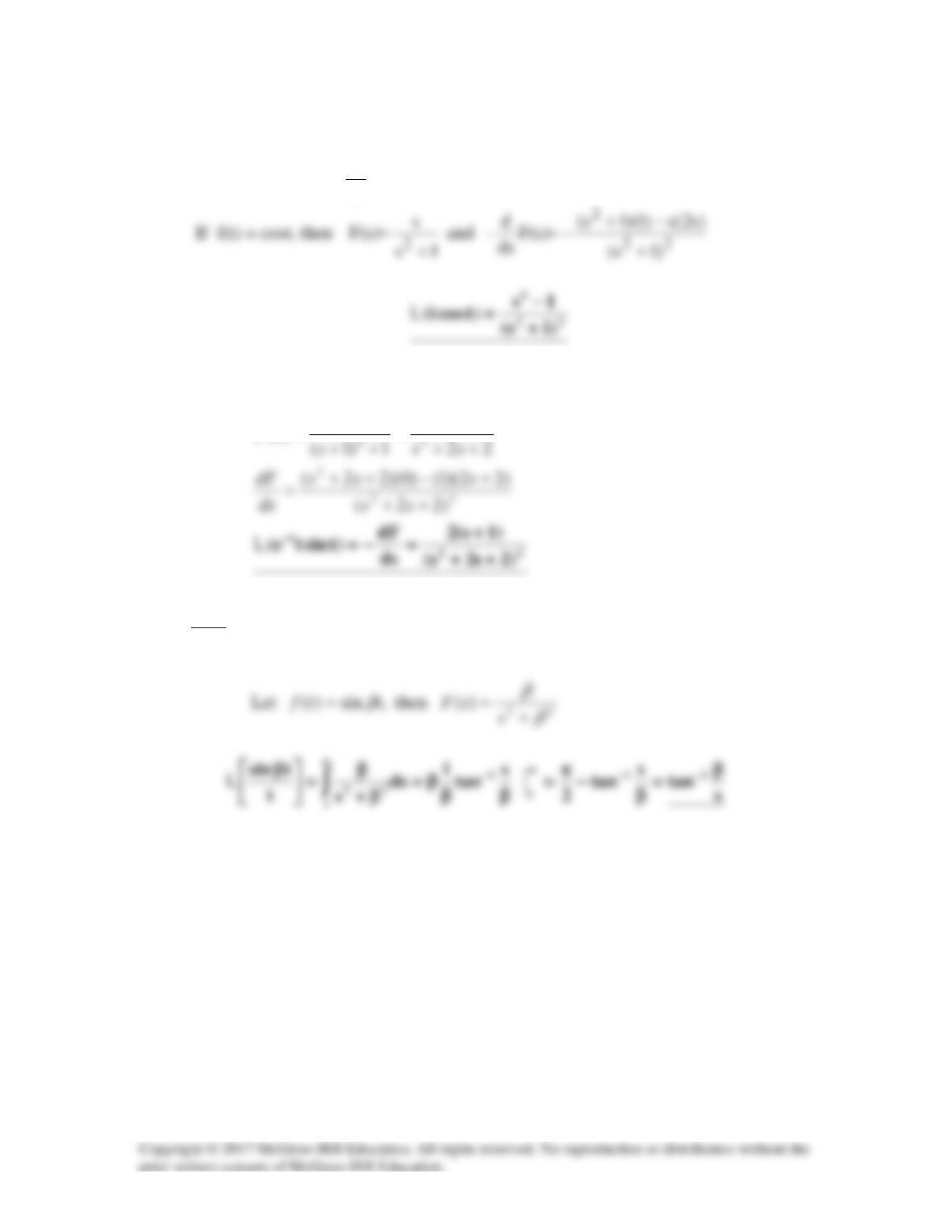
Solution 15.13
(a)
)()( sF
ds
d
ttf −→←
(b) Let f(t) = e-t sin t.
1
1
)( 22 ++
=
=sss
sF
(c )
∫
∞
→←
s
dssF
t
tf )(
)(
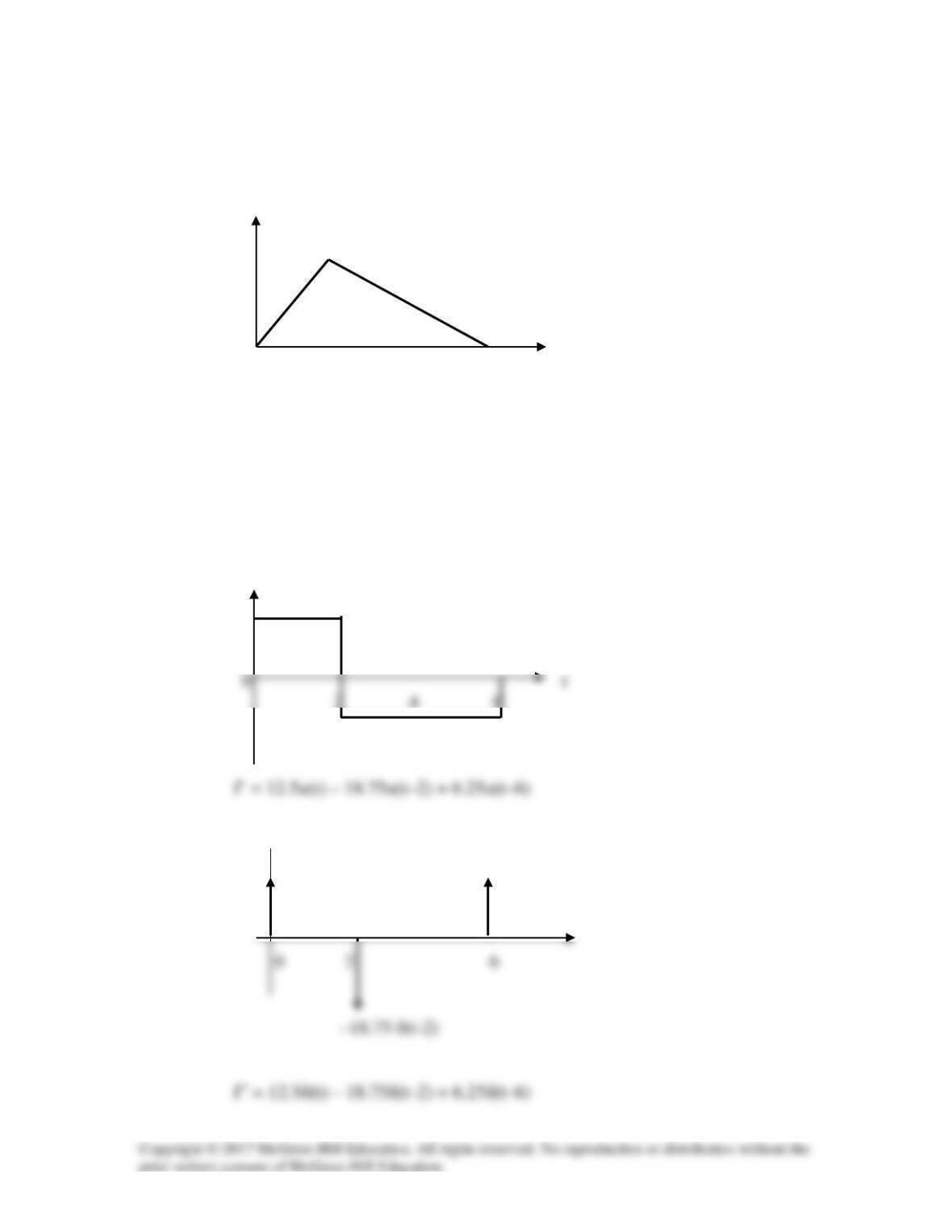
Solution 15.14
Find the Laplace transform of the signal in Fig. 15.26.
f(t)
25
0 2 4 6 t
Figure 15.26
For Prob. 15.14.
Solution
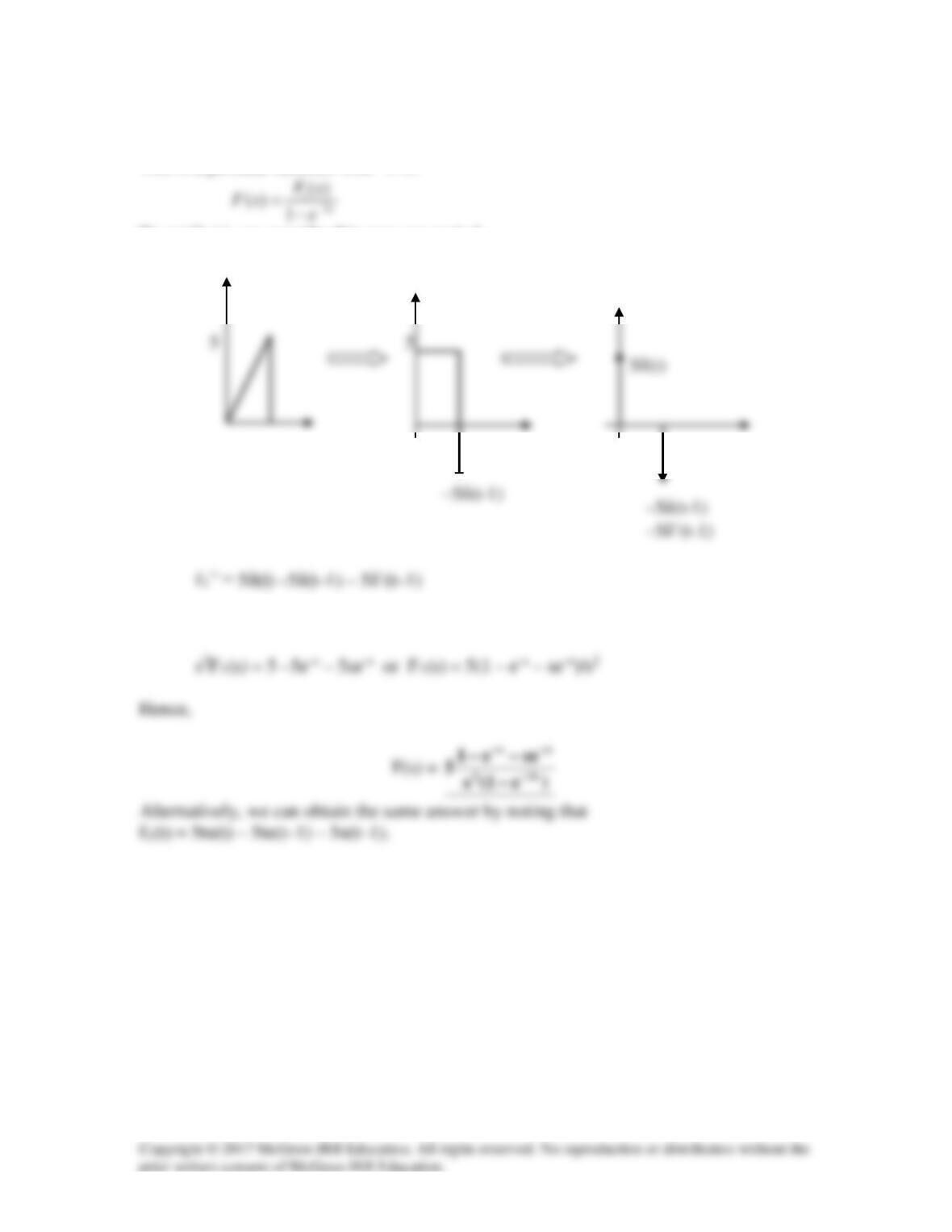
Taking the derivative of f(t) twice, we obtain the figures below.
f’(t)
12.5
–6.25
f’’(t)
12.5
δ
(t) 6.25 δ(t-6)
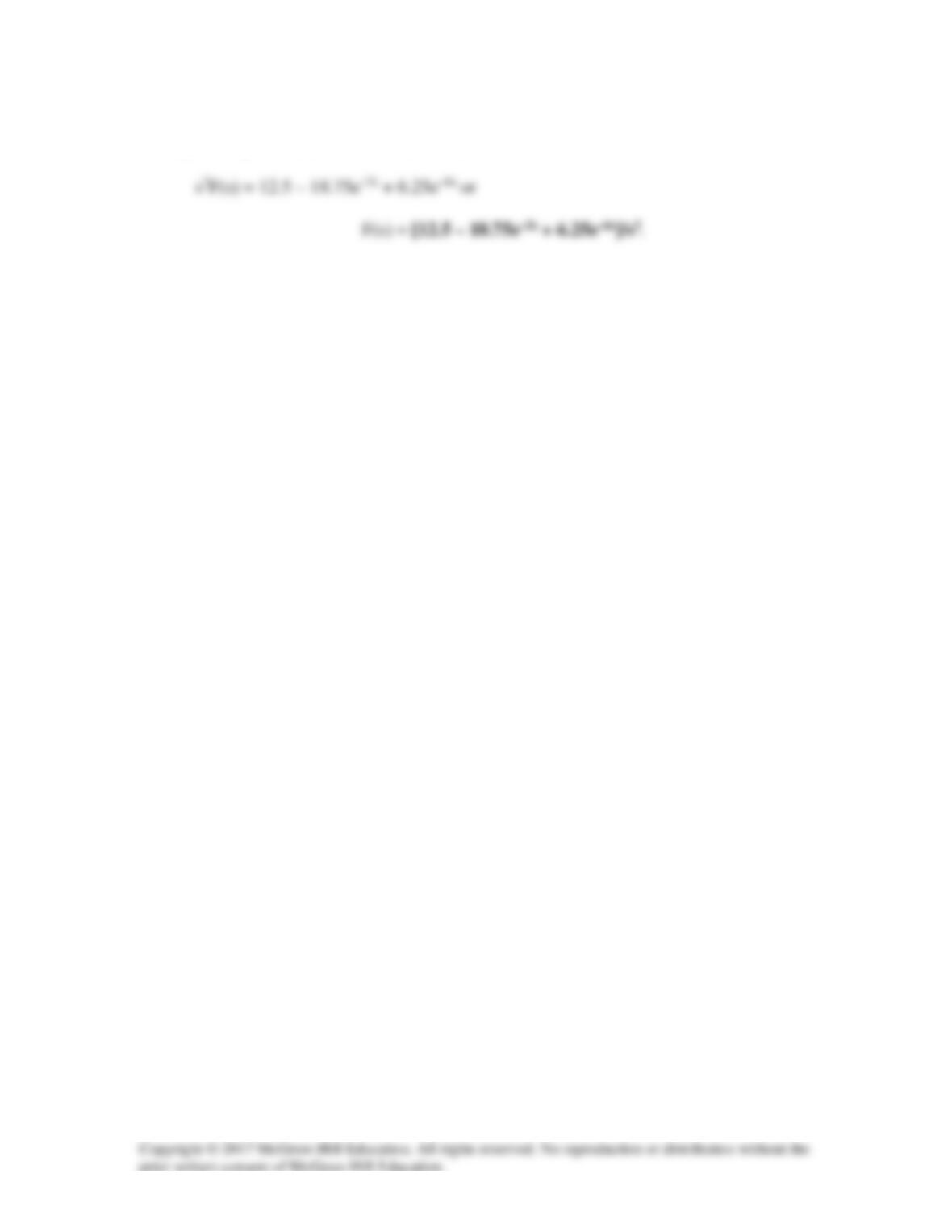
Taking the Laplace transform of each term,
Solution 15.15
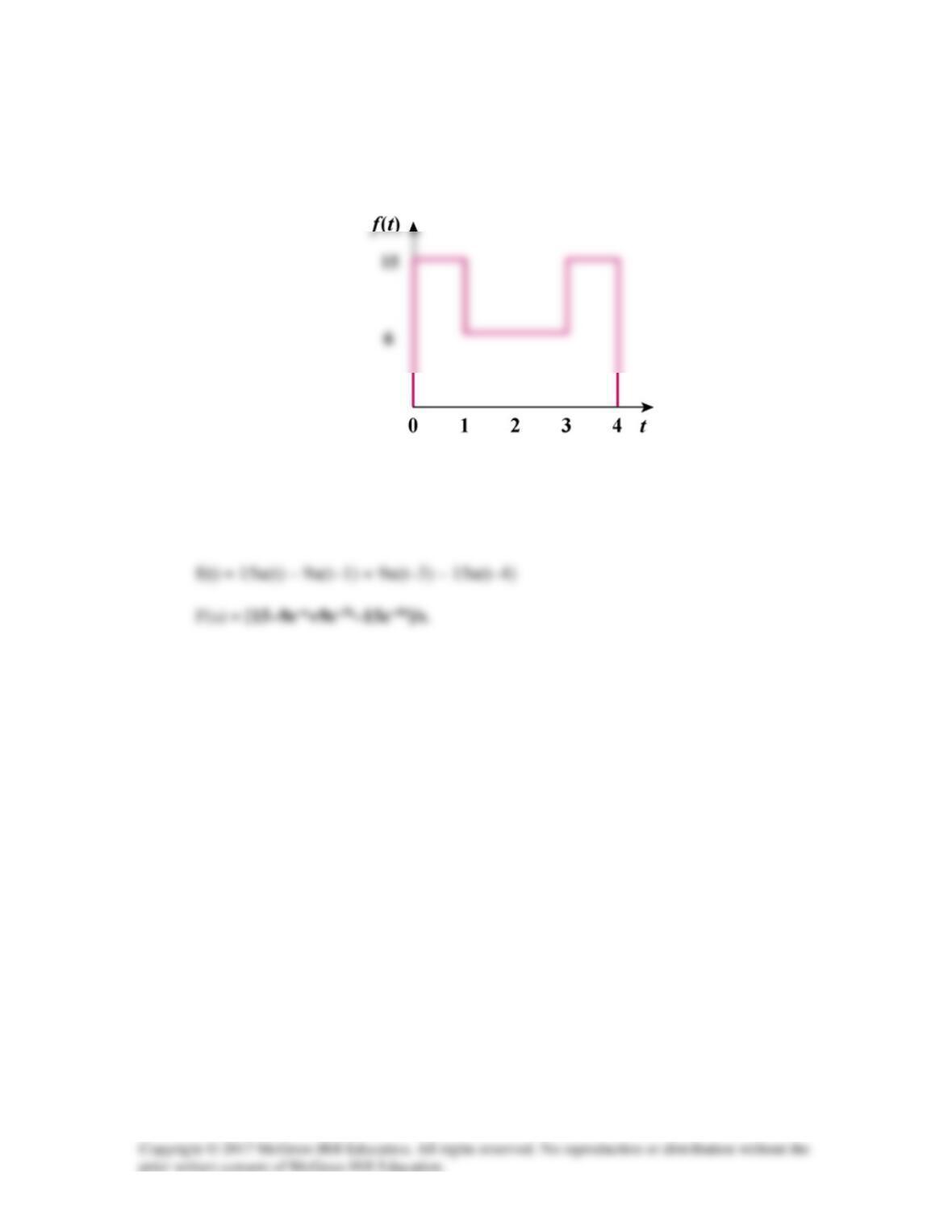
This is a periodic function with T=3.
To get F1(s), we consider f(t) over one period.
f1(t) f1’(t) f1’’(t)
0 1 t 0 1 t 0 1 t
Taking the Laplace transform of each term,
Solution 15.16
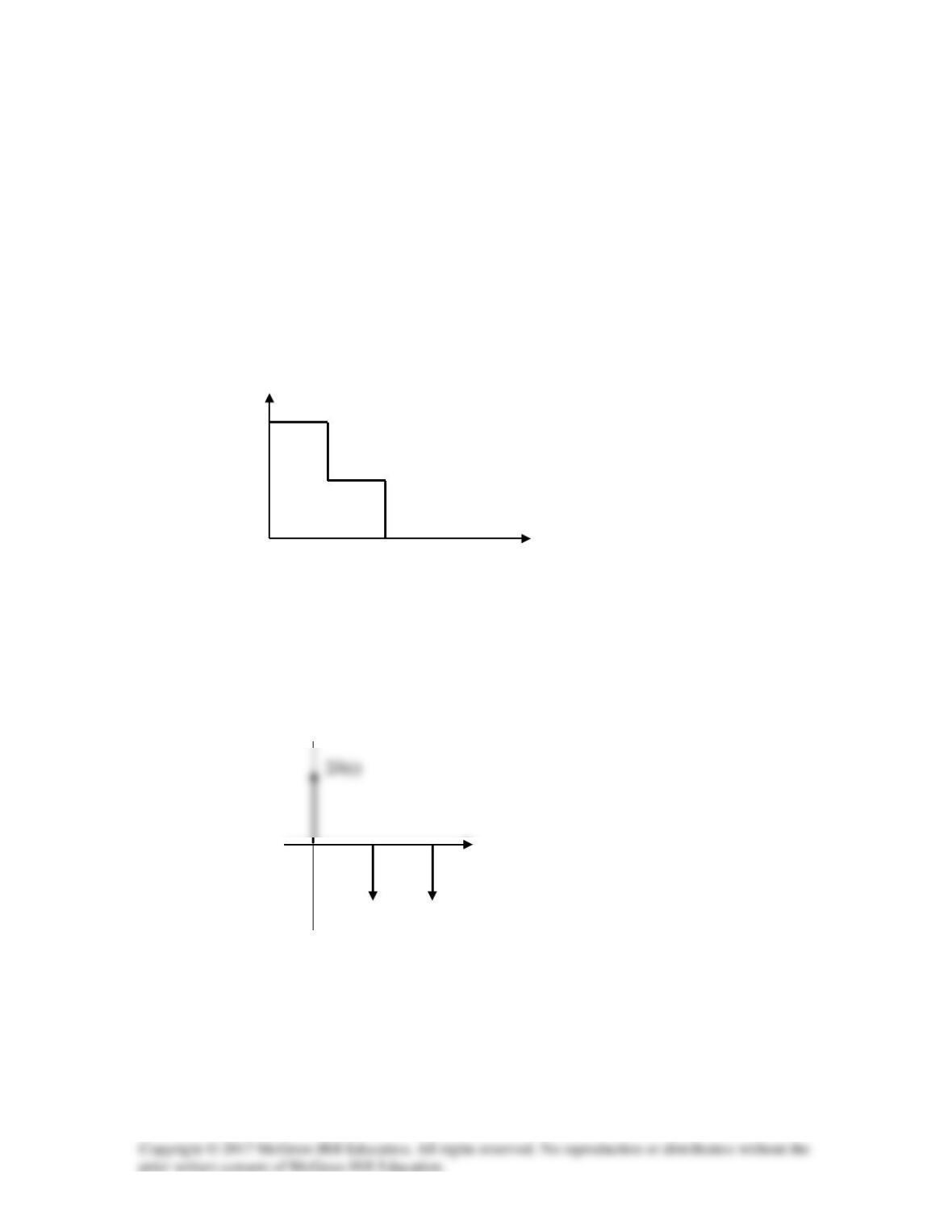
Obtain the Laplace transform of f(t) in Fig. 15.28.
Figure 15.28
For Prob. 15.16.
Solution
Solution 15.17
Using Fig. 15.29, design a problem to help other students to better understand the
Laplace transform of a simple, non-periodic waveshape.
Although there are many ways to solve this problem, this is an example based on the
same kind of problem asked in the third edition.
Problem
Find the Laplace transform of f(t) shown in Fig. 15.29.
f(t)
2
1
0 1 2 t(s)
Figure 15.29 For Prob. 15.17.
Solution
Taking the derivative of f(t) gives f’(t) as shown below.
f’(t)
t
–δ(t-1) – δ(t–2)
f’(t) = 2δ(t) – δ(t–1) – δ(t–2)
Taking the Laplace transform of each term,
sF(s) = 2 – e–s – e–2s which leads to
F(s) = [2 – e–s – e–2s]/s
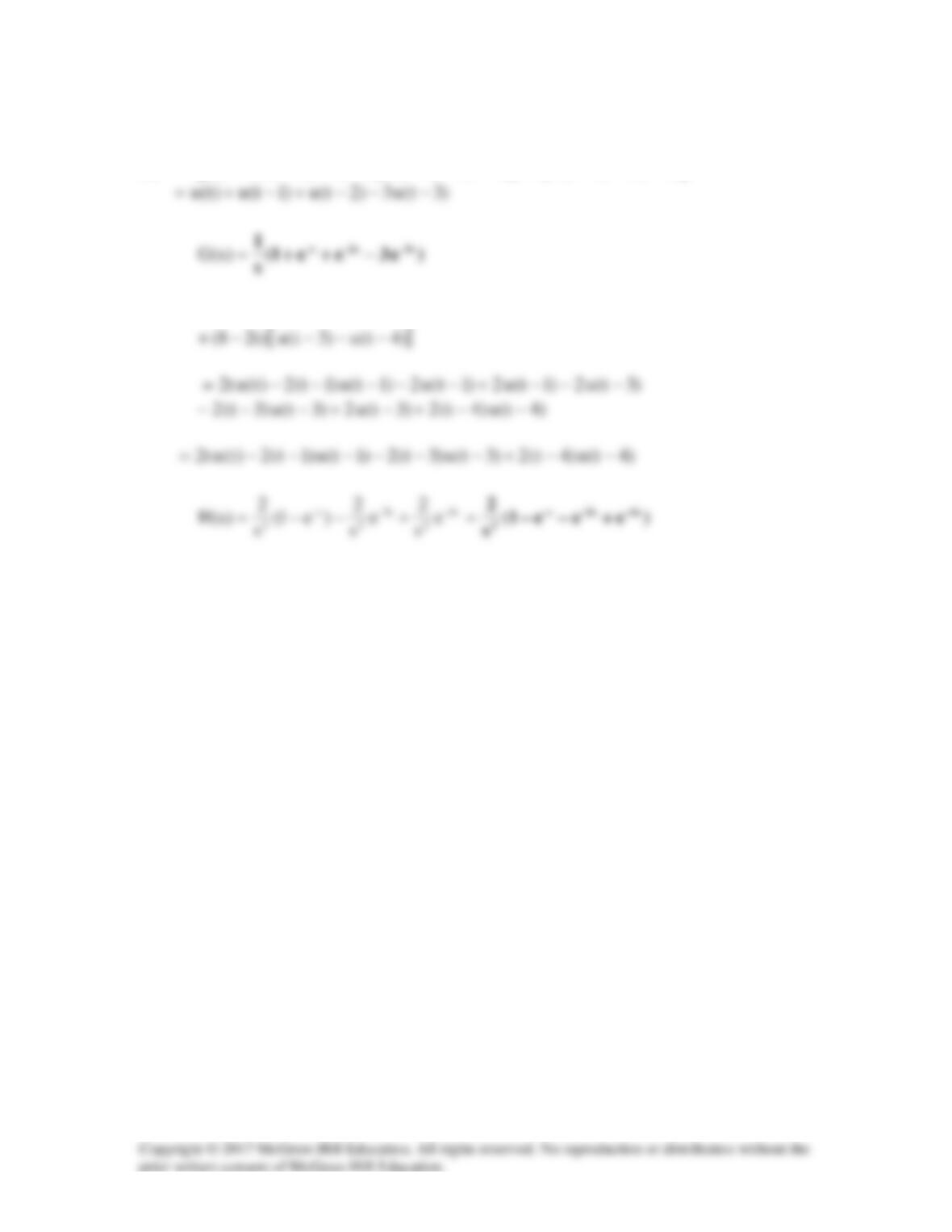
We can also obtain the same answer noting that f(t) = 2u(t) – u(t–1) – u(t–2).
Solution 15.18
(a)
[ ] [ ]
)3t(u)2t(u3)2t(u)1t(u2)1t(u)t(u)t(g −−−+−−−+−−=
(b)
[ ] [ ]
)3t(u)1t(u2)1t(u)t(ut2)t(h −−−+−−=