Accounting Information Systems, 10e 13
Problems
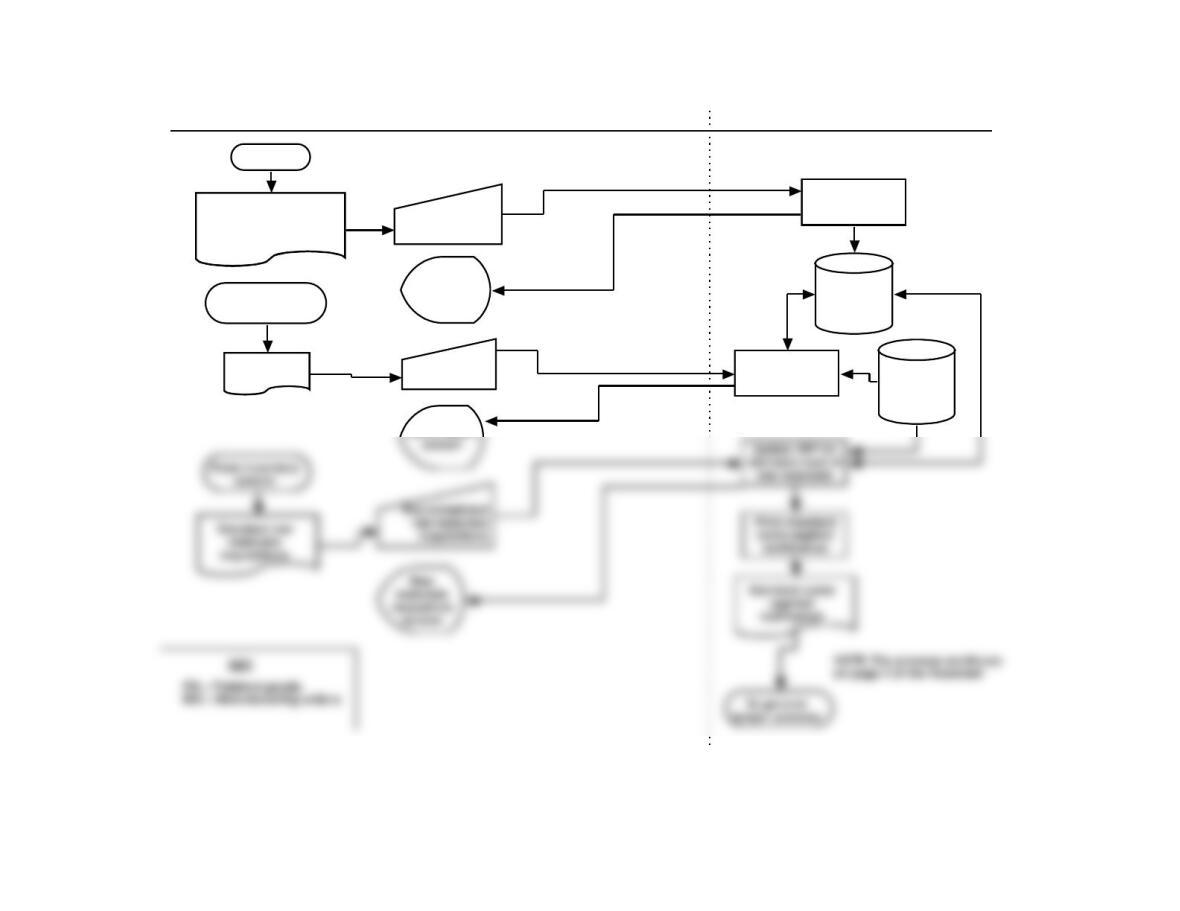
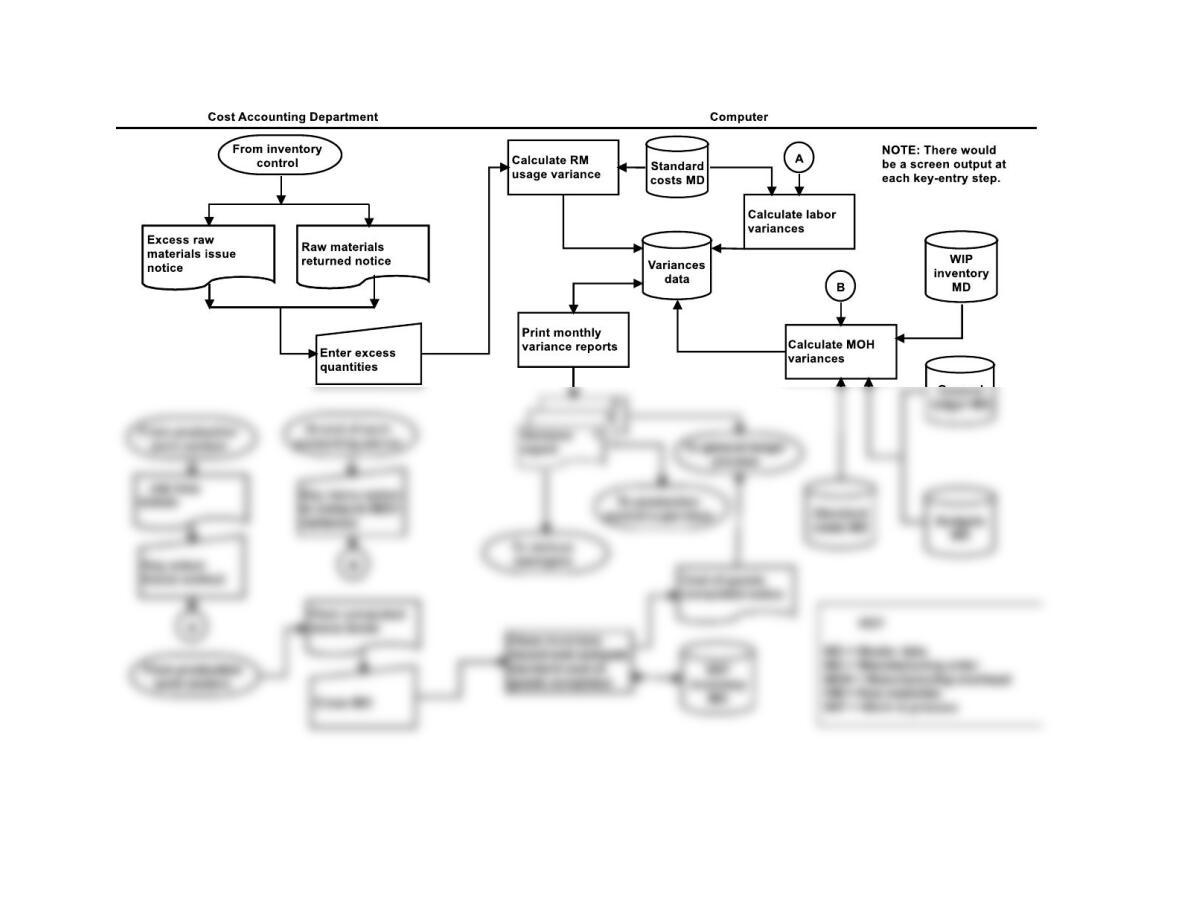
P 15-1 ANS. For solution, see Figure SM-15.6 (Note).
Note: The flowcharts assume the following:
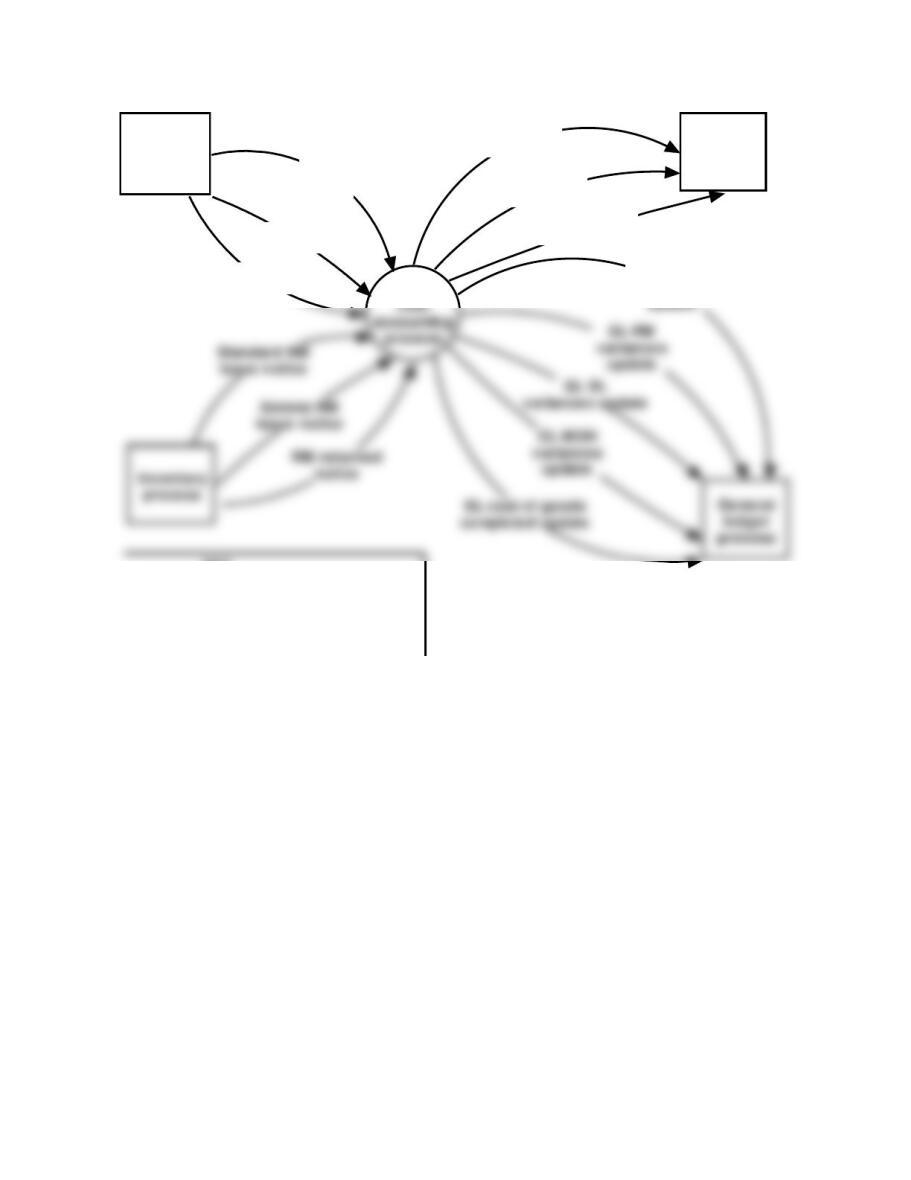
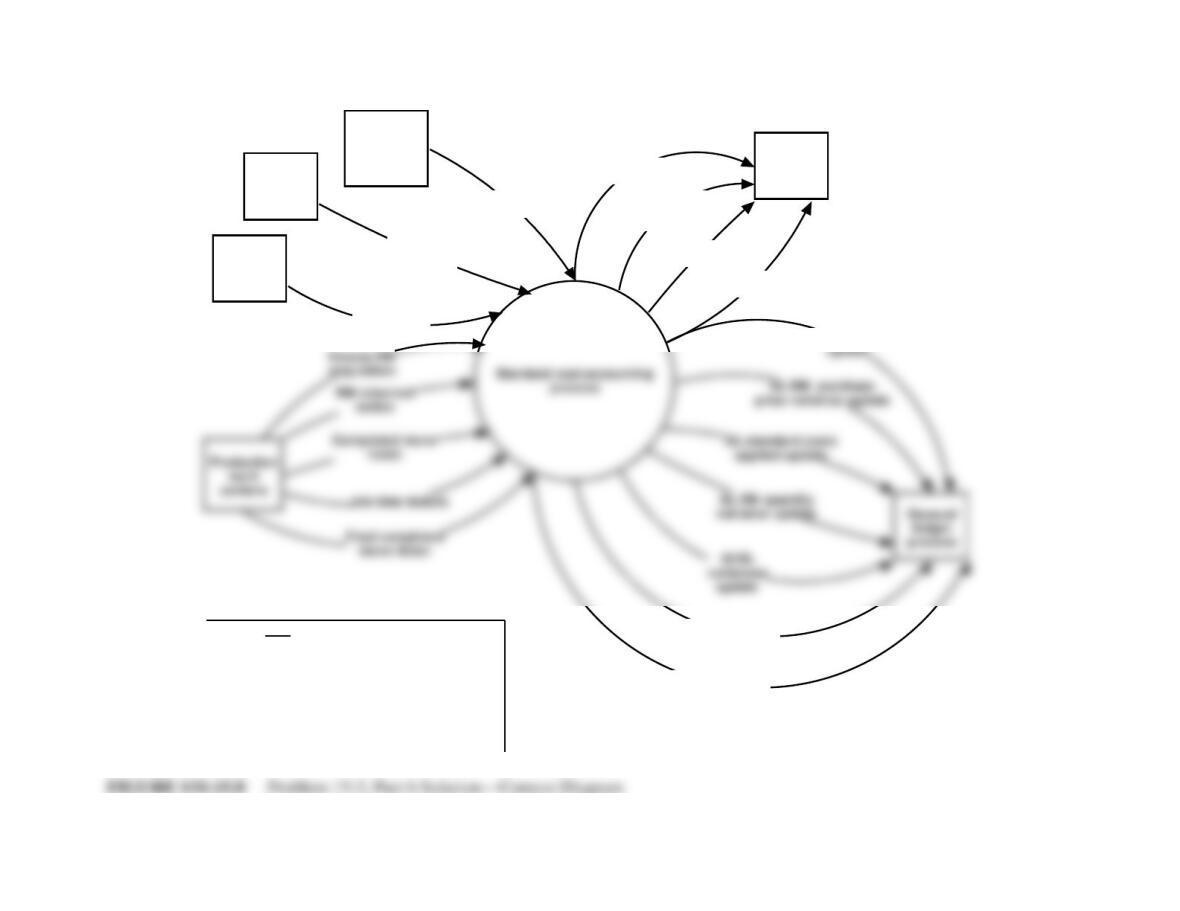
P 15-2 ANS. a. For solution, see Figure SM-15.7.
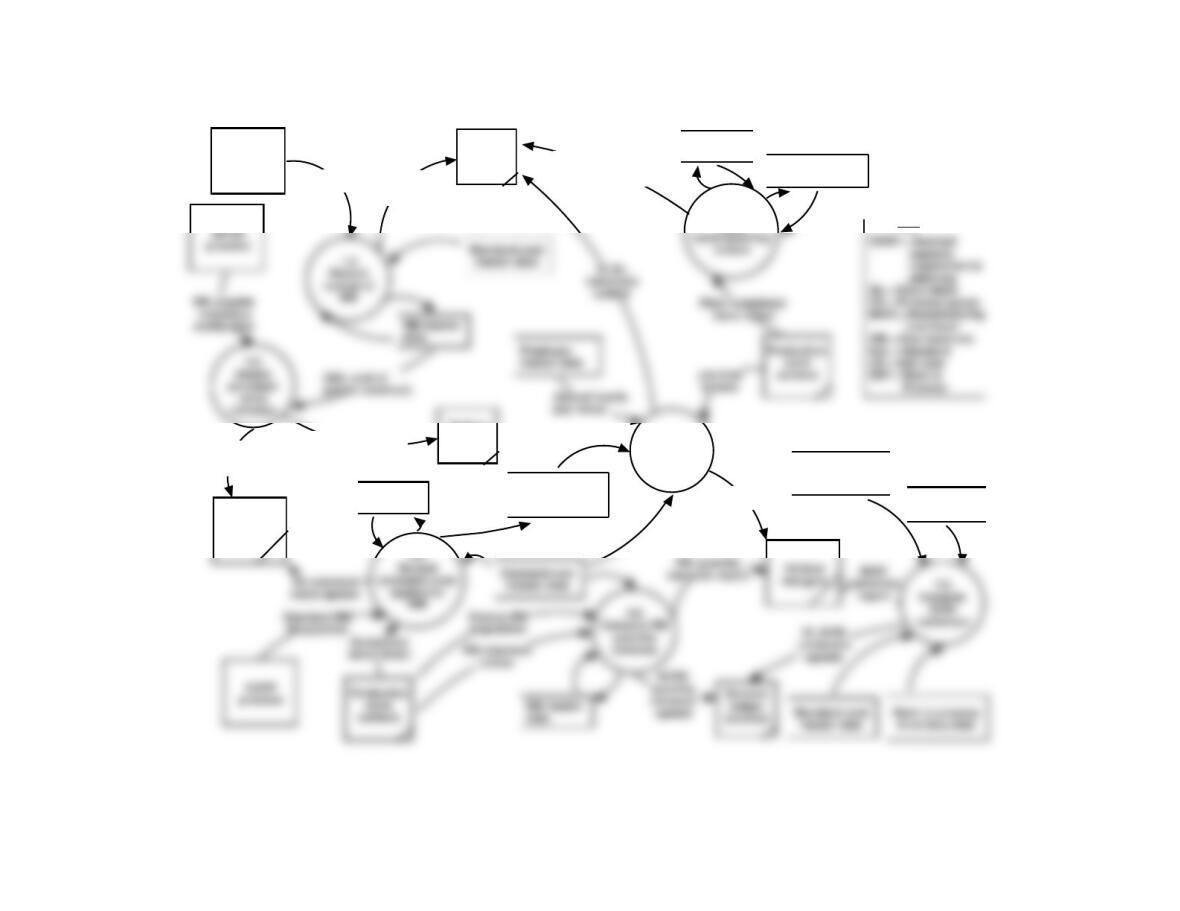
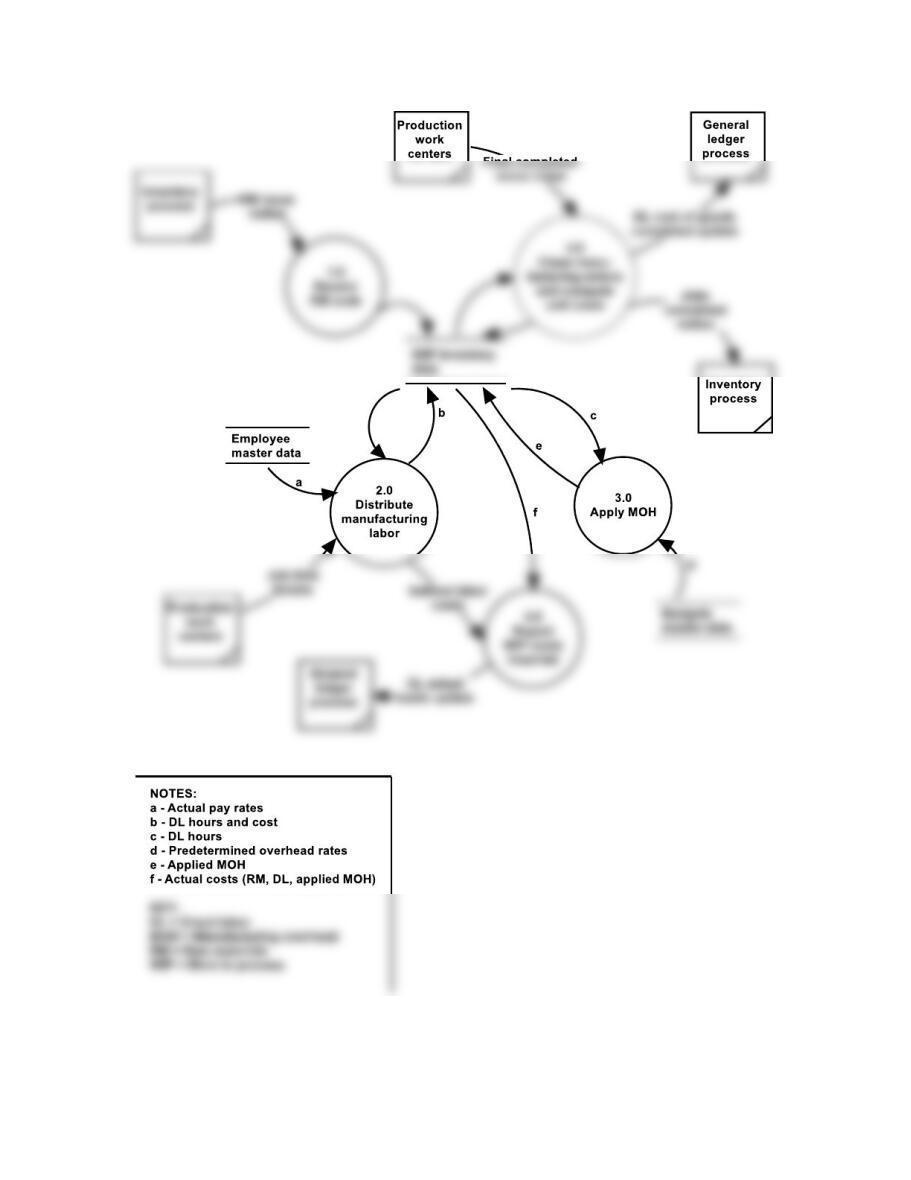
b. For solution, see Figures SM-15.8 and 15.9 (Notes).
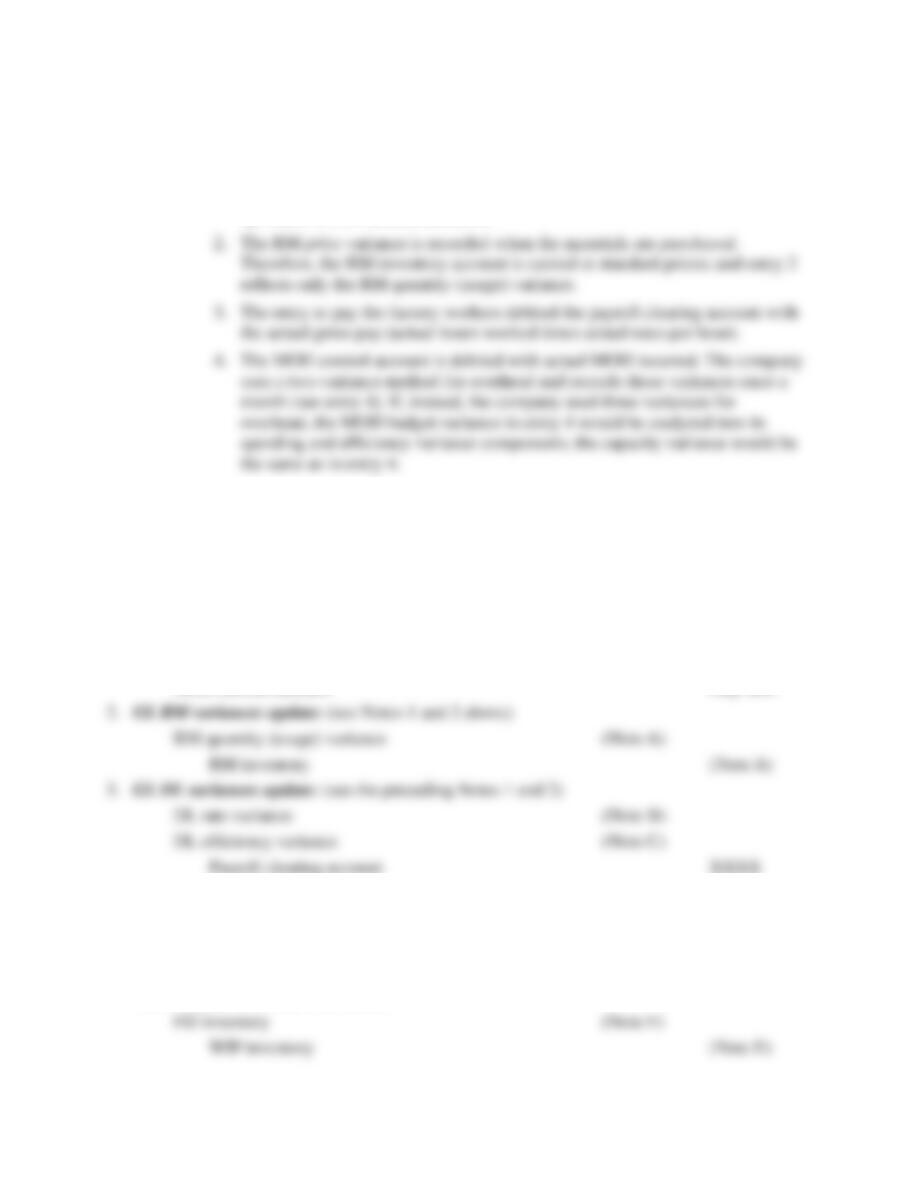
P 15-3 ANS. For solution, see Figure SM-15.10. In addition, see the solution to DQ 15-8 for a
description of the differences between Figure 15.7 in Chapter 15 and Figure SM-
15.10.
14 Solutions for Chapter 15
Create WIP
inventory re cord
Create WIP
inventory re cord
Completed
move ticket
Notification of
manufacturing order
released to production
From DCRP
WIP
inventory
Master data
Cost Accounting De partment Computer
Standard
costs
Master data
From production
work centers
Key complete d
move ticket
Update WIP for
standard labor
and overhe ad
WIP
inventory
record
screen
Move ticket
FIGURE SM-15.6 Problem 15-1, Solution Flowchart, Page 1
Accounting Information Systems, 10e 15
FIGURE SM-15.6 Problem 15-1, Solution Flowchart, Page 2
16 Solutions for Chapter 15
Standard
KEY
RM = Raw materials
DL = Direct labor
MOH = Manufacturing overhead
Various
mangers
Production
work
centers
Move
ticket
data
Job time
data
Final move
ticket data
RM variance
report
DL variance
report
MOH variances
report
GL standard
costs applied
FIGURE SM-15.7 Problem 15-2, Part a Solution
Accounting Information Systems, 10e 17
Various
mangers
DCRP
process
Standard RM
requisition
RM purchase price
variance report
RM quantity
variance
report
DL variance s
report
GL RM rece ived
Purchasing
process
RM payable
inventory
notification
RM rece ipt
notification
MOH variance s
report
KEY
DCRP = Detailed capacity re quirements planning
DL = Direct labor
MOH = M anufacturing overhead
RM = Raw materials
GL MOH variance
update
Gl cost of goods
completed update
AP/CD
process
18 Solutions for Chapter 15
RM receipt
notification
GL RM
receive d
update
General
ledger
proce ss
GL RM purchase
price v ariance
update
RM purchase price
variance re port
RM master
data
5.0
Compute DL
variance s
DL variance
report
6.0
Close
GL cost of goods
complete d update
(de bit FG, credit WIP)
FG maste r
data
Budgets
master data
General ledger
master data
KEY
General
ledger
proce ss
Work in process
inventory
Work in process
inventory data
Various
managers
Purchasing
proce ss
FIGURE SM-15.9 Problem 15-2, Part b Solution—Level 0 DFD
Accounting Information Systems, 10e 19
FIGURE SM-15.10 Problem 15-3 Solution
20 Solutions for Chapter 15
P 15-4 a. ANS. The following assumptions were made in solving part a:
1. All variances are unfavorable (i.e., actual costs exceed standard), resulting in
debits to the variance accounts. If, on the other hand, actual costs were less
than standard costs, the variances would be favorable and would be recorded
by credits to the variance accounts.
Debit Credit
1. GL standard costs applied update:
a. WIP inventory (SQ*SP)
RM inventory (SQ*SP)
b. WIP inventory (SH*SR)
Payroll clearing account (SH*SR)
c. WIP inventory (SQ*SR)
MOH control account (SQ*SR)
4. GL MOH variances update: (see the preceding Notes 1 and 2)
MOH budget variance (Note D)
MOH capacity (volume) variance (Note E)
MOH control account XXXX
5. GL cost of goods completed update:
Accounting Information Systems, 10e 21
Notes:
A – (AQ-SQ)*SP.
B – (AR-SR)*AH.
C – (AH-SH)*SR.
Key:
DL = Direct labor MOH = Manufacturing overhead
RM = Raw materials WIP = Work in process
AR = Actual pay rate per hour SR = Standard pay rate per hour
b. ANS. In addition to the following solution, see the assumptions in part a previously and
the Key in the solution to part a.
1. The following entry would be made to record the purchase of RM:
Debit Credit
2. The following pair of entries would be made to record the sale of goods and related cost of
goods sold:
22 Solutions for Chapter 15
3. Annually, the variance accounts would be closed to cost of goods sold (Note 3) through the
following entry:
Debit Credit
Cost of goods sold XXXX
P 15-5 ANS. The analysis should be structured to address the three areas of concern:
effectiveness of operations, efficiency of operations, and resource security
objectives. First, recognize that effectiveness will be hampered by increased risk
of stock-outs, a limited capability to work in a just-in-time environment, and the
P 15-6 ANS. a. The main concepts conveyed by lean manufacturing include the following:
• Perfect first-time quality
• Waste minimization
Accounting Information Systems, 10e 23
in the modern IPP.
b. Many of these publications argue that traditional cost accounting reports were
developed to present an accurate view of the company to outsiders and
weren’t designed to help managers run their operations better. Well-designed
accounting systems should mitigate that concern. There are many conceptual
parallels between the current trends in cost accounting and lean accounting:
• Both advocate categorizing costs in a cellular fashion. Lean accounting
principles further recommend that companies organize them by value
P 15-7 ANS. The answers to this problem will vary widely based on the companies selected.
We anticipate the student solutions to include many factors, but at some level,
their discussion should include some of the key characteristics of successful
global companies identified early in the chapter. These include the following:
• Improved internal business processes in the areas of customers,
P 15-8 ANS. The answer will vary based on the company selected, although each student
should address the points provided in the text of the question.
P 15-9 ANS. Solutions will vary according to the tables selected. However, the following
guidelines should be helpful for grading the solutions:
1. From the file, ensure that the tables are linked in relationships with cardinalities. See the
solution to SP 15-4 for an example of the E-R diagram needed for this problem.
24 Solutions for Chapter 15