15–74
FINANCIAL STATEMENT ANALYSIS CASES
CASE 1
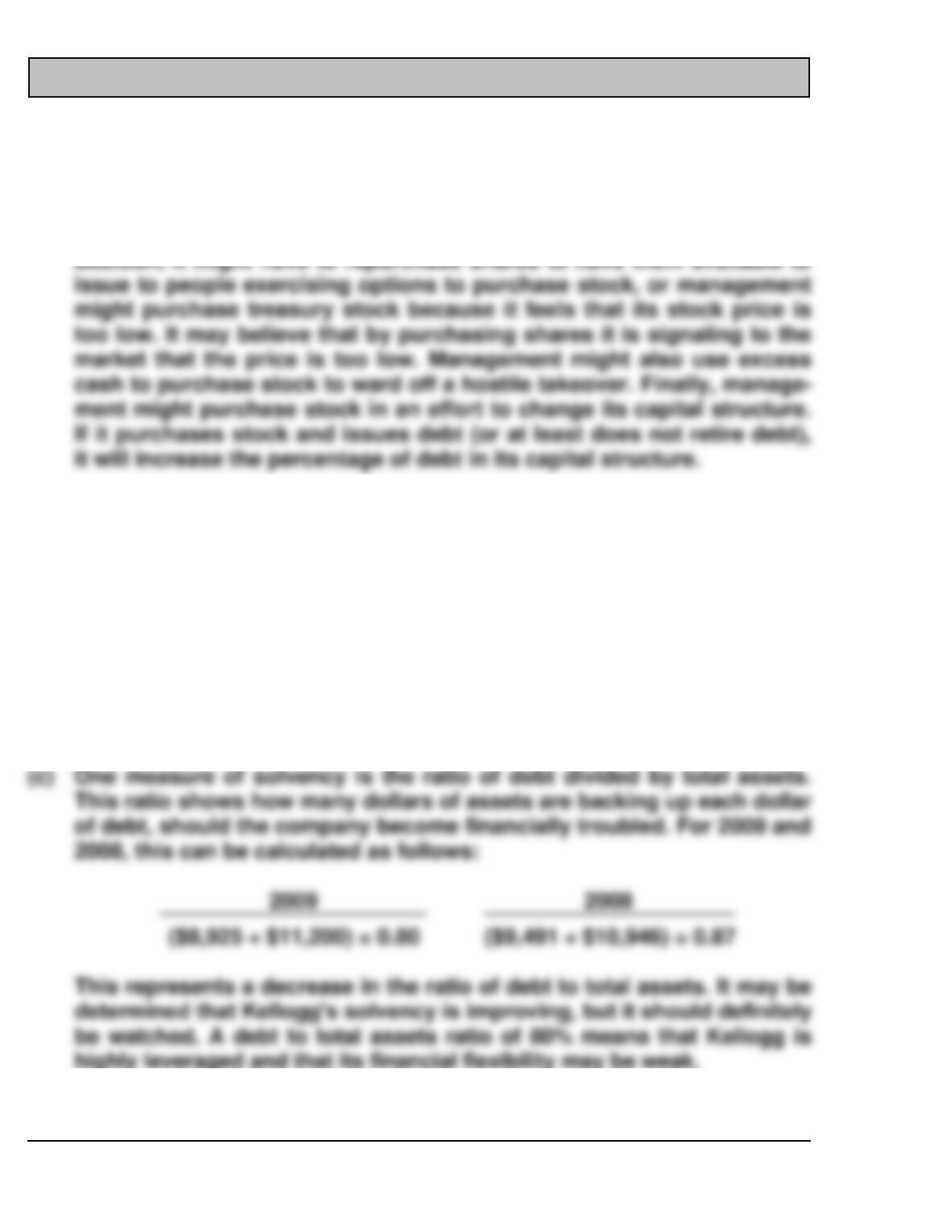
(a) Management might purchase treasury stock to provide to stockholders
a tax-efficient method for receiving cash from the corporation. In
(b) Earnings per share is calculated by dividing net income by the weighted
average number of shares outstanding during the year.
If shares are reduced by treasury stock purchases, the denominator
(weighted-average number of shares outstanding) is reduced. As a
result, earnings per share is often increased. However, because corpo-
rate assets are reduced by the purchase of the treasury stock, earnings
potential may decrease. If this occurs, the effect on earnings per share
may be mitigated.
15–75
FINANCIAL STATEMENT ANALYSIS CASES (Continued)
CASE 2
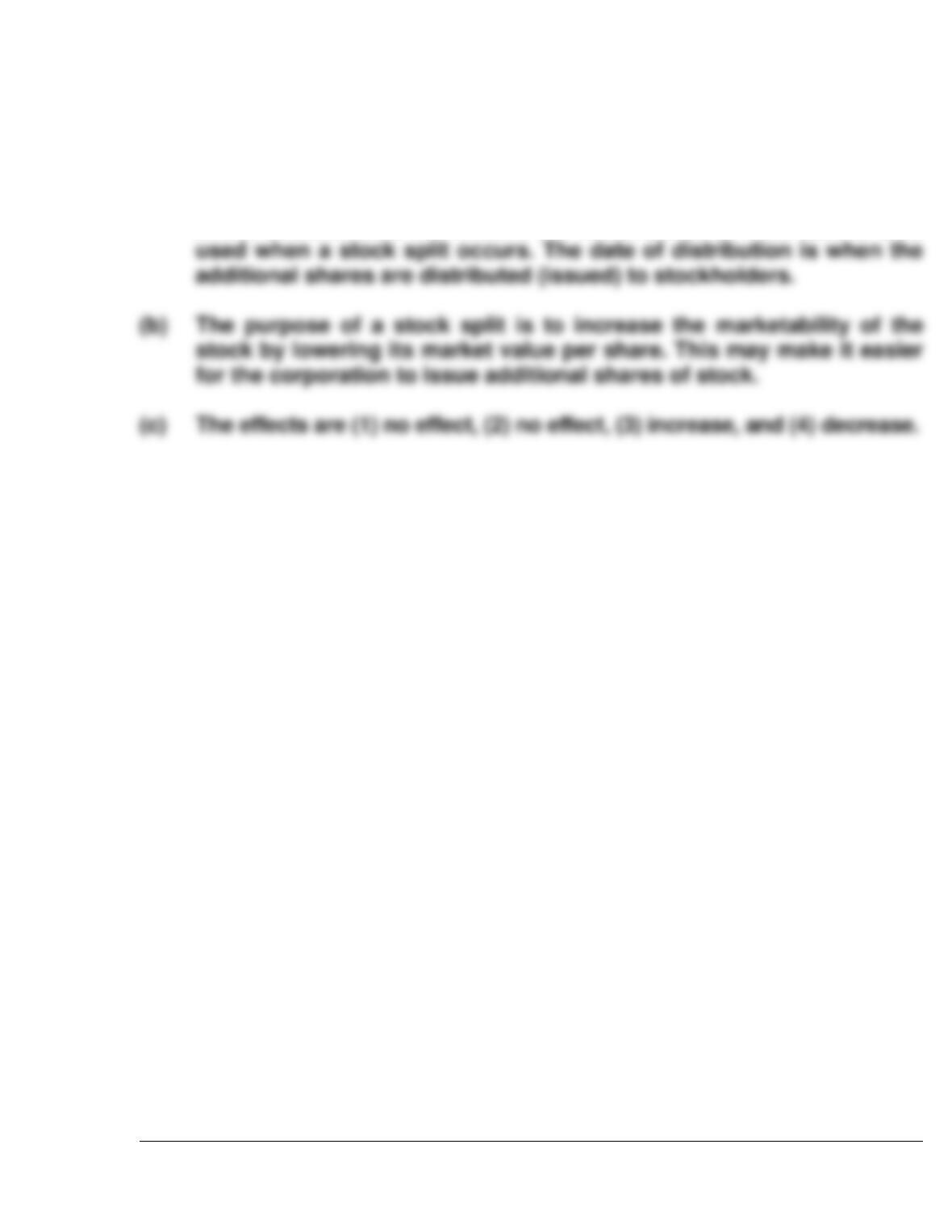
(a) The date of record marks the time when ownership of the outstanding
shares is determined for dividend purposes. This in turn identifies
which shareholders will receive the stock dividend. This date is also
15–76
ACCOUNTING, ANALYSIS, AND PRINCIPLES
Accounting
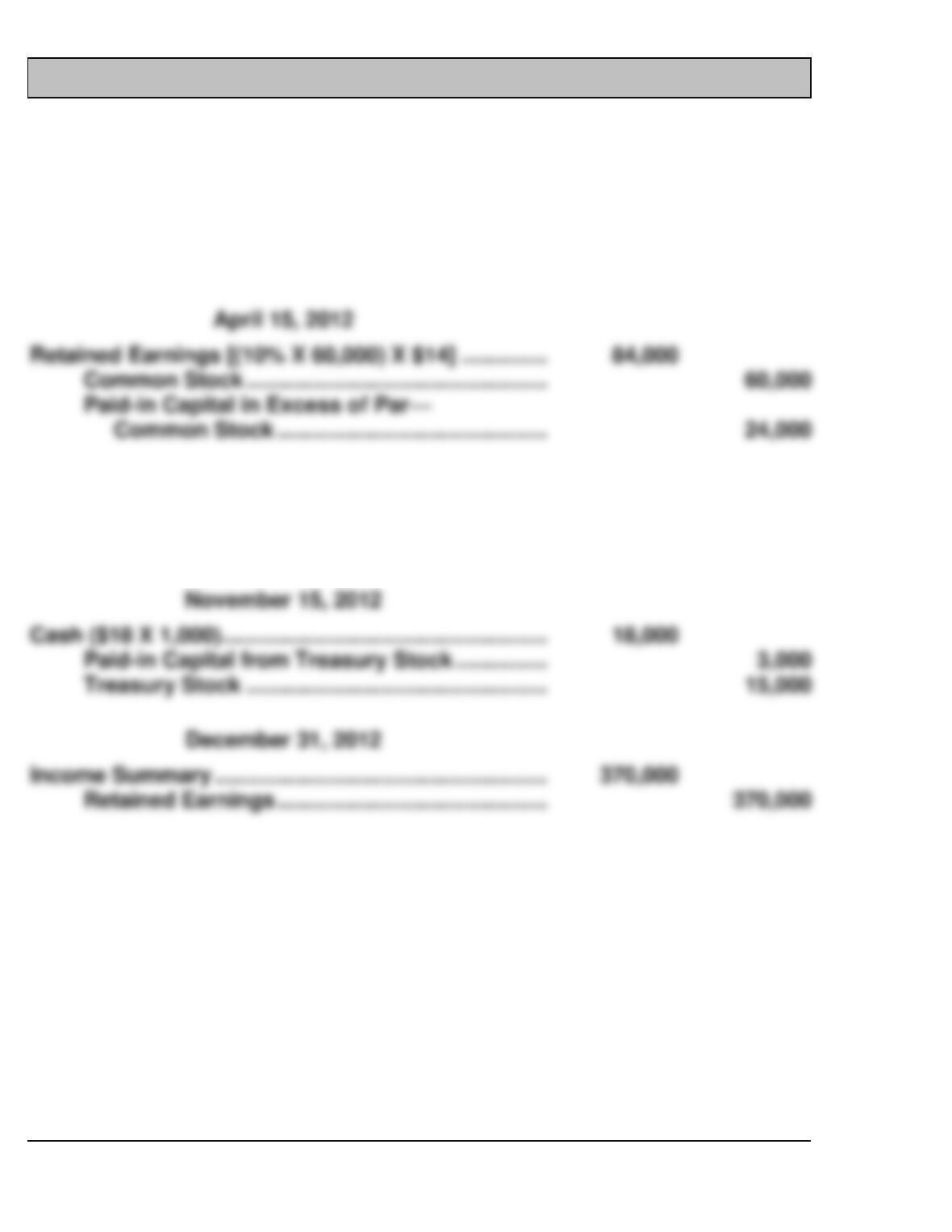
January 13, 2012
Retained Earnings ($1.05 X 60,000) ………………………….
63,000
Cash ………………………………………………………………
63,000
May 15, 2012
Treasury Stock (2,000 X $15) ……………………………………
30,000
Cash ………………………………………………………………
30,000
Cash ($18 X 1,000) …………………………………………………..
18,000
Paid-in Capital from Treasury Stock …………………
Treasury Stock ……………………………………………….
15,000
Income Summary ……………………………………………………
Retained Earnings …………………………………………..
Retained Earnings [(10% X 60,000) X $14] ………………..
84,000
15–77
ACCOUNTING, ANALYSIS, AND PRINCIPLES (Continued)
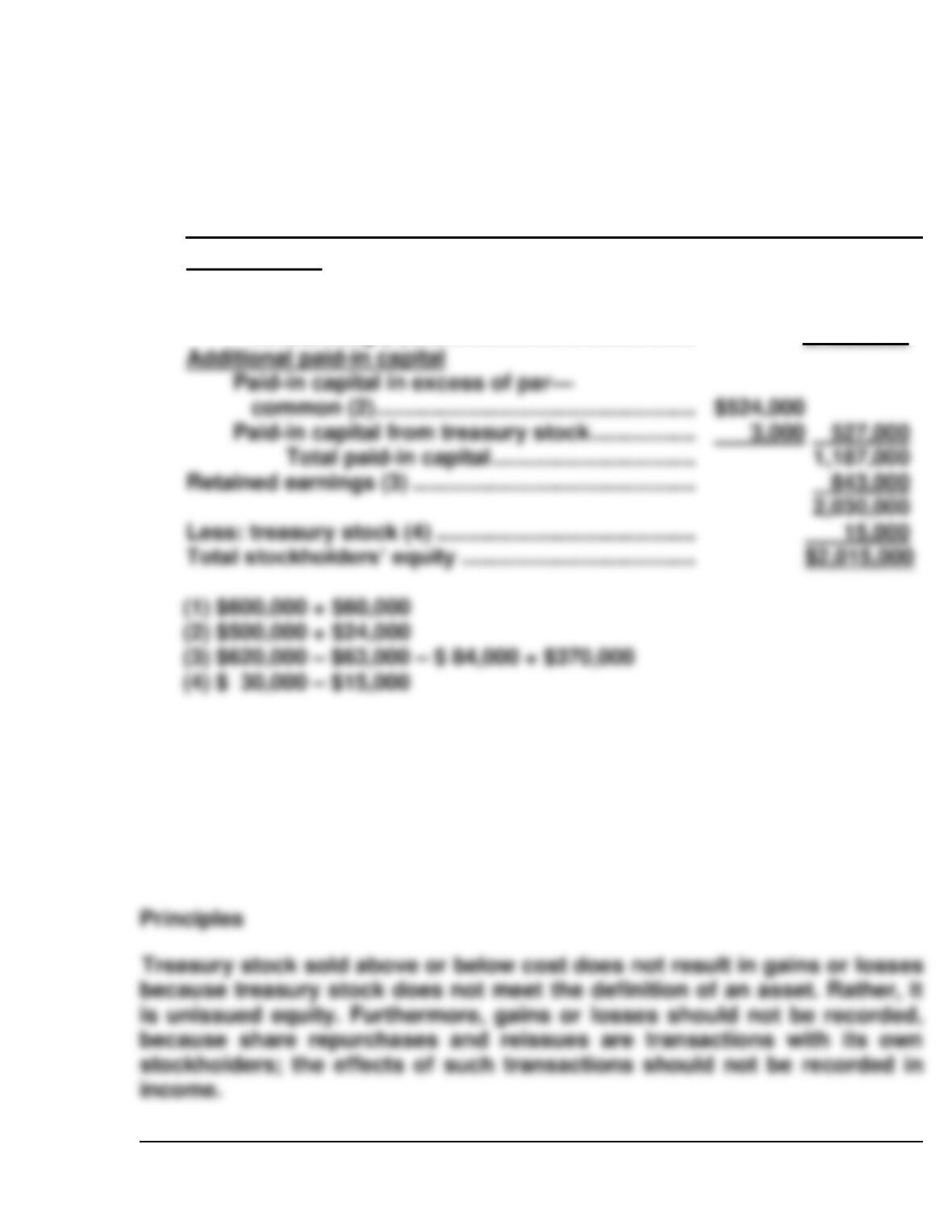
The ending balances are indicated in the following partial balance sheet:
AGASSI CORPORATION
Statement of Financial Position (partial)
December 31, 2012
Capital stock
Common stock—par value $10 per share,
66,000 shares issued and
outstanding (1) ………………………………………. $ 660,000
Analysis
Payout ratio: $63,000 ÷ $ 370,000 = 17%
Return on common stock equity:
$370,000 ÷ [($1,720,000 + $2,105,000) ÷ 2] = 19.3%
15–78
PROFESSIONAL RESEARCH
(a) See FASB ASC 505-10–50.
(b) (FASB ASC 505-10–20.—Glossary)
1. Security—is defined as evidence of debt or ownership or a related
right. It includes options and warrants as well as debt and stock.
3. Preferred stock—is a security that has preferential rights compared
to common stock.
(c) FASB ASC 505-10–50-3. An entity shall explain, in summary form within
its financial statements, the pertinent rights and privileges of the
15–79
PROFESSIONAL SIMULATION
Explanation
(a) Common stock represents an owner’s claim against a portion of the
total assets of the corporation. As a result, it is a residual interest. It
therefore is part of stockholders’ equity.
(c) “Accumulated other comprehensive loss” is the sum of all previous
“other comprehensive income and loss” amounts. A number of items
may be included in the accumulated other comprehensive loss. Among
these items are foreign currency translation adjustments, unrealized hold-
ing gains and losses for available-for-sale securities and others.
Analysis
$(581) ÷ 161.156* = $(3.61)
15–80
IFRS CONCEPTS AND APPLICATION
IFRS15-1
IFRS15-2
Key similarities between IFRS and GAAP for transactions related to
stockholders’ equity pertain to (1) issuance of shares, (2) purchase of
treasury shares, (3) declaration and payment of dividends, (4), the costs
associated with issuing shares reduce the proceeds from the issuance and
reduce contributed (paid-in) capital, and (5) the accounting for par, no par
and no par shares with a stated value.
IFRS15-3
It is likely that the statement of stockholders’ equity and its presentation
will be examined closely in the financial statement presentation project. In
addition the options of how to present other comprehensive income under
GAAP will change in any converged standard in this area.
15–81
IFRS15-4
No, Mary should not make that conclusion. While IFRS allows unrealized
losses on non-trading equity investments to be reported under “Reserves”,
U.S. GAAP requires these losses to be reported as other comprehensive
income. Specifically, unrealized losses are reported in the Accumulated
Other Comprehensive Income (Loss) account under U.S. GAAP.
IFRS15-6
The answers are summarized in the table below:
Account Classification
(a) Share Capital—Ordinary Share capital
(b) Retained Earnings Retained earnings
(c) Share Premium—Ordinary Share premium
15–82
IFRS15-7
Cash ………………………………………………………………………. 4,500
Share Capital—Ordinary (300 X $10) ………………….. 3,000
Share Premium—Ordinary ………………………………… 1,500
IFRS15-8
IFRS15-9
Cash ………………………………………………………………………. 13,500
Share Capital—Preference (100 X $50)……………….. 5,000
Share Premium—Preference ……………………………… 3,100
Share Capital—Ordinary (300 X $10) ………………….. 3,000
Share Premium—Ordinary ………………………………… 2,400
15–83
IFRS15-10
(a) $1,000,000 X 6% = $60,000; $60,000 X 3 = $180,000. The cumulative
dividend is disclosed in a note to the equity section; it is not reported
as a liability.
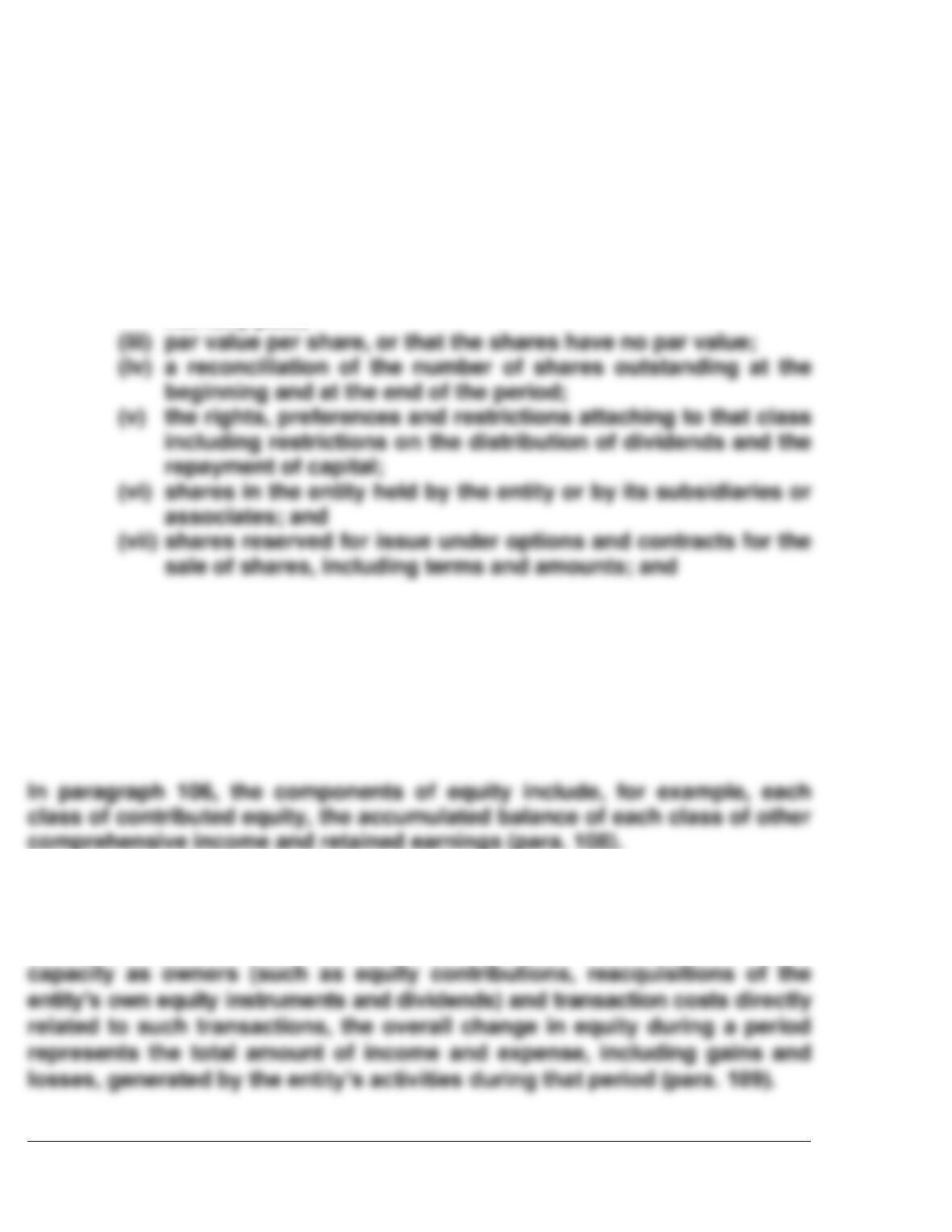
IFRS15–11
TELLER CORPORATION
Partial Statement of Financial Position
December 31, 2012
Equity
Share capital—preference, €4 cumulative,
par value €50 per share; authorized
15–84
IFRS15-12
(a) IAS 1 addresses disclosure of information about capital structure.
(b) An entity shall disclose the following, either in the statement of
financial position or the statement of changes in equity, or in the notes:
(a) for each class of share capital:
(i) the number of shares authorised;
(ii) the number of shares issued and fully paid, and issued but
not fully paid;
(b) a description of the nature and purpose of each reserve within
equity (para. 79).
An entity shall present, either in the statement of changes in equity or in
the notes, the amount of dividends recognised as distributions to owners
during the period, and the related amount per share (para. 107).
comprehensive income and retained earnings (para. 108).
Changes in an entity’s equity between the beginning and the end of the
reporting period reflect the increase or decrease in its net assets during the
period. Except for changes resulting from transactions with owners in their
15–85
IFRS15-12 (Continued)
IAS 8 requires retrospective adjustments to effect changes in accounting
policies, to the extent practicable, except when the transition provisions in
another IFRS require otherwise. IAS 8 also requires restatements to correct
errors to be made retrospectively, to the extent practicable. Retrospective
IFRS15–13
(a) M&S’s does not have any preference shares.
(b) M&S’s ordinary shares have a par value of 25p per share. Like many
companies, the par value of M&S’s ordinary shares is small relative to
its market value.
(e) The cash dividends caused M&S’s Retained Earnings to decrease by
£236.0 million.
(f) Return on ordinary share equity: