CHAPTER 15
Managerial Accounting
ASSIGNMENT CLASSIFICATION TABLE
Learning Objectives
Questions
Brief
Exercises
Do It!
Exercises
A
Problems
*1. Identify the features of
managerial accounting and
the functions of
management.
1, 2, 3, 4, 5,
6, 7, 8
1, 2
1
1
*2. Describe the classes of
manufacturing costs and the
9, 11, 12, 13,
2
and prepare financial
manufacturer.
18, 19, 20, 21
accounting.
ASSIGNMENT CHARACTERISTICS TABLE
Problem
Number
Description
Difficulty
Level
Time
Allotted (min.)
1A
Classify manufacturing costs into different categories and
compute the unit cost.
Simple
20–30
2A
Classify manufacturing costs into different categories and
compute the unit cost.
Simple
an income statement, and a partial balance sheet.
income statement, and a partial balance sheet.
correct income statement.
BLOOM’ S TAXONOMY TABLE
Correlation Chart between Bloom’s Taxonomy, Learning Objectives and End–of-Chapter Exercises and Problems
Learning Objective
Knowledge
Comprehension
Application
Analysis
Synthesis
Evaluation
* 1. Identify the features of managerial
accounting and the functions of
management.
Q15-1
Q15-2
Q15-3
Q15-4
Q15-5
Q15-6
Q15-7
Q15-8
BE15-1
BE15-2
DI15-1
E15-1
* 3. Demonstrate how to compute cost of
goods manufactured and prepare
financial statements for a
manufacturer.
Q15–19
Q15–10
Q15–20
Q15–21
E15–15
Q15–15
Q15–16
Q15–17
Q15–18
BE15-7
BE15-8
BE15-9
BE15-10
DI15-3
E15-8
E15-9
E15–12
E15–13
E15–14
E15–16
E15–17
P15–4A
E15–10
E15–11
P15–3A
P15–5A
Q15-24
DI15-4
E15–18
CD15
BYP15–3
BYP15-4
BYP15-7
BE15-4
BE15-5
ANSWERS TO QUESTIONS
1. (a) Disagree. Managerial accounting is a field of accounting that provides economic and financial
information for managers and other internal users.
(b) Joe is incorrect. Managerial accounting applies to all types of businesses—service, merchandising,
and manufacturing.
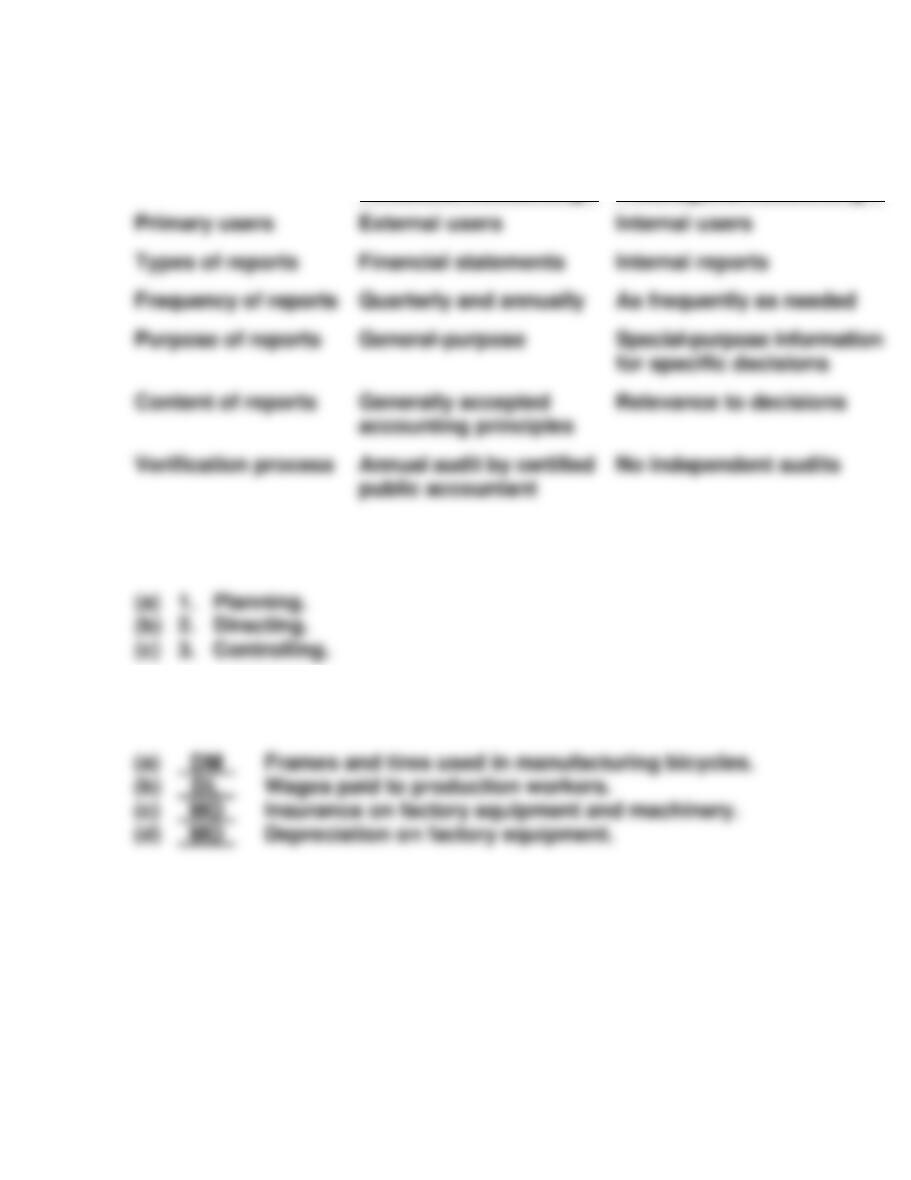
3. Differences in the content of the reports are as follows:
Financial
Managerial
• Pertains to business as a whole and is highly
• Pertains to subunits of the business and
4. Linda should know that the management of an organization performs three broad functions:
(1) Planning requires management to look ahead and to establish objectives.
(2) Directing involves coordinating the diverse activities and human resources of a company to
produce a smooth-running operation.
(3) Controlling is the process of keeping the company’s activities on track.
Questions Chapter 15 (Continued)j
7. The differences between income statements are in the computation of the cost of goods sold as
follows:
8. The difference in balance sheets pertains to the presentation of inventories in the current asset
section. In a merchandising company, only merchandise inventory is shown. In a manufacturing
company, three inventory accounts are shown: finished goods, work in process, and raw materials.
9. Manufacturing costs are classified as either direct materials, direct labor, or manufacturing overhead.
12. A merchandising company has beginning merchandise inventory, cost of goods purchased, and
ending merchandise inventory. A manufacturing company has beginning finished goods inventory,
cost of goods manufactured, and ending finished goods inventory.
13. (a) X = total cost of work in process.
(b) X = cost of goods manufactured.
15. Direct materials used ………………………………………………………………………………… $240,000
Direct labor used ……………………………………………………………………………………… 220,000
Total manufacturing overhead ……………………………………………………………………. 180,000
Total manufacturing costs ………………………………………………………………….. $640,000
Questions Chapter 15 (Continued)
20. The value chain refers to all activities associated with providing a product or service. For a manufac–
turer, these include research and development, product design, acquisition of raw materials, production,
sales and marketing, delivery, customer relations, and subsequent service.
22. In a just-in-time inventory system, the company has no extra inventory stored. Consequently, if
some units that are produced are defective, the company will not have enough units to deliver to
customers.
23. The balanced scorecard is called “balanced” because it strives to not over emphasize any one
performance measure, but rather uses both financial and non-financial measures to evaluate all
aspects of a company’s operations in an integrated fashion.
SOLUTIONS TO BRIEF EXERCISES
BRIEF EXERCISE 15-1
Financial Accounting
Managerial Accounting
BRIEF EXERCISE 15-2
BRIEF EXERCISE 15-3
BRIEF EXERCISE 15-4
BRIEF EXERCISE 15-5
BRIEF EXERCISE 15-6
Product Costs
BRIEF EXERCISE 15-7
BRIEF EXERCISE 15-8
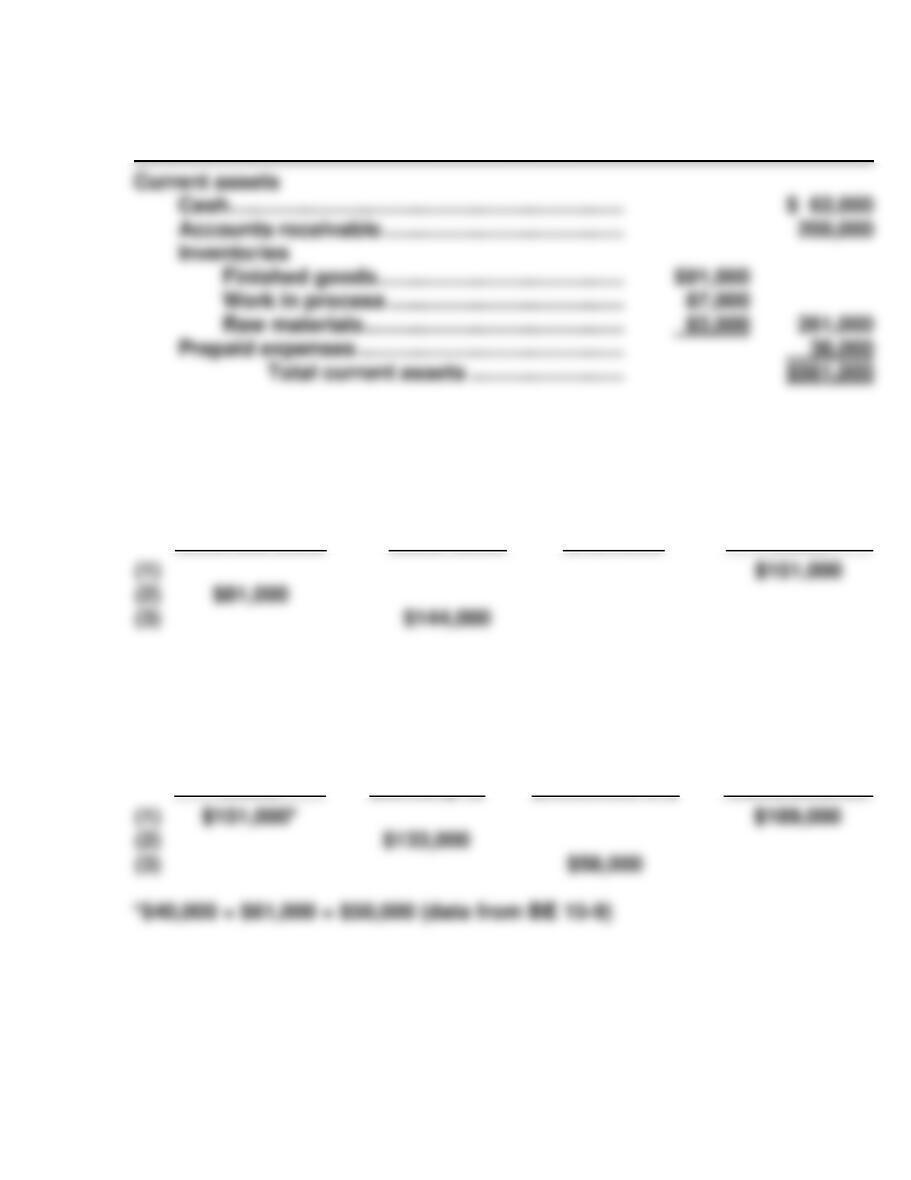
ROLAND COMPANY
Balance Sheet
December 31, 2017
BRIEF EXERCISE 15-9
Direct
Materials Used
Direct
Labor Used
Factory
Overhead
Total
Manufacturing
Costs
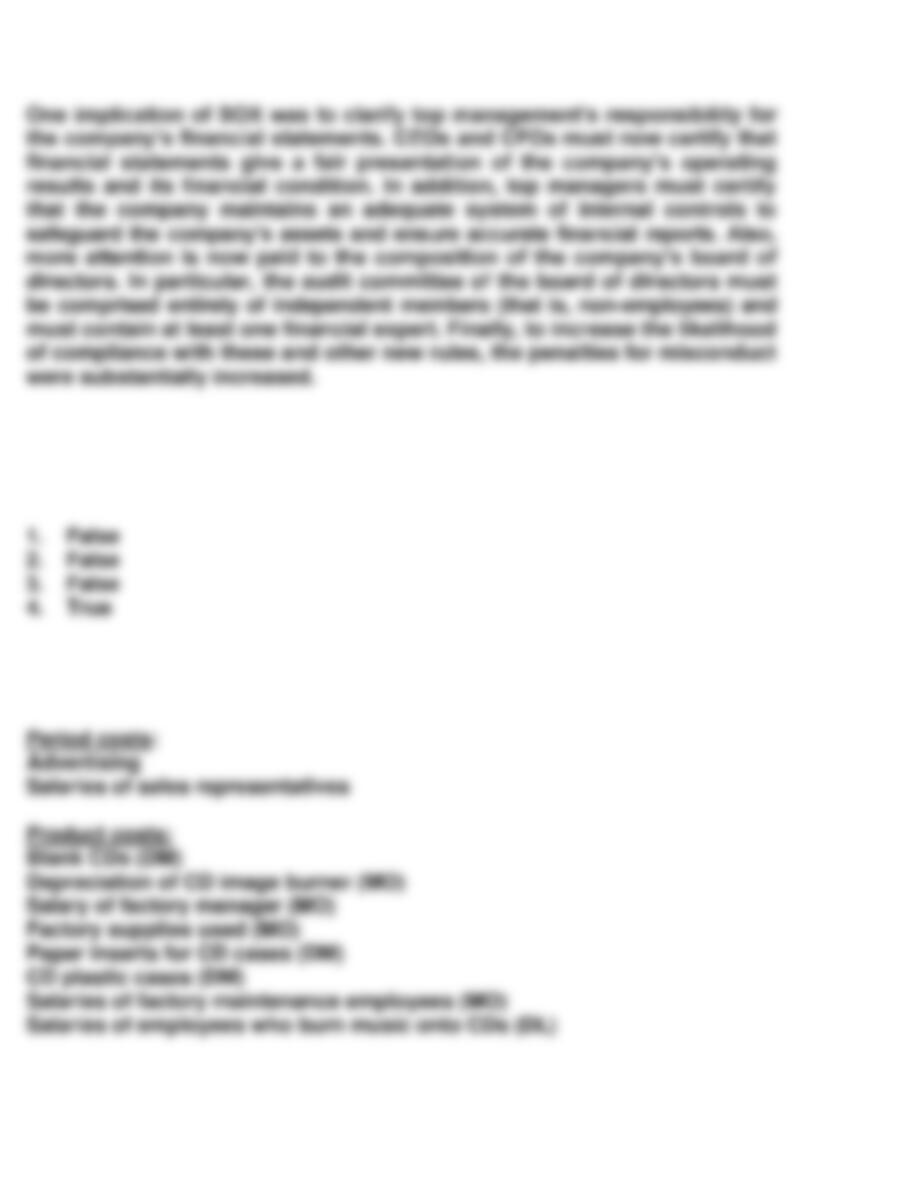
BRIEF EXERCISE 15-10
Total
Manufacturing
Costs
Work in
Process
(January 1)
Work in
Process
(December 31)
Cost of Goods
Manufactured
BRIEF EXERCISE 15–11
SOLUTIONS FOR DO IT! REVIEW EXERCISES
DO IT! 15-1
DO IT! 15-2
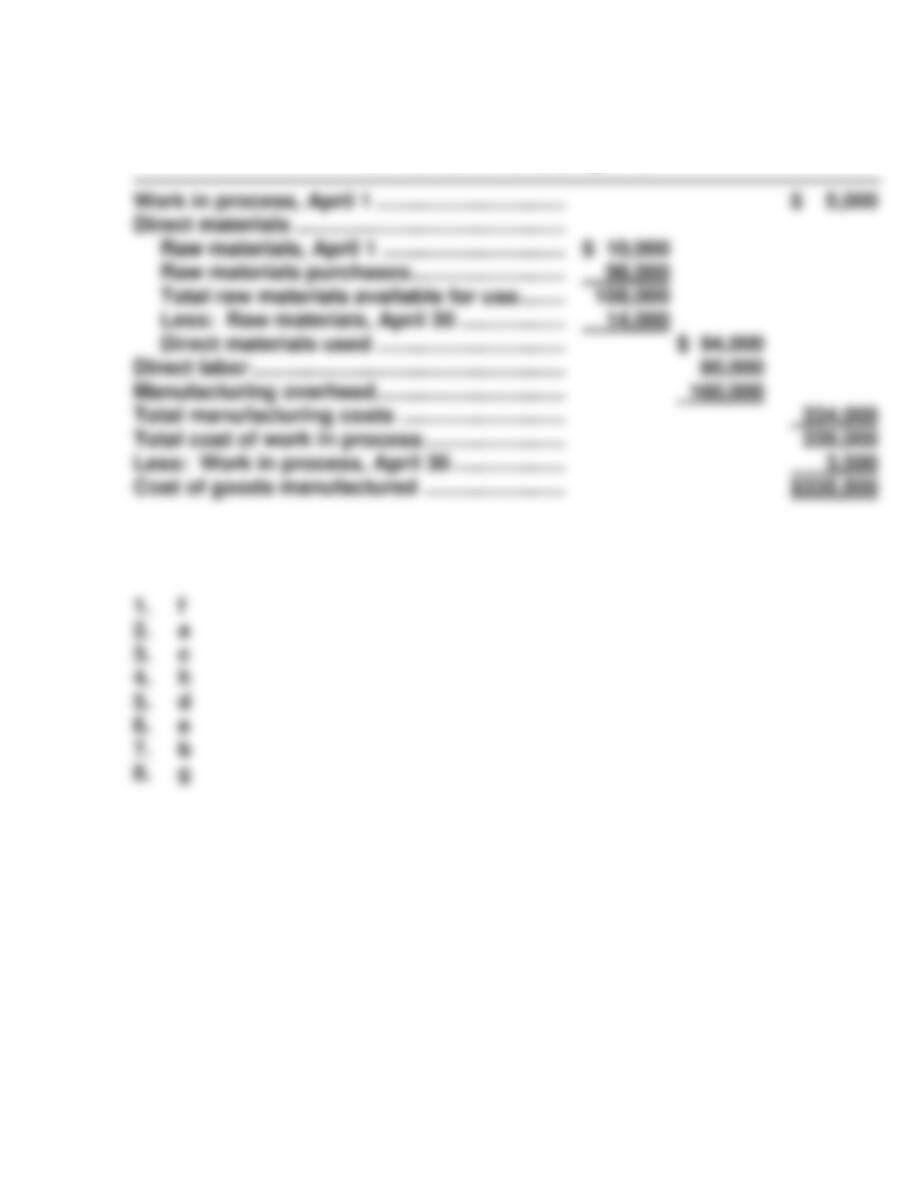
DO IT! 15-3
TOMLIN COMPANY
Cost of Goods Manufactured Schedule
For the Month Ended April 30
DO IT! 15-4
SOLUTIONS TO EXERCISES
EXERCISE 15-1
EXERCISE 15-2
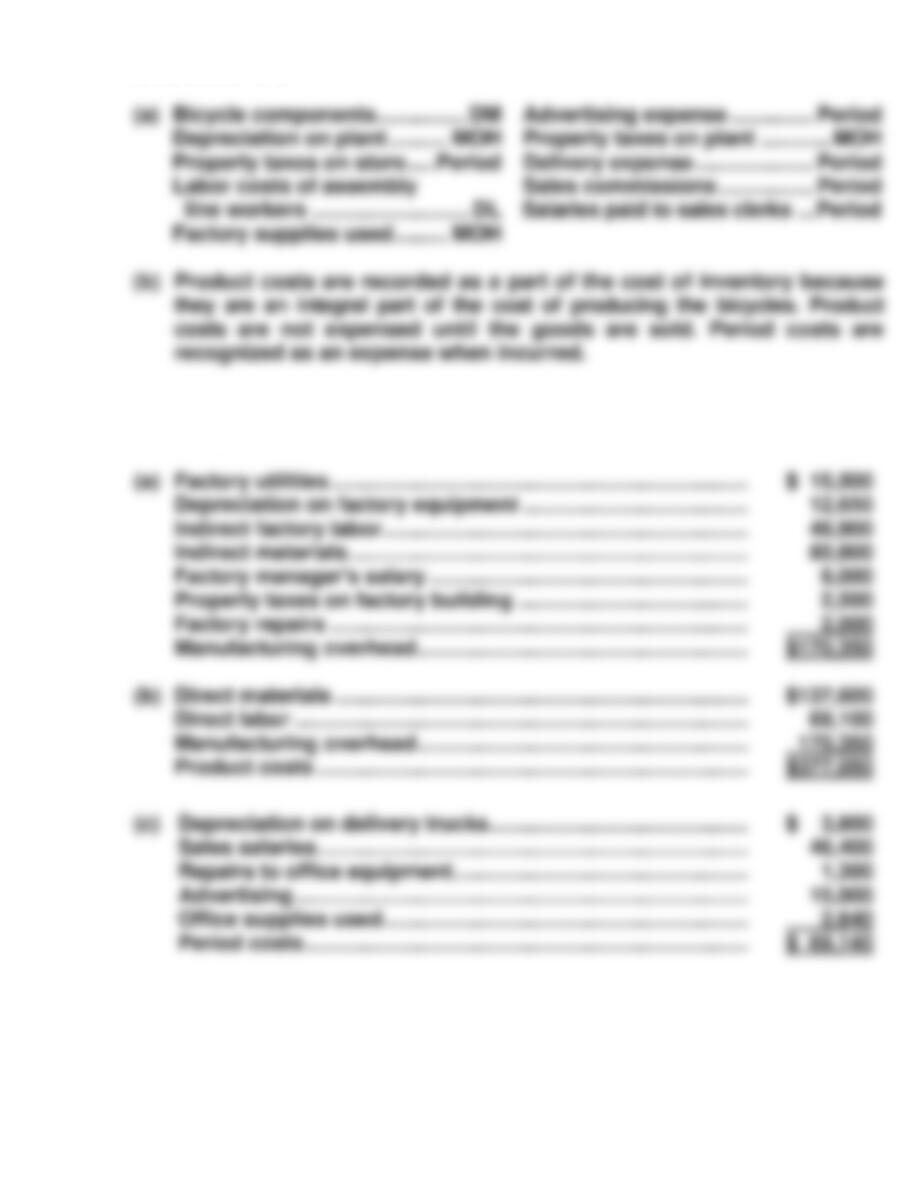
EXERCISE 15-3
EXERCISE 15-4
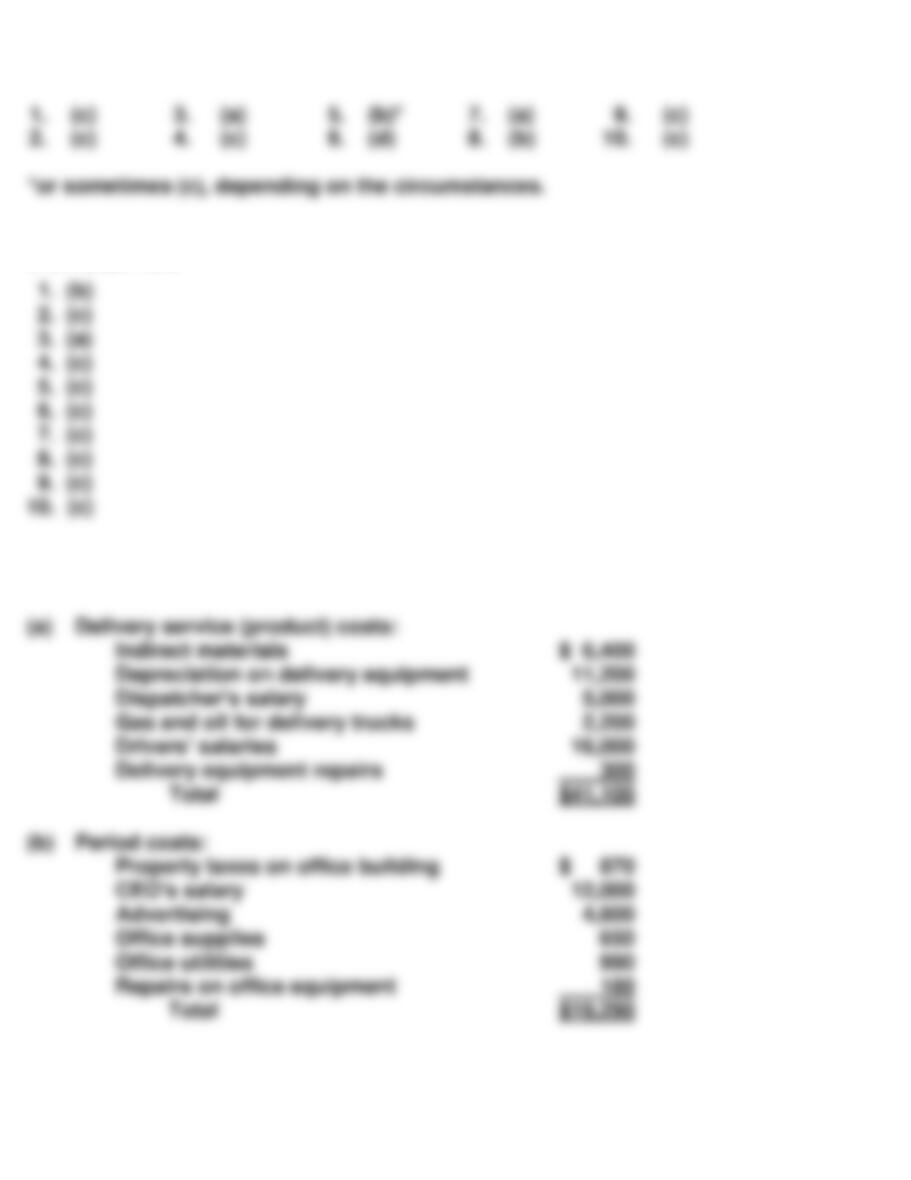
EXERCISE 15-5
EXERCISE 15-6
EXERCISE 15-7
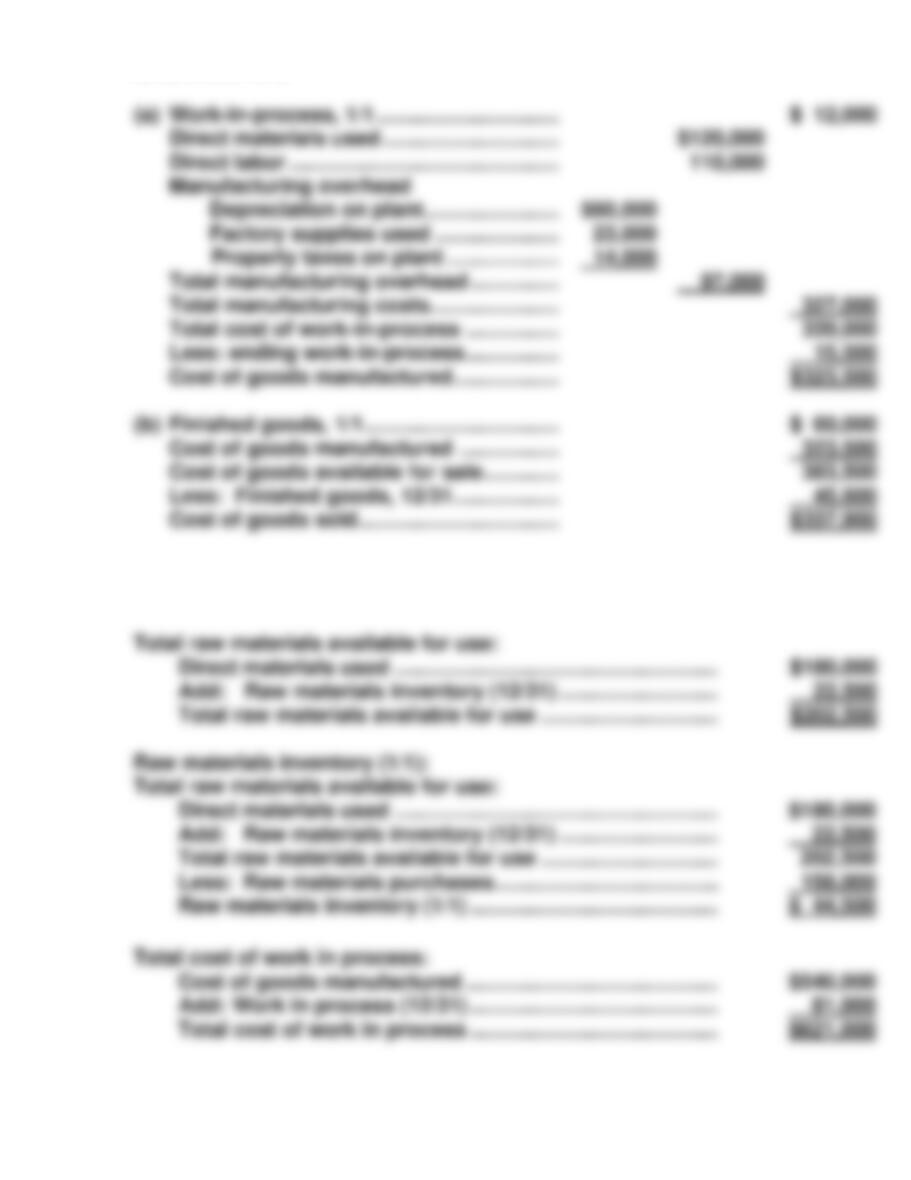
EXERCISE 15-8
EXERCISE 15-9
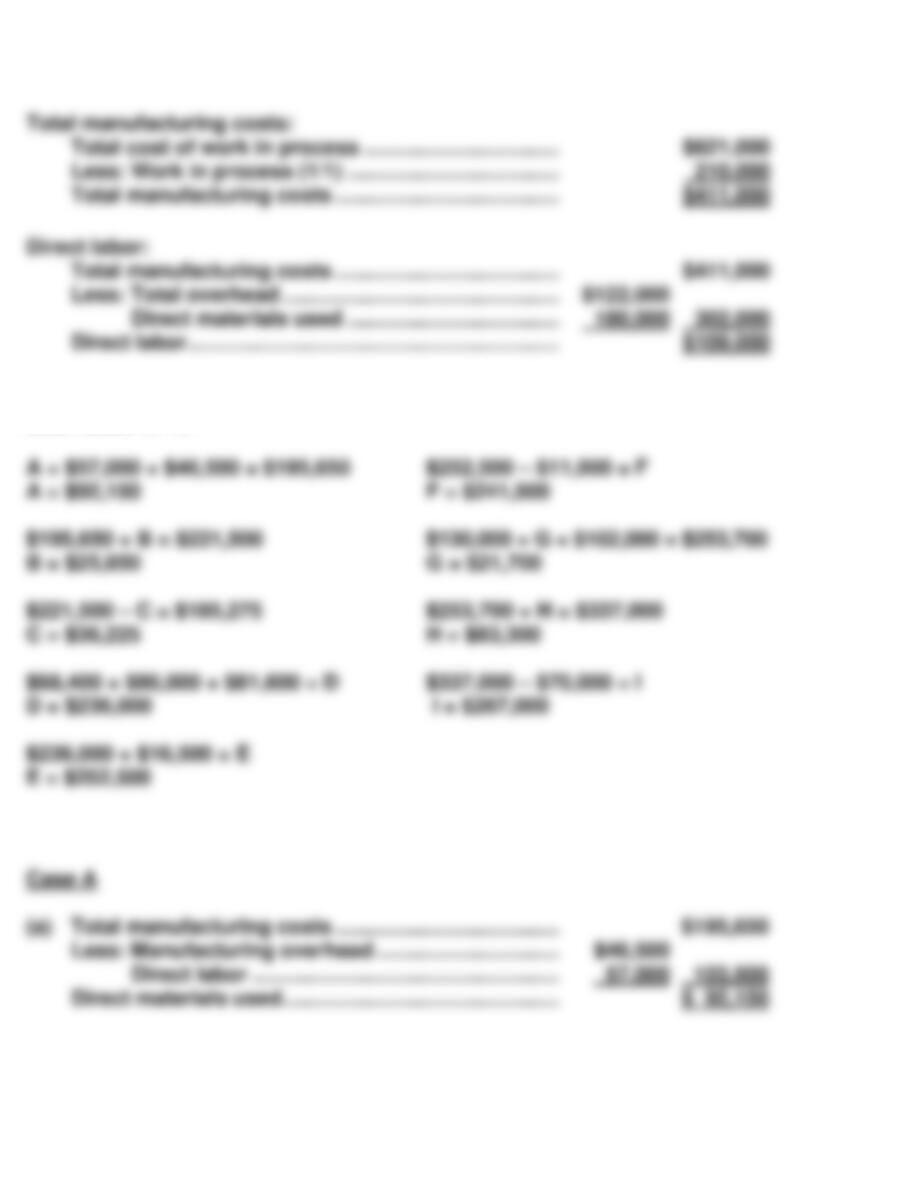
EXERCISE 15-9 (Continued)
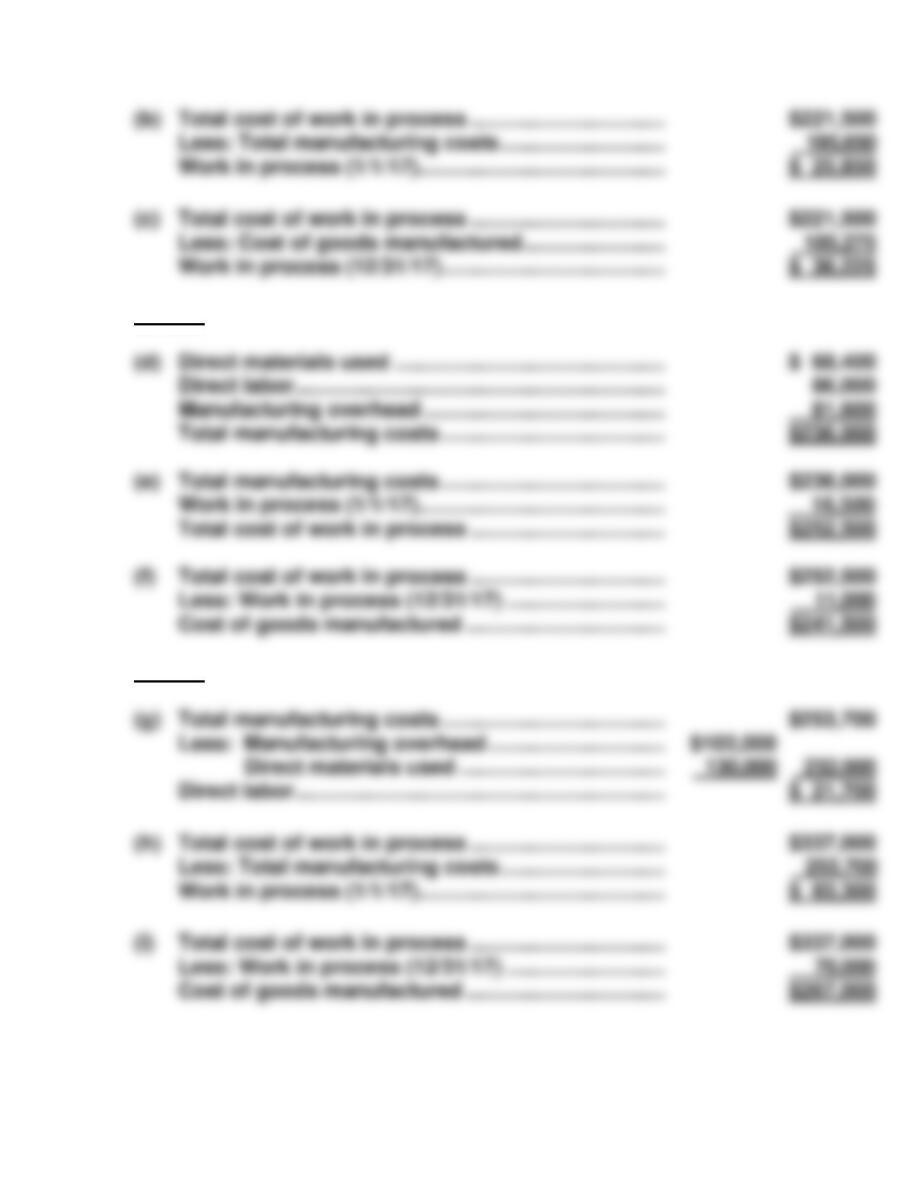
EXERCISE 15–10
Additional explanation to EXERCISE 15-10 solution:
EXERCISE 15-10 (Continued)
Case B
Case C
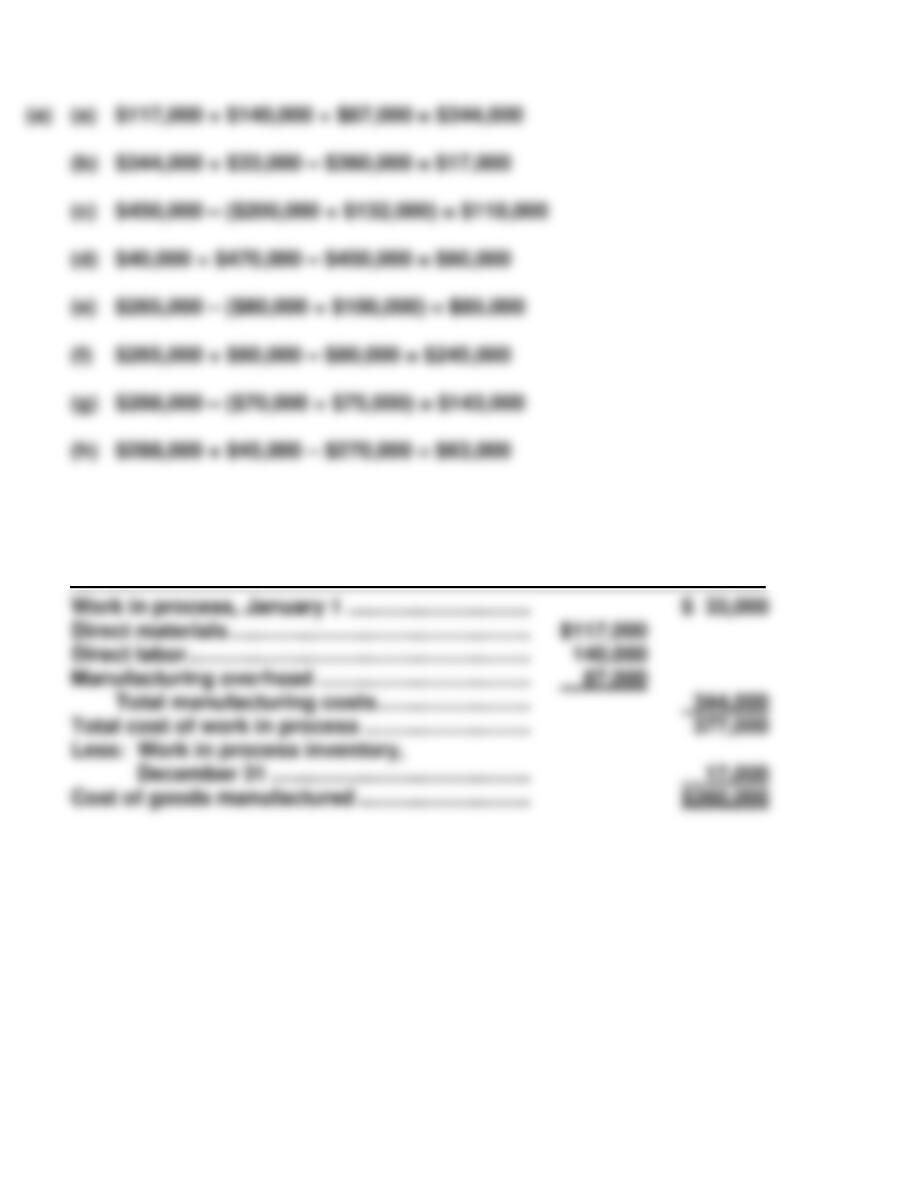
EXERCISE 15–11
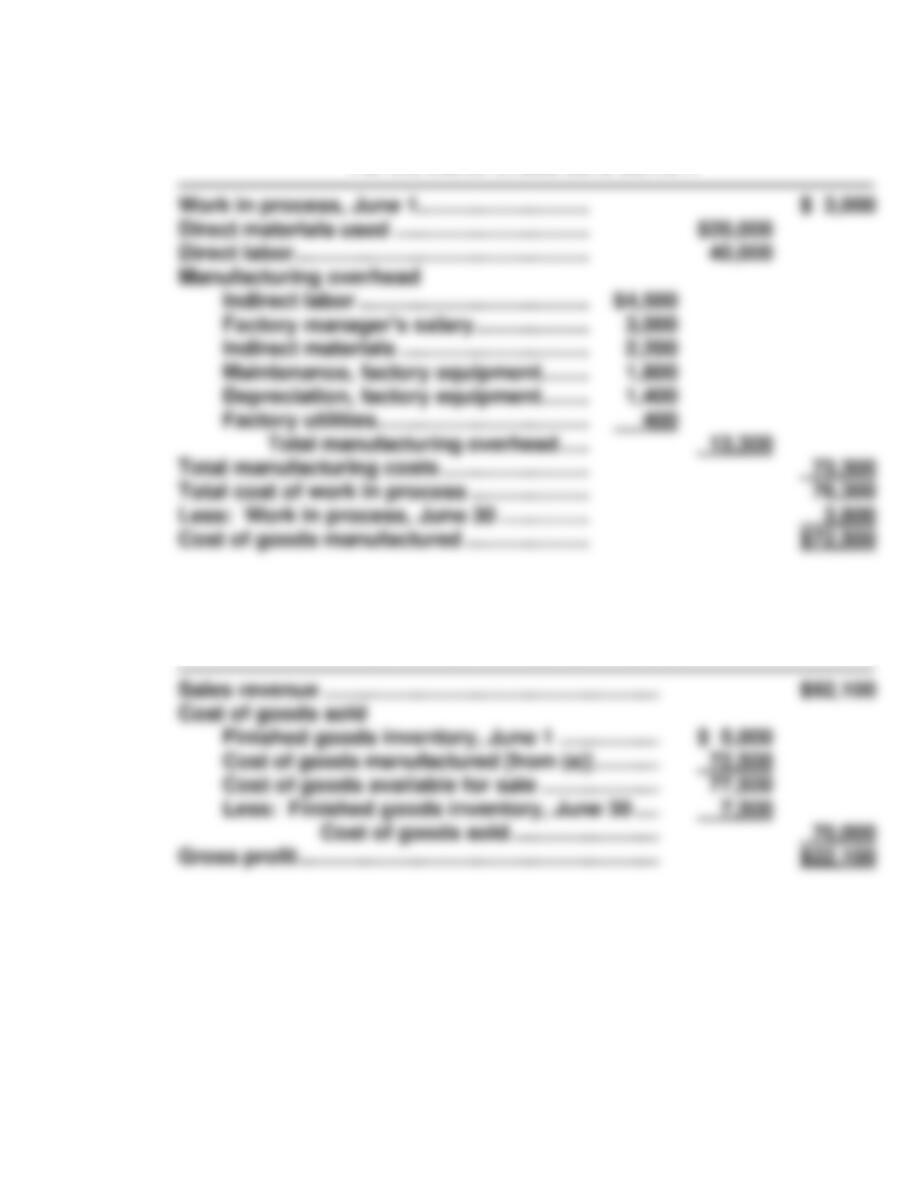
(b) HORIZON COMPANY
Cost of Goods Manufactured Schedule
For the Year Ended December 31, 2017
EXERCISE 15–12
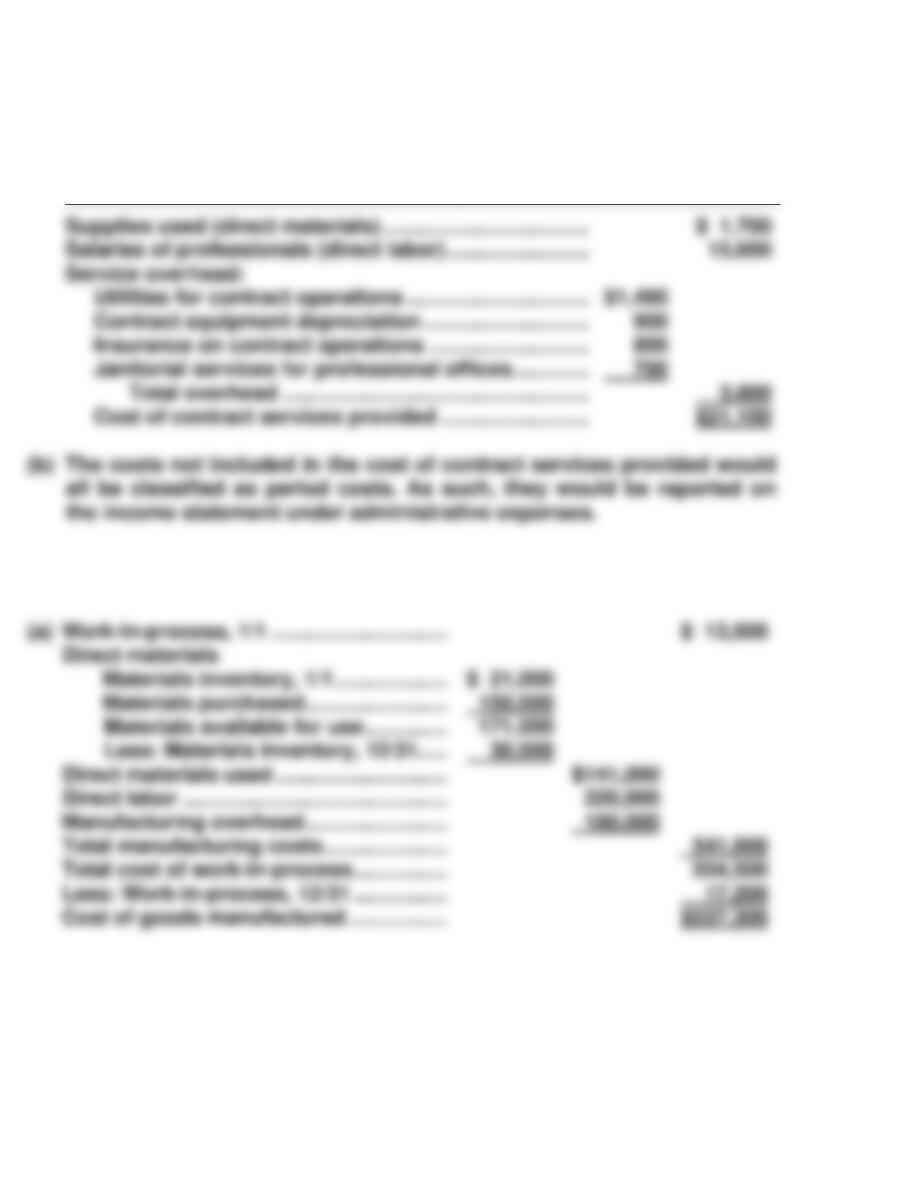
(a) CEPEDA CORPORATION
Cost of Goods Manufactured Schedule
For the Month Ended June 30, 2017
(b) CEPEDA CORPORATION
Income Statement (Partial)
For the Month Ended June 30, 2017
EXERCISE 15–13
(a) WASHINGTON CONSULTING
Schedule of Cost of Contract Services Performed
For the Month Ended August 31, 2017
EXERCISE 15–14
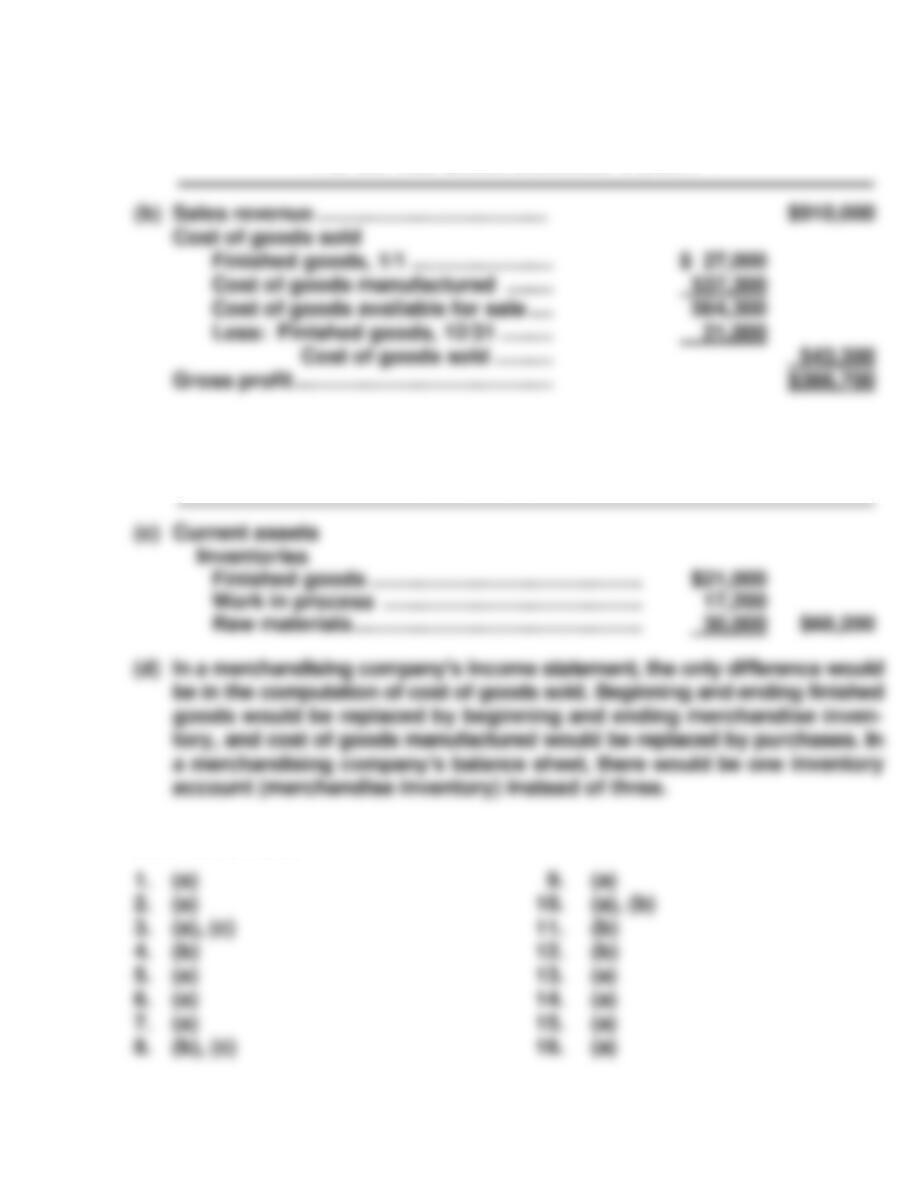
EXERCISE 15-14 (Continued)
AIKMAN COMPANY
Income Statement (Partial)
For the Year Ended December 31, 2017
AIKMAN COMPANY
(Partial) Balance Sheet
December 31, 2017
EXERCISE 15–15
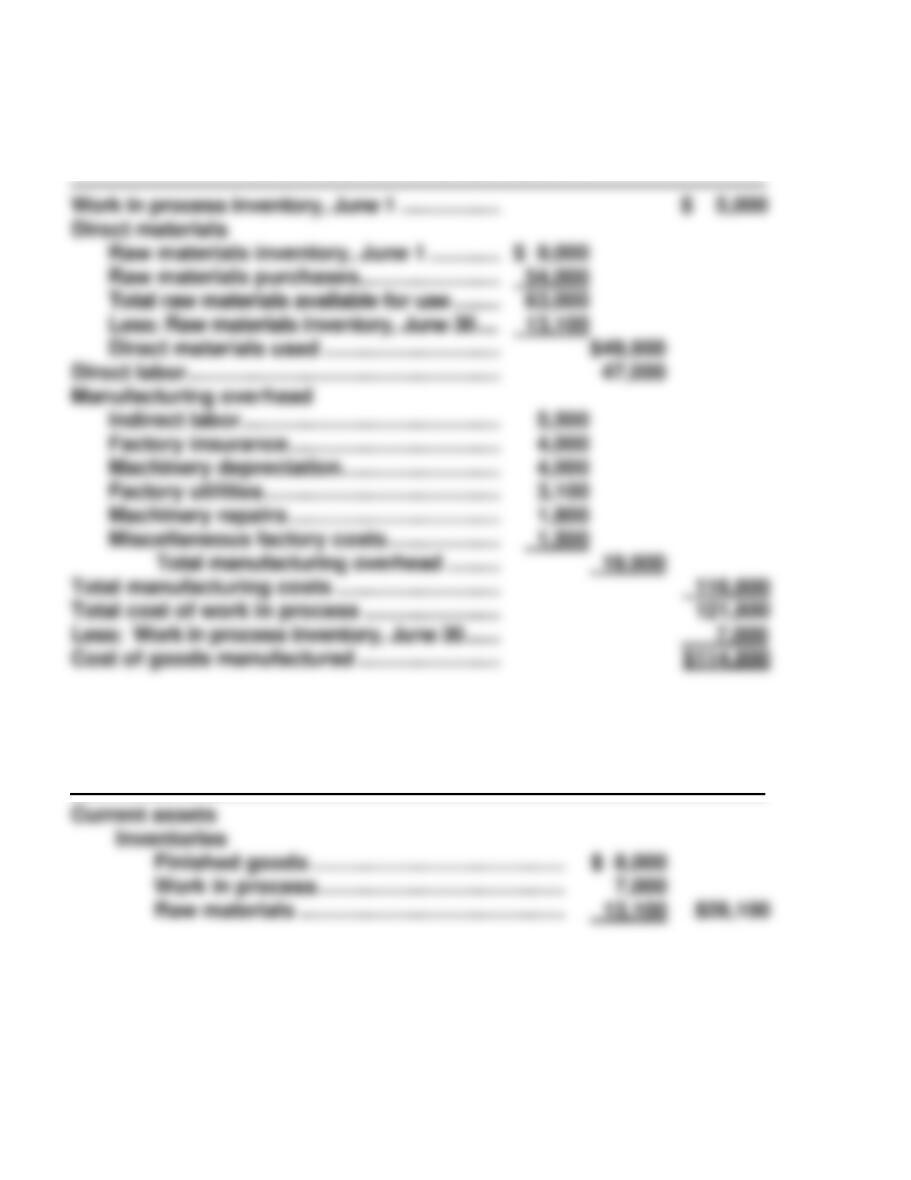
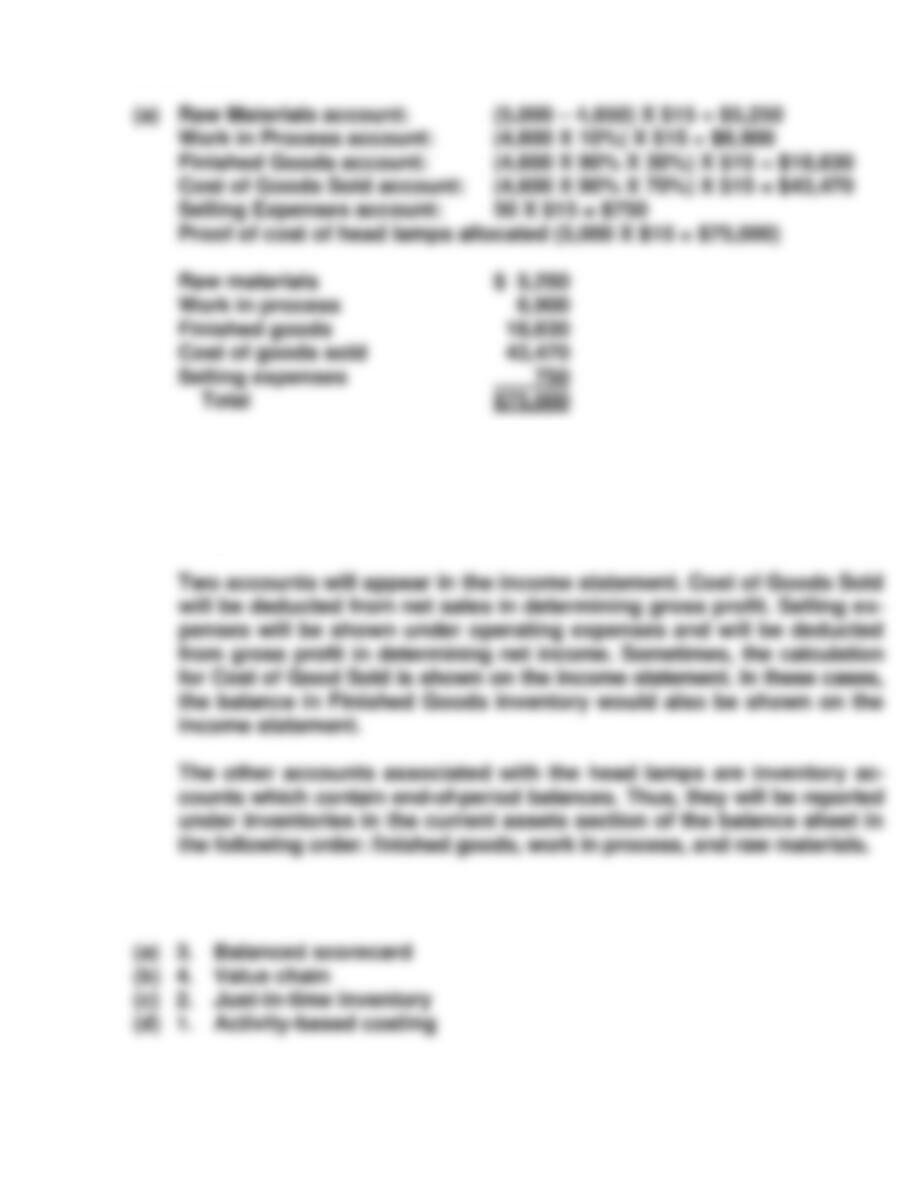
EXERCISE 15–16
(a) ROBERTS COMPANY
Cost of Goods Manufactured Schedule
For the Month Ended June 30, 2017
(b) ROBERTS COMPANY
(Partial) Balance Sheet
June 30, 2017
EXERCISE 15–17
(b) To: Chief Accountant
From: Student
Subject: Statement Presentation of Accounts
EXERCISE 15–18
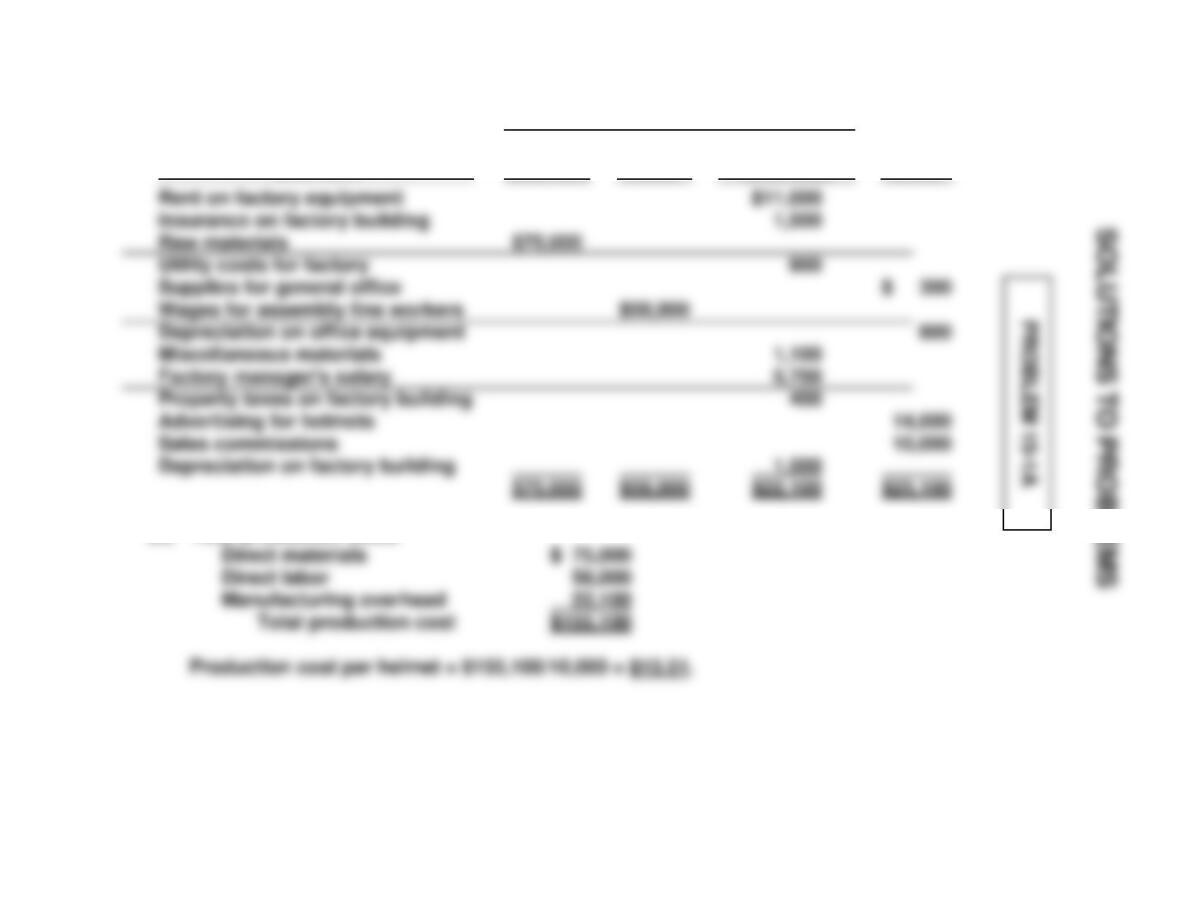
(a)
Product Costs
Cost Item
Direct
Materials
Direct
Labor
Manufacturing
Overhead
Period
Costs
(b) Total production costs
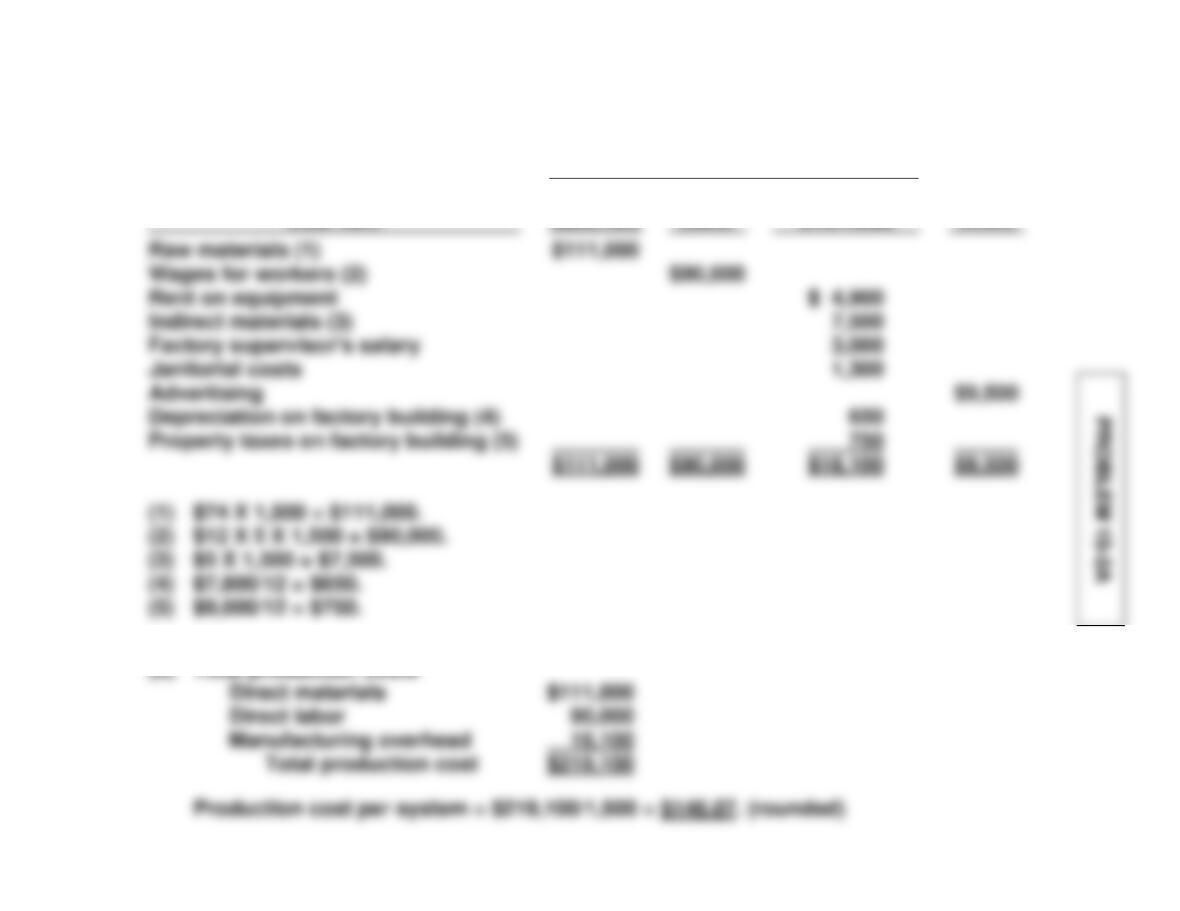
$90,000
(a)
Product Costs
Cost Item
Direct
Materials
Direct
Labor
Manufacturing
Overhead
Period
Costs
PROBLEM 15–3A
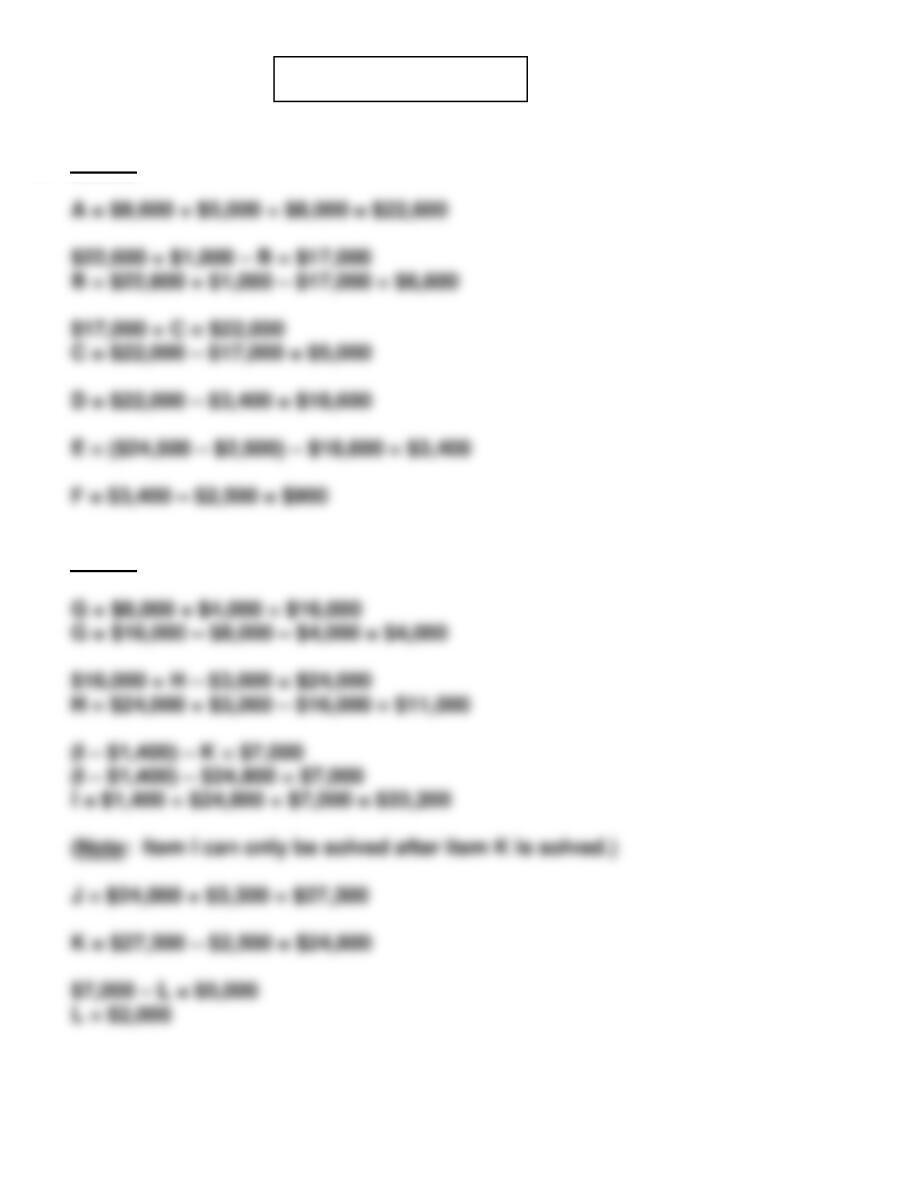
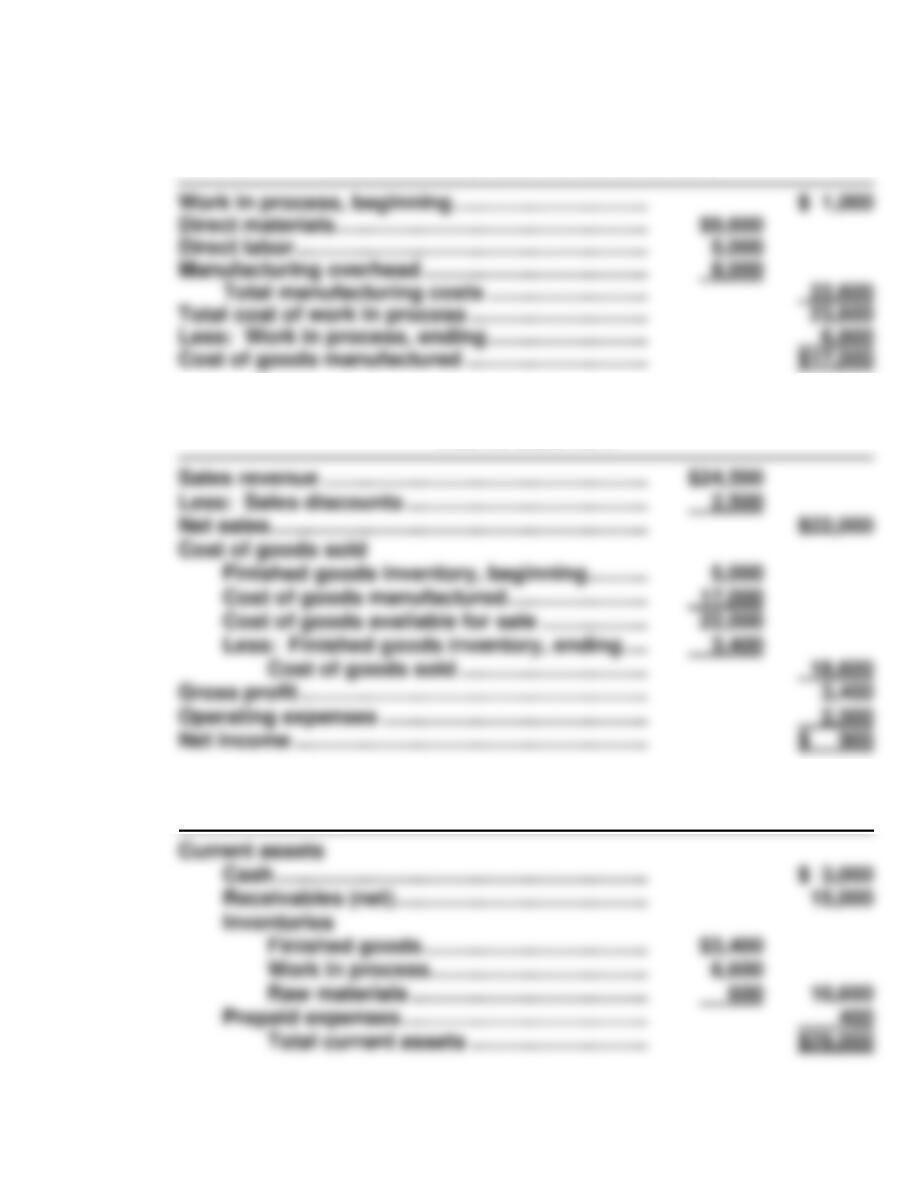
(a) Case 1
Case 2
PROBLEM 15-3A (Continued)
(b) CASE 1
Cost of Goods Manufactured Schedule
(c) CASE 1
Income Statement
CASE 1
(Partial) Balance Sheet
PROBLEM 15–4A
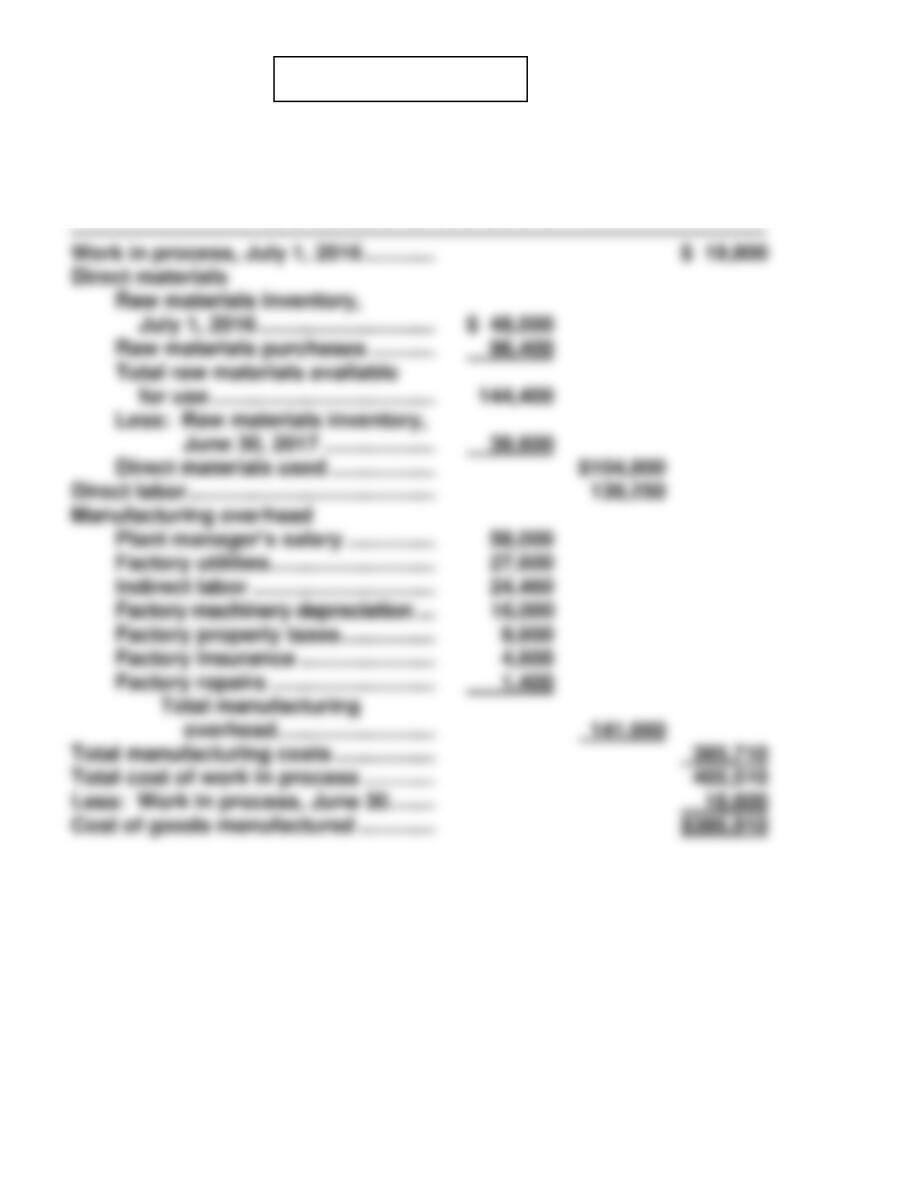
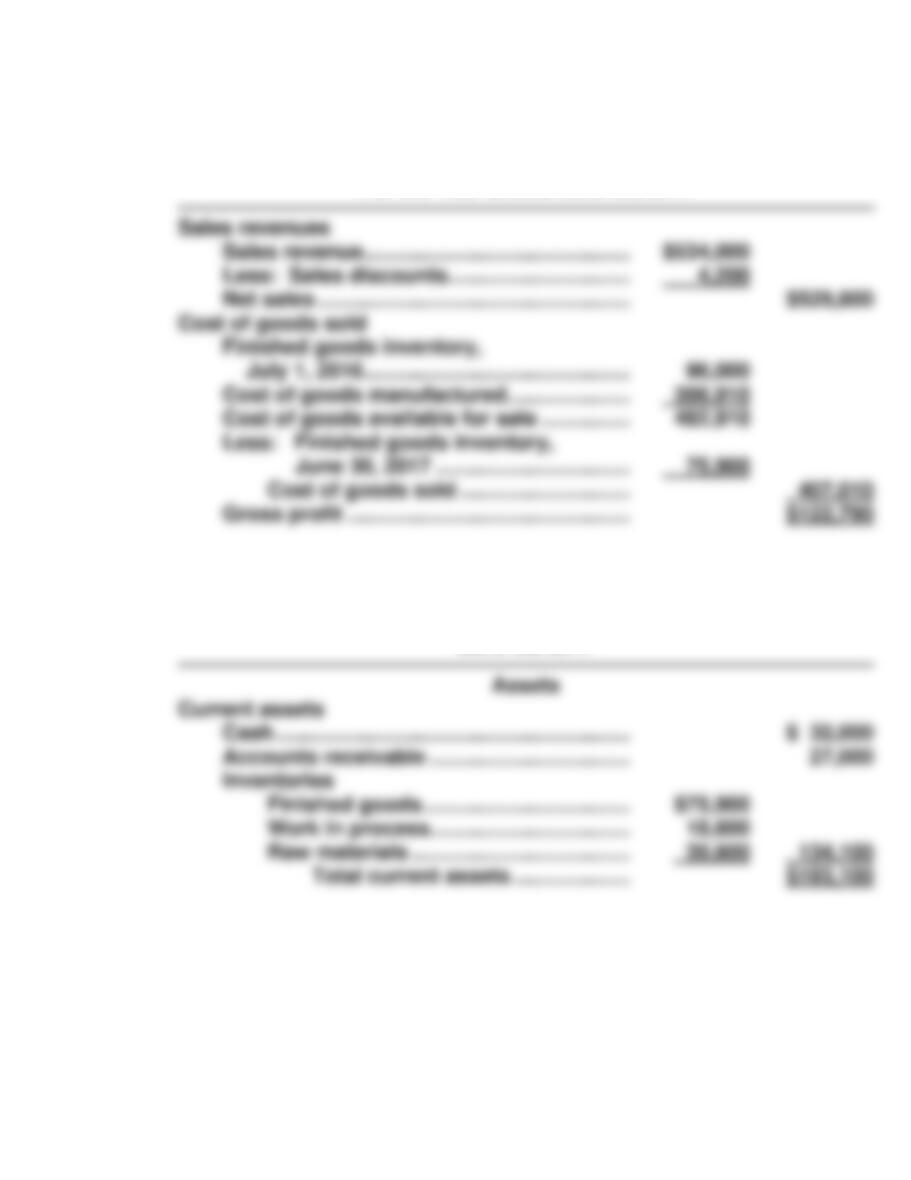
(a) CLARKSON COMPANY
Cost of Goods Manufactured Schedule
For the Year Ended June 30, 2017
PROBLEM 15-4A (Continued)
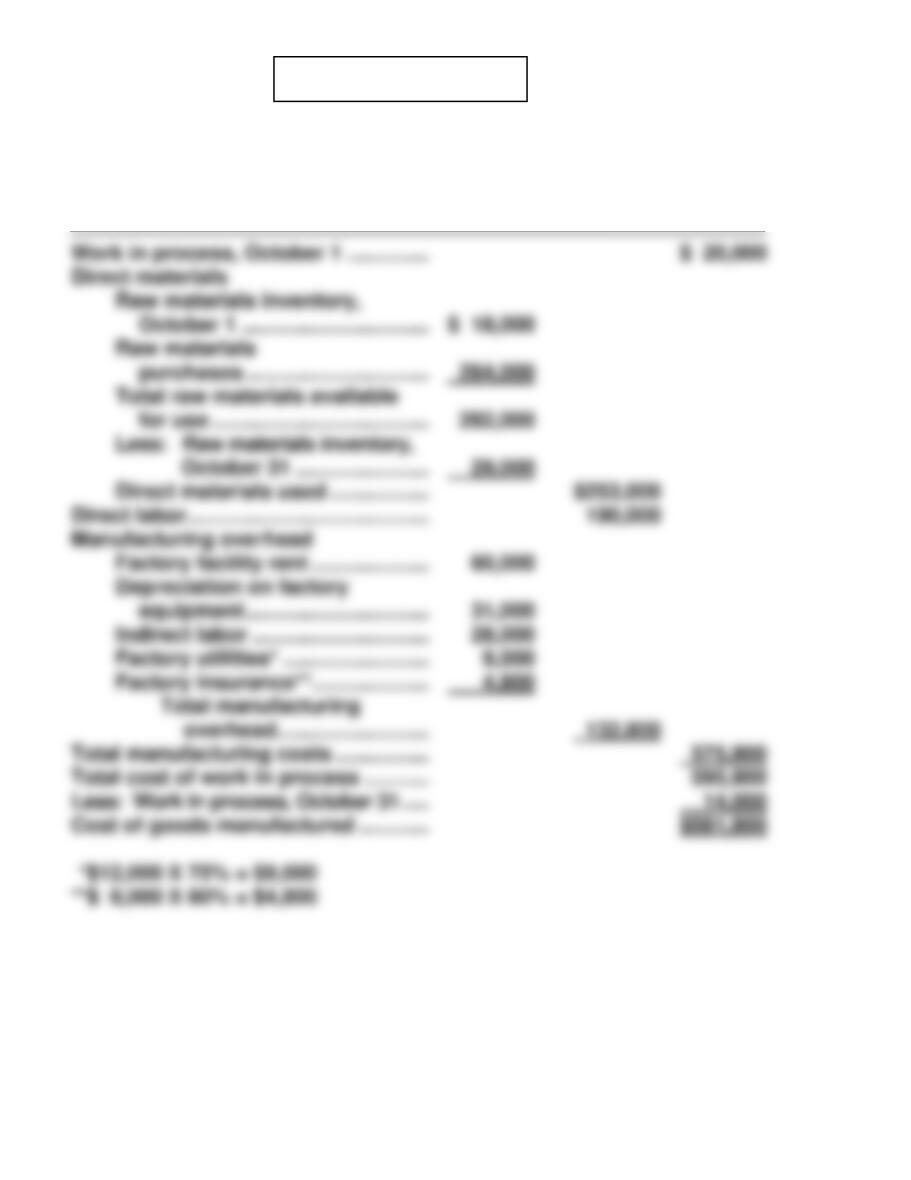
(b) CLARKSON COMPANY
(Partial) Income Statement
For the Year Ended June 30, 2017
(c) CLARKSON COMPANY
(Partial) Balance Sheet
June 30, 2017
PROBLEM 15–5A
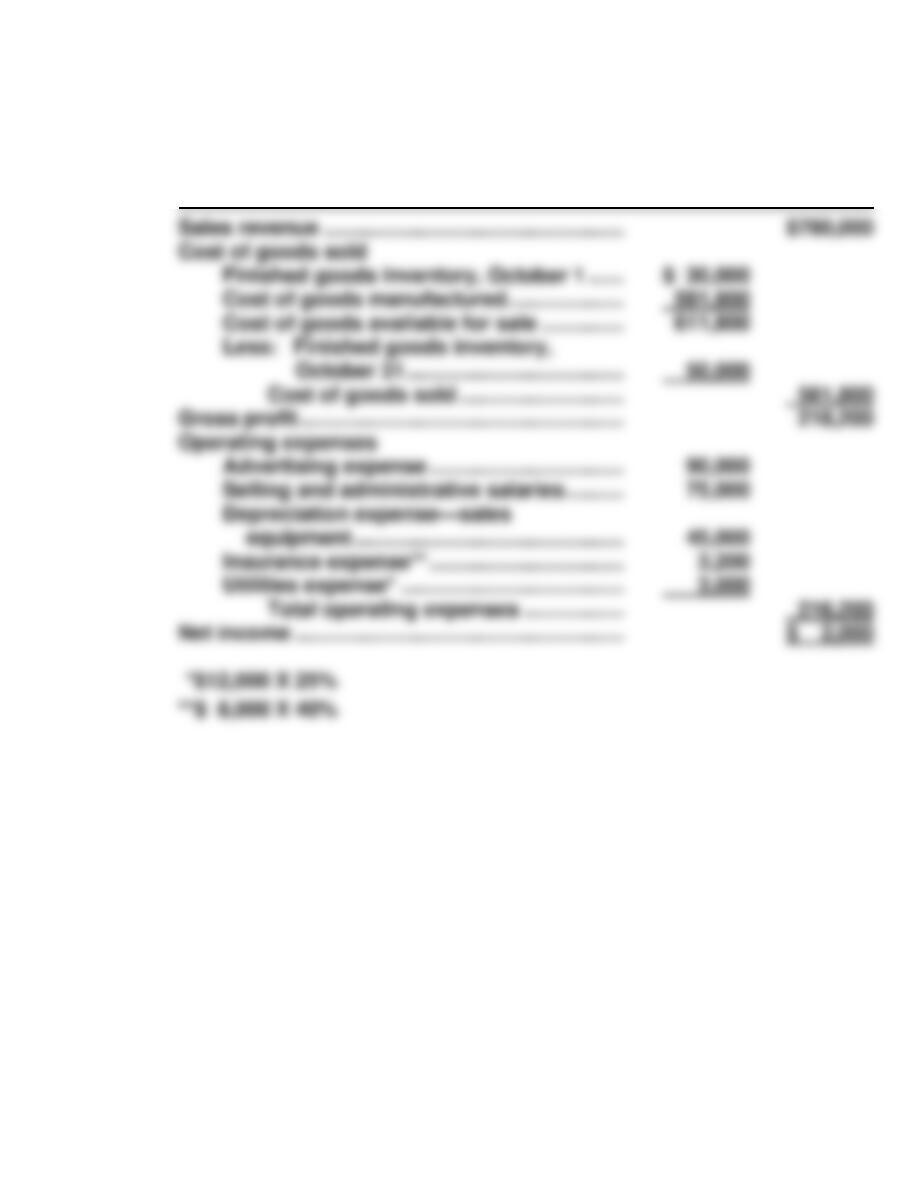
(a) EMPIRE COMPANY
Cost of Goods Manufactured Schedule
For the Month Ended October 31, 2017
PROBLEM 15-5A (Continued)
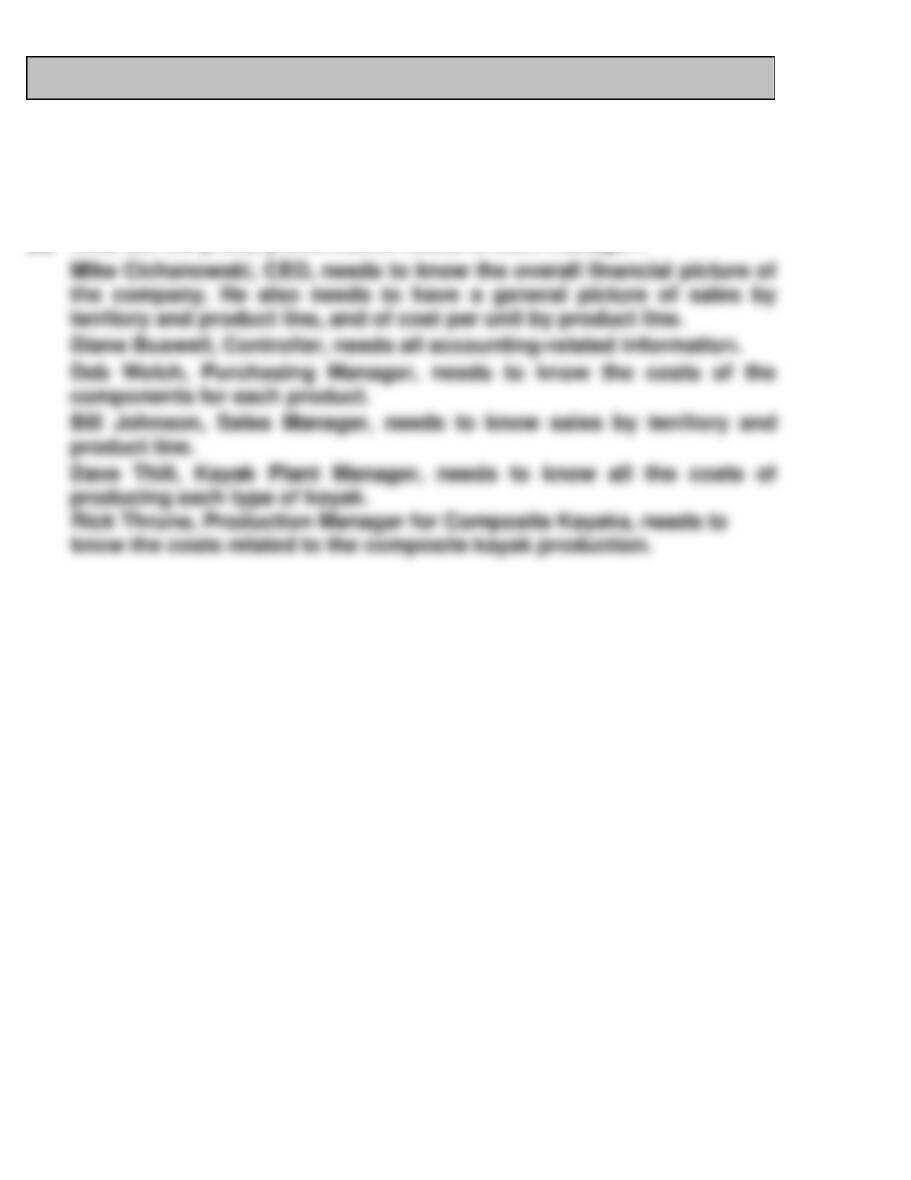
(b) EMPIRE COMPANY
Income Statement
For the Month Ended October 31, 2017
CURRENT DESIGNS
CD15
The answers to parts (a) and (b) may vary from student to student.
(a) What are the primary information needs of each manager?
CD15 (Continued)
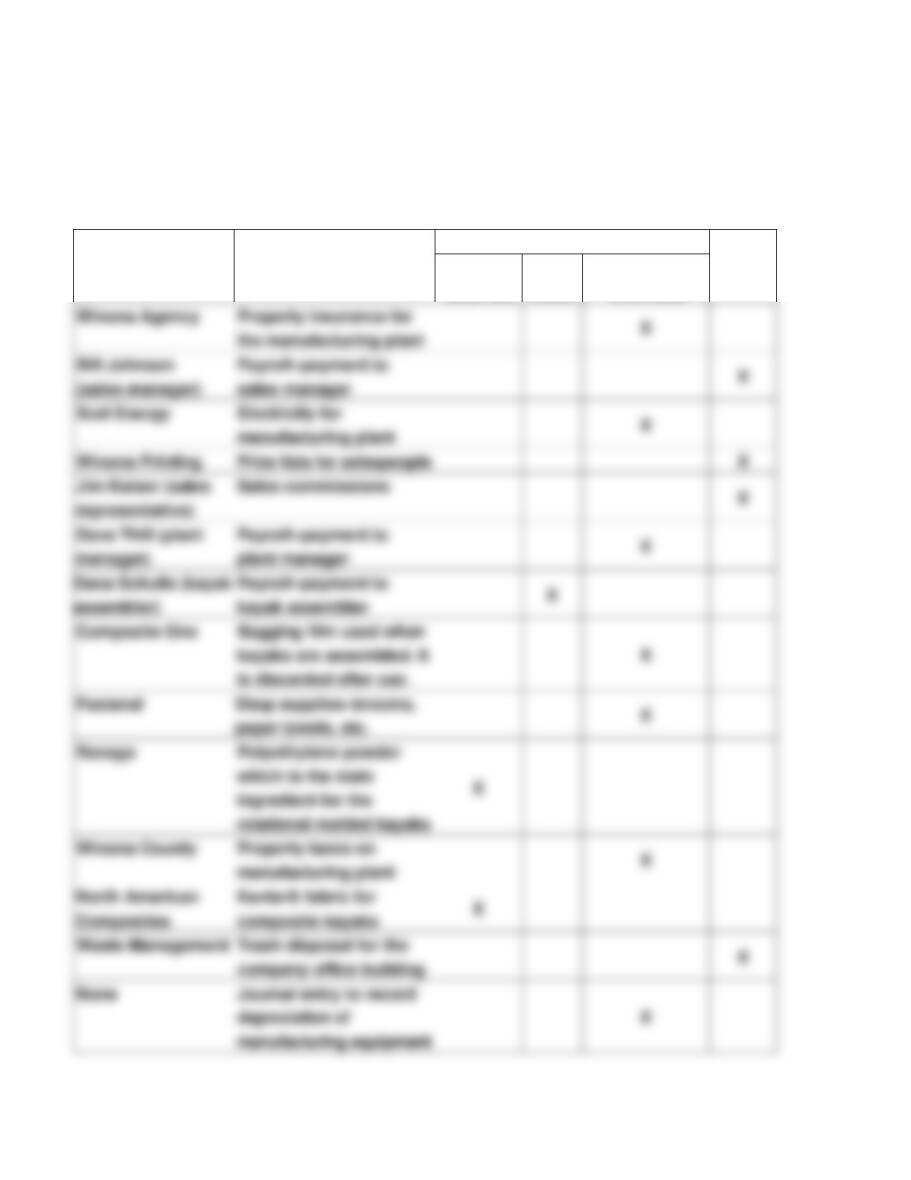
(b) Name one special-purpose management accounting report that could
be designed for each manager. Include the name of the report, the
information it would contain, and how frequently it should be issued.
Manager
Name of
report
Information report
would contain
How frequently
should it be
issued?
analysis
Bill Johnson
Sales by product
Monthly or
weekly
overhead costs
Report for
labor costs for the
CD15 (Continued)
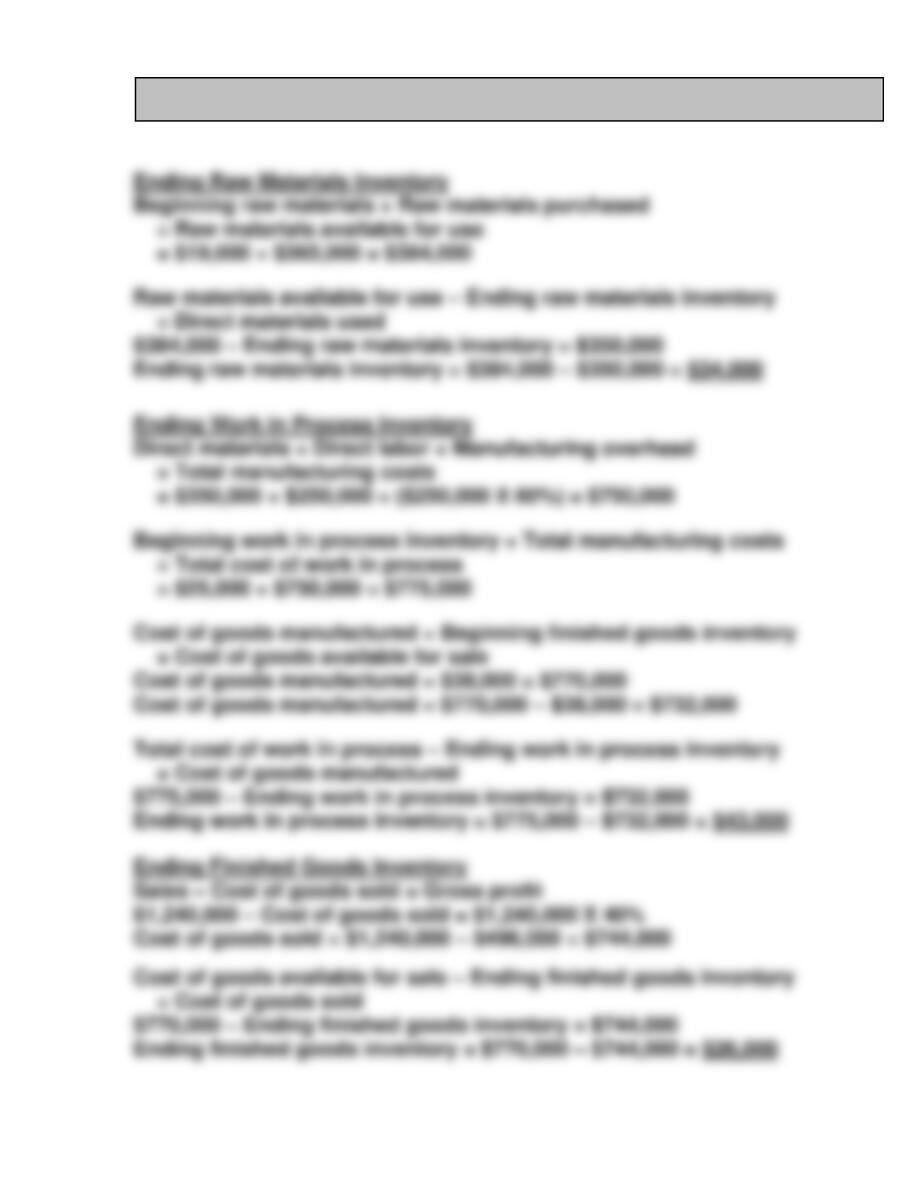
(c) When Diane Buswell, controller for Current Designs, reviewed the
accounting records for a recent period, she noted the following items.
Classify each item as a product cost or a period cost. If a cost is a
product cost, note if it is a direct materials, direct labor, or manufactur–
ing overhead item.
Payee
Purpose
Product Costs
Period
Costs
Direct
Materials
Direct
Labor
Manufacturing
Overhead
X
BYP 15-1 DECISION-MAKING ACROSS THE ORGANIZATION
BYP 15-2 MANAGERIAL ANALYSIS
Since the questions were fairly open-ended, the following are only sug-
gested results. The class may be able to think of others, or of more items
for each one.
BYP 15-3 REAL-WORLD FOCUS
BYP 15-4 COMMUNICATION ACTIVITY
Ms. Shelly Phillips
President
Phillips Company
Dear Shelly:
BYP 15-4 (Continued)
BYP 15-5 ETHICS CASE
BYP 15-6 ALL ABOUT YOU
Student responses will vary. We have provided some basic examples that
may represent common responses.
BYP 15-7 CONSIDERING YOUR COSTS AND BENEFITS