Solution 15.54
Design a problem to help other students to better understand solving second order
differential equations with a time varying input.
Although there are many ways to solve this problem, this is an example based on the
same kind of problem asked in the third edition.
Problem
Using Laplace transform, solve the following differential equation for t >0
2
2
24 52
t
d i di ie
dt dt
−
+ +=
subject to i(0)=0, i’(0)=2.
Solution
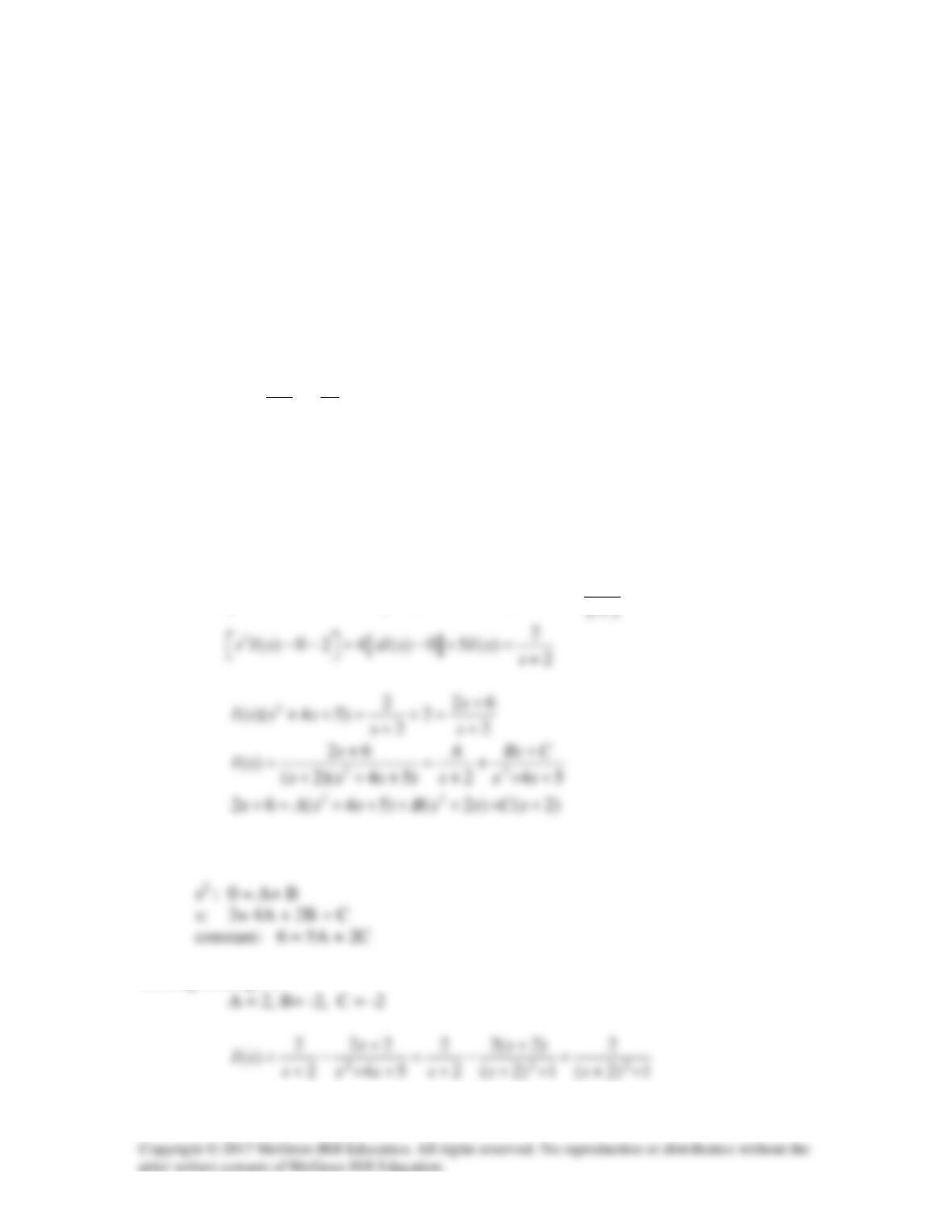
Taking the Laplace transform of each term gives
[ ]
22
( ) (0) ‘(0) 4 ( ) (0) 5 ( ) 2
sIs si i sIs i Is s
−− + −+ =
+
We equate the coefficients.
Solving these gives
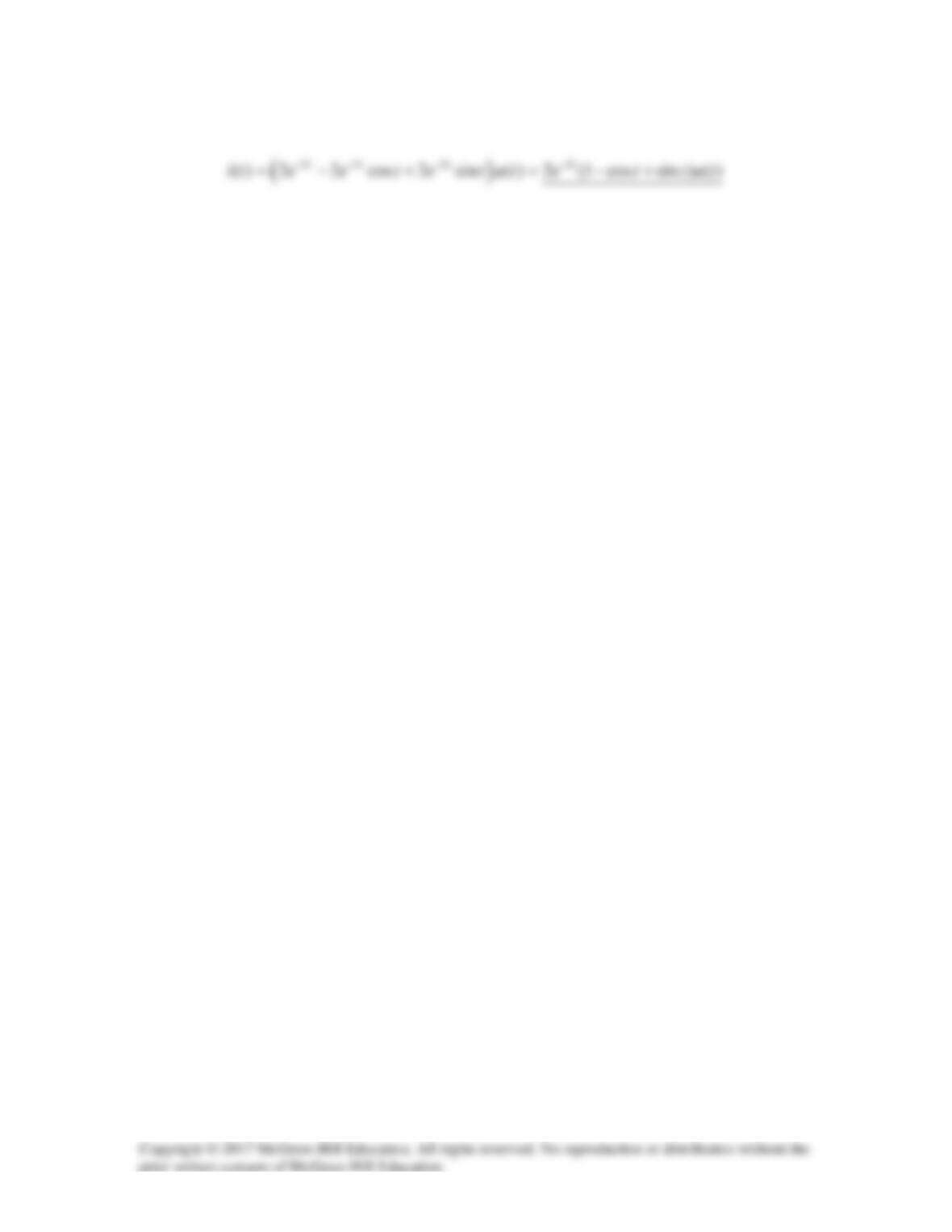
Taking the inverse Laplace transform leads to:
Solution 15.55
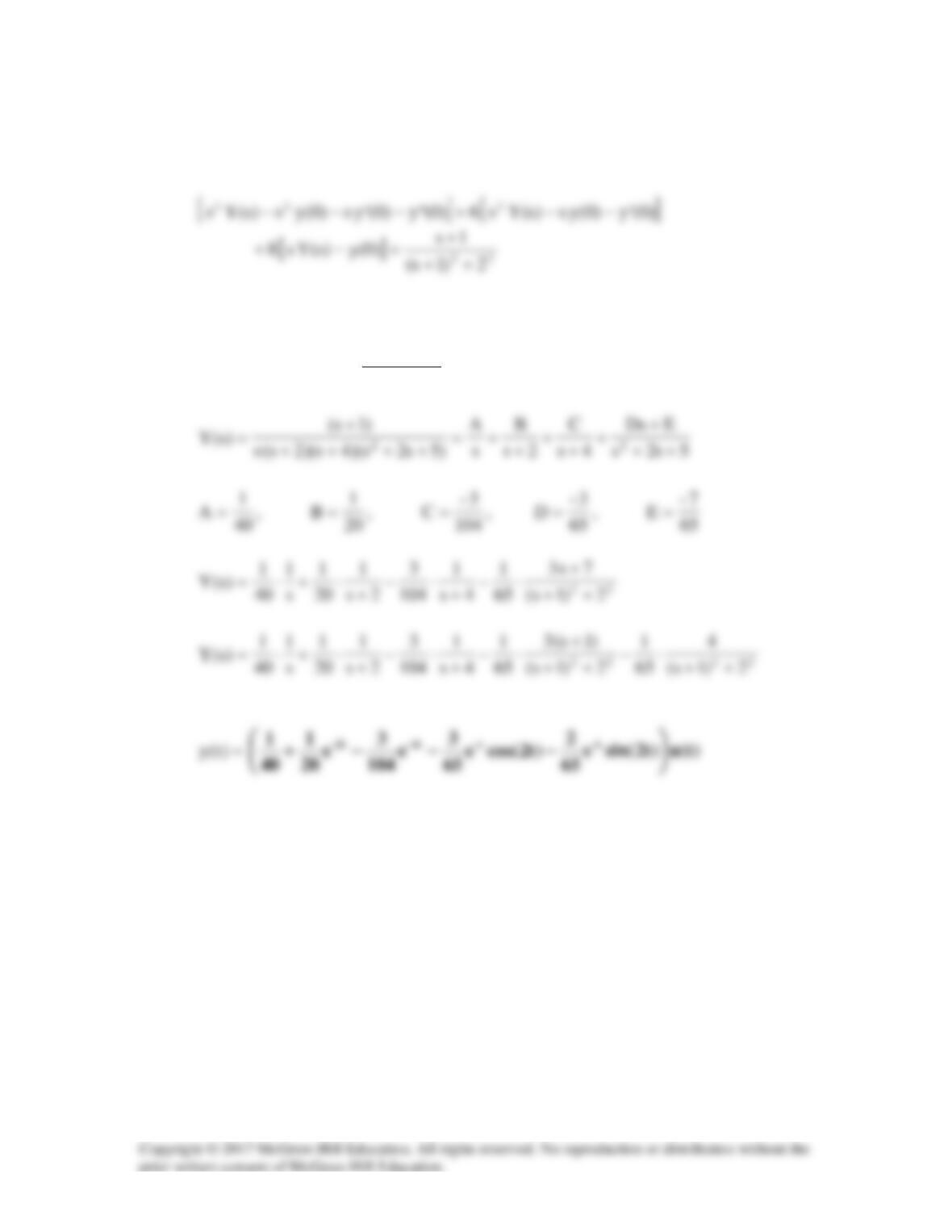
Take the Laplace transform of each term.
Setting the initial conditions to zero gives
5s2s
1s
)s(Y)s8s6s( 2
23
++
+
=++
Solution 15.56
Solve for v(t) in the integrodifferential equation
0
12 36 0
dv vd
dt
τ
τ
+=
∫
given that v(0) = 2.
Solution
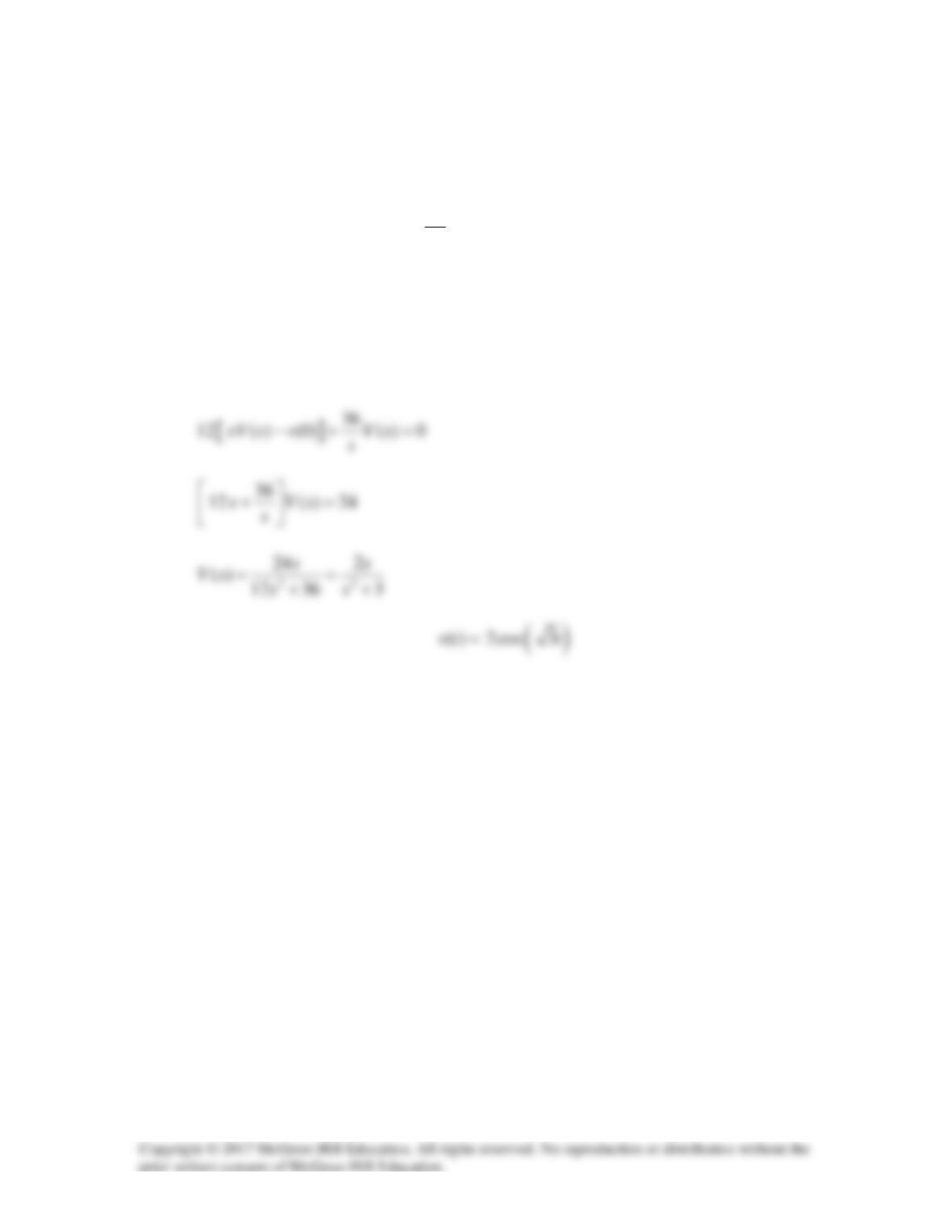
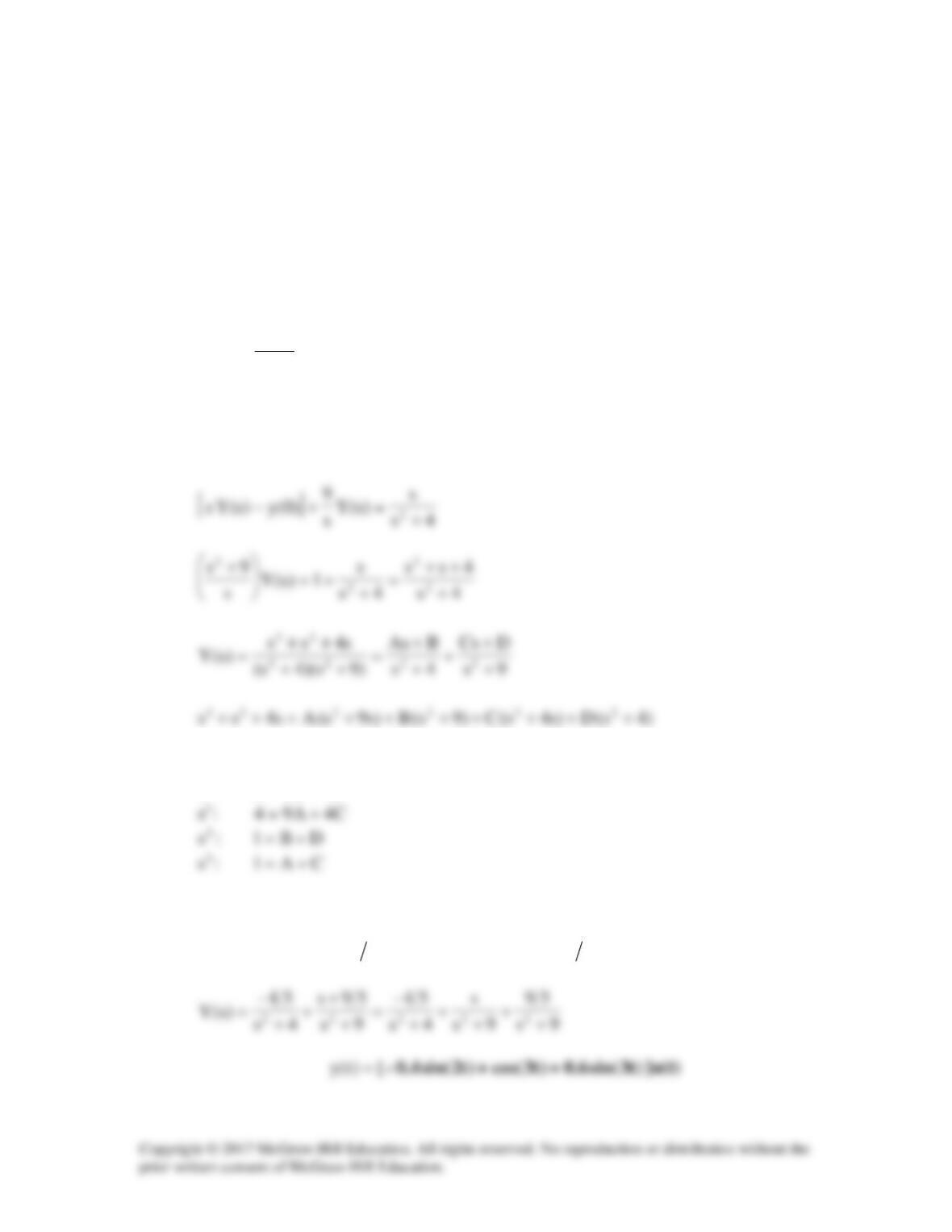
Taking the Laplace transform of each term we get:
Solution 15.57
Although there is no correct way to work this problem, this is an example based on the
same kind of problem asked in the third edition.
Problem
Solve the following integrodifferential equation using the Laplace transform method:
0
() 9 ( ) cos 2 , (0) 1
t
dy t y t dt t y
dt += =
∫
Solution
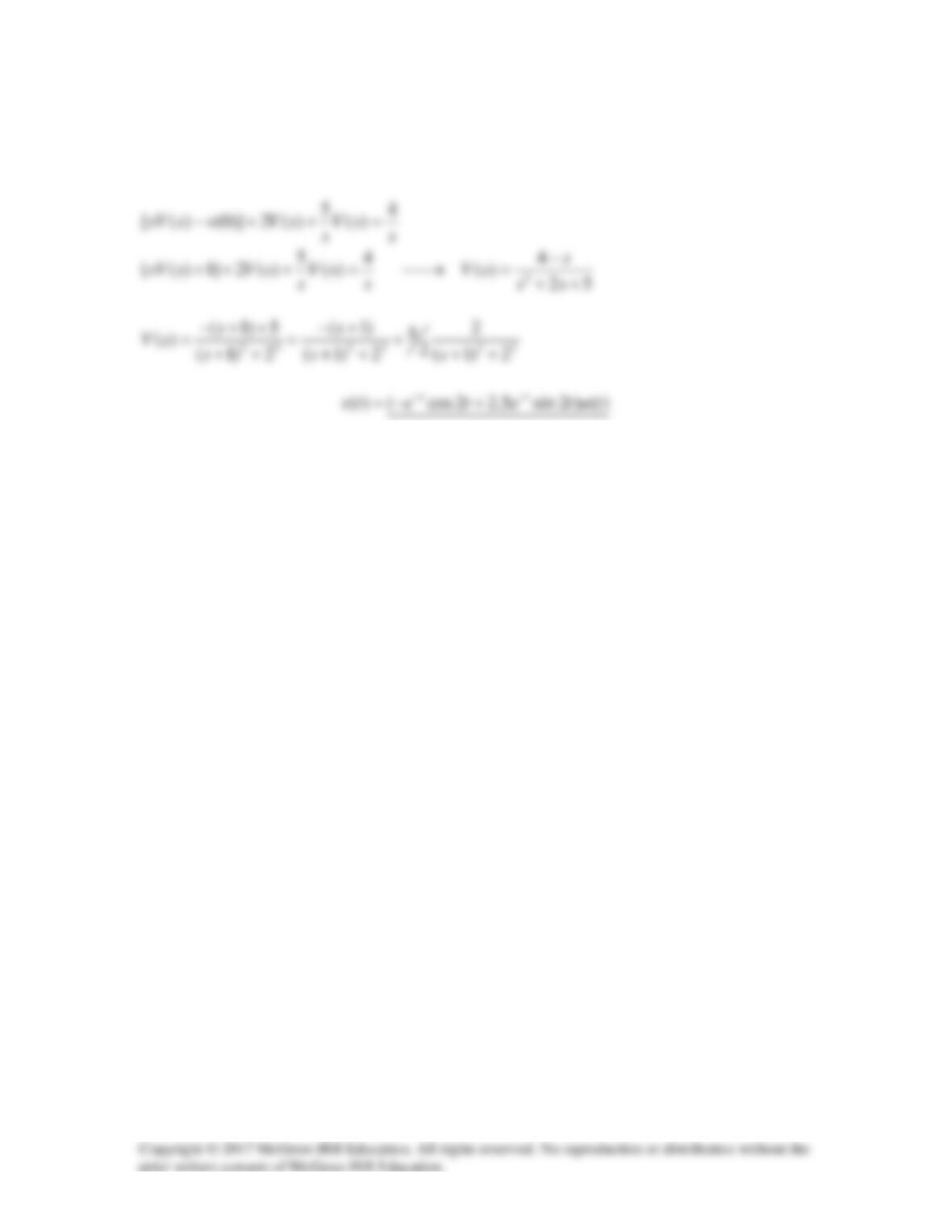
Take the Laplace transform of each term.
Equating coefficients :
0
s
:
D4B90 +=
Solving these equations gives
0A =
,
54–B =
,
1C =
,
59D =
Solution 15.58
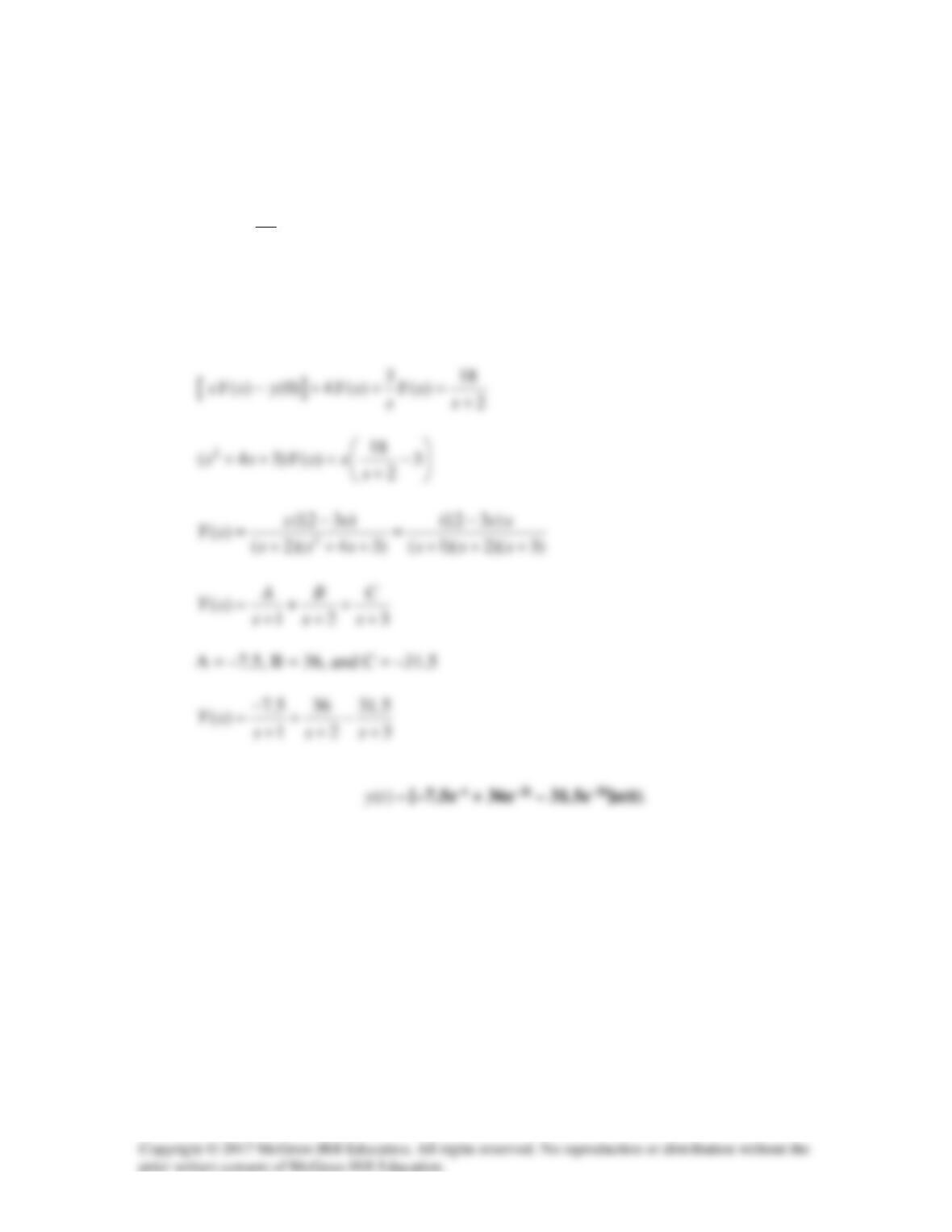
We take the Laplace transform of each term.
Solution 15.59
Solve the following integrodifferential equation
2
0
4 3 18 ( )
t
t
dy y yd e u t
dt
τ
−
++ =
∫
, y(0) = –3.
Solution
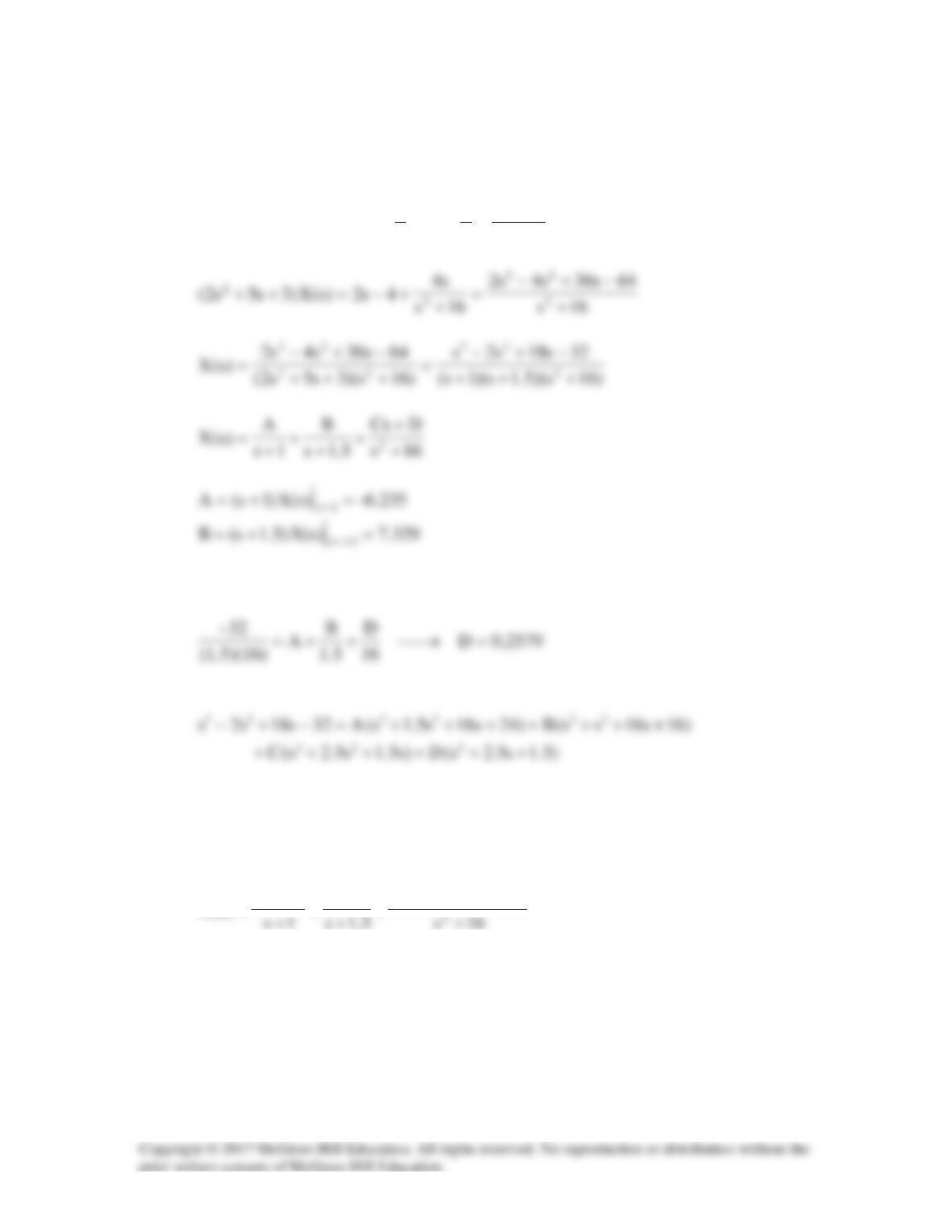
Take the Laplace transform of each term of the integrodifferential equation.
Solution 15.60
Take the Laplace transform of each term of the integrodifferential equation.
[ ]
16s
4
s
4
)s(X
s
3
)s(X5)0(x)s(Xs2 2+
=+++−
When
0s =
,
Equating coefficients of the
3
s
terms,
0935.0–CCBA1 =→++=
0.25790.0935s–
329.7
6.235–
)s(X 2+
+
+
+
=
=)t(x
)t4sin(0645.0)t4cos(0935.0e329.7e6.235–
-1.5t-t
+−+
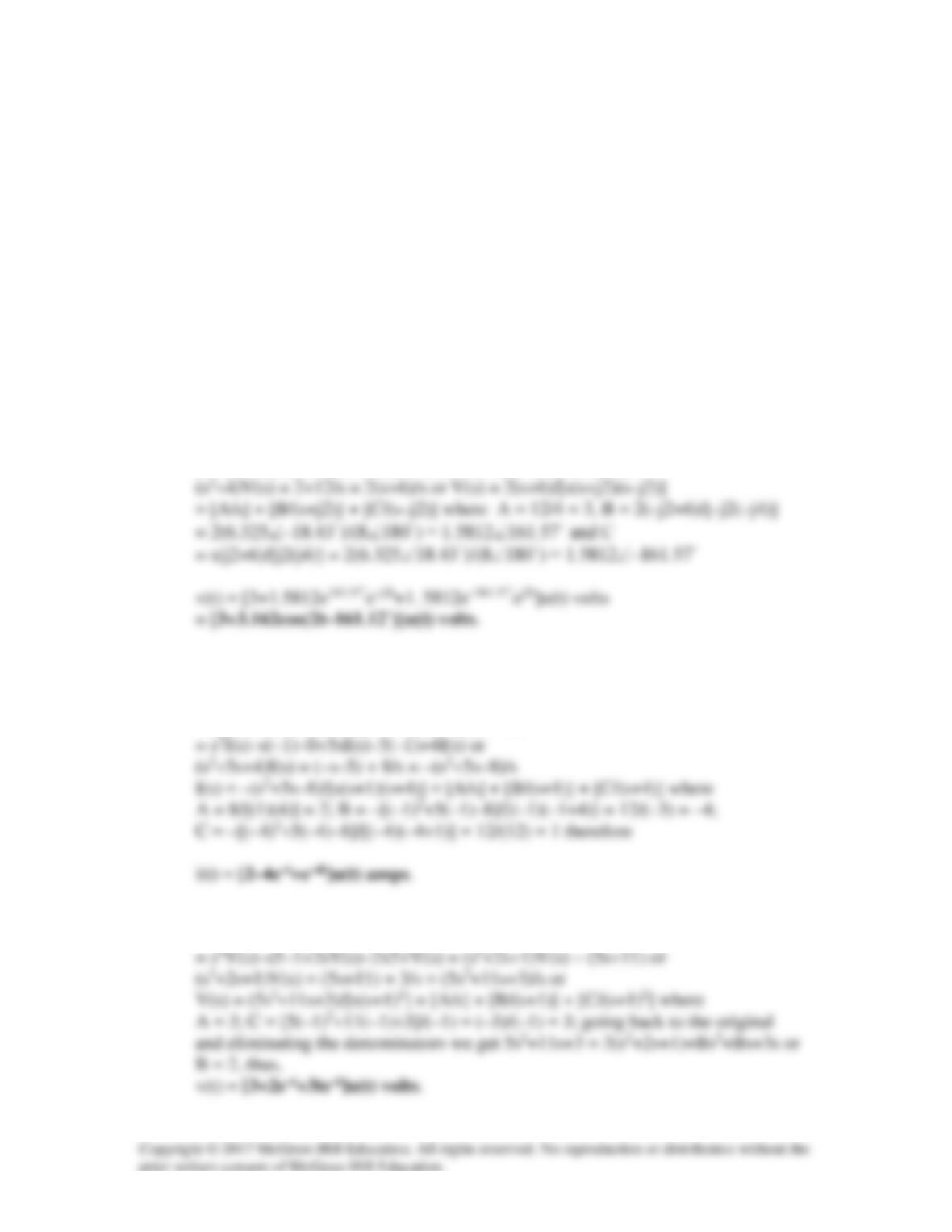
Solution 15.61
Solve the following differential equations subject to the specified initial conditions
(a) d2v/dt2 + 4v = 12, v(0) = 0, dv(0)/dt = 2
(b) d2i/dt2 + 5di/dt + 4i = 8, i(0) = -1, di(0)/dt = 0
(c) d2v/dt2 + 2dv/dt + v = 3, v(0) = 5, dv(0)/dt = 1
(d) d2i/dt2 + 2di/dt + 5i = 10, i(0) = 4, di(0)/dt = -2
8.29
Solution
(a) Converting into the s-domain we get
s2V(s)–sv(0–)–v’(0–)+4V(s) = 12/s = s2V(s)–s0–2+4V(s) or
(b) Converting into the s-domain we get
s2I(s)–si(0–)–i’(0–)+5sI(s)–5i(0–)+4I(s) = 8/s
(c) s2V(s)–sv(0–)–v’(0–)+2sV(s)–2v(0–)+V(s) = 3/s
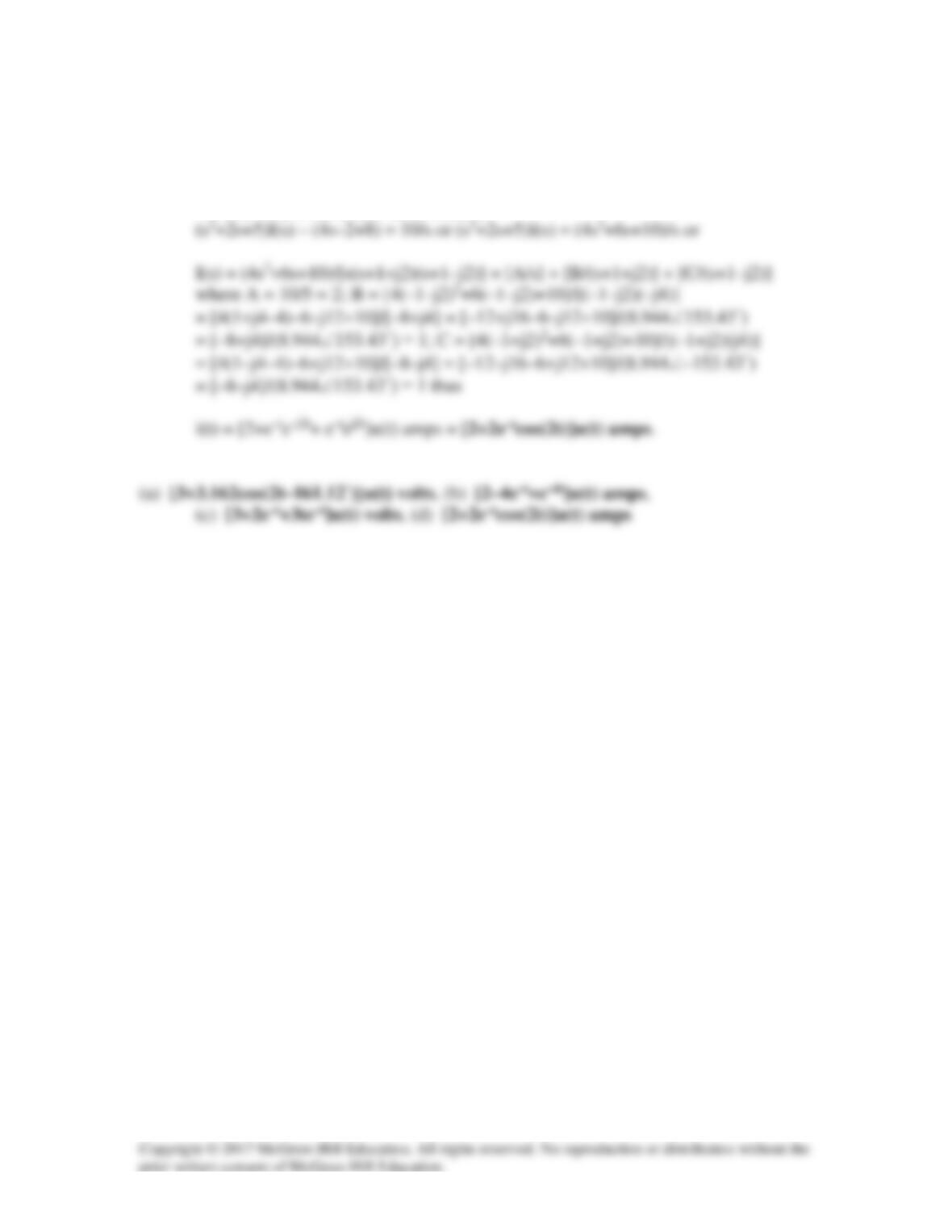
(d) s2I(s)–si(0–)–i’(0–)+2sI(s)–2i(0–)+5I(s) = 10/s
= s2I(s)–s(4)–(–2)+2sI(s)–2(4)+5I(s) or