Accounting Information Systems, 10e 1
SOLUTIONS FOR CHAPTER 15
Each end-of-chapter question in the Solutions Manual is tagged to correspond with AACSB, AICPA
and CISA standards, allowing professors to more easily manage the task of reporting outcomes to these
professional and accrediting bodies. Please see the corresponding spreadsheet file for the tagging
information.
Discussion Questions
DQ 15-1 This chapter discusses the complexities of competing in a highly competitive
global manufacturing environment. Discuss how enterprise systems can help an
organization streamline its processes and become more competitive.
ANS. The following factors were discussed in the chapter:
This answer should probably begin with a discussion of the issues facing
manufacturers in the global economy. Based on the Deloitte & Touche survey
discussed in the text, manufacturing organizations are under pressures to do the
following:
2 Solutions for Chapter 15
Enterprise systems specifically help out in the four key areas discussed as
important for achieving the three goals as follows:
• Product innovation: Enterprise systems ensure that changes made in
engineering can be automatically incorporated into production, decreasing the
time to market for new innovations. Product life-cycle management further
You may also consider structuring this discussion around how technology relates
to the ten global drivers of manufacturing competitiveness discussed in this
chapter.
DQ 15-2 What industry do you believe is a leader in enterprise systems implementations?
Discuss what you think are the major contributing reasons for that leadership.
ANS. One possible answer to the question is the automotive industry, where
manufacturers produce very complex products using highly automated processes.
DQ 15-3 Table 15.1 presents a summary of trends in cost management and cost accounting
that have occurred during the past two decades.
a. Which trends do you consider most significant? Explain your answer.
Accounting Information Systems, 10e 3
ANS. As discussed in the chapter text, the move toward more accurate and detailed cost
information that cuts across the value chain and across the life of the product
presents a significant trend toward focusing on the use of cost information to
• Some cost trends that might fly in the face of what has been learned in
traditional cost accounting classes include the following:
o Shift from direct labor to some other basis for charging overhead.
Although direct labor is becoming a less important cost component,
many firms cling to direct labor as a method for applying overhead.
Automation costs (a fixed cost) or time spent in a production step are
often cited as more meaningful bases for allocating overhead.
o Shift away from standard costs to actual costs.
o Shift away from job order to process costing.
ANS. Other than the relationships shown in Table 15.1, the following relationships
might be described:
4 Solutions for Chapter 15
DQ 15-4 “A company cannot implement manufacturing resource planning (MRP) without
making a heavy investment in computer resources.” Do you agree? Discuss fully.
ANS. Agreed. MRP’s three main components⎯material requirements planning,
capacity requirements planning, and cash flow planning⎯all involve complex
computations and manipulation of large amounts of data and large files. These
DQ 15-5 “A company cannot implement a flexible manufacturing process (FMS) without
making a heavy investment in computer resources.” Do you agree? Discuss fully.
ANS. Agreed. An examination of Figure 15.1 should reveal that most of the flexible
DQ 15-6 “A company cannot implement a just-in-time (JIT) process without making a
heavy investment in computer resources.” Do you agree? Discuss fully.
Accounting Information Systems, 10e 5
ANS. Overall, we don’t agree. JIT processes generally do not require sophisticated
computer resources. In fact, some JIT processes are implemented using the
kanban card as the medium for routing production orders and collecting data. This
DQ 15-7 In addition to the industries mentioned in Technology Summary 15.2, find two
industries currently using 3D printing either for prototyping or manufacturing.
A partial list includes jewelry, footwear, industrial design, architecture, engineering and
construction (AEC), automotive, dental and medical industries, education, geographic
information systems, and civil engineering. There are undoubtedly many others.
DQ 15-8 A main goal of just-in-time JIT is zero inventories.
a. Assume your company does not aspire to JIT and has $3,000,000 in raw
materials in stock. Identify costs that may be incurred to maintain the
inventory level.
ANS. a. The cost of carrying inventory may include incremental taxes, insurance,
spoilage, warehouse space, security, labor to move and maintain, and so on.
DQ 15-9 Without redrawing the figure, discuss the changes that would occur in Figure15.7
if the company used an actual costing process instead of a standard cost process.
6 Solutions for Chapter 15
ANS. Note: Although the question specifically states that Figure 15.7 is not to be
redrawn, your understanding of the following solution will be improved if you
review it in conjunction with the solution to P 15-3, which shows the redrawn
Figure 15.7.
Changes in process outputs:
• In the absence of a standard cost process, there would be no variance
reports to managers or variance updates to the general ledger process.
• A data flow called “GL actual costs update” would replace the flow “GL
standard cost update.”
Changes in process data:
• The standard cost master data and general ledger master data would not
appear in the process.
• The other three files would continue, but two of them would change as
follows:
Accounting Information Systems, 10e 7
DQ 15-10 Discuss how the inventory process supports the production planning process and
the risks to the production process if inventory process control goals are not
achieved. Do not limit your discussion to losses from fraud.
ANS. As organizations struggle to remain competitive in a global manufacturing
environment and to enhance their effectiveness and efficiency, inventory control
becomes critical. If inventory levels are too high, an organization risks being left
DQ 15-11 With the convergence of U.S. GAAP and IFRS standards moving forward, there is
the possibility of the elimination of the LIFO inventory valuation method. If this
happens, what will be the impact on manufacturing operations?
ANS. LIFO is a costing/valuation method and is related to cost flow, not physical flow
8 Solutions for Chapter 15
Short Problems (shown using diagramming software,
such as MS Visio)
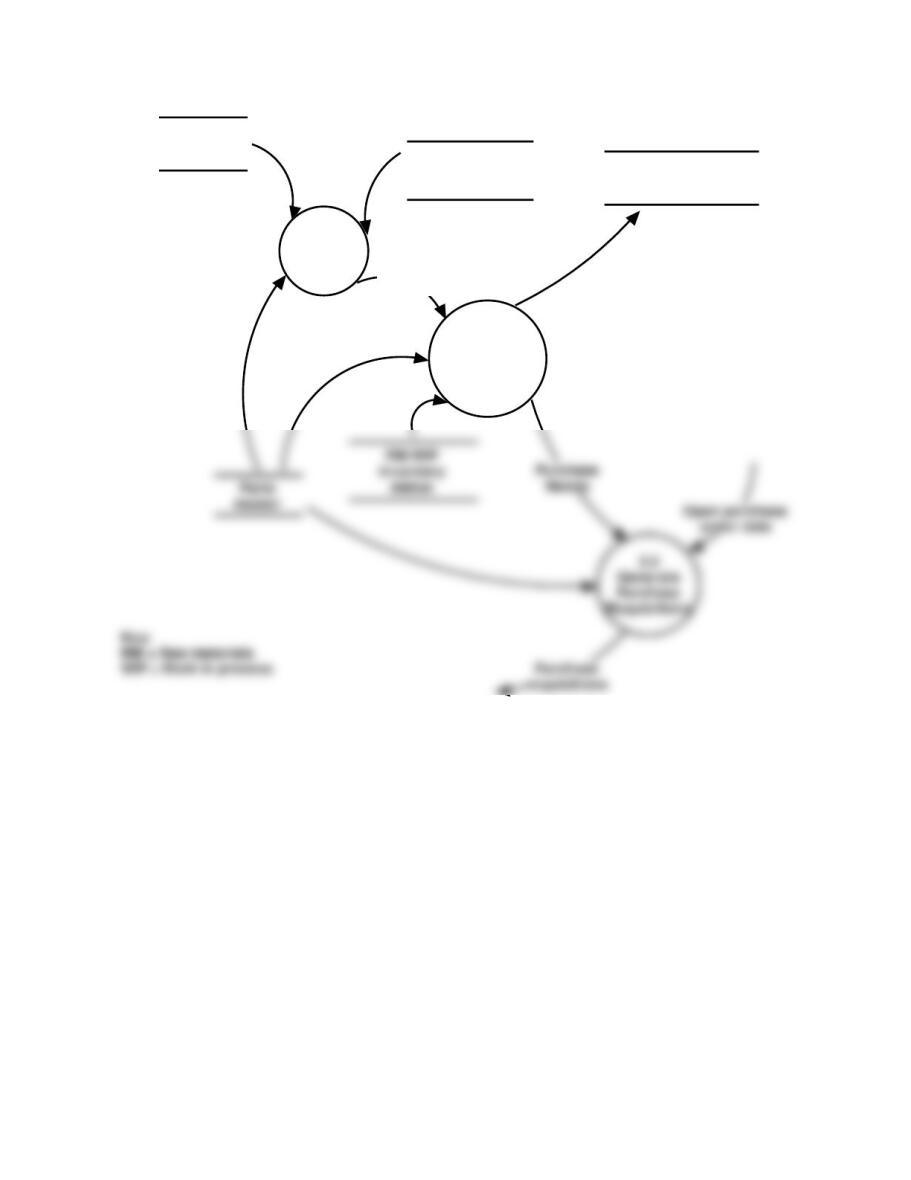
1.1
Determine
Product
Description
Parts master
data
1.3
Determine
Product
Routing
Product Design
New parts needs
Bill of M aterials
Master
Product
FIGURE SM-15.1 Short Problem 15-1 Solution
Accounting Information Systems, 10e 9
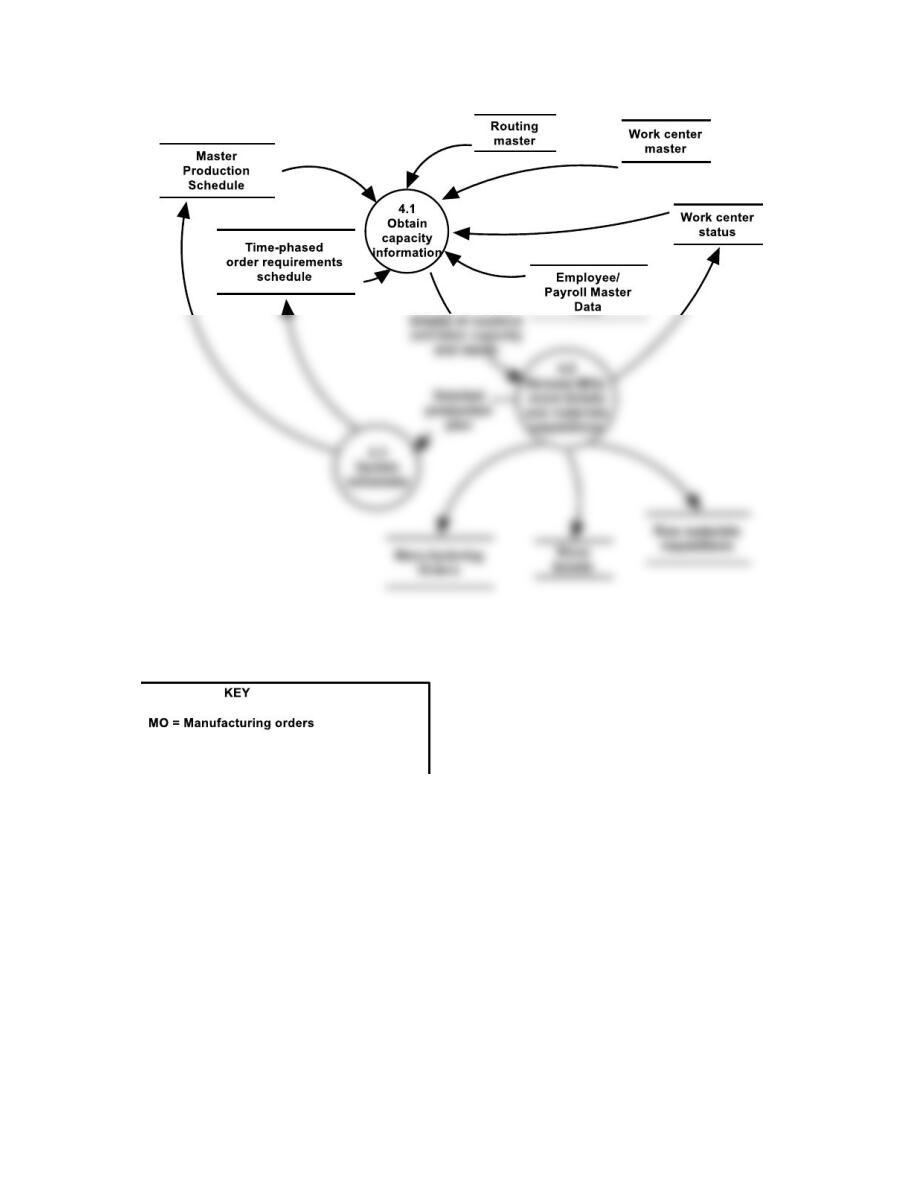
3.1
Explode
Bills of
Materials
3.2
Develop
Time–phased
order
requirements
Bill of materials
master
Materials
Needs
Master
production
schedule Time–phased
order requirements
schedule
FIGURE SM-15.2 Short Problem 15-2 Solution
10 Solutions for Chapter 15
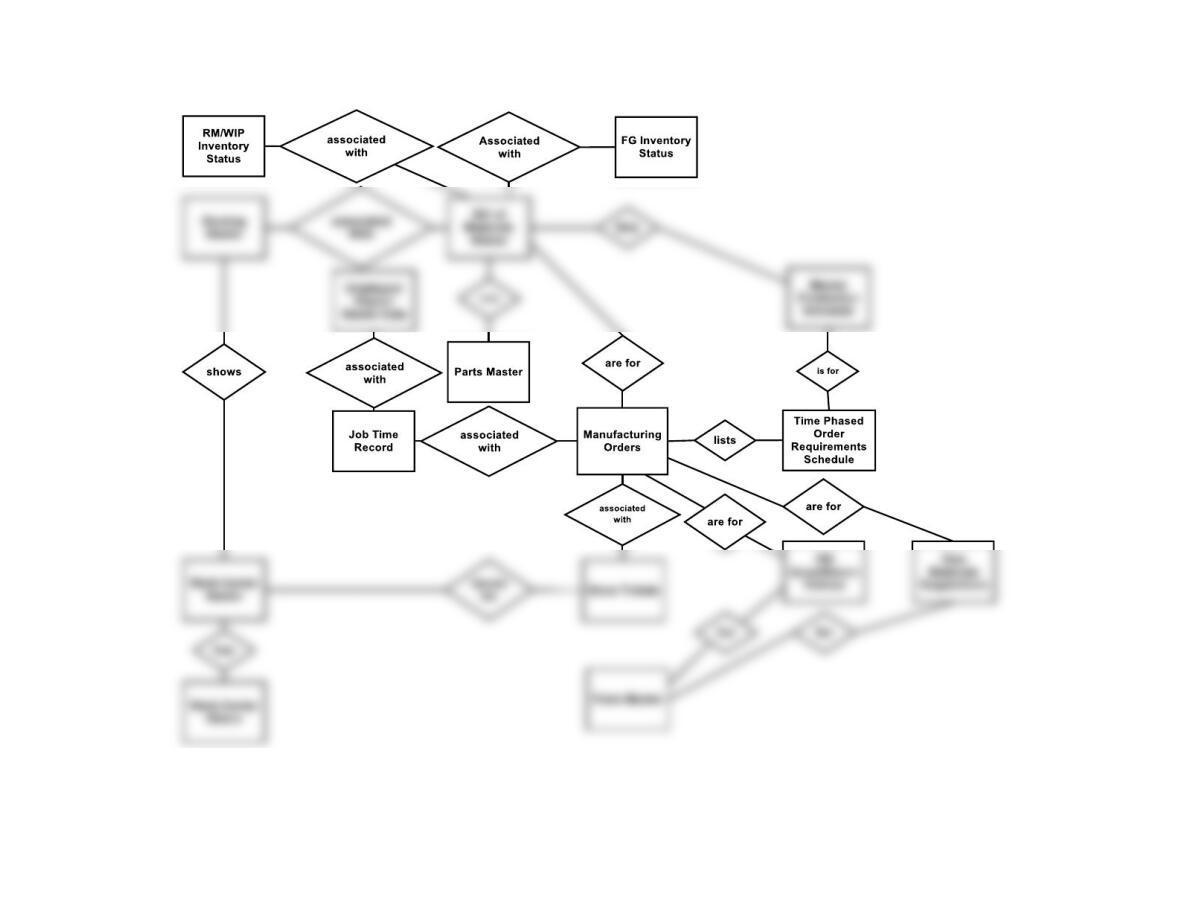
FIGURE SM-15.3 Short Problem 15-3 Solution
Accounting Information Systems, 10e 11
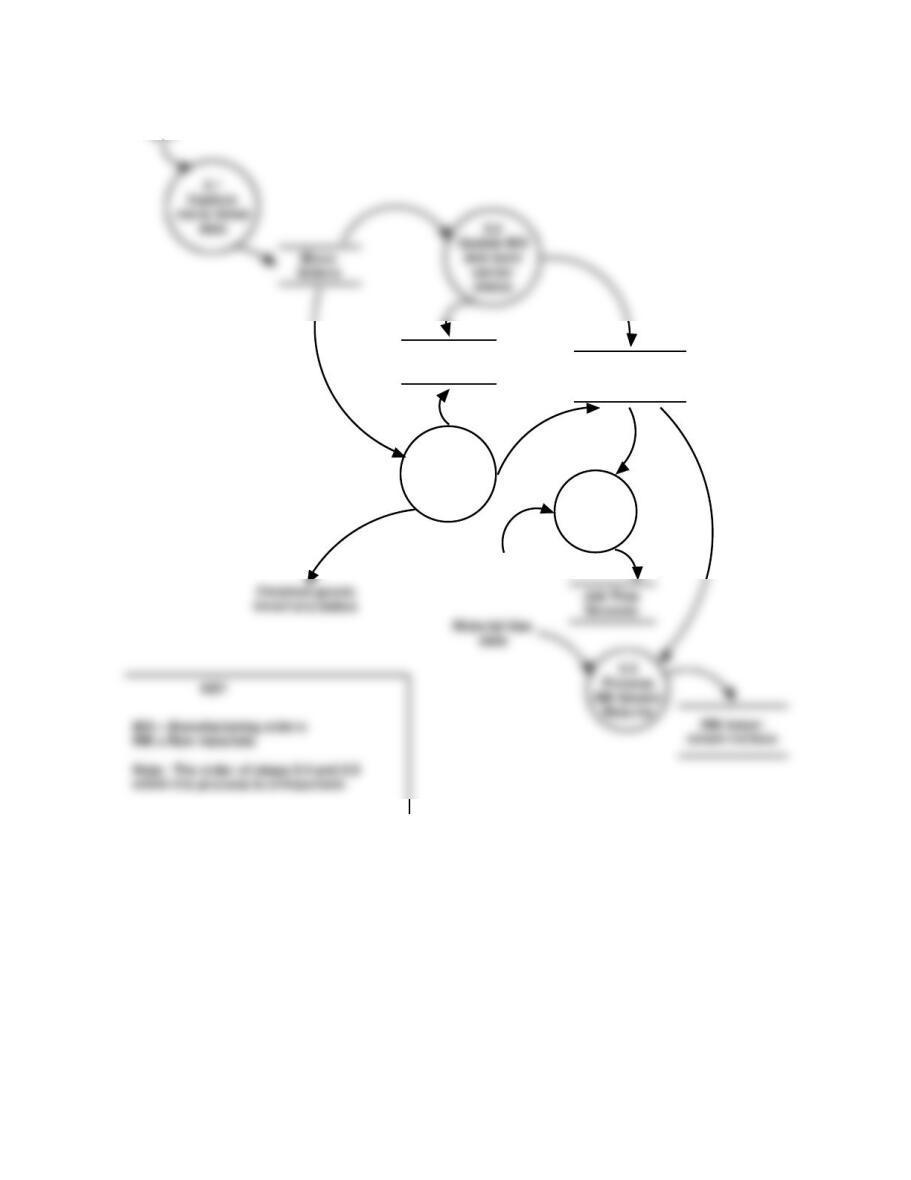
FIGURE SM-15.4 Short Problem 15-4 Solution
12 Solutions for Chapter 15
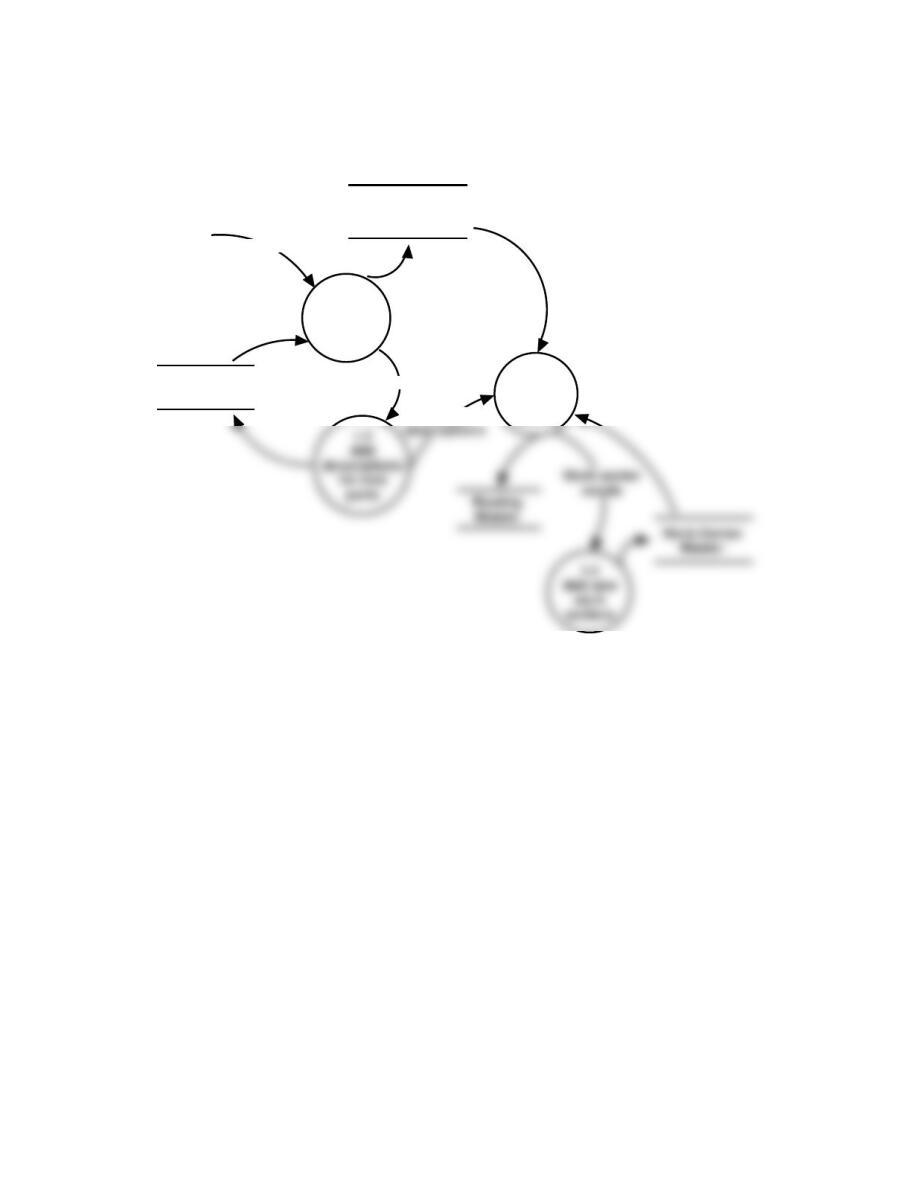
Manufacturing
Orders
Work center
status
5.3
Update work
center
status and
close MO
5.4
Process
Employee
Time
Work progre ss
data
Labor Time
FIGURE SM-15.5 Short Problem 15-5 Solution