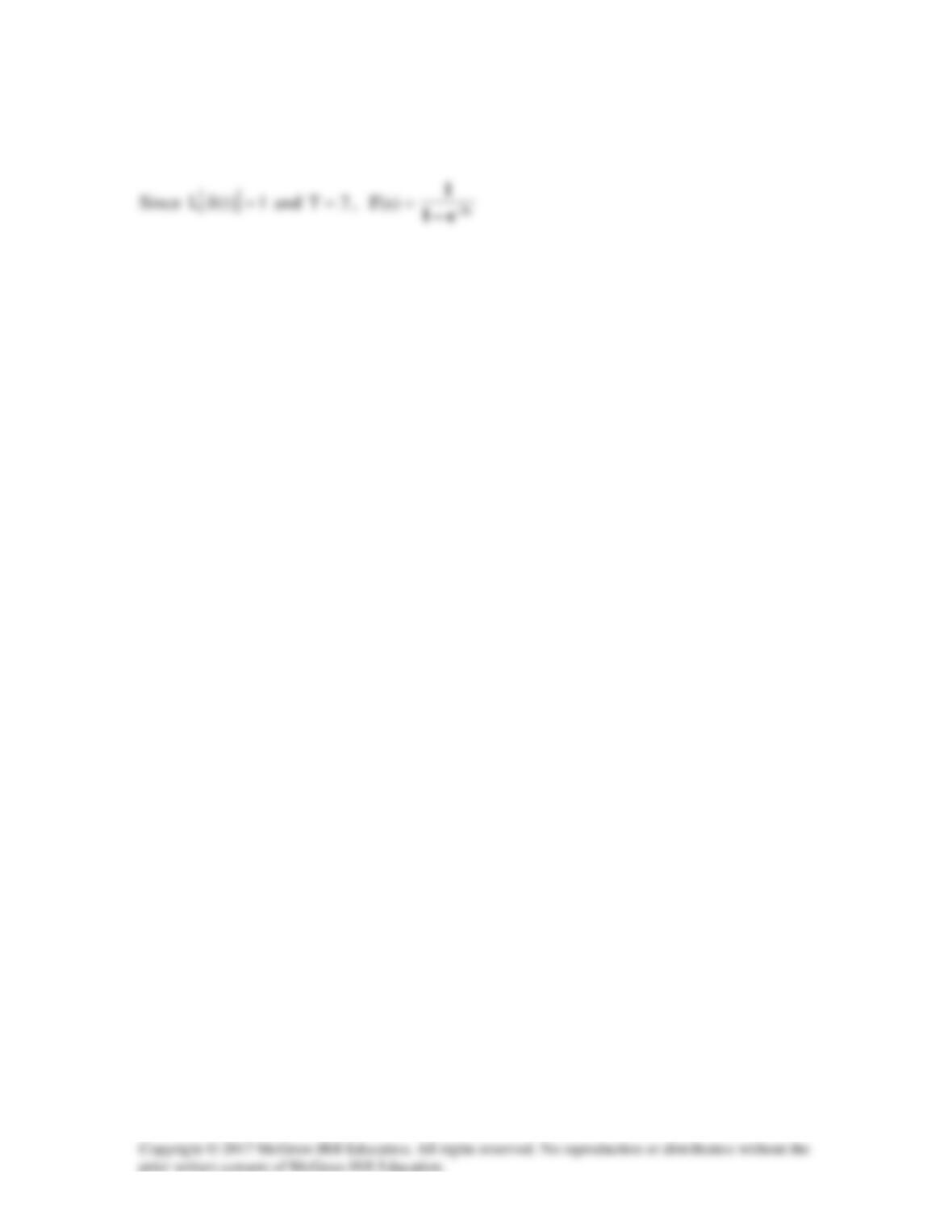
Solution 15.19
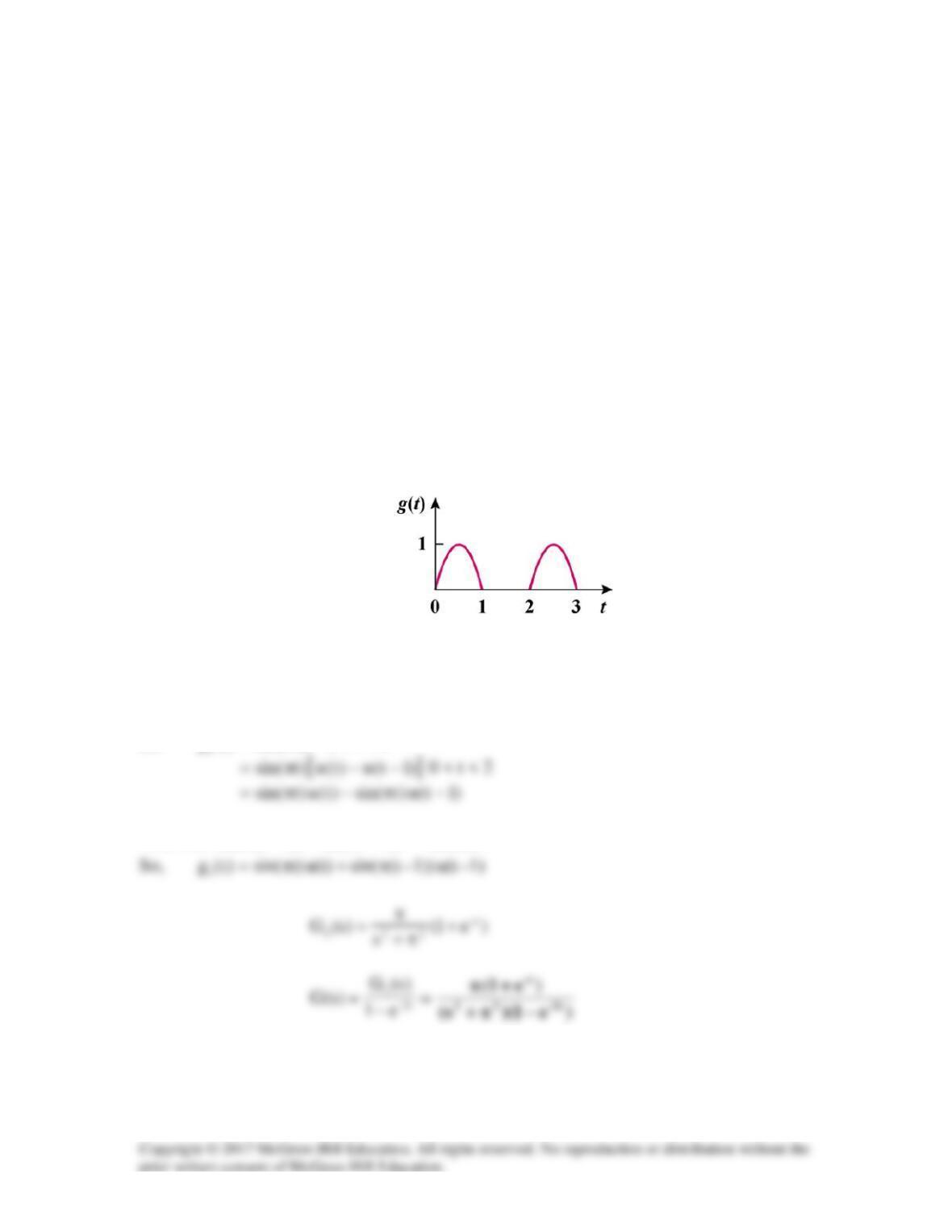
Solution 15.20
Using Fig. 15.32, design a problem to help other students to better understand the
Laplace transform of a simple, periodic waveshape.
Although there are many ways to solve this problem, this is an example based on the
same kind of problem asked in the third edition.
Problem
The periodic function shown in Fig. 15.32 is defined over its period as
sin , 0 1
() 0, 1 2
tt
gt t
π
<<
=<<
Find G(s).
Figure 15.32
Solution
Let
1t0),tsin()t(g1<<π=
Note that
)tsin(–)tsin())1t(sin( π=π−π=−π
.
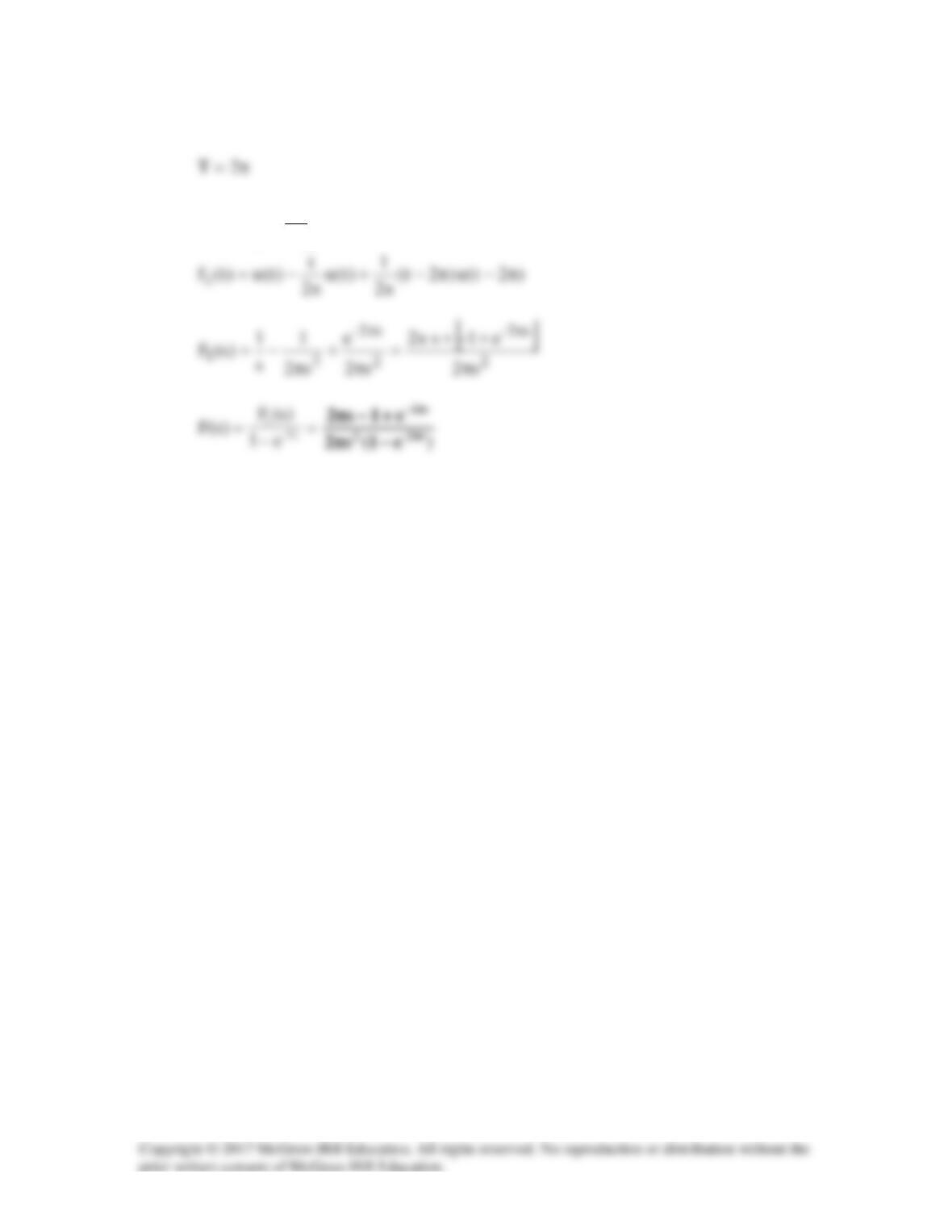
Solution 15.21
Let
[ ]
)2t(u)t(u
2
t
1)t(f1π−−
π
−=
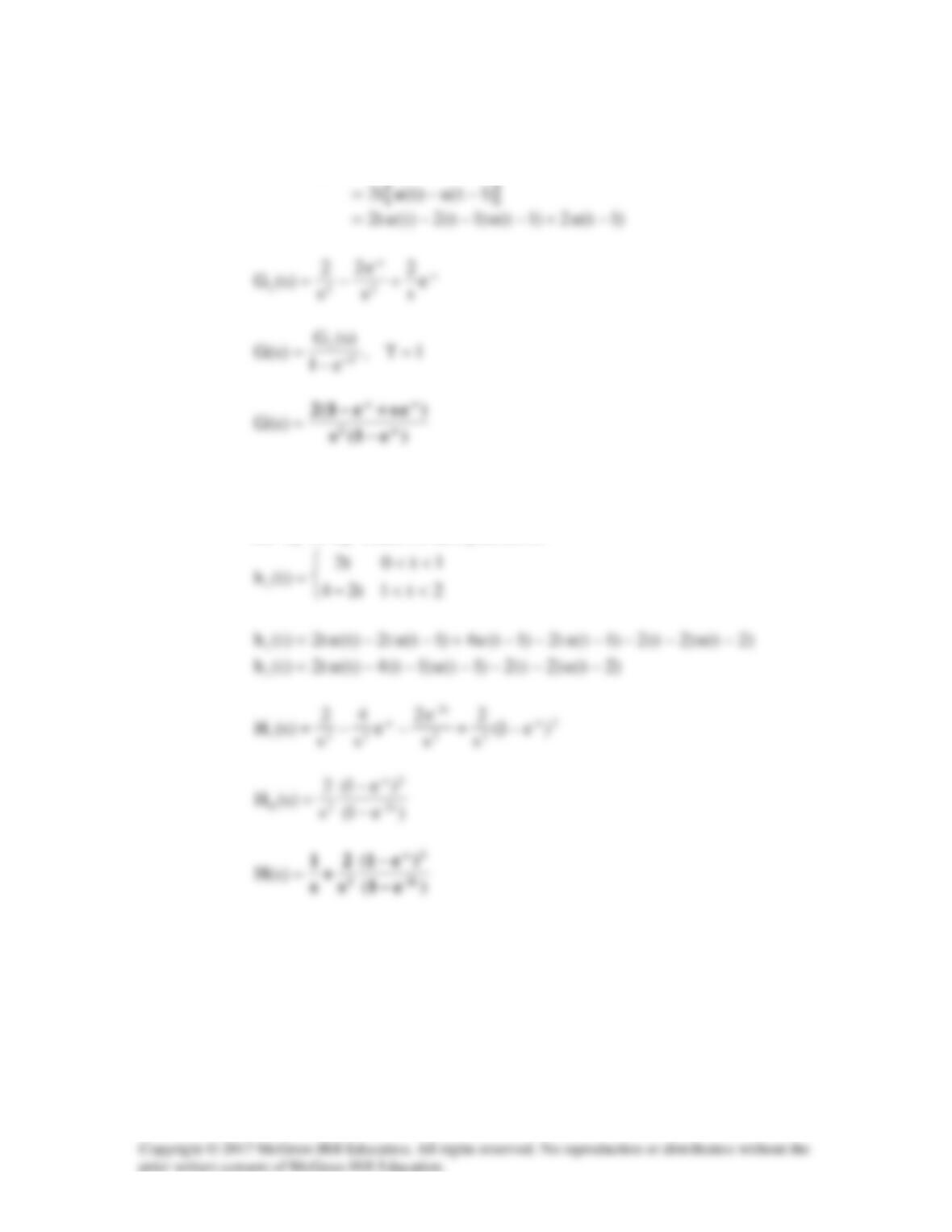
Solution 15.22
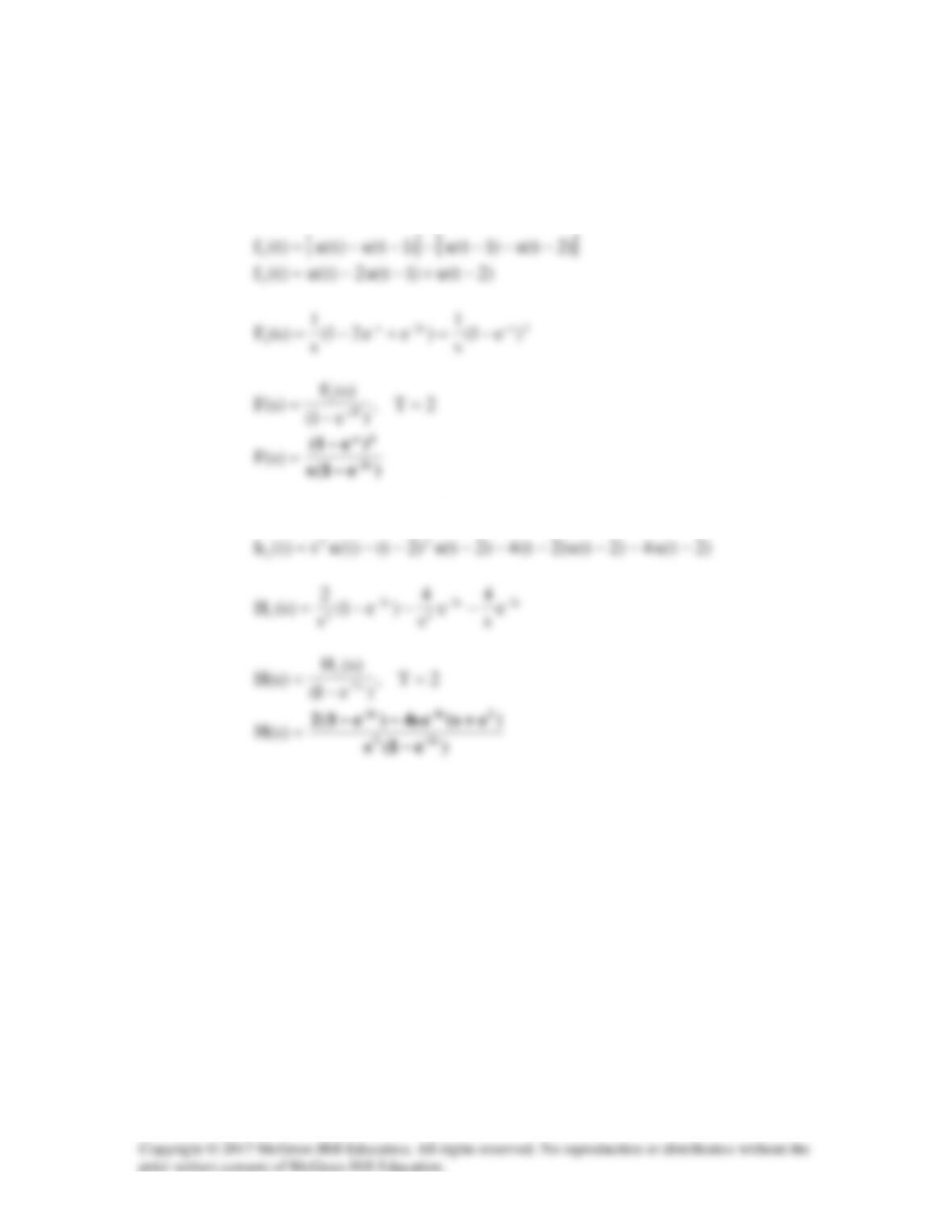
(a) Let
1t0,t2)t(g1<<=
(b) Let
)t(uhh 0+=
, where 0
h
is the periodic triangular wave.
Let
h
be
h
within its first period, i.e.
Solution 15.23
(a) Let
<<
<<
=2t
11–
1t01
)t(f
1
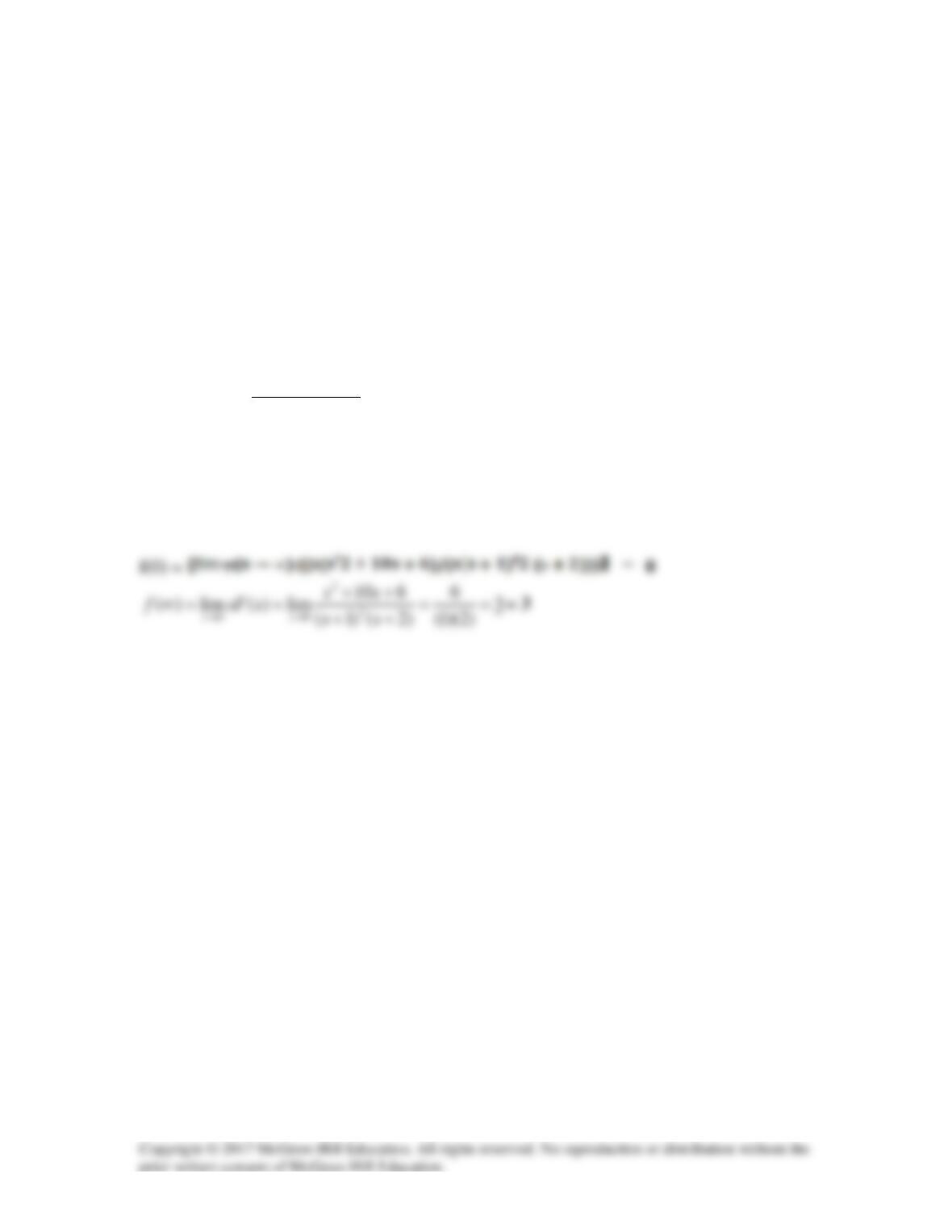
(b) Let
[ ]
)2t(ut)t(ut)2t(u)t(ut)t(h
222
1
−−=−−=
Solution 15.24
Design a problem to help other students to better understand how to find the initial and
final values of a transfer function.
Although there are many ways to solve this problem, this is an example based on the
same kind of problem asked in the third edition.
Problem
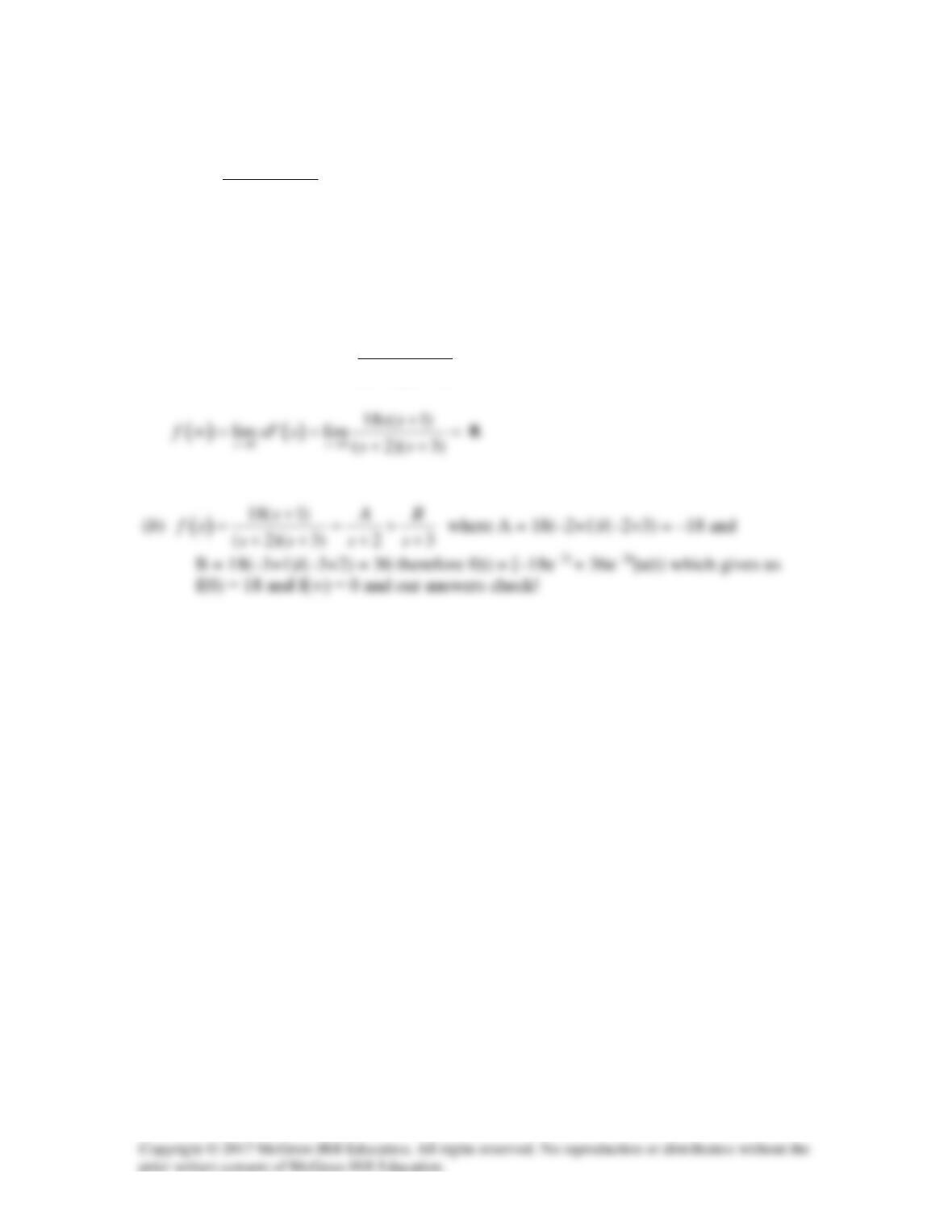
Given that
2
2
10 6
() ( 1) ( 2)
ss
Fs ss s
++
=++
Evaluate f(0) and f(
∞
) if they exist.
Solution
Solution 15.25
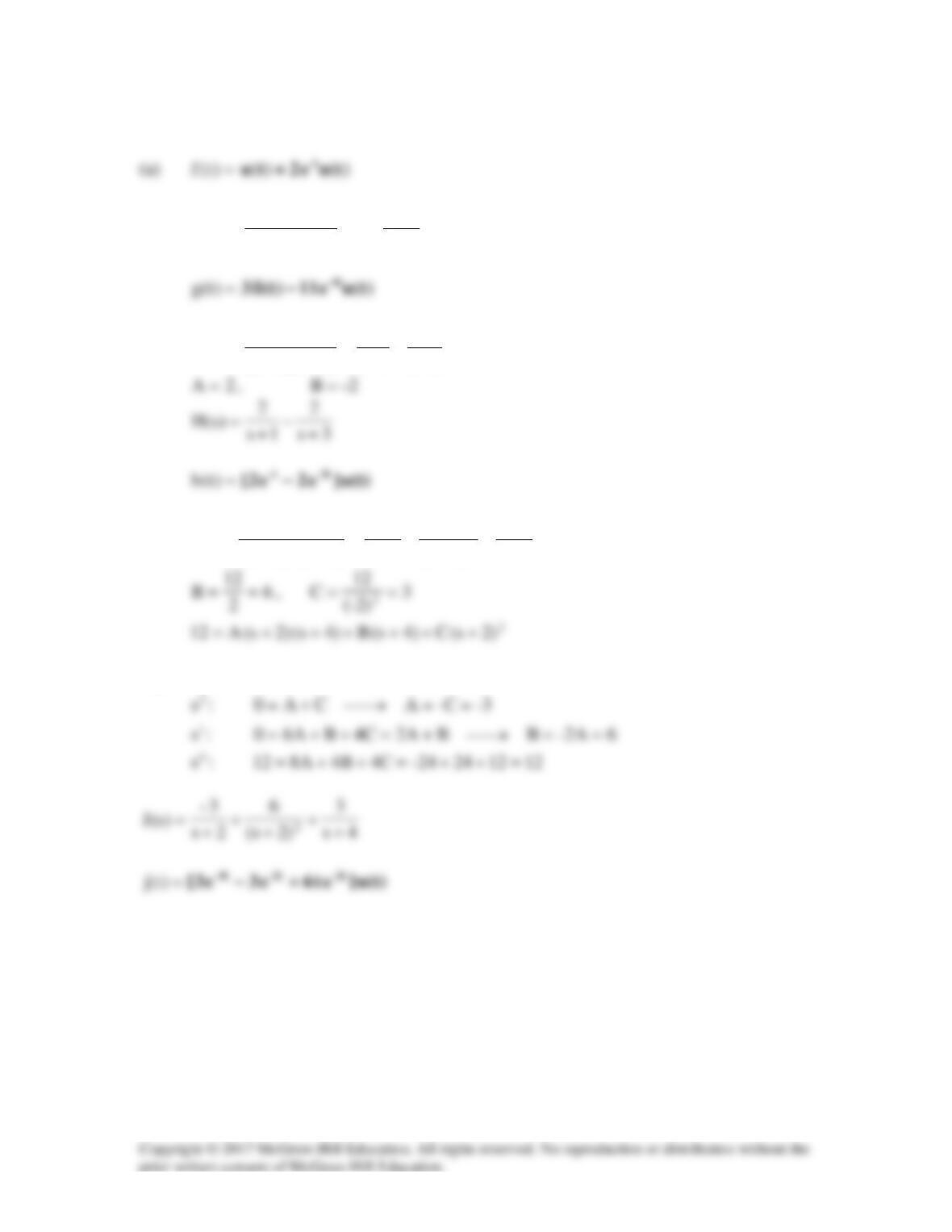
Let F(s) =
18( 1)
( 2)( 3)
s
ss
+
++
.
(a) Use the initial and final value theorems to find f(0) and f(
∞
).
(b) Verify your answer in part (a) by finding f(t) using partial fractions.
Solution
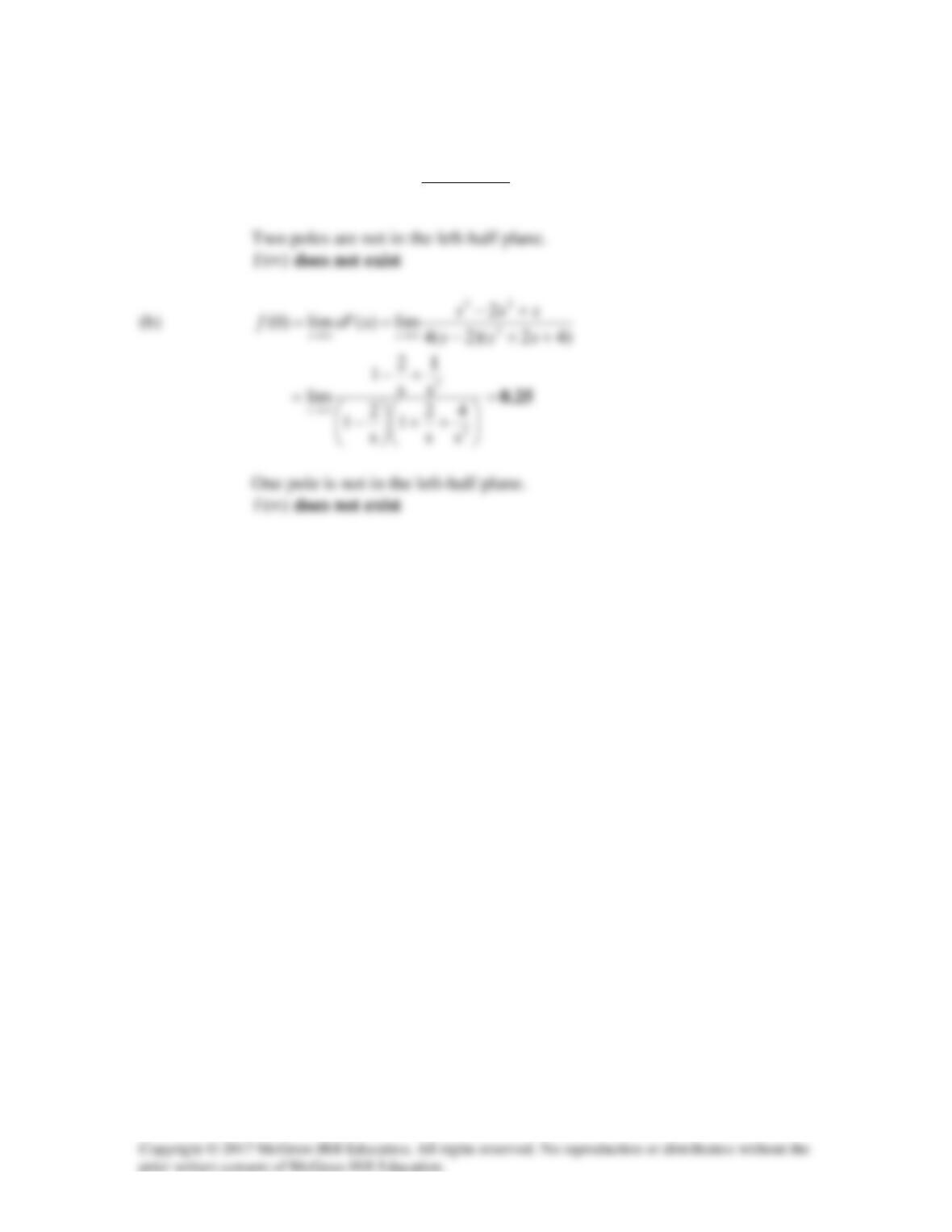
(a)
( ) ( )
18 ( 1)
0 lim lim ( 2)( 3)
ss
ss
f sF s ss
→∞ →∞
+
= = =
++
18.
Solution 15.26
(a)
=
++
+
==
∞→∞→
64
35
lim)(lim)0(
23
3
ss
ss
ssFf
ss
5
Solution 15.27
(b)
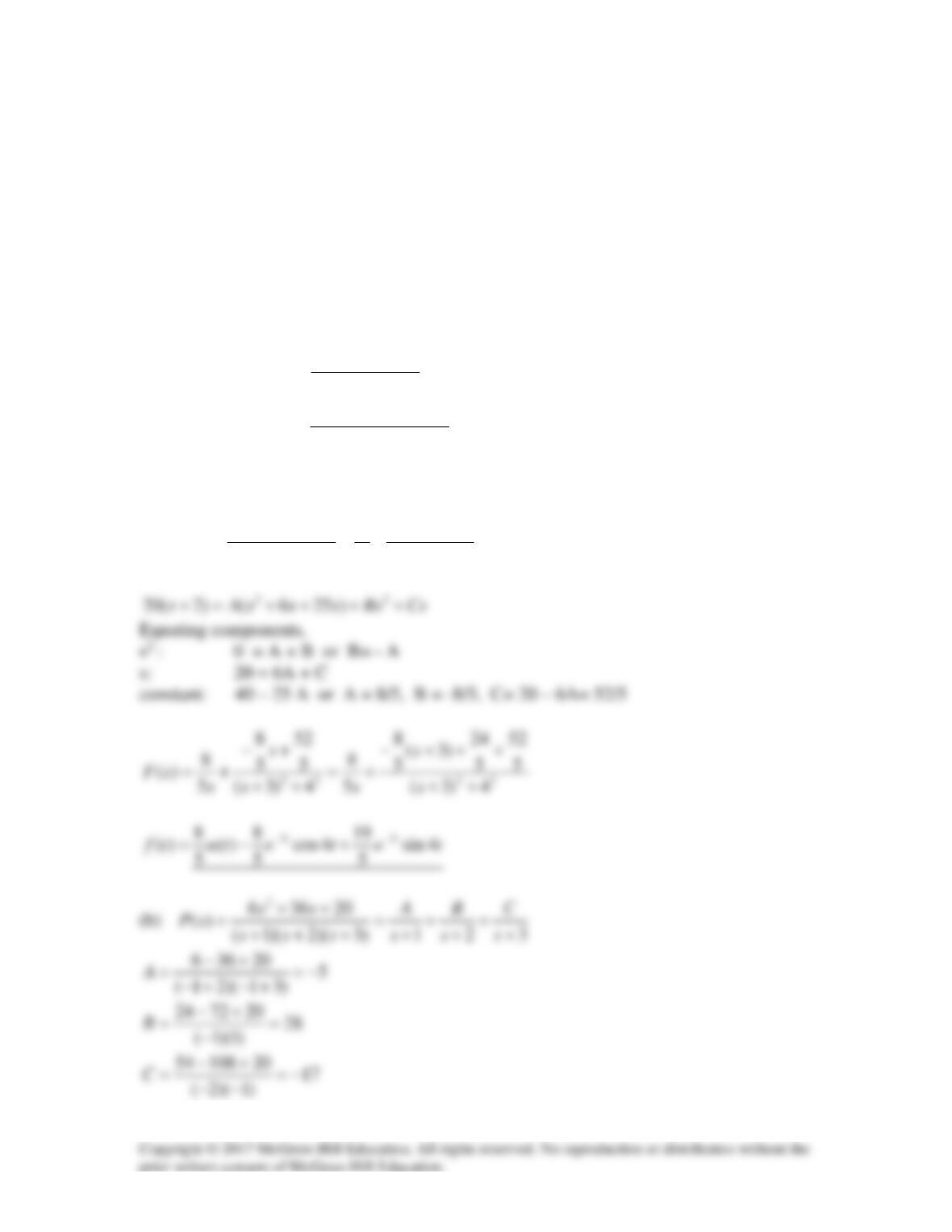
4s
11
3
4s
11)4s(3
)s(G +
−=
+
−+
=
(c)
3s
B
1s
A
)3s)(1s(
4
)s(H +
+
+
=
++
=
(d)
4s
C
)2s(
B
2s
A
)4s()2s(
12
)s(J
22
+
+
+
+
+
=
++
=
Equating coefficients :
Solution 15.28
Design a problem to help other students to better understand how to find the inverse
Laplace transform.
Although there are many ways to solve this problem, this is an example based on the
same kind of problem asked in the third edition.
Problem
Find the inverse Laplace transform of the following functions:
(a)
2
20( 2)
() ( 6 25)
s
Fs ss s
+
=++
(b)
2
6 36 20
() ( 1)( 2)( 3)
ss
Ps ss s
++
=++ +
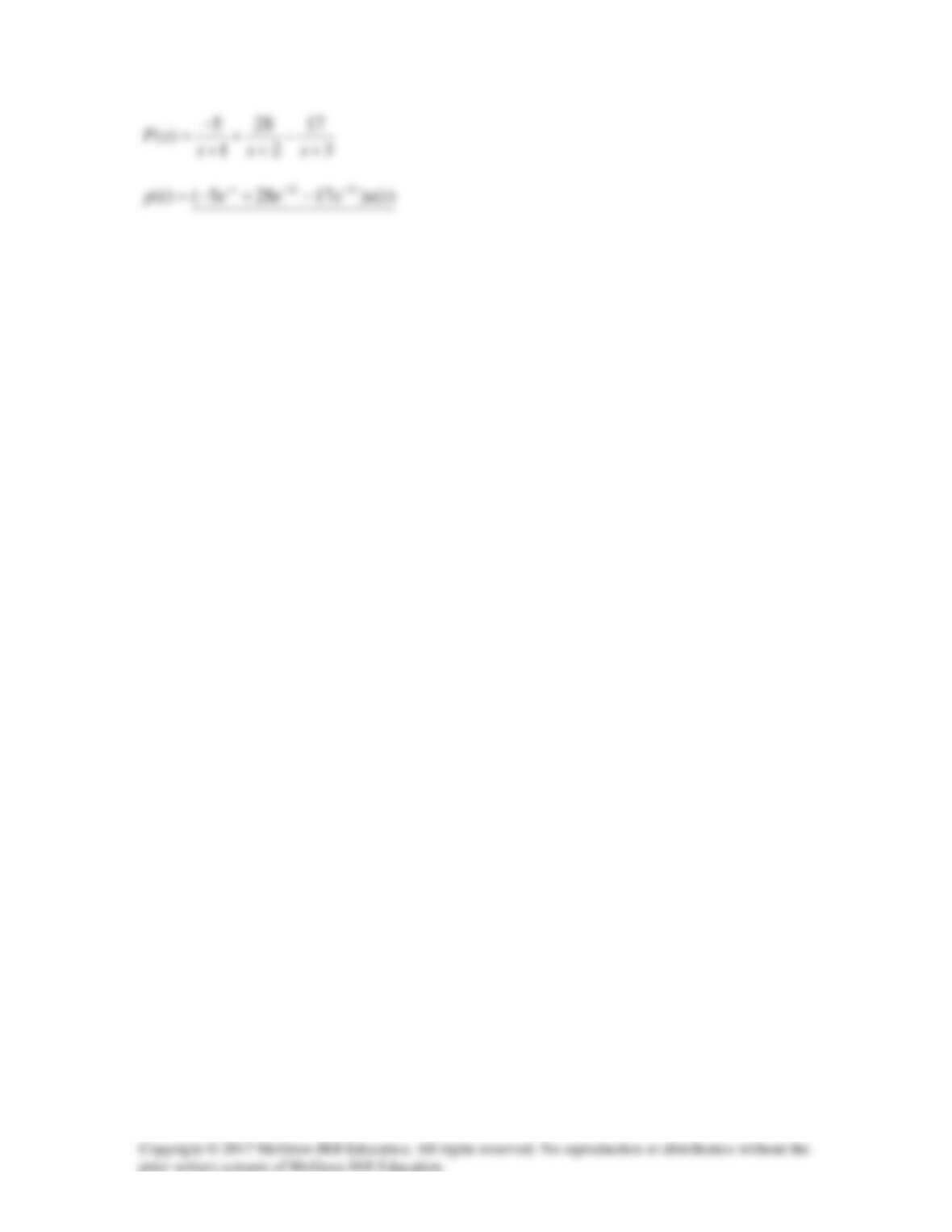
Solution
(a)
22
20( 2)
() ( 6 25) 6 25
s A Bs C
Fs sss sss
++
= = +
++ ++
Solution 15.29
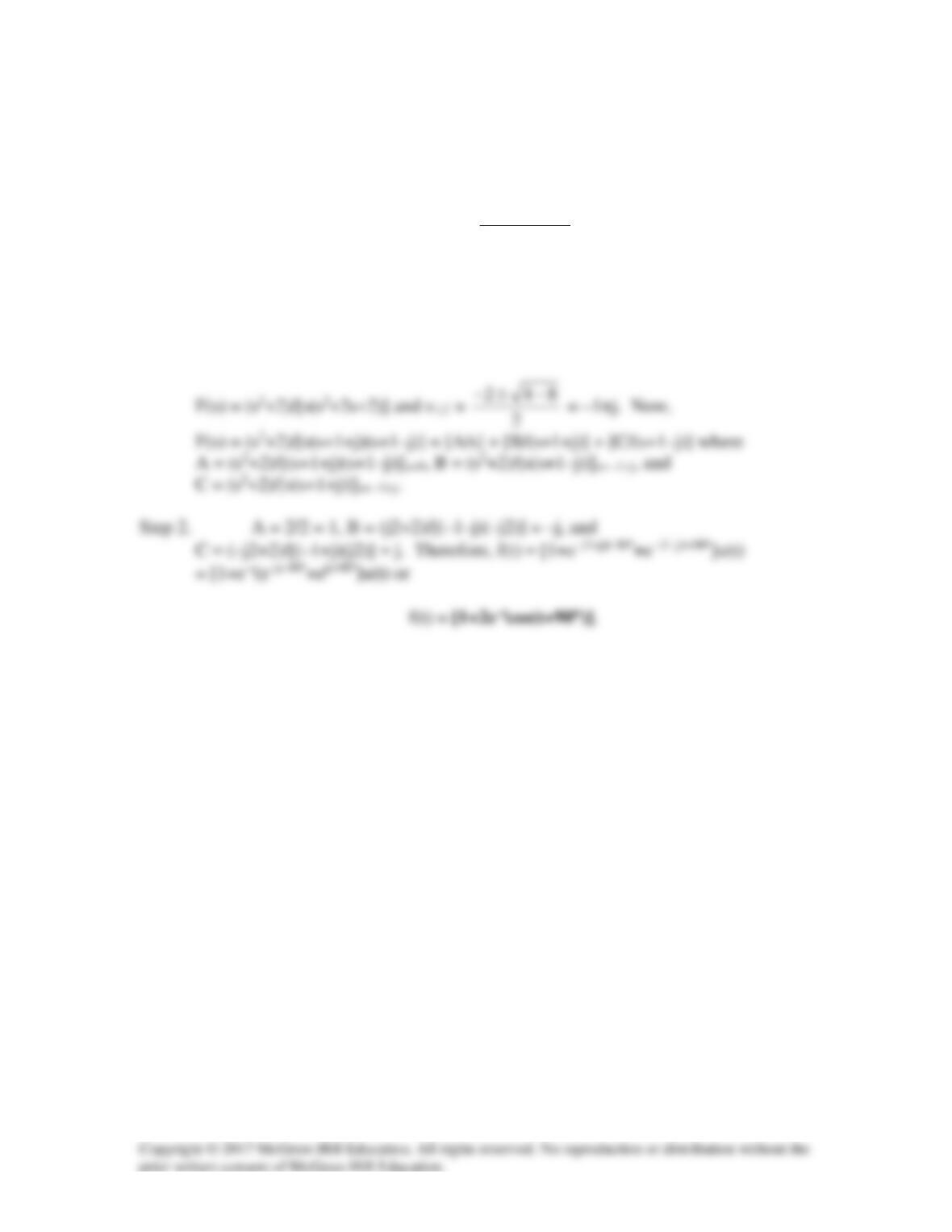
Find the inverse Laplace transform of:
F(s) =
2
32
s2
s 2s 2s
+
++
.
Solution
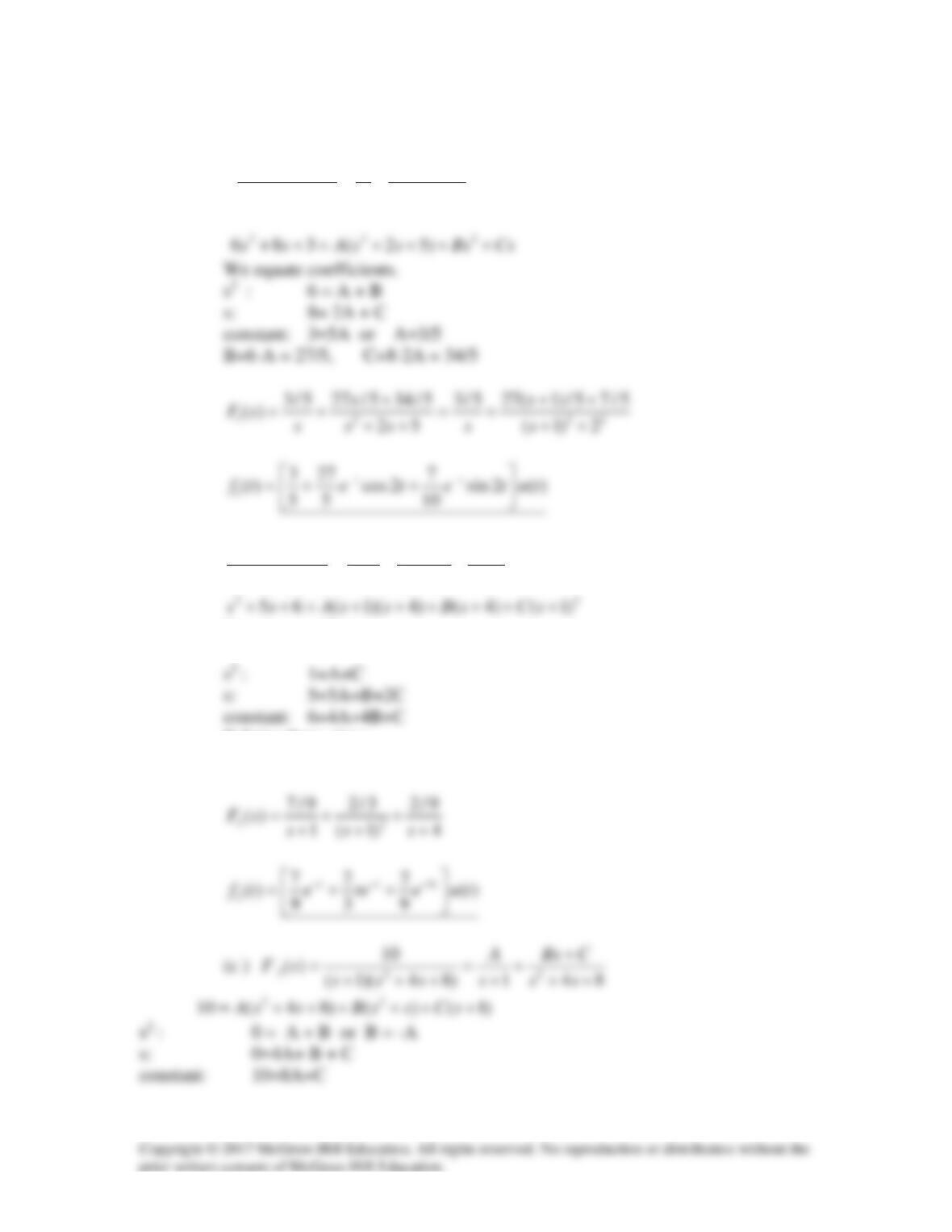
Step 1. First we simplify and find the roots of the denominator. Then we perform
a partial fraction expansion and then solve for f(t).
Solution 15.30
(a)
2
1
22
6 83
()
( 25) 25
s s A Bs C
Fs
sss sss
++ +
= = +
++ ++
(b)
2
222
56
() ( 1) ( 4) 1 ( 1) 4
ss A B C
Fs ss s s s
++
= =++
++ + + +
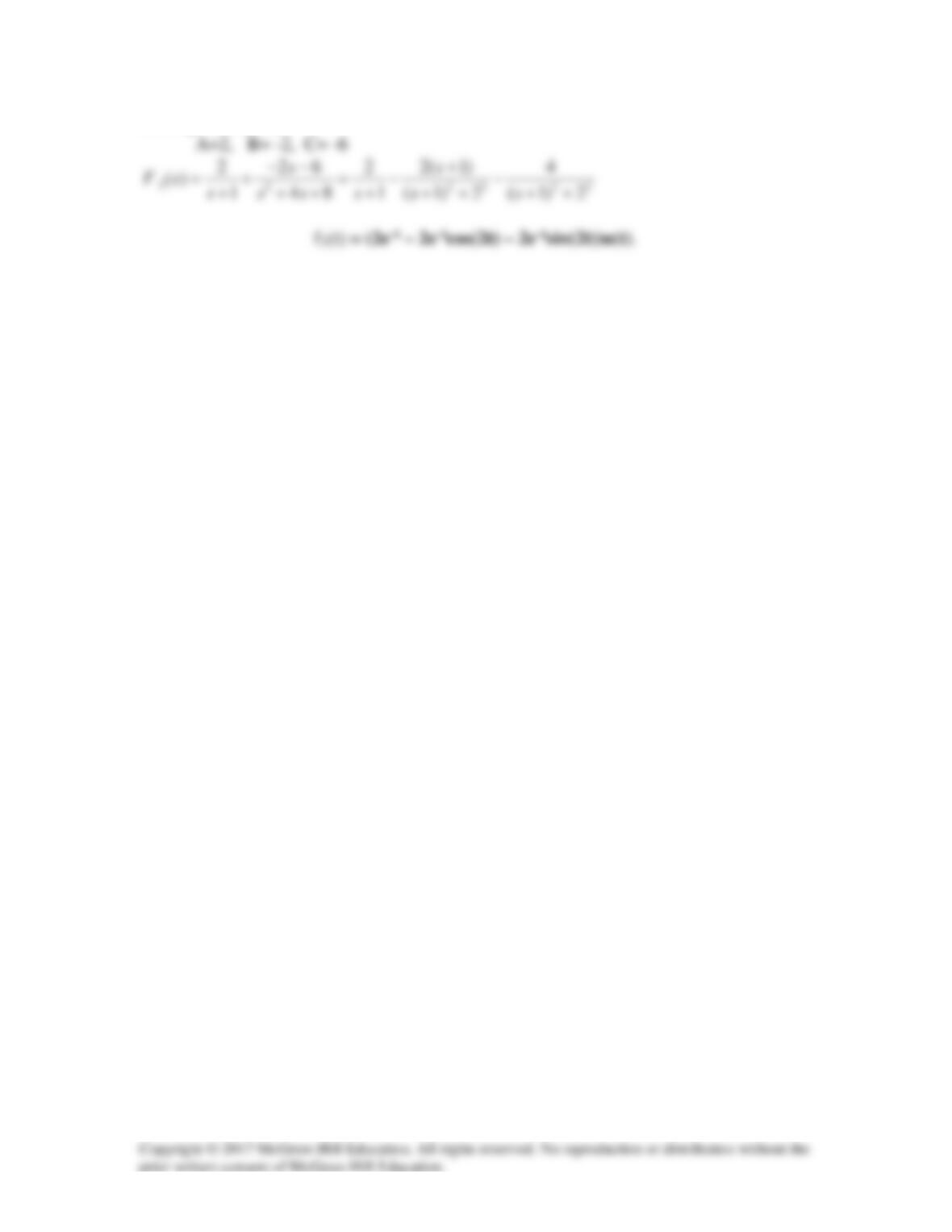
Equating coefficients,
Solving these gives
A=7/9, B= 2/3, C=2/9
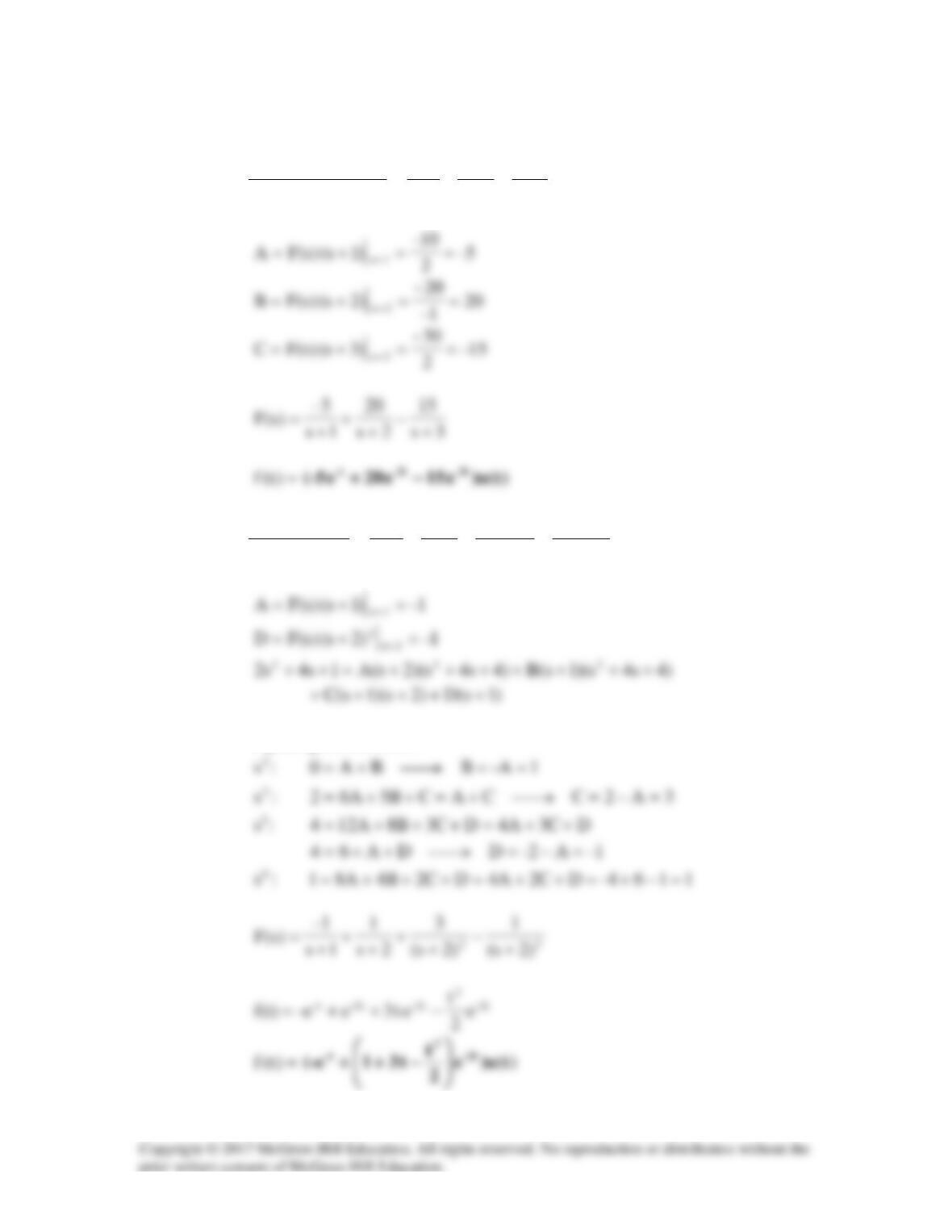
Solving these yields
Solution 15.31
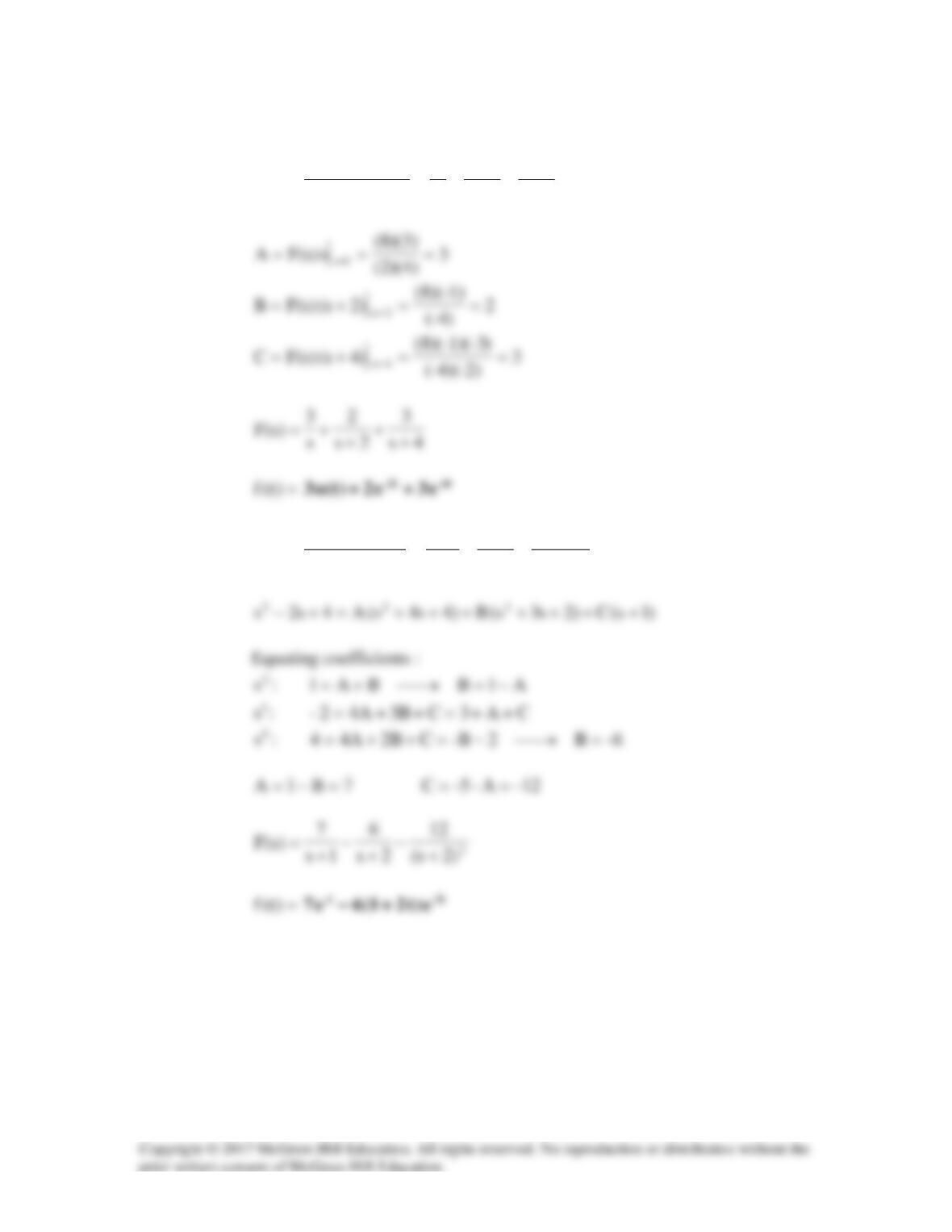
(a)
3s
C
2s
B
1s
A
)3s)(2s)(1s(
s10
)s(F +
+
+
+
+
=
+++
=
(b)
323
2
)2s(
D
)2s(
C
2s
B
1s
A
)2s)(1s(
1s4s2
)s(F +
+
+
+
+
+
+
=
++
++
=
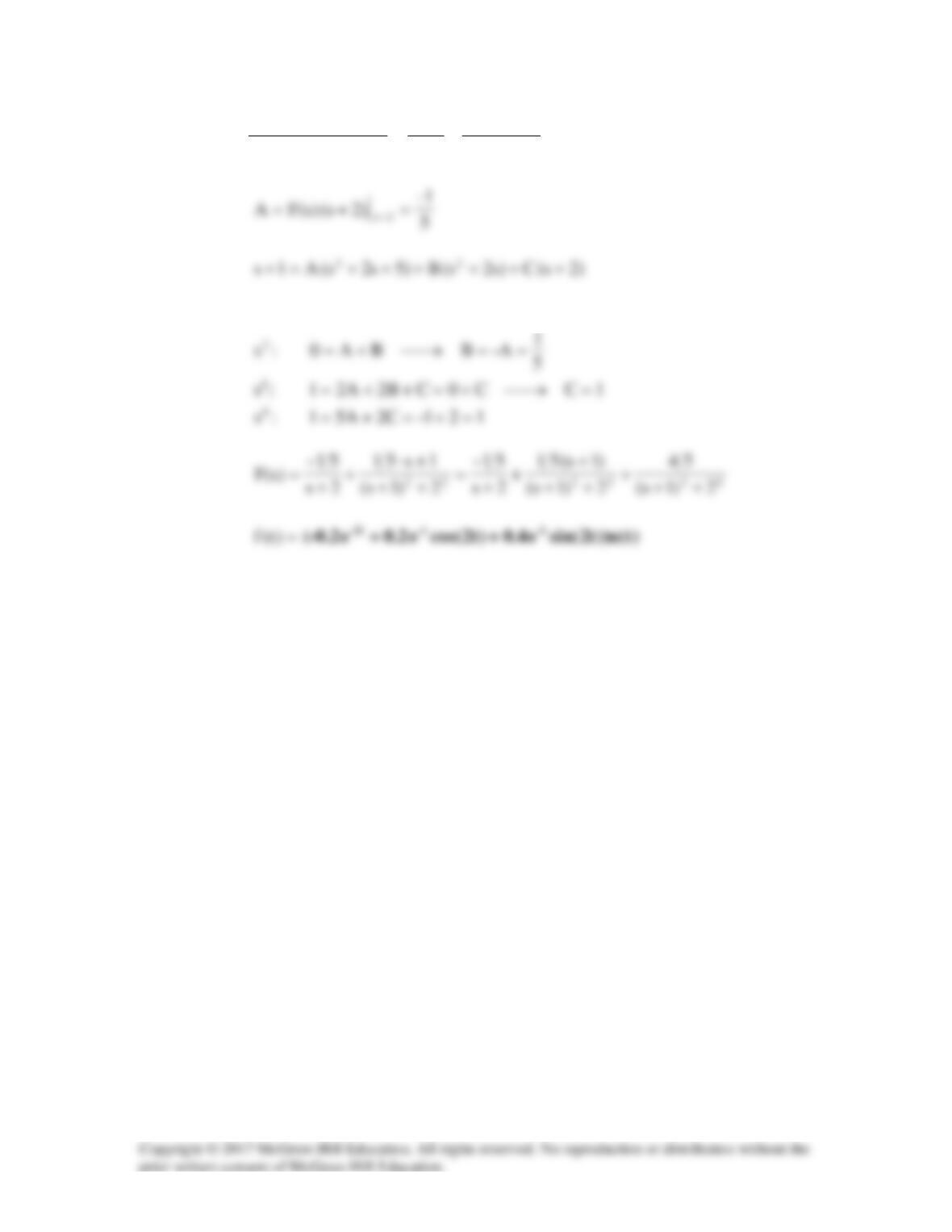
Equating coefficients :
(c)
5s2s
CBs
2s
A
)5s2s)(2s(
1s
)s(F
22
++
+
+
+
=
+++
+
=
Equating coefficients :
Solution 15.32
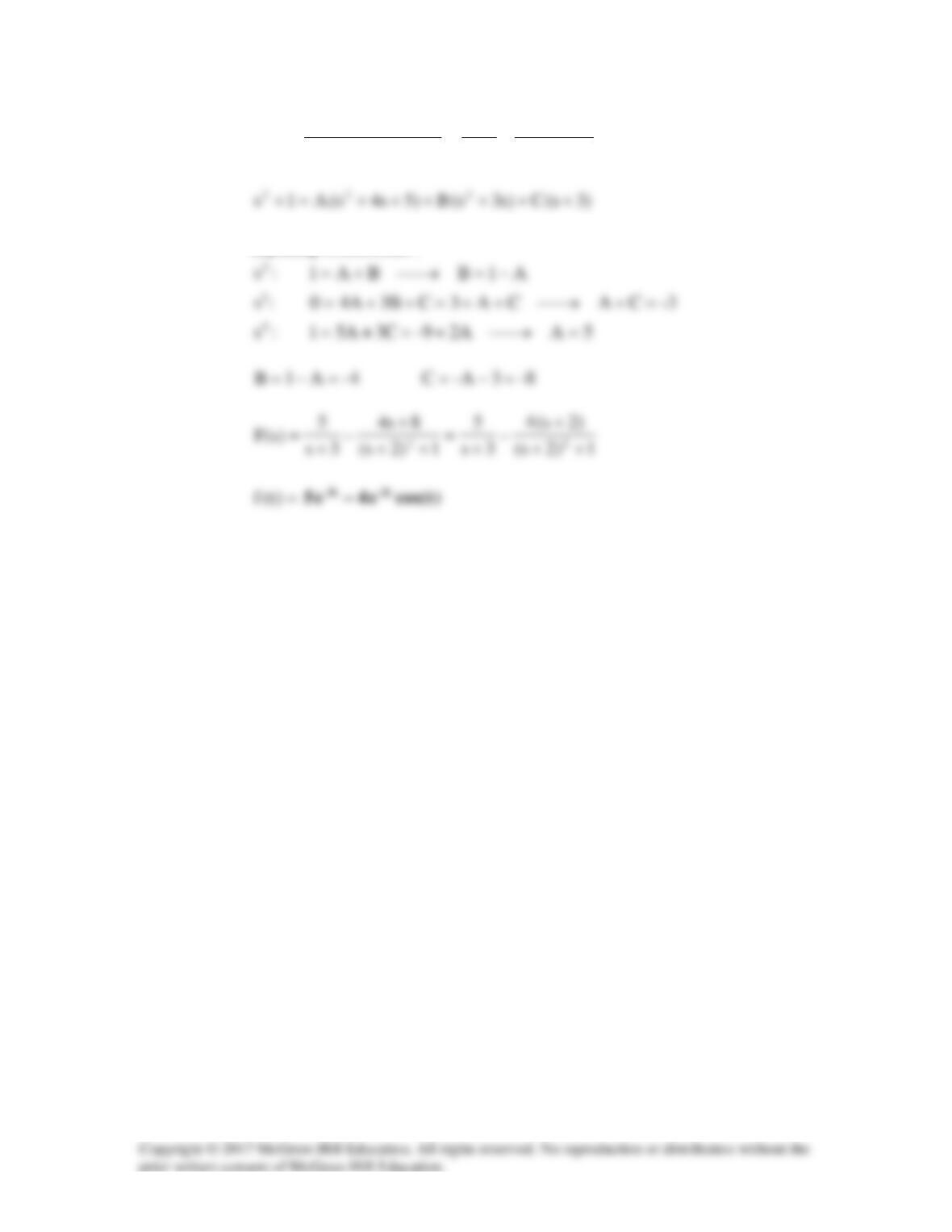
(a)
4s
C
2s
B
s
A
)4s)(2s(s
)3s)(1s(8
)s(F +
+
+
+=
++
++
=
(b)
22
2
)2s(
C
2s
B
1s
A
)2s)(1s(
4s2s
)s(F +
+
+
+
+
=
++
+−
=
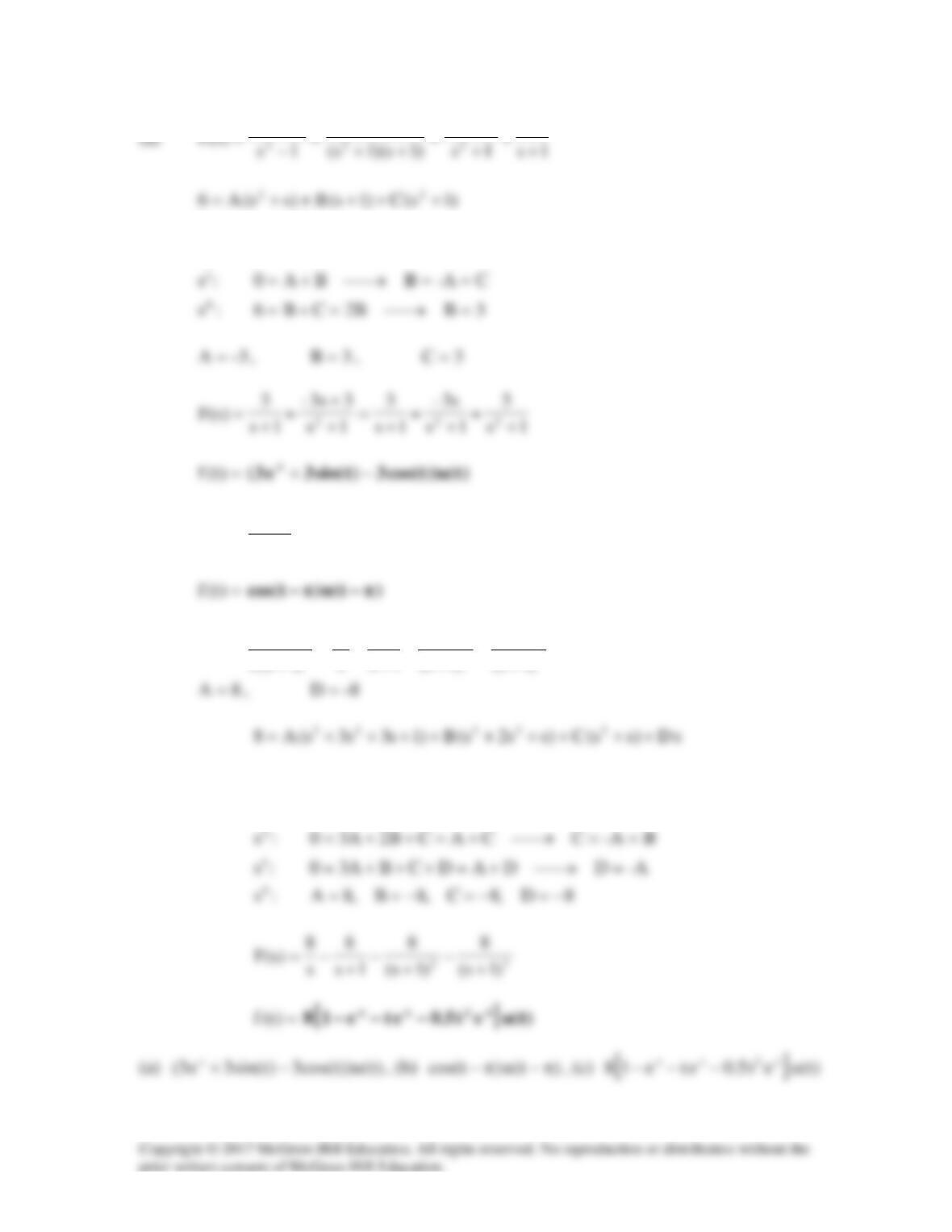
(c)
5s4s
CBs
3s
A
)5s4s)(3s(
1s
)s(F
22
2
++
+
+
+
=
+++
+
=
Equating coefficients :
Solution 15.33
C
BAs
6
)1s(6
+
−
Equating coefficients :
2
s
:
-CACA0 =→+=
s
(b)
1s
es
)s(F
2
s–
+
=
π
(c)
323 )1s(
D
)1s(
C
1s
B
s
A
)1s(s
8
)s(F +
+
+
+
+
+=
+
=
Equating coefficients :
3
s
:
-ABBA0 =→+=
2
s
s
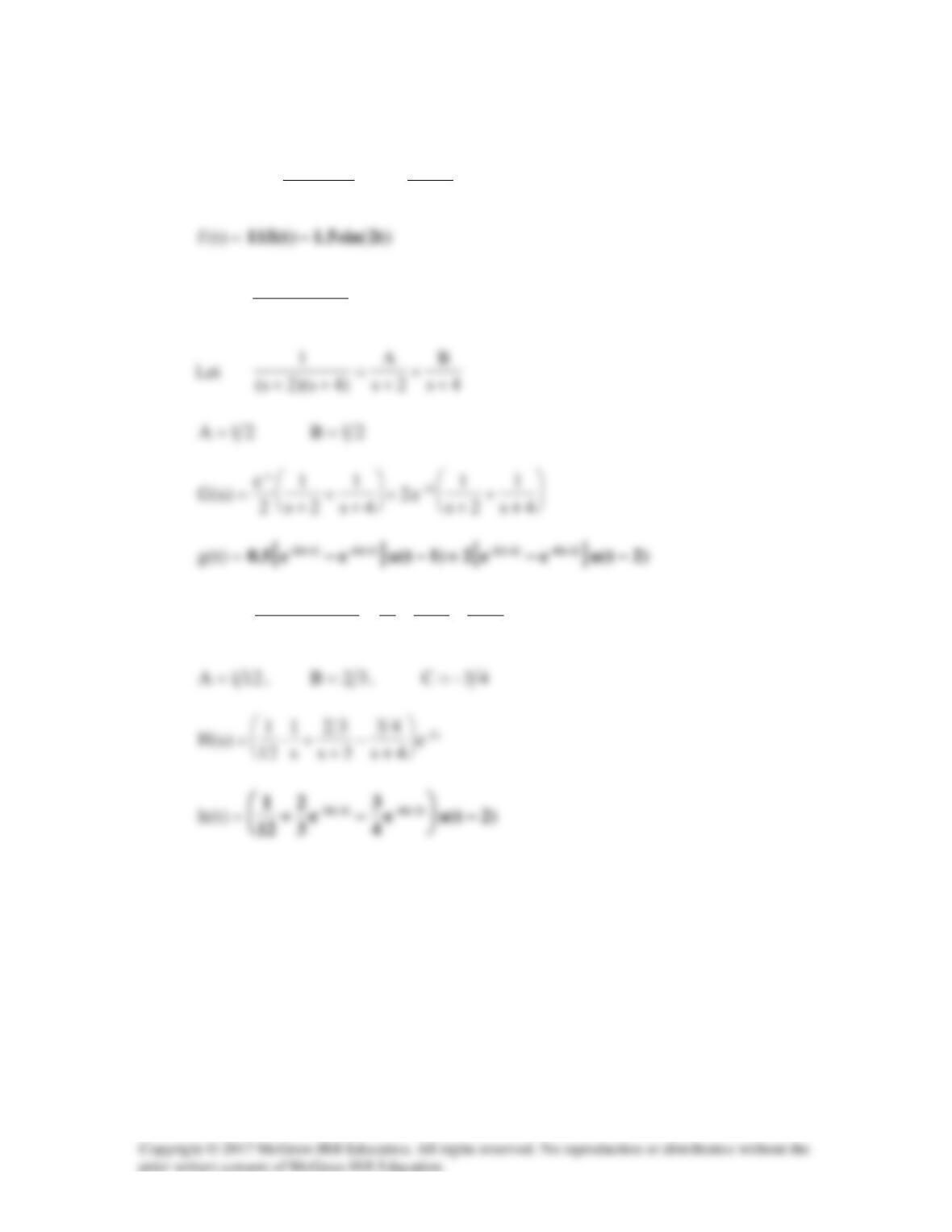
Solution 15.34
(a)
4s
3
11
4s
34s
10)s(F
22
2
+
−=
+
−+
+=
(b)
)4s)(2s(
e4e
)s(G
-2s-s
++
+
=
(c) Let
4s
C
3s
B
s
A
)4s)(3s(s
1s
+
+
+
+=
++
+