P14-18 (continued)
2. (continued)
2013
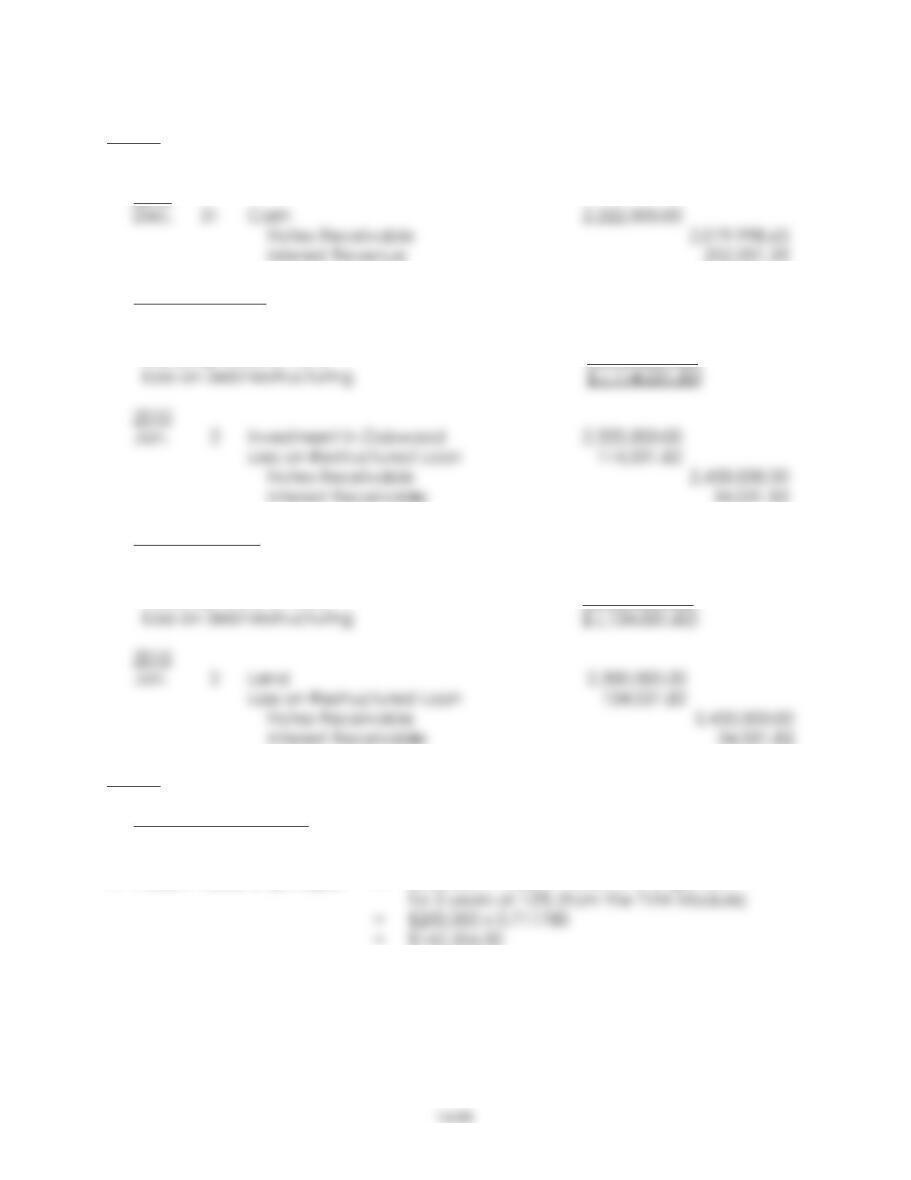
3. Transfer of stock:
Fair value of stock (160,000 x $14.50) $2,320,000.00
Carrying value of note (2,434,031.82)
4. Transfer of land:
Fair value of land $2,300,000.00
Carrying value of note (2,434,031.82)
P14-19
Note to the Instructor: This problem assumes that interest is accrued at the end
of 2010 prior to the discovery that the loan is impaired.
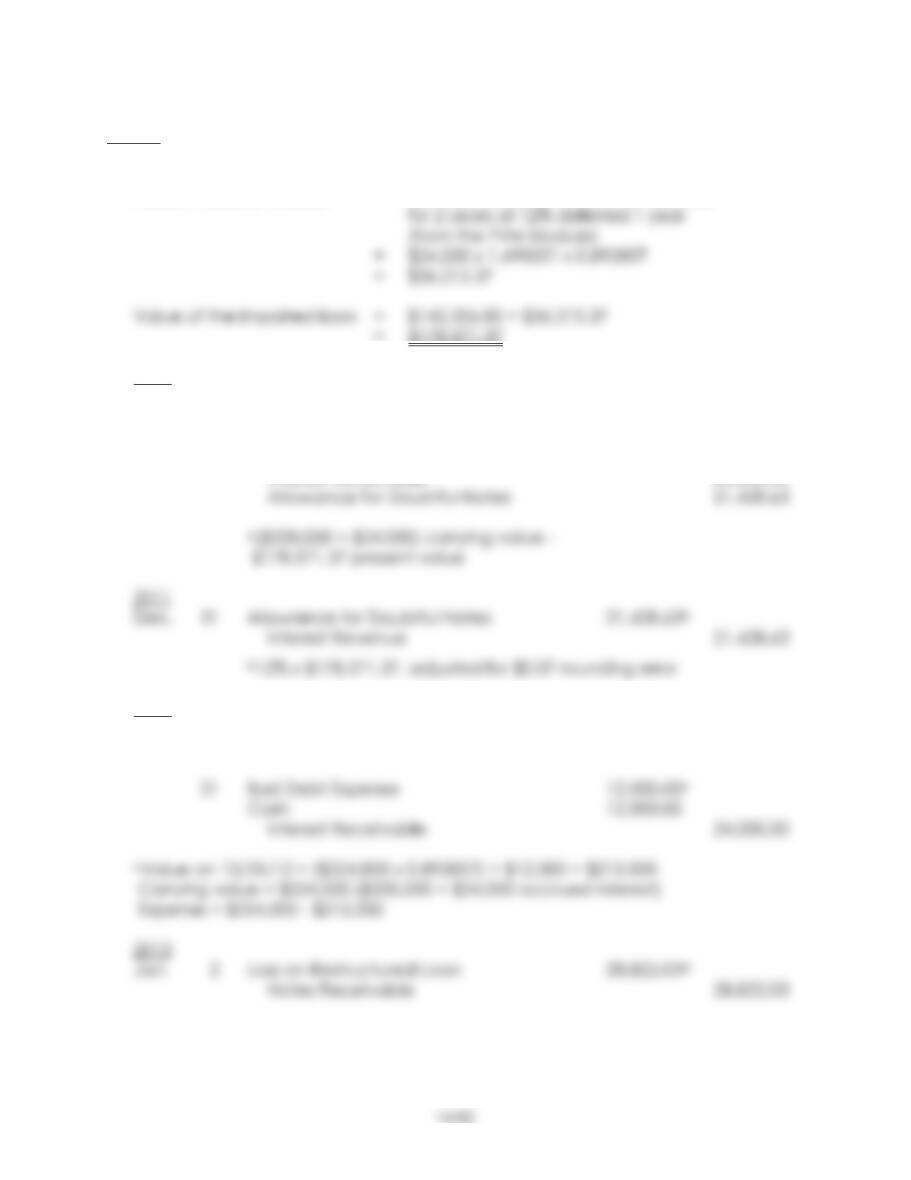
1. Present value of principal = $200,000 x Present value of a single sum
P14-19 (continued)
1. (continued)
Present value of interest = $24,000 x Present value of an annuity
= $178,571.37
2. 2010
Dec. 31 Interest Receivable 24,000.00
Interest Revenue 24,000.00
31 Bad Debt Expense 45,428.63a
Interest Receivable 24,000.00
2012
Dec. 31 Interest Receivable 24,000.00
Interest Revenue 24,000.00
P14-19 (continued)
2. (continued)
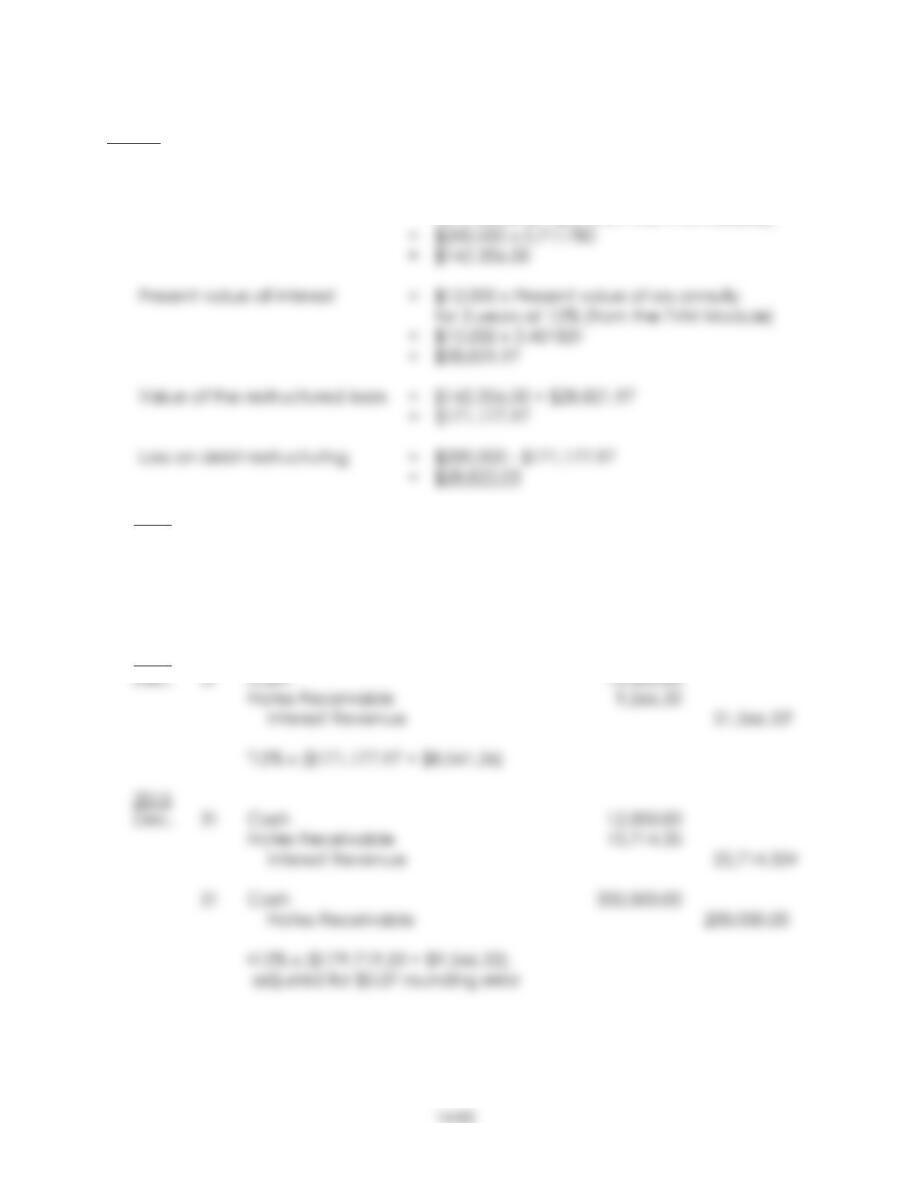
dPresent value of principal = $200,000 x Present value of a single sum
for 3 years at 12% (from the TVM Module)
2013
Dec. 31 Cash 12,000.00
Notes Receivable 8,541.36
Interest Revenue 20,541.36e
e12% x $171,177.97
2014
P13-20
1.
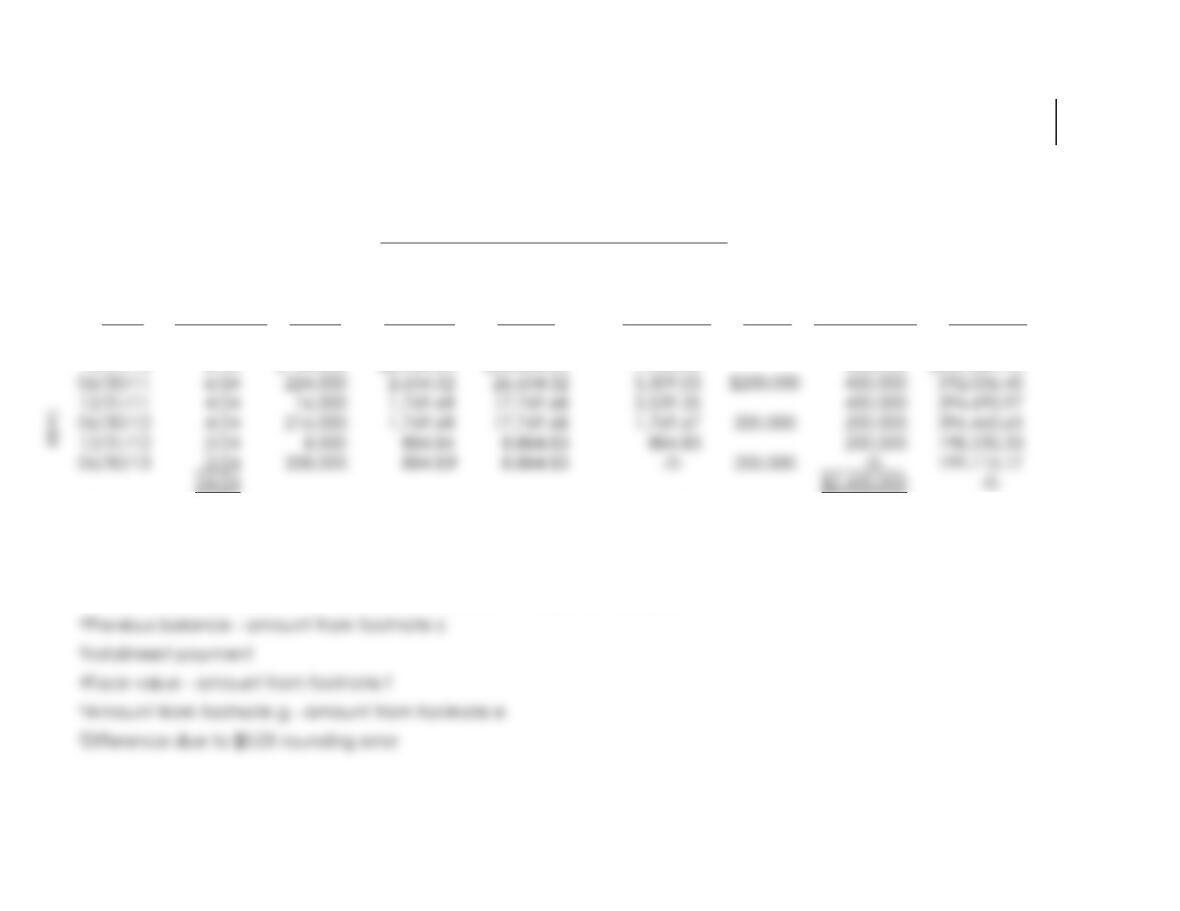
HUBBARD CORPORATION
Interest Expense and Discount Amortization
Schedule for Serial Bonds
Bonds Outstanding (Straight-Line) Method
Date
Fraction of
Discount
Amortizeda
Cash
Creditb
Discount
Amortization
Creditc
Interest
Expense
Debitd
Unamortized
Discounte
Bonds
Payable
Debitf
Bonds
Outstandingg
Book Value
of Bondsh
07/01/10
12/31/10
6/24
$ 24,000
$2,654.52
$26,654.52
$10,618.07
7,963.55
$ 600,000
600,000
$589,381.93
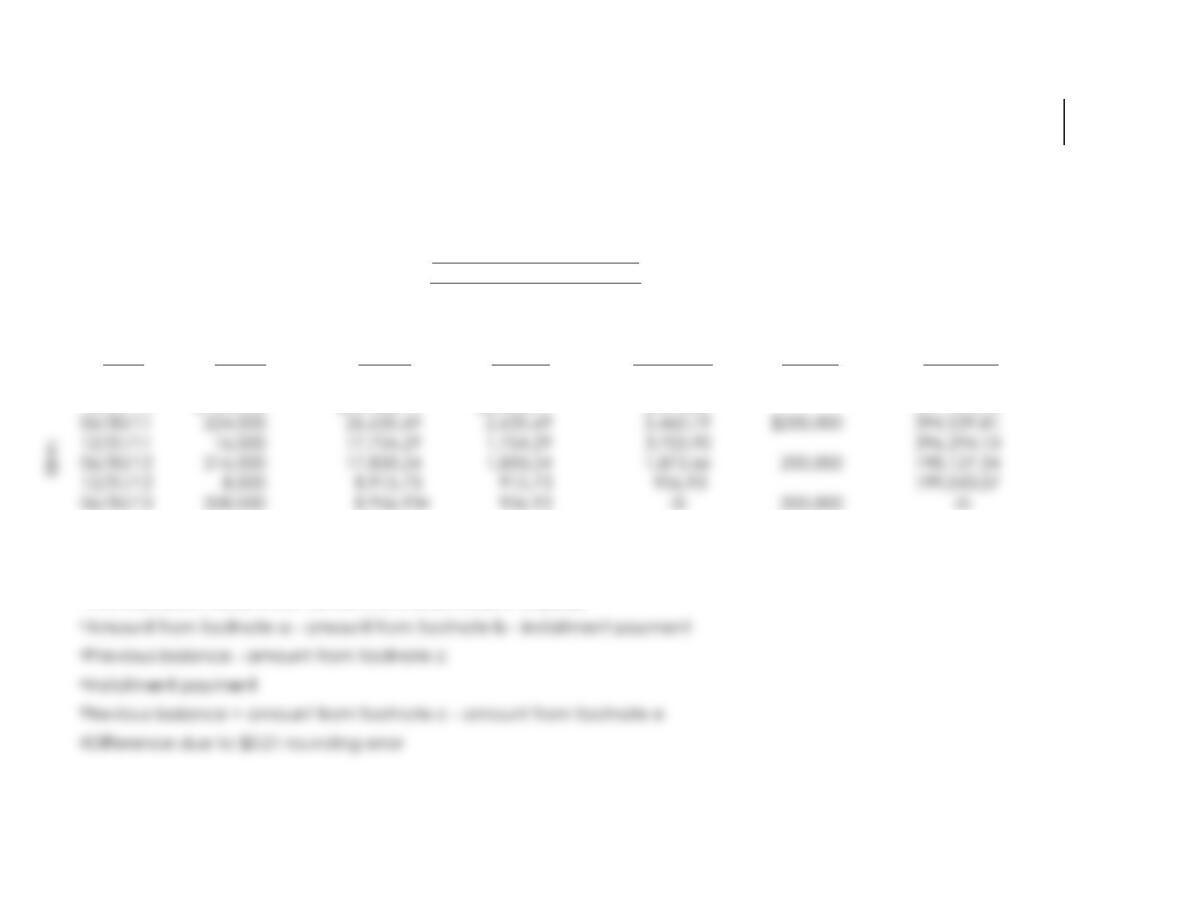
aBonds outstanding at beginning of each period/sum of bonds outstanding
bFace value of bonds outstanding x 0.08 x ½ + installment payment
c$10,618.07 x amount from footnote a
dAmount from footnote b + amount from footnote c – installment payment
P14-20
1.
P13-20
1.
HUBBARD CORPORATION
Interest Expense and Discount Amortization
Schedule for Serial Bonds
Effective Interest Method
8% Bonds Sold to Yield 9%
Date
Cash
Credita
Interest
Expense
Debitb
Discount
Amortization
Creditc
Unamortized
Discountd
Bonds
Payable
Debite
Book Value
of Bondsf
07/01/10
12/31/10
$ 24,000
$26,522.19
$2,522.19
$10,618.07
8,095.88
$589,381.93
591,904.12
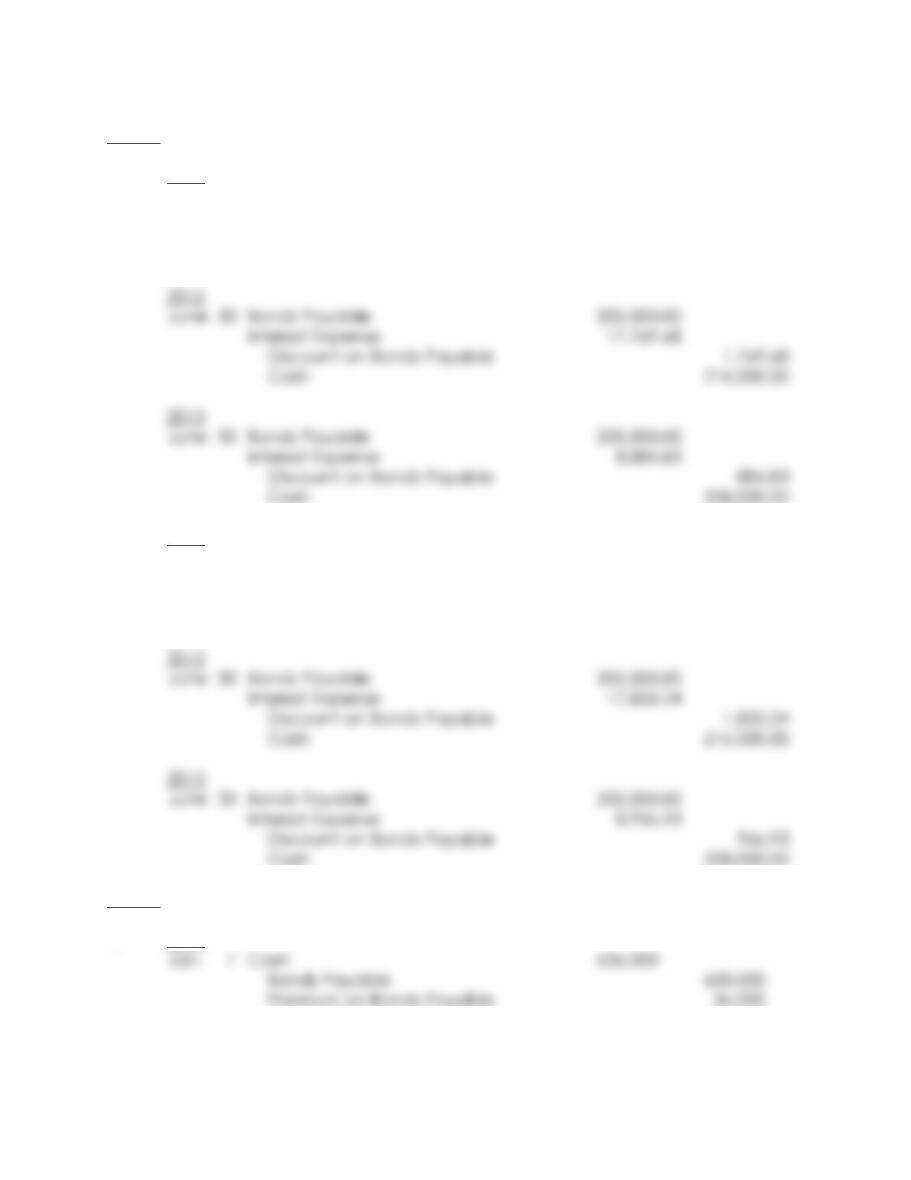
aFace amount of bonds outstanding x 0.08 (stated annual interest rate) x ½ (year), + installment
payment
bPrevious book value x 0.09 (effective interest rate) x ½ (year)
P14-20 (continued)
2.
14-86
P14-20 (continued)
3. a. 2011
June 30 Bonds Payable 200,000.00
Interest Expense 26,654.52
Discount on Bonds Payable 2,654.52
Cash 224,000.00
b. 2011
June 30 Bonds Payable 200,000.00
Interest Expense 26,635.69
Discount on Bonds Payable 2,635.69
Cash 224,000.00
P14-21
1. 2009
CASE CORPORATION
Interest Expense and Premium Amortization
Schedule for Serial Bonds
Bonds Outstanding (Straight-Line) Method
Date
Fraction of
Premium
Amortizeda
Cash
Creditb
Premium
Amortization
Creditc
Interest
Expense
Debitd
Unamortized
Premiume
Bonds
Payable
Debitf
Bonds
Outstandingg
Book Value
of Bondsh
01/01/09
06/30/09
6/36
$ 39,000
$6,000
$33,000
$36,000
30,000
$ 600,000
600,000
$636,000
630,000
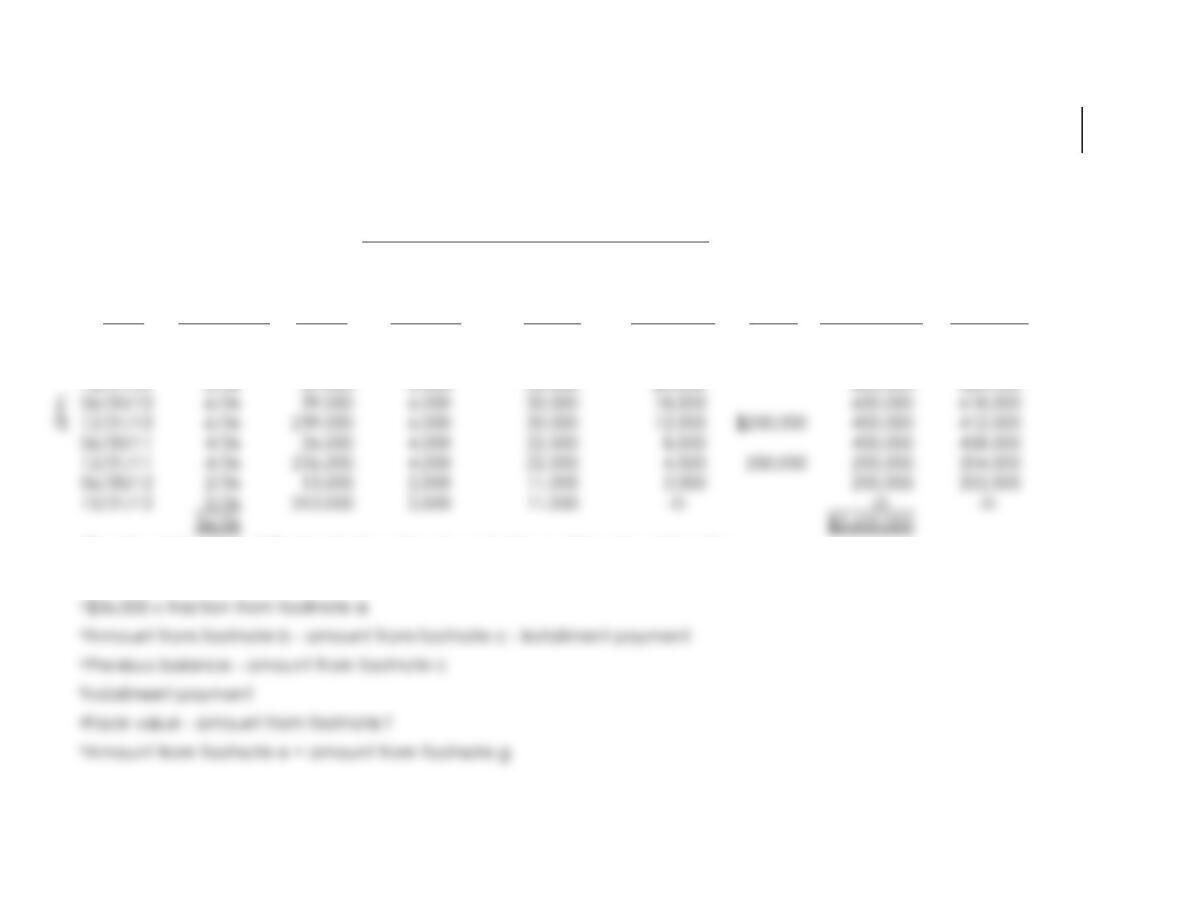
aBonds outstanding at the beginning of each period/sum of bonds outstanding
bBonds outstanding x 0.13 (annual interest rate) x ½ (year) + installment payment
P14-21 (continued)
1. (continued)
P14-21 (continued)
2. 2009
Dec. 31 Interest Expense 33,000
4. 2011
Jan. 1 Bonds Payable 200,000
Premium on Bonds Payable 8,000a
Extraordinary Loss on Bond Retirement 6,000
5. 2011
Dec. 31 Bonds Payable 200,000
Premium on Bonds Payable 2,000a
ANSWERS TO CASES
C14-1 (AICPA adapted solution)
1. The effective interest method of amortization of bond discount or premium applies a
constant interest rate to the carrying value of debt as opposed to the straight-line method
2. Before the interest method of amortization can be used, the effective yield or interest rate
of the bond must be computed. The effective yield rate is the interest rate that will
discount the two components of the debt instrument to the amount received at issuance.
The two components in the value of a bond are the present value of the principal amount
due at the end of the bond term and the present value of the annuity represented by the
C14-2 (AICPA adapted solution)
1. Because detachable stock purchase warrants are equity instruments that have a
separate fair value at the issue date, the portion of the proceeds from bonds issued with
2. A serial bond progressively matures at a series of stated installment dates, for example,
one-fifth each year. A term (straight) bond completely matures on a single date.
3. The amortization in the first year of the life of a five-year term bond issued at a premium
differs using the interest method instead of the straight-line method because the interest
4. The journal entry to record a bond issue sold between interest dates is as follows:
Debit cash for the price of the bond plus the accrued interest from the last interest date.
Debit discount on bonds payable for the amount of discount to be amortized over the
5. The gain or loss from the reacquisition of a long-term bond prior to its maturity is included in
income from continuing operations in the determination of net income for the period
reacquired.
C14-3 (AICPA adapted solution)
1. Under the book value method, the carrying value of the convertible bonds at the date of
the conversion (the bonds payable less the unamortized discount at that date) is used to
account for the conversion, and there is no gain or loss recognized on the conversion.

14-91
C14-3 (continued)
1. (continued)
value of the convertible bonds at the date of the conversion exceeds the market value of
2. The nonconvertible term bonds were sold at a discount because the effective interest rate
(yield) of 12 percent was higher than the stated interest rate of 10 percent. Although the
3. The effects associated with the nonconvertible term bonds on Aubrey Company’s 2010
income statement are as follows:
(a) Interest expense for eight months (May 1, 2010 to December 31, 2010) is included in
(b) Interest expense is increased for the amortization of bond discount from May 1, 2010
C14-4 (AICPA adapted solution)
1. a. Gain or loss amortized over the remaining life of old debt. The basic argument
supporting this method is that if refunding is done to obtain debt at a lower cash
b. Gain or loss amortized over the life of the new debt instrument. This argument states
that the gain or loss from early extinguishment of debt actually affects the cost of