
Suction specific speed
41
14.37: PROBLEM DEFINITION
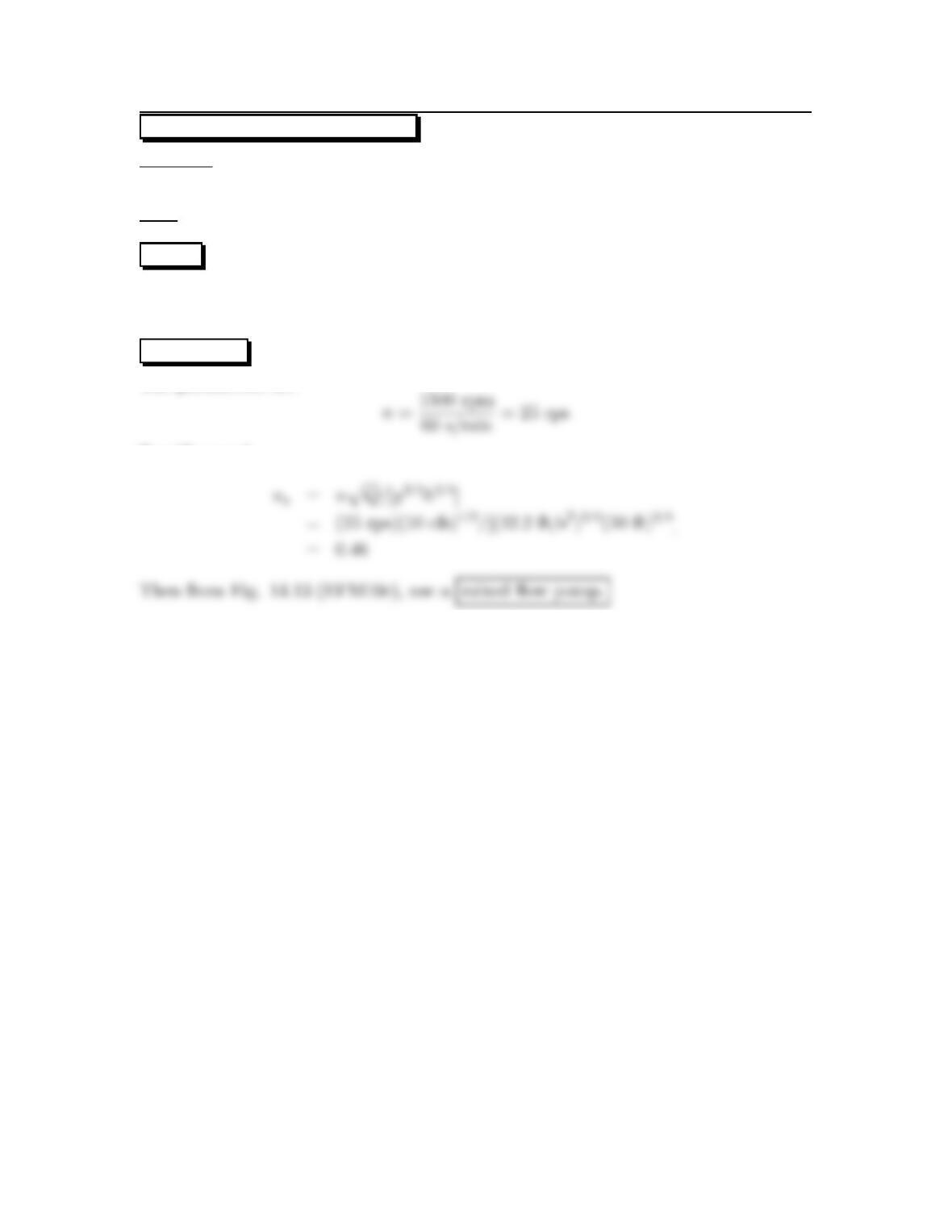
Situation: A pump is needed that rotates at 1500 rpm and has discharge of 10 cfs at
30 ft.
Find: Type of water pump.
PLAN
Calculate the specificspeedandusefigure 14.15 (EFM 10e) to find the pump range
to which it corresponds.
SOLUTION
Theparametersare
Specific speed
42
14.38: PROBLEM DEFINITION
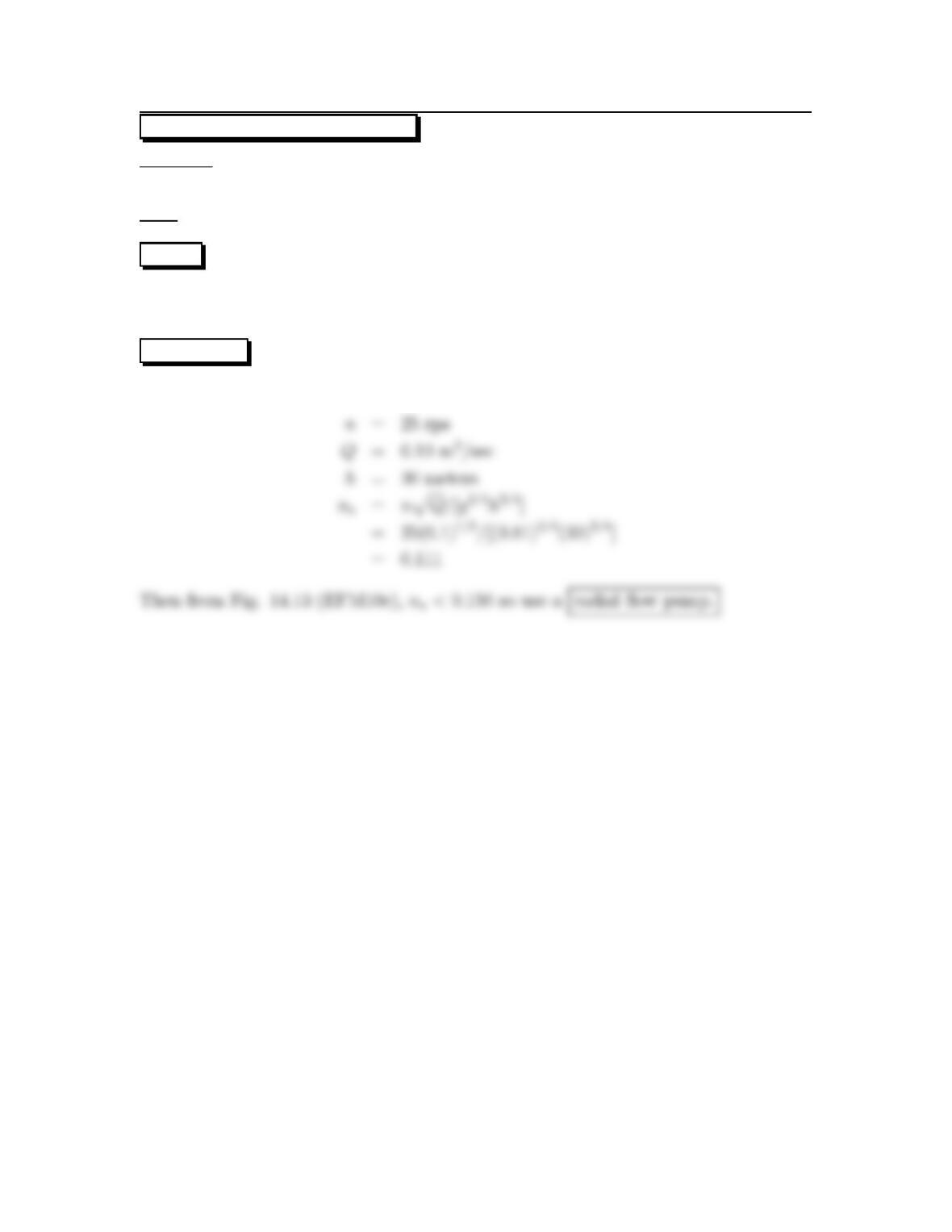
Situation: A pump is needed to pump water at 0.10 m3/sataheadof30mwitha
rotational rate of 25 rps.
Find: Type of pump.
PLAN
Calculate the specific speed and use figure 14.13 (EFM10e) to find the pump range
to which it corresponds.
SOLUTION
Specific speed
43
14.39: PROBLEM DEFINITION
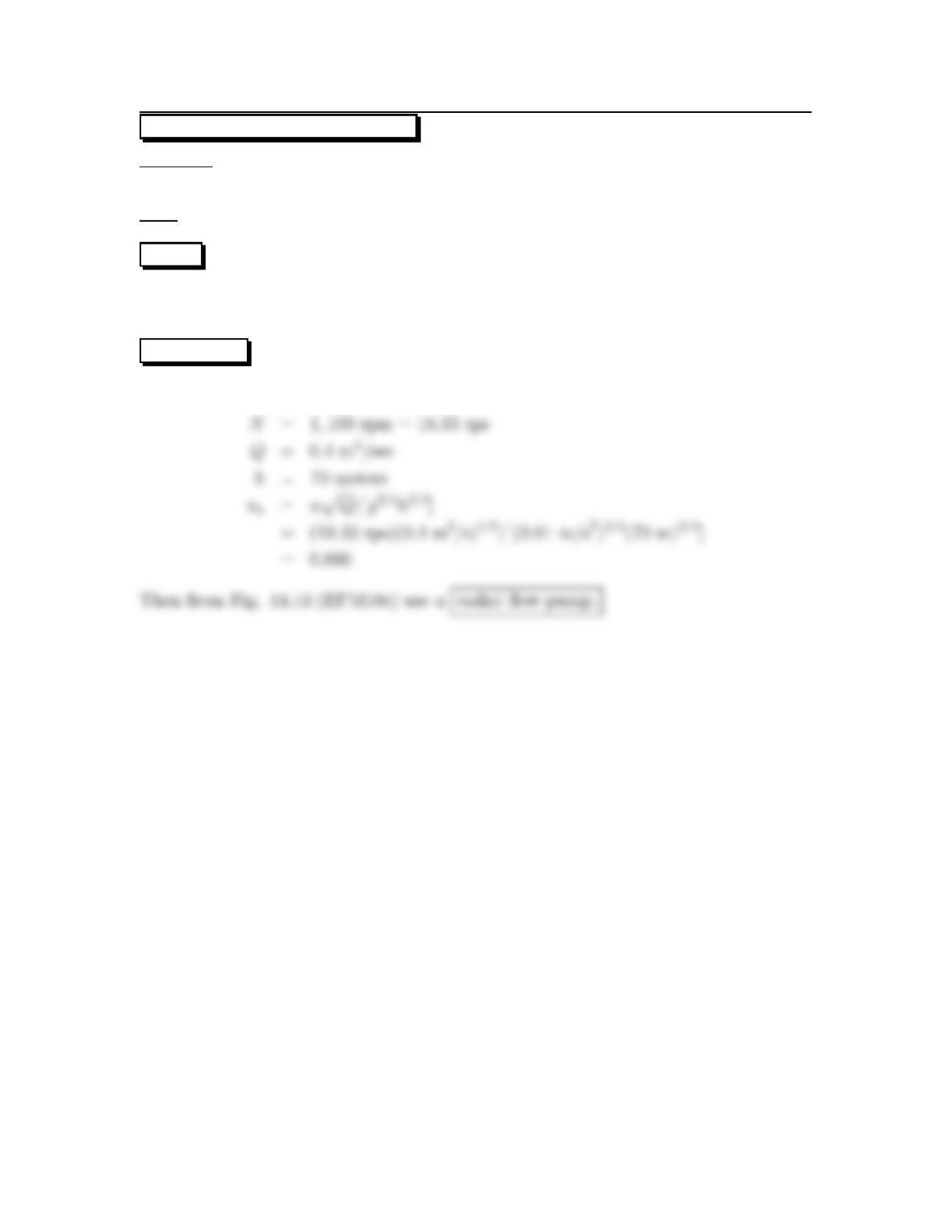
Situation: A pump is required to pump water at 0.40 m3/s at head of 70 m and
rotational speed of 1100 rpm.
Find: Type of pump.
PLAN
Calculate the specific speed and use figure 14.13 (EFM10e) to find the pump range
to which it corresponds.
SOLUTION
Specific speed
44
14.40: PROBLEM DEFINITION
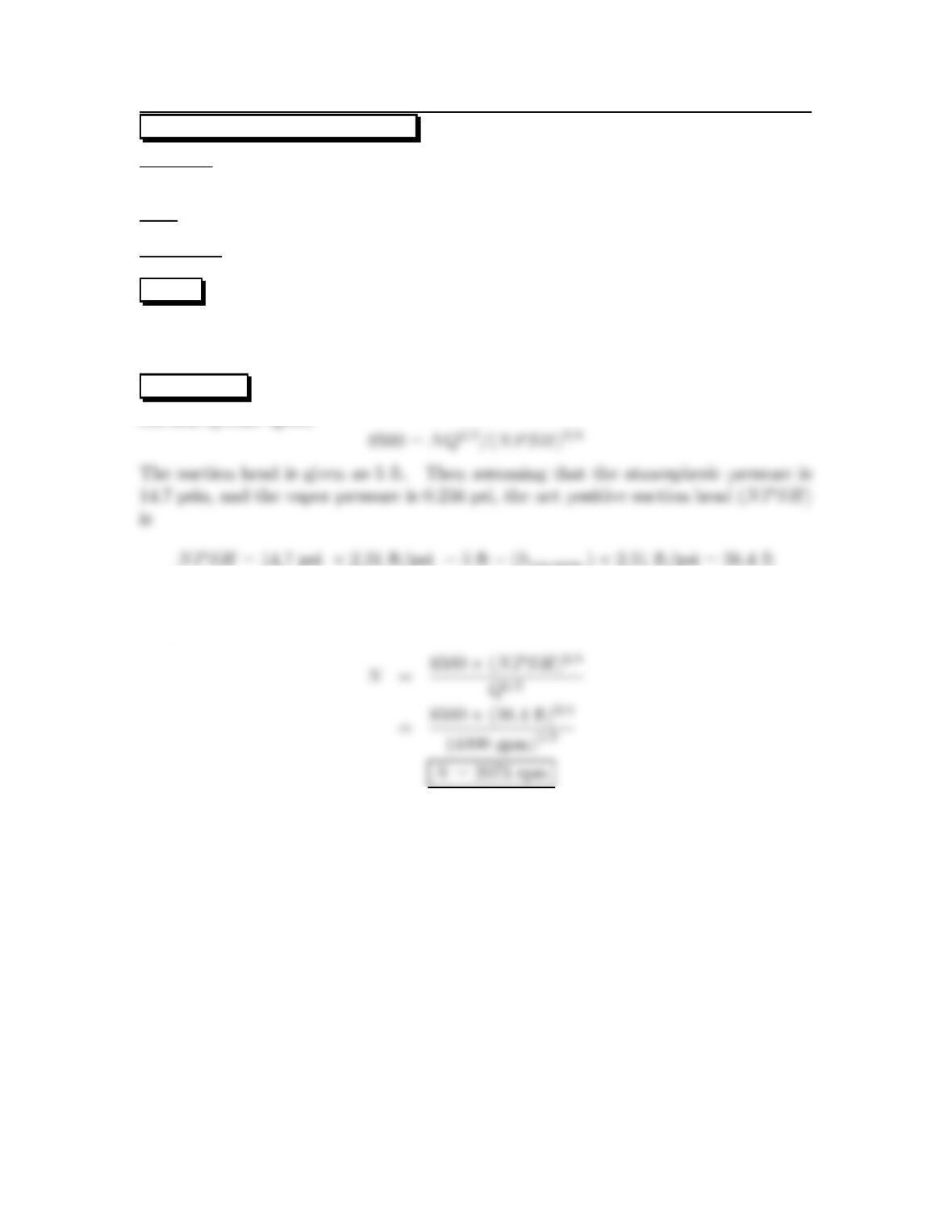
Situation:Anaxialflow pump is used to pump water 4000 gpm against a 15 ft with
a suction head of 5 ft.
Find: Maximum speed.
Properties:FromTableA5,pv(60oF)=0.256 psia.
PLAN
Apply the suction specific speed equation setting the critical value for Nss proposed
by the Hydraulic Institute to 8500.
SOLUTION
Suction specific speed
Then
45
14.41: PROBLEM DEFINITION
Situation: A pump with a rotational rate of 600 rpm is required to pump water at
0.2 m3/s between two reservoirs with a 0.1 m diameter pipe.
Find:Typeofpump
PLAN
Calculate the specific speed and use figure 14.13 (EFM10e) to find the pump range
to which it corresponds.
SOLUTION
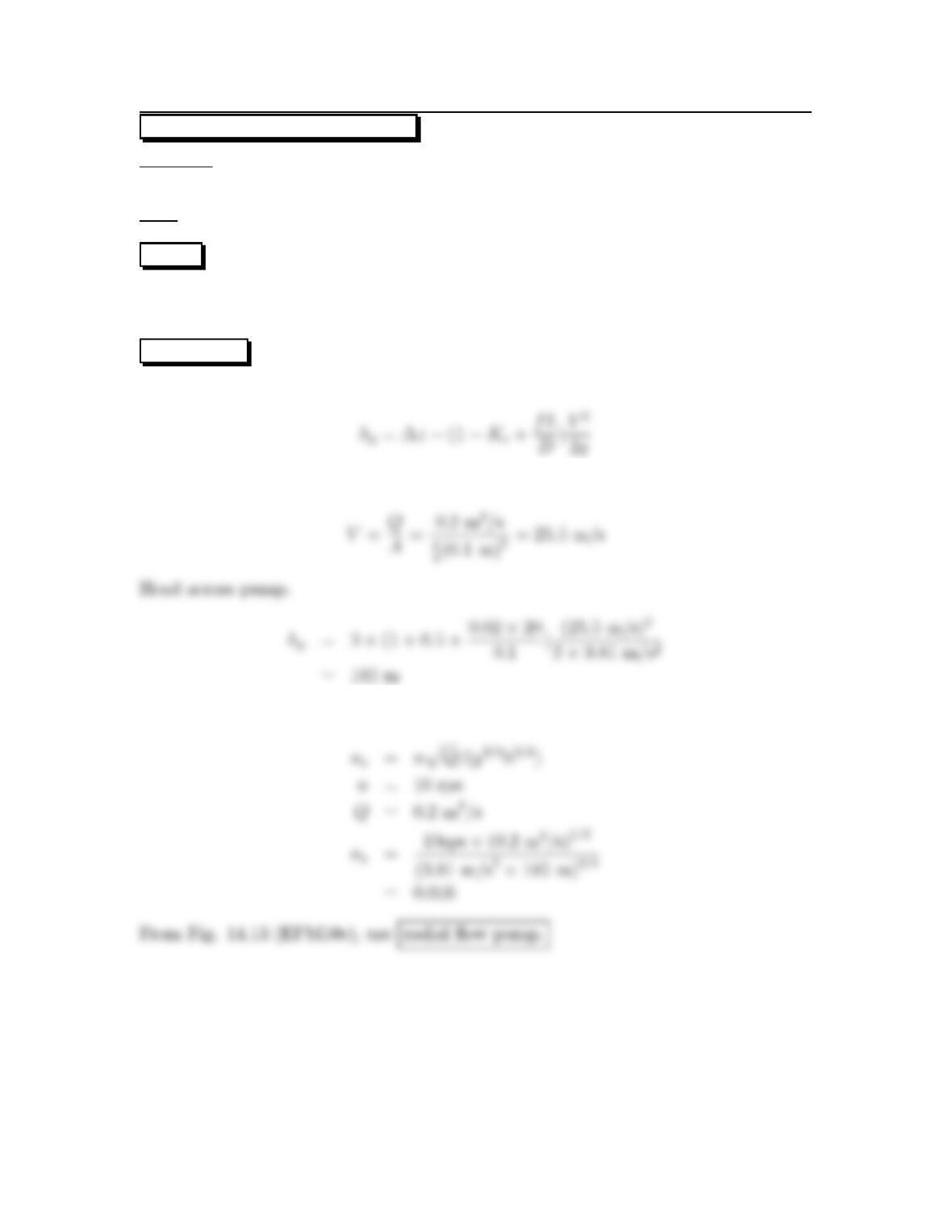
Apply energy equation between the two reservoir surfaces.
Assume f=0.02 and Ke=0.5.The velocity is
Specific speed
46
14.42: PROBLEM DEFINITION
Situation: The performance curve for a centrifugal pump with different impeller di-
ameters is shown in Fig 14.15 (EFM10e).
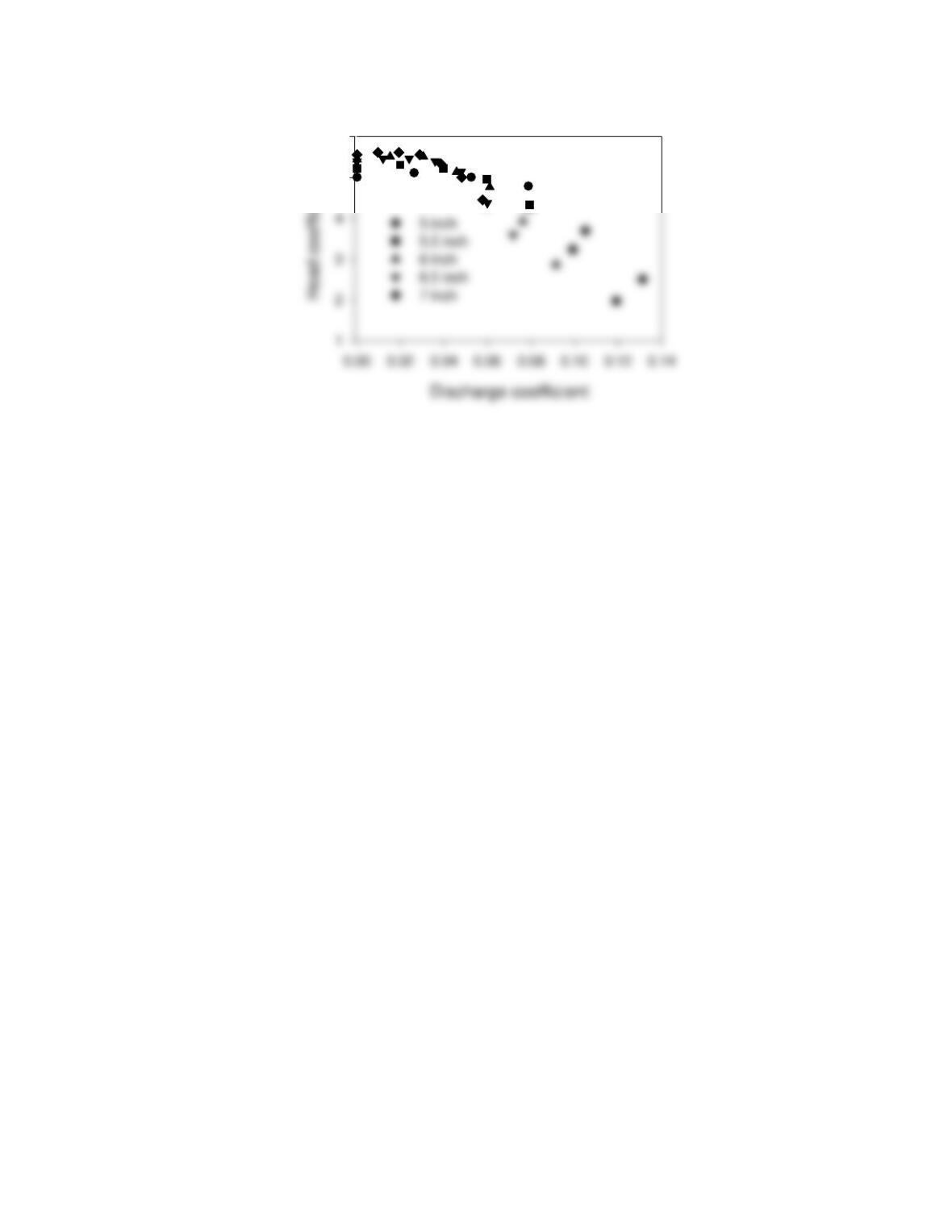
Find:Plotfive performance curves for the different diameters in terms of head and
discharge coefficients.
PLAN
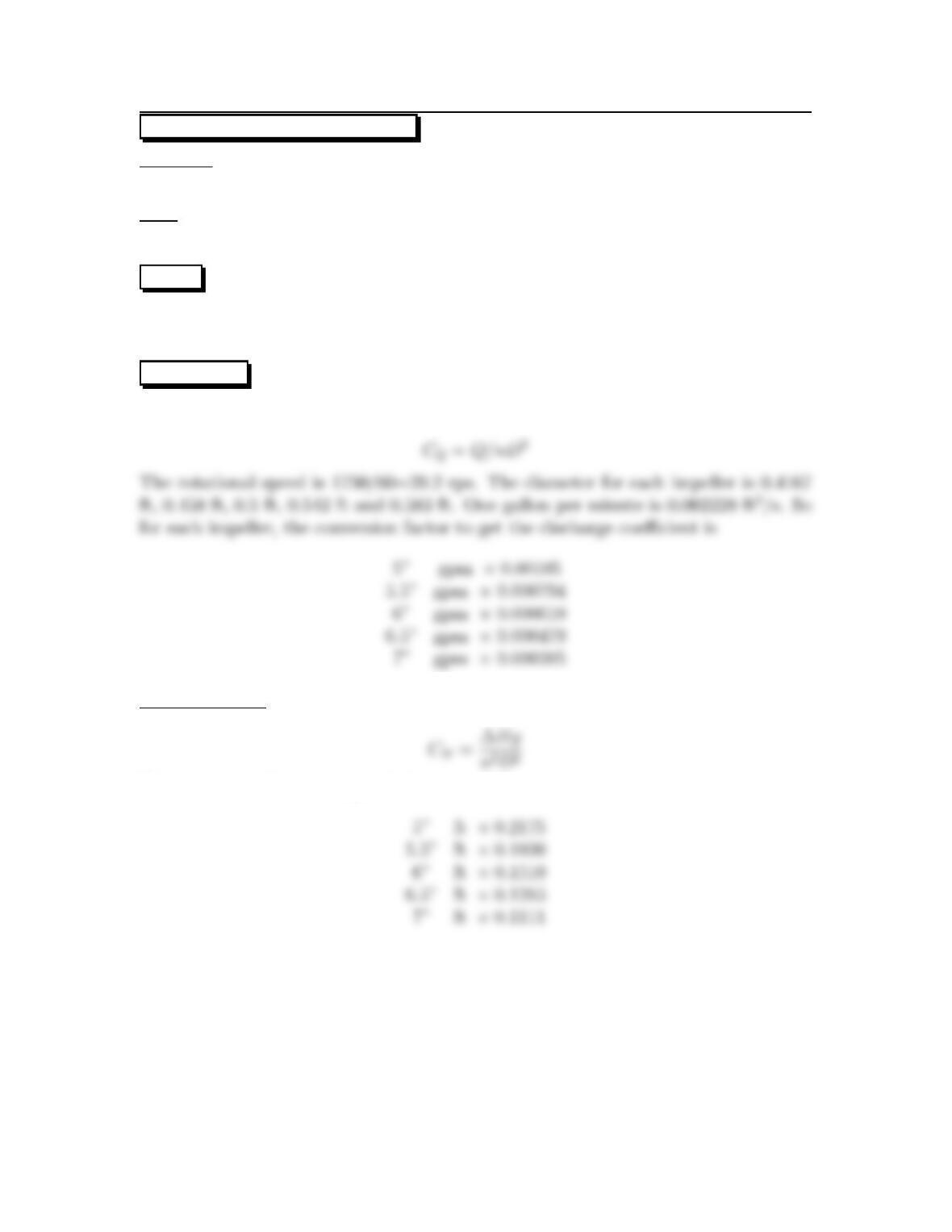
Calculate the five discharge coefficients by applying the discharge coefficient equation,
and the five head coefficients by the applying head coefficient equation.
SOLUTION
Discharge coefficient
Head coefficient
The conversion factors to get the head coefficient are
The performance in terms of the non-dimensional parameters is shown on the graph.
47
5
6
48
14.43: PROBLEM DEFINITION
Situation: For gas flow through compressor, ratio of final temperature to initial tem-
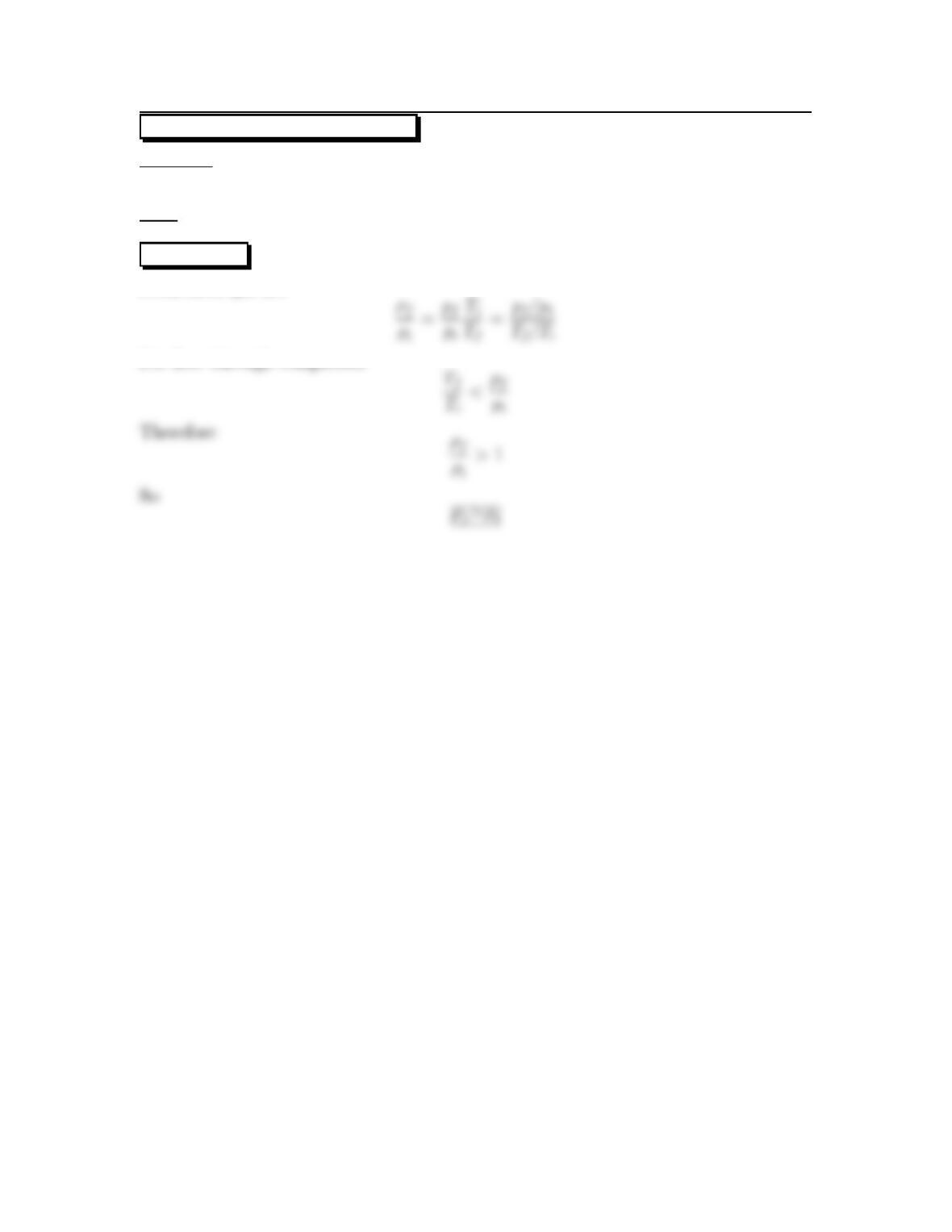
perature is less than ratio of final pressure to initial pressure.
Find: Ratio of final density to initial density.
SOLUTION
From ideal gas law ρf
For flow through compressor Tf
49
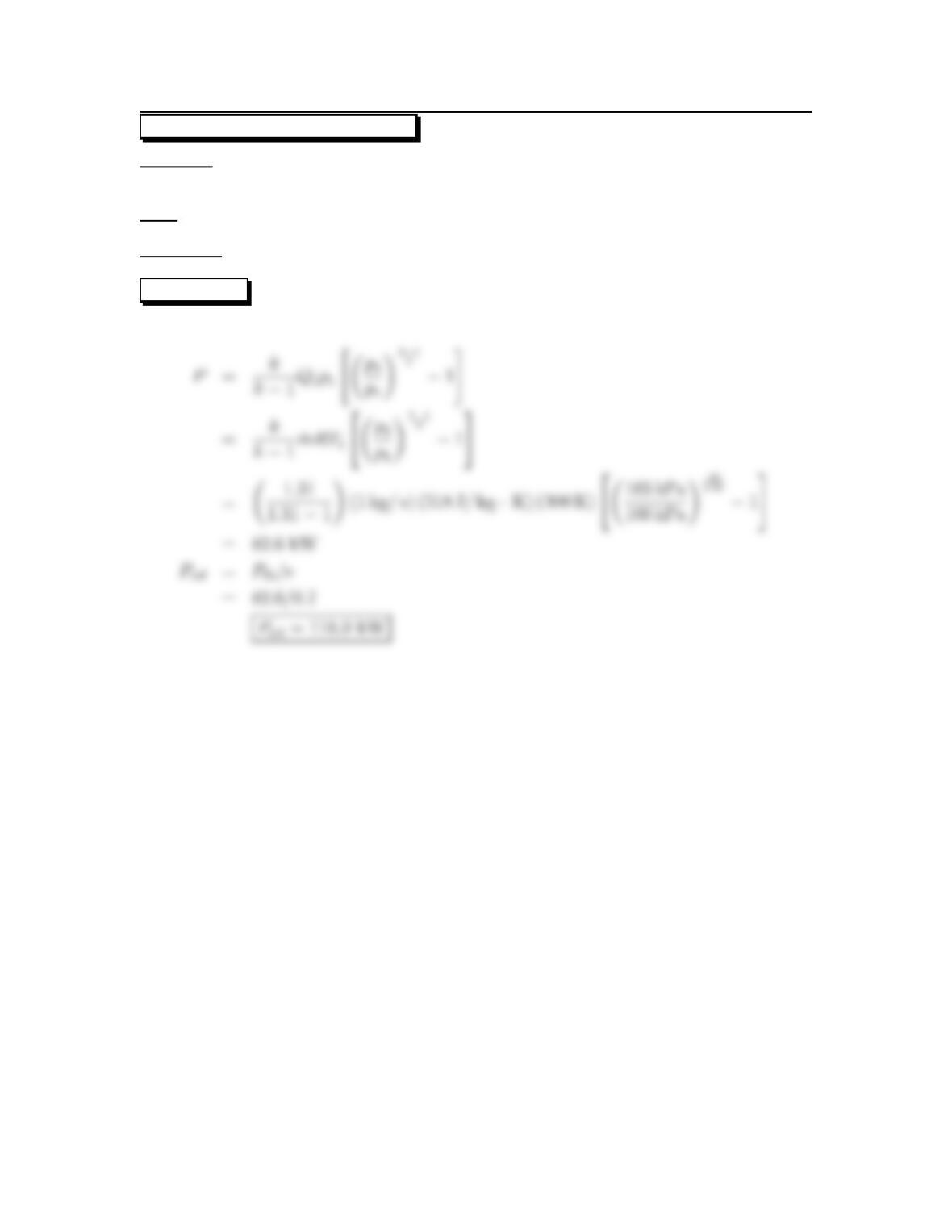
14.44: PROBLEM DEFINITION
Situation: Methane compressed at 1 kg/s in non-cooled centrifugal compressor from
100to150kPaEnteringtemperature27
oCandefficiency is 70%.
Find: Shaft power to run compressor
Properties: From Table A.2 for methane R=518J/kg/K and k=1.31.
SOLUTION
50
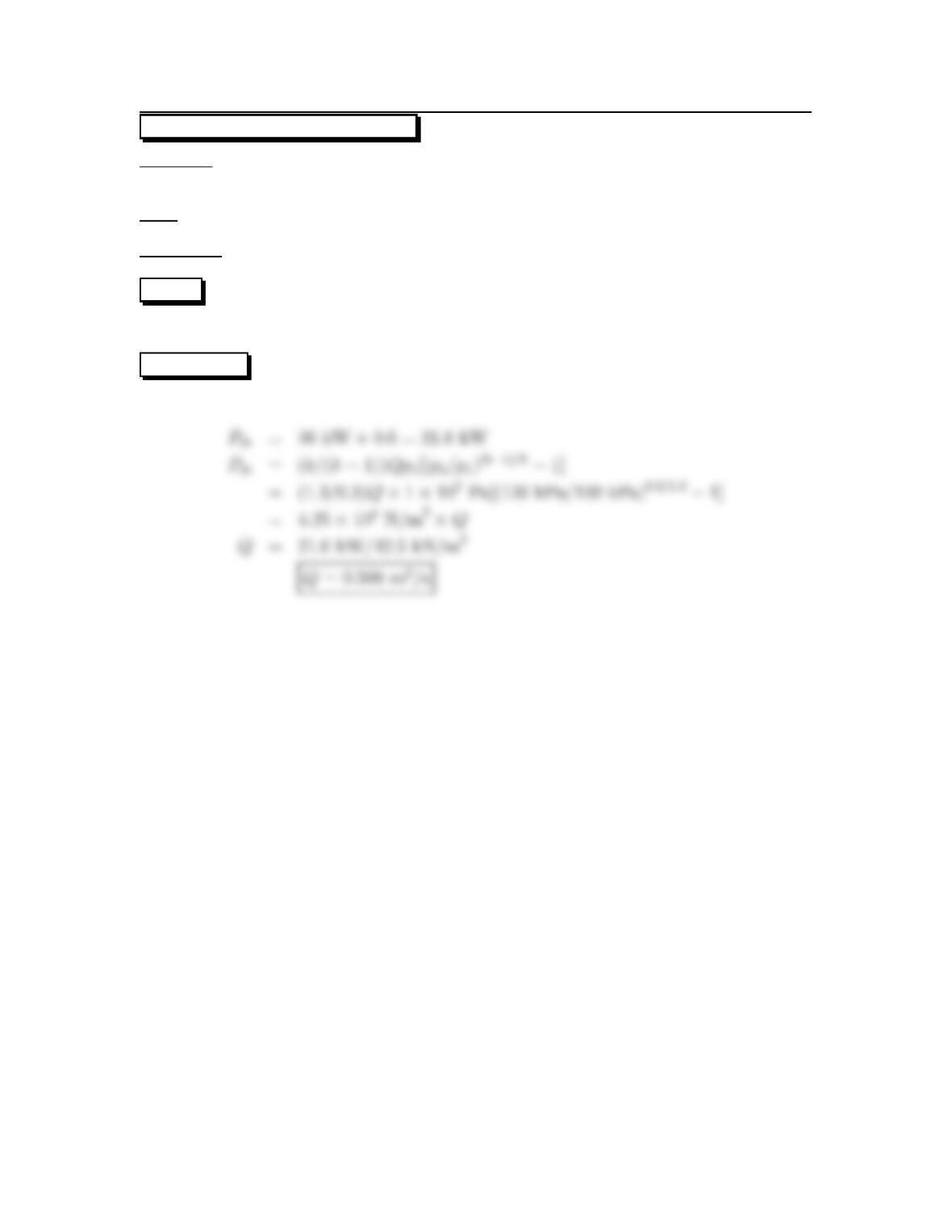
14.45: PROBLEM DEFINITION
Situation: A36kWmotordrivesanoncooled60percentefficient compressor to
compress CO2from 100 to 150 kPa.
Find:Volumeflow rate into the compressor.
Properties: From Table A.2 for CO2,k=1.3
PLAN
Apply equation 14.19 (EFM 10e).
SOLUTION
51
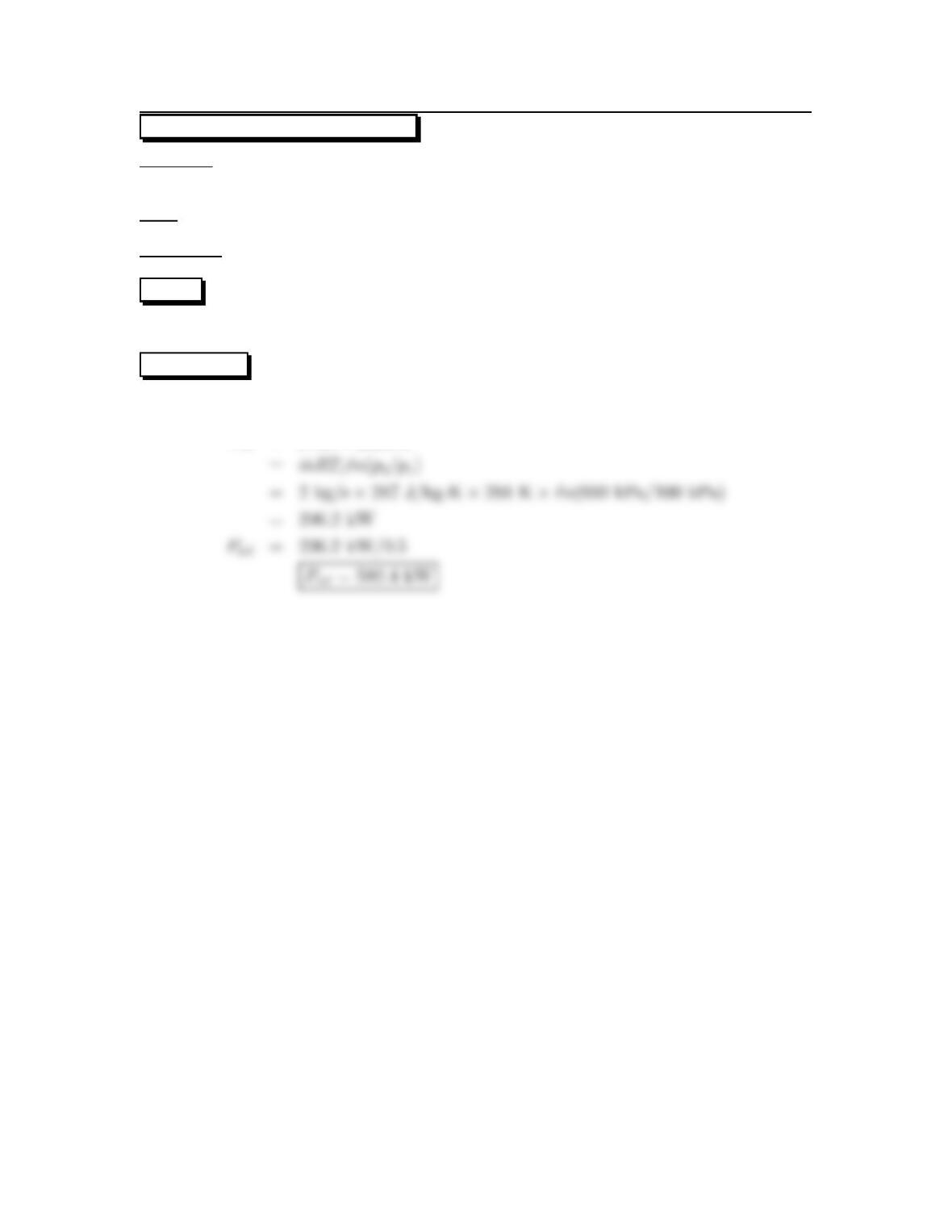
14.46: PROBLEM DEFINITION
Situation: A water-cooled centrifugal compressor compresses air from 100 kPa to 600
kPa at 2 kg/s. Inlet temperature is 15oCandefficiency is 50%.
Find:Theshaftpower.
Properties: From Table A.2 for air, R=287J/kg-K
PLAN
Apply equation 14.19 (EFM 10e).
SOLUTION
Pth =p1Q1n(p2/p1)
52

14.47: PROBLEM DEFINITION
Situation: Impulse turbine.
Find: Explain why impulse turbine produces not power when jet velocity is equal to
bucket velocity.
SOLUTION
When both speeds are the same, there is no change in momentum and, hence, no
force and no torque.
53
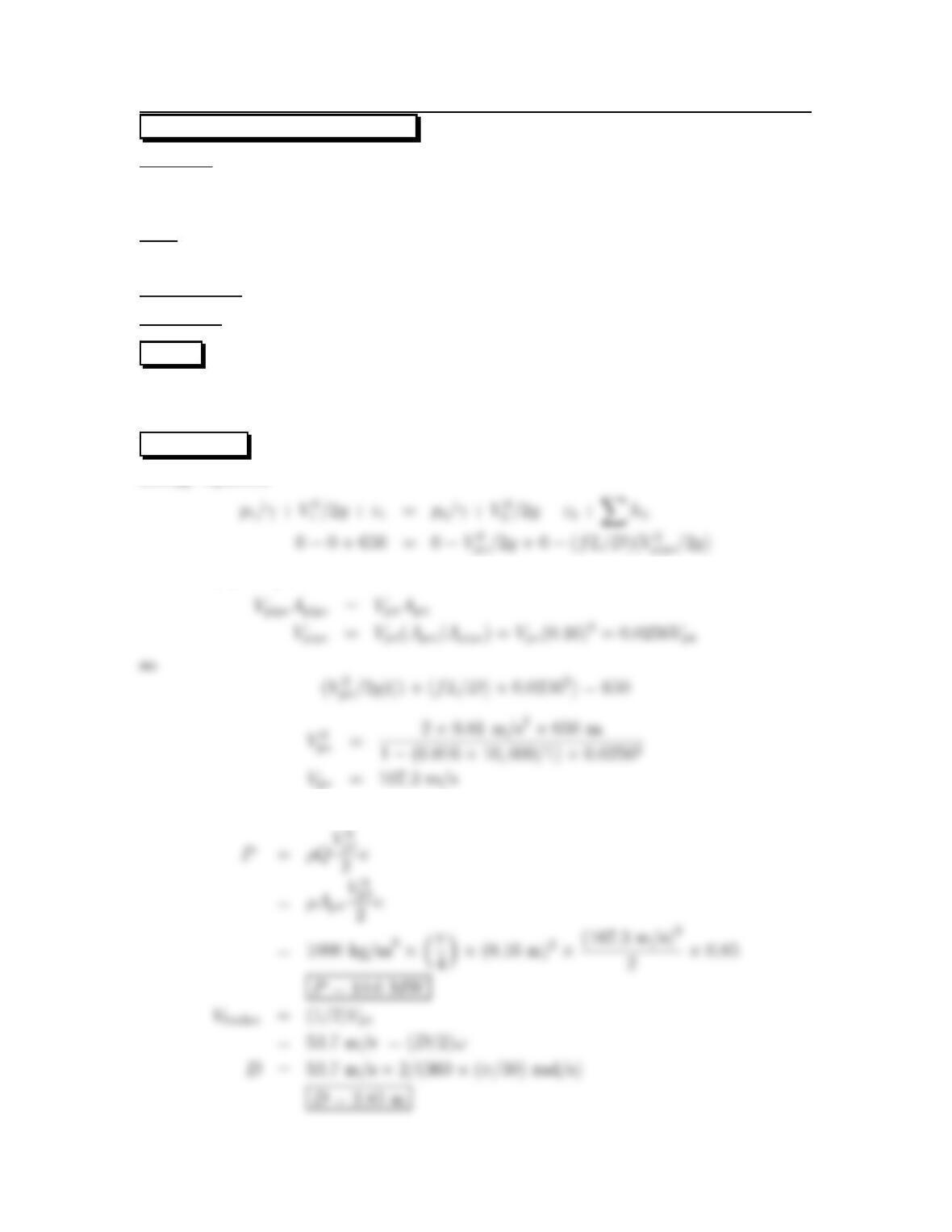
14.48: PROBLEM DEFINITION
Situation: An impulse turbine is driven from a reservoir 650 m above jet outlet
through a 10 km long 1 m diameter pipe connected to a 16 cm jet. Wheel speed is
360 rpm
Find: (a) Power produced.
(b) Diameter of turbine wheel.
Assumptions:T=10
◦C, f =0.016
Properties: From Table A.5, ρ=1000kg/m3
PLAN
Apply the energy equation from reservoir to turbine jet. Then apply the continuity
principle and the power equation.
SOLUTION
Energy equation
Continuity principle
Power equation
54
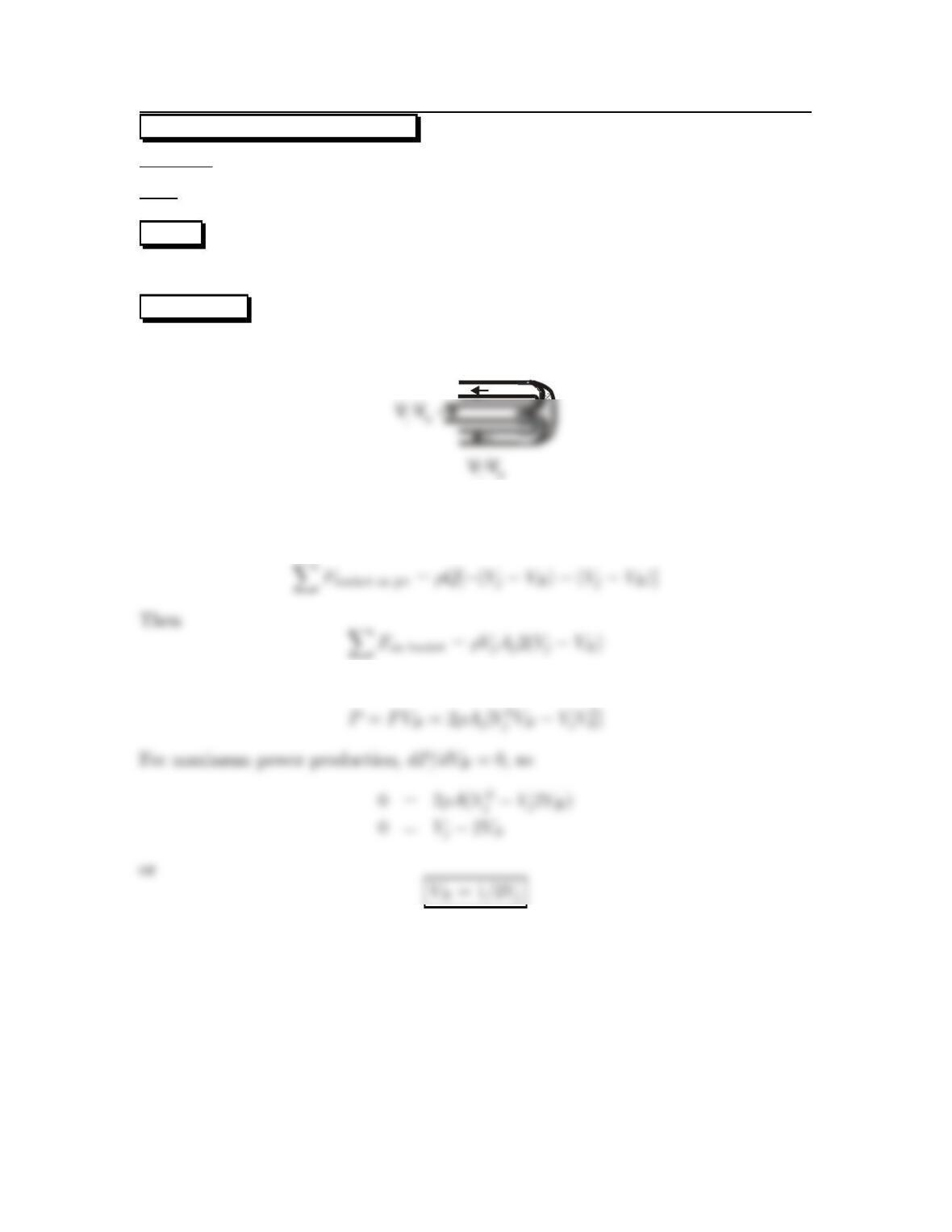
14.49: PROBLEM DEFINITION
Situation: Bucket on impulse turbine turns water by 180 degrees.
Find: Show bucket speed should be 1/2 jet speed for maximum power.
PLAN
Apply the momentum principle.
SOLUTION
V-V
jB
Momentum principle
assuming the combination of buckets to be intercepting flow at the rate of VjAj.Then
55