13.18: PROBLEM DEFINITION
Situation:Aheatedgasflows through a cylindrical stack–additional information is
provided in the problem statement.
Find:(a)Theratiorm/D such that the areas of the measuring segments are equal
(b) The location of the probe expressed as a ratio of rc/D that corresponds to the
centroid of the segment
(c) Mass flow rate
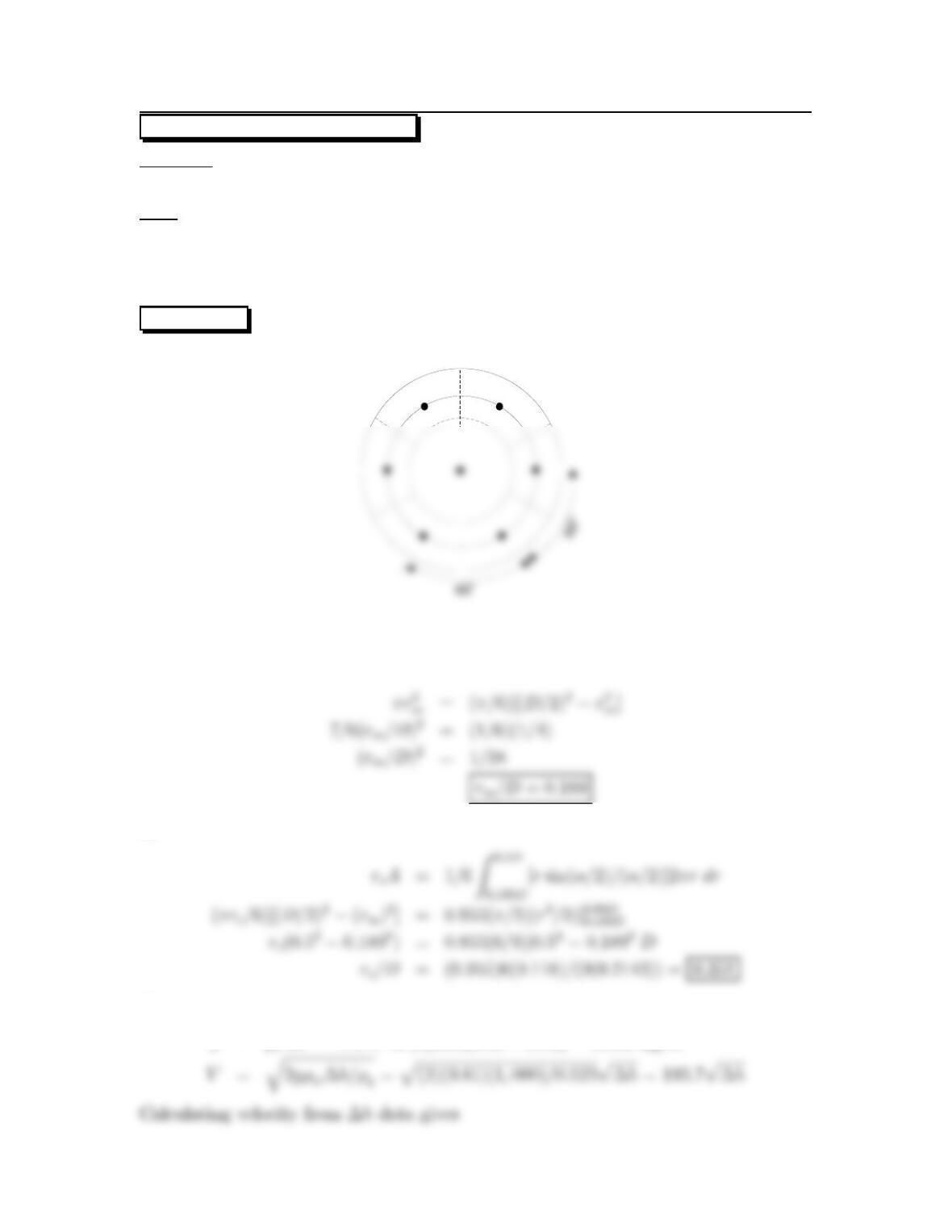
SOLUTION Schematic of measurement locations
a)
b)
c)
ρ=p/RT =115×103/((420)(250 + 273)) = 0.523 kg/m3
21
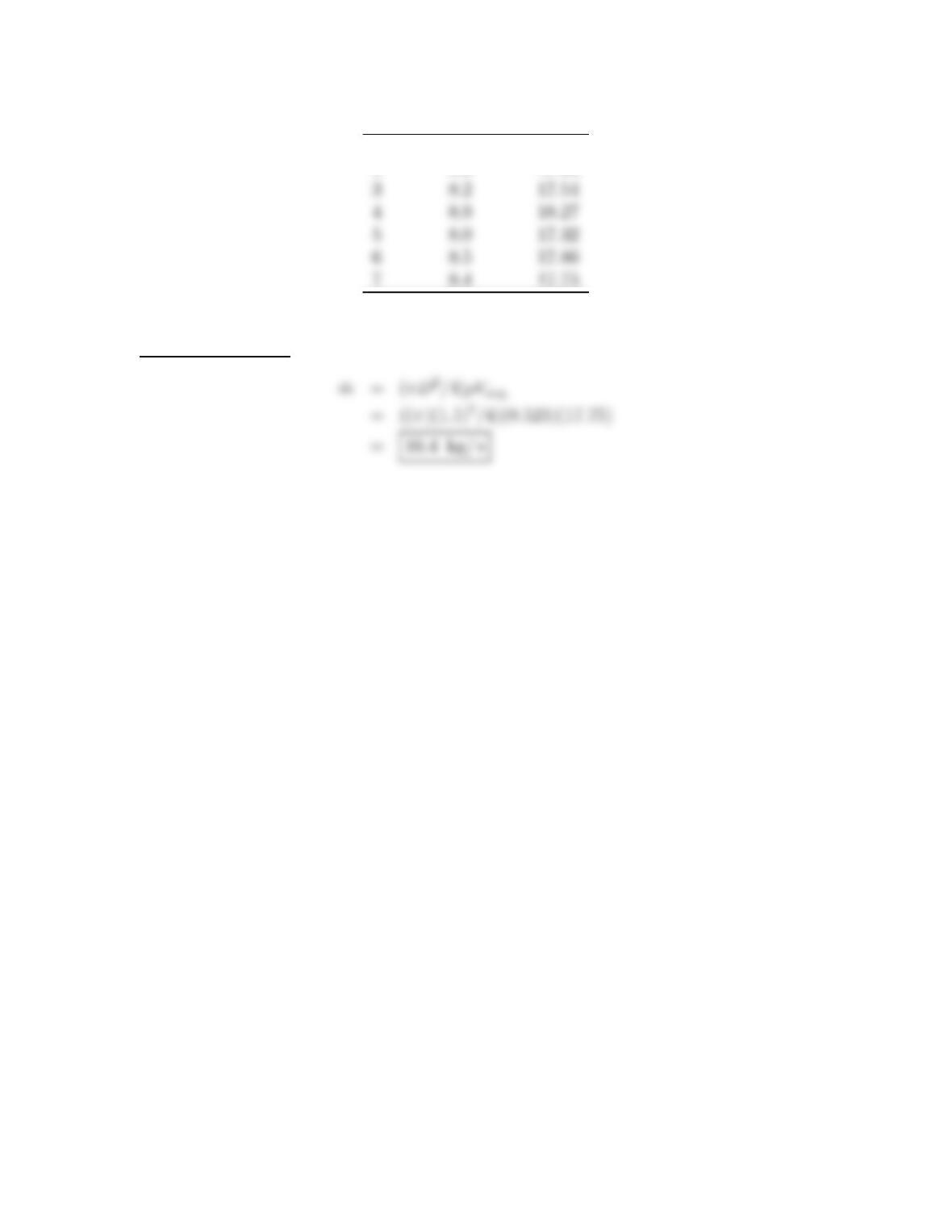
Station ∆h(mm) V
18.217.54
28.617.96
From the ab ove table, Vavg =17.75 m/s, Then
Flow rate equation
22
13.19: PROBLEM DEFINITION
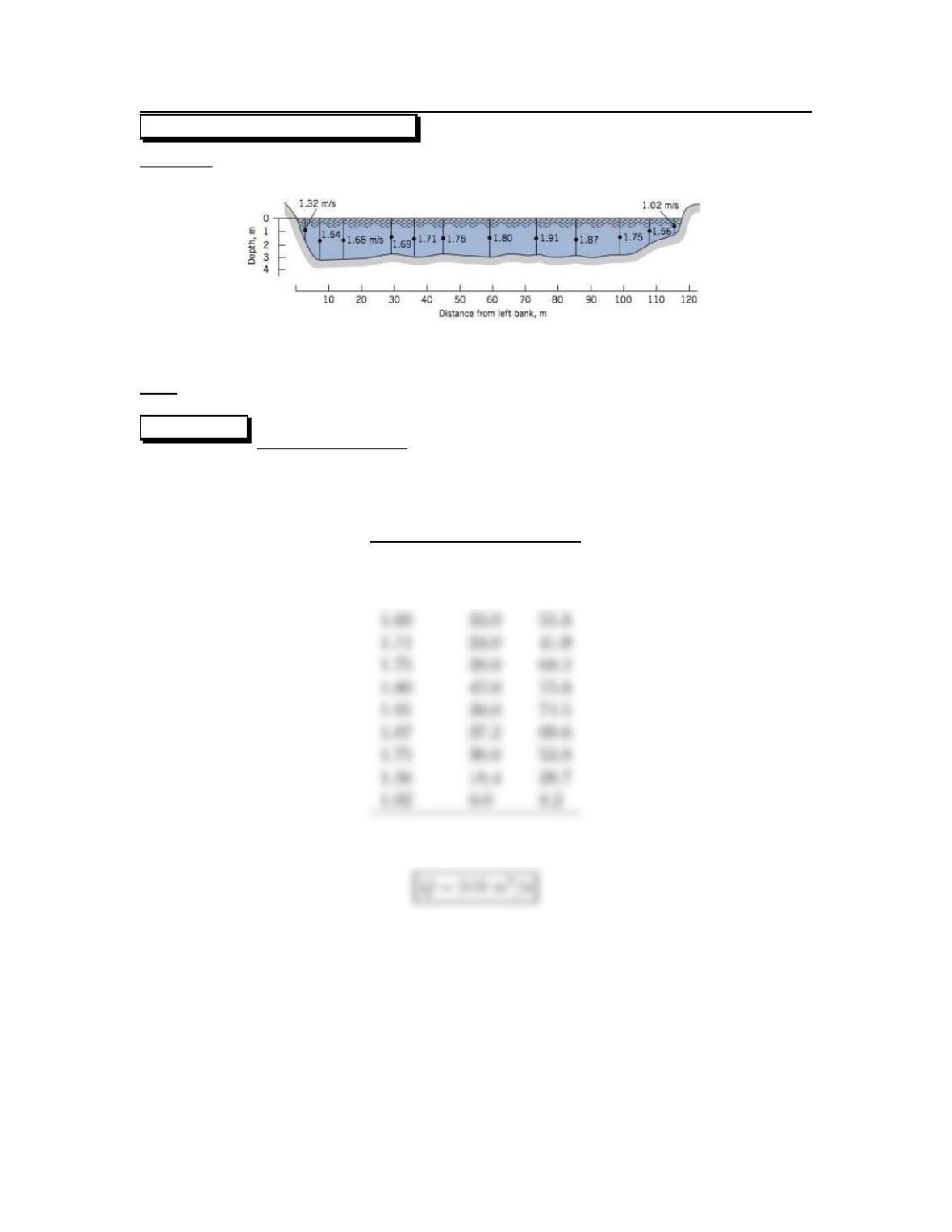
Situation: Velocity data for a river is described in the problem statement.
Find:Discharge:Q
SOLUTION Flow rate equation
Q=XViAi
VAVA
1.32 m/s 7.6 m210.0
1.54 21.7 33.4
1.68 18.0 30.2
Summing the last column gives
23

Problem 13.20 no solution provided
24
13.21: PROBLEM DEFINITION
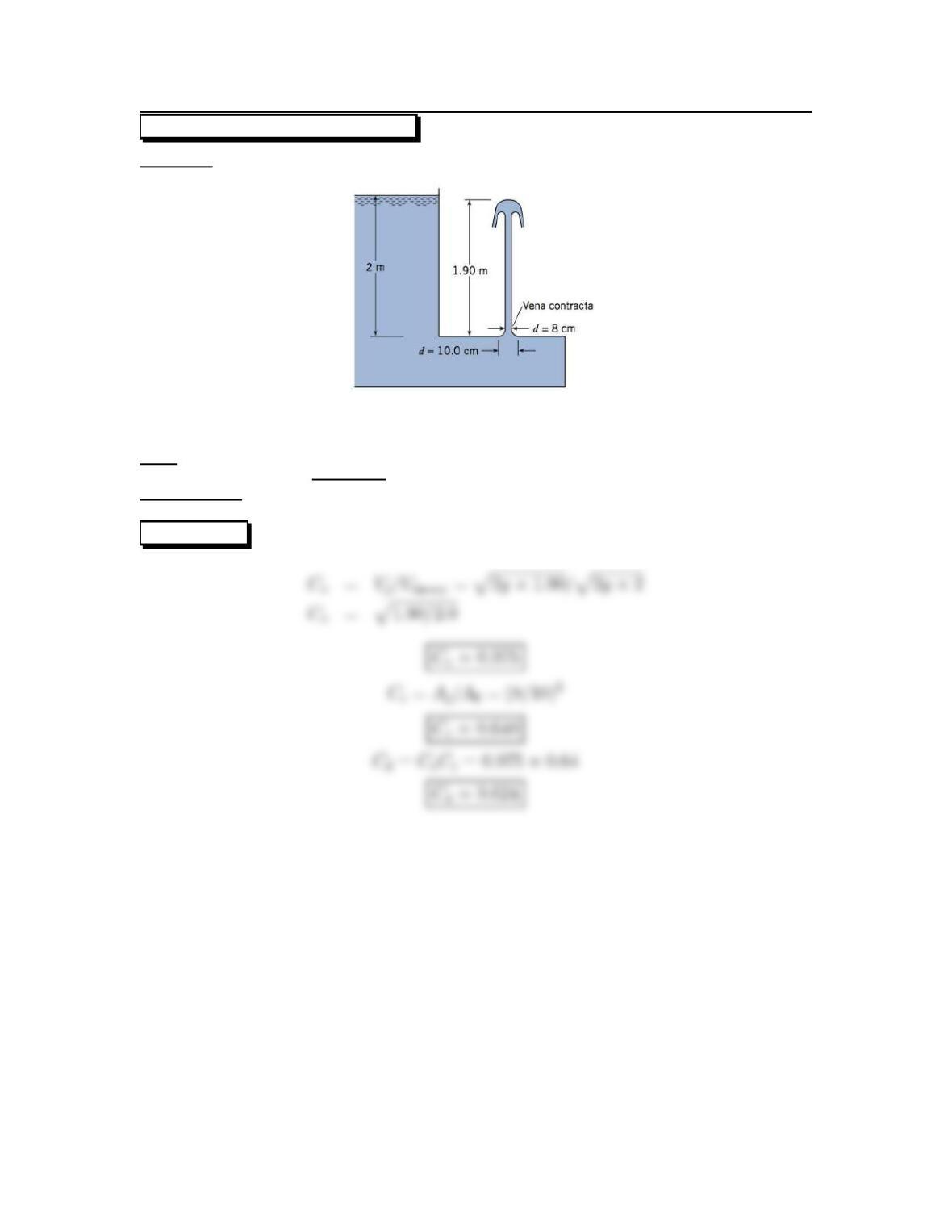
Situation: Water jets out of an orifice.
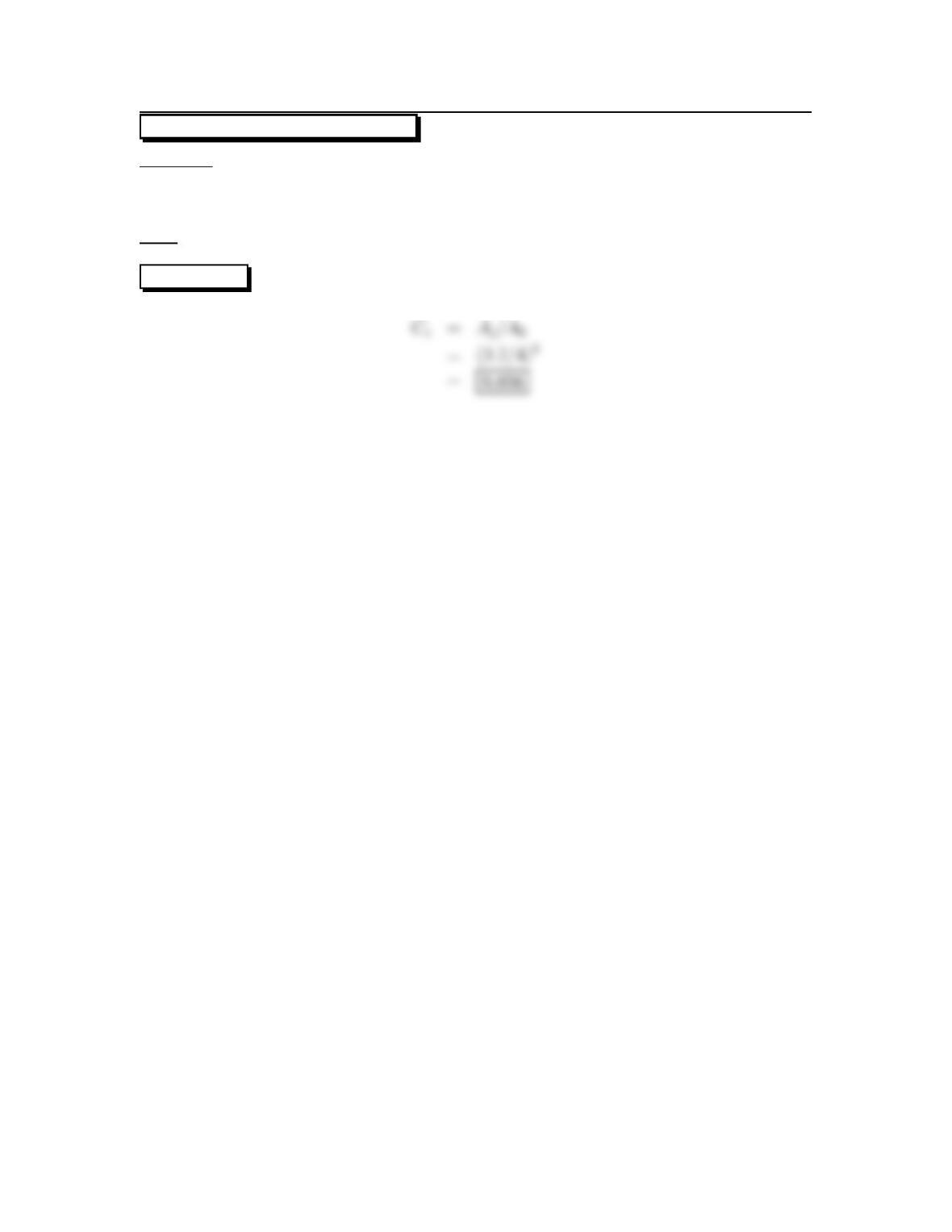
Find:Coefficients for an orifice: Cv,C
c,C
d.
Assumptions:Vj=√2g×1.90
SOLUTION
25
13.22: PROBLEM DEFINITION
Situation:
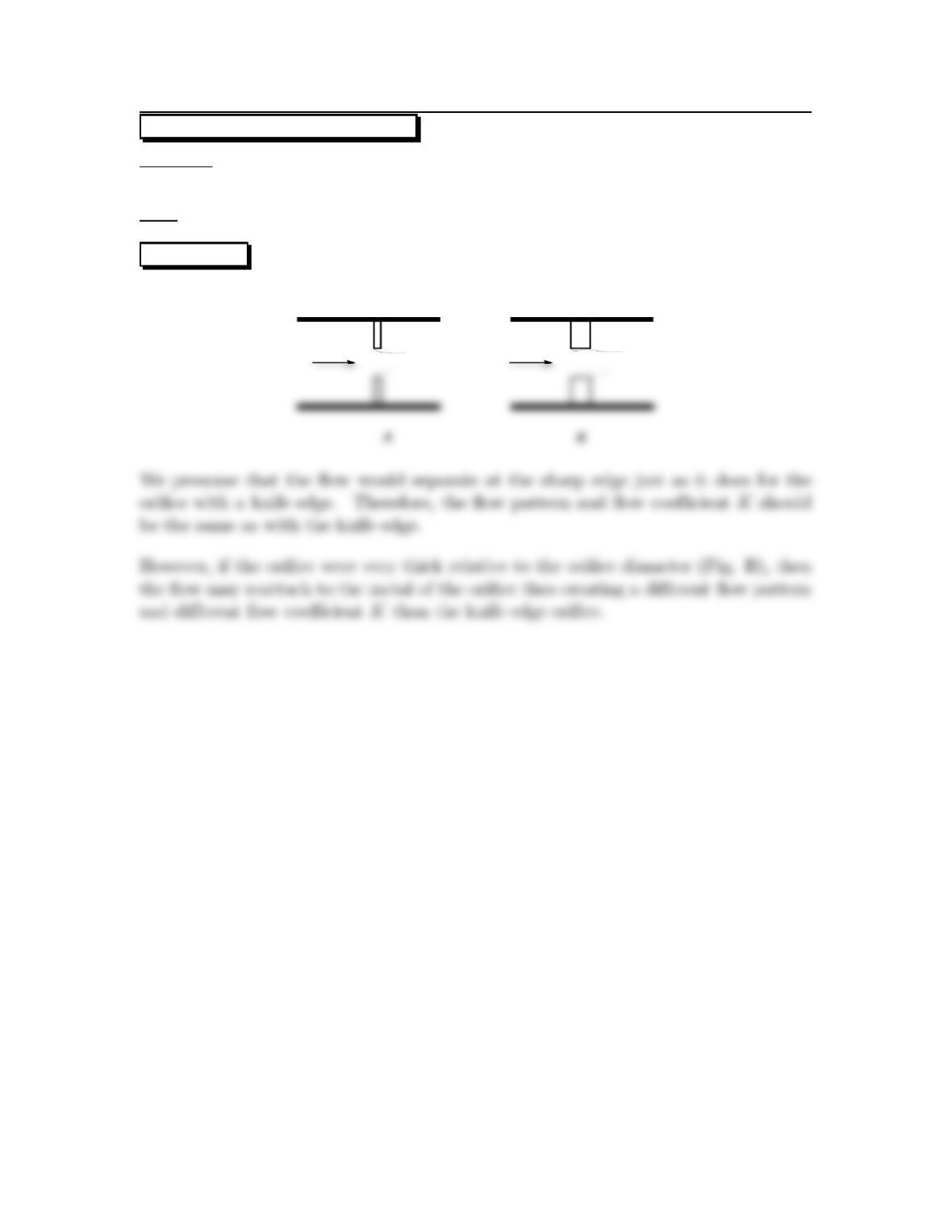
Afluid jet discharges from a 4 cm orifice.
At the vena contracta, d=3.7cm.
Find:Coefficient of contraction: Cc
SOLUTION
26
13.23: PROBLEM DEFINITION
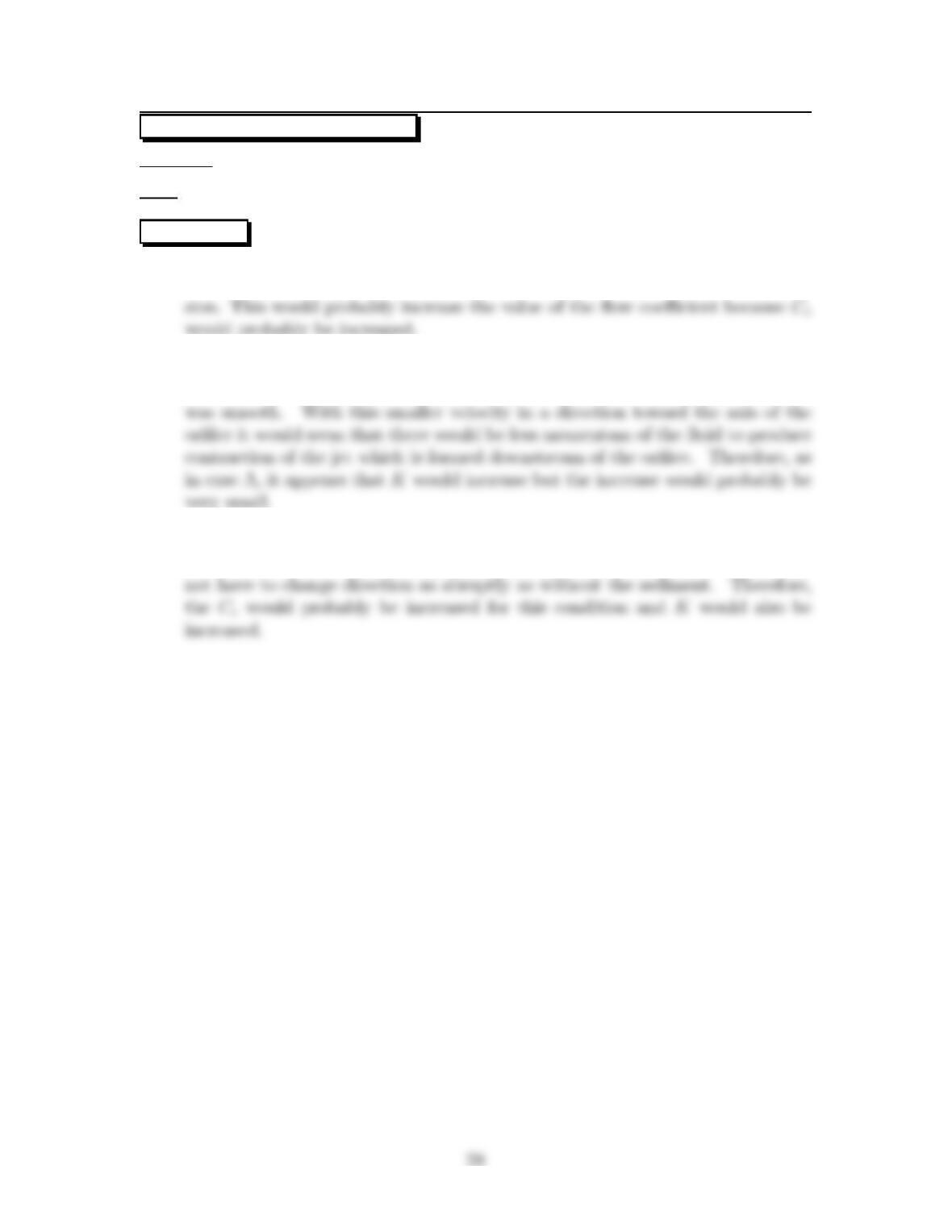
Situation: Geometry of a sharp edged orifice is modified as described in the problem
statement.
Find:Istheflow coefficient is the same?
SOLUTION If the angle is 90◦,the orifice and expected flow pattern is shown below
in Fig. A.
27
13.24: PROBLEM DEFINITION
Situation: Aging changes in an orifice are described in the problem statement.
Find: Explain the changes and how they effect the flow coefficients.
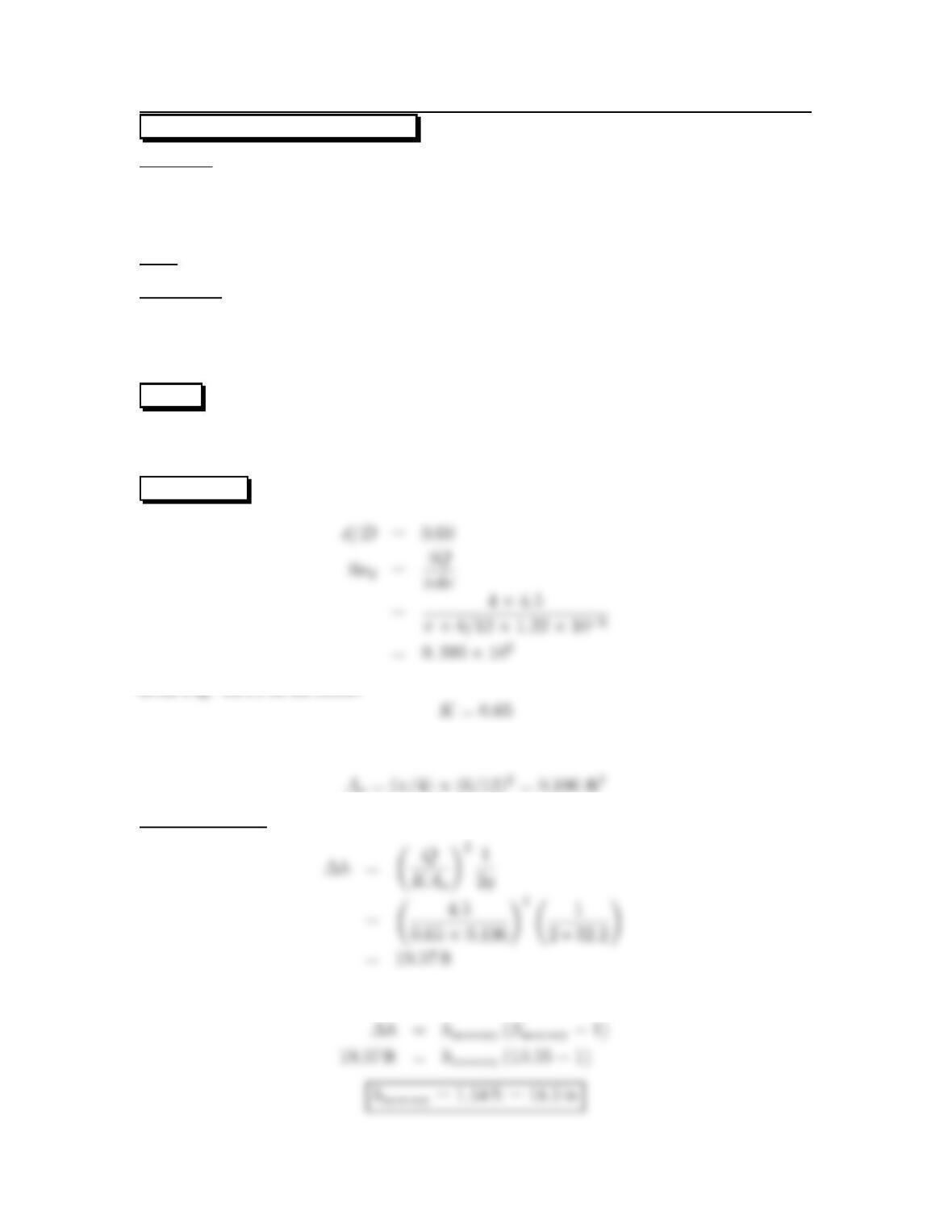
SOLUTION Some of the possible changes that might occur are listed below:
1. Blunting (rounding) of the sharp edge might occur because of erosion or corro-
2. Because of corrosion or erosion the face of the orifice might become rough.
This would cause the flownexttothefacetohavelessvelocitythanwhenit
3. Some sediment might lodge in the low velocity zones next to and upstream of the
face of the orifice. The flow approaching the orifice (lower part at least) would
13.25: PROBLEM DEFINITION
Situation:
Water (60 oF, Q=4.5cfs) flows through an orifice (d=6in.) in a pipe (D=10
in.).
A mercury manometer is connected across the orifice.
Find: Manometer deflection
Properties:
Table A.5 (water at 60 ◦F): ρ=1.94 slug/ft3,γ =62.37 lbf/ft3,ν=1.22 ×
10−5ft2/s.
Table A.4 (mercury at 68 ◦F): S=13.55.
PLAN Find K, and then apply the orifice equation to find the pressure drop across
the orifice meter. Apply the manometer equation to relate the pressure drop to the
deflection of the mercury manometer.
SOLUTION Find K
from Fig. 13.14 in EFM10e:
Orifice section area
Orifice equation
Manometer equation
29
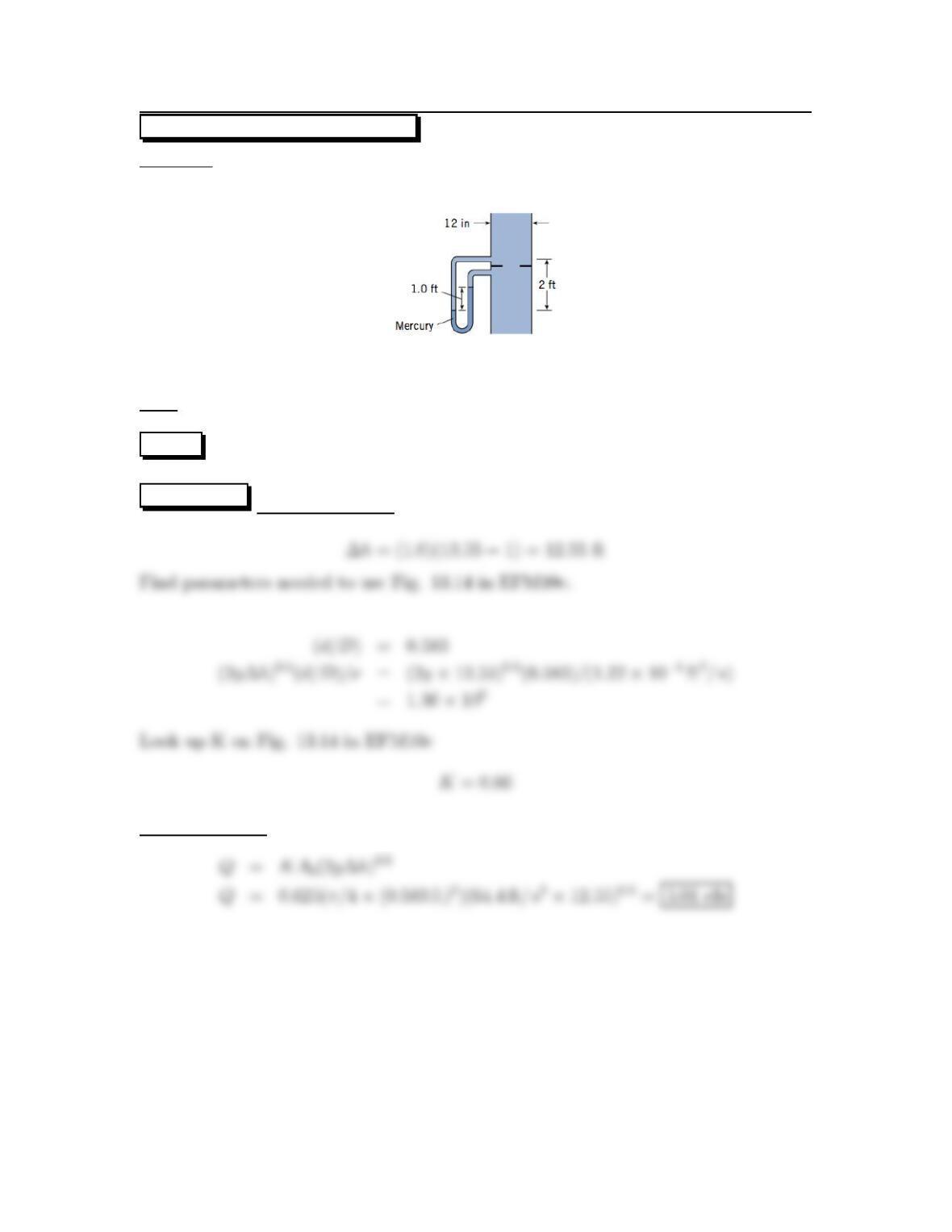
13.26: PROBLEM DEFINITION
Situation:Waterflows through a 7 inch orifice in a 12 inch pipe. Assume T=60
◦F,ν=1.22 ×10⁻⁵ft2/s.
Find:Discharge:Q
PLAN Calculate piezometric head. Then find K and apply the orifice equation.
SOLUTION Piezometric head
Orifice equation
30
13.27: PROBLEM DEFINITION
Situation:Aroughorifice is described in the problem statement.
Find: Applicability of Figure 13.15 in EFM10e
SOLUTION A rough pipe will have a greater maximum velocity at the center of
31
13.28: PROBLEM DEFINITION
Situation:
Water flows through an orifice in a pipe.
d=3in=0.25 ft,D=6in=0.5ft.
h=4ft.
Find:Discharge:Q
Properties:TableA.5(waterat60 ◦F): ν=1.22 ×10⁻⁵ft2/s.
PLAN
2. Find Qby applying the orifice equation.
SOLUTION
1. Flow coefficient.
Reynolds number.
2. Orifice equation.
Ao=π(0.25 ft)2
4=4.91 ×10⁻²ft2
32
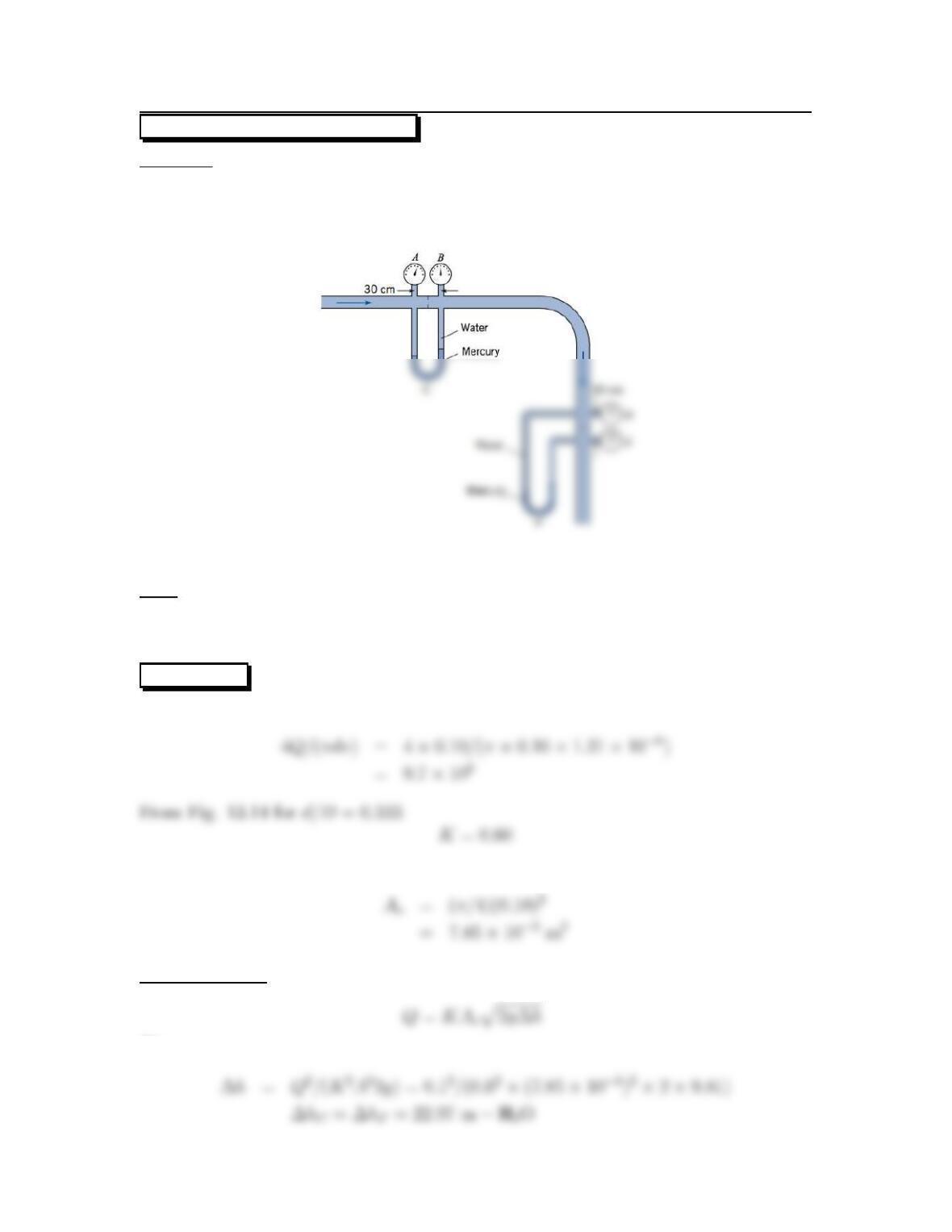
13.29: PROBLEM DEFINITION
Situation:
Water at 20 oCflows in a pipe containing two orifices.
For each orifice, D=30cm and d=10cm.
Q=0.1m3/s.
Find:
(a) Pressure differential across each orifice: ∆pC,∆pF.
(b) Deflection for each mercury-water manometer: ∆hC,∆hF
SOLUTION
Reynolds number
Orifice section area
Orifice equation
Thus
33
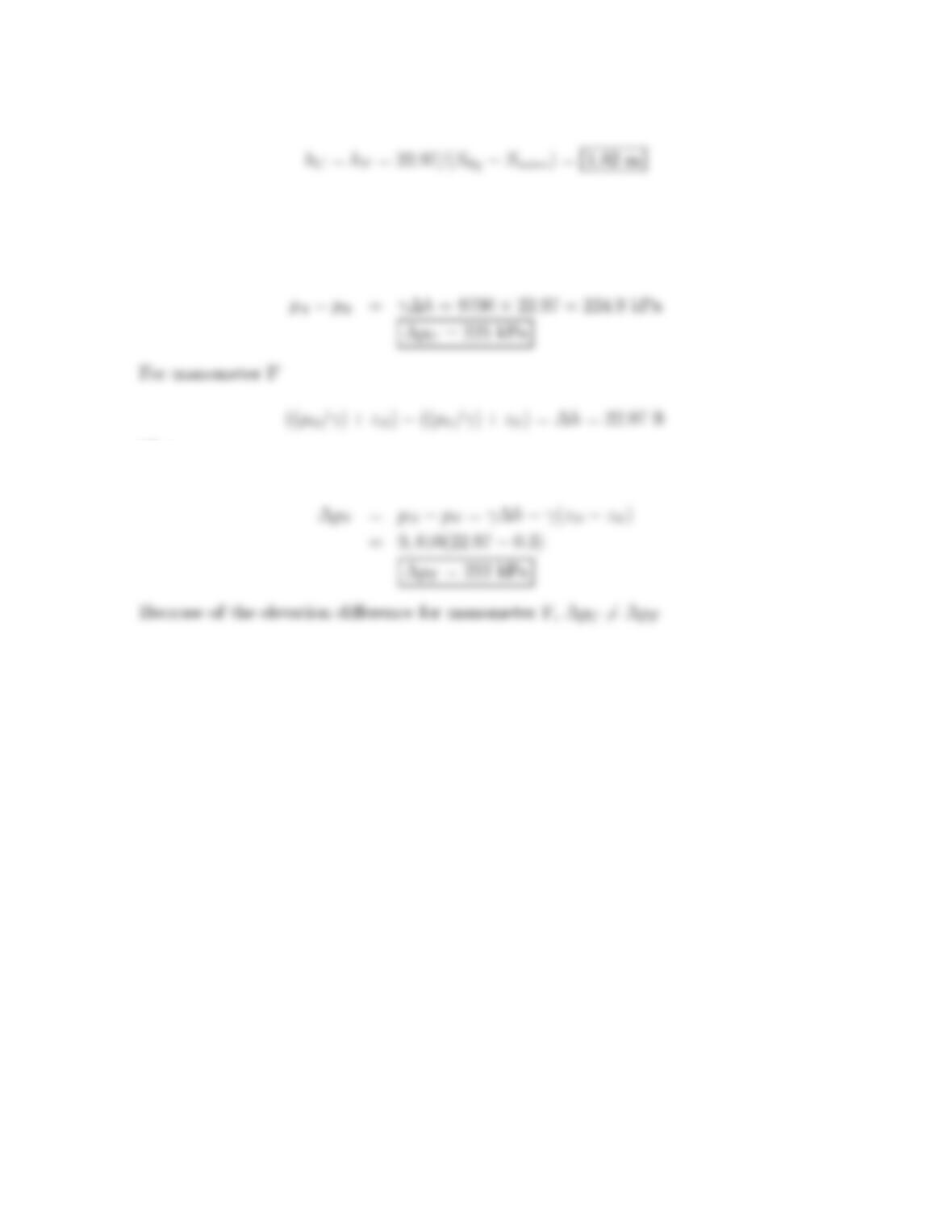
The deflection across the manometers is
The deflection will be the same on each manometer
Find ∆p
Thus,
34
13.30: PROBLEM DEFINITION
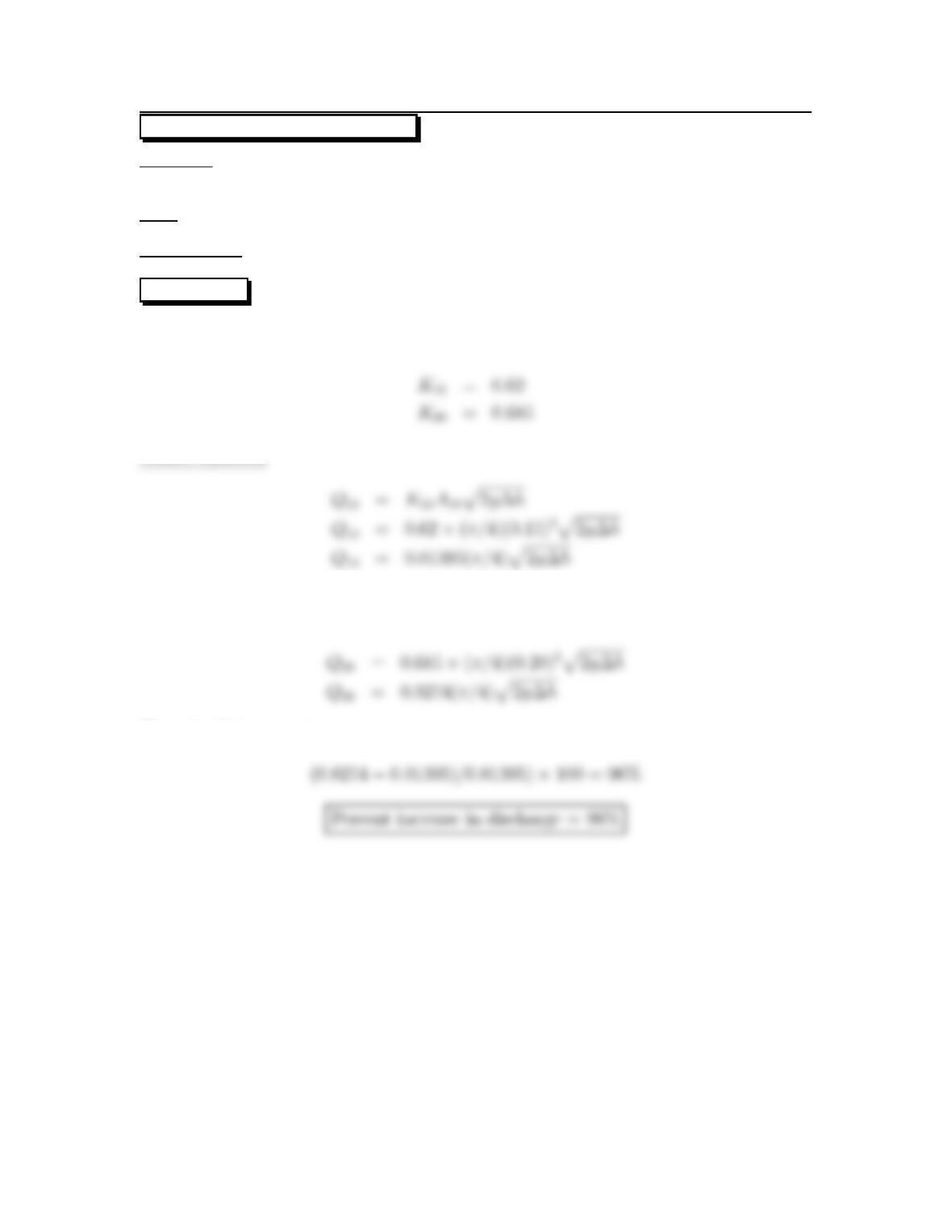
Situation:Apipe(D=30cm)isterminatedwithanorifice. The orifice size is
increased from 15 to 20 cm with pressure drop (∆p=50kPa) held constant.
Find: Percentage increase in discharge.
Assumptions: Large Reynolds number.
SOLUTION Find K values
Assuming large Re,so K depends only on d/D. From Fig. 13.14 (EFM10e)
Orifice equation
For the 20 cm orifice
Thus the % increase is
35
13.31: PROBLEM DEFINITION
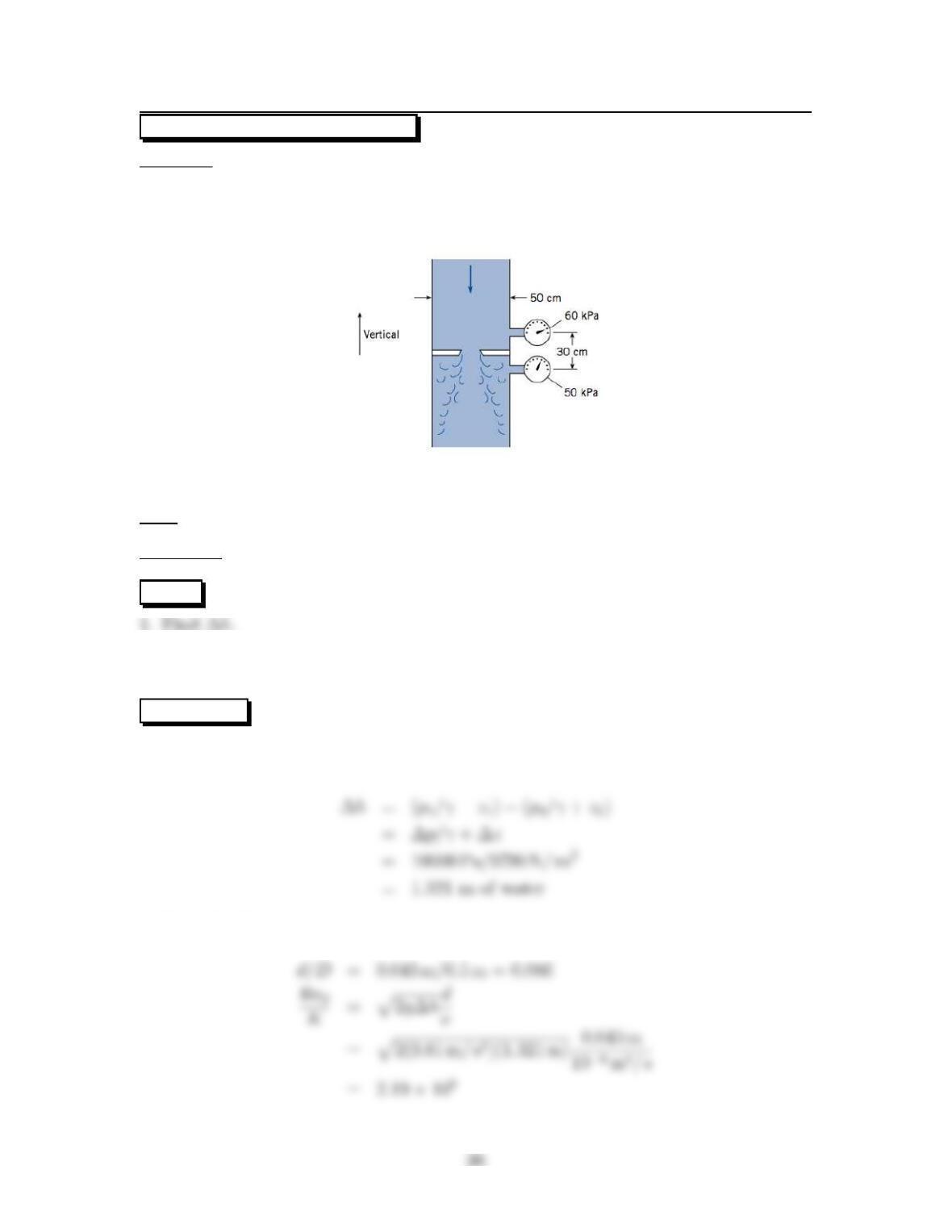
Situation:
Water flows through an orifice.
D=0.5m,d=0.043 m.
∆p=10kPa, ∆z=0.3m.
Find:Flowrate(m
3/s)
Properties:Water(20 ◦C), Table A.5, γ=9790N/m3,ν=1.00 ×10−6m2/s.
PLAN
2. Find the flow coefficient K.
3. Find Qby applying the orifice equation.
SOLUTION
1. Piezometric head
2. Flow Coefficient
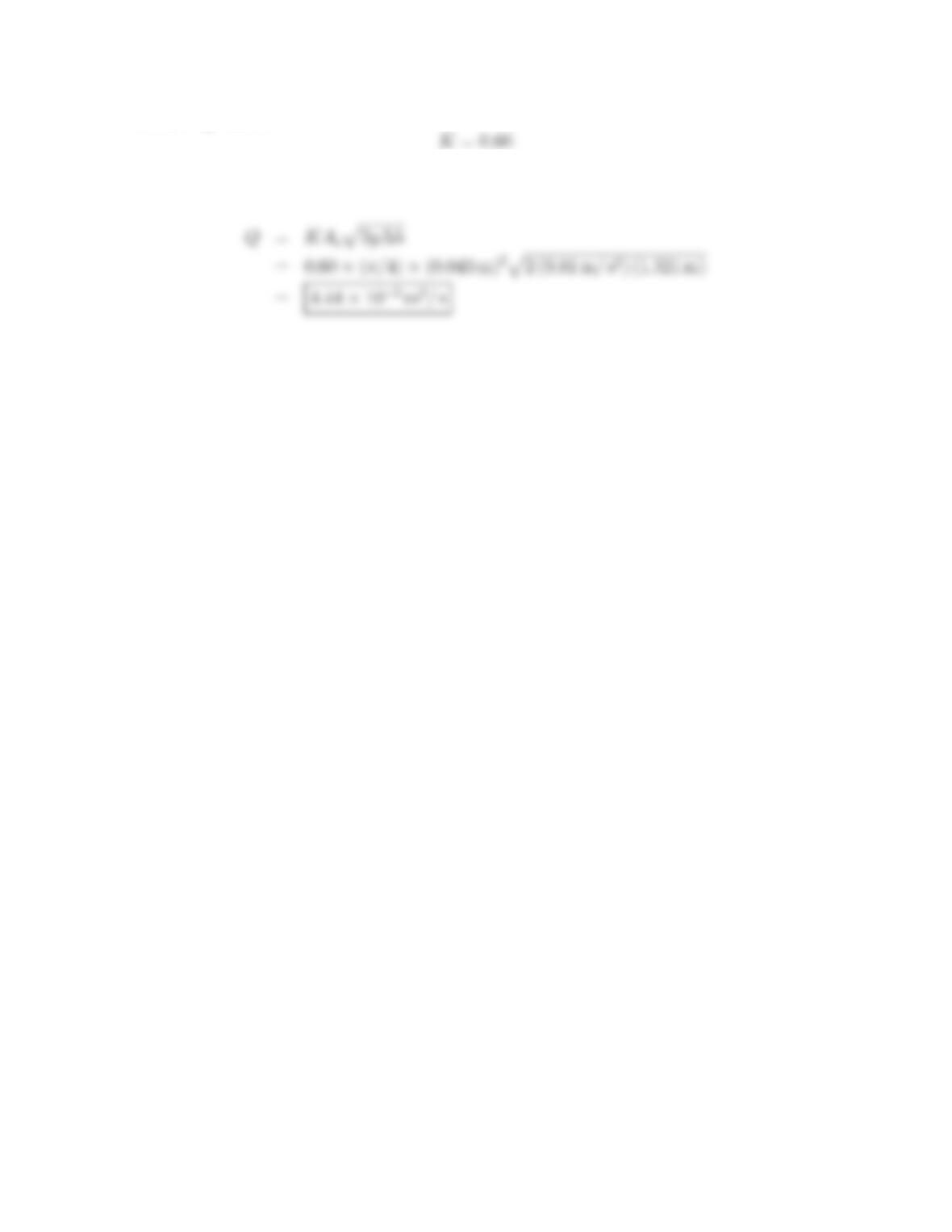
From Fig. 13.14
3. Orifice equation
37
13.32: PROBLEM DEFINITION
Situation: Flow through an orifice is described in the problem statement.
Find: Show that the difference in piezometric pressure is given by the pressure dif-
ference across the transducer.
SOLUTION Hydrostatic equation
so
But
or
Thus,
38
13.33: PROBLEM DEFINITION
Situation:Water(T=50oF, Q=20cfs) flows in the system shown in the textbook.
f=0.015.
Find:
(a) Pressure change across the orifice.
(b) Power delivered to the flow by the pump.
(c) Sketch the HGL and EGL.
PLAN Calculate pressure change by applying the orifice equation. Then calculate
the head of the pump by applying the energy equation from section 1 to 2 (section 1 is
the upstream reservoir water surface, section 2 is the downstream reservoir surface).
Then, apply the power equation.
SOLUTION
Orifice equation
Energy equation
The orifice head loss will be like that of an abrupt expansion:
Here, Vjis the jet velocity as the flow comes from the orifice.
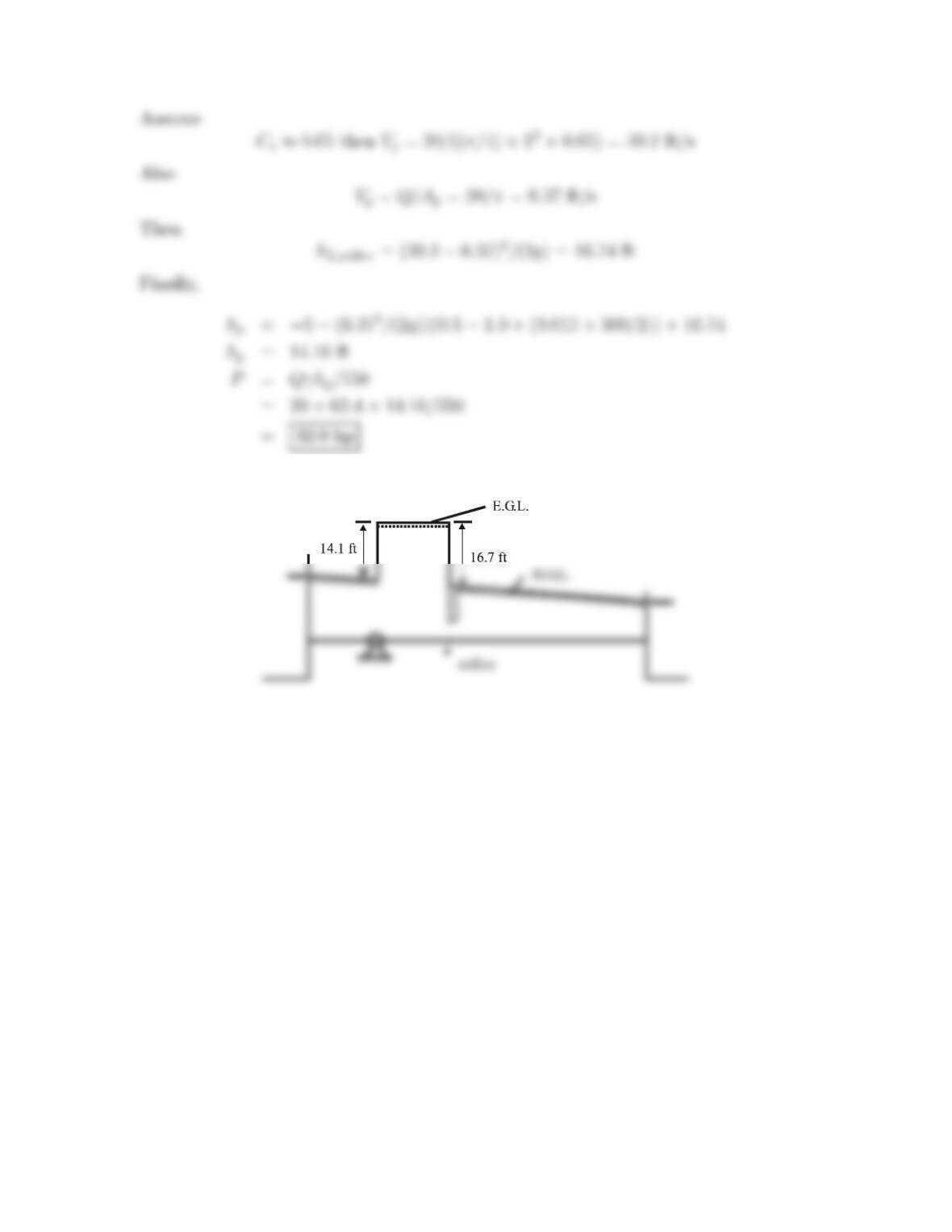
The HGL and EGL are shown below:
40