
Problem 13.1 no solution provided; answers will vary.
1
13.2: PROBLEM DEFINITION
Situation: A straw (stagnation tube) and a water-filled, u-tube manometer are used
to measure the speed of an automobile.
Find:
a. sketch the apparatus
b. determine the lowest speed that can be measured.
Assumptions:
•The straw will be situated far from the car body. Thus, the free stream velocity
will be measured; not the velocity that is influenced by the body of the car.
•A2mmwatercolumndeflection is measurable.
Properties:
Water (20 ◦C), Table A.5, γ=9790N/m3.
Air (20 ◦C), Table A.3, ρ=1.2kg/m.
PLAN
1. To develop a concept design, select materials that are commonly available. Also,
consider a design that can be built quickly and adapted to use in an automobile.
SOLUTION
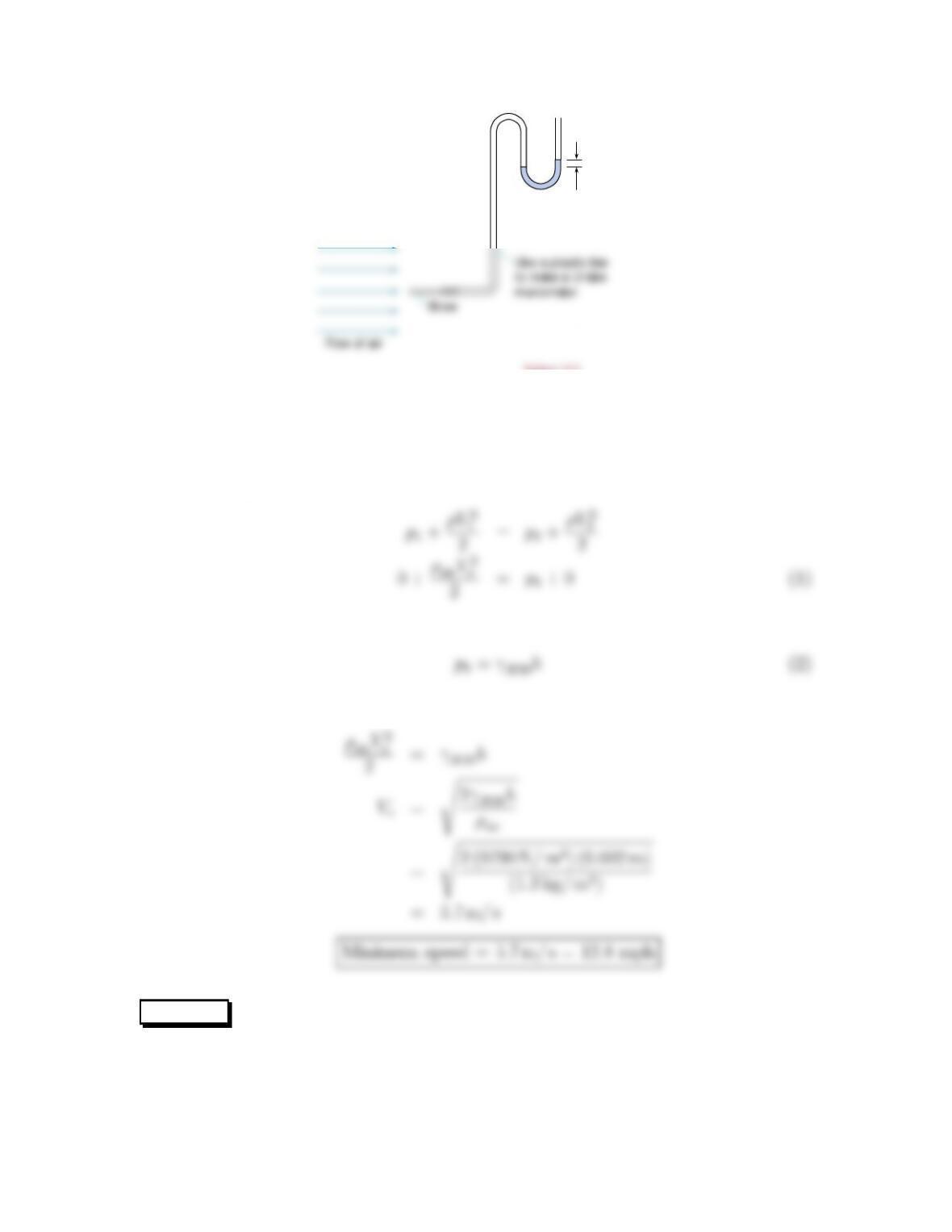
1. Concept design.
•The straw will be positioned outside a window.
2
P
r
oblem 13.3
Deflection (h
)
2. Derivation
•Bernoulli equation (point 1 located 10 cm in front of the straw; point 2 at tip
of straw)
•Hydrostatic equation (apply to water column)
•Combine Eqs. (1) and (2)
REVIEW
•Measurements need to be corrected for head winds and tail winds.
•A similar device is used in airplanes to measure airspeed.
3
13.3: PROBLEM DEFINITION
Situation: A stagnation tube (d= 1 mm) is used to measure air speed.
Find: Velocity such that the measurement error is ≤2.5%.
Properties:ν=1.46 ×10⁻⁵m2/s.
SOLUTION Algebra using the coefficient of pressure gives
Thus
s1
Thus when Cp≈1.05, there will be a 2.5% error in Vo.
4
13.4: PROBLEM DEFINITION
Situation: A stagnation tube (d= 1 mm) is used to measure the speed of water.
Find: Velocity such that the measurement error is ≤1%.
SOLUTION Algebra using the coefficient of pressure gives Vo=p2∆p/(ρCp).The
allowable error is 1%, thus
This simplifies to
Thus when Cp≈1.02, there will be a 1% error in Vo.
5
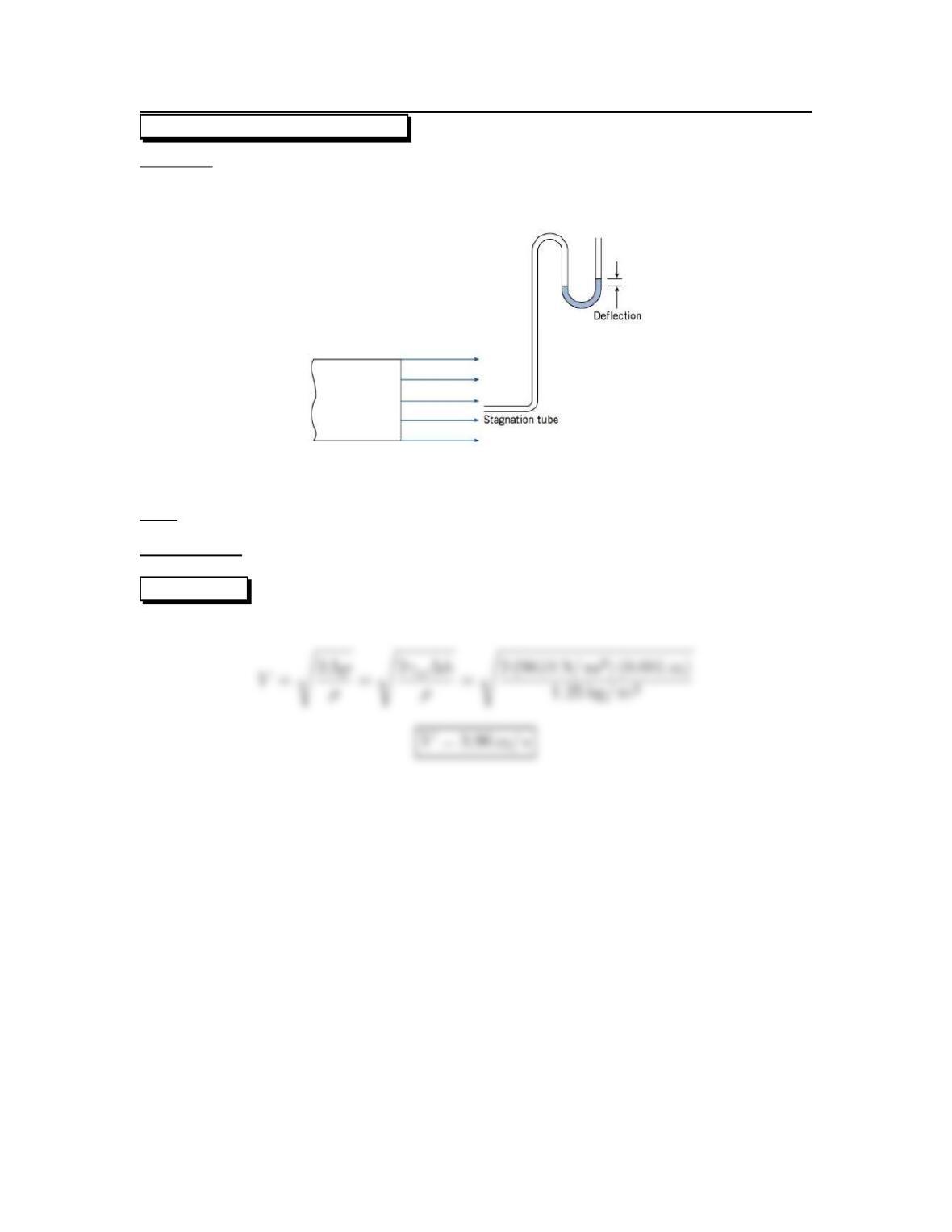
13.5: PROBLEM DEFINITION
Situation:
Astagnationtube(d=2mm) is used to measure air speed.
Manometer deflection is 1 mm-H2O.
Find: Air Velocity: V
Assumptions: Neglect viscous effects
SOLUTION
Bernoulli equation applied to a stagnation tube
6
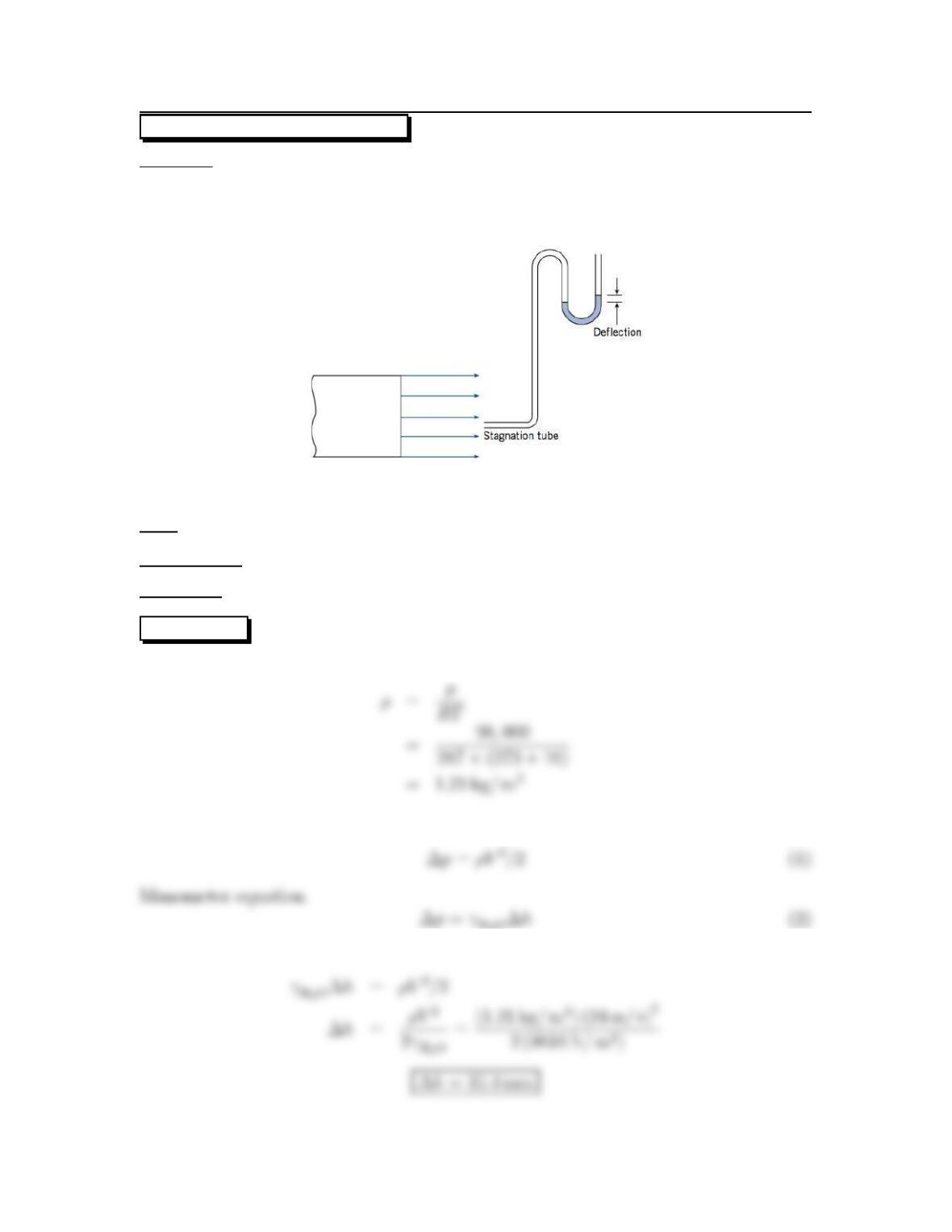
13.6: PROBLEM DEFINITION
Situation:
A stagnation tube (d=2mm) is used to measure air speed
V=24m/s
Find:Deflection on a water manometer: ∆h
Assumptions: Neglect viscous effects
Properties: For air, ν=1.4×10⁻⁵m2/s.
SOLUTION
Ideal gas law
Bernoulli equation applied to a stagnation tube
Combine Eqs. (1) and 2)
7
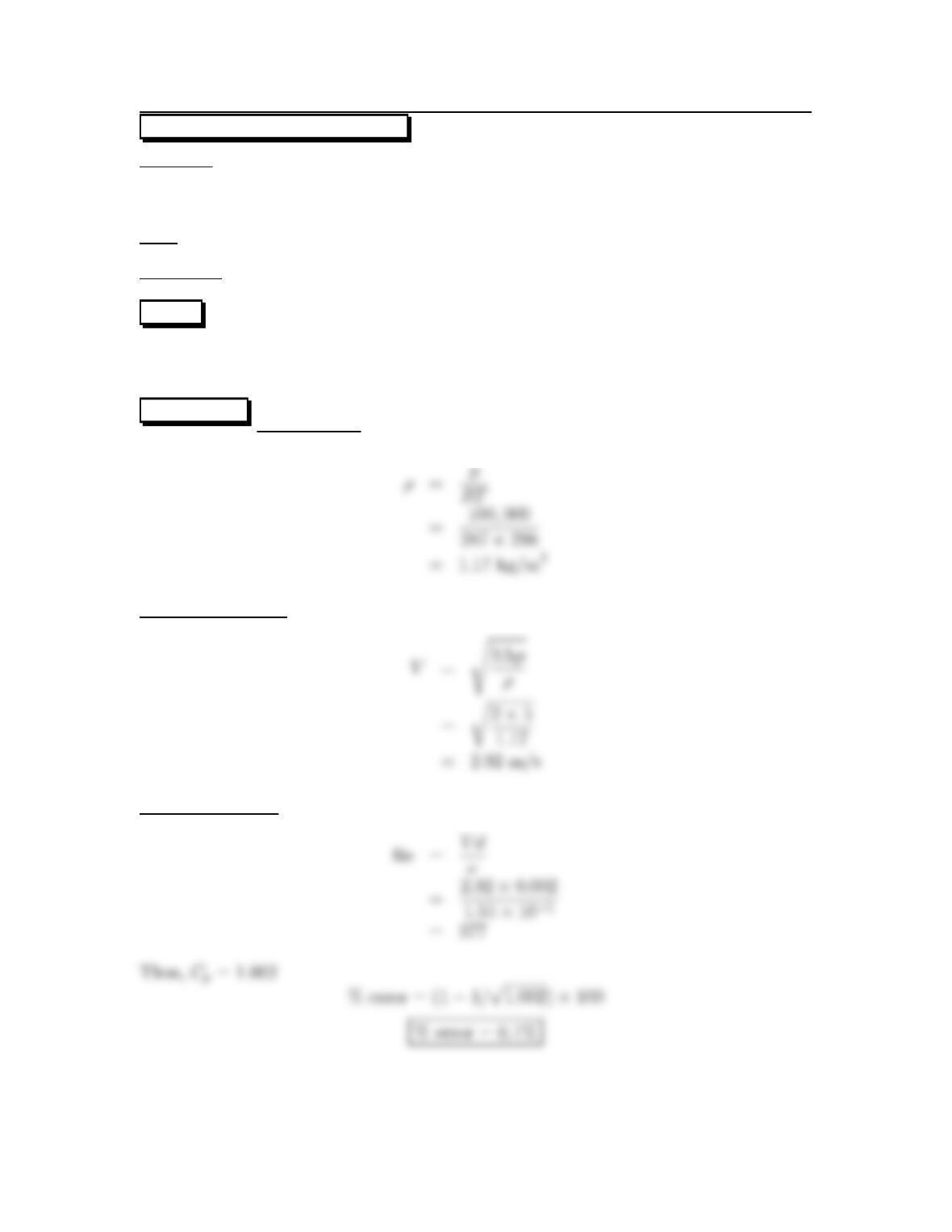
13.7: PROBLEM DEFINITION
Situation:
A stagnation tube (d=2mm) is used to measure air speed.
Air kinematic viscosity is 1.55 ×10⁻⁵
Find: Error in velocity if Cp=1is used for the calculation.
Properties: Stagnation pressure is ∆p=5Pa.
PLAN Calculate density of air by applying the ideal gas law. Calculate speed of air
by applying the Bernoulli equation to a stagnation tube. Then calculate Reynolds
number in order to check Cp.
SOLUTION Ideal gas law
Bernoulli equation applied to a stagnation tube
Reynolds number
8
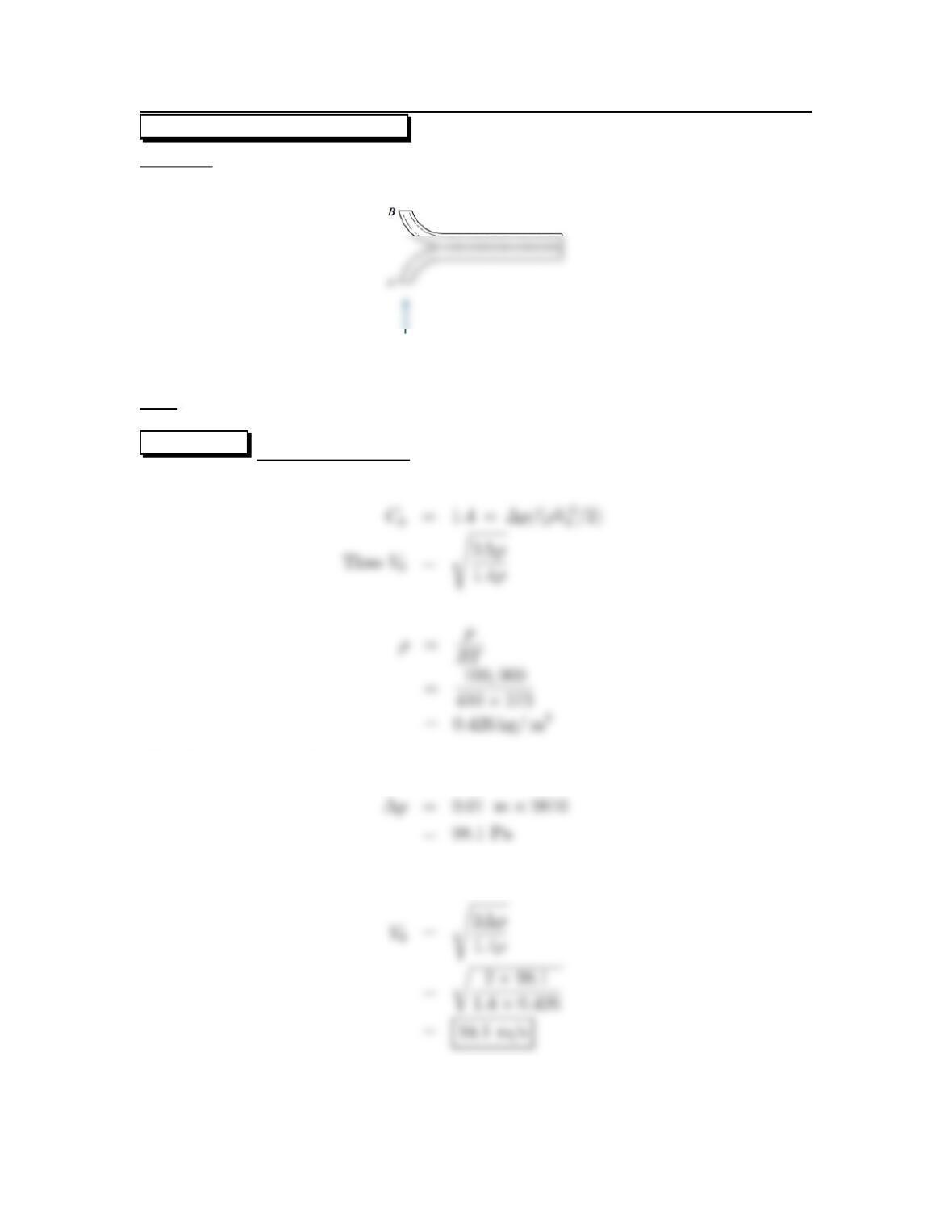
13.8: PROBLEM DEFINITION
Situation: A probe for measuring velocity of a stack gas is described in the problem
statement.
Find:Stackgasvelocity:Vo
SOLUTION Pressure coefficient
Calculate pressure difference
Substituting values
9

Problem 13.9 no solution provided
10
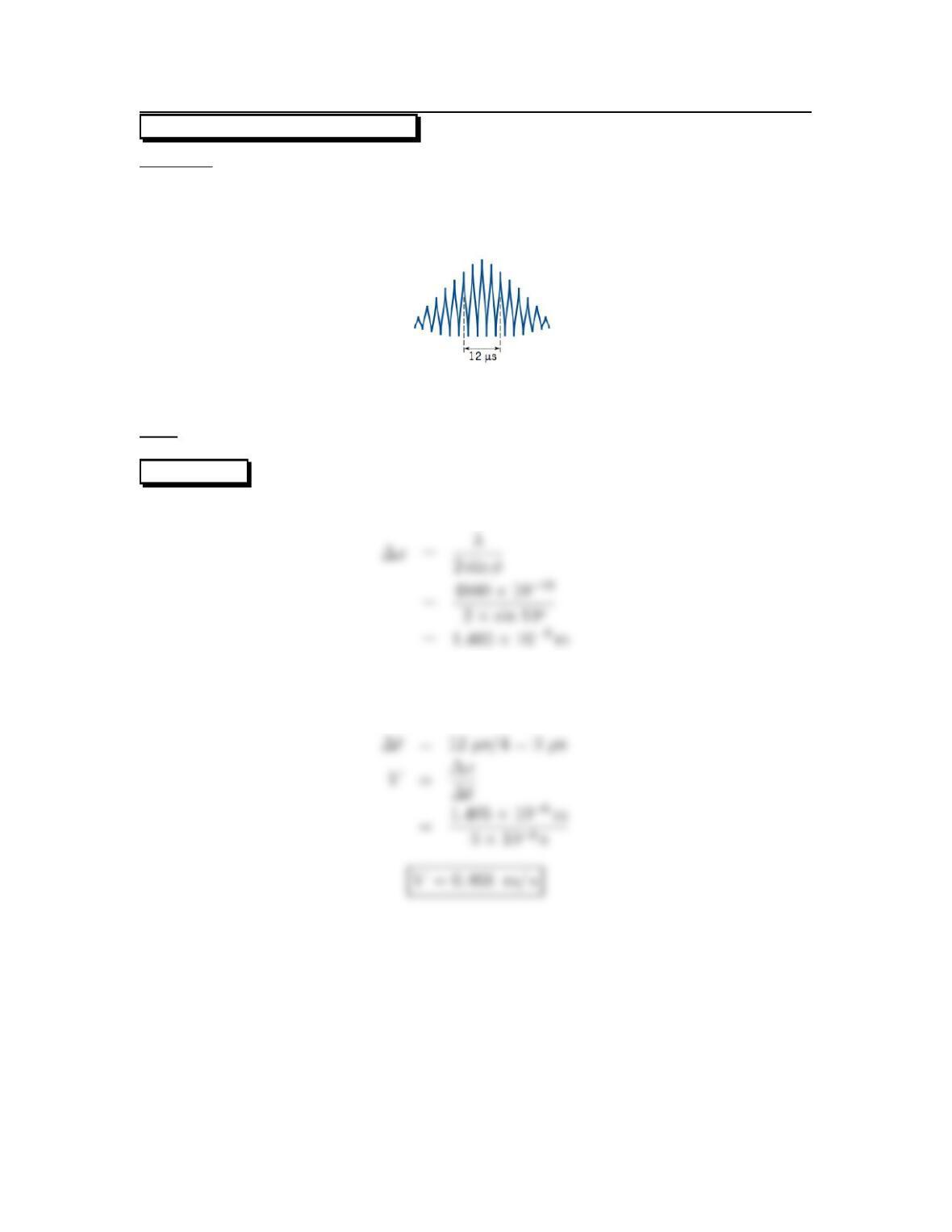
13.10: PROBLEM DEFINITION
Situation:
Velocity of air is measured with an LDV.
λ=4880Å, 2φ=20
o.
On the Doppler burst, 5 peaks occur in 12 μs.
Find: Velocity (m/s).
SOLUTION
1. Fringe spacing
2. Velocity
11
13.11: PROBLEM DEFINITION
Situation:
Classify the following devices as to whether they are used to measure velocity (V),
pressure (P), or discharge (Q).
a) hot-wire anemometer
b) venturi meter
c) differential manometer
d) orifice meter
e) stagnation tube
f) rotameter
g) ultrasonic flow meter
h) Bourdon-tube gage
i) weir
j) laser-Doppler anemometer
SOLUTION
The following devices are classified with a V, P or Q to indicated whether they are
used to measure
12

Problem 13.12 no solution provided; answers will vary
13
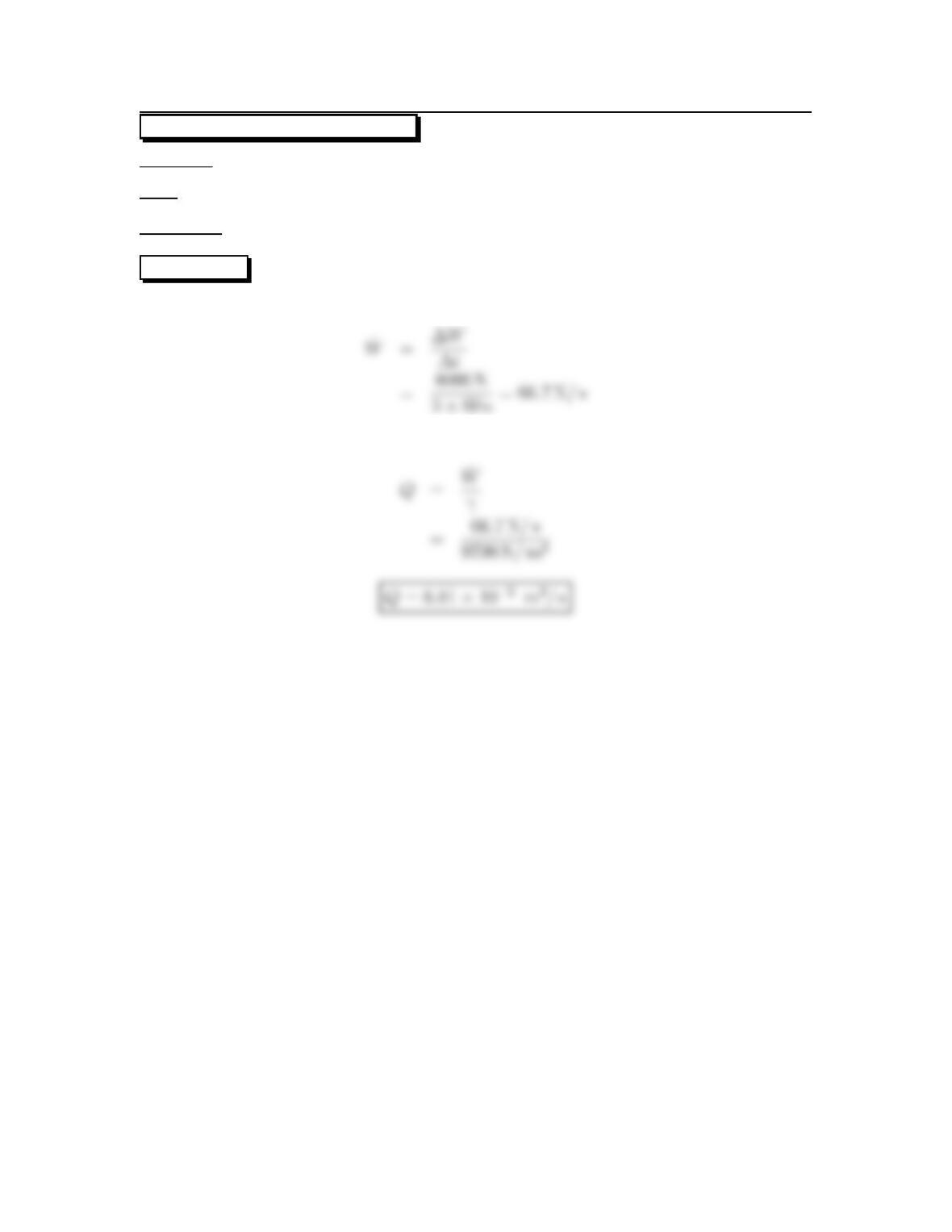
13.13: PROBLEM DEFINITION
Situation: In 3 minutes, 8 kN of water flows into a weigh tank.
Find:Discharge(inm3/s).
Properties:Water(20 ◦C), Table A.5, γ=9790N/m3.
SOLUTION
1. Weight per unit time
2. Flow rate
14
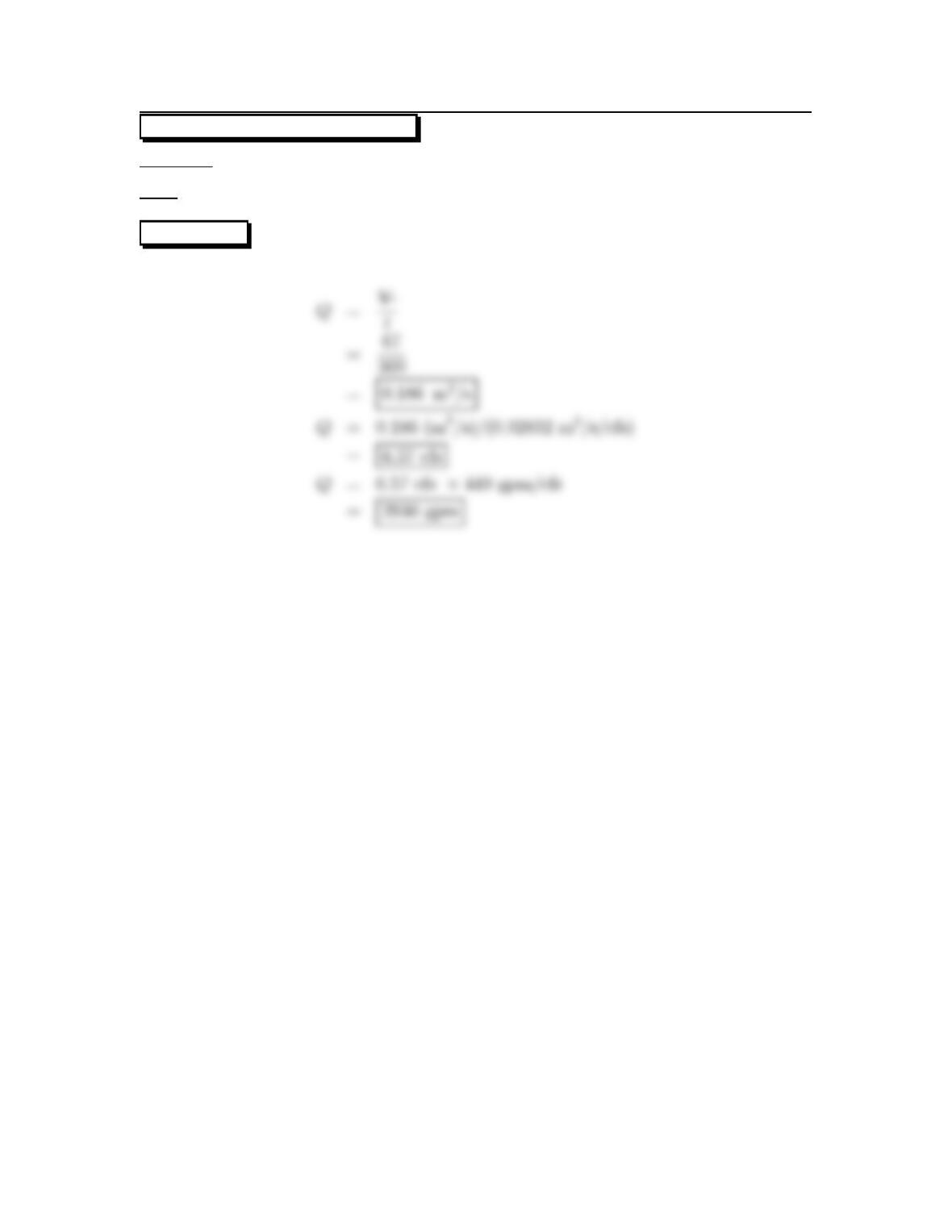
13.14: PROBLEM DEFINITION
Situation: In 6 minutes, 67 m3of water flowsintoaweightank.
Find:Discharge:Qin units of (a) m3/s, (b) gpm and (c) cfs.
SOLUTION
15
13.15: PROBLEM DEFINITION
Situation: Velocity data in a 24 inch oil pipe are given in the problem statement.
Find:
(a) Discharge.
(b) Mean velocity.
(c)Ratio of maximum to minimum velocity.
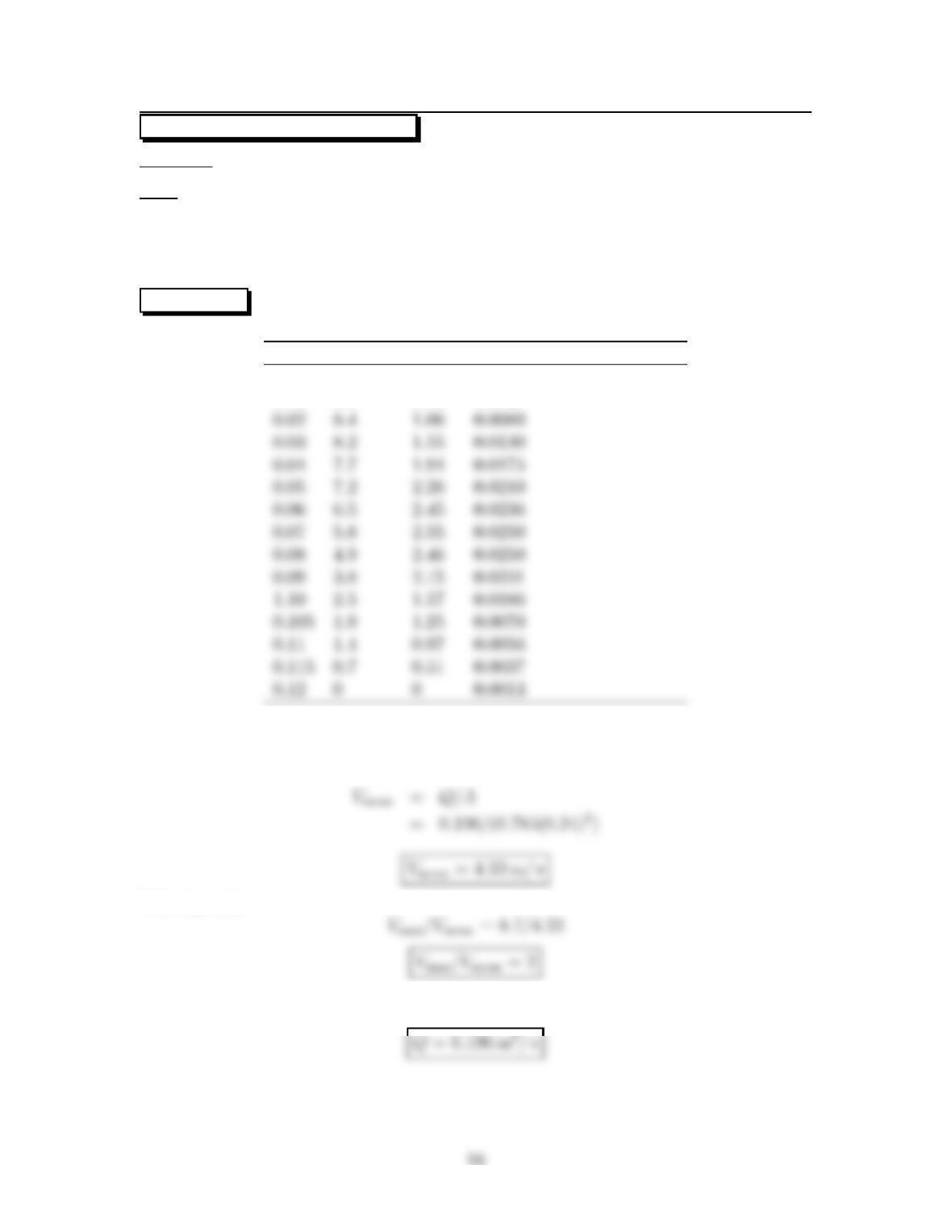
SOLUTION Numerical integration
r(m) V(m/s) 2πV r area (by trapezoidal rule)
08.7 0
0.01 8.6 0.54 0.0027
Summing the values in the last column in the above table gives Q=0.196 m3/s.
Then,
Velocity ratio
This ratio indicates the flow is laminar. The discharge is
13.16: PROBLEM DEFINITION
Situation: Velocity data in a 16 inch circular air duct are given in the problem
statement.
p=14.3psia, T=70 oF
Find:(a)Flowrate:Qin cfs and cfm.
(b) Ratio of maximum to mean velocity.
(c) Whether the flow is laminar or turbulent.
(d) Mass flow rate: ˙m.
PLAN Perform numerical integration to find flow rate (Q). Apply the ideal gas
law to calculate density. Find mass flow rate using ˙m=ρQ.
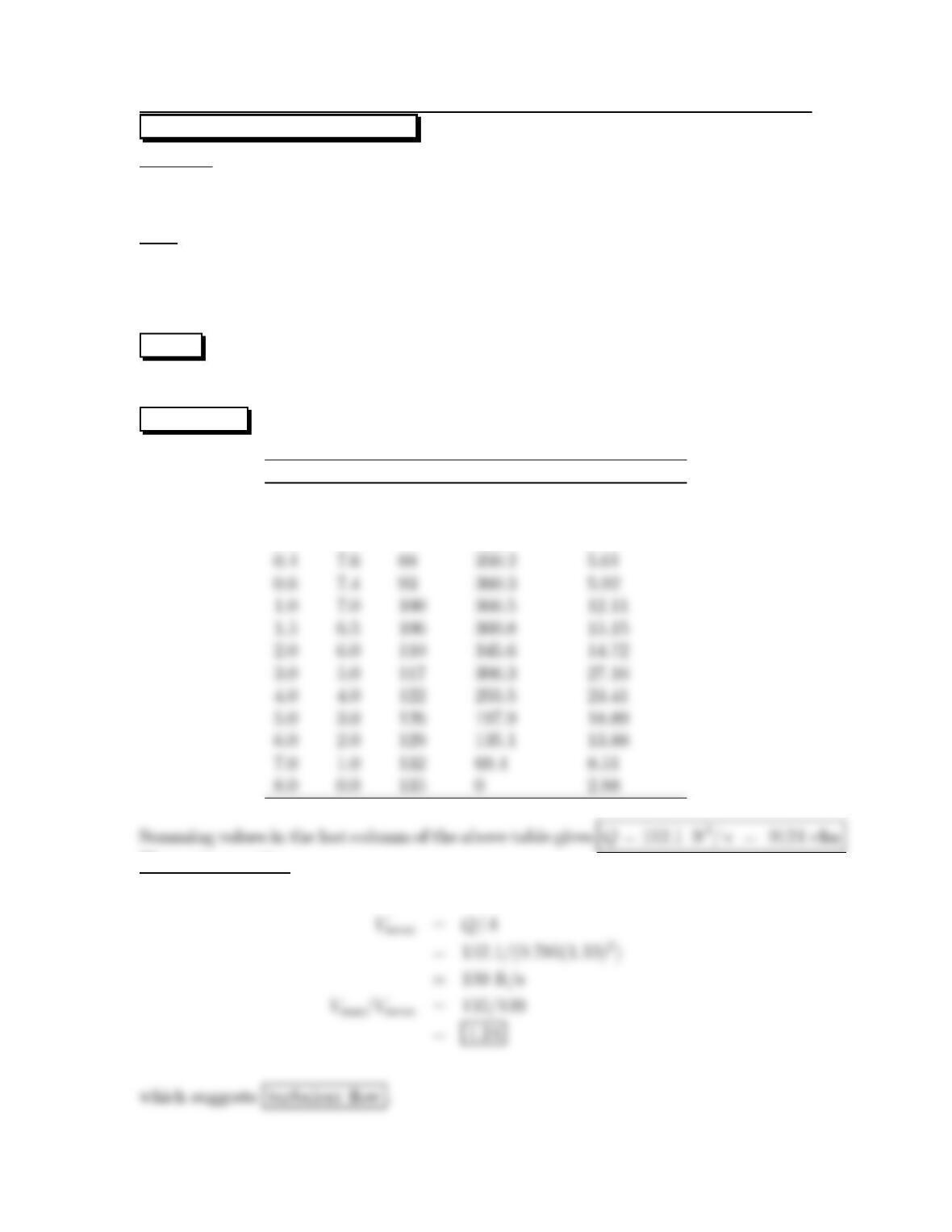
SOLUTION Numerical integration
y(in.) r(in.) V(ft/s) 2πrV (ft2/s) area (ft3/s)
0.0 8.0 0 0
0.1 7.9 72 297.8 1.24
0.2 7.8 79 322.6 2.58
Flow rate equation
17
Ideal gas law
Flow rate
18
13.17: PROBLEM DEFINITION
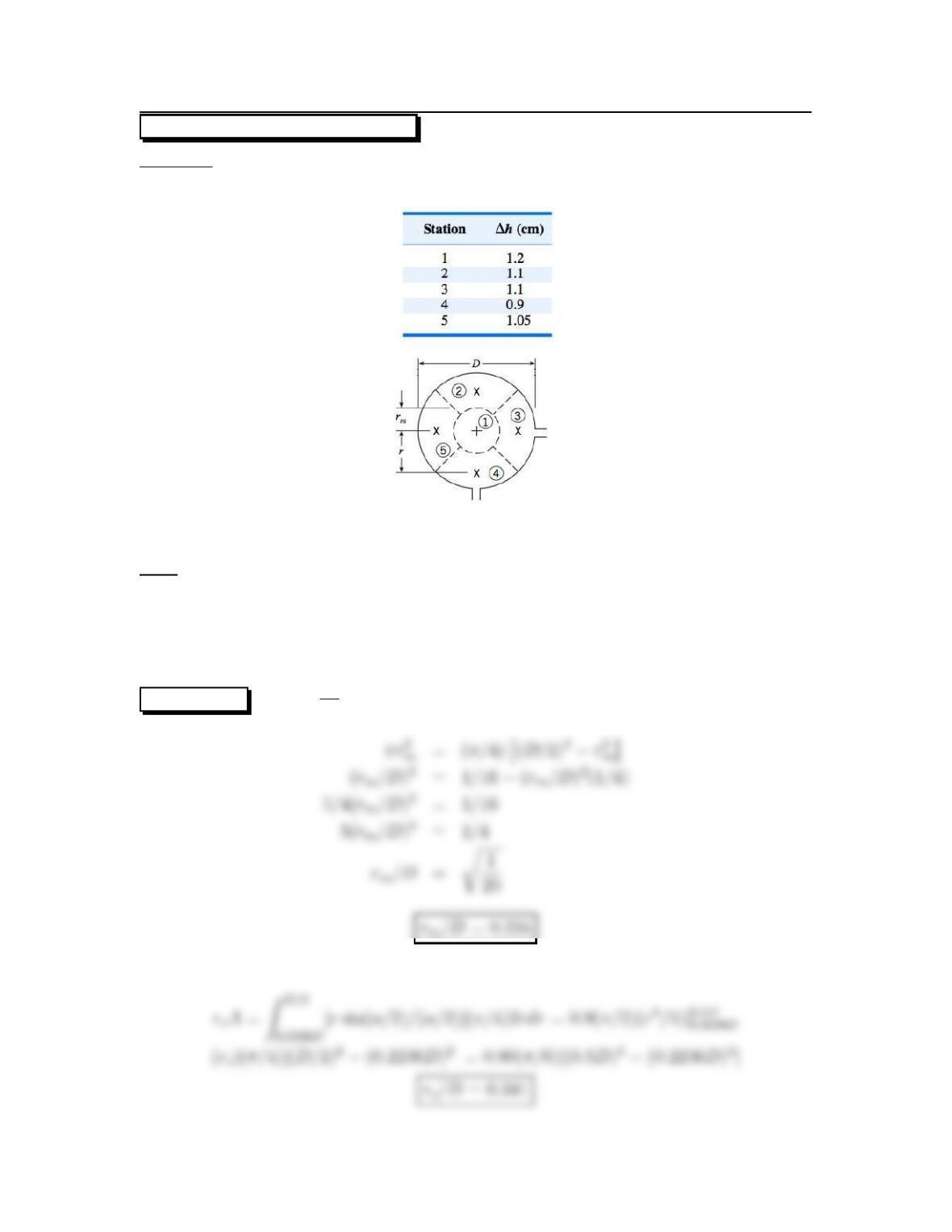
Situation:Aheatedgasflows through a cylindrical stack–additional information is
provided in the problem statement.
Find: (a) The ratio rm/D such that the areas of the five measuring segments are
equal.
(b) The location of the probe expressed as a ratio of rc/D that corresponds to the
centroid of the segment
(c) Mass flow rate
SOLUTION (a) 1/√20 = 0.223 61
b)
19
c)Ideal gas law
Bernoulli equation applied to a stagnation tube
Values for each section are
Station ∆hV
1 0.012 7.00
Mass flow rate is given by
20