13.54: PROBLEM DEFINITION
Situation: One mode of operation of an ultrasonic flow meter involves the time for a
wave to travel between two measurement stations–additional details are provided in
the problem statement.
Find:
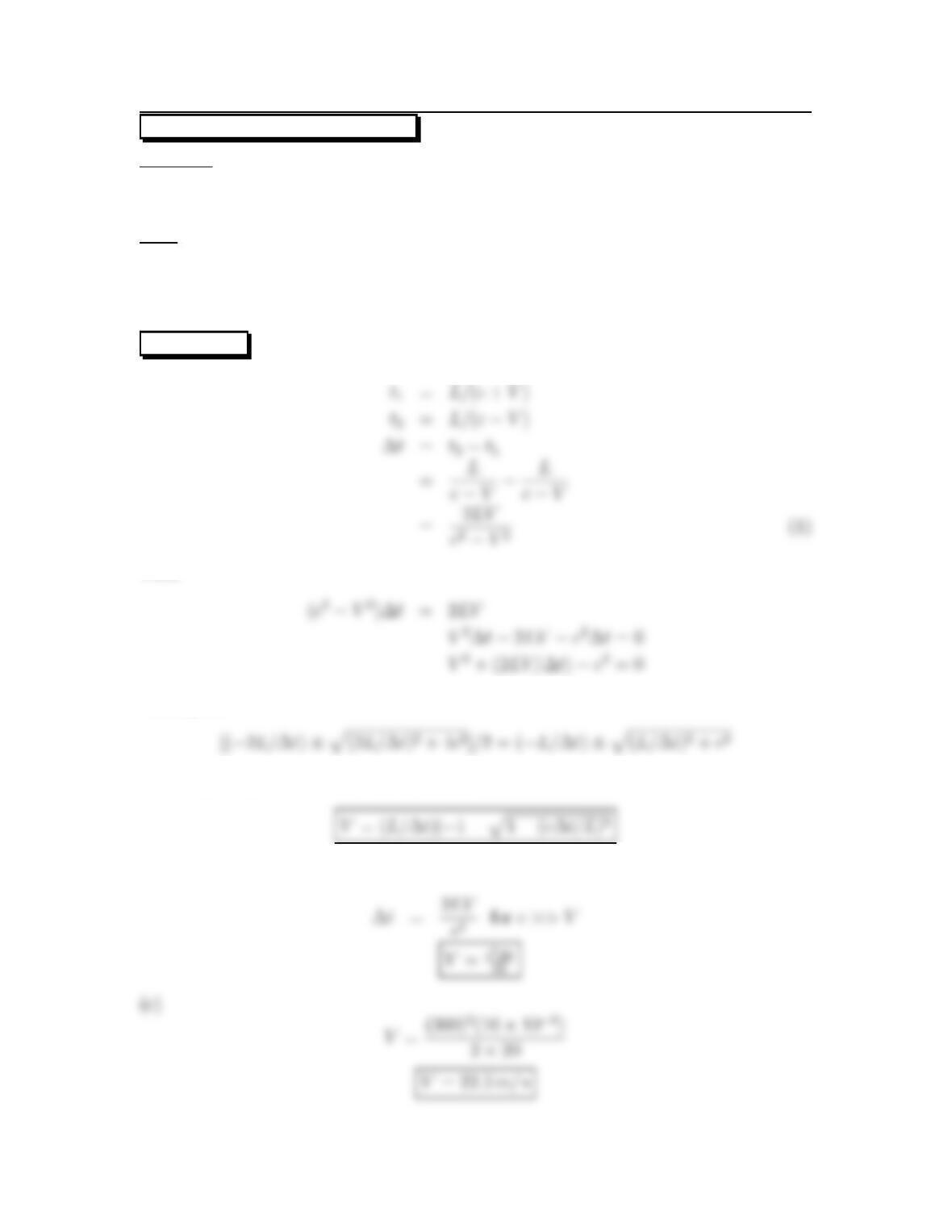
(a) Derive an expression for the flow velocity.
(b) Express the flow velocity as a function of L, c and t.
(c) Calculate the flow velocity for the given data.
SOLUTION (a)
Thus
Solving for V:
Selecting the positive value for the radical
(b) From Eq. (1)
61
Problem 13.55
Part a. On the Internet, locate quality resources relevant to weirs, skim these
resources, and write down five important findings.
No solution provided; answers will vary.
________________________________________
Part b. What variables influence flow rate through a rectangular weir?
PLAN
To identify the factors, apply logical reasoning to the rectangular weir equation:
Q=Kp2gLH3/2
SOLUTION
The variables that influence Qappear on the right side of the equation. Thus, flow
rate is influenced by
•Flow coefficient Kwhich depends on Hand P.
62
13.56: PROBLEM DEFINITION
Situation:
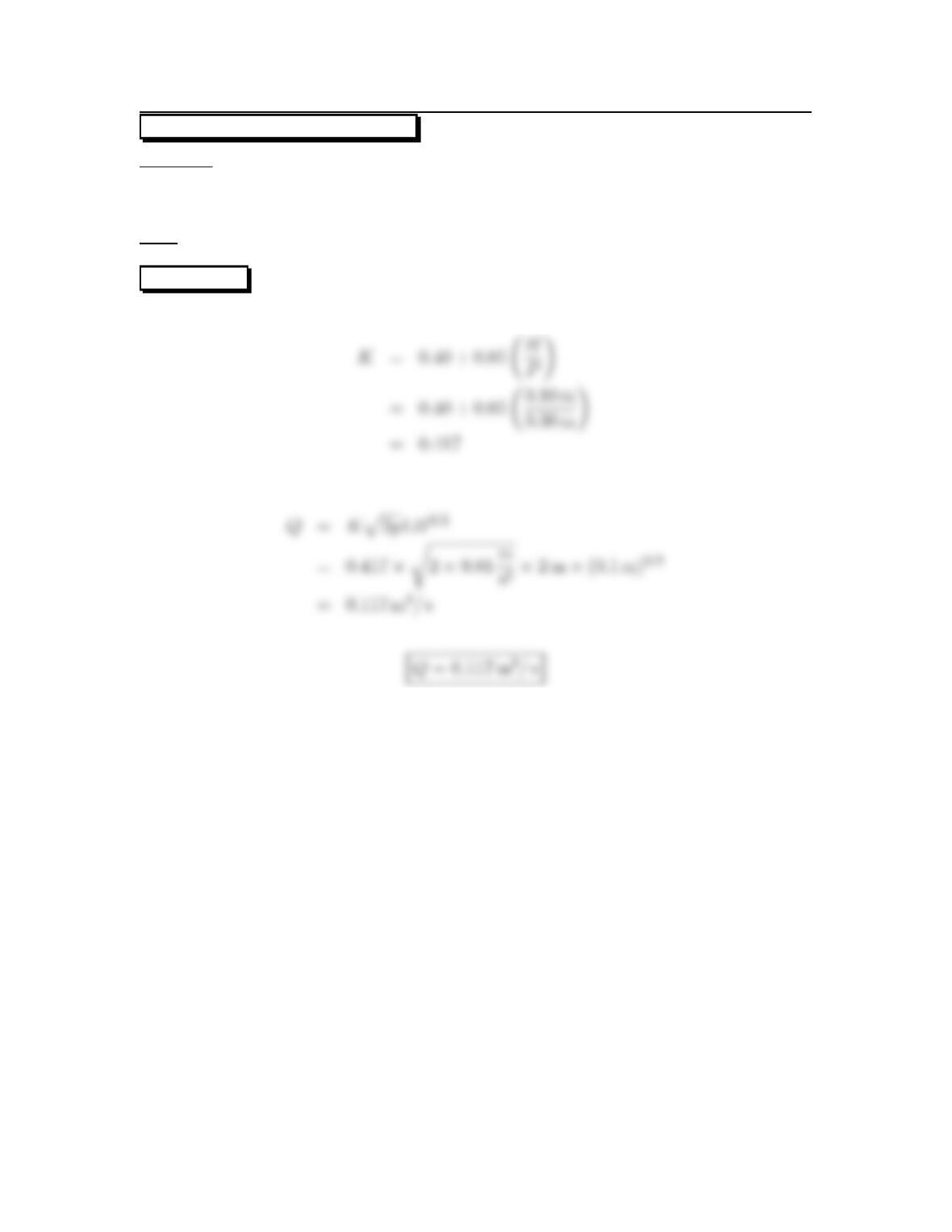
Water flowsoverarectangularweir.
L=2m, H=0.10 m, P=0.30 m.
Find:Discharge(inm3/s).
SOLUTION
1. Flow coefficient:
2. Rectangular weir equation:
63
13.57: PROBLEM DEFINITION
Situation:
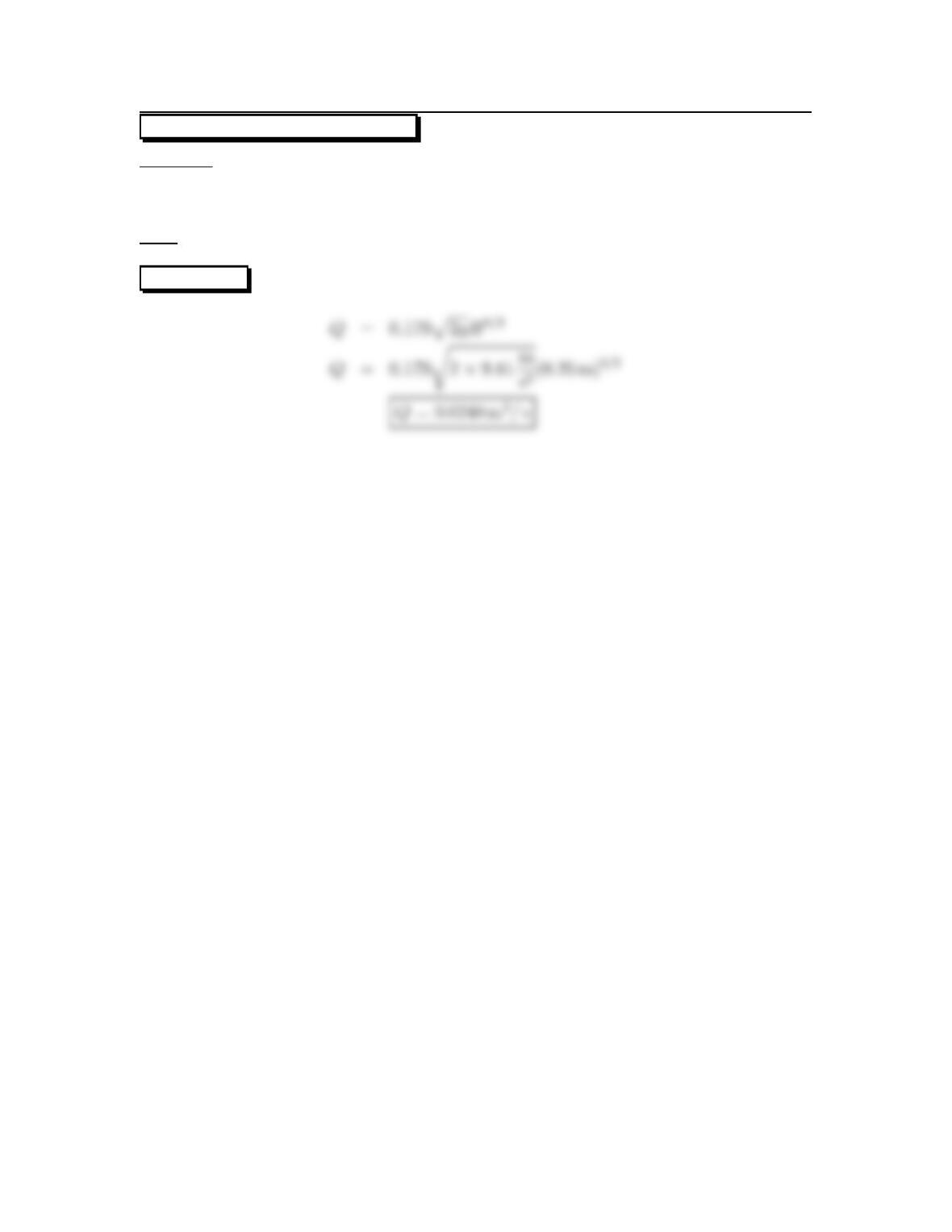
Water flows over a 60otriangular weir.
H=0.25 m.
Find:Discharge(m
3/s)
SOLUTION Triangular weir equation
64
13.58: PROBLEM DEFINITION
Situation: Two weirs (A and B) are described in the problem statement.
Find: Relationship between the flow rates: QAand QB
65
13.59: PROBLEM DEFINITION
Situation: A rectangular weir is described in the problem statement.
Find: The height ratio: H1/H2
66
13.60: PROBLEM DEFINITION
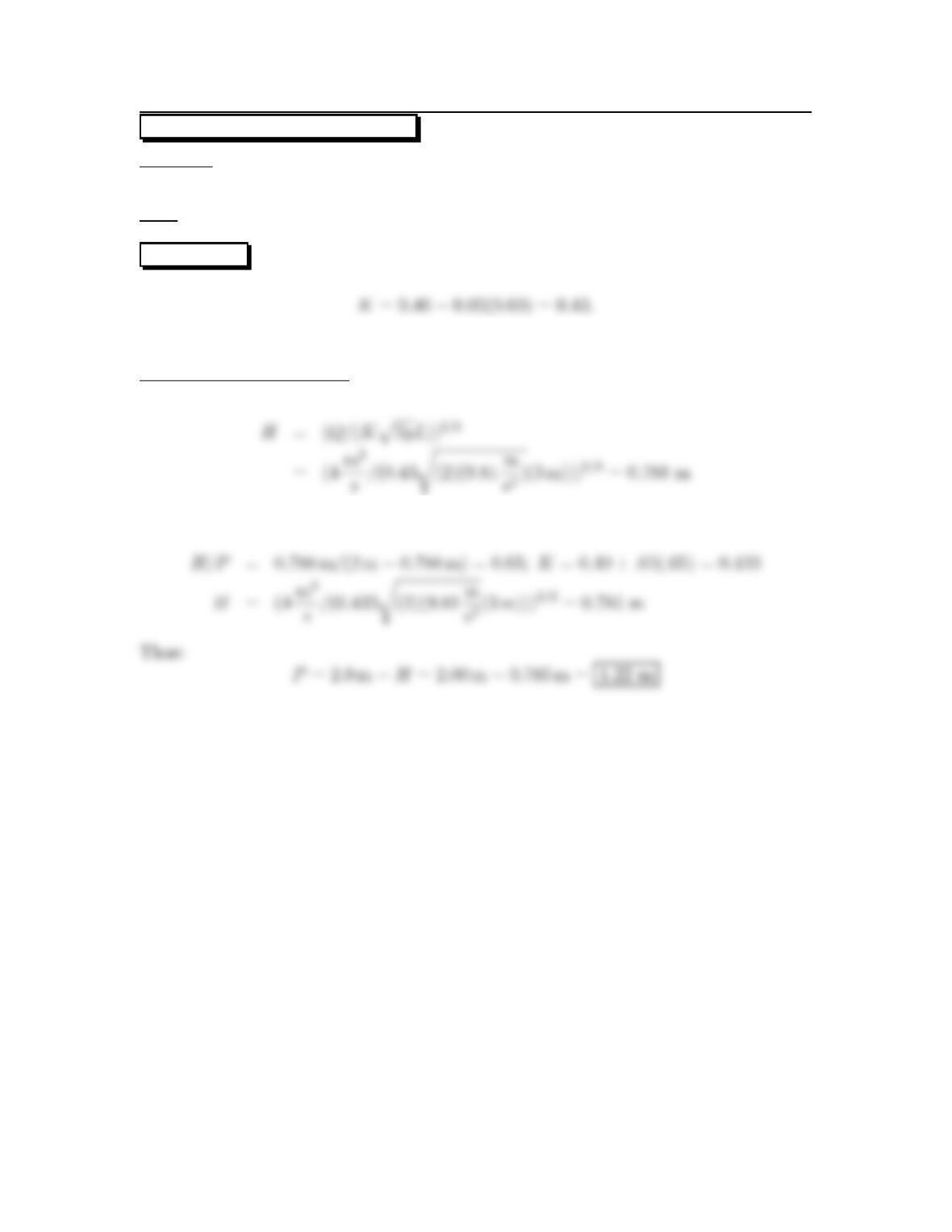
Situation: A rectangular weir is being designed for Q=4m3/s, L=3m, Water
depth upstream of weir is 2 m.
Find: Weir height: P
SOLUTION First guess H/P =0.60.Then
Rectangular weir equation (solve for H)
Iterate:
67
13.61: PROBLEM DEFINITION
Situation: The head of the rectangular weir (described in the preceding problem) is
doubled.
Find: The discharge.
SOLUTION Rectangular weir equation
68
13.62: PROBLEM DEFINITION
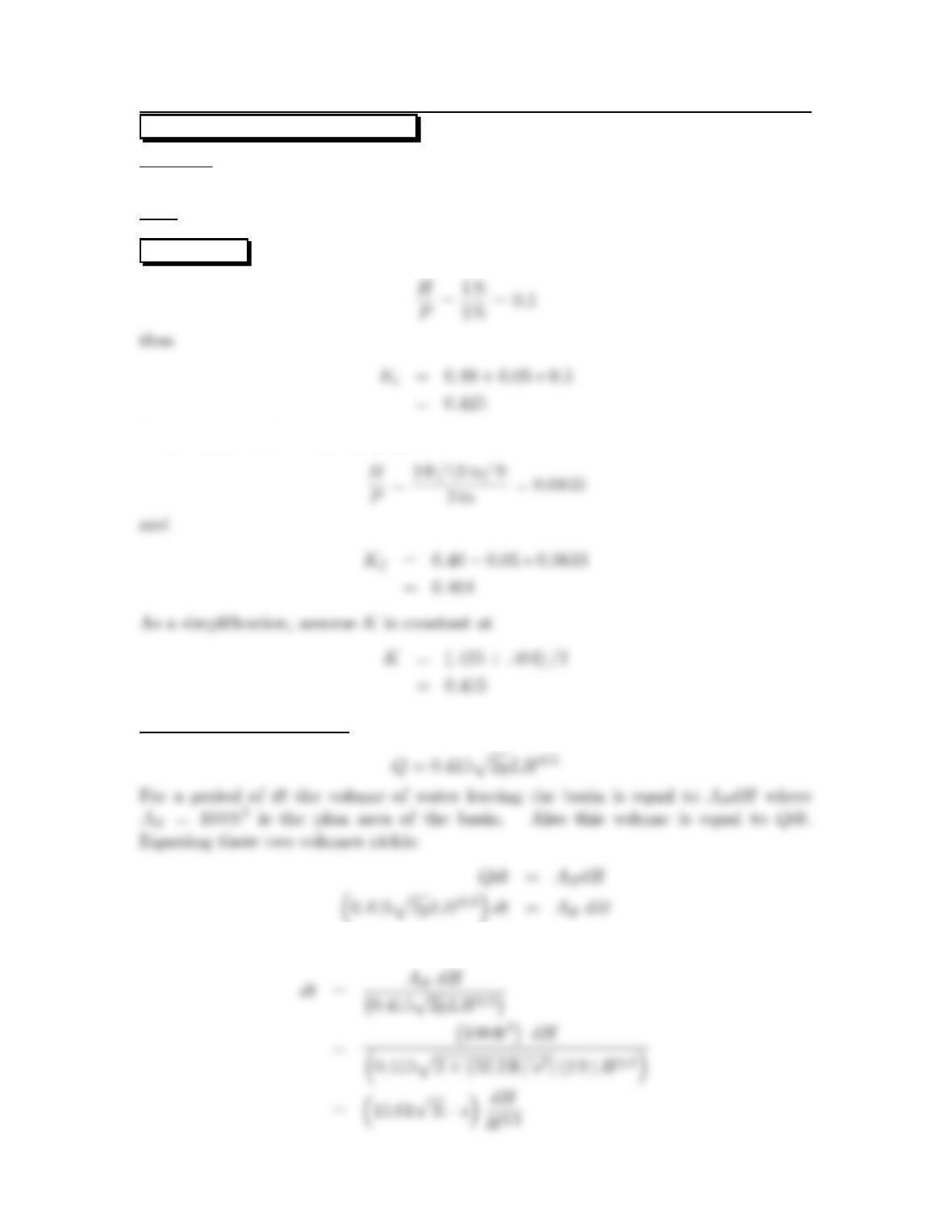
Situation: A basin is draining over a rectangular weir. L=2ft, P=2ft. Initially,
H=12in.
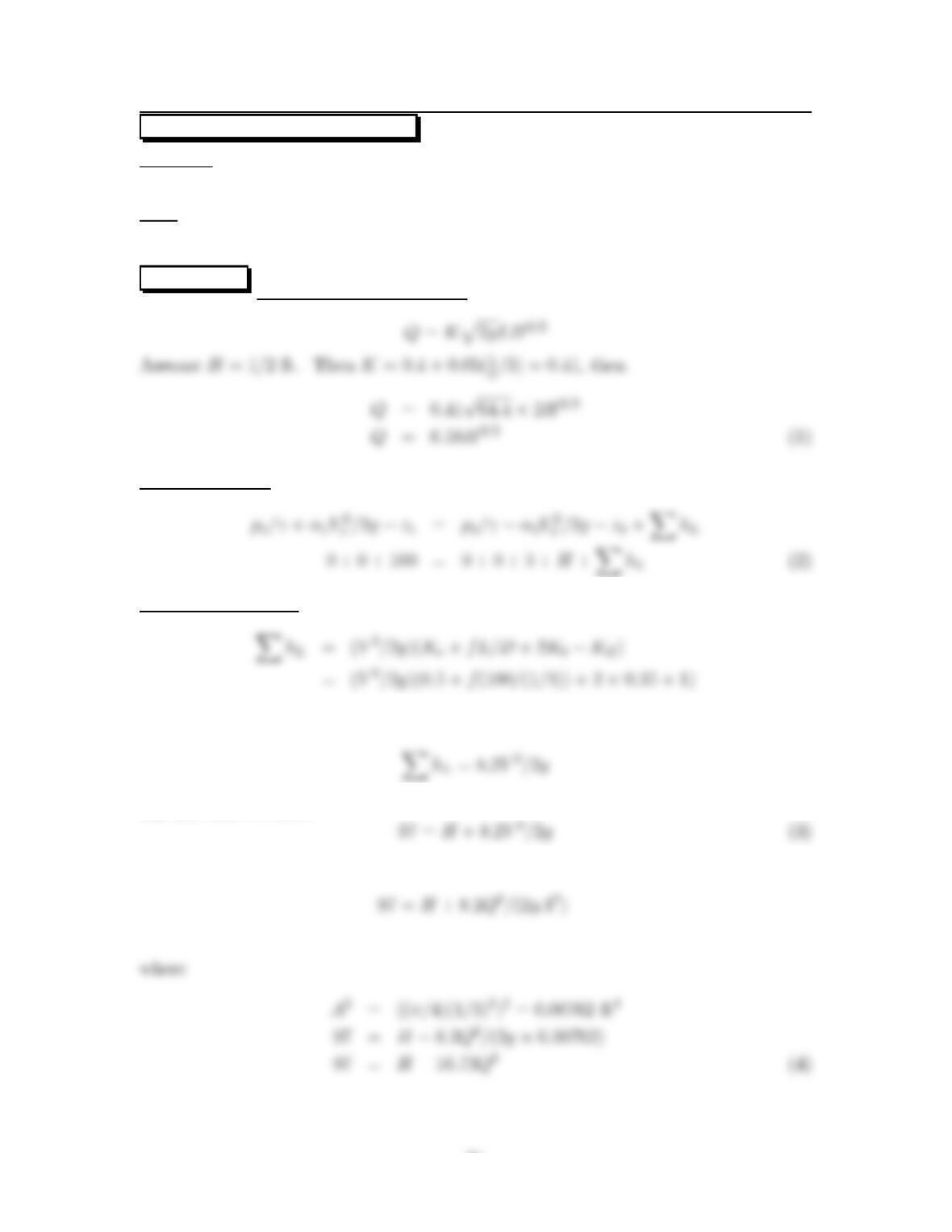
Find:TimefortheheadtodecreasefromH=1ftto 0.167 ft (2 in).
SOLUTION With a head of H=1ft
With a head of H=0.167ft (2in)
Rectangular weir equation
Separate variables
69
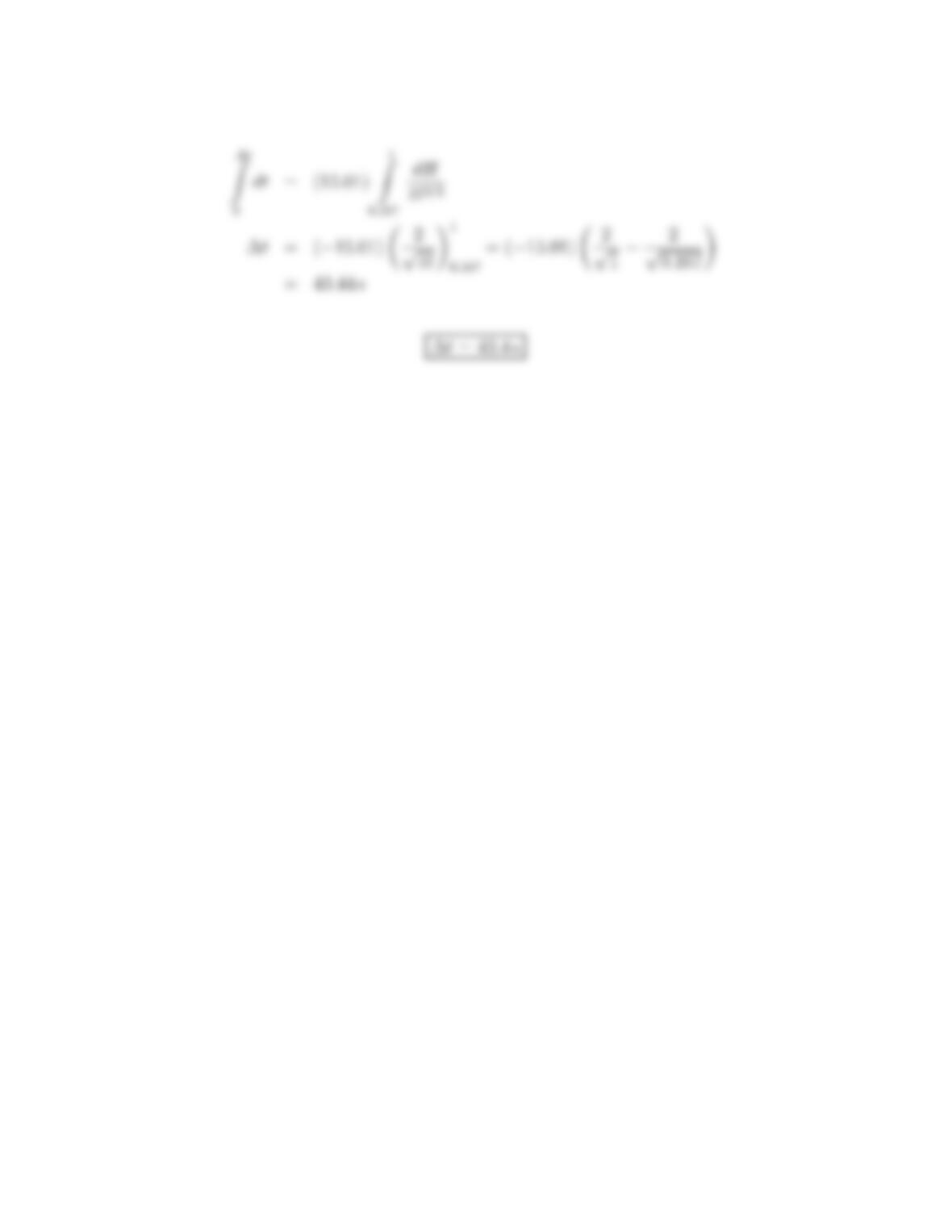
Integrate
70
13.63: PROBLEM DEFINITION
Situation: A piping system and channel are described in the textbook. The channel
empties over a rectangular weir.
Find: (a) Water surface elevation in the channel.
(b) Discharge.
SOLUTION Rectangular weir equation
Energy equation
Combined head loss
Assume f=0.02 (first try). Then
Eq. (2) then becomes
But V=Q/A so Eq. (3) is written as
71
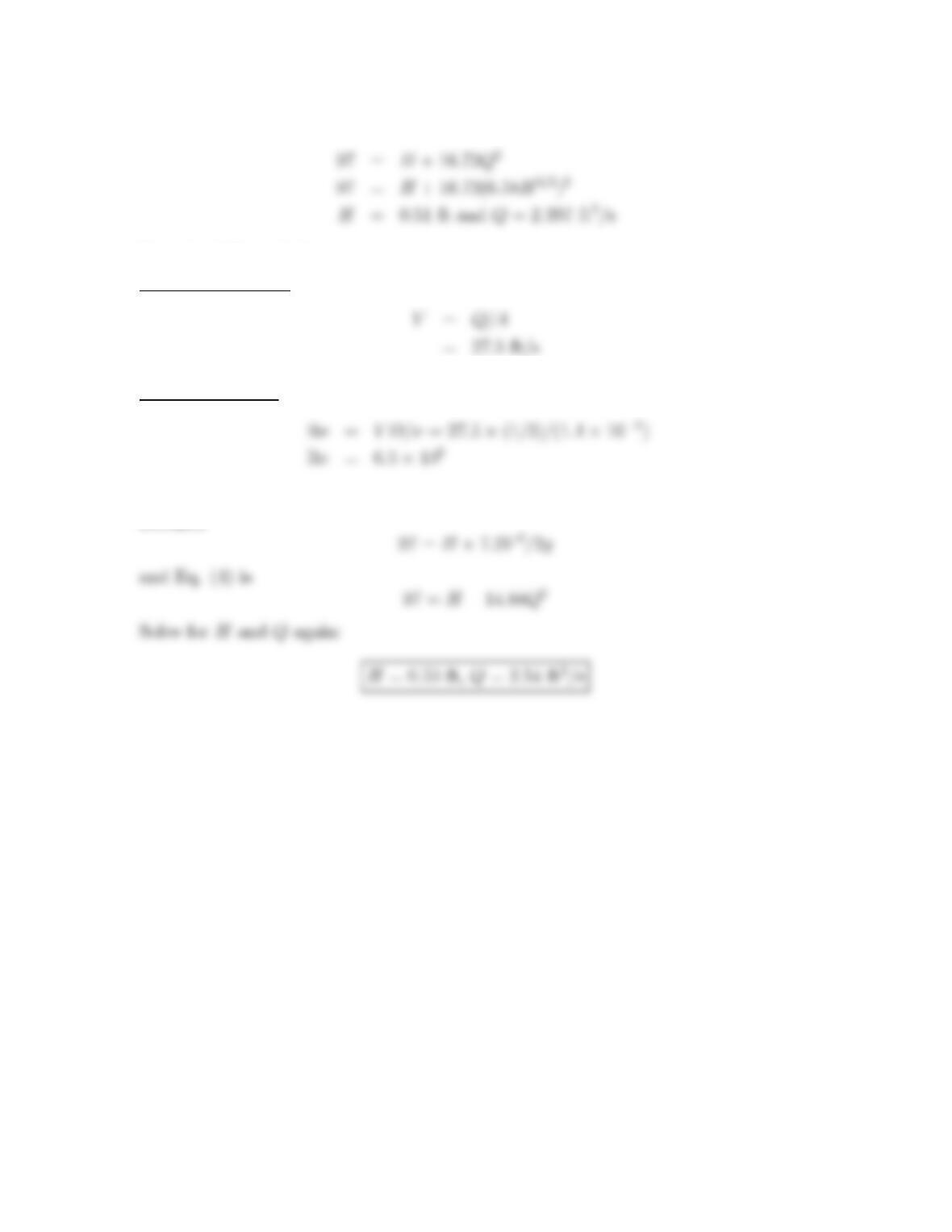
Solve for Qand HbetweenEqs. (1)and(4)
Now check Re and f
Flow rate equation
Reynolds number
From Fig. 10.14 (EFM 10e) and Table 10.5 (EFM 10e) f=0.017.Then Eq. (3)
becomes
72
13.64: PROBLEM DEFINITION
Situation:WaterflowsintoatankatarateQ=0.1m3/s. The tank has two outlets:
a rectangular weir (P=1m, L=1m) on the side, and an orifice (d=10cm) on
the bottom.
Find: Water depth in tank.
PLAN Apply the rectangular weir equation and the orifice equation by guessing the
head on the orifice and iterating.
SOLUTION Guess the head on the orifice is 1.05 m.
Orifice equation
Rectangular weir equation
Try again:
73
13.65: PROBLEM DEFINITION
Situation:
Water flowsoverarectangularweir.
L=10ft, P=3ft, and H=1.5ft.
Find:Discharge:Q
PLAN
1. Find the flow coefficient K.
2. Apply the rectangular weir equation.
SOLUTION
1. Flow coefficient
2. Rectangular weir equation
74
13.66: PROBLEM DEFINITION
Situation: Water (60 oF) flows into a reservoir through a venturi meter (K=1,
Ao=12in2,∆p=10psi). Water flows out of the reservoir over a 60otriangular
weir.
Find: Head of weir: H
SOLUTION Venturi equation
Rectangular weir equation
75
13.67: PROBLEM DEFINITION
Situation: Water enters a tank through two pipes A and B. Water exits the tank
through a rectangular weir.
Find: Is water level rising, falling or staying the same?
PLAN Calculate Qin and Qout and compare the values. Apply the rectangular weir
equation to calculate Qout and the flow rate equation to calculate Qin.
SOLUTION Rectangular weir equation
Flow rate equation