13-1
Chapter 13
The Statement of Cash Flows
Concept Questions
1. (LO 1—The purpose of the statement of cash flows)
The purpose of the statement of cash flows is to provide internal and external
2. (LO 1—Statement of cash flows vs. income statement)
The statement of cash flows reports inflows and outflows of cash for a period of
3. (LO 1—Cash equivalents and the statement of cash flows)
A cash equivalent is a balance sheet item that can be readily converted to a
4. (LO 2—Depreciation expense and the statement of cash flows)
Depreciation expense reduces net income on the income statement but does not
5. (LO 2—Indirect method)
A decrease in a current asset other than cash must be added back to net income
Solutions Manual
13-2
year implies that more cash was received from customers than the current year’s
6. (LO 1 and 2—The purpose of the statement of cash flows, types of activities, and
its preparation)
Students should not agree with this statement. To prepare the statement of cash
7. (LO 1 and 3—The need for the statement of cash flows and its preparation)
Exercises
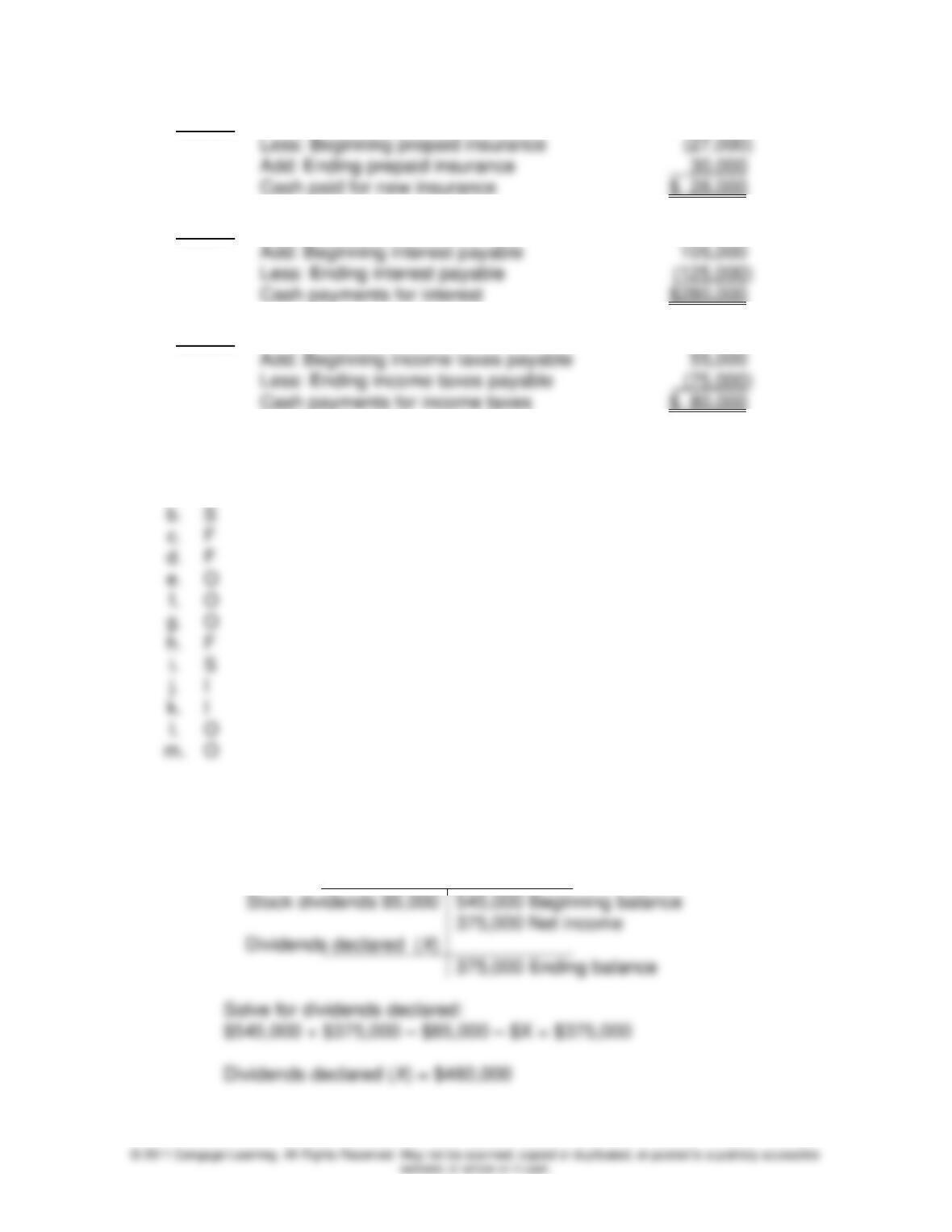
1. (LO 1 and 2—Accrual to cash conversions)
Case 1:
Sales revenue (cash and credit sales)
$435,000
Add: Beginning accounts receivable
250,000
Less: Ending accounts receivable
Less: Accounts written off
Total cash collections for the year
$350,000
Case 2:
Cost of goods sold
$275,000
Add: Beginning accounts payable
125,000
Less: Ending accounts payable
Add: Ending inventory
155,000
Less: Beginning inventory
Chapter 13: The Statement of Cash Flows
13-3
Case 3:
Insurance expense
$ 25,000
Less: Beginning prepaid insurance
Add: Ending prepaid insurance
Cash paid for new insurance
Case 4:
Interest expense
$300,000
Add: Beginning interest payable
Less: Ending interest payable
Cash payments for interest
$280,000
Case 5:
Income tax expense
$100,000
Add: Beginning income taxes payable
2. (LO 1—Operating, investing, and financing activities)
a.
F
b.
S
F
d.
F
e.
O
O
g.
O
F
S
I
I
O
O
3. (LO 1 and 3—Impact of cash and stock dividends)
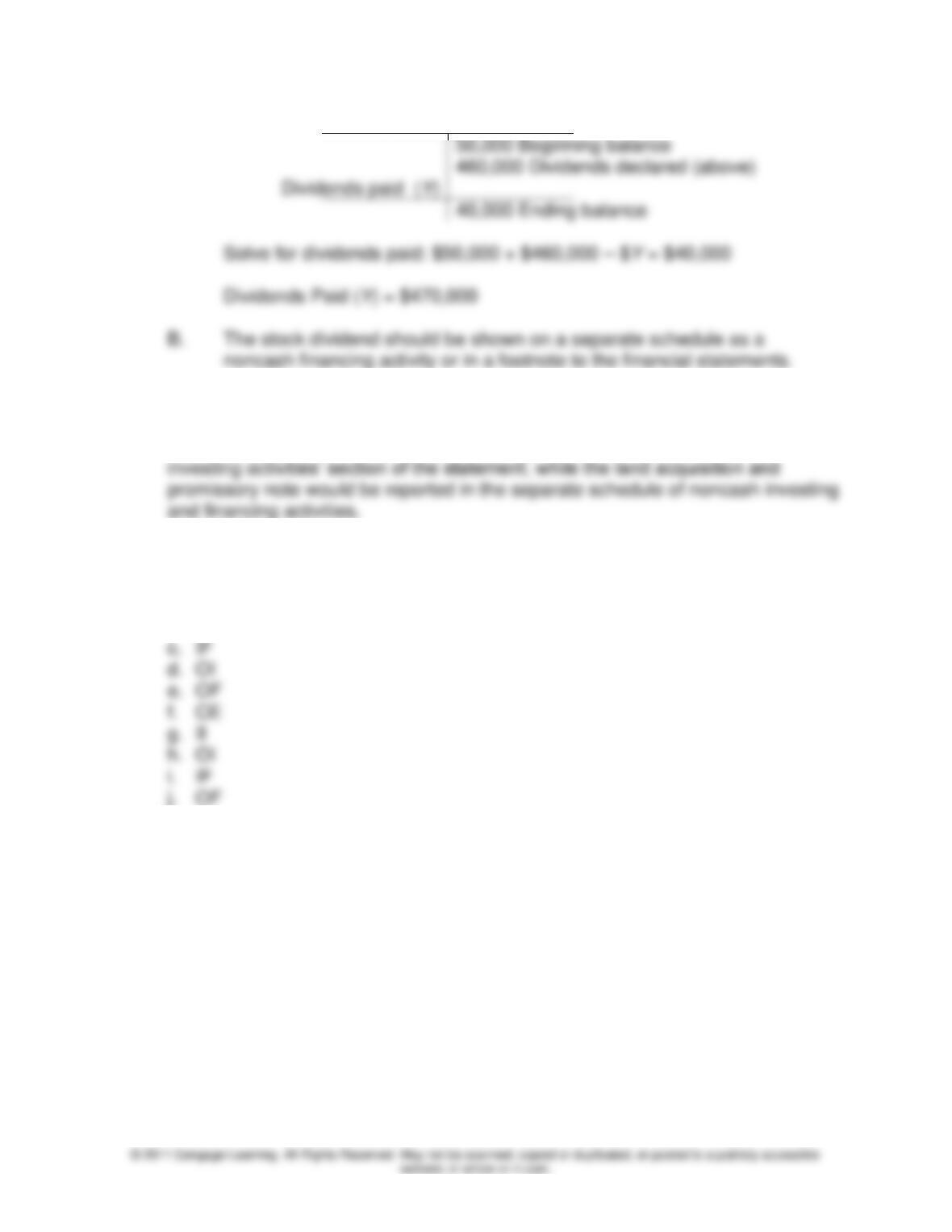
A. Dividends paid were $470,000 shown using the T-account approach as
follows:
Retained Earnings
375,000 Net income
375,000 Ending balance
Solutions Manual
13-4
Dividends Payable
4. (LO 1 and 3—Investing activities and noncash activities)
The down payment of $30,000 would be reported as a cash outflow in the
5. (LO 1 and 3—Investing vs. financing activities and cash equivalents)
a. OI
b. CE
Chapter 13: The Statement of Cash Flows
13-5
Problems
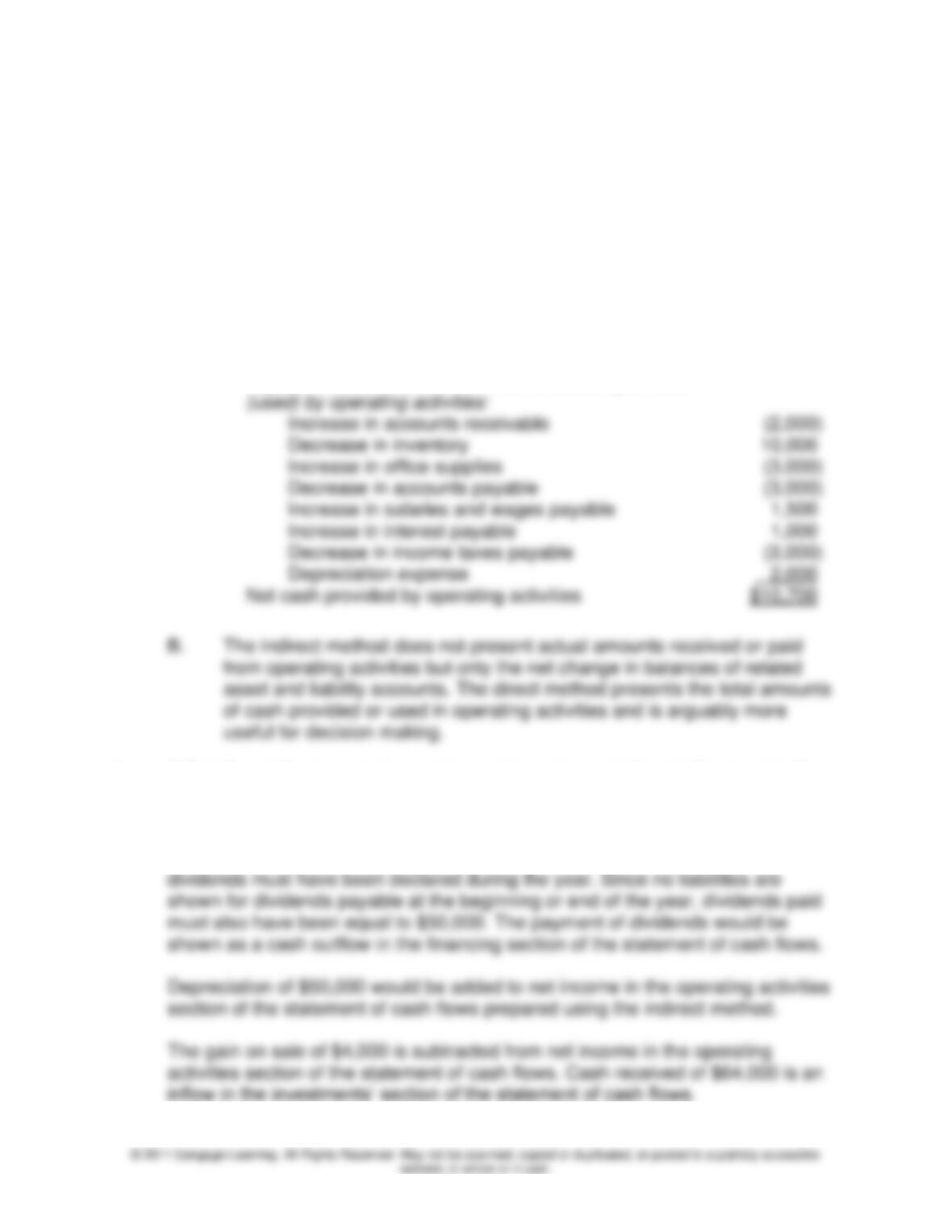
6. (LO 1, 2, and 3—Adjustments to income using the indirect method: Operating
activities)
A. Wynn Bicycle Company
Net Cash Flows from Operating Activities
For the Year Ending December 31, 2010
(Indirect Method)
Net income
$ 7,200
Increase in accounts receivable
Decrease in inventory
Increase in office supplies
Decrease in accounts payable
Increase in salaries and wages payable
Increase in interest payable
Decrease in income taxes payable
Depreciation expense
Adjustments to reconcile net income to cash provided
7. (LO 1, 2, and 3—Impact of operating and investing activities: Indirect method)
The net income of $200,000 is the starting point in the operating activities’
section of the statement of cash flows prepared using the indirect method. In
addition, since retained earnings only increased by $150,000, $50,000 of
Solutions Manual
13-6
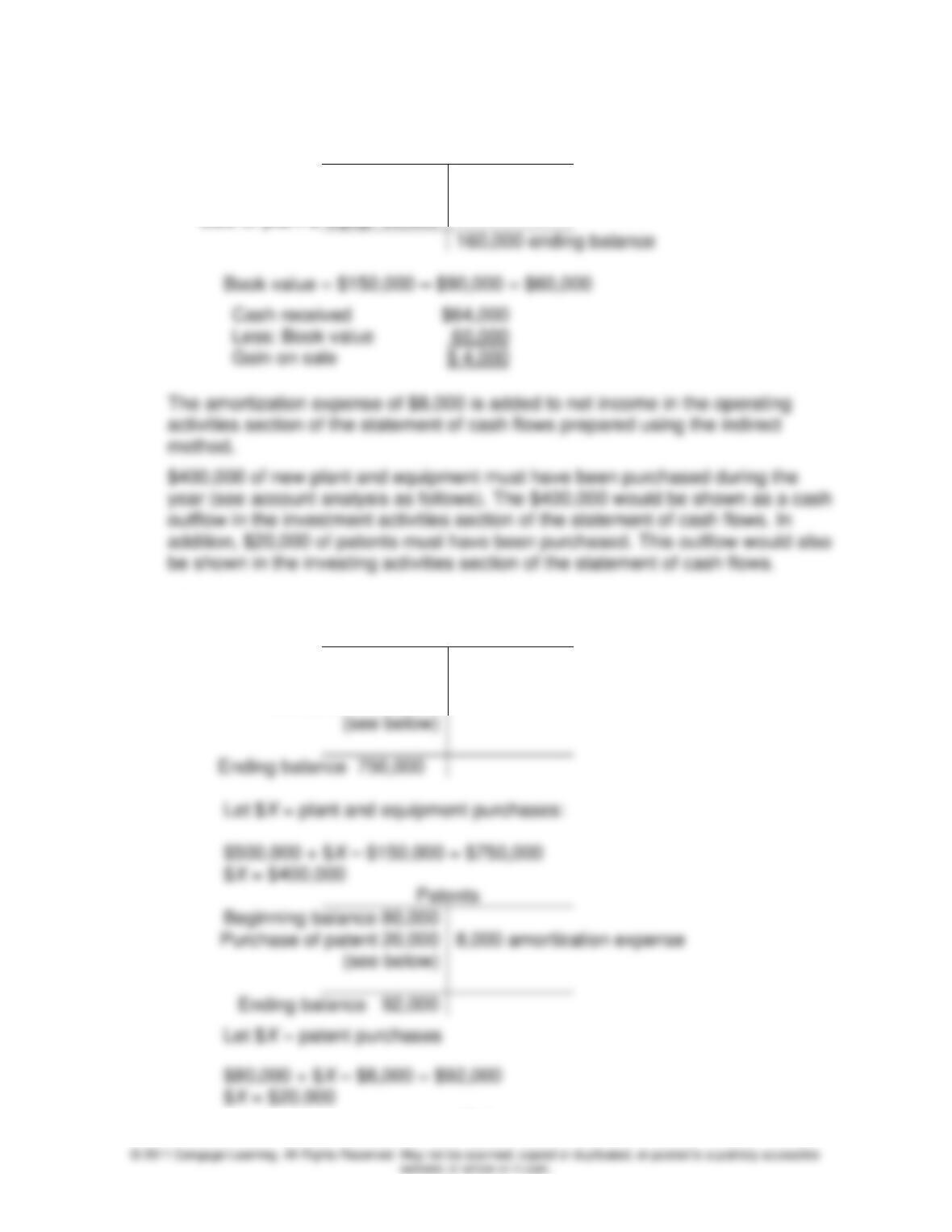
Account analysis
Accumulated Depreciation
200,000 beginning balance
50,000 depreciation expense
Sale of plant & equip. 90,000
160,000 ending balance
Cash received
Less: Book value
Account analysis
Plant and Equipment
Beginning balance 500,000
150,000 sale of plant and equipment
Ending balance 750,000
8,000 amortization expense
Purchases 400,000