CHAPTER 13
Statement of Cash Flows
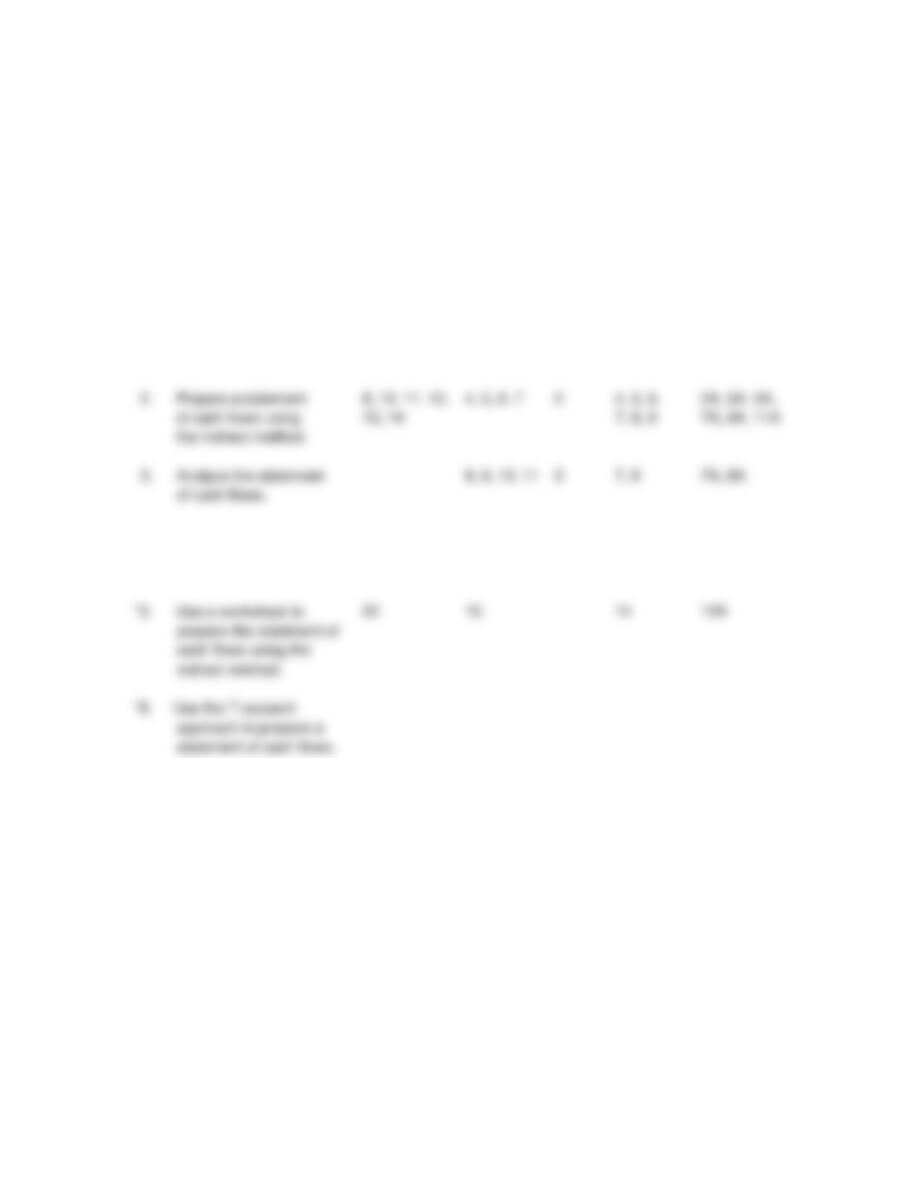
ASSIGNMENT CLASSIFICATION TABLE
Learning Objectives
Questions
Brief
Exercises
Do It!
Exercises
A
Problems
*1. Discuss the usefulness
and format of the
statement of cash flows.
1, 2, 3, 4, 5,
6, 7, 9, 15,
16, 17
1, 2, 3
1
1, 2, 3
1A
*4. Prepare a statement
of cash flows using
the direct method.
18, 19, 20,
21
12, 13, 14
10, 11,
12, 13,
4A, 6A, 8A,
10A
cash flows using the
indirect method.
*6. Use the T-account
approach to prepare a
statement of cash flows.
*Note: All asterisked Questions, Exercises, and Problems relate to material contained in the appendices*to the
chapter.
*2. Prepare a statement
of cash flows using
the indirect method.
13, 14
4, 5, 6, 7
2
4, 5, 6,
7, 8, 9
2A, 3A, 5A,
7A, 9A, 11A
*3. Analyze the statement
of cash flows.
8, 9, 10, 11
3
7A, 8A
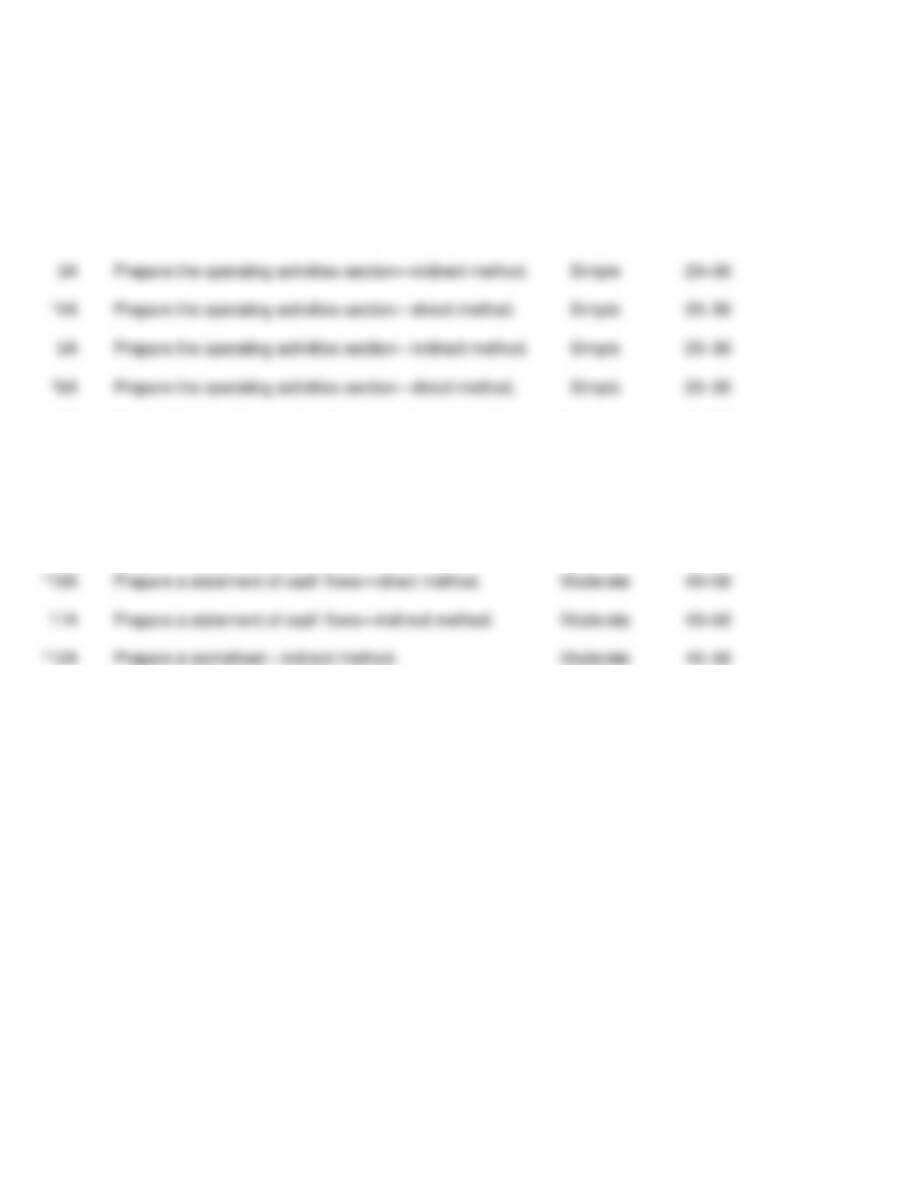
ASSIGNMENT CHARACTERISTICS TABLE
Problem
Number
Description
Difficulty
Level
Time
Allotted (min.)
1A
Distinguish among operating, investing, and financing
activities.
Simple
10–15
2A
Determine cash flow effects of changes in equity accounts.
Simple
10–15
7A
Prepare a statement of cash flows—indirect method, and
compute free cash flow.
Moderate
40–50
*8A
Prepare a statement of cash flows—direct method, and
compute free cash flow.
Moderate
40–50
9A
Prepare a statement of cash flows—indirect method.
Moderate
40–50
*10A
Prepare a statement of cash flows—direct method.
40–50
Prepare a worksheet—indirect method.
Moderate
40–50
3A
Prepare the operating activities section—indirect method.
Simple
20–30
Prepare the operating activities section—direct method.
20–30
5A
Prepare the operating activities section—indirect method.
Simple
20–30
Prepare the operating activities section—direct method.
Simple
20–30
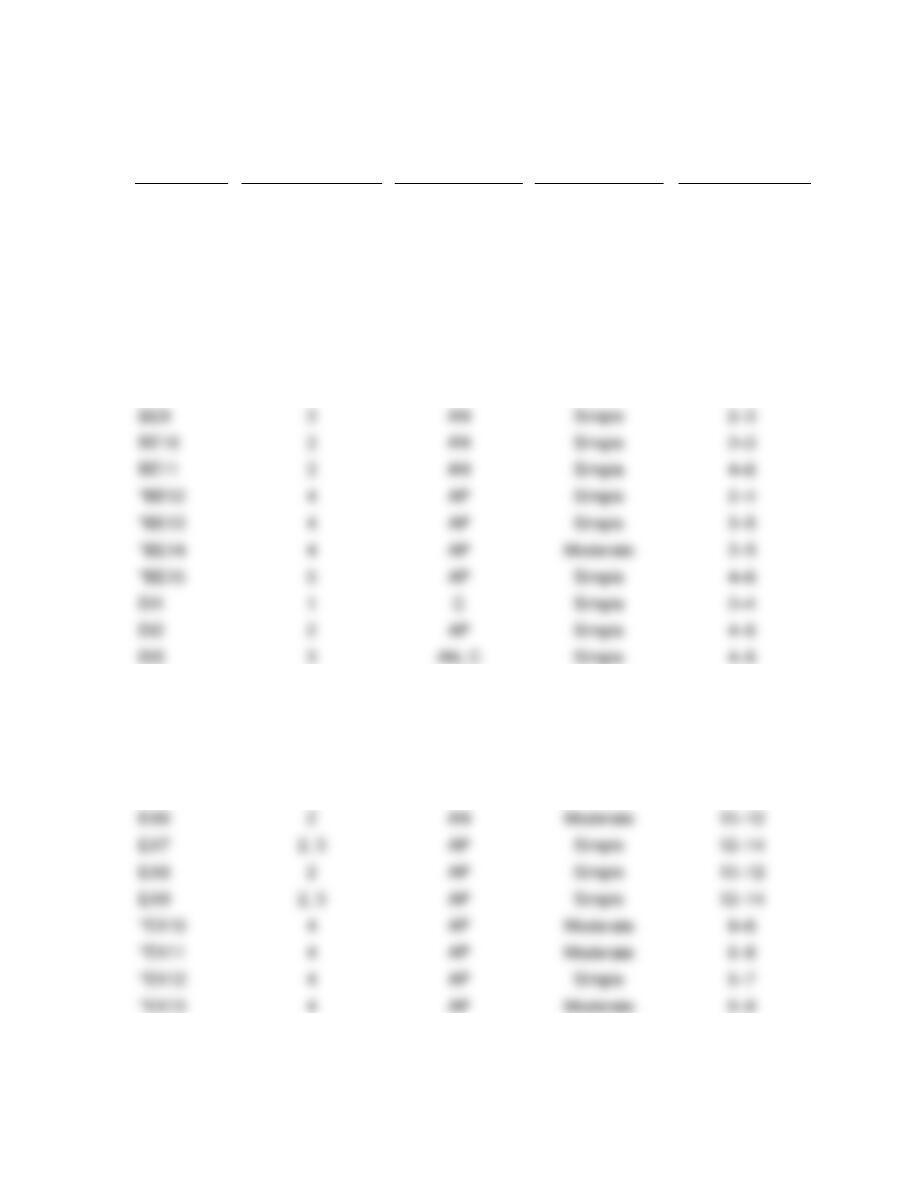
WEYGANDT FINANCIAL MANAGERIAL ACCOUNTING 2E
CHAPTER 13
STATEMENT OF CASH FLOWS
Number
LO
BT
Difficulty
Time (min.)
BE1
1
AP
Simple
3–5
BE2
1
C
Simple
2–4
BE3
1
AP
Simple
3–5
BE4
2
AP
Simple
4–6
BE5
2
AP
Simple
3–5
BE6
2
AP
Simple
4–6
BE7
2
AN
Moderate
3–5
BE8
3
AN
Simple
2–4
EX1
1
C
Simple
5–7
EX2
1
C
Simple
6–8
EX3
1
AP
Simple
8–10
EX4
2
AP
Simple
5–7
EX5
2
AP
Simple
6–8
EX6
2
AN
Moderate
EX7
AP
Simple
EX8
2
AP
Simple
EX9
AP
Simple
4
AP
Moderate
6–8
4
AP
Moderate
6–8
4
AP
Simple
5–7
4
AP
Moderate
6–8
BE9
3
AN
Simple
2–3
3
AN
Simple
2–3
3
AN
Simple
4–6
4
AP
Simple
2–4
4
AP
Simple
3–5
4
AP
Moderate
3–5
5
AP
Simple
4–6
1
C
Simple
2–4
2
AP
Simple
4–6
3
Simple
4–6
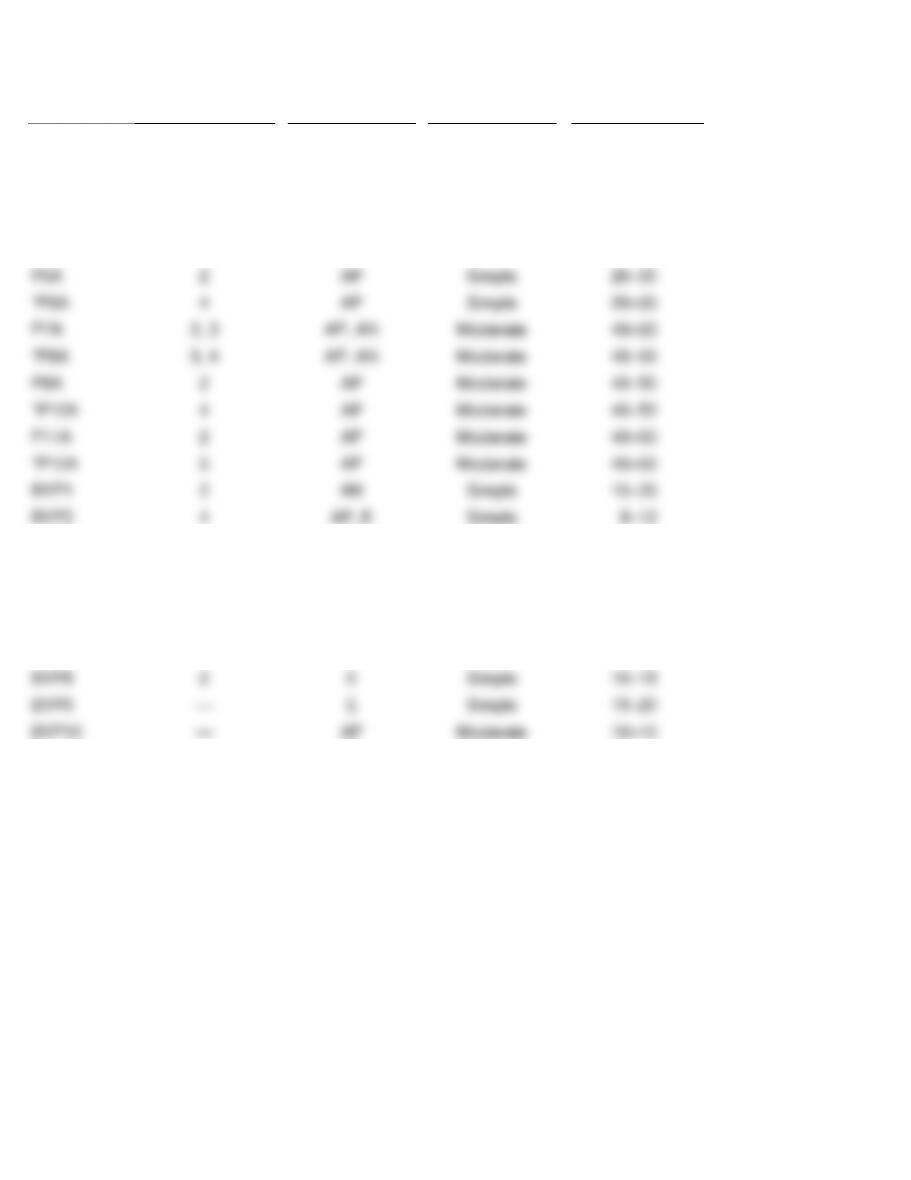
STATEMENT OF CASH FLOWS (Continued)
Number
LO
BT
Difficulty
Time (min.)
*EX14
5
AP
Moderate
16–20
P1A
1
C
Simple
10–15
P2A
2
AN
Simple
10–15
P3A
2
AP
Simple
20–30
*P4A
4
AP
Simple
20–30
BYP3
3
AP, E
Simple
8–12
BYP4
3
AP, E
Moderate
25–30
BYP5
—
C
Simple
15–20
BYP6
—
C
Simple
10–15
BYP7
2
AP
Simple
10–15
BYP8
2
E
Simple
10–15
BYP9
—
E
Simple
15–20
BYP10
—
AP
Moderate
10–15
P5A
2
AP
Simple
20–30
*P6A
4
AP
Simple
20–30
P7A
Moderate
40–50
*P8A
Moderate
40–50
P9A
2
AP
Moderate
40–50
*P10A
4
AP
Moderate
40–50
P11A
2
AP
Moderate
40–50
*P12A
5
AP
40–50
BYP1
2
AN
Simple
15–20
BYP2
4
AP, E
Simple
8–12
BLOOM’ S TAXONOMY TABLE
Correlation Chart between Bloom’s Taxonomy, Learning Objectives and End–of-Chapter Exercises and Problems
Learning Objective
Knowledge
Comprehension
Application
Analysis
Synthesis
Evaluation
3. Analyze the statement of
cash flows.
Dl13-3
E13-7
E13-9
P13-7A
P13-8A
BE13-8
BE13-9
BE13-10
BE13-11
DI13-3
P13-7A
P13-8A
*4. Prepare a statement of cash
flows using the direct
method.
Q13-18
Q13-21
Q13-19
Q13-20
BE13-12
BE13-13
BE13-14
E13-10
E13-11
E13-12
E13-13
P13-4A
P13-6A
P13-8A
P13-10A
P13-8A
Q13-22
BE13-15
Q13-5
Q13-6
E13-2
BE13-6
DI13-2
E13-7
P13-7A
P13-9A
ANSWERS TO QUESTIONS
1. (a) The statement of cash flows reports the cash receipts, cash payments, and net change in cash
resulting from the operating, investing, and financing activities of a company during a
period.
2. The statement of cash flows answers the following questions about cash: (a) Where did the cash
come from during the period? (b) What was the cash used for during the period? and (c) What was
the change in the cash balance during the period?
4. (a) Major inflows of cash in a statement of cash flows include cash from operations; issuance of
debt; collection of loans; issuance of capital stock; sale of investments; and the sale of
property, plant, and equipment.
5. The statement of cash flows presents investing and financing activities so that even noncash
transactions of an investing and financing nature are disclosed in the financial statements. If they
affect financial conditions significantly, the FASB requires that they be disclosed in either a separate
schedule at the bottom of the statement of cash flows or in a separate note or supplementary
schedule to the financial statements.
8. The advantage of the direct method is that it presents the major categories of cash receipts and
cash payments in a format that is similar to the income statement and familiar to statement users. Its
principal disadvantage is that the necessary data can be expensive and time-consuming to accumulate.
Questions Chapter 13 (Continued)
9. When total cash inflows exceed total cash outflows, the excess is identified as a “net increase in cash”
near the bottom of the statement of cash flows.
12. A number of factors could have caused an increase in cash despite the net loss. These are (1) high
cash revenues relative to low cash expenses; (2) sales of property, plant, and equipment; (3) sales
of investments; (4) issuance of debt or capital stock, and (5) differences between cash and accrual
accounting, e.g. depreciation.
14. Under the indirect method, depreciation is added back to net income to reconcile net income to net
cash provided by operating activities because depreciation is an expense but not a cash payment.
15. The statement of cash flows is useful because it provides information to the investors, creditors,
and other users about: (1) the company’s ability to generate future cash flows, (2) the company’s ability
to pay dividends and meet obligations, (3) the reasons for the difference between net income and
net cash provided by operating activities, and (4) the cash investing and financing transactions
during the period.
Questions Chapter 13 (Continued)
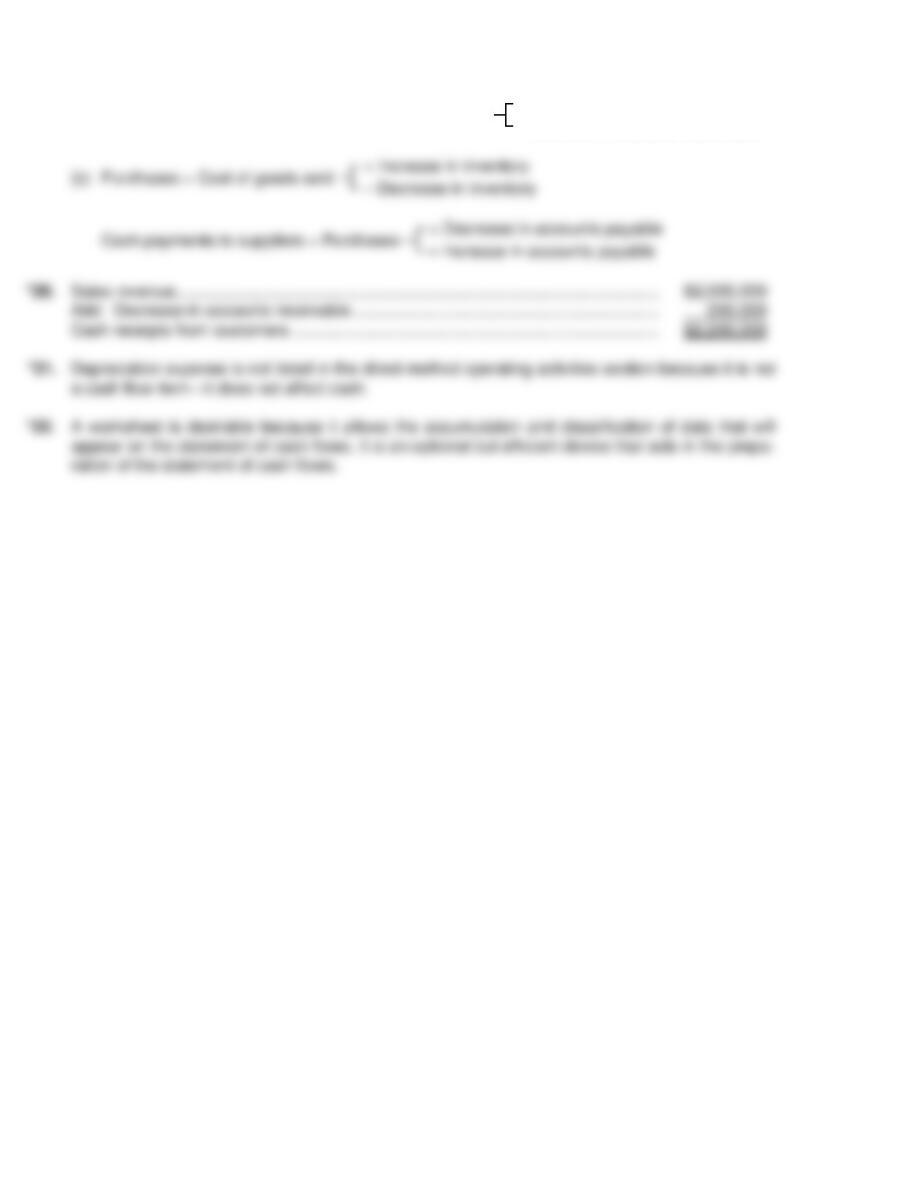
+ Decrease in accounts receivable
*19.
(a)
Cash receipts from customers = Revenues from sales
– Increase in accounts receivable
+ Increase in inventory
– Decrease in inventory
+ Decrease in accounts payable
– Increase in accounts payable
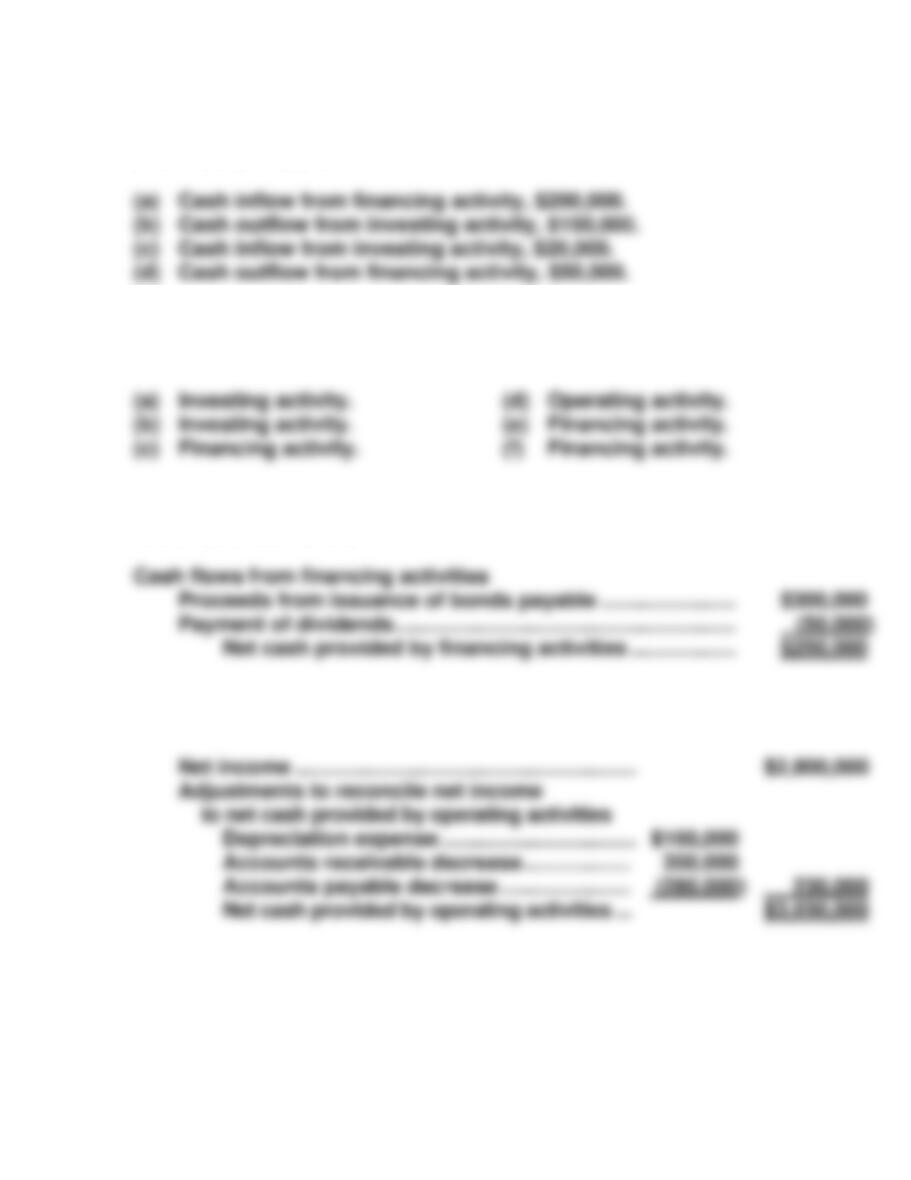
SOLUTIONS TO BRIEF EXERCISES
BRIEF EXERCISE 13-1
BRIEF EXERCISE 13-2
BRIEF EXERCISE 13-3
BRIEF EXERCISE 13-4
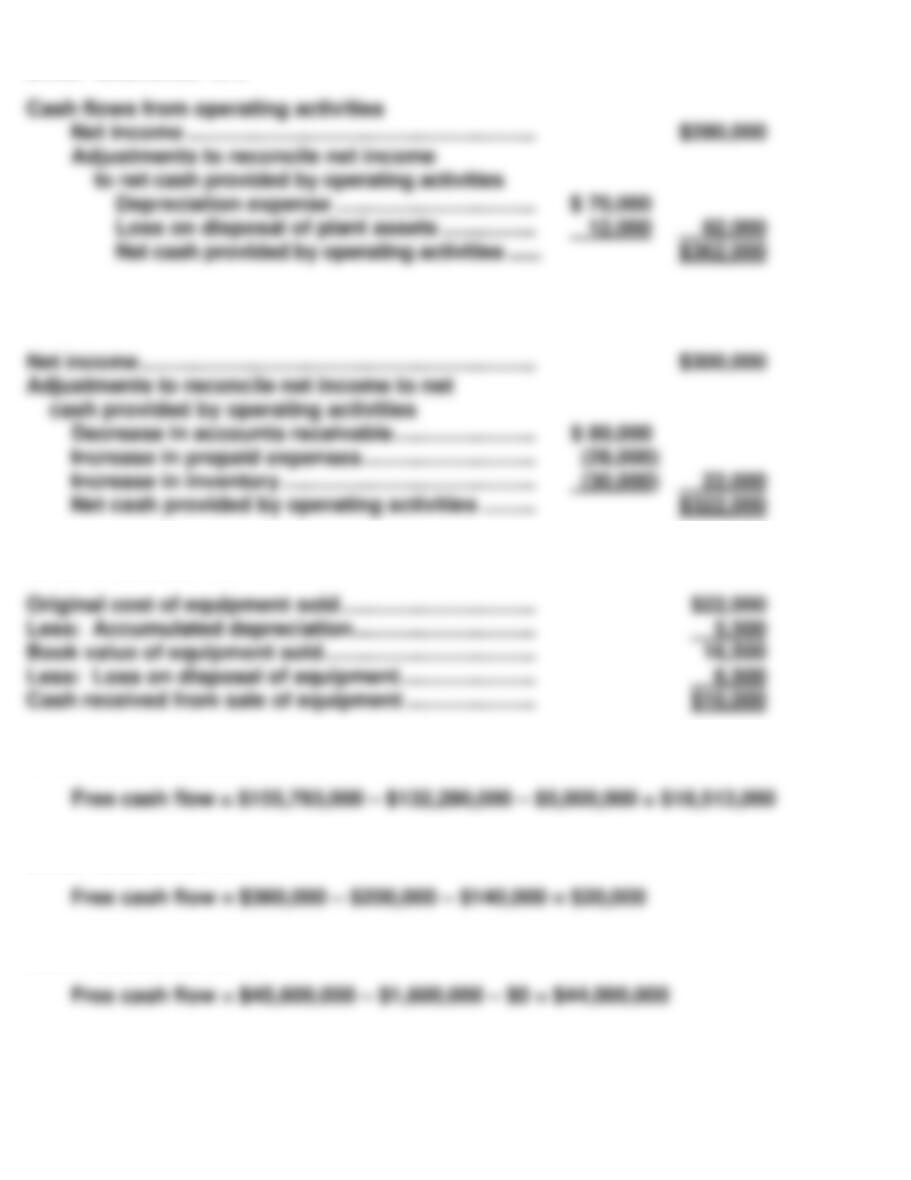
BRIEF EXERCISE 13-5
BRIEF EXERCISE 13-6
BRIEF EXERCISE 13-7
BRIEF EXERCISE 13-8
BRIEF EXERCISE 13-9
BRIEF EXERCISE 13–10
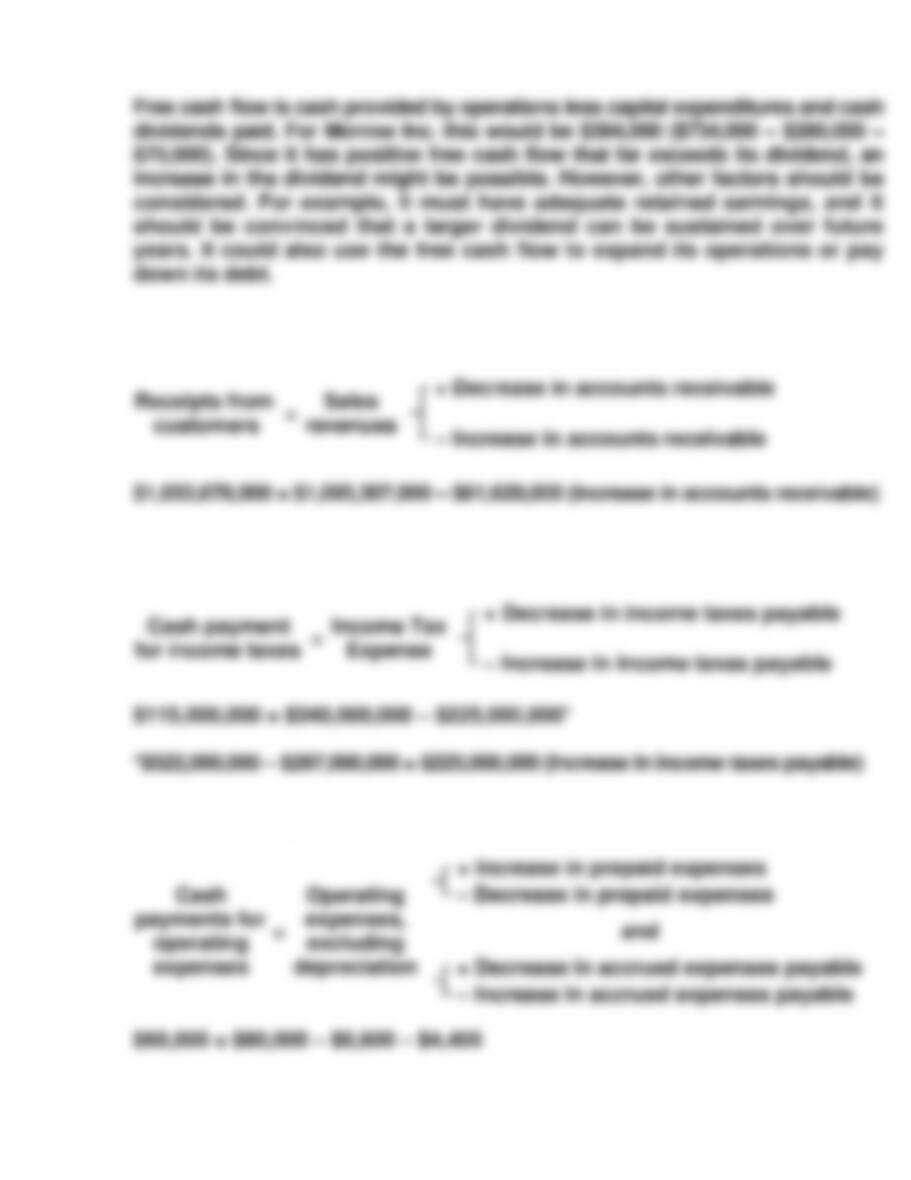
BRIEF EXERCISE 13–11
*BRIEF EXERCISE 13–12
*BRIEF EXERCISE 13–13
*BRIEF EXERCISE 13–14
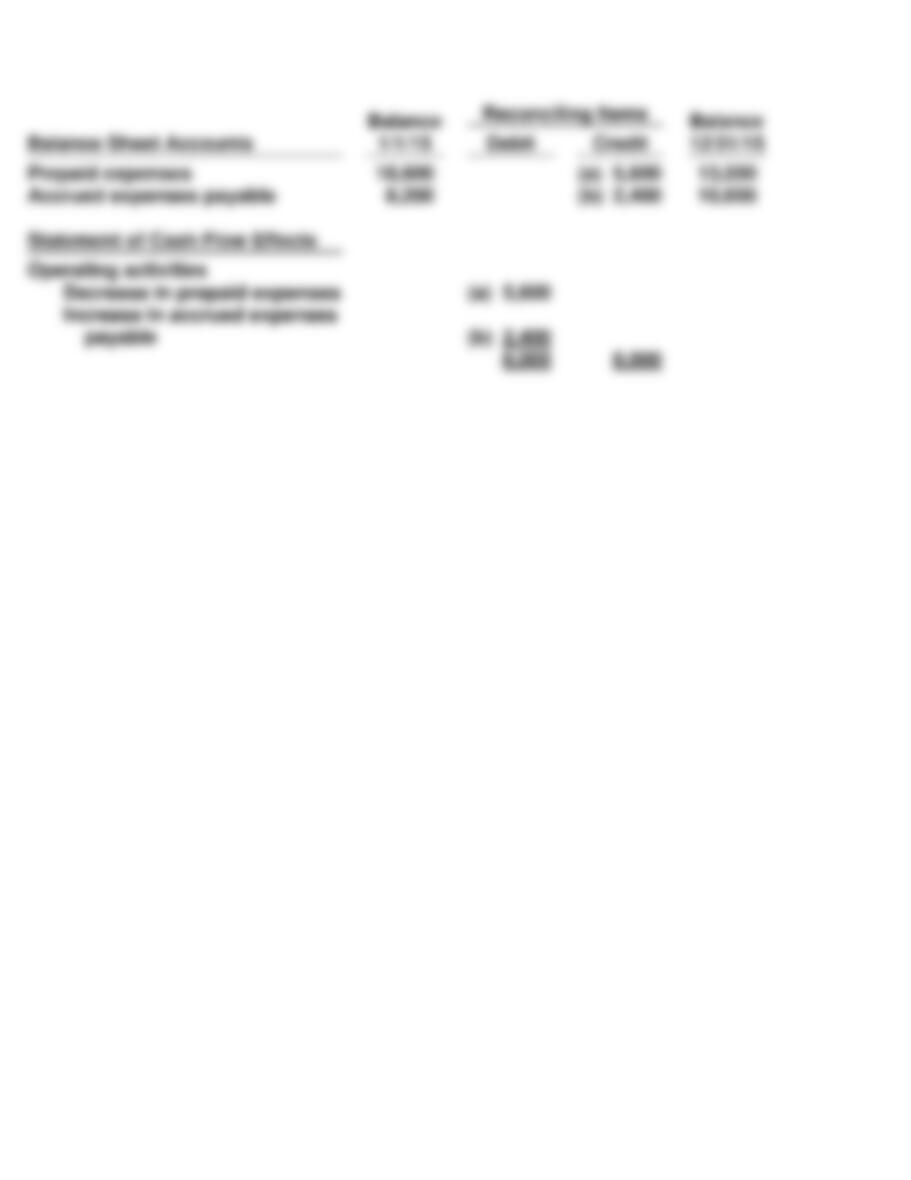
*BRIEF EXERCISE 13–15
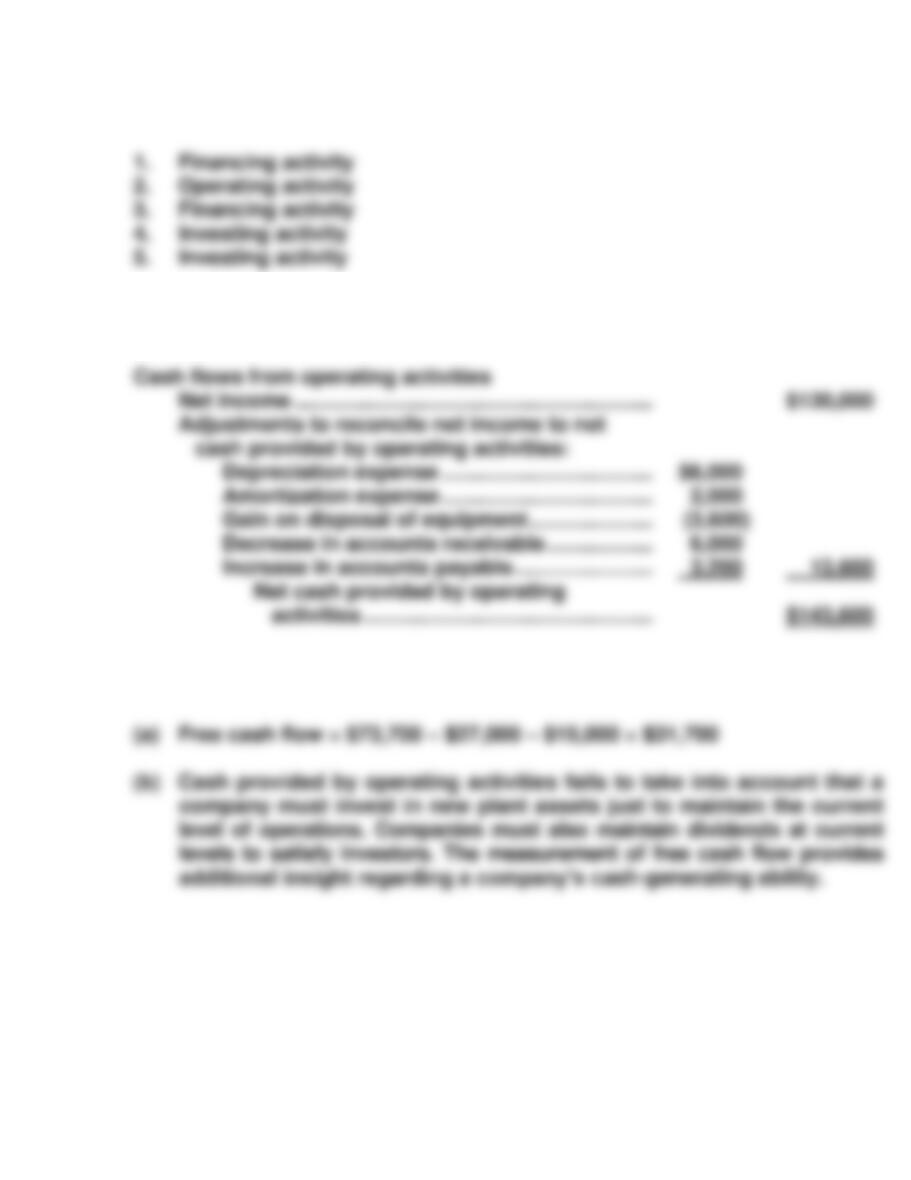
SOLUTIONS TO DO IT! REVIEW EXERCISES
DO IT! 13-1
DO IT! 13-2
DO IT! 13-3
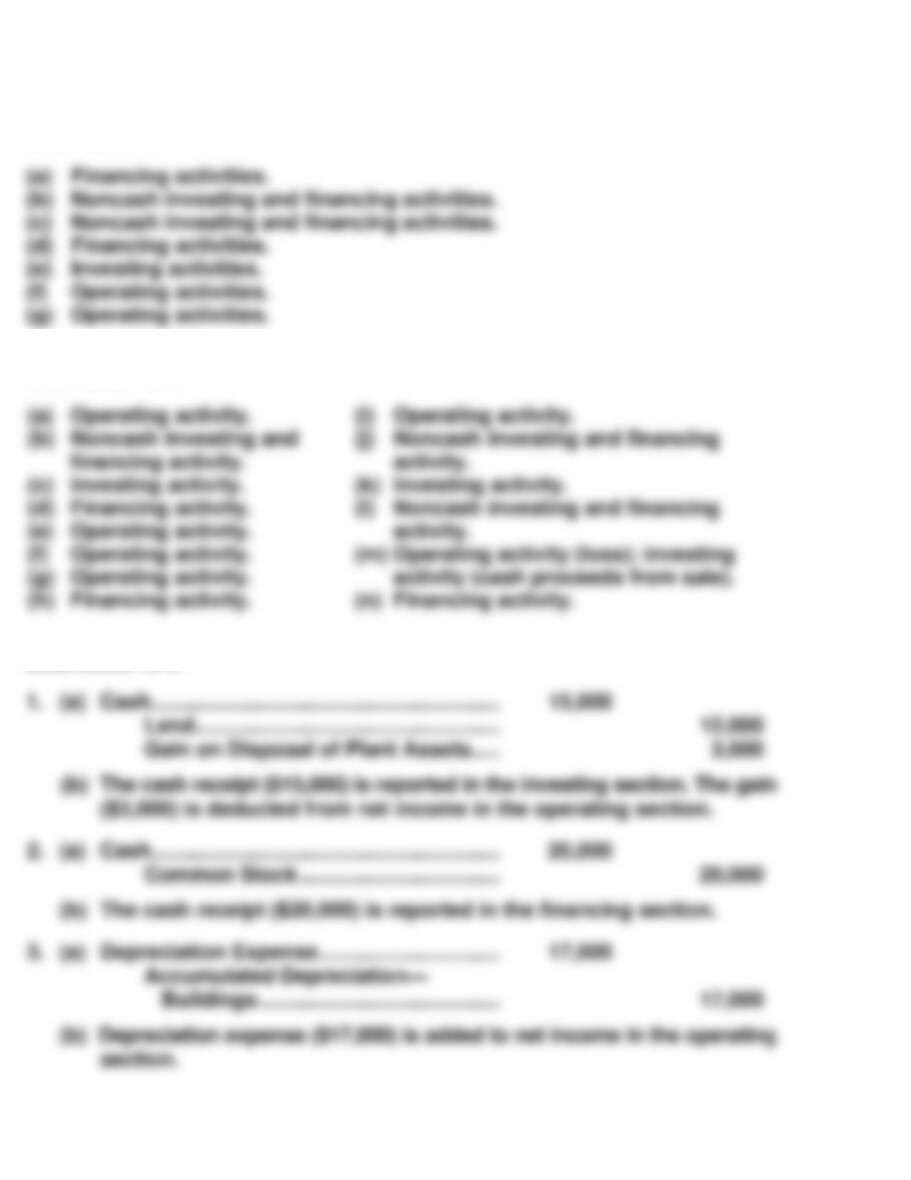
SOLUTIONS TO EXERCISES
EXERCISE 13-1
EXERCISE 13-2
EXERCISE 13-3
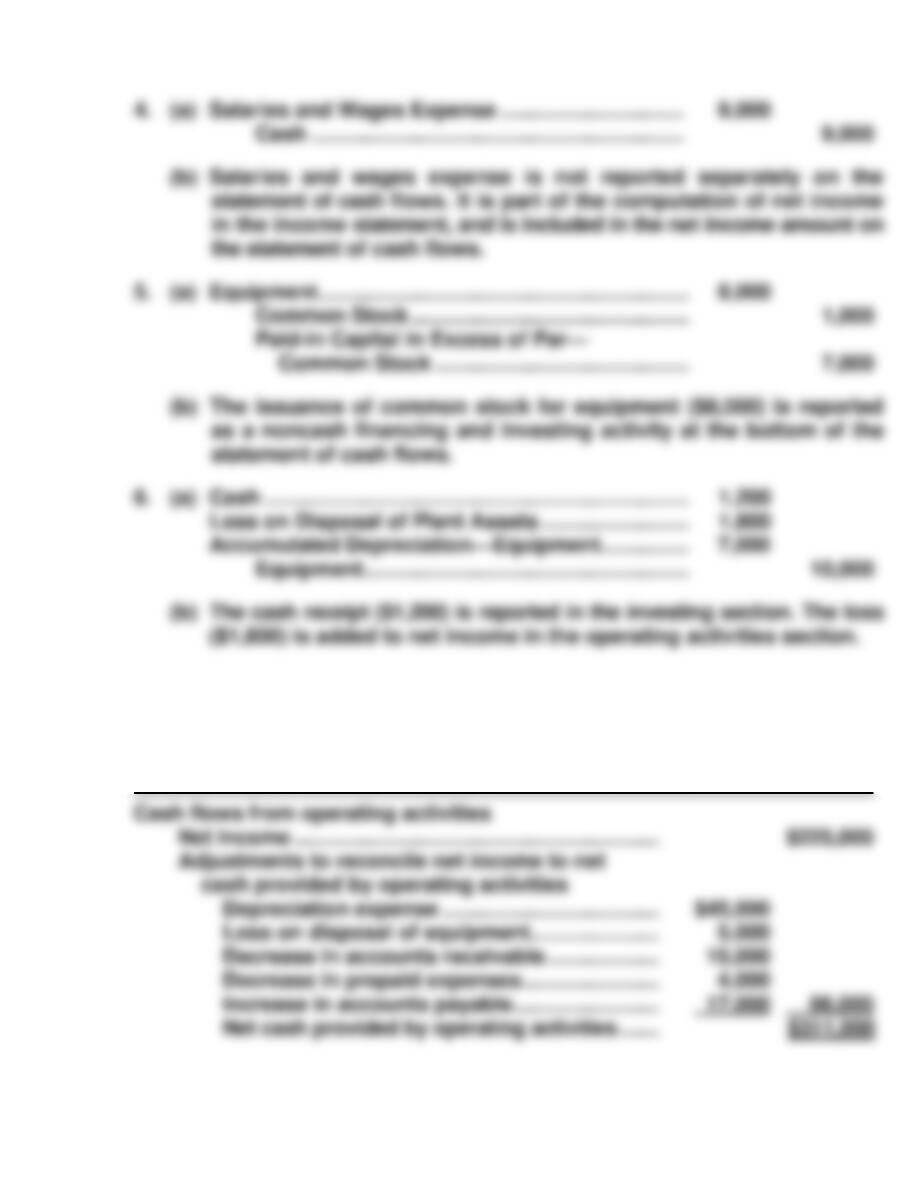
EXERCISE 13-3 (Continued)
EXERCISE 13-4 GUTIERREZ COMPANY
Partial Statement of Cash Flows
For the Year Ended December 31, 2017
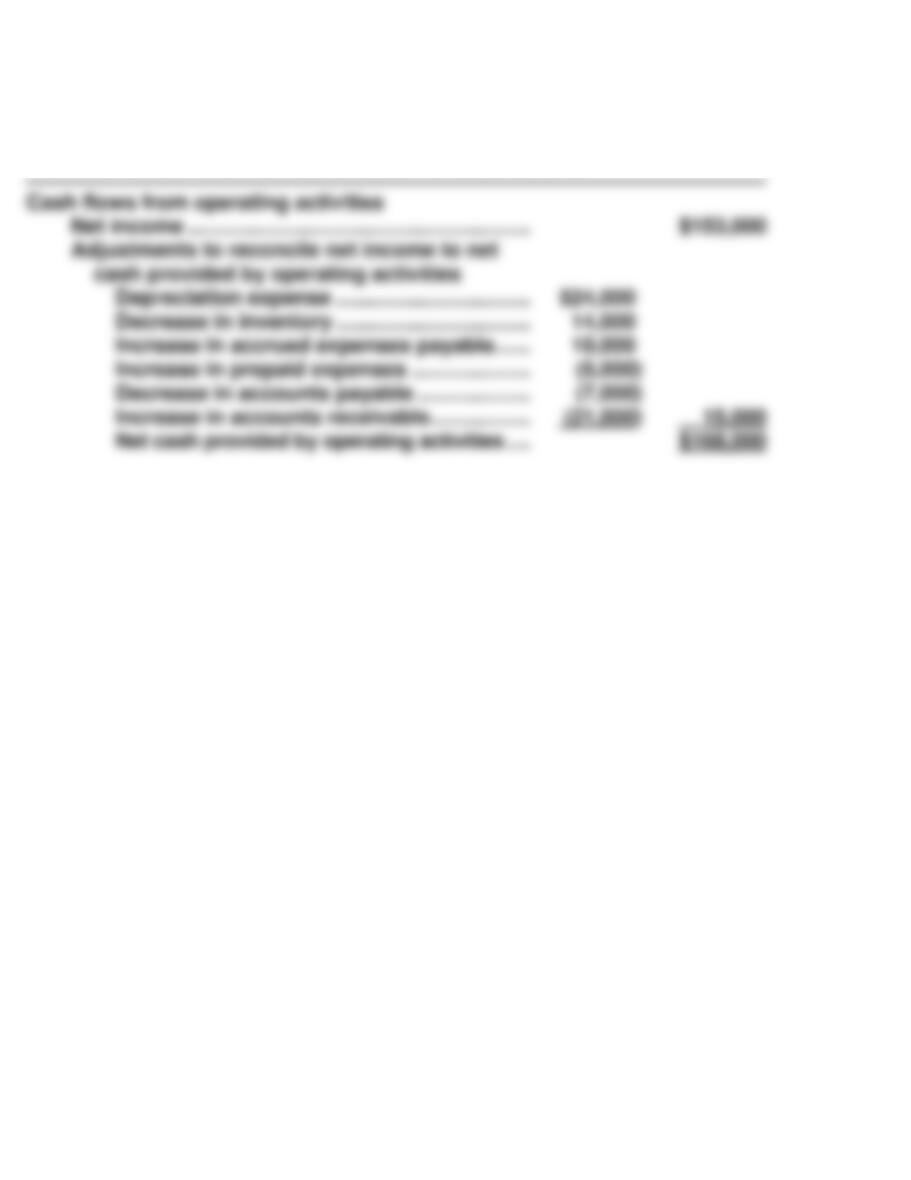
EXERCISE 13-5
SCOGGIN INC.
Partial Statement of Cash Flows
For the Year Ended December 31, 2017
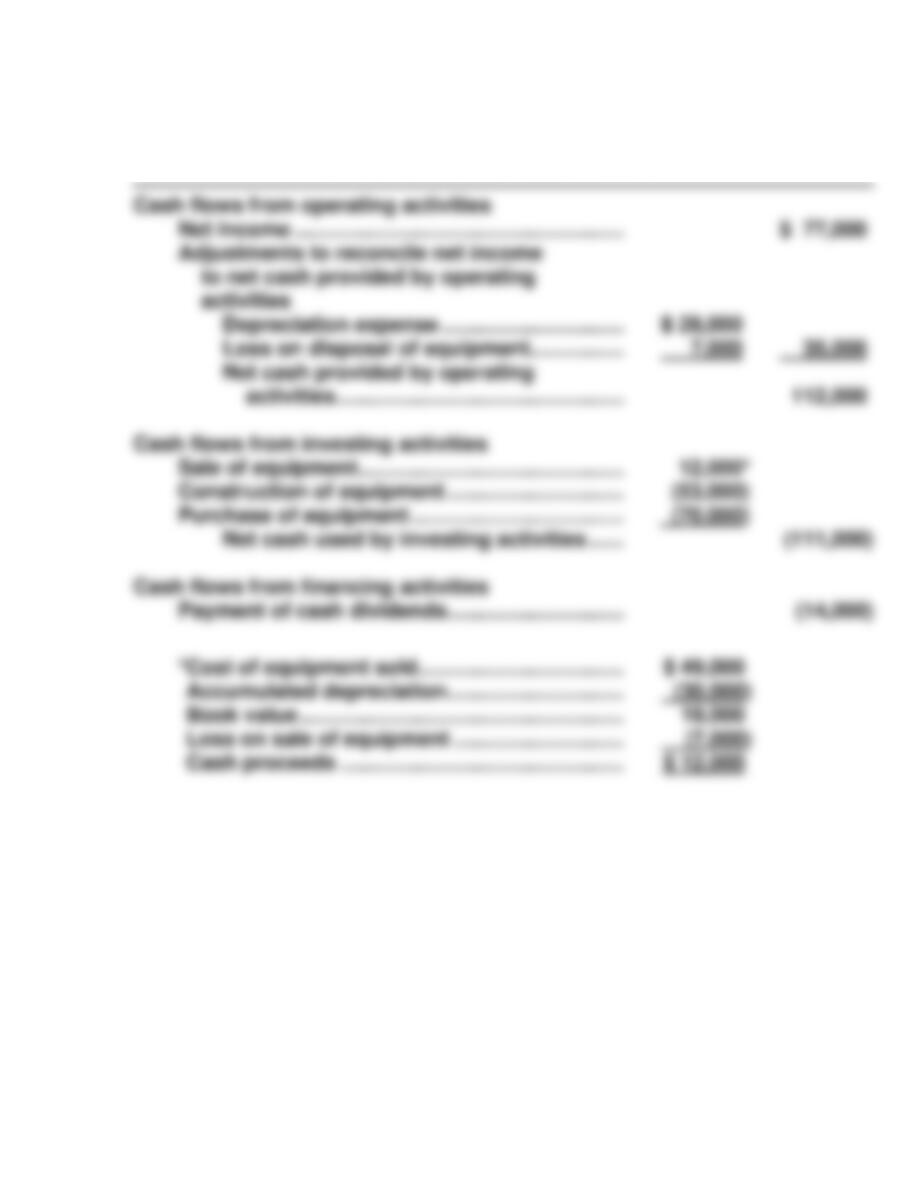
EXERCISE 13-6
HERRICK CORP
Partial Statement of Cash Flows
For the Year Ended December 31, 2017
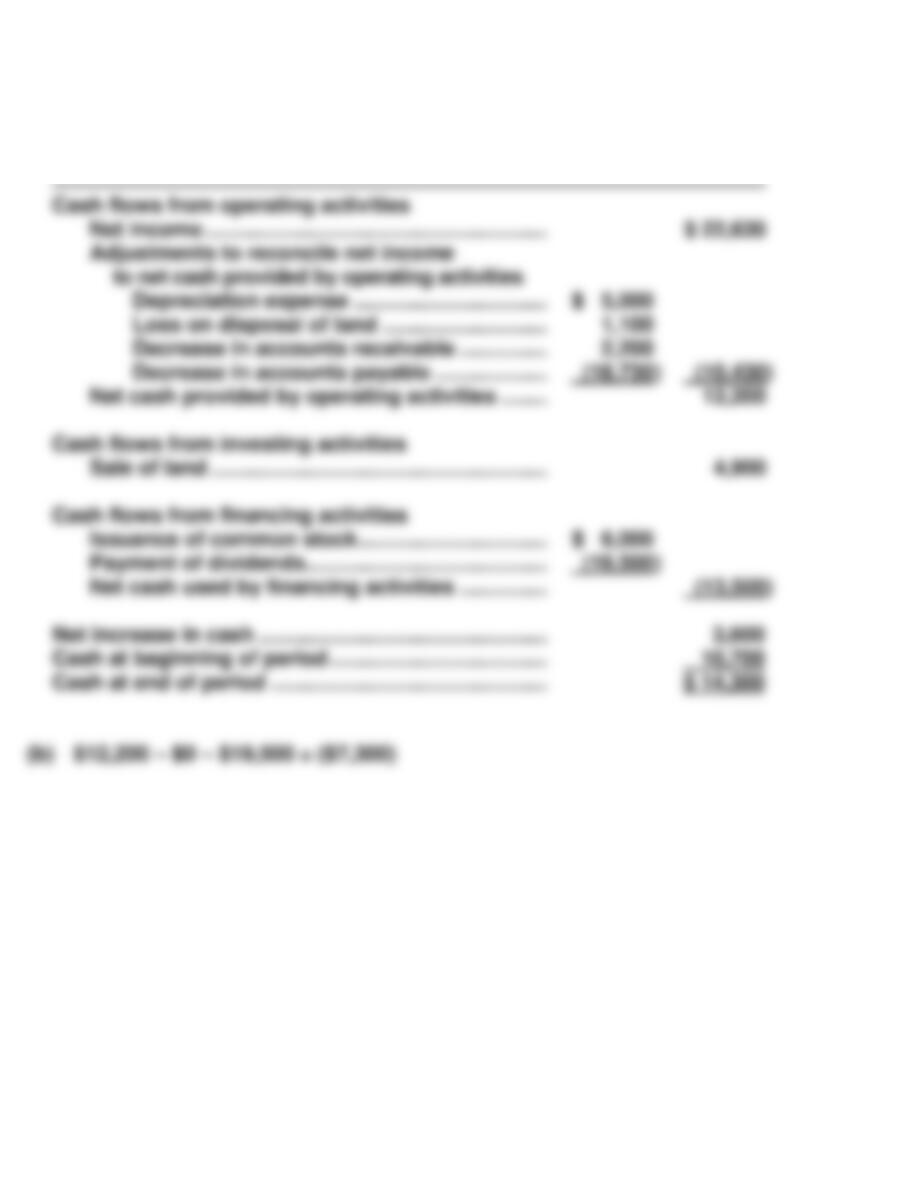
EXERCISE 13-7
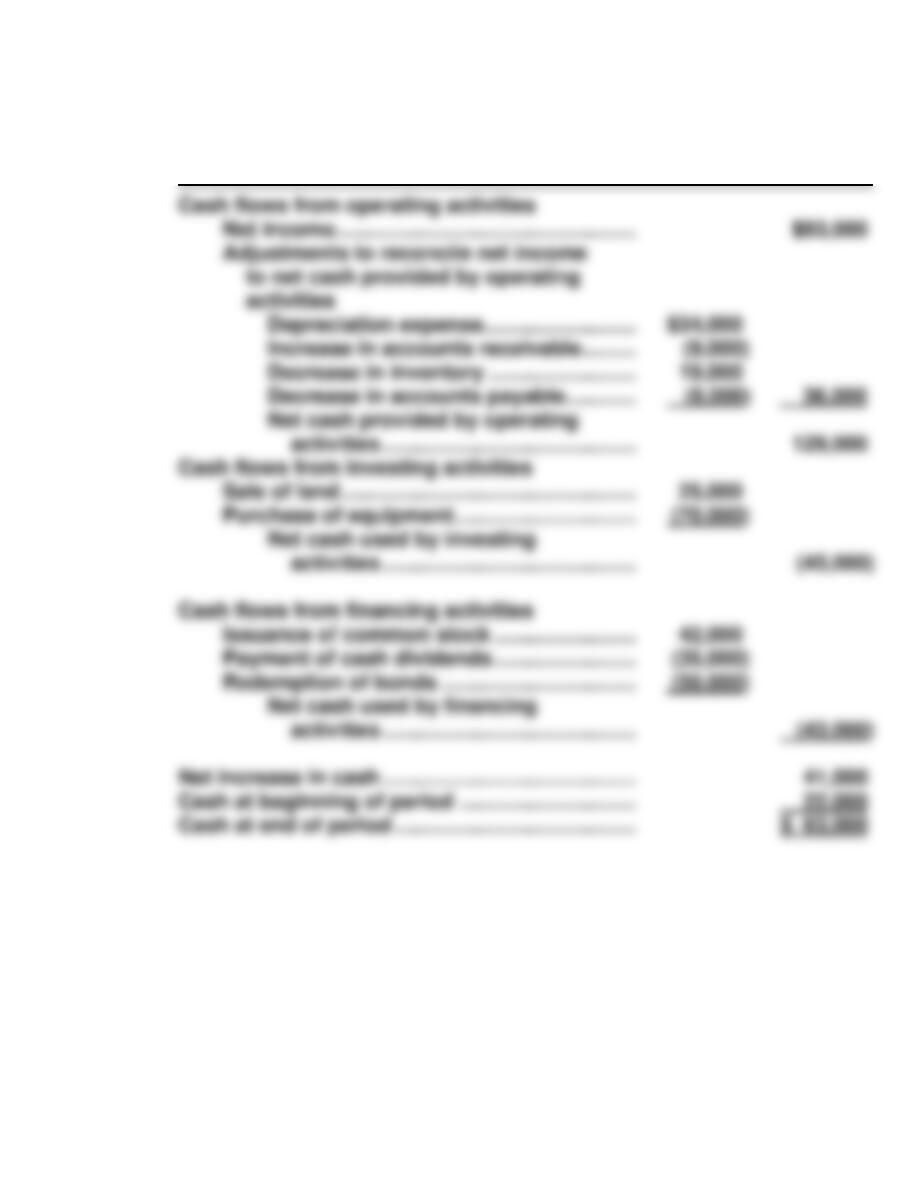
(a) ROJAS CORPORATION
Statement of Cash Flows
For the Year Ended December 31, 2017
EXERCISE 13-8
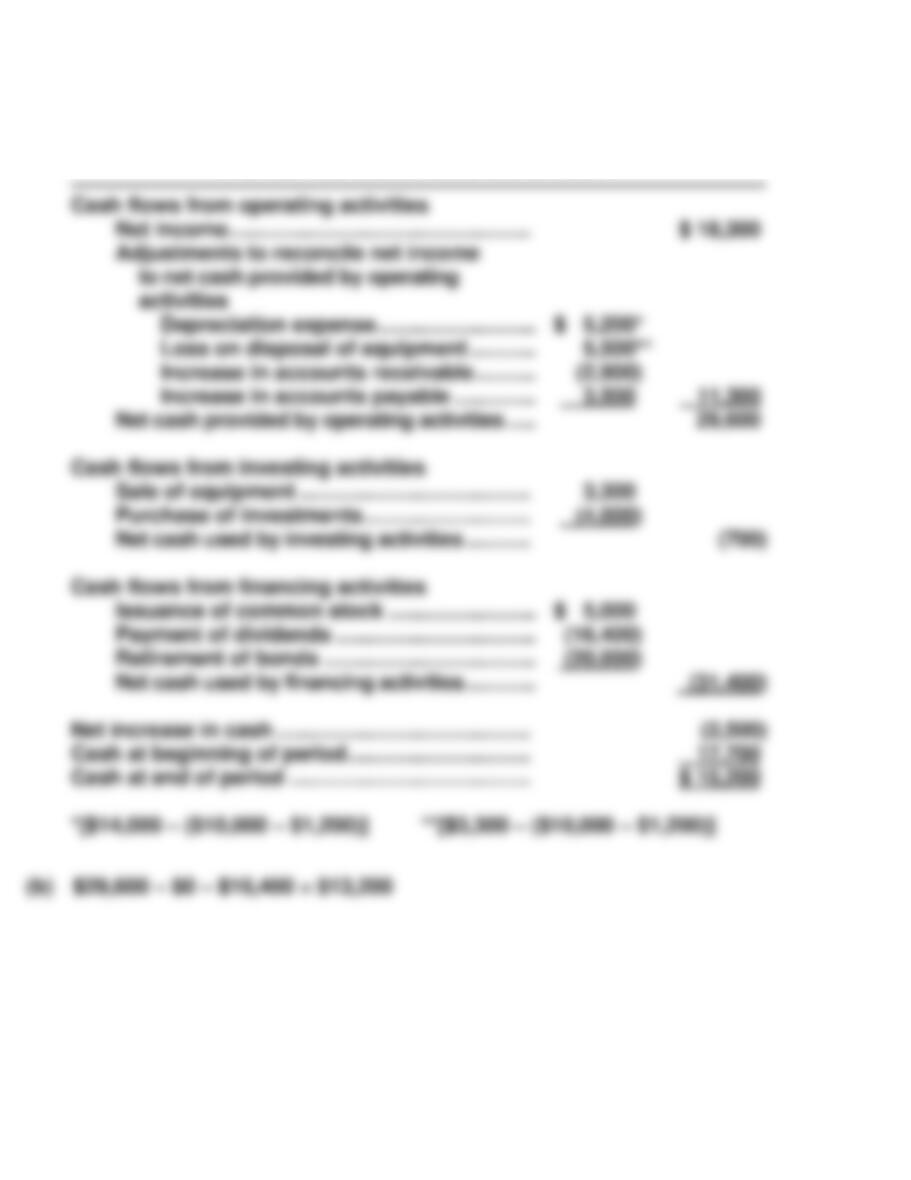
VELO COMPANY
Statement of Cash Flows
For the Year Ended December 31, 2017
EXERCISE 13-9
(a) RODRIQUEZ CORPORATION
Statement of Cash Flows
For the Year Ended December 31, 2017
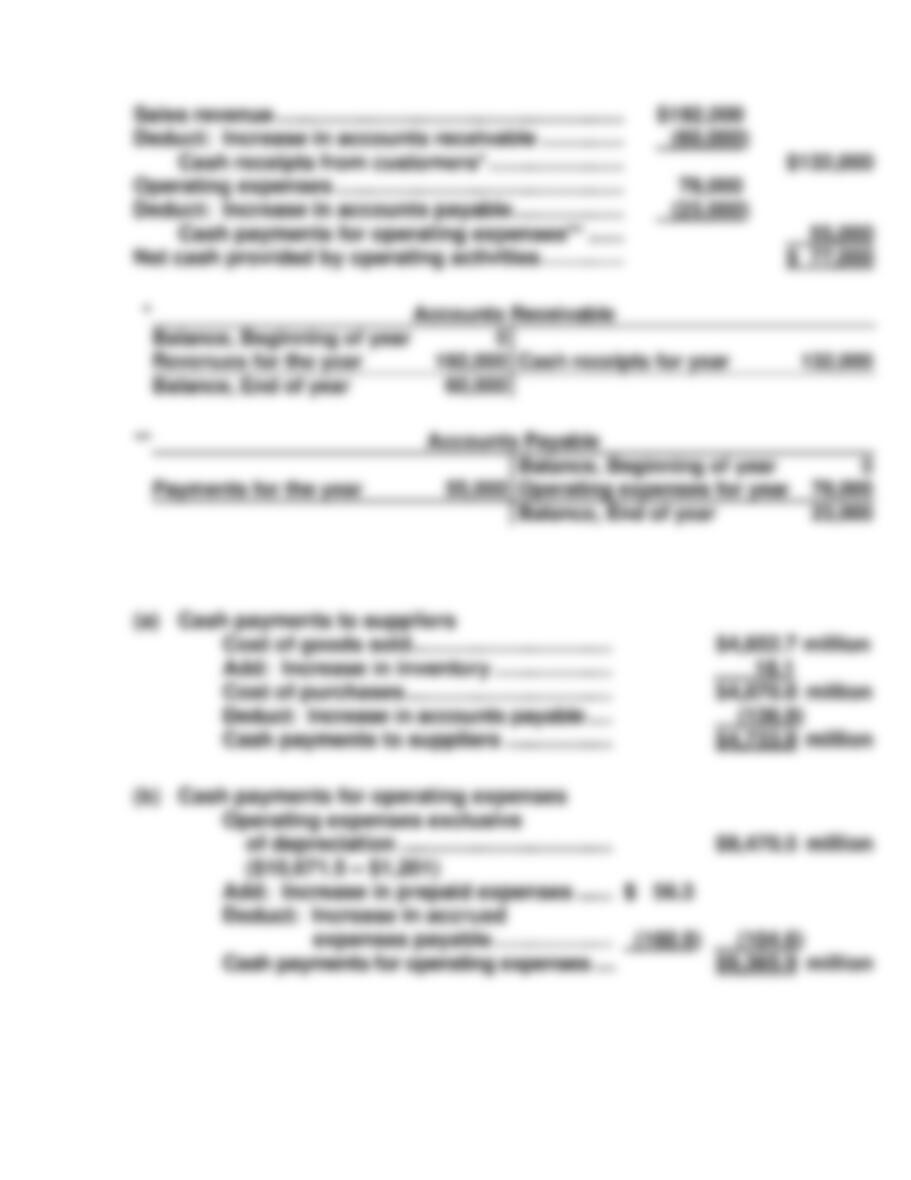
*EXERCISE 13–10
*EXERCISE 13–11
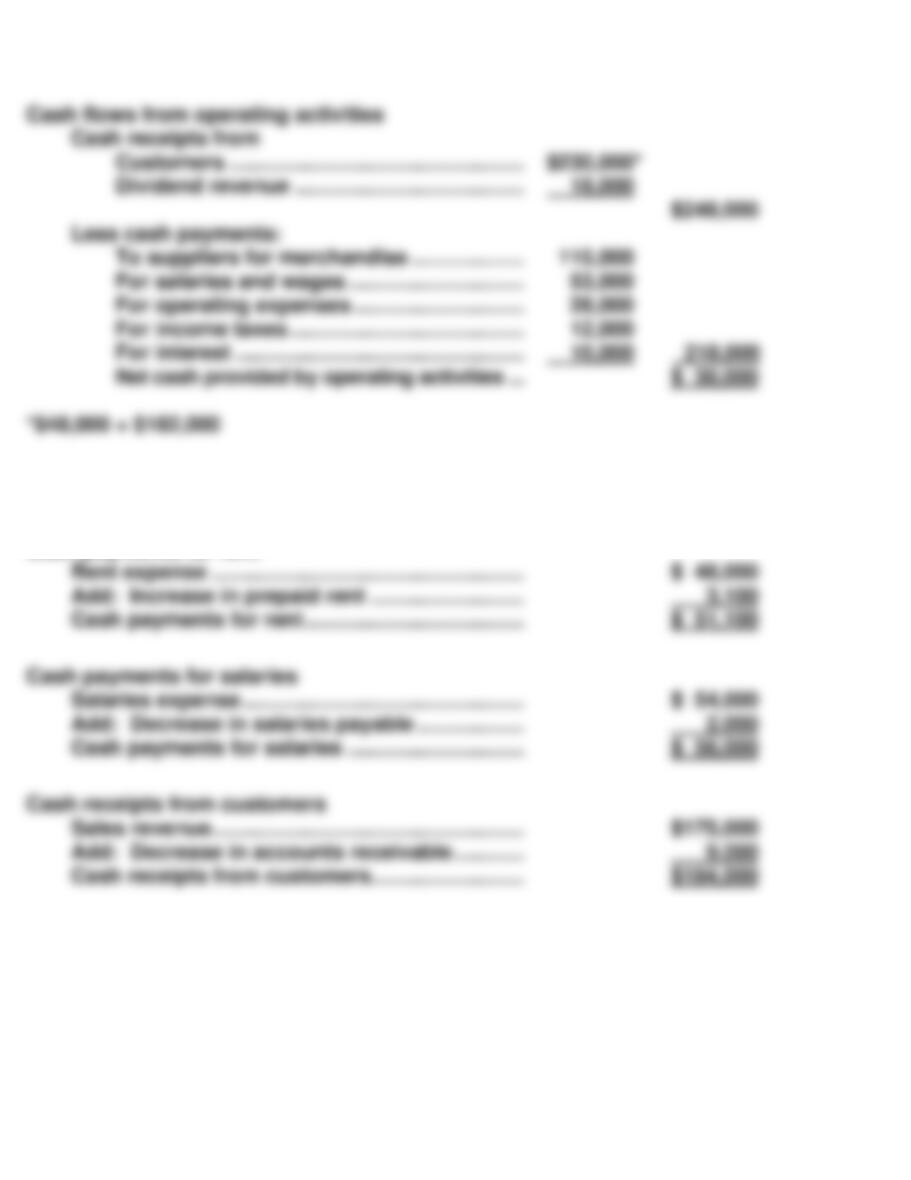
*EXERCISE 13-12
*EXERCISE 13–13
Cash payments for rent
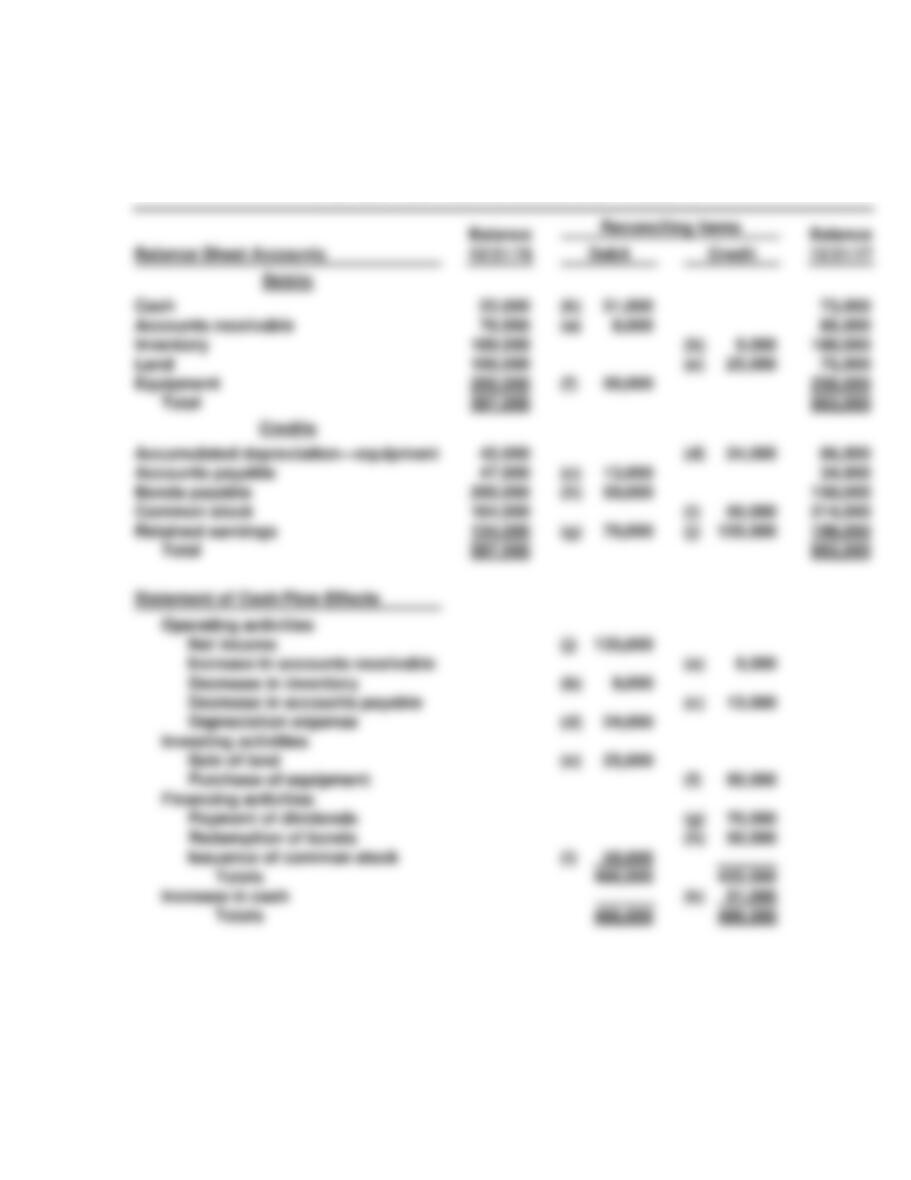
*EXERCISE 13–14
INTERNATIONAL COMPANY
Worksheet
Statement of Cash Flows
For the Year Ended December 31, 2017
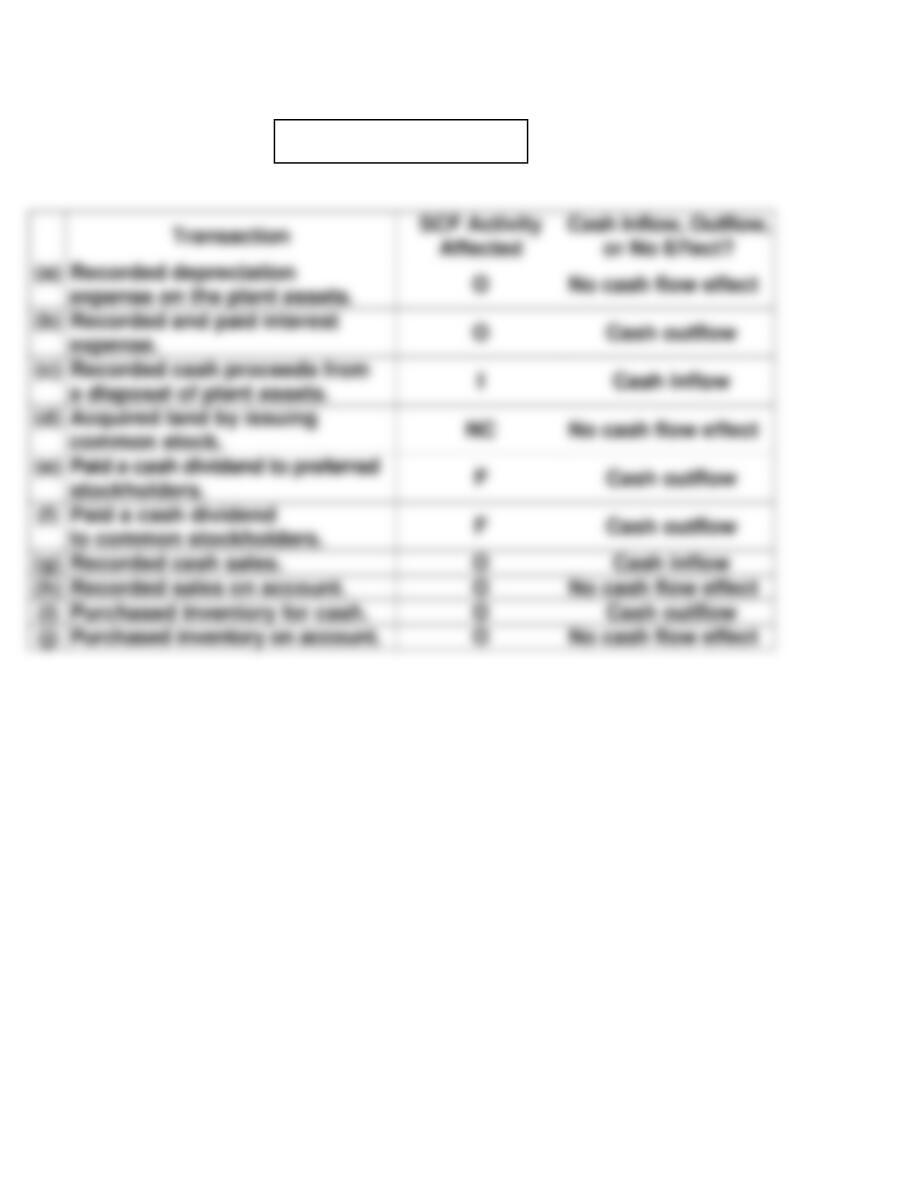
SOLUTIONS TO PROBLEMS
PROBLEM 13–1A
PROBLEM 13–2A
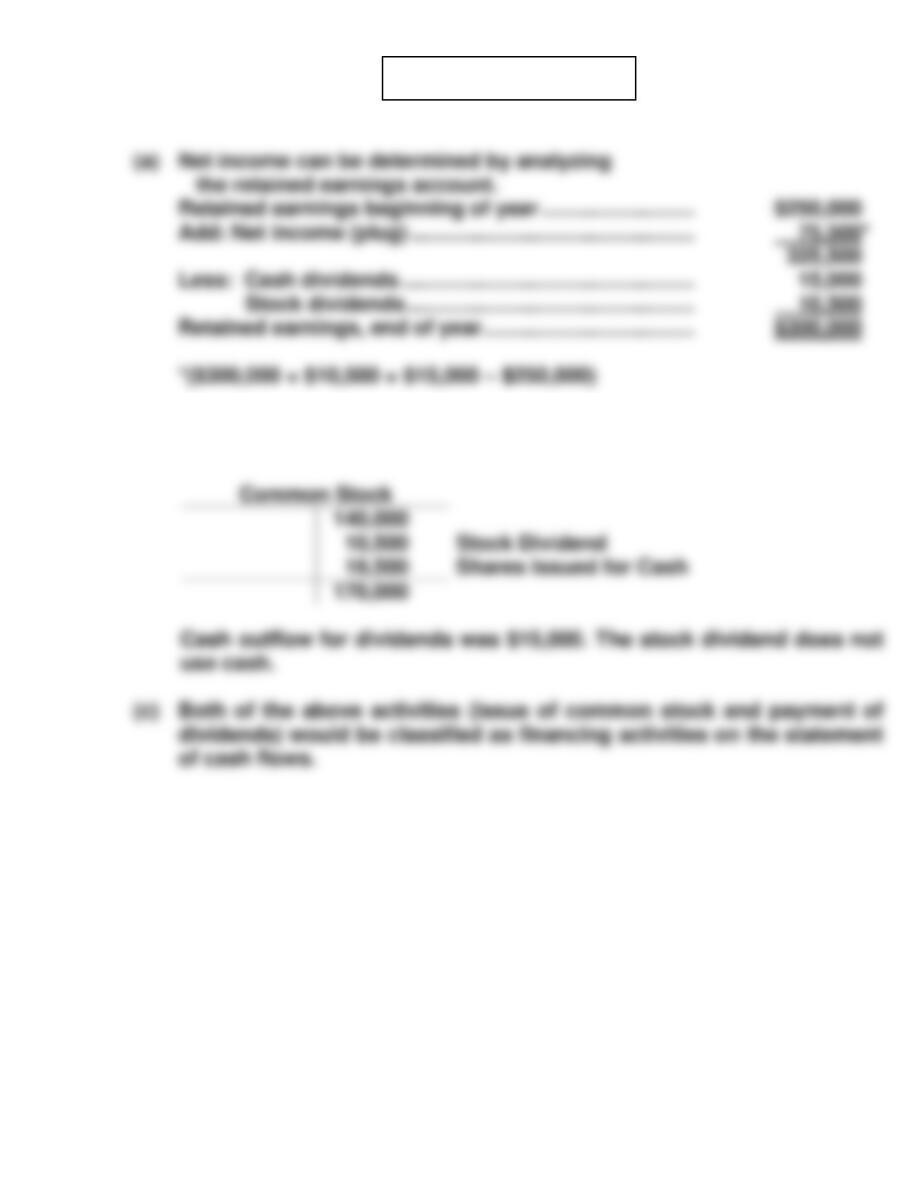
(b) Cash inflow from the issue of stock was $19,500 ($170,000 – $140,000 –
$10,500).
PROBLEM 13–3A
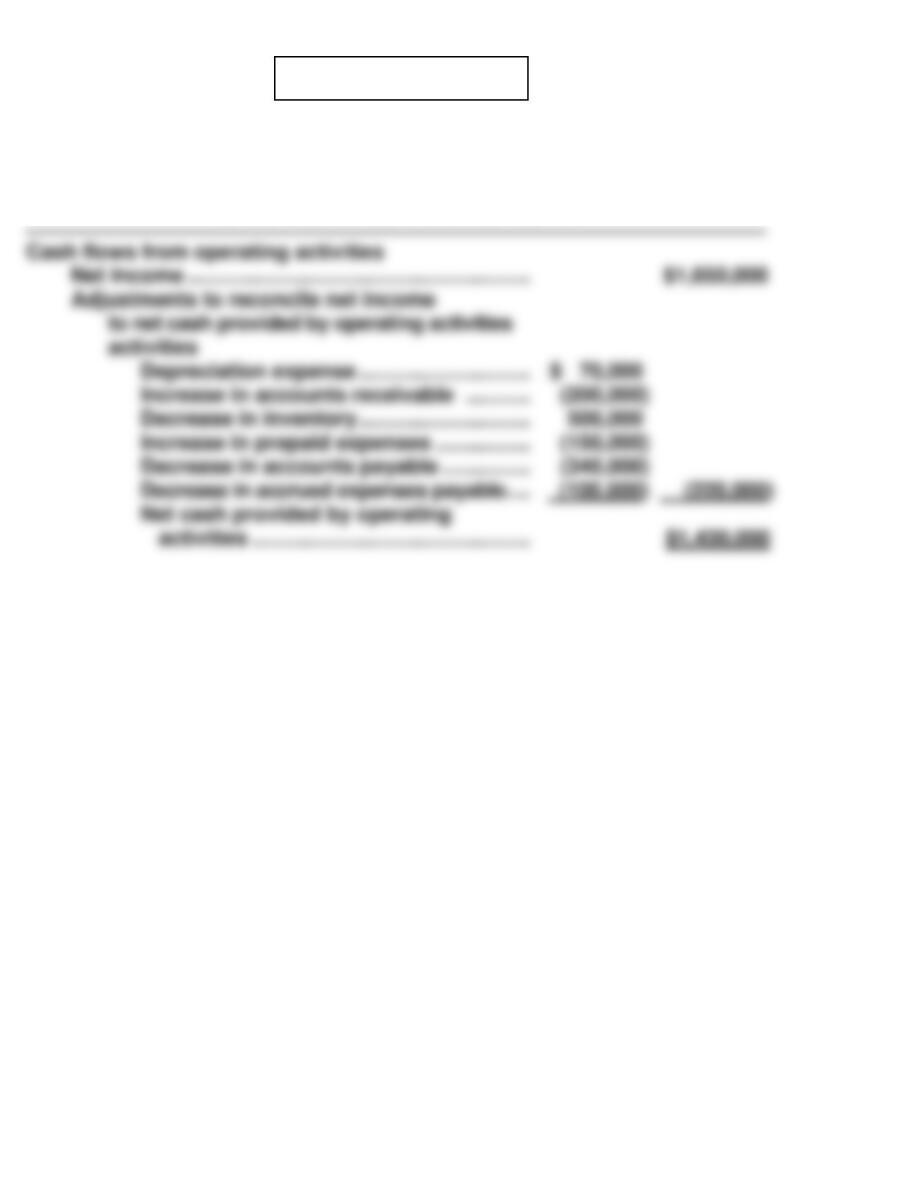
WHITLOCK COMPANY
Partial Statement of Cash Flows
For the Year Ended November 30, 2017
*PROBLEM 13–4A
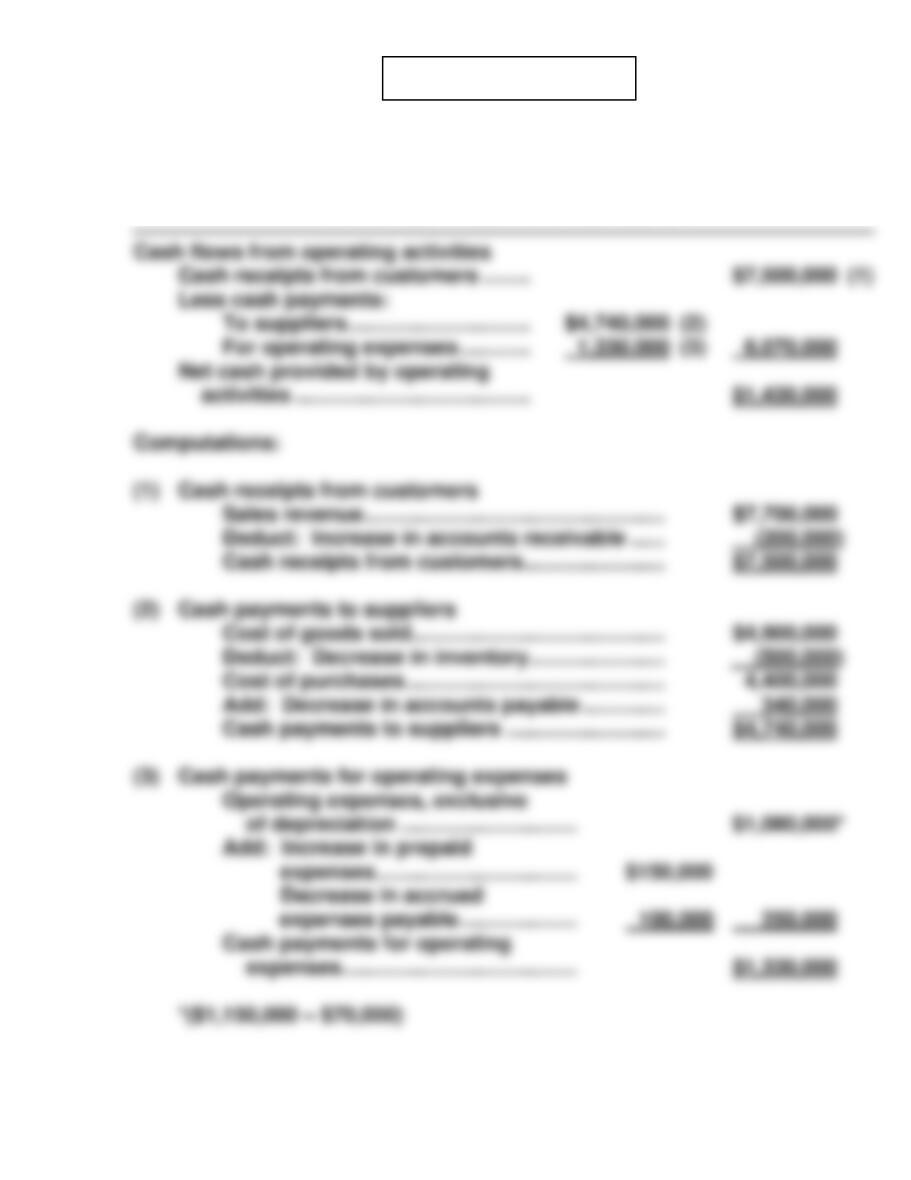
WHITLOCK COMPANY
Partial Statement of Cash Flows
For the Year Ended November 30, 2017
PROBLEM 13–5A
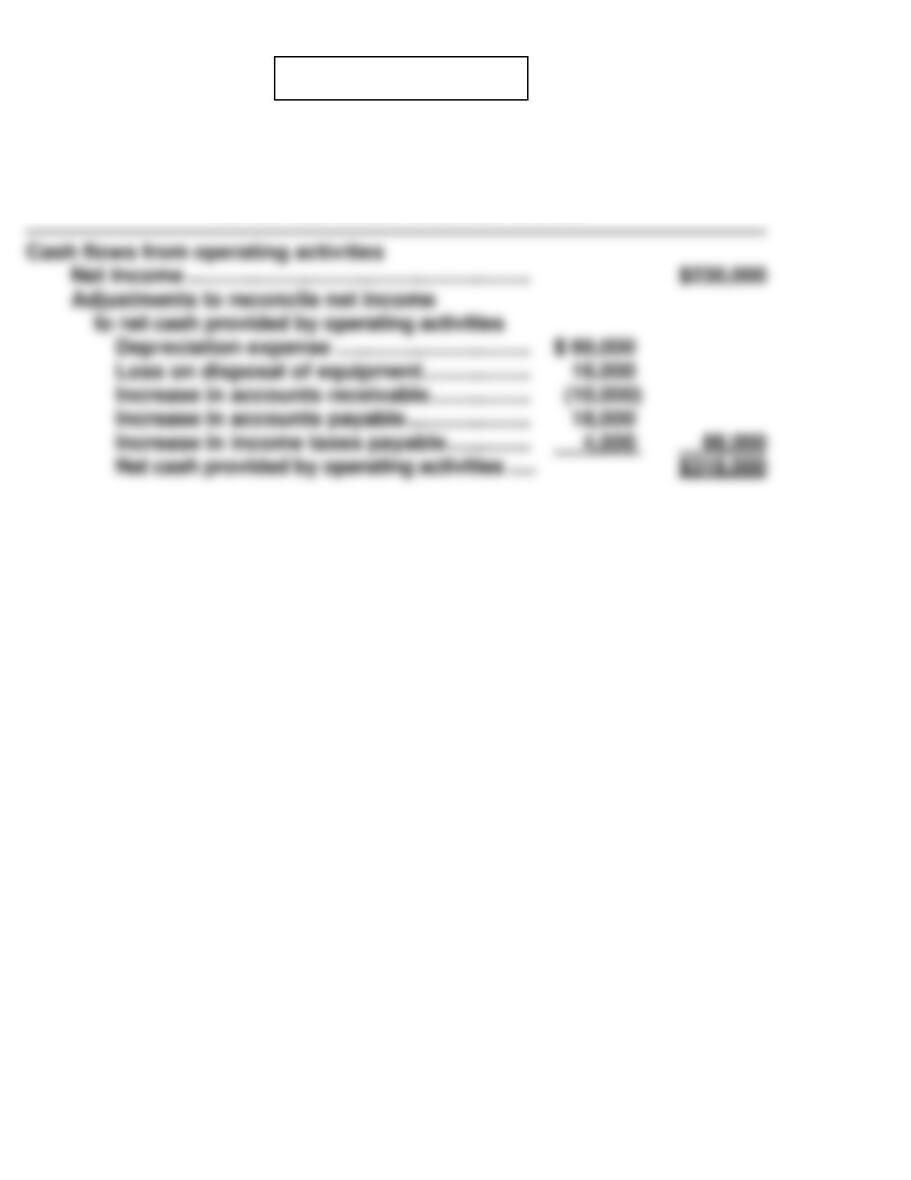
ZUMBRUNN COMPANY
Partial Statement of Cash Flows
For the Year Ended December 31, 2017
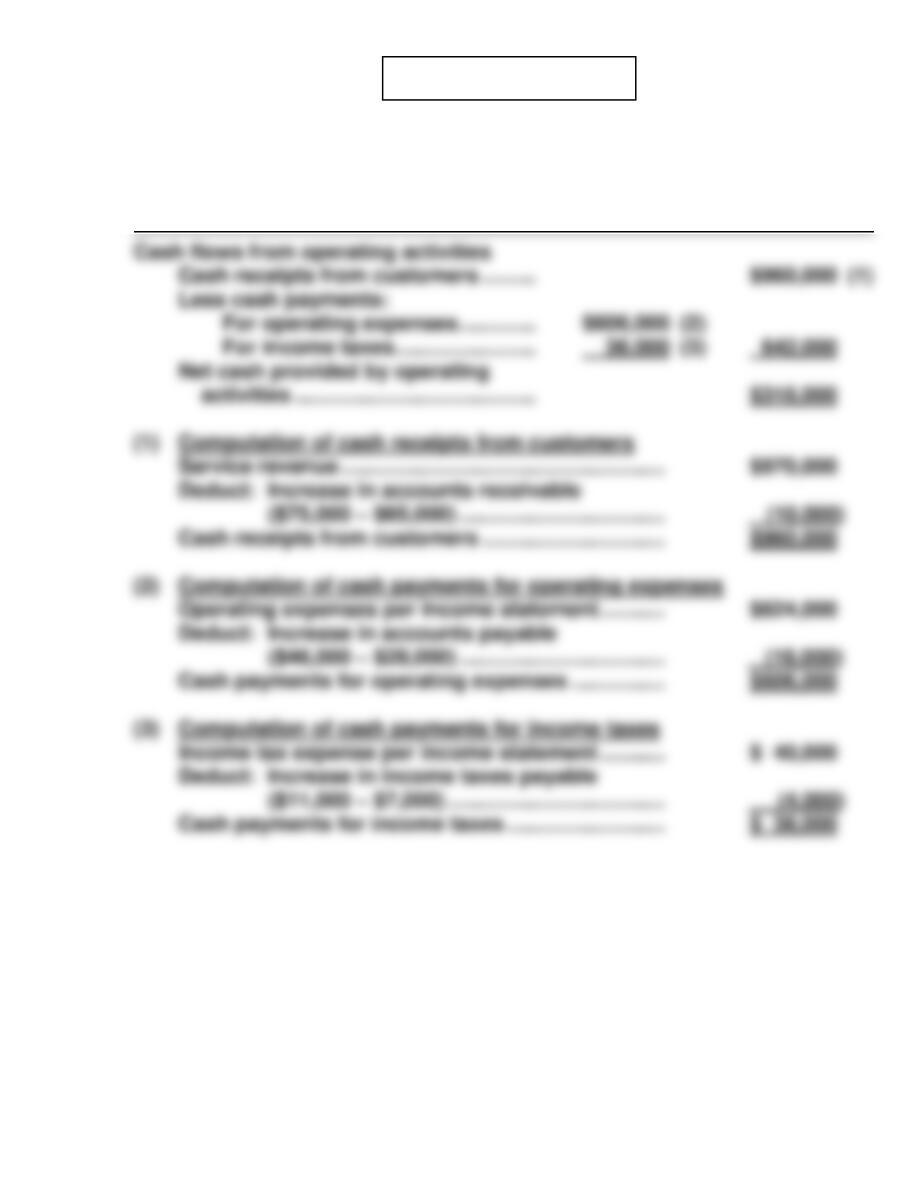
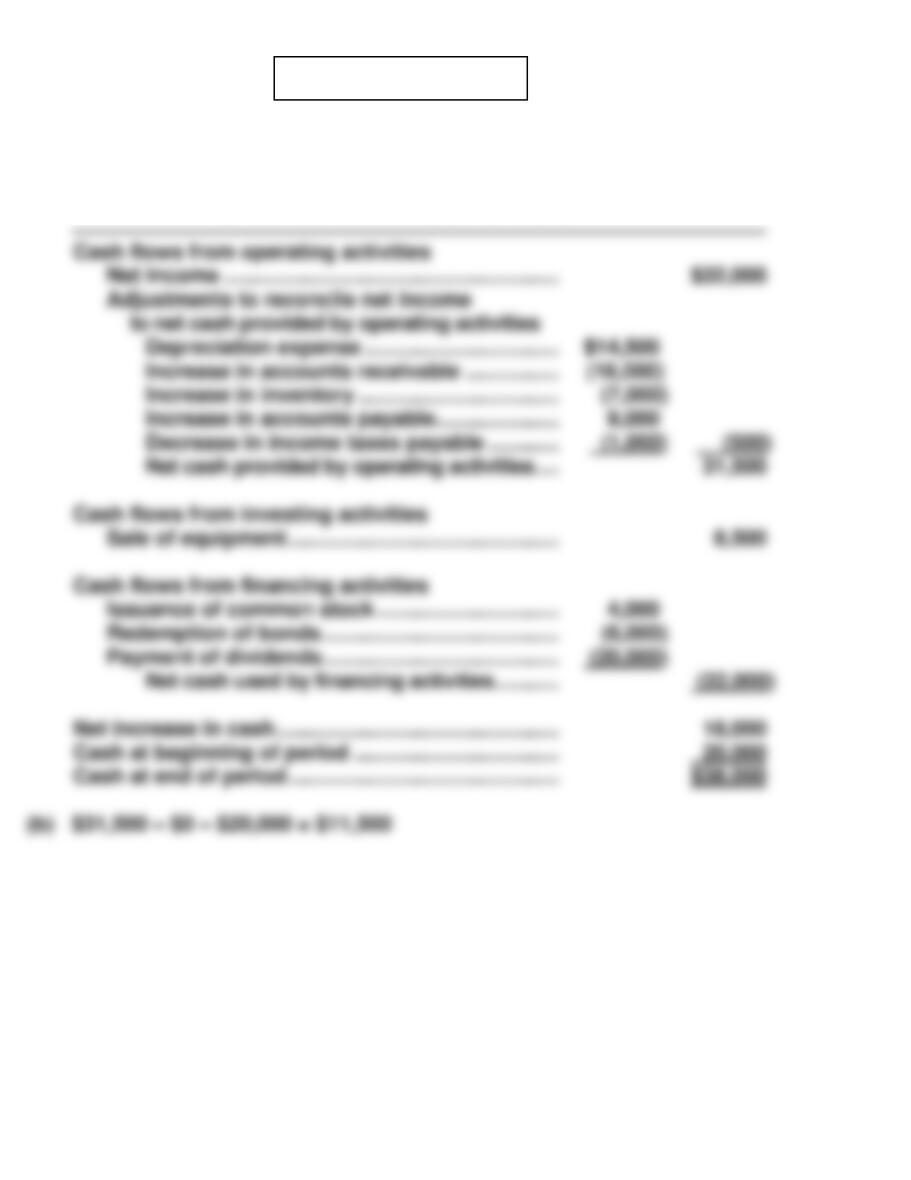
*PROBLEM 13–6A
ZUMBRUNN COMPANY
Partial Statement of Cash Flows
For the Year Ended December 31, 2017
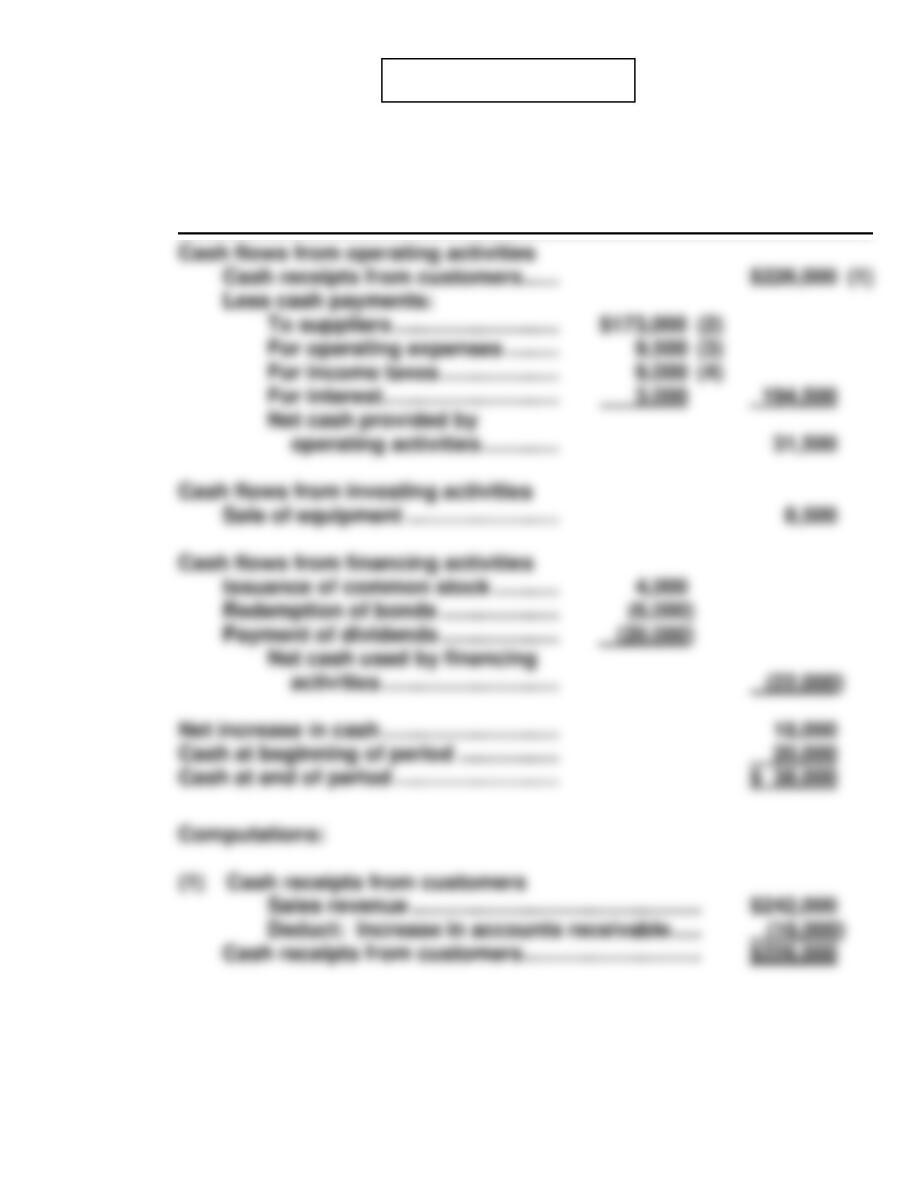
PROBLEM 13–7A
(a) NOSKER COMPANY
Statement of Cash Flows
For the Year Ended December 31, 2017
*PROBLEM 13–8A
(a) NOSKER COMPANY
Statement of Cash Flows
For the Year Ended December 31, 2017
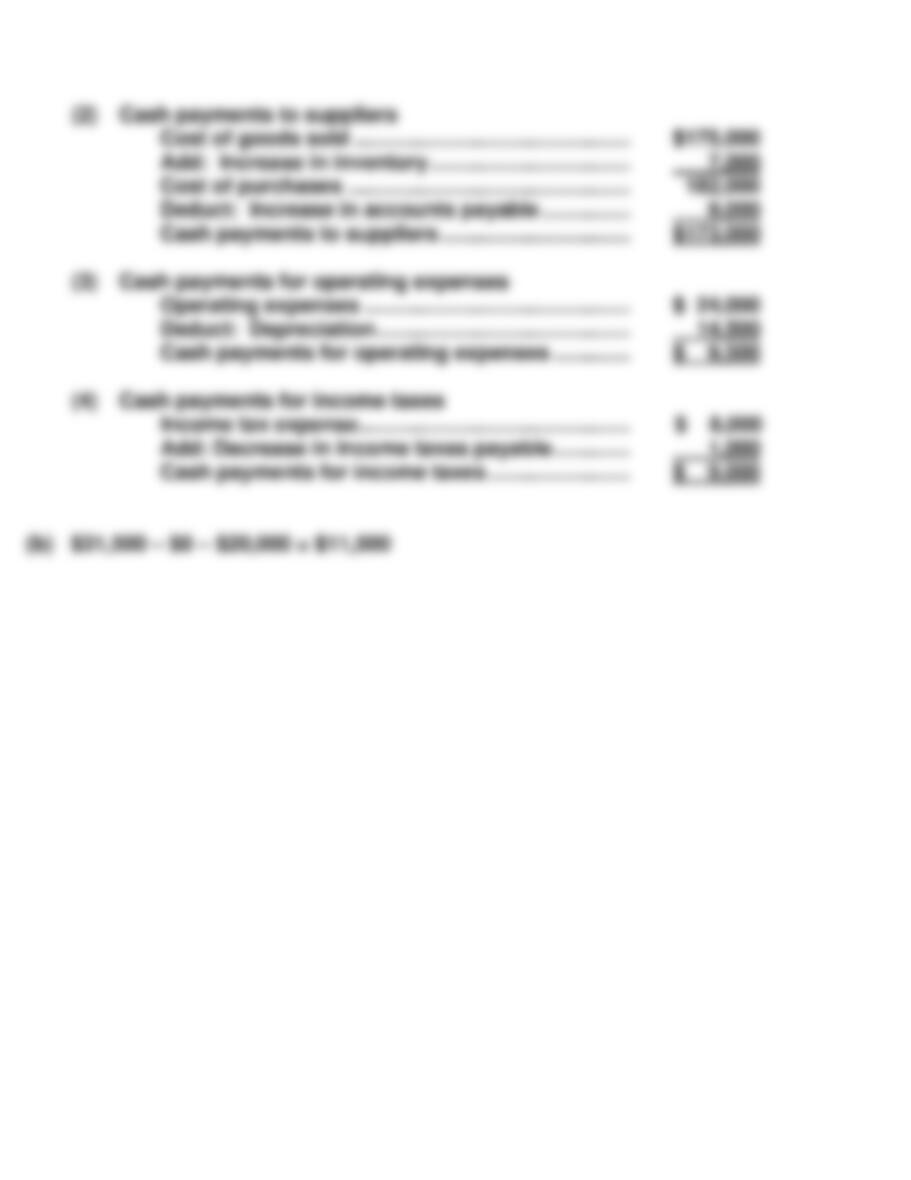
*PROBLEM 13-8A (Continued)
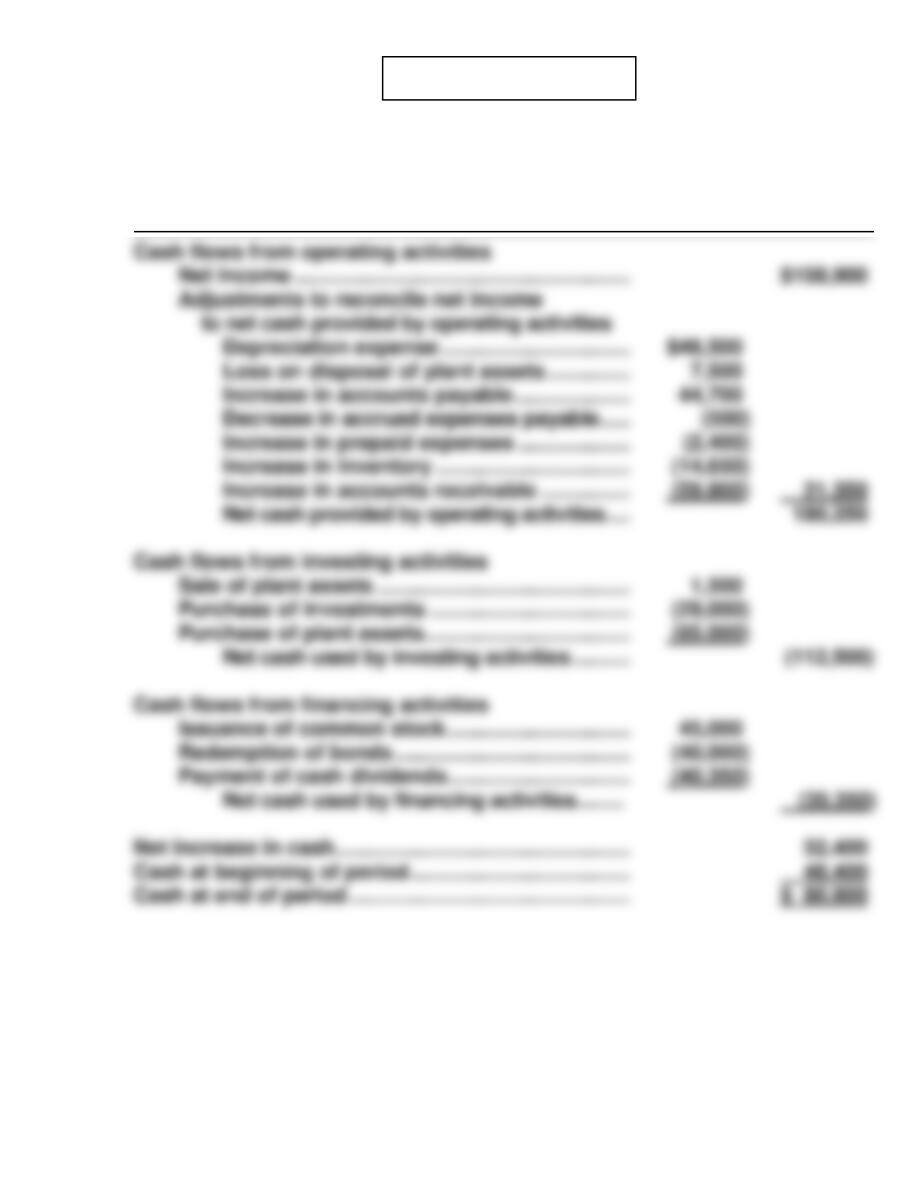
PROBLEM 13–9A
CHENG INC.
Statement of Cash Flows
For the Year Ended December 31, 2017
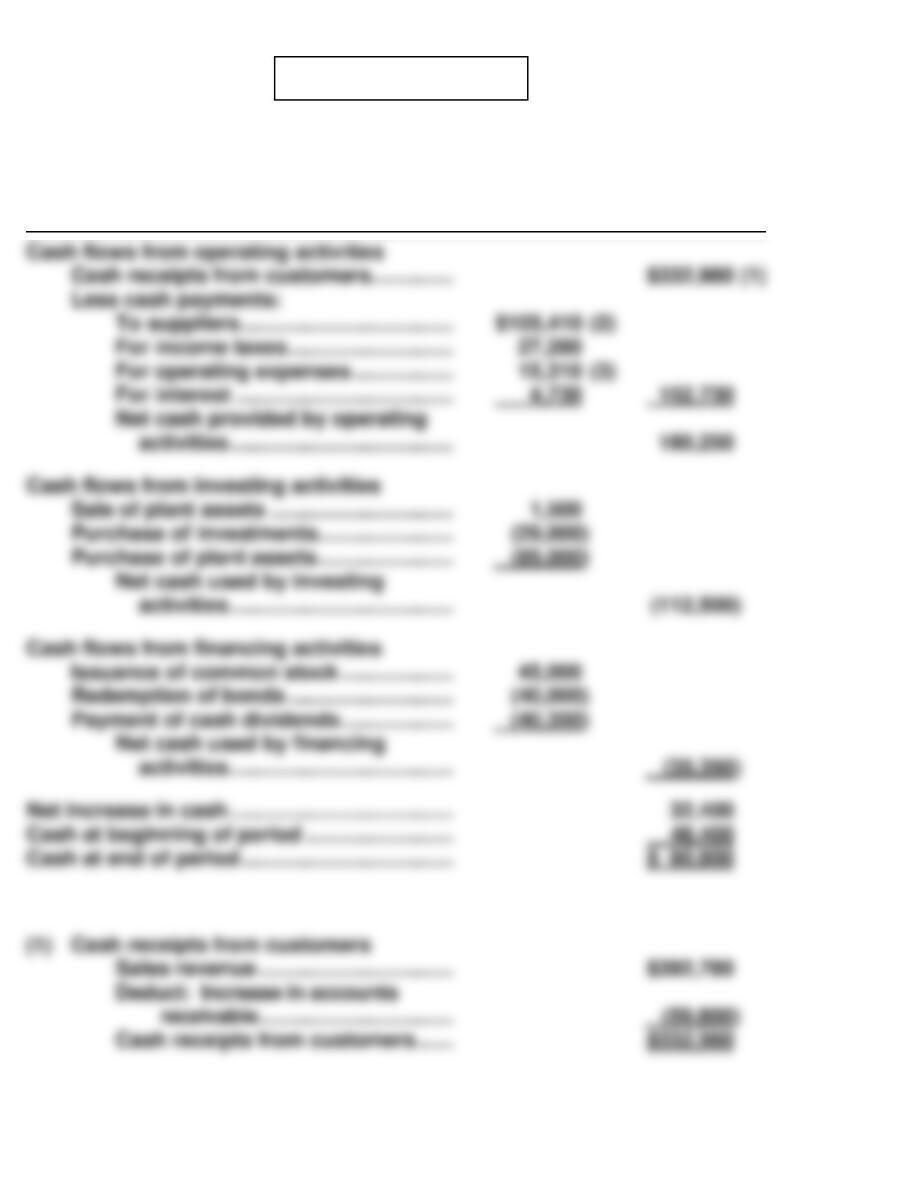
*PROBLEM 13-10A
CHENG INC.
Statement of Cash Flows
For the Year Ended December 31, 2017
Computations:
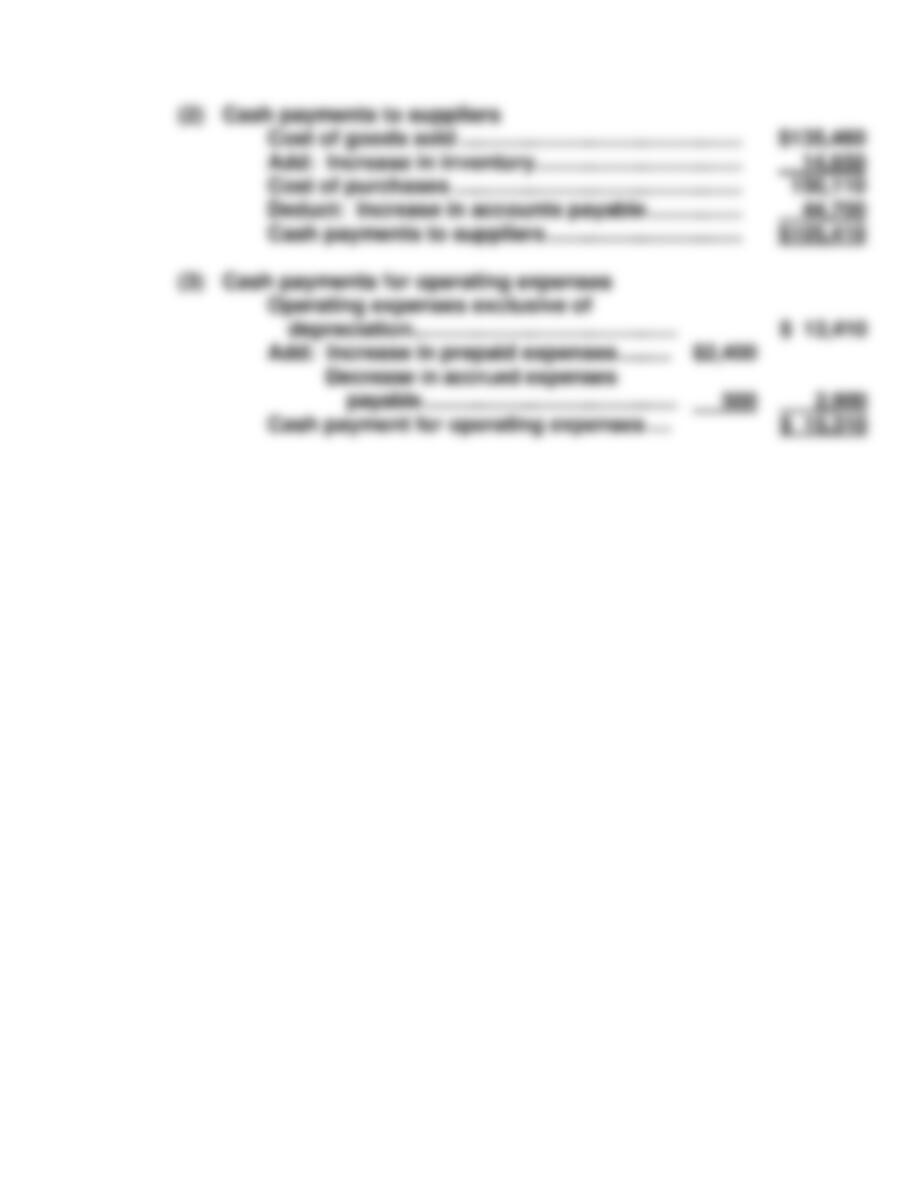
*PROBLEM 13-10A (Continued)
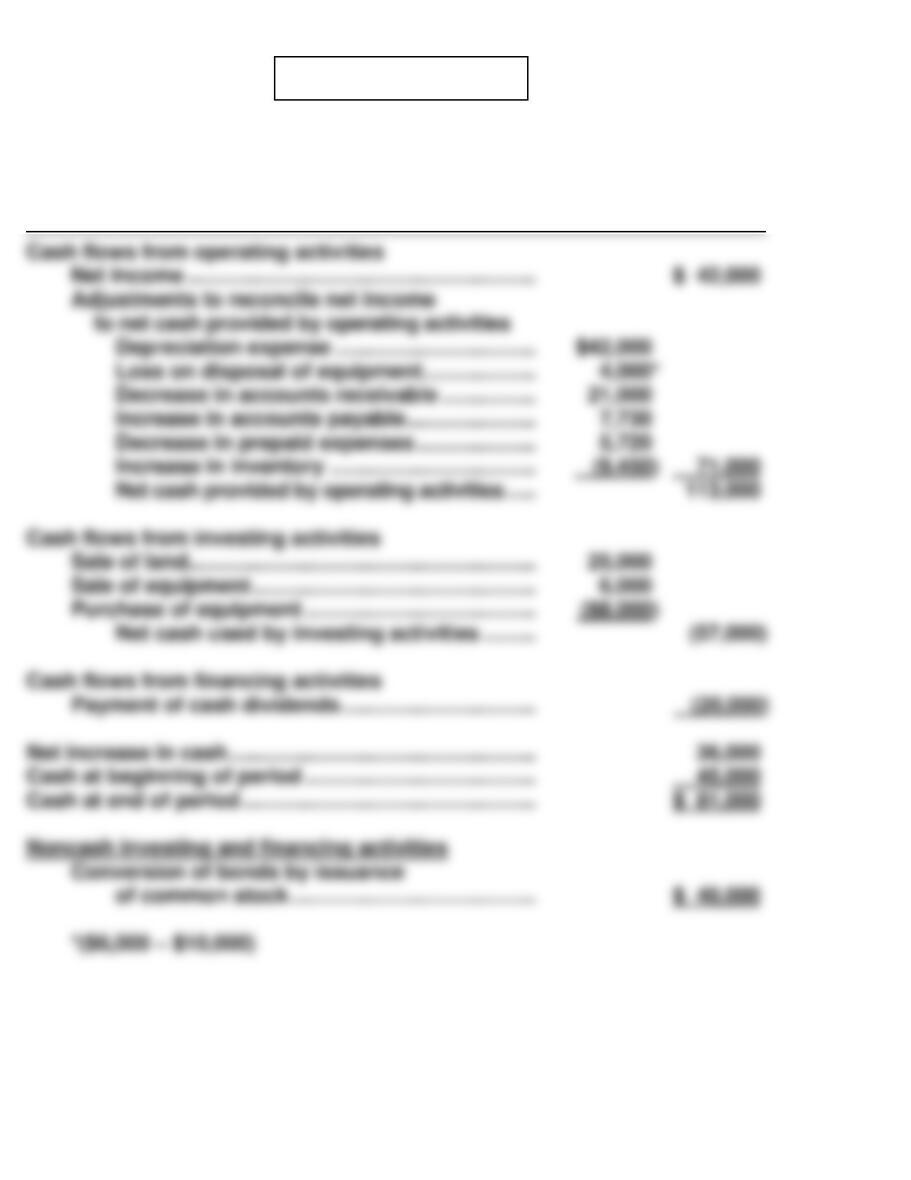
PROBLEM 13–11A
ROTHLISBERGER COMPANY
Statement of Cash Flows
For the Year Ended December 31, 2017
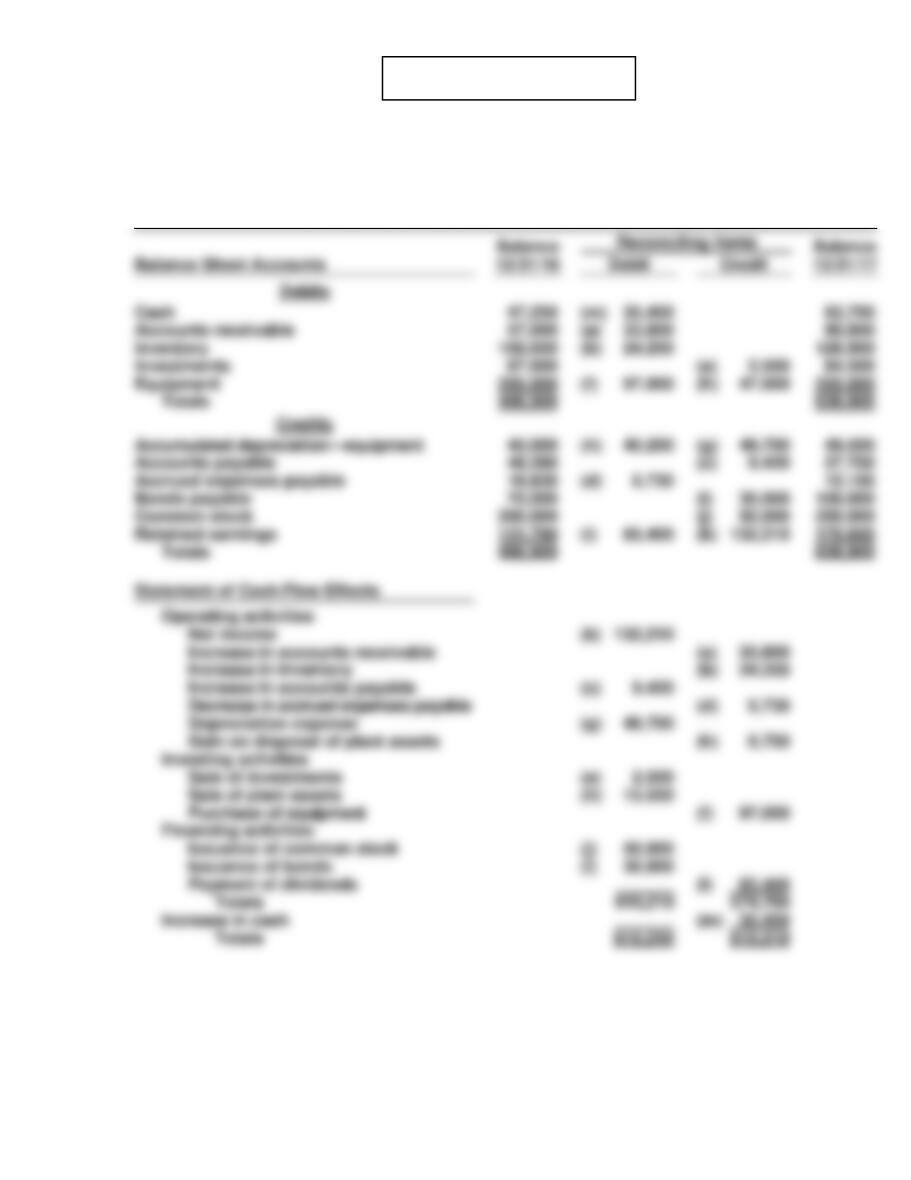
*PROBLEM 13-12A
OAKLEY COMPANY
Worksheet—Statement of Cash Flows
For the Year Ended December 31, 2017
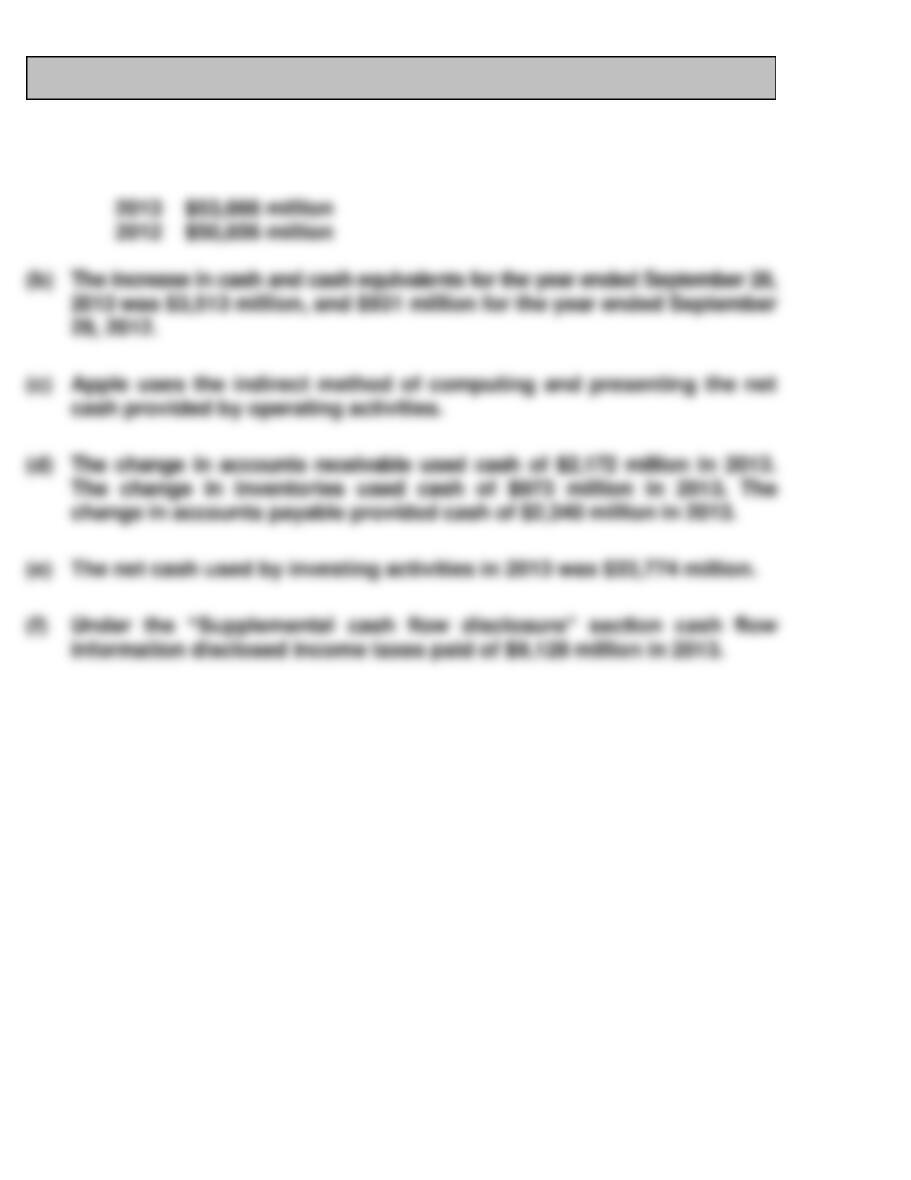
BYP 13-1 FINANCIAL REPORTING PROBLEM
(a) Net cash provided by operating activities:
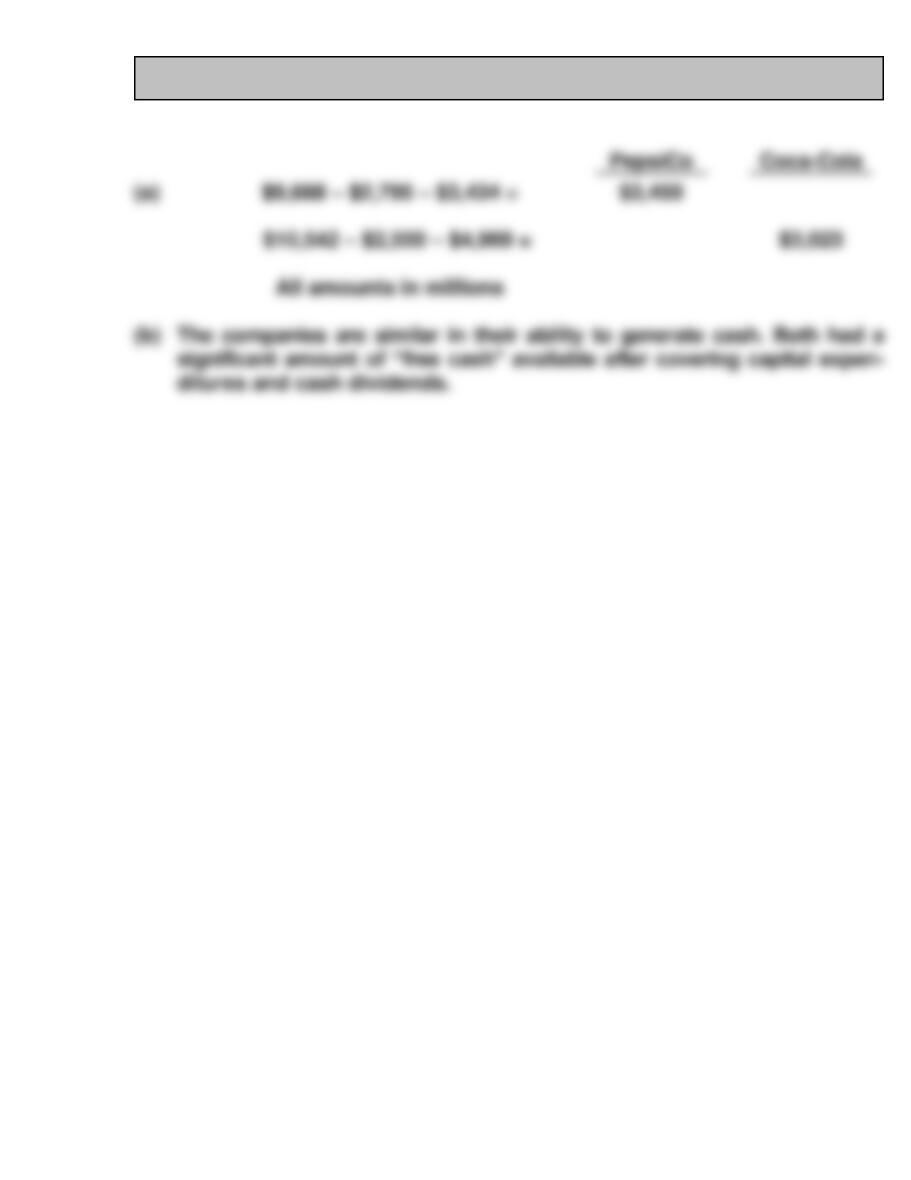
BYP 13-2 COMPARATIVE ANALYSIS PROBLEM
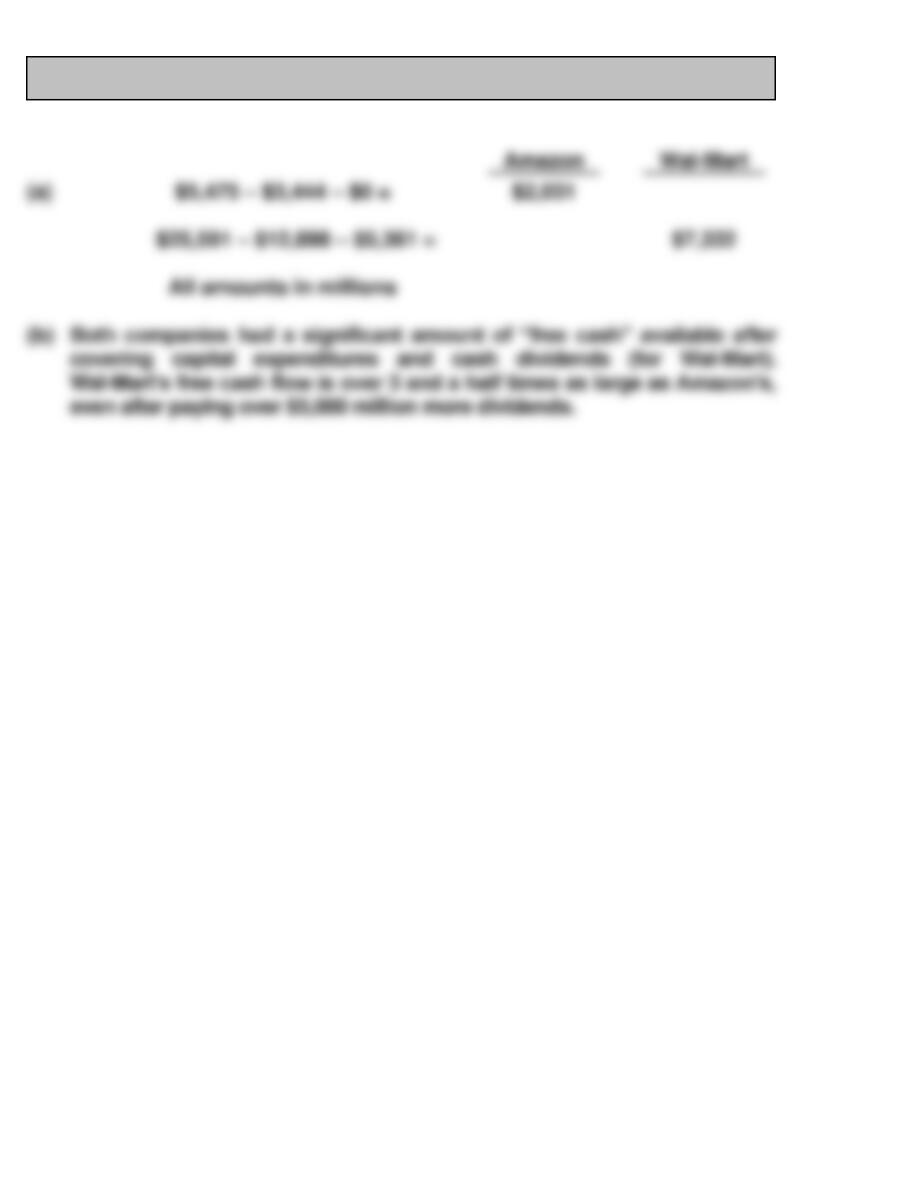
BYP 13-3 COMPARATIVE ANALYSIS PROBLEM
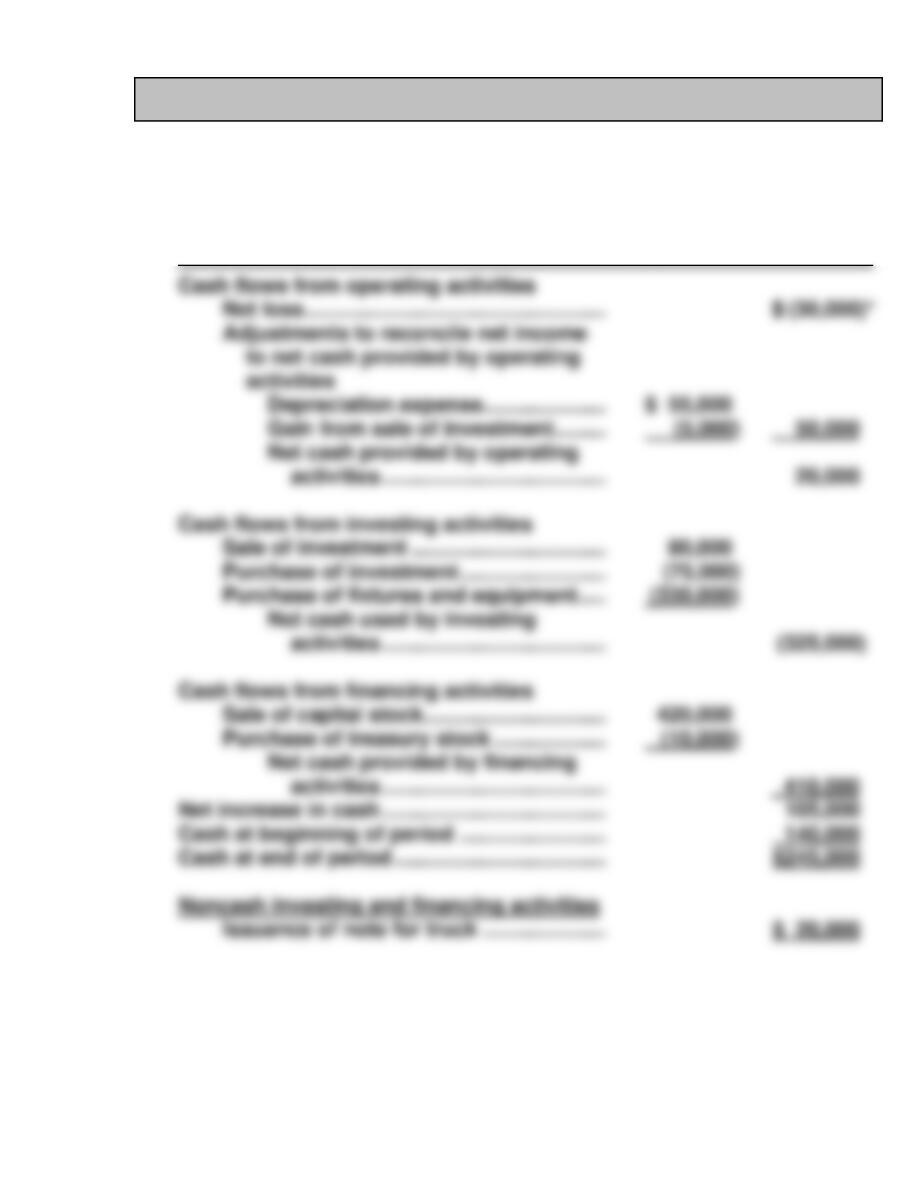
BYP 13-4 DECISION MAKING ACROSS THE ORGANIZATION
(a) GUTHRIE COMPANY
Statement of Cash Flows
For the Year Ended January 31, 2017
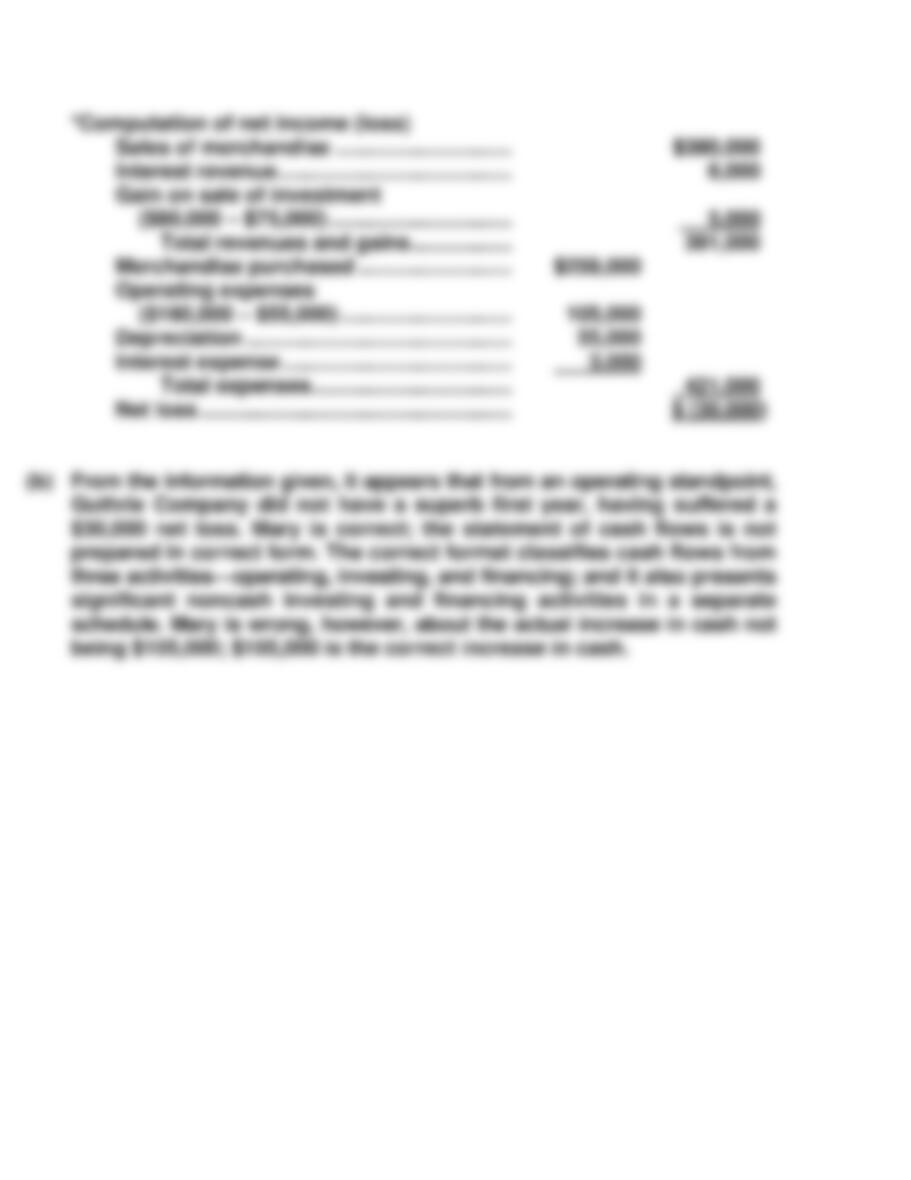
BYP 13-4 (Continued)
BYP 13-5 REAL-WORLD FOCUS
(b) The main purposes of these laws can be reduced to two common-sense
notions:

BYP 13-6 REAL-WORLD FOCUS
BYP 13-7 COMMUNICATION ACTIVITY
MEMO
To: Will Hardin
From: Student
Re: Statement of cash flows
BYP 13-8 ETHICS CASE
(a) The stakeholders in this situation are:
BYP 13-9 ALL ABOUT YOU
(a) The article describes three factors that determine how much money
BYP 13–10 FASB CODIFICATION ACTIVITY
(a) Cash equivalents are short-term, highly liquid investments that have
both of the following characteristics:
BYP 13-10 (Continued)
(d) Operating activities include all transactions and other events that are
IFRS EXERCISES
IFRS 13-1
IFRS 13–2
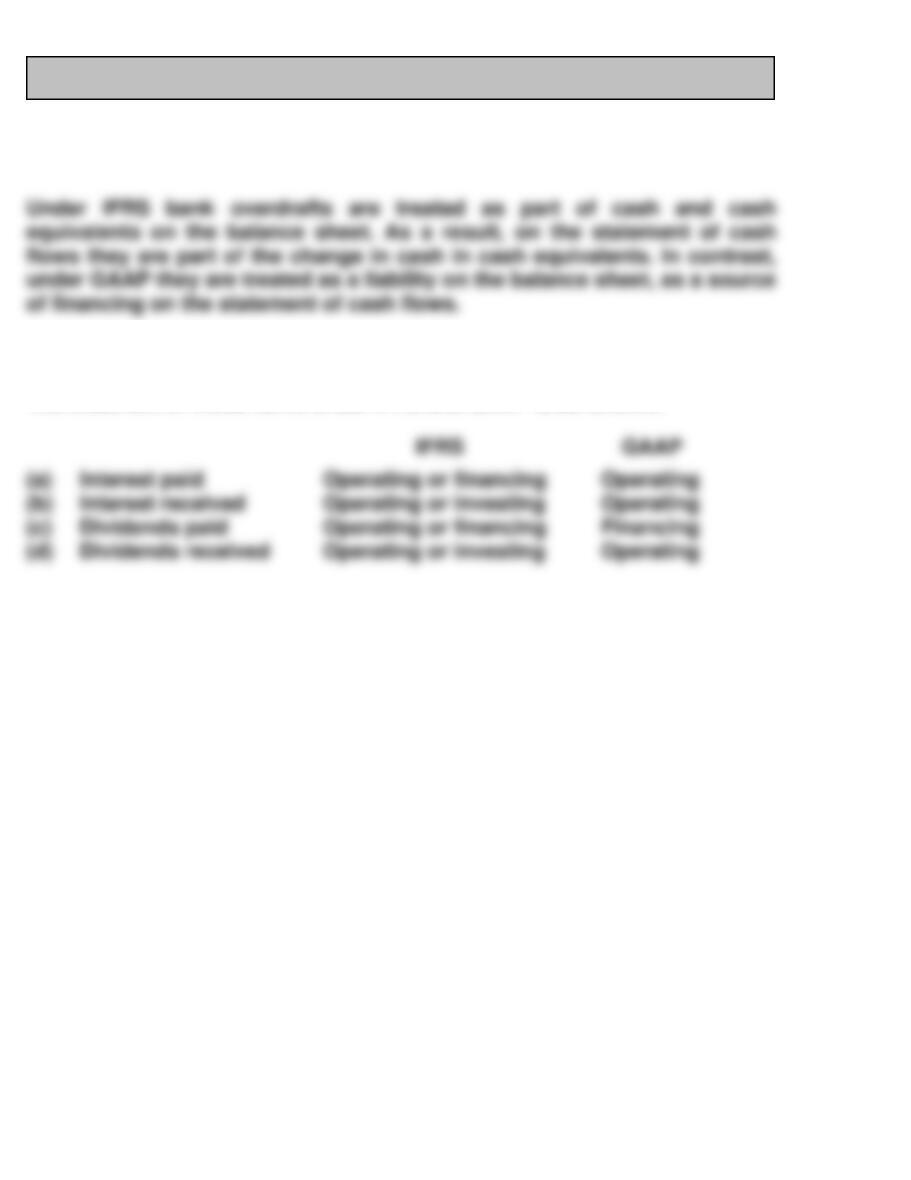
The treatment of these items under IFRS and GAAP is as follows:
IFRS 13-3 INTERNATIONAL FINANCIAL REPORTING PROBLEM