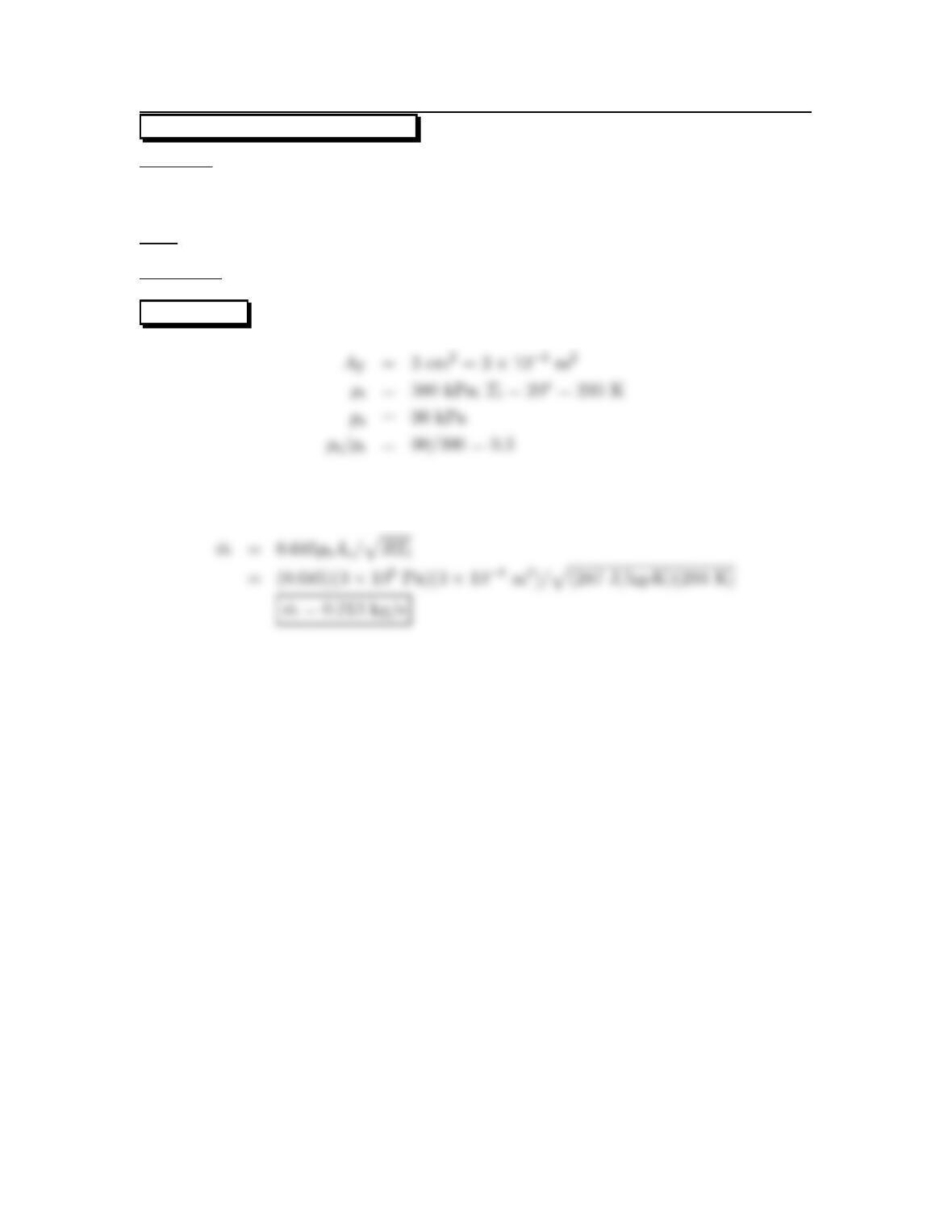
12.38: PROBLEM DEFINITION
Situation: A truncated nozzle has an area of 3 cm2,the total temperature and pressure
are 20oC and 300 kPa, abs and the back pressure is 90 kPa, abs. is described in the
problem statement.
Find:Massflow rate.
Properties:FromTableA.2(EFM10e),k=1.4,R
air =287J/kg-K
SOLUTION Pressures,pressure ratio and nozzle area.
Because pb/pt<0.528,sonic flow at exit.
Laval nozzle flow rate equation
41
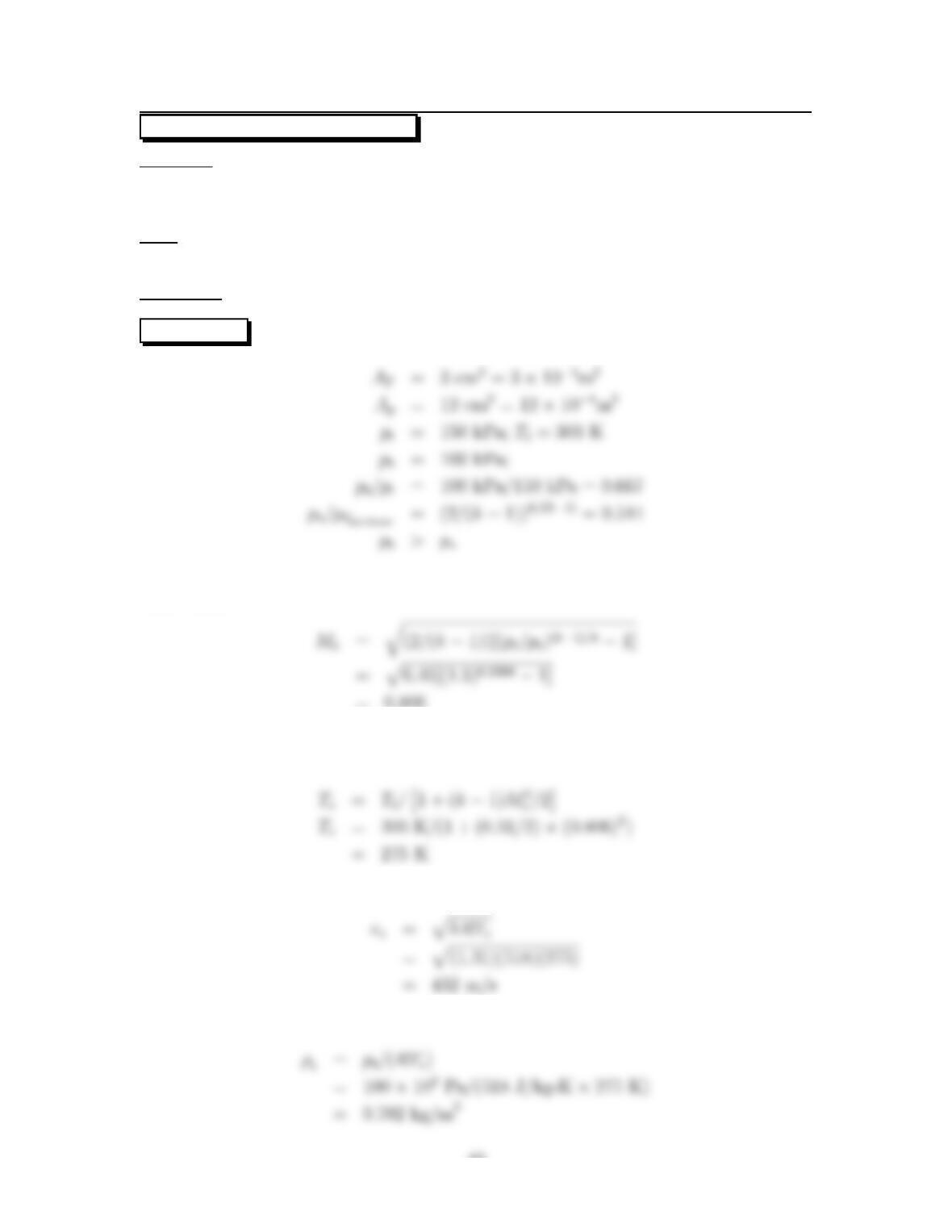
12.39: PROBLEM DEFINITION
Situation:A3cm
2truncated nozzle in a 12 cm2pipe used to measure mass flow rate
of methane. The upstream total temperature and pressure are 30oCand150kPa,
abs. Back pressure is 100 kPa.
Find:(a)Massflow rate of methane.
(b) Mass flow rate if Bernoulli equation is used.
Properties:FromTableA.2(EFM10e),k=1.31; Rmethane =518J/kgK.
SOLUTION Areas, pressures and temperatures.
The back pressure is greater than the critical pressure so subsonic flow at exit.
Mach number
=0.806
Temperature
Speed of sound
Ideal gas law
42
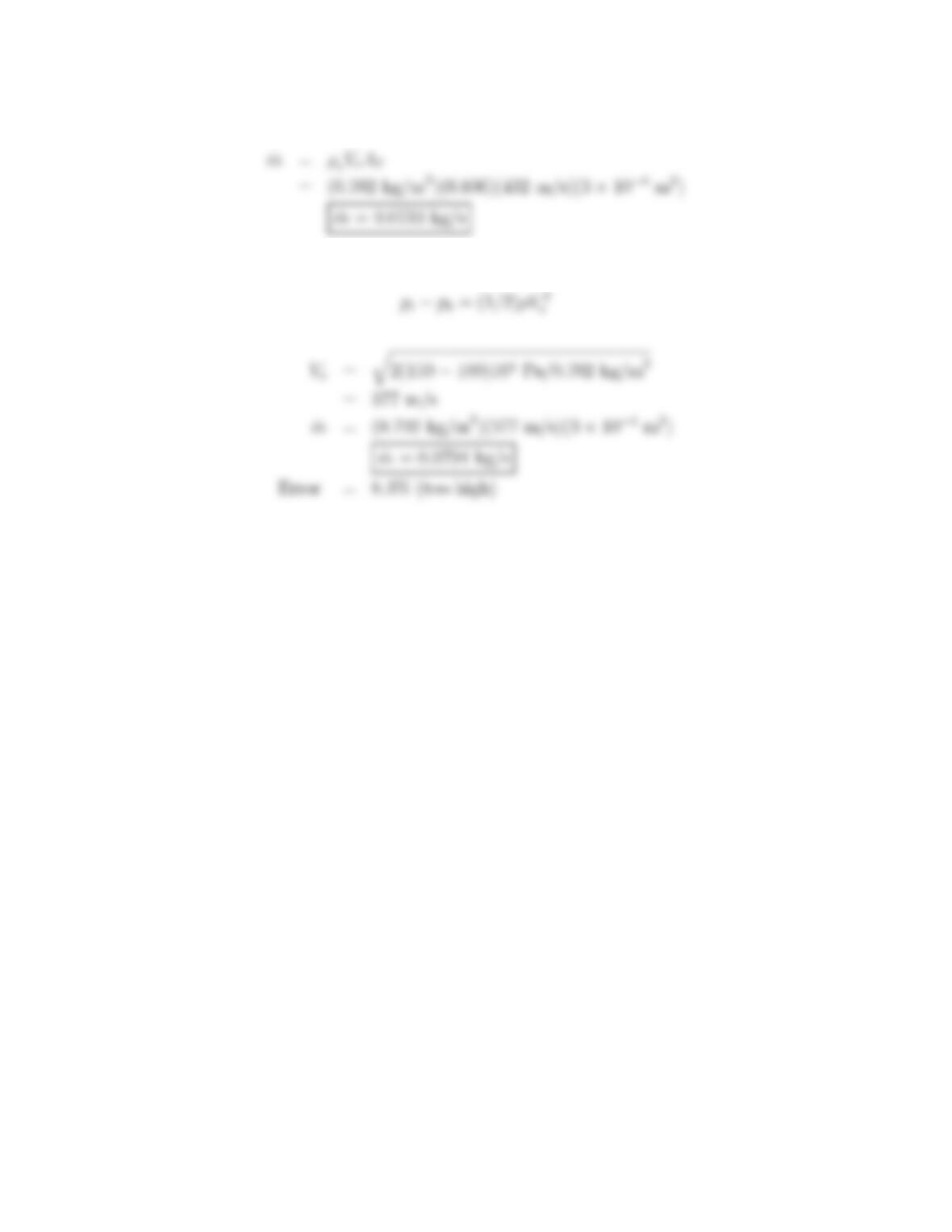
Flow rate equation
Assume the Bernoulli equation is valid,
43
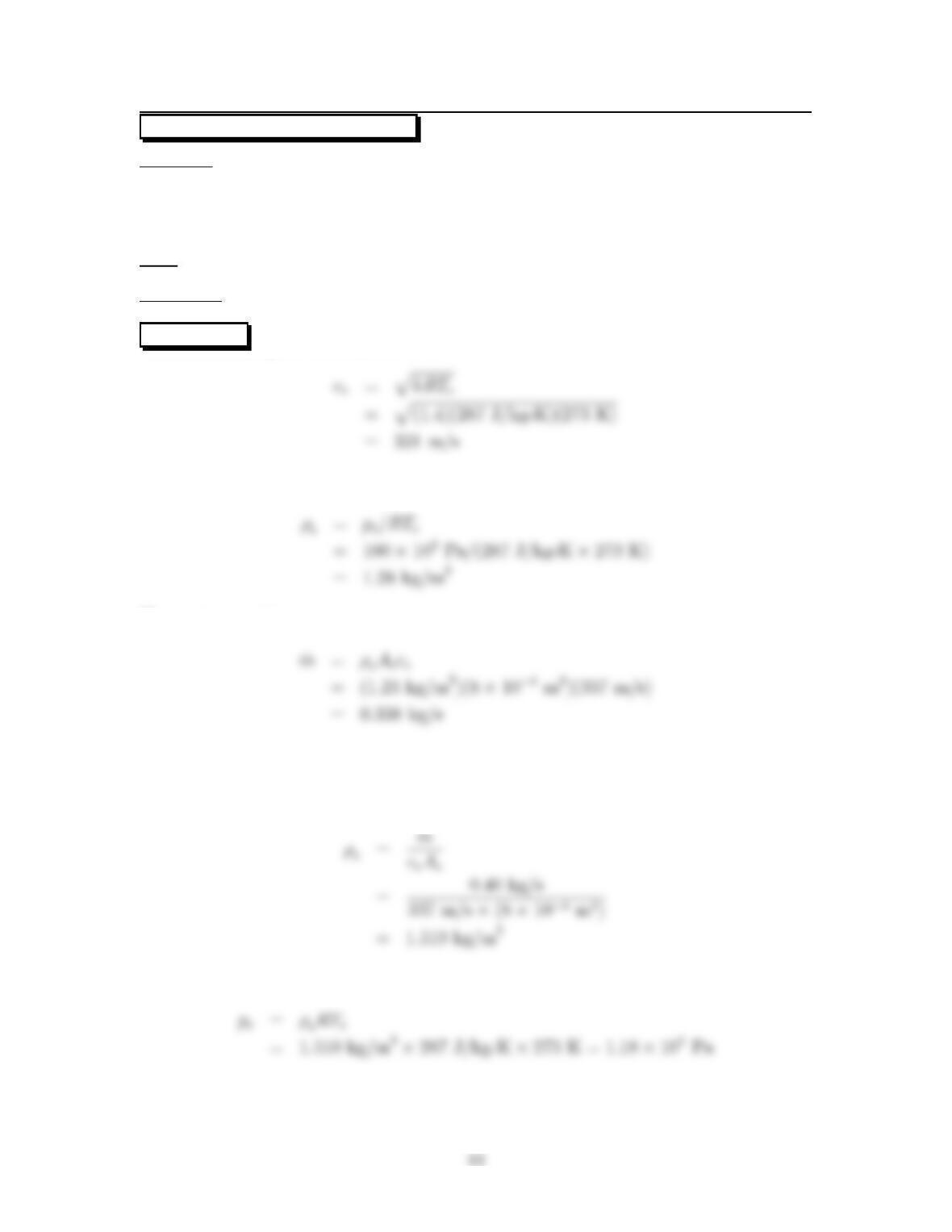
12.40: PROBLEM DEFINITION
Situation:
A8cm
2truncated nozzle is used to measure a mass flow rate of air of 0.40 kg/s.
Static temperature of air at exit is 0oC
Back pressure is 100 kPa.
Find: The total pressure.
Properties:FromTableA.2(EFM10e),k=1.4,R
air =287J/kg-K
SOLUTION Speed of sound at exit.
Ideal gas law (assume sonic flow at the exit so pe=100kPa)
Flow rate equation
Because the mass flow is too low, flow must exit sonically at pressure higher than the
back pressure.
Flow rate equation
Pressure at exit from ideal gas law
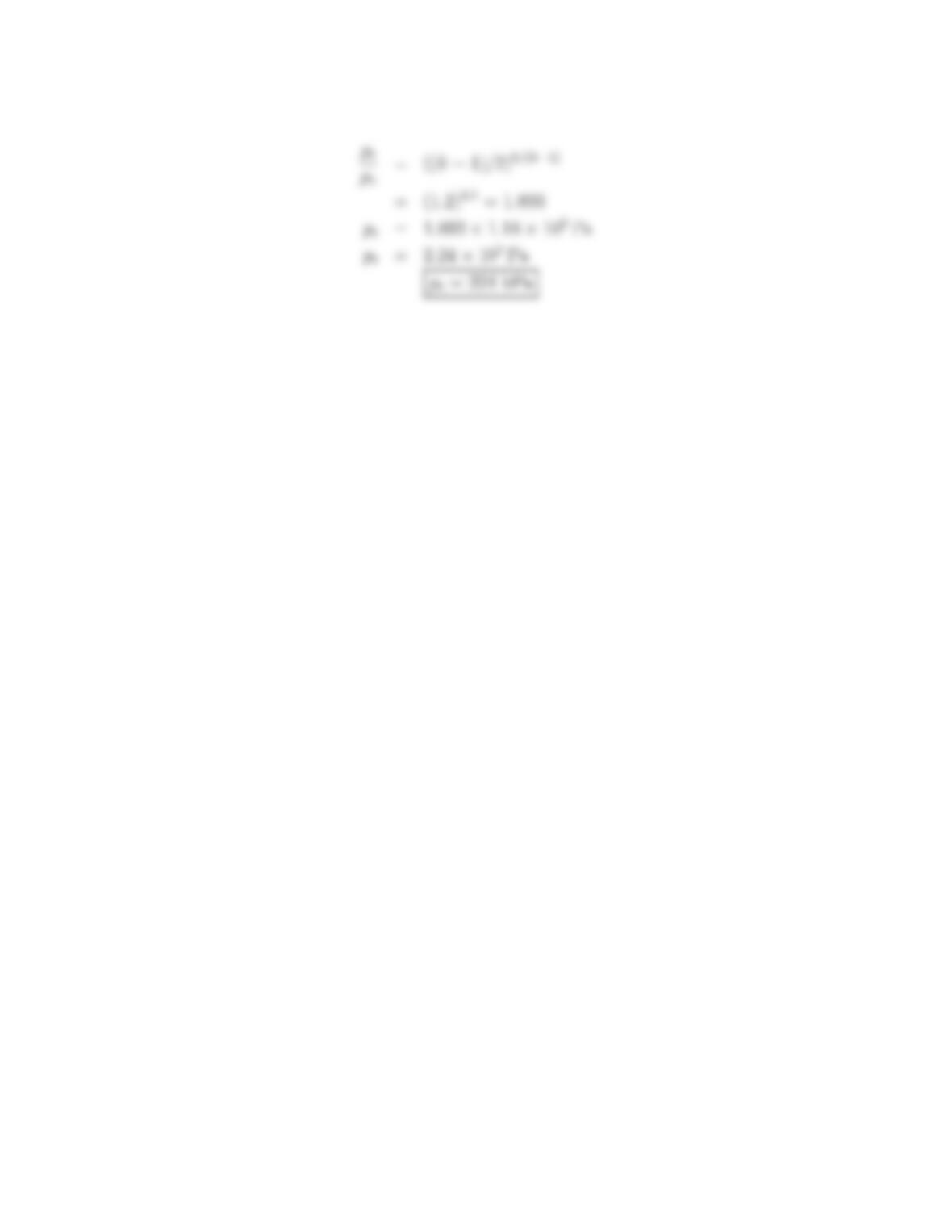
Then from equation for total pressure
45
12.41: PROBLEM DEFINITION
Situation:A10cm
2truncated nozzle is connected to helium reservoir at 28oCwith
a pressure first of 130 kPa and then 350 kPa and a back pressure of 100 kPa.
Find:Massflow rate of helium at both pressures.
Properties:FromTableA.2(EFM10e),k=1.66,RHe =2077J/kg-K.
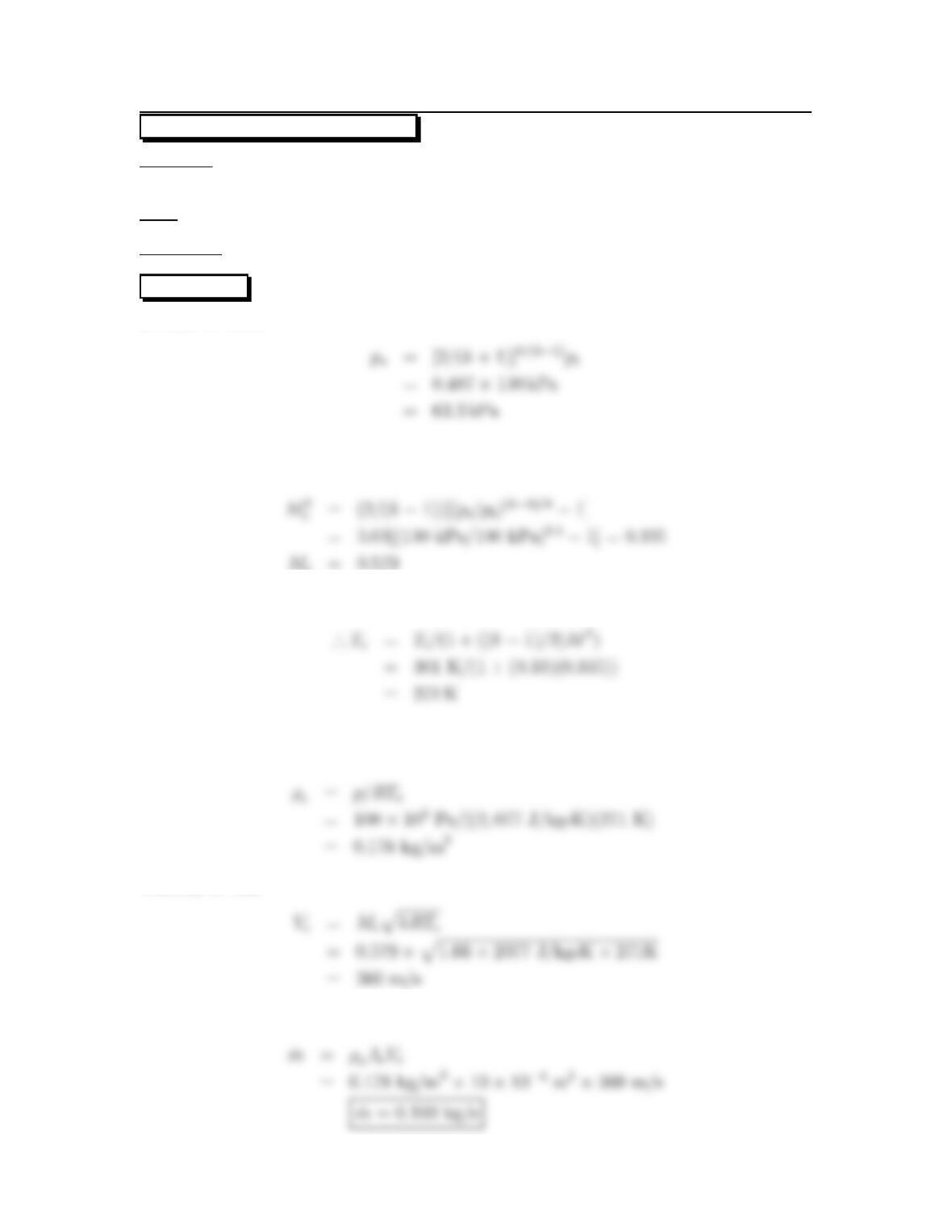
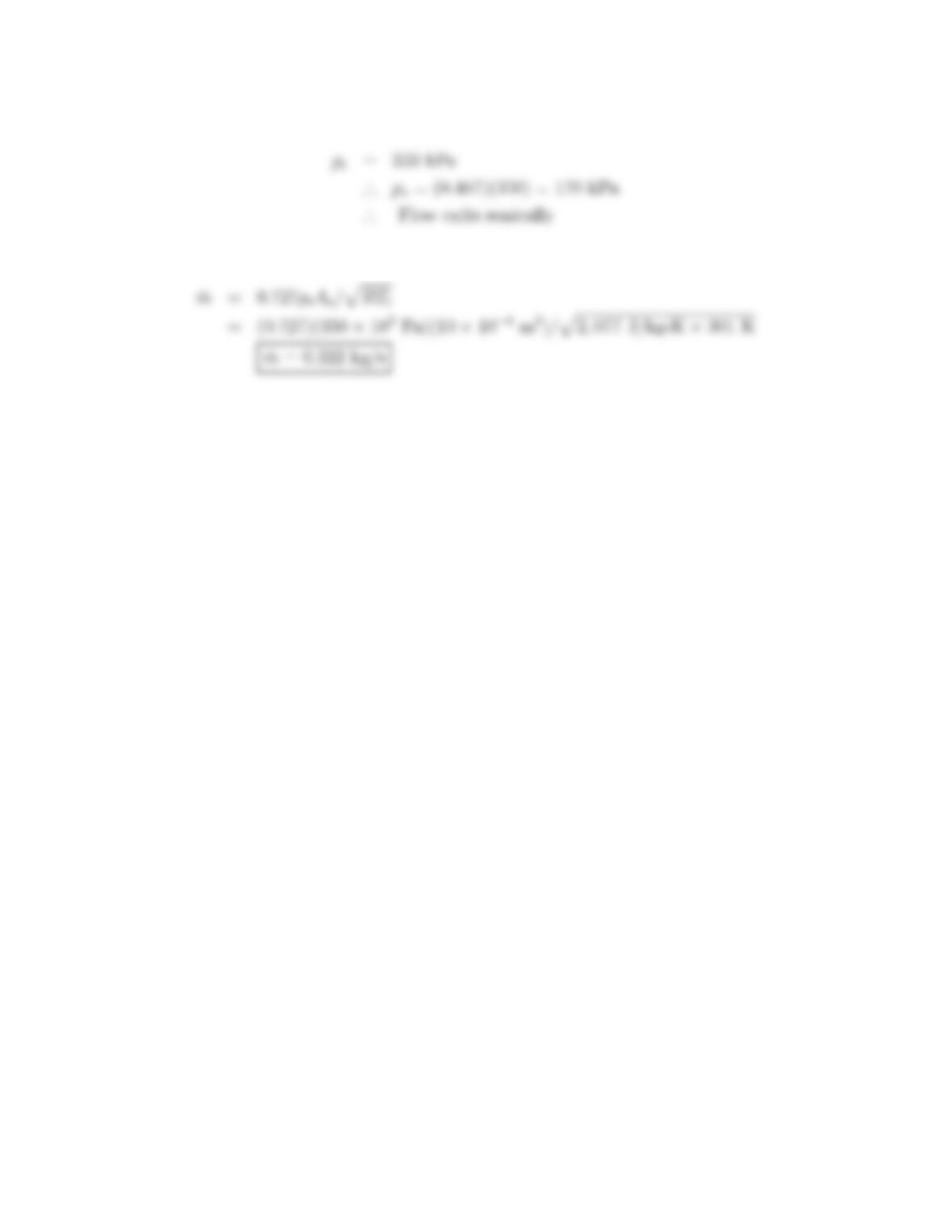
SOLUTION (a) pt=130kPa
If sonic at exit,
Back pressure is higher so flow must exit subsonically.
Find Mach number
Exit temperature
Densityatexitfromidealgaslaw
Velocity at exit
Flow rate equation
46
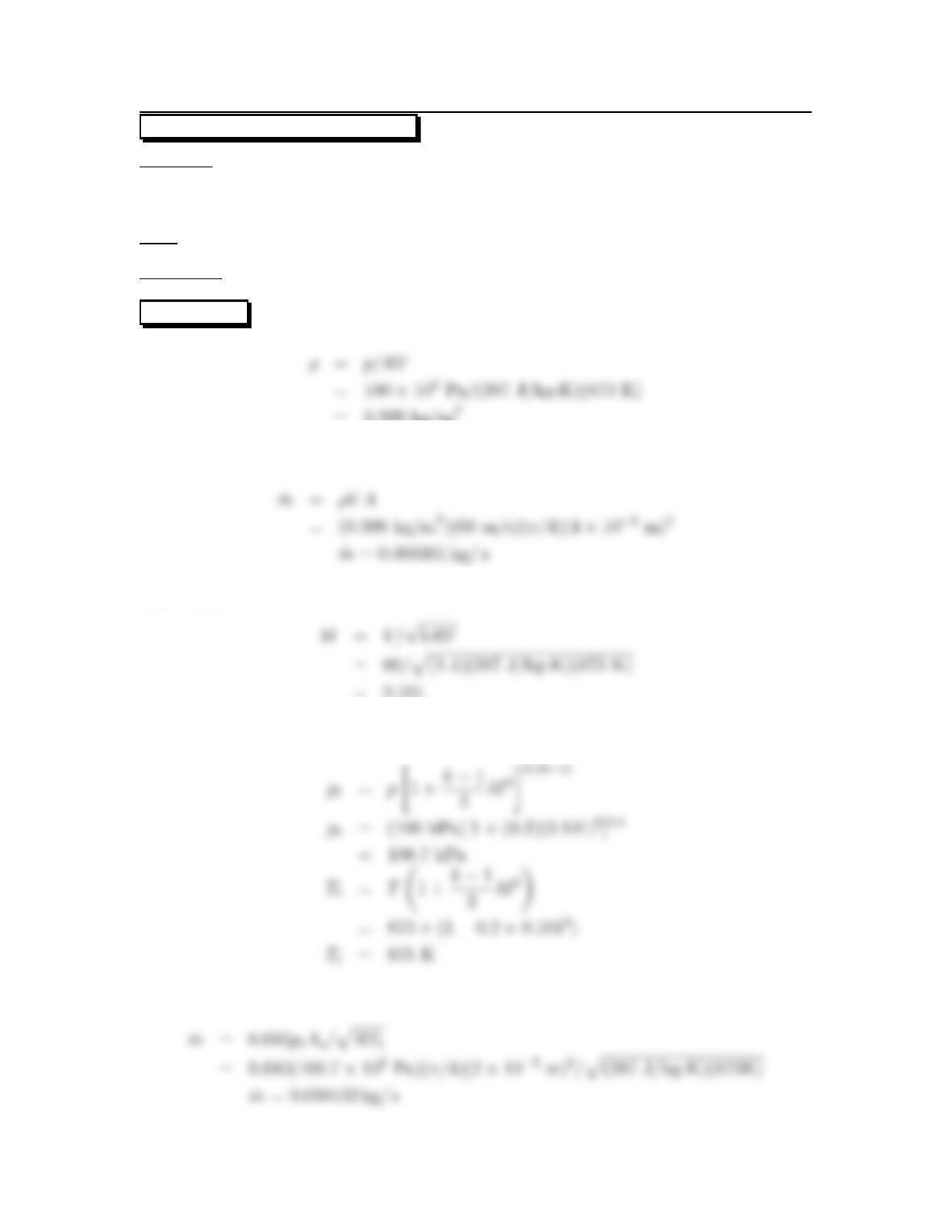
b) Exit pressure is 350 kPa.
Flow rate equation for sonic flow at exit
47
12.42: PROBLEM DEFINITION
Situation: A sampling probe consists of a 2 mm diameter nozzle in a 4 mm diameter
pipe. Probe mounted in 600oC air stream with velocity of 60 m/s. Back pressure for
nozzle is 100 kPa, abs.
Find: Pressure required for isokinetic sampling.
Properties:FromTableA.2(EFM10e),R=287J/kgK; k=1.4.
SOLUTION Gas density in stream from ideal gas law
=0.399 kg/m3
Flow rate equation
Mach number
=0.101
Total properties
Laval nozzle flow rate equation (assume sonic flow)
48
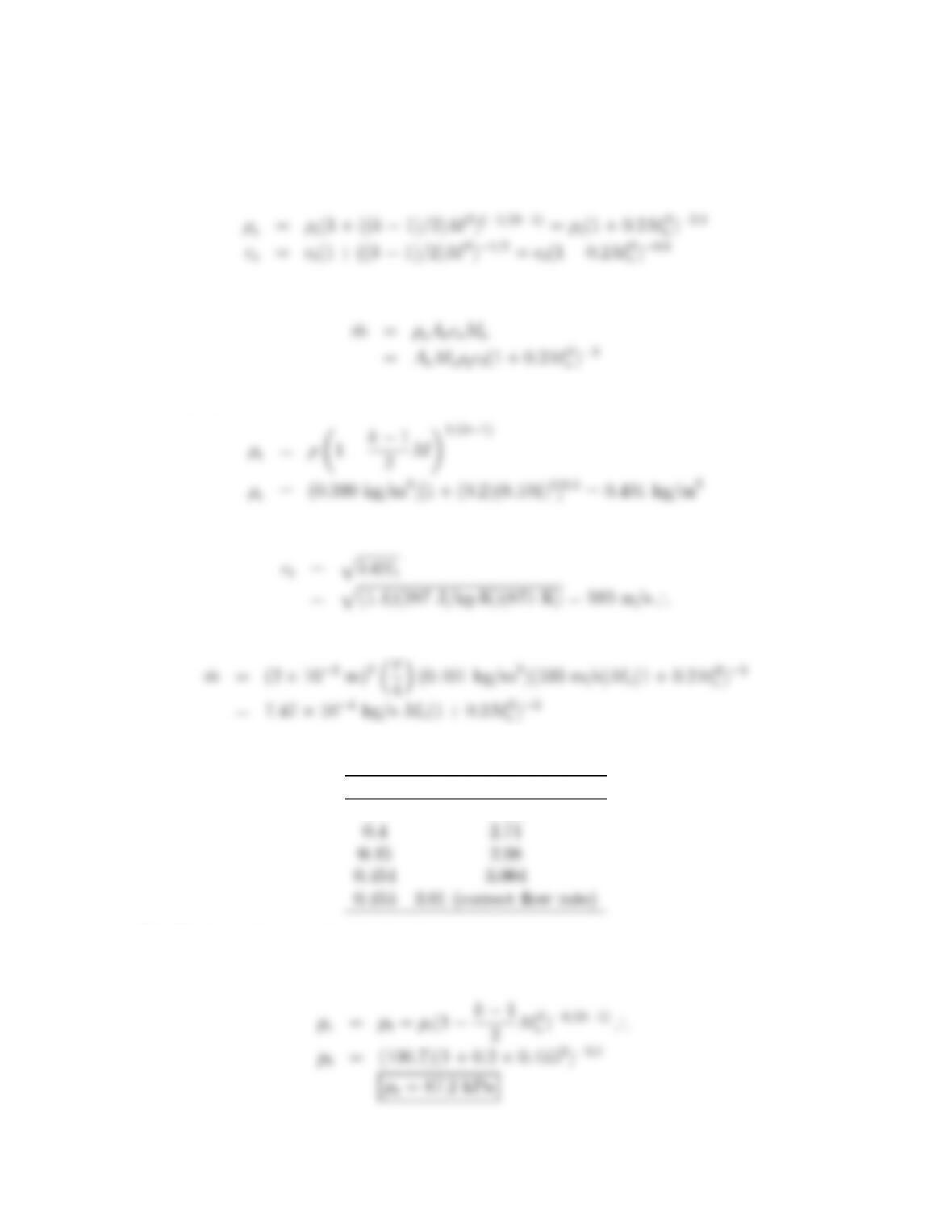
This is higher than mass flux entering for isokinetic sampling so flow must be subsonic
at constriction and solution must be found iteratively. Assume Mat constriction and
solve for ˙min terms of M.
Exit conditions
Flow rate
Total properties
The mass flow in terms of exit Mach number is
Create a table for mass flow as function of exit Mach number.
Me˙m×104
0.5 3.22
Use Mach number to calculate back pressure
49
12.43: PROBLEM DEFINITION
Situation: The design of a test system using truncated nozzles to measure performance
of compressor rated at 100 scfm at 120 psig.
Find: Explain how to carry out the test program to generate a performance curve,
pressure vs. flow rate.
Properties:FromTableA.2(EFM10e),Rair =1716ft-lbf/slug-oR; k=1.4.
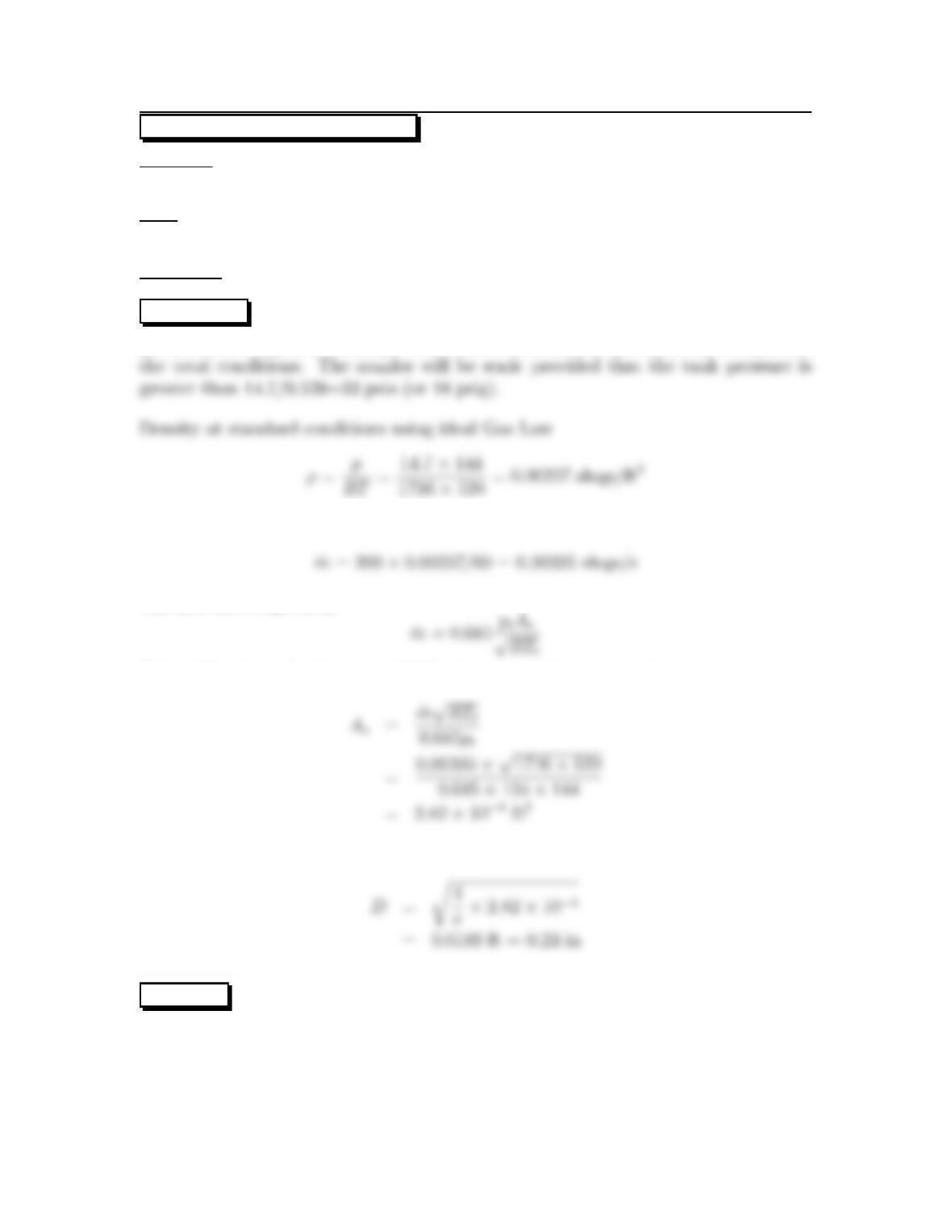
SOLUTION A truncated nozzle is attached to a storage tank supplied by the com-
pressor. The temperature and pressure will be measured in the tank. These represent
Amassflow rate of 200 scfm corresponds to
The flow rate is given by
Using 120 psig and a flow rate of 200 scfm gives a throat area of
This area corresponds to an opening of
REVIEW
1. This would represent the maximum nozzle size. A series of truncated nozzles
would be used which would yield mass flows of 1/4,1/2 and 3/4 of the maximum
flow rate. The suggested nozzle diameters would be 0.11 in, 0.15 in and 0.19 in.
Another point would be with no flow which represents another data point.
50

2. Each nozzle would be attached to the tank and the pressure and temperature
measured. For each nozzle the pressure in the tank must exceed 18 psig to
12.44: PROBLEM DEFINITION
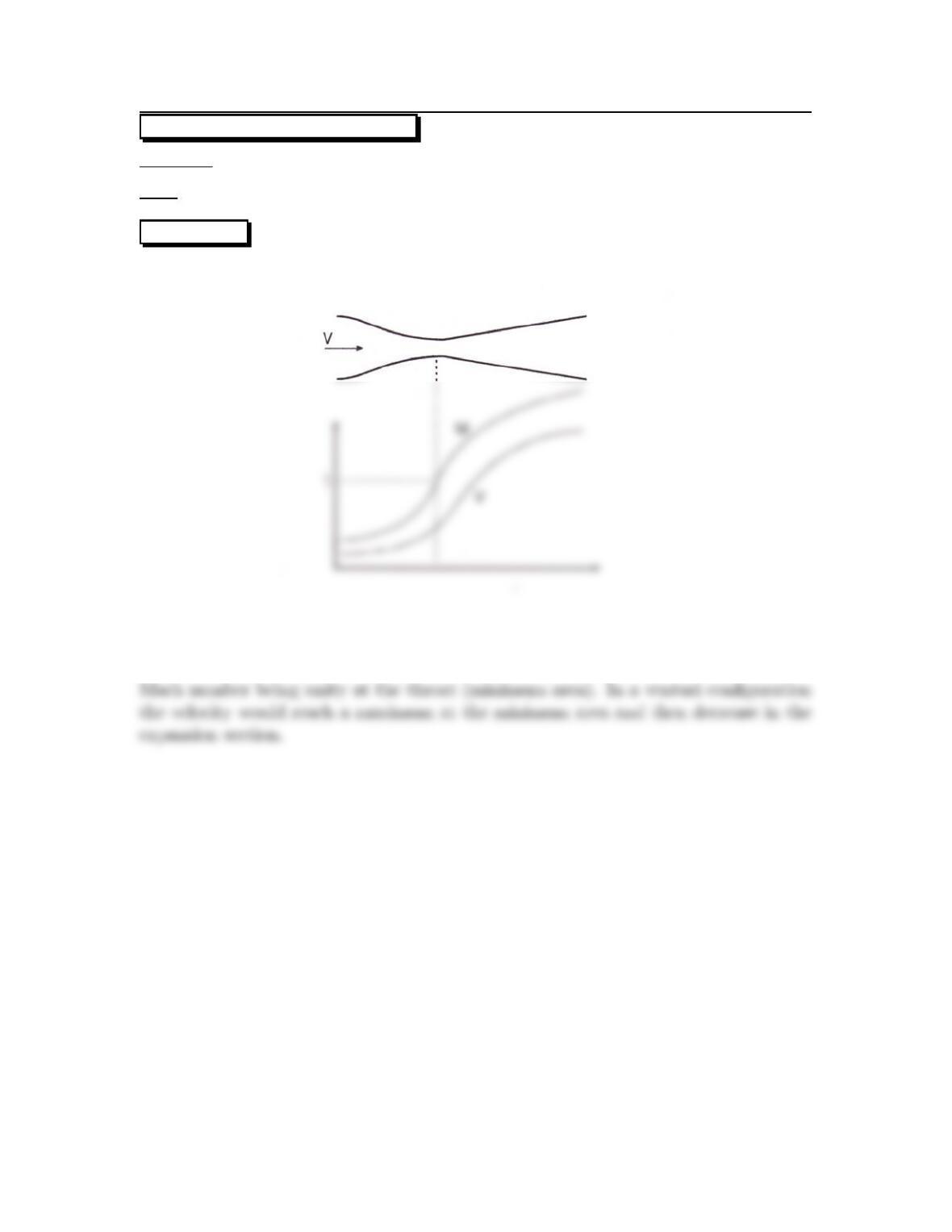
Situation: Mach number and velocity variation through a Laval nozzle.
Find: Sketch how Mach number and velocity vary through nozzle.
SOLUTION
The Mach number and velocity continuously increase through a Laval nozzle with the
52
12.45: PROBLEM DEFINITION
Situation:Definition of expansion ratio in a Laval nozzle.
SOLUTION The expansion ratio is the ratio of the cross-sectional area at the exit
53
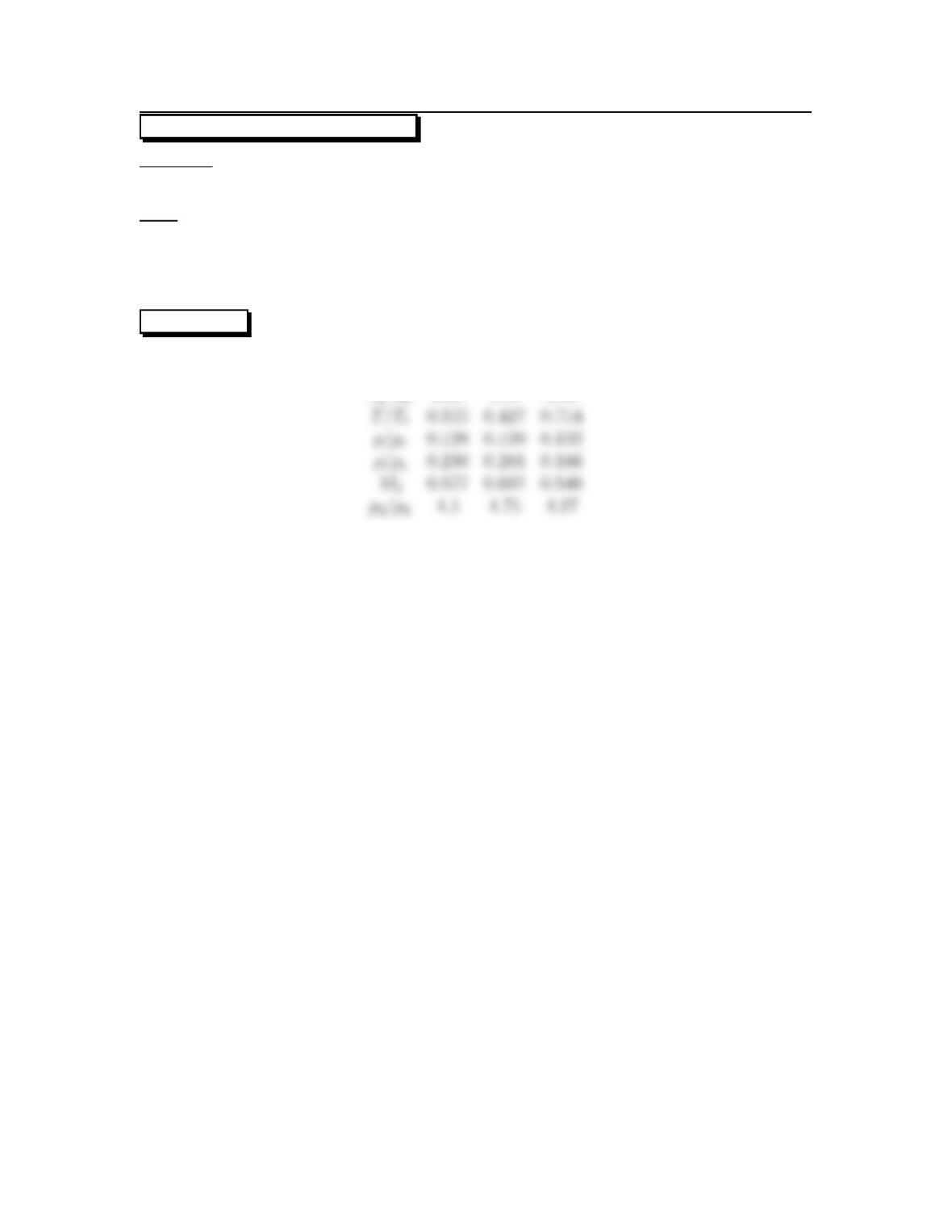
12.46: PROBLEM DEFINITION
Situation: Variation of flow properties in a Laval nozzle with Mach number and ratio
of specificheats.
Find: Develop a computer program with Mach number and ratio of specificheatsand
outputs: area ratio, static to total pressure ratio, static to total temperature ratio,
density to total density ratio and pressure ratio across a normal shock wave. Run the
program for M=2and k=1.3,1.4and 1.67.
SOLUTION The following results are obtained from the computer program for a
Mach number of 2:
fA/A∗1.69 1.53 1.88
54
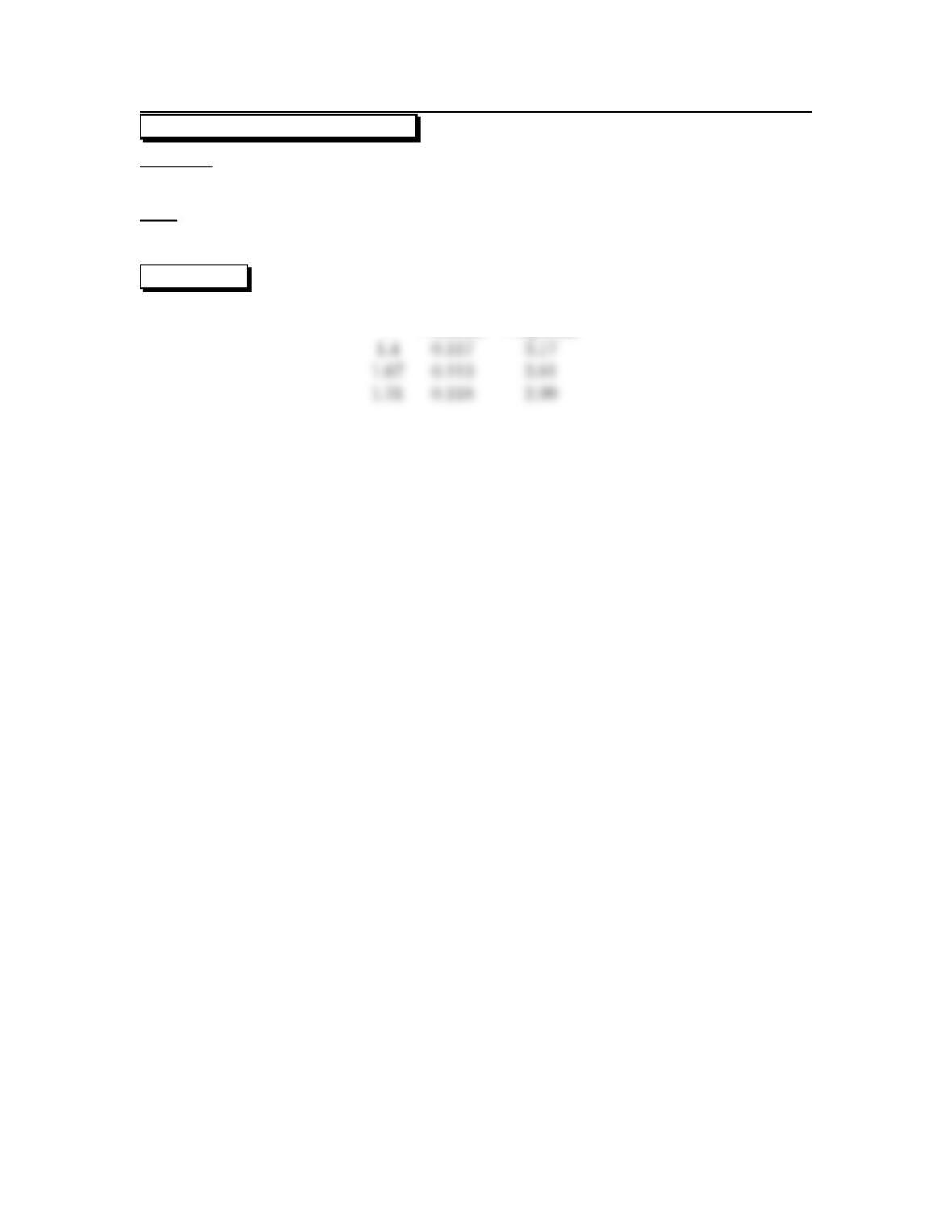
12.47: PROBLEM DEFINITION
Situation: MachnumberinaLavalnozzlevarieswitharearatioandtheratioof
specificheats.
Find: Develop a computer program that with area ratio outputs Mach number. Run
the program for an area ratio of 5.
SOLUTION The following results are obtained for an area ratio of 5:
kM
subsonic Msupersonic
55
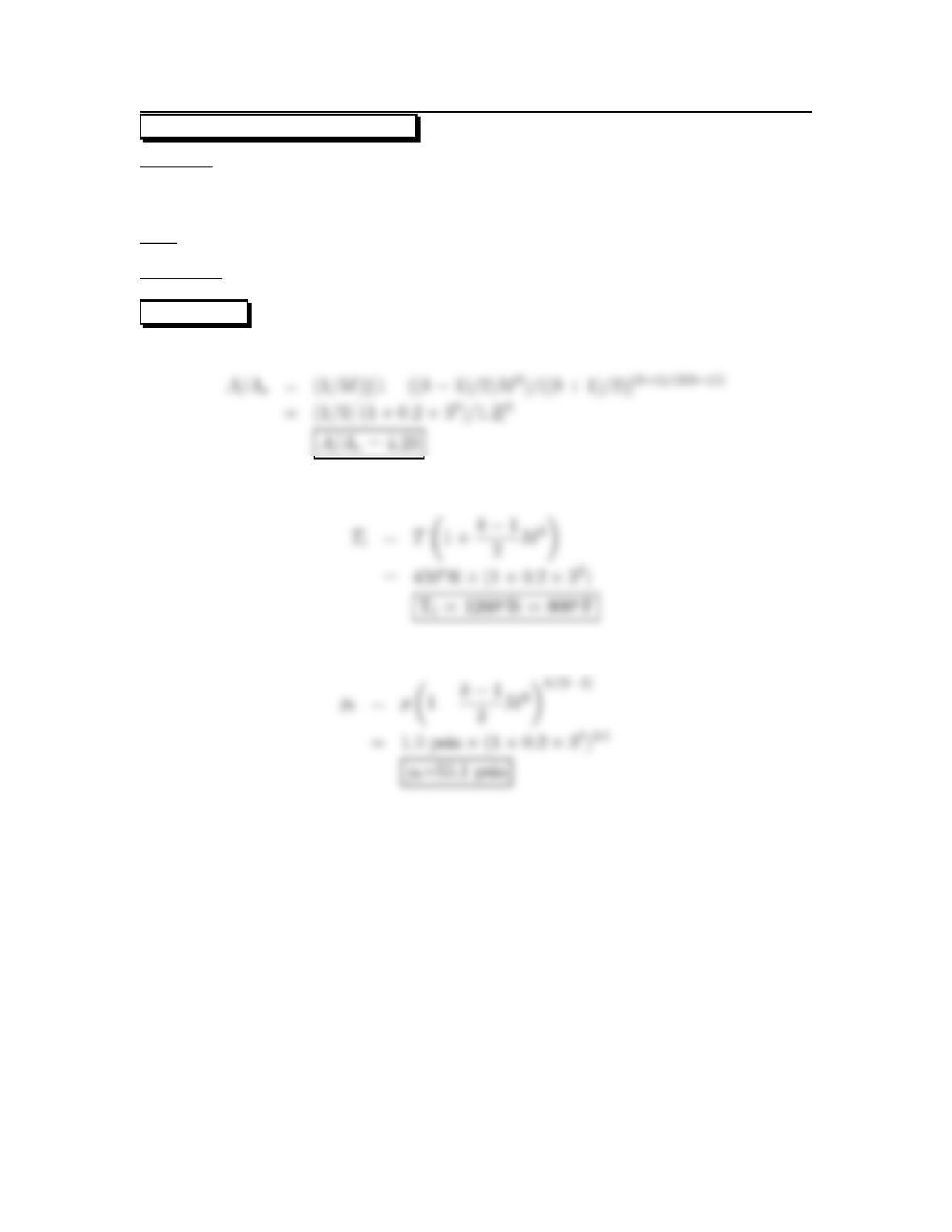
12.48: PROBLEM DEFINITION
Situation: A supersonic wind tunnel with air is designed to have a Mach number of
3, a static pressure of 1.5 psia and a static temperature of -10oF described in the
problem statement.
Find: The area ratio and reservoir conditions.
Properties:FromTableA.2(EFM10e),k=1.4,R
air =287J/kg-K.
SOLUTION Mach number-area ratio relationship
Total temperature
Total pressure
56
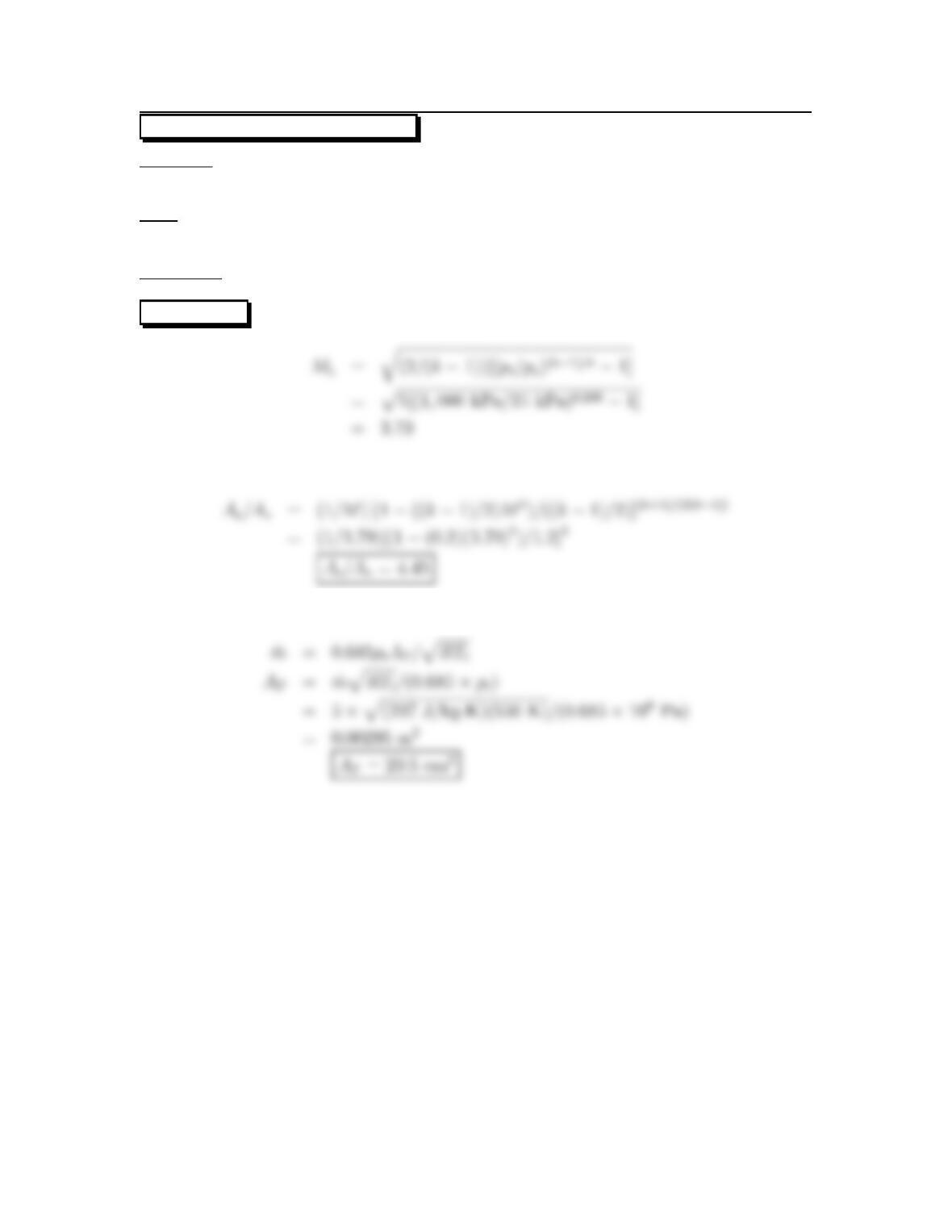
12.49: PROBLEM DEFINITION
Situation: Nitrogen in a Laval nozzle expands ideally to a pressure of 25 kPa, abs.
from a stagnation pressure of 1 MPa.
Find: a)Nozzlearearatio,b)throatareaforamassflow of 10 kg/s and stagnation
temperature of 550 K.
Properties:FromTableA.2(EFM10e),k=1.4; R=297J/kgK.
SOLUTION Calculate exit Mach number
Mach number-area ratio relationship
Flow rate equation for Laval nozzle
57