2. What is the form of acquisition used in this deal? Why might this form have been chosen? What are the
advantages and disadvantages of the form of acquisition?
Answer: The form of acquisition reflects what is being acquired (stock or assets) and how ownership is
conveyed. In this deal, the form of acquisition was a purchase of all of Pharmacyclics outstanding shares. As
3. Would you characterize this as a reverse or forward merger? Based on your answer why might this type of
reorganization have been selected by AbbVie?
Answer: This is a reverse merger in which the merger sub is merged into the target with the target surviving.
4. How would the fixed value collar arrangement work to fix the value of the offer price? How would this affect
AbbVie and Pharmacyclics shareholders?
Answer: The collar arrangement is designed to allay acquirer investor anxiety about the extent of potential
5. How would this deal be treated for financial reporting purposes? Briefly describe how the methodology you
have
identified might be applied to how Pharmacyclics’ financial data would be presented on AbbVie’s consolidated
financial statements.
Answer. For financial reporting purposed, business combinations must be accounted for using the purchase
method of accounting. This requires that the fair market value of Pharmacyclics assets and liabilities must be
6. Assume it is determined by auditors during the next several years that AbbVie overpaid significantly for
Pharmacyclics. What is the most likely reason this determination could happen? How might this impact the
firm’s reported earnings per share and in turn its share price? Be specific.
Answer: The most likely reason for auditors to determine that AbbVie overpaid is that the projected sales of the
drug Imbruvica do not materialize suggesting that future cash flows do not support the fair market value of
7. What is the purpose of a termination fee in these types of deals?
Answer: The use of a termination fee was employed to discourage the target from accepting or receiving other

8. Did the sale of Pharmacyclics require a vote by the firm’s shareholders? Explain your answer.
Johnson & Johnson Uses Financial Engineering to Acquire Synthes Corporation
_____________________________________________________________________________
Key Points:
While tax considerations rarely are the primary motivation for takeovers, they make transactions more attractive.
Tax considerations may impact where and when investments such as M&As are made.
Foreign cash balances give multinational corporations flexibility in financing M&As.
_____________________________________________________________________________________
U.S.–based Johnson & Johnson (J&J), the world’s largest healthcare products company, employed creative tax
strategies in undertaking the biggest takeover in its history. When J&J first announced that it would acquire Swiss
medical device maker Synthes for $19.7 million in stock and cash, the firm indicated that the deal would dilute its
current shareholders due to the need for J&J to issue 204 million new shares to pay for the stock portion of the
purchase price. Investors expressed their dismay by pushing the firm’s share price down immediately following the
announcement. J&J looked for a way to make the deal more attractive to investors while preserving the composition
of the purchase price paid to Synthes’ shareholders (two-thirds stock and the remainder in cash). They could defer
the payment of taxes on that portion of the purchase price received in J&J shares until such shares were sold;
however, they would incur an immediate tax liability on any cash received.
Softbank Places a Big Bet on the U.S. Telecom Market
____________________________________________________________________________
Case Study Objectives: To illustrate
• Form of payment and of acquisition.
• Complex deal and financial structures, and
• Tax and accounting considerations.
______________________________________________________________________________
As the third largest wireless telecom company in the U.S., Sprint-Nextel (Sprint) had been recovering from its 2005
buyout of Nextel and its ongoing spending of billions on building a Long-Term Evolution (LTE) network to
compete against its bigger rivals. Sprint has not shown an annual profit since 2006 following its 2005 takeover of
Nextel. While well-ahead of T-Mobile (the fourth largest U.S. telecom provider) in terms of constructing its “next
generation” network, it is well behind number one Verizon and number two AT&T. With the completion of the T–
Mobile and MetroPCS merger on May 1, 2013, Sprint faced increased competition with a tougher competitor in the
lower priced cellphone service market. Laboring under $21 billion in debt assumed to finance the Nextel takeover,
Sprint faced a financial crossroads as a major portion of the debt was coming due in late 2013.
The terms of the deal required that SoftBank pay Sprint a reverse termination (breakup) fee of $600 million if the
merger did not close because SoftBank could not obtain financing; Sprint also would have had to pay SoftBank a
termination (breakup) fee of $600 million if the merger did not close because Sprint had accepted a superior offer by
a third party. After a rigorous regulatory review before receiving approval, the merger was completed on July 8,
2013.
Softbank began as a software firm in 1981 before successfully moving into Internet services, eventually boasting
a market value of $180 billion. With the bursting of the dot-com bubble in 2000, the firm’s capitalization collapsed
to as little as $20 billion. Since then the firm has recovered its lost ground as Japan’s only service provider offering
the IPhone and a voice and data plan with a pricing structure that appealed to Japanese subscribers. Softbank also
companies. SoftBank hopes to acquire wireless service providers having significant unused spectrum (wireless
bandwidth) and other operators to build on Sprint’s spectrum position, while hoping that the further consolidation of
the industry will firm pricing. While limited, potential synergies could include volume discounts on handsets and
telecommunications equipment purchased by the combined firms. SoftBank’s founder and CEO, Masayoshi Son’s
stated goal in buying Sprint was to create the biggest and fastest wireless network in the U.S., the same strategy it is
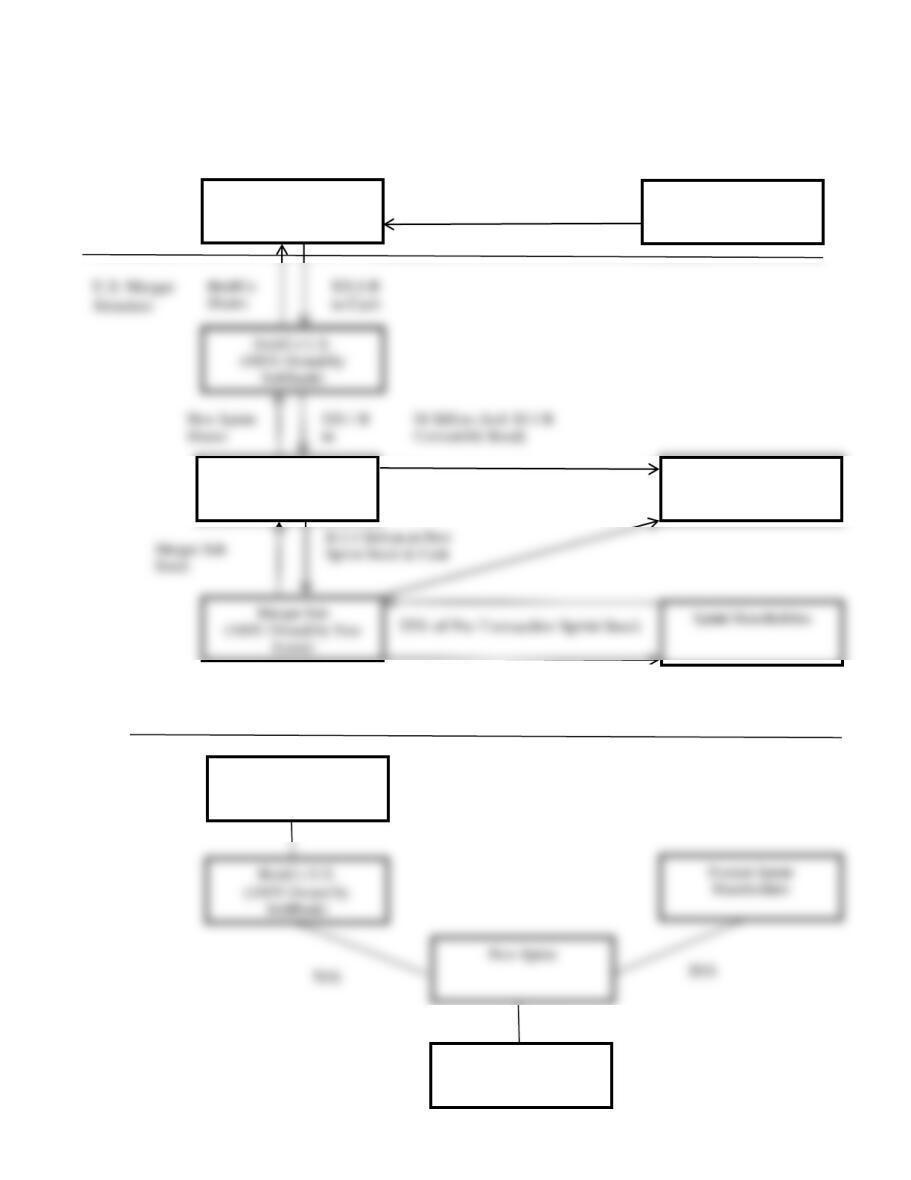
Figure 12.7 illustrates the transaction’s timeline from Sprint’s pre-transaction ownership through a series of steps
culminating in the transfer of 70% of the firm’s ownership to SoftBank. These steps are described in more detail
below.

Step 1: Immediately following the announced agreement between SoftBank and Sprint, SoftBank invested $3.1
billion in Sprint in exchange for a newly issued convertible bond having a 1% coupon, 7 year maturity, and
convertible (if the merger is or is not completed) at $5.25 per share into newly issued Sprint shares. The newly
from 3.0 billion pre-transaction to 3.6 billion.
Step 2: Upon receiving regulatory approval and Sprint shareholder approval, SoftBank provided an additional
$17 billion:
(A) Of this amount, Sprint retained $4.9 billion by issuing 933 million new Sprint common shares valued at
$5.25 per share and a warrant to SoftBank to buy 55 million shares at the same price per share.
(B) The remaining $12.1 billion was distributed to Sprint shareholders through a tender offer for 30% of
the outstanding Sprint stock valued at $7.30 per share. Sprint shareholders had the option of accepting $7.30 in cash
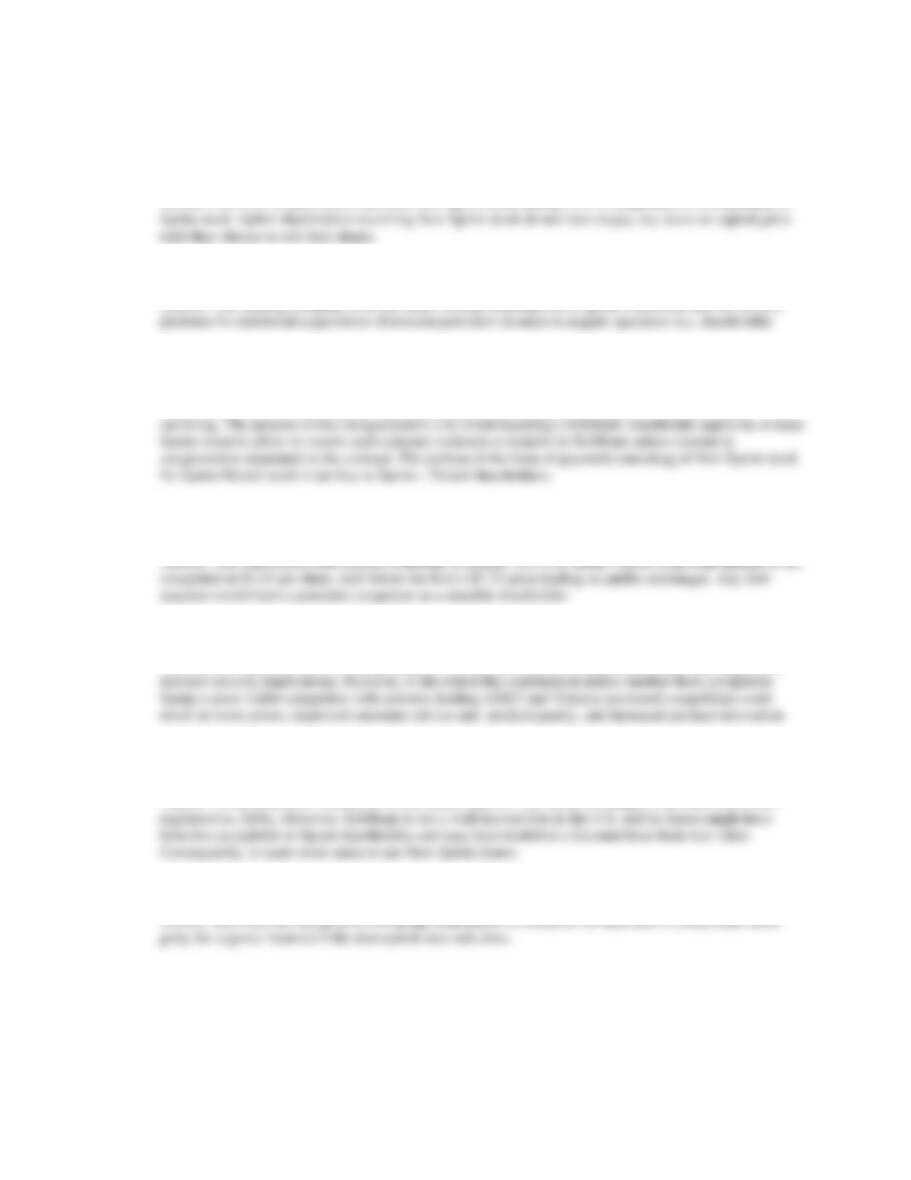
Figure 12.8 illustrates the complex financial engineering underlying this transaction. SoftBank augments $19
billion from a Japanese banking syndicate with $1.1 billion of its own cash on hand and uses it to capitalize a United
States’ holding company (HoldCo). HoldCo in turn establishes a wholly-owned subsidiary (New Sprint) in which it
will own 100% of the subsidiary’s stock in exchange for the $20.1 billion provided by SoftBank. On the
_________________ _________________ ______________________________________ ________________
Pre-Transaction
3.0 billion
Step 1: SoftBank
@$5.25 per share3
3.6 billion
Step 2A: SoftBank
@$5.25 per share
and a warrant to
buy 54.6 million
4.6 billion
Step 2B: SoftBank
4.6 billion
Pre-Transaction Immediately After At Close Post-Transaction
Ownership Signing Ownership
70%
$8 billion cash infusion Into Sprint
$12.1 billion cash to
Sprint shareholders
Figure 12.7 Transaction Timeline
(Total Purchase Price at Closing = $21.1 Billion)1
1The purchase price increases to $20.4 billion once SoftBank exercises its warrant to buy an additional 55 million common shares at $5.25 per share.
Table 12.7 Calculating Shares Outstanding for Steps 1, 2A and 2B
Announcement Date
At Closing
5-Year Warrants
($ in Billions and Shares in
Millions)
Sprint
Conversion
Step 1
Sprint
Common
Issuance
Step 2A
Sprint
$12.1
Tender
Offer
Step 2B
Sprint
Warrants
to Buy
55M
shares
Step 2C
Sprint
Pre-Transaction Common Sh.
Issued to SoftBank1
3,004
—
—
—
3,004
—
—
933
3,004
933
(1,663)
—
1,341
933
—
—
1,341
933
Source: Sprint – SoftBank Investor Presentation, 10/15/2012
1New Sprint shares issued to SoftBank for that portion of the $17 billion contributed by SoftBank to Sprint and not used in the tender offer, that is, $17.0 –
$12.1 = $4.9 billion.
3,004
37
590
3,004
39
933
3,938
39
3,938
48
3,938
48
SoftBank
(Japan)
Sprint
New Sprint
(100% Owned by
HoldCo U.S.)
Merger Sub
SoftBank
(Japan)
U.S. Post
Merger
Sprint
Figure 12.8 SoftBank-Sprint Merger
$12.1 Billion in Cash & New Sprint
Stock
100%
Japanese Banking
Syndicate
$19.1 B Loan
Japan
Discussion Questions:
1. What is the form of payment and form of acquisition employed by SoftBank in its takeover of Sprint-
Nextel? Is all or some of the total consideration paid to Sprint shareholders tax free?
Answer: The form of payment is cash and New Sprint stock and the form of acquisition is the purchase of
2. What is the purpose of the holding company structure adopted by SoftBank in this transaction?
3. Would you characterize this as a reverse or forward merger? Based on your answer why was this type of
reorganization selected by SoftBank? Will this takeover require a vote by Softbank shareholders?
Answer: This is a reverse merger in which the merger sub is merged into Sprint-Nextel with Sprint
4. The convertible debt is described as a “stock lockup.” How does the convertible debt discourage other
interested parties from bidding on Sprint?
5. What are the arguments for and against the proposed takeover being approved by U.S. regulators?
Answer: The takeover allows a foreign firm to own and have access to important patents that might have
6. Why did SoftBank use New Sprint shares as part of the tender offer to Sprint shareholders rather than its
own shares?
Answer: While SoftBank’s shares do not currently trade on U.S. stock exchanges, they could have been
7. What is the purpose of the reverse termination and termination fees employed in the transaction?

Energy Transfer Outbids Williams Companies for Southern Union—Alternative Bidding Strategies
_____________________________________________________________________________
Key Points
Higher bids involving stock and cash may be less attractive than a lower all-cash bid due to the uncertain nature of the value of the
acquirer’s stock.
Master limited partnerships represent an alternative means for financing a transaction in industries in which cash flows are relatively
predictable.
______________________________________________________________________________
Energy pipeline company Southern Union (Southern) offered significant synergistic opportunities for competitors Energy Transfer Equity
(ETE) and The Williams Companies (Williams). Increasing interest in natural gas as a less polluting but still affordable alternative to coal
and oil motivated both ETE and Williams to pursue Southern in mid-2011. Williams, already the nation’s largest pipeline company,
accounting for about 12% of the nation’s natural gas distribution by volume, viewed the acquisition as a means of solidifying its premier
position in the energy distribution industry. ETE saw Southern as a way of doubling its pipeline capacity and catapulting itself into the
number-one position in the industry.
While both ETE and Williams were attracted to Southern because the firm’s shares were believed to be undervalued, the potential
synergies also are significant. ETE would transform the firm by expanding its business into the Midwest and Florida and offers a very
good complement to ETE’s existing Texas-focused operations. For Williams, it would create the dominant natural gas pipeline system for
the Midwest and Northeast and give it ownership interests in two pipelines running into Florida.
Despite the transition of exploration and production companies to liquids for distribution, Southern continued to trade, largely as an
annuity offering a steady, predictable financial return. During the six-month period prior to the start of the bidding war, Southern’s stock
was caught in a trading range between $27 and $30 per share. That changed in mid-June, when a $33-per-share bid from ETE, consisting
of both cash and stock valued by Southern at $4.2 billion, put Southern in “play.” The initial ETE offer was immediately followed by a
series of four offers and counteroffers, resulting in an all-cash counteroffer of $44 per share from The Williams Companies, valuing
Southern at $5.5 billion. This bid was later topped with an ETE offer of $44.25 per Southern share, boosting Southern’s valuation to
approximately $5.6 billion.
ETE removed any concerns about the firm’s ability to finance the cash portion of the transaction when it announced on August 5,
2011, that it had received financing commitments for $3.7 billion from a syndicate consisting of 11 U.S. and foreign banks. The firm also
announced that it had received regulatory approval from the Federal Trade Commission to complete the transaction.
As part of the agreement with ETE, Southern contributed its 50% interest in Citrus Corporation to Energy Transfer Partners for $2
billion. The cash proceeds from the transfer will be used to repay a portion of the acquisition financing and to repay existing Southern
Union debt in order for Southern to maintain its investment-grade credit rating. Following completion of the deal, ETE moved Southern’s
30
pipeline assets into Energy Transfer Partners and Regency Energy Partners, eliminating their being subject to double taxation. These
actions helped to offset a portion of the purchase price paid to acquire Southern Union.
Discussion Questions
1. If you were a Southern shareholder, would you have found the Williams or the Energy Transfer Equity bid more attractive?
Explain your answer.
Answer: The attractiveness of each bid to the Southern shareholder would depend on their personal tax situation. While Williams
2. The all-cash Williams bid was contingent on the firm completing full due diligence on Southern Union. Why would this
represent a potential risk to Southern Union shareholders?
Answer: The Williams Companies had based their bid on less than complete information gleaned from public sources or from
their own knowledge of the business. They had not been given access to the audited financial statements of Southern Union; nor
3. Energy Transfer Equity transferred Southern Union’s pipeline assets into its primary master limited partnerships in order to
finance a portion of the purchase price. In what way could this action be viewed as a means of offsetting a portion of the
purchase price? In what way may this action have created a tax liability for Energy Transfer Equity?
Answer: Both Williams and ETE would have moved Southern’s pipeline assets into their master limited partnerships. Williams
would likely pass the pipelines into Williams Partners, while ETE would likely transfer the pipelines to Energy Transfer Partners
4. What do you believe are the key assumptions underlying either the Energy Transfer Equity or the Williams valuations of
Southern Union?
Answer: Either firm faced the possibility of the regulators either not approving the deal outright or of the regulators making
approval contingent upon the buyer’s willingness to sell key acquired assets, which could have reduced the value of the deal.
Teva Pharmaceuticals Buys Barr Pharmaceuticals to Create a Global Powerhouse
Key Points
Foreign acquirers often choose to own U.S. firms in limited liability corporations.
American Depository Shares (ADSs) often are used by foreign buyers, since their shares do not trade directly on U.S. stock exchanges.
Despite a significant regulatory review, the firms employed a fixed share-exchange ratio in calculating the purchase price, leaving each at
risk of Teva share price changes.
_____________________________________________________________________________________
On December 23, 2008, Teva Pharmaceuticals Ltd. completed its acquisition of U.S.-based Barr Pharmaceuticals Inc. The merged
businesses created a firm with a significant presence in 60 countries worldwide and about $14 billion in annual sales. Teva
Pharmaceutical Industries Ltd. is headquartered in Israel and is the world’s leading generic-pharmaceuticals company. The firm develops,
manufactures, and markets generic and human pharmaceutical ingredients called biologics as well as animal health pharmaceutical
products. Over 80% of Teva’s revenue is generated in North America and Europe.
Based on the average closing price of Teva American Depository Shares (ADSs) on NASDAQ on July 16, 2008, the last trading day in
the United States before the merger’s announcement, the total purchase price was approximately $7.4 billion, consisting of a combination
of Teva shares and cash. Each ADS represents one ordinary share of Teva deposited with a custodian bank.4 As a result of the transaction,
By most measures, the offer price for Barr shares constituted an attractive premium over the value of Barr shares prior to the merger
announcement. Based on the closing price of a Teva ADS on the NASDAQ Stock Exchange on July 16, 2008, the consideration for each
outstanding share of Barr common stock for Barr shareholders represented a premium of approximately 42% over the closing price of
Barr common stock on July 16, 2008, the last trading day in the United States before the merger announcement. Since the merger
qualified as a tax-free reorganization under U.S. federal income tax laws, a U.S. holder of Barr common stock generally did not recognize
any gain or loss under U.S. federal income tax laws on the exchange of Barr common stock for Teva ADSs. A U.S. holder generally
would recognize a gain on cash received in exchange for the holder’s Barr common stock.
Under the merger agreement, a wholly owned Teva corporate subsidiary, the Boron Acquisition Corp. (i.e., acquisition vehicle),
merged with Barr, with Barr surviving the merger as a wholly owned subsidiary of Teva. Immediately following the closing of the
merger, Barr was merged into a newly formed limited liability company (i.e., postclosing organization), also wholly owned by Teva,
which is the surviving company in the second step of the merger. As such, Barr became a wholly owned subsidiary of Teva and ceased to
be traded on the New York Stock Exchange.
32
Barr employee would be maintained at no less than the levels in effect before closing. Bonus plans also would be maintained at levels no
less favorable than those in existence before the closing of the merger.
The key closing conditions that applied to both Teva and Barr included satisfaction of required regulatory and shareholder approvals,
compliance with all prevailing laws, and that no representations and warranties were found to have been breached. Moreover, both parties
had to provide a certificate signed by the chief executive officer and the chief financial officer that their firms had performed in all
material respects all obligations required to be performed in accordance with the merger agreement prior to the closing date and that
neither business had suffered any material damage between the signing and the closing.
Teva and Barr each notified the U.S. Federal Trade Commission and the Antitrust Division of the U.S. Department of Justice of the
proposed deal in order to comply with prevailing antitrust regulations. Each party subsequently received a “second request for
information” from the FTC, whose effect was to extend the HSR waiting period another 30 days. Teva and Barr received FTC and Justice
Department approval once potential antitrust concerns had been dispelled. Given the global nature of the merger, the two firms also had to
file with the European Union Antitrust Commission as well as with other country regulatory authorities.
Discussion Questions
1. Why do you believe that Teva chose to acquire the outstanding stock of Barr rather than selected assets? Explain your answer.
Answer: Much of the value of Barr is intangible in the form of patents, brand names, and in-process research and development.
The latter generally represents unpatented ideas and processes which have not been commercialized but may have the potential
2. Mergers of businesses with operations in many countries must seek approval from a number of regulatory agencies. How might
this affect the time between the signing of the agreement and the actual closing? How might the ability to realize synergy
following the merger of the two businesses be affected by actions required by the regulatory authorities before granting their
approval? Be specific.
Answer: Regulatory approvals for cross-border (i.e., multinational) transaction can be both expensive, time consuming, and
nightmarish because of inconsistent regulations from one country to another. Some countries charge filing fees in the hundreds
of dollars and others charge thousands. Antitrust regulators have historically tended to follow different standards, impose
3. What it the importance of the pre-closing covenants signed by both Teva and Barr?
33
Answer: Covenants are promises that something will be done or not done during the period between signing and closing. The
4. What is the importance of the closing conditions in the merger agreement? What could happen if any of the closing conditions
are breached (i.e., violated)?
Answer: Closing conditions are obligations that must be satisfied in order to require the other party to close the deal. Unless
these conditions are not satisfied, either party may refrain from closing. If any condition is unsatisfied or breached including that
5. Speculate as to why Teva offered Barr shareholders a combination of Teva stock and cash for each Barr share outstanding and
why Barr was willing to accept a fixed share exchange ratio rather than some type of collar arrangement.
Answer: Teva may have used a combination of stock and cash to appeal a wider range of Barr shareholders thereby increasing
the likelihood that more than one-half of the Barr shares outstanding will be tendered to Teva. Teva may also have wanted to
Johnson & Johnson Uses Financial Engineering to Acquire Synthes Corporation
_____________________________________________________________________________
Key Points
While tax considerations rarely are the primary motivation for takeovers, they make transactions more attractive.
Tax considerations may impact where and when investments such as M&As are made.
Foreign cash balances give multinational corporations flexibility in financing M&As.
_____________________________________________________________________________________
United States–based Johnson & Johnson (J&J), the world’s largest healthcare products company, employed creative tax strategies in
undertaking the biggest takeover in its history. When J&J first announced that it would acquire Swiss medical device maker Synthes for
$19.7 million in stock and cash, the firm indicated that the deal would dilute its current shareholders due to the issuance of 204 million
new shares. Investors expressed their dismay by pushing the firm’s share price down immediately following the announcement. J&J
looked for a way to make the deal more attractive to investors while preserving the composition of the purchase price paid to Synthes’
shareholders (two-thirds stock and the remainder in cash). They could defer the payment of taxes on that portion of the purchase price
received in J&J shares until such shares were sold; however, they would incur an immediate tax liability on any cash received.