Solution 12.1
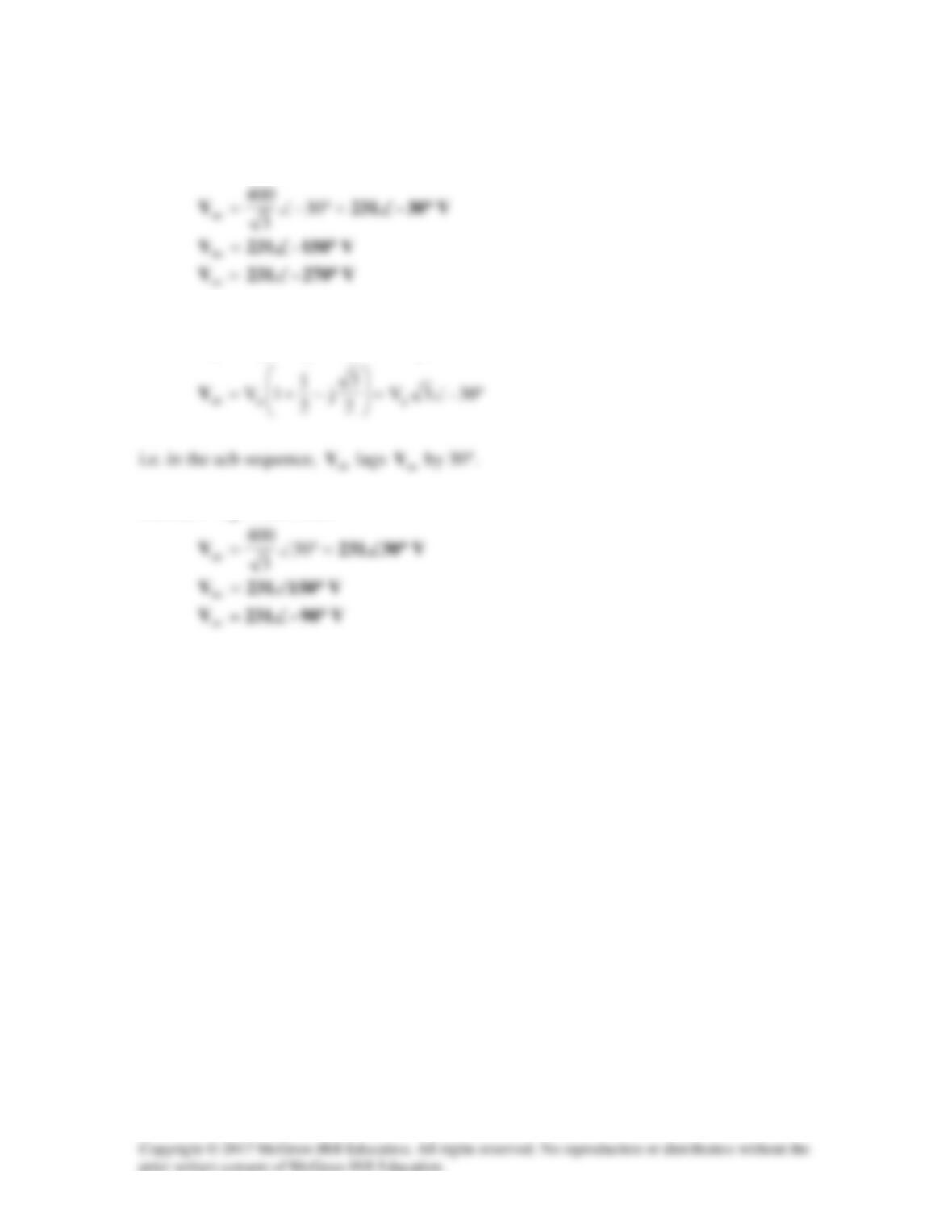
(a) If
400
ab
=V
, then
(b) For the acb sequence,
°∠−°∠=−= 120V0V ppbnanab VVV
Hence, if
400
ab =V
, then
=
Solution 12.2
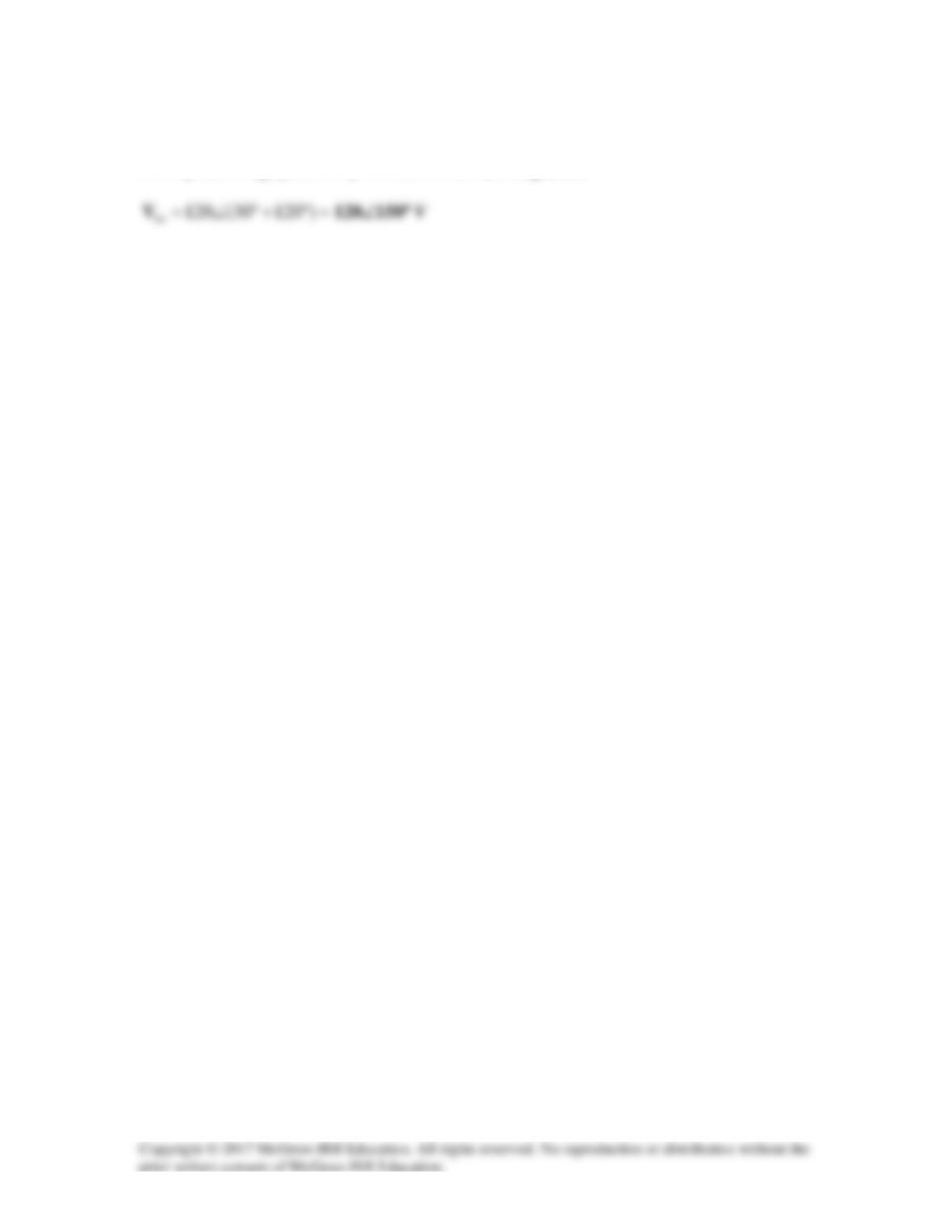
Since phase c lags phase a by 120°, this is an acb sequence.
Solution 12.3
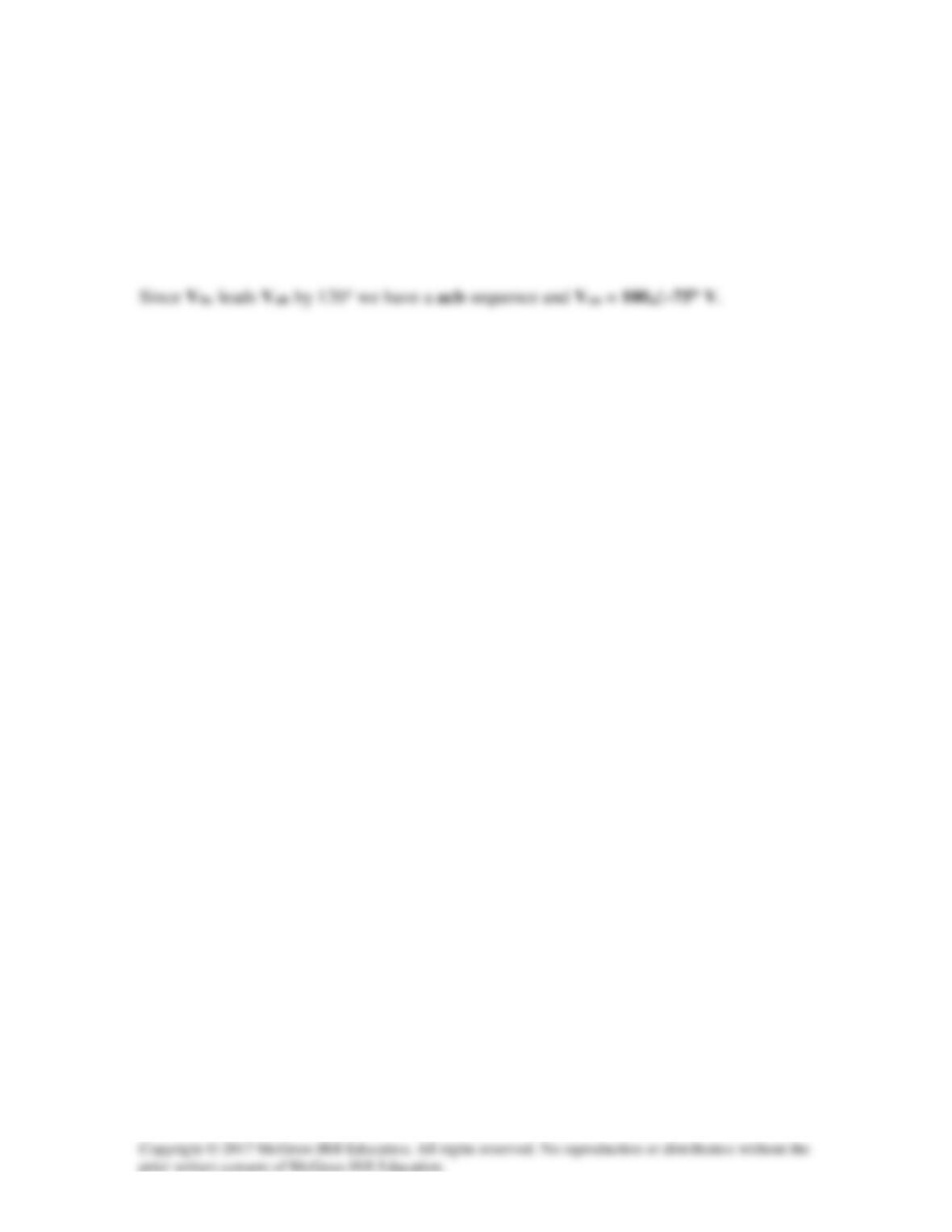
Given a balanced Y–connected three–phase generator with a line–to-line voltage of
Vab = 100∠45° V and Vbc = 100∠165° V, determine the phase sequence and the
value of Vca.
Solution
Solution 12.4
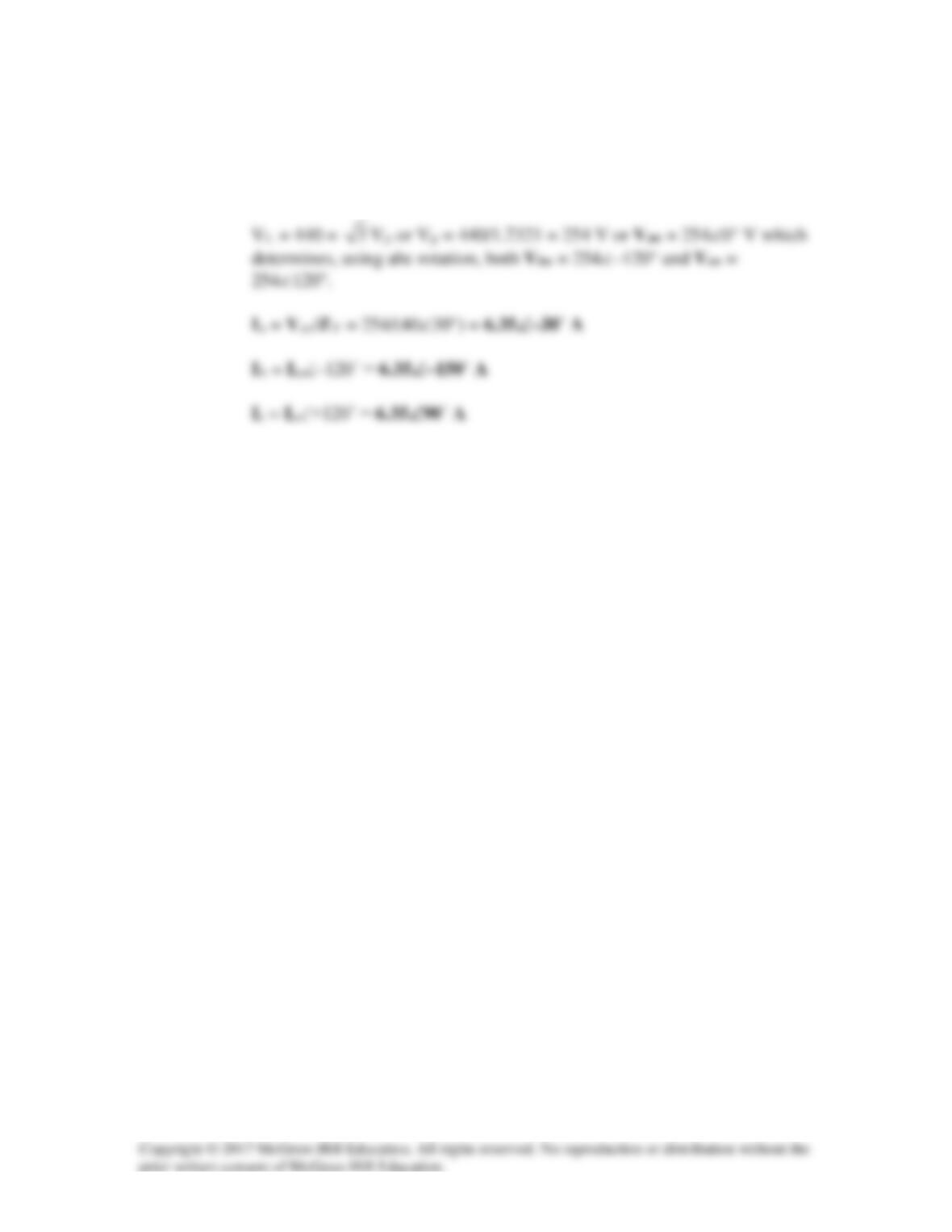
Knowing the line-to–line voltages we can calculate the wye voltages and can let the value
of Va be a reference with a phase shift of zero degrees.
Solution 12.5
VAB = 1.7321xVAN∠+30˚ = 207.8∠(32˚+30˚) = 207.8∠62˚ V or
Solution 12.6
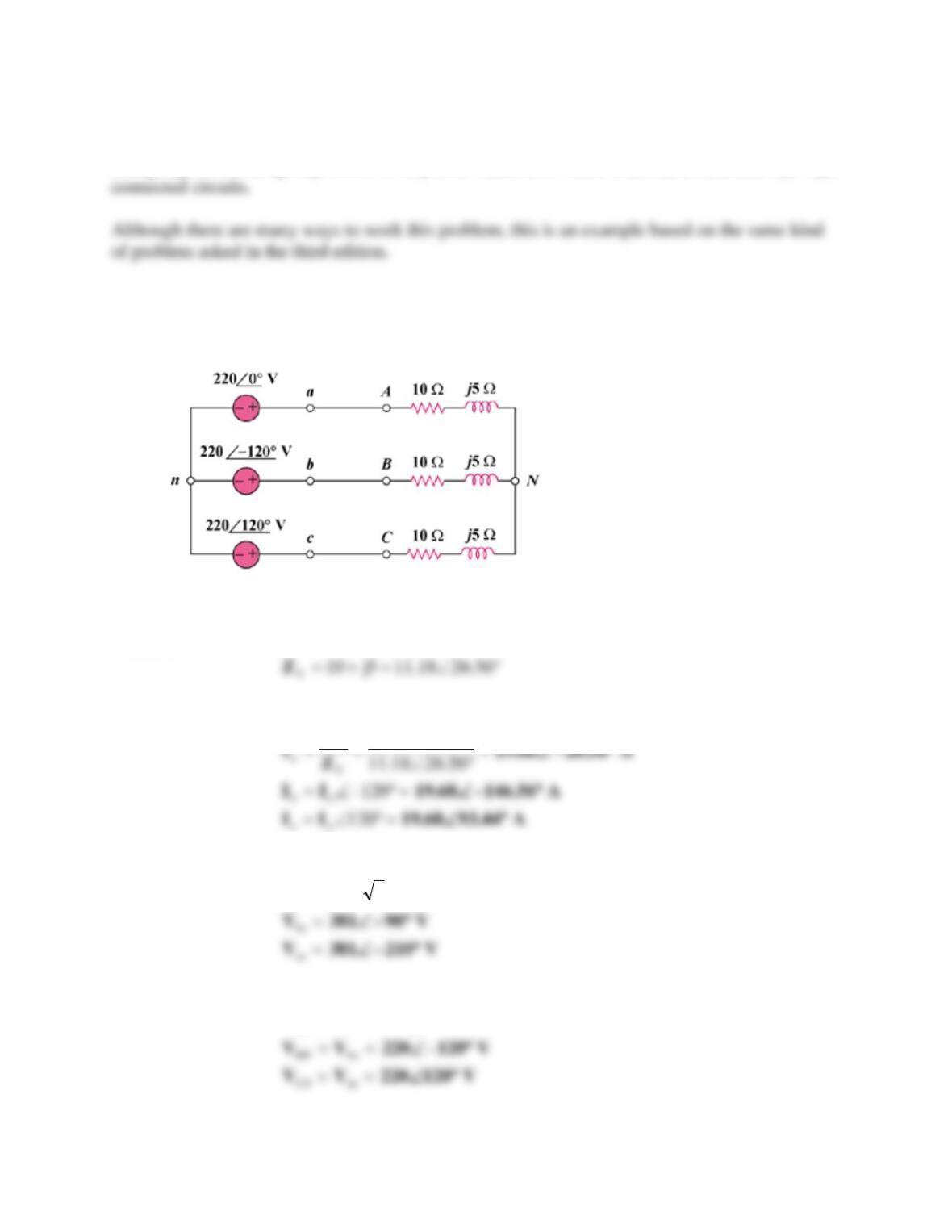
Using Fig. 12.41, design a problem to help other students to better understand balanced wye-wye
Problem
For the Y-Y circuit of Fig. 12.41, find the line currents, the line\ voltages, and the load voltages.
Figure 12.41
Solution
The line currents are
°∠
0220
an
V
The line voltages are
=°∠= 303220
ab
V
V30381 °∠
The load voltages are
=== anYaAN VZIV
V0220 °∠
Solution 12.7
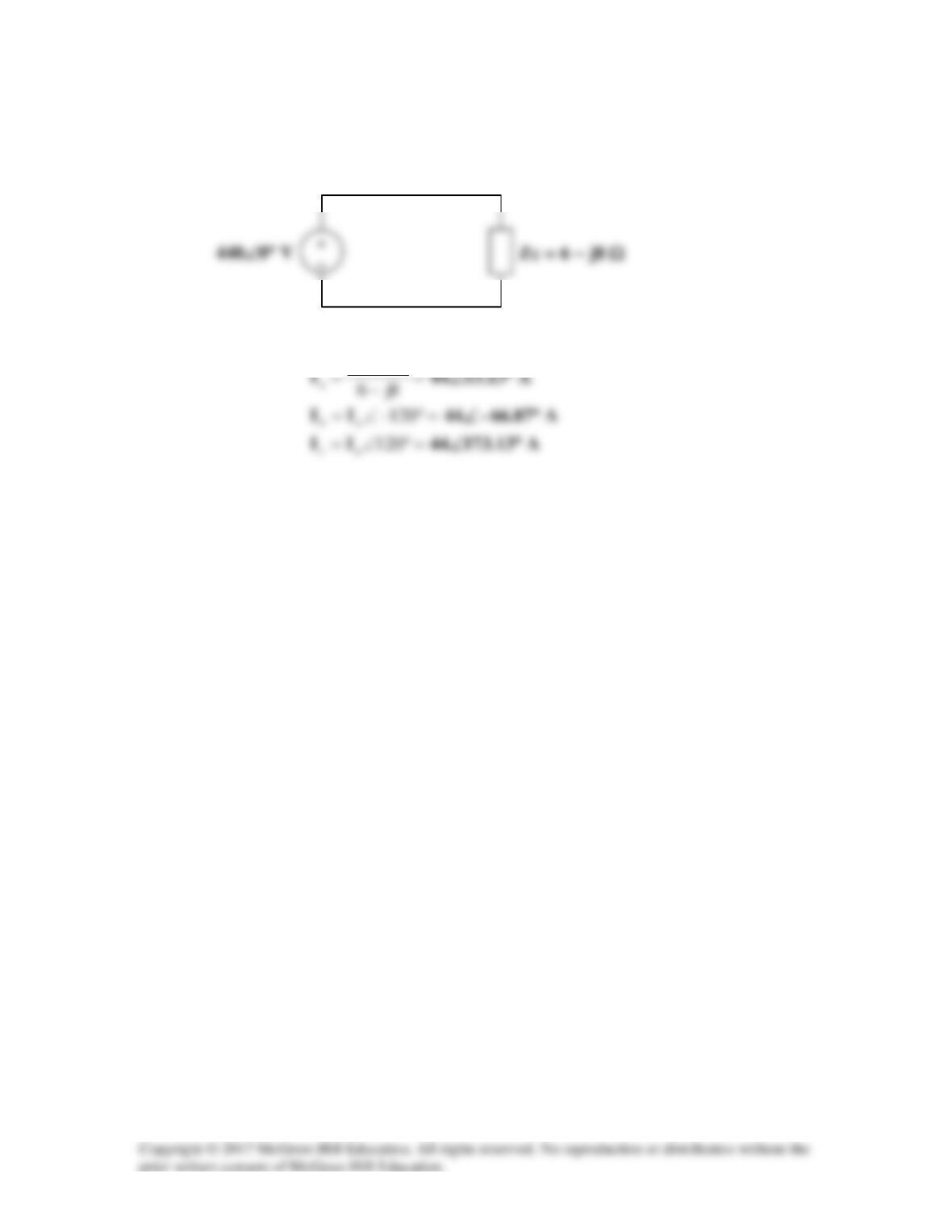
This is a balanced Y–Y system.
Using the per-phase circuit shown above,
°∠
0440
Solution 12.8
In a balanced three–phase wye–wye system, the source is an acb-sequence of voltages and
Vcn = 120∠35˚ V rms. The line impedance per phase is (1+j2)Ω, while the per phase
impedance of the load is (11+j14) Ω. Calculate the line currents and the load voltages.
Solution
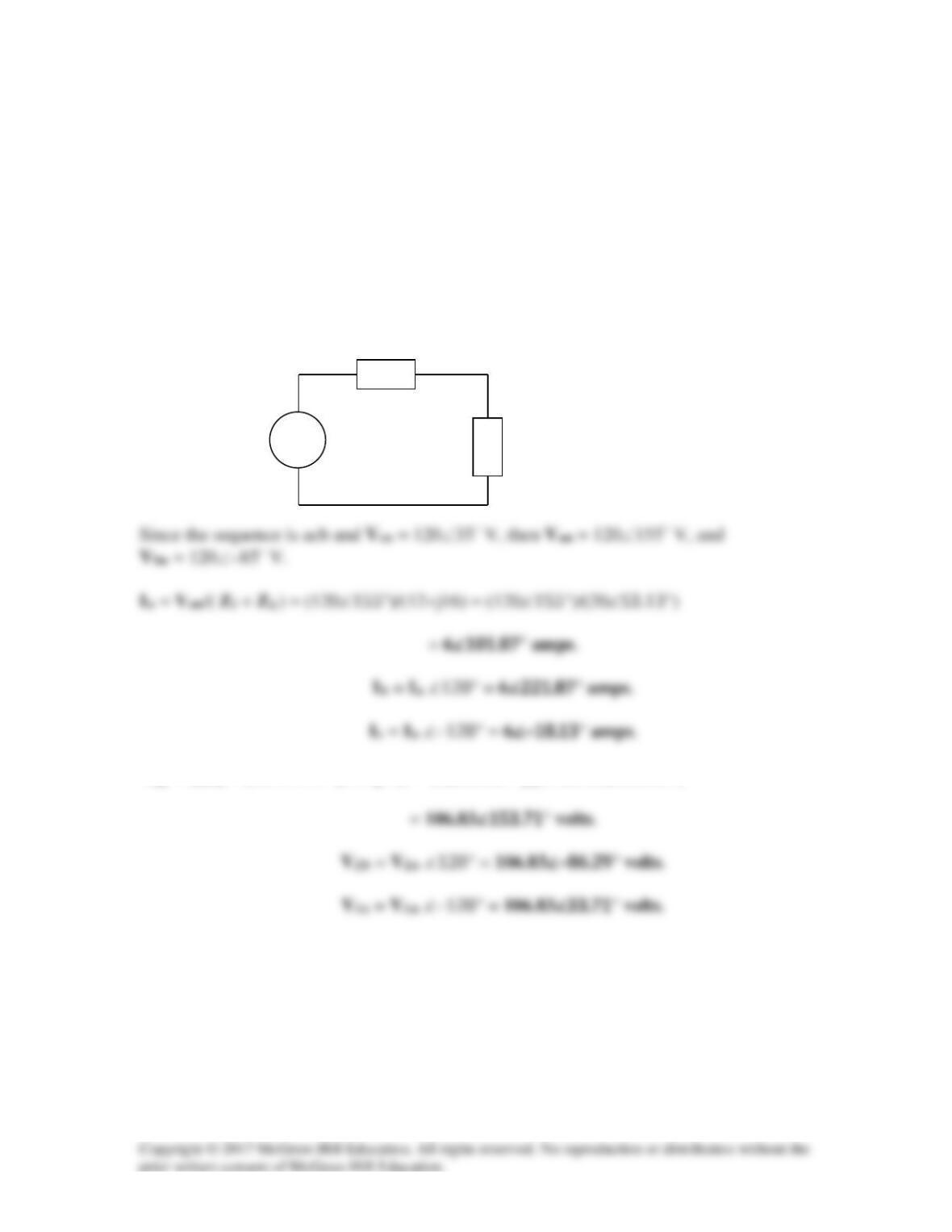
Consider the per phase equivalent circuit shown below.
Zl
Van
ZL
VLa = IaZL = (6∠101.87°)(11+j14) = (6∠101.87°)(17.8045∠51.843°)
+
_
Solution 12.9
=
+
°∠
=
+
=15j20
0120
YL
an
a
ZZ
V
I
A36.87–8.4 °∠
Solution 12.10
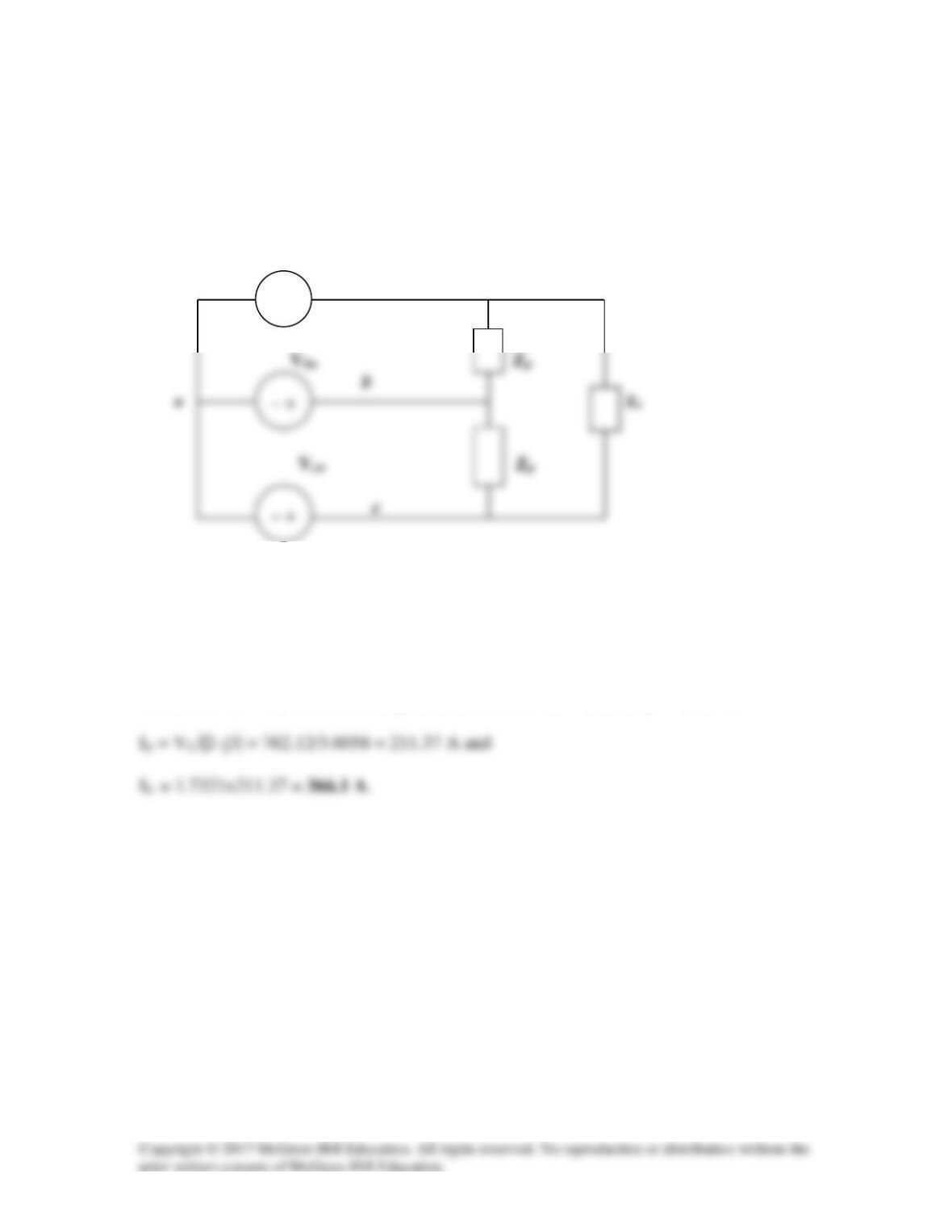
For the circuit in Fig. 12.43, determine the current in the neutral line.
Figure 12.43
For Probs. 12.10 and 12.58.
Solution
Since the neutral line is present, we can solve this problem on a per-phase basis.
For phase a,
°∠
0
V
an
880
880
For phase b,
°∠
120–880
bn
V
For phase c,
°∠
°∠
120880
120880
cn
V
The current in the neutral line is
)-(
cban
IIII ++=
or
cban
–IIII ++=
880∠0˚ V
Solution 12.11
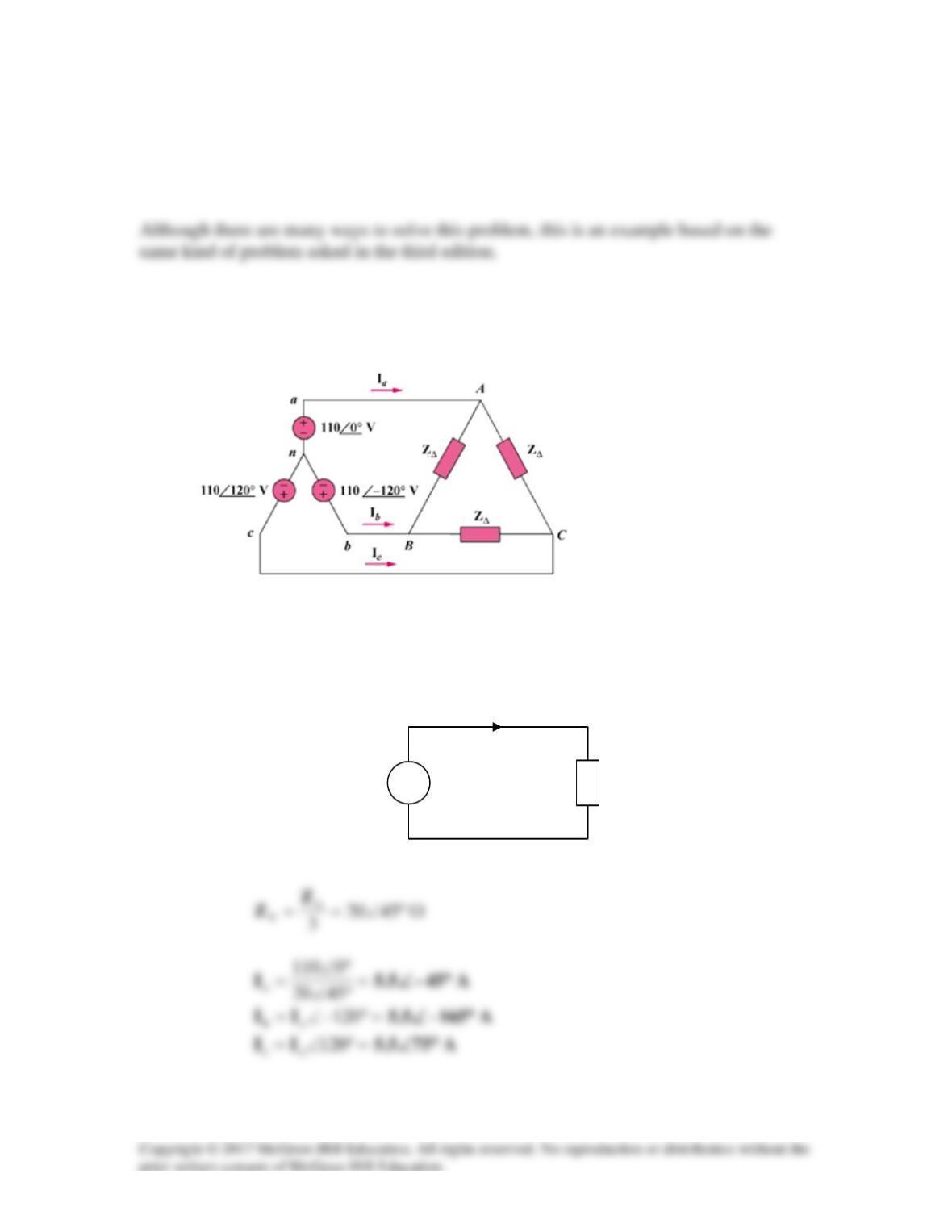
In the wye-delta system shown in Fig. 12.44, the source is a positive sequence with
Van = 440∠0˚ V and phase impedance ZP = (2 – j3) Ω. Calculate the line voltage VL and
the line current IL.
Van
a
Figure 12.44
For Prob. 12.11.
Solution
Given that Vp = 440 and that the system is balanced, VL = 1.7321Vp = 762.1 V.
– +
Solution 12.12
Using Fig. 12.45, design a problem to help other students to better understand wye-delta
connected circuits.
Problem
Solve for the line currents in the Y-∆ circuit of Fig. 12.45. Take Z∆ = 60∠45°Ω.
Figure 12.45
Solution
Convert the delta-load to a wye-load and apply per-phase analysis.
ZY
110∠0° V
+
−
Ia
Solution 12.13
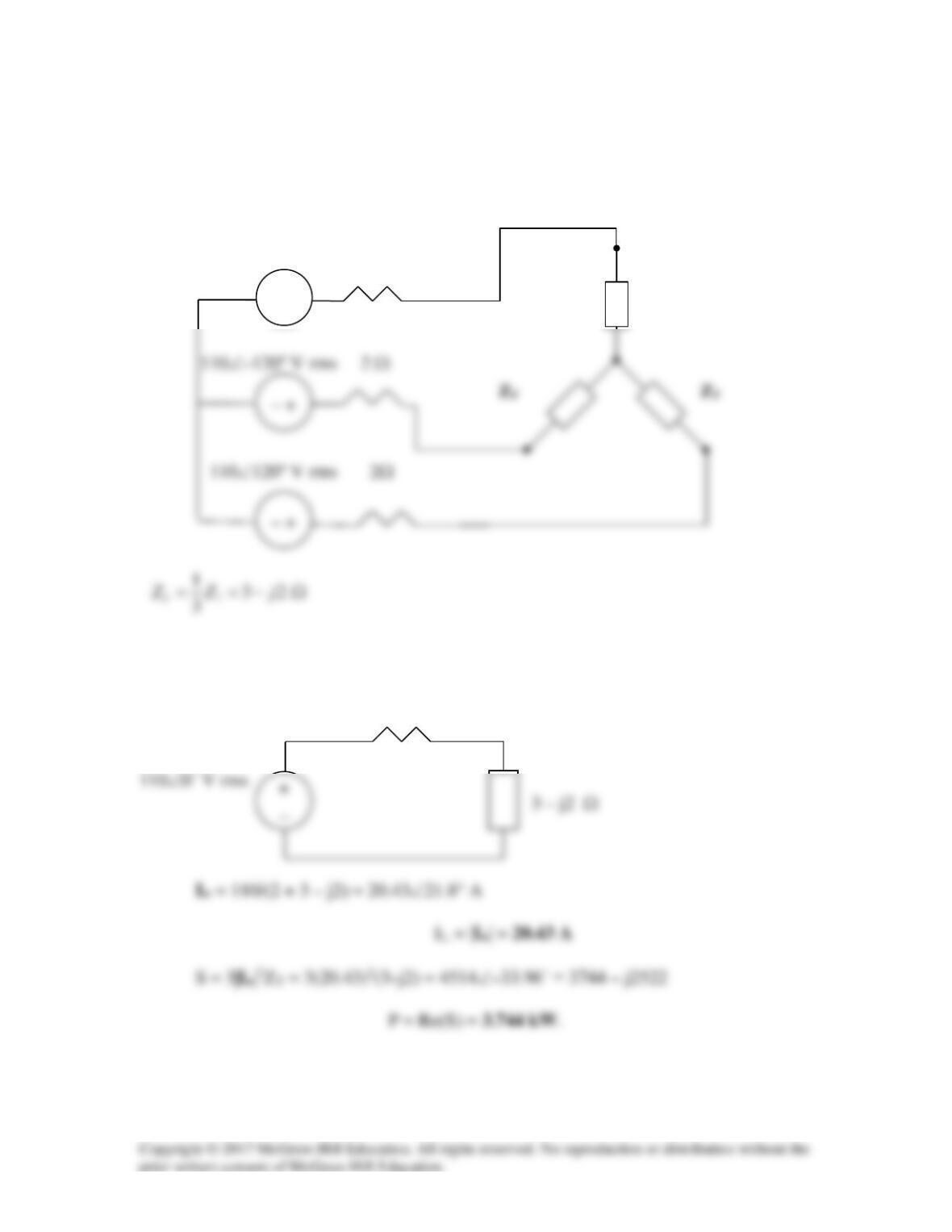
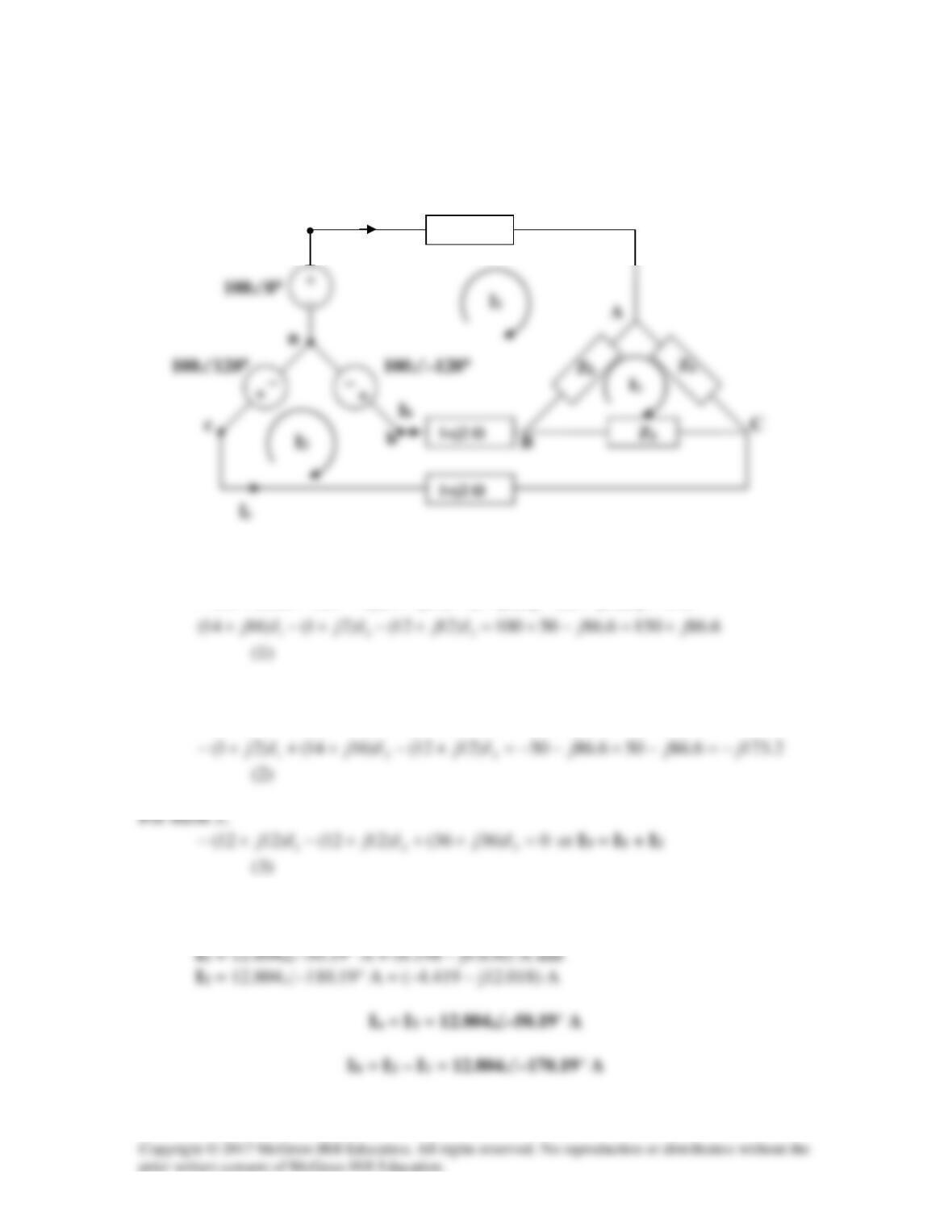
Convert the delta load to wye as shown below.
110∠0o V rms
2Ω
– +
We consider the single phase equivalent shown below.
2 Ω
– +
ZY
Solution 12.14
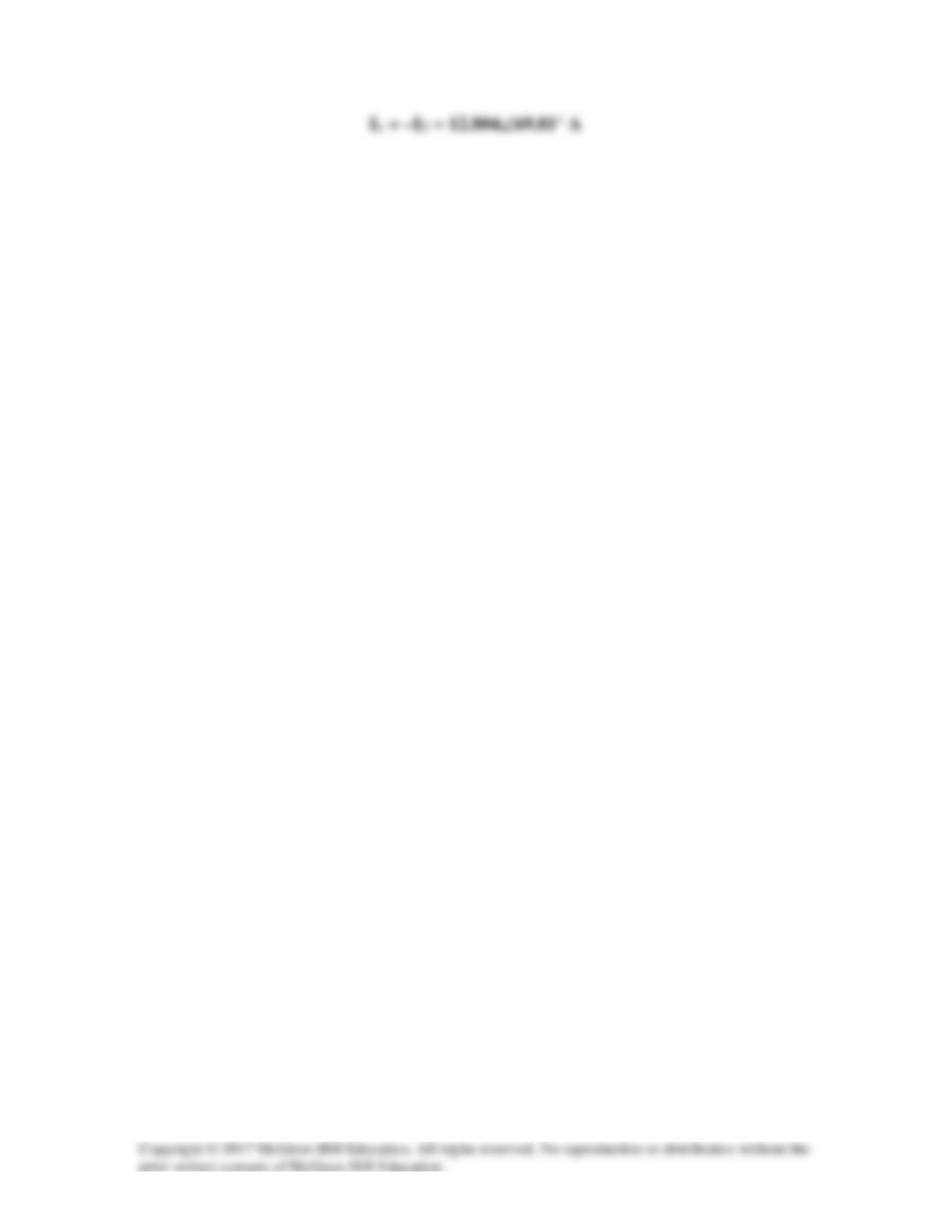
We apply mesh analysis with ZL = (12+j12) Ω.
1+j2 Ω
I2
For mesh 1,
0)1212()21()1614(120100100 321 =+−+−++−∠+− IjIjjI
o
or
For mesh 2,
0)1614()1212()21(120100120100
231
=+++−+−−∠−∠ IjIjjI
oo
or
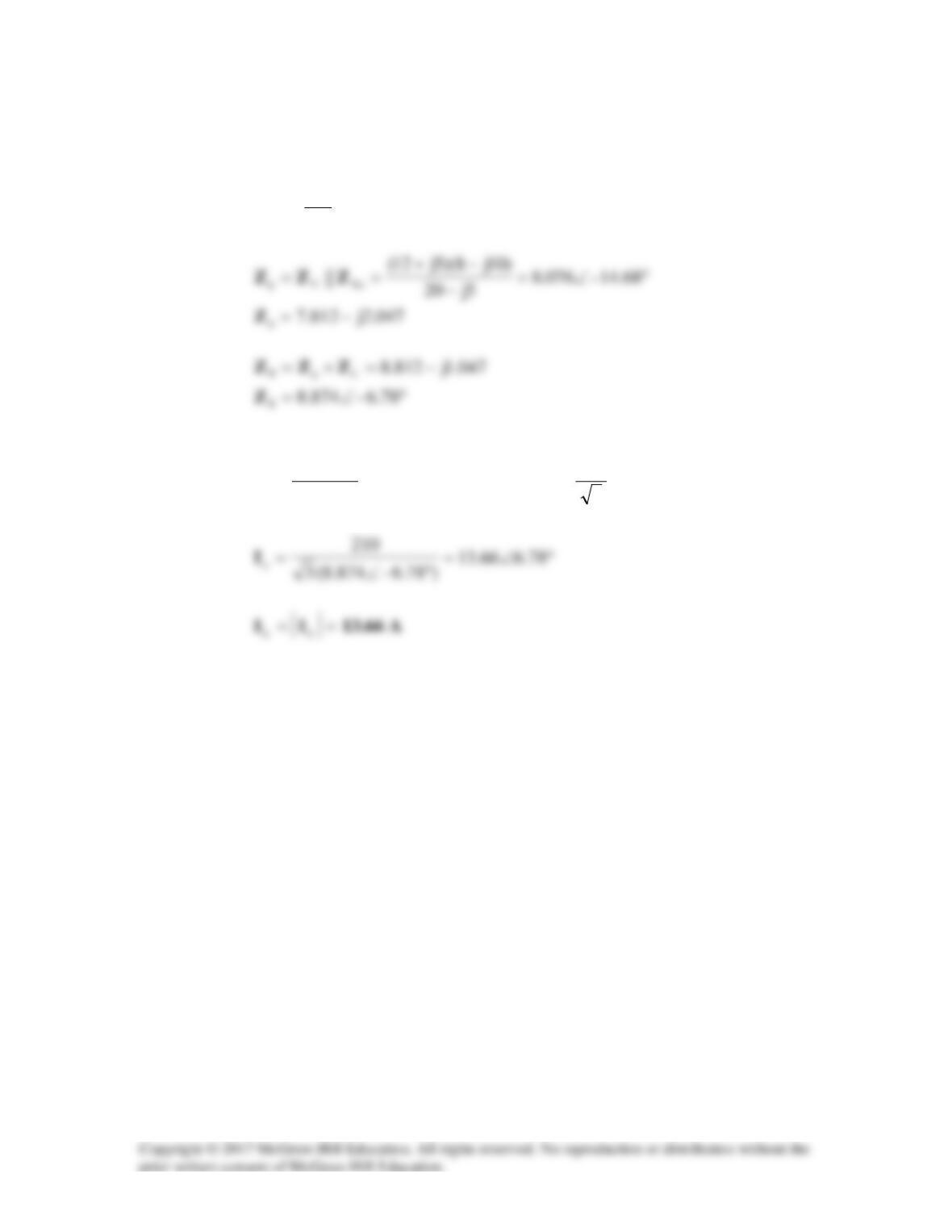
Solving for I1 and I2 using (1) to (3) gives
Ia
a
1+j2 Ω
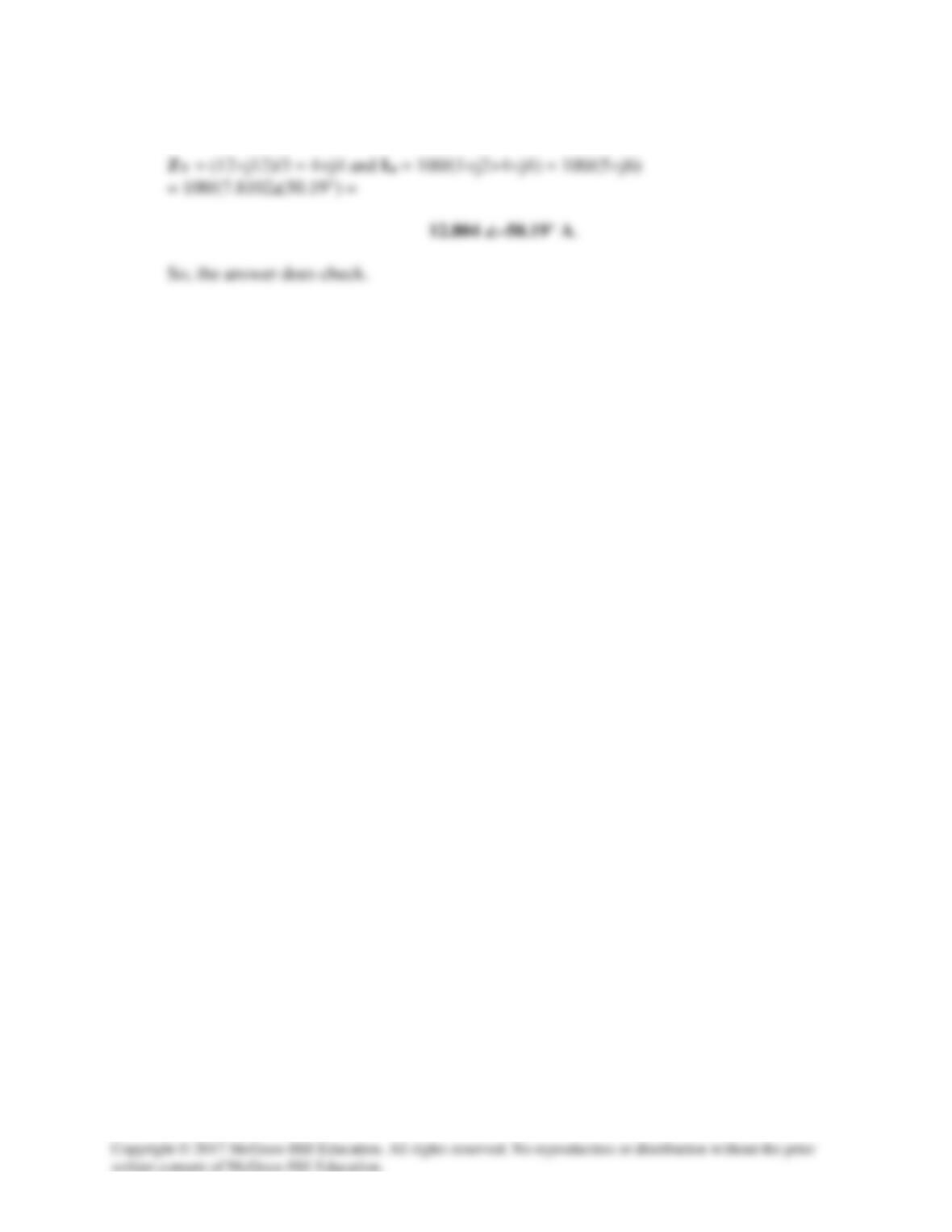
As a check we can convert the delta into a wye circuit. Thus,
Solution 12.15
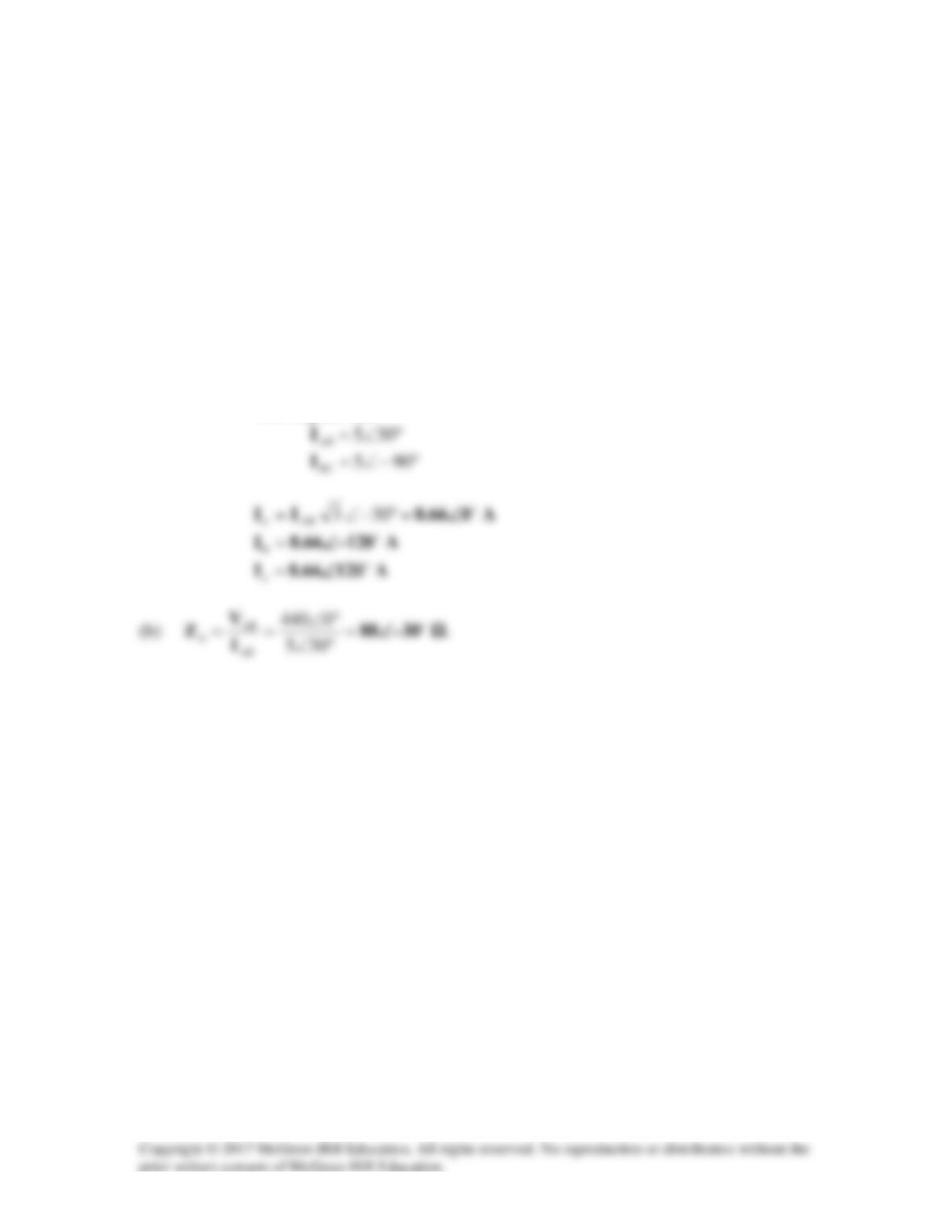
Convert the delta load,
∆
Z
, to its equivalent wye load.
10j8
3
Ye −== ∆
Z
Z
We now use the per-phase equivalent circuit.
Lp
p
a
V
ZZ
I+
=
, where
3
210
Vp=
Solution 12.16
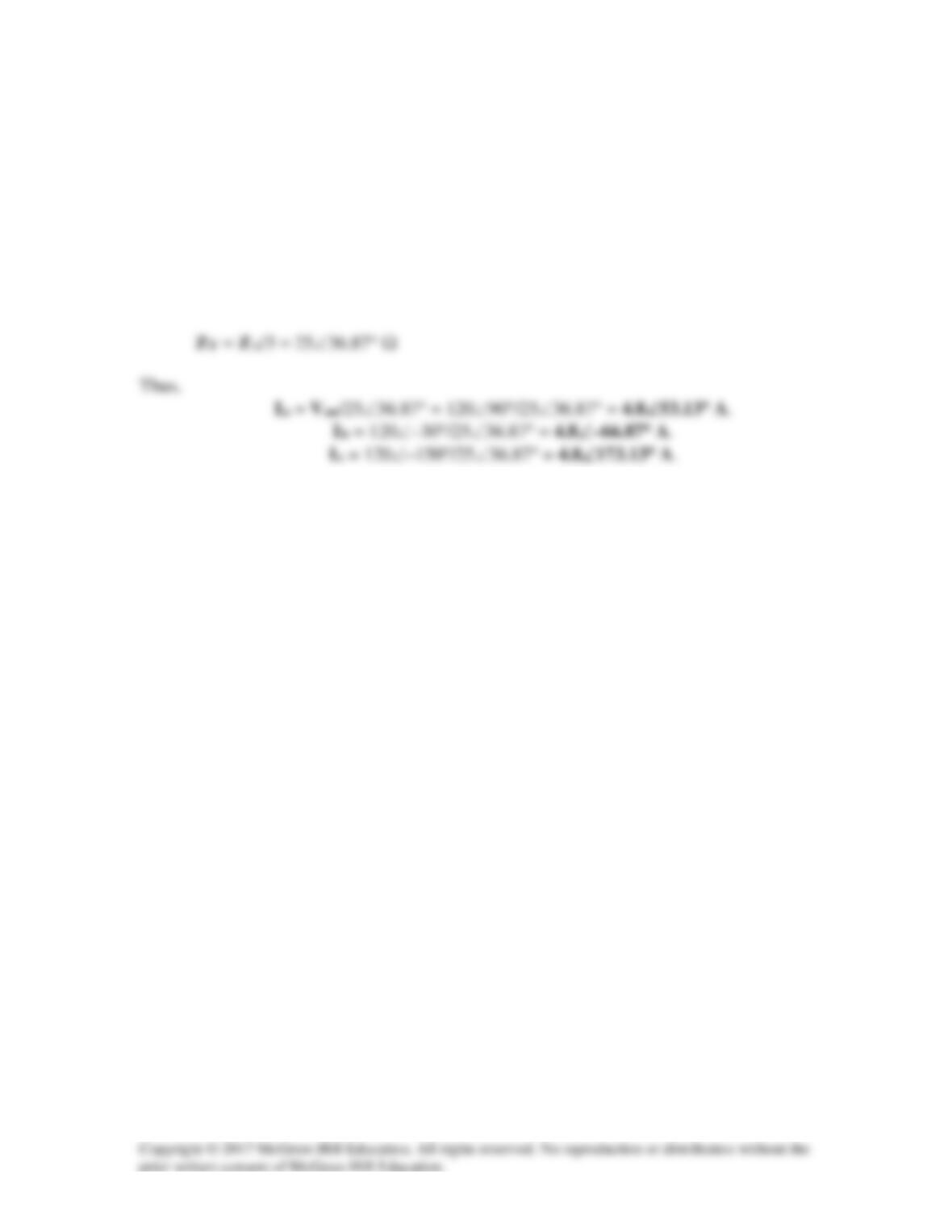
A balanced delta–connected load has a phase current IAC = 5∠–30° A.
(a) Determine the three line currents assuming that the circuit operates in the
positive phase sequence.
(b) Calculate the load impedance if the line voltage is VAB = 440 ∠0° V.
Solution
(a)
°∠=°+°∠== 1505)180-30(5–
AC
II
CA
This implies that
Solution 12.17
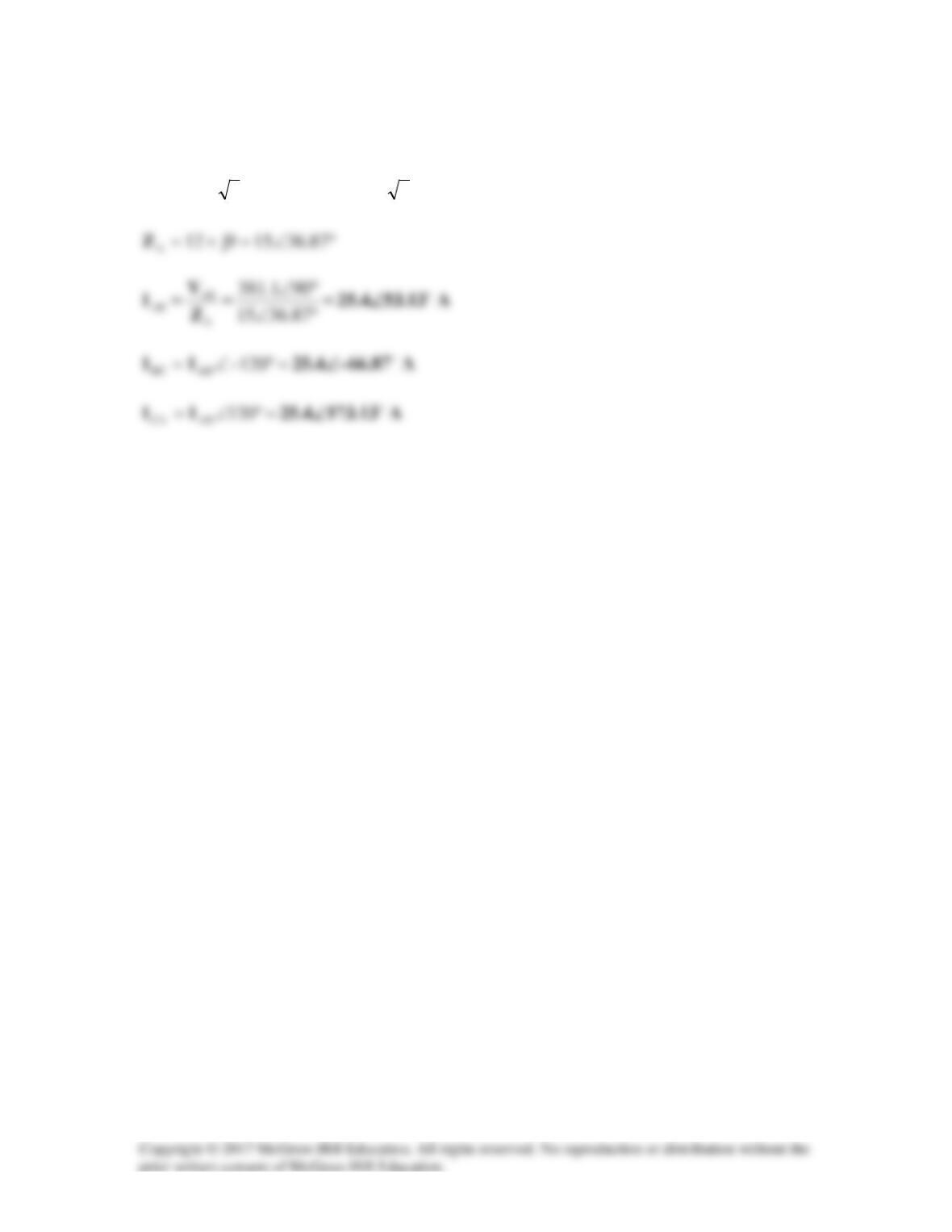
A positive sequence wye connected source where Van = 120∠90° V, is connected to a
delta connected load where ZL = (60+j45) Ω. Determine the line currents.
Solution
First the voltages are Van = 120∠90° V, Vbn = 120∠–30° V, and Vcn = 120∠–150° V.
The phase load is Z∆ = 75∠36.87° Ω.
Solution 12.18
°∠=°∠°∠=°∠= 901.381)303)(60220(303
anAB VV