CHAPTER 12
THE COST OF CAPITAL FOR LAYTON
MOTORS
NOTE: The example below shows the results during November 2015. The actual answer to the case
will change based on current market conditions.
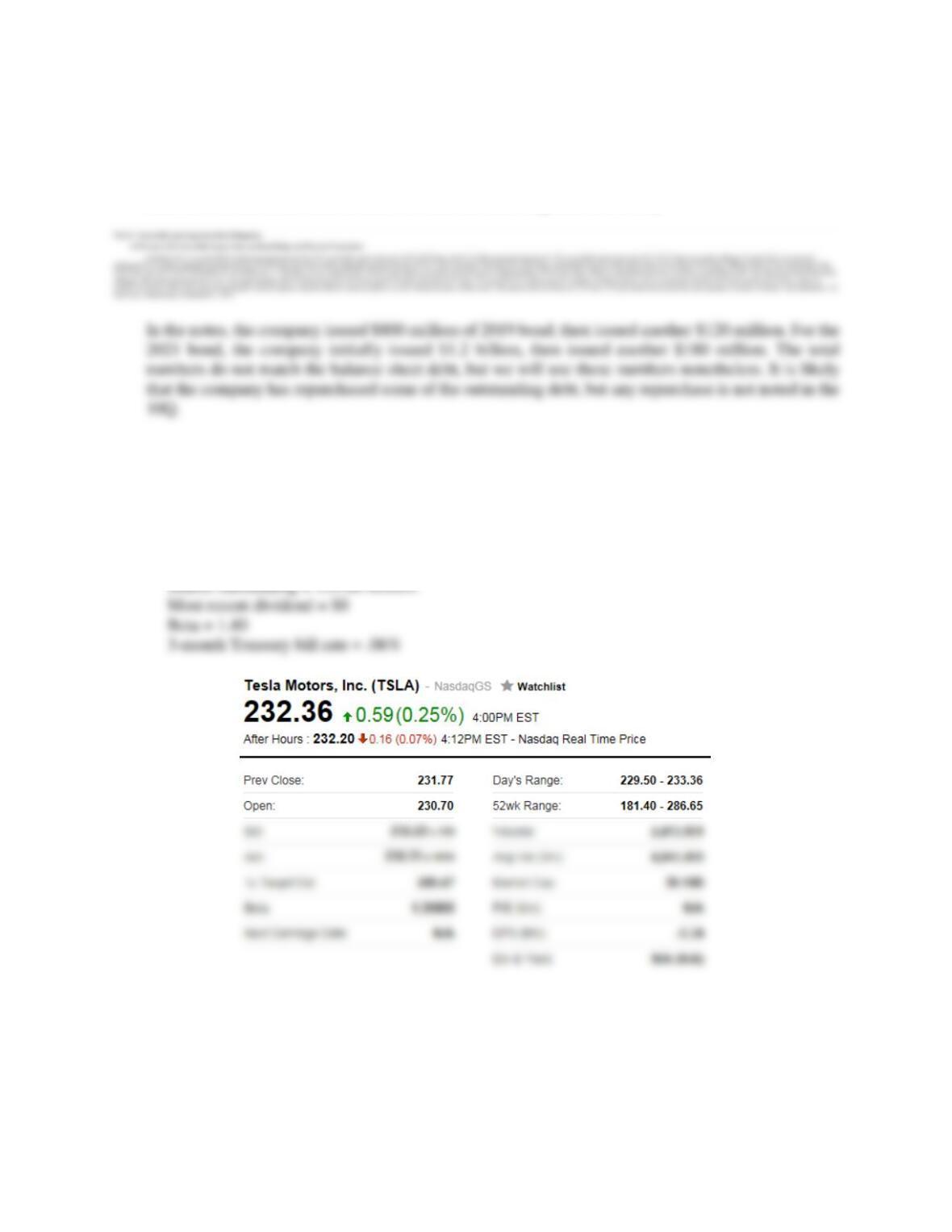
The book value of equity is $1,315 million on the balance sheet. However, for a more current book
value, we multiplied the number of shares outstanding by the book value per share on Yahoo!
Finance. For the book value of debt, we used the following note in the 10Q:
2. We need various pieces of information to estimate the cost of equity. We cannot use the dividend
growth model since Tesla does not pay a dividend, so we will use the CAPM. The following
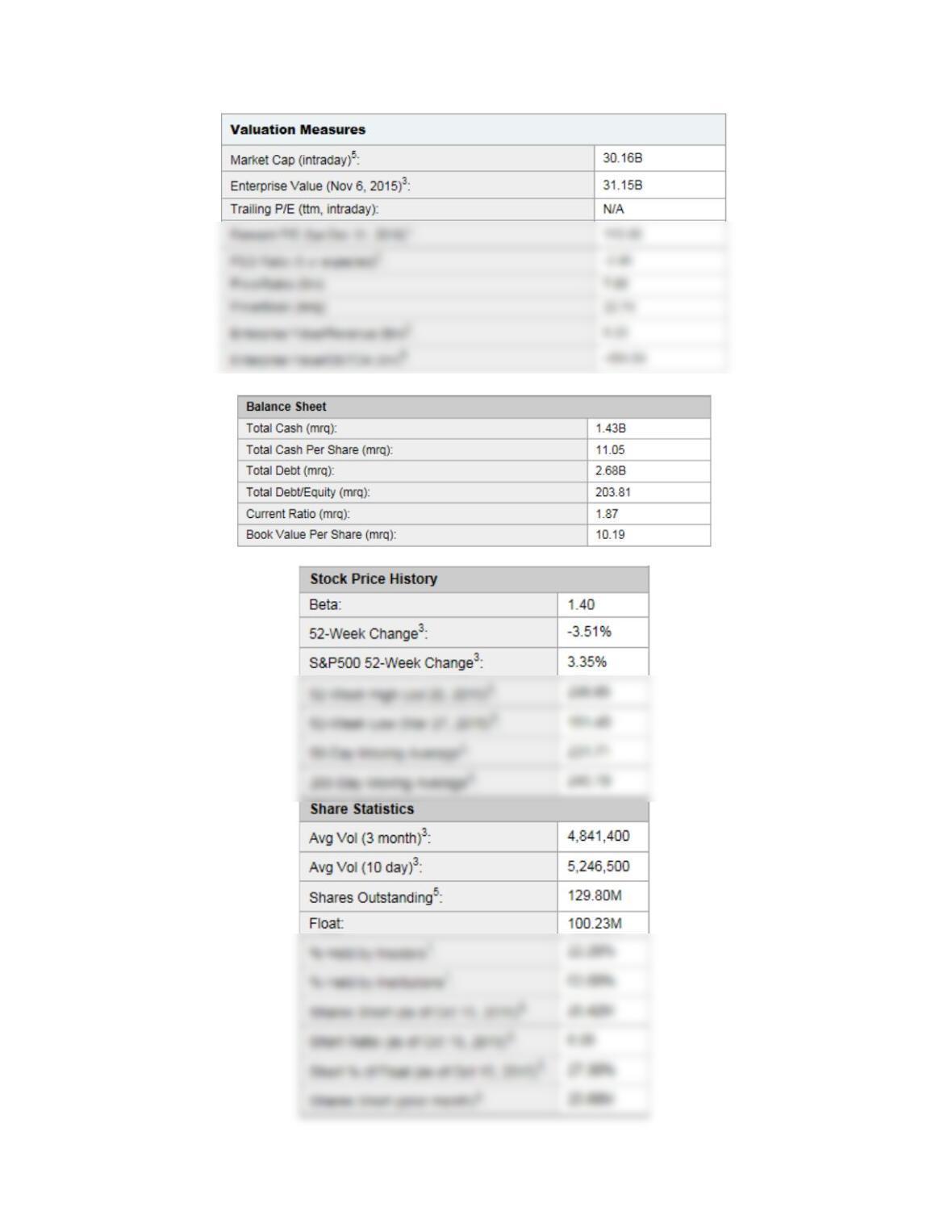
information is necessary for our calculations. We gathered all the information from
finance.yahoo.com. The screen shots below show this information.
Market price = $232.36
Market capitalization = $30.16 billion
Tesla has never paid a dividend so we cannot use the dividend growth model to estimate the cost of
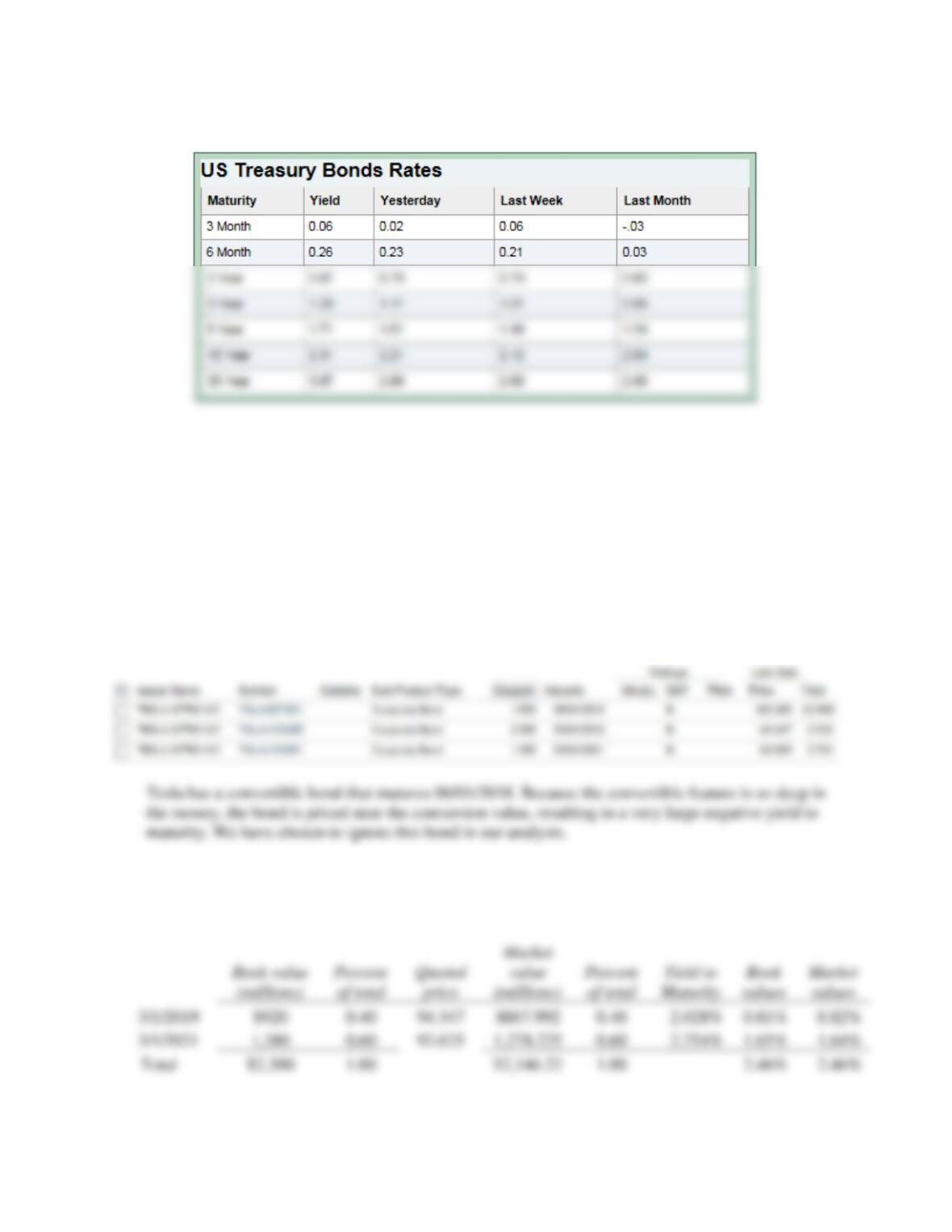
equity. We do have the information to estimate the cost of equity with the CAPM. Using the market
risk premium of 7 percent from the textbook, we get:
RE = Rf + [E(RM) – Rf]
RE = .0006 + 1.40[.07]
RE = .0986, or 9.86%
3. To get the yield to maturity on Tesla’s bonds, we went to finra-
markets.morningstar.com/BondCenter/. We gathered the following information:
If you click on the link for each bond, the website provides information concerning the bond, including
the face amount of the issue. So, the weighted average cost of debt for Tesla using both the book value
and the market value is:
4. Using book value weights, the total value of Tesla is:
V = $2,300,000,000 + $1,322,662,000
V = $3,622,662,000
So, the WACC based on book value weights is:
So, the WACC based on market value weights is:
WACC = RE(E/V) + RD(D/V)(1 – T)
WACC = (.0986)($30,160,328,000 /$32,306,545,400)
+ (.0246)($2,146,217,400 /$32,306,545,400)(1 – .35)
WACC = .0931, or 9.31%