CHAPTER 12
Investments
ASSIGNMENT CLASSIFICATION TABLE
Learning Objectives
Questions
Brief
Exercises
Do It!
Exercises
A
Problems
1. Explain how to account
for debt investments.
1, 2, 3, 4
1
1
1, 2, 3
1A, 2A
2. Explain how to account
for stock investments.
5, 6, 7, 8,
9, 10
2, 3
2
4, 5, 6, 7, 8,
9
2A, 3A, 4A,
5A
ASSIGNMENT CHARACTERISTICS TABLE
Problem
Number
Description
Difficulty
Level
Time
Allotted (min.)
1A
Journalize debt investment transactions and show
financial statement presentation.
Moderate
30–40
4A
Prepare entries under the cost and equity methods,
and tabulate differences.
Simple
20–30
5A
Journalize stock investment transactions and show
statement presentation.
Moderate
40–50
Prepare consolidated worksheet and balance sheet
Moderate
30–40
2A
Journalize investment transactions, prepare adjusting
entry, and show statement presentation.
Moderate
30–40
3A
Journalize transactions and adjusting entry for stock
investments.
Moderate
30–40

WEYGANDT FINANCIAL AND MANAGERIAL ACCOUNTING 2E
CHAPTER 12
INVESTMENTS
Number
LO
BT
Difficulty
Time (min.)
BE1
1
AP
Simple
2–4
BE2
2
AP
Simple
3–5
BE7
3
AP
Simple
2–4
BE8
3
AP
Simple
3–5
*BE9
4
AP
Simple
3–5
*BE10
4
AP
Simple
3–5
DI1
1
AP
Moderate
6–8
DI2
2
AP
Simple
6–8
DI3a
3
AN
Simple
4–6
DI3b
3
C
Simple
4–6
EX1
1
C
Simple
8–10
EX2
1
AP
Moderate
8–10
EX3
1
AP
Moderate
8–10
EX4
2
AP
Simple
8–10
EX5
2
AP
Simple
6–8
EX6
2
AP
Simple
8–10
EX7
2
AP
Simple
6–8
EX8
AP
Simple
8–10
EX9
2
C
Simple
6–8
EX10
3
AN
Simple
4–6
EX11
3
AN
Simple
8–10
EX12
3
AN
Simple
6–8
*EX13
4
AP
Simple
3–5
*EX14
4
AP
Simple
4–6
P1A
AN
Moderate
INVESTMENTS (Continued)
BE3
2
AP
Simple
3–5
BE4
3
AP
Simple
2–3
BE5
3
AN
Simple
2–4
BE6
3
AN
Simple
2–3

Number
LO
BT
Difficulty
Time (min.)
P3A
3, 5, 6
AN
Moderate
30–40
P4A
2, 3
2
AN
AN
Simple
Simple
20–30
20–30
P5A
2, 3
AN
Moderate
40–50
P6A
3
AP
Moderate
30–40
*P7A
4
AP
Moderate
20–30
BYP1
4
C
Simple
10–15
4
AN
10–15
BYP3
4
AN
Simple
BYP4
K
Simple
10–15
3
Moderate
15–20
BYP6
5
C
Simple
BYP7
5
E
Simple
10–15
10–15
BYP9
AP
Moderate
10–15

BLOOM’ S TAXONOMY TABLE
Correlation Chart between Bloom’s Taxonomy, Learning Objectives and End-of–Chapter Exercises and Problems
Learning Objective
Knowledge
Comprehension
Application
Analysis
Synthesis
Evaluation
1. Explain how to account for debt
investments.
Q12-1
Q12-2
Q12-3 E12-1
Q12-4
BE12-1
DI12-1
E12-2
E12-3
P12-1A
P12-2A
2. Explain how to account for stock
investments.
Q12-7
Q12-5 E12-9
Q12-8
Q12-9
Q12-10
Q12-6
BE12-2
BE12-3
DI12-2
E12-4
E12-5
E12-6
E12-7
E12-8
P12-2A
P12-3A
P12-4A
P12-5A
BE12-4
BE12-7
BE12-8
E12-8
BE12-6
DI12-3a
E12-10
E12-11
E12-12
Q12-22
BE12-10
E12-13
Decision-Making
Communication
All About You
ANSWERS TO QUESTIONS
1. The reasons corporations invest in securities are: (1) excess cash not needed for operations that
can be invested, (2) for additional earnings, and (3) strategic reasons.
4. Seibel Company is correct. The gain is the difference between the net proceeds and the cost of the
bonds. The gain is $5,000.
5. The cost of an investment in stock includes all expenditures necessary to acquire the investment.
These expenditures include the actual purchase price plus any commissions or brokerage fees.
6. The entry is:
Stock Investments …………………………………………………………………………. 62,000
Cash …………………………………………………………………………………….. 62,000
7. (a) Whenever the investor’s influence on the operating and financial affairs of the investee is
significant, the equity method should be used. The major factor in determining significant influence
Questions Chapter 12 (Continued)
10. Under the cost method, an investment is originally recorded and reported at cost. Dividends are
recorded as revenue. In subsequent periods, it is adjusted to fair value and an unrealized holding
11. Consolidated financial statements present the details of the assets and liabilities controlled by the
parent company and the total revenues and expenses of the affiliated companies.
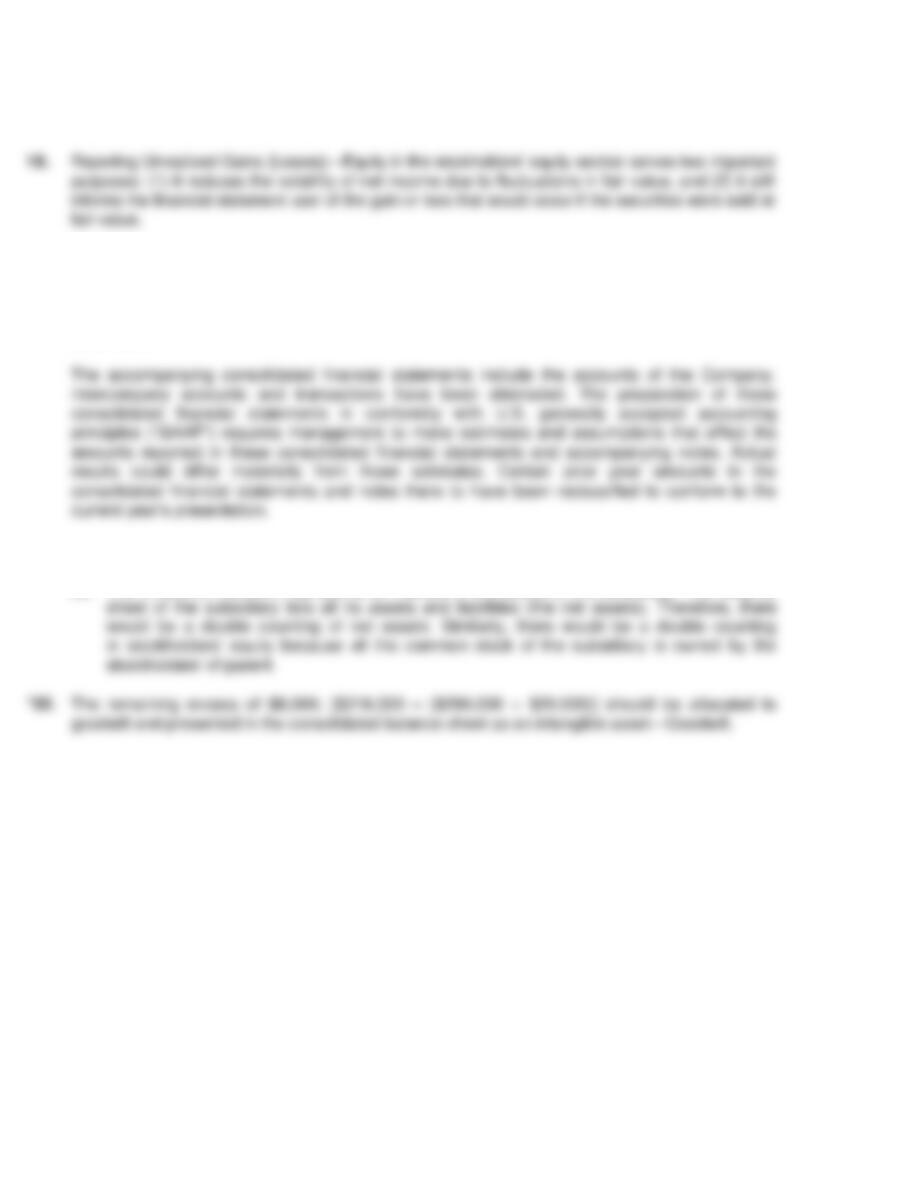
12. The valuation guidelines for investments is as follows:
Category
Valuation and Reporting
Trading
Available-for-sale
Held-to-maturity
At fair value with changes reported in net income
At fair value with changes reported in stockholders’ equity
At amortized cost
Investments recorded under the equity method are reported at their carrying value. The carrying
value is the cost adjusted for the investor’s share of the investee’s income and dividends received.
15. The entry is:
Fair Value Adjustment—Available-for-Sale ……………………………………….. 10,000
Unrealized Gain or Loss—Equity ……………………………………………… 10,000
Questions Chapter 12 (Continued)
17. Unrealized Loss—Equity is reported as a deduction from stockholders’ equity. The unrealized loss is
not included in the computation of net income.
19. No. The investment in Orr Corporation stock is a long-term investment because there is no intent
to convert the stock into cash within a year or the operating cycle, whichever is longer.
20. In Note 1, Apple stated the following regarding its accounting policy on consolidated financial
statements:
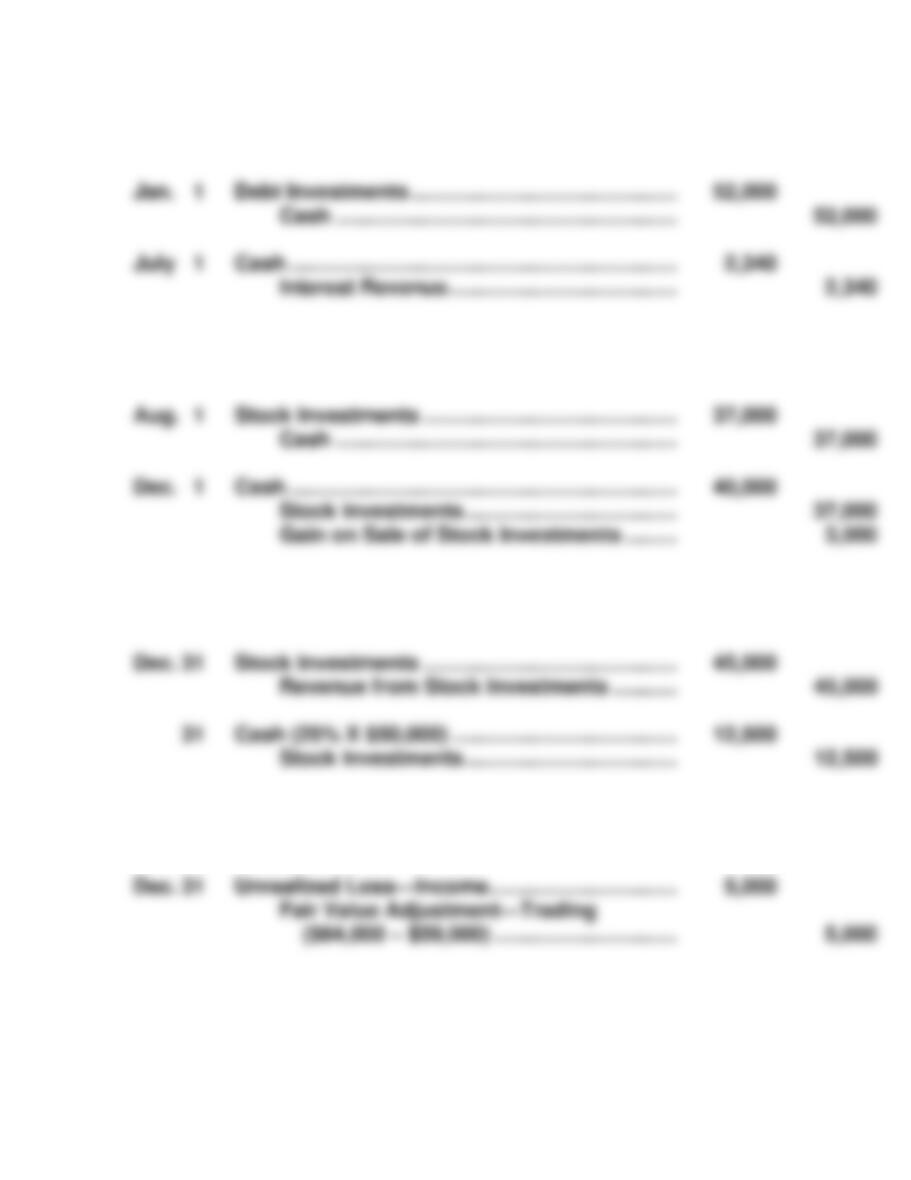
*21. (a) The parent company’s investment in the subsidiary’s common stock and the subsidiary’s
stockholders’ equity account balances are eliminated.
(b) The investment account represents an interest in the assets of the subsidiary. The balance
SOLUTIONS TO BRIEF EXERCISES
BRIEF EXERCISE 12-1
BRIEF EXERCISE 12-2
BRIEF EXERCISE 12-3
BRIEF EXERCISE 12-4
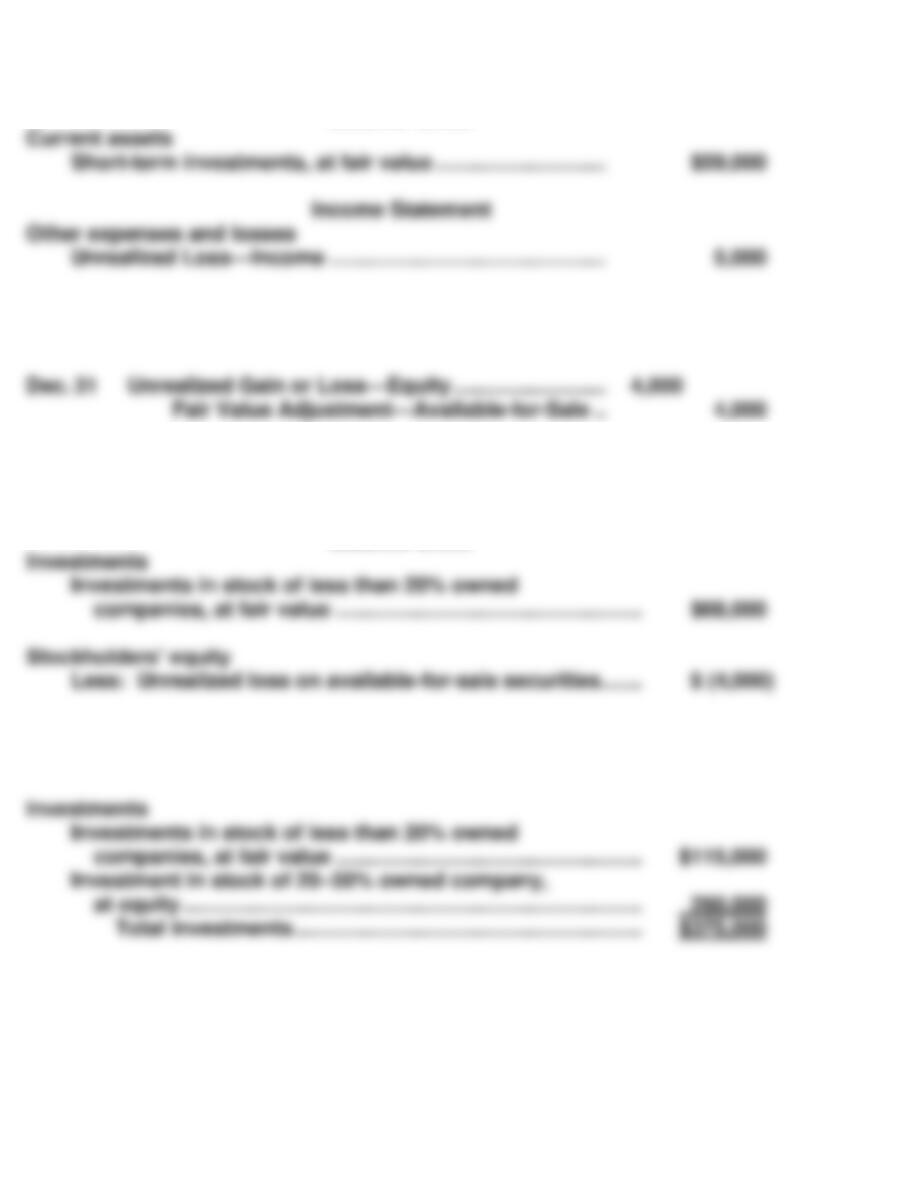
BRIEF EXERCISE 12-5
Balance Sheet
BRIEF EXERCISE 12-6
BRIEF EXERCISE 12-7
Balance Sheet
BRIEF EXERCISE 12-8
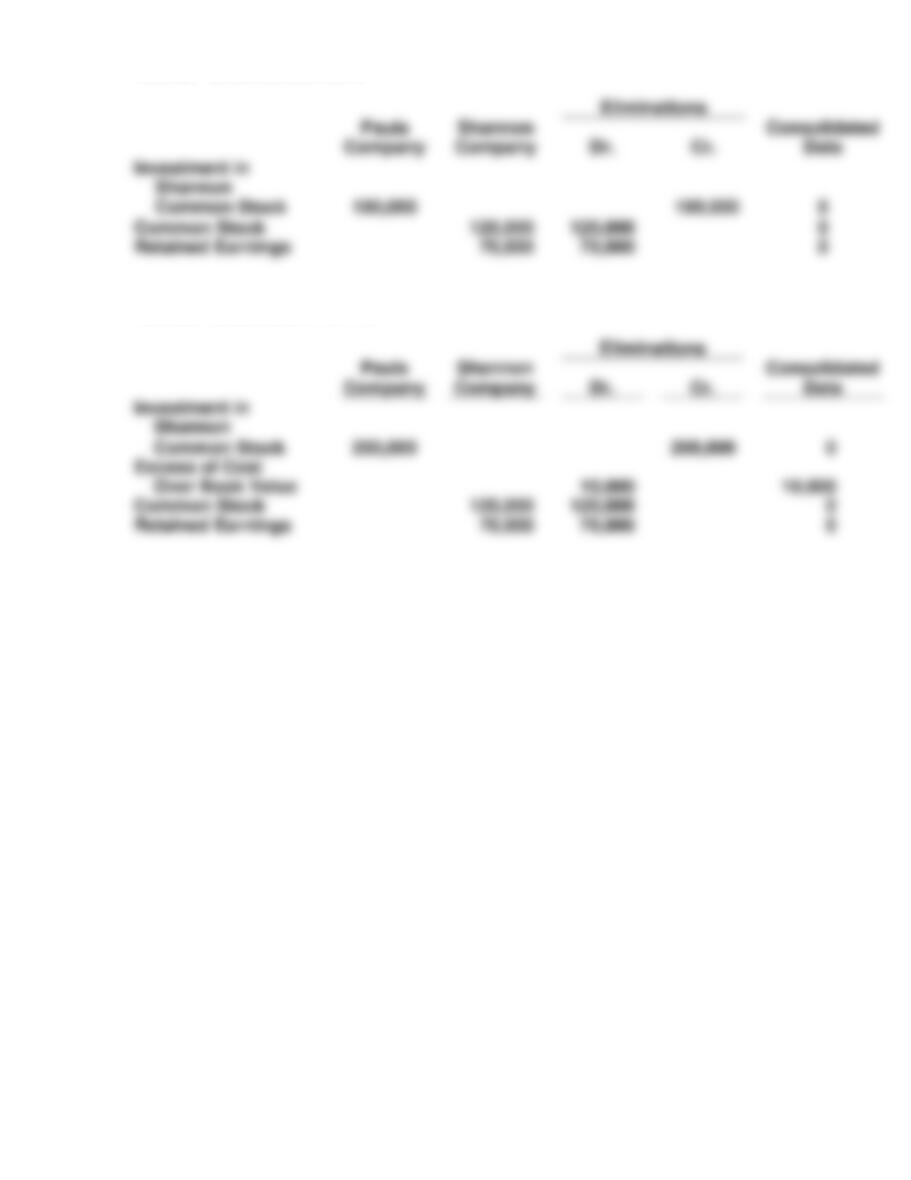
*BRIEF EXERCISE 12-9
*BRIEF EXERCISE 12-10
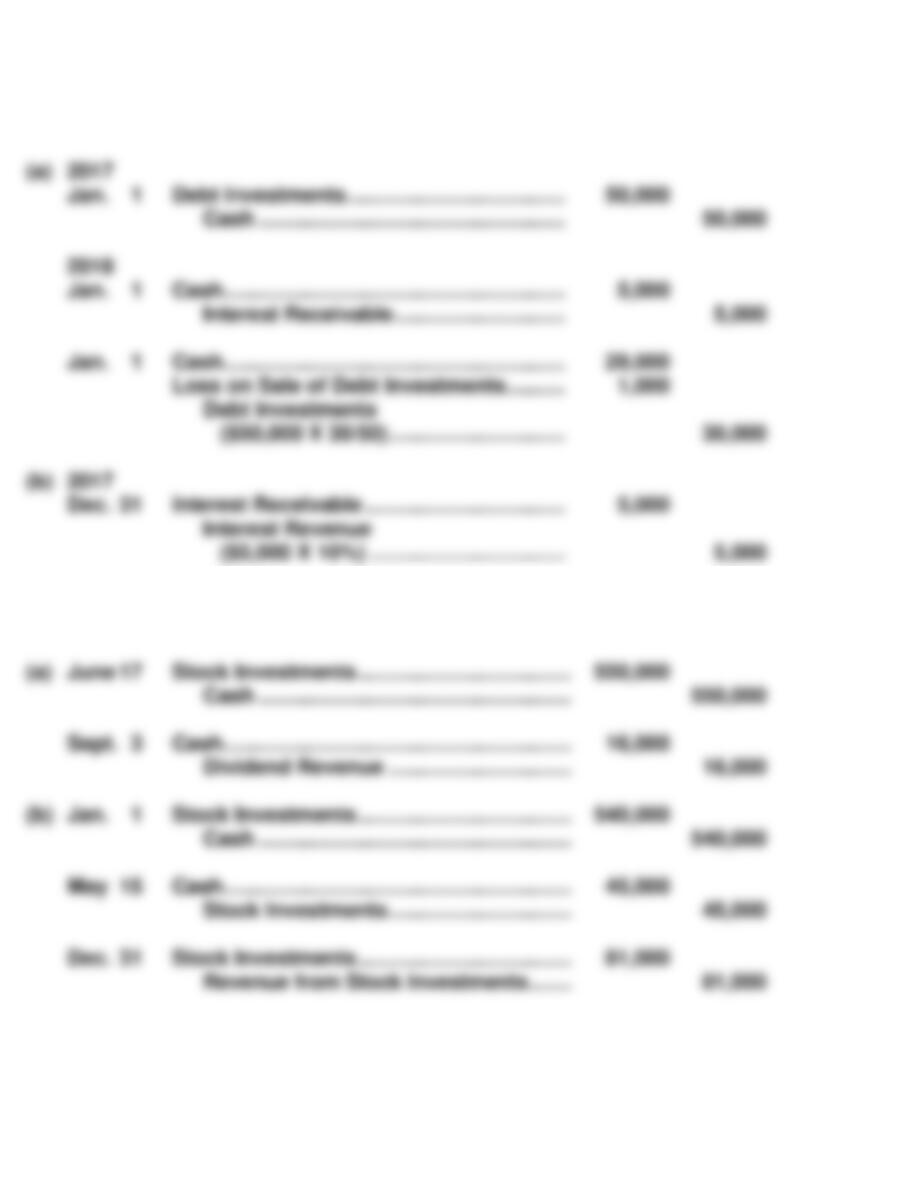
SOLUTIONS FOR DO IT! REVIEW EXERCISES
DO IT! 12-1
DO IT! 12-2
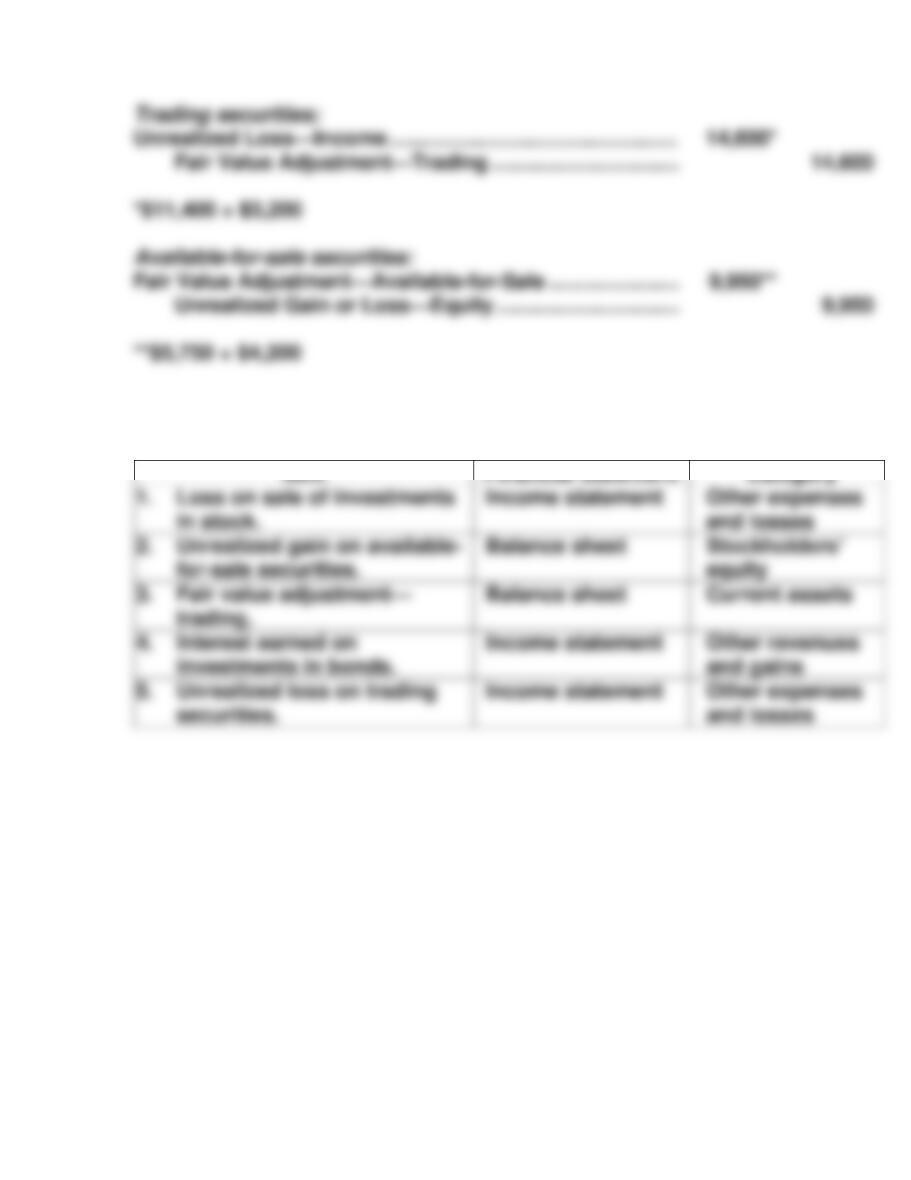
DO IT! 12-3A
DO IT! 12–3B
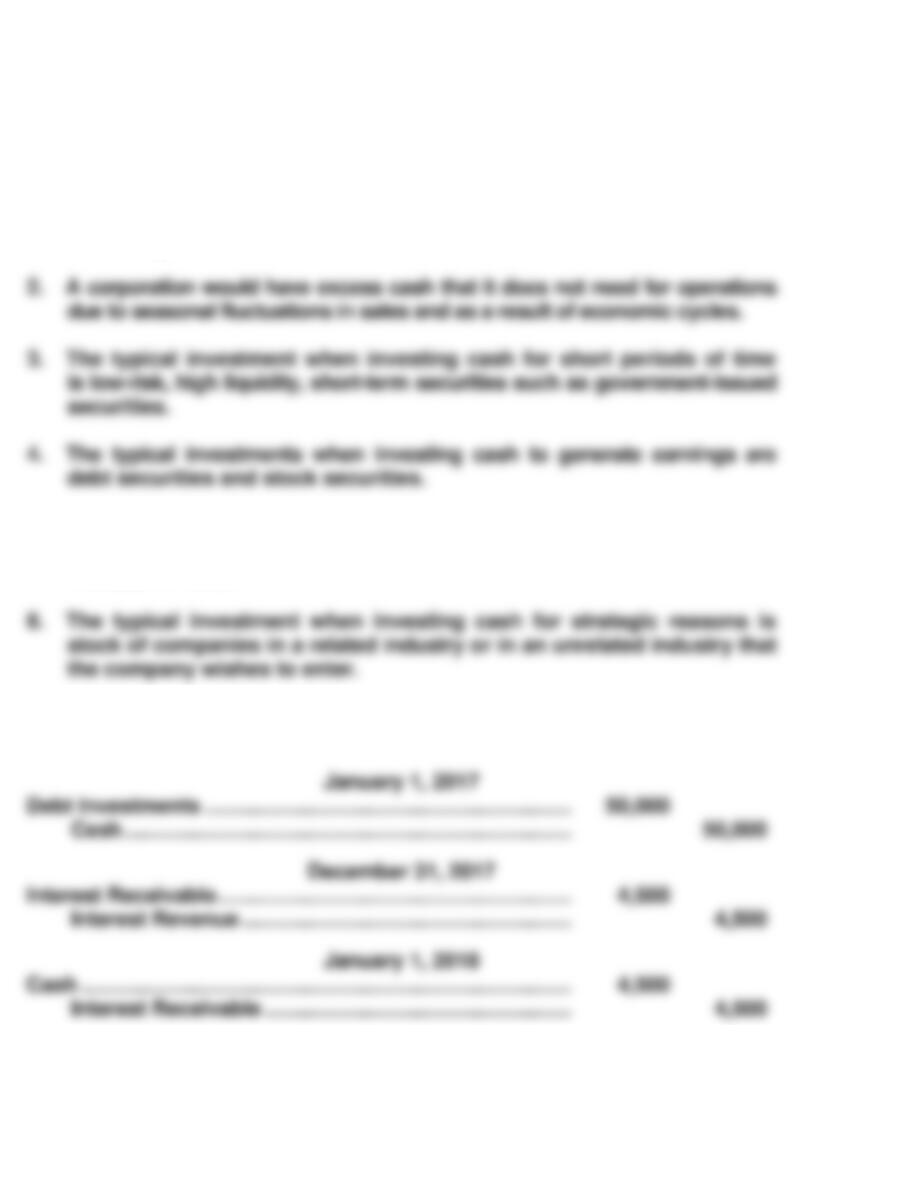
SOLUTIONS TO EXERCISES
EXERCISE 12-1
1. Companies purchase investments in debt or stock securities because
they have excess cash, to generate earnings from investment income, or
for strategic reasons.
5. A company would invest in securities that provide no current cash flows
for speculative reasons. They are speculating that the investment will
increase in value.
EXERCISE 12-2
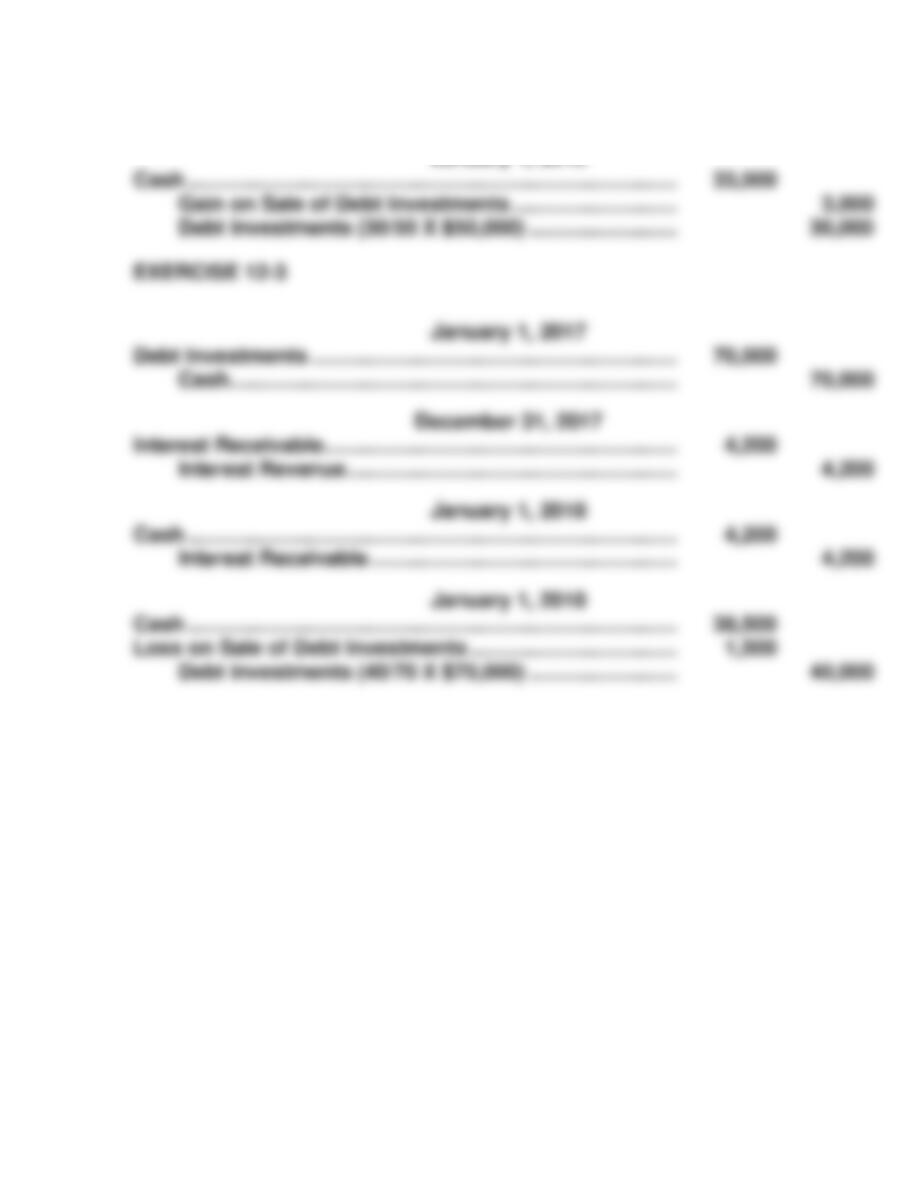
EXERCISE 12-2 (Continued)
January 1, 2018
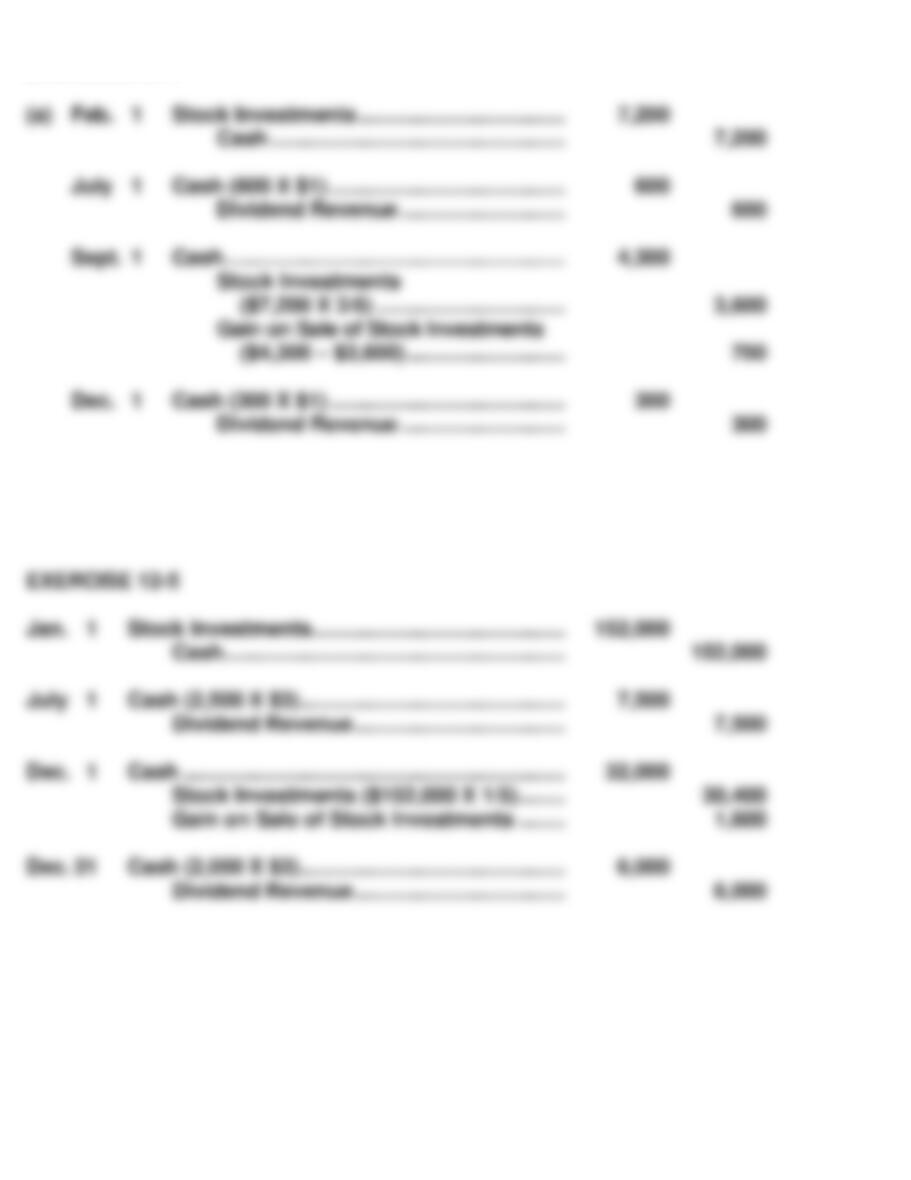
EXERCISE 12-4
(b) Dividend revenue and the gain on sale of stock investments are reported
under other revenues and gains in the income statement.
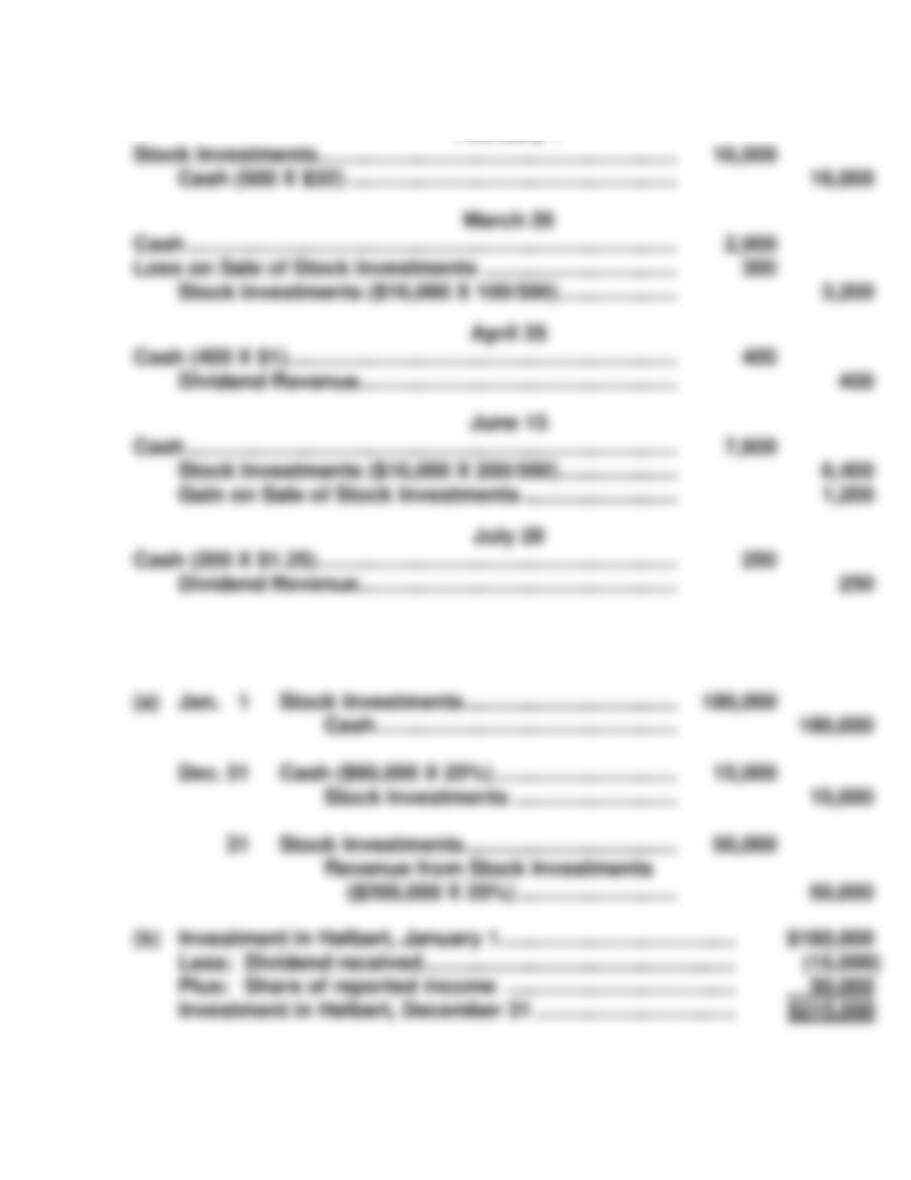
EXERCISE 12-6
February 1
EXERCISE 12-7
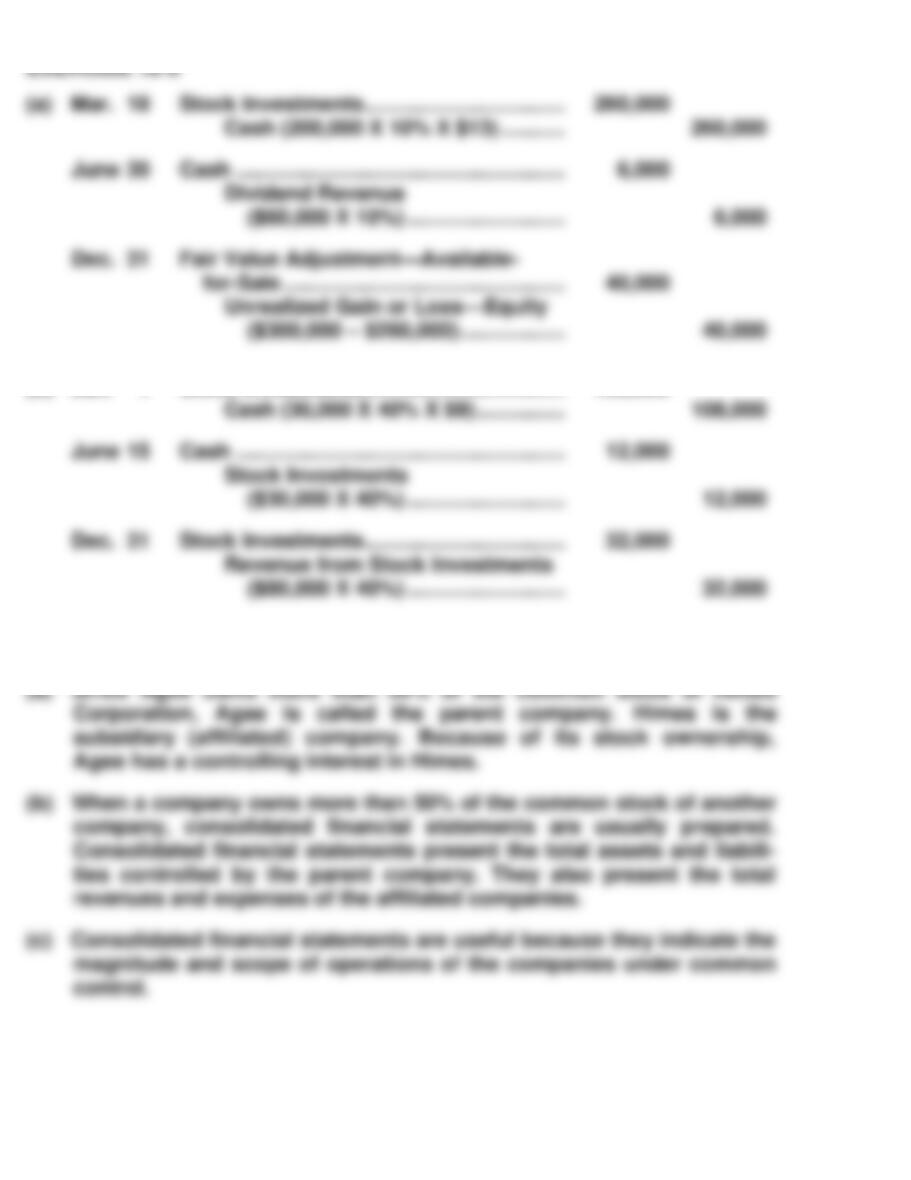
(b) Jan. 1 Stock Investments ……………………………. 108,000
EXERCISE 12-9
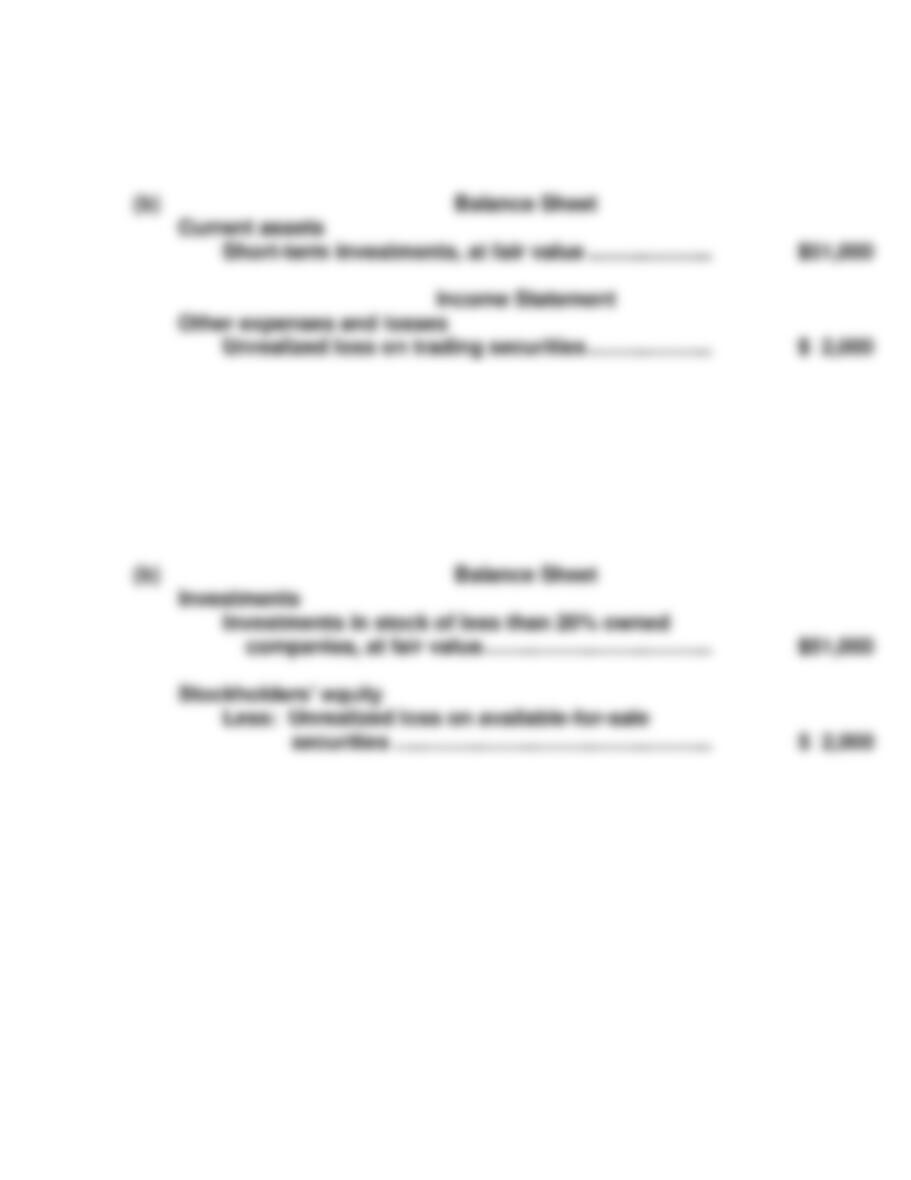
EXERCISE 12–10
(a) Dec. 31 Unrealized Loss—Income ……………………….. 2,000
Fair Value Adjustment—Trading ………. 2,000
EXERCISE 12–11
(a) Dec. 31 Unrealized Gain or Loss—Equity …………….. 2,000
Fair Value Adjustment—Available-
for-Sale ……………………………………….. 2,000
EXERCISE 12-11 (Continued)
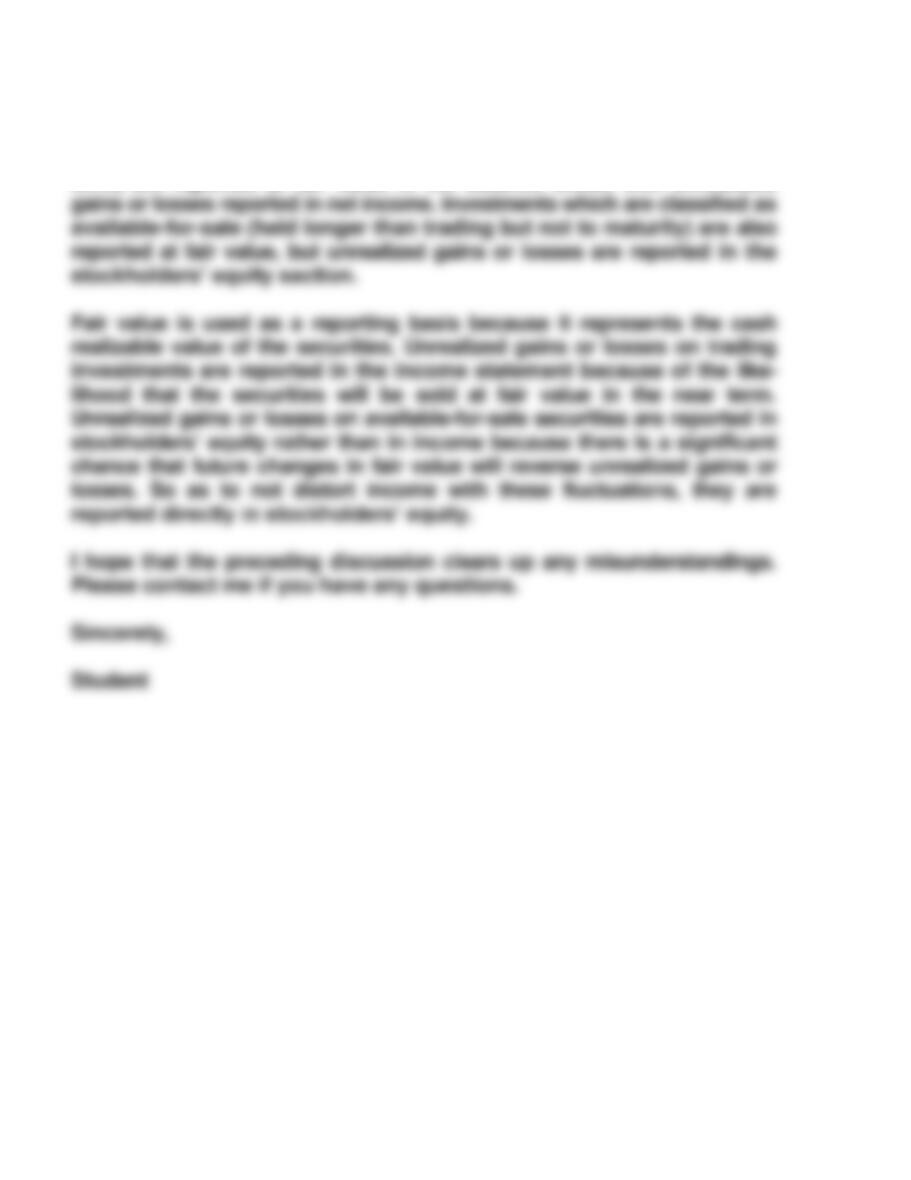
(c) Dear Ms. Kretsinger:
Investments which are classified as trading (held for sale in the near
term) are reported at fair value in the balance sheet, with unrealized
EXERCISE 12–12
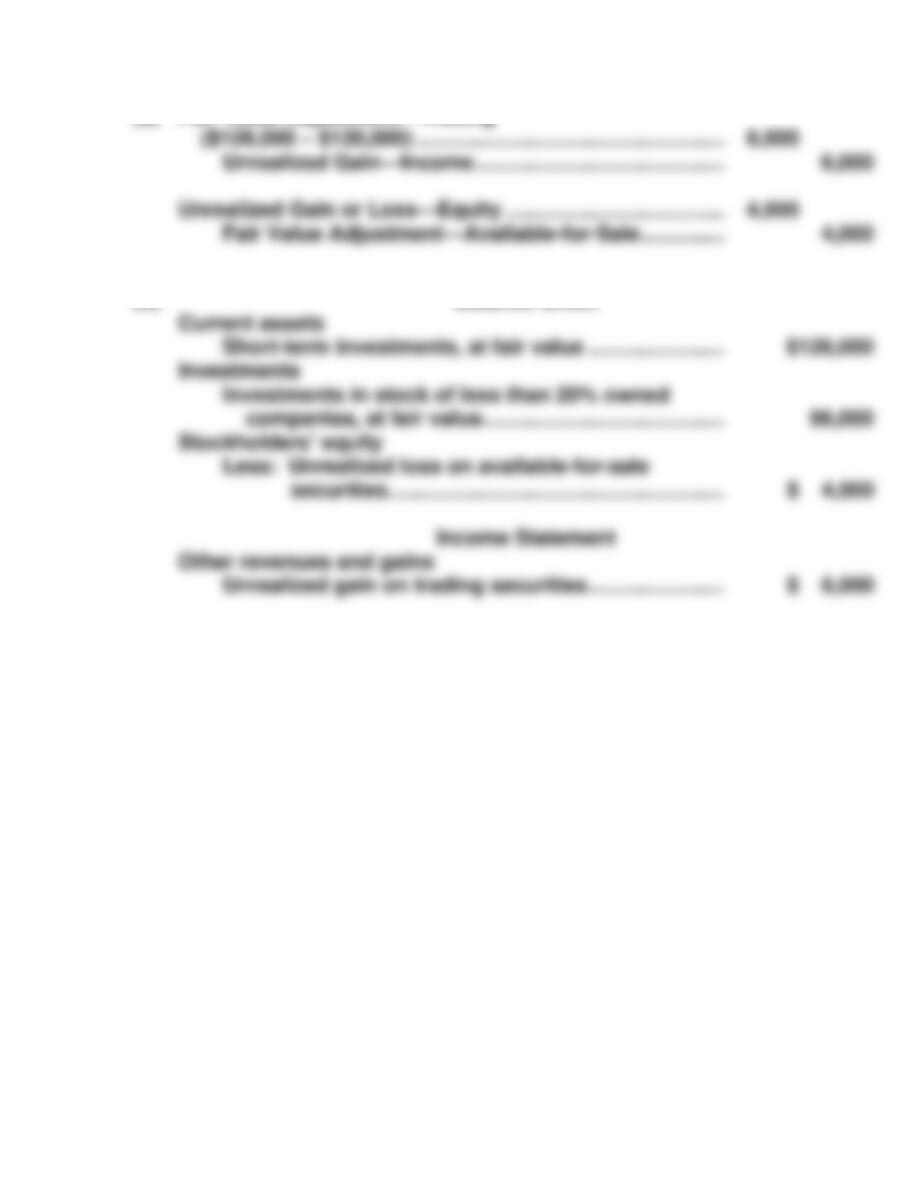
(a) Fair Value Adjustment—Trading
(b) Balance Sheet
*EXERCISE 12-13
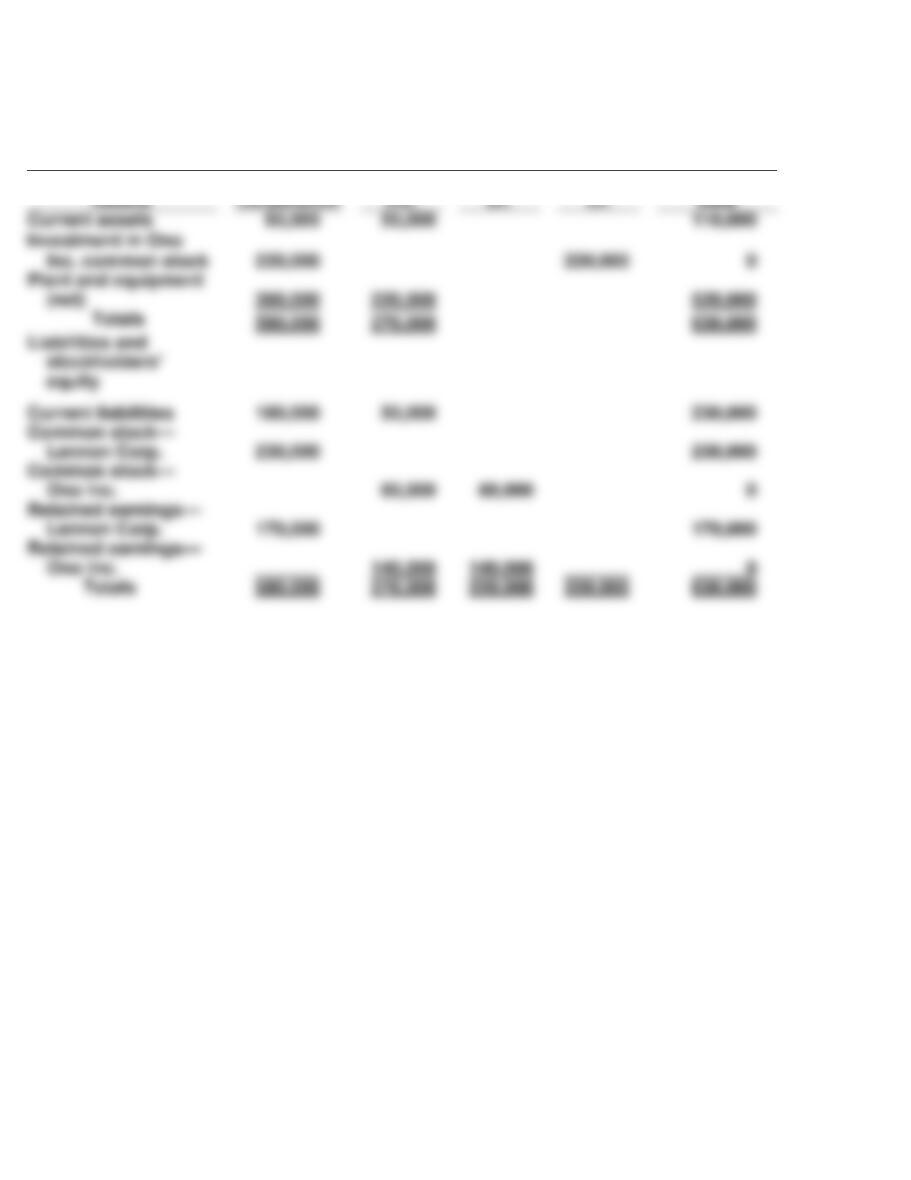
LENNON CORPORATION AND SUBSIDIARY
Worksheet—Consolidated Balance Sheet
January 1, 2017
Lennon
Ono
Eliminations
Consolidated
*EXERCISE 12-14
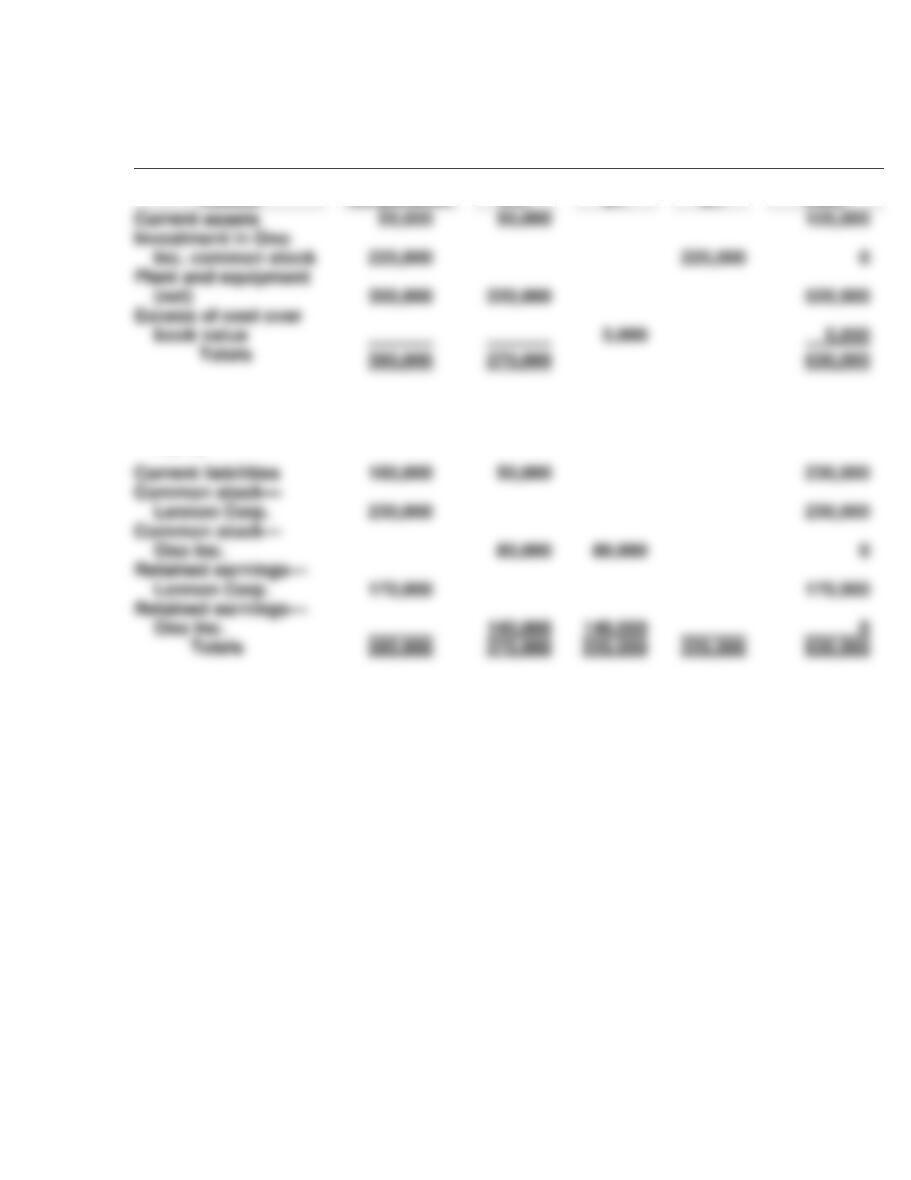
LENNON CORPORATION AND SUBSIDIARY
Worksheet—Consolidated Balance Sheet
January 1, 2017
Assets
Lennon
Corporation
Ono
Inc.
Eliminations
Consolidated
Data
Dr.
Cr.
Liabilities and
stockholders’
equity
Common stock—
Lennon Corp.
Retained earnings—
Ono Inc.
Plant and equipment
Excess of cost over
book value
5,000
5,000
SOLUTIONS TO PROBLEMS
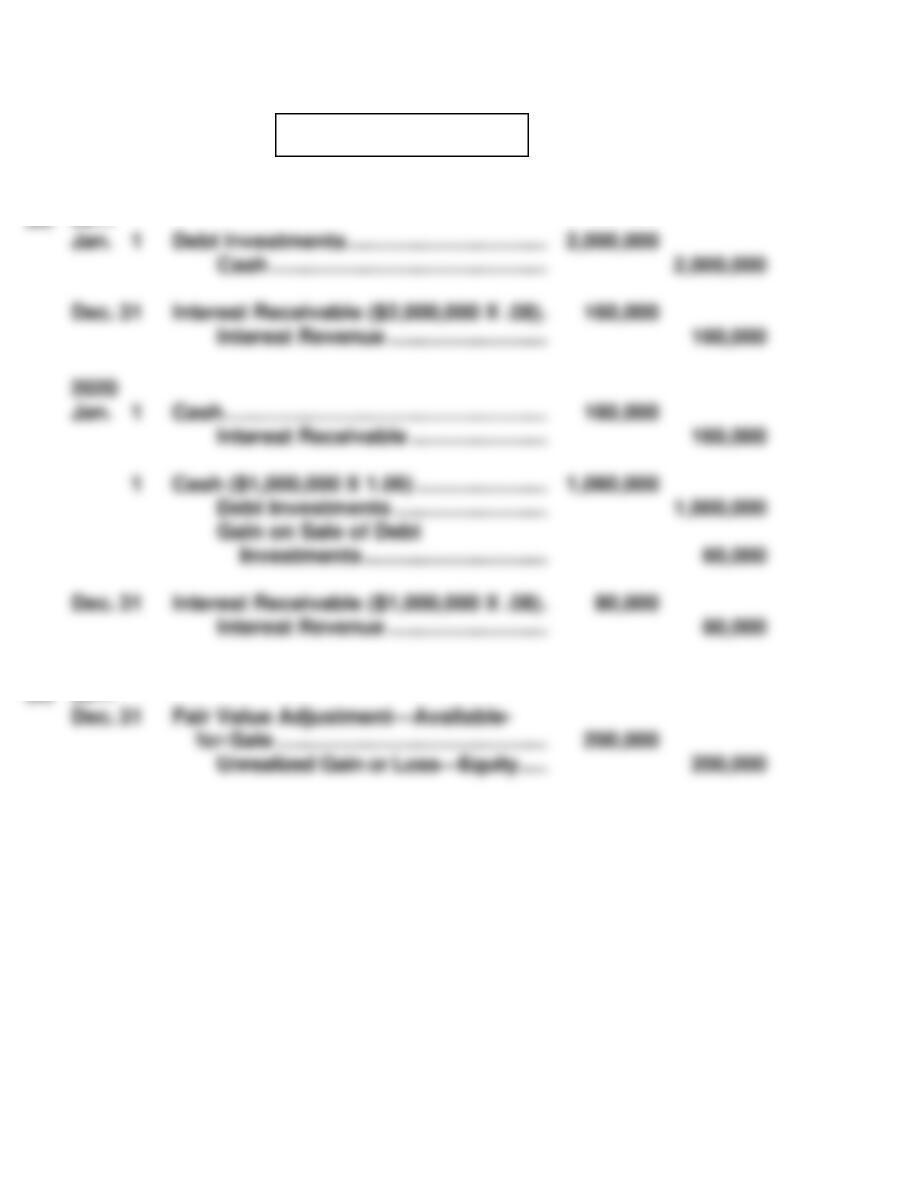
PROBLEM 12–1A
(a) 2017
(b) 2017
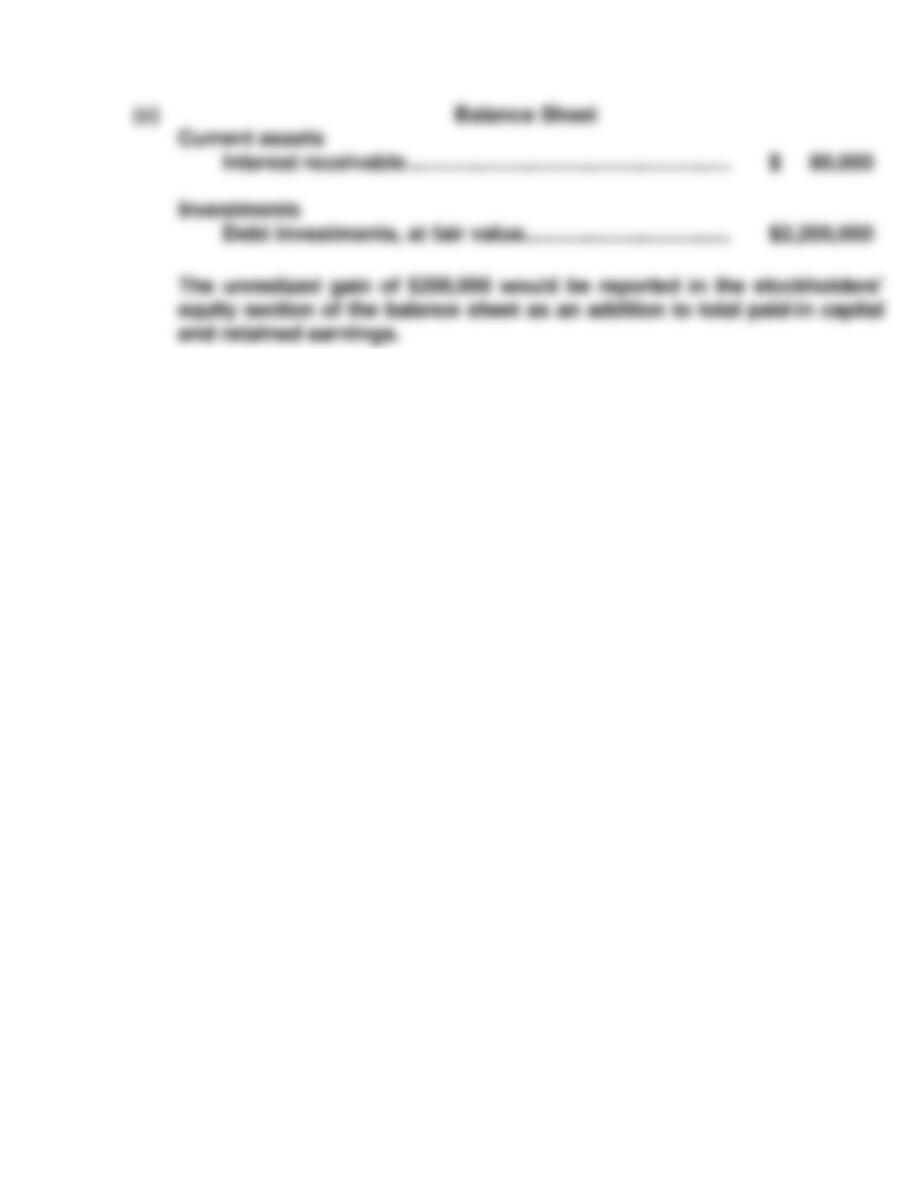
PROBLEM 12-1A (Continued)
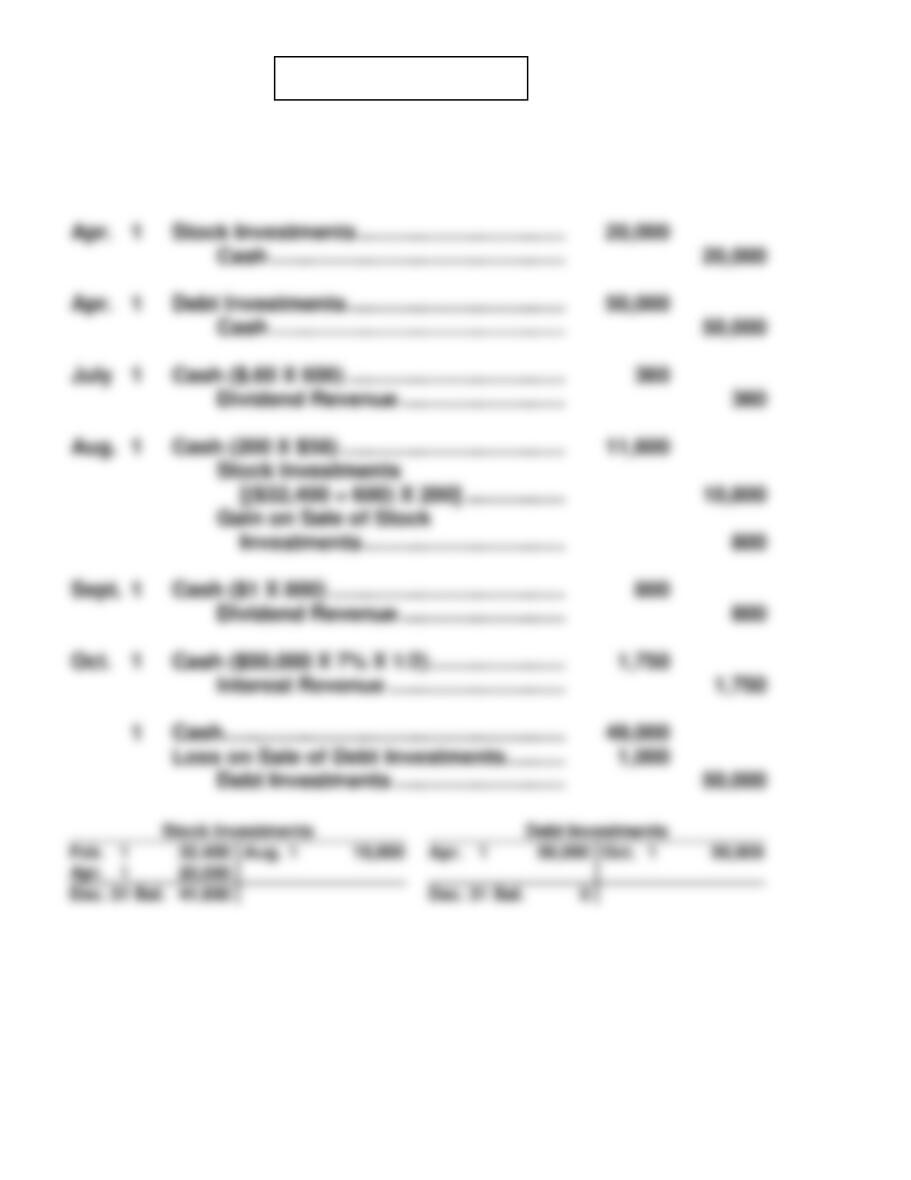
PROBLEM 12–2A
(a) Feb. 1 Stock Investments …………………………..… 32,400
Cash ………………………………………….. 32,400
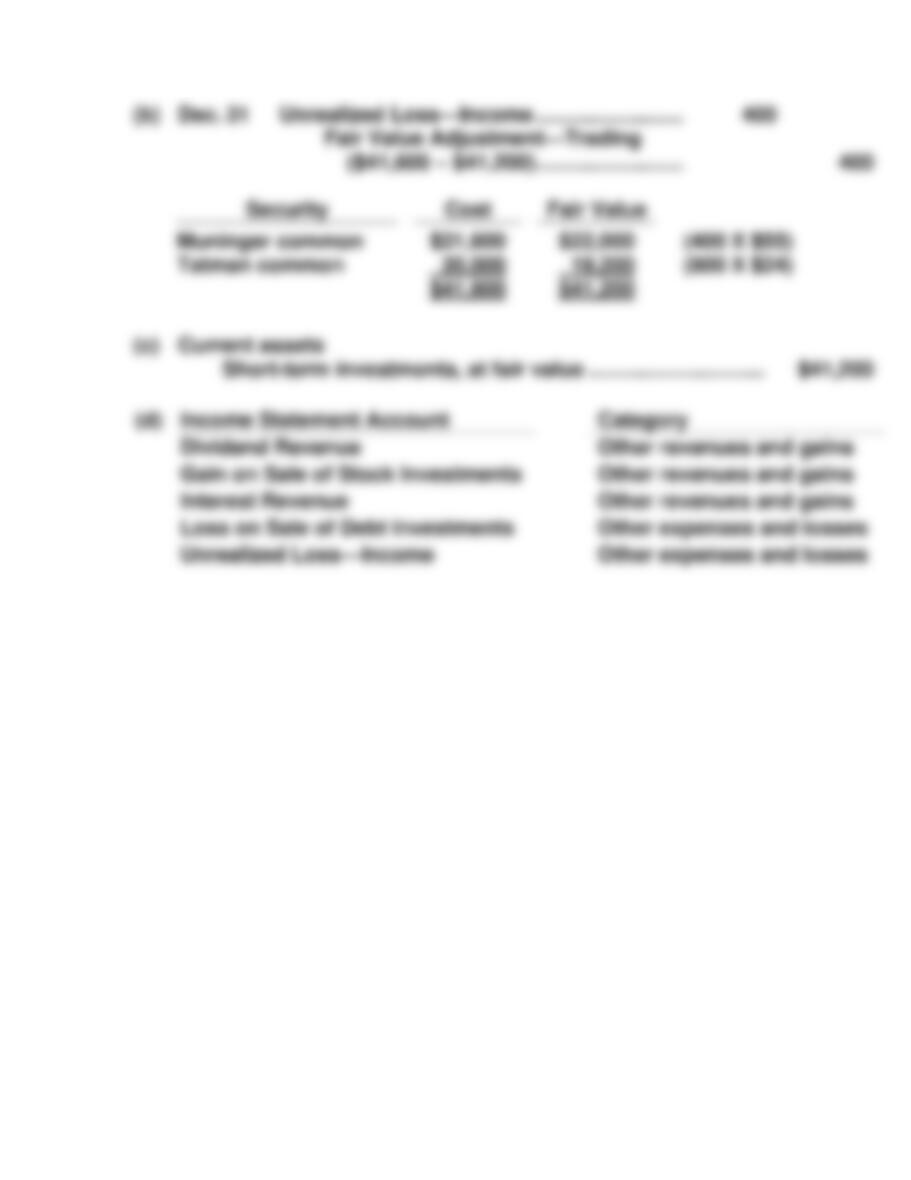
PROBLEM 12-2A (Continued)
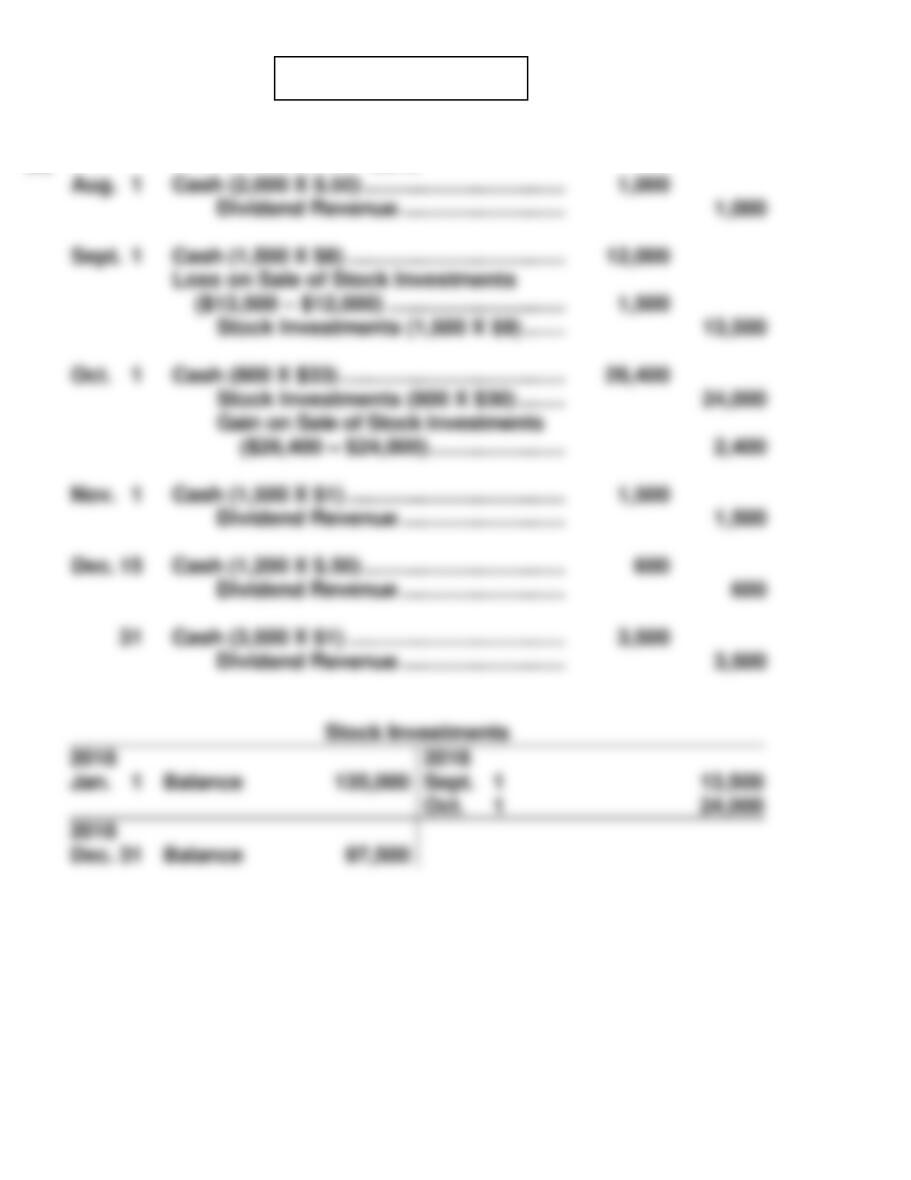
PROBLEM 12–3A
(a) 2018
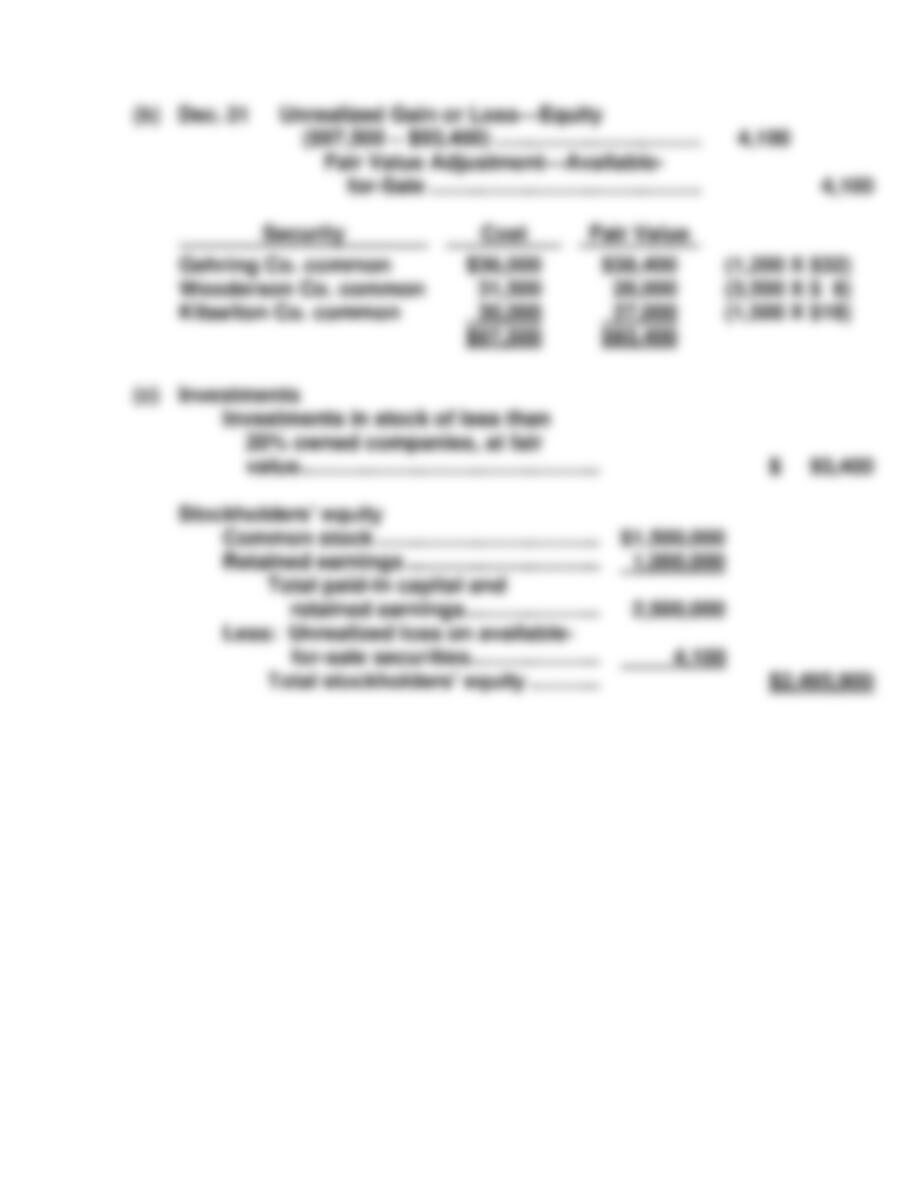
PROBLEM 12-3A (Continued)
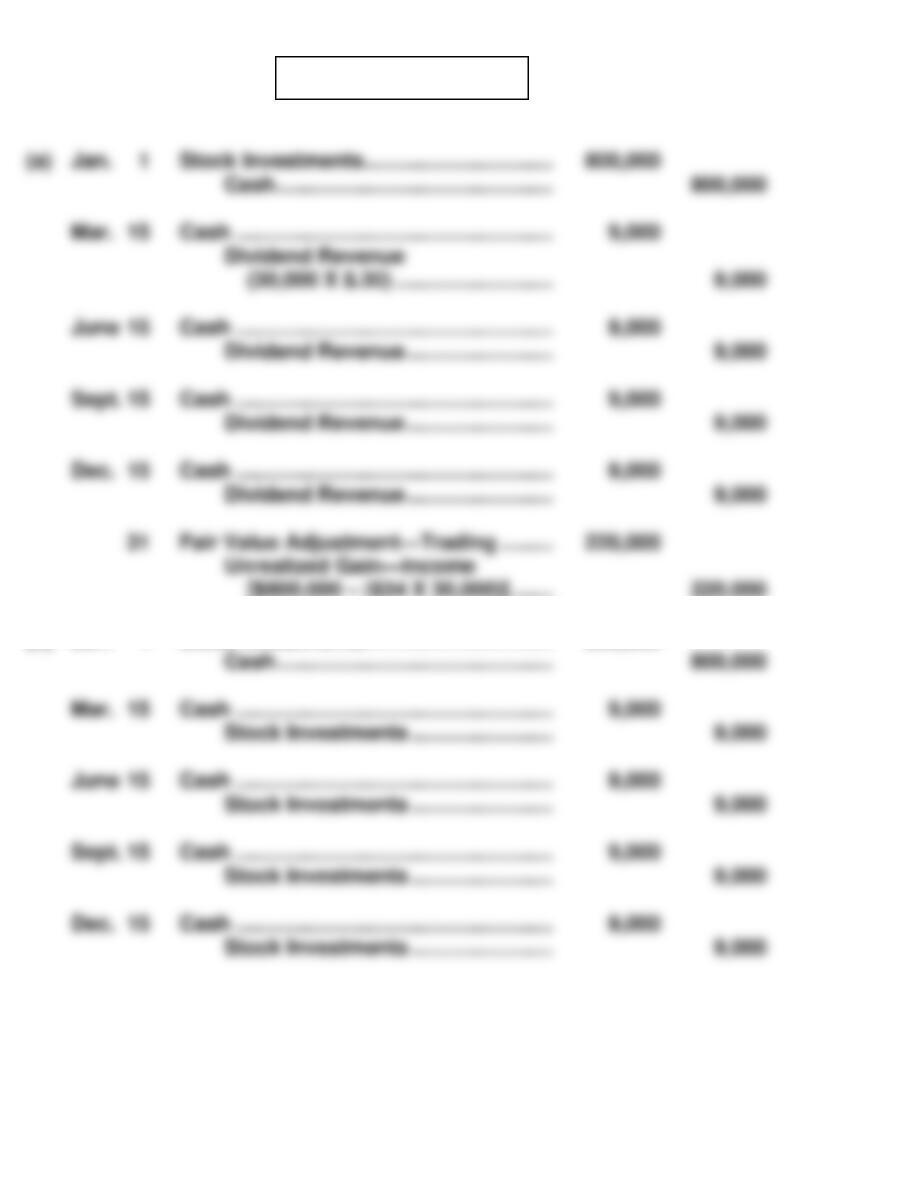
PROBLEM 12–4A
[$800,000 – ($34 X 30,000)] ……. 220,000
(b) Jan. 1 Stock Investments ………………………….. 800,000
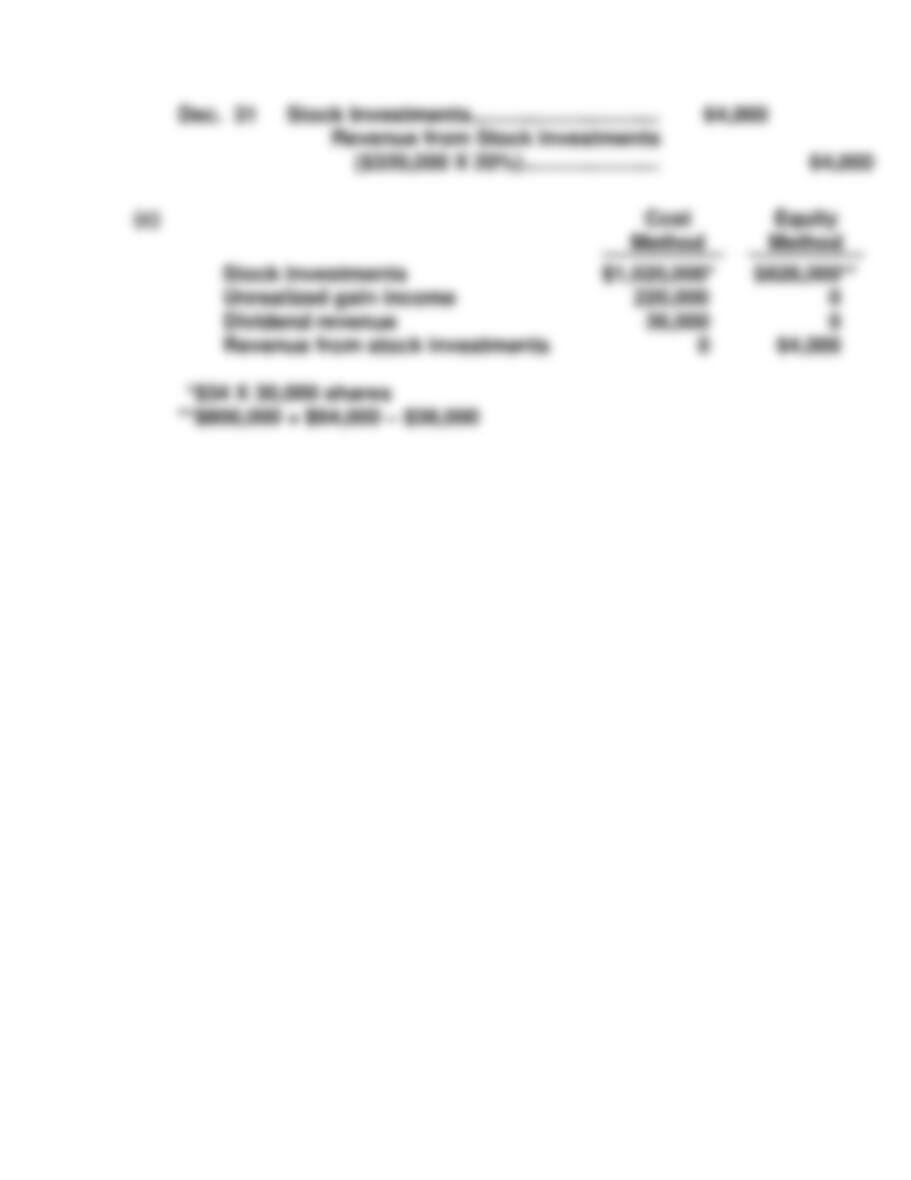
PROBLEM 12-4A (Continued)
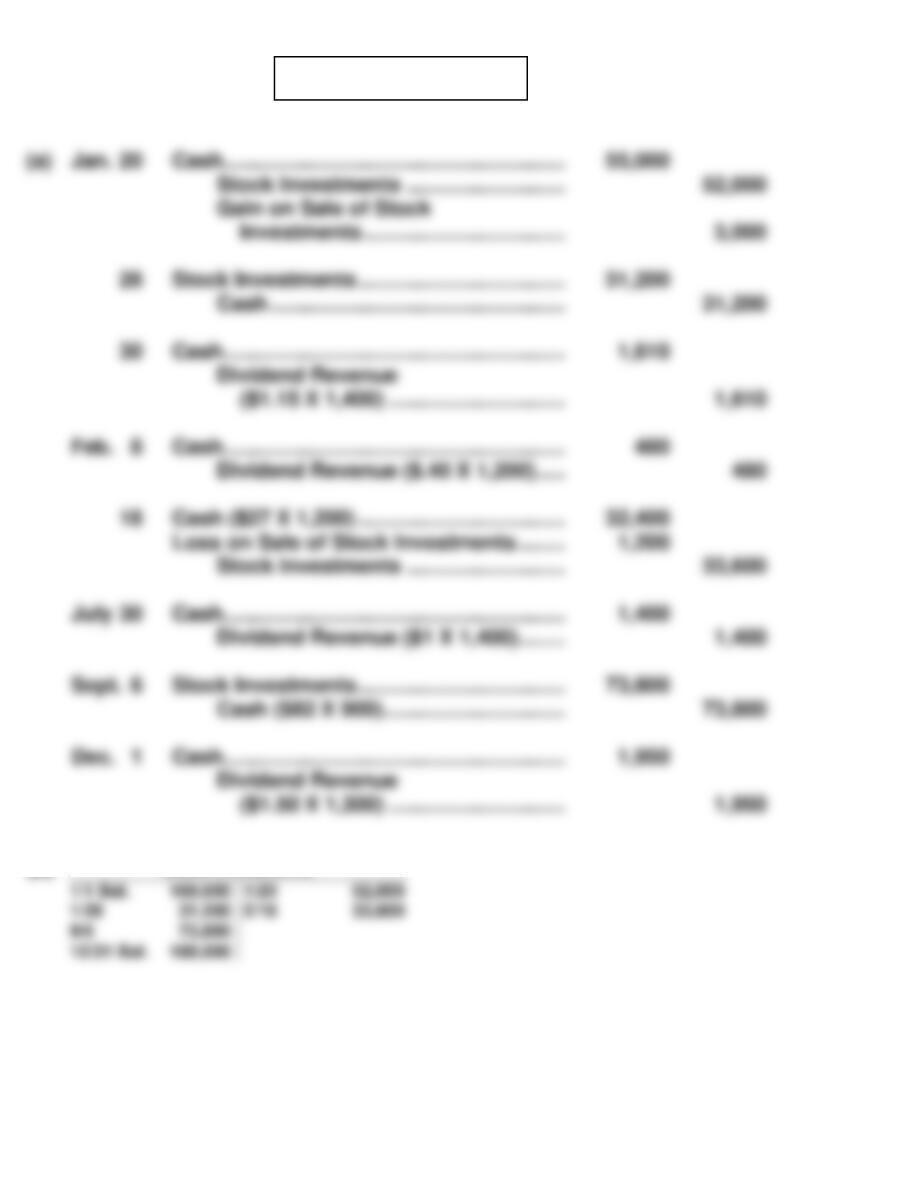
PROBLEM 12–5A
(b)
Stock Investments
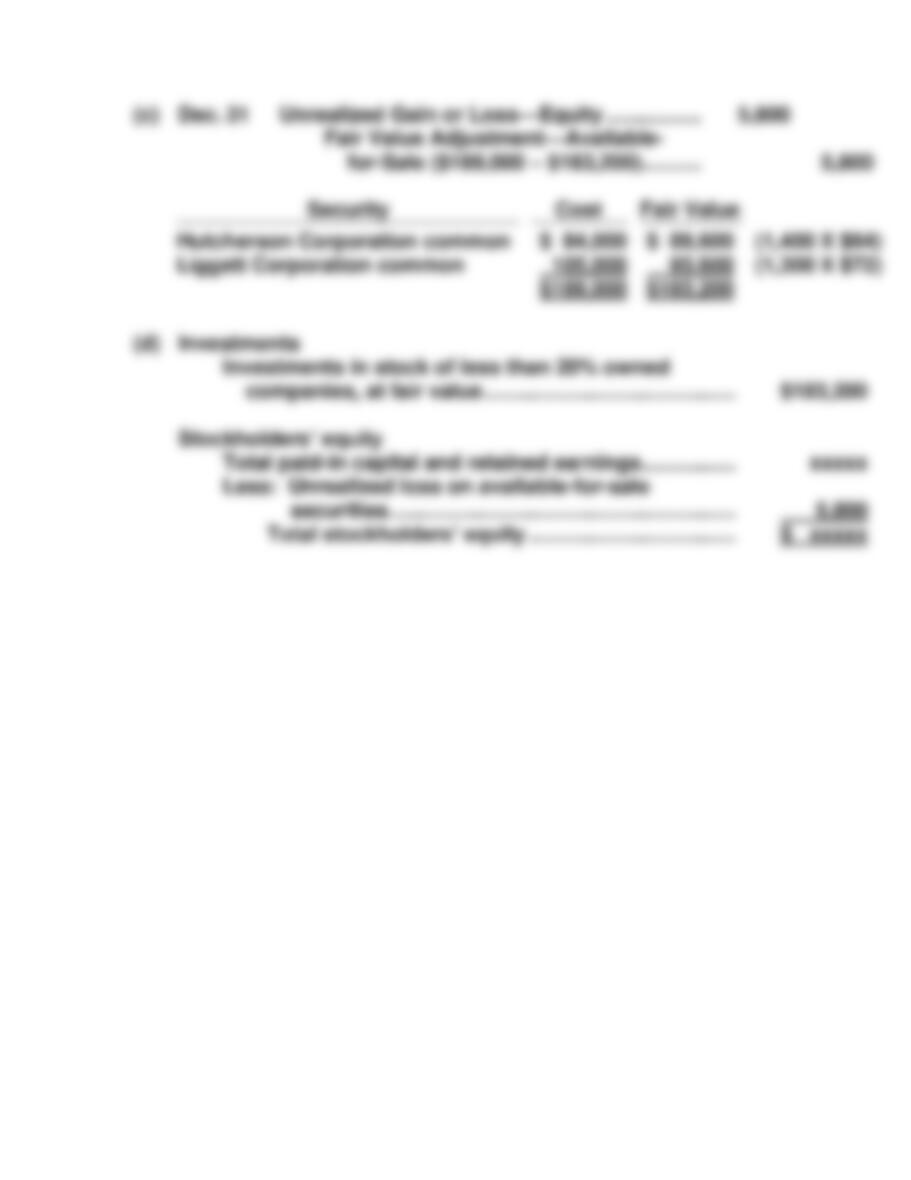
PROBLEM 12-5A (Continued)
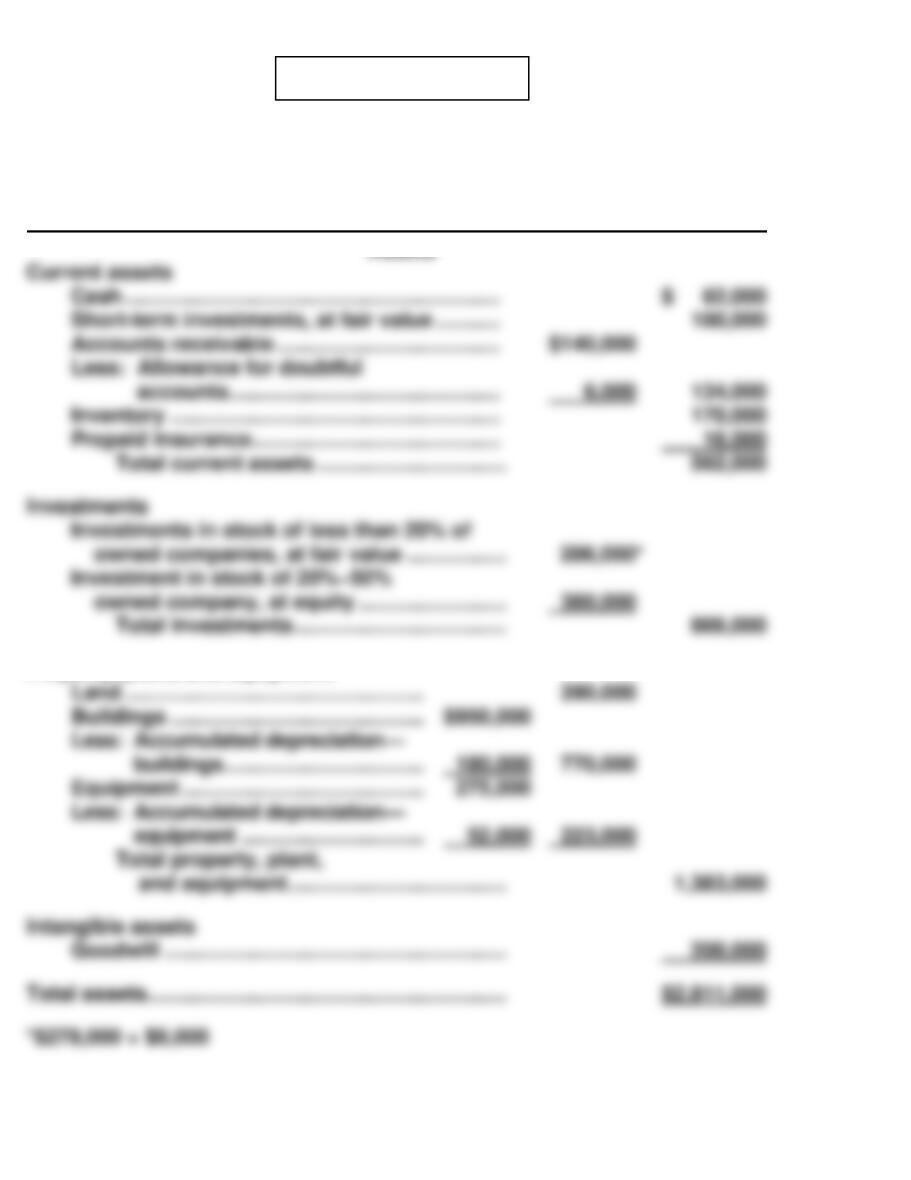
PROBLEM 12–6A
NIETO CORPORATION
Balance Sheet
December 31, 2017
Assets
Property, plant, and equipment
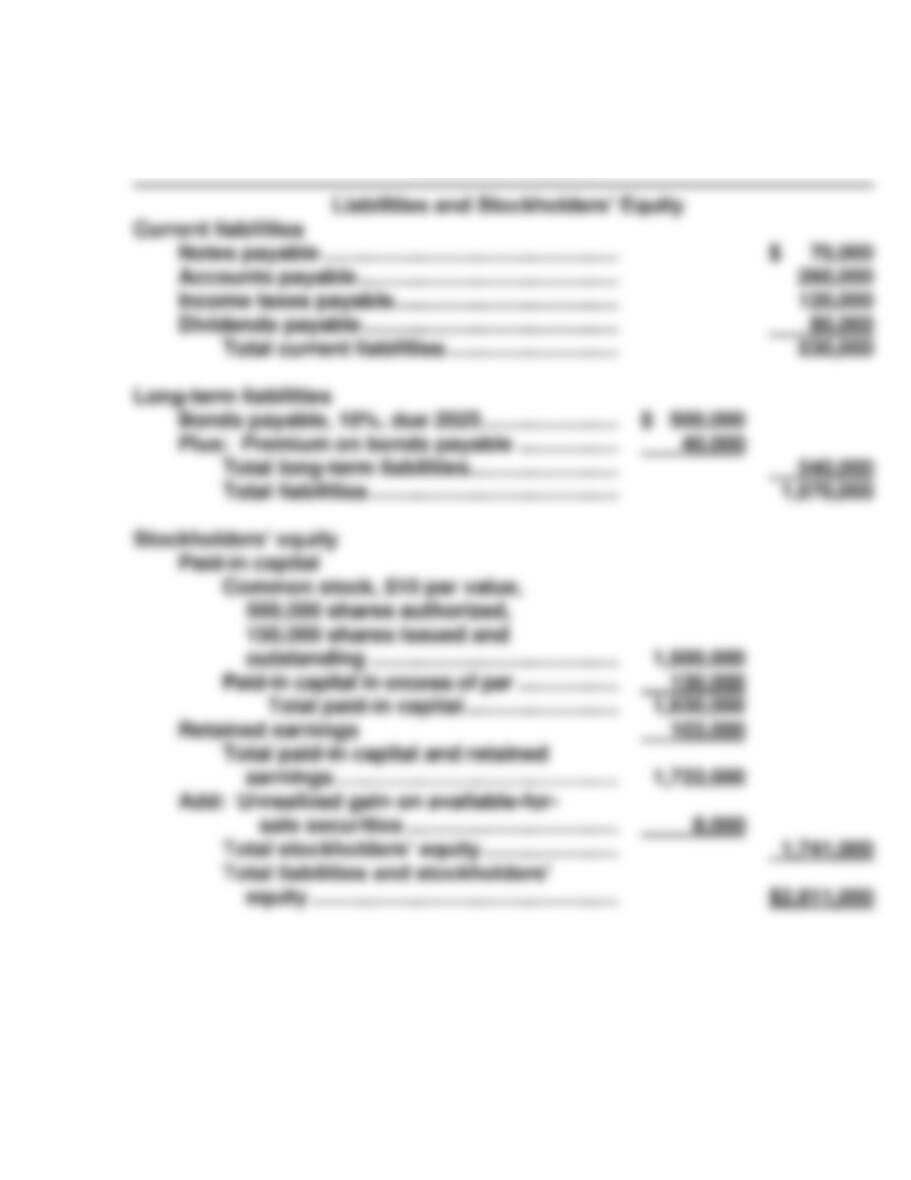
PROBLEM 12-6A (Continued)
NIETO CORPORATION
Balance Sheet (Continued)
December 31, 2017
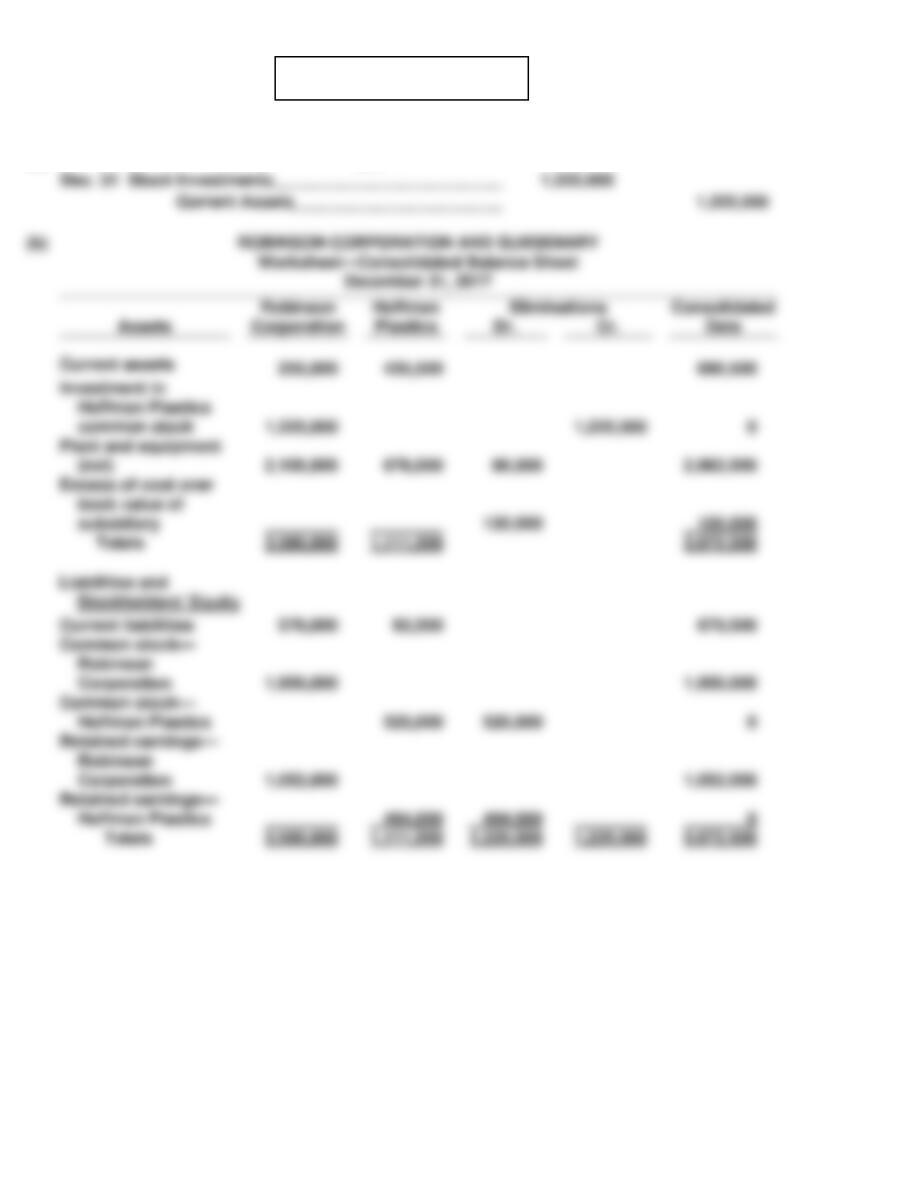
*PROBLEM 12-7A
(a)
2017
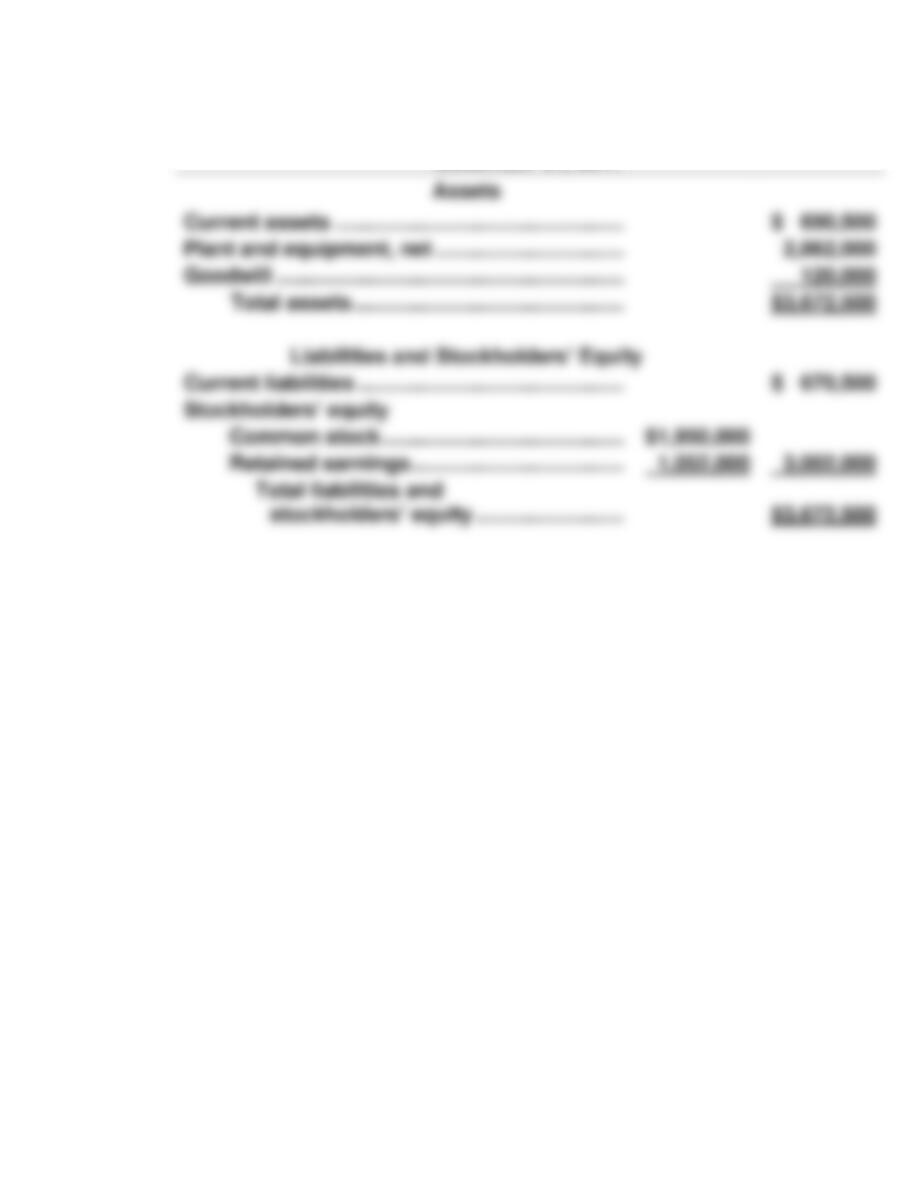
*PROBLEM 12-7A (Continued)
(c)
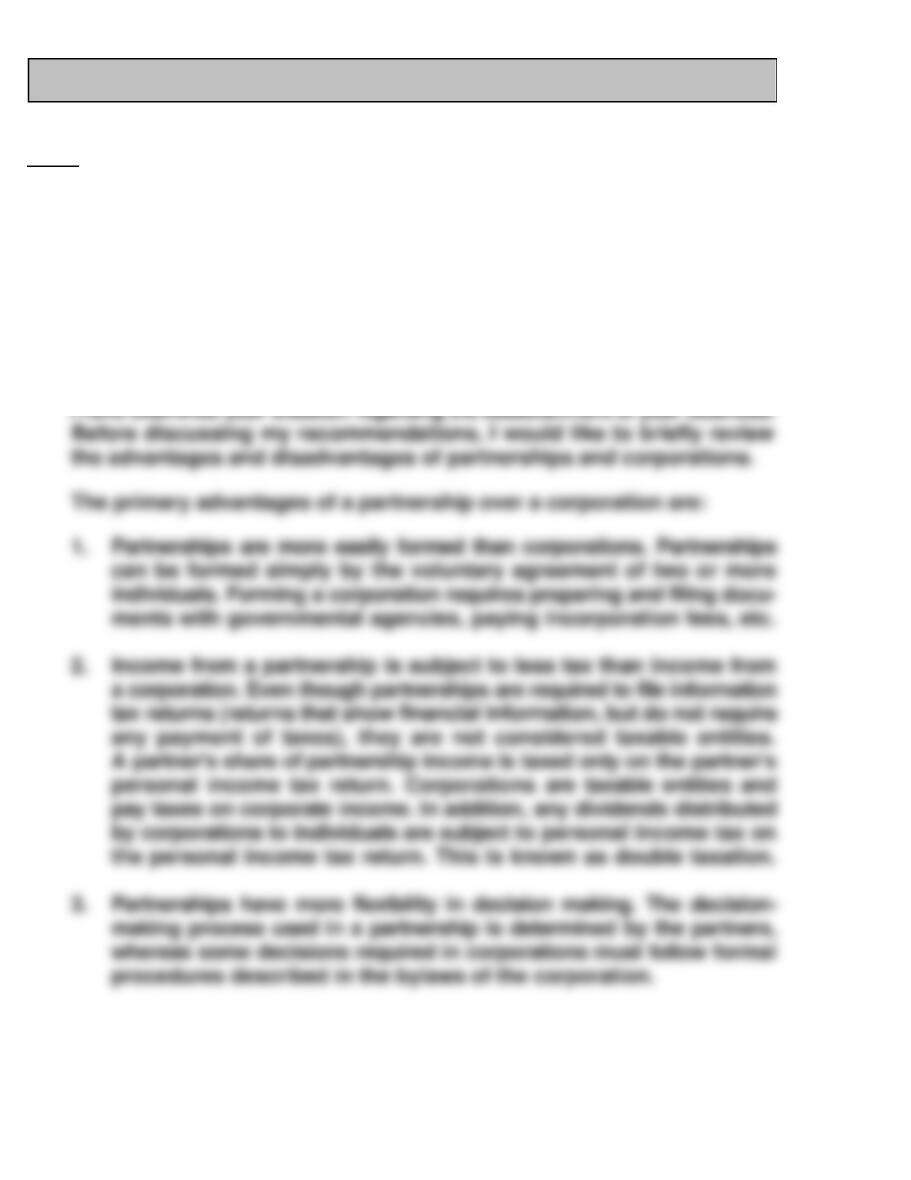
ROBINSON CORPORATION AND SUBSIDIARY
Consolidated Balance Sheet
December 31, 2017
COMPREHENSIVE PROBLEM: CHAPTERS 10 TO 12
Part I
(a) To: Debby Kauffman, Jamie Hiatt, and Ella Rincon
From: Joe Student
Date: 5/26/2016
Re: Analysis of Partnership vs. Corporate Form of Business
Organization
COMPREHENSIVE PROBLEM (Continued)
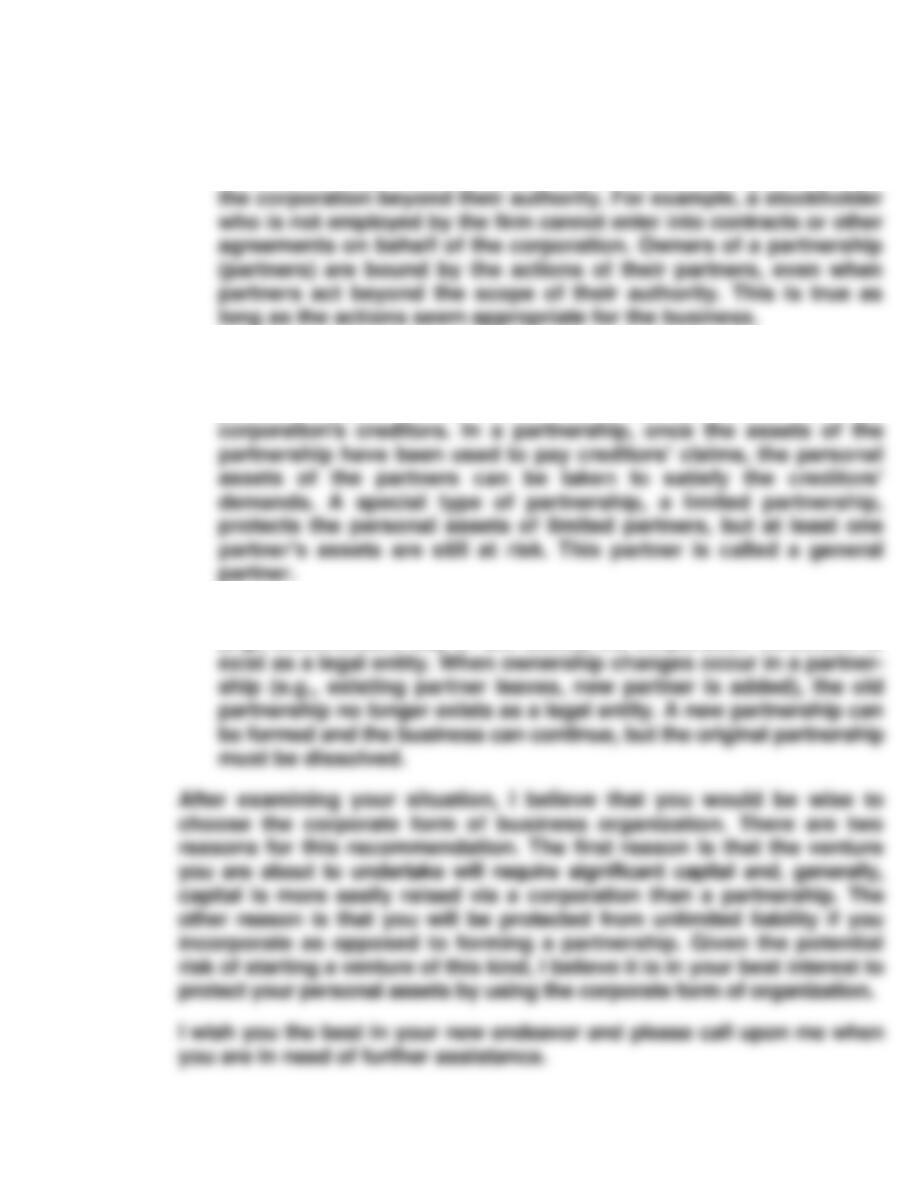
The primary advantages of a corporation over a partnership are:
1. Mutual agency does not exist in a corporation. This means that the
owners of a corporation (stockholders) do not have the power to bind
2. The owners of a corporation have limited liability. When the
corporation’s assets are not sufficient to pay creditors’ claims, the
personal assets of the stockholders are protected from the
3. The life of a corporation is unlimited. When ownership changes occur
(e.g., stockholders buy or sell stock), the corporation continues to
COMPREHENSIVE PROBLEM (Continued)
Part II
(b)
Equity financing option:
Part III
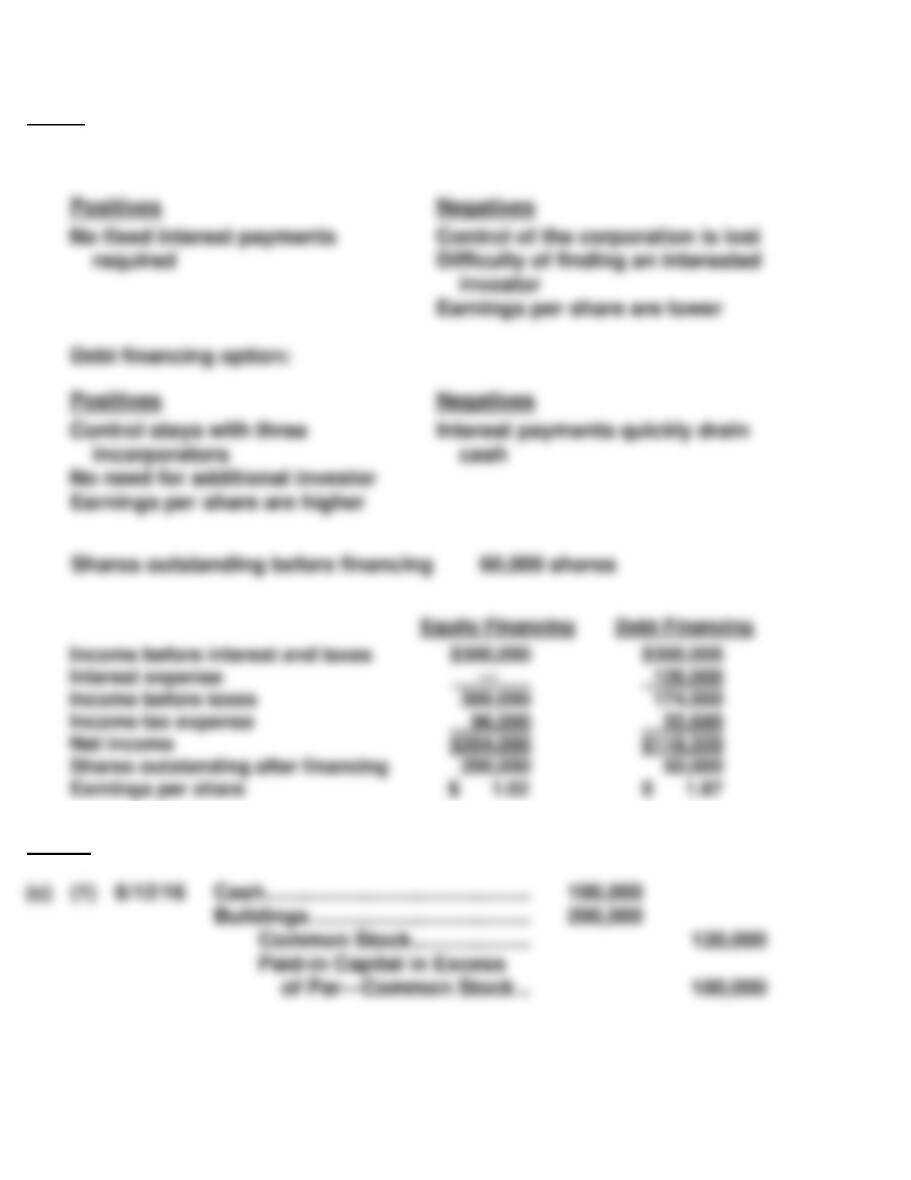
Positives
Negatives
Debt financing option:
Positives
Negatives
Earnings per share are higher
COMPREHENSIVE PROBLEM (Continued)
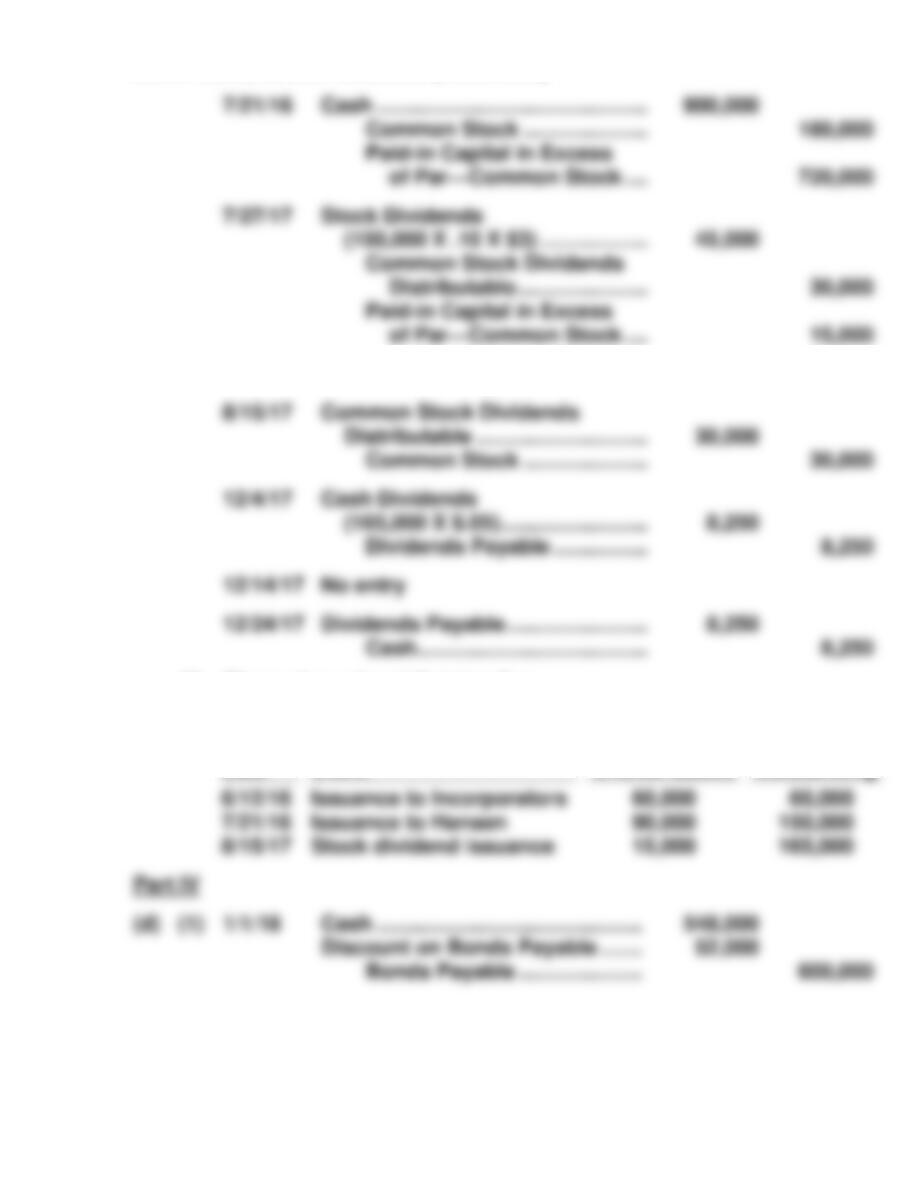
7/31/17 No entry
(2) Shares Issued and Outstanding
Date
Event
Number of
Shares Issued
Total Shares
Issued and
Outstanding
6/12/16
8/15/17
Issuance to Incorporators
Stock dividend issuance
COMPREHENSIVE PROBLEM (Continued)
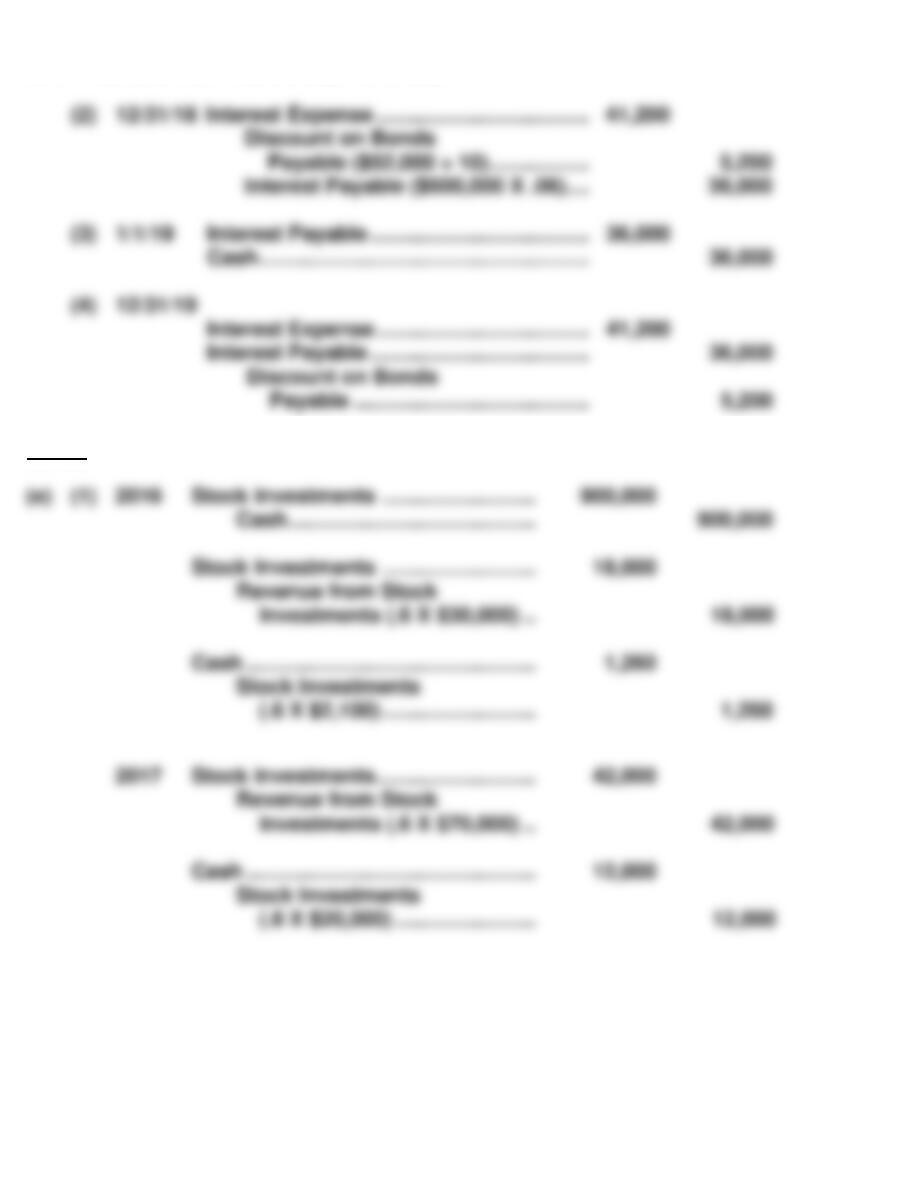
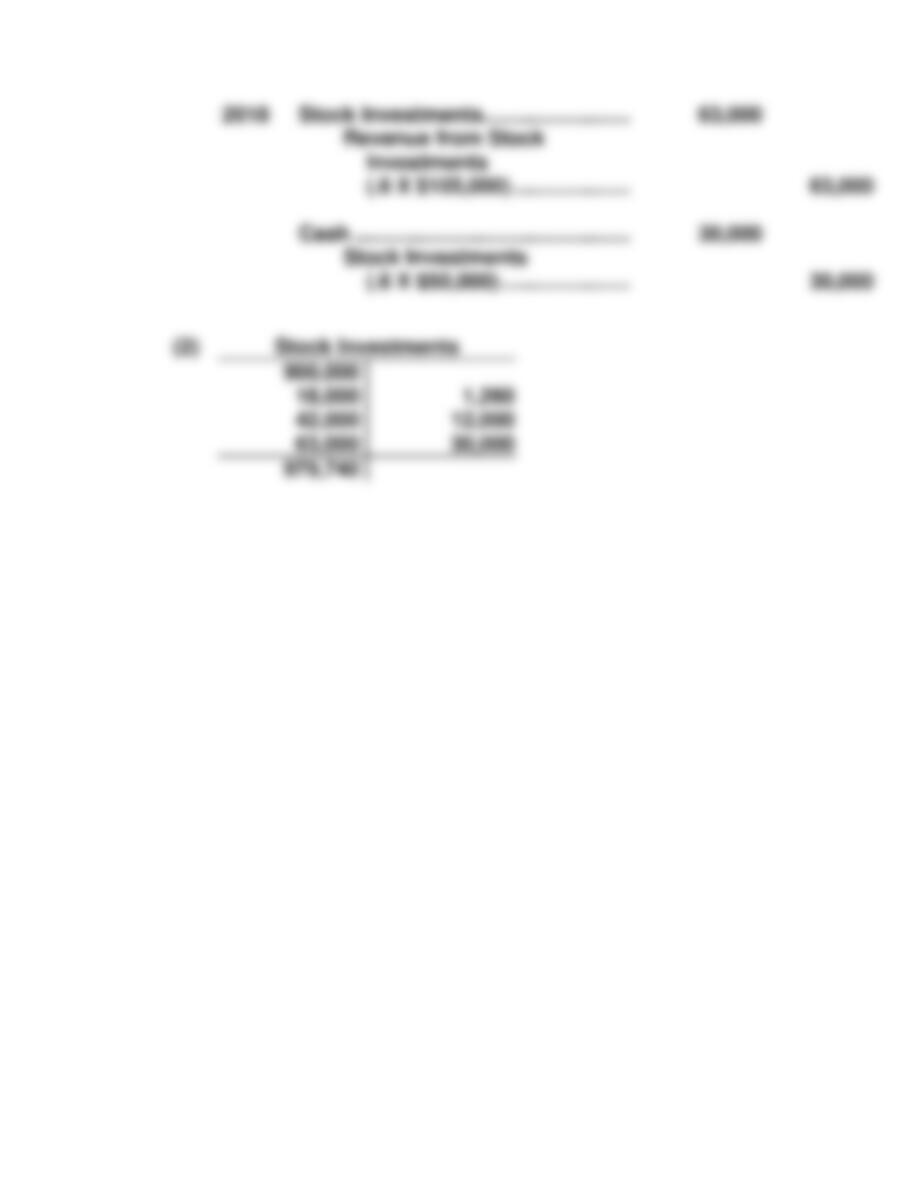
Part V
COMPREHENSIVE PROBLEM (Continued)
BYP 12-1 FINANCIAL REPORTING PROBLEM
(a) Percentage increase from 2012 to 2013:
BYP 12-2 COMPARATIVE ANALYSIS PROBLEM
(a)
(in millions)
PepsiCo
Coca-Cola
BYP 12-3 COMPARATIVE ANALYSIS PROBLEM
Cash used for investing activities
(a)
(in millions)
Amazon
Wal-Mart
(b) In its Note 1 to the consolidated financial statements, Amazon states:
Principles of Consolidation
Cash used for investing activities
BYP 12-4 REAL-WORLD FOCUS
BYP 12-5 DECISION MAKING ACROSS THE ORGANIZATION
(a) The dollar amount received upon the sale of the JMB Company stock was
Entries for the investment in JMB Company:
BYP 12–5 (Continued)
BYP 12-6 COMMUNICATION ACTIVITY
Dear Mr. Nichols:
BYP 12-7 ETHICS CASE
(a) Classifying the securities as they propose will indeed have the effect on
BYP 12-8 ALL ABOUT YOU
BYP 12-9 FASB CODIFICATION ACTIVITY