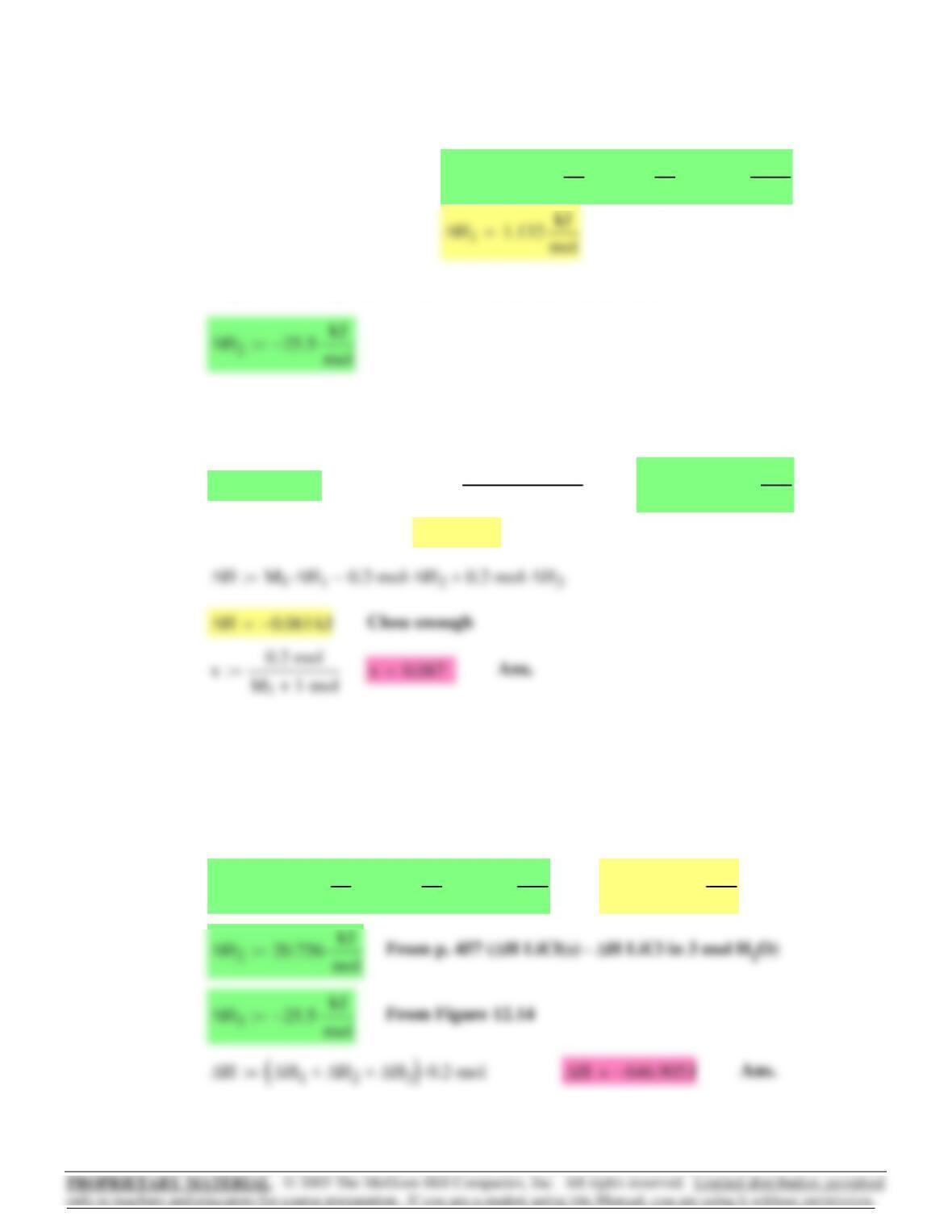
∆H11.509 kJ
mol
=∆H1104.8 kJ
kg
⋅21.01 kJ
kg
⋅−
⎛
⎜
⎝
⎞
⎠18.015⋅gm
mol
⋅:=
H2O @ 5 C —–> H2O @ 25 C (1)
LiCl(3 H2O) —–> LiCl + 3 H2O (2)
LiCl + 4 H2O —–> LiCl(4 H2O) (3)
————————————————————————–
H2O @ 5 C + LiCl(3 H2O) —–> LiCl(4 H2O)
12.32
n310.5=
∆H333.16−kJ
mol
⋅:=n3
0.8 mol⋅M1
+
()
0.2 mol⋅
:=M11.3 mol⋅:=
Step 3: Guess M1 and find ∆H3 solution from Figure 12.14. Calculate ∆H
for process. Continue to guess M1 until ∆H =0 for adiabatic process.
Step 2: From Fig. 12.14 with n = 4 moles H2O/mole solute:
∆H1104.8 kJ
kg
⋅41.99 kJ
kg
⋅−
⎛
⎜
⎝
⎞
⎠18.015⋅kg
kmol
⋅:=
Step 1: From Steam Tables
454
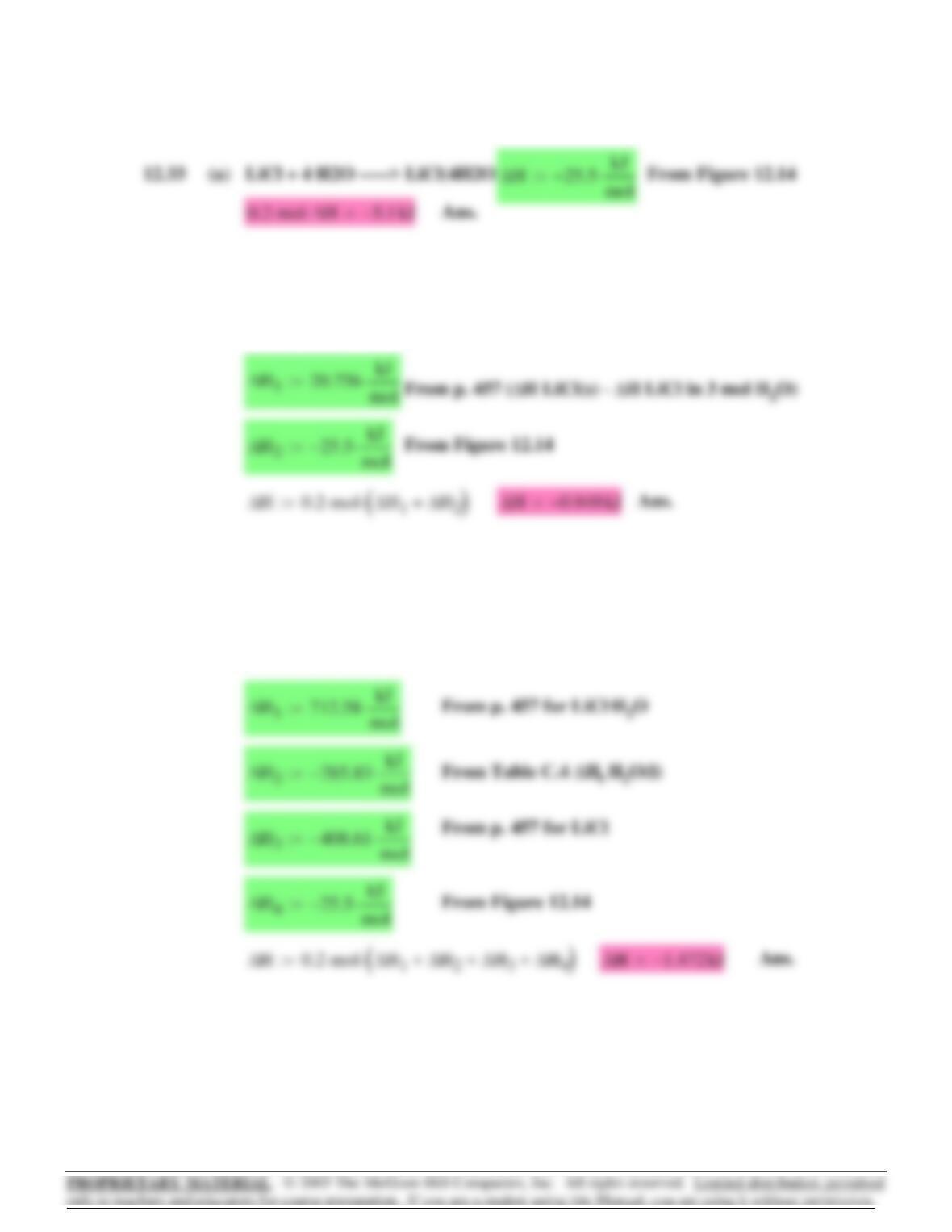
LiCl + 4 H2O —–> LiCl(4 H2O) (1)
4/9 (LiCl(9 H2O) —–> LiCl + 9 H2O) (2)
—————————————————————
5/9 LiCl + 4/9 LiCl(9 H2O) —–> LiCl(4 H2O)
(d)
LiCl*H2O —–> Li +1/2 Cl2 + H2 + 1/2 O2 (1)
H2 + 1/2 O2 —–> H2O (2)
Li + 1/2 Cl2 —–> LiCl (3)
LiCl + 4 H2O —–> LiCl(4 H2O) (4)
———————————————————————-
LiCl*H2O + 3 H2O —–> LiCl(4 H2O)
(c)
(b) LiCl(3 H2O) —–> LiCl + 3 H2O (1)
LiCl + 4 H2O —–> LiCl(4 H2O) (2)
—————————————————–
LiCl(3 H2O) + H2O —–> LiCl(4 H2O)
455
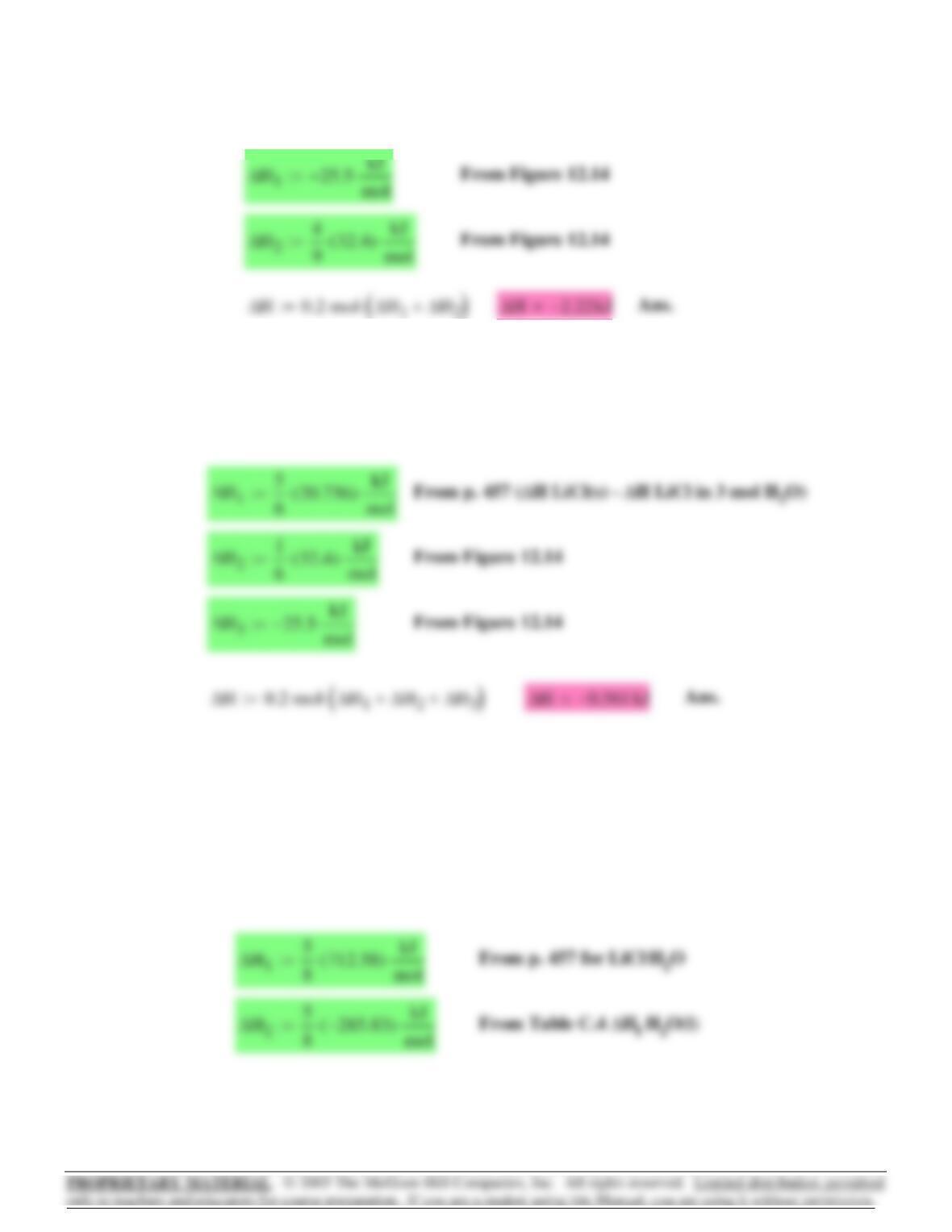
5/8 (LiCl*H2O —–> Li +1/2 Cl2 + H2 + 1/2 O2) (1)
5/8 (H2 + 1/2 O2 —–> H2O) (2)
3/8 (LiCl(9 H2O) —–> LiCl + 9 H2O) (3)
5/8 (Li + 1/2 Cl2 —–> LiCl (4)
LiCl + 4 H2O —–> LiCl(4 H2O) (5)
—————————————————————————————-
5/8 LiCl*H2O + 3/8 LiCl(9 H2O) —–> LiCl(4 H2O)
(f)
5/6 (LiCl(3 H2O) —–> LiCl + 3 H2O) (1)
1/6 (LiCl(9 H2O) —–> LiCl + 9 H2O) (2)
LiCl + 4 H2O —–> LiCl(4 H2O) (3)
————————————————————————
5/6 LiCl(3 H2O) + 1/6 LiCl(9 H2O) —–> LiCl(4 H2O)
(e)
456
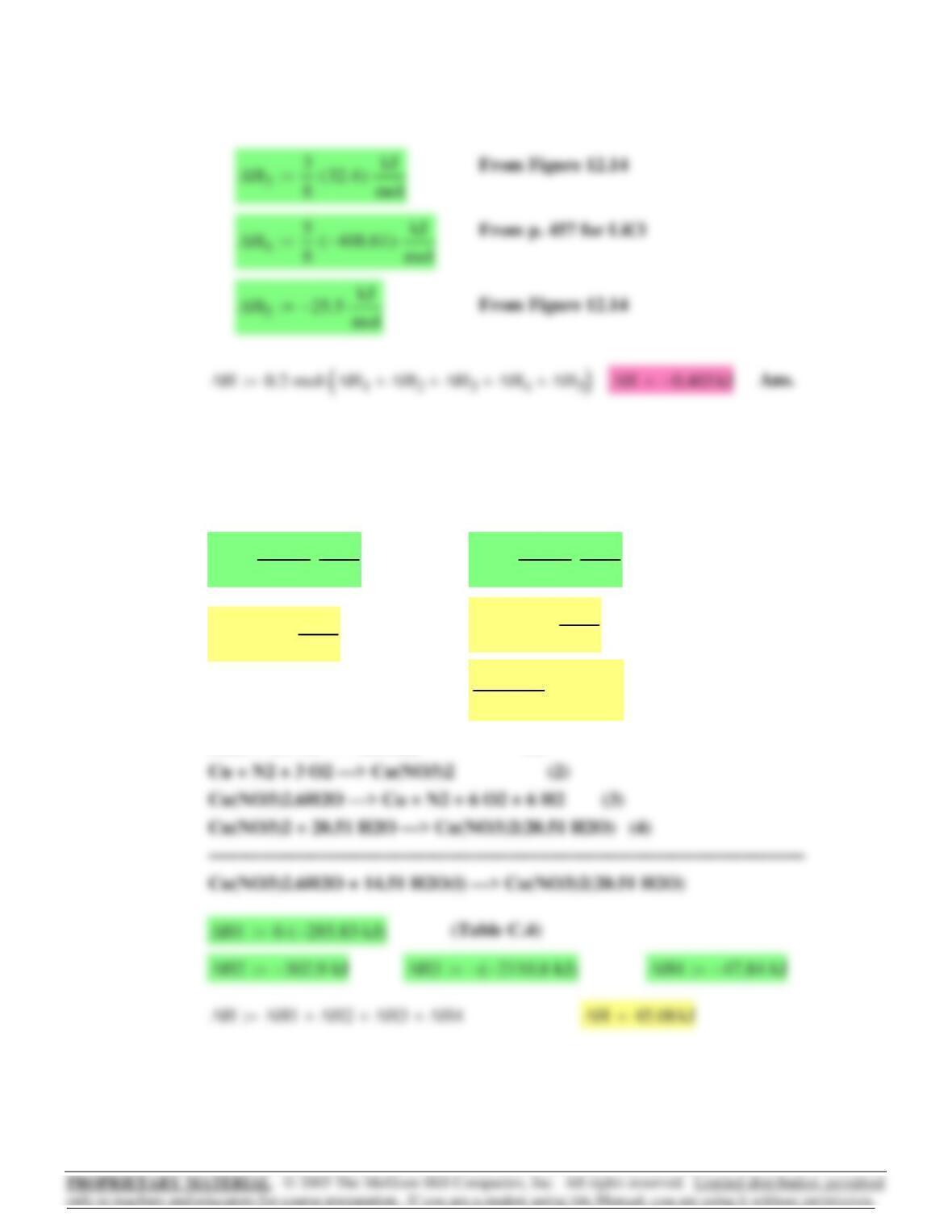
n10.041 kmol
sec
=
Mole ratio, final solution: 6n
1
⋅n2
+
n1
26.51=
6(H2 + 1/2 O2 —> H2O(l)) (1)
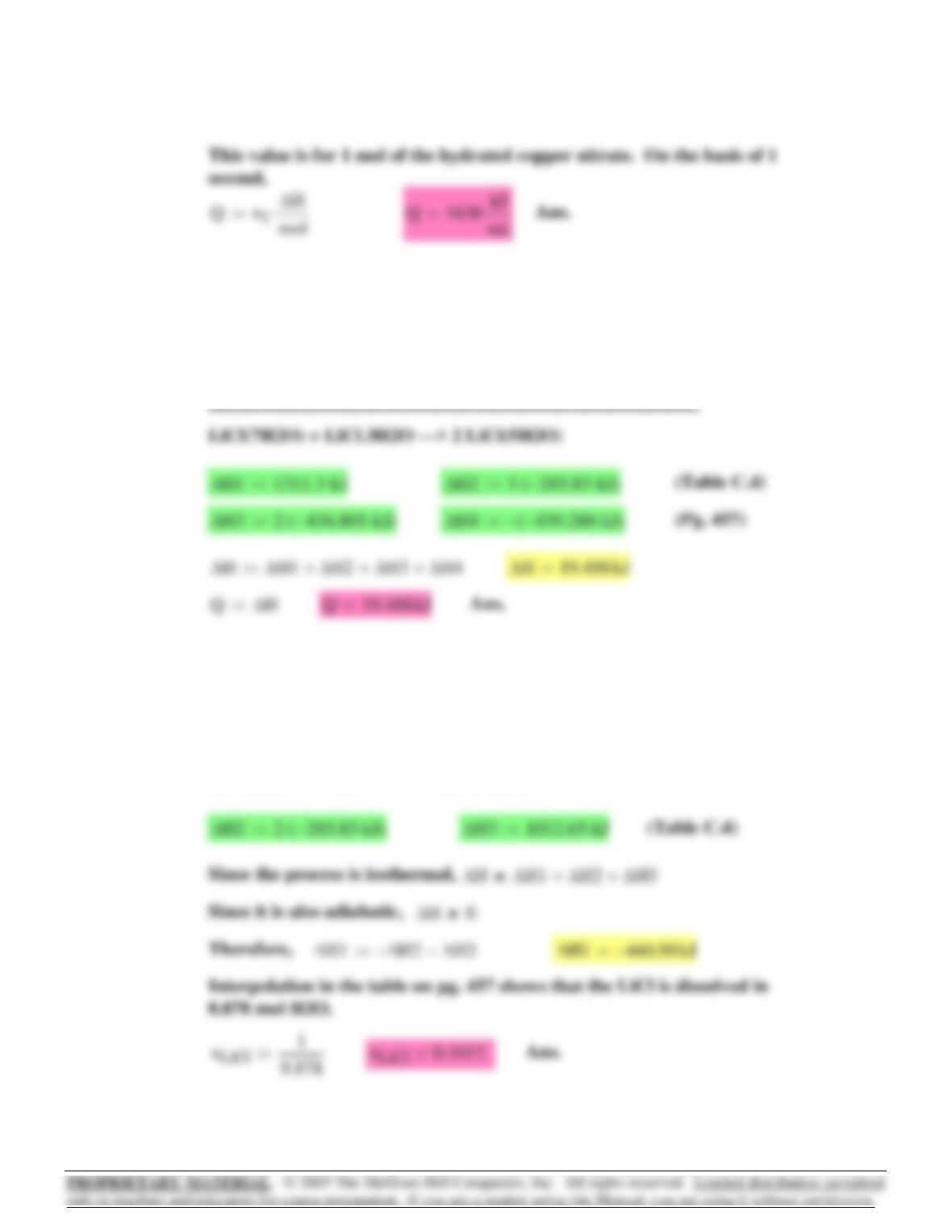
12.34 BASIS: 1 second, during which the following are mixed:
(1) 12 kg hydrated (6 H2O) copper nitrate
(2) 15 kg H2O
n1
12
295.61
kmol
sec
⋅:= n2
15
18.015
kmol
sec
⋅:=
n20.833 kmol
sec
=
457
12.36 Li + 1/2 Cl2 + (n+2)H2O —> LiCl(n+2 H2O) (1)
2(H2 + 1/2 O2 —> H2O) (2)
LiCl.2H2O —> Li + 1/2 Cl2 + 2H2 + O2 (3)
————————————————————————————–
LiCl.2H2O + n H2O —> LiCl(n+2 H2O)
12.35 LiCl.3H2O —> Li + 1/2 Cl2 + 3H2 + 3/2 O2 (1)
3(H2 + 1/2 O2 —> H2O(l)) (2)
2(Li + 1/2 Cl2 + 5 H2O —> LiCl(5H2O)) (3)
LiCl(7H2O) —> Li + 1/2 Cl2 + 7 H2O (4)
458
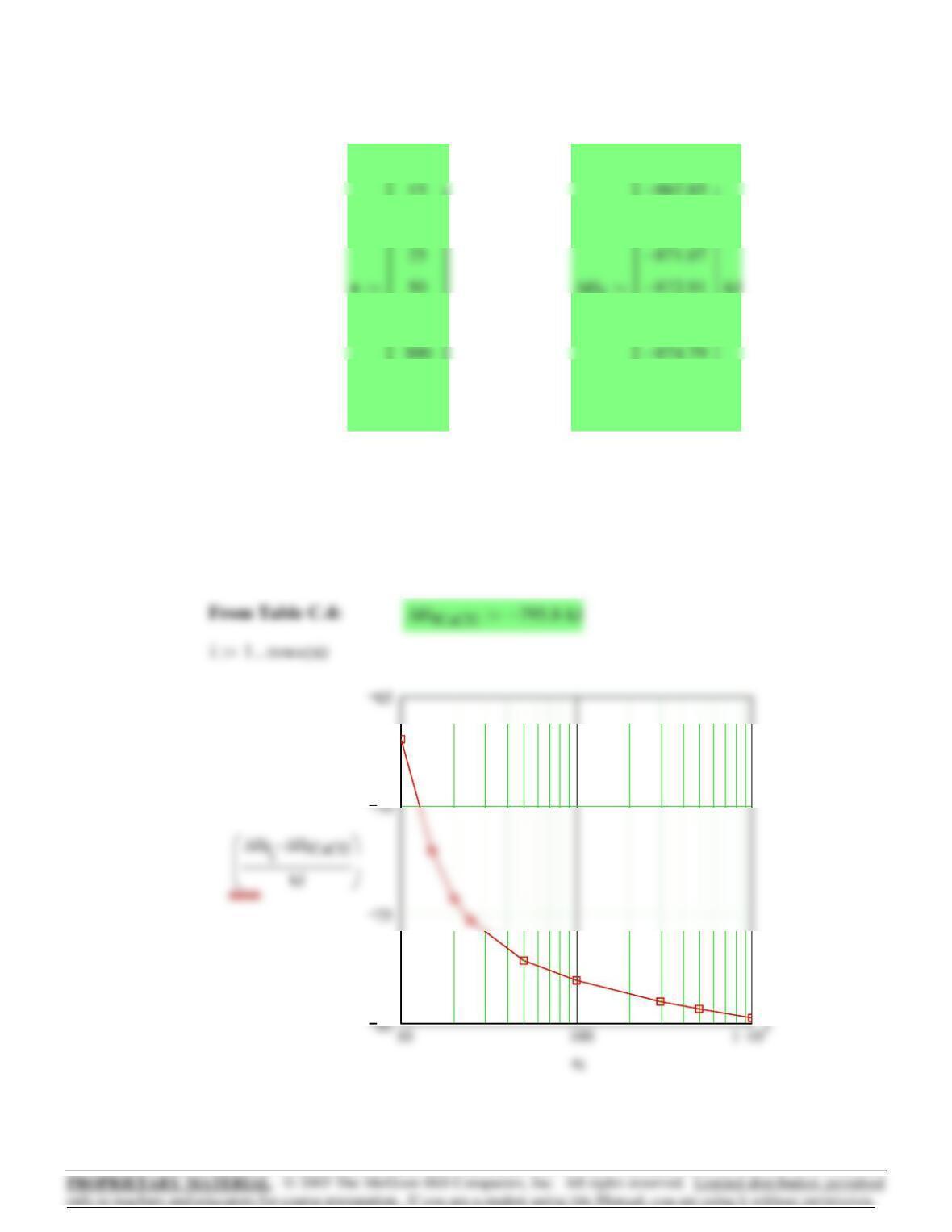
∆Htilde
CaCl2(s) + n H2O —> CaCl2(n H2O)
——————————————–
∆HfCaCl2
−
CaCl2(s) —> Ca + Cl2
∆Hf
Ca + Cl2 + n H2O —> CaCl2(n H2O)
862.74−
870.06−
873.82−
875.13−
875.54−
⎛
⎜
⎜
⎜
⎜
⎜
⎜
⎜
⎜
⎝
⎞
⎟
⎟
⎟
⎟
⎟
⎟
⎟
⎠
10
20
100
500
1000
⎛
⎜
⎜
⎜
⎜
⎜
⎜
⎜
⎜
⎝
⎞
⎟
⎟
⎟
⎟
⎟
⎟
⎟
⎠
Data:12.37
459
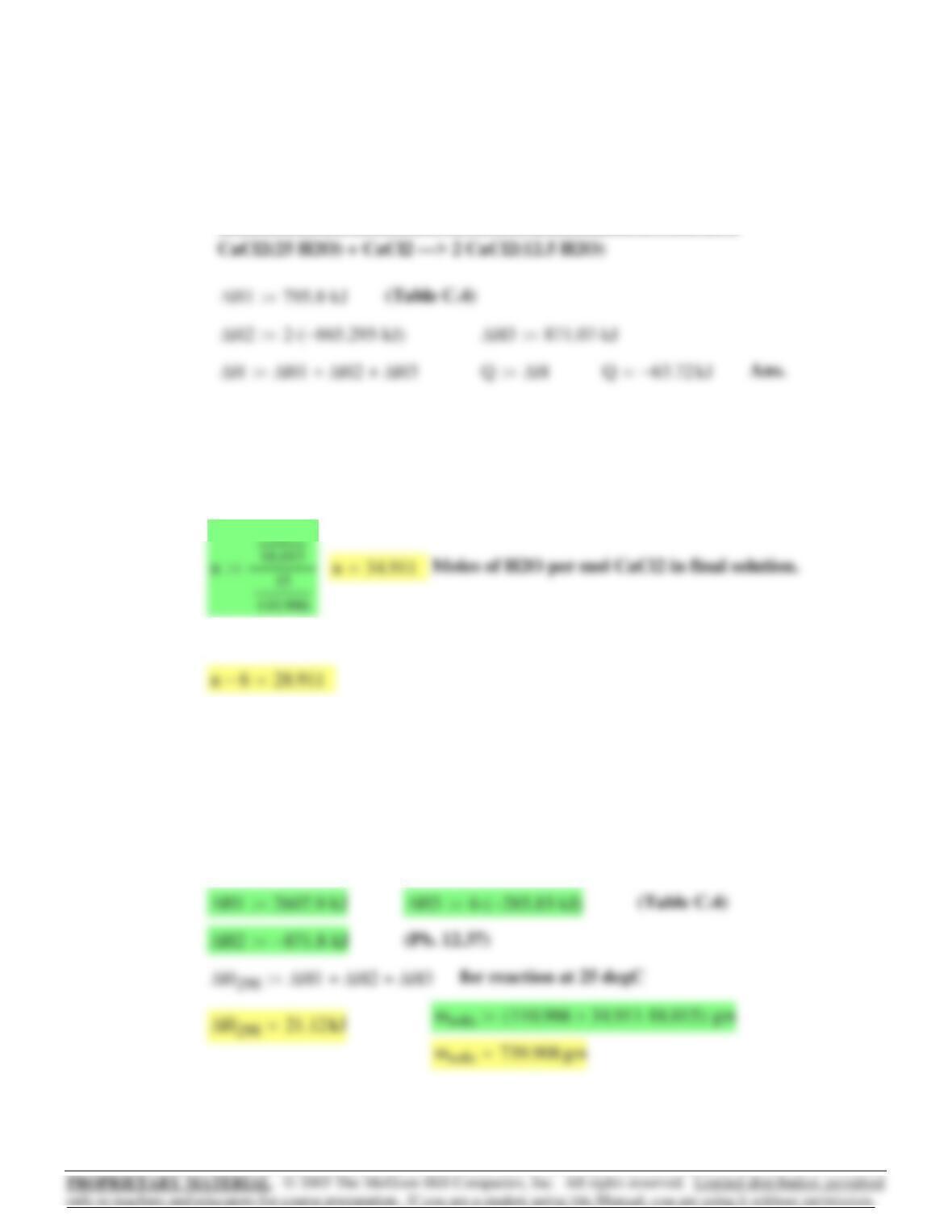
Moles of water added per mole of CaCl2.6H2O:
Basis: 1 mol of Cacl2.6H2O dissolved
CaCl2.6H2O(s) —> Ca + Cl2 + 6 H2 + 3 O2 (1)
Ca + Cl2 + 34.991 H2O —>CaCl2(34.911 H2O) (2)
6(H2 + 1/2 O2 —> H2O) (3)
—————————————————————————————
CaCl2.6H2O + 28.911 H2O —> CaCl2(34.911 H2O)
12.38 CaCl2 —> Ca + Cl2 (1)
2(Ca + Cl2 + 12.5 H2O —> CaCl2(12.5 H2O) (2)
CaCl2(25 H2O) —> Ca + Cl2 + 25 H2O (3)
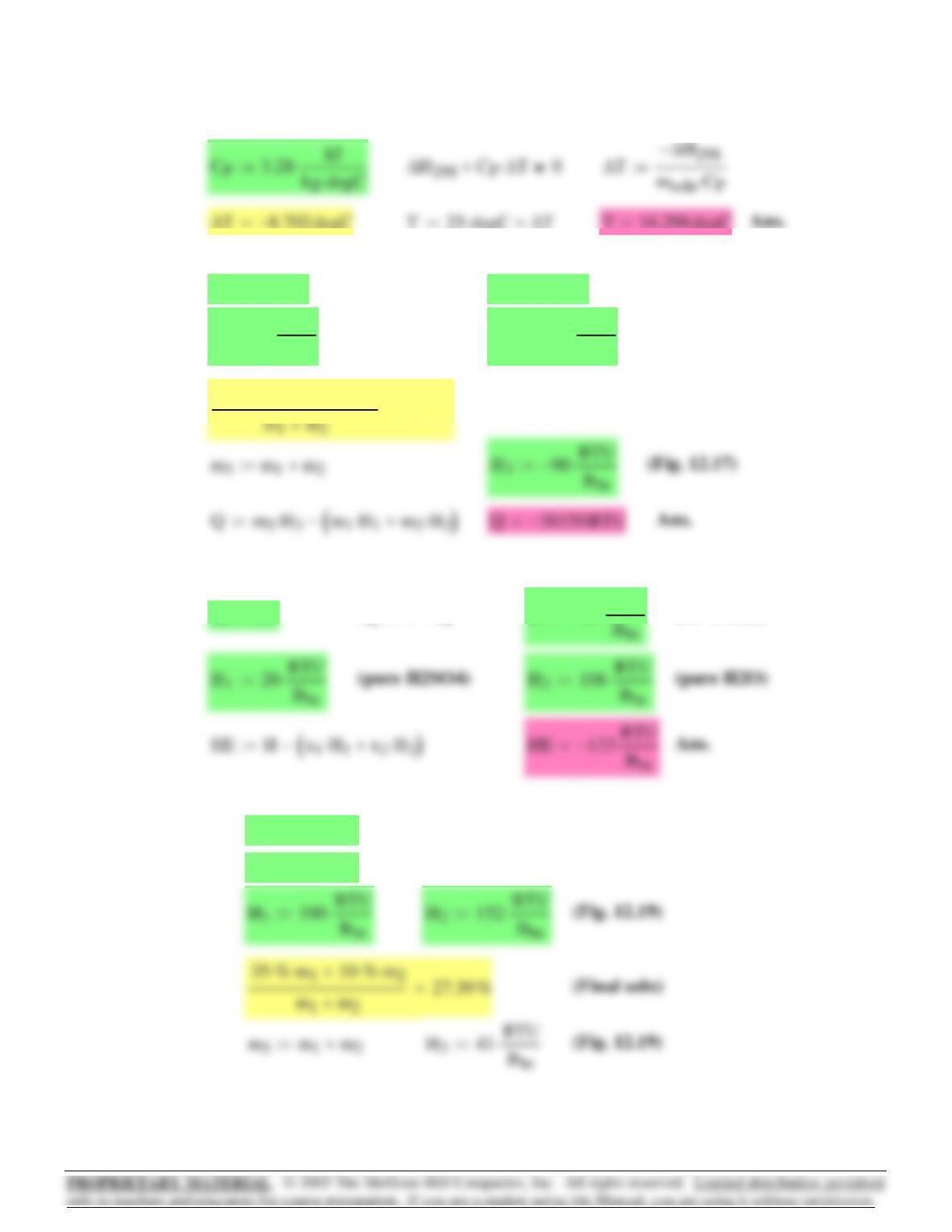
12.39 The process may be considered in two steps:
Mix at 25 degC, then heat/cool solution to the final temperature. The two
steps together are adiabatic and the overall enthalpy change is 0.
Calculate moles H2O needed to form solution:
85
460
x10.5:= x21x
−:= H69−BTU
⋅:= (50 % soln)
12.45 (a) m1400 lbm
⋅:= (35% soln. at 130 degF)
m2175 lbm
⋅:= (10% soln. at 200 degF)
12.43 m1150 lb⋅:= (H2SO4) m2350 lb⋅:= (25% soln.)
H18BTU
lbm
⋅:= H223−BTU
lbm
⋅:= (Fig. 12.17)
100 %⋅m1
⋅25 %⋅m2
⋅+
12.44 Enthalpies from Fig. 12.17.
461
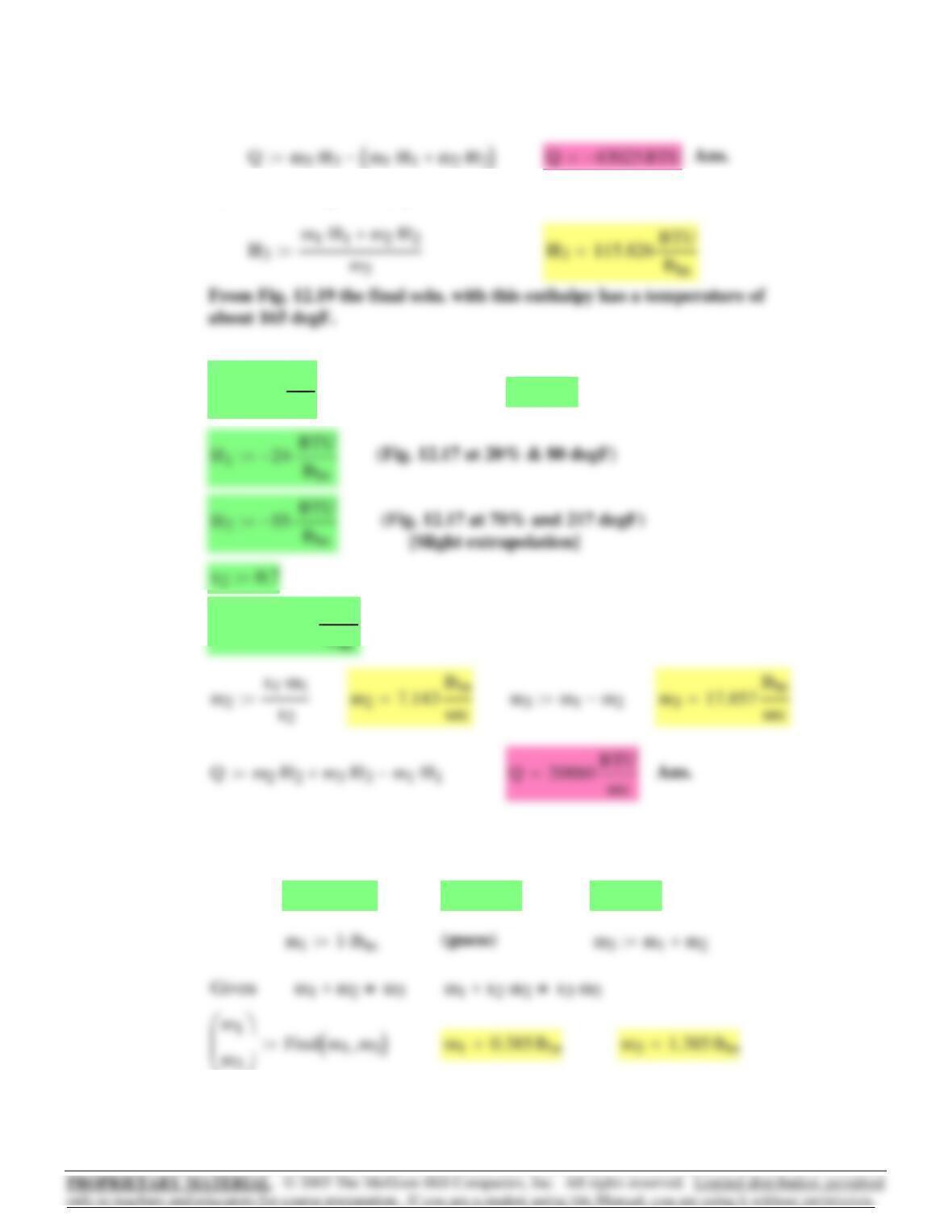
12.47 Mix m1 lbm NaOH with m2 lbm 10% soln. @ 68 degF.
BASIS: m21lb
m
⋅:= x30.35:= x20.1:=
⎝
⎠Find m1m3
(b) Adiabatic process, Q = 0.
12.46 m125 lbm
sec
⋅:= (feed rate) x10.2:=
H31157.7 BTU
lbm
⋅:= (Table F.4, 1.5(psia) & 217 degF]
462
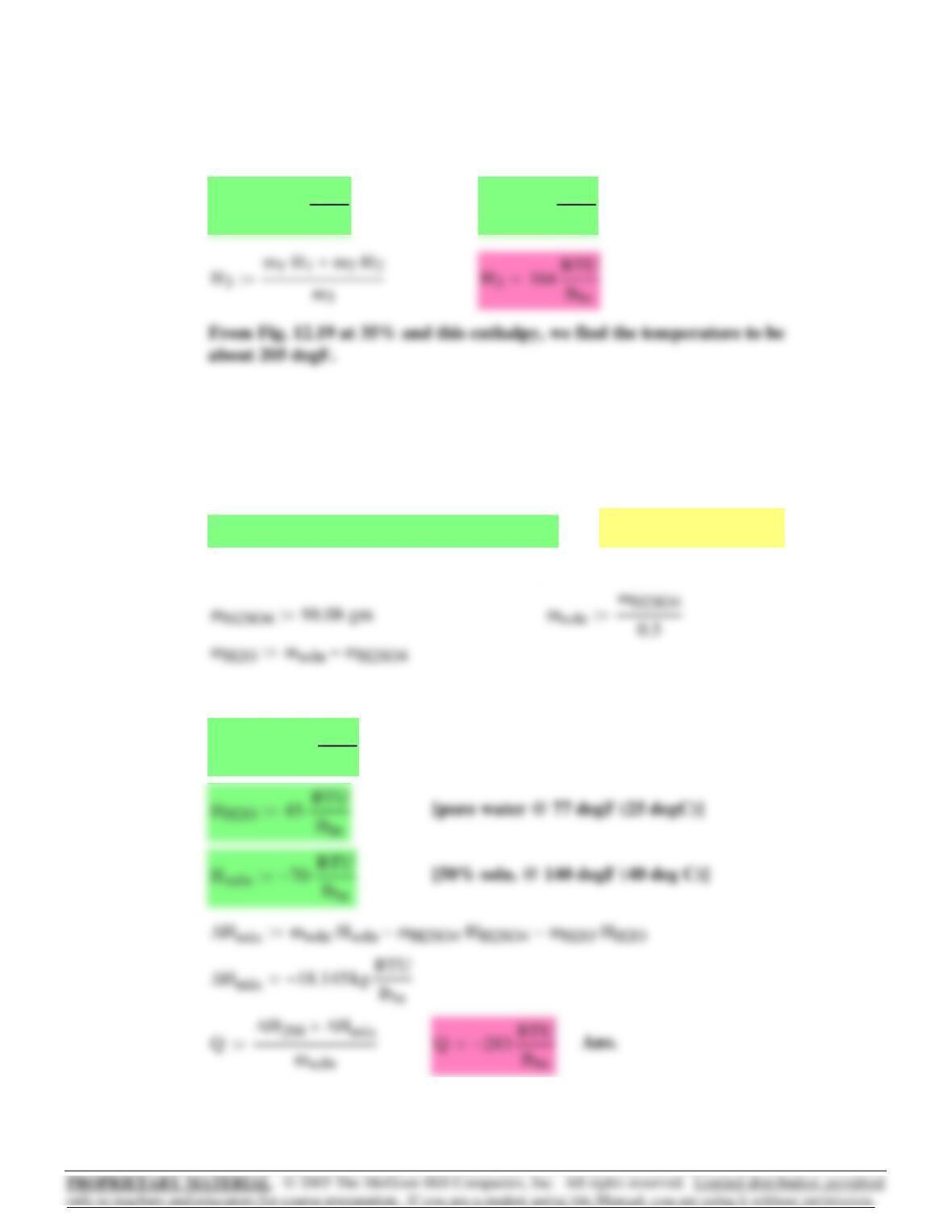
[pure acid @ 77 degF (25 degC)]
HH2SO4 0BTU
lbm
⋅:=
Data from Fig. 12.17:
Mix 1 mol or 98.08 gm H2SO4(l) with m gm H2O to form a 50% solution.
∆H298 8.712−104
×J=∆H298 813989−441040−285830−()−[]J⋅:=
With data from Table C.4:
SO3(l) + H2O(l) —> H2SO4(l)
First react 1 mol SO3(l) with 1 mol H2O(l) to form 1 mol H2SO4(l):12.48
H243 BTU
lbm
⋅:=H1478.7 BTU
lbm
⋅:=
From Example 12.8 and Fig. 12.19
463
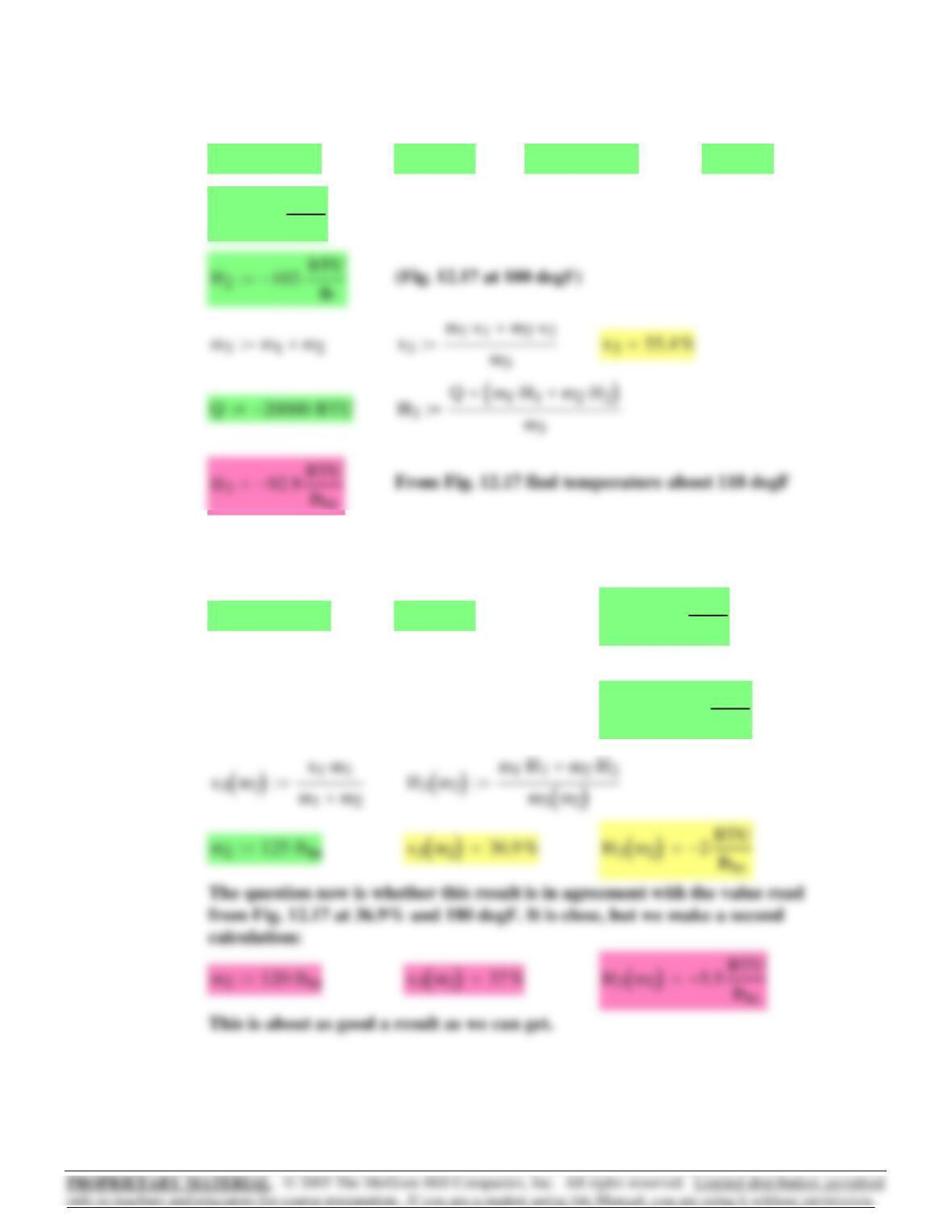
Initial solution (1) at 60 degF; Fig. 12.17:
m11500 lbm
⋅:= x10.40:= H198−BTU
lbm
⋅:=
Saturated steam at 1(atm); Table F.4:
m3m2
()
m1m2
+:= H21150.5 BTU
lbm
⋅:=
12.49 m1140 lbm
⋅:= x10.15:= m2230 lbm
⋅:= x20.8:=
H165 BTU
lb
⋅:= (Fig. 12.17 at 160 degF)
12.50
464
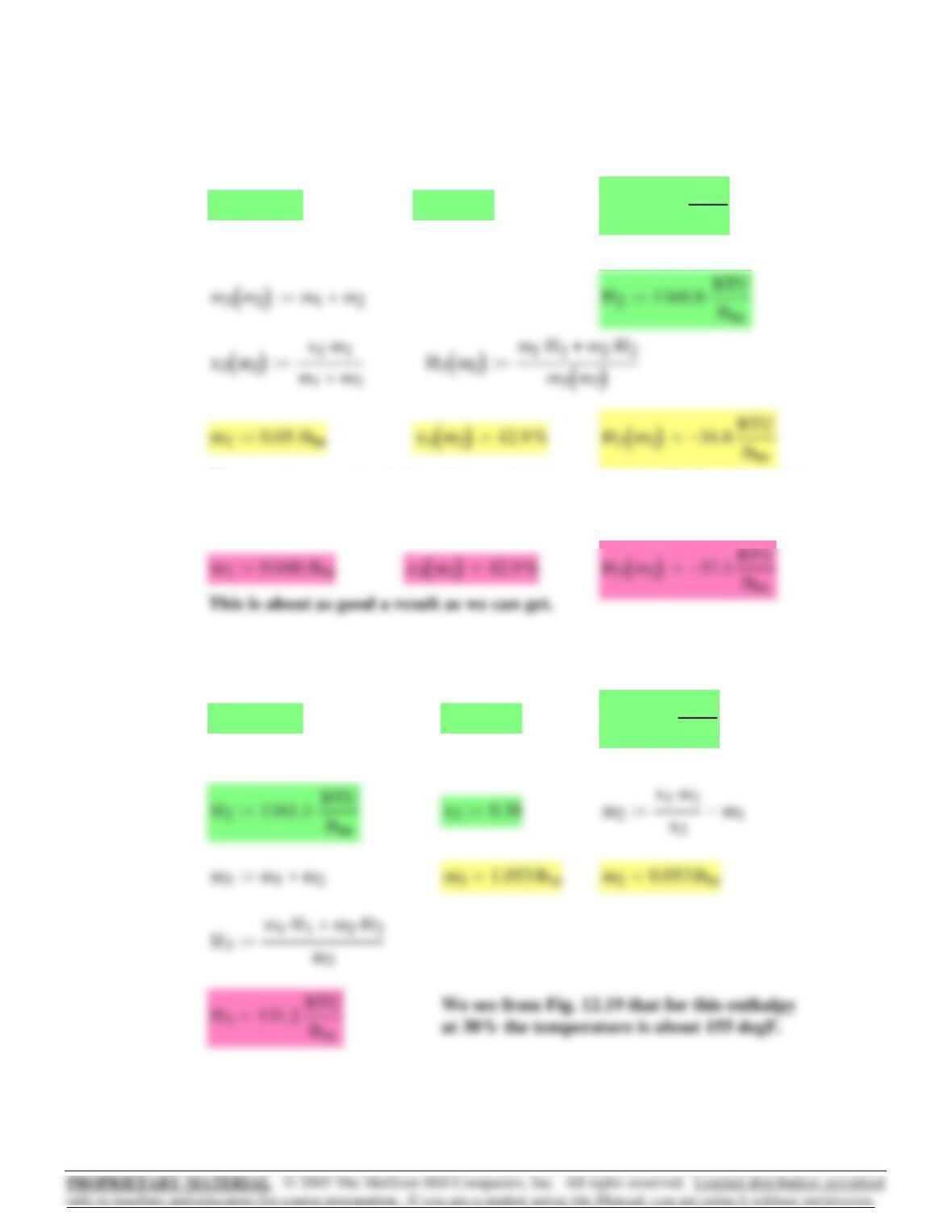
12.52 Initial solution (1) at 80 degF; Fig. 12.19:
m11lb
m
⋅:= x10.40:= H177 BTU
lbm
⋅:=
Saturated steam at 35(psia); Table F.4:
12.51 Initial solution (1) at 80 degF; Fig. 12.17:
m11lb
m
⋅:= x10.45:= H195−BTU
lbm
⋅:=
Saturated steam at 40(psia); Table F.4:
The question now is whether this result is in agreement with the value read
from Fig. 12.17 at 36.9% and 180 degF. It is close, but we make a second
calculation:
465
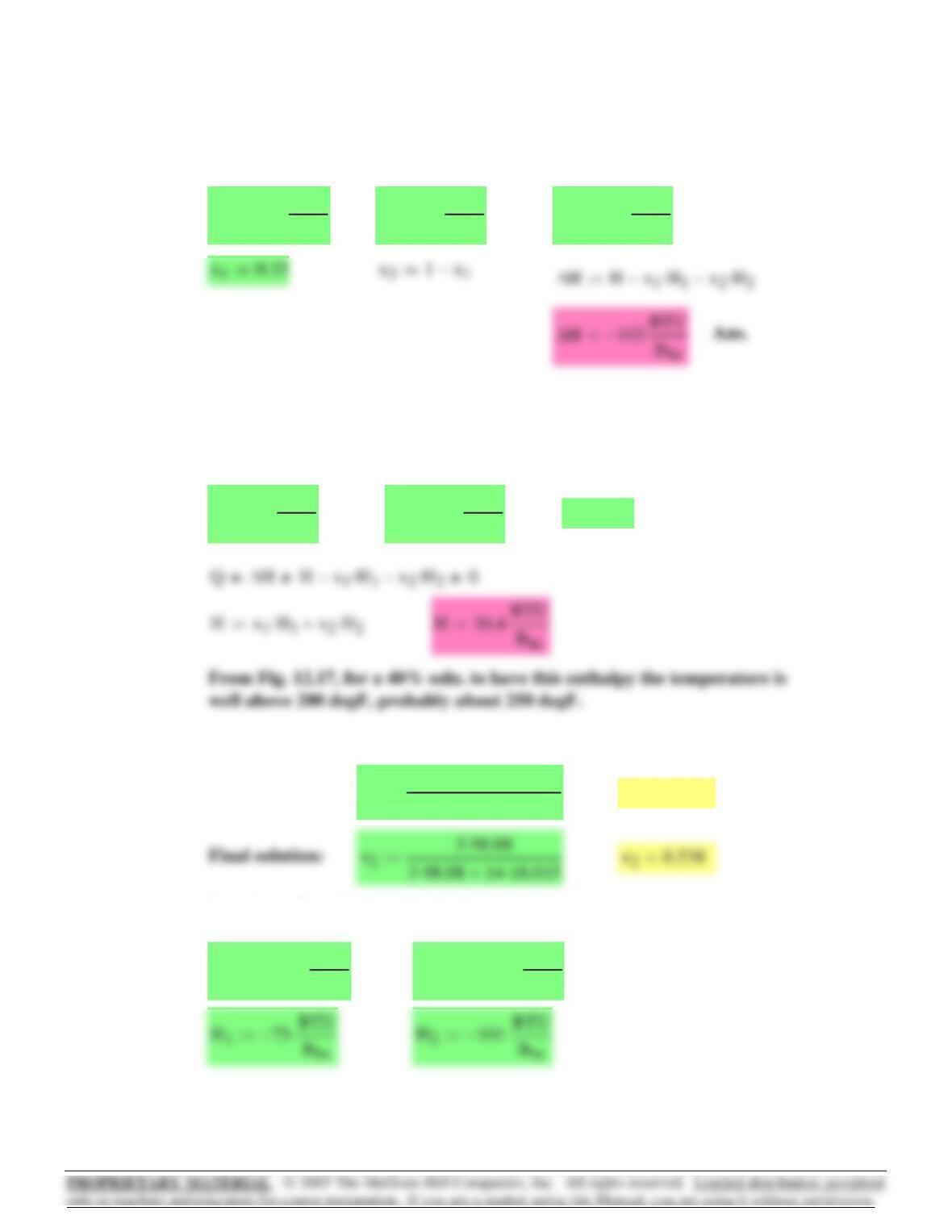
12.55 Initial solution: x1
2 98.08⋅
2 98.08⋅15 18.015⋅+
:= x10.421=
Data from Fig. 12.17 at 100 degF:
HH2O 68 BTU
lbm
⋅:= HH2SO4 9BTU
lbm
⋅:=
12.53 Read values for H, H1, & H2 from Fig. 12.17 at 100 degF:
H56−BTU
lbm
⋅:= H18BTU
lbm
⋅:= H268 BTU
lbm
⋅:=
12.54 BASIS: 1(lbm) of soln.
Read values for H1 & H2 from Fig. 12.17 at 80 degF:
H14BTU
lbm
⋅:= H248 BTU
lbm
⋅:= x10.4:= x21x
1
−:=
466
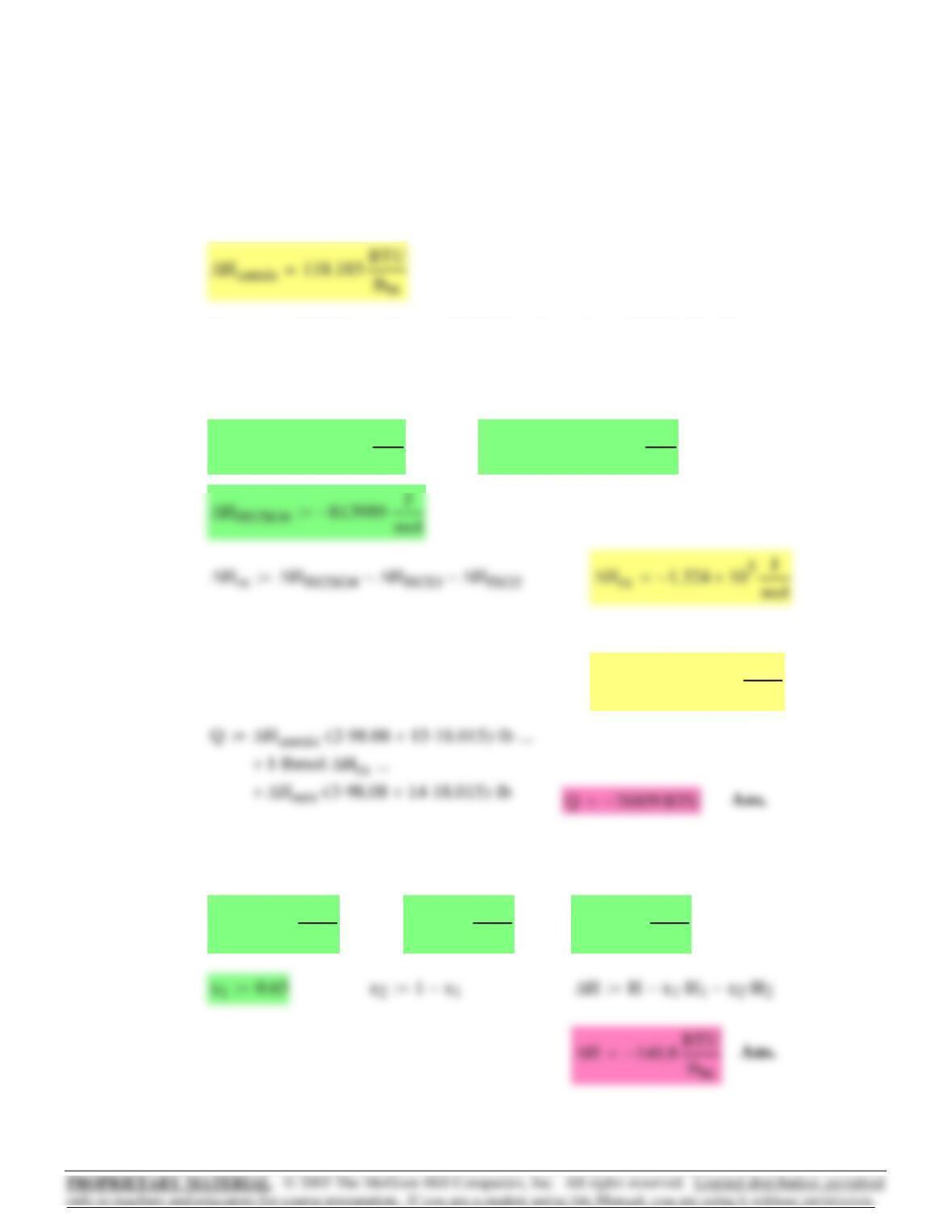
H245 BTU
lbm
⋅:=H10BTU
lbm
⋅:=H 125−BTU
lbm
⋅:=
Read values for H(x1=0.65), H1, & H2 from Fig. 12.17 at 77 degF:12.56
∆Hmix 137.231−BTU
lbm
=∆Hmix H2x2HH2SO4
⋅1x
2
−
()
HH2O
⋅+
⎡
⎣
⎤
⎦
−:=
Finally, mix the constituents to form the final solution:
∆HfH2O 285830−J
mol
⋅:=∆HfSO3 395720−J
mol
⋅:=
React 1 mol SO3(g) with 1 mol H2O(l) to form 1 mol H2SO4(l). We
neglect the effect of Ton the heat of reaction, taking the value at 100 degF
equal to the value at 77 degF (25 degC)
∆Hunmix x1HH2SO4
⋅1x
1
−
()
HH2O
⋅+
⎡
⎣
⎤
⎦
H1
−:=
Unmix the initial solution:
467
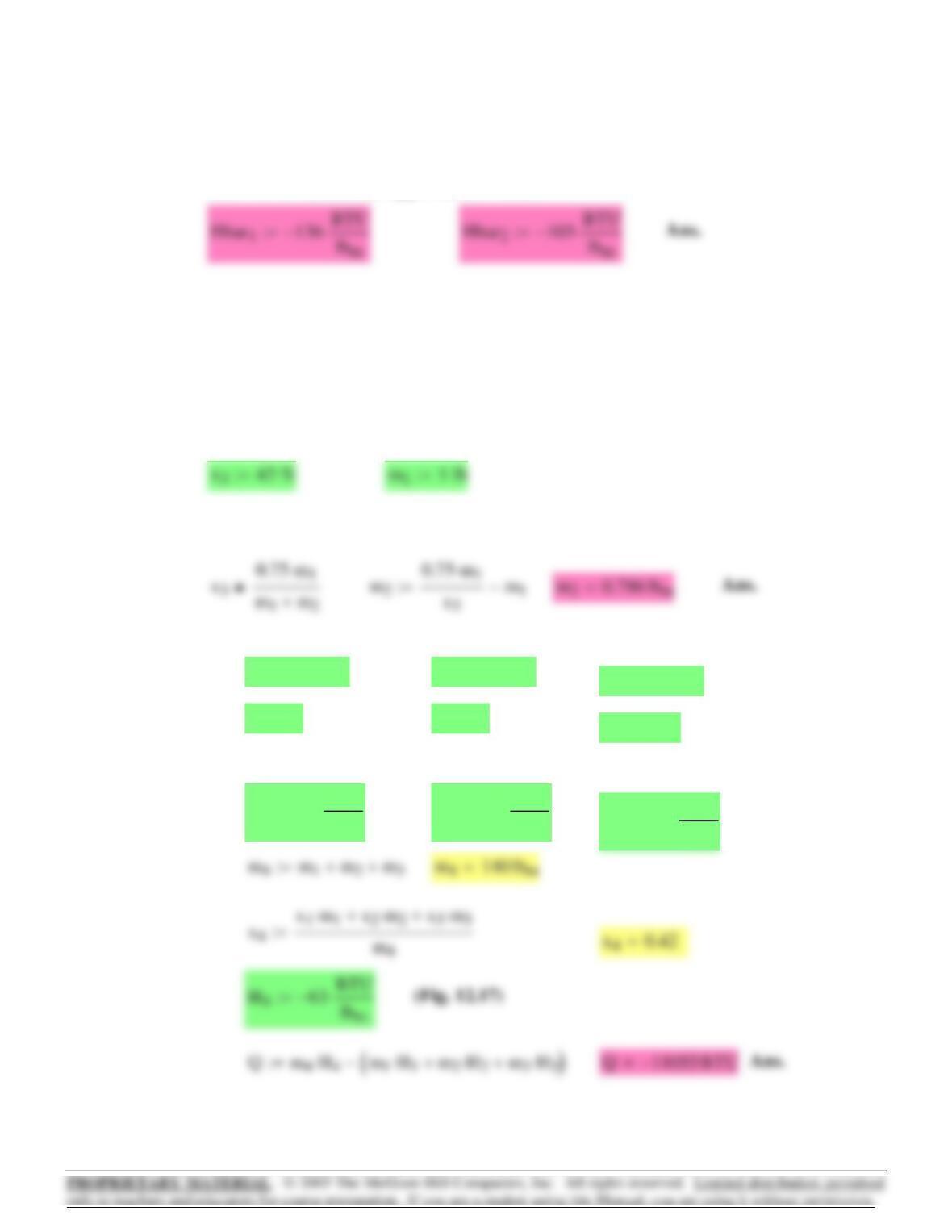
m375 lbm
⋅:=
x10:= x21:= x30.25:=
Enthalpy data from Fig. 12.17 at 120 degF:
H188 BTU
lbm
⋅:= H214 BTU
lbm
⋅:= H37−BTU
lbm
⋅:=
From the intercepts of a tangent line drawn to the 77 degF curve of Fig.
12.17 at 65%, find the approximate values:
12.57 Graphical solution: If the mixing is adiabatic and water is added to bring
the temperature to 140 degF, then the point on the H-x diagram of Fig.
12.17 representing the final solution is the intersection of the 140-degF
isotherm with a straight line between points representing the 75 wt %
solution at 140 degF and pure water at 40 degF. This intersection gives
x3, the wt % of the final solution at 140 degF:
By a mass balance:
12.58 (a) m125 lbm
⋅:= m240 lbm
⋅:=
468