1
ANSWERS TO CHAPTER 12 QUESTIONS
ANSWER 12.1
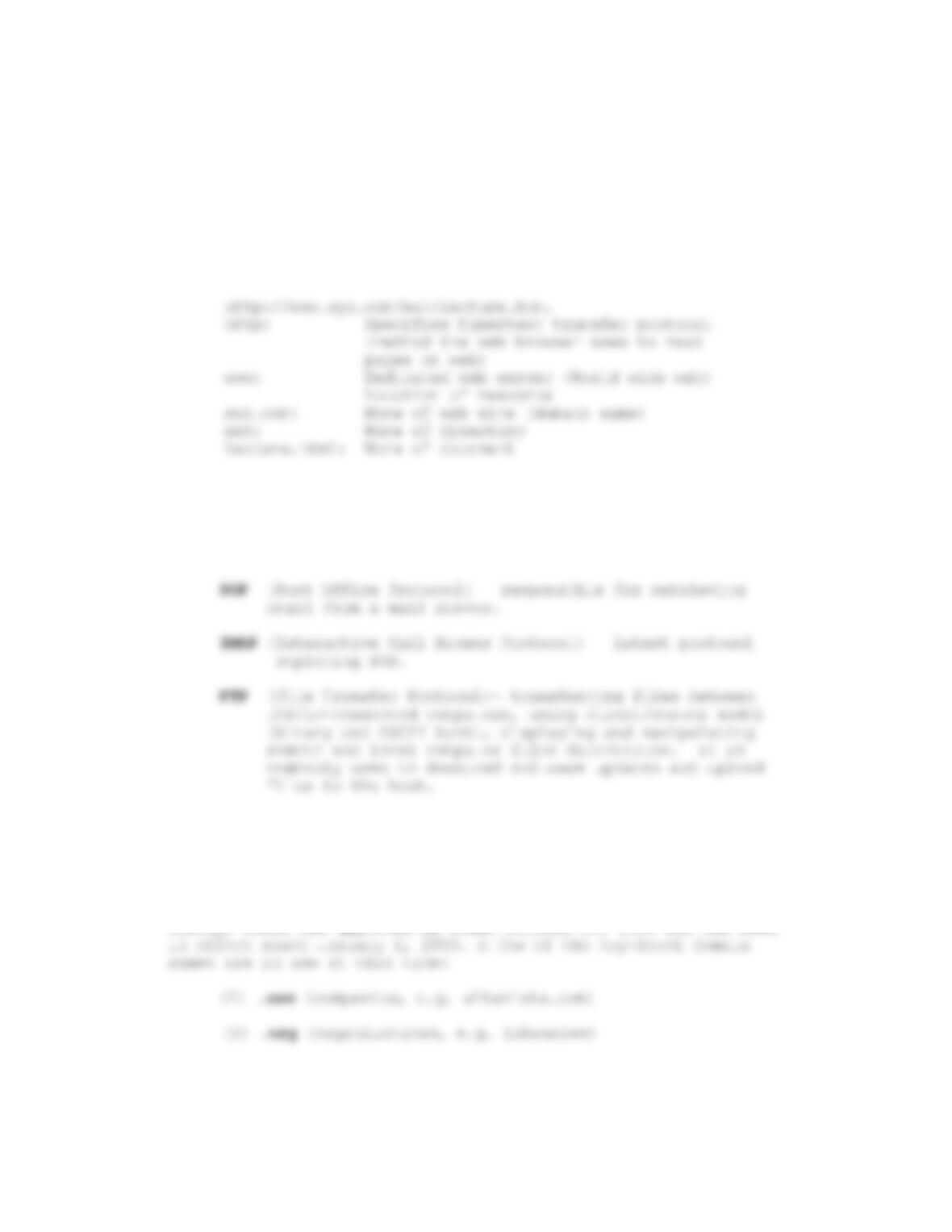
As a Uniform Resources Locator, the URL contains the transfer
protocol to be used on the Internet and the domain name of the
web site to be accessed. It is specified as follows:
While HTTP is the most popular protocol in use, there are other
transfer protocols:
SMTP (Simple Mail Transfer Protocol) – specifies the exact
format of a mail message.
Domain name sets forth a way to identify and locate computers
connected to the Internet. In the above example of xyz.com, xyz
represents the name of the web site the user likes to access
(e.g., aol.com and others). The ending “.com” specifies the
organizational nature of a company’s web site. The domain name is
strictly regulated by the Uniform Domain Name Dispute Resolution
Policy, which was approved by ICANN October 24, 1999 and has been
2
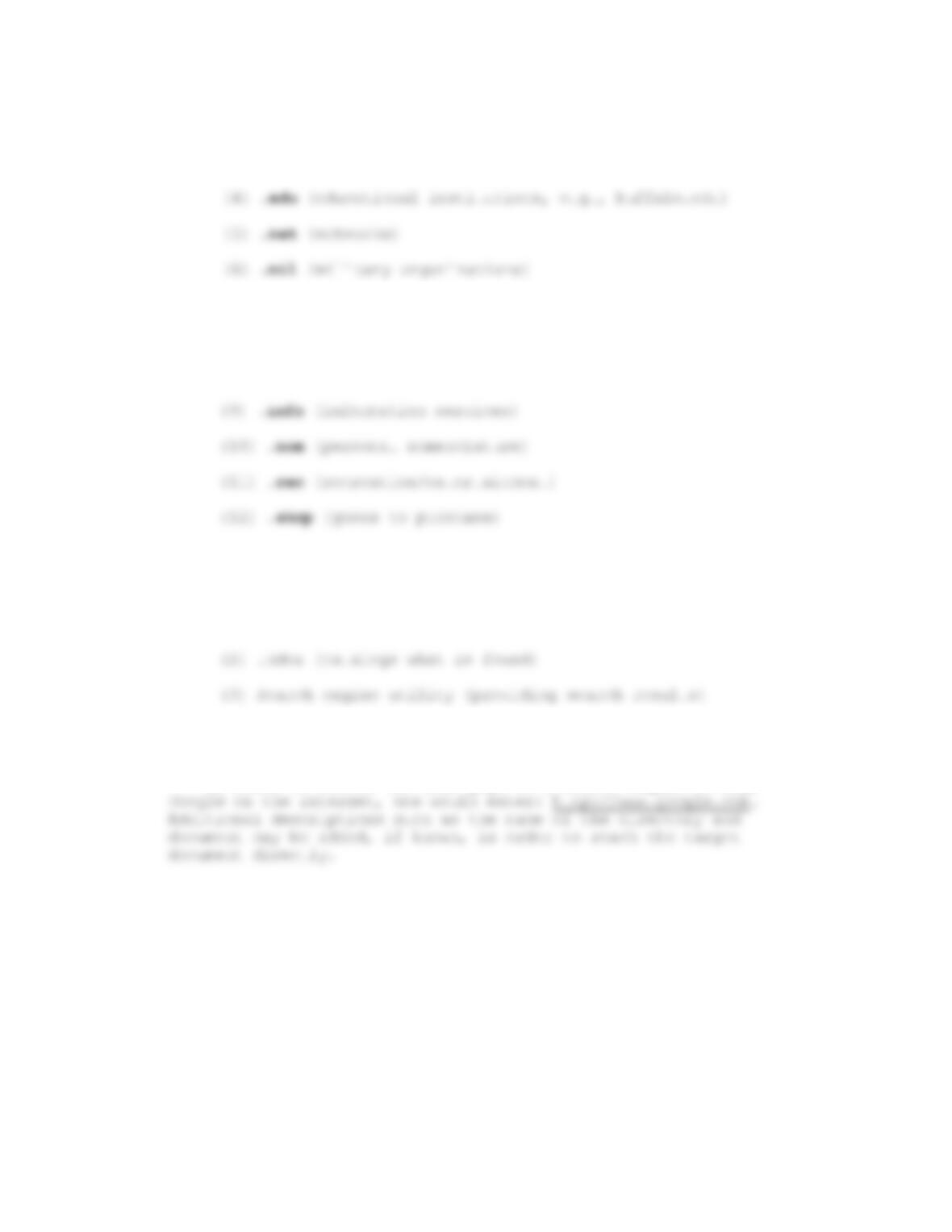
(3) .gov (governmental agencies, e.g. DOC)
Additional domain names are available:
(7) .arts (cultural/entertainment)
(8) .firm (business/firms)
A search engine is a special kind of web page software that
finds other web pages containing descriptions that match user-
specified key words. It contains three parts:
(1) Spider, crawler or bot (searches the web)
Examples of known search engines include Google, Yahoo, Excite,
Ask Jeeves, Lycos, Infoseek, Hotbot, and others.
In order to access the home page of a search engine of say,
Useful product/service data may also be available from
specific web sites which governments maintain as well as the
military, businesses and others. Such web sites are typically
hyper-linked to search engines and therefore accessible by
conducting topic-specific searches on the Internet. Many of them
are also independently accessible by entering their respective
URLs to the browser program. Countless businesses or government
organizations have established web sites with the intention to:
3
A. Increase brand or product awareness.
B. Enhance corporate image.
G. Gather information about customer needs and preferences for
future product development.
H. Better understand customer demographics.
I. Test customer response to discounts or special offers.
J. Find business partners, dealers, franchises or suppliers.
K. Save money (e.g., lower cost of customer communications and
support, order fulfillment, shorten time for acquiring inventory,
A. Advertising – 95 percent.
B. Product/service information – 85 percent.
C. New sales lead – 72 percent.
Web pages are hosted by company-specific servers or by
commercial Internet Service Providers (ISPs) which also offer
email, news and other services to subscribers. A good ISP ensures
(a) accessibility (number of access allowed at a given time), (b)

4
ANSWER 12.2
A. Internet – The Internet consists of thousands of networks of
computers connected together around the world and all of them
share a common communication protocol.
The U.S. Department of Defense set up the Internet as a
secure communication mechanism in the 1960’s. In the 1970’s,
The Internet II is being developed with increased bandwidth,
multimedia, data forms, and mobile technologies. It is expected
to become available around 2005.
B. Intranet – The Intranet is a closed network that is used by
employees of companies to access information related to strategic
initiatives, personnel announcements, inventory records, price
C. Extranet – The Extranet is a closed network that is limited
to preferred suppliers, company employees and selected customers.
These authorized personnel may access design guidelines, process

5
ANSWER 12.3
Several standard markup languages are in use currently.
These are shown below:
A. SGML (Standard Generalized Markup Language)
An ISO (International Standards Organization) standard since
B. HTML (Hypertext Markup Language)
HTML supports headlines, title bars, bullets, lines and
lists. It is based on SGML, but it is relatively easier to learn
and maintain. It enables precise graphic positioning, tables and
C. XML (Extensible Markup Language)
A descendant of SGML, XML defines which data to display
instead of how a page is displayed. It has data tracking
capability.
ANSWER 12.4
The Internet is still in its expansion stage. A variety of
legal questions are yet to be resolved. The following are
examples:
A. Where does a web site “do business?” Which court should have
jurisdiction over any disputes arising from e-business? The
6
in to regulate.
D. Does the organization hosting web sites have rights over the
web page design (e.g., look and feel), which, as part of the
company’s image, could become very valuable to the company?
E. There are issues with the separation of legal liability for a
company engaged in both “brick and mortar” operation and e-
Institute (1999, 2000).
ANSWER 12.5
Maintenance influences the entire operation from product
quality to on-time delivery. The Computerized Maintenance
Management System is an important tool to integrate maintenance
operations into the enterprise reporting system. The following
steps are recommended for its implementation:
A. Do it right (plan for a period for about 10 months).
B. Work/organize top down (it must be solidly supported by top
management).

7
ANSWER 12.6
Every web executive has a fundamental and difficult
challenge: how to use its logged activity data to better
understand who enters the site and where, how the site is used,
where and why people exit, and how the site’s content and
structure can be refined. Site refinement usually means
increasing the expected value of a customer visit to the site.
According to Parsa and Ismail (2000), web mining involves a
three-stage approach.
A. Web-log Analysis. This is a summary of raw web-log data
based on descriptive statistics, reports and charts. The goal is
to provide accurate snapshots of the activities of the web site,
C. Data Mining. This drills deep into the web-log data to devise
predictive models for visitors’ preferences and characteristics.
Web mining assists the company in creating an enhanced
ANSWER 12.7
The advancement of software products follows a well-defined
process such as the one presented below:
A. System requirements and analysis (support proposal
activities, prepare initial plan, estimate effort and cost for

8
D. Software implementation and unit test (translate design to
code, test the code, baseline the code).
Steps in this process are often iteratively repeated to
upgrade the final product.
As defined by the International Standards Organization (ISO),
configuration management provides a mechanism for managing
(identifying, controlling and tracking) versions of software
items and their changes from initiation to release. For mission-
critical applications, configuration management must be carefully
practiced.
Carnegie Melon Software Engineering Institute (SEI) has
established a Capability Maturity Model (CMM) and classified
software developers into 5 quality levels with 1 as the lowest
and 5 as the highest level.
Moog, East Aurora, NY has achieved level 3 of SEI CMM rating
and uses ClearCase for precision flight and motion control
ANSWER 12.8
Marketing and sales are important corporate functions aimed
at understanding customers’ behavior and their purchasing
preferences and defining corporate product/service offerings
Several web-based tools are available to support these
functions:

9
A. Internet Selling Solution (www.selectica.com)
ISS (Internet Selling Solution) captures product knowledge,
disseminates information to sales people, allows customers to
configure products, and processes customer orders. Users of ISS
B. CentraNow (www.centranow.com)
Centra Software, Lexington, Mass. sells CentraNow, which is a
voice-enabled service for real-time collaboration over the web
between sales, marketing and service organizations. It can hold
live meetings, manage projects, conduct text chat meetings via
emails, and maintain collaborative voice sessions.
C. Promptu eMarketing (www.promptu.com)
Promptu Corp., San Jose, CA markets Promtu eMarketing which
establishes a network of web sites to enable sales people,
channel partners, and subsidiaries of the company to run
ANSWER 12.9
The new business environment in the world is different from
the old. Accordingly, the success factors will also be different
for the old and new environments.
A. Planning to provide strategic leadership
Leadership in strategic development focuses on (1) seizing
technological opportunities to advance the strategic goals of the
organization, (2) exercising innovative leadership in
10
B. Managing diversified workforce
Build trust over long-distances and manage contractors, part-
C. Learning constantly and being Internet savvy
Maximize the use of Internet based tools to achieve cost,
D. Networking to establish business relationships
Create dynamic partnerships to take advantage of new
opportunities in the marketplace.
ANSWER 12.10
DFISS consists of the phases of “Define,” “Measure,” “Explore,”
“Develop” and “Implement.”
1. Define: Define project charter, its alignment with businesses
2. Measure: Understand the needs of customers in the target segment,
apply the Pareto principle to focus on the critical few,
3. Explore: Brainstorm to develop alternative design alternatives
and select the most promising one.
4. Develop: Apply Lean and Six Sigma tools and simulation to create
a robust design.
ANSWER 12.11
There are quite a number of wastes which are inherent in many types of
services.
11
(1) Over-processing – Add more value than what customers want
or are willing to pay for. This could easily happen if the
customer’s needs are not fully understood or if non-value added
work is allowed to creep in.
(4) Long Waiting time between activities – The gap between the
end of first activity and the beginning of the subsequent one may
not be visible, in the absence of a complex Value Stream Mapping,
which examines queue time and process time data.
Answer 12.12
The Lean methodology uses two measures to improve process speed,
Lead Time and Process Cycle efficiency. Lead Time is defined as
follows:
Lead time = Amount of Work-in Process/Average completion Rate.
Work in process is the amount of activities/tasks (e.g., customer
The Lead Time is thus the length of time needed for a service
worker to clear out all work in process. It provides an instantaneous
reading of the temporal status of service activities. By registering
the Lead time, companies are now in a position to monitor, benchmark,
and enhance the temporal status, if doing so will improve customer

12
The second measure of the Lean methodology addresses the
efficiency by which value-adding work is done, based on the time spent
in value-adding activities as a percentage of the total cycle time.
Thus, the Process Cycle Efficiency is defined as follows:
Process Cycle Efficiency =Value-adding time/Total Lead time
If the process Cycle Efficiency is less than 100%, it indicates that
the process contains non value-added activities and thus presents
The Lean methodology is focused on the following:
1. Most processes have a Process Cycle Efficiency of less than
10%.
2. A primary approach of controlling Lead Time is to reduce work-
Answer 12.13
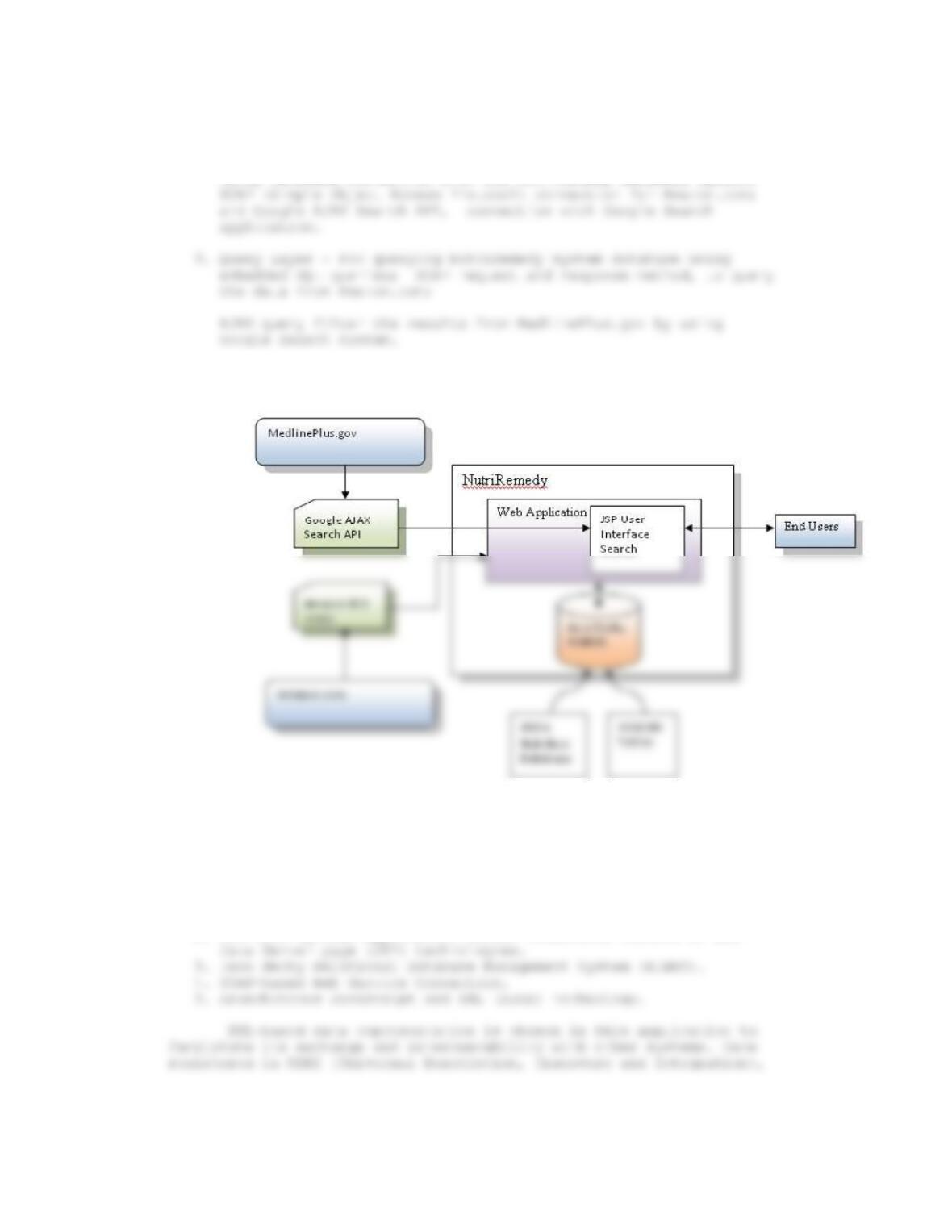
One of my SUNY graduate students [Koc, 2009] applied the web
services concepts to develop a software application named
1. Source Layer – Java Derby database, Amazon.com, and
MedlinePlus.gov.
13
2. Connection Layer – Java Database Connectivity (JDC) API, Java
Derby Database connection with the NutriRemedy database system;
Figure 12.4 High Level Design View of NutriRemedy
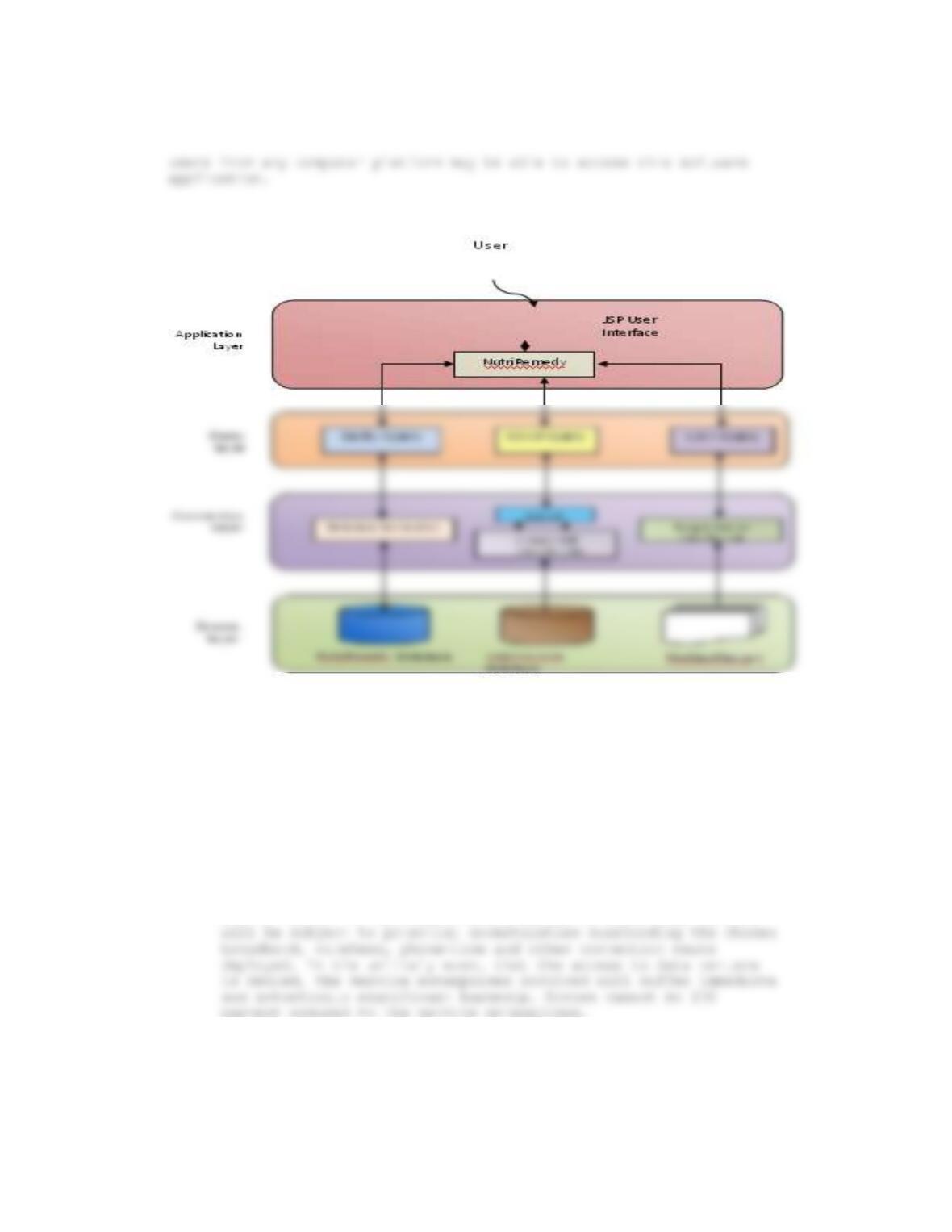
3. Application Layer – NutriRemedy Web Application by Glassfish Web
Application Server, Java Server Pages (JSP) Graphical User
Interface (GUIs).
These four layers are graphically illustrated in Figure 13.5. The
technologies and tools used in this application include:
1. Netbeans IDE Version 6.1 based on Java Development Kit (JDK) 1.6
2. Sun Java Systems Application Server (Glassfish Version 2) and
14
Figure 12.5 Structure of NutriRemedy
Source: Koc, Elif (2009), “NutriRemedy: Nutrition Advisor for Web-Based
Healthcare Systems,” Service Systems Masters Capstone Project, SUNY,
Buffalo, New York.
ANSWER 12.14
There are certain risks associated with large-scale concentrated
computing, when many service enterprises abandon their individual
corporate computing facilities in favor of linking with major data
centers.
(1) Reliability of Access – Typically, all equipment of in-house data
centers are hardwired together so that the access is rather fast
and reliable. In contrast, remote access to major data centers
(2) Traffic jams – As the business computing become more and more
centralized, the IT utility, like the electric utility, will have

15
(3) Virus and Cyberattacks – As the major data centers becomes bigger
and bigger, they could become increasingly more visible targets
(4) Data Security – Running business-confidential analyses in data
(5) Catastrophic events – The more centralized the business computing
is, the more likely that a possible catastrophic event (e.g.,
snowstorm, terrorist attacks, and others) will create major
disruptions to the operation of its business clients.
(6) Risk of Size – The US charge card industry is dominated by VISA,
What will happen, when the data centers hosting and operating SOA
software become as big as the Credit Card companies and they start
raising fees in the ways they would see fit as well as preventing their
business clients from using software modules form their competitors?
Therefore, managing the IT resources as a dedicated corporate
unit has its merits to some service enterprises. Many homeowners