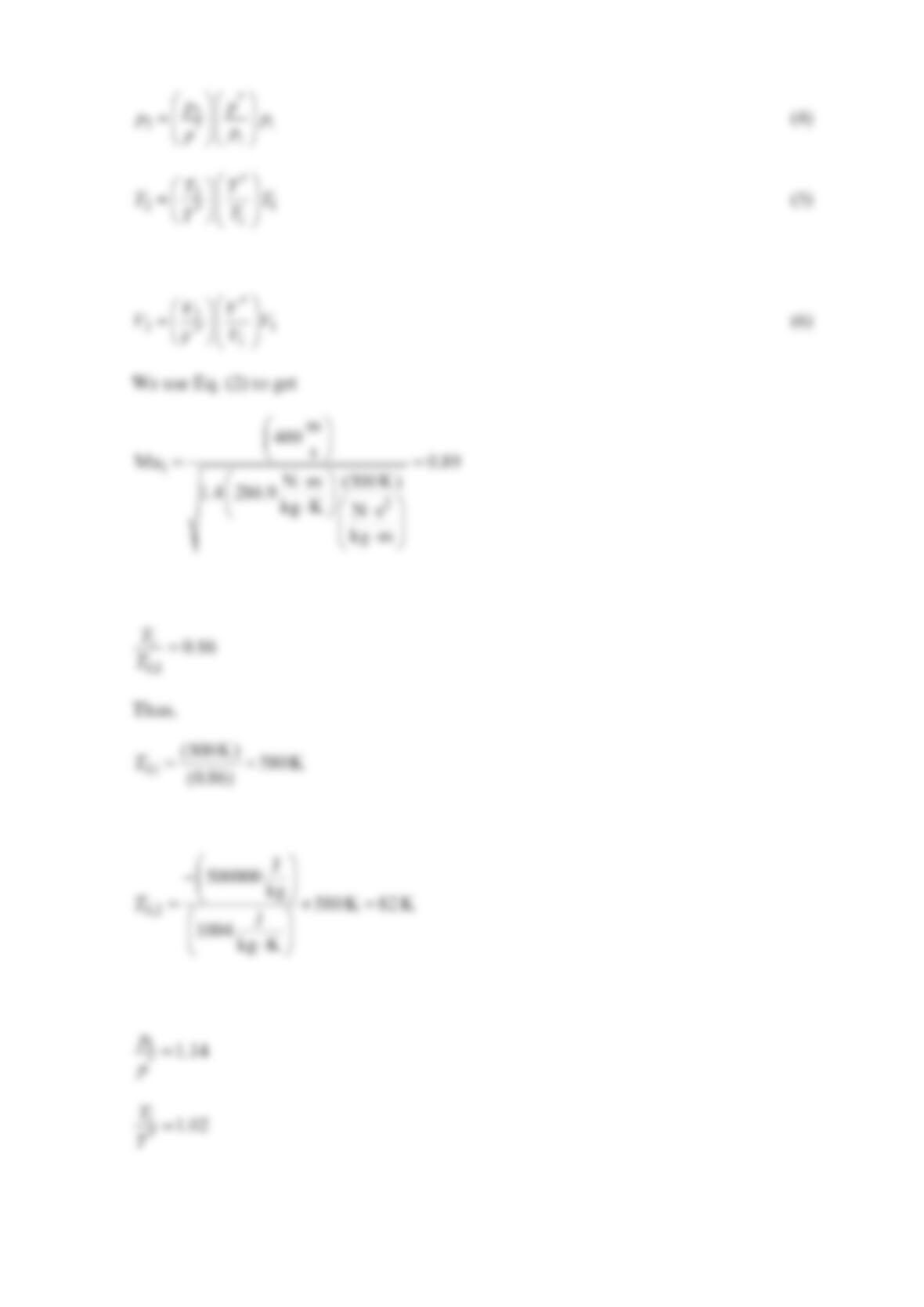
and
For =
1
Ma 0.89 , we get from the figure above
and with Eq. (1), we have
With =
1
Ma 0.893 from the Rayleigh Table or Chart, we read
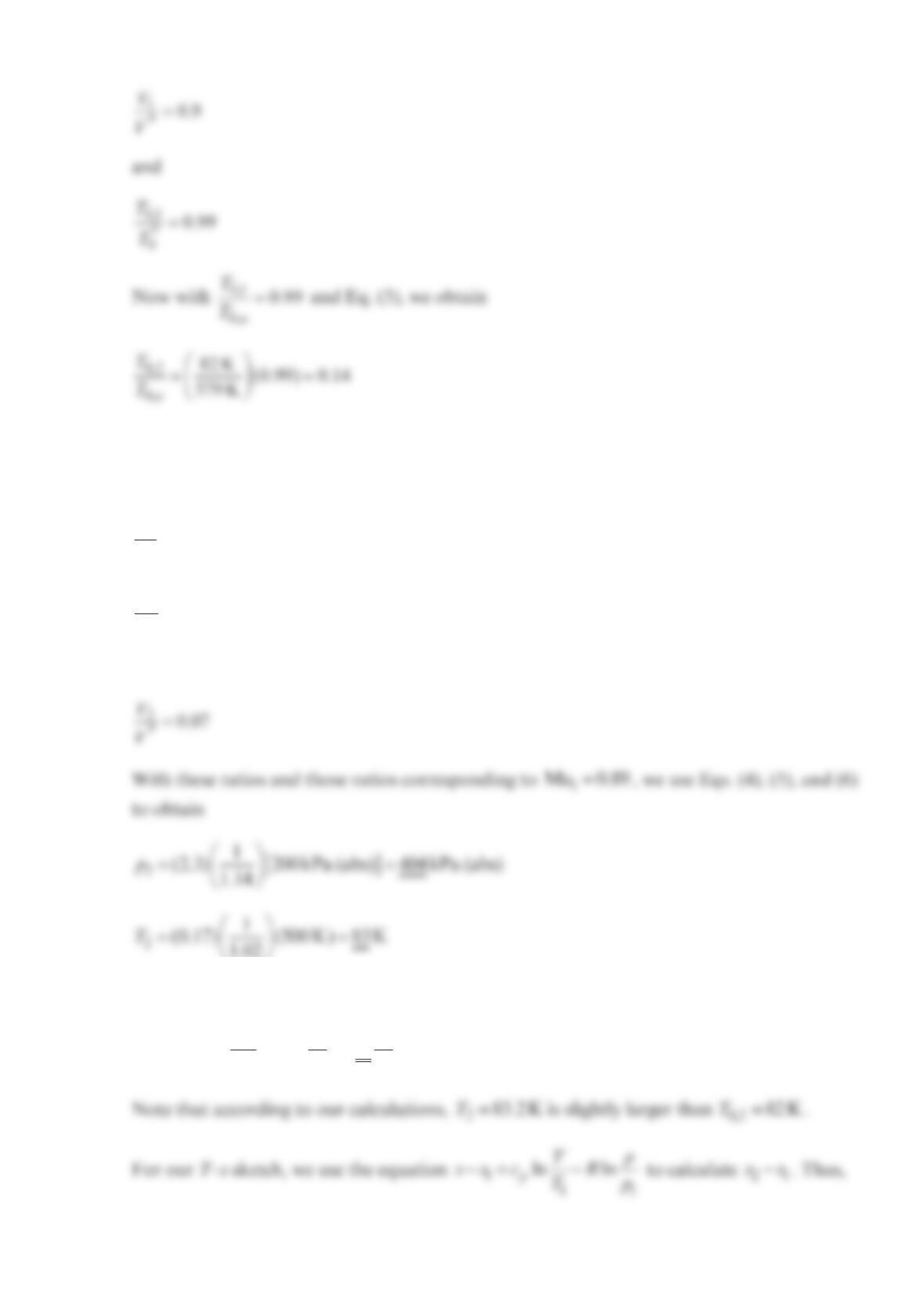
which has as corresponding values from the Rayleigh Table or Chart
=
2
Ma 0.18
=
2
*2.3
p
p
=
2
*0.17
T
T
and
and
==
2
1mm
(0.07) 400 31
0.9 s s
V
500
T
1
= 500
K
p
1
= 200 kPa(abs)
(1)
Problem 11.68
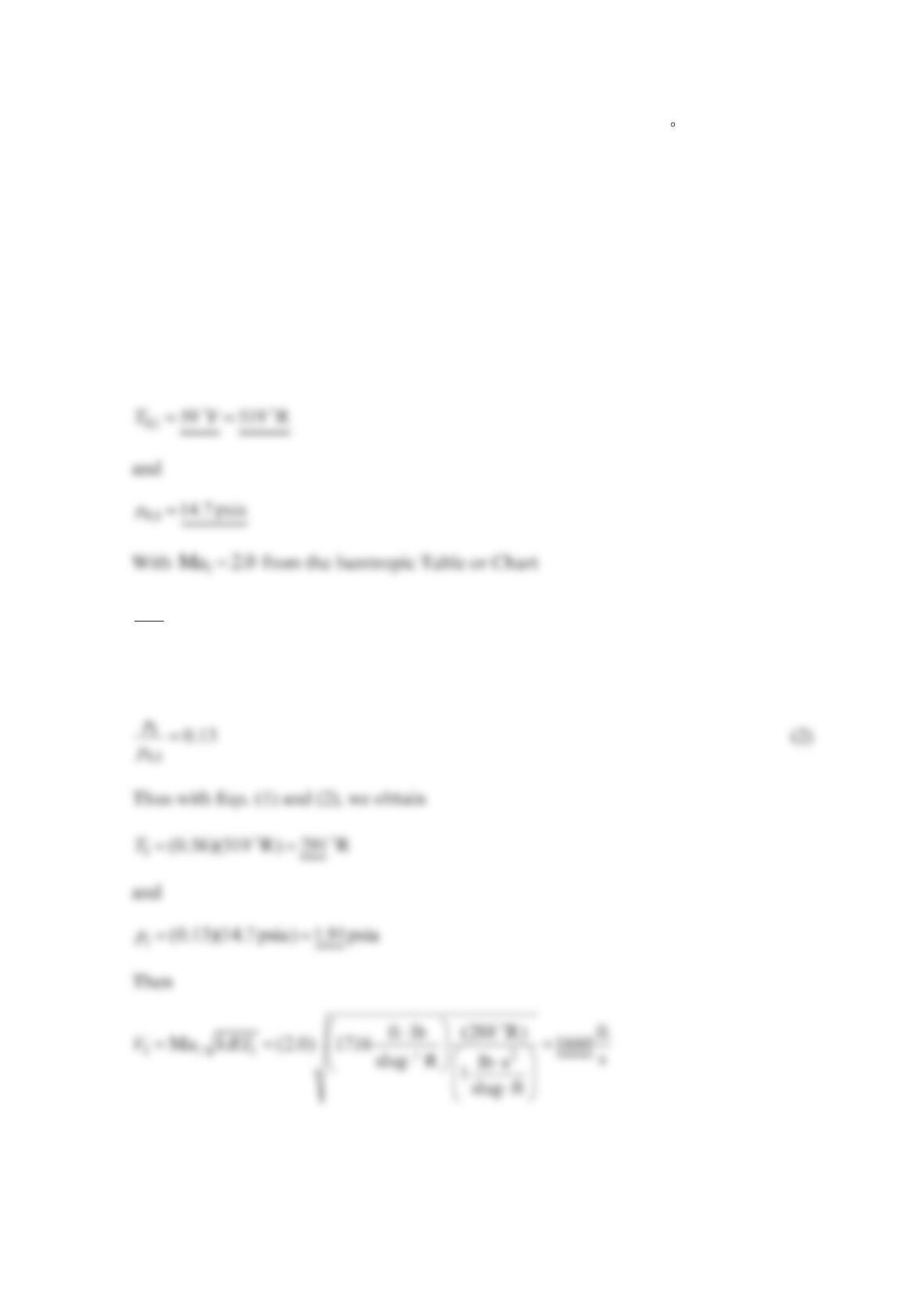
Air enters a frictionless, constant area duct with 1
M
a2.0=, =
0,1 59 FT, and 0,1 14.7 psia.
p
=
The air is decelerated by heating until a normal shock wave occurs where the local Mach
number is
1
.5. Downstream of the normal shock, the subsonic flow is accelerated with
heating until it chokes at the duct exit. Determine the static temperature and pressure, the
stagnation temperature and pressure, and the fluid velocity at the duct entrance, just
upstream and downstream of the normal shock, and at the duct exit. Sketch the
temperature–entropy diagram for this flow.
Solution 11.68
At the duct entrance, section (1), we have
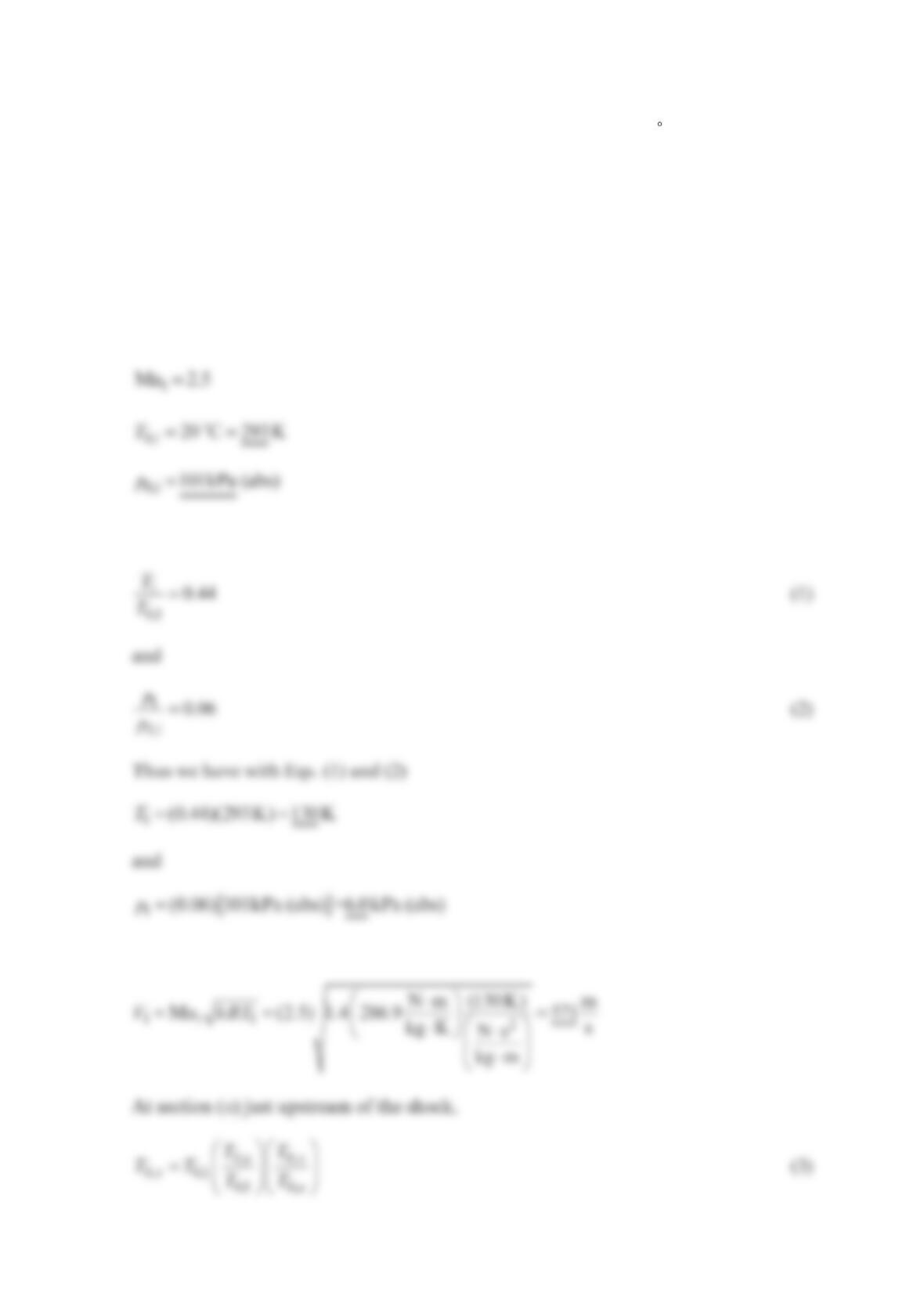
=
1
0,1
0.56
T
T (1)
and
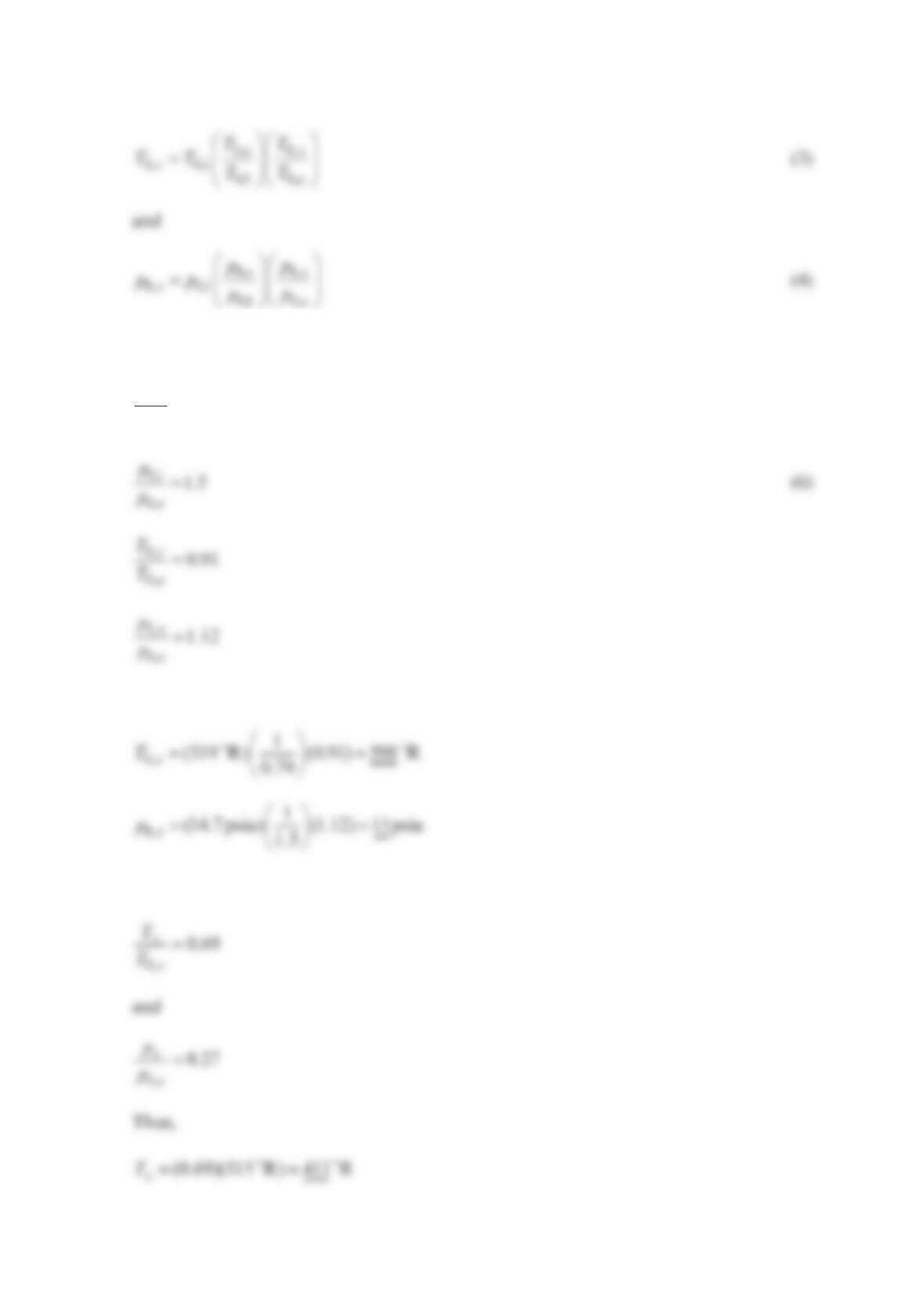
At section (x) just upstream of the shock
For =
1
Ma 2.0 and =Ma 1.5
x from the Rayleigh Table or Chart
=
0,1
0,
0.79
a
T
T (5)
With these ratios and Eqs. (3) and (4), we obtain
=Ma 1.5
x from the Isentropic Table or Chart
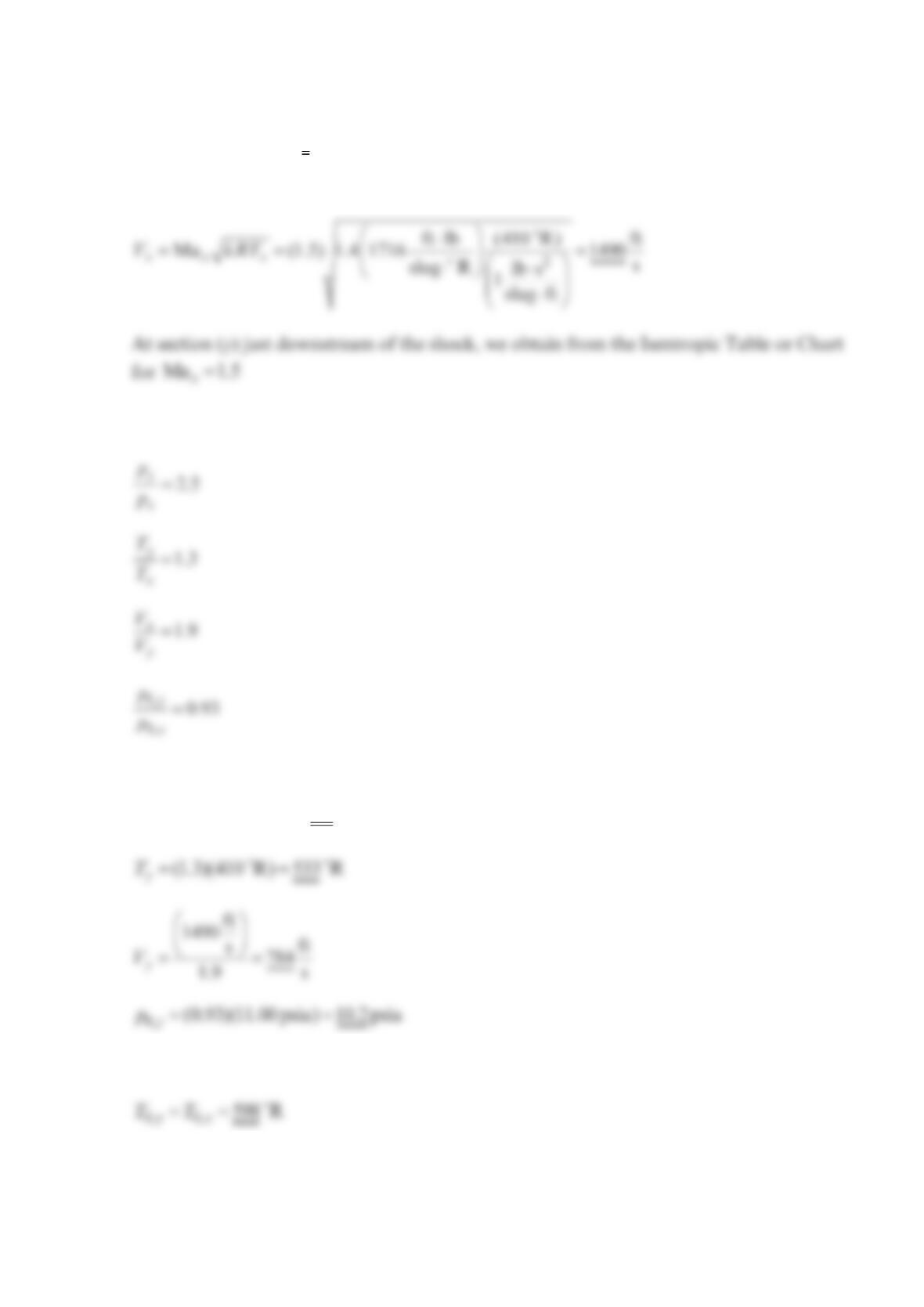
and
==(0.27)(11psia) 3psia
x
p
Then
=Ma 0.7
y
With these ratios and values of properties at section (x) previously determined, we have
==(2.5)(3.00 psia) 7.5 psia
y
p
Also, since the flow across the normal shock is adiabatic,
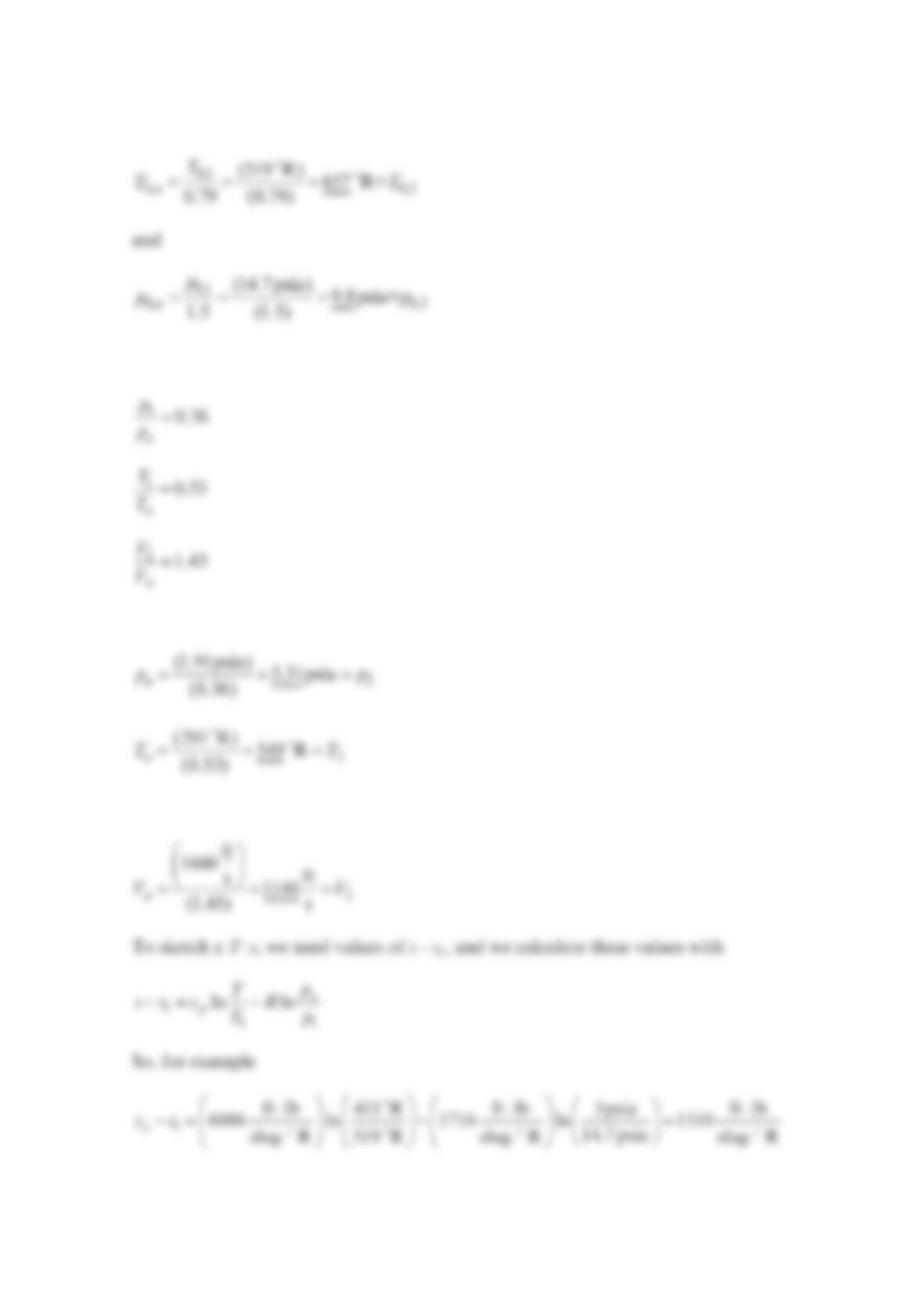
At the duct exit, section (2), the flow is choked there. Thus from Eqs. (5) and (6), we
conclude that
With =
1
Ma 2.0 , we read further from the Rayleigh Table or Chart
Thus,
and
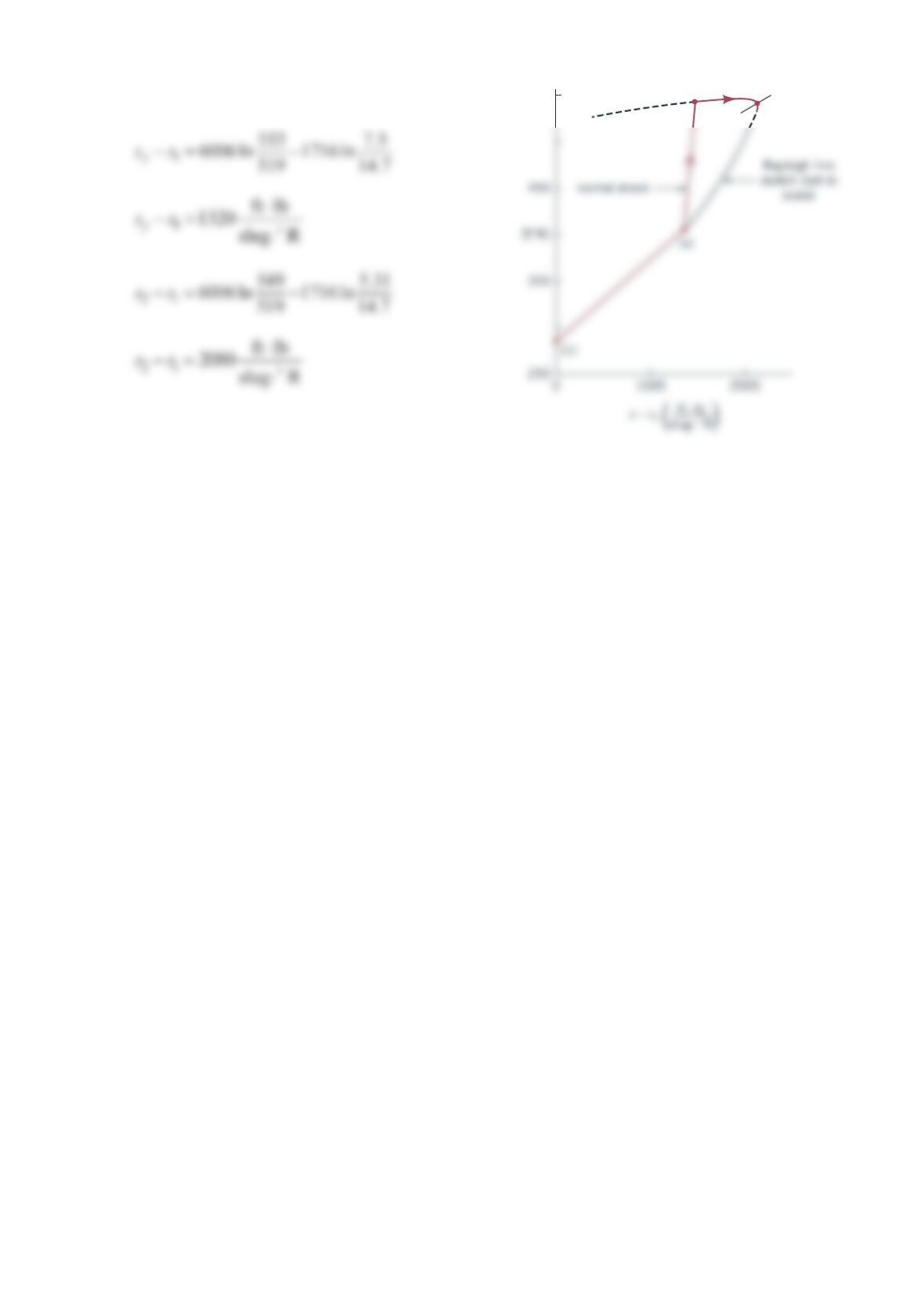
Similarly
550
(2) or
(
a
)
(
y
)
Problem 11.69
Air enters a frictionless, constant area duct with
M
a2.5=, =
020 CT, and
=
0101kPa (abs)p. The gas is decelerated by heating until a normal shock occurs where the
local Mach number is 1.3. Downstream of the shock, the subsonic flow is accelerated with
heating until it exits with a Mach number of 0.9 . Determine the static temperature and
pressure, the stagnation temperature and pressure, and the fluid velocity at the duct
entrance, just upstream and downstream of the normal shock, and at the duct exit. Sketch
the temperature–entropy diagram for this flow.
Solution 11.69
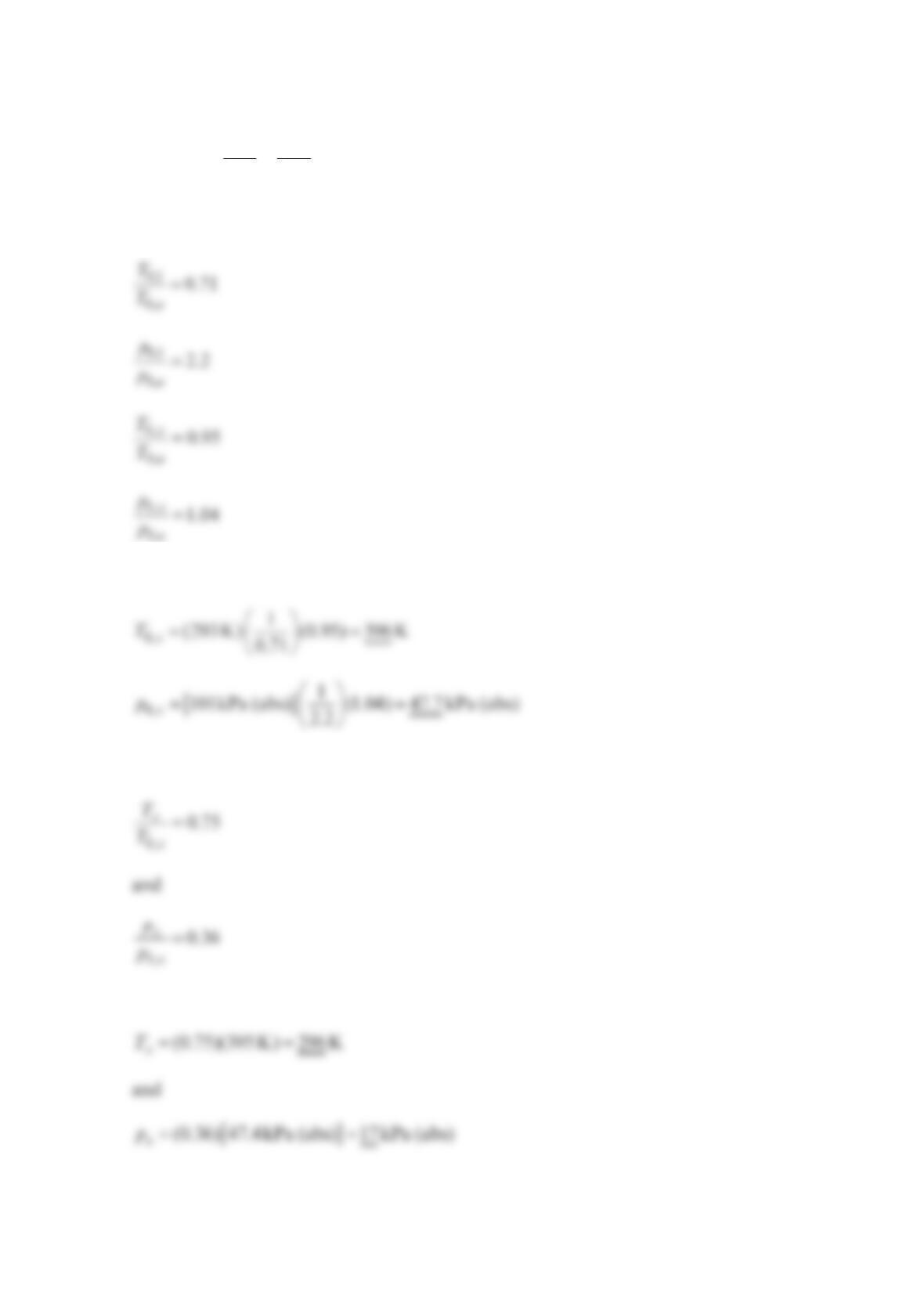
(a) For air, we have at the duct entrance, section (1)
With =
1
Ma 2.5 , we use the Isentropic Flow Table or Chart to find
Then,
and
=
0, 0,
0, 0,1
0,1 0,
ax
x
a
pp
pp
pp
(4)
For =
1
Ma 2.5 and =Ma 1.3
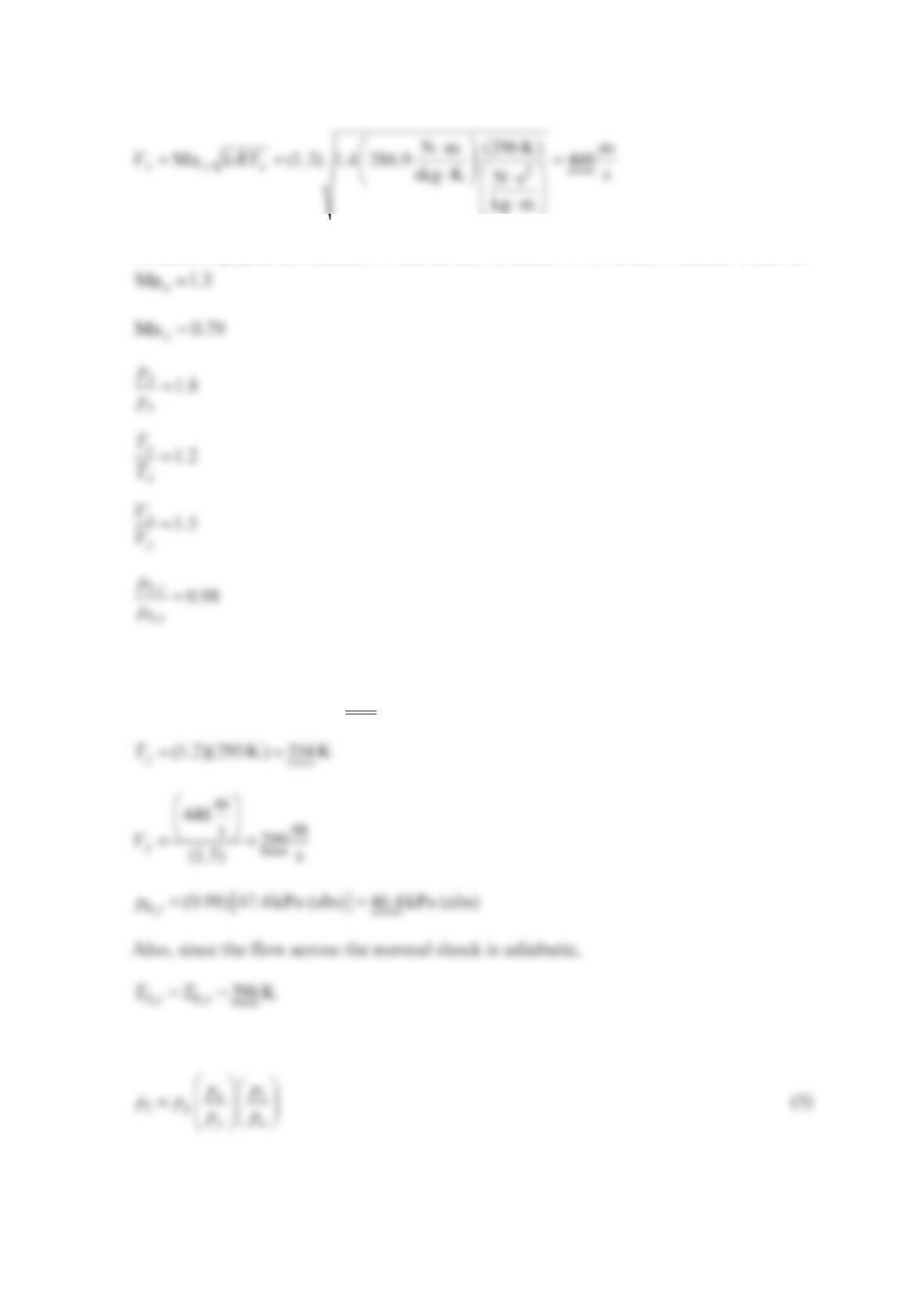
x, we find from Rayleigh Flow Table or Chart
With these values and Eqs. (3) and (4), we obtain
=Ma 1.3
x, we find from the Isentropic Flow Table or Chart
Thus,
Then
At section (y) just downstream of the shock, we obtain from Shock Table or Chart for
With these ratios and values of properties at section (x) previously determined, we have
[
]
==(1.8) 17.1kPa (abs) 30.8kPa (abs)
y
p
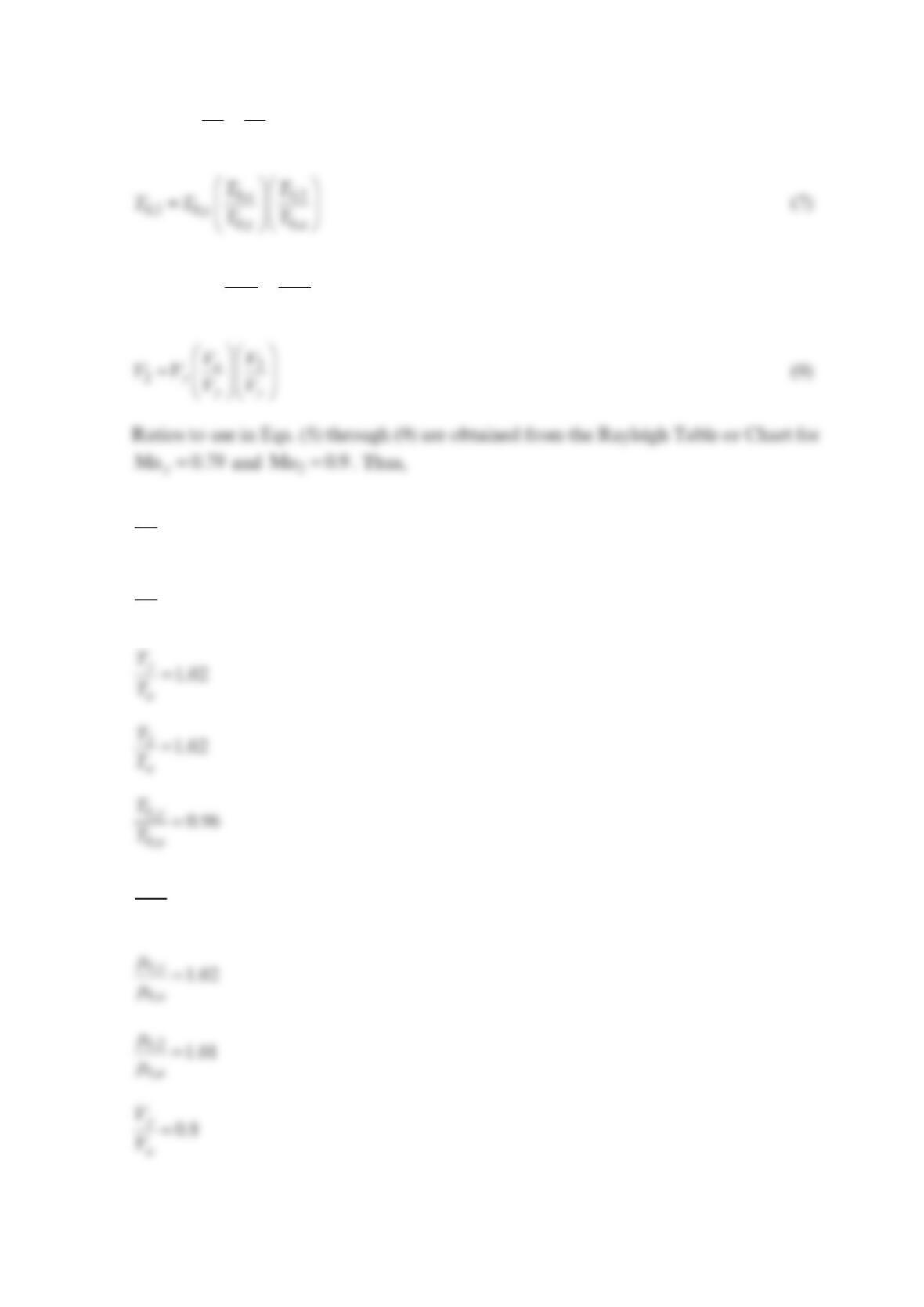
At the duct exit, section (2), we have
=
2
2a
y
ya
TT
TT
TT
(6)
=
0, 0,2
0,2 0,y
0,y 0,
a
a
pp
pp
pp
(8)
=1.3
y
a
p
p
=
21.12
a
p
p
=
0,2
0,
0.99
a
T
T
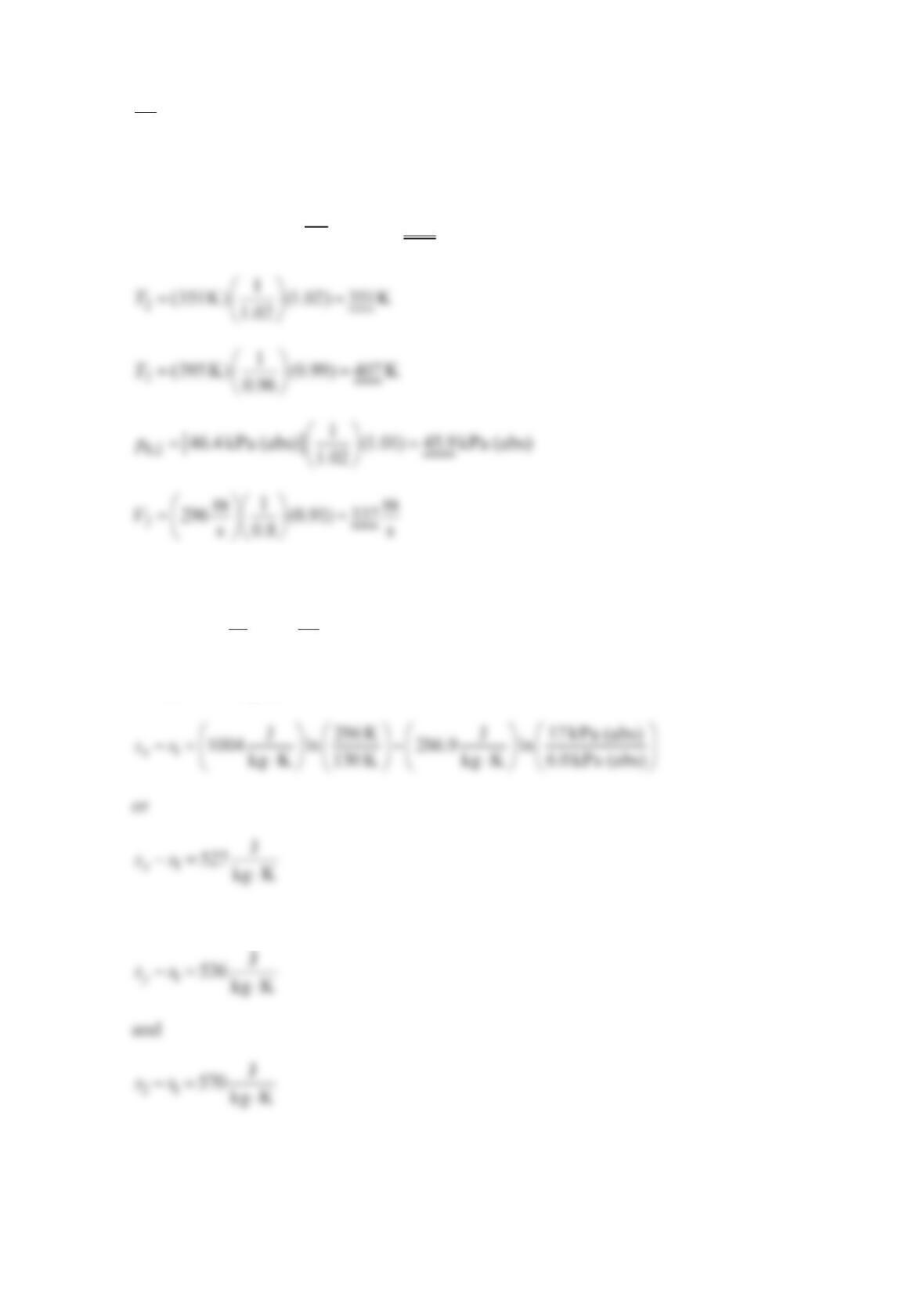
=
20.91
a
V
V
With these ratios and Eqs. (5) through (9), we obtain
[]
==
2
1
30.9 kPa (abs) (1.12) 26.6 kPa (abs)
1.3
p
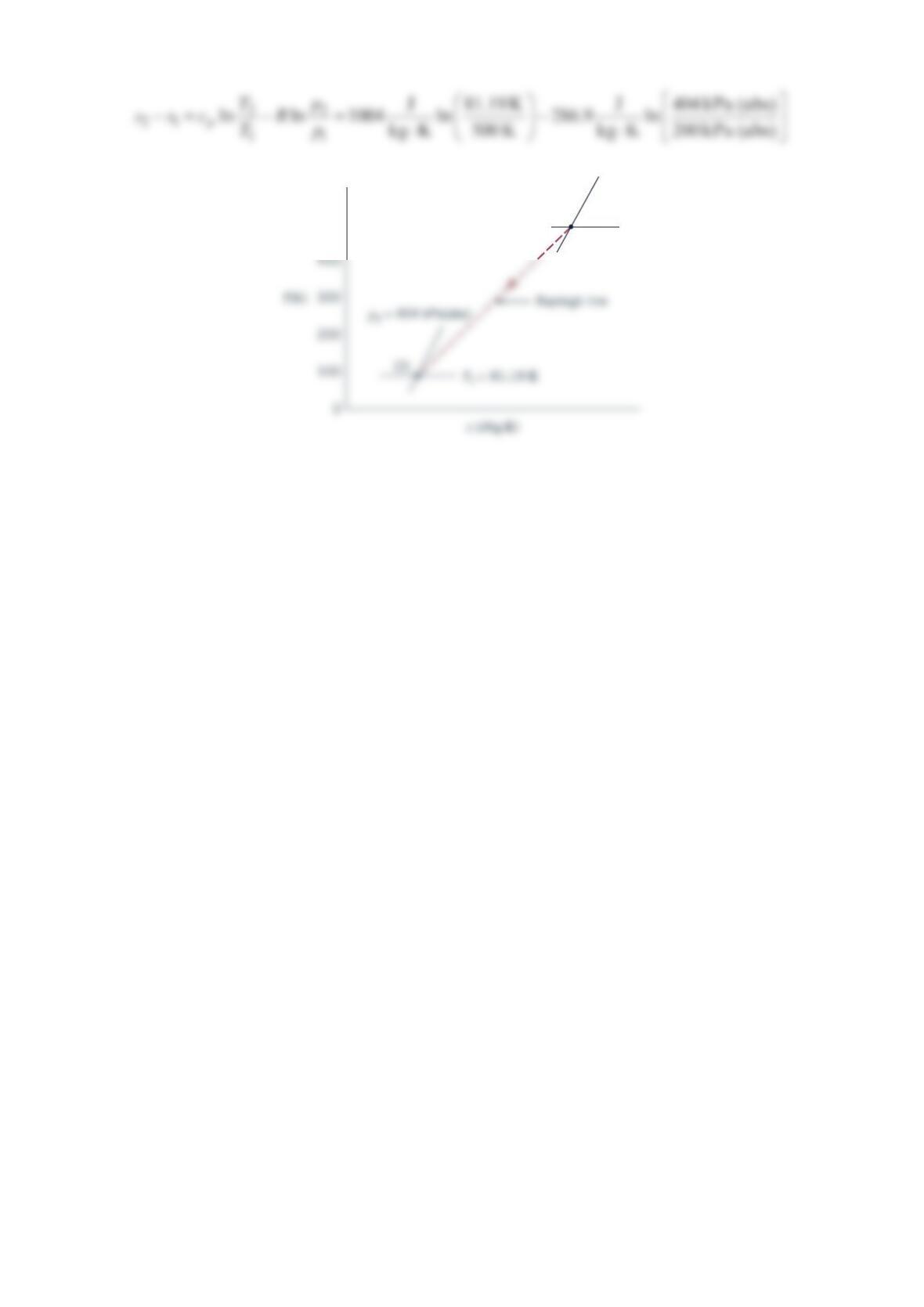
For sketching a T–s diagram, we need values of 1
s
s−. We use,
−= −
1
11
ln ln
p
p
T
ss c R
Tp
Thus, for example,
Similarly
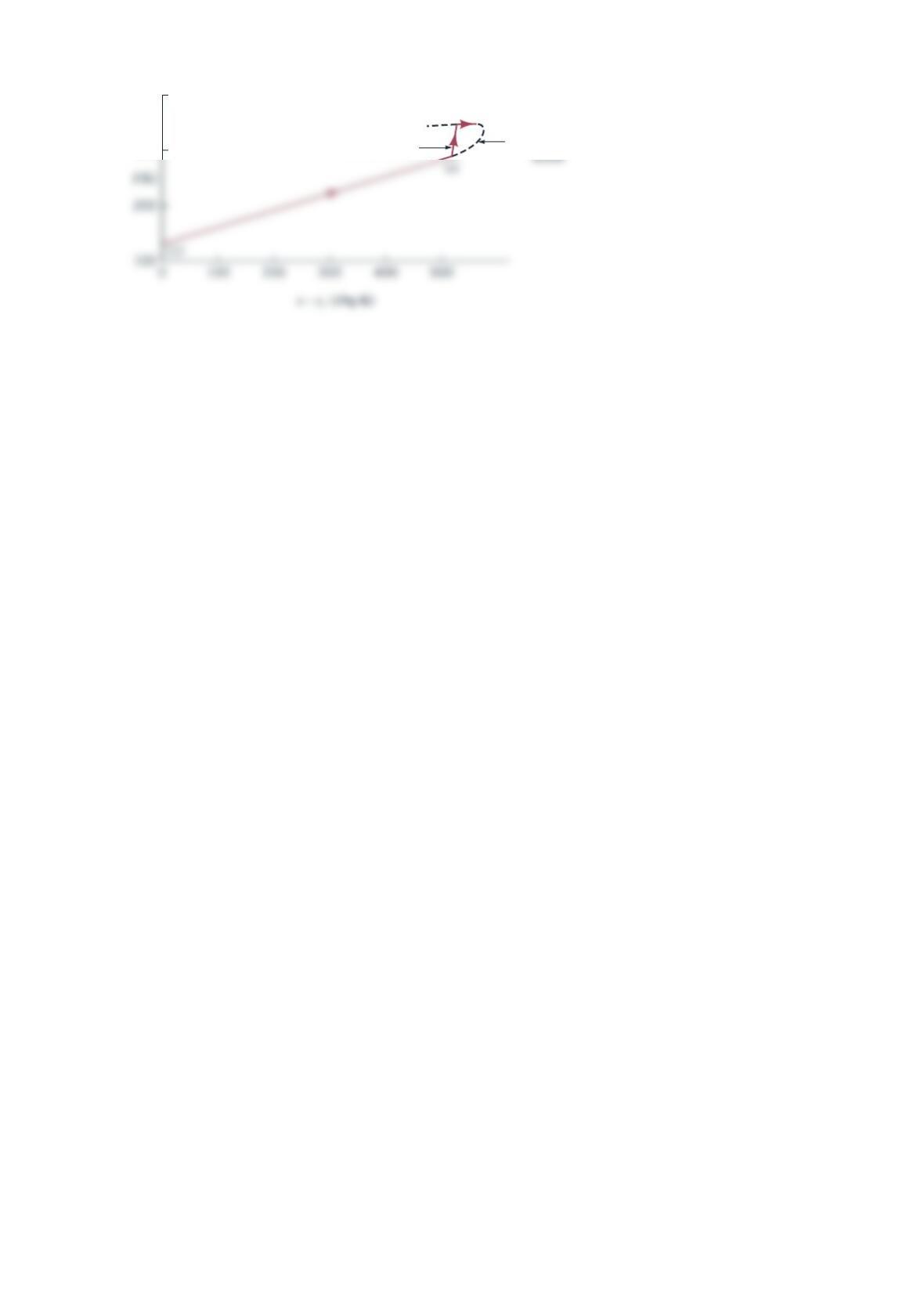
400
300
normal shock
(2)
(
y
)
Rayleigh line
sketch (not to
Problem 11.70
Air enters a 15-cm pipe with velocity 120 m/s, 1 atmosphere pressure, and =100 C.T
How much heat must be added to bring the air to the maximum static temperature? What
are the values of temperature and pressure at this point?
Solution 11.70
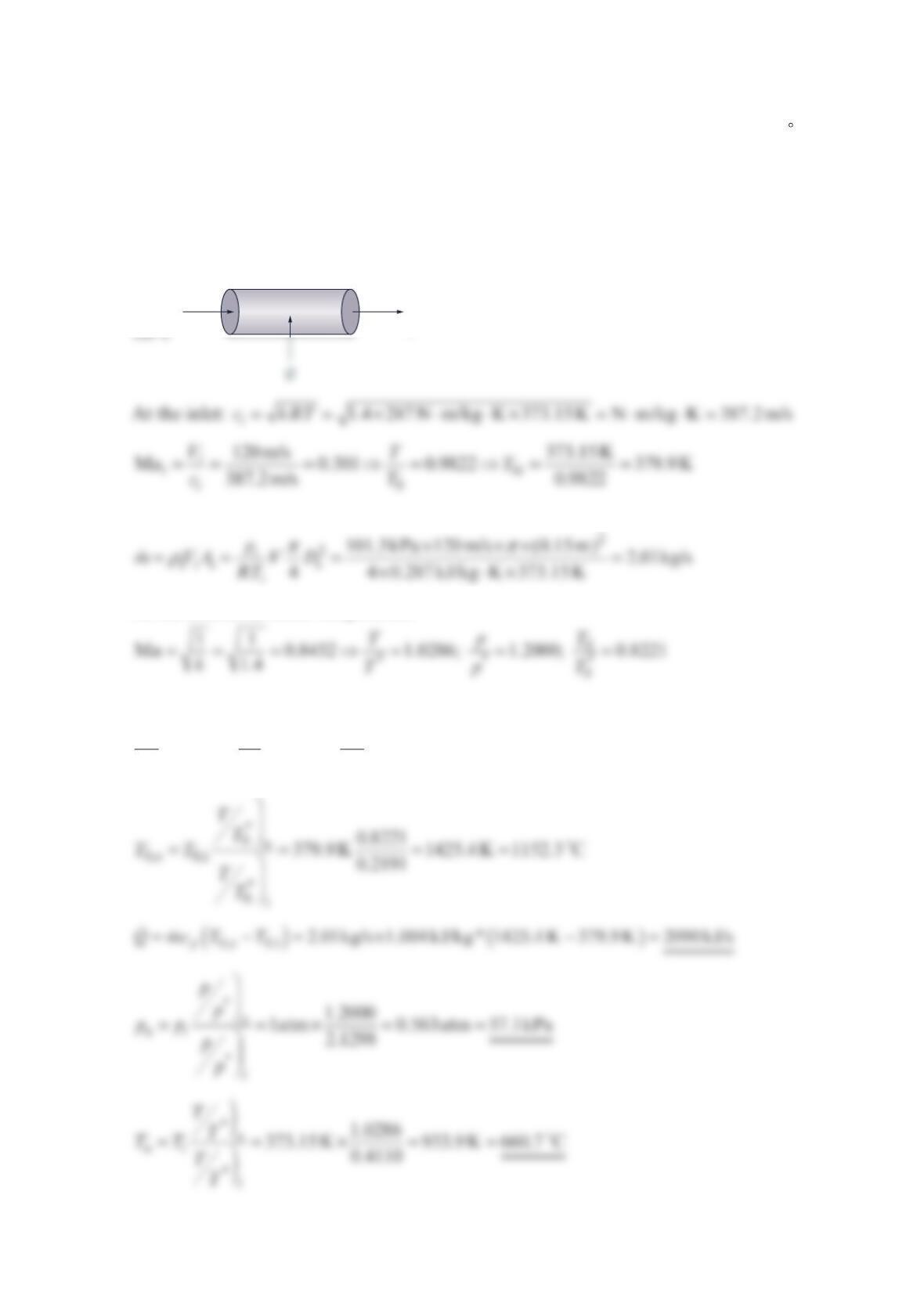
The mass flowrate is
At the maximum static temperature
From Rayleigh Tables/Functions at ==
i
Ma Ma 0.301:
===
0
***
0
0.4110; 2.1298; 0.2191
T
Tp
TpT
Air
Tmax
p
Air
120 m/s
1 atm
Problem 11.71
Show that for Rayleigh flow, the maximum amount of heat that may be added to the gas is
given by:
−
=+
22
max 1
2
11
(Ma 1)
2( 1)Ma
p
q
cT k
Solution 11.71
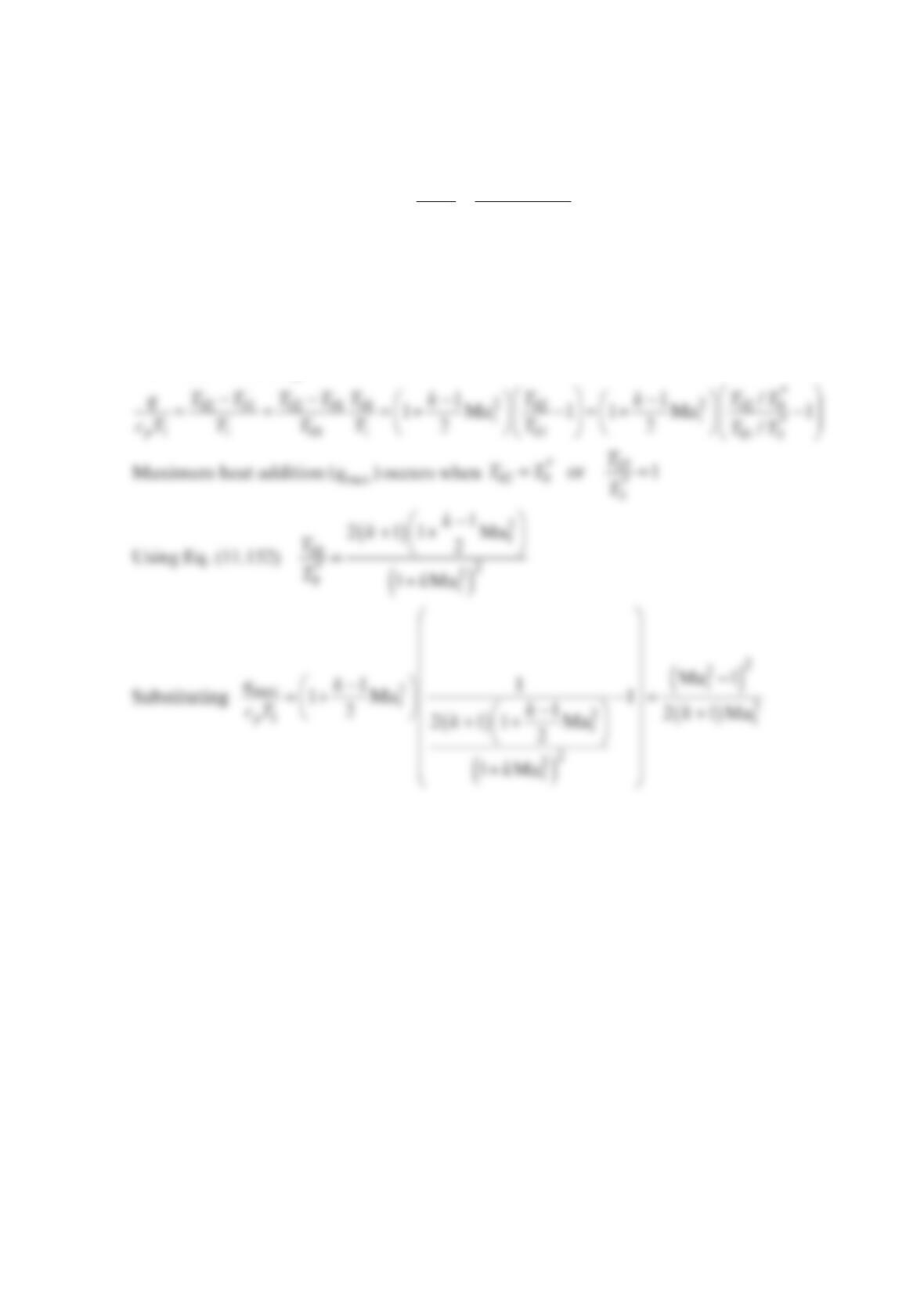
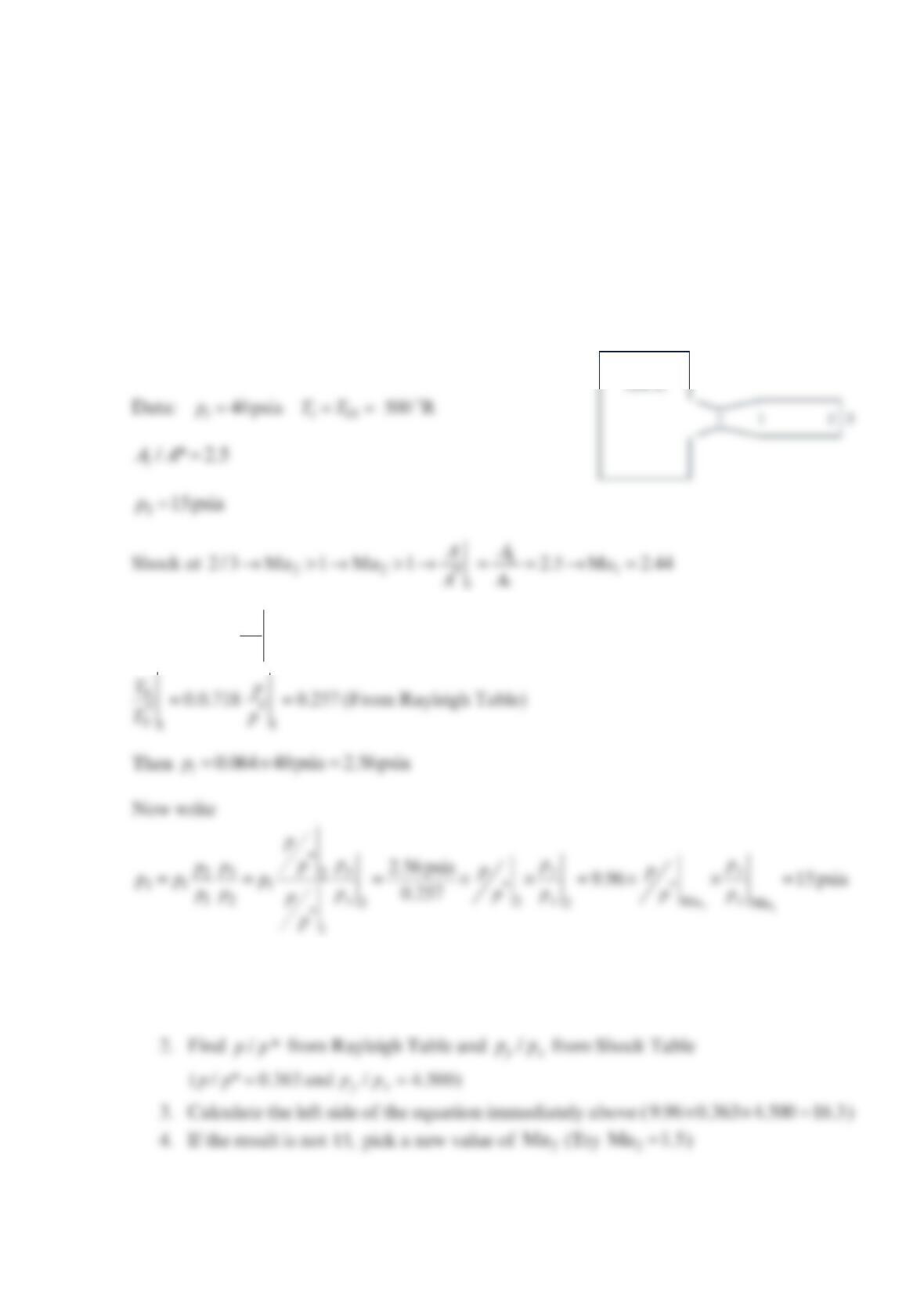
The heat added is
()
=−
02 01p
qcT T
Nondimensionalizing:
Problem 11.72
Air is stored in a tank where the pressure is 40 psia and the temperature is 500 °R A
converging–diverging nozzle with an exit-to-throat area ratio of 2.5 attaches the tank to a
duct where heat is exchanged with the air. The exit pressure is 15psia and a normal shock
stands at the exit of the nozzle. Determine the magnitude and direction of the heat
exchange.
Solution 11.72
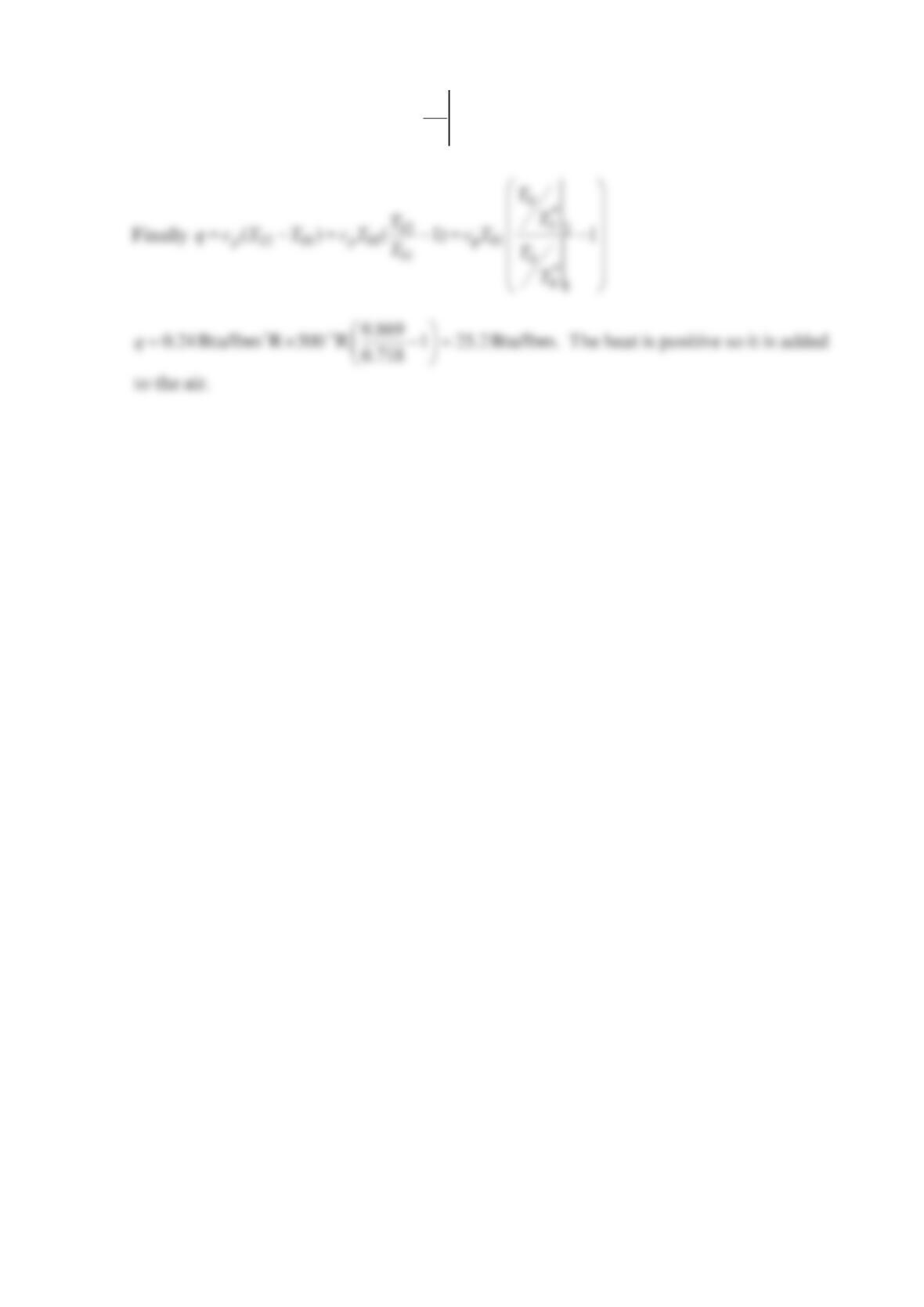
The flow system is sketched
1
01
M
a 2.44 0.064 (From Isentropic Table);
p
p
=→=
This equation can be solved by trial and error as follows:
1. Pick a value for
()
<<
22
Ma 1 Ma 2.44
[
]
=
2
Say Ma 2.0
The final result is =
2
Ma 1.66. Then
=
=
2
0
*
0Ma 1.66
0.869
T
T
Problem 11.73
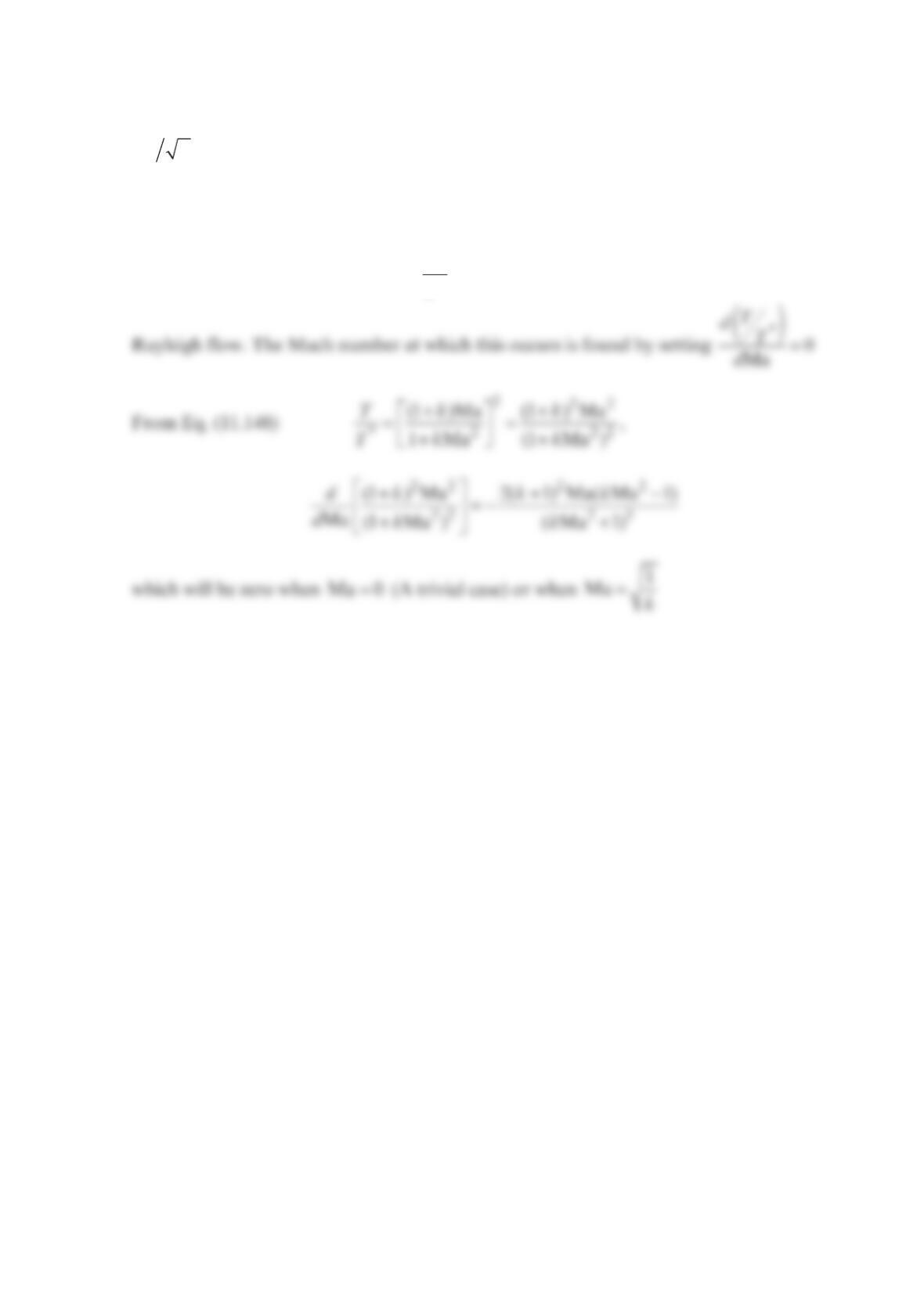
Prove that, in Rayleigh flow, the Mach number at the point of maximum temperature
is 1.k
Solution 11.73
When the temperature is maximum, *
T
T is also maximum because *T is constant in