= P(
x
< 1023.3 given
= 1050) =
−
−
25/50
10503.1023
/n
x
P
= P(z < –2.67) = .0038
11.51
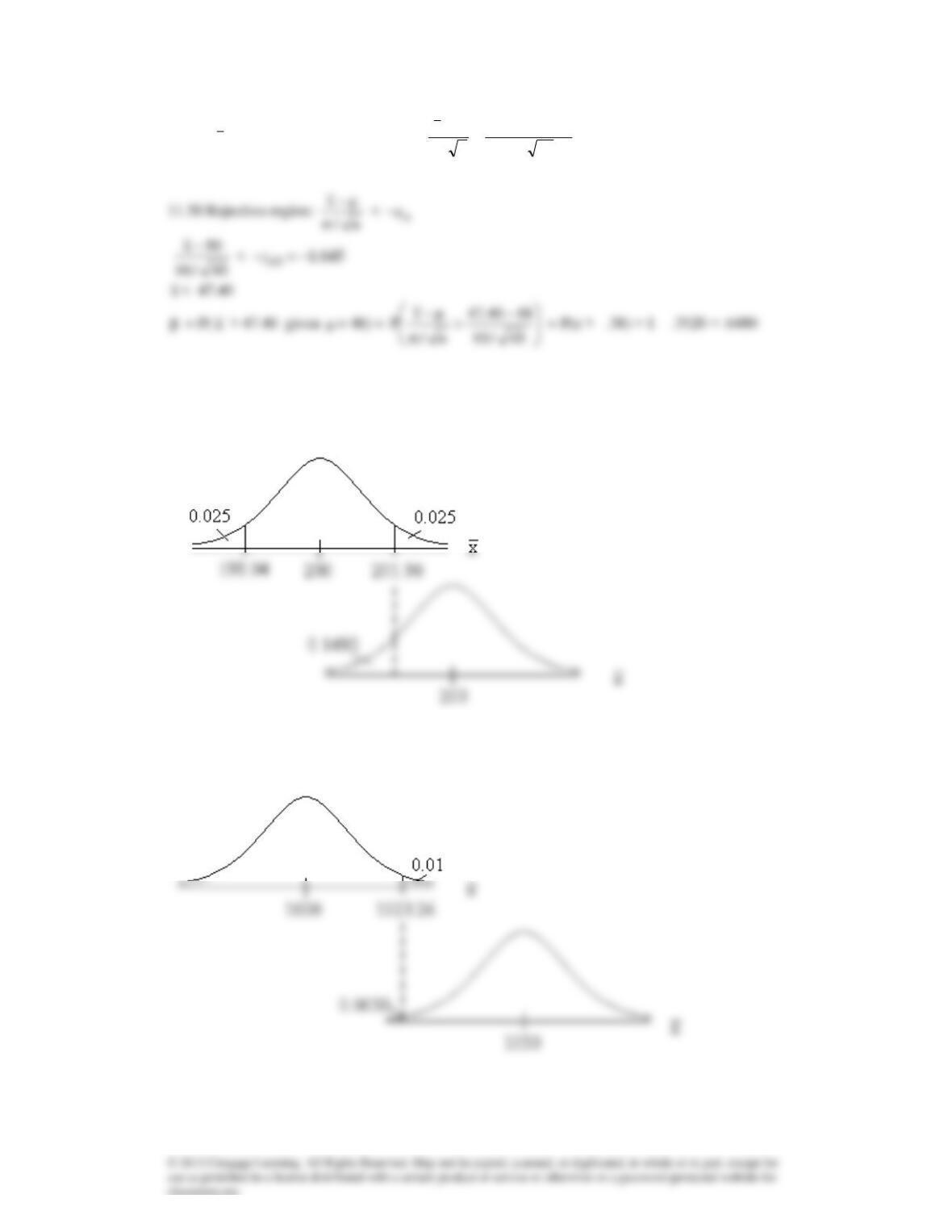
Exercise 11.48
Exercise 11.49
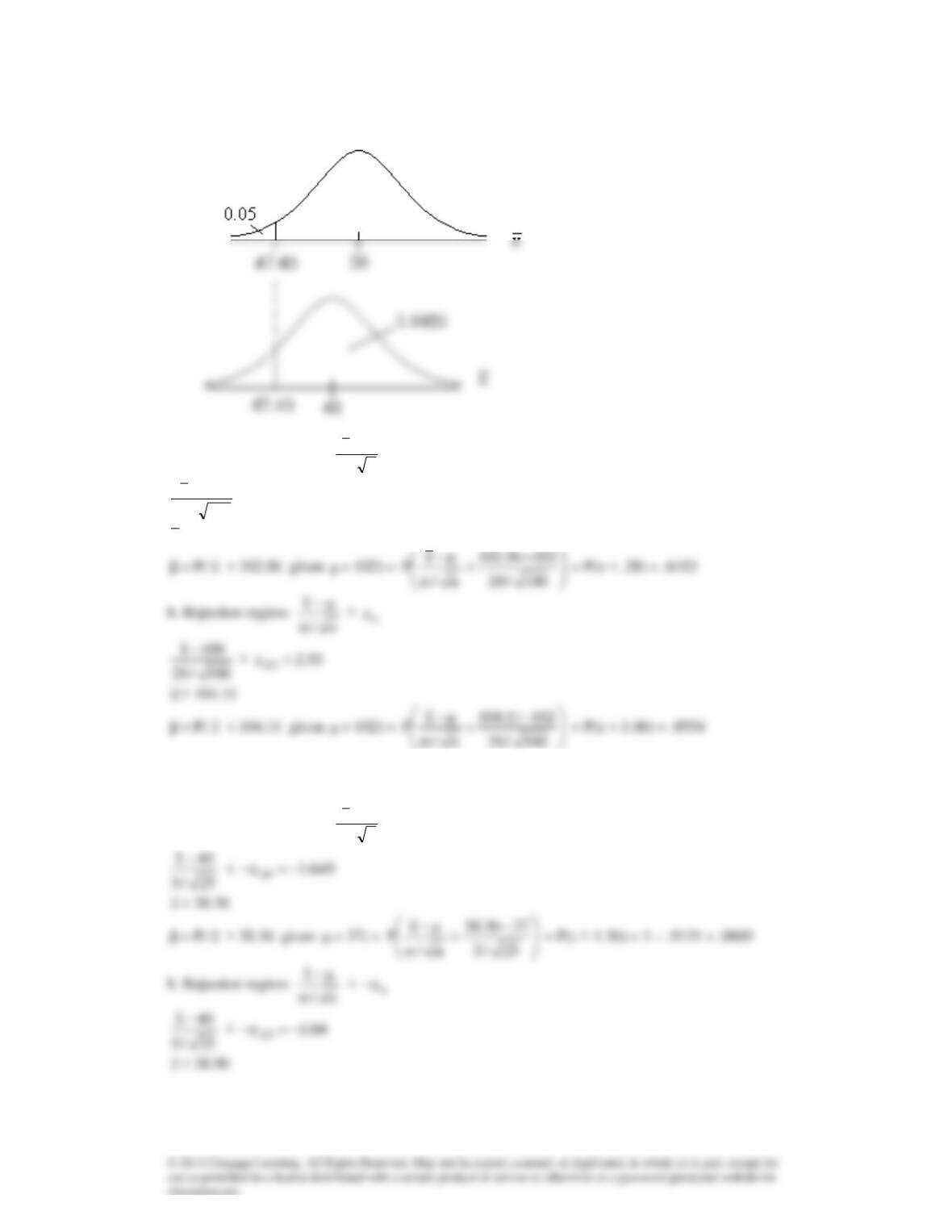
Exercise 11.50
11.52 a. Rejection region:
n/
x
−
>
z
100/20
100x −
>
28.1z 10.=
x
> 102.56
z
100/20
x
c.
increases.
11.53 a. Rejection region:
n/
x
−
<
−z
x
n/
x
−
11.54
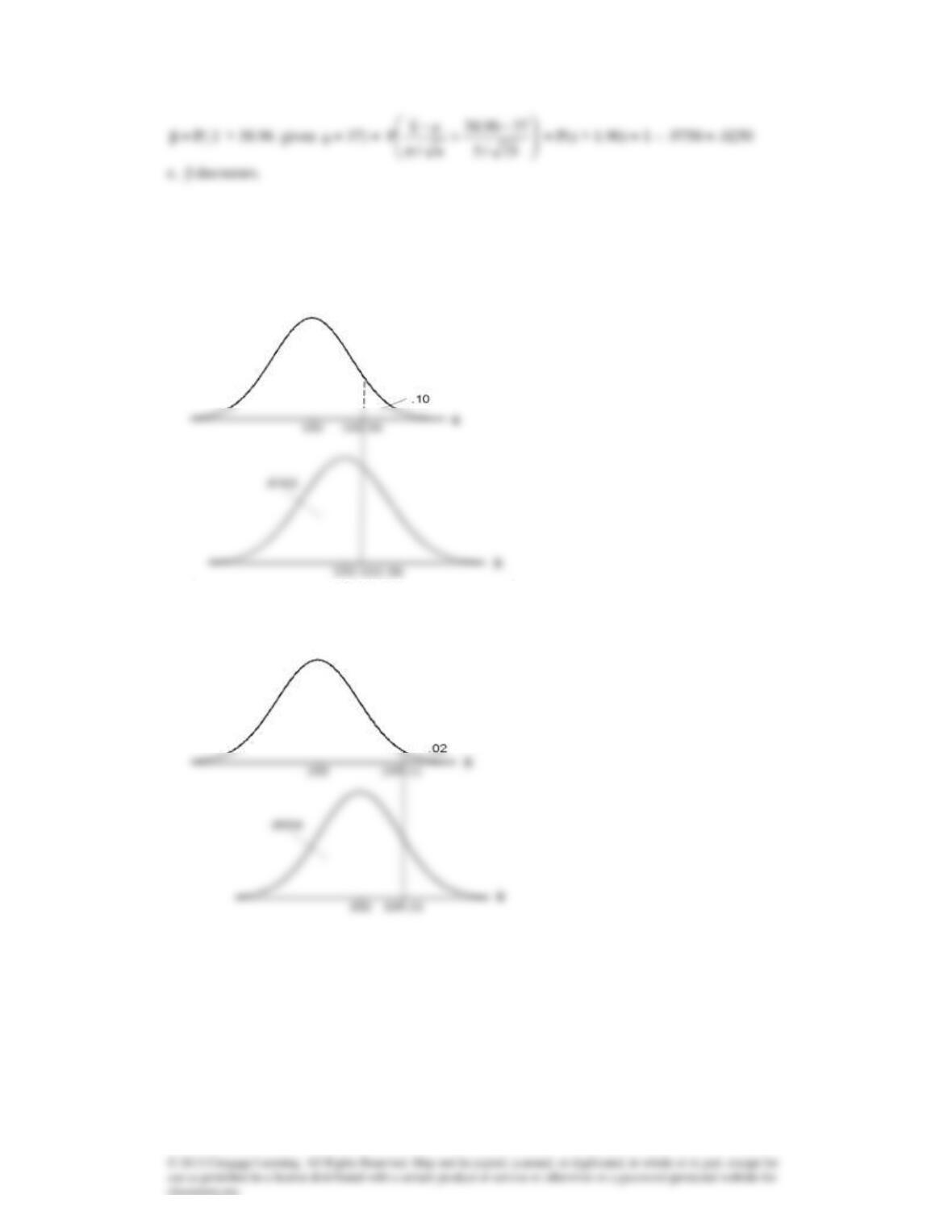
Exercise 11.52 a
Exercise 11.52 b
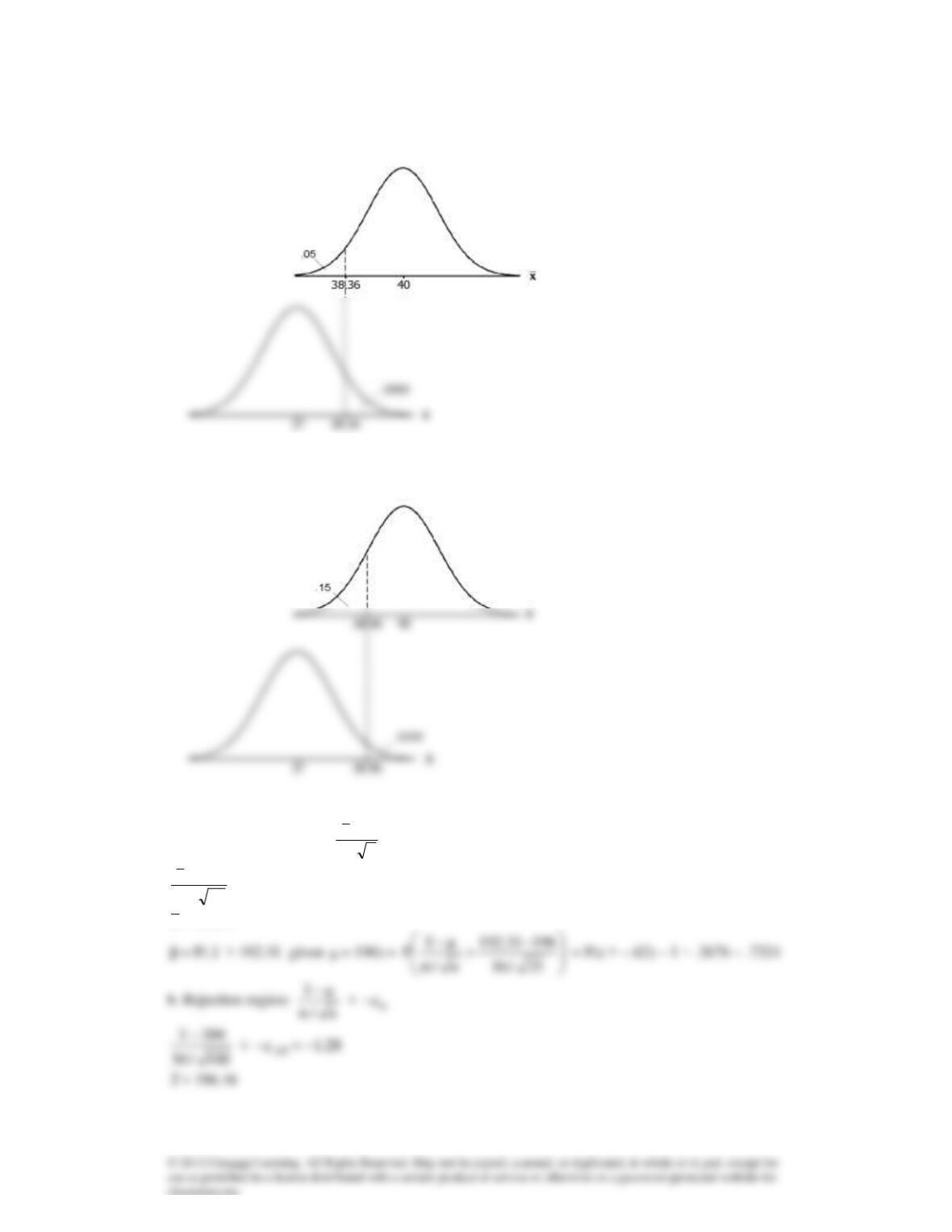
Exercise 11.53 a
Exercise 11.53 b
11.55 a. Rejection region:
n/
x
−
<
−z
25/30
200x−
<
28.1z 10.−=−
x
< 192.31
n/
x
−
28.1z 10.−=−
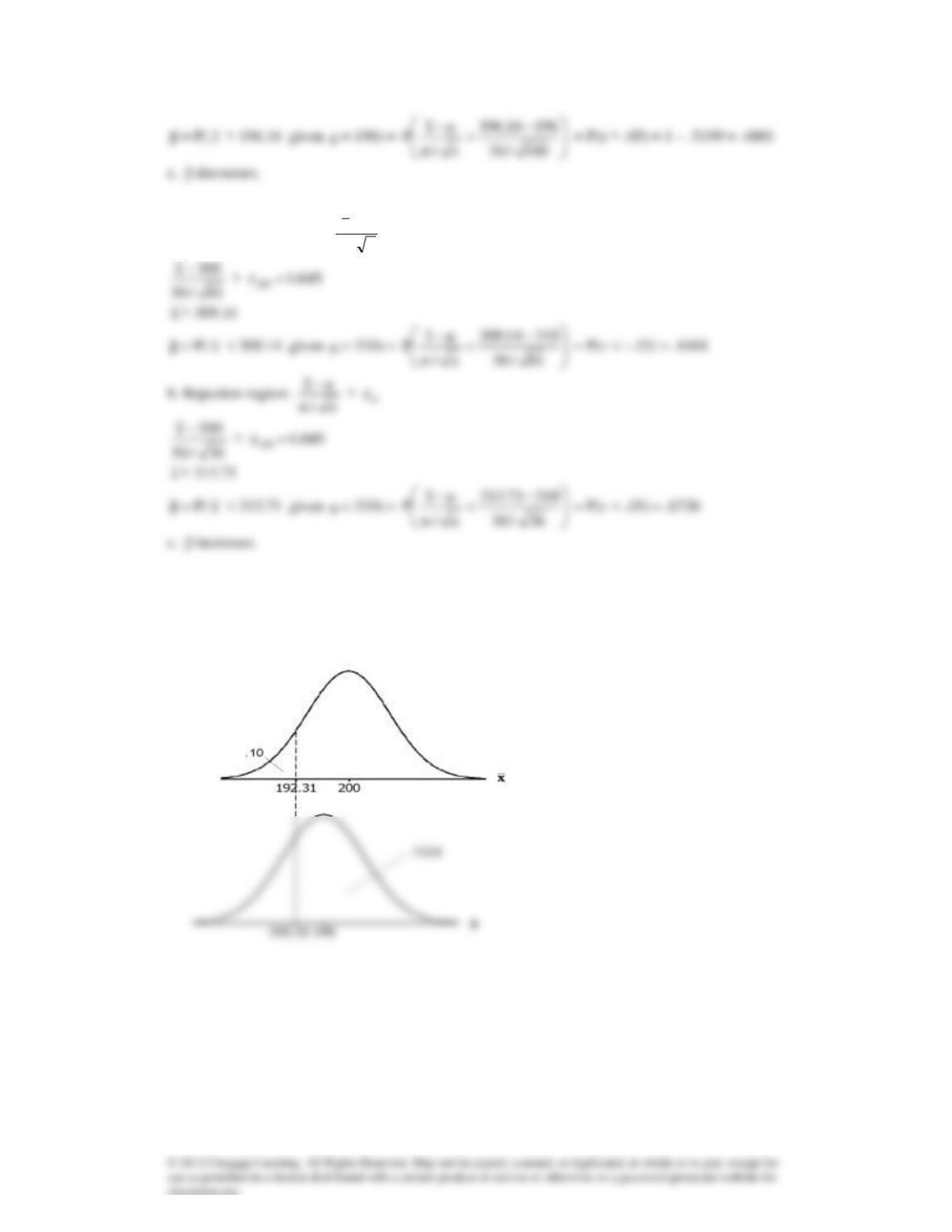
11.56 a. Rejection region:
n/
x
−
>
z
11.57
Exercise 11.55 a
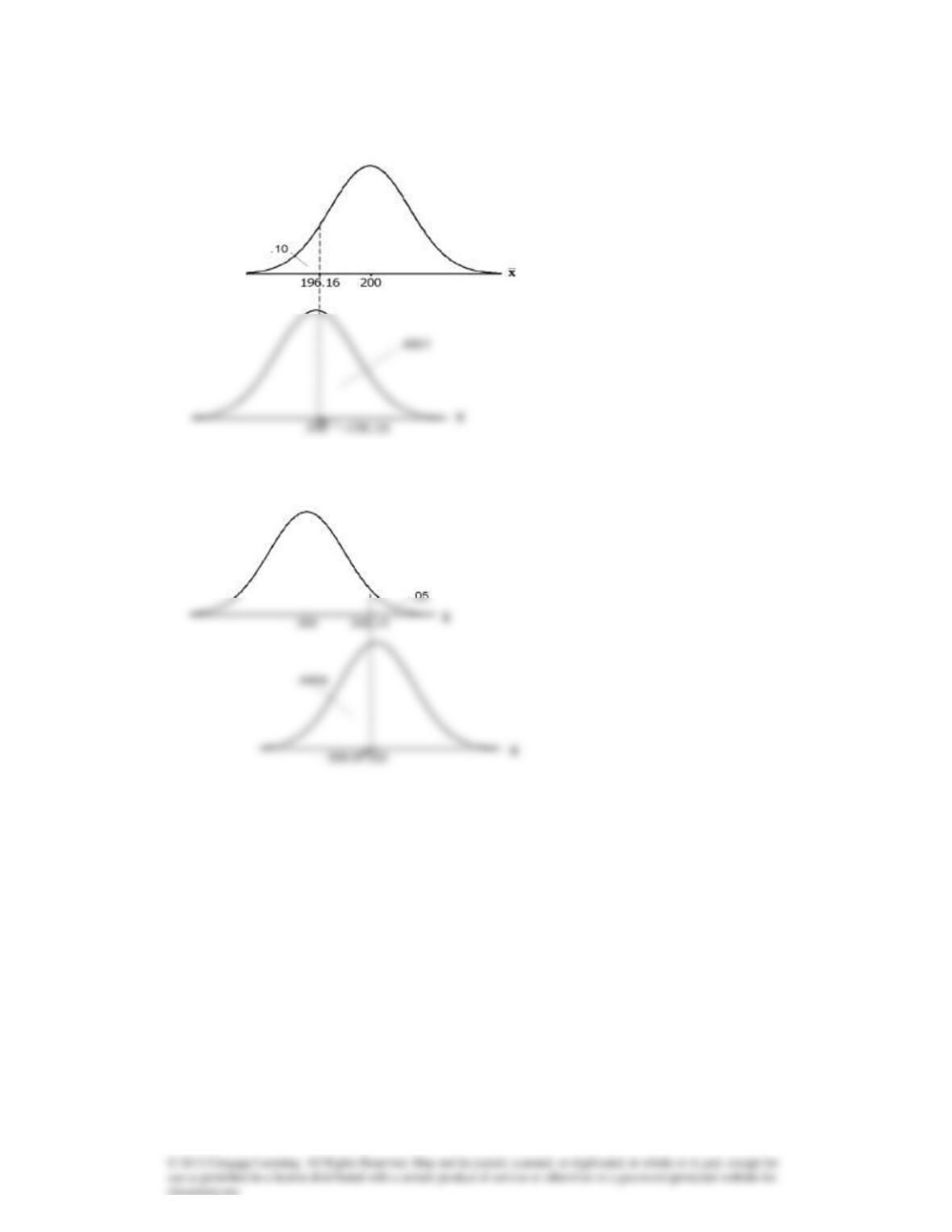
Exercise 11.55 b
Exercise 11.56 a
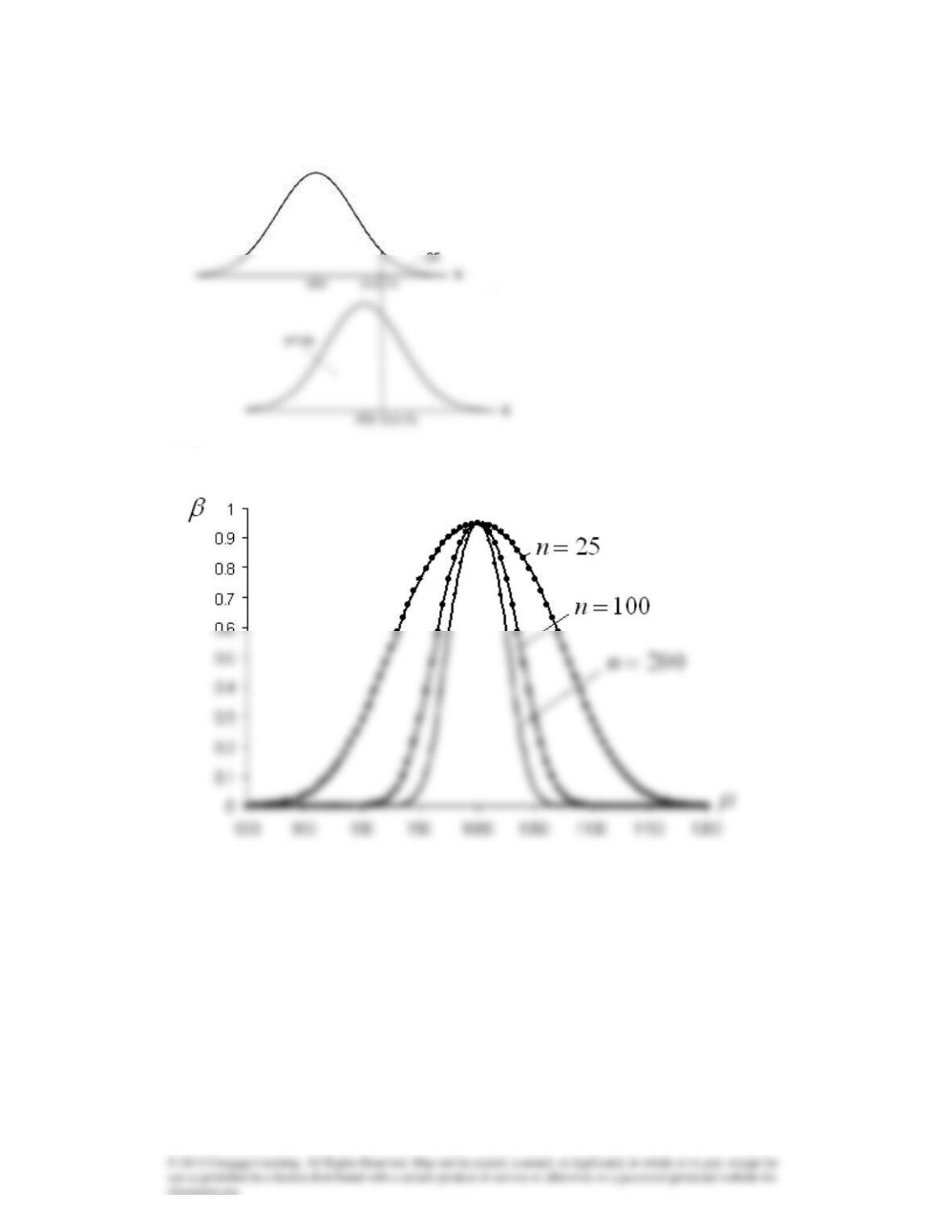
Exercise 11.56 b
11.58
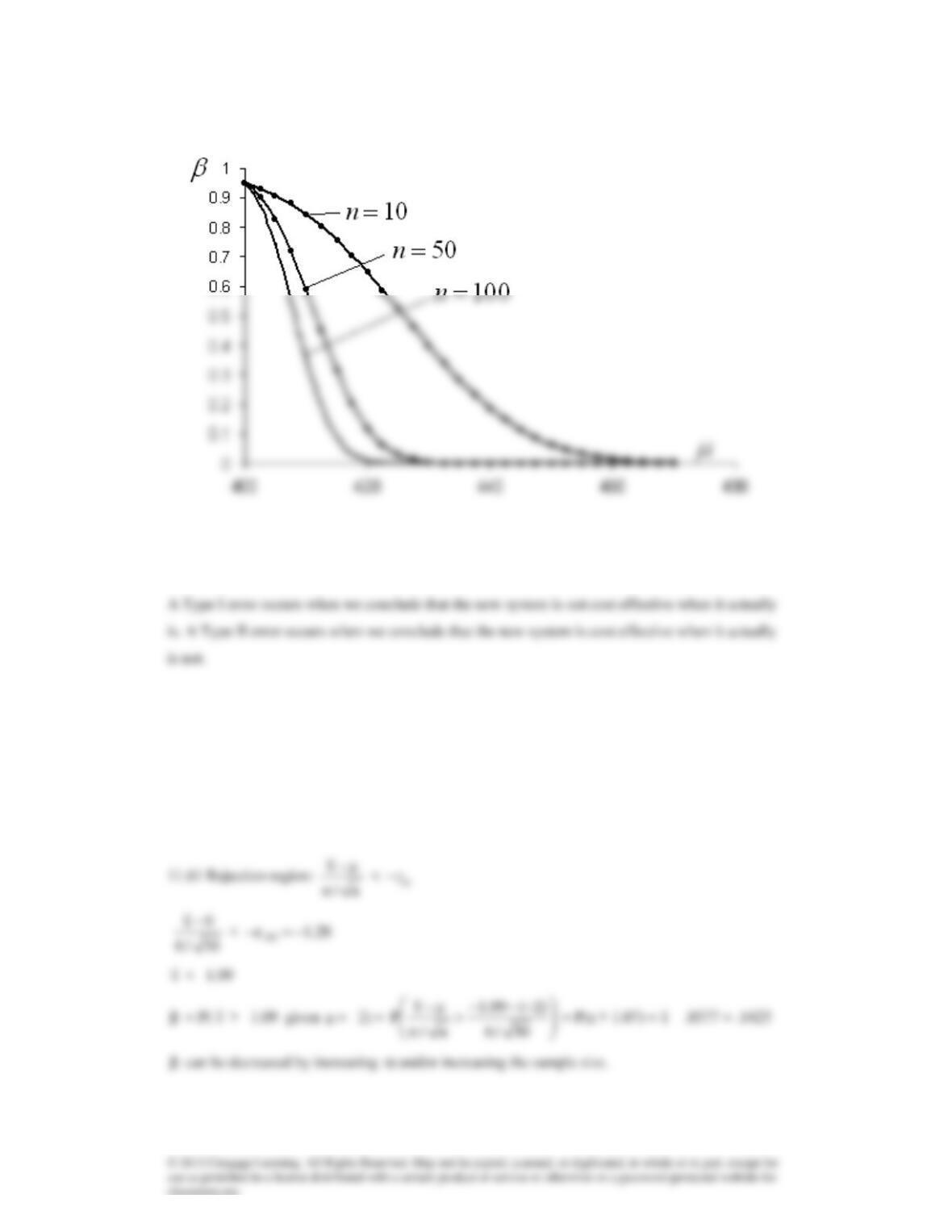
11.59
11.60
:H0
= 170
:H1
< 170
The test statistic is the same. However, the p-value equals 1 minus the p-value calculated Example
11.1. That is,
p-value = 1 – .0069 = .9931
We conclude that there is no evidence to infer that the mean is less than 170. That is, there is no
evidence to infer that the new system will not be cost effective.
11.62 Rejection region:
n/
x
−
<
−z
x
x
11.63 Rejection region:
n/
x
−
>
z
x
x
11.64 Rejection region:
n/
x
−
<
z−
110/8
x
x
11.65 i Rejection region:
n/
x
−
<
z−
100/3
10x−
<
33.2
01.−=−z
x
< 9.30
x
n/
x
−
z−
x
< 9.43
= P(
x
> 9.43 given
= 9) =
−
−
75/3
943.9
n/
x
P
= P(z > 1.24) = 1 – .8925 = .1075
x
x
11.66 A Type I error occurs when we conclude that the site is feasible when it is not. The
consequence of this decision is to conduct further testing. A Type II error occurs when we do not
11.67
20:H0=
25:H1
x