11.19: PROBLEM DEFINITION
Situation:
A large rock is located on the bottom of a river.
The current is strong enough so the rock moves along the bottom of the river.
Find: The speed (m/s) of the current required for the rock to roll.
Assumptions:
•The rock tumbles along the bottom (rationale: rocks will tumble rather than
slide).
•The rock can be idealized as a cube of size L×L×L,whereL=0.3m.(rationale:
large rocks are block like; the selected size is typical).
Properties:Water(10 ◦C), Table A.5 (EFM 10e), ρ= 1000 kg/m3.
PLAN
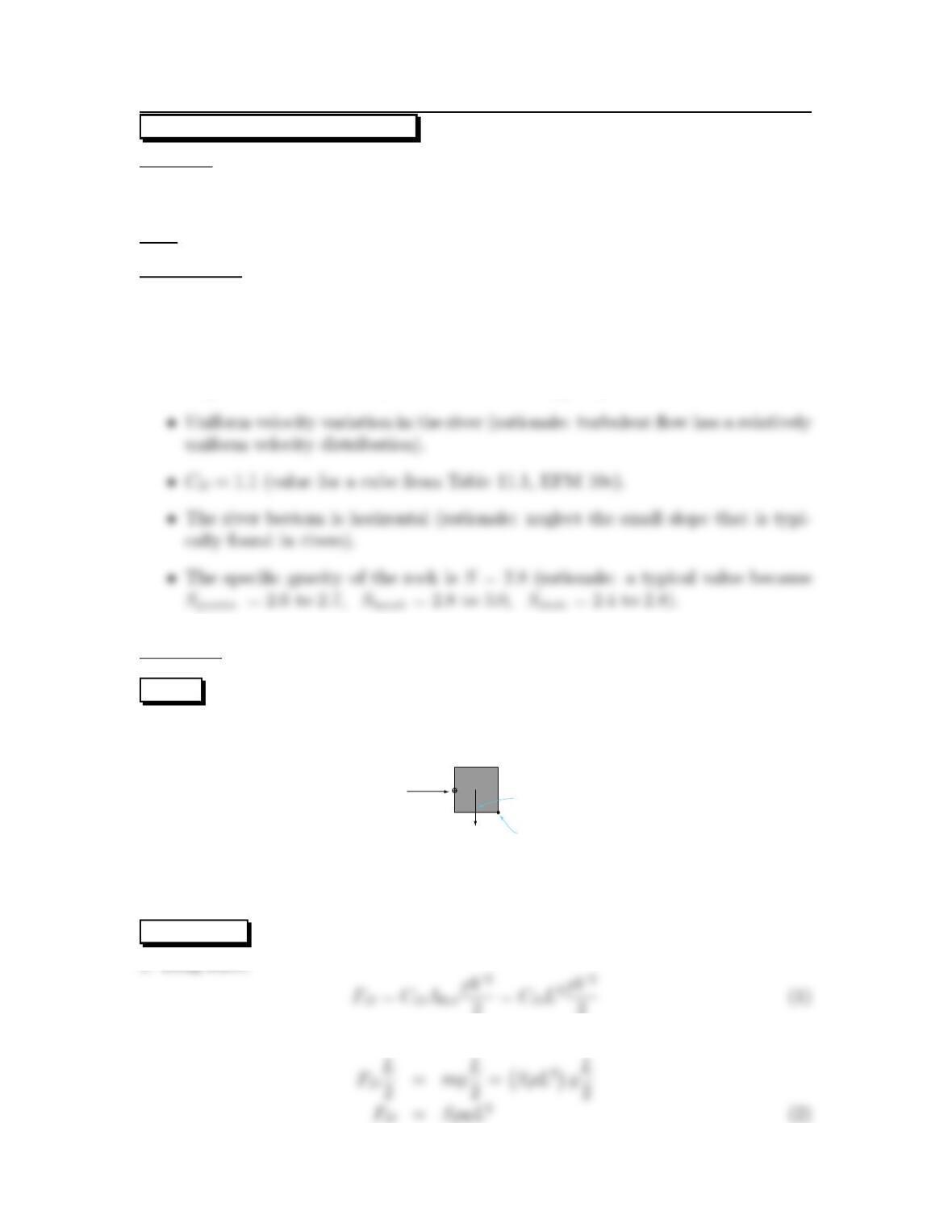
1. Relate the drag force to speed of the current using the drag force equation.
2. To determine when the rock will tip, sum moments about point O.
Drag Force
Weight
Po i n t “ O”
3. Find the speed of the current by combining results from steps 1 and 2.
SOLUTION
1. Drag force:
2=CDL2ρV 2
2(1)
2. Moment equilibrium (about 0).
21
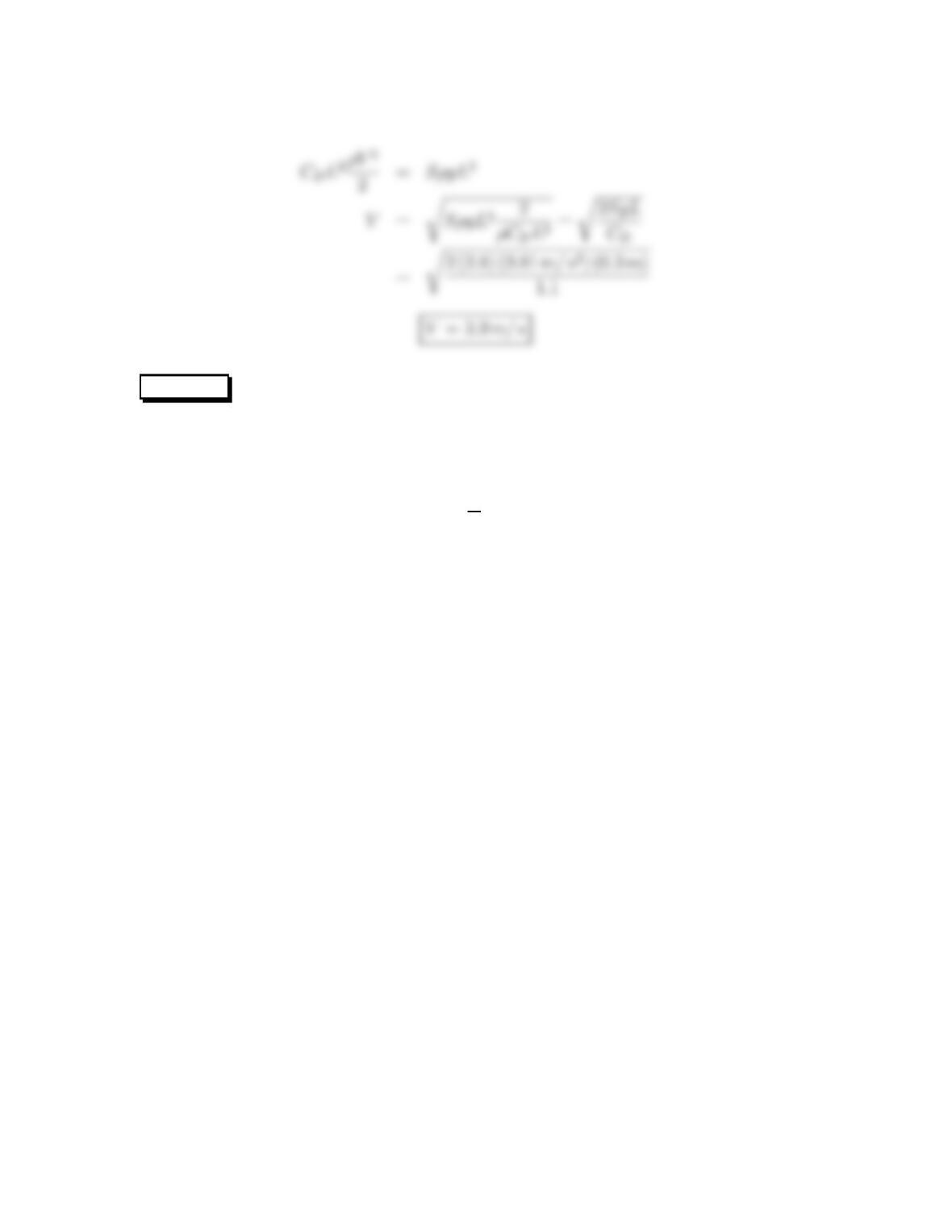
3. Combine Eqs. (1) and (2):
REVIEW
•This speed is about 9 mph.
•The major variable is the size of the rock (L). Larger rocks require faster rivers.
Notice that the speed needed to transport a rock is proportional to the square
root of a typical dimension. V∼√L.
22
11.20: PROBLEM DEFINITION
Situation:
Wind Vo=35m/sacts on a tall smokestack.
Height is h=75m.Diameter is D=2.5m.
Find: Overturning moment at the base.
Assumptions: Neglect end effects—that is the coefficient of drag from a cylinder of
infinite length is applicable.
Properties:Air(20 ◦C) ,Table A.3 (EFM 10e): ρ=1.2×99/101.3=1.17 kg/m3,
ν=1.51 ×10⁻⁵m2/s.
SOLUTION
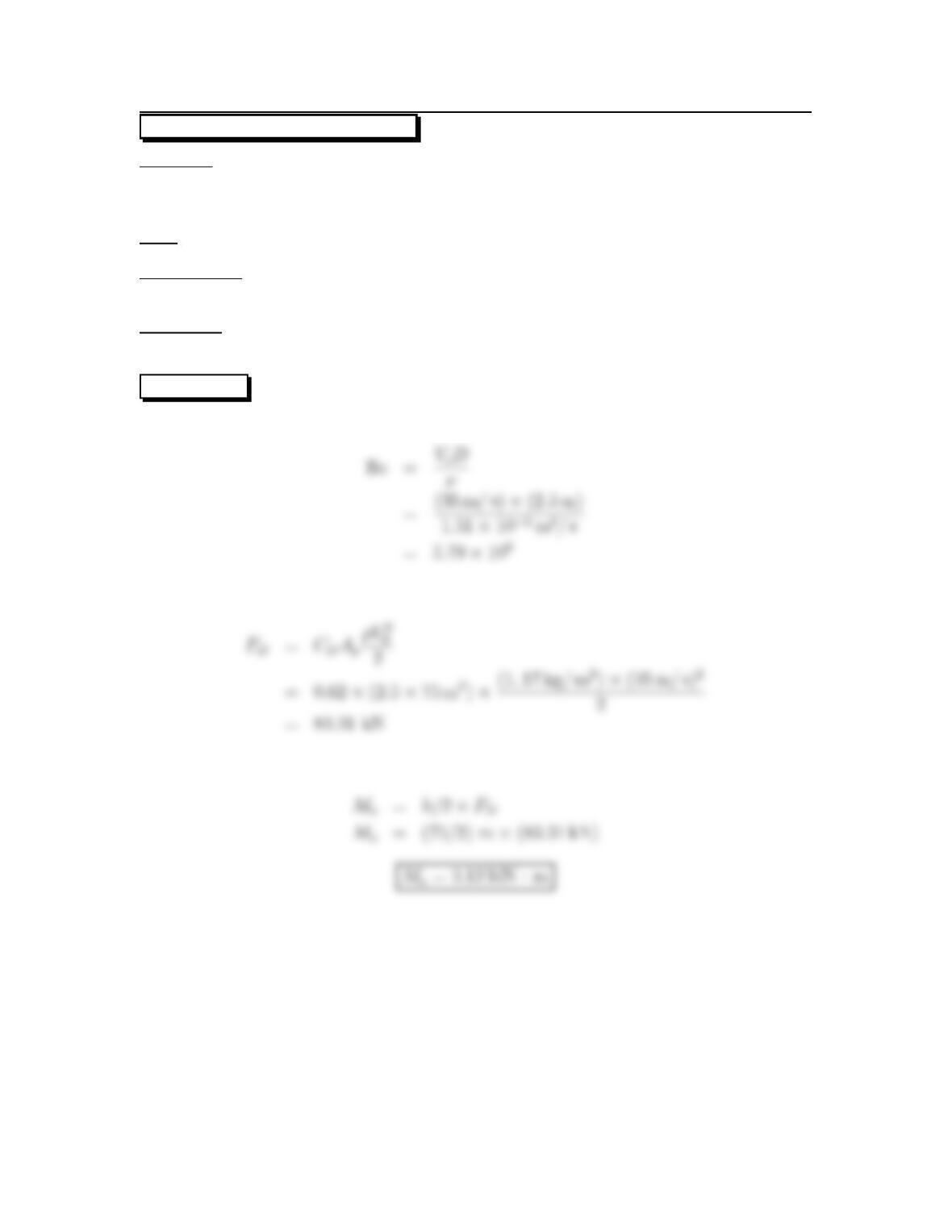
Reynolds number
Drag force. From Fig. 11.5 (EFM 10e) CD≈0.62 so
Overturning moment
23
11.21: PROBLEM DEFINITION
V=37.5m/s.
H=20m,D=0.08 m
Find: Moment at bottom of flag pole.
Properties:Air(20 ◦C), Table A.3 (EFM 10e), ρ=1.2kg/m3,ν =15.1×10⁻⁶m2/s.
SOLUTION
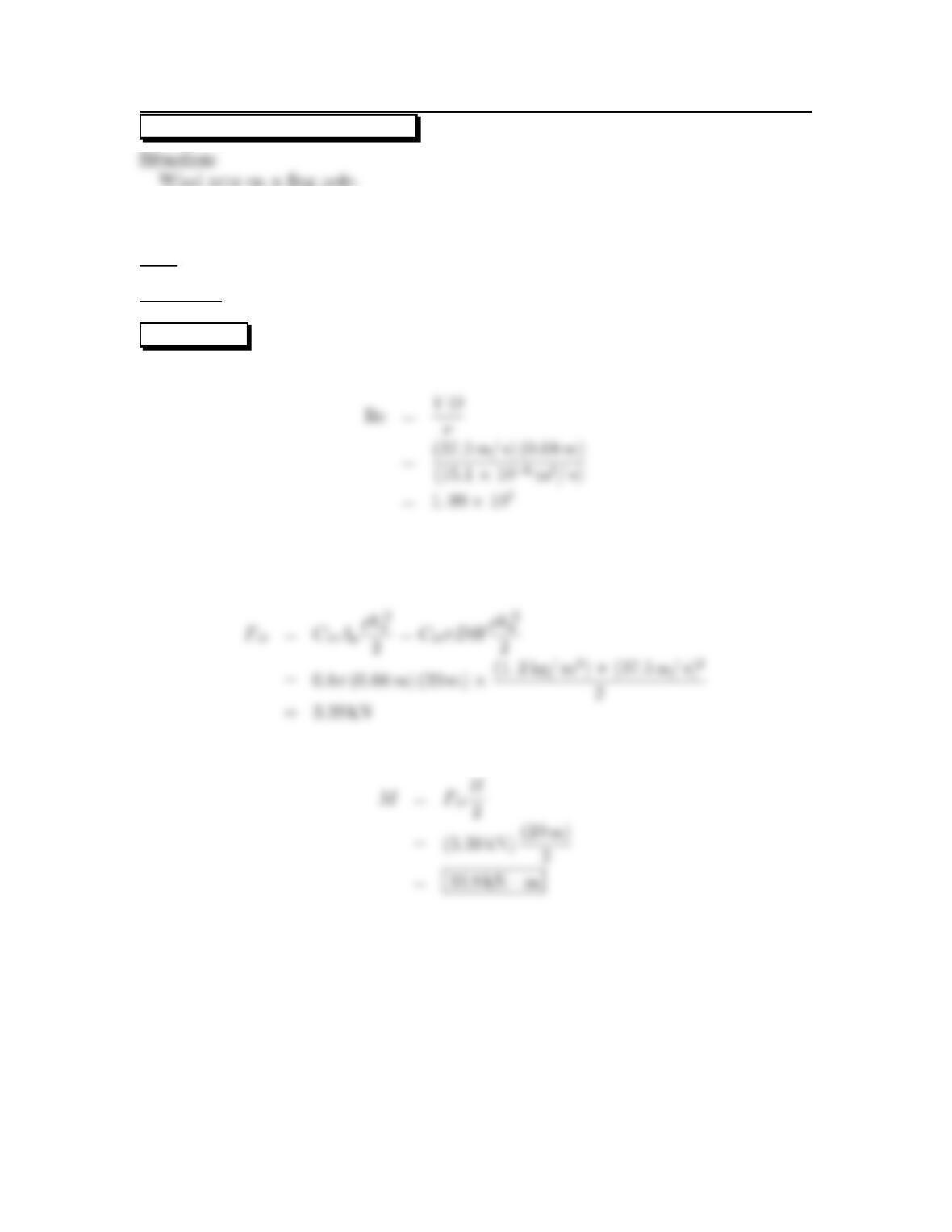
1. Reynolds number
2. From Fig. 11.5 (EFM10e), CD=0.8.
3. Drag Force
4. Moment
24
11.22: PROBLEM DEFINITION
Situation:
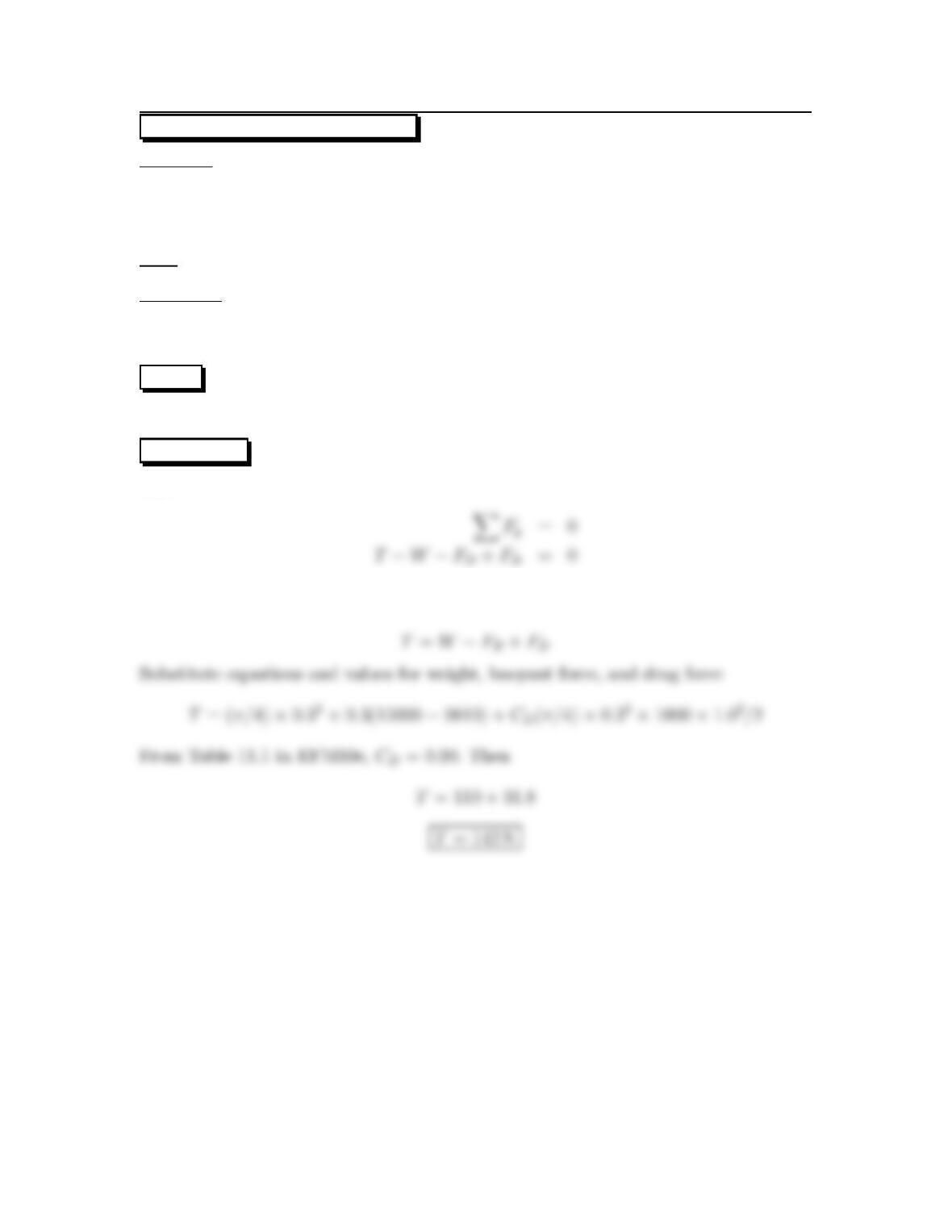
A man in a boat is pulling up an anchor made of concrete.
V=1m/s
D=0.3m,L=0.3m
Find: Tension in rope (in newtons).
Properties:
Water (10 ◦C), Table A.5 (EFM 10e), γ=9.81 kN/m3.
Concrete, γ=15kN/m3.
PLAN
Apply equilibrium. The forces are tension, weight, drag force and buoyancy force.
SOLUTION
Equilibrium
Solve for T
25
11.23: PROBLEM DEFINITION
m=2.6×10³kg,D=.038 m.
T=18◦C=291.2K.
s/m2.
Assumptions: Assume the ping-pong ball is stationary (stable equilibrium).
PLAN
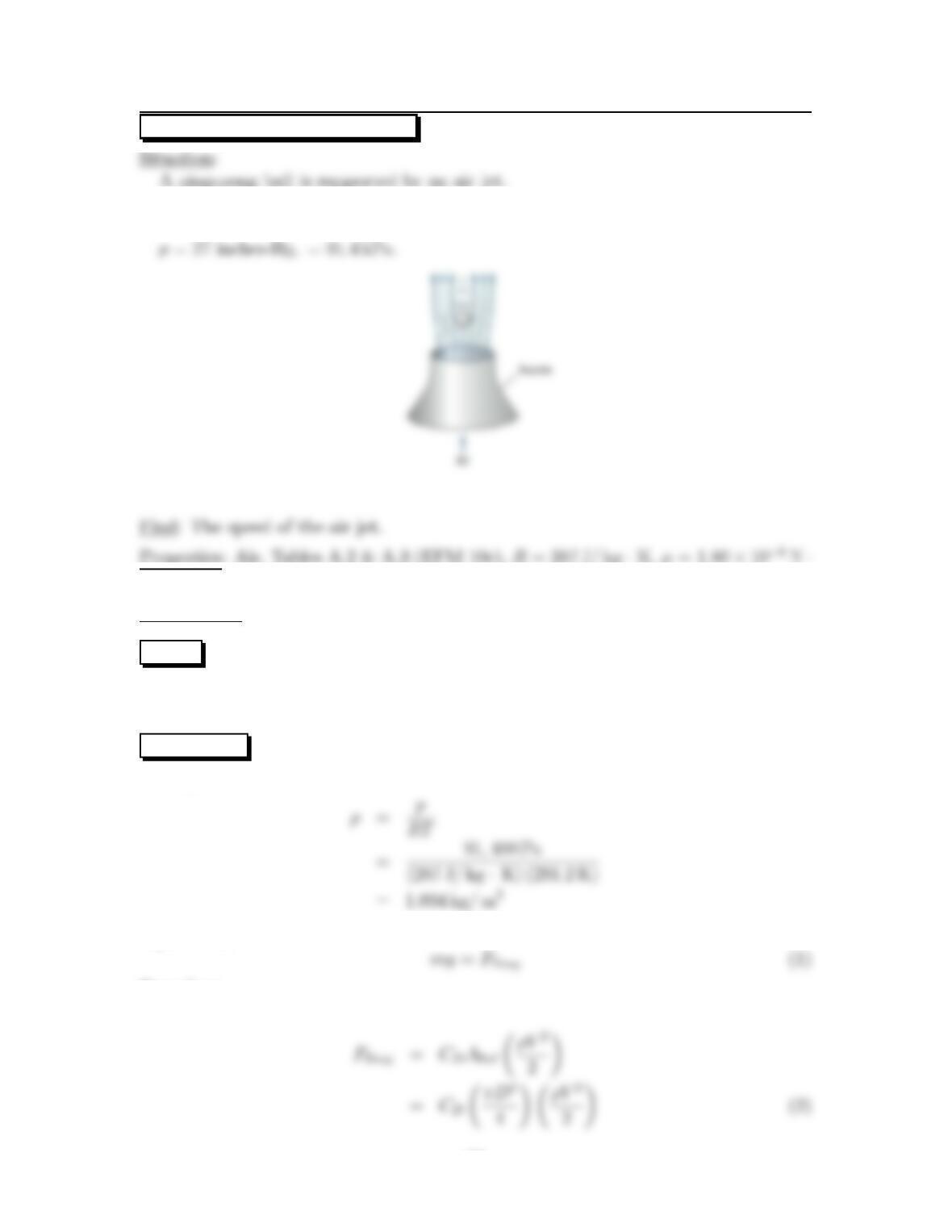
Find density of the air jet. Then, to find V, balance the weight of the ball with the
drag force. Solve the resulting set of equations using a computer program.
SOLUTION
Ideal gas law
Equilibrium
Drag force
26
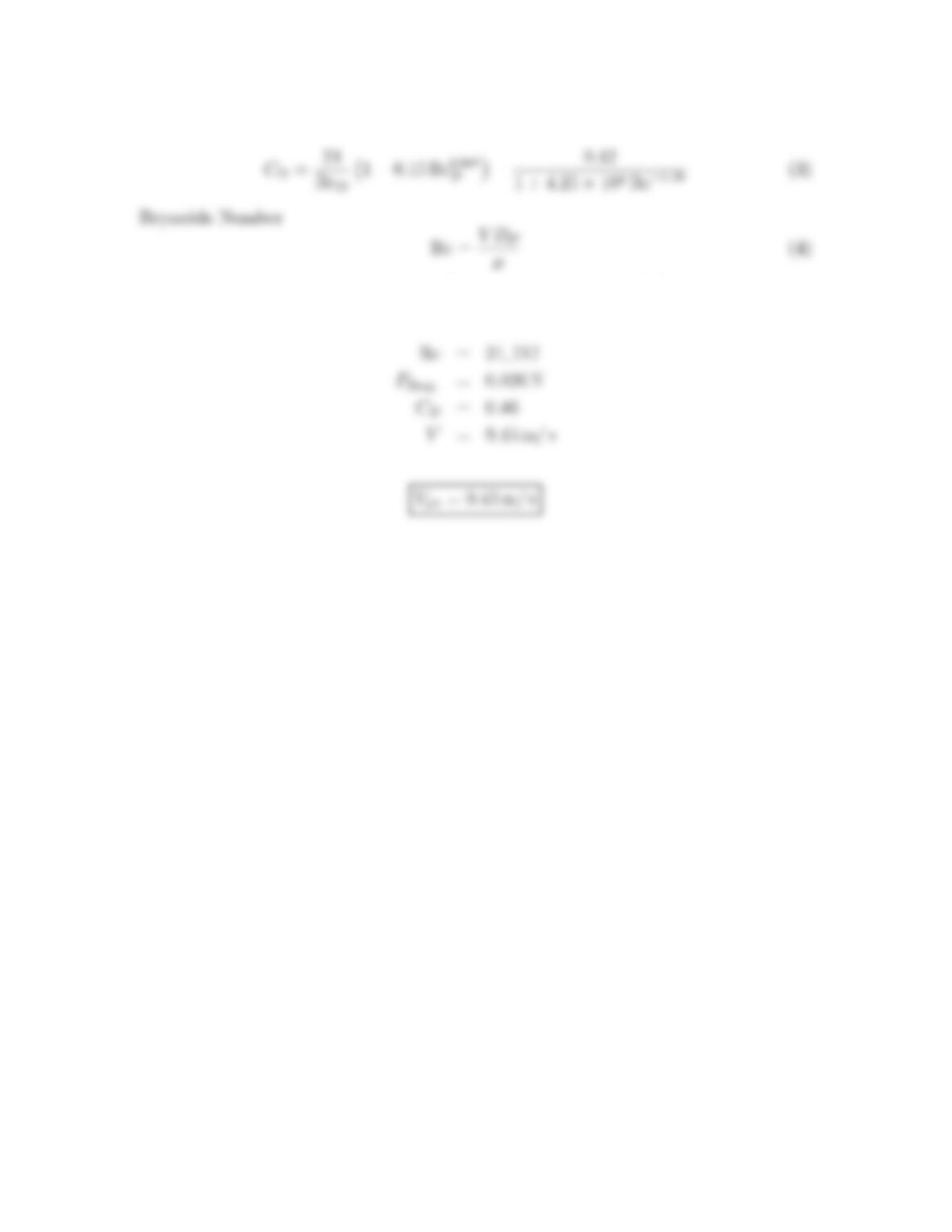
Cliffand Gauvin correlation (drag on a sphere)
Solve Eqs. (1) to (4) simultaneously. The computer program TKSolver was used for
our solution.
27
11.24: PROBLEM DEFINITION
Situation:
Wind (V=35m/s)is acting on a sign post 3m×2m.
Center of the sign is 4m above the ground.
Find: Moment at ground level.
Assumptions: Neglect the drag force on the sign post.
Properties:Air(10 ◦C,1.0atm), Table A.3 (EFM 10e), ρ=1.25 kg/m3.
SOLUTION
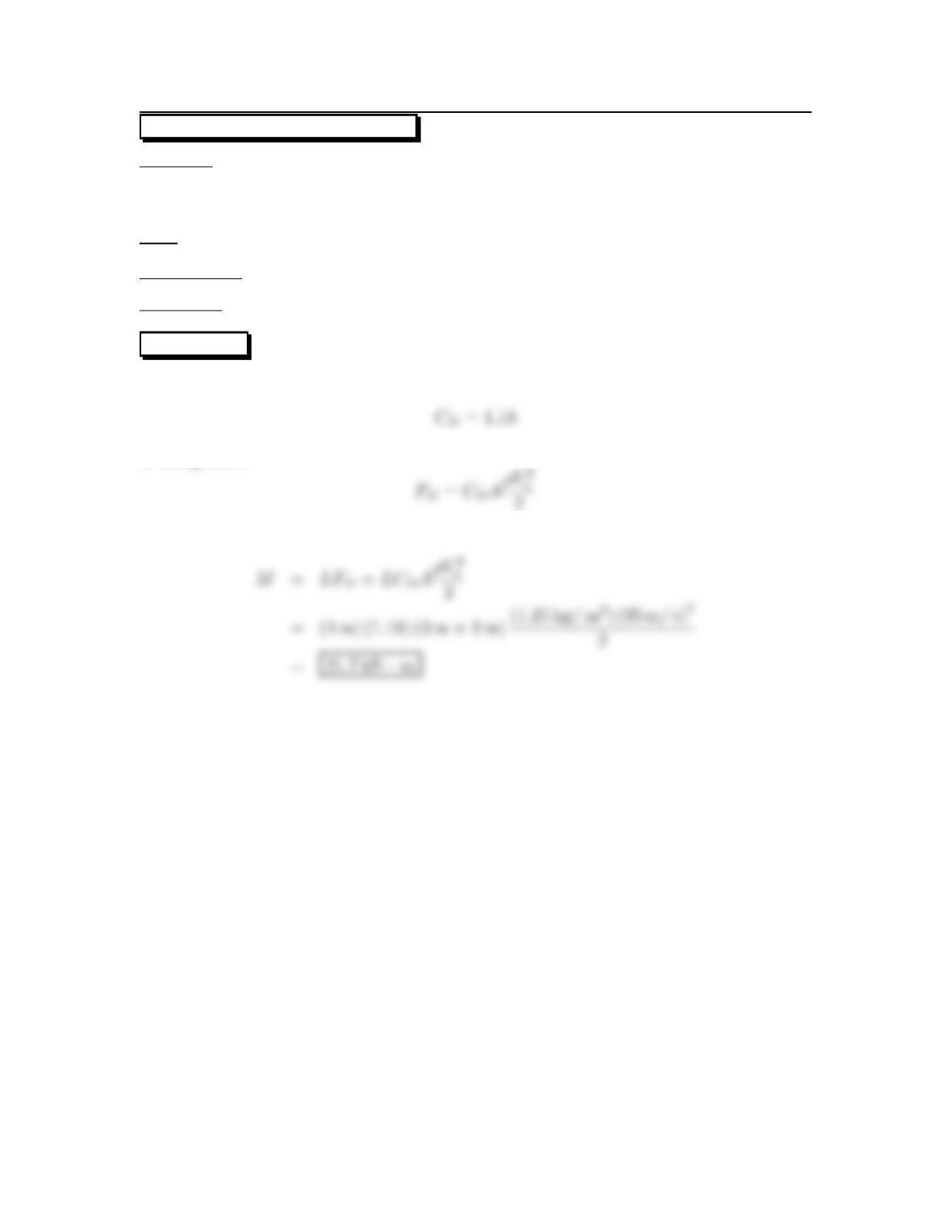
1. Coefficient of drag (from Table 11.1 in EFM 10e).
2. Drag force.
3. Moment at the base of the sign.
28
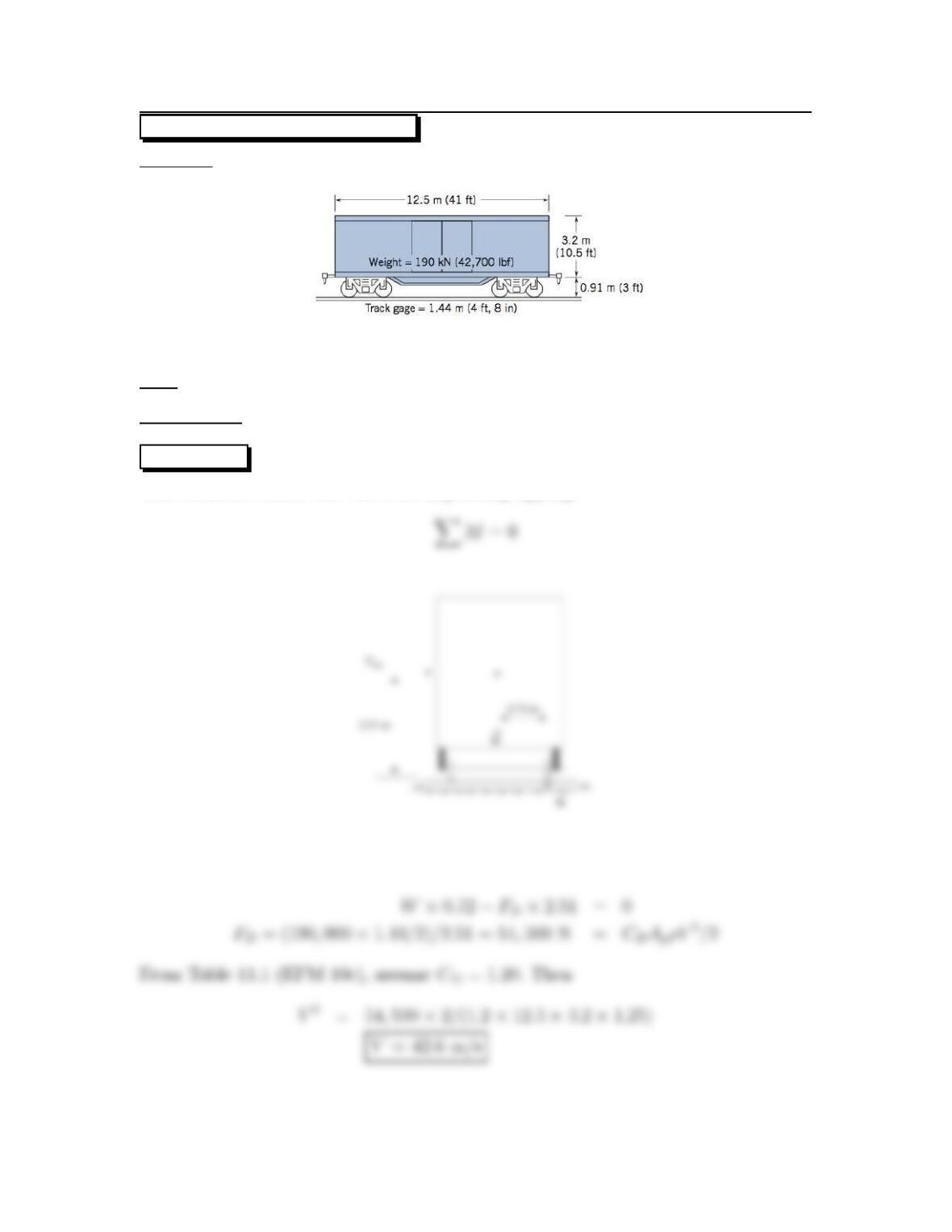
11.25: PROBLEM DEFINITION
Situation: Wind is blowing normal to a boxcar.
Find: Speed of wind required to blow boxcar over.
Assumptions:T=10
◦C;ρ=1.25 kg/m3.
SOLUTION
Take moments about one wheel for impending tipping.
29
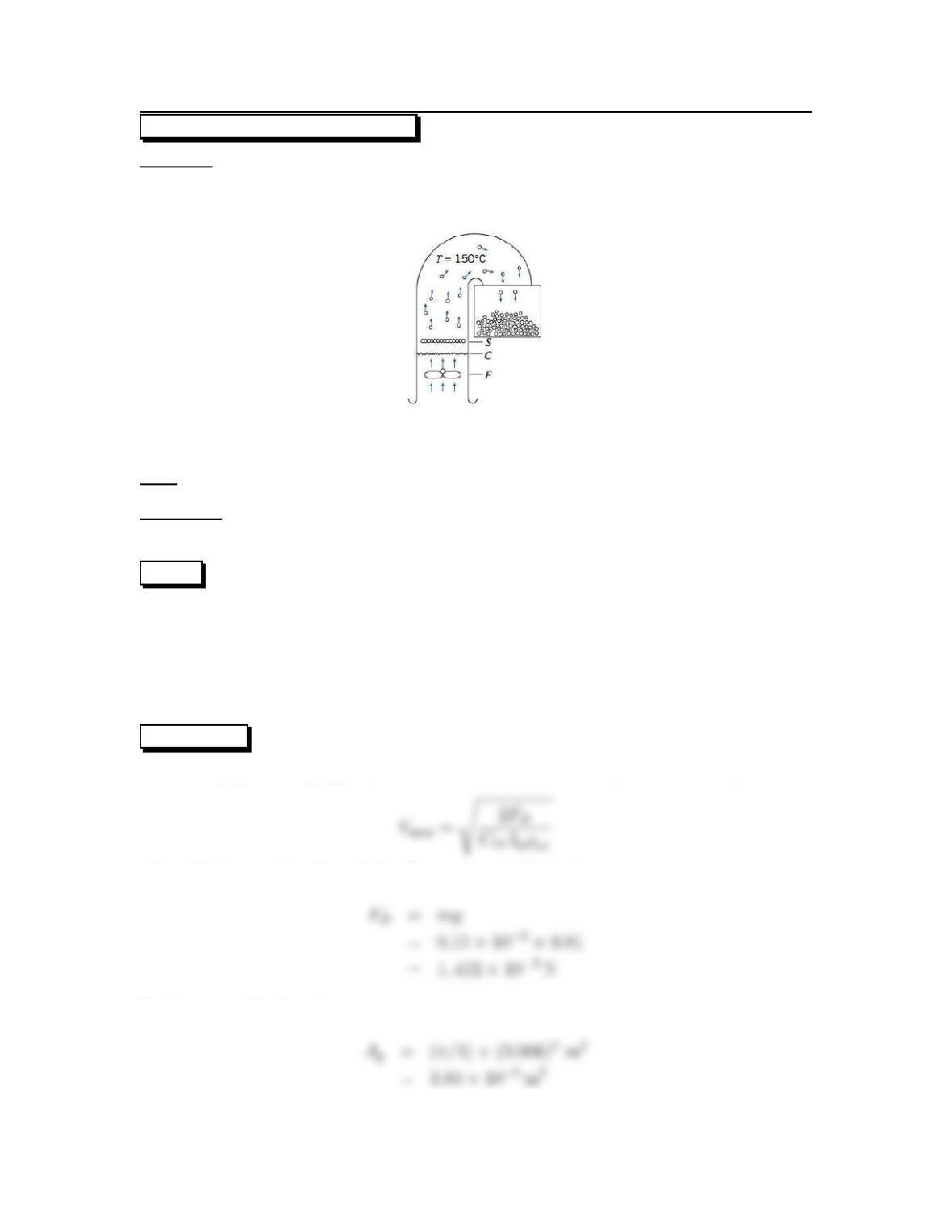
11.26: PROBLEM DEFINITION
Situation:
Air speed is being determined in a popcorn popper.
Additional information is provided in problem statement.
Find: Range of airspeeds for popcorn popper operation.
Properties: Air, Table A.3 (EFM 10e), 150oC, ρ=0.83 kg/m3and ν=2.8×10⁻⁵
m2/s.
PLAN
This device should lift popped kernels while leaving unpopped kernels on the screen.
1. Find the maximum air speed by equating the drag force on an unpopped kernel
its weight.
2. Find the minimum air speed by equating the drag force on a popped kernel with
its weight.
SOLUTION
1. Before popcorn is popped, it should not be thrown out by the air. Thus, let
where FDis equal to the weight of an unpopped kernel.
Section area of a kernel
30
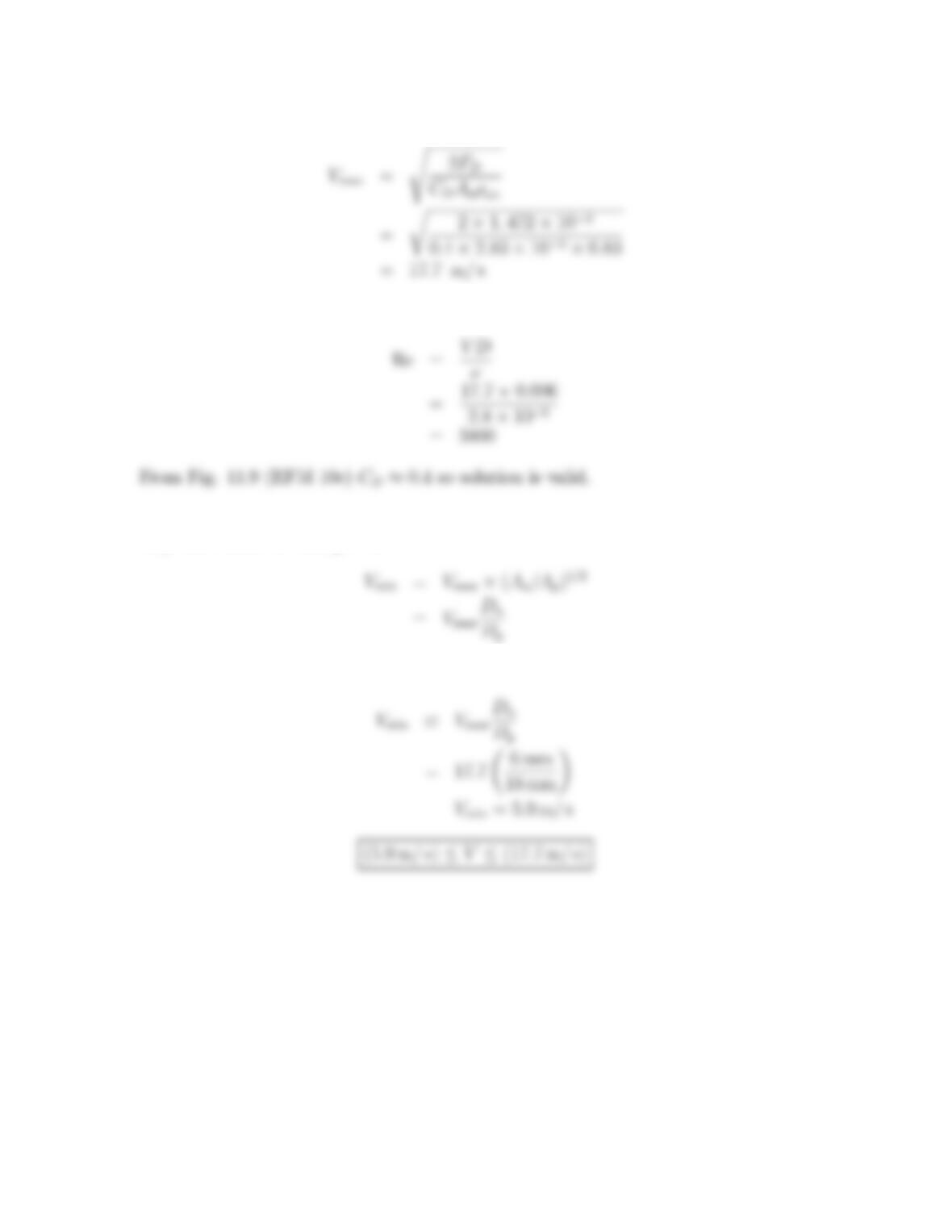
Assume CDw0.4.Then
Check Reynolds number and CD:
2. For minimum velocity let popped corn be suspended by stream of air. Assume
only that diameter changes. So
where Dp=diameter of popped corn and Du=diameter of unpopped corn
31
11.27: PROBLEM DEFINITION
Situation: Wind loads act on a flag pole that is carrying an 6 ft high American Flag.
Find: Determine a diameter for the pole.
Assumptions: The failure mechanism is yielding due to static loading.
SOLUTION
An American flag is 1.9 times as long as it is high. Thus
Assume
Compute drag force on flag
Make the flag pole of steel using one size for the top half and a larger size for the
bottom half. To start the determination of dfor the top half, assume that the pipe
diameter is 6 in. Then
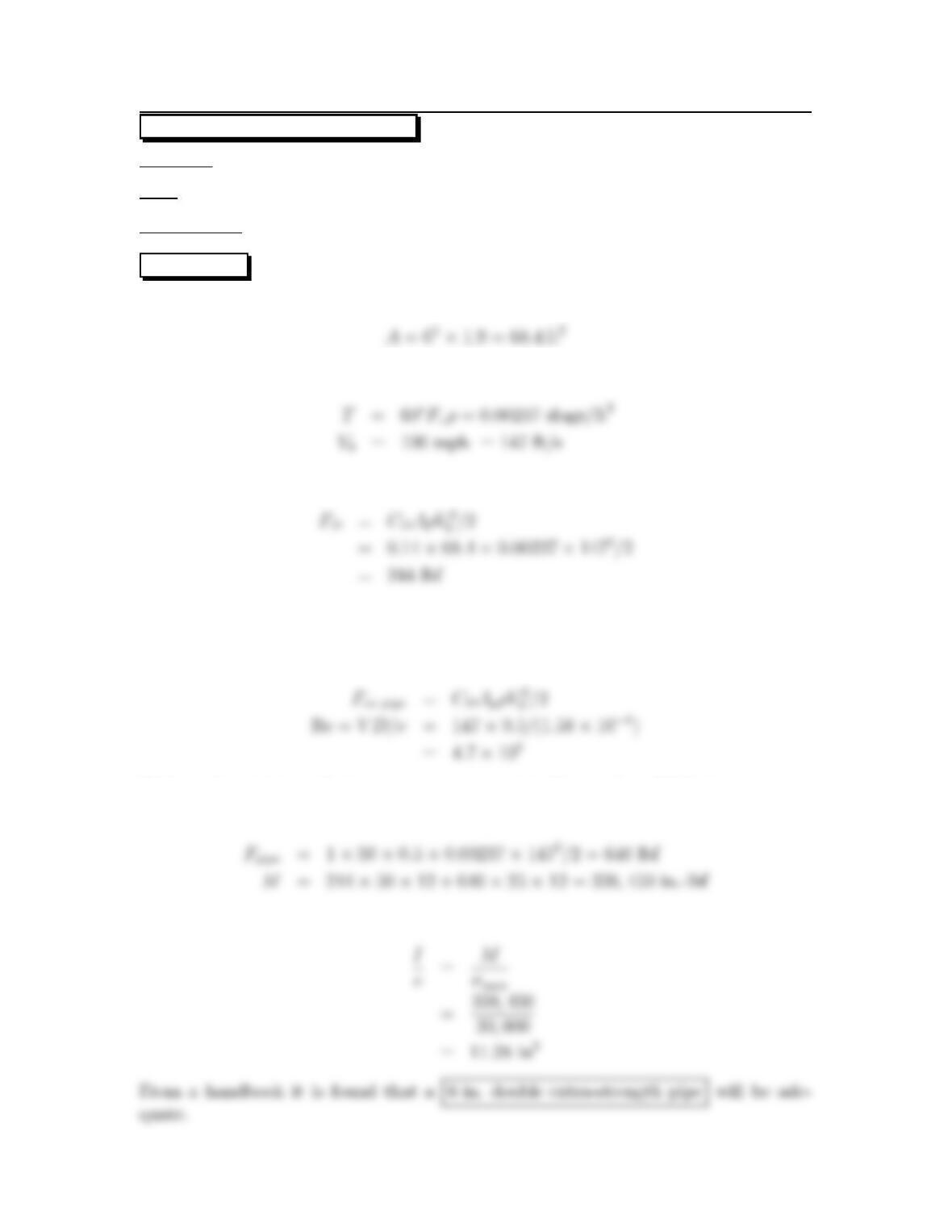
With an Re of 4.7×10⁵,C
Dmay be as low as 0.3 (Fig. 11.5 in EFM 10e); however,
for conservative design purposes, assume CD=1.0.Then
Assume that the allowable stress is 30,000 psi.
32
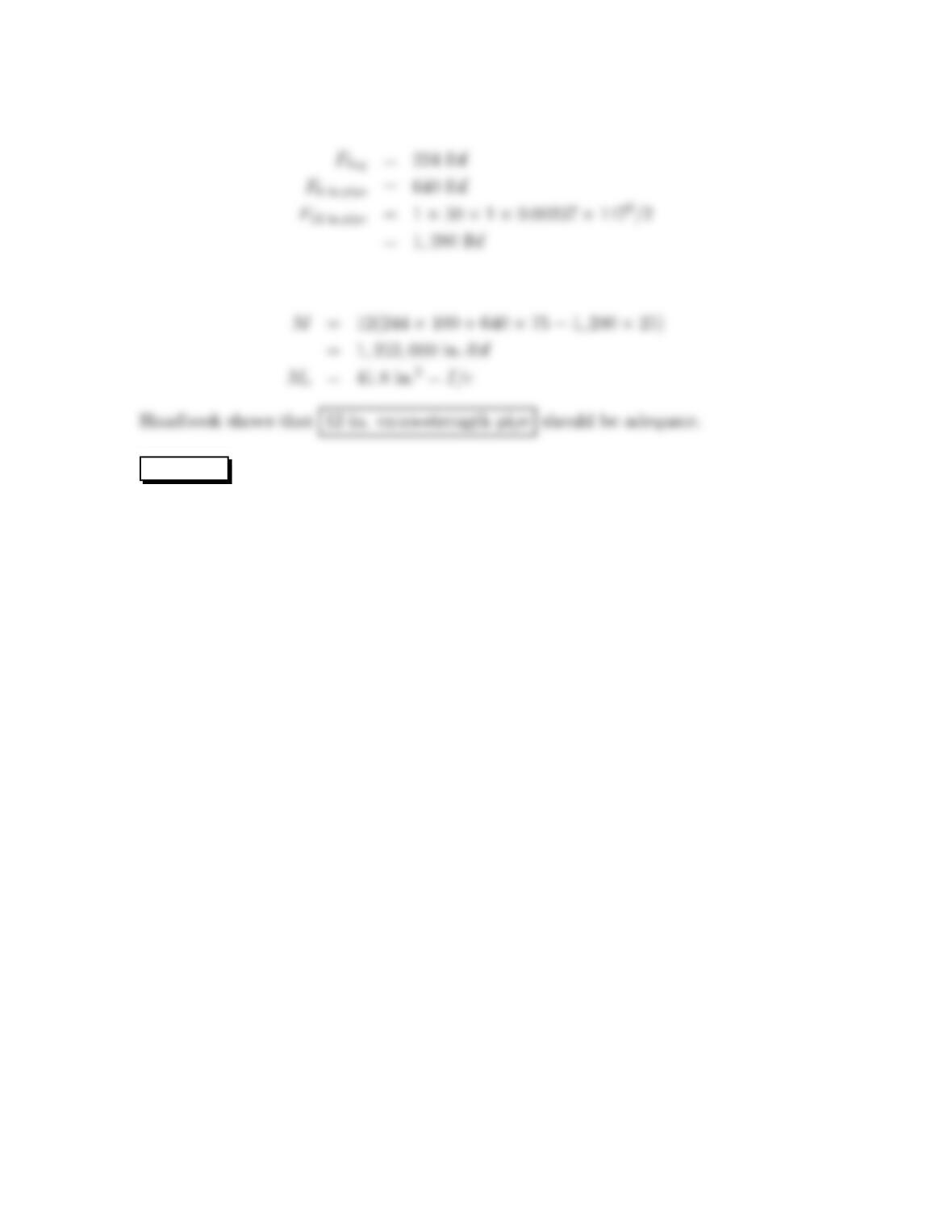
Bottom half, Assume bottom pipe will be 12 in. in diameter.
REVIEW
Many other designs are possible.
33
11.28: PROBLEM DEFINITION
Situation:
Aspherical(D=1.5m) submarineismovingthroughseawater.
V=10knots =11.5mph =5.14 m/s.
Find: Power (in kW) to propel the sub.
Assumptions: All power is being used to overcome drag.
Properties:Seawater(10 ◦C), Table A.4 (EFM 10e), ρ=1026kg/m3,ν=1.4×
10−6m2/s.
PLAN
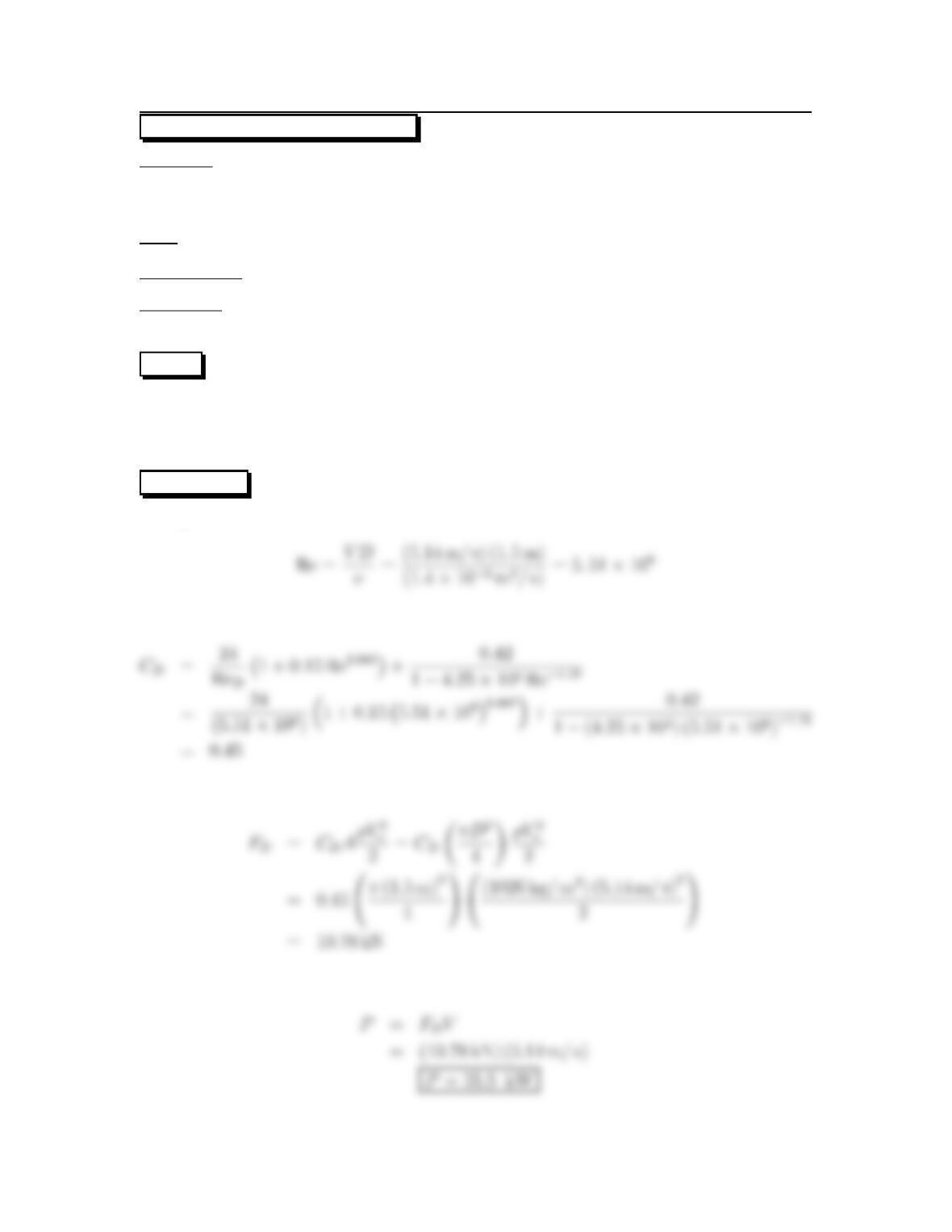
1. Find Re, then find CDusing the Clift & Gauvin correlation.
2. Find the drag force.
3. Find power using P=FDV.
SOLUTION
1. Reynolds Number
Clift and Gauvin correlation (drag on a sphere):
2. Drag Force (use projected area as reference area).
3. Power equation.
34
11.29: PROBLEM DEFINITION
Situation:
The problem statement describes a dirigible.
V0=30ft/s
d=80ft
Find:
Power required for dirigible.
SOLUTION
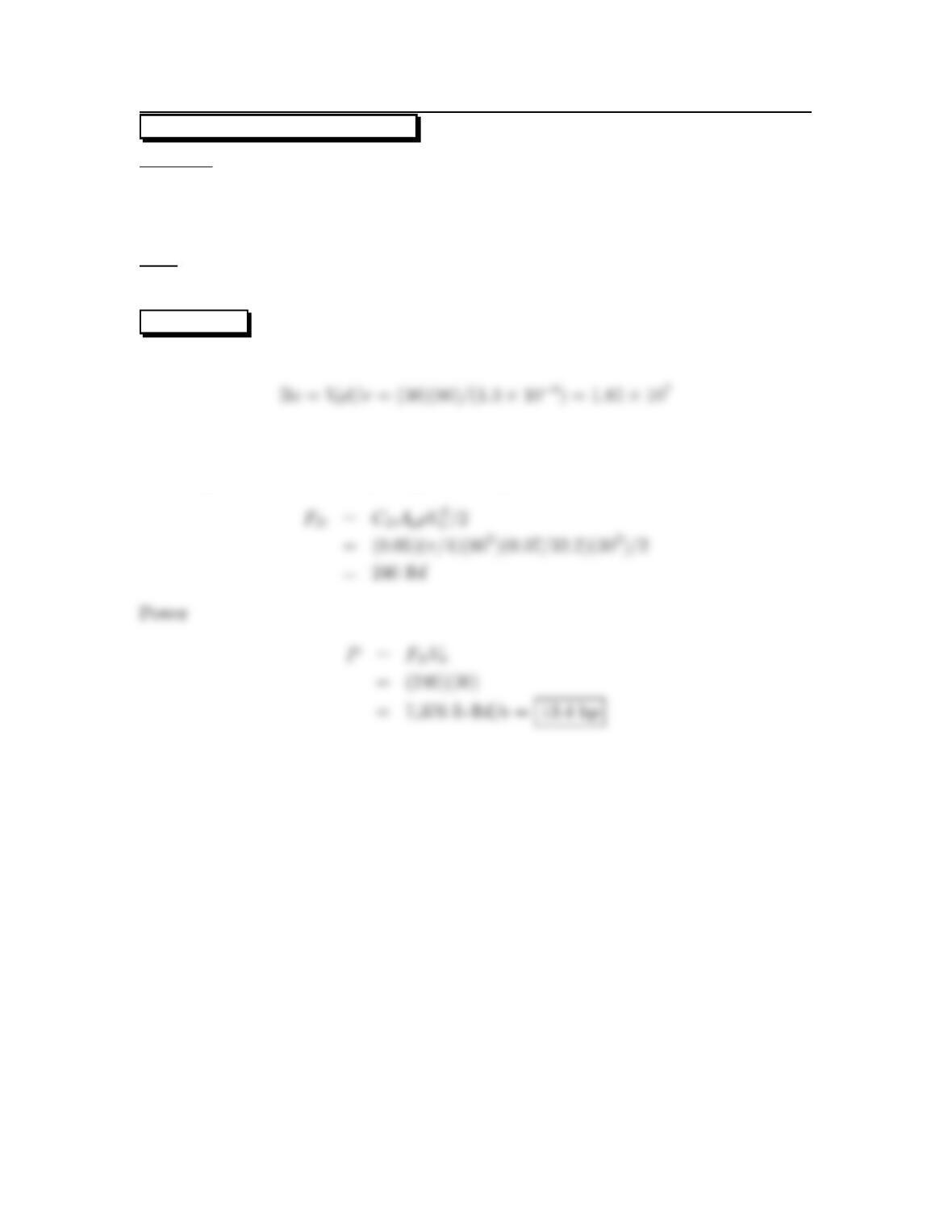
Reynolds number
Drag force
From Fig. 11.9 in EFM 10e (extrapolated) CD=0.05
35
11.30: PROBLEM DEFINITION
Situation:
•A runner is competing in a 10 km race.
Find: Estimate the energy in joules and kcal (food calories) that the runner needs to
supply to overcome aerodynamic drag.
Properties: Density of air is 1.22 kg/m3.
Assumptions: Assume that the air is still—that is, there is no wind.
PLAN
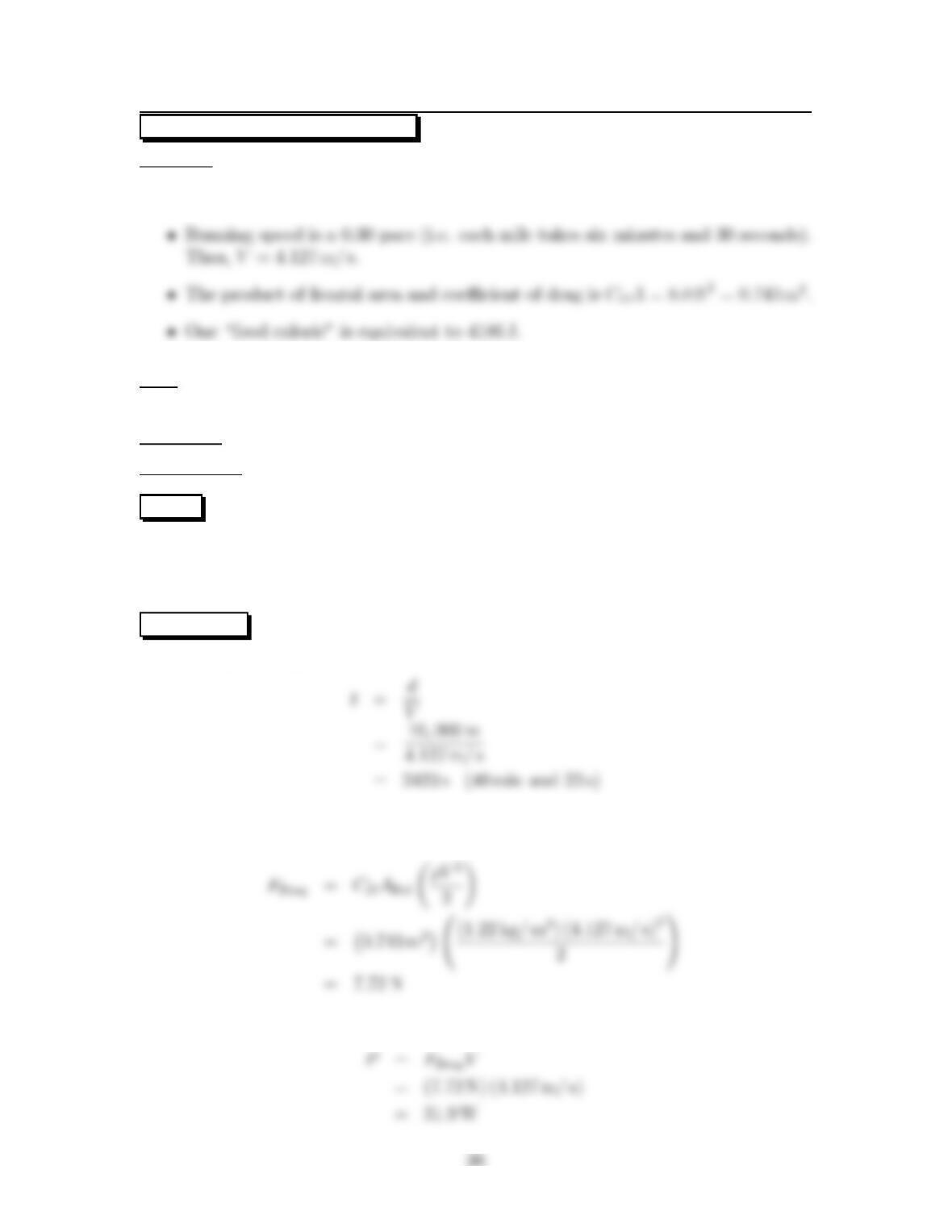
Energy is related to power (P)and time (t)by E=Pt. Find power using the
product of speed and drag force (P=VF
Drag).Find time by using distance (d)and
speed (d=Vt).
SOLUTION
Find the time to run 10 km.
Drag force
Power
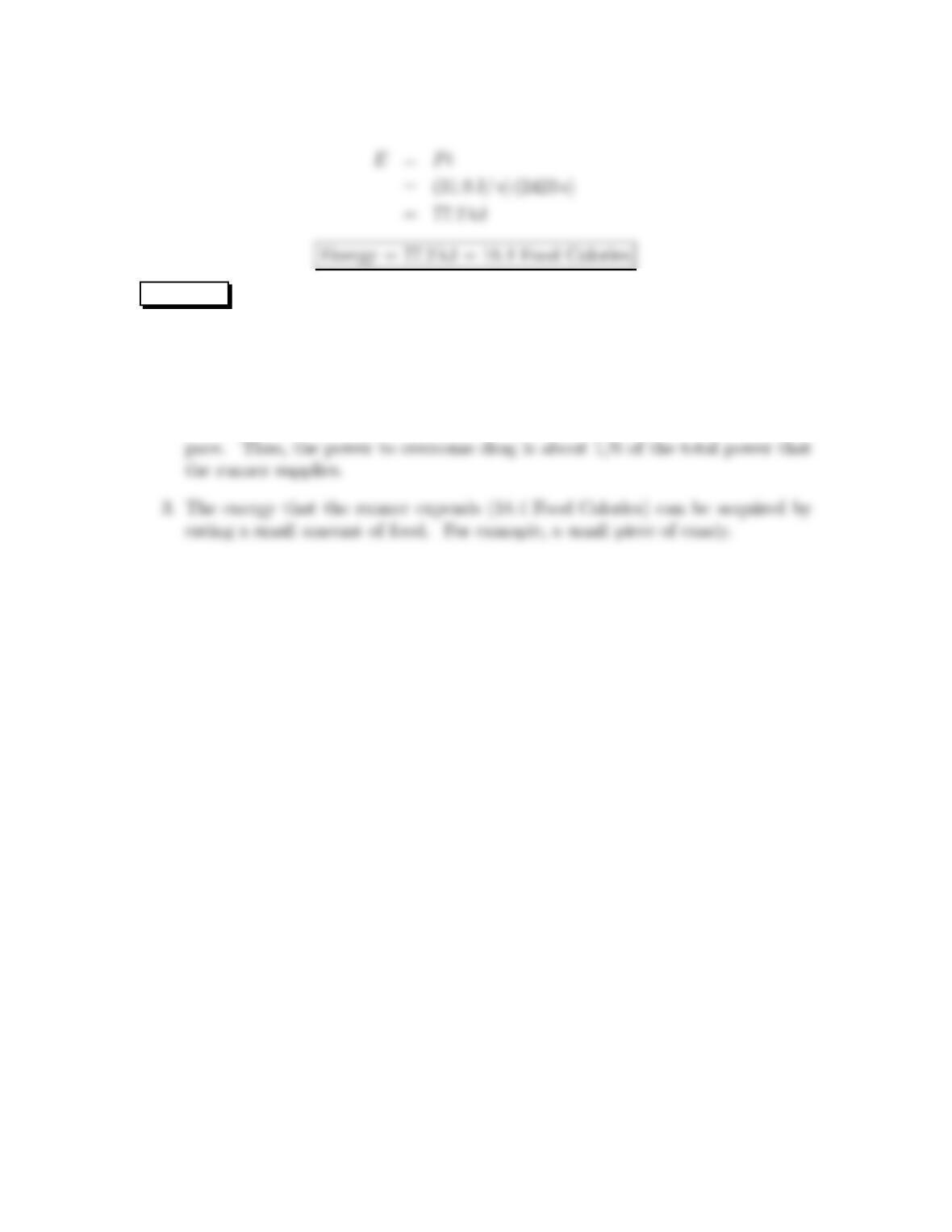
Energy
REVIEW
1. The drag force (7.72 N) is small, about 1.7lbf.
2. The power to overcome drag is small (31.9W).Based on one of the author’s
(DFE)experienceinsports,afit runner might supply 180 W to run at a 6:30
37
11.31: PROBLEM DEFINITION
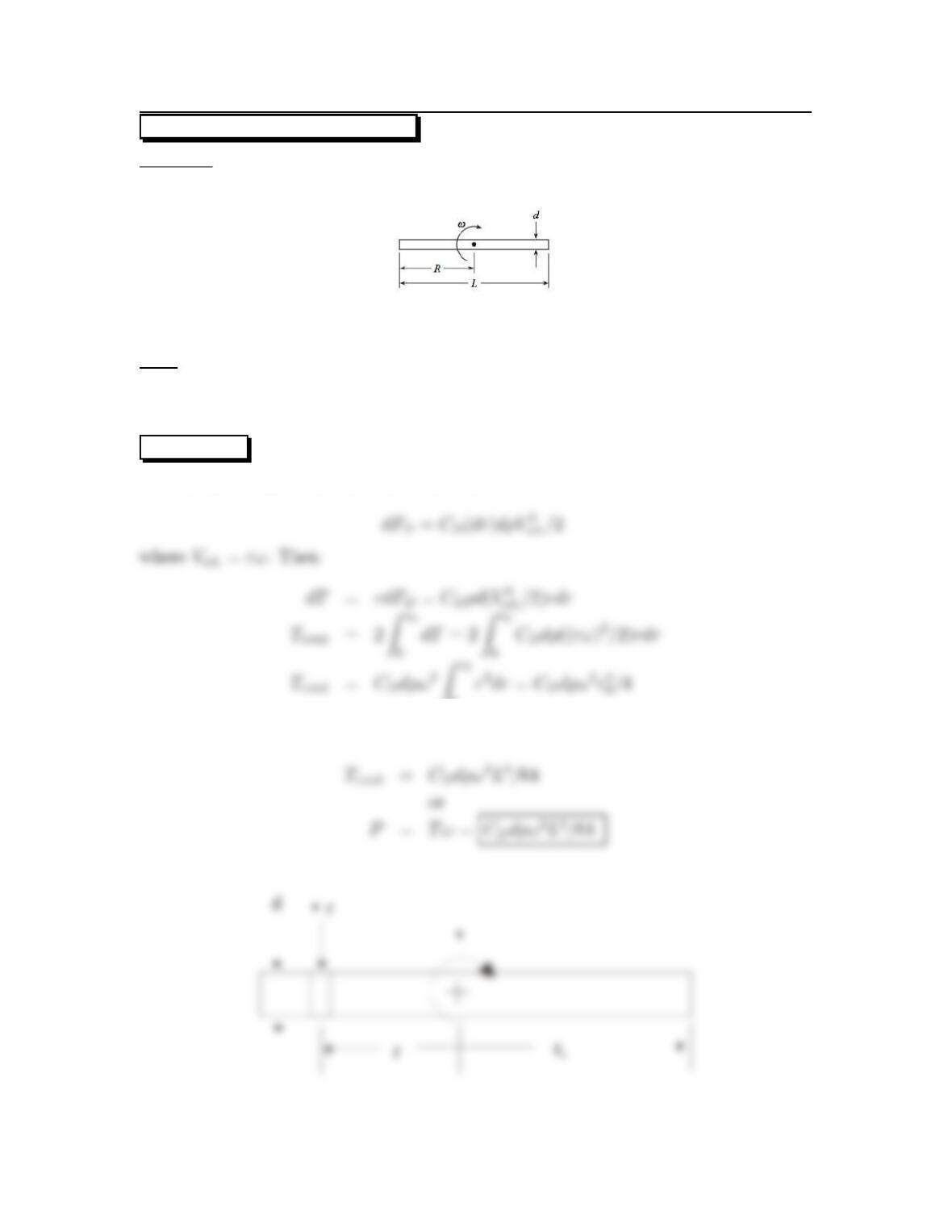
Situation: A cylindrical rod is rotated about its midpoint–additional details are pro-
vided in the problem statement.
Find:
a) Derive an equation for the power to rotate rod.
b) Calculate the power.
SOLUTION
For an infinitesimal element, dr, of the rod
0
but r0=L/2so
38

Then for the given conditions:
39
11.32: PROBLEM DEFINITION
Situation:
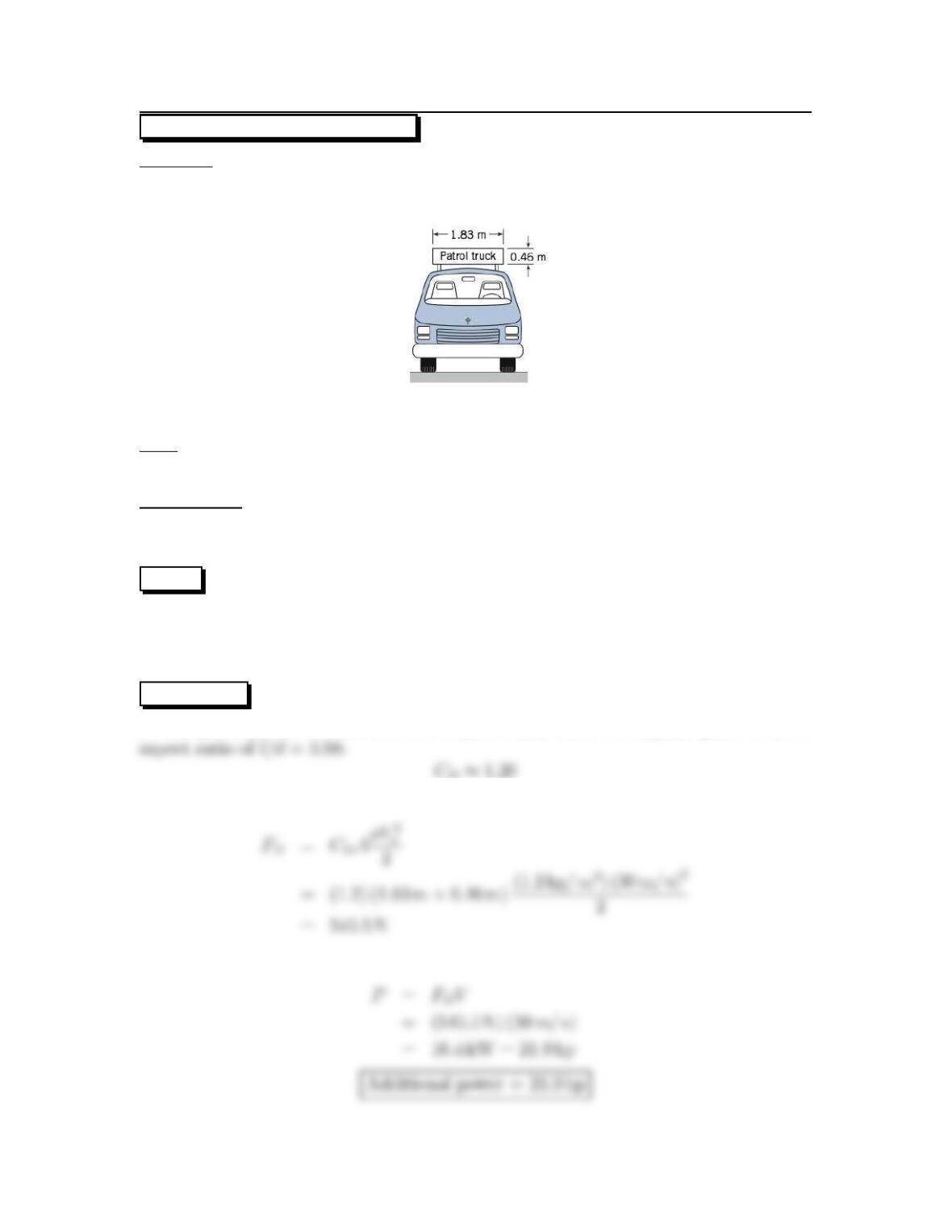
A truck carries a rectangular sign.
V=30m/s.
Find: Additional power required to carry the sign (as compared to not carrying the
sign).
Assumptions:
Density of air is ρ=1.2kg/m3.
The coefficient of drag is not influenced by the airflow over the truck.
PLAN
1. Find CD.
2. Find the force of drag.
3. Calculate power as the product of drag force and speed.
SOLUTION
1. Drag coefficient. From Table 11.1 (EFM 10e) for a rectangular plate with an
2. Drag force equation.
3. Power equation.
40