11.64: PROBLEM DEFINITION
Situation:
An airplane wing has a chord of 3.5 ft. Air speed is Vo=200ft/s.
Theliftis1800lbf. Theangleofattackis3
o.
The coefficientofliftisspecified by the data on Fig. 11.24 in EFM10e.
Find: The span of the wing.
Properties: Density of air is 0.0024 slug/ft3.
PLAN
Guess an aspect ratio, look up a coefficient of lift and then calculate the span. Then,
iterate to find the span.
SOLUTION
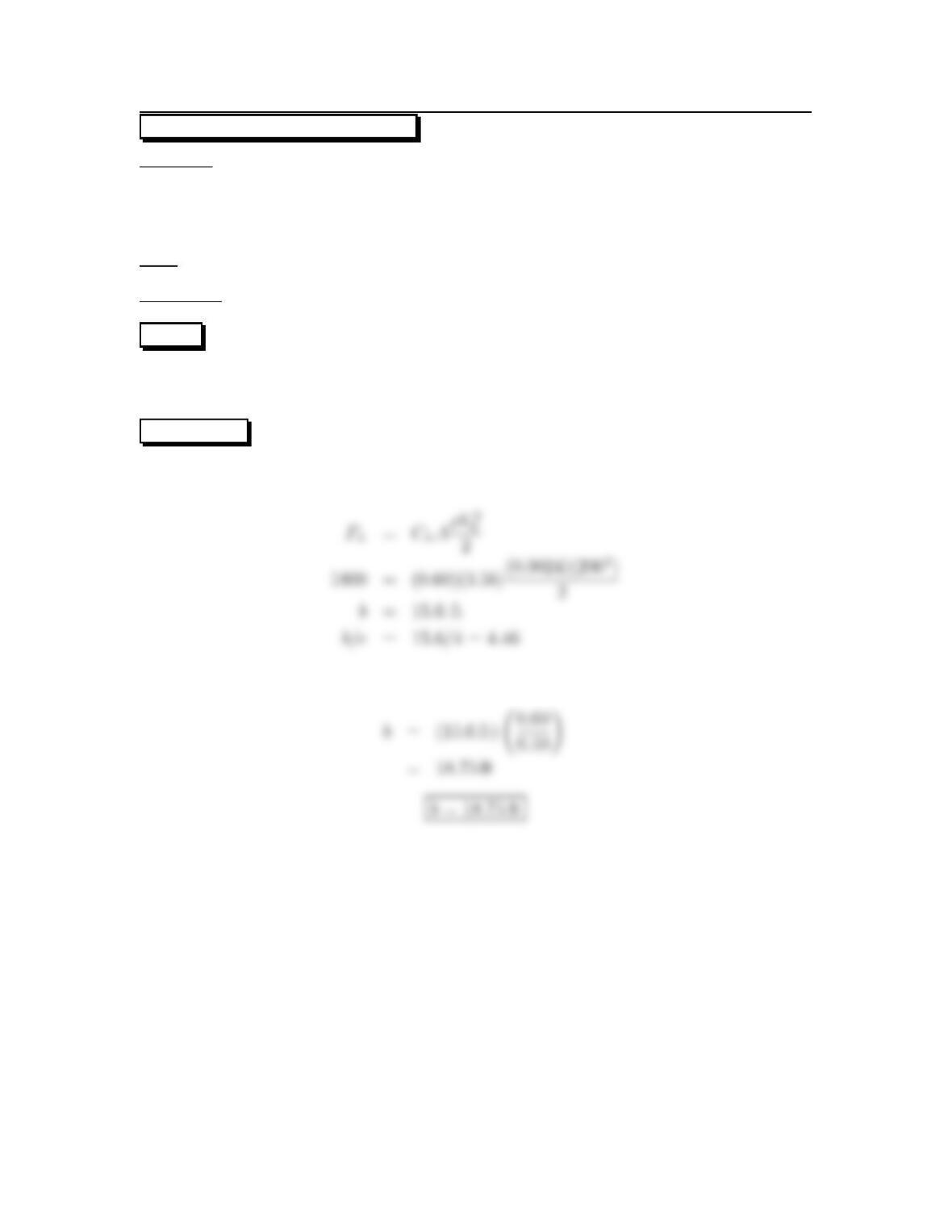
Lift force. From Fig. 11.24 (EFM10e) assume CL≈0.60.Then
From Fig. 11.24 (EFM10e), CL=0.50.Recalculate the span
78
11.65: PROBLEM DEFINITION
Situation: A lifting vane for a boat of the hydrofoil type is described in the problem
statement.
Find: Dimensions of the foil needed to support the boat.
SOLUTION
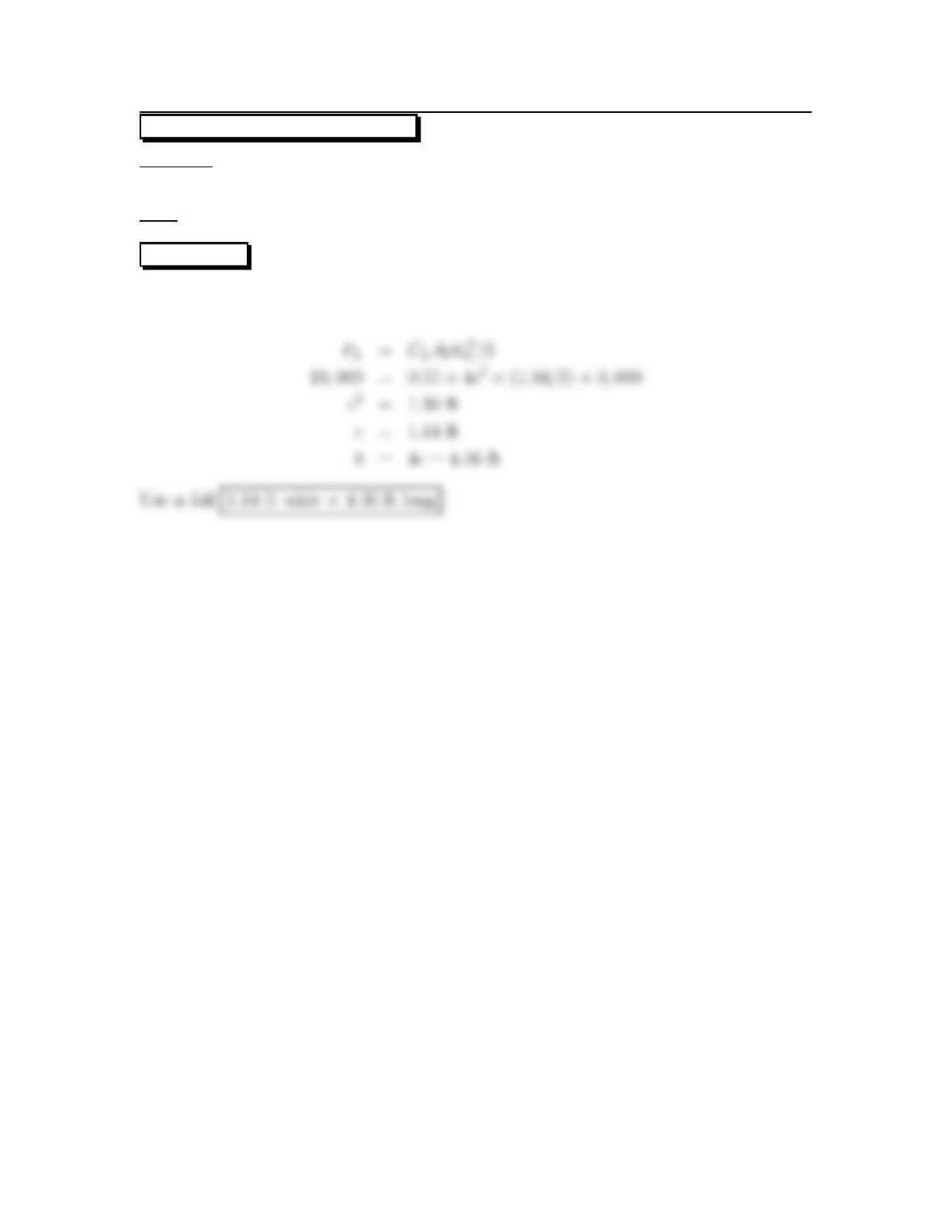
Use Fig. 11.24 (in EFM10e) for characteristics; b/c =4so CL=0.55
79
11.66: PROBLEM DEFINITION
Situation: Two wings, A and B, are described in the problem statement.
Find: Total lift of wing B compared to wing A.
SOLUTION
80
11.67: PROBLEM DEFINITION
Situation: An aircraft increases speed in level flight.
Find: What happens to the induced drag coefficient.
SOLUTION
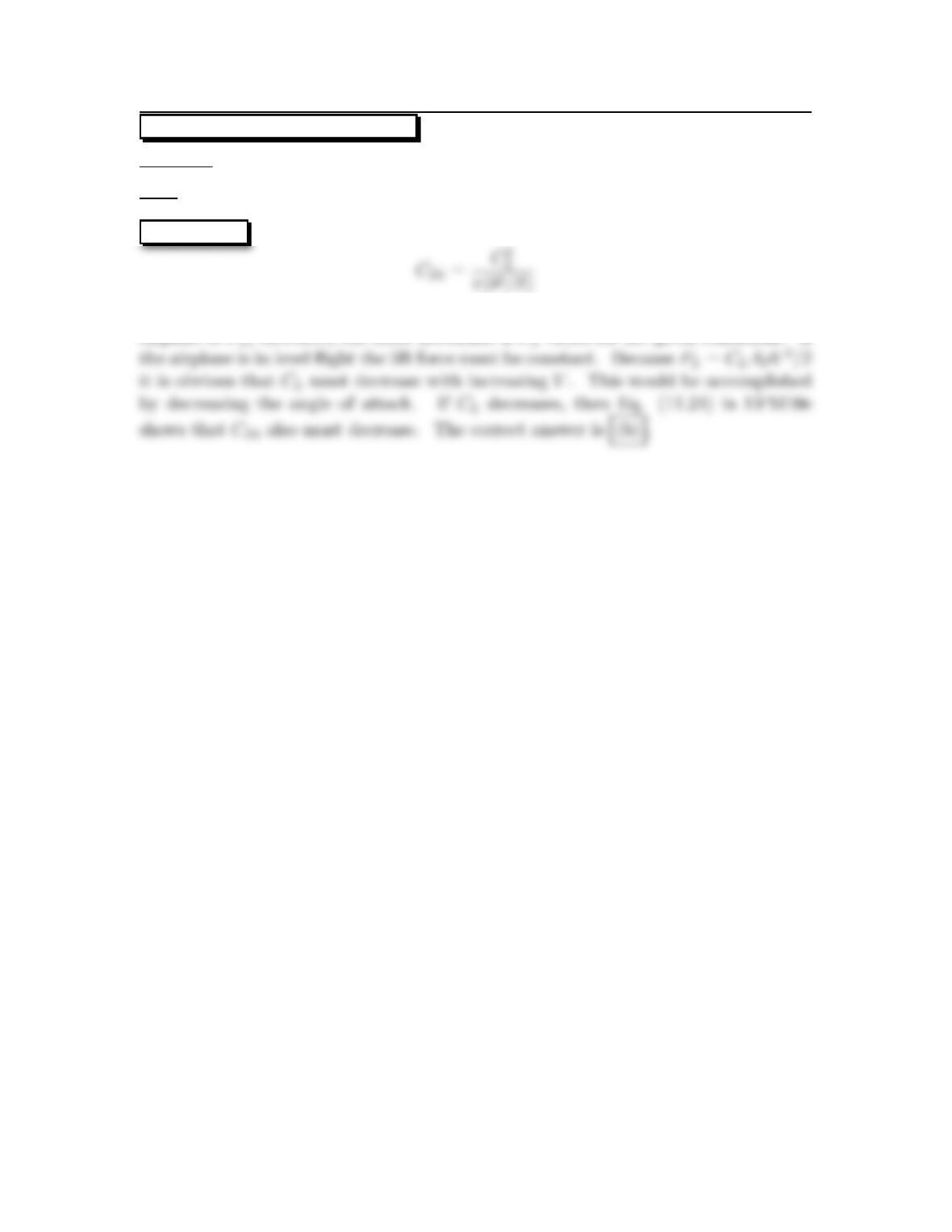
Intheequationfortheinduceddragcoefficient (above) the only variable for a given
airplane is CL; therefore, one must determine if CLvaries for the given conditions. If
81
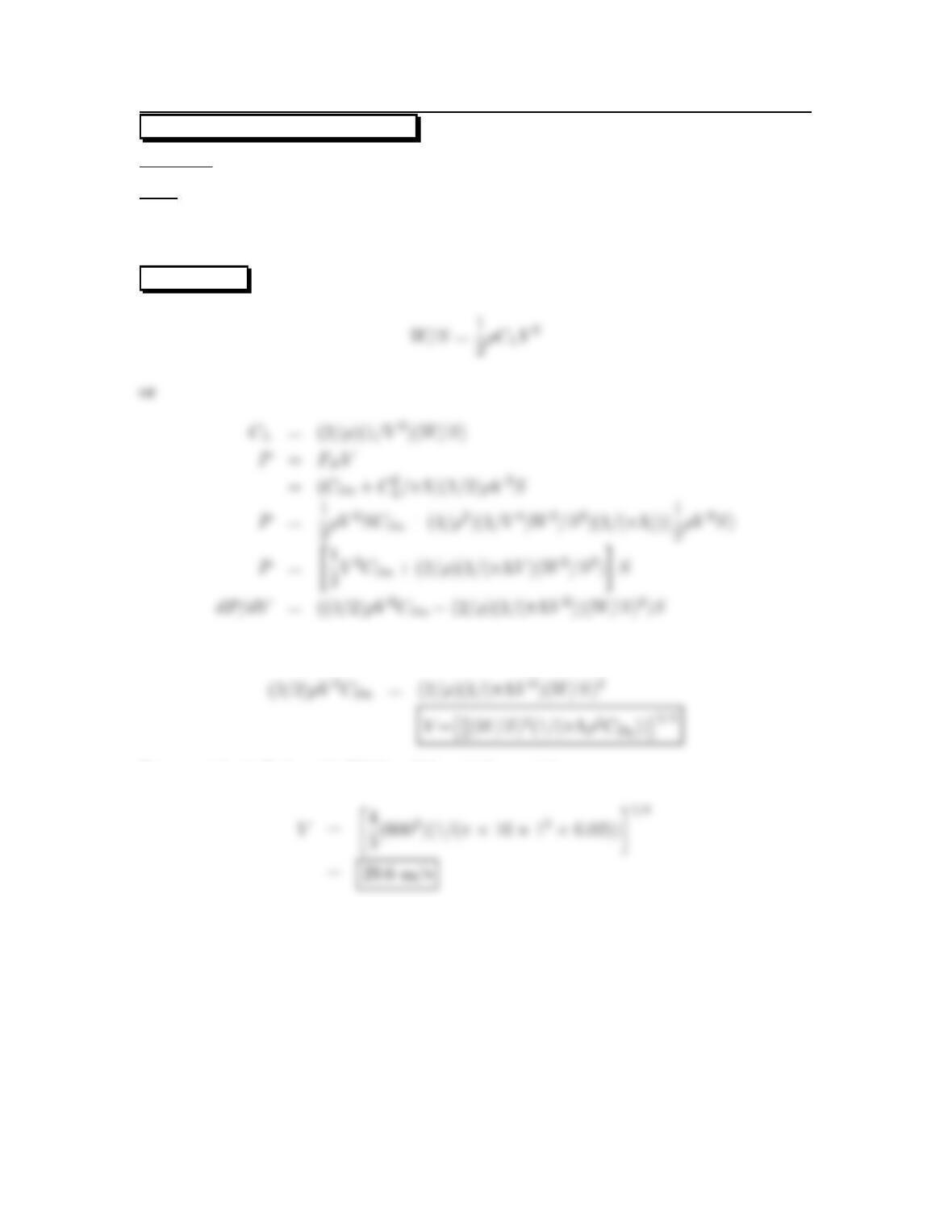
11.68: PROBLEM DEFINITION
Situation: An airplane wing is described in the problem statement.
Find:
(a) An expression for Vfor which the power is a minimum.
(b) Vfor minimum power
SOLUTION
For minimum power dP/dV =0so
For ρ=1kg/m3,Λ=10,W/S=600and CDo =0.2
82
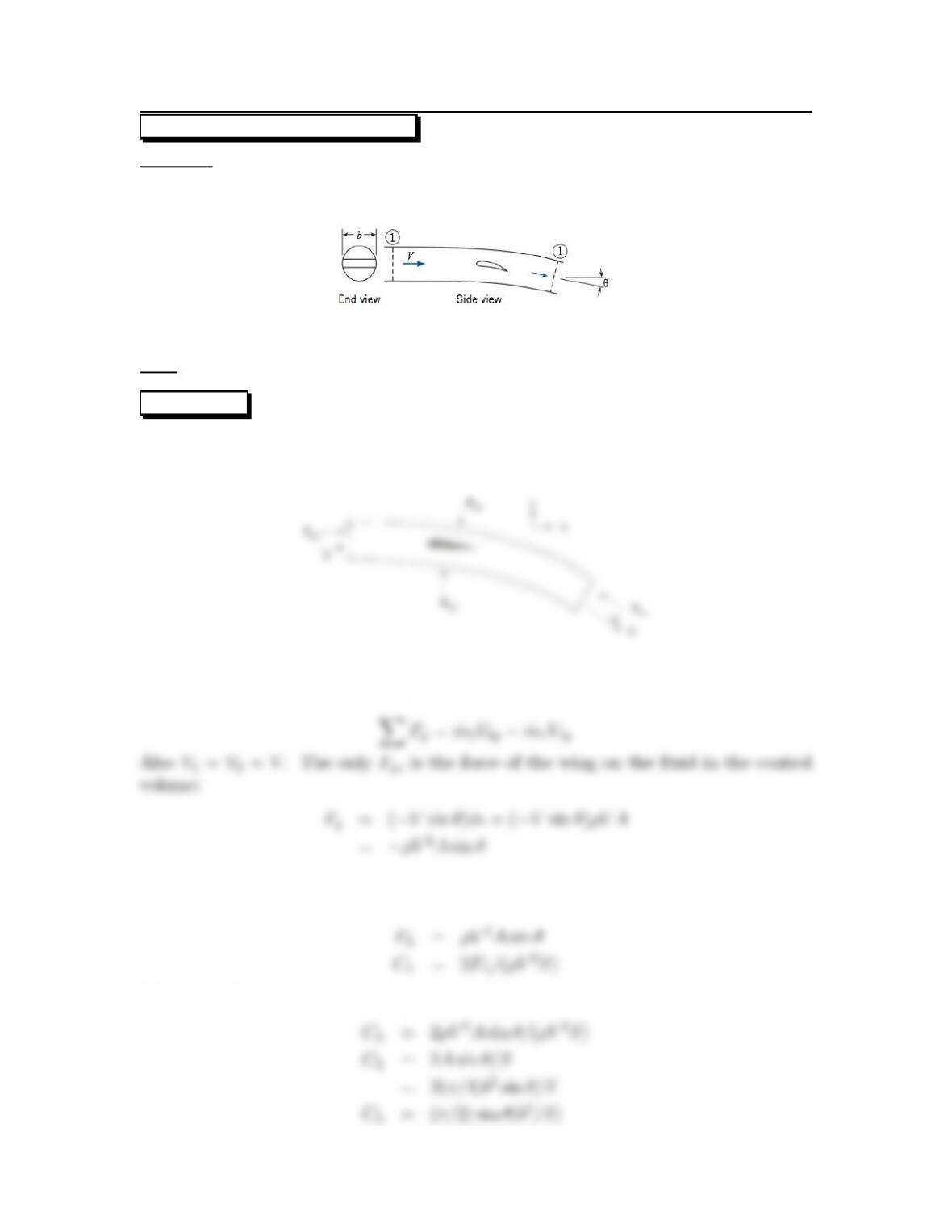
11.69: PROBLEM DEFINITION
Situation:
An airstream affected by the wing of an airplane is described in the problem state-
ment.
Find:ShowthatCDi =C2
L/(πΛ).
SOLUTION
Take the stream tube between sections 1 and 2 as a control volume and apply the
momentum principle
For steady flow the momentum equation is
But the fluidactingonthewingintheydirection is the lift FLand it is the negative
of Fy.So
Eliminate FLbetween the two equations yields
83
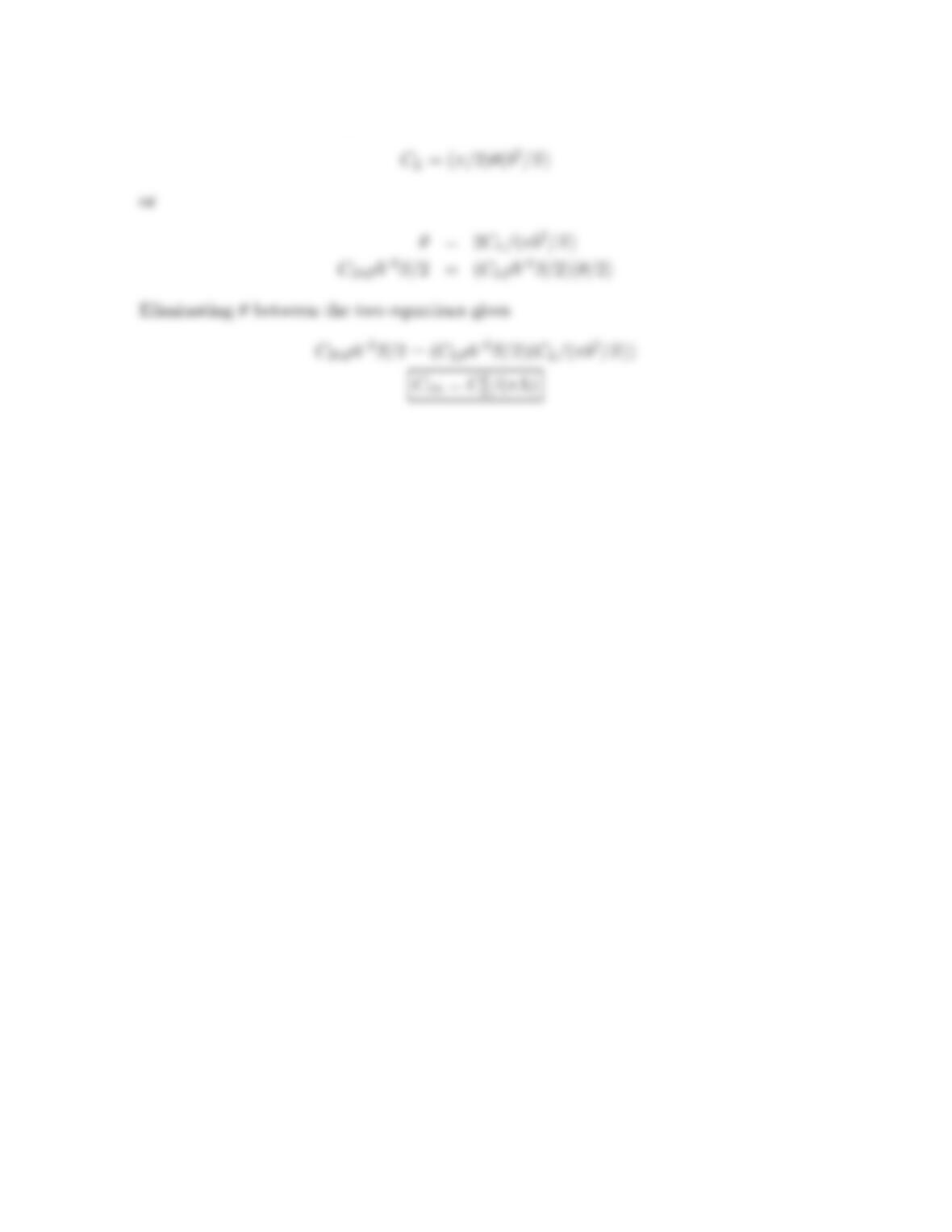
But sin θ≈θfor small angles. Therefore
84
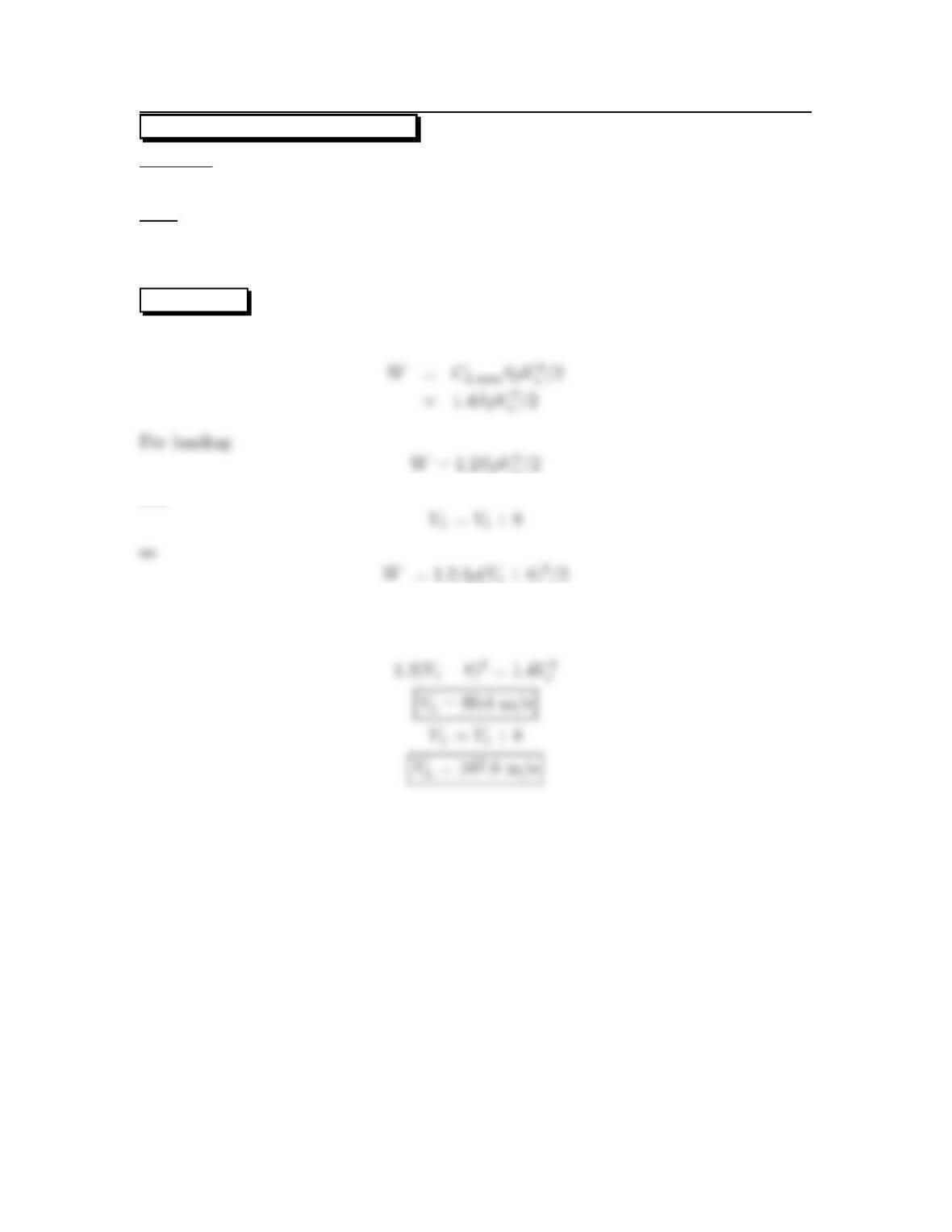
11.70: PROBLEM DEFINITION
Situation: The problem statement provides data describing aircraft takeoffand land-
ing.
Find:
(a) Landing speed.
(b) Stall speed.
SOLUTION
CLmax =1.40 which is the CLat stall. Thus, for stall
L/2
But
Therefore
85
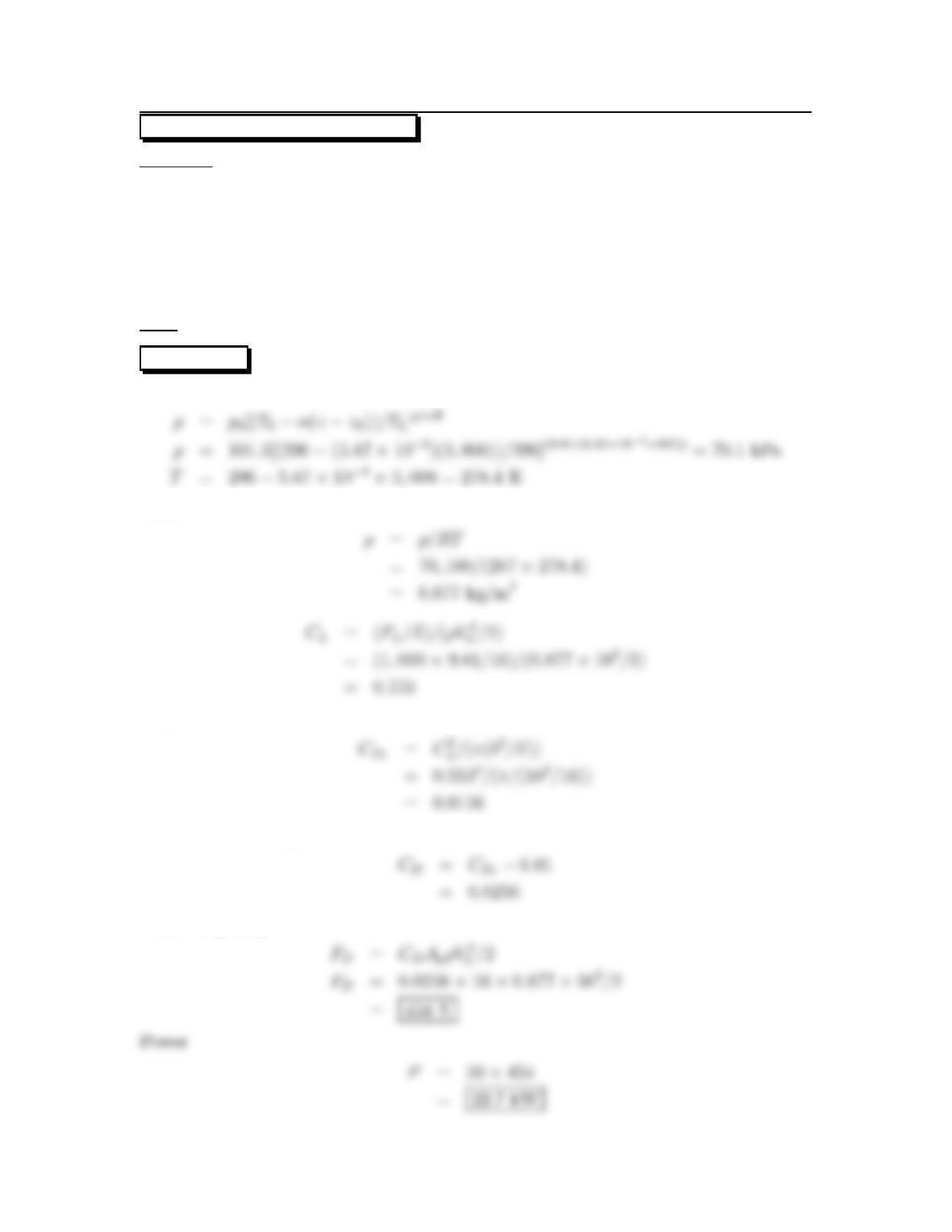
11.71: PROBLEM DEFINITION
Situation:
An aircraft wing is described in the problem statement.
m=1000 kg
Area=S=16m2
wingspan = b=10m
V=50 m/s
Altitude = 3000 m
Find: Total drag on wing and power to overcome drag.
SOLUTION
Calculate pand then ρ:
Then
Then
Then the total drag coefficient
Total wing drag
86
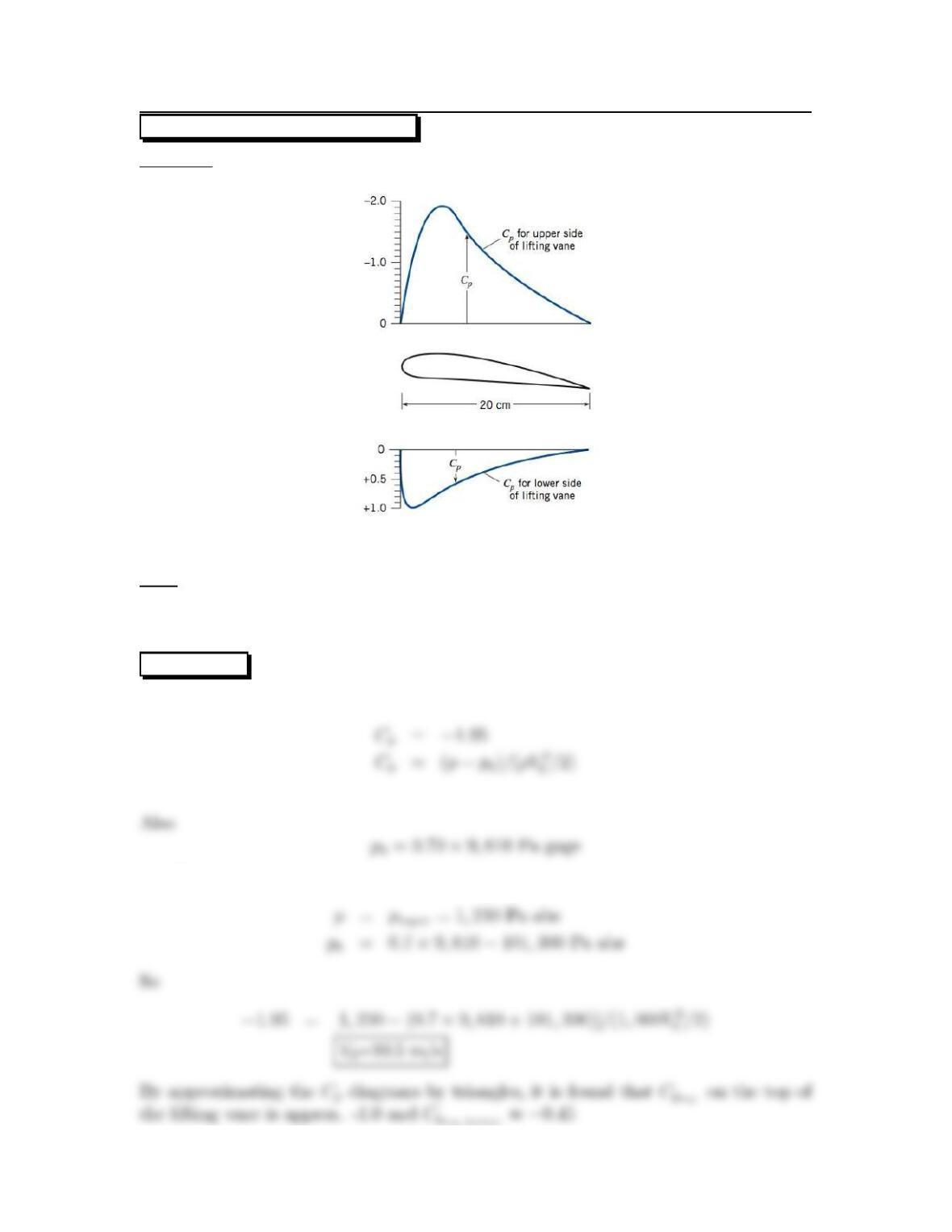
11.72: PROBLEM DEFINITION
Situation: The problem statement provides data for a Gottingen 387-FB lifting vane.
Find:
(a) Speed at which cavitation begins.
(b) Lift per unit length on foil.
SOLUTION
Cavitation will start at point where Cpis minimum, or in this case, where
and for cavitation
87
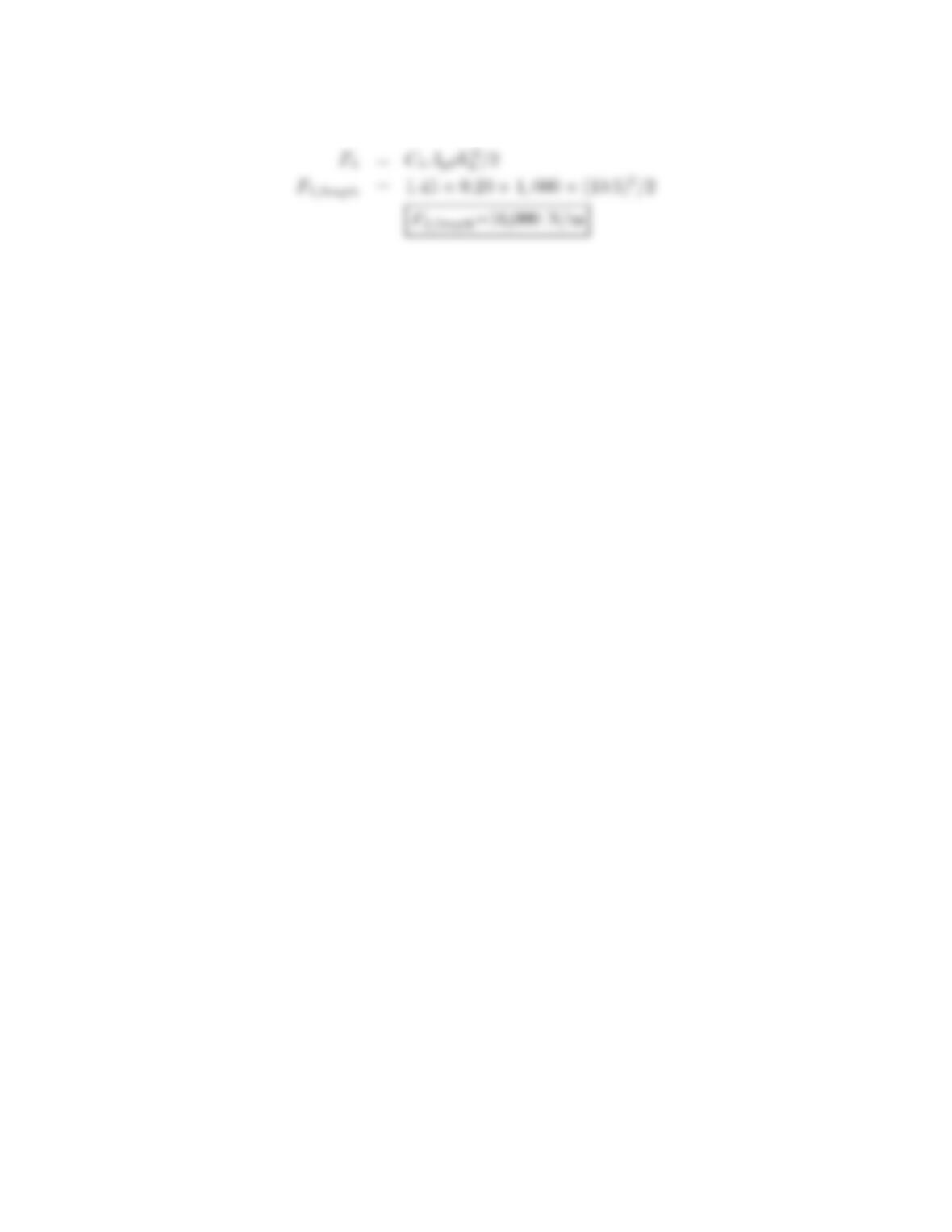
Thus, ∆Cpavg. ≈1.45.Then
88
11.73: PROBLEM DEFINITION
Situation: The distribution of Cpon the wing section in problem 11.72 (EFM10e) is
described in the problem statement.
Find: Range that CLwill fall within.
SOLUTION
89
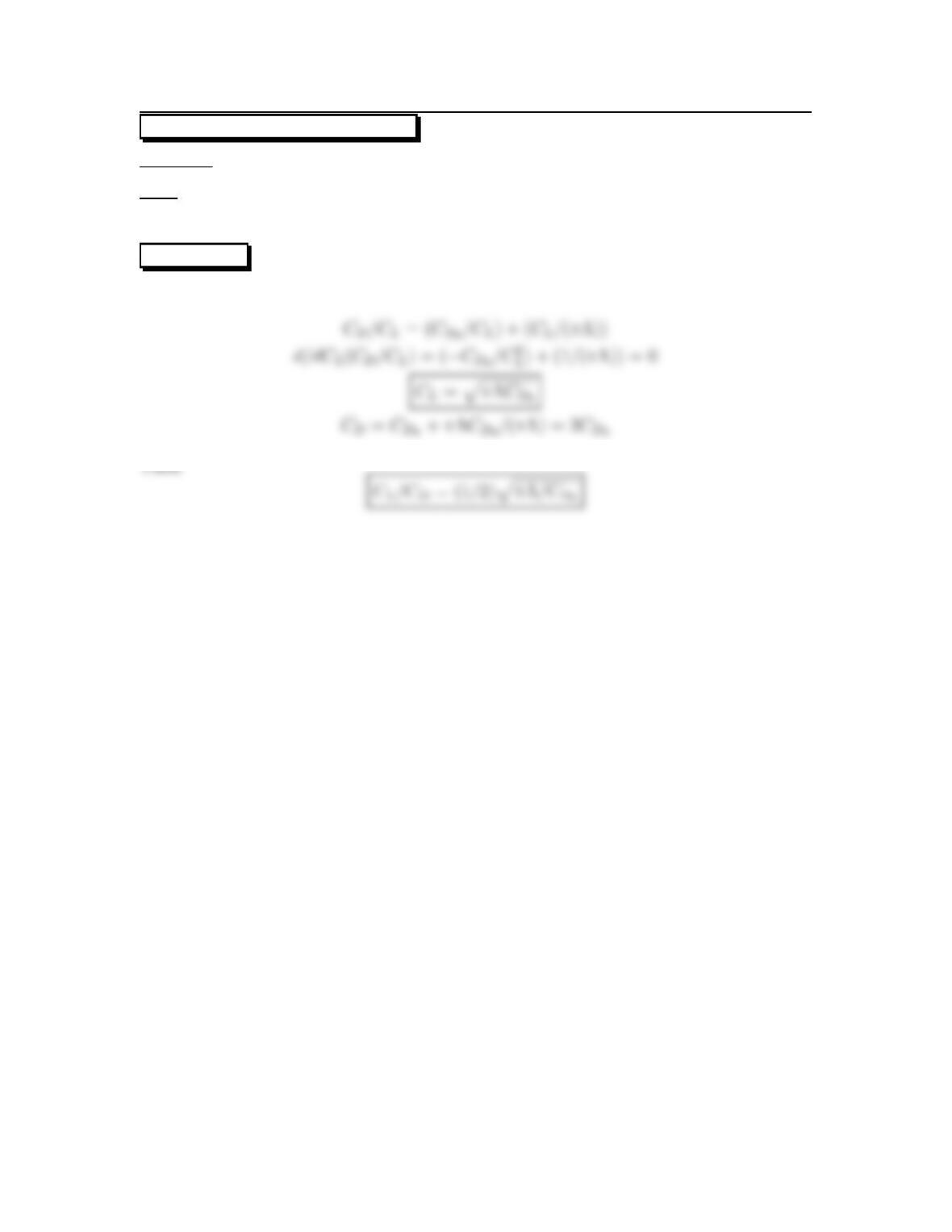
11.74: PROBLEM DEFINITION
Situation: The drag coefficient for a wing is described in the problem statement.
Find:DeriveanexpressionfortheCLthat corresponds to minimum CD/CLand the
corresponding CL/CD.
SOLUTION
90
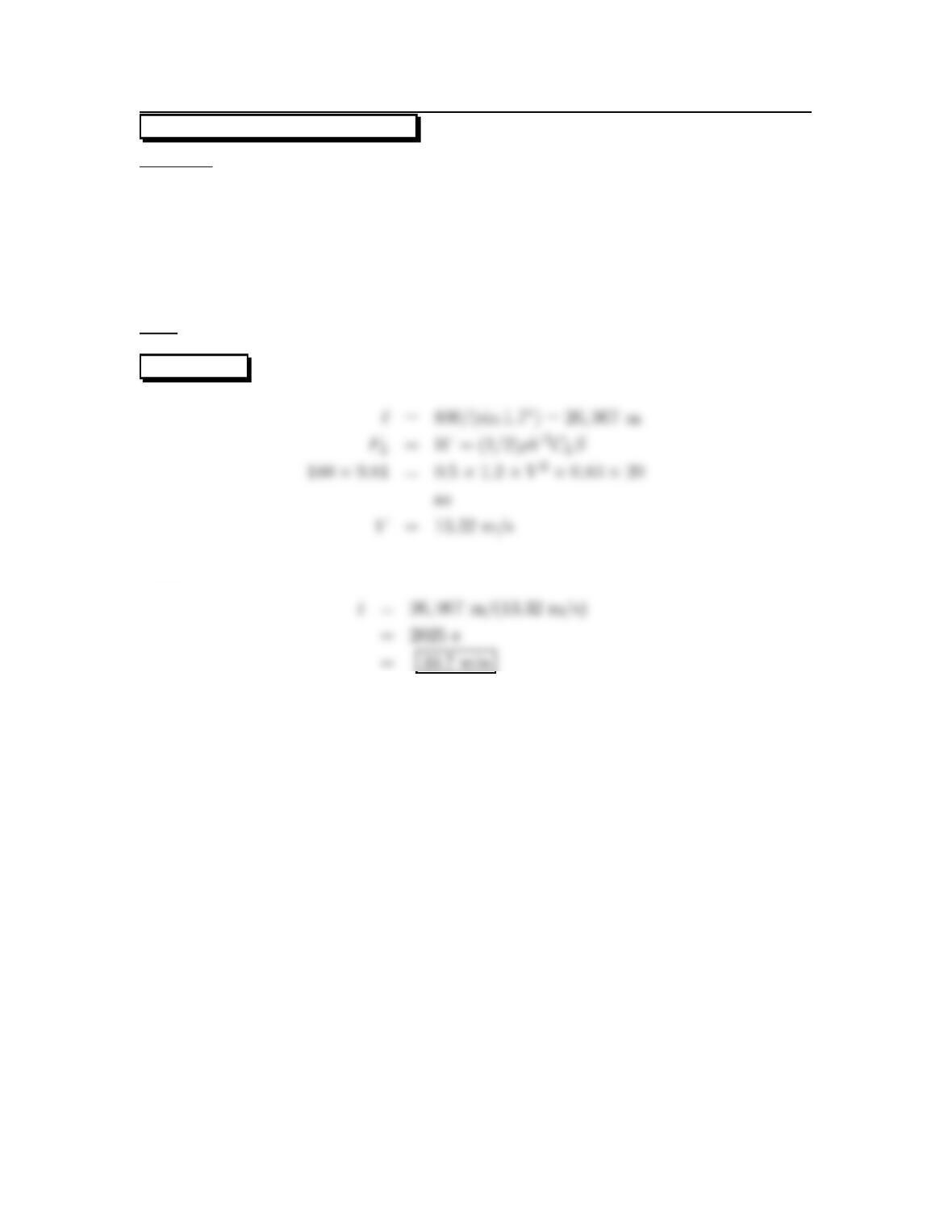
11.75: PROBLEM DEFINITION
Situation:
A glider at elevation of 800 m descends to sea level
mass = 180 kg
S=20 m2
glideangeis1.7◦
ρ=1.2kg/m3
CL=0.83
Find: Time in minutes for the descent.
SOLUTION
Then
91
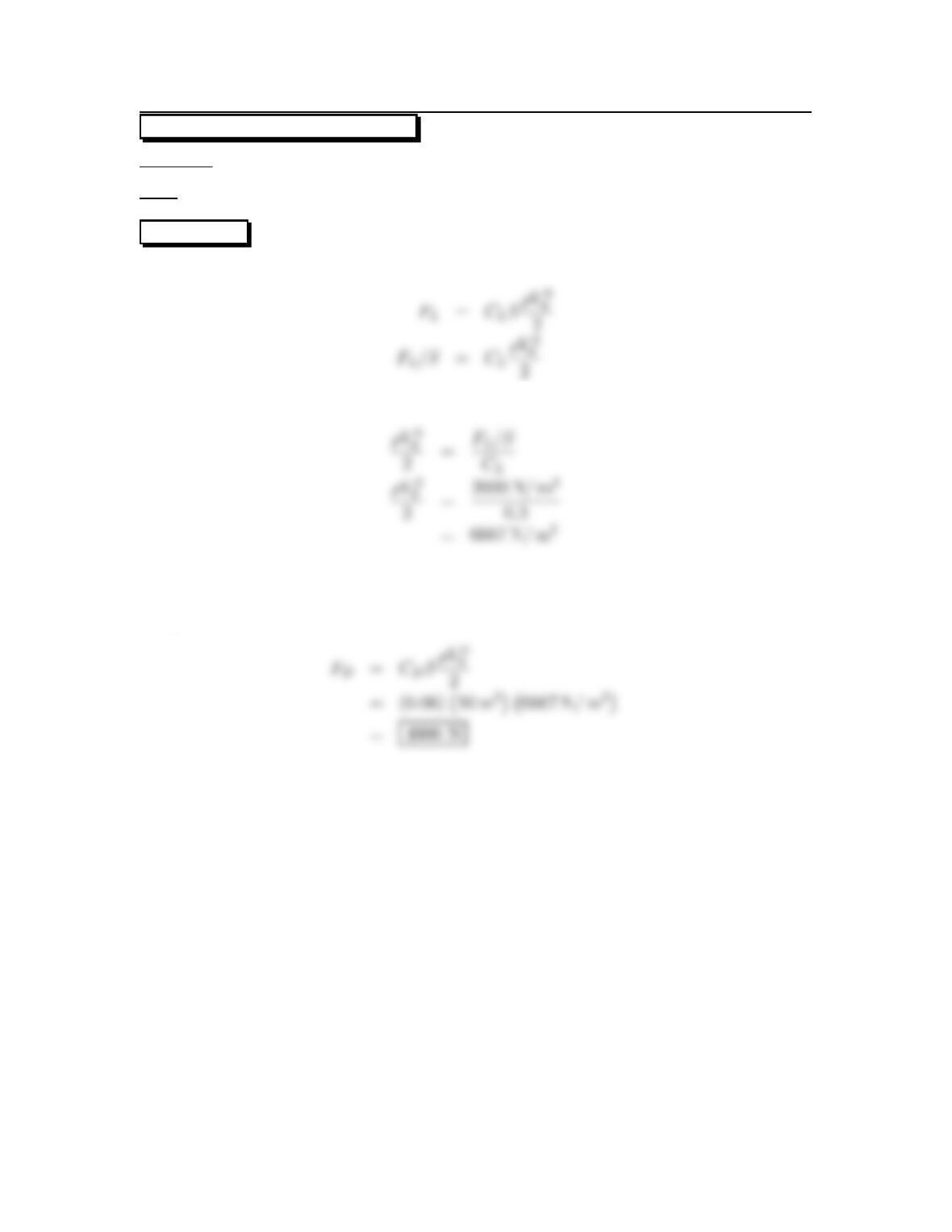
11.76: PROBLEM DEFINITION
Situation: An aircraft wing is described in the problem statement.
Find: Drag force on the wing.
SOLUTION
Lift force
Thus
From Fig. 11.25 (EFM 10e) at CL=0.30,C
D≈0.06
Drag force
92
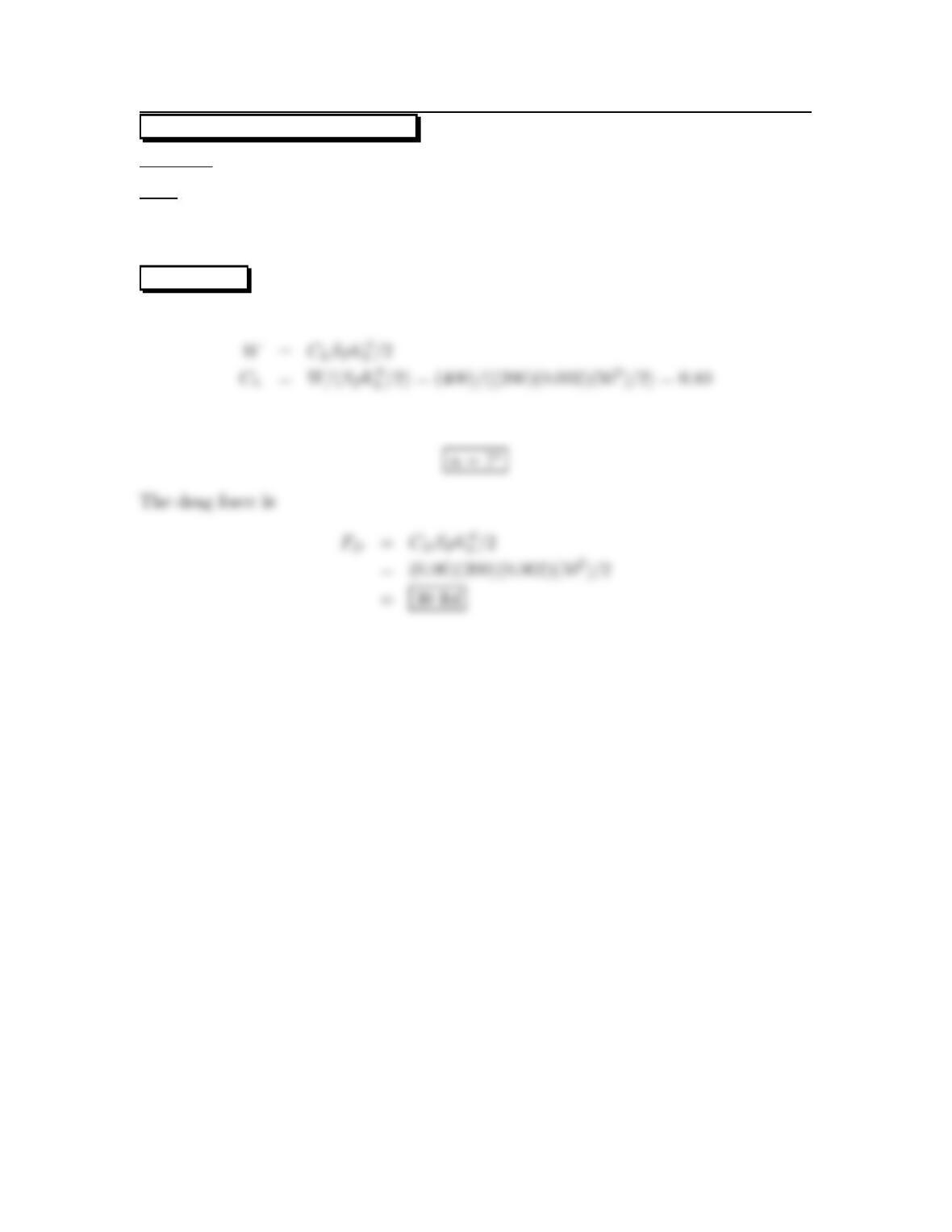
11.77: PROBLEM DEFINITION
Situation: The problem statement describes an ultralight airplane.
Find:
(a) Angle of attack.
(b) Drag force on wing.
SOLUTION
Lift force
From Fig. 11.24 in EFM10e CD=0.06 and
93
11.78: PROBLEM DEFINITION
11.24 (EFM10e).
SOLUTION
There are several ways to address this design problem. One approach would be to
consider the wing area and velocities necessary to meet the power constraint. That
is,
Make plots of V0versus Swith CDas a parameter. Then use the constraint of the
lift equaling the weight.
2(0.00238 slugs/ft3)V2
Make plots of V0versus Swith CLas a parameter. Where these curves intersect
94