At node 2,
Substituting (2) into (1) leads to
(1.25+j0.2)( 0.33333–j0.33333)V2 – 0.25V2 = 25
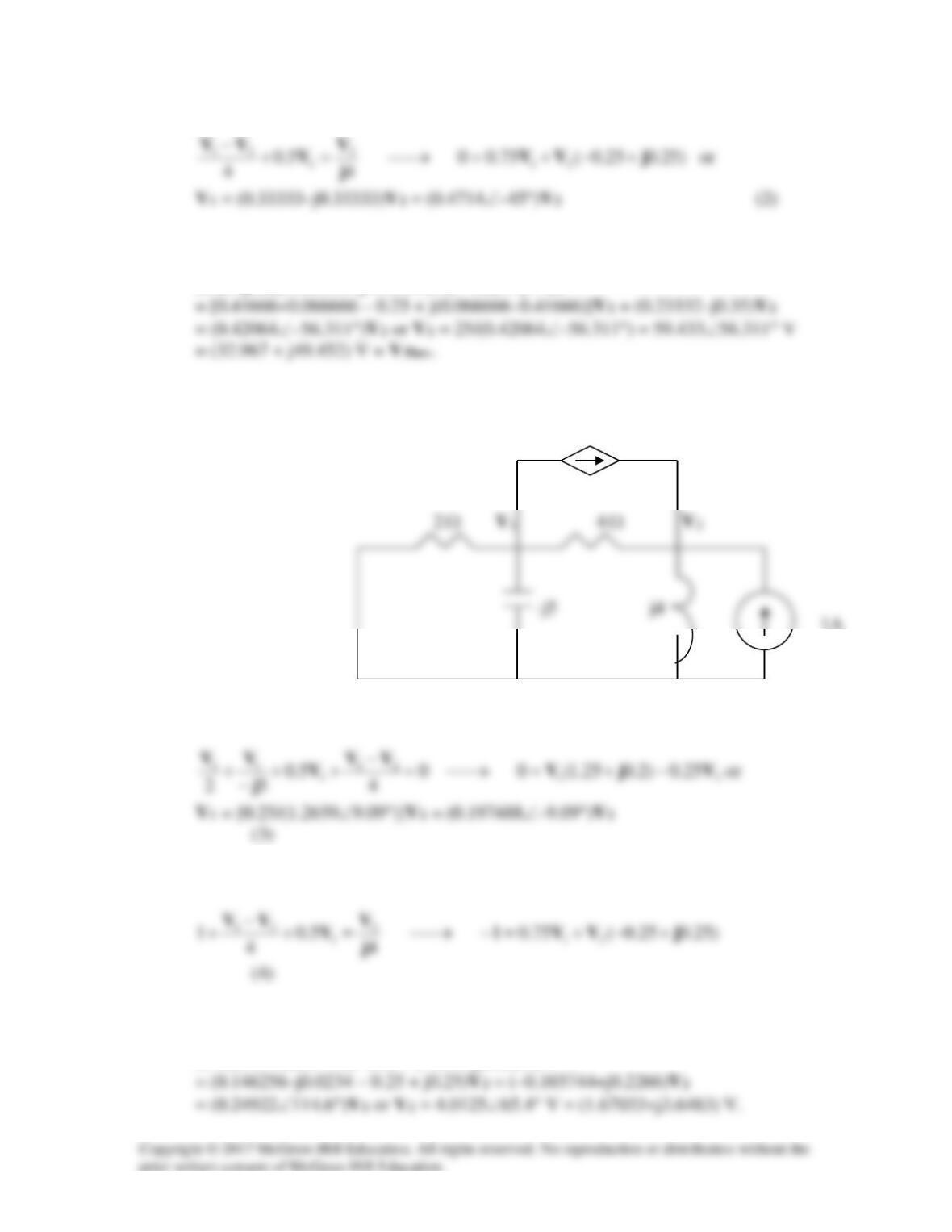
To obtain Req, consider the circuit shown below. We replace ZL by a 1–A current source.
0.5V1
At node 1,
At node 2,
Substituting (3) into (4) gives,
0.75(0.197488∠–9.09°)V2 + (–0.25+j0.25)V2 = –1
1A
Solution 11.17
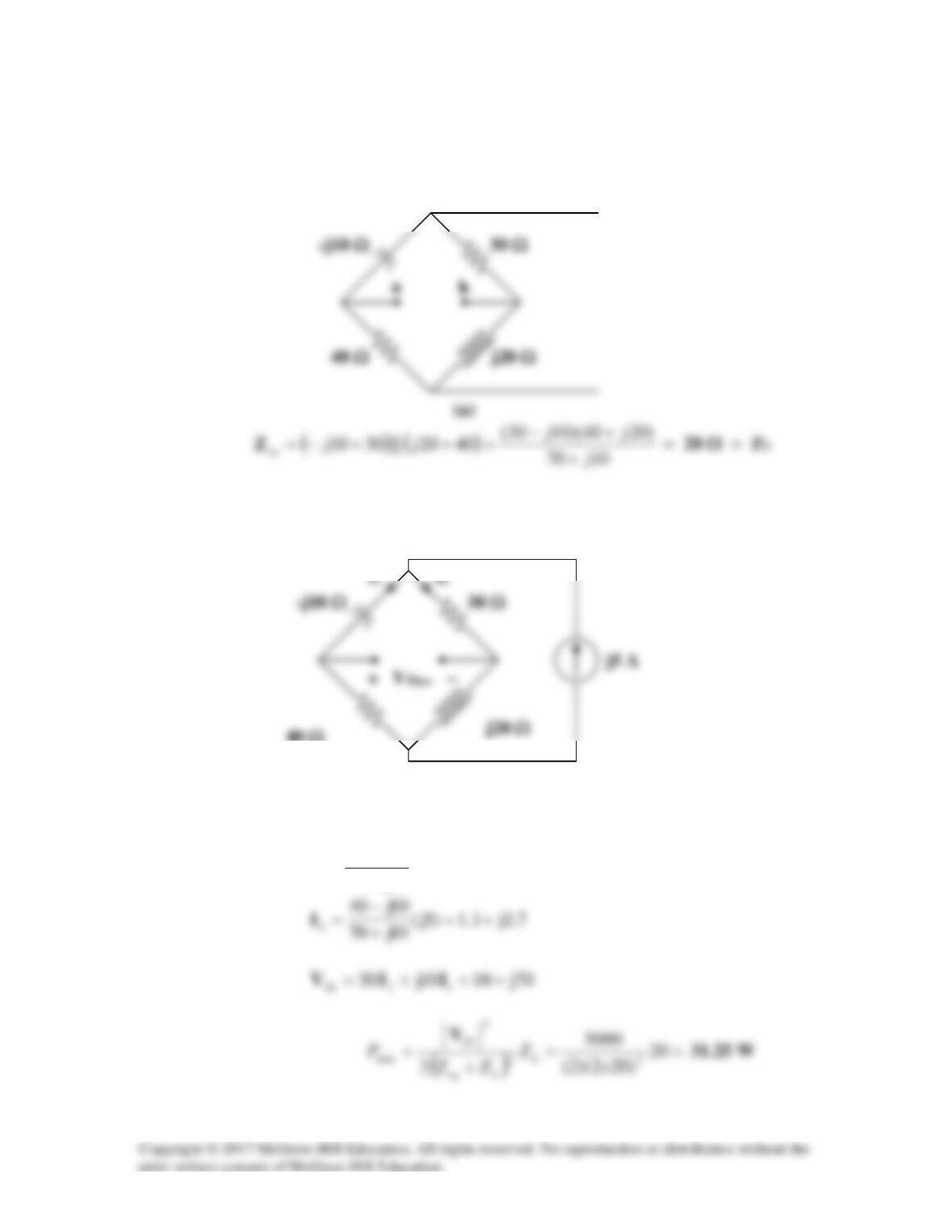
We find
eq
Z
at terminals a-b following Fig. (a).
We obtain
Thev
V
from Fig. (b).
Using current division,
3.2j1.1–)5j(
10j70
20j30
1+=
+
+
=I
40 Ω
(b)
Solution 11.18
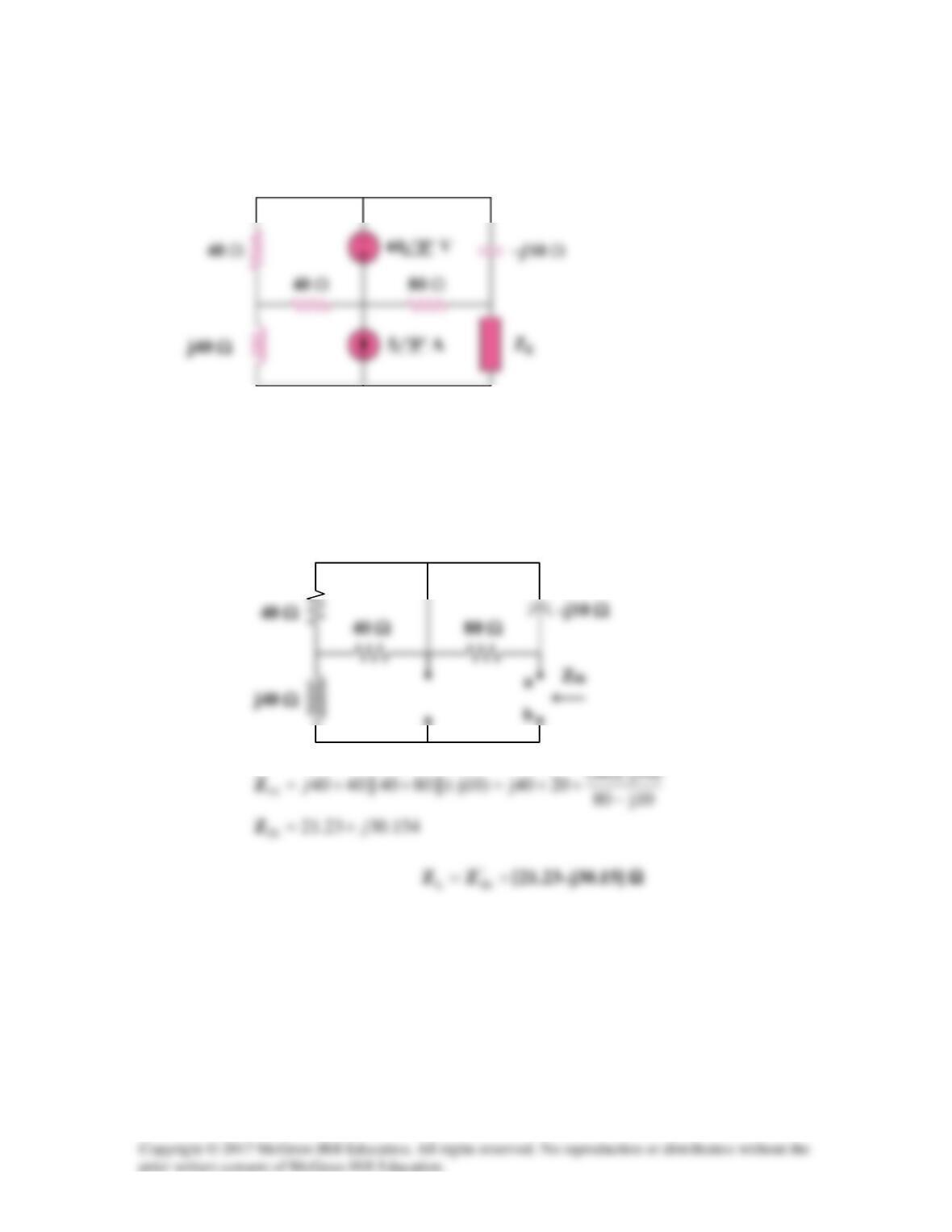
Find the value of ZL in the circuit of Fig. 11.49 for maximum power transfer.
Figure 11.49
For Prob. 11.18.
Solution
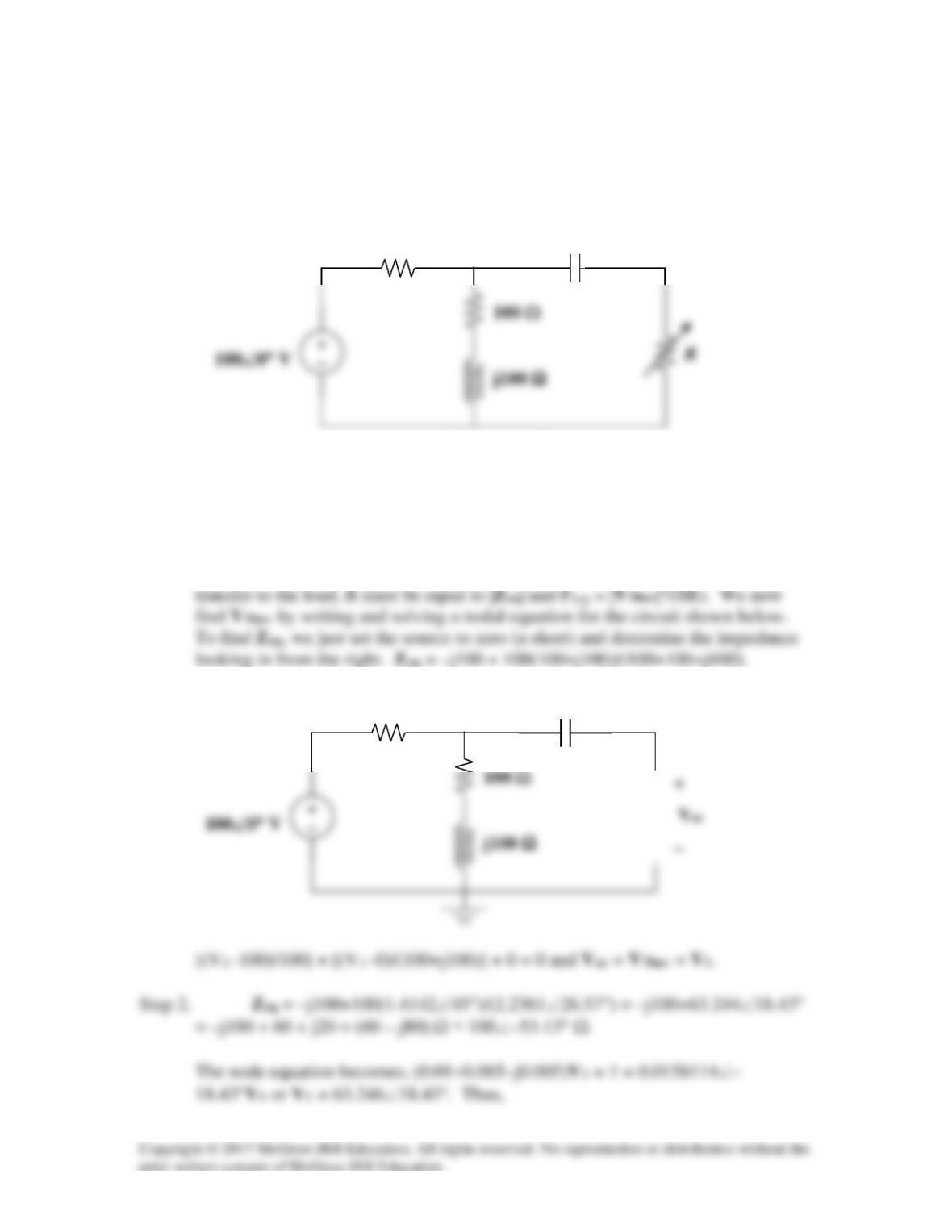
We find
Th
Z
at terminals a-b as shown in the figure below.
Solution 11.19
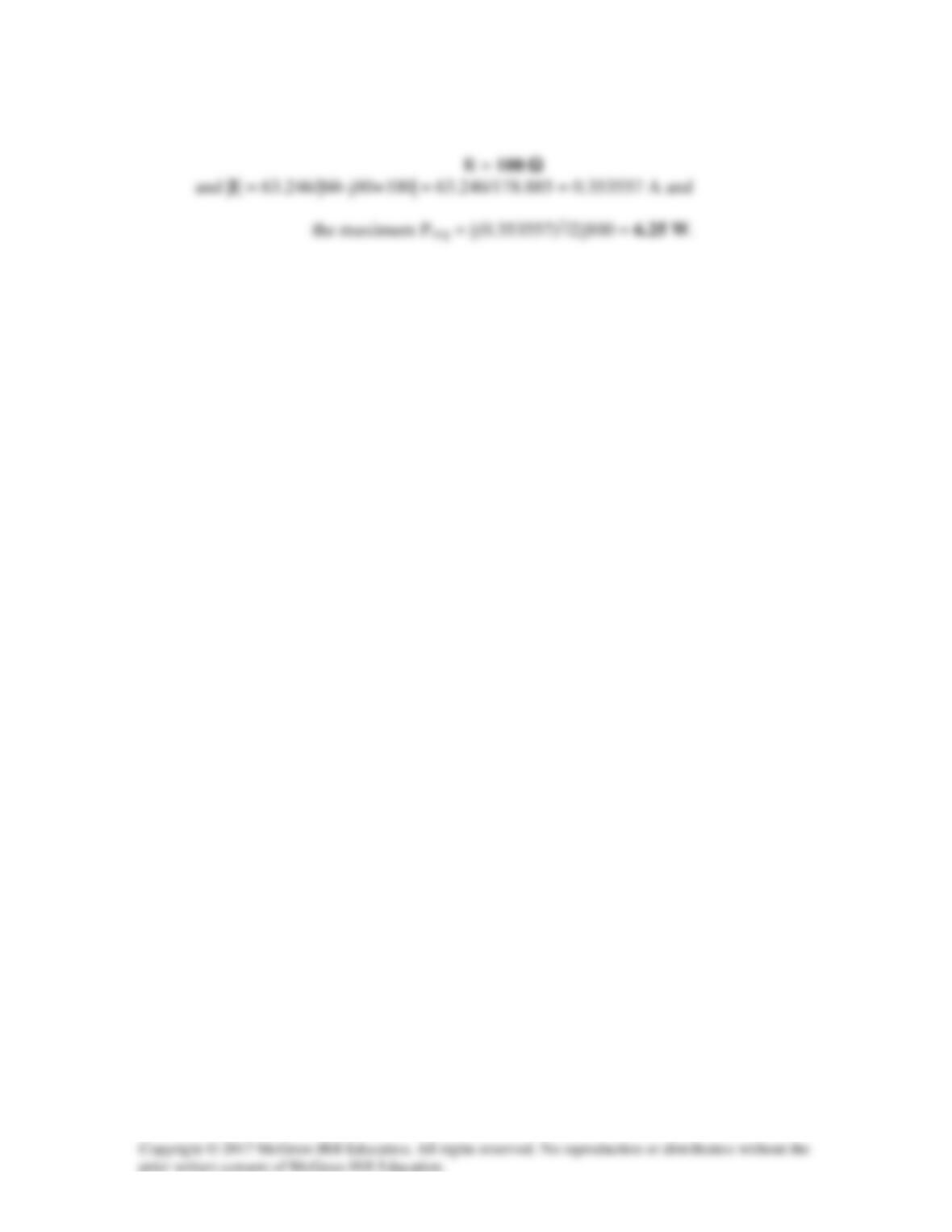
The variable resistor R in the circuit of Fig. 11.50 is adjusted until it absorbs the
maximum average power. Find R and the maximum average power absorbed.
Figure 11.50
For Prob. 11.19.
Solution
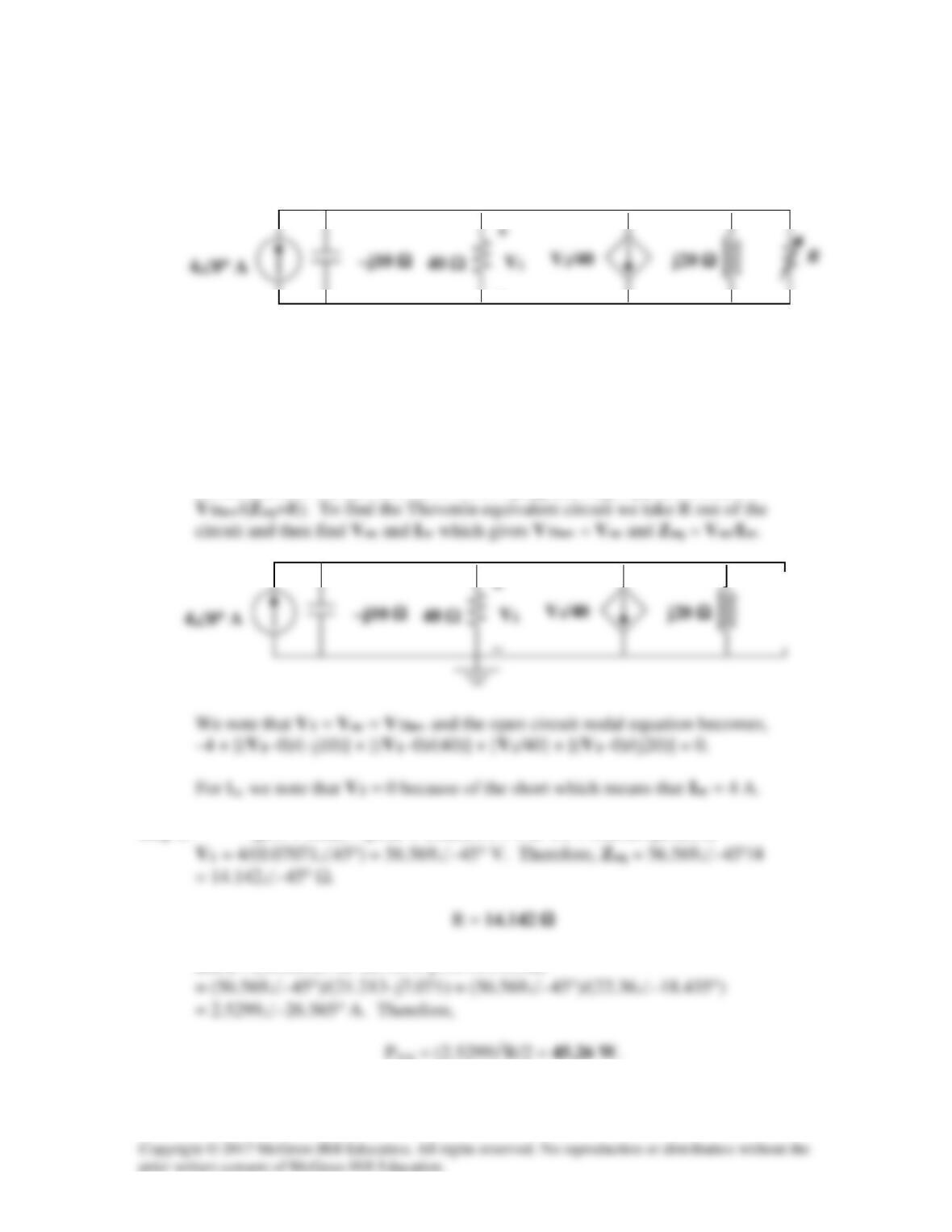
Step 1. We first remove R from the circuit and then find the Thevenin equivalent
circuit. Once we have VThev and Zeq we then know that for maximum power
100 Ω
–j100 Ω
V1
100 Ω
–j100 Ω
Solution 11.20
The load resistance RL in Fig. 11.51 is adjusted until it absorbs the maximum average
power. Calculate the value of RL and the maximum average power.
Figure 11.51
For Prob. 11.20.
Solution
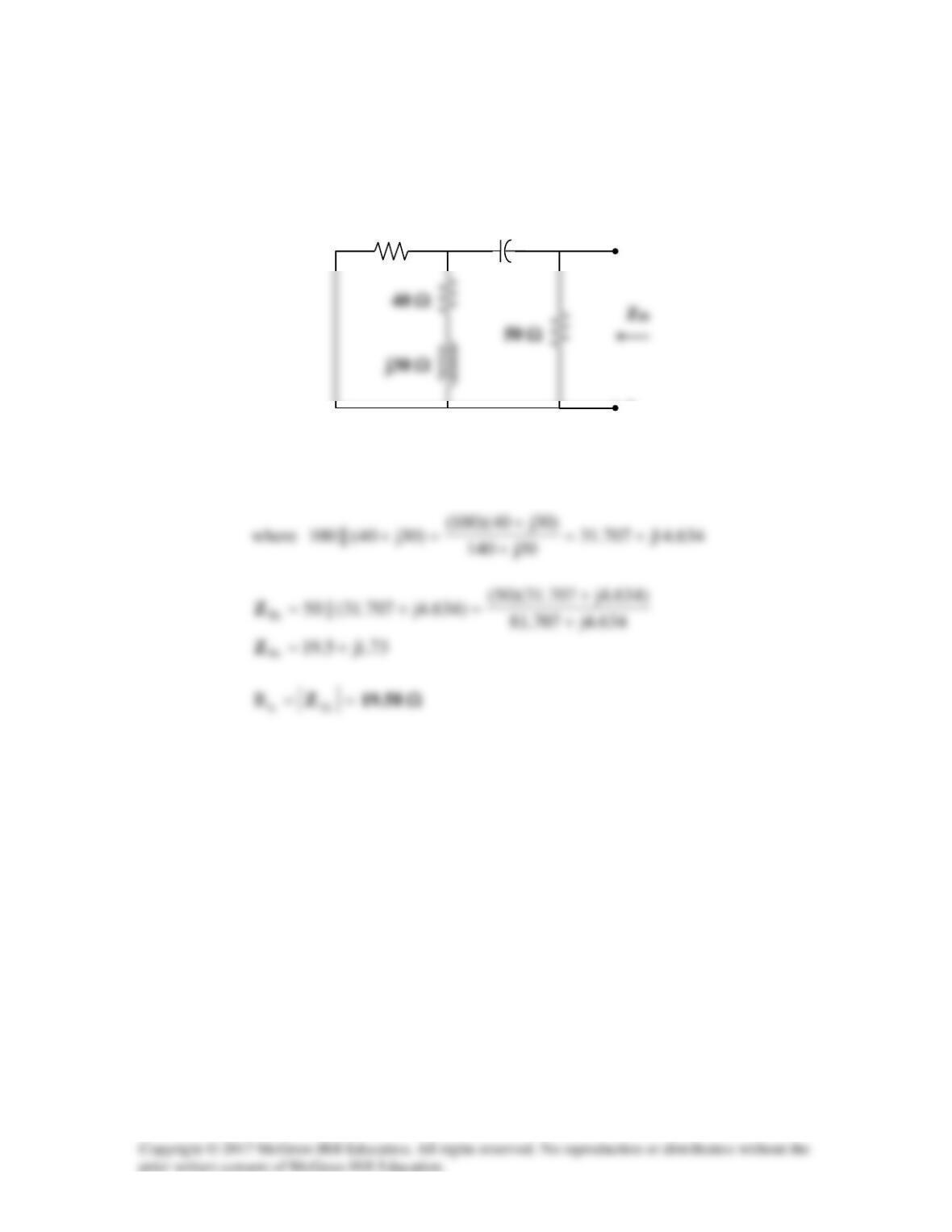
Step 1. The easiest way to solve this problem is to find the Thevenin equivalent
circuit and then we can now solve for R = |Zeq| and Pavg = |I|2R/2 where I =
−
Step 2. (j0.1 + 0.025 – j0.05 + 0.025)V1 = 4 or V1 = 4/(0.05+j0.05) or
and I = (56.569∠–45°)/(7.071–j7.071+14.142)
−
Solution 11.21
We find
Th
Z
at terminals a-b, as shown in the figure below.
])30j40(||10010j–[||50
Th
++=Z
-j10 Ω
100 Ω
a
b
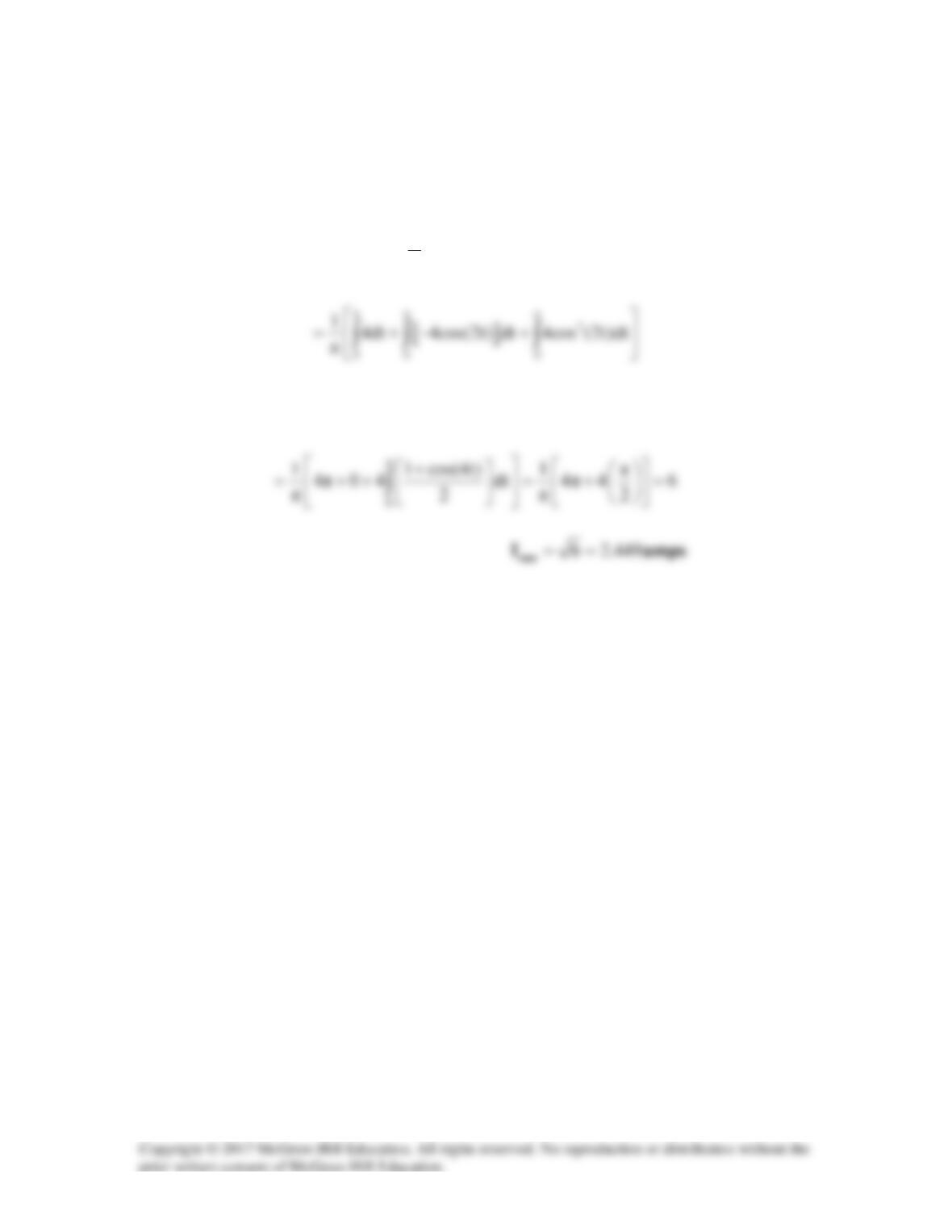
Solution 11.22
i(t) = [2–2cos(2t)] amps
( )
π2
2
rms
0
1
I 2 2cos 2t dt
π
= −
∫
Solution 11.23
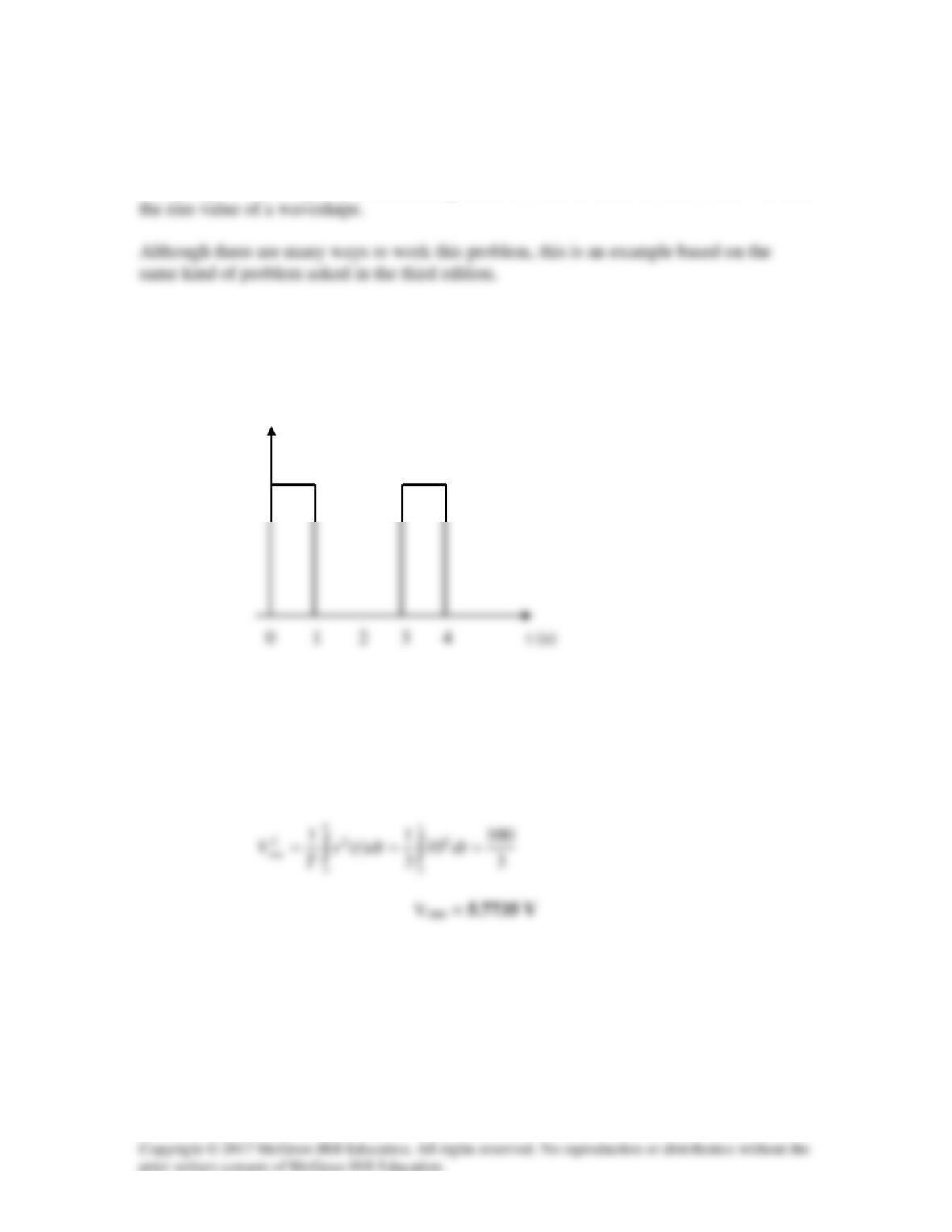
Using Fig. 11.54, design a problem to help other students to better understand how to find
Problem
Determine the rms value of the voltage shown in Fig. 11.54.
v(t) (V)
10
Figure 11.54 For Prob. 11.23.
Solution
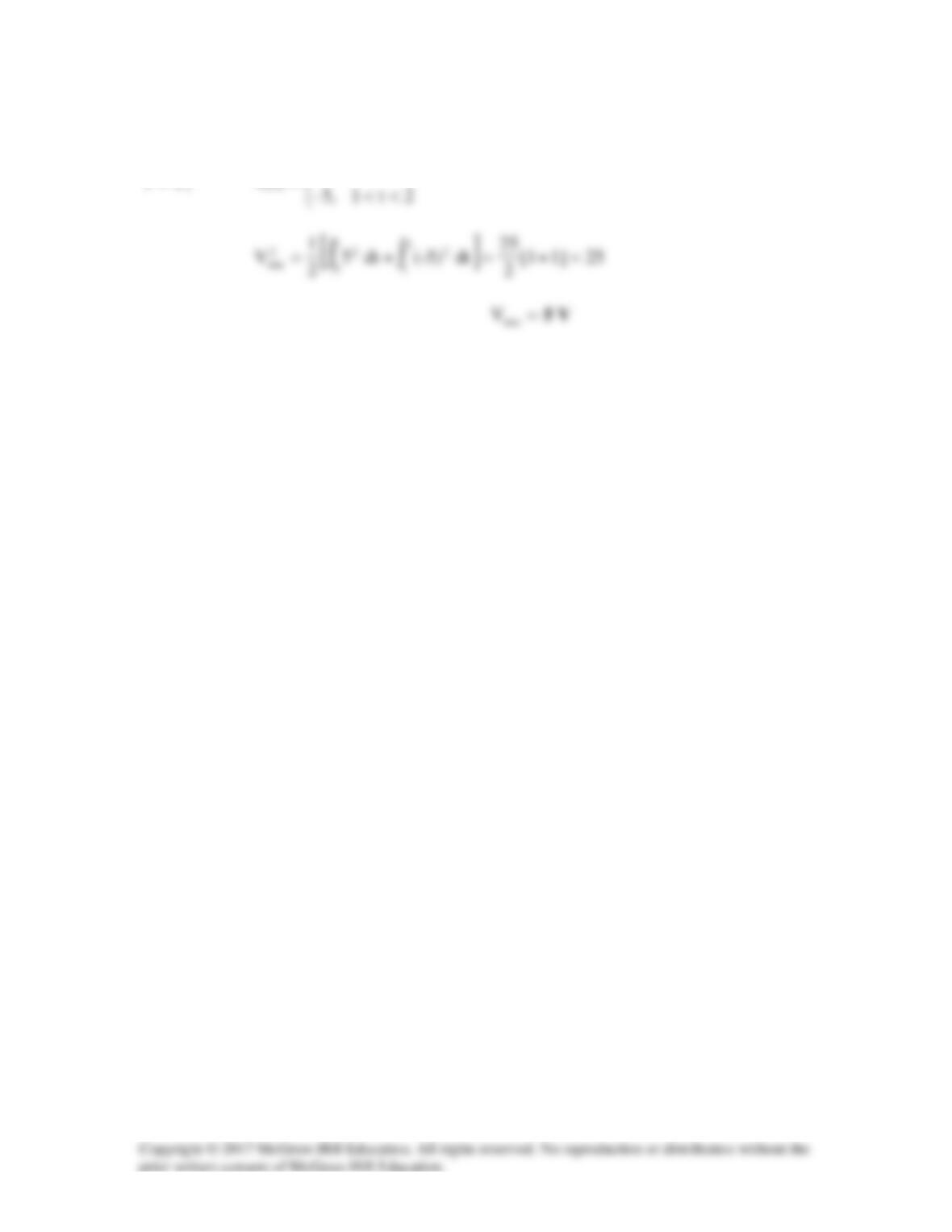
Solution 11.24
,
<<
1t0,5
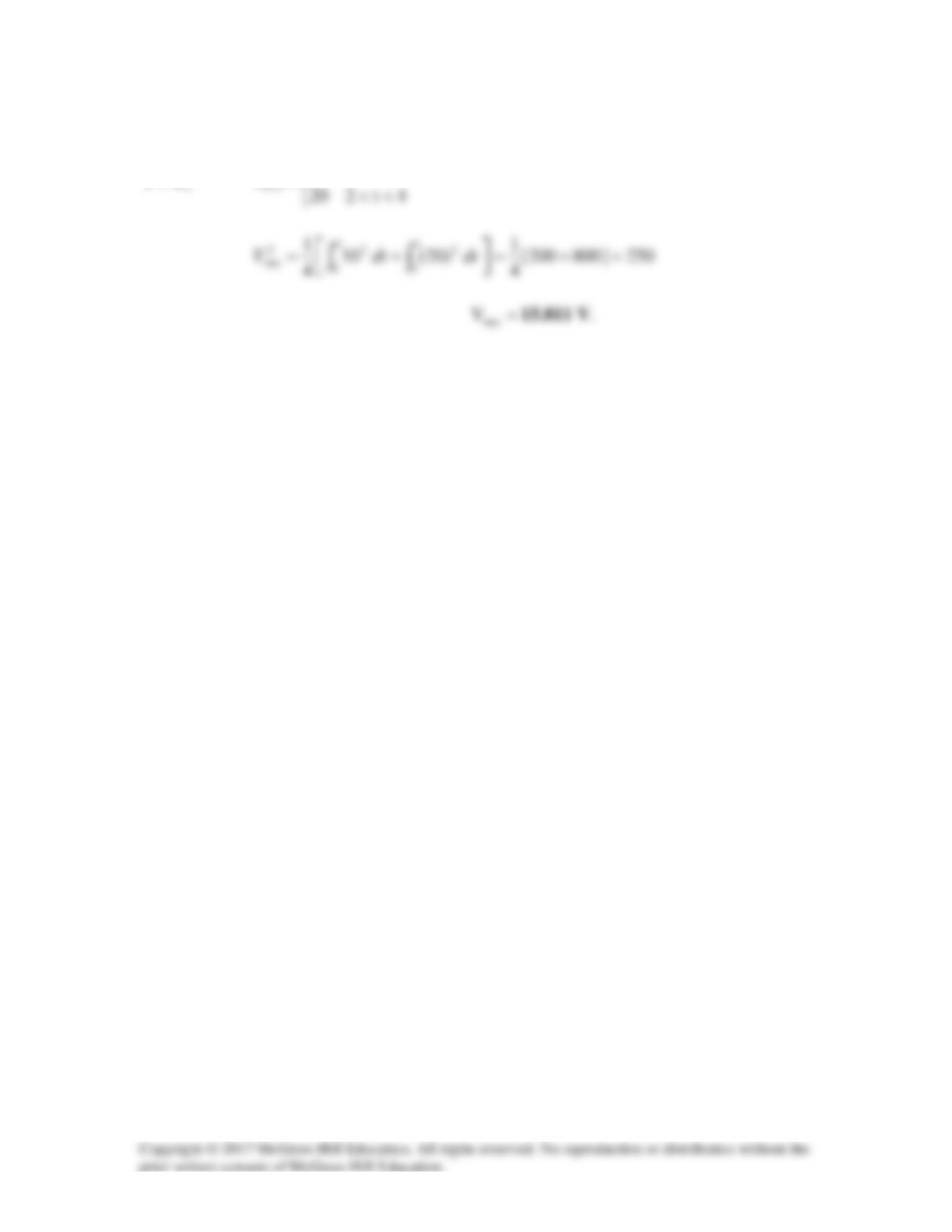
Solution 11.25
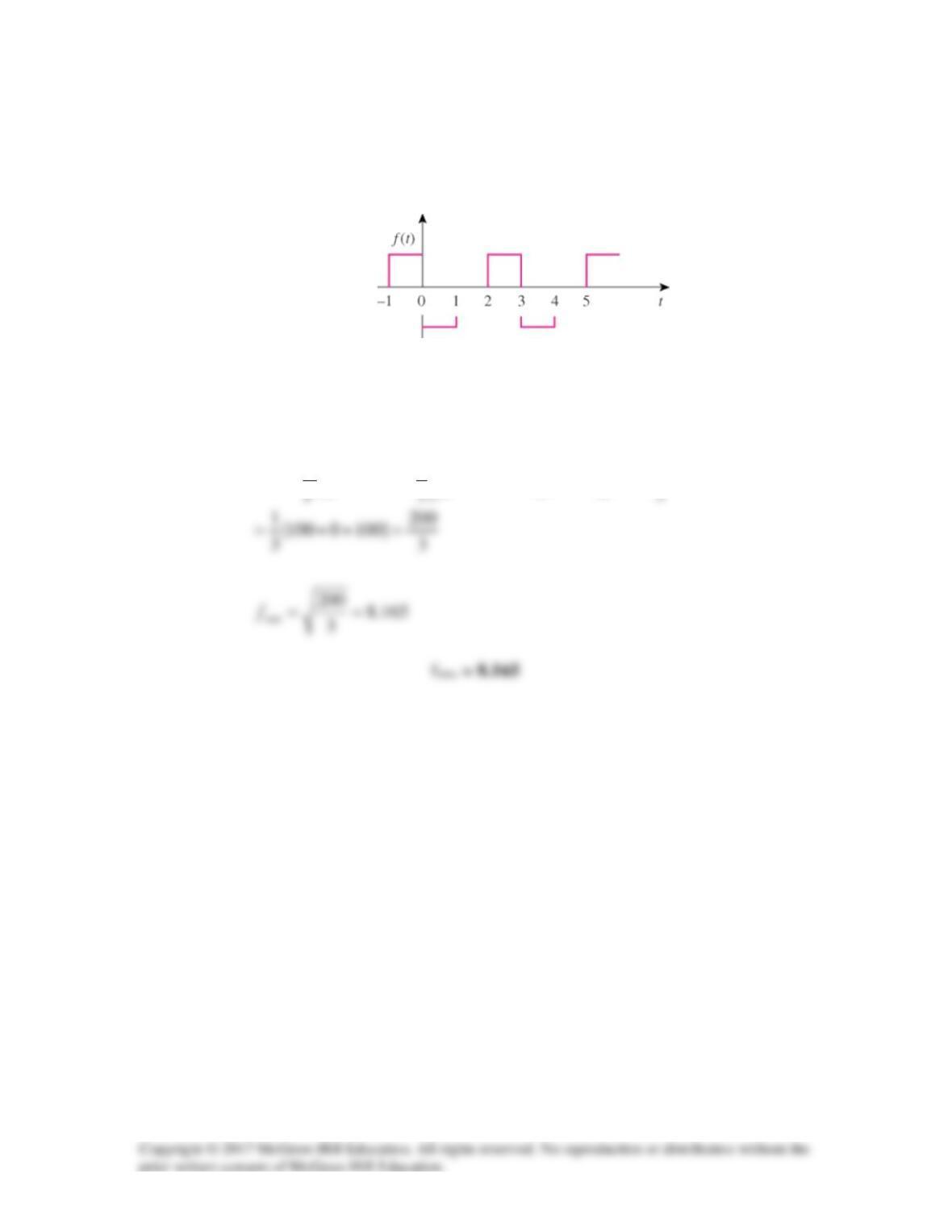
Find the rms value of the signal shown in Fig. 11.56.
Figure 11.56
For Prob. 11.25.
Solution
100)10(
1
)(
13
2
2
2
1
1
0
2
0
22
++−==
∫∫∫∫
T
rms
dtdtdtdttf
f
10
–10
Solution 11.26
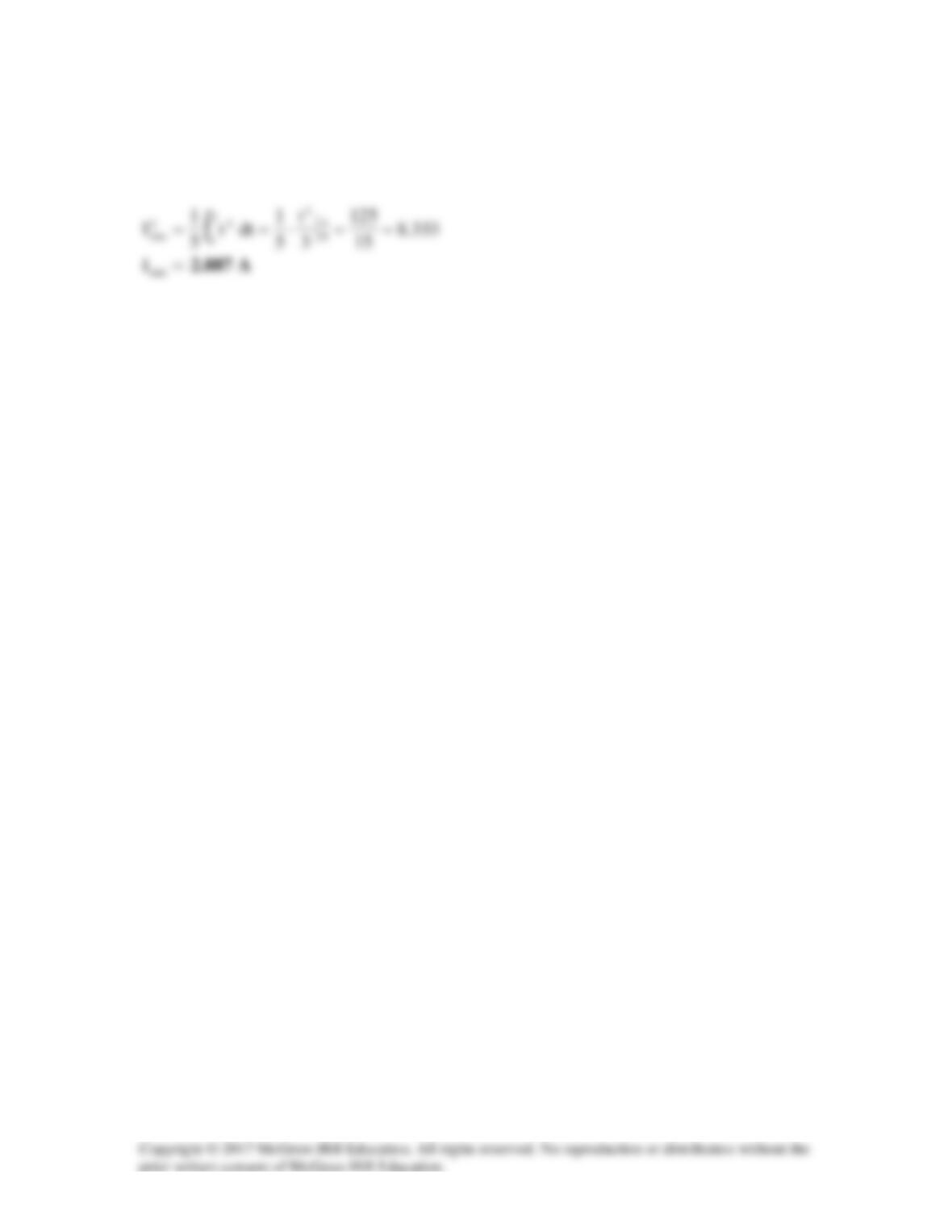
<<
205
Solution 11.27
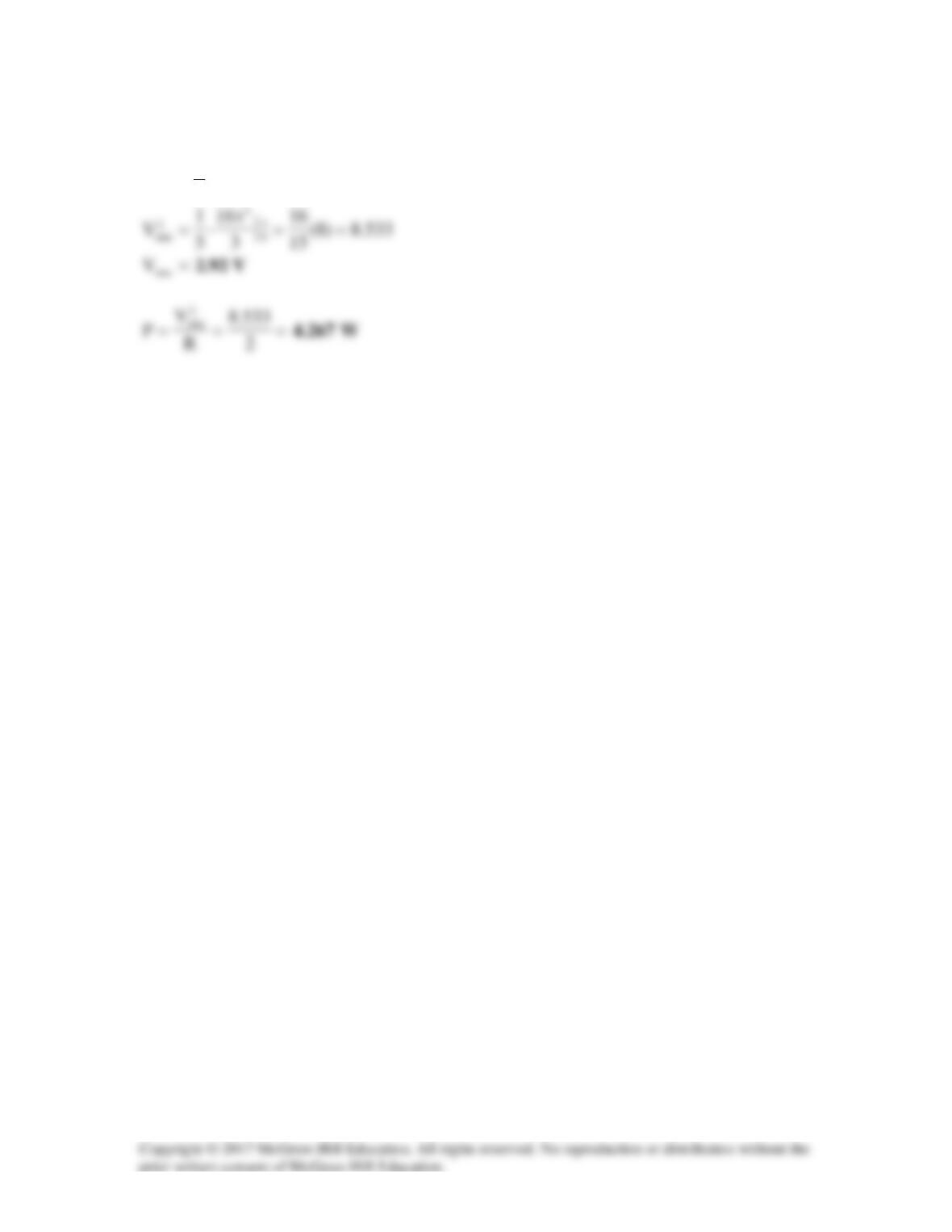
5T =
,
5t0,t)t(i <<=
Solution 11.28
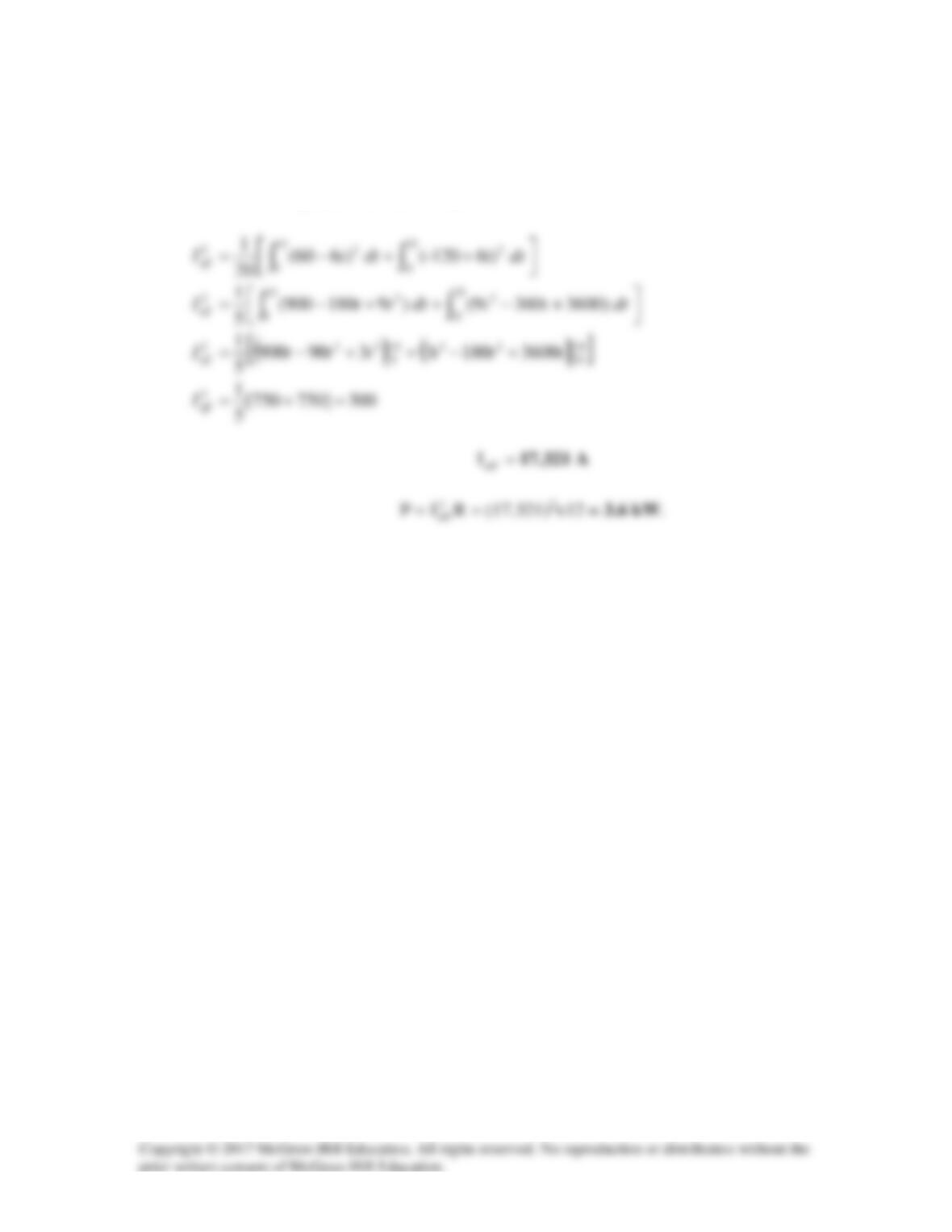
[ ]
∫∫ += 5
2
2
2
0
22
rms dt0dt)t4(
5
1
V
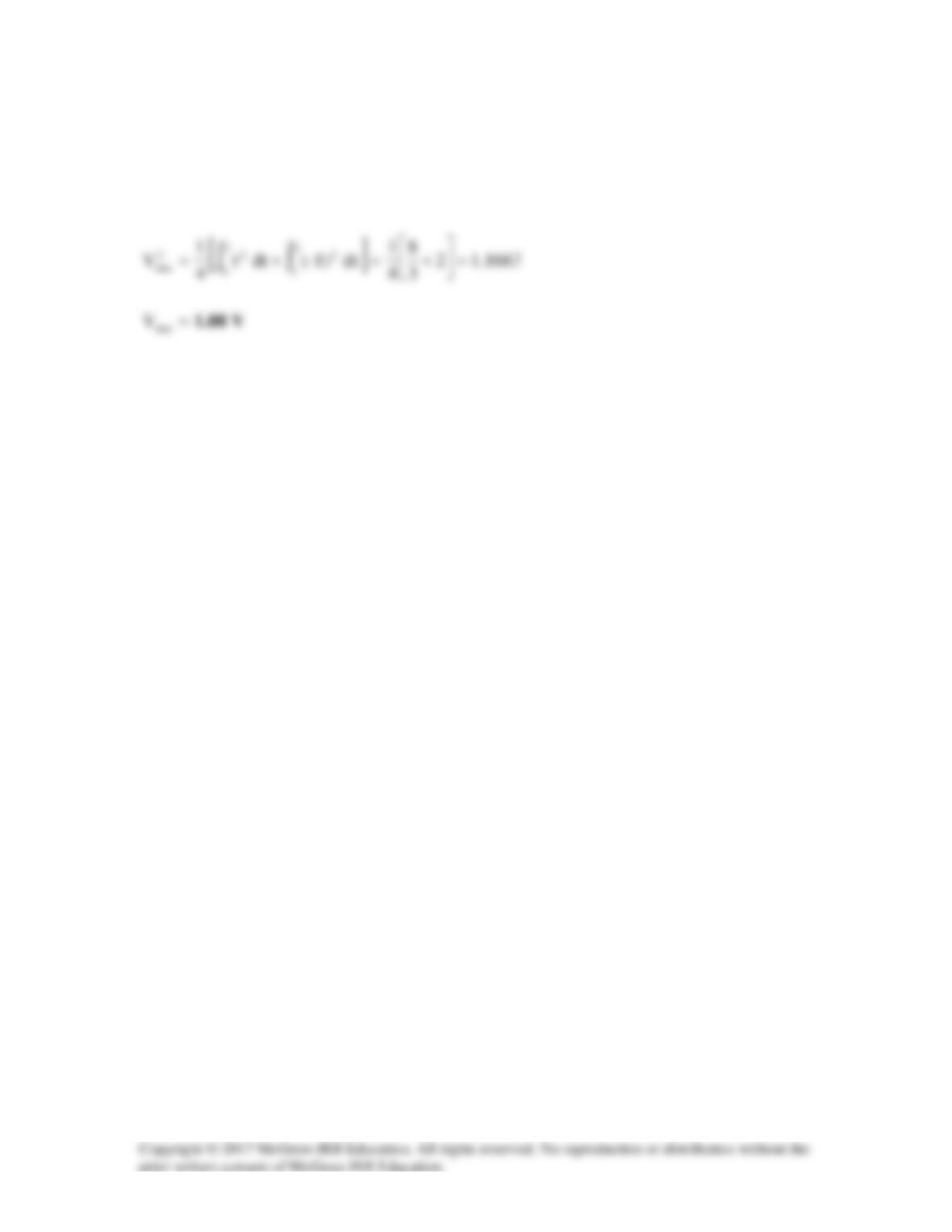
Solution 11.29
20T =
,
<<+
<<−
=25t156t120–
155660
)( tt
ti
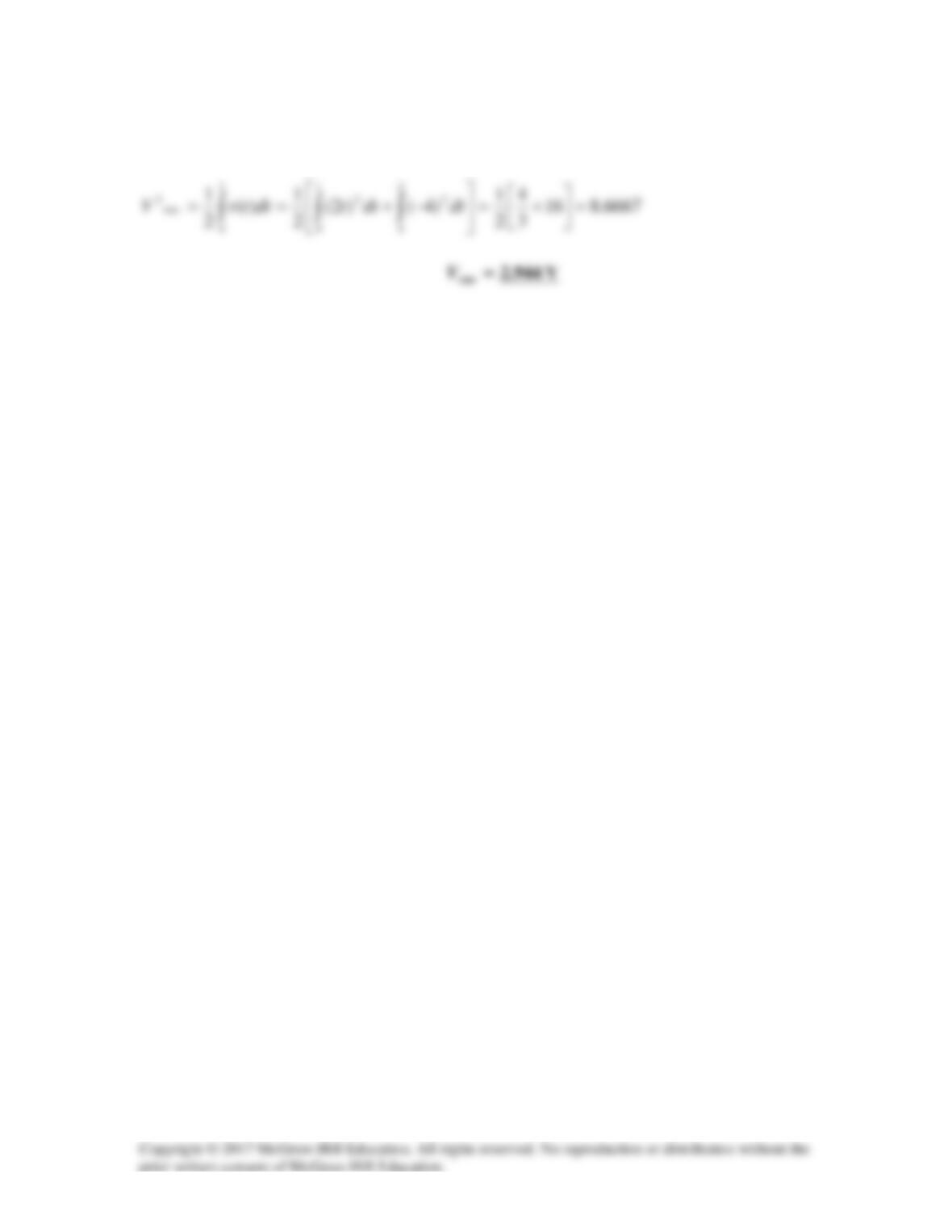
Solution 11.30
<<
<<
=4t
21–
2t0t
)t(v
Solution 11.31
Solution 11.32
+=
∫
∫2
1
1
0
222
rms dt0dt)t10(
2
1
I
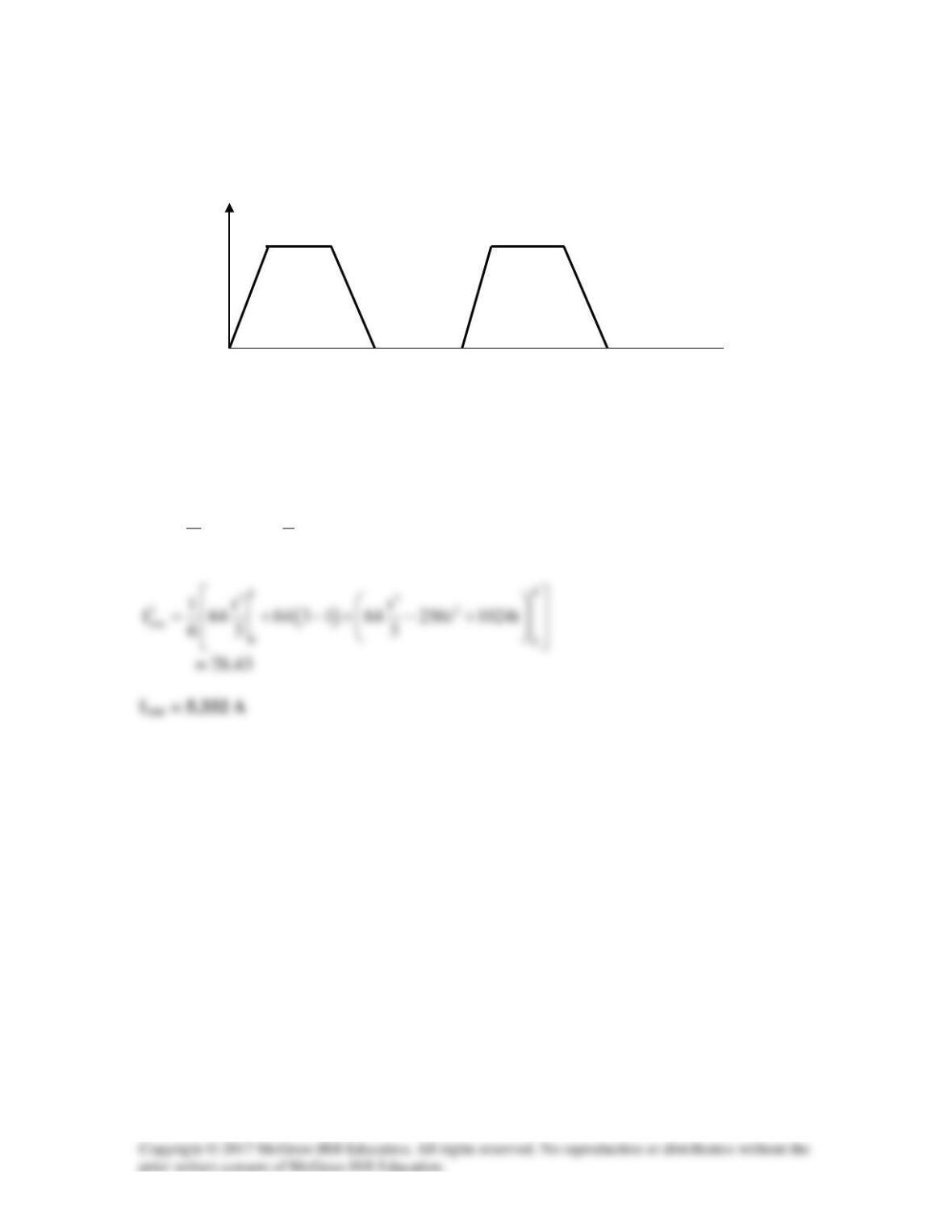
Solution 11.33
Determine the rms value for the waveform in Fig. 11.64.
i(t)
8 A
0 1 2 3 4 5 6 7 8 9 10 t (s)
Figure 11.64
For Prob. 11.33.
Solution
( )
T 1 34
22 2 2
rms
0 0 13
11
I i t dt 64t dt 64dt ( 8t 32) dt
T6
= = + +−+
∫ ∫ ∫∫