52 Solutions for Chapter 11
P 11-5 ANS.
1. A: Review shipped but not billed sales orders. These shipping notices are to be
used by billing to begin the billing process. But, because the notices are not
always reaching billing, they need to review the open sales orders that have
been shipped, but not billed, to make sure that all shipments are billed in a
timely manner. They also need to follow up on any old sales orders that have
no recorded shipment to determine whether the order has been shipped or the
shipment has not been recorded.
5. J: One-for-one checking of checks and RAs. This will determine that the
amount on the RA agrees with the check and that payments will be recorded
correctly.
6. B: Confirm customer balances regularly. Statements should be sent to
customers on a regular basis to determine that customers agree with amounts
due. Aging of AR and follow-up on overdue balances can then be conducted
to obtain overdue payments.
Accounting Information Systems, 10e 53
9. K: Immediately separate checks and RAs. The checks should be separated
P 11-6 ANS. Students might report a variety of advantages and disadvantages. Here is an
example of some that they might report:
• Biller-direct method provides the biller with a cost-effective method for
creating a bill and notifies the payer. This is a reliable and fast method for
delivering bills and payments and accelerating the biller’s cash flow. The
for this service. Billers lose branding and direct contact with their customers.
P 11-7 ANS. See Figure SM-11.27. The explanation and defense of the changes made is as
follows:
• Because cash now comes from three sources instead of one source, bubbles
3.0, 4.0, and 5.0 have replaced process 3.0 in Figure 11.3.
• Except that payment data, and no payments, are received from the lockbox
and not directly from the customers, process 3.0 is essentially the same as
before in respect to (1) updating accounts receivable balances for collections
on account, (2) entering the cash receipt in the cash receipts event data, and
(3) notifying the general ledger process to credit the accounts receivable
control account in the general ledger.

54 Solutions for Chapter 11
ledger process is notified to credit the capital stock account in the general
ledger.
Accounting Information Systems, 10e 55
FIGURE SM-11.27 Problem 7 Solution (Partial)
56 Solutions for Chapter 11
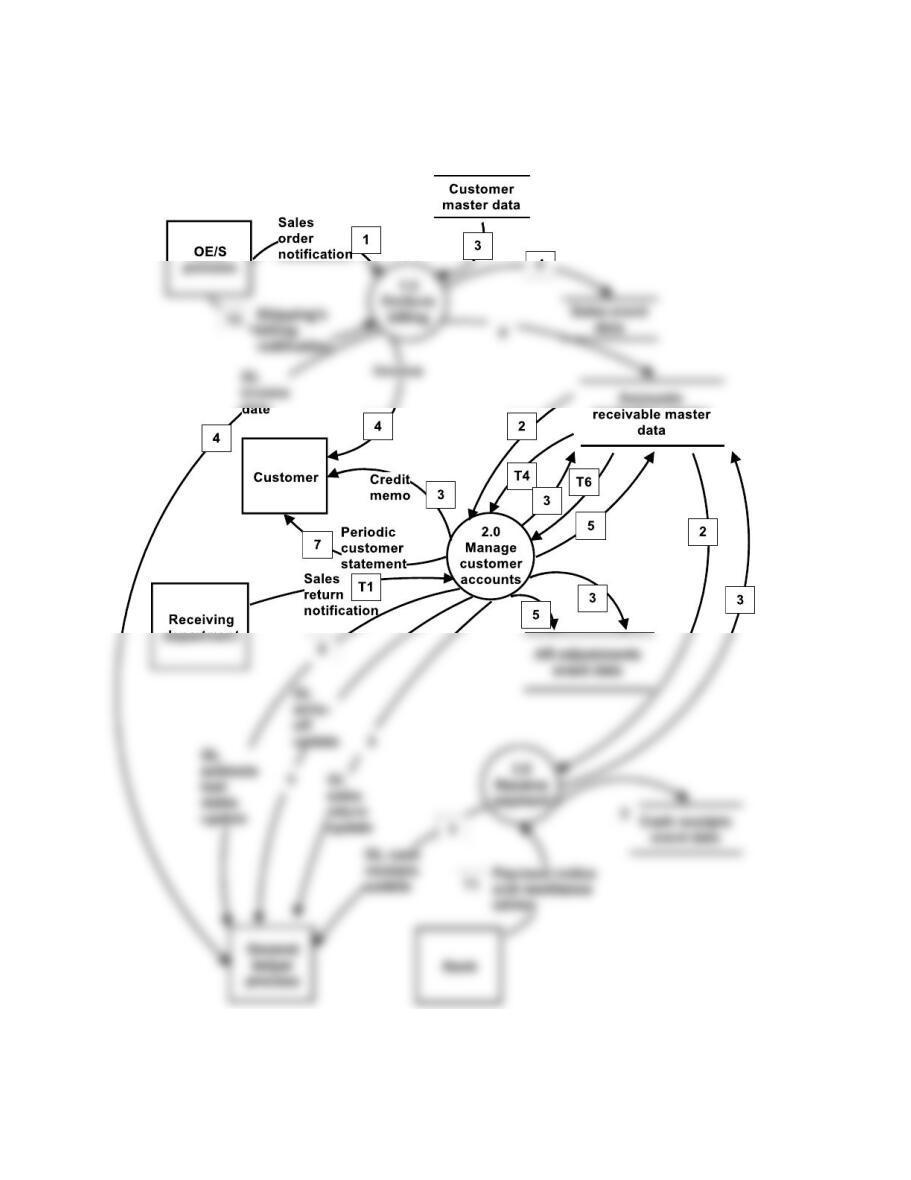
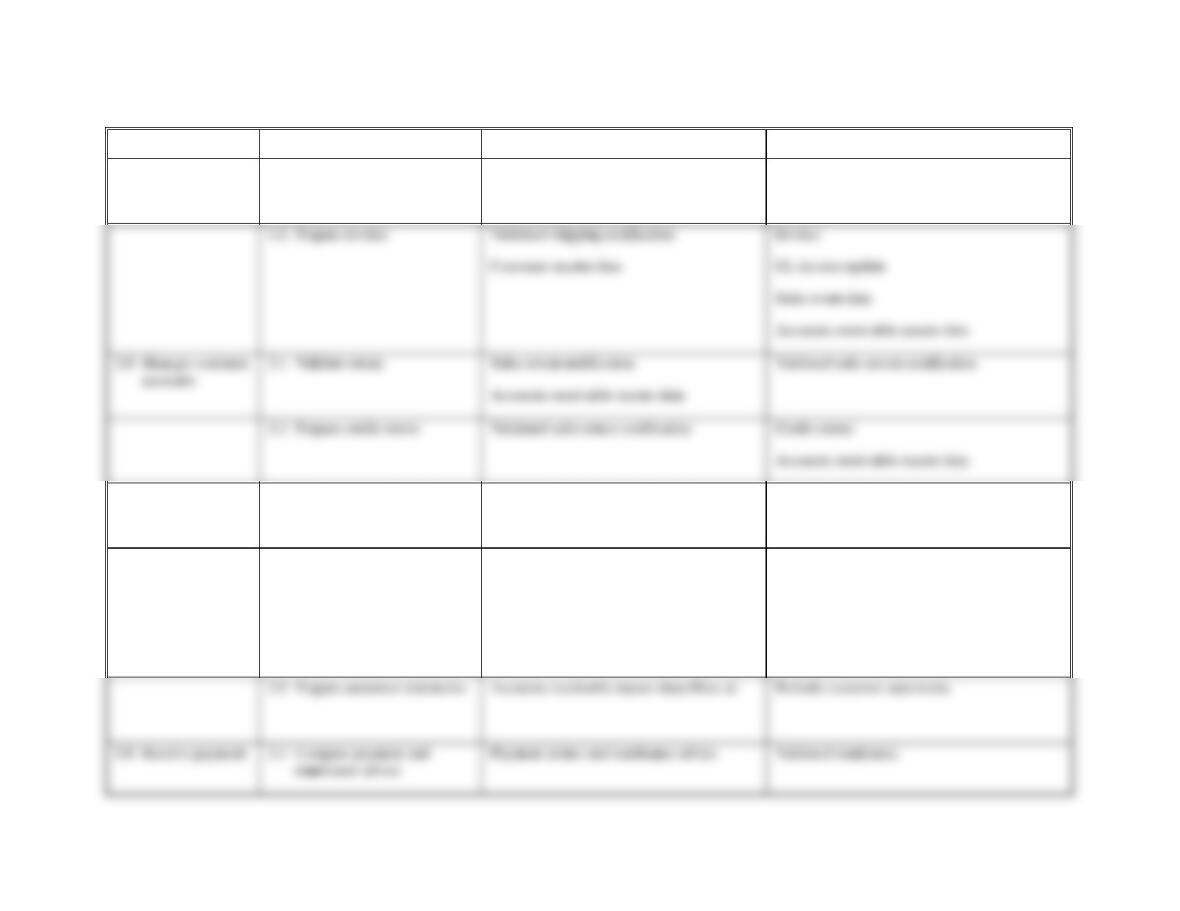
P 11-8 ANS. See Figure SM -11.28. The following explanations apply:
• Bubble 1.0
o The OE/S process sends the sales order notification to the billing process
(flow 1), where it is held pending notification of shipment.
o Upon shipment of the goods, the OE/S process sends shipping’s billing
notification (flow T2) to the billing process to trigger bubble 1.0.
• Bubble 2.0 has three triggers:
o The first in, flow 1, is a notice from receiving that goods have been returned.
o Process 2.0 then reads the AR master data (flow 2) to determine when and if
the goods were purchased, the terms of the sale, and if the invoice has been
paid.
• Bubble 3.0
o The lockbox sends payment and remittance advice data (flow T1) to trigger
process 3.0. The AR balance is read (flow 2) to validate the payment.
o Once validated, the AR balance is reduced, the GL is notified of the
payment, a deposit is sent to the bank, and a record of the payment is stored
in the cash receipts event data (all flow 3).

Accounting Information Systems, 10e 57
• The AR master data contains a record of each invoice that is updated as the
invoice is paid, adjusted (credit memo), or written off.
58 Solutions for Chapter 11
FIGURE SM-11.28 Problem 8 Solution—Annotated Text Figure 11.3
Accounting Information Systems, 10e 59
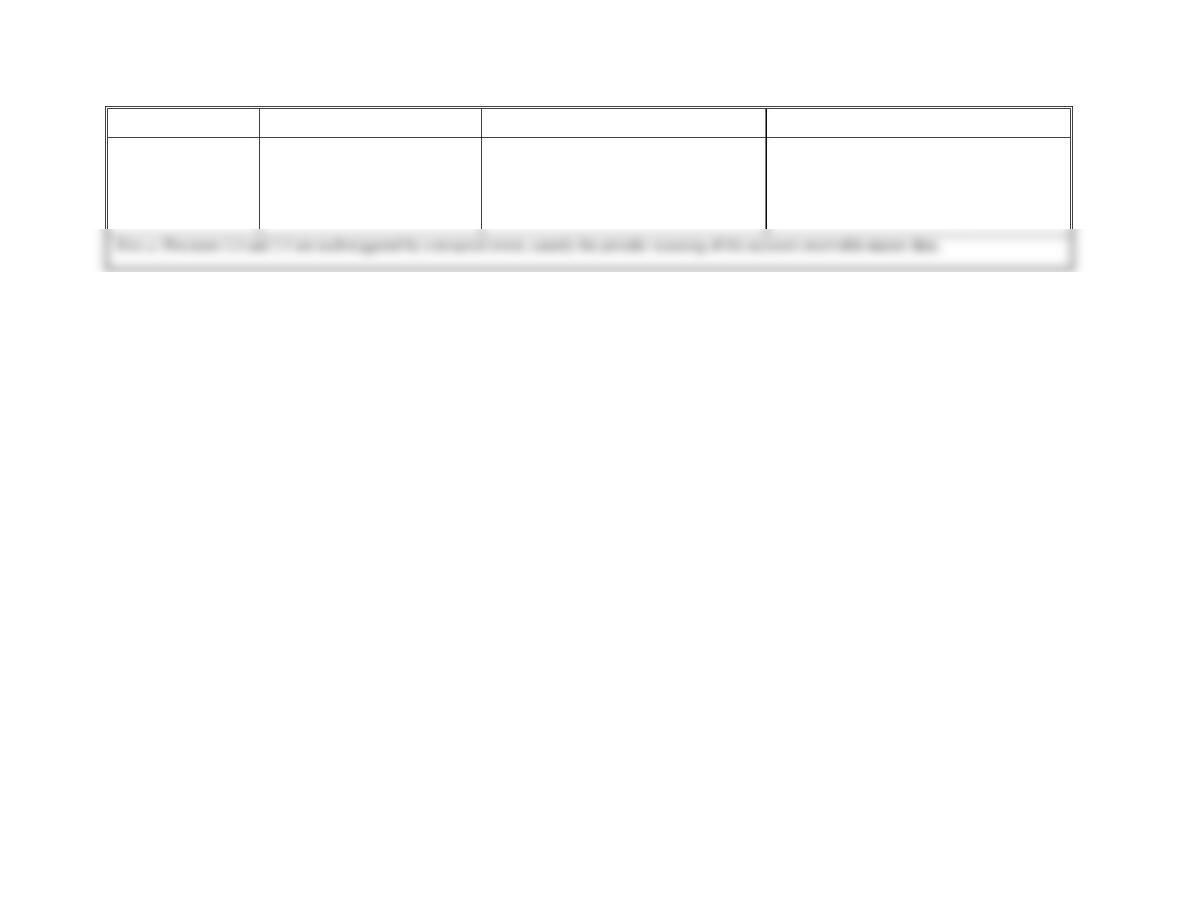
P 11-9 ANS.
Process
Subsidiary Functions
Inputs
Outputs
1.0 Perform billing
1.1 Compare
Sales order notification
Shipping’s billing notification
Validated shipping notification
2.3 Prepare journal voucher
Validated sales return notification
GL sales return update
Accounts receivable adjustments event data
2.4 Prepare bad debts journal
voucher
Accounts receivable master data (Note a)
GL estimated bad debts update
GL write-off update
Accounts receivable adjustments event data
Accounts receivable master data
2.5 Prepare customer statements
Accounts receivable master data (Note a)
Periodic customer statements
1.2 Prepare invoice
Validated shipping notification
Invoice
2.0 Manage customer
2.1 Validate return
Sales return notification
Validated sales return notification
2.2 Prepare credit memo
Validated sales return notification
Credit memo
60 Solutions for Chapter 11
Process
Subsidiary Functions
Inputs
Outputs
3.2 Record customer payment
Validated remittance
Accounts receivable master data
GL cash receipts update
Cash receipts event data
Accounts receivable master data
Table SM-11.1 Problem 9 Solution—Summary of B/AR/CR Processes, Inputs, Outputs, and Data
Accounting Information Systems, 10e 61
P 11-10
ANS. Solutions will vary according to the tables selected. However, the following guidelines
should be helpful for grading the solutions:
1. From the file, ensure that the tables are linked in relationships with cardinalities.
2. From the printouts, ensure that the tables are populated with three or more records and
that there is one form for each table for entering data into that table. Check the forms for
appearance and functionality.