CHAPTER 11
Corporations: Organization, Stock Transactions,
Dividends, and Retained Earnings
ASSIGNMENT CLASSIFICATION TABLE
Learning Objectives
Questions
Brief
Exercises
Do It!
Exercises
A
Problems
*1. Discuss the major
characteristics of a
corporation.
1, 2, 3, 4,
5, 6, 7, 8, 9,
10
1
1a, 1b
1, 2
*2. Explain how to account for
the issuance of common
and preferred stock.
11
2, 3, 4, 5
2
3, 4, 5, 6,
8, 10, 11,
12
1A, 3A, 6A
*7. Describe the use and
content of the
stockholders’ equity
statement.
9A
11, 12
cash dividends.
15, 18, 19
5, 13, 16
stock dividends and splits.
23
16, 17, 24,
10, 11, 12
6a, 6b
10, 11, 17,
18, 19, 20,
1A, 2A, 3A,
ASSIGNMENT CHARACTERISTICS TABLE
Problem
Number
Description
Difficulty
Level
Time
Allotted (min.)
1A
Journalize stock transactions, post, and prepare paid-in
capital section.
Simple
30–40
4A
Prepare dividend entries and stockholders’ equity section.
Moderate
30–40
5A
Prepare retained earnings statement and stockholders’
equity section, and compute allocation of dividends.
Moderate
30–40
6A
Prepare entries for stock transactions and prepare
30–40
7A
Moderate
30–40
per share.
Simple
20–30
Prepare stockholders’ equity statement.
20–30
2A
Journalize and post treasury stock transactions, and
25–35
3A
Journalize and post transactions, prepare stockholders’
equity section.
Moderate
40–50

WEYGANDT FINANCIAL AND MANAGERIAL ACCOUNTING 2E
CHAPTER 11
CORPORATIONS: ORGANIZATION, STOCK TRANSACTIONS,
DIVIDENDS, AND RETAINED EARNINGS
Number
LO
BT
Difficulty
Time (min.)
BE1
1
K
Simple
4–6
BE2
2
AP
Simple
2–3
BE3
2
AP
Simple
2–3
BE4
2
AP
Simple
2–4
DI1b
1
K
Simple
2-4
DI2
2
AP
Simple
4–6
DI3
3
AP
Simple
4–6
DI4
4
AP
Simple
6-8
DI5
5
AP
Simple
6–8
DI6a
6
AP
Simple
6–8
6
AP
Simple
6-8
EX1
1
K
Simple
6–8
EX2
1
Simple
6–8
EX3
2
AP
Simple
6–8
EX4
2
AP
Simple
8–10
EX5
AP
Simple
8–10
EX6
2
AP
Simple
6–8
EX7
3
AP
Simple
6–8
EX8
AP
Simple
4–6
EX9
3
AP
Simple
8–10
EX10
2, 6
AP
Simple
8–10
EX11
2, 3, 6
C
Simple
6–8
EX12
2, 3
AN
Moderate
8–10
EX13
4
AP
Simple
6–8
EX14
5
AP
Simple
4–6
BE5
3
AP
Simple
4–6
BE6
3
AP
Simple
2–3
BE7
4
AP
Simple
2–4
BE8
5
AP
Simple
4–6
BE9
5
AP
Simple
6–8
BE10
6
AP
Simple
3–5
BE11
6
AP
Simple
4–6
BE12
6
AP
Simple
4–6
*BE13
8
AP
Simple
2–4
CORPORATIONS: ORGANIZATION, STOCK TRANSACTIONS,
DIVIDENDS, AND RETAINED EARNINGS
Number
LO
BT
Difficulty
Time (min.)
EX15
5
AP
Simple
6–8
EX16
4, 5
AN
Moderate
5–7
*EX23
6, 8
AP
Simple
10–12
*EX24
8
AP
Simple
6–8
P1A
2, 6
AP
Simple
30–40
P2A
3, 6
AP
25–35
P3A
AP
40–50
P4A
4, 5, 6
AP
Moderate
30–40
P5A
AP
Simple
20–30
P6A
AP
20–30
P7A
4, 5, 6
AP
Moderate
30–40
*P8A
6, 8
AP
20–30
*P9A
6, 7
AP
Simple
20–30
BYP1
AP
Simple
10–15
BYP2
3
AN
Simple
15–20
BYP3
3
AN
Simple
15–20
BYP4
1, 3, 6
S
Moderate
15–20
BYP5
1, 4
AP
Simple
10–15
BYP6
1
Simple
10–15
BYP7
E
Simple
15–20
BYP8
2
AP
Simple
10–15
BYP9
5
AP
Simple
10–15
EX17
6
AP
Simple
4–6
EX18
6
AP
Simple
4–6
EX19
Simple
4–6
EX20
6
AP
Simple
8–10
EX21
6
AP
Simple
6–8
EX22
AP
Simple
6–8
BLOOM’ S TAXONOMY TABLE
Correlation Chart between Bloom’s Taxonomy, Learning Objectives and End-of–Chapter Exercises and Problems
Learning Objective
Knowledge
Comprehension
Application
Analysis
Synthesis
Evaluation
1. Discuss the major characteristics of a
corporation.
Q11-4
Q11-5
Q11-6
BE11-1
DI11-1a
E11-1
E11-2
Q11-1
Q11-2
Q11-3
Q11-9
Q11-10
BE11-1
DI11-1b
Q11-7
4. Explain how to account for cash
dividends.
Q11-15
Q11-18
Q11-19
BE11-7
DI11-4
E11-5
E11-13
E11-16
P11-4A
P11-5A
P11-7A
5. Explain how to account for stock
dividends and splits.
Q11-16
Q11-20
Q11-21
Q11-22
Q11-23
BE11-8
BE11-9
DI11-5
E11-14
E11-15
P11-4A
P11-5A
P11-7A
E11-16
E11-23
P11-1A
P11-2A
P11-7A
P11-8A
P11-9A
P11-9A
BE11-4
DI11-2
E11-5
E11-6
3. Explain how to account for treasury
stock.
Q11-12
Q11-13
Q11-14
E11-11
BE11-6
DI11-3
E11-7
P11-2A
P11-3A
E11-12
ANSWERS TO QUESTIONS
1. (a) Separate legal existence. A corporation is separate and distinct from its owners and it acts
in its own name rather than in the name of its stockholders. In contrast to a partnership, the
acts of the owners (stockholders) do not bind the corporation unless the owners are agents
2. (a) Corporation management is an advantage to a corporation because it can hire professional
managers to run the company. Corporation management is a disadvantage to a corporation
because it prevents owners from having an active role in directly managing the company.
3. (a) (1) A charter is a document that creates a corporation. A charter is also referred to as the
articles of incorporation.
(2) The by-laws are the internal rules and procedures for conducting the affairs of a
corporation. They also indicate the powers of the stockholders, directors, and officers of
the corporation.
4. In the absence of restrictive provisions, the basic ownership rights of common stockholders are
the rights to:
(a) vote in the election of board of directors and in corporate actions that require stockholders’
approval.
(b) share in corporate earnings through the receipt of dividends.
(c) keep the same percentage ownership when new shares of common stock are issued (the
preemptive right).
(d) share in assets upon liquidation.
Questions Chapter 11 (Continued)
6. Each of the three basic financial statements for a corporation differs from those for a proprietorship.
The income statement for a corporation will have income tax expense. For a corporation, a retained
earnings statement is prepared to show the changes in retained earnings during the period. In the
balance sheet, the owner’s equity section is called the stockholders’ equity section.
8. The par value of common stock has no effect on its market value. Par value is a legal amount per
share which usually indicates the minimum amount at which a share of stock can be issued. The
market value of stock depends on a number of factors, including the company’s anticipated future
11. When stock is issued for services or noncash assets, the cost should be measured at either
the fair value of the consideration given up (in this case, the stock) or the fair value of the
consideration received (in this case, the land), whichever is more clearly evident. In this case, the
fair value of the stock is more objectively determinable than that of the land, since the stock is
actively traded in the securities market. The appraised value of the land is merely an estimate of
the land’s value, while the market price of the stock is the amount the stock was actually worth on
the date of exchange. Therefore, the land should be recorded at $95,000, the common stock at
$20,000, and the excess ($75,000) as paid-in capital in excess of par.
Questions Chapter 11 (Continued)
14. When treasury stock is resold at a price above original cost, Cash is debited for the amount of the
proceeds ($16,000), Treasury Stock is credited at cost ($12,000), and the excess ($4,000) is
15. (a) Common stock and preferred stock both represent ownership of the corporation. Common stock
signifies the basic residual ownership; preferred stock is ownership with certain privileges or
16. The debits and credits to retained earnings are:
Debits
Credits
1.
Net loss
1.
Net income
2.
Prior period adjustments for
overstatement of net income
2.
Prior period adjustments for
understatement of net income
3.
Cash and stock dividends
4.
Some disposals of treasury stock
17. The answers are summarized in the table below:
Account
Classification
(g)
Preferred Stock
Paid-in capital—additional paid-in capital
Paid-in capital—capital stock
Questions Chapter 11 (Continued)
19. (a) The three dates are:
Declaration date is the date when the board of directors formally declares the cash dividend
and announces it to stockholders. The declaration commits the corporation to a binding legal
20. A cash dividend decreases assets, retained earnings, and total stockholders’ equity. A stock dividend
decreases retained earnings, increases paid-in capital, and has no effect on total assets and total
stockholders’ equity.
21. A corporation generally issues stock dividends for one of the following reasons:
(a) To satisfy stockholders’ dividend expectations without spending cash.
22. In a stock split, the number of shares is increased in the same proportion that par value is decreased.
Thus, in the Gorton Corporation the number of shares will increase to 60,000 = (30,000 X 2) and
the par value will decrease to $5 = ($10 ÷ 2). The effect of a split on market value is generally
inversely proportional to the size of the split. In this case, the market price would fall to approximately
$60 per share ($120 ÷ 2).
23. The different effects of a stock split versus a stock dividend are:
Questions Chapter 11 (Continued)
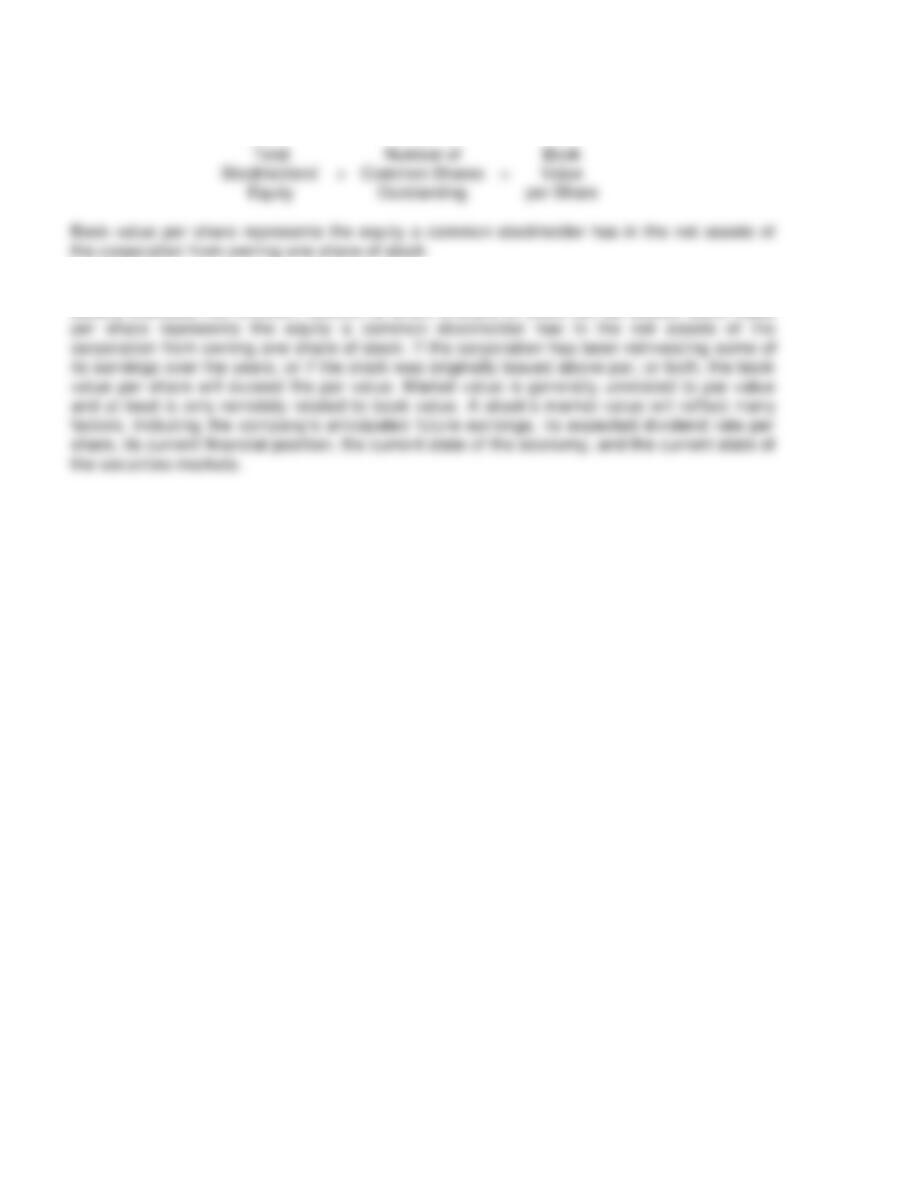
*26. The formula for computing book value per share when a corporation has only common stock
outstanding is:
*27. Par value is a legal amount per share, often set at an arbitrarily selected amount, which
usually indicates the minimum amount at which a share of stock can be issued. Book value
SOLUTIONS TO BRIEF EXERCISES
BRIEF EXERCISE 11-1
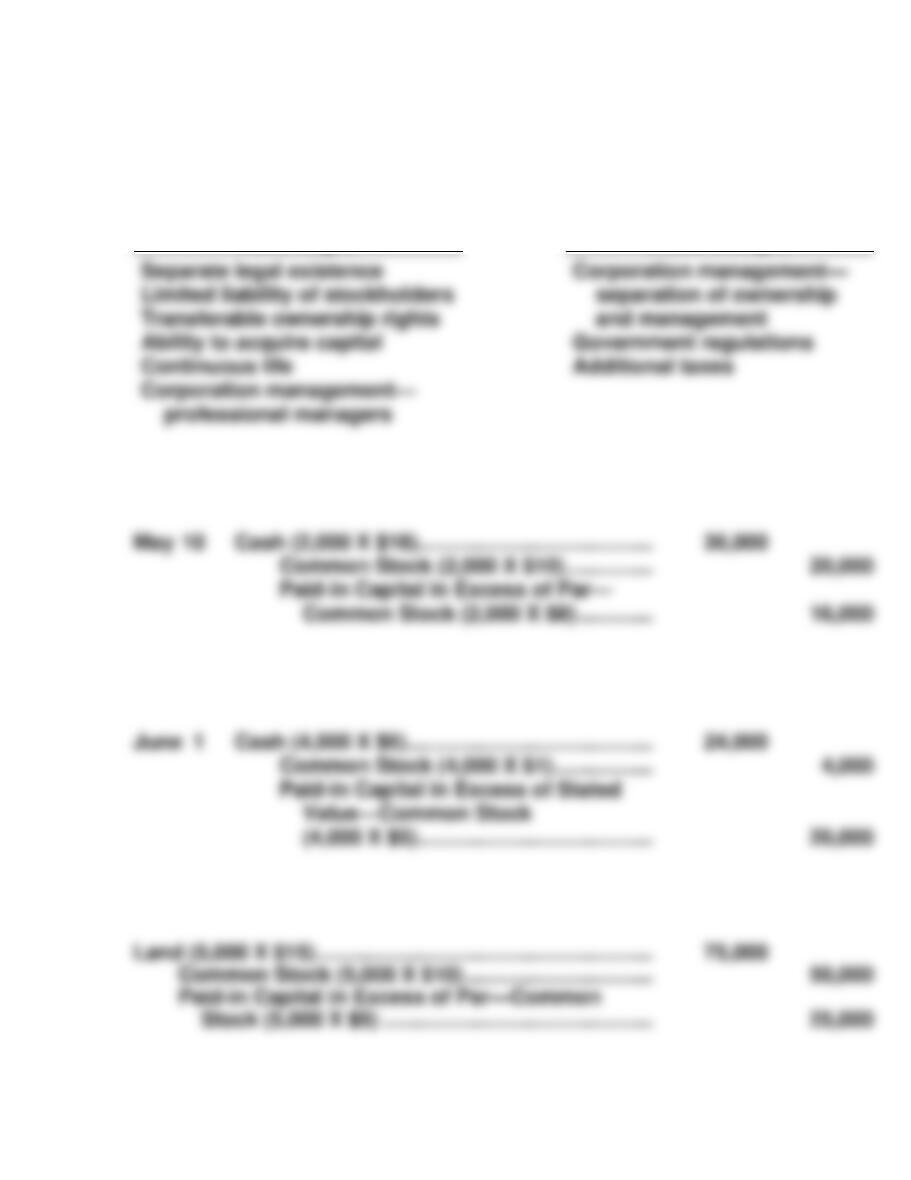
The advantages and disadvantages of a corporation are as follows:
Advantages
Disadvantages
BRIEF EXERCISE 11-2
BRIEF EXERCISE 11-3
BRIEF EXERCISE 11-4
BRIEF EXERCISE 11-5
professional managers
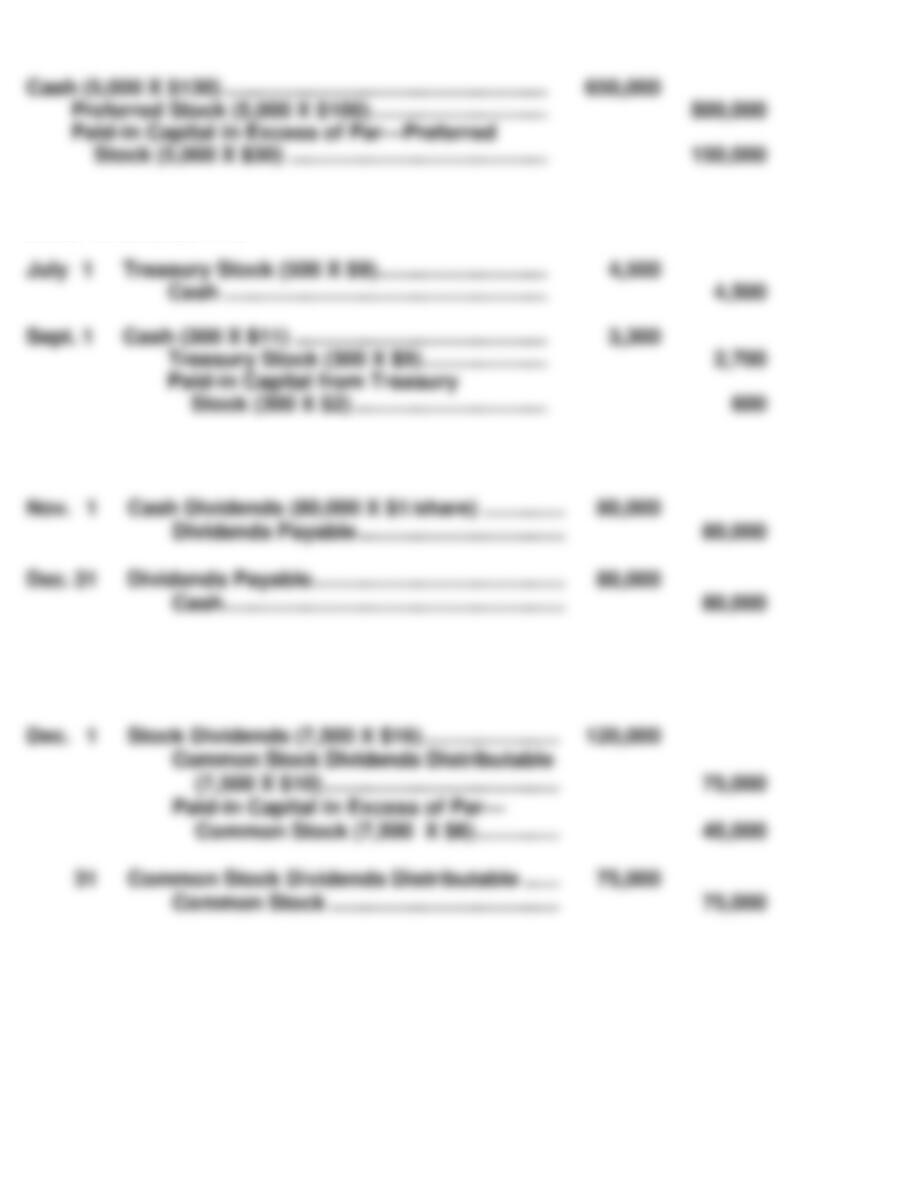
BRIEF EXERCISE 11-6
BRIEF EXERCISE 11-7
BRIEF EXERCISE 11-8
BRIEF EXERCISE 11-9
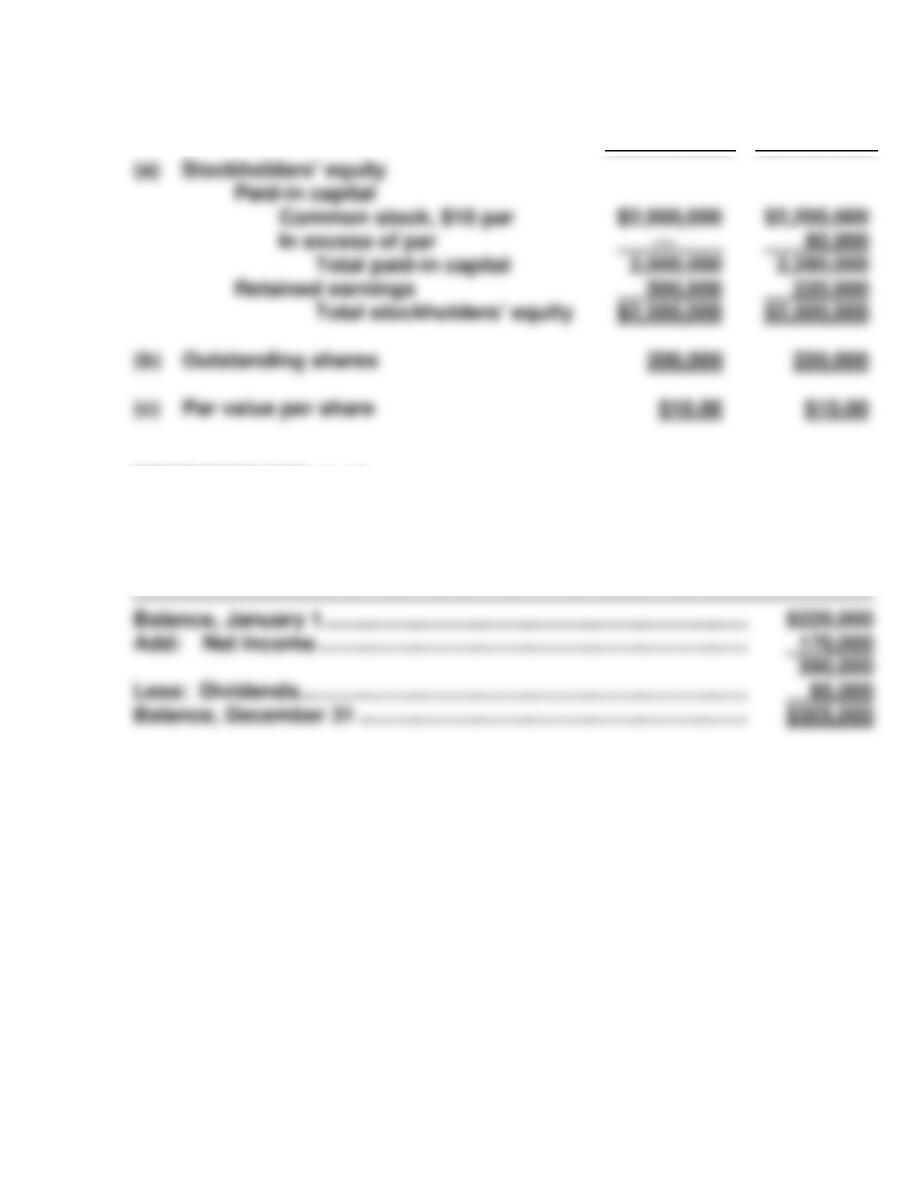
Before
Dividend
After
Dividend
BRIEF EXERCISE 11-10
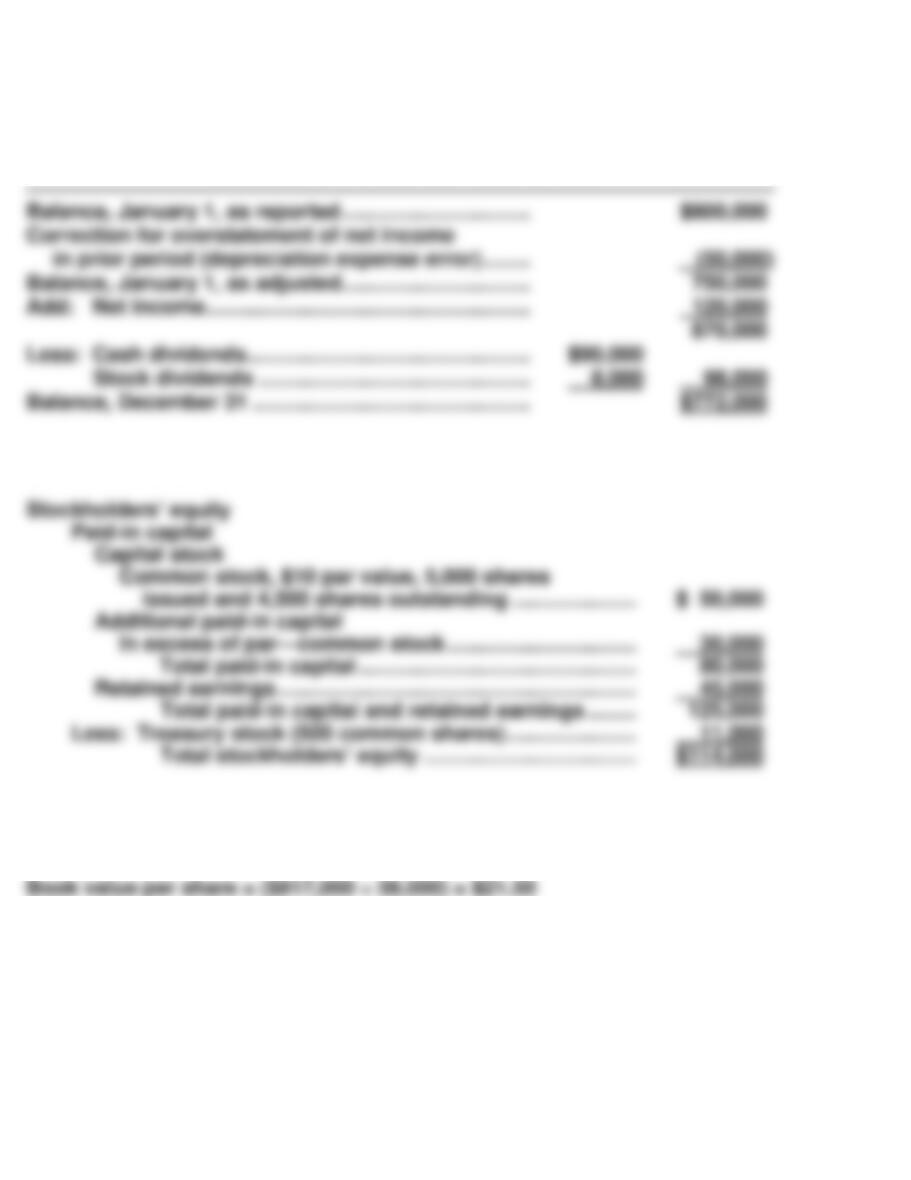
SOTO INC.
Retained Earnings Statement
For the Year Ended December 31, 2017
BRIEF EXERCISE 11-11
PALMER INC.
Retained Earnings Statement
For the Year Ended December 31, 2017
BRIEF EXERCISE 11-12
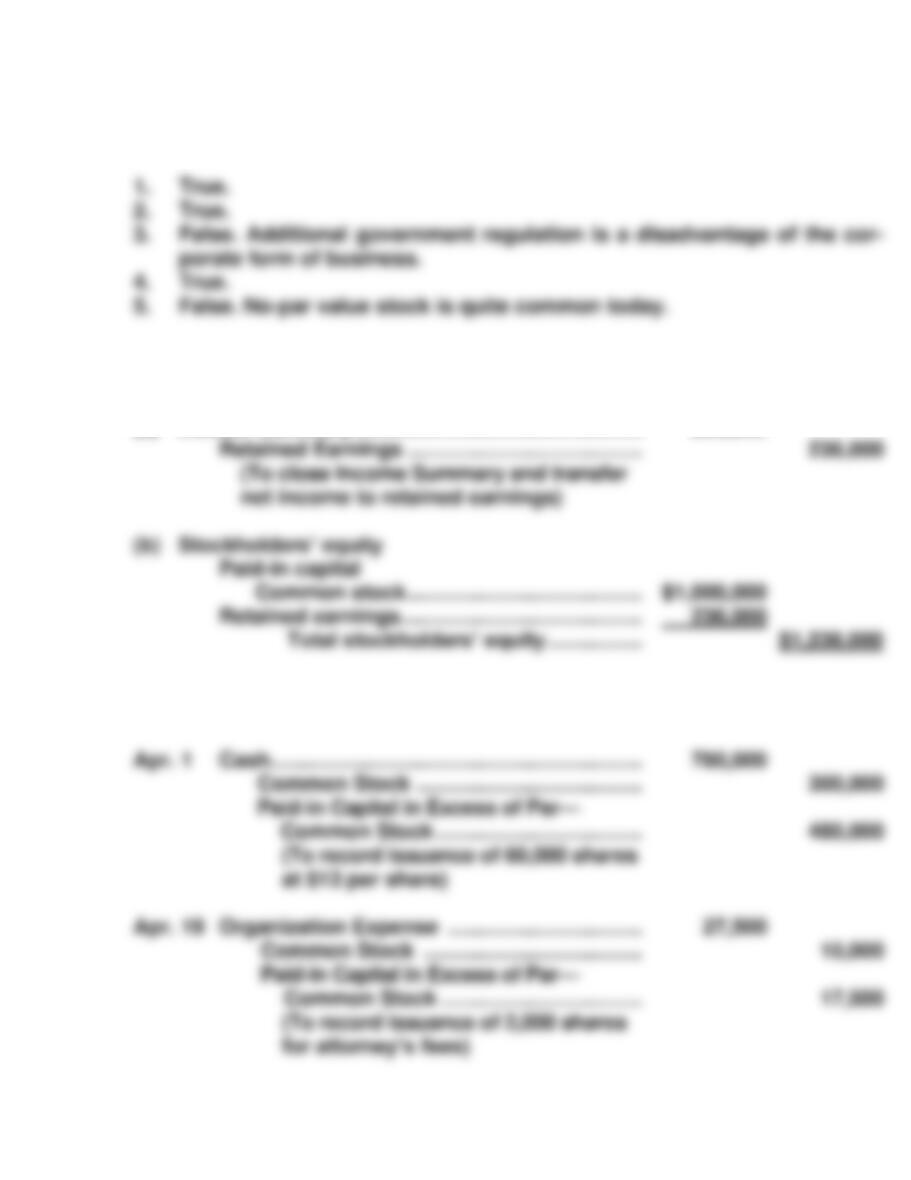
BRIEF EXERCISE 11-13
SOLUTIONS FOR DO IT! REVIEW EXERCISES
DO IT! 11-1a
DO IT! 11–1b
(a) Income Summary …………………………………………. 236,000
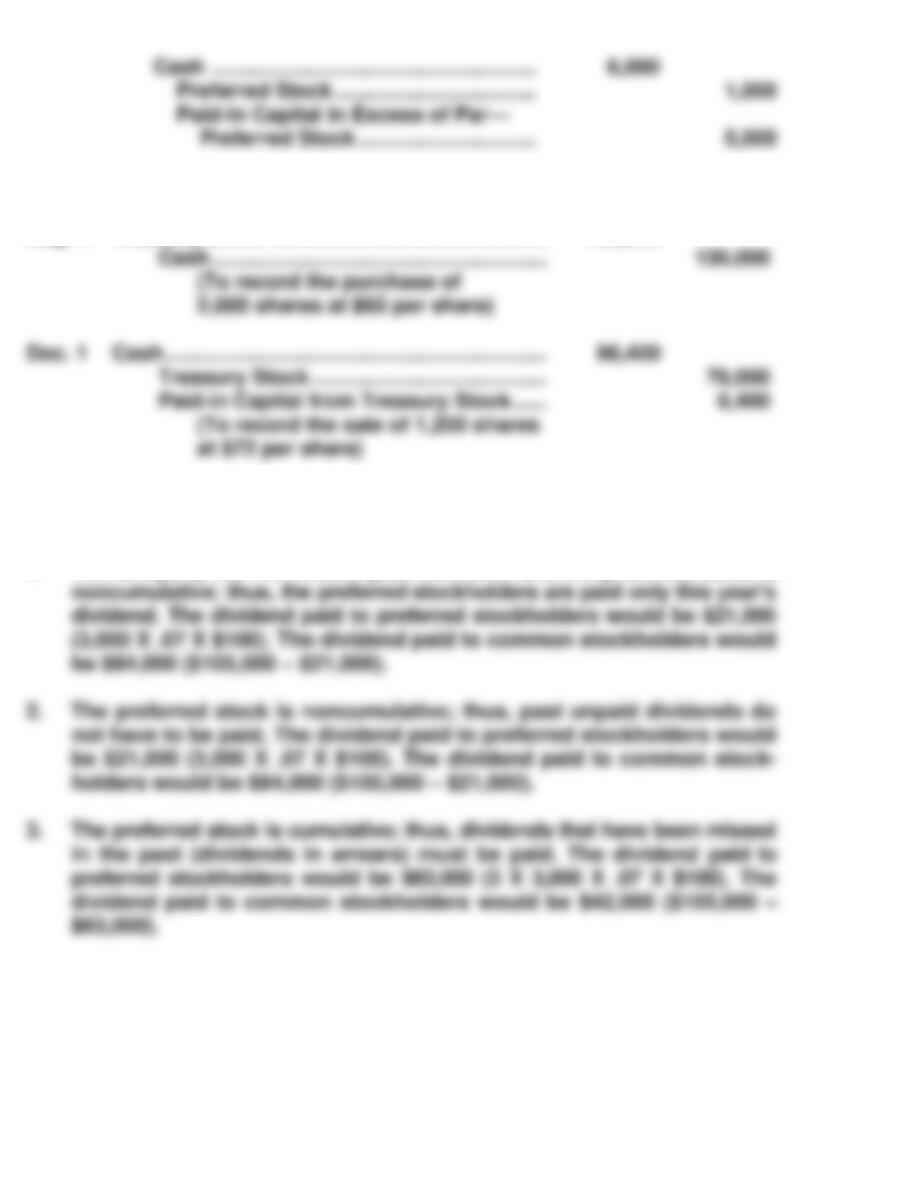
DO IT! 11-2
DO IT! 11-3
Aug. 1 Treasury Stock ……………………………………….. 130,000
DO IT! 11-4
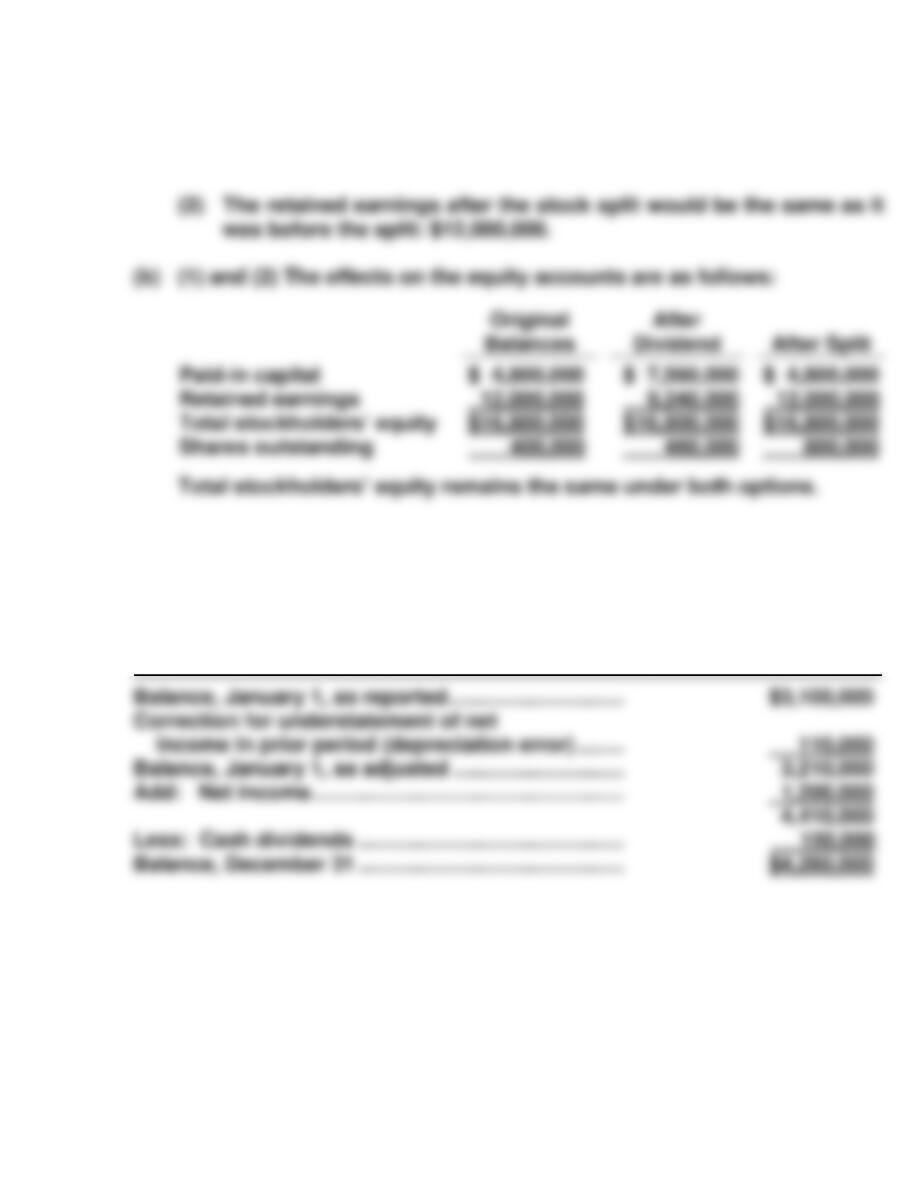
1. The company has not missed past dividends and the preferred stock is
DO IT! 11-5
(a) (1) The stock dividend amount is $2,760,000 [(400,000 X 15%) X $46].
The new balance in retained earnings is $9,240,000 ($12,000,000 –
$2,760,000).
DO IT! 11-6a
FOLEY CORPORATION
Retained Earnings Statement
For the Year Ended December 31, 2017
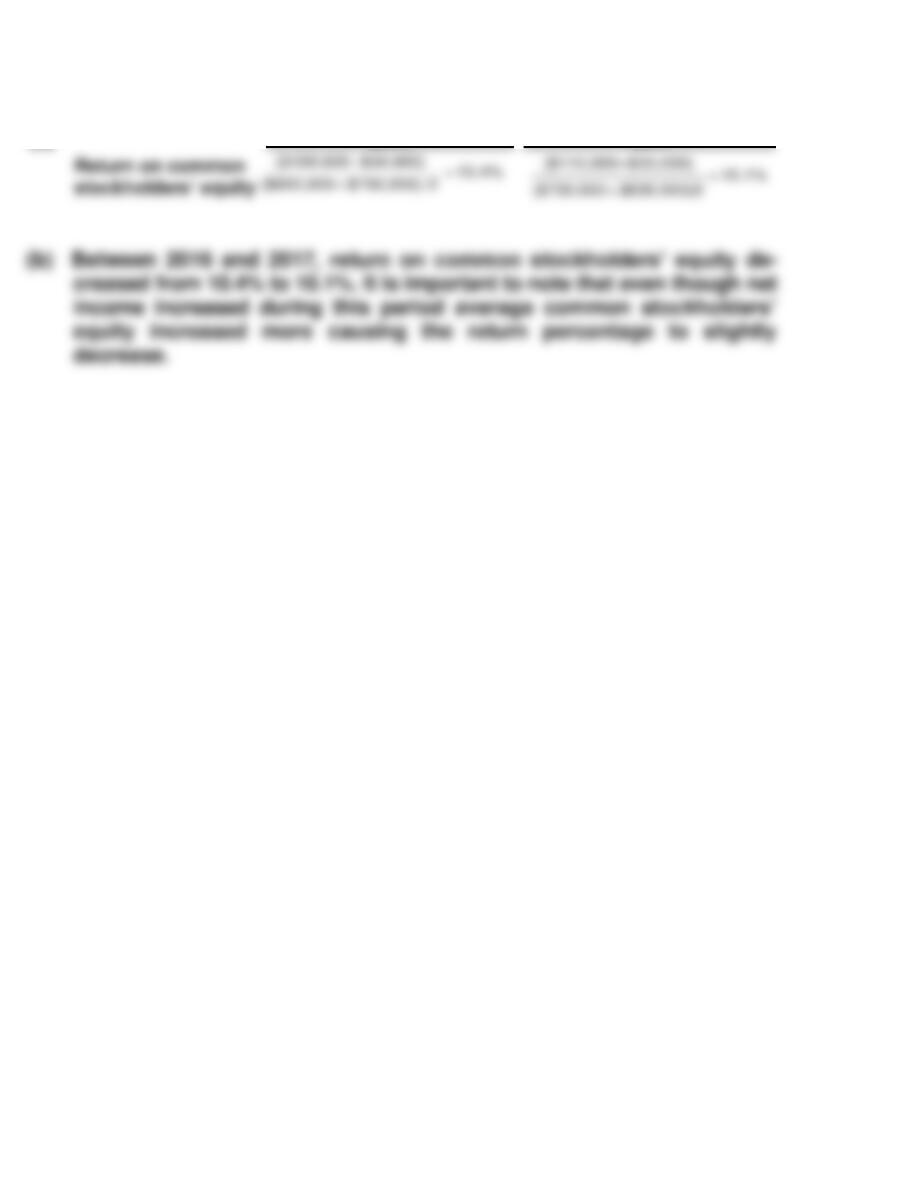
DO IT! 11-6b
(a)
2016
2017
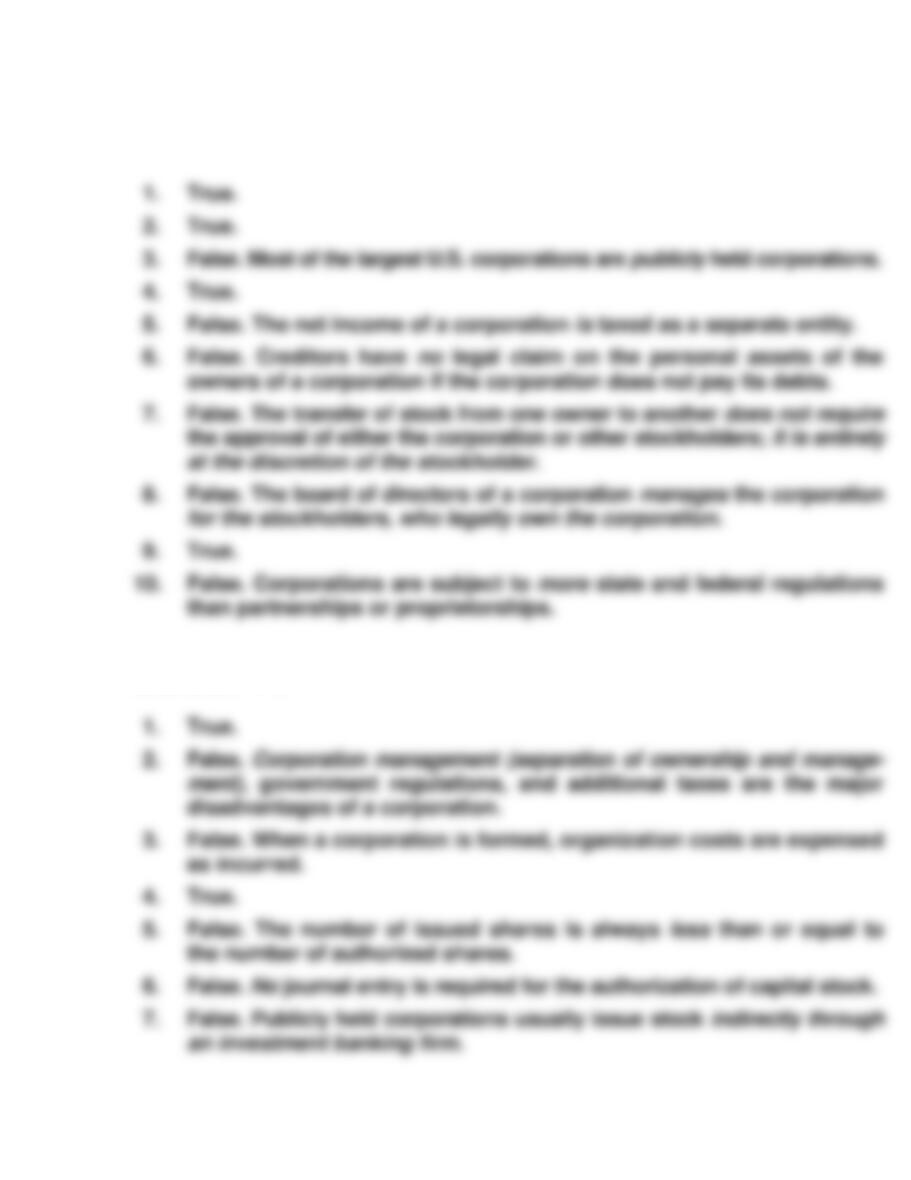
SOLUTIONS TO EXERCISES
EXERCISE 11-1
EXERCISE 11-2
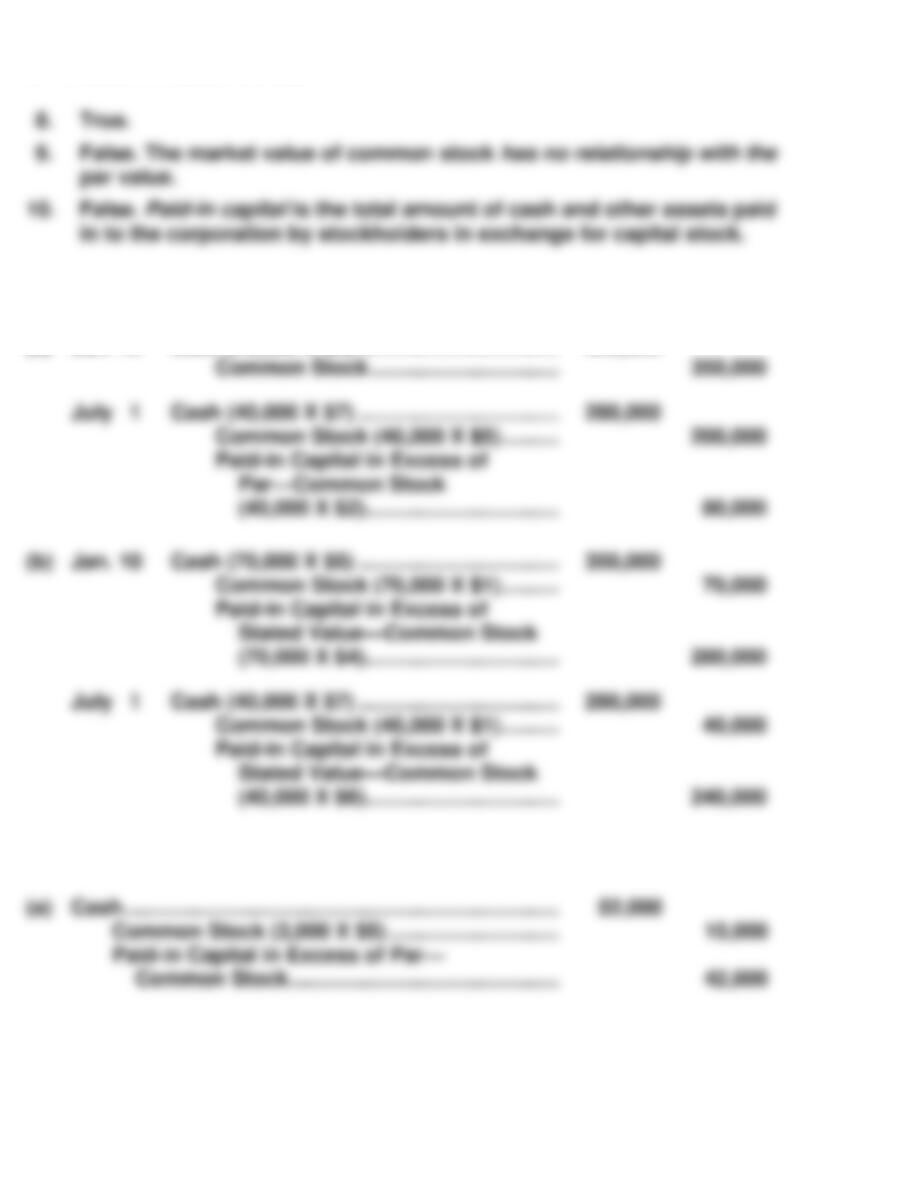
EXERCISE 11-2 (Continued)
EXERCISE 11-3
(a) Jan. 10 Cash (70,000 X $5) ……………………………. 350,000
EXERCISE 11-4
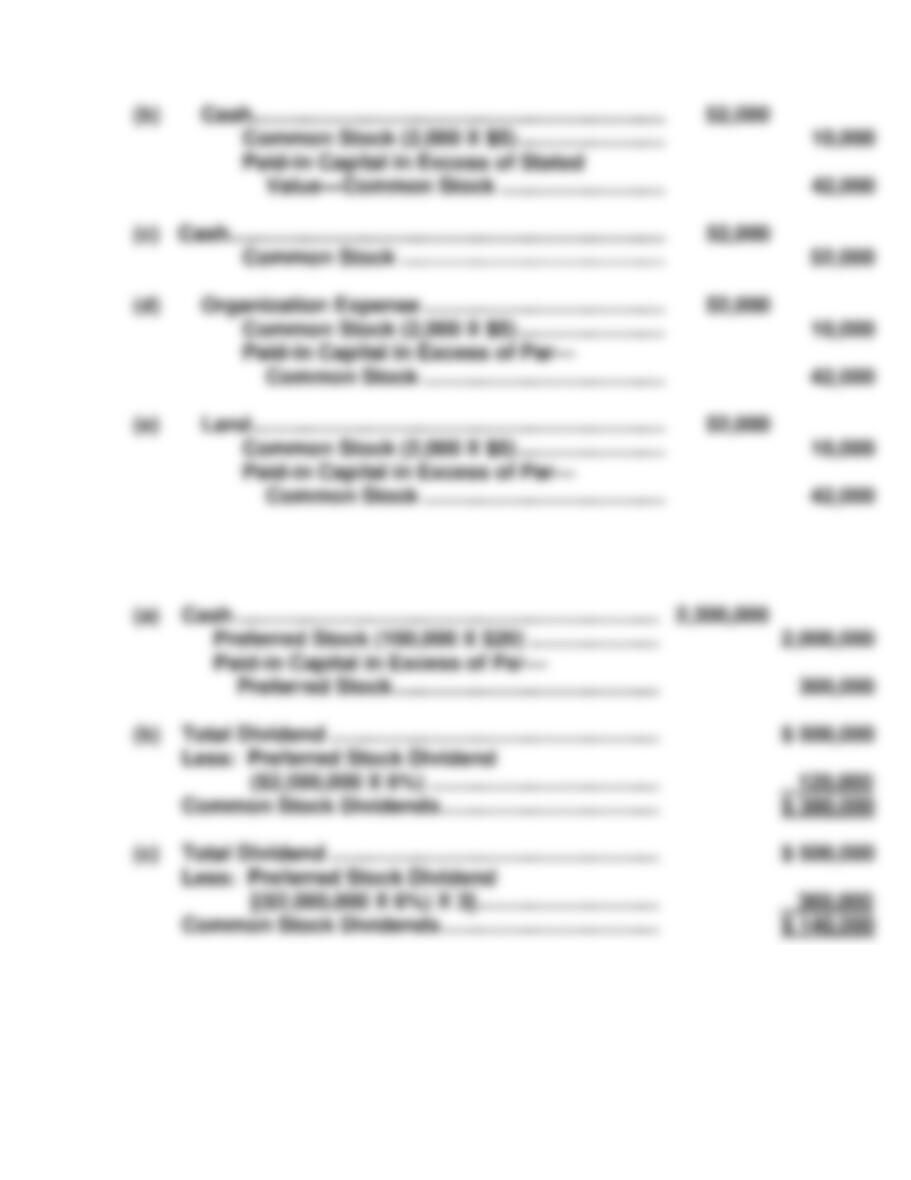
EXERCISE 11-4 (Continued)
EXERCISE 11-5
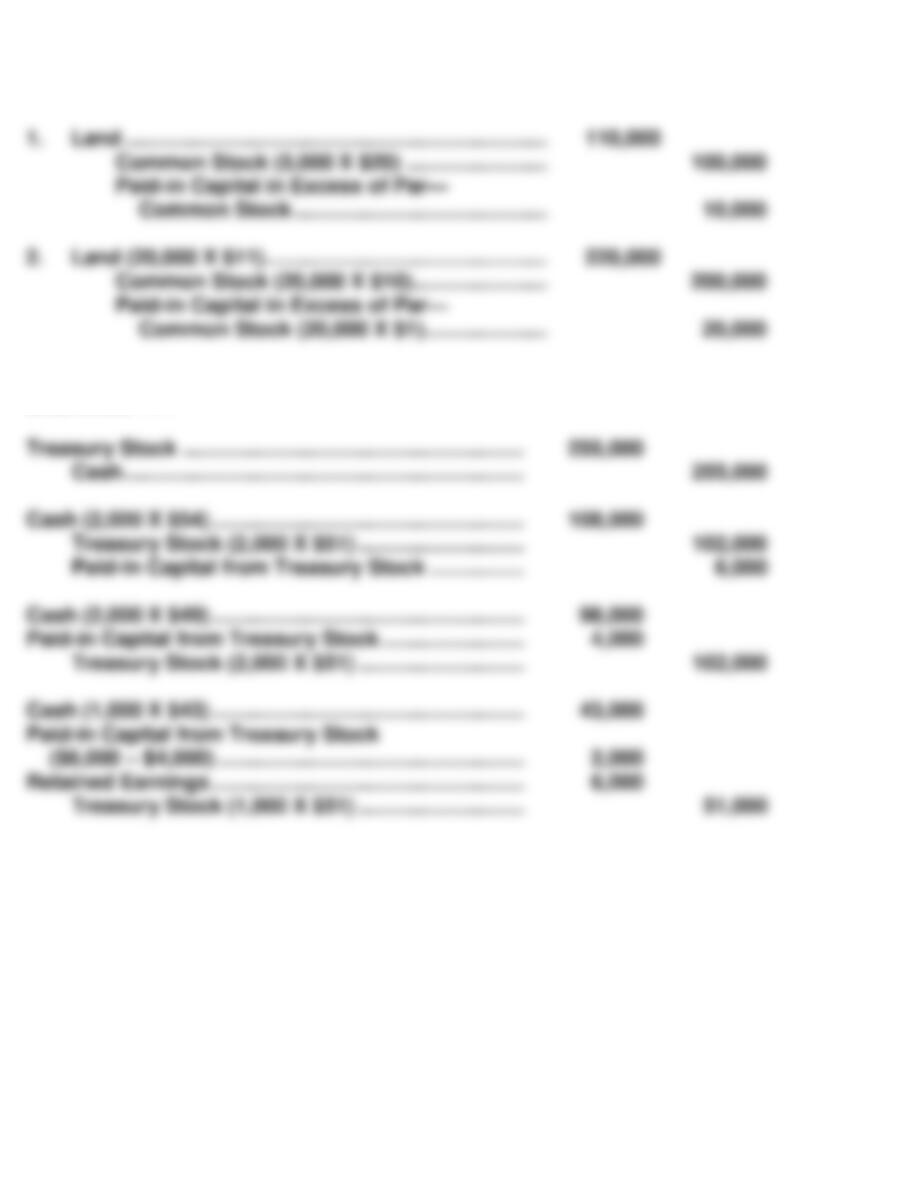
EXERCISE 11-6
EXERCISE 11-7
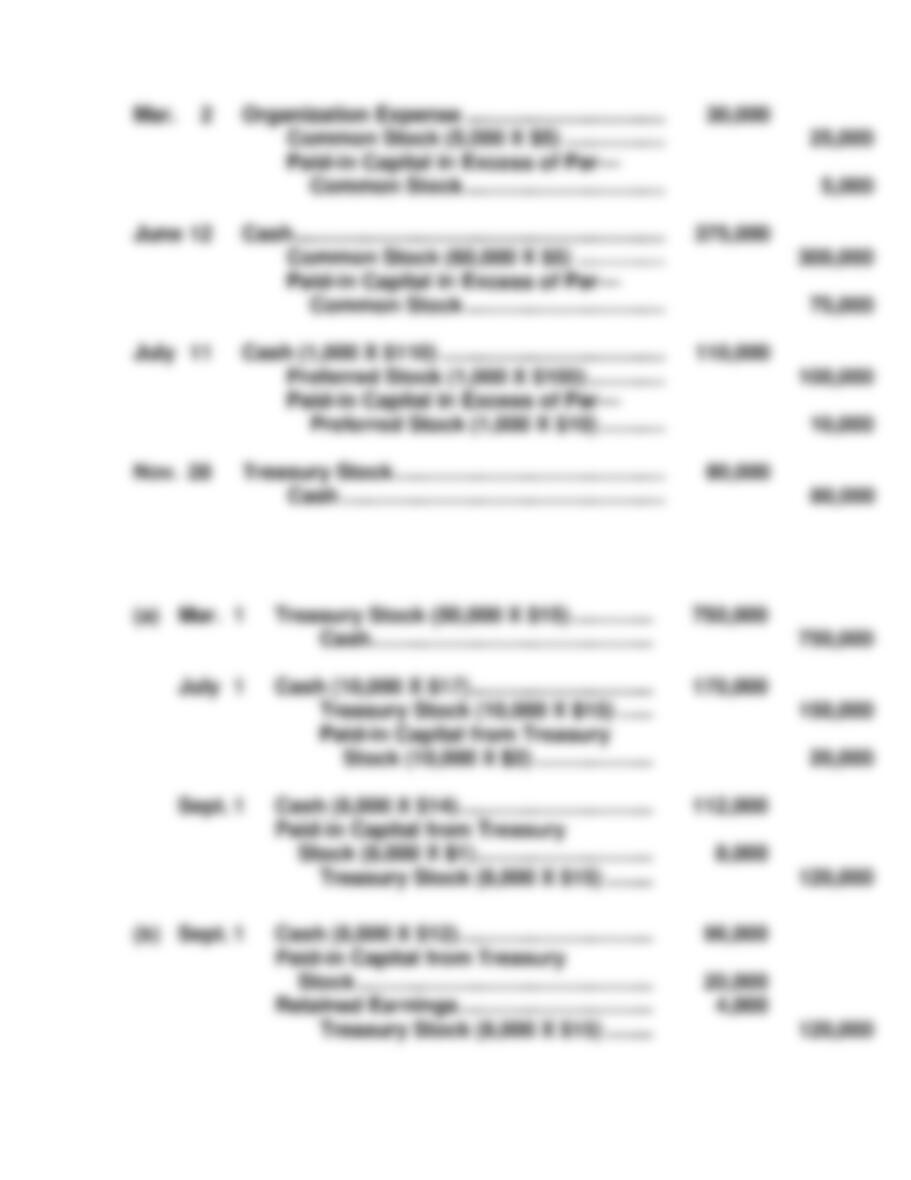
EXERCISE 11-8
EXERCISE 11-9
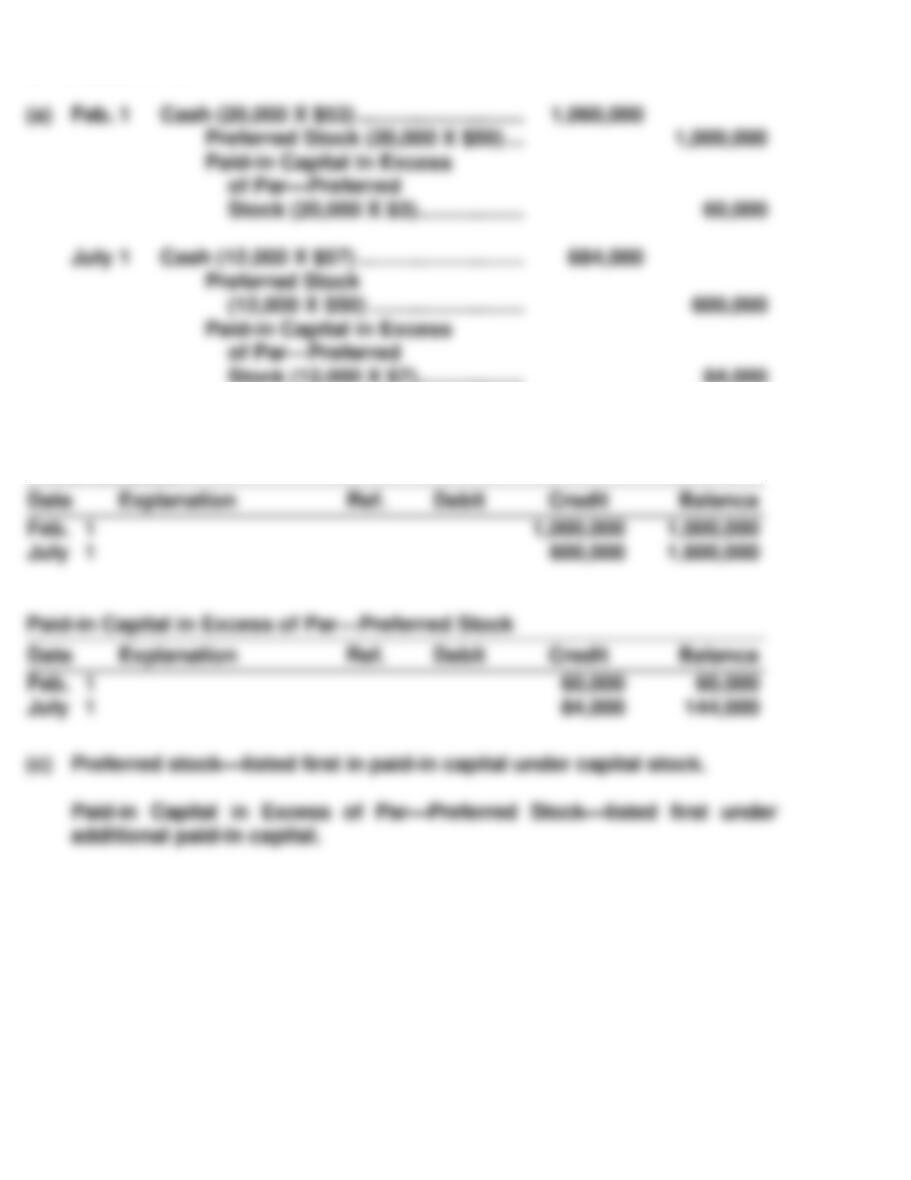
EXERCISE 11–10
Stock (12,000 X $7) ……………… 84,000
(b)
Preferred Stock
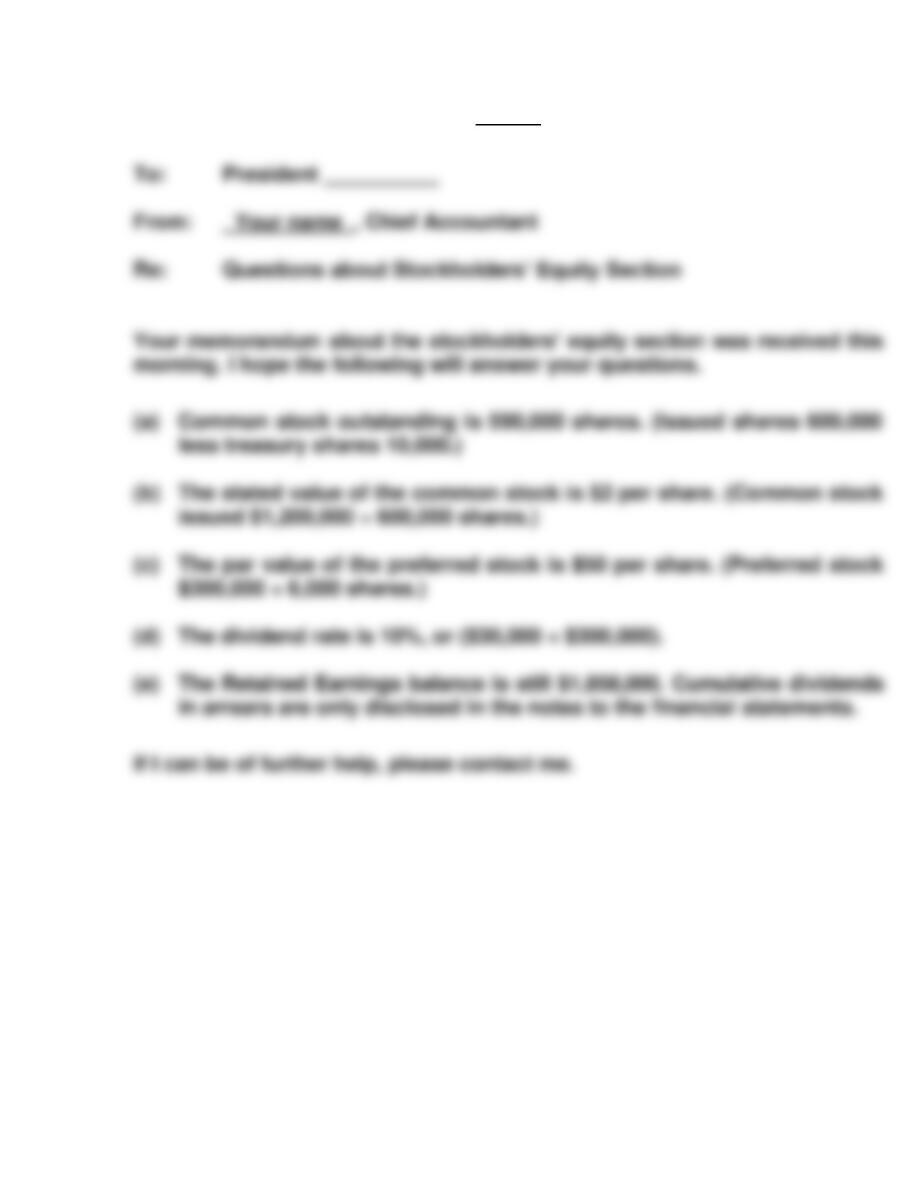
EXERCISE 11-11
MEMO
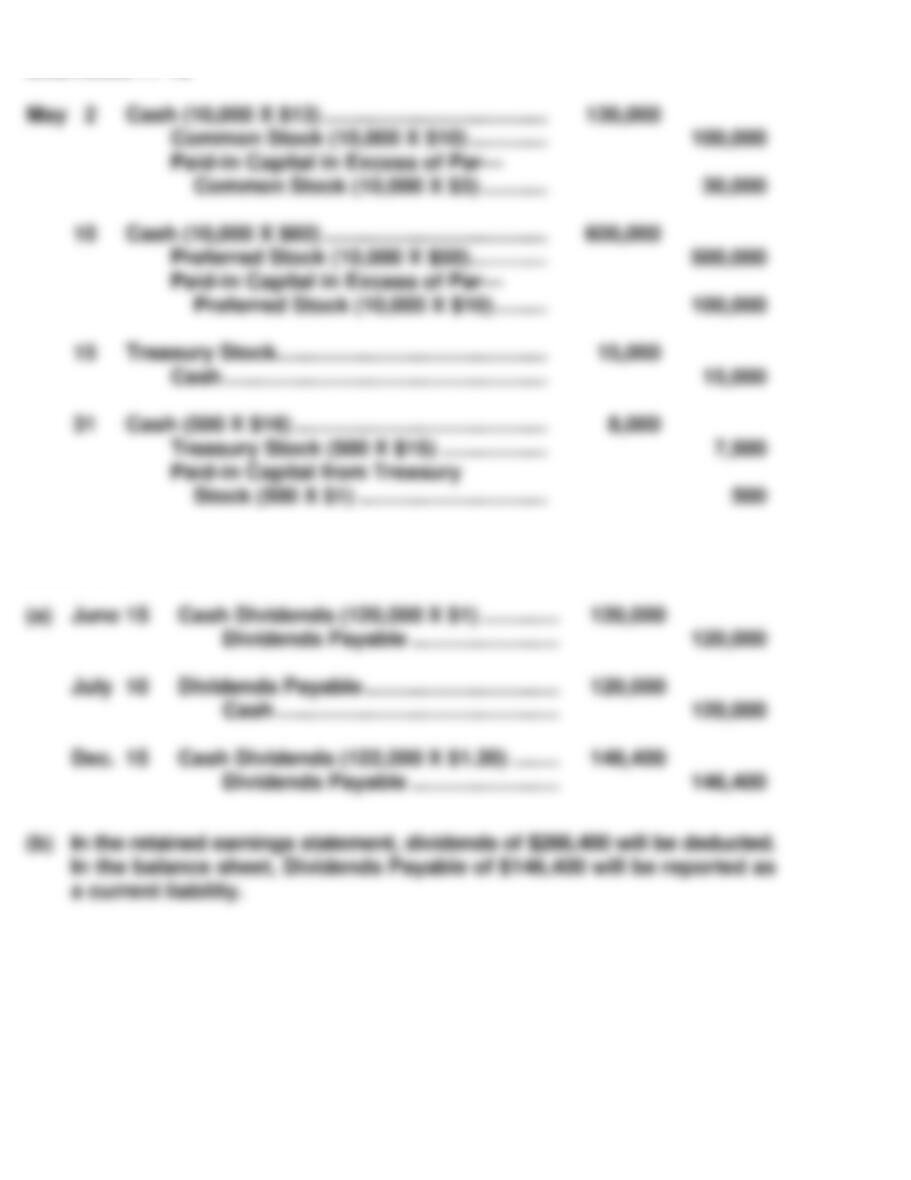
EXERCISE 11–12
EXERCISE 11-13
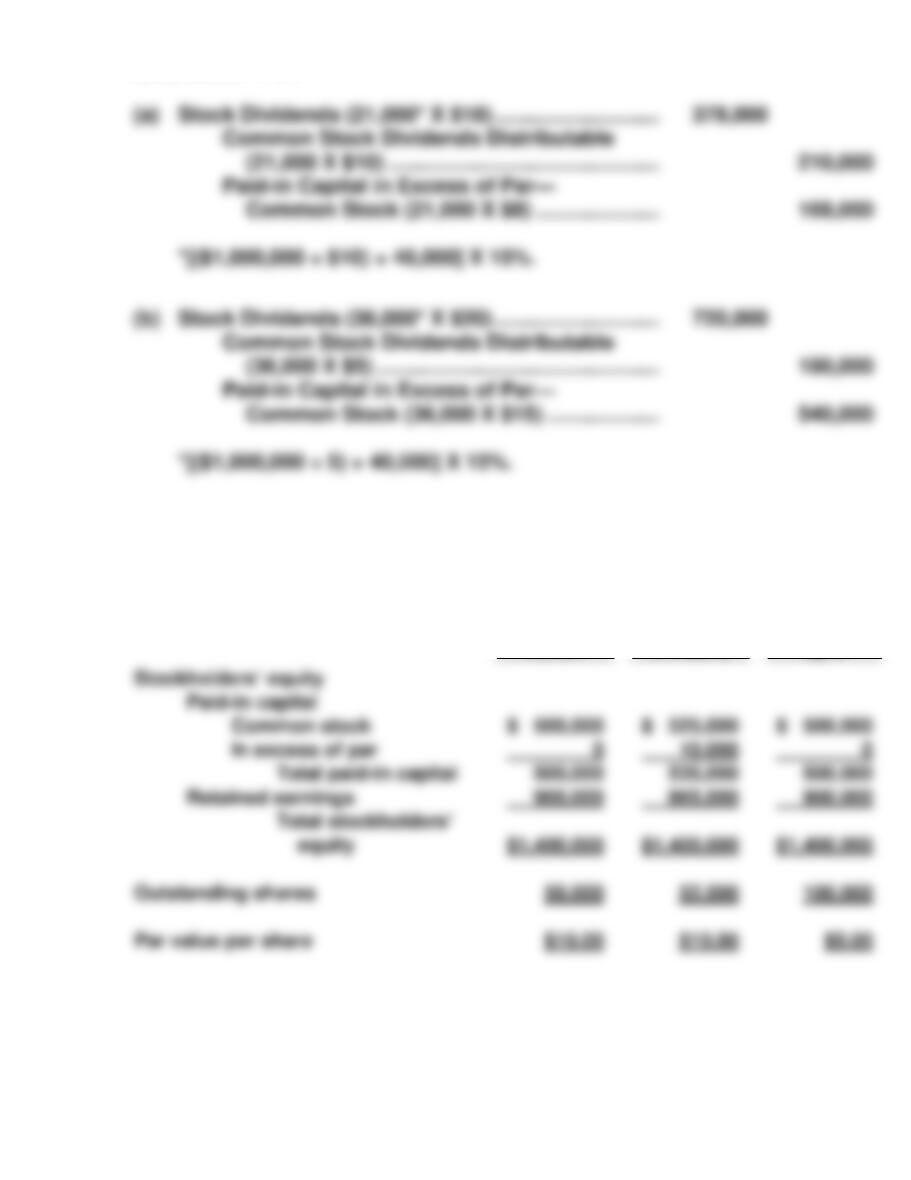
EXERCISE 11-14
EXERCISE 11-15
Before
Action
After
Stock
Dividend
After
Stock
Split
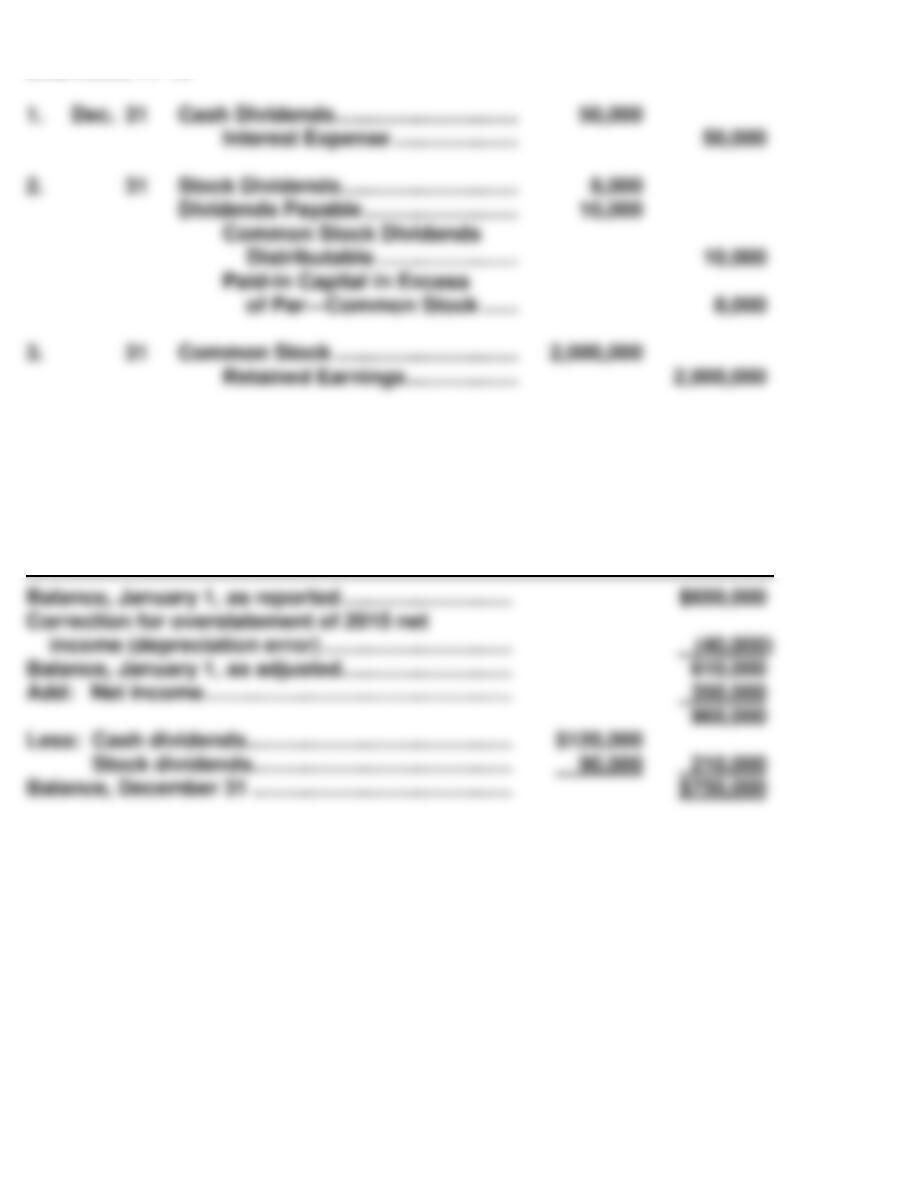
EXERCISE 11-16
EXERCISE 11-17
EDDY CORPORATION
Retained Earnings Statement
For the Year Ended December 31, 2017
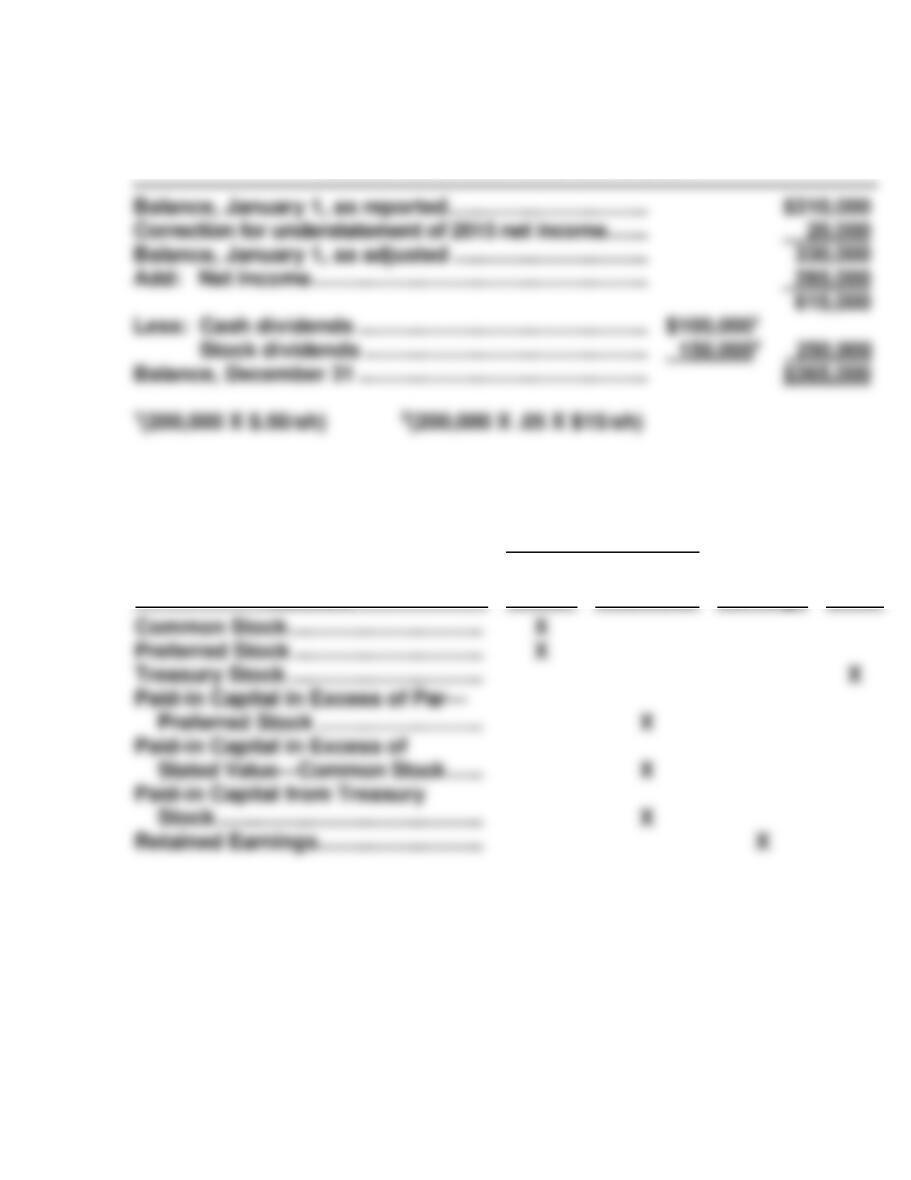
EXERCISE 11-18
NEWLAND COMPANY
Retained Earnings Statement
For the Year Ended December 31, 2017
EXERCISE 11-19
Paid-in Capital
Account
Capital
Stock
Additional
Retained
Earnings
Other
Stock ………………………………………
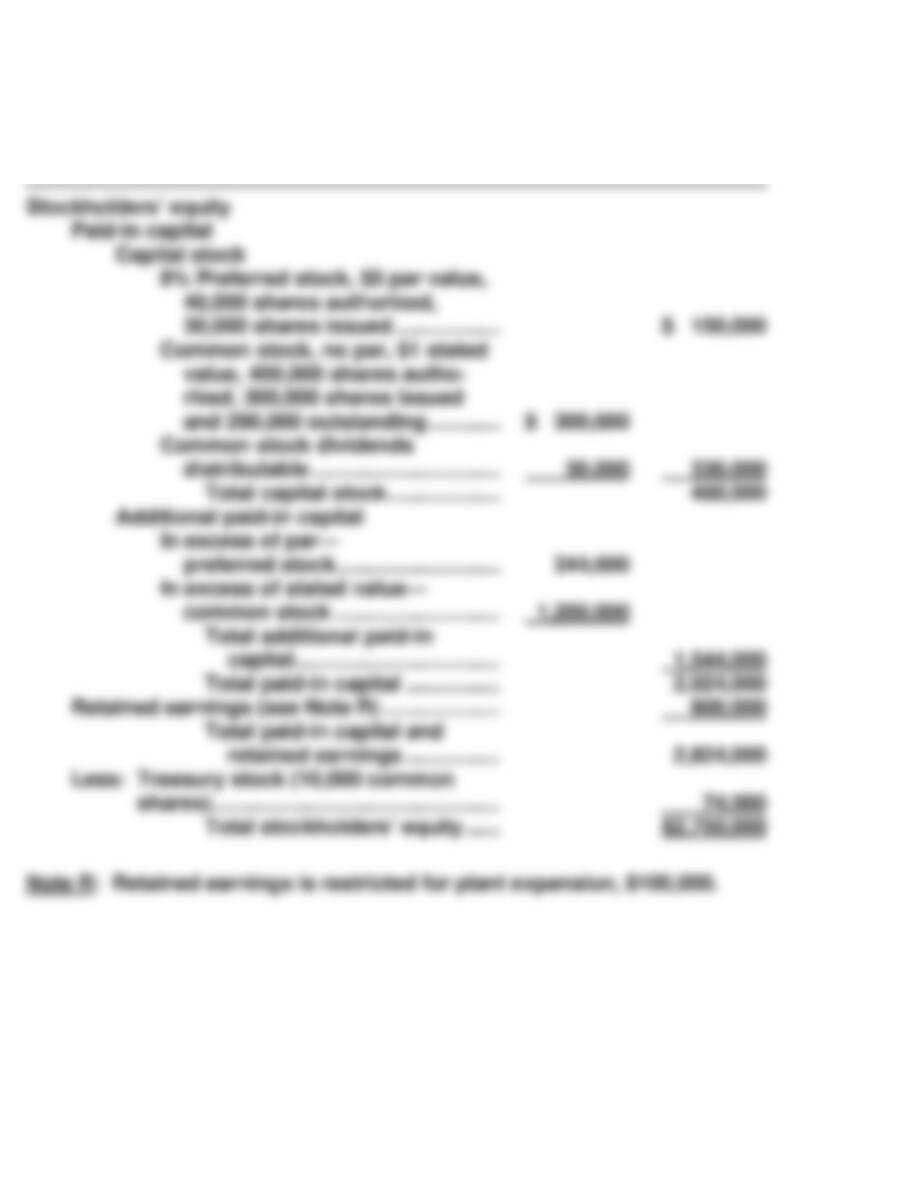
EXERCISE 11-20
HORNER INC.
Balance Sheet (Partial)
December 31, 20XX
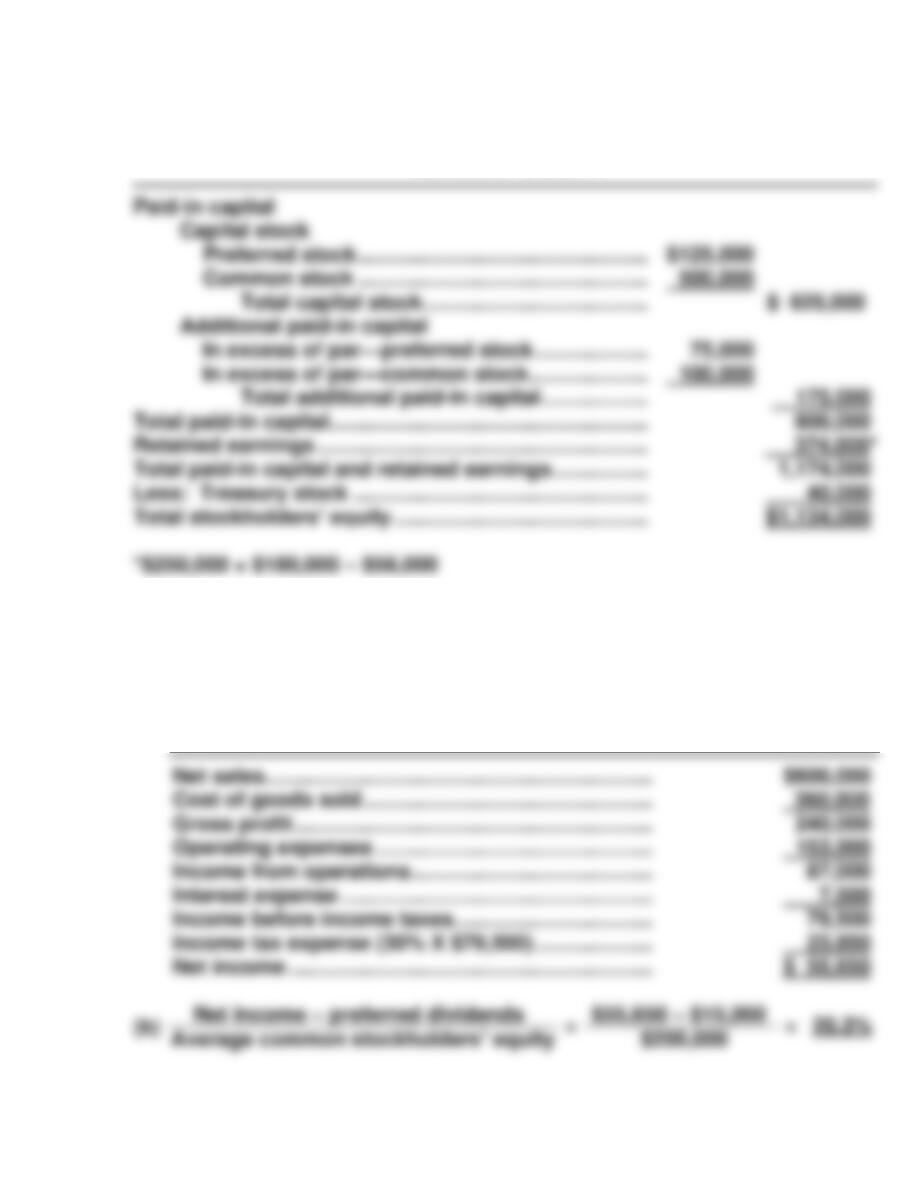
EXERCISE 11-21
DIRK COMPANY
Balance Sheet (Partial)
December 31, 2017
EXERCISE 11-22
(a) PENNINGTON CORPORATION
Income Statement
For the Year Ended December 31, 2017
____________________________________________________________
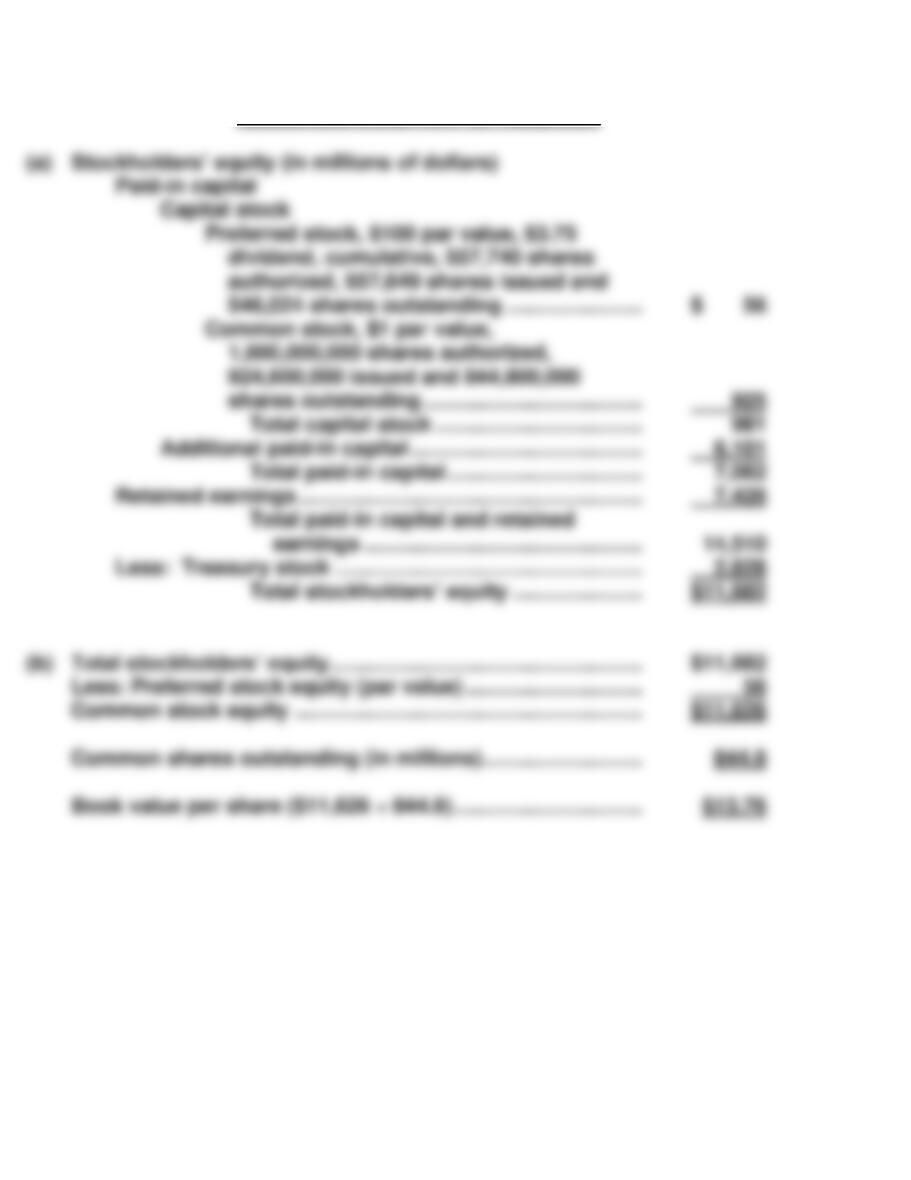
*EXERCISE 11–23
ALUMINUM COMPANY OF AMERICA
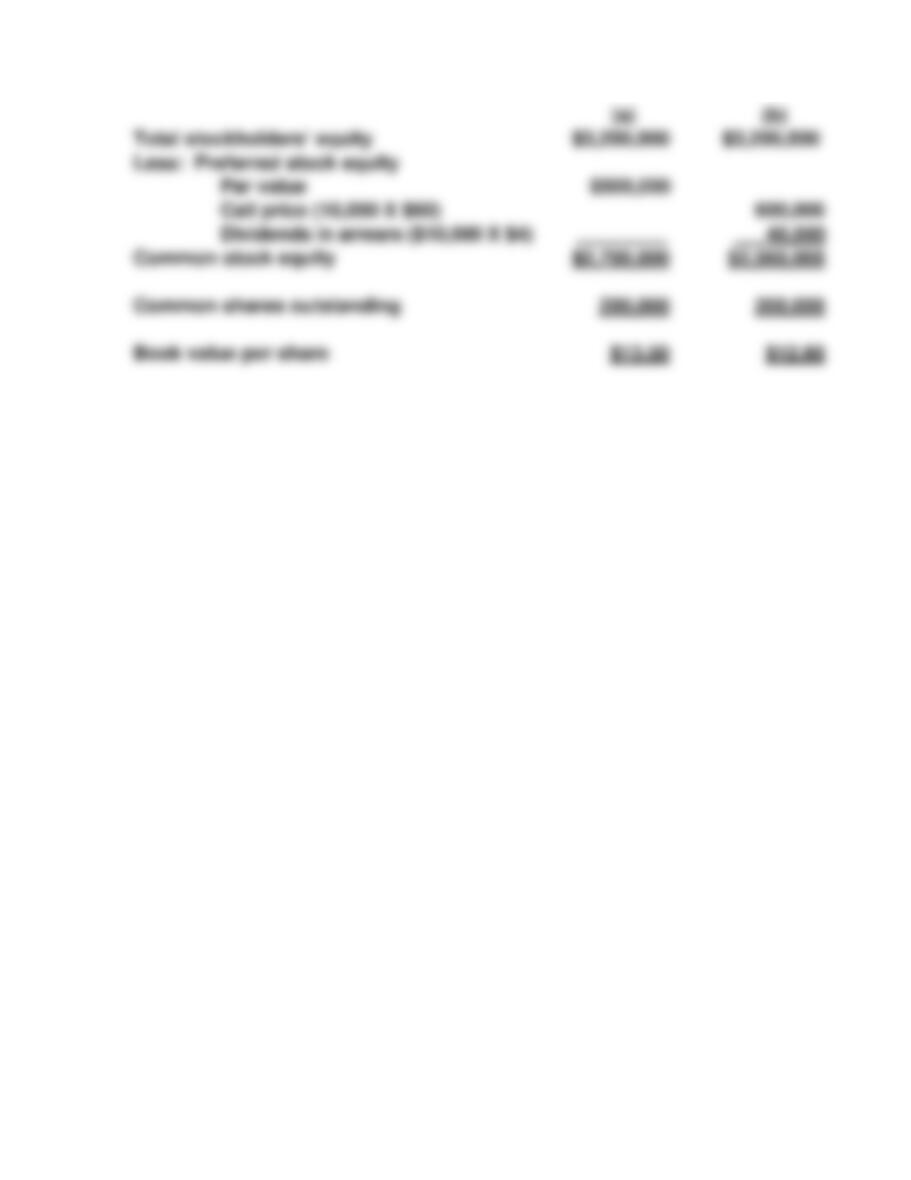
*EXERCISE 11-24
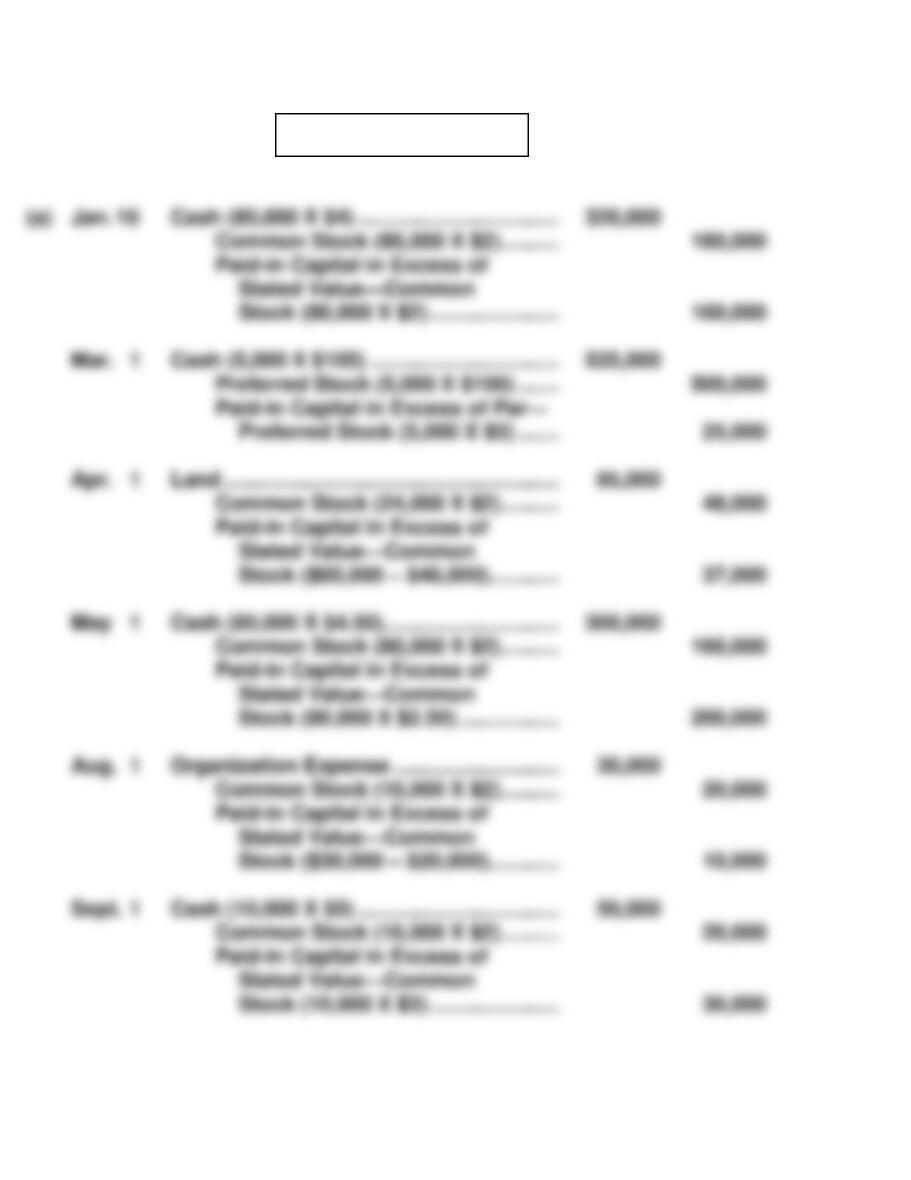
SOLUTIONS TO PROBLEMS
PROBLEM 11–1A
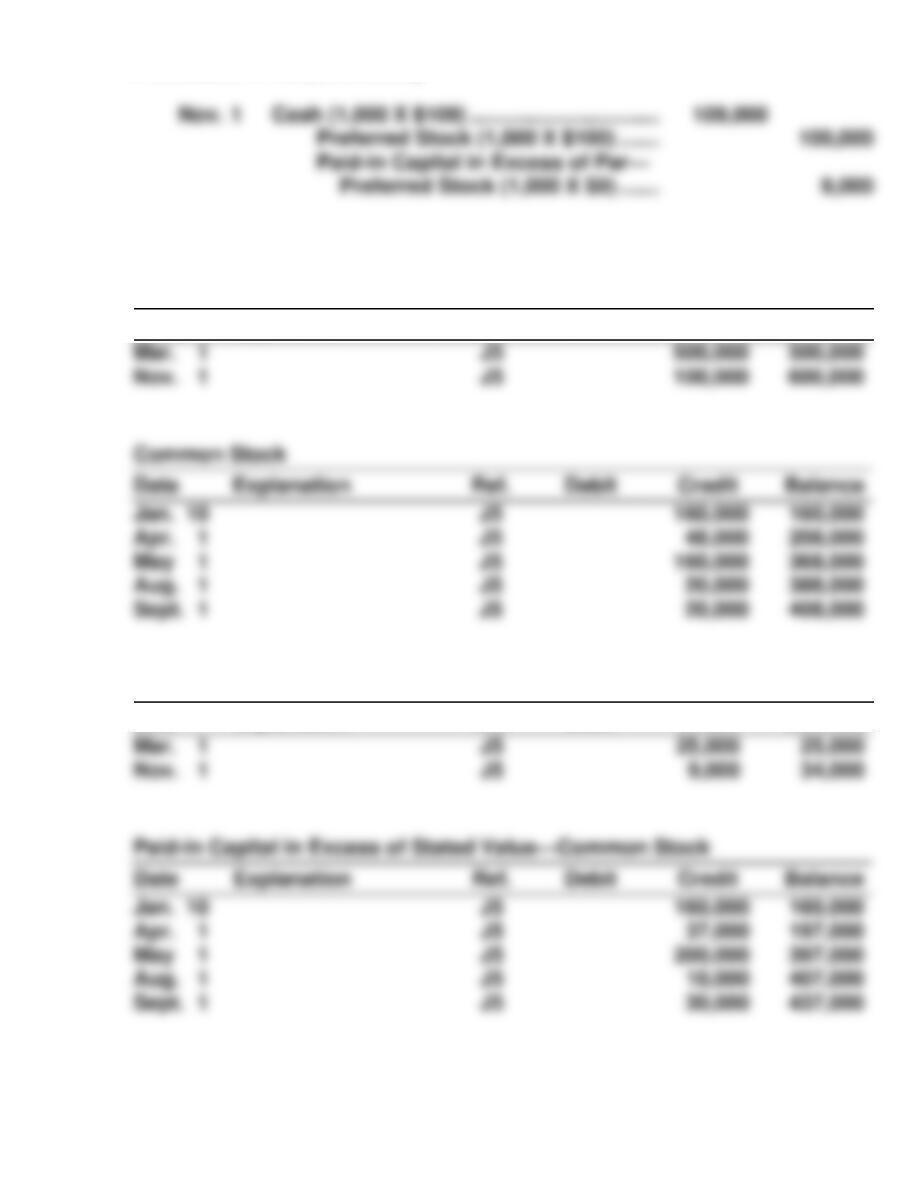
PROBLEM 11-1A (Continued)
(b)
Preferred Stock
Date
Explanation
Ref.
Debit
Credit
Balance
Date
Explanation
Ref.
Debit
Credit
Balance
Paid-in Capital in Excess of Par—Preferred Stock
Date
Explanation
Ref.
Debit
Credit
Balance
Date
Explanation
Ref.
Debit
Credit
Balance
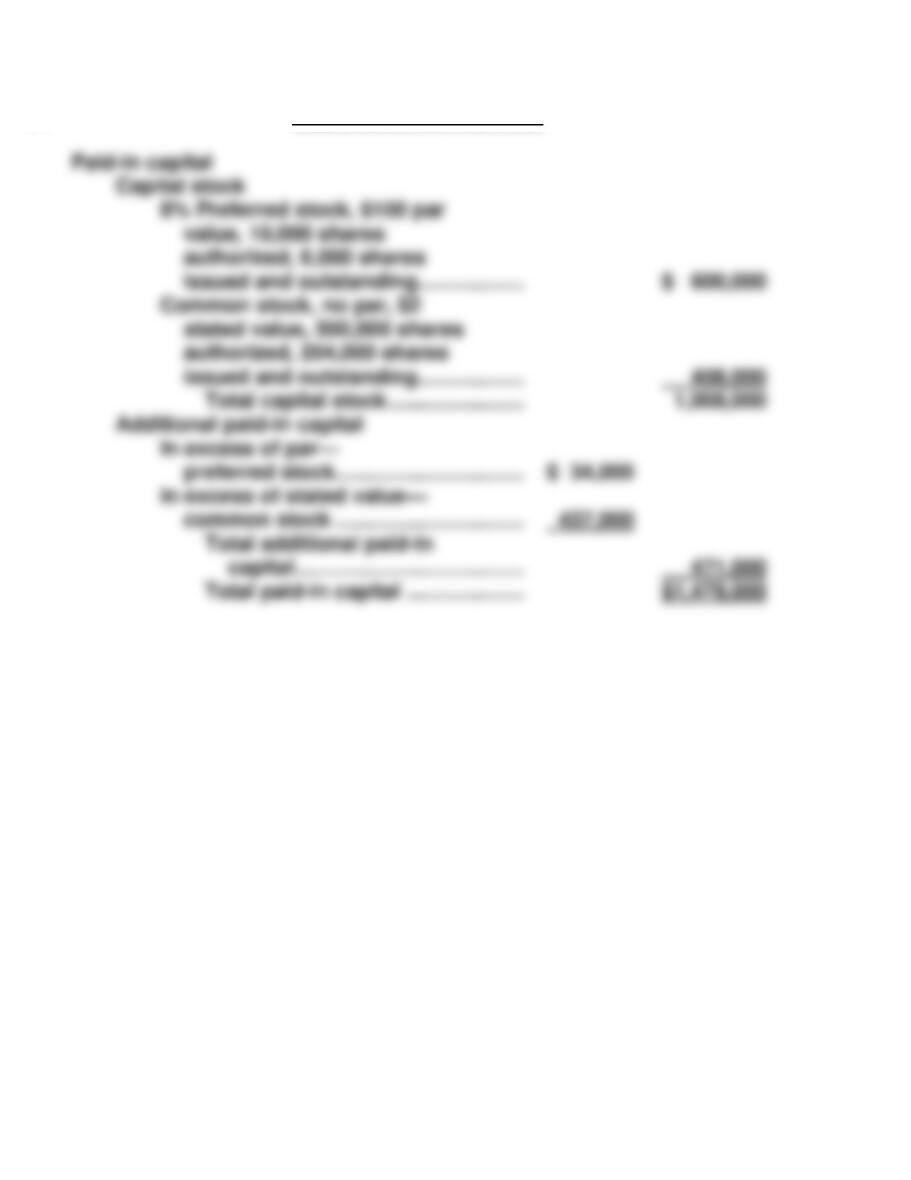
PROBLEM 11-1A (Continued)
(c) DELONG CORPORATION
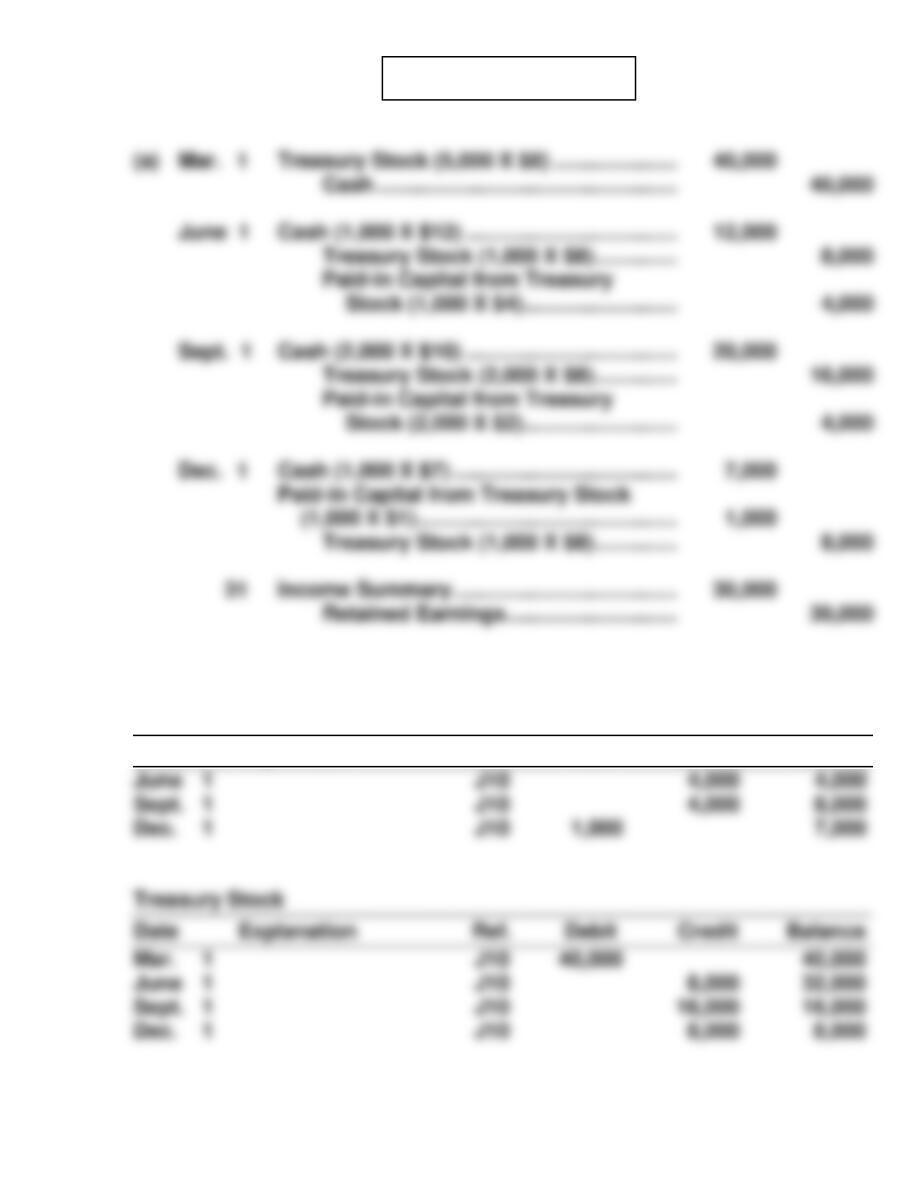
PROBLEM 11–2A
(b)
Paid-in Capital from Treasury Stock
Date
Explanation
Ref.
Debit
Credit
Balance
Explanation
Debit
Credit
Balance
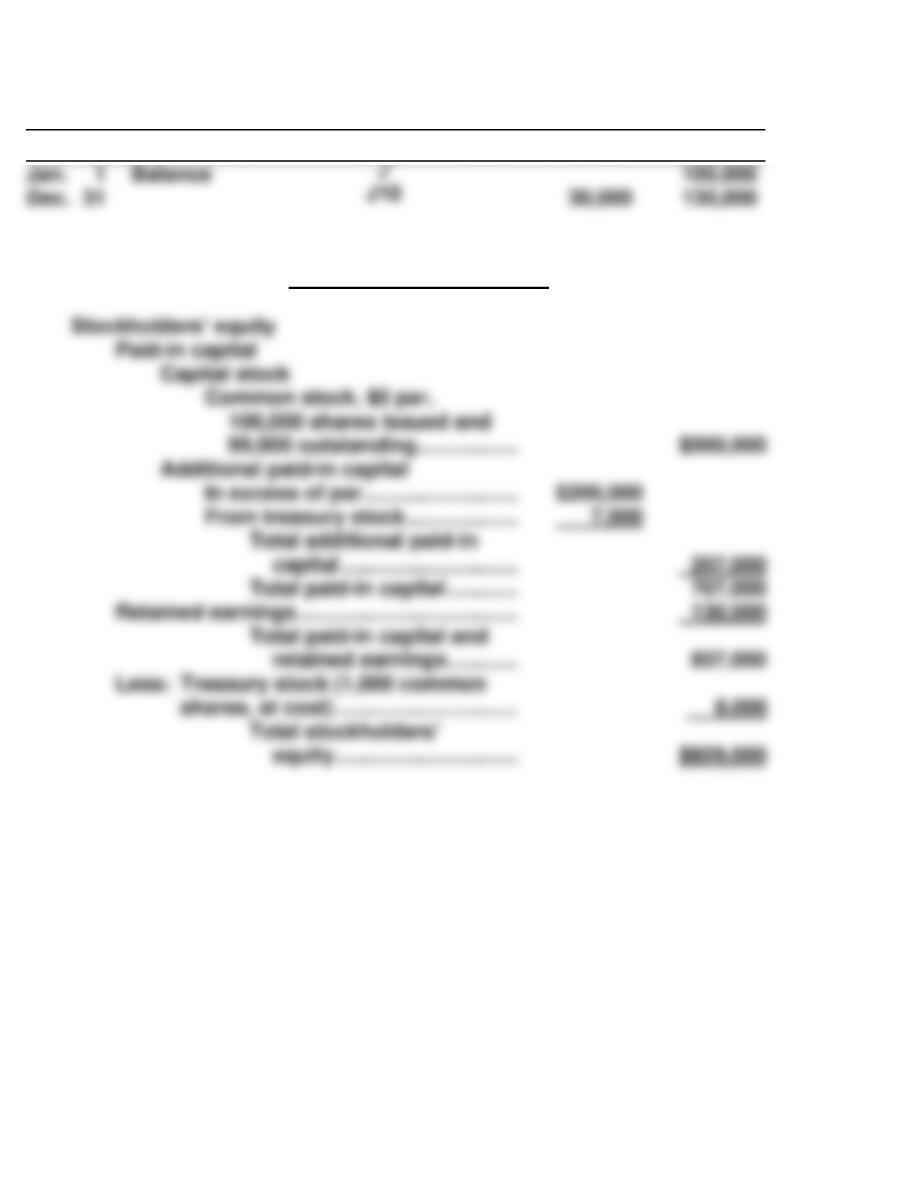
PROBLEM 11-2A (Continued)
Retained Earnings
Date
Explanation
Ref.
Debit
Credit
Balance
(c) FECHTER CORPORATION
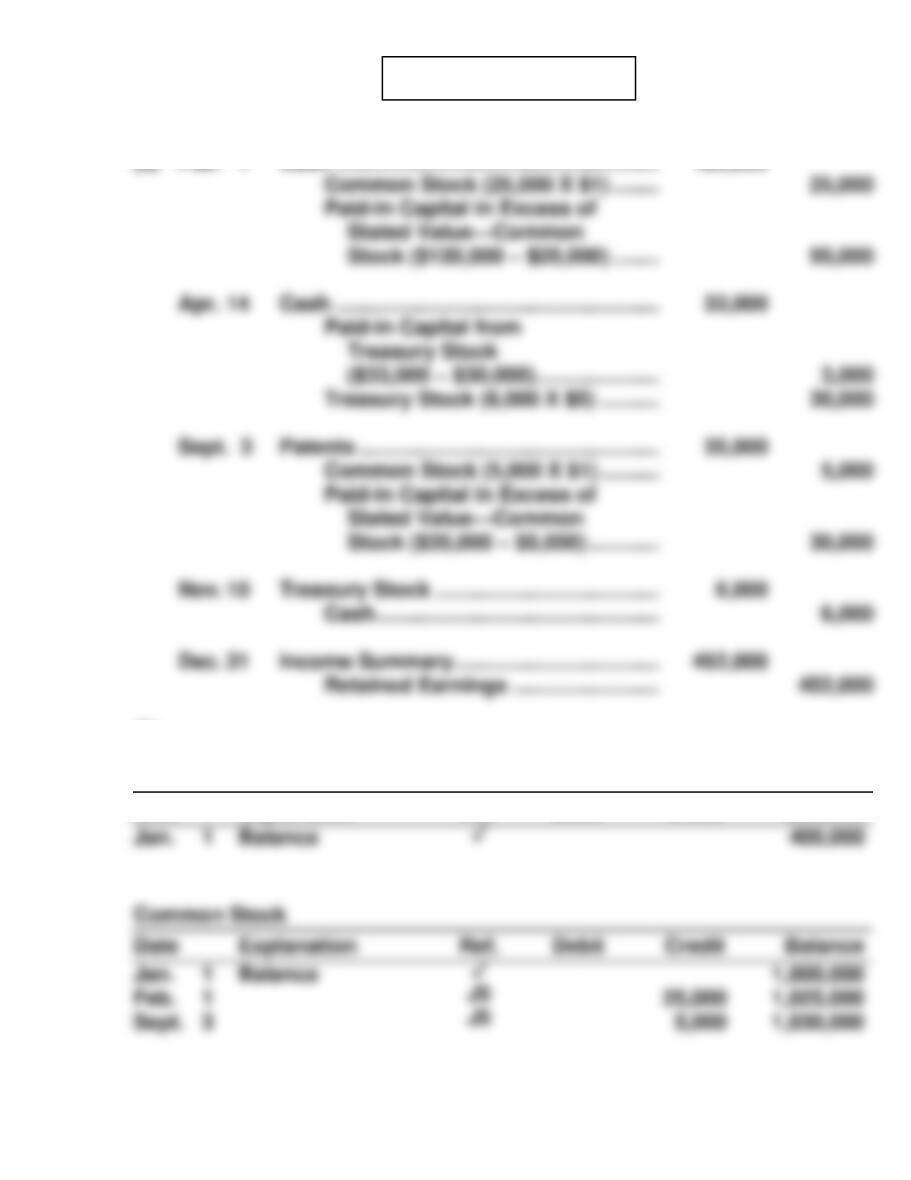
PROBLEM 11–3A
(a) Feb. 1 Cash ………………………………………………. 120,000
(b)
Preferred Stock
Date
Explanation
Ref.
Debit
Credit
Balance
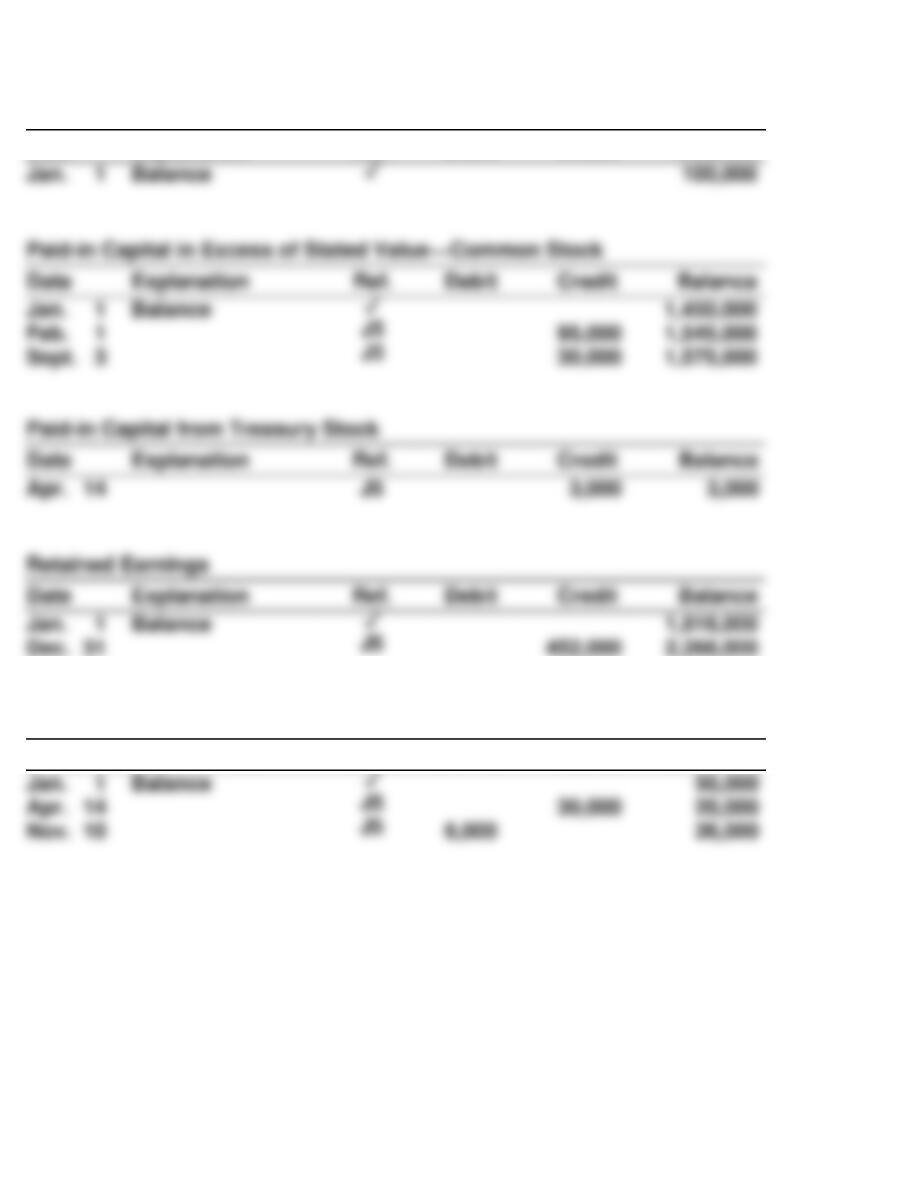
PROBLEM 11-3A (Continued)
Paid-in Capital in Excess of Par—Preferred Stock
Date
Explanation
Ref.
Debit
Credit
Balance
Treasury Stock
Date
Explanation
Ref.
Debit
Credit
Balance
Date
Explanation
Debit
Credit
Date
Explanation
Ref.
Debit
Credit
Balance
Date
Ref.
Debit
Credit
Balance
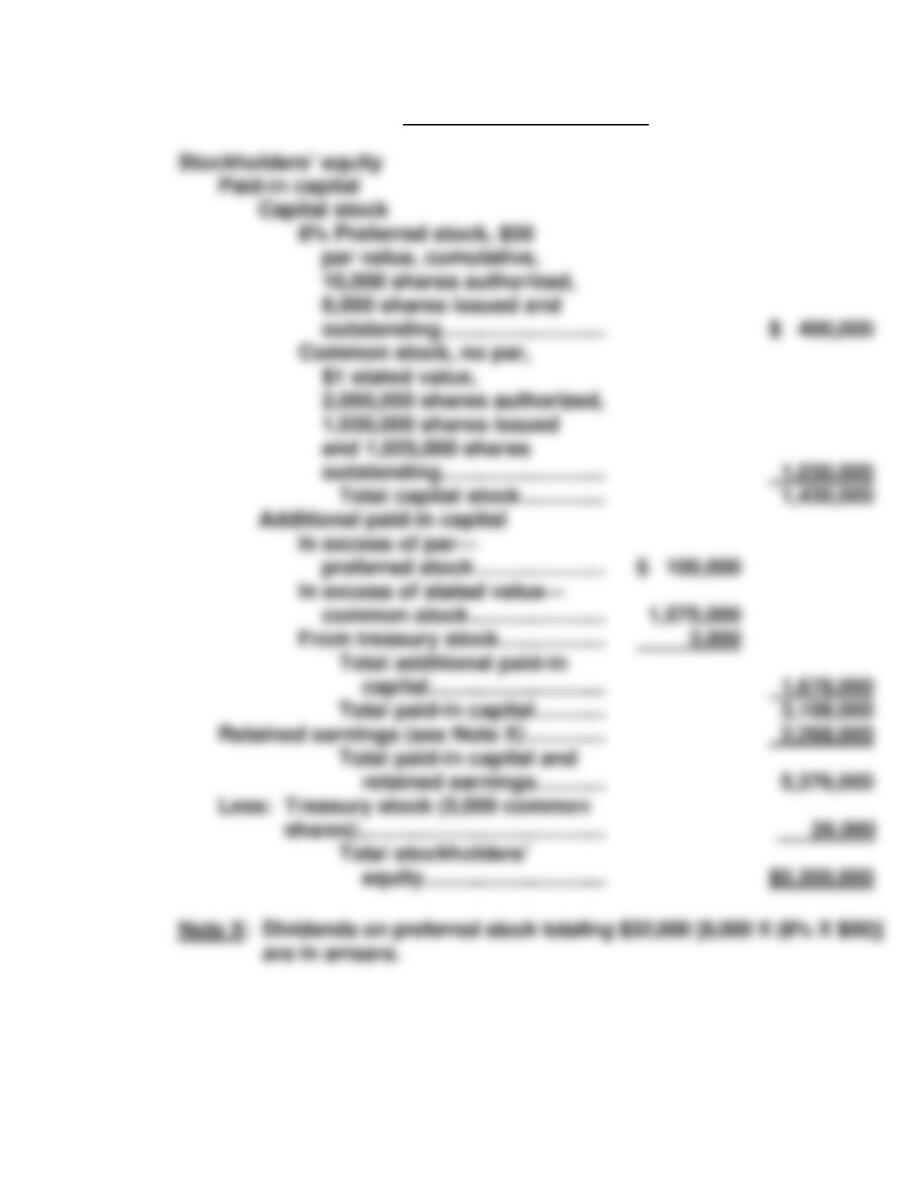
PROBLEM 11-3A (Continued)
(c) CASTLE CORPORATION
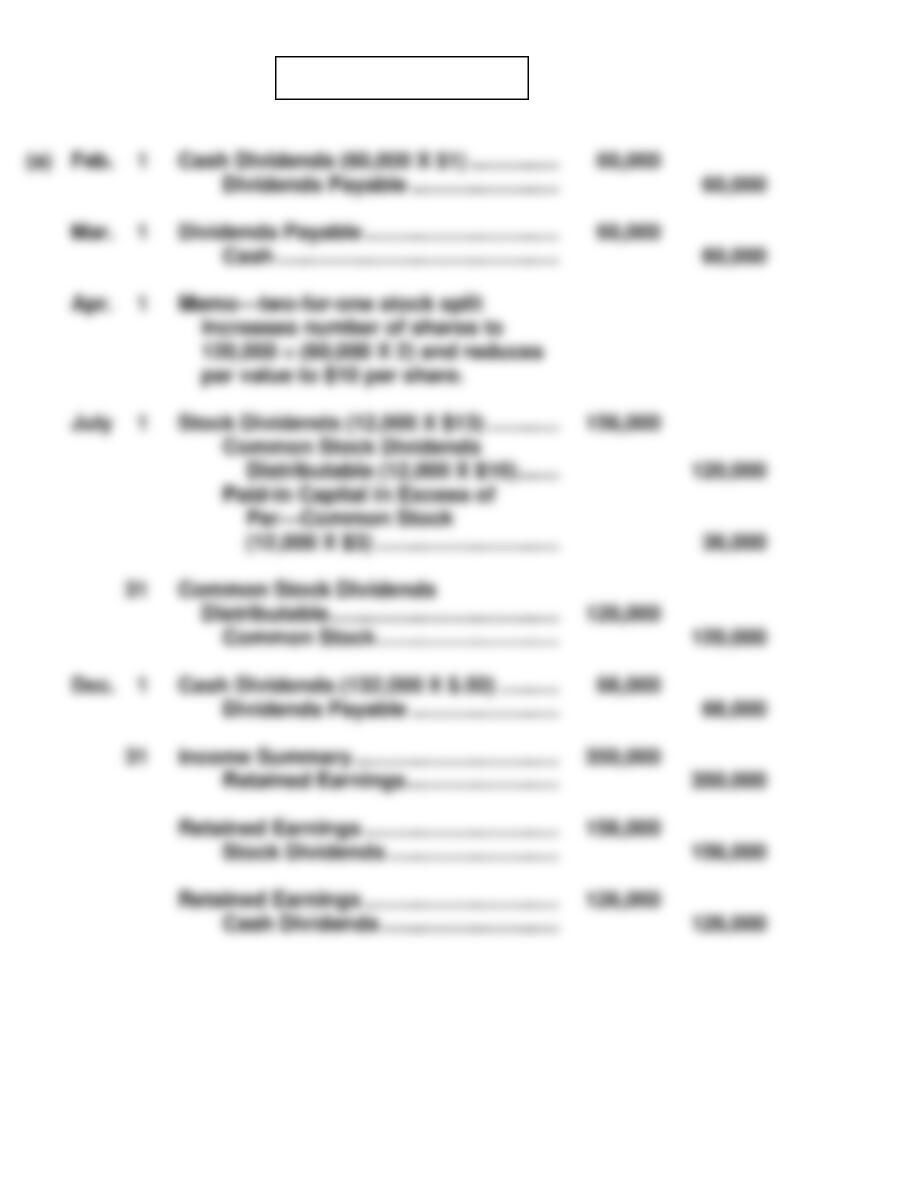
PROBLEM 11-4A
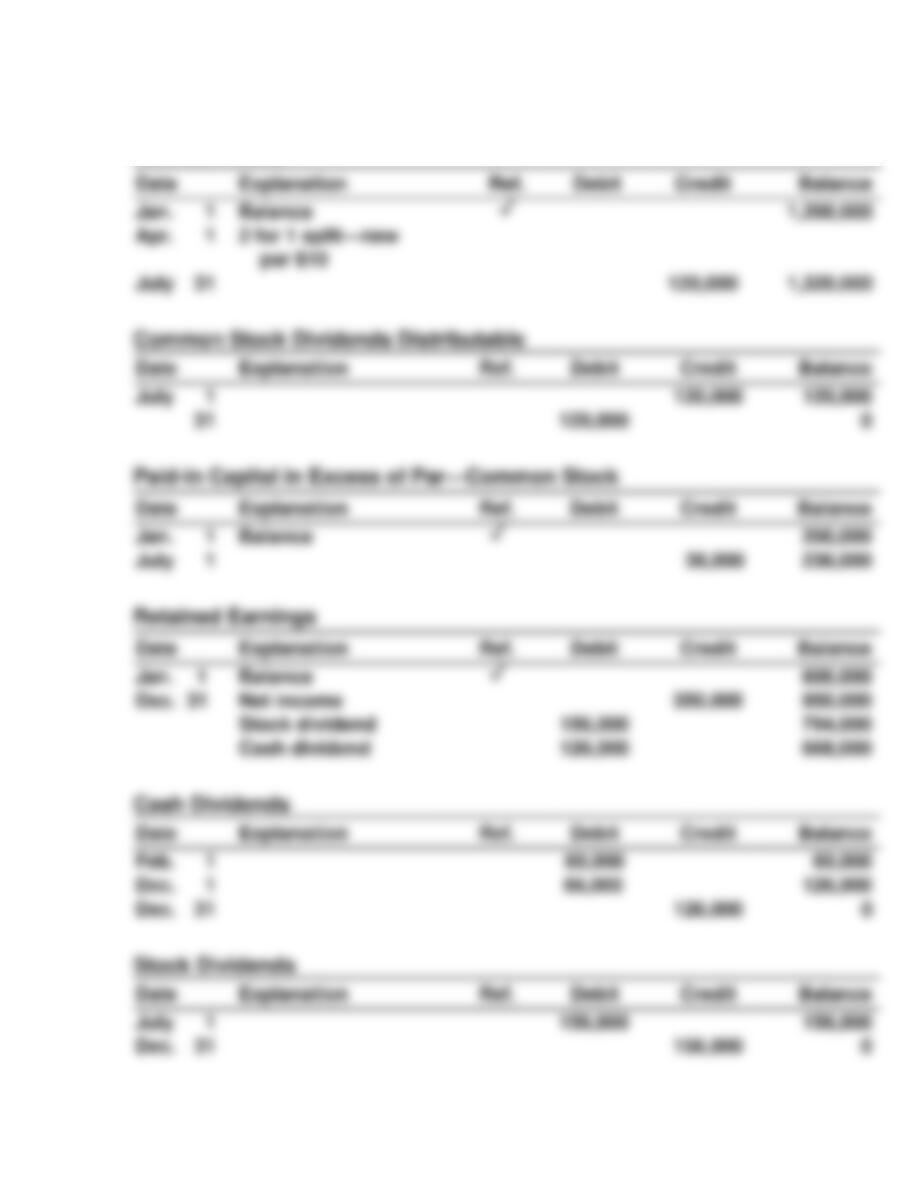
PROBLEM 11-4A (Continued)
(b)
Common Stock
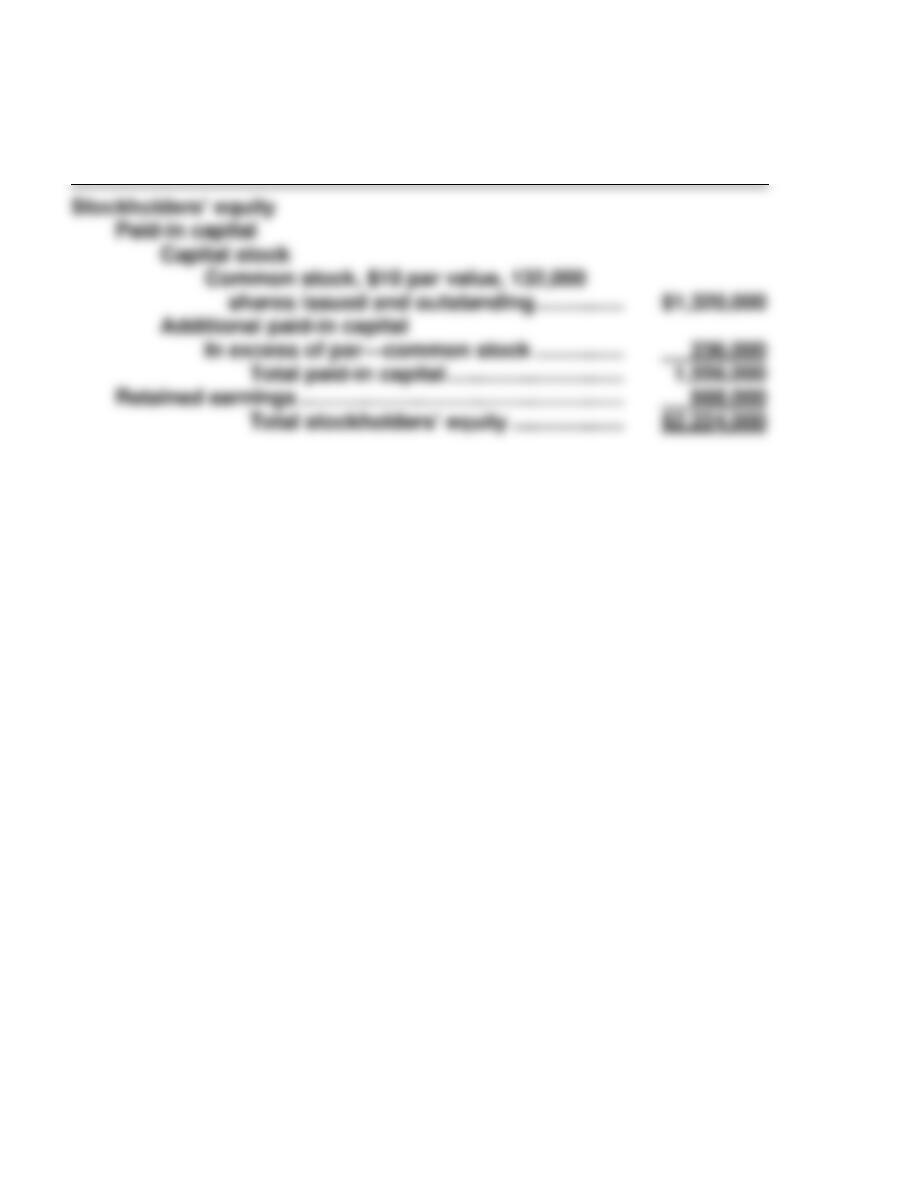
PROBLEM 11-4A (Continued)
(c) GEFFREY CORPORATION
Balance Sheet (Partial)
December 31, 2017
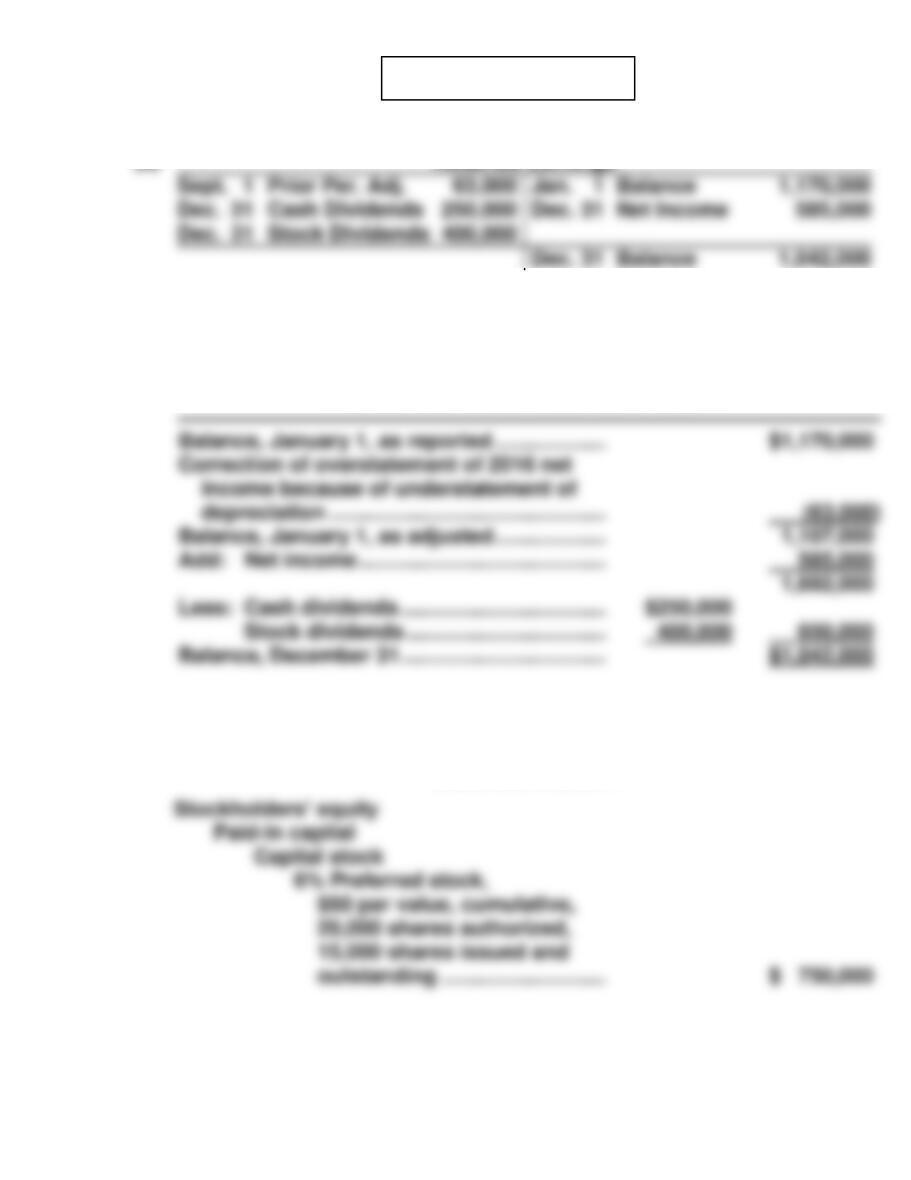
PROBLEM 11-5A
(a)
Retained Earnings
(b) STOREY CORPORATION
Retained Earnings Statement
For the Year Ended December 31, 2017
(c) STOREY CORPORATION
Partial Balance Sheet
December 31, 2017
Dec. 31 Balance 1,042,000
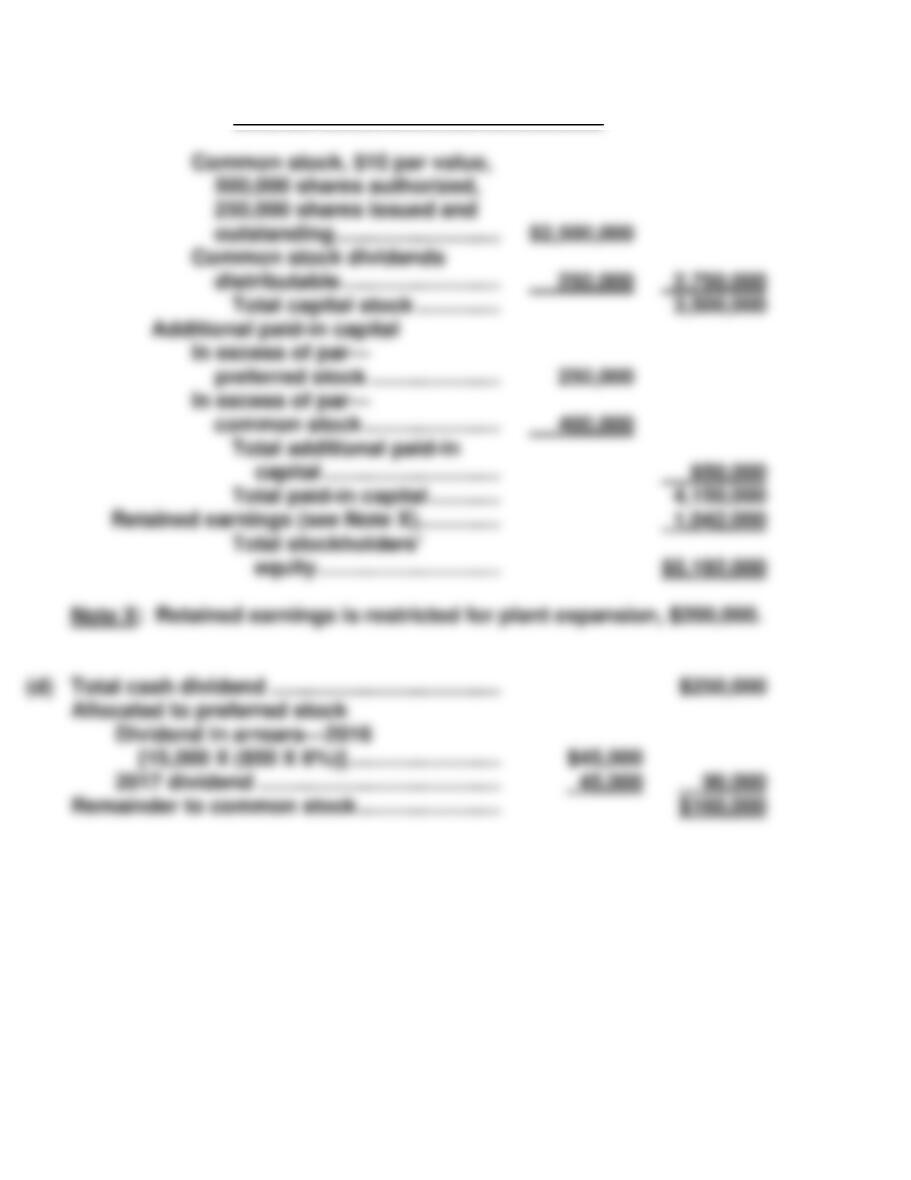
PROBLEM 11-5A (Continued)
STOREY CORPORATION (Continued)
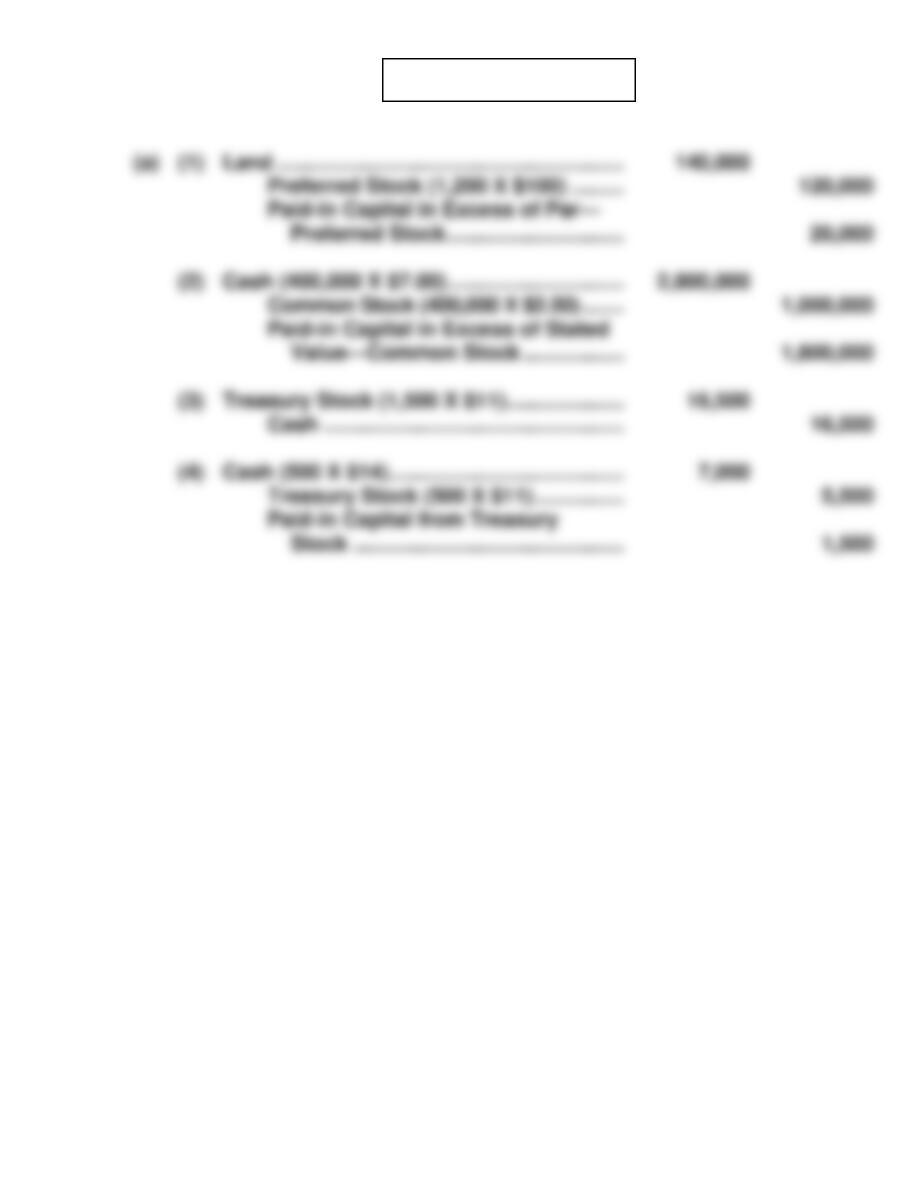
PROBLEM 11–6A
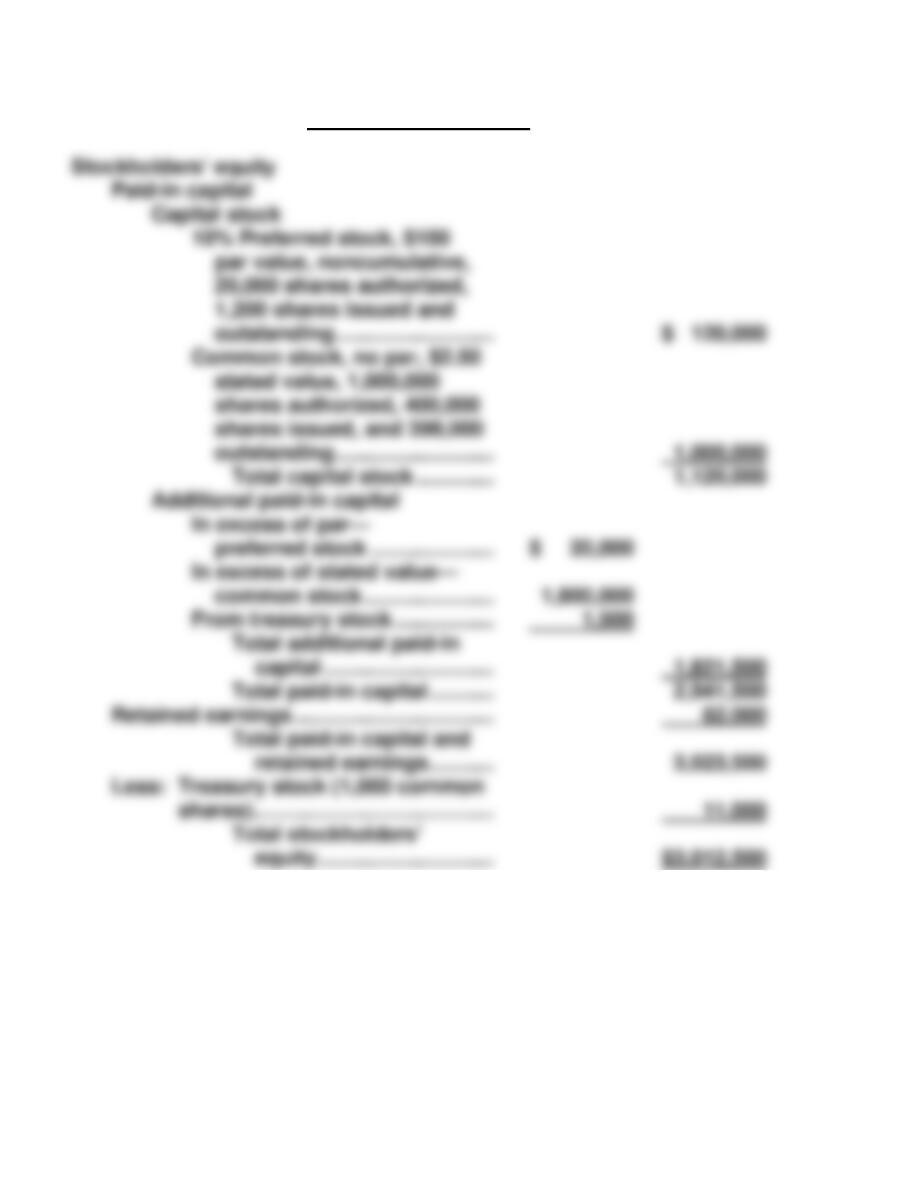
PROBLEM 11-6A (Continued)
(b) IRWIN CORPORATION
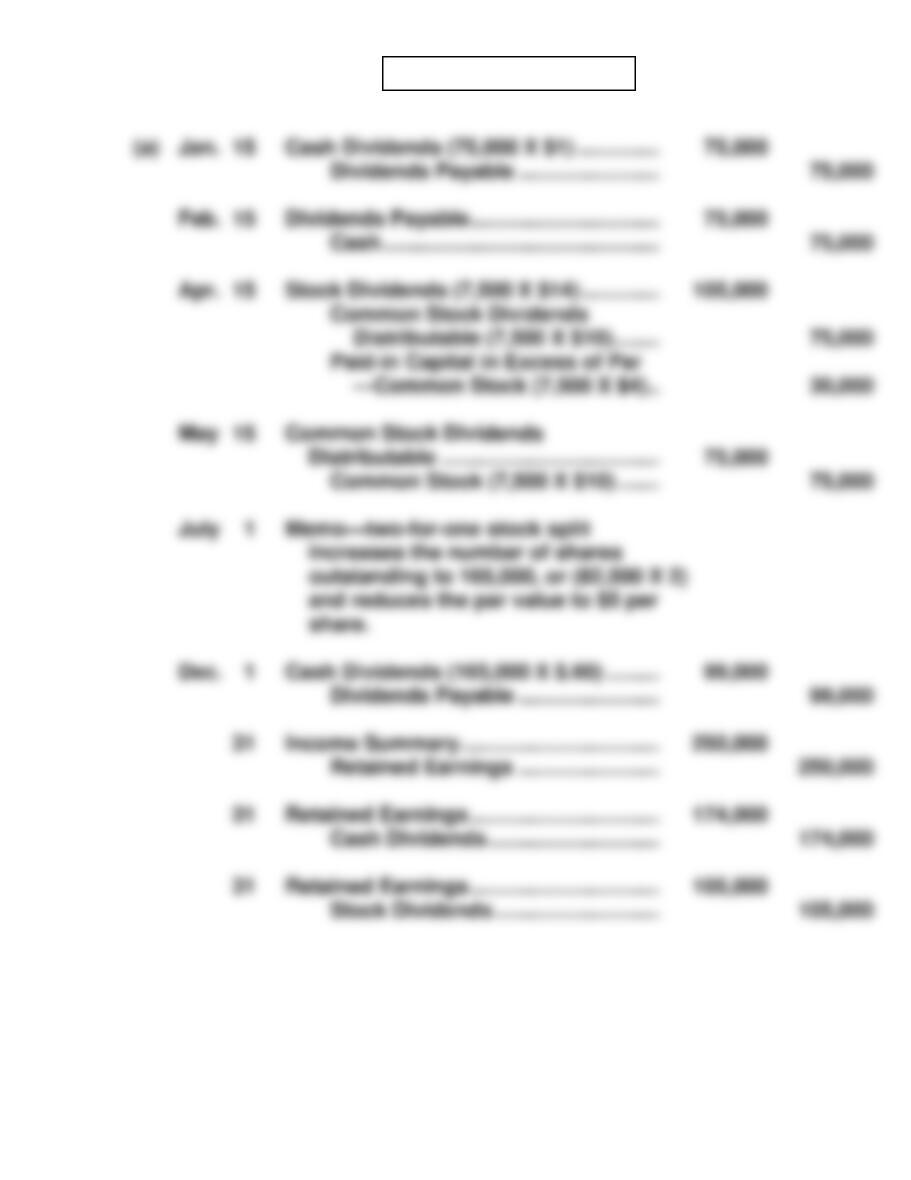
PROBLEM 11-7A
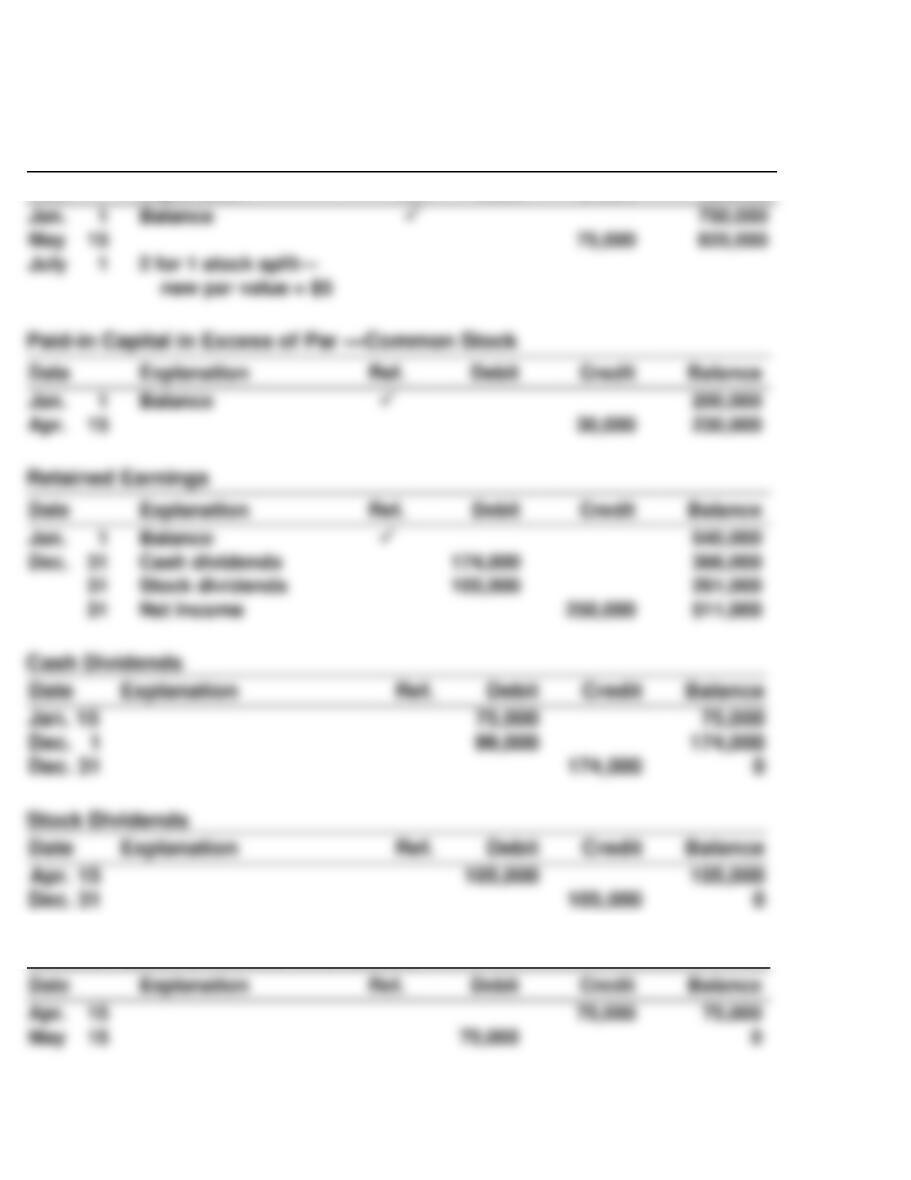
PROBLEM 11-7A (Continued)
(b)
Common Stock
Date
Explanation
Ref.
Debit
Credit
Balance
Common Stock Dividends Distributable
Date
Explanation
Ref.
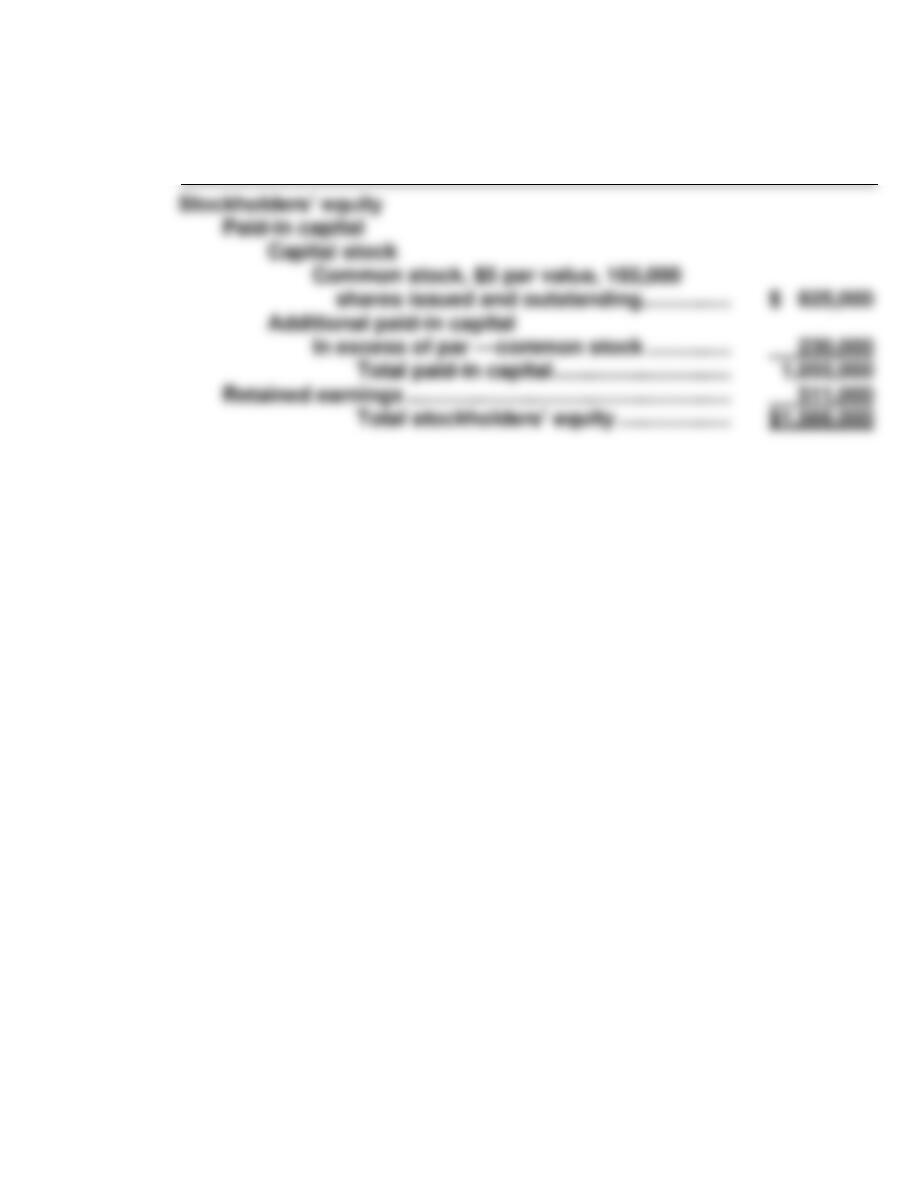
PROBLEM 11-7A (Continued)
(c) PRIMO CORPORATION
Balance Sheet (Partial)
December 31, 2017
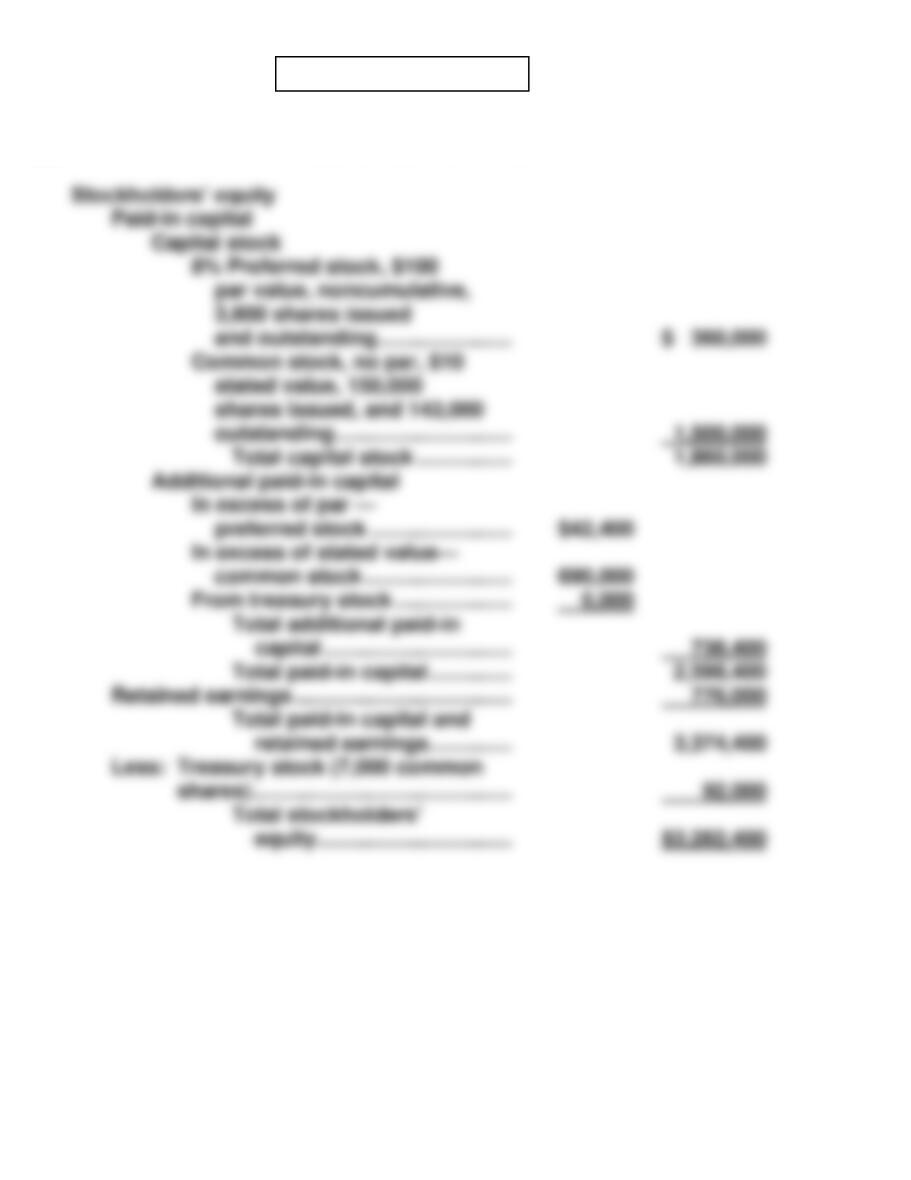
PROBLEM 11-8A
(a) WESTIN CORPORATION
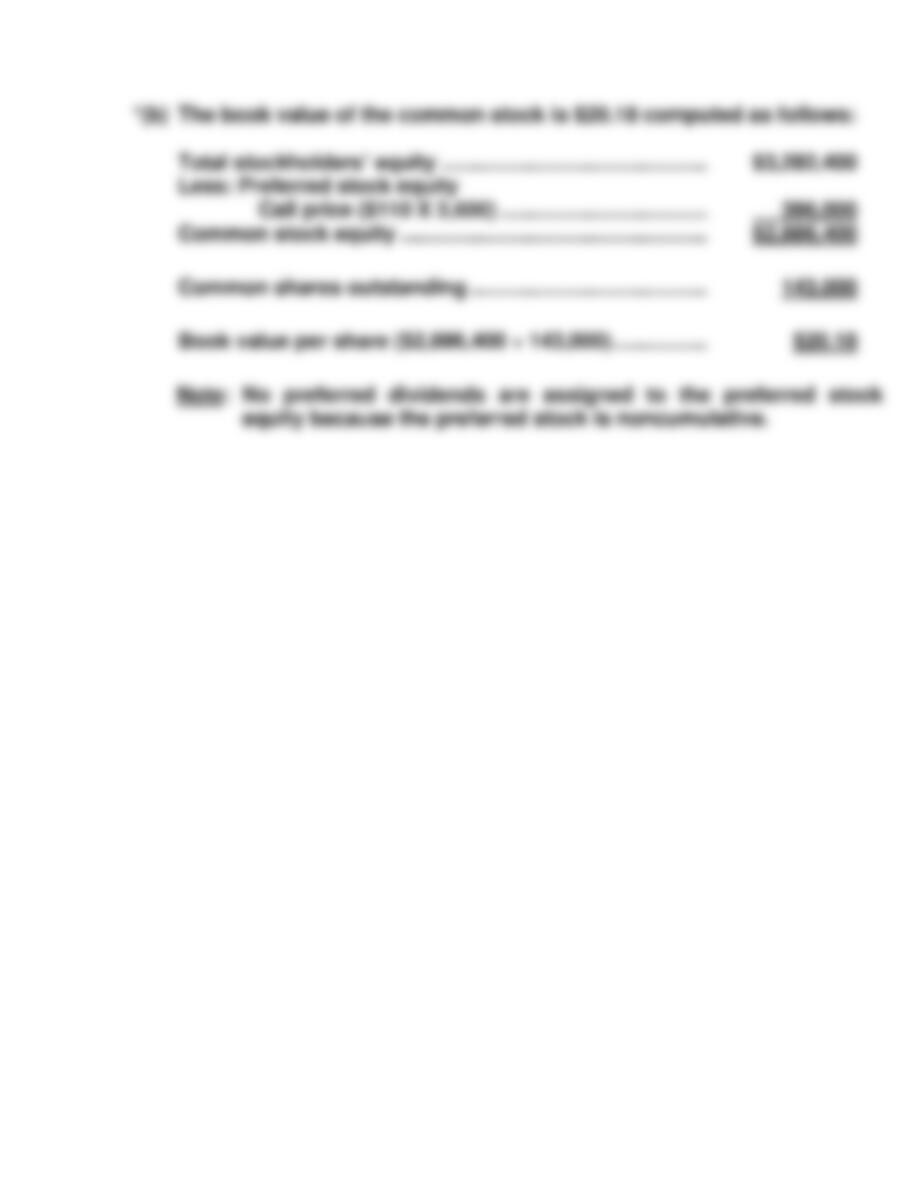
PROBLEM 11-8A (Continued)
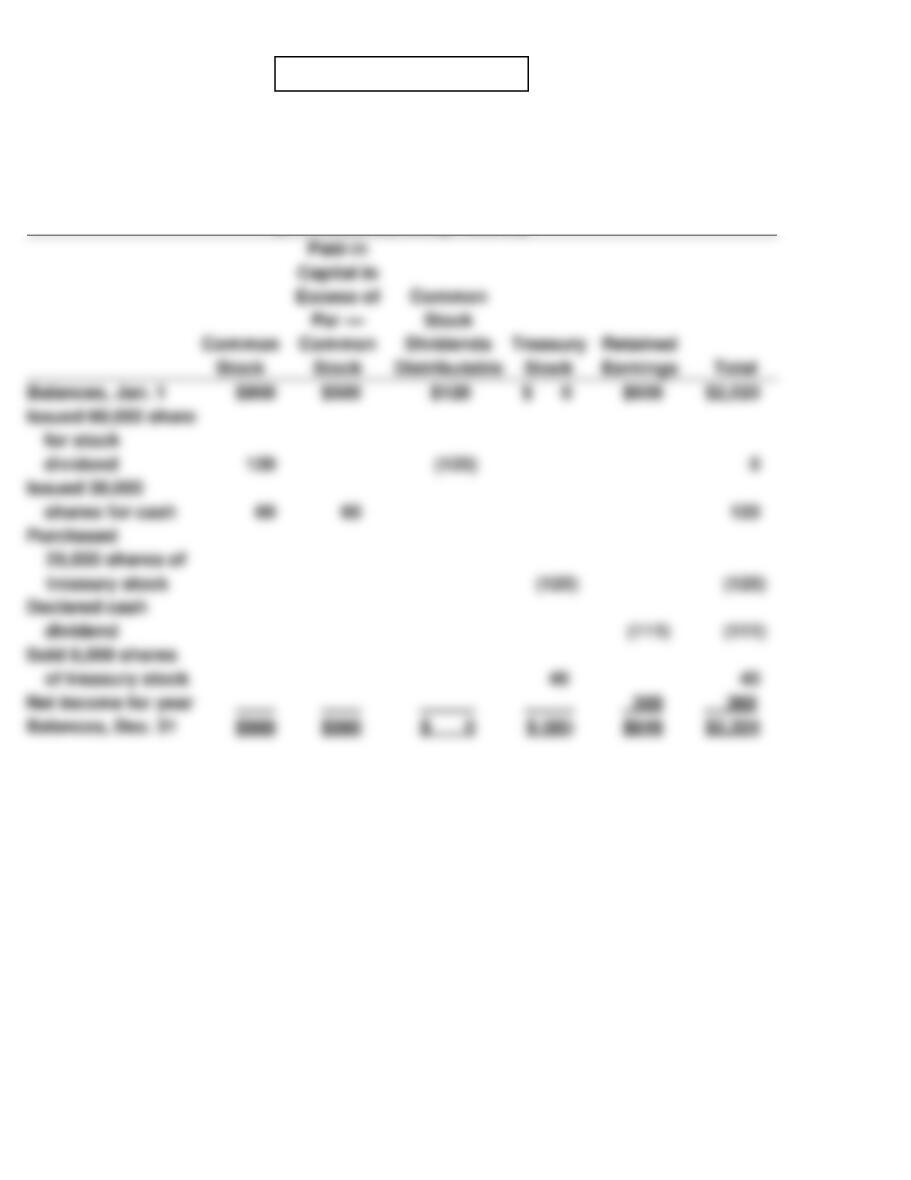
*PROBLEM 11-9A
GOODHUE INC.
Stockholders’ Equity Statement
For the Year Ending December 31, 2017
(in thousands, except shares)
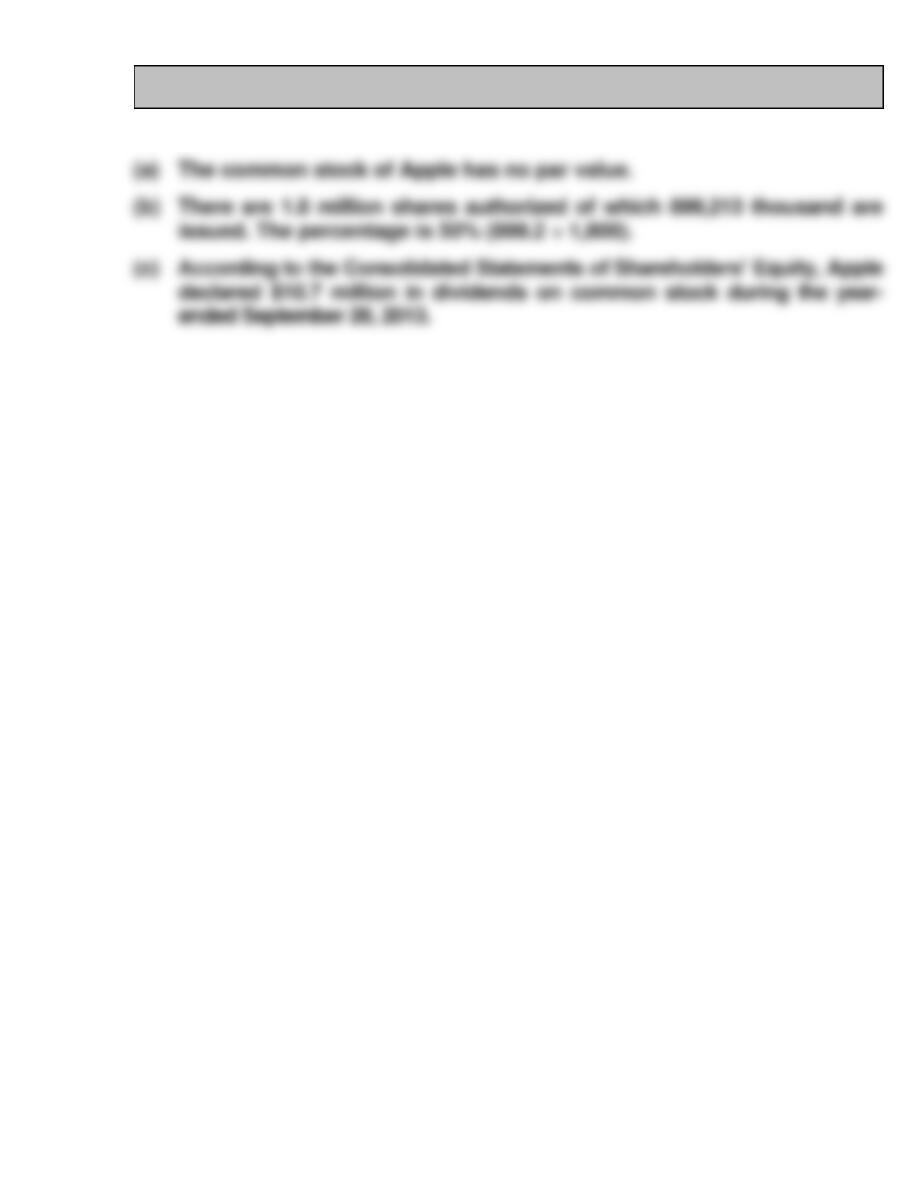
BYP 11-1 FINANCIAL REPORTING PROBLEM
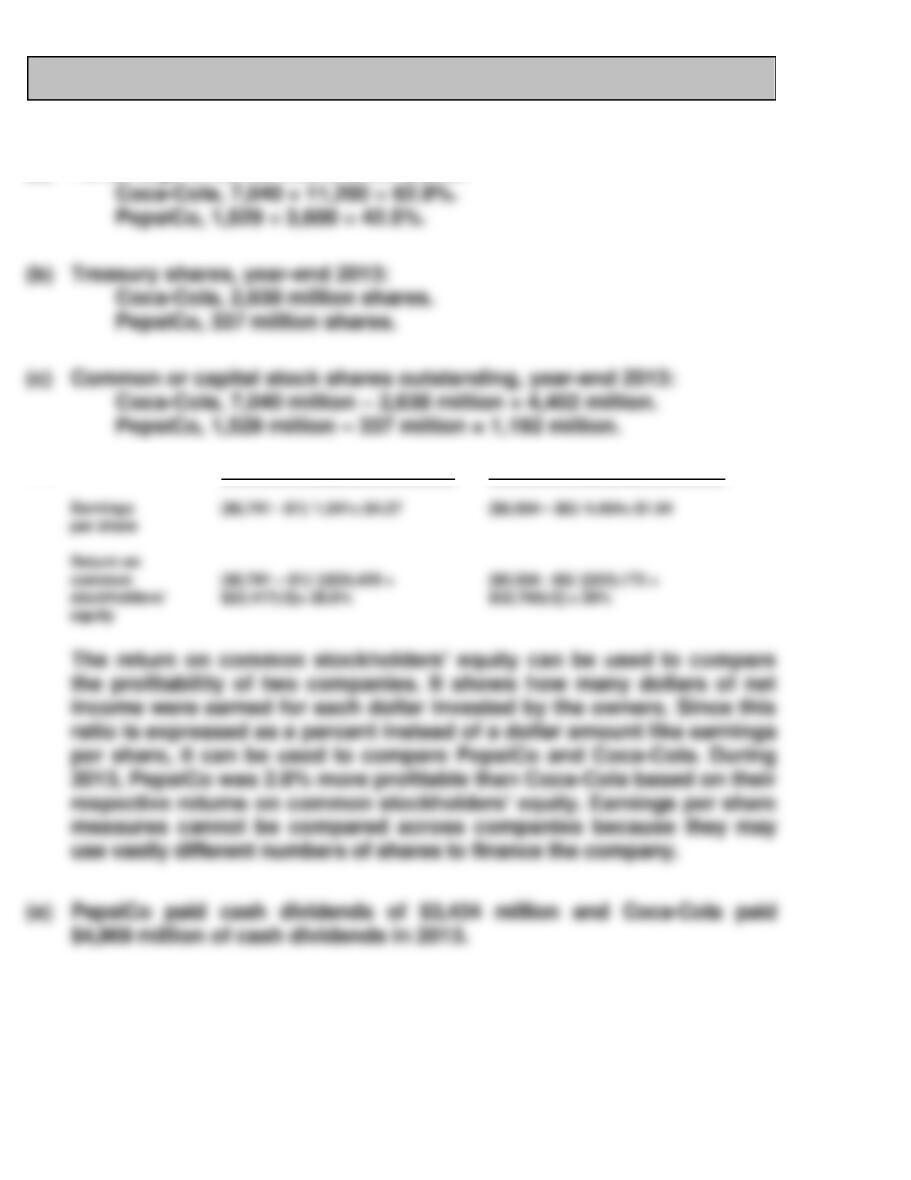
BYP 11-2 COMPARATIVE ANALYSIS PROBLEM
(a) Percentage of authorized shares issued:
(d)
PepsiCo
Coca-Cola
per share
equity
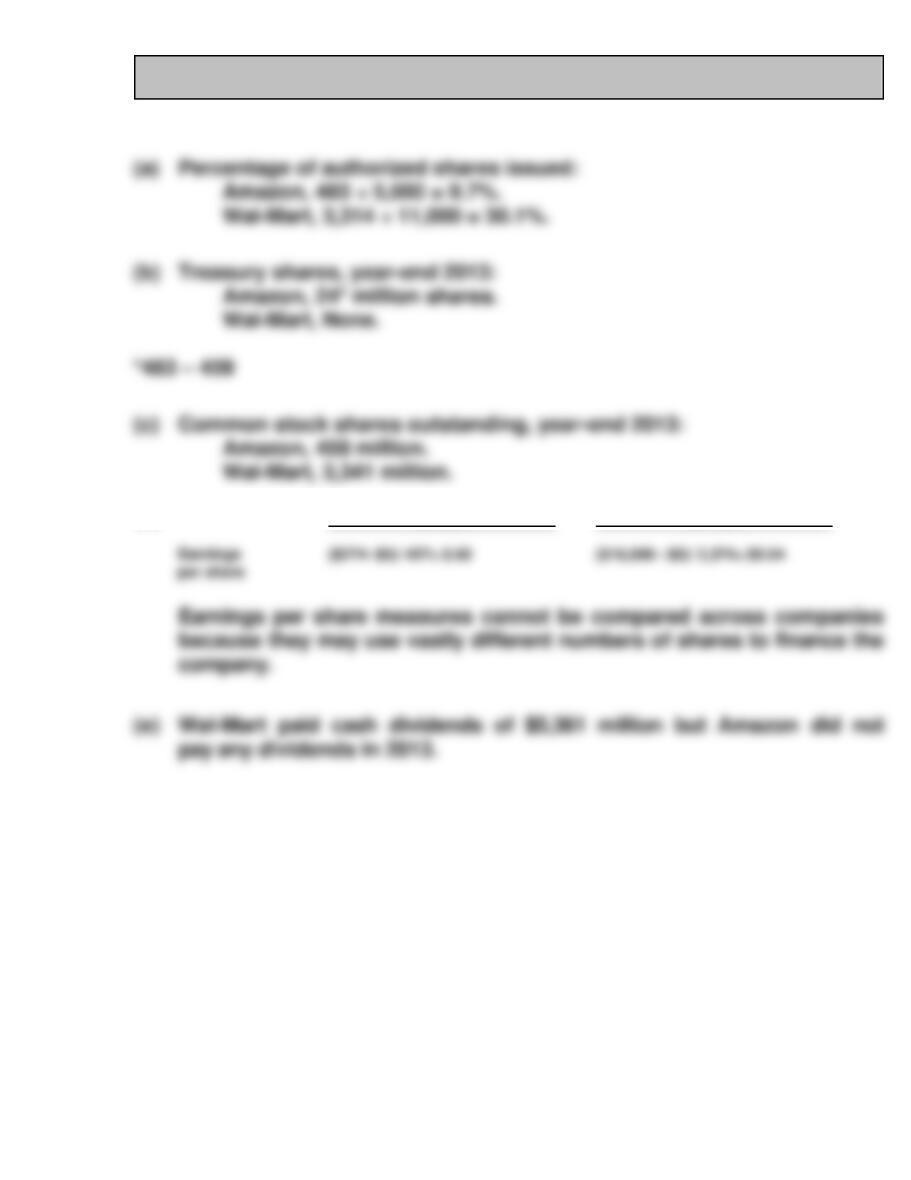
BYP 11-3 COMPARATIVE ANALYSIS PROBLEM
(d)
Amazon
Wal-Mart
per share

BYP 11-4 REAL-WORLD FOCUS
BYP 11-5 DECISION MAKING ACROSS THE ORGANIZATION
(a) The cumulative provision means that preferred stockholders must be
(b) The market price of a share of stock is caused by many factors. Among
the factors to be considered are:
(c) A corporation may acquire treasury stock to:
takeover.
BYP 11–5 (Continued)

BYP 11-6 COMMUNICATION ACTIVITY
Dear Uncle Joe:
BYP 11-7 ETHICS CASE
(a) The stakeholders in this situation are:
BYP 11-8 ALL ABOUT YOU
BYP 11-9 FASB CODIFICATION ACTIVITY
(a) Stock Dividends: An issuance by a corporation of its own common
IFRS EXERCISES
IFRS 11-1
IFRS 11-2
MEENEN CORPORATION
Partial Statement of Financial Position (Partial)
December 31, 2017
IFRS 11-3
IFRS 11-4 INTERNATIONAL FINANCIAL REPORTING PROBLEM