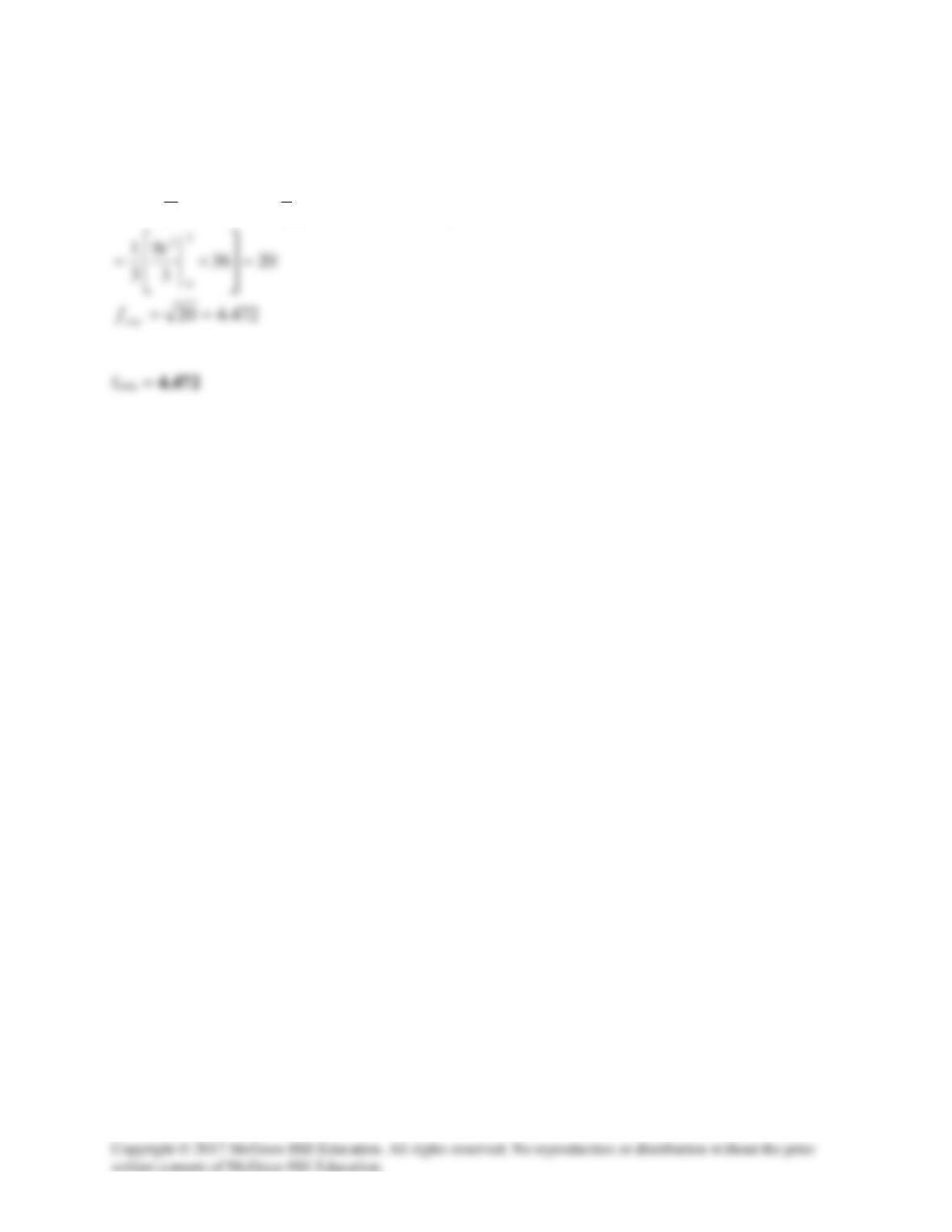
Solution 11.34
6)3(
3
1
)(
1
3
2
2
2
0
2
0
22
+==
∫∫∫
T
rms
dtdttdttf
T
f
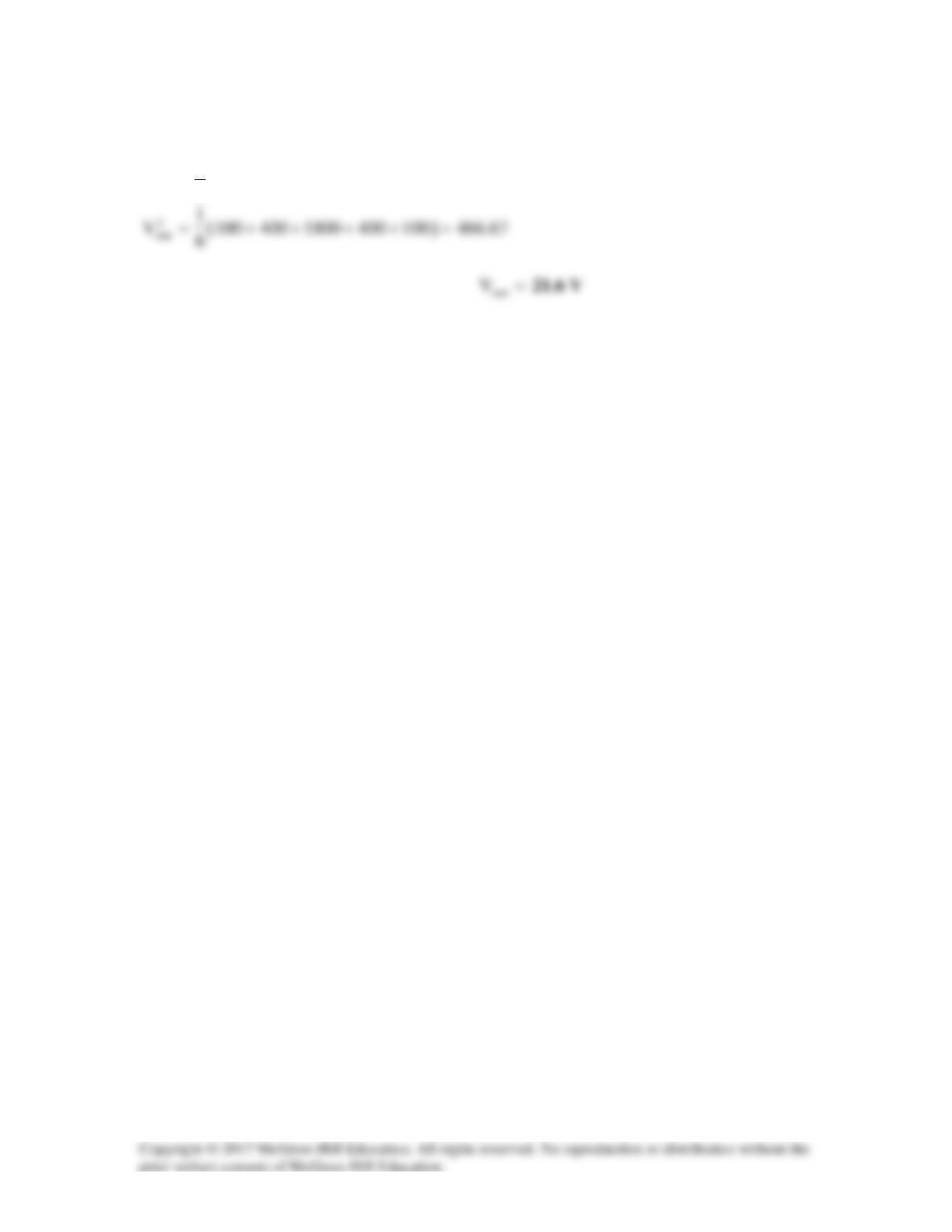
Solution 11.35
[ ]
∫∫∫∫∫
++++= 6
5
2
5
4
2
4
2
2
2
1
2
1
0
22
rms dt10dt20dt30dt20dt10
6
1
V
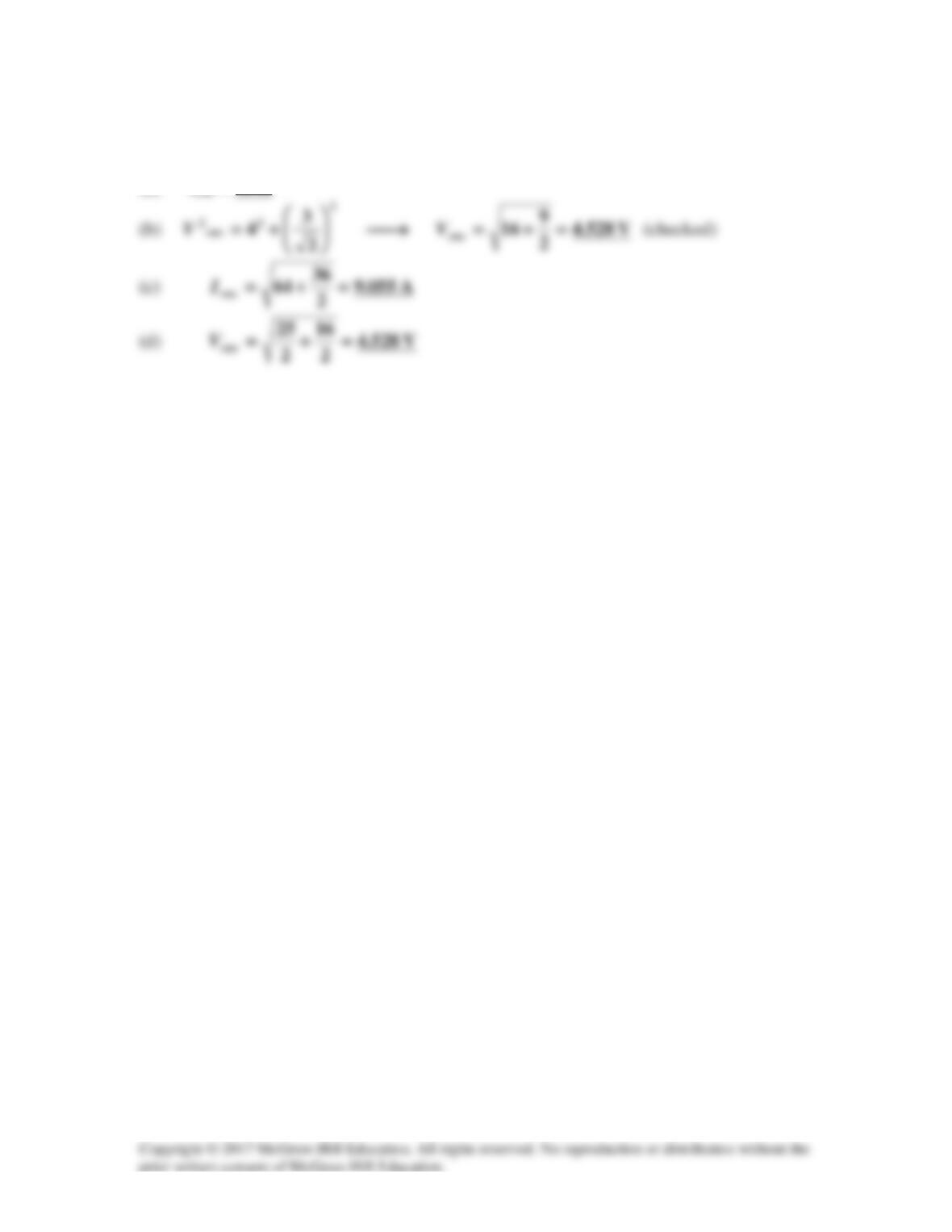
Solution 11.36
(a) Irms = 10 A
Solution 11.37
Design a problem to help other students to better understand how to determine the rms value of
Problem
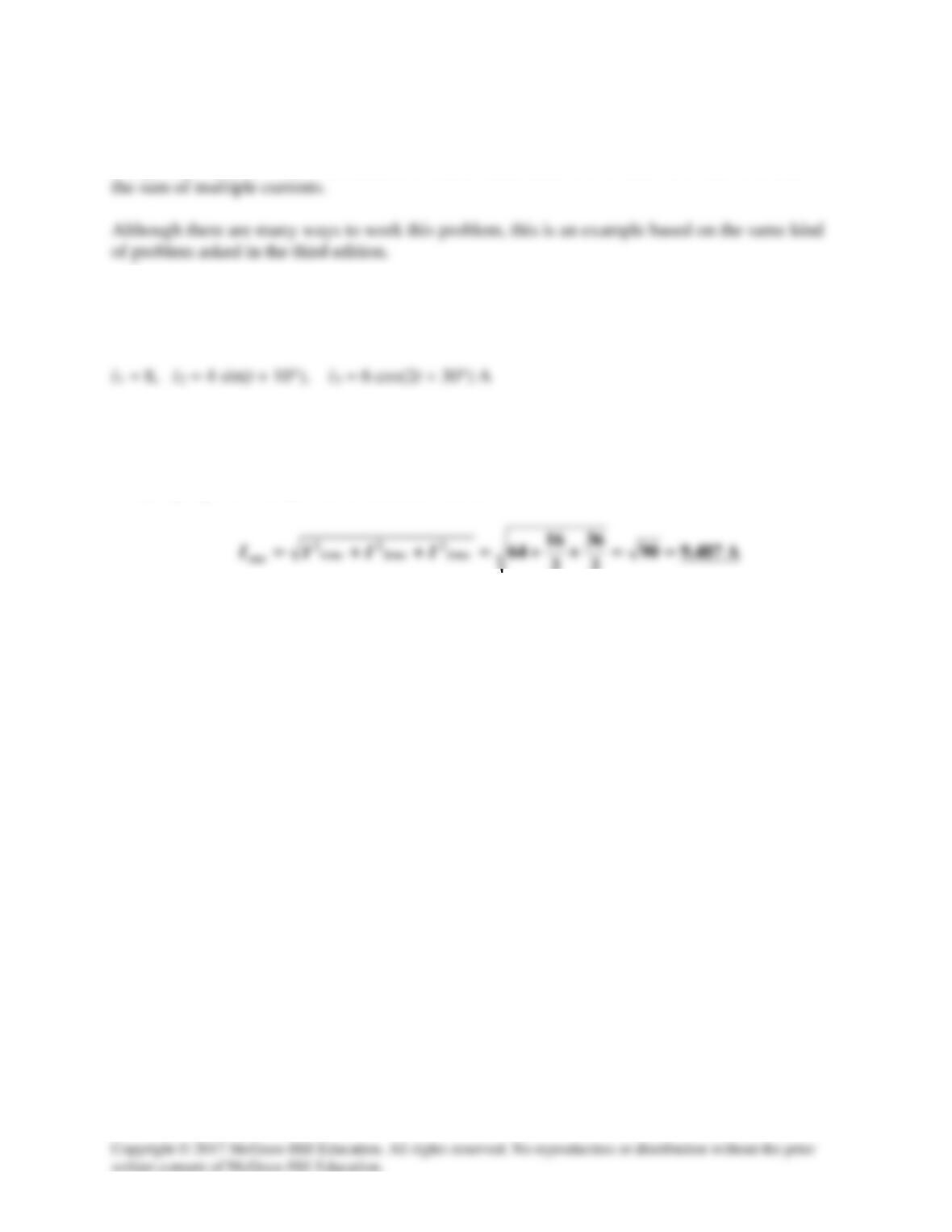
Calculate the rms value of the sum of these three currents:
Solution
)302cos(6)10sin(48
321
oo ttiiii ++++=++=
2
2
Solution 11.38
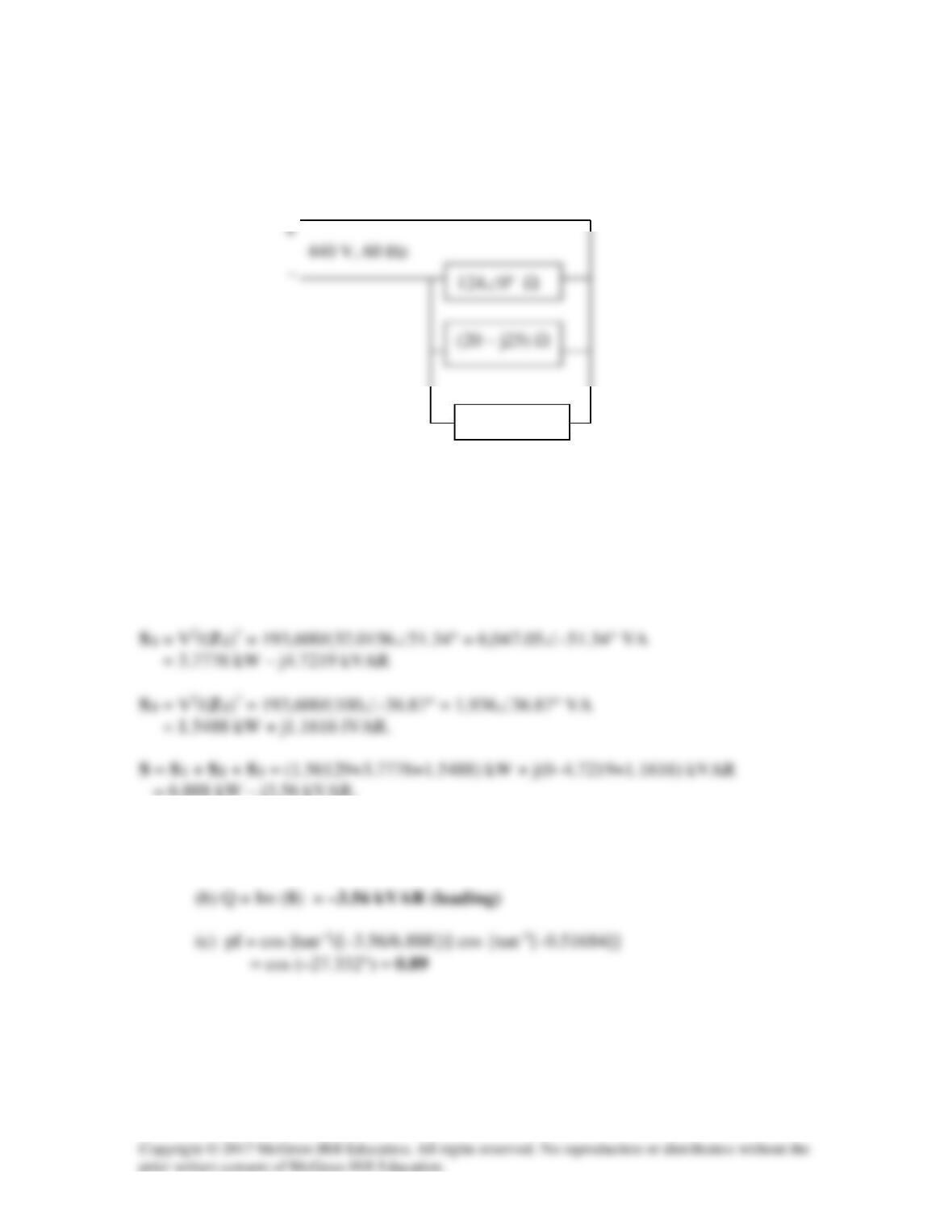
For the power system in Fig. 11.67, find: (a) the average power, (b) the reactive power,
(c) the power factor. Note that 440 V is an rms value.
Figure 11.67
For Prob. 11.38.
Solution
S1 = V2/(Z1)* = 1.56129 kW.
= 6.888 kW – j3.56 kVAR.
Therefore,
(a) P = Re(S) = 6.888 kW
(80+j60) Ω
Solution 11.39
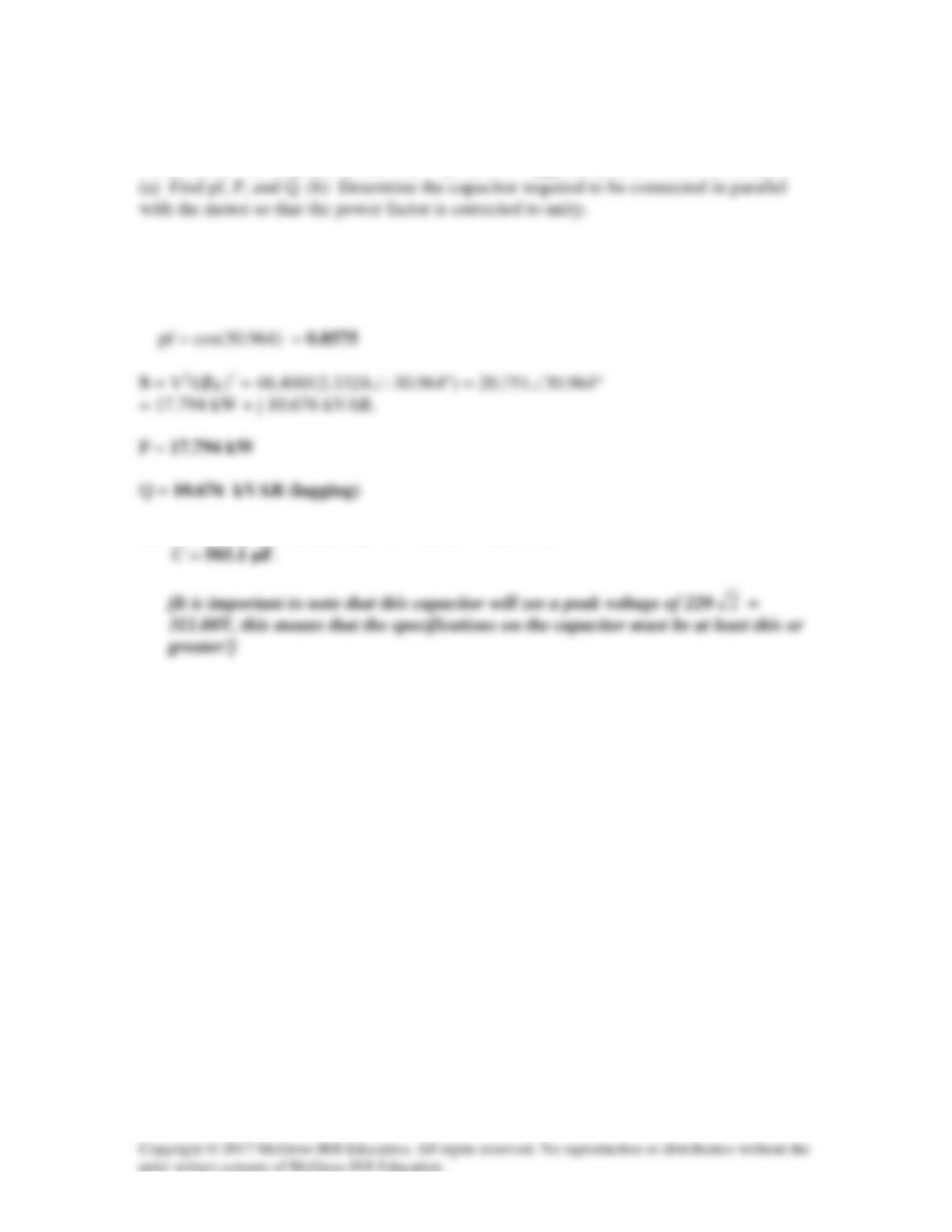
An ac motor with impedance ZL = (2 + j1.2) Ω is supplied by a 220-V, 60-Hz source.
Solution
(a) ZL = 2 + j1.2 = 2.3324∠30.964o
(b) XC = V2/QC = 48,400/10,676 = 4.5335 = 1/(377C) or
Solution 11.40
Design a problem to help other students to better understand apparent power and power
Problem
A load consisting of induction motors is drawing 80 kW from a 220-V, 60 Hz power line
Solution
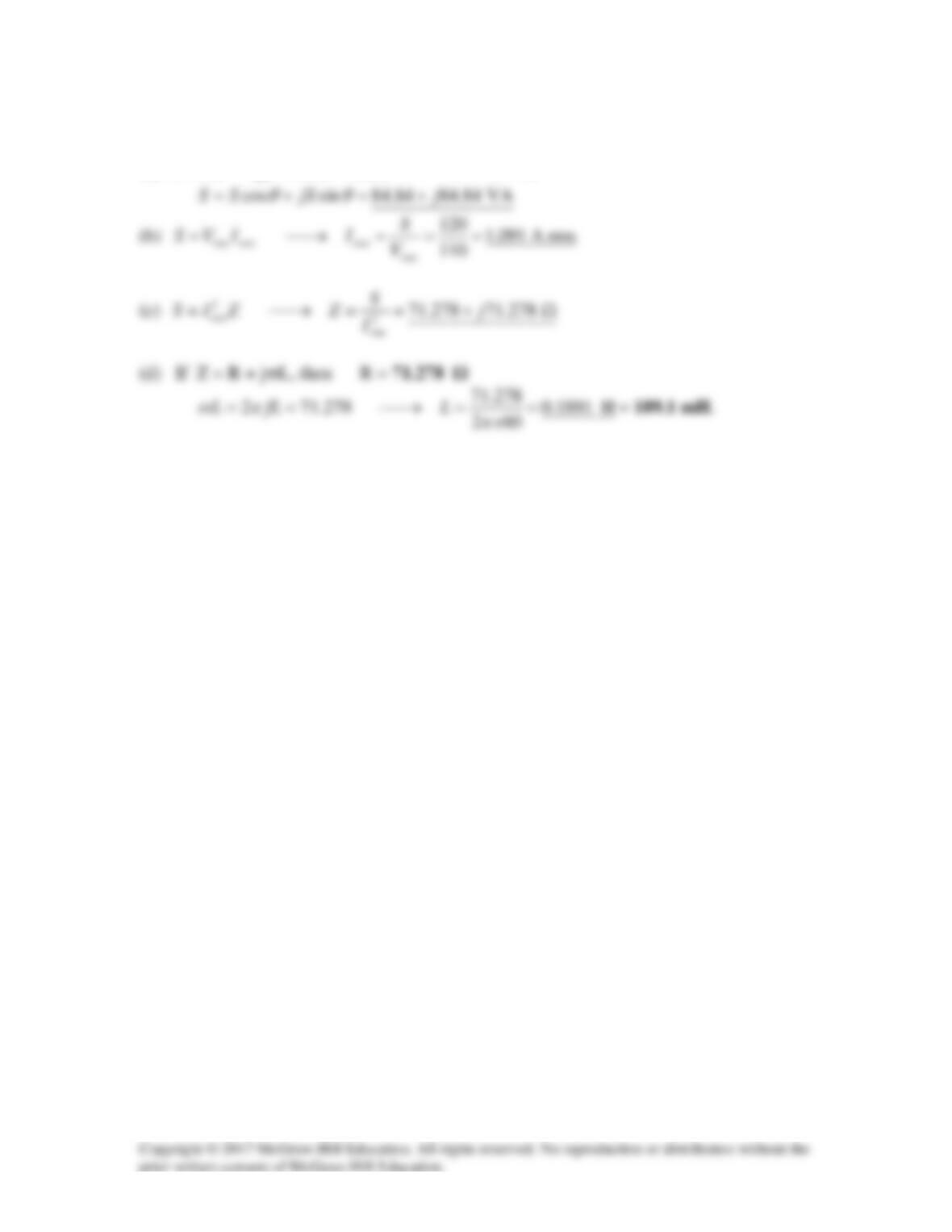
Solution 11.41
(a)
-j6
(-j2)(-j3)
-j3||-j2)2j5j(||2j– ===−
(b)
52.1j64.0
3j4
)j4)(2j(
)j4(||2j +=
+
+
=+
Solution 11.42
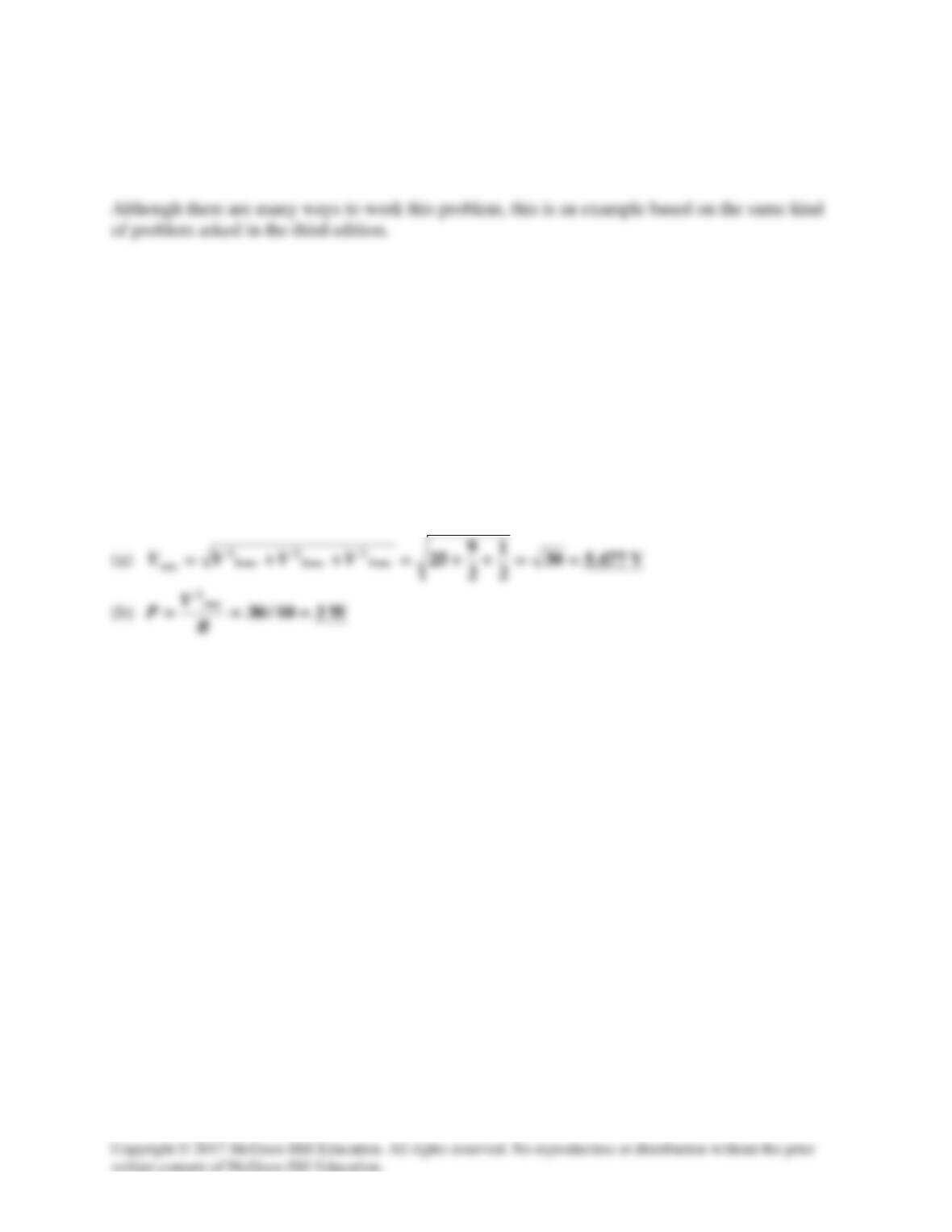
(a) S=120,
0.707 cos 45o
pf
θθ
= = → =
Solution 11.43
Design a problem to help other students to better understand complex power.
Problem
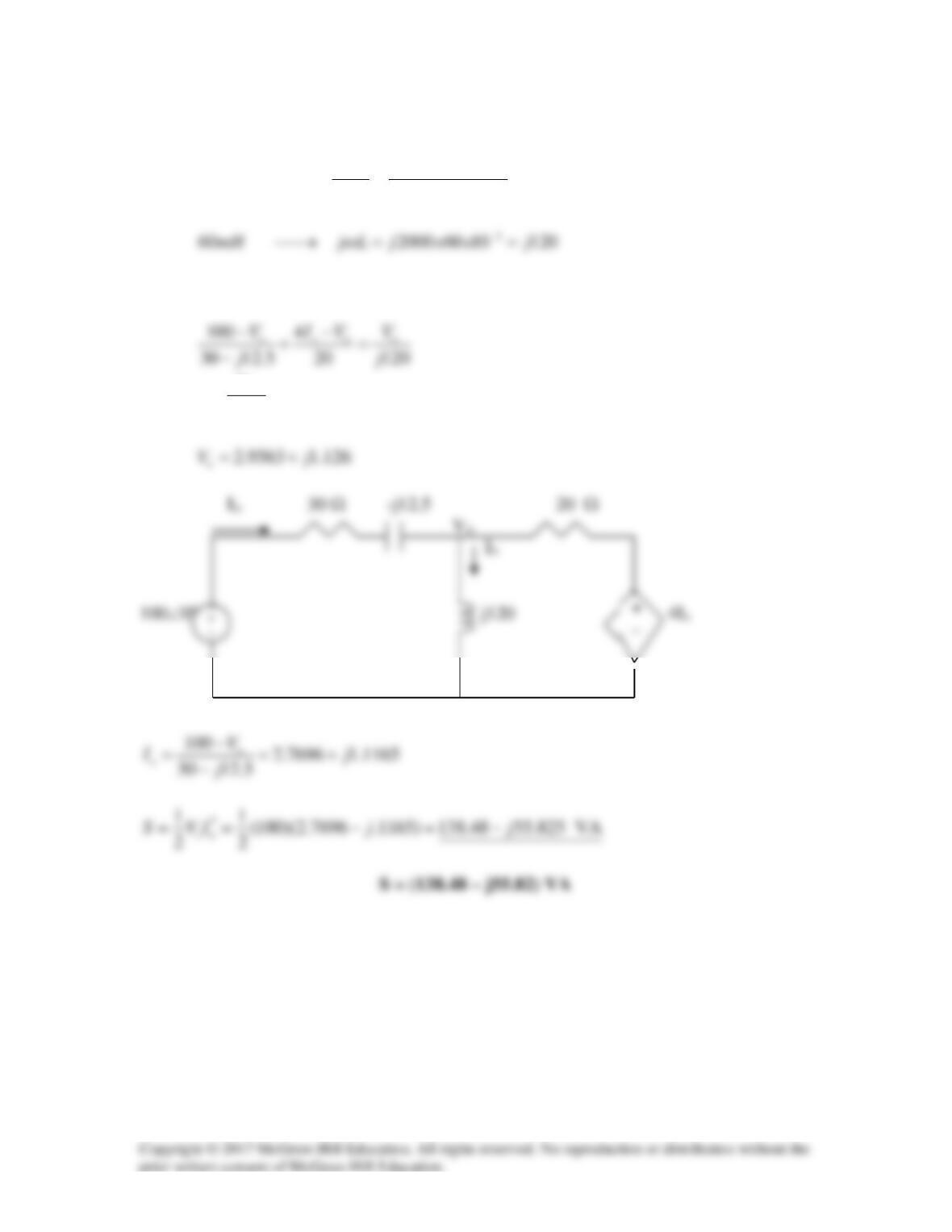
The voltage applied to a 10–ohm resistor is
v(t) = 5 + 3 cos(t + 10°) + cos(2t + 30°) V
(a) Calculate the rms value of the voltage.
(b) Determine the average power dissipated in the resistor.
Solution
Solution 11.44
6
11
40 12.5
2000 40 10
Fj
jC j x x
µω
−
→ = = −
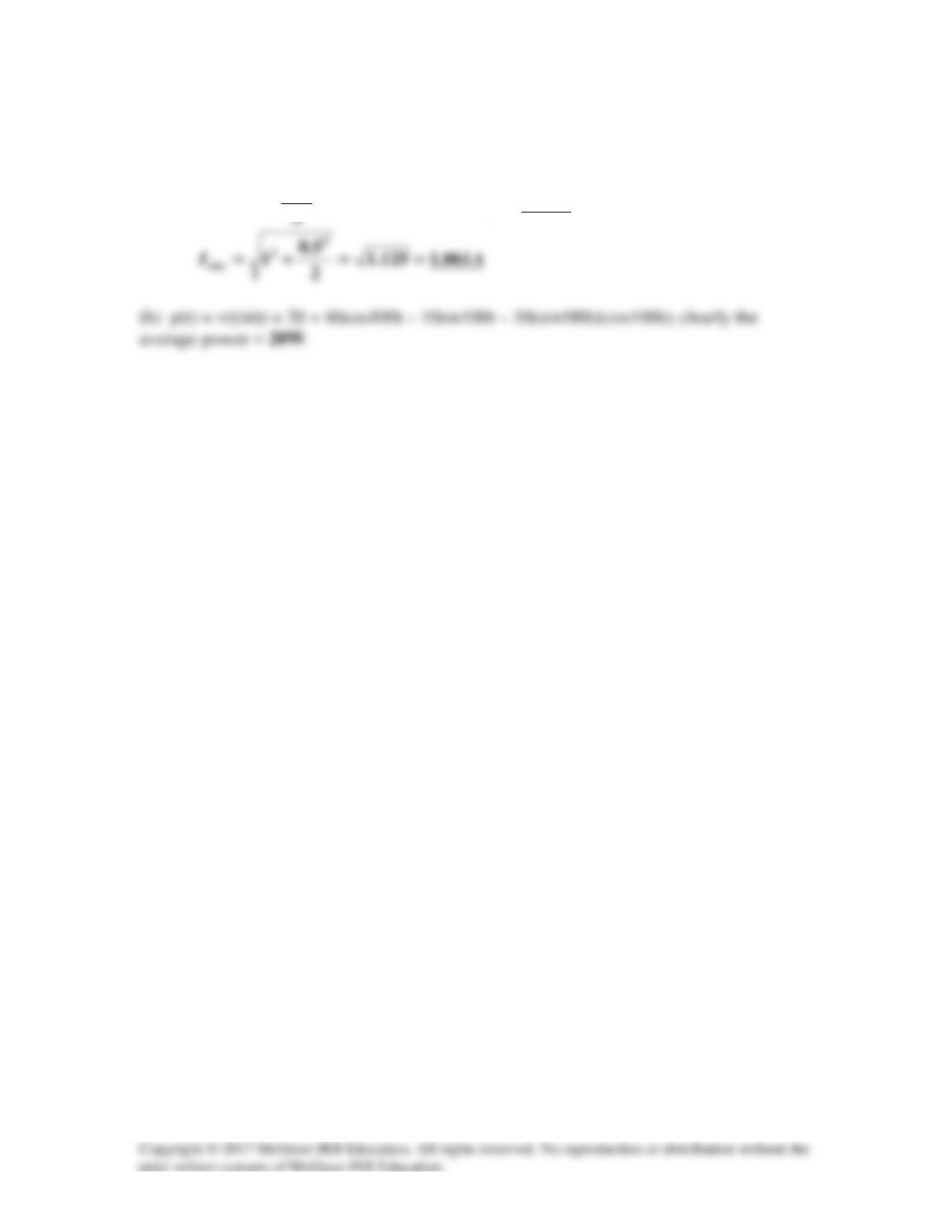
We apply nodal analysis to the circuit shown below.
But
120
o
x
V
Ij
=
. Solving for Vo leads to
Solution 11.45
(a)
V 9.462200
60
20
2
22 =→=+= rms
rms VV
Solution 11.46
(a)
°∠=°∠°∠== 30–110)60–5.0)(30220(
*
IVS
(b)
== *
IVS
°∠=°∠°∠ 151550)252.6)(10–250(
(c)
°∠=°∠°∠== 15288)154.2)(0120(
*
IVS
(d)
°∠=°∠°∠== 45–1360)90–5.8)(45160(
*
IVS
Solution 11.47
For each of the following cases, find the complex power, the average power, and the
reactive power:
(a) v(t) = 169.7 sin (377t + 45°) V, i(t) = 5.657 sin (377t) A
Solution
Step 1. In the first two cases we need to convert the time varying voltages and
Step 2.
(a) V = (169.7/1.4142)∠45° = 120∠45° V and
Solution 11.48
(b)
°=θ→=θ= 84.259.0cospf
(c)
75.0
600
450
S
Q
sinsinSQ ===θ→θ=
(d)
1210
40
)220(
S
2
2
=== Z
V
Solution 11.49
(a)
kVA))86.0(sin(cos
4
j4 1–
+=S
(b)
6.0sincos8.0
2
6.1
S
P
pf =θ→θ===
(d)
=
== 56.31–11.72
14400
)120( 2
*
2
V
S
Solution 11.50
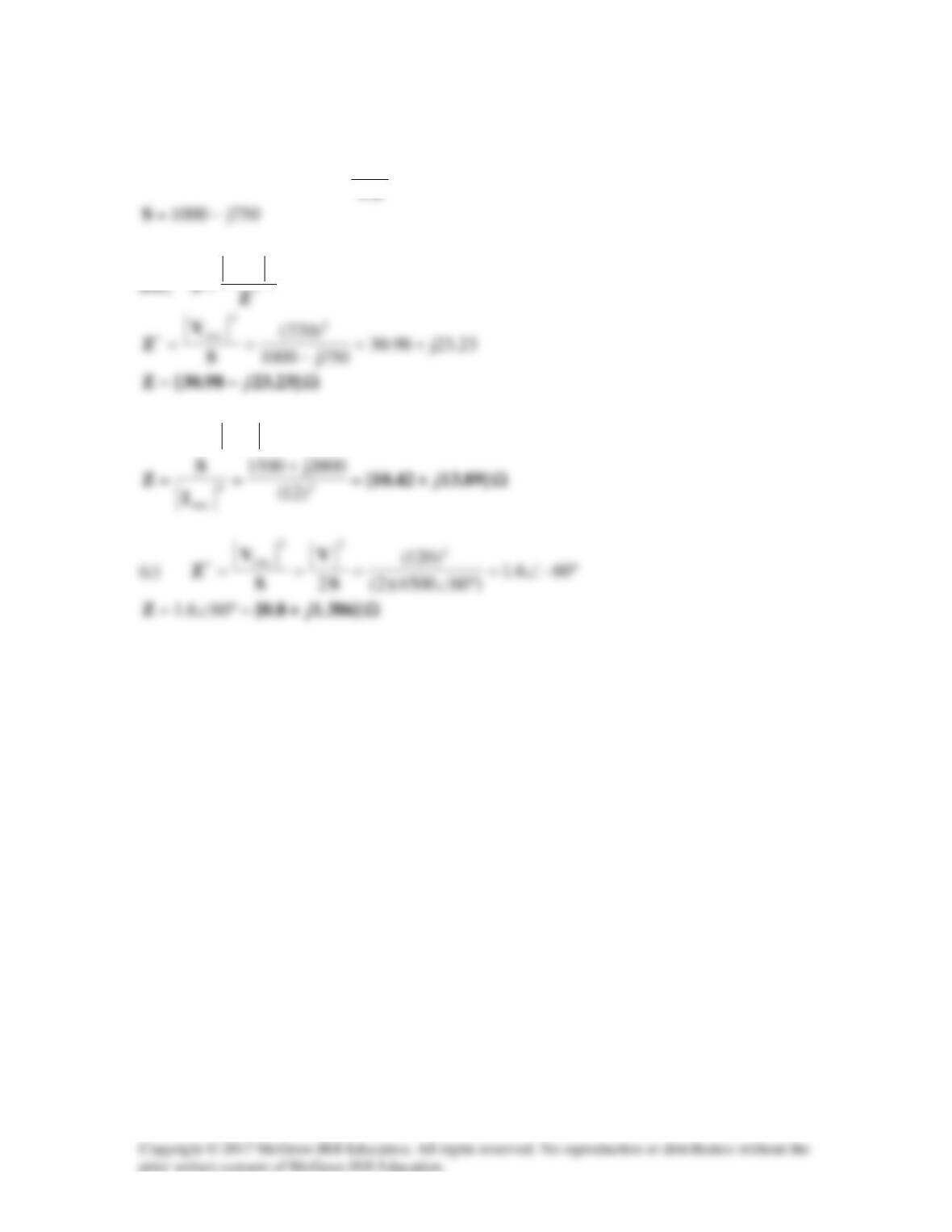
(a)
))8.0(sin(cos
1000
j1000jQP1–
−=−=S
2
rms
V
(b)
ZIS 2
rms
=
Solution 11.51
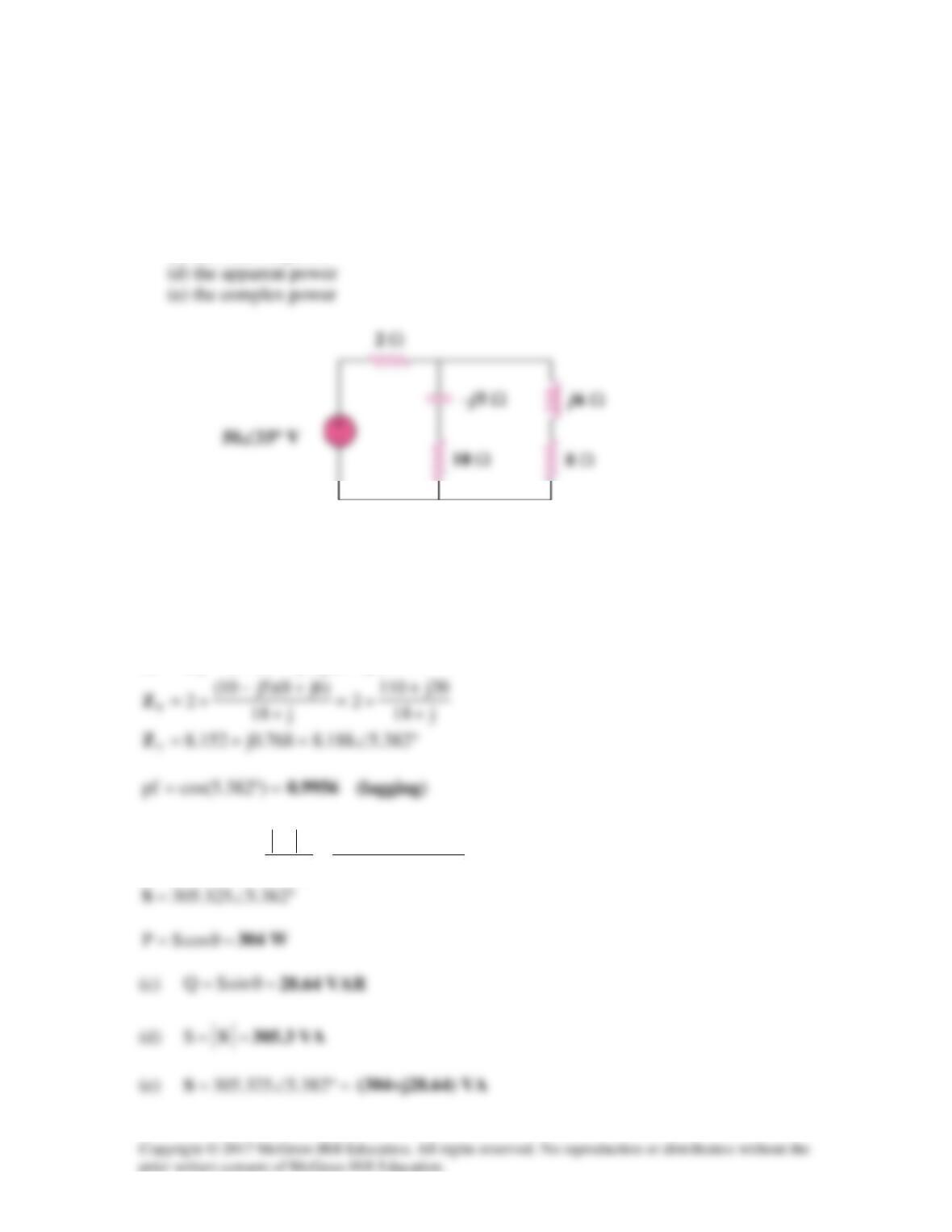
For the entire circuit in Fig. 11.70, calculate:
(a) the power factor
(b) the average power delivered by the source
(c) the reactive power
Figure 11.70
For Prob. 11.51.
Solution
(a)
)6j8(||)5j10(2
T
+−+=Z
(b)
( )
)188.8(
)50(
2
*
2
*
°∠
=== 5.382–
Z
V
IVS
T
Solution 11.52
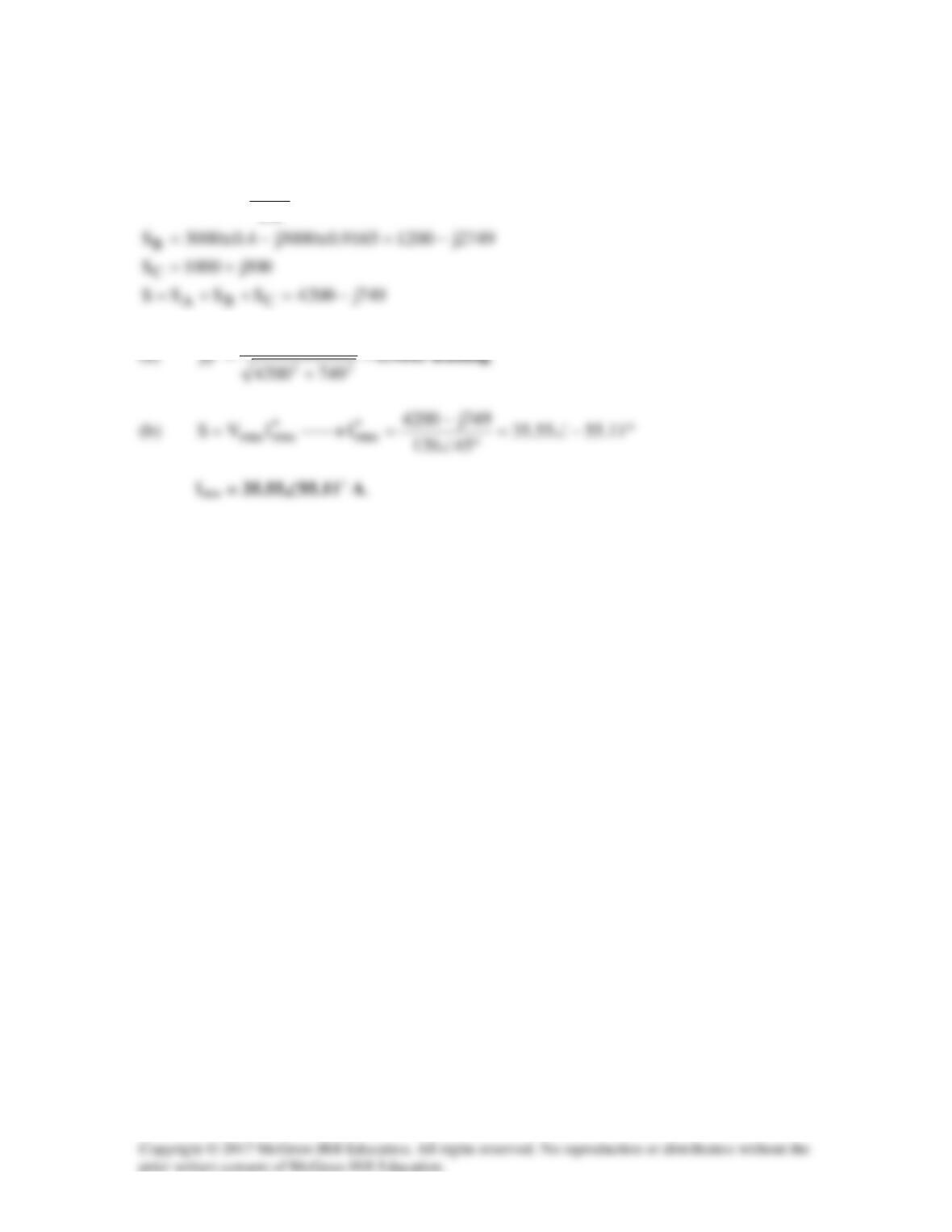
1500j20006.0
8.0
2000
j2000S
A
+=+=
4200
Solution 11.53
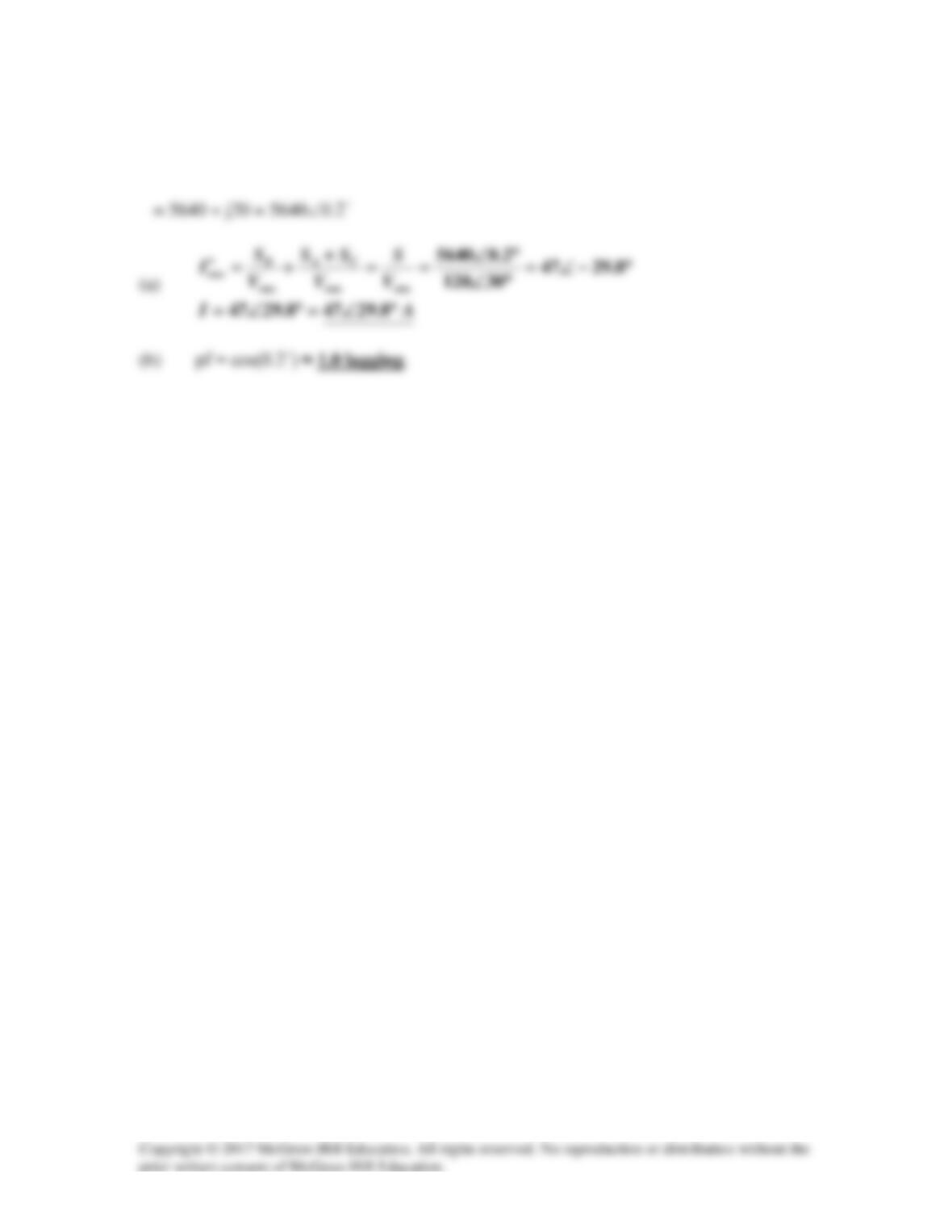
S = SA + SB + SC = 4000(0.8–j0.6) + 2400(0.6+j0.8) + 1000 + j500