1
CHAPTER 11
Problem 11.1
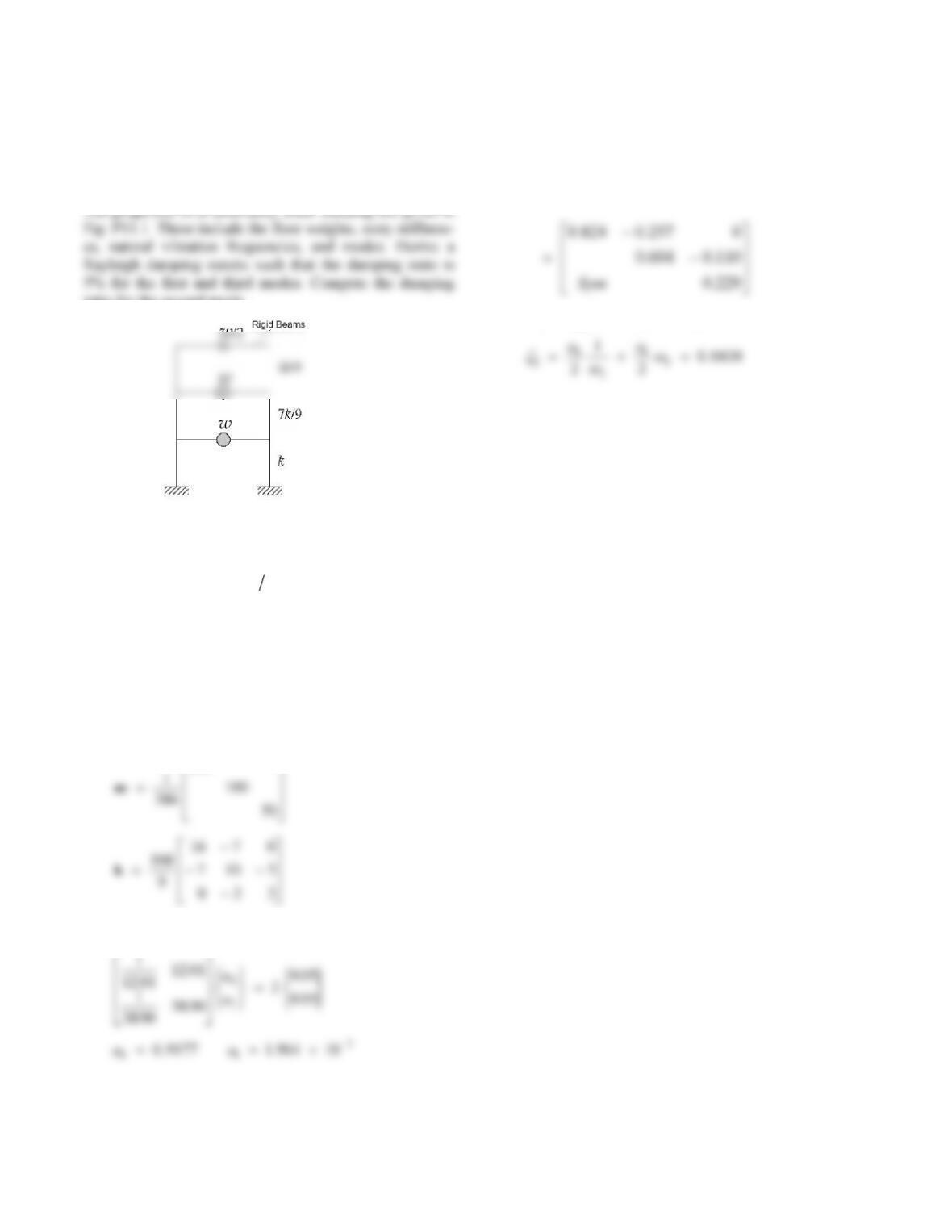
The properties of a three-story shear building are given in
ratio for the second mode.
Figure P11.1
12 3
100 kips = 168 kips/in.
12.01, 25.47, 38.90 rad sec
0.6375 0.9827 1.5778
1.2750 , 0.9829 , 1.1270
1.9125 1.9642 0.4508
n
k
w
Solution:
1. Set up mass and stiffness matrices.
L
O
100
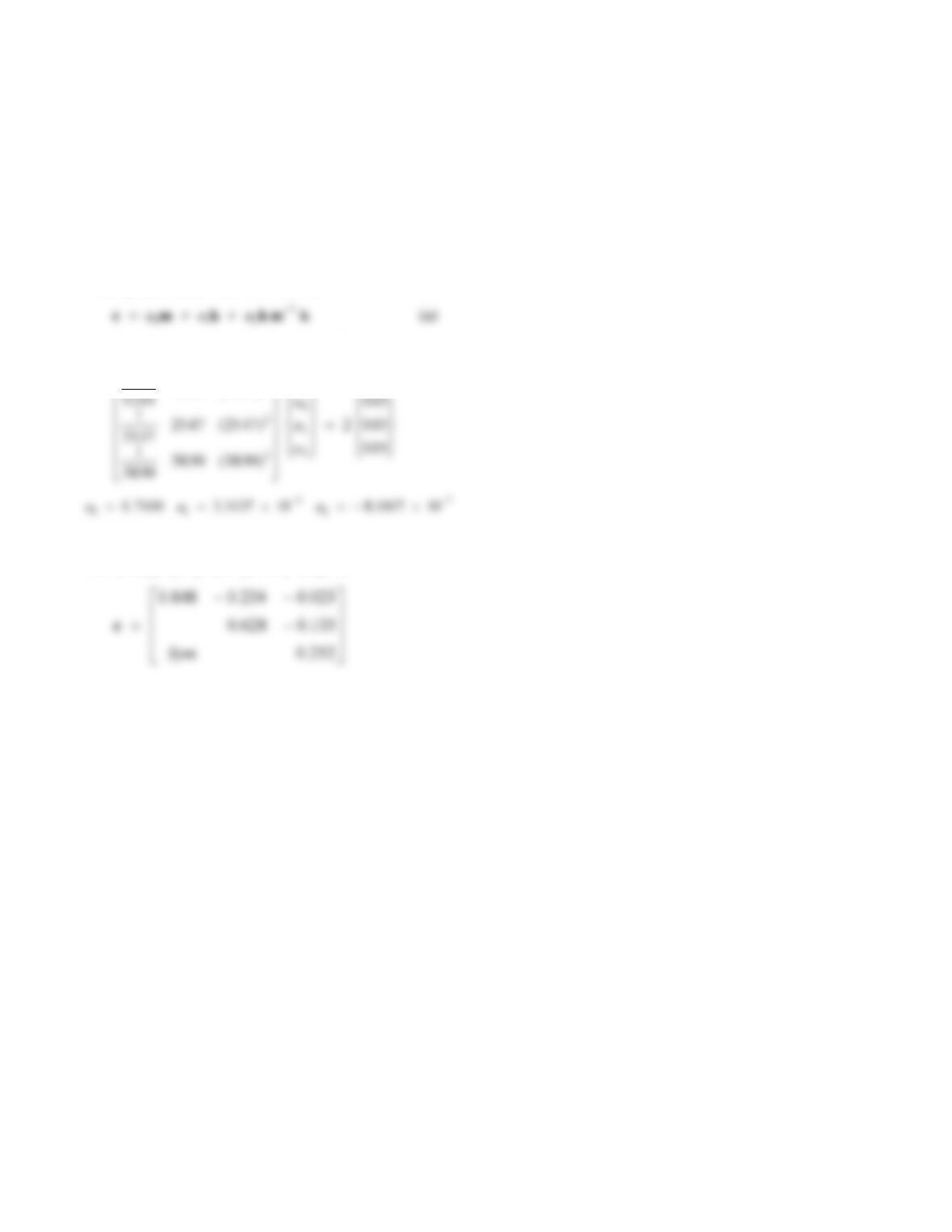
2. Determine a0 and a1 from Eq. (11.4.9).
3. Evaluate the damping matrix.
01
aa
cmk
4. Compute
2 from Eq. (11.4.8).
2
Problem 11.2
For the system of Fig. P11.1, use Caughey series to
determine the classical damping matrix if the damping
ratio is 5% for all three modes.
Solution:
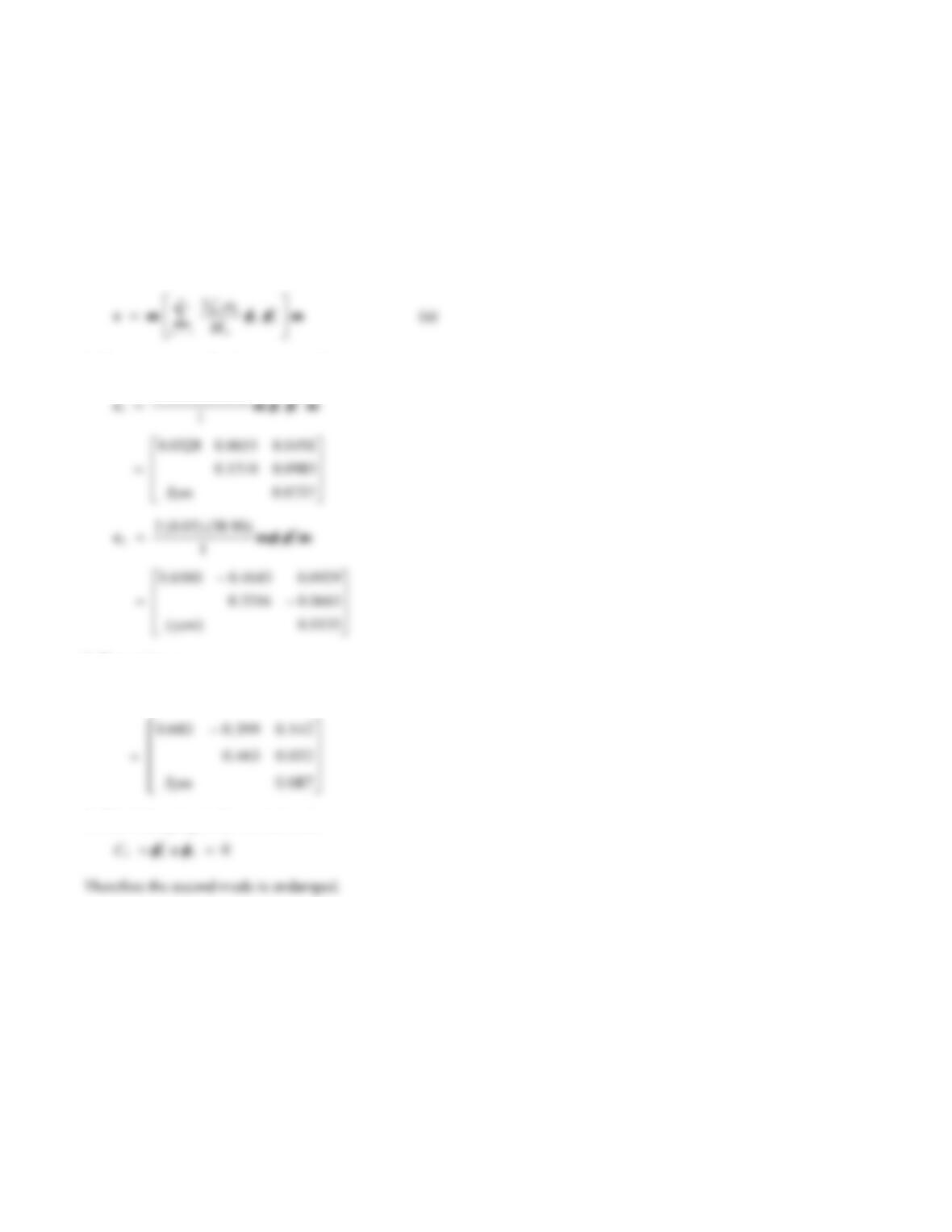
1. Caughey series for a 3-DOF system:
(b) Determine a0, a1, and a2 from Eq. (11.4.14).
1
3
L
O
(c) Evaluate c.
Substituting a0, a1, and a2 in Eq. (a) gives
3
Problem 11.3
Determine a damping matrix for the system of Fig. P11.1
by superimposing the damping matrices for the first and
third modes, each with
ζ
n = 5%. Verify that the resulting
damping matrix gives no damping in the second mode.
Solution:
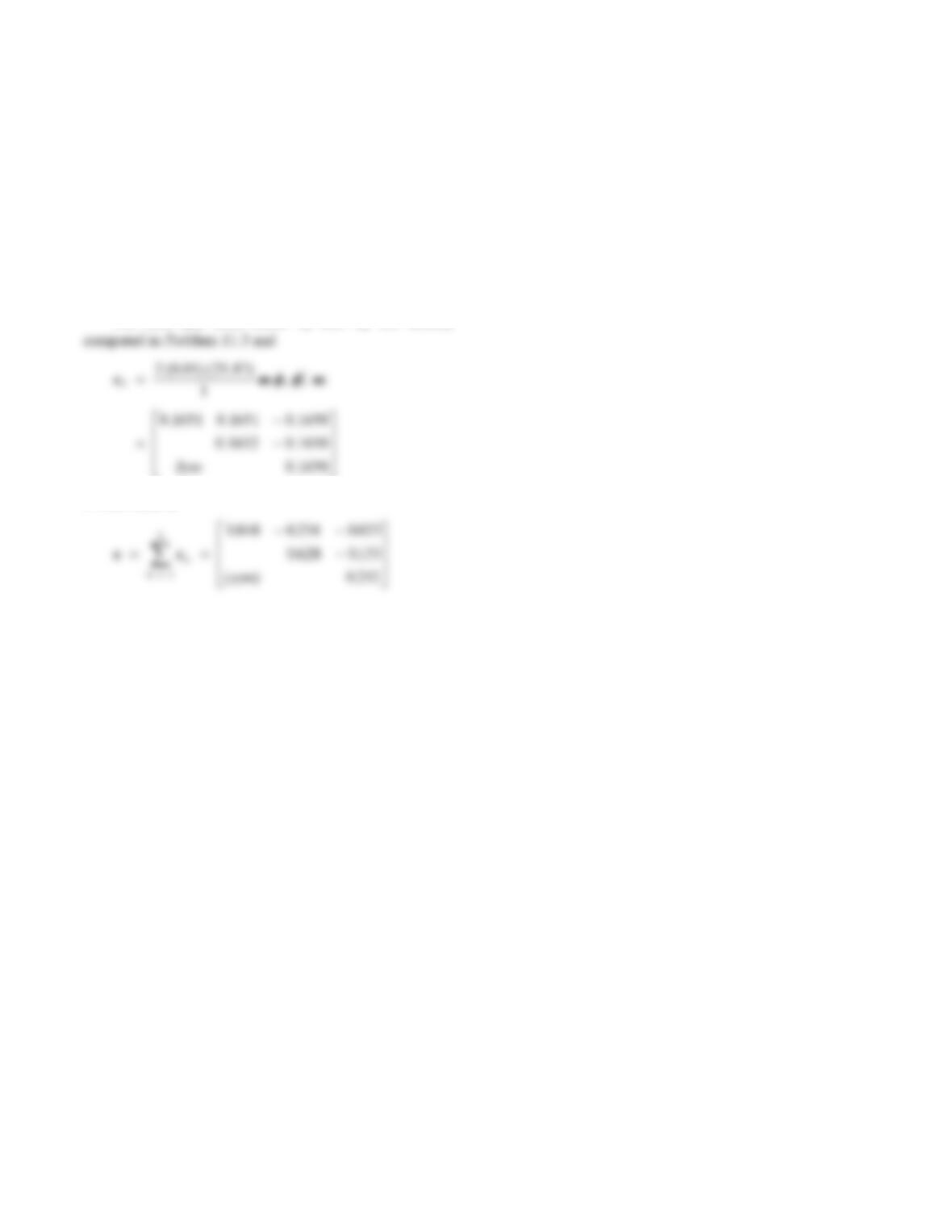
1. Determine the individual terms in Eq. (a).
2 (0.05) (12.01)
2. Determine c.
13
cc c
3. Check damping in the second mode.
4
Problem 11.4
Determine the classical damping matrix for the system of
Fig. P11.1 by superimposing the damping matrices for the
three modes, each with
ζ
n = 5%.
Solution:
1. Determine individual terms in Eq. (11.4.21).
The first and third terms c1 and c3 are already
2. Determine c.