11.1: PROBLEM DEFINITION
Situation:
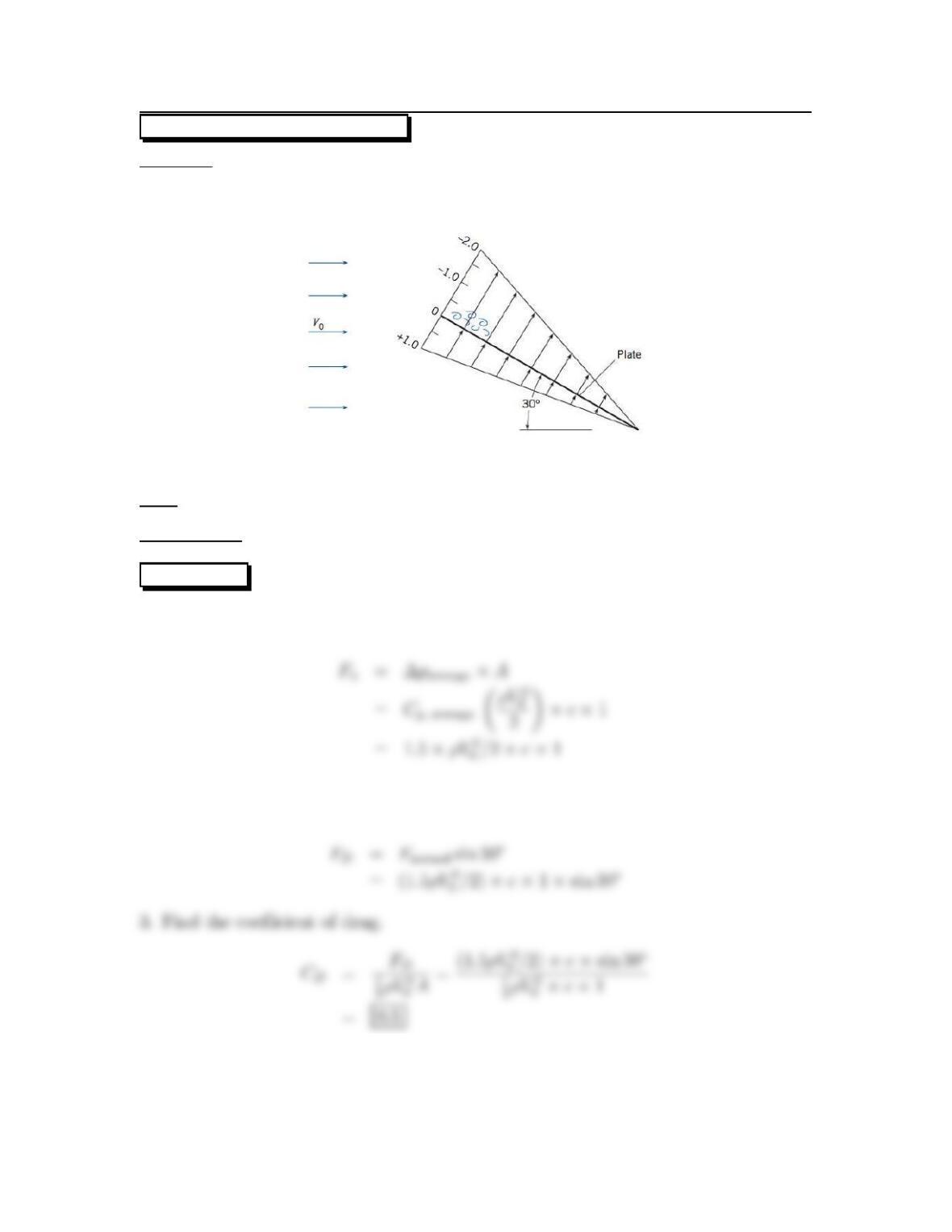
A hypothetical pressure-coefficient distribution acts on a plate.
Plate length = c, Plate width (into paper) = 1.0 unit.
Find:Coefficient of drag.
Assumptions:Viscouseffects are negligible.
SOLUTION
1. Find the force normal to the plate
2. Find the component of the force that is aligned with the direction of the free
stream. This force is the drag force
1
11.2: PROBLEM DEFINITION
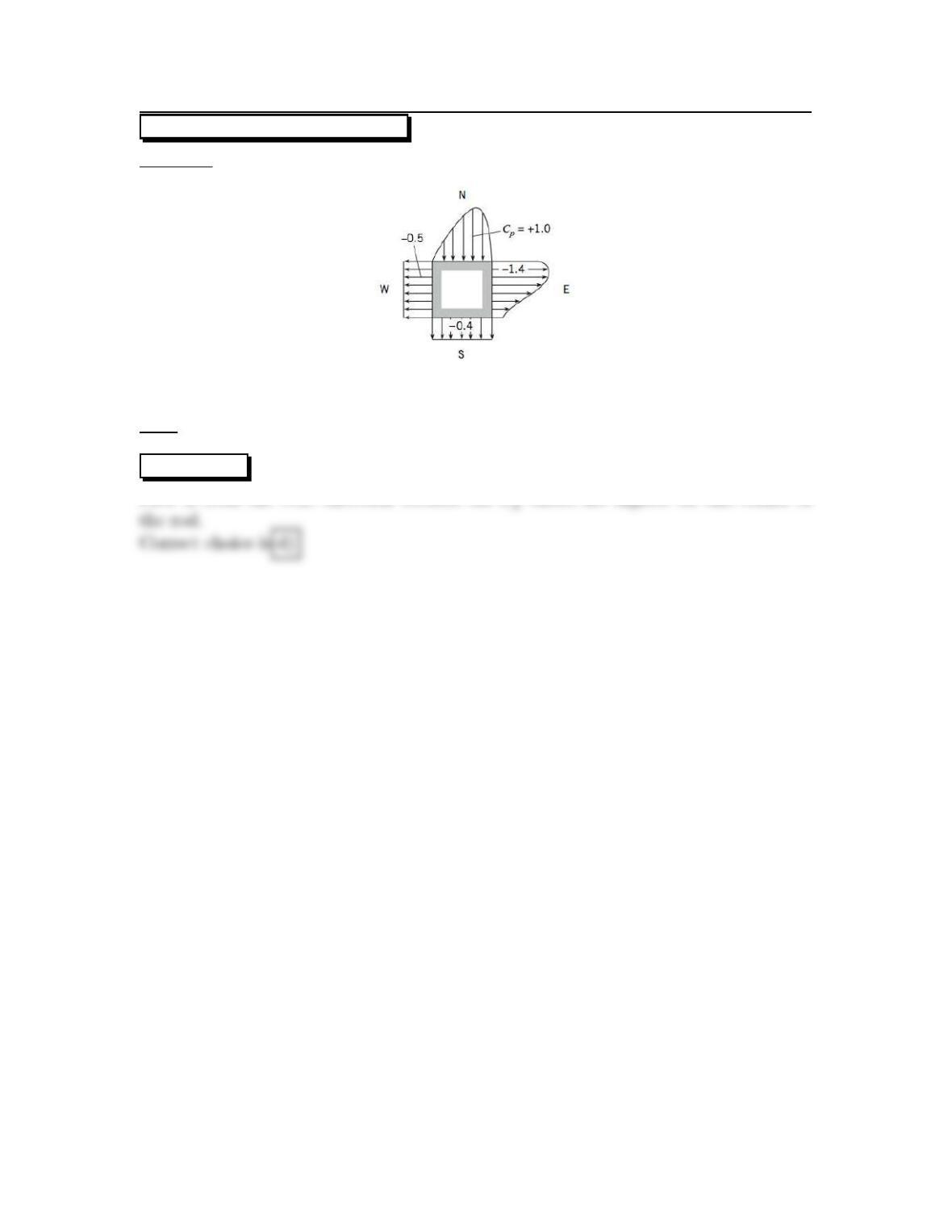
Situation:Fluidflow past a square rod.
Find: Direction from which the flow is coming.
SOLUTION
Flow is from the N.E. direction because the Cpvalues are highest on this corner of
2
11.3: PROBLEM DEFINITION
Situation:
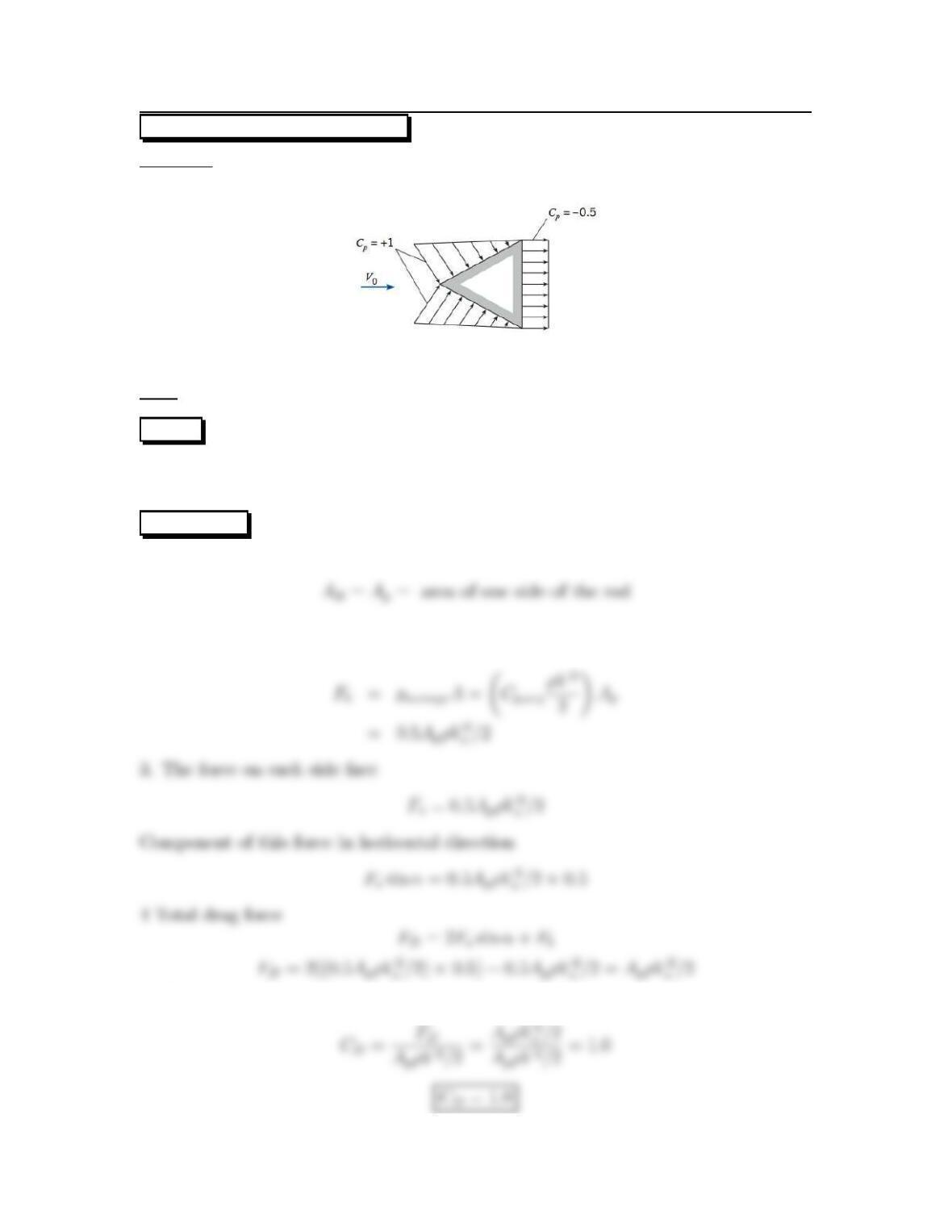
A pressure distribution acts on a triangular rod.
Find:Dragcoefficient for rod.
PLAN
Find the total force on the rod by adding up the forces on the three sides. Once total
force is known, find CDby using the definition.
SOLUTION
1. Define the reference area
2. Force contributing to drag on the back (downstream) face
5. Coefficient of drag
3
11.4: PROBLEM DEFINITION
Situation:
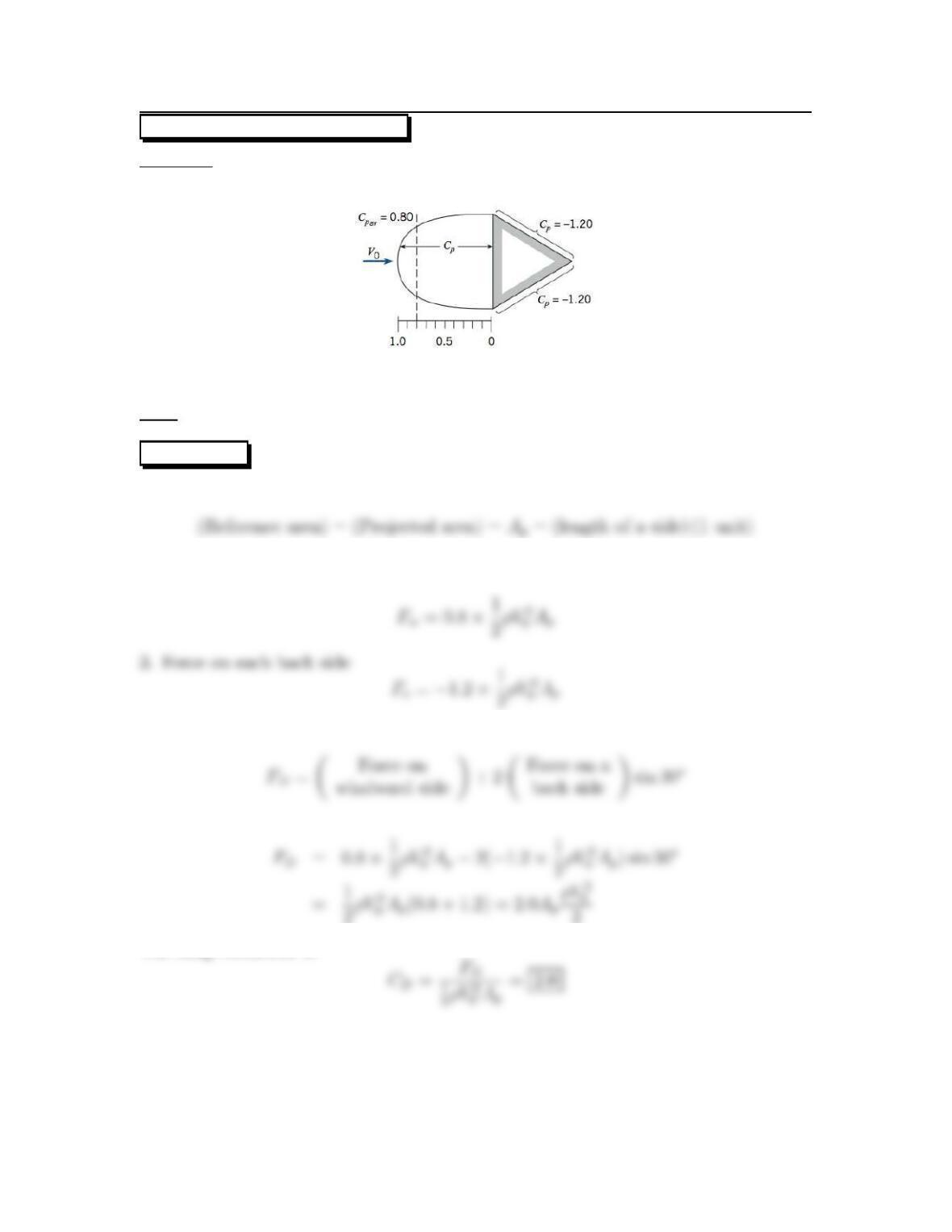
A pressure distribution acts on a triangular rod.
Find:Dragcoefficient.
SOLUTION
1. Reference area
2. Drag force on the windward (front) side
4. Total drag force on the rod
The drag coefficient is
4

Problem 11.5
Find:
A. _____________ is associated with the viscous shear-stress distribution.
a. Form drag
b. Friction drag
B. _____________ is associated with the pressure distribution.
a. Form drag
b. Friction drag.
SOLUTION
A. [b. Friction drag] is associated with the viscous shear-stress distribution.
5

Problem 11.6
Situation:
The coefficient of drag for a body (select all that apply):
a. is dimensionless
b. is usually determined by experiment
c. depends upon thrust
d. depends upon the body’s shape
e. requires an updraft
SOLUTION
6
Problem 11.7
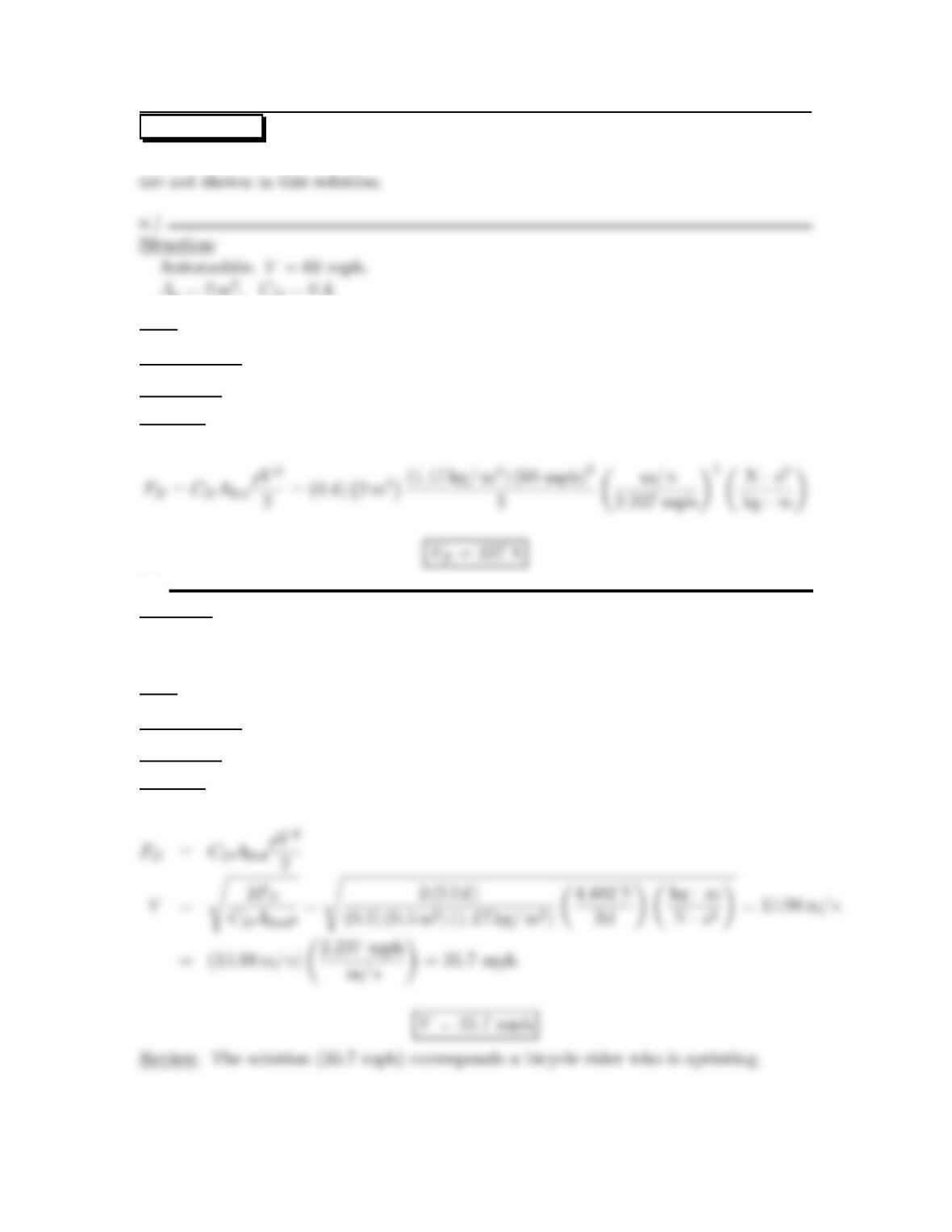
Apply the grid method to each situation described below. Note: Unit cancellations
D=0.4.
Find: Drag force on automobile (Newtons).
Assumptions: Air temperature on a typical summer day is 30 ◦C.
Properties:Air(30 ◦C,1 atm), Table A.5 (EFM 10e), ρ=1.17 kg/m3.
Solution:
b.)
Situation:
Bicycle. FD=5lbf.
Ap=0.5m
2,C
D=0.3.
Find: Speed of the bike rider (mph).
Assumptions: Air temperature on a typical summer day is 30 ◦C.
Properties:Air(30 ◦C,1 atm), Table A.5 (EFM 10e), ρ=1.17 kg/m3
Solution:
7
Problem 11.8
Answer the questions below.
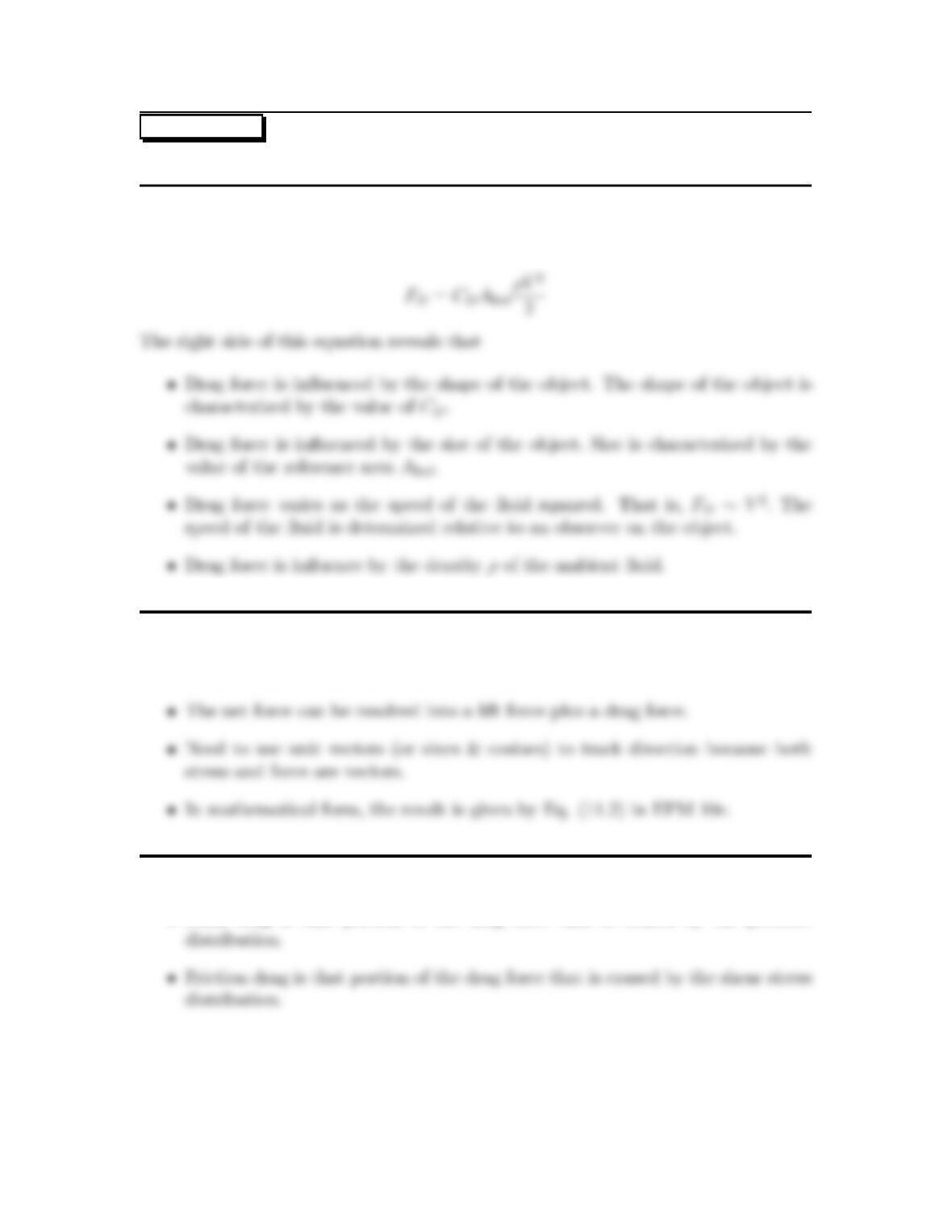
a. What are the four most important factors that influence drag force?
To identify the factors, apply logical reasoning to the drag force equation:
b. How are stress and drag related?
•Integrating stress (force/area) over area gives the net force.
c.) What is form drag? What is friction drag?
•Form drag is that portion of the drag force that is caused by the pressure
8
Problem 11.9
Situation:
Objects are immersed in flowing fluids.
Find:
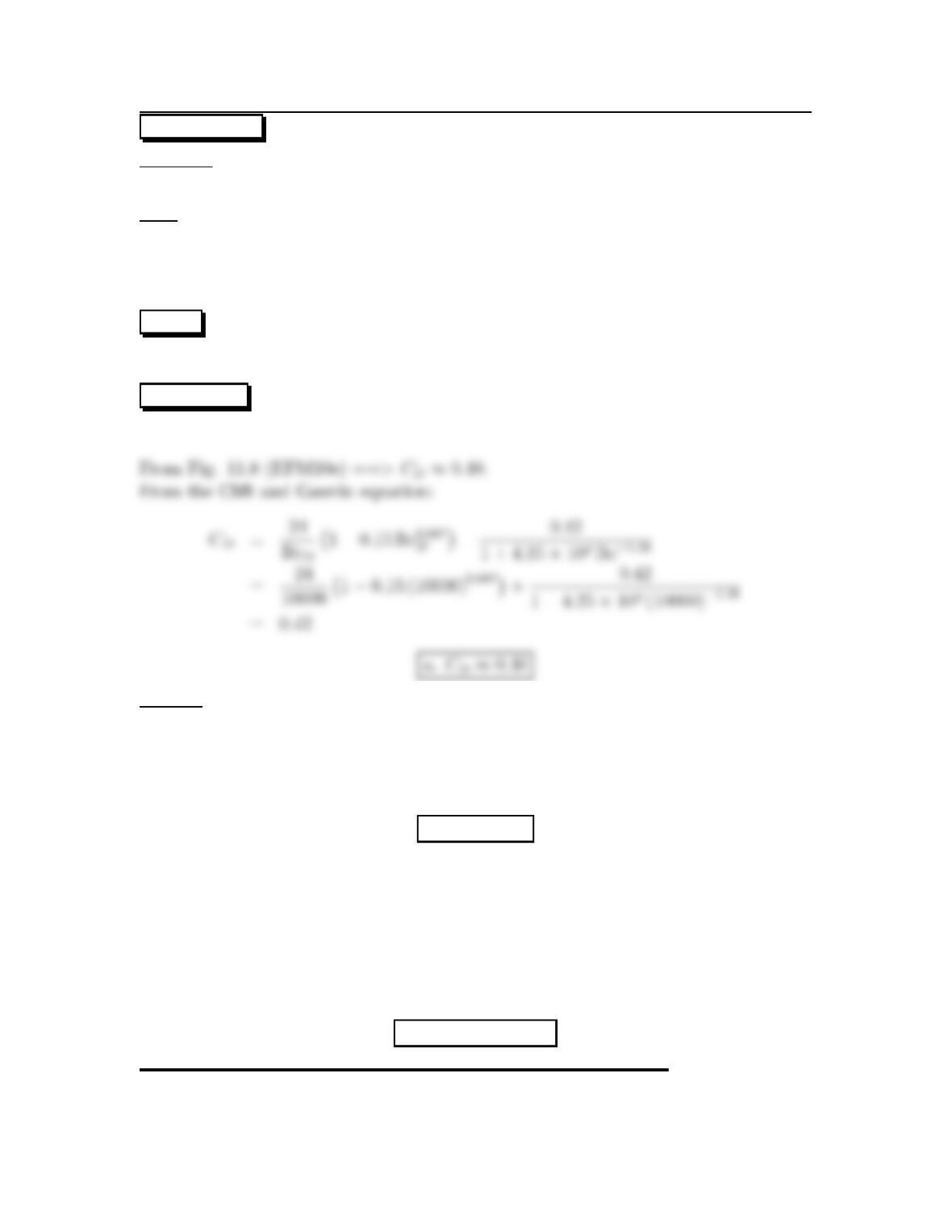
a. CDfor a sphere that is falling through water. Re = 10000.
b. CDfor air blowing normal to a very long circular cylinder. Re = 7000.
c. CDfor air blowing normal to a billboard that is 20 ft wide by 10 ft high.
PLAN
First, find the right table, equation, or chart. Then, find CD.
SOLUTION
a. Sphere fall through water.
Review. The two answers are within about 5%. This difference is within the stated
accuracy (-4% to 6%) of the Clift & Gauvin correlation.
b. Air is blowing normal to a cylinder.
From Fig. 11.5 (EFM10e):
b. CD≈0.98
c. Wind is blowing normal to a billboard that is 20 ft wide by 10 ft high.
Use Table 11.1 (EFM 10e) and represent the billboard as a rectangular plate with an
aspect ratio of l/b =2.
Assume Re >104and interpolate.
c. CD≈1.18 ≈1.2
9
11.10: PROBLEM DEFINITION
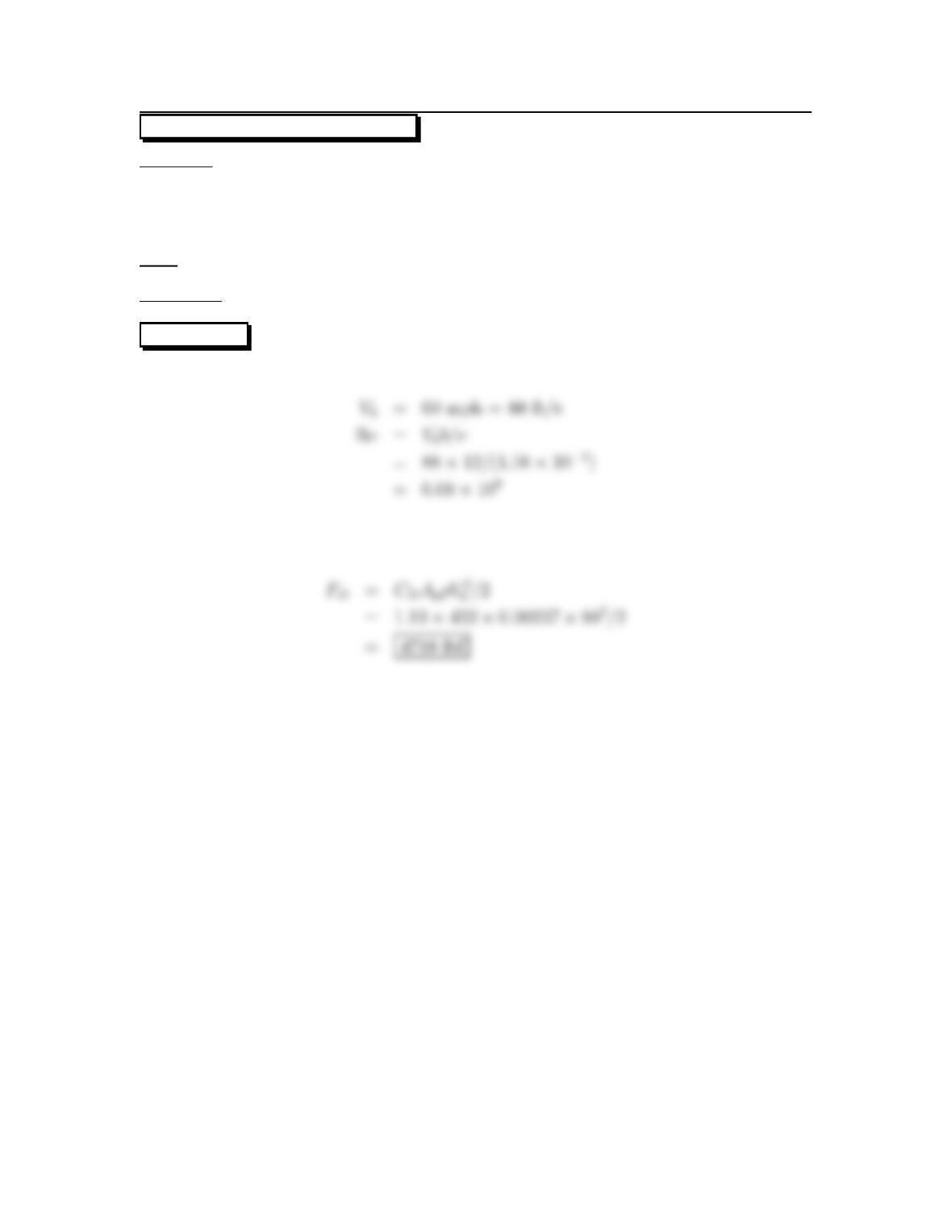
Situation: Wind acts on a billboard–additional details are provided in the problem
statement.
b=12ft,w =36ft
V0=60mi/h
Find:Forceofthewind.
Properties: Air, Table A.3 (EFM 10e) ν=1.58 ×10⁻⁴ft2/s; ρ=0.00237 slugs/ft3.
SOLUTION
Reynolds number
Drag force. From Table 11.1 (EFM 10e) CD=1.19.Then
10
11.11: PROBLEM DEFINITION
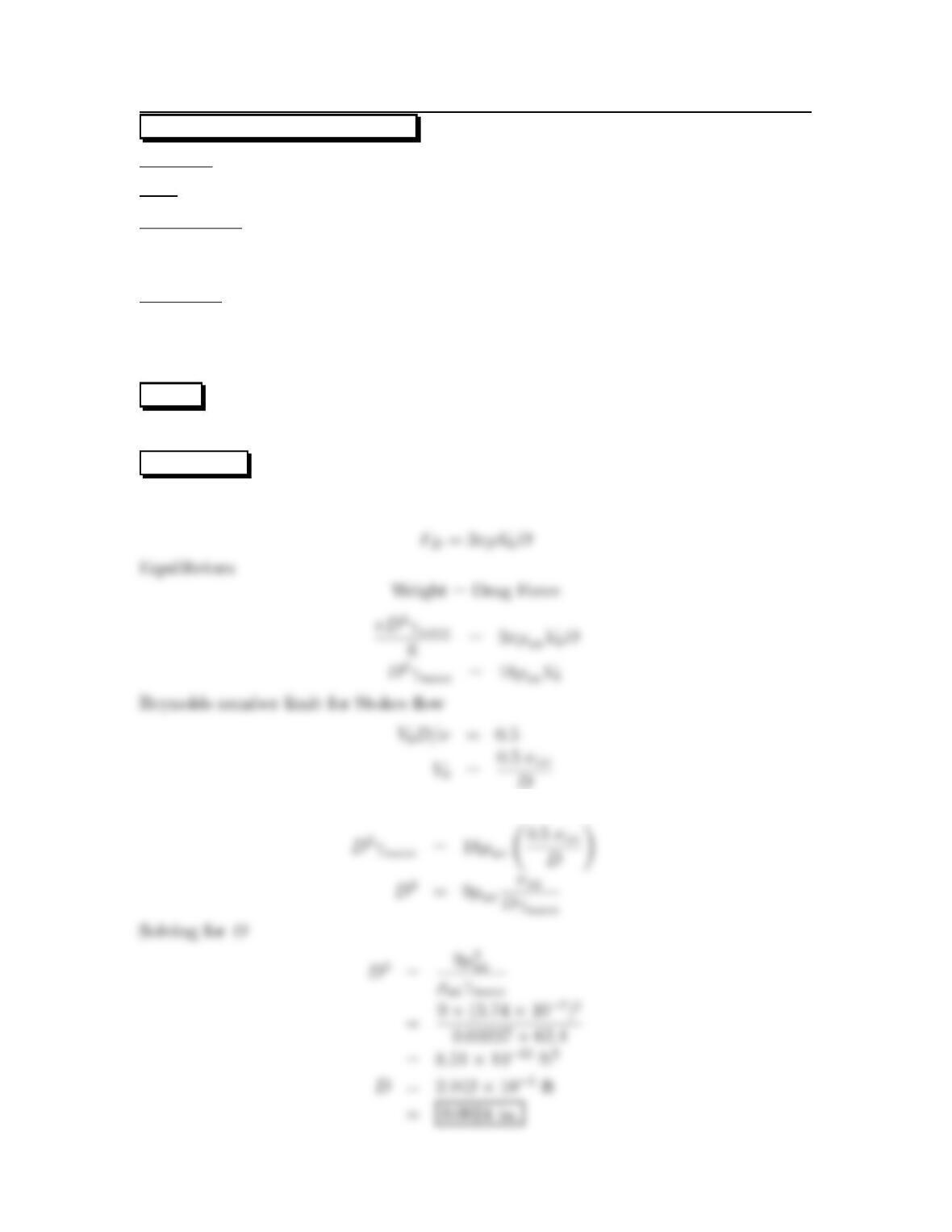
Situation: Assume Stoke’s law is valid for a Reynolds number below 0.5.
Find: Largest raindrop that will fall in the Stokes’ flow regime.
Assumptions:
spherical rain drop.
ambient temperature is 60 ◦F.
Properties:
Air (60 ◦F), Table A.3 (EFM 10e), ρ=0.00237 slugs/ft3,μ
air =3.74 ×10⁻⁷lbf-
sec/ft2.
Water (60 ◦F), Table A.5 (EFM 10e), γ=62.4lbf/ft3.
PLAN
Apply Stoke’s law and the equilibrium principle.
SOLUTION
Drag force
Combining equations
11
11.12: PROBLEM DEFINITION
Situation:
A sheet of plywood (2 ft by 4 ft) is oriented normal to the wind.
Vo=35mi/h=51.33 ft/s.
Find: Drag force on the plate.
Properties:Air(60 ◦F), Table A.3 (EFM 10e), ρ=0.00237 slugs/ft3.
PLAN
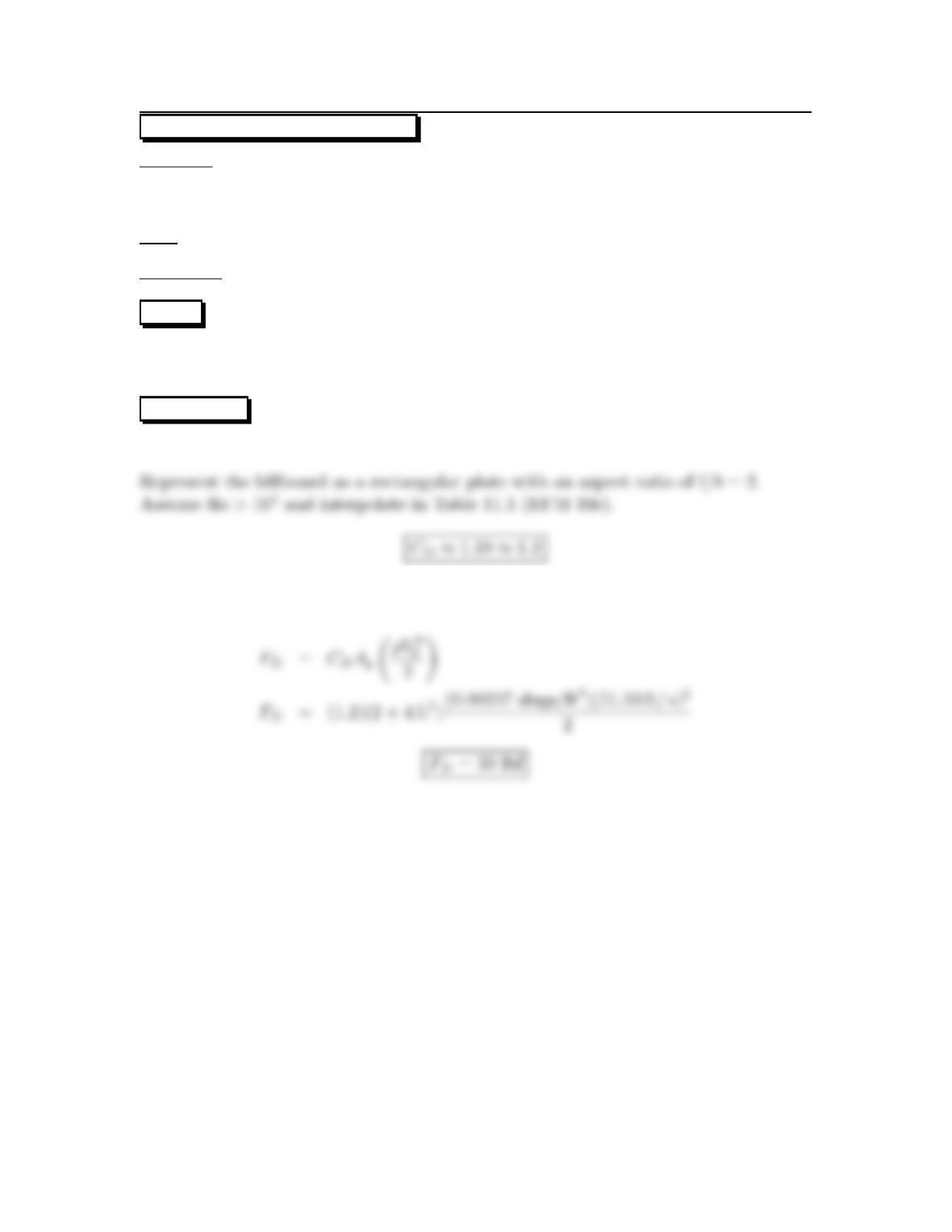
1. Estimate CDfrom Table 11.1 (EFM 10e).
2. Find the drag force with the drag force equation.
SOLUTION
1. Coefficient of drag.
2. Drag force.
12
11.13: PROBLEM DEFINITION
Situation:
A 3 m by 4 m plate is towed through water.
V=5m/s.
Find:
a. Drag force (in Newtons) for plate oriented for minimum drag.
b. Drag force (in Newtons) for plate oriented for maximum drag.
Properties:Water(10 ◦C), Table A.5 (EFM 10e), ρ=1000kg/m3,ν=1.31 ×
10−6m2/s.
SOLUTION
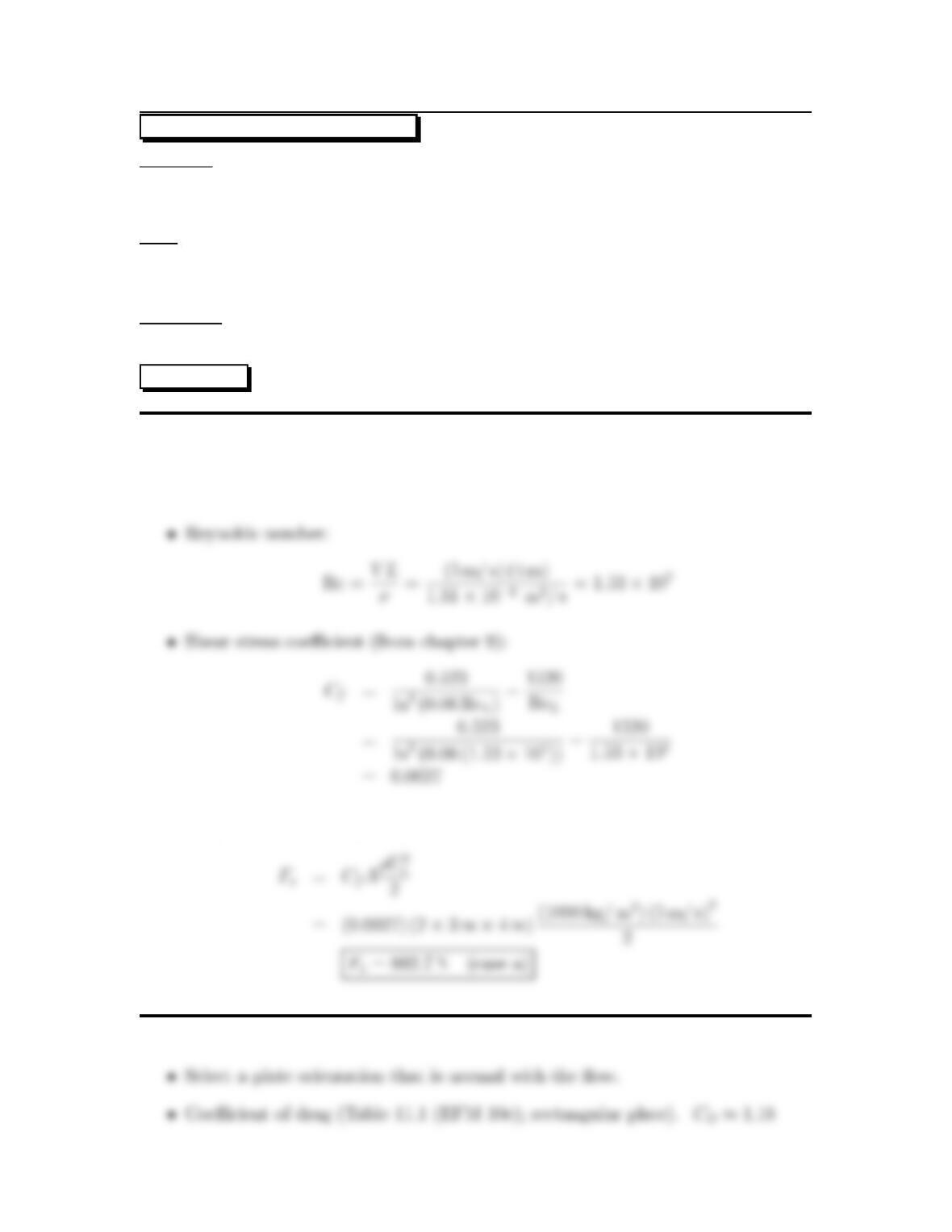
Minimum drag force (case a)
•Select a plate orientation that is aligned with the flow; flow direction aligned
with the 4 m length.
•Drag force (from chapter 9)
Maximum drag force (case b)
13

•Drag Force
REVIEW
Notice that the ratio of drag forces is
Drag force (maximum)
Drag force (minimum) =177000 N
803 N =220
In this problem, case a is all form drag and case b is all friction drag.
14
11.14: PROBLEM DEFINITION
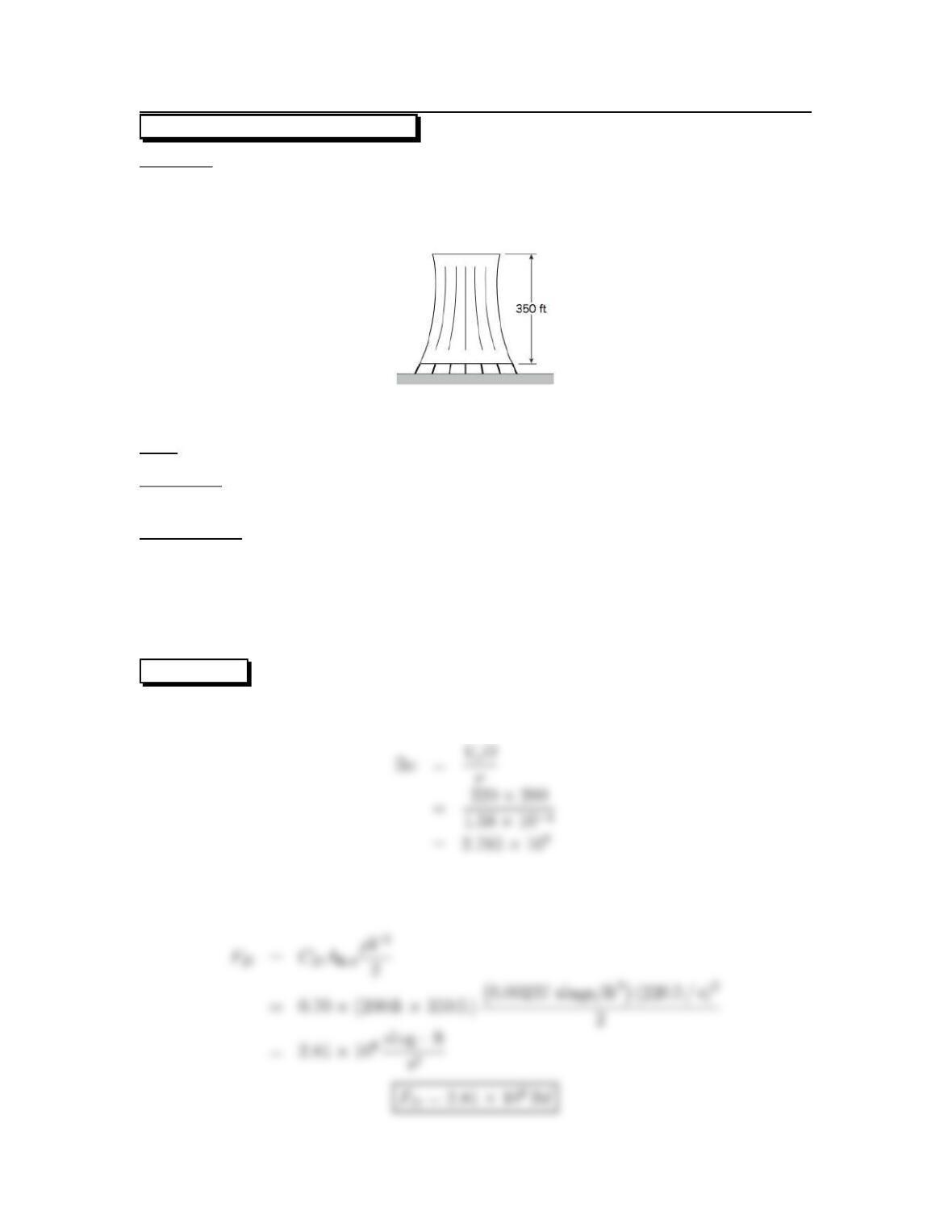
Situation:
Wind acts on a cooling tower.
H=350ft,D =200ft
Vo= 150 mph = 220 ft/s.
Find:Dragforce(inlbf)
Properties:Air(60 ◦F),TableA.3(EFM10e),ρ=0.00237 slugs/ft3;ν=1.58 ×10−4
ft2/s.
Assumptions:
•Coefficient of drag of the tower is similar to the coefficient of drag for a circular
cylinder of infinite length (see Fig. 11.5 (EFM10e).
•Coefficient of drag for a cylinder is constant at high Reynolds numbers.
SOLUTION
Reynolds number
From Fig. 11.5 EFM10e (extrapolated) CD≈0.70.The drag force is given by
15

11.15: PROBLEM DEFINITION
Situation: The problem statement describes the wind force on a person.
Find:Windforce(thepersonisyou).
Assumptions:
CDis like a rectangular plate: CD≈1.20.
Height is 1.83 meters; width is .3 meters.
PLAN
Apply the ideal gas law, then the drag force equation.
SOLUTION
Ideal gas law
Drag force
REVIEW FDdepends on CDand on dimensions assumed.
16

11.16: PROBLEM DEFINITION
Situation:
Wind is blowing on a 55 gallon drum.
m=48lbm =21.8kg.
H=34.5in =0.876 m.
D=22.5in=0.571 m.
Find: Wind speed (m/s) that will cause the drum to tip over.
Assumptions:
The drum will tip over before it slips.
Air temperature is 20 ◦C.
CDisthesameasthatofarectangularplate. Thus,CD≈1.20 from Table 11.1
(EFM 10e).
Properties:Air(20 ◦C), Table A.3 (EFM 10e), ρ=1.2kg/m3,ν =15.1×10⁻⁶m2/s.
PLAN
1. Relate the drag force to wind speed using the drag force equation.
2. To determine when the drum will tip, sum moments about point O.
Drag Force
Weight
Po i n t “ O”
3. Find the wind speed by combining results from steps 1 and 2.
SOLUTION
1. Drag force:
2. Moment equilibrium (about 0).
17
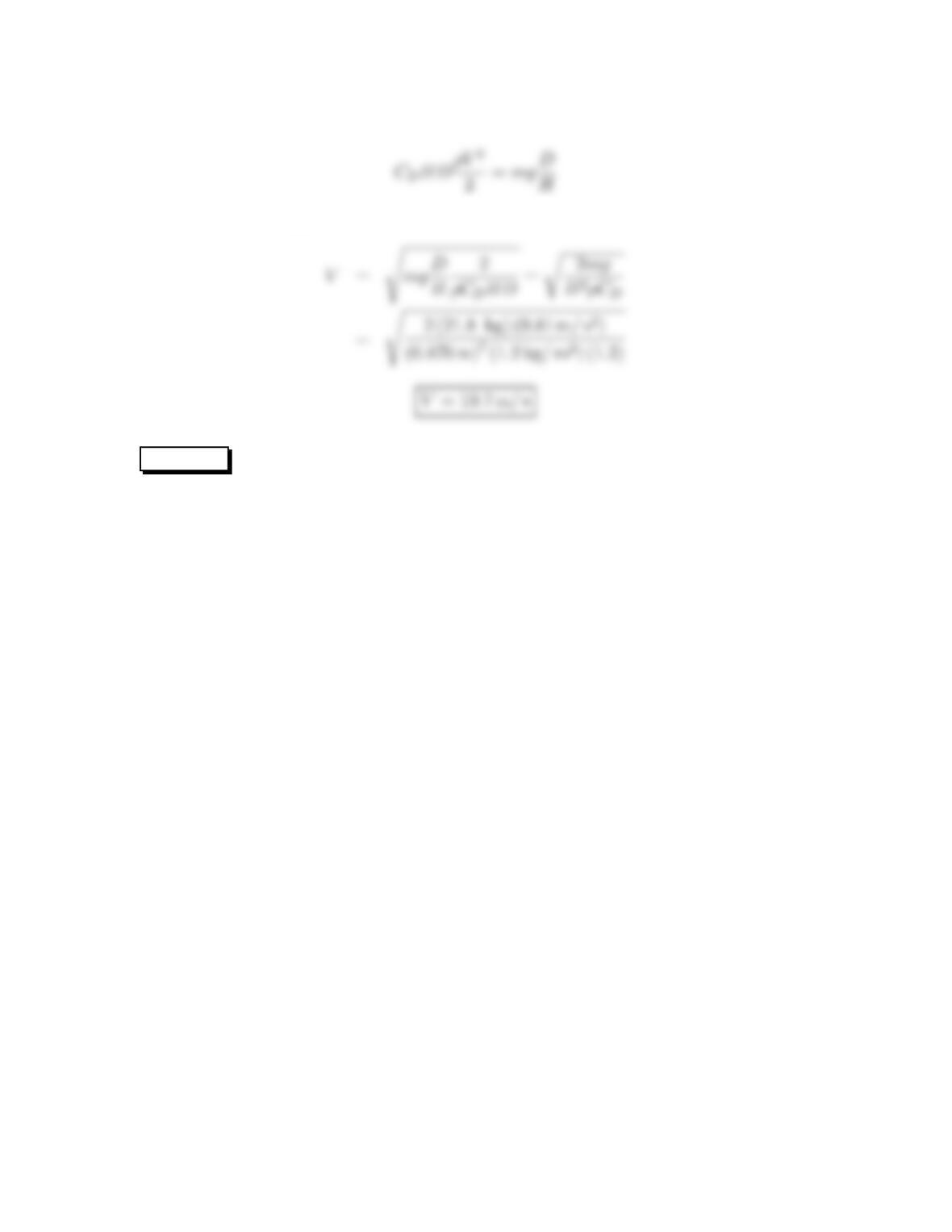
3. Combine Eqs. (1) and (2):
Solveforthewindspeed
REVIEW
This wind speed is about 44 mph.
18
11.17: PROBLEM DEFINITION
Situation:
Arounddisk(D=0.75 m)istowedinwater(V=4m/s).
The disk is oriented normal to the direction of motion.
Find: Drag force (in newtons).
Properties:Water(10 ◦C), Table A.5 (EFM 10e), ρ= 1000 kg/m3.
PLAN
1. Look up a suitable coefficient of drag.
2. Calculate FDby using the drag force equation.
SOLUTION
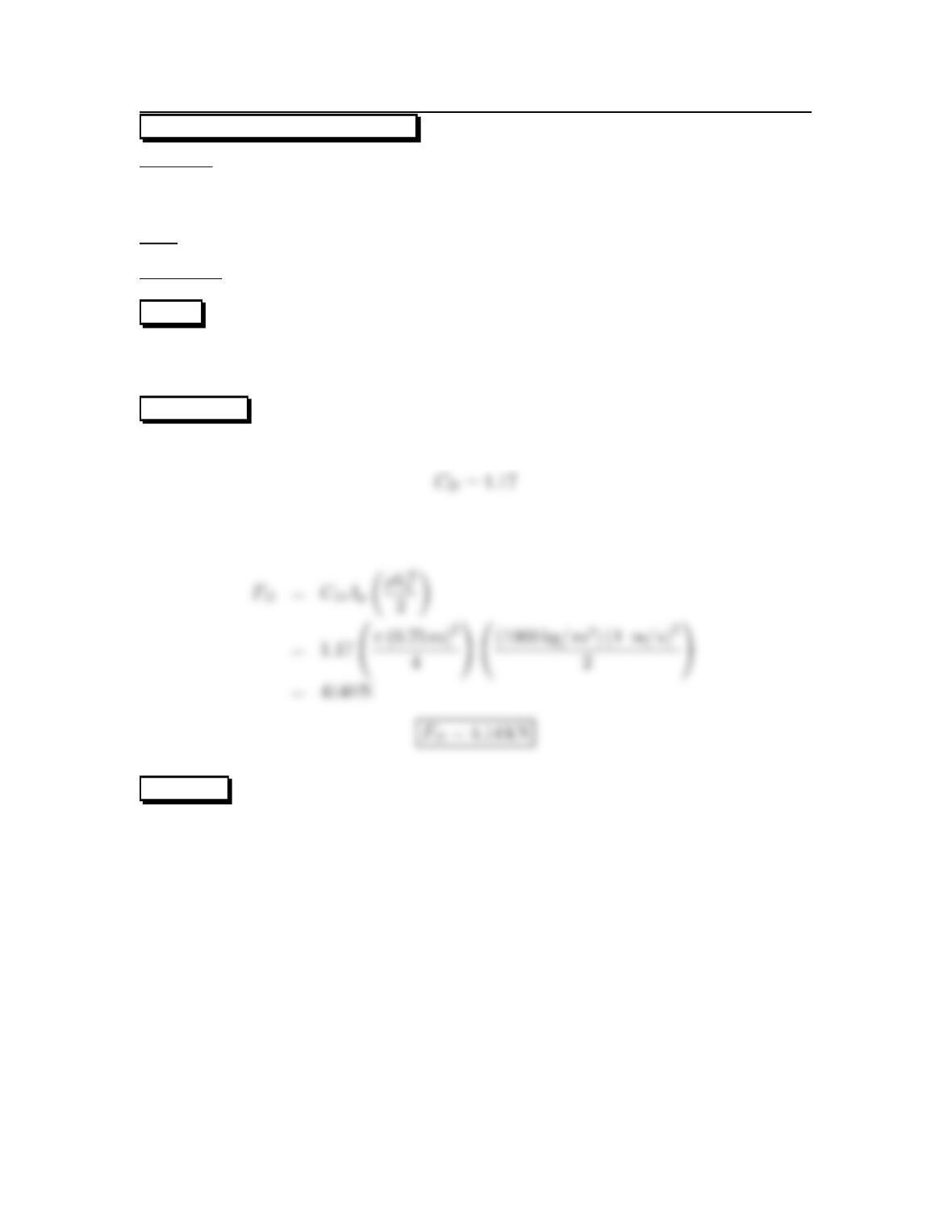
1. From Table 11.1 (EFM10e) (circular cylinder with l/d =0)
2. Drag force equation
REVIEW
•Fig. 11.5 (EFM 10e) gives CD≈1.Using this value gives FD=3.54 kN.
19

11.18: PROBLEM DEFINITION
Situation: A circular billboard is described in the problem statement.
Find: Force on the billboard.
Properties:FromTableA.3(EFM10e),ρ=1.25 kg/m3.
SOLUTION
From Table 11.1 (EFM 10e)
20