Problem 10.1
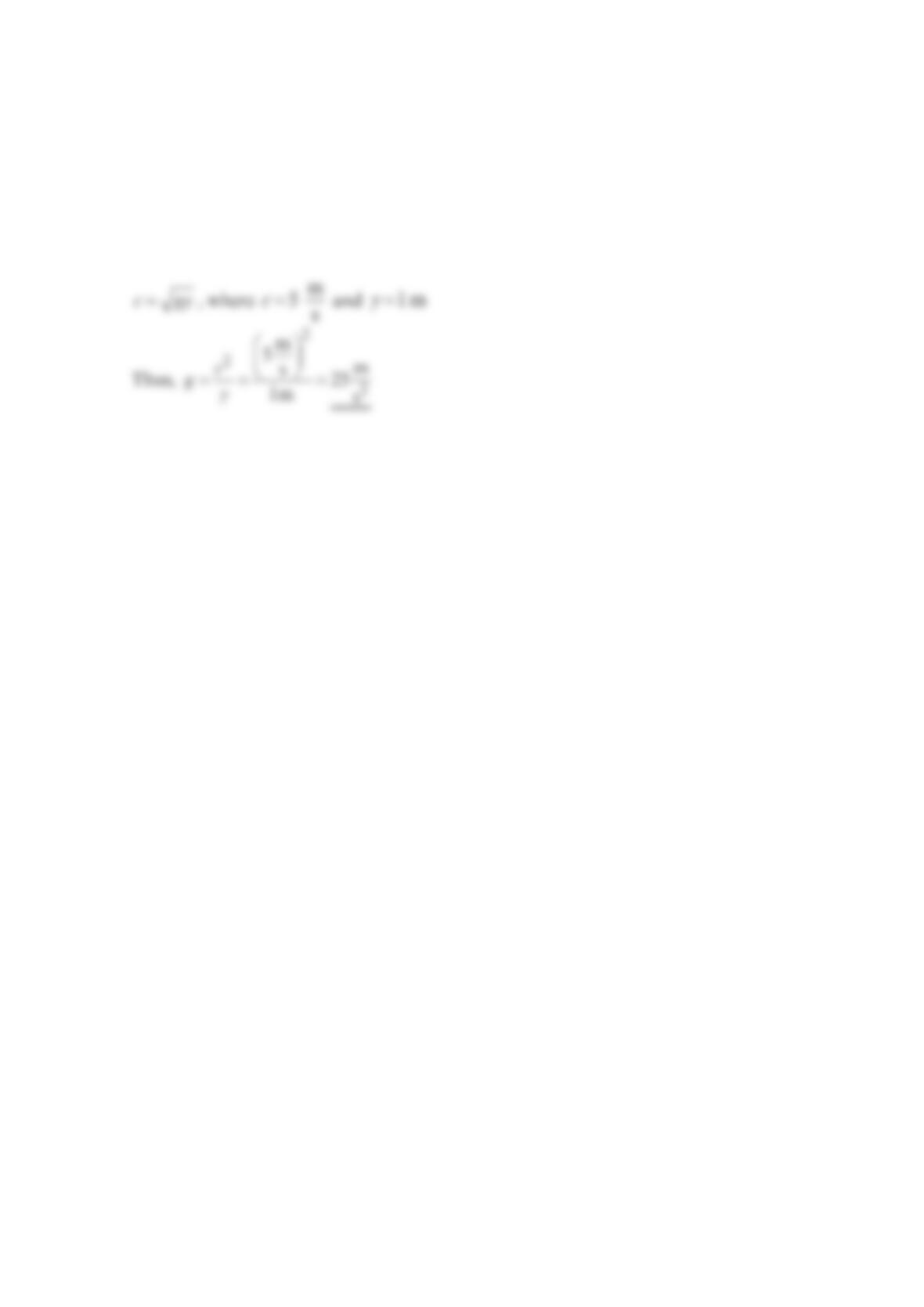
On a distant planet small-amplitude waves travel across a 1-m– deep pond with a speed of
5 m/s. Determine the acceleration of gravity on the surface of that planet.
Solution 10.1
Problem 10.2
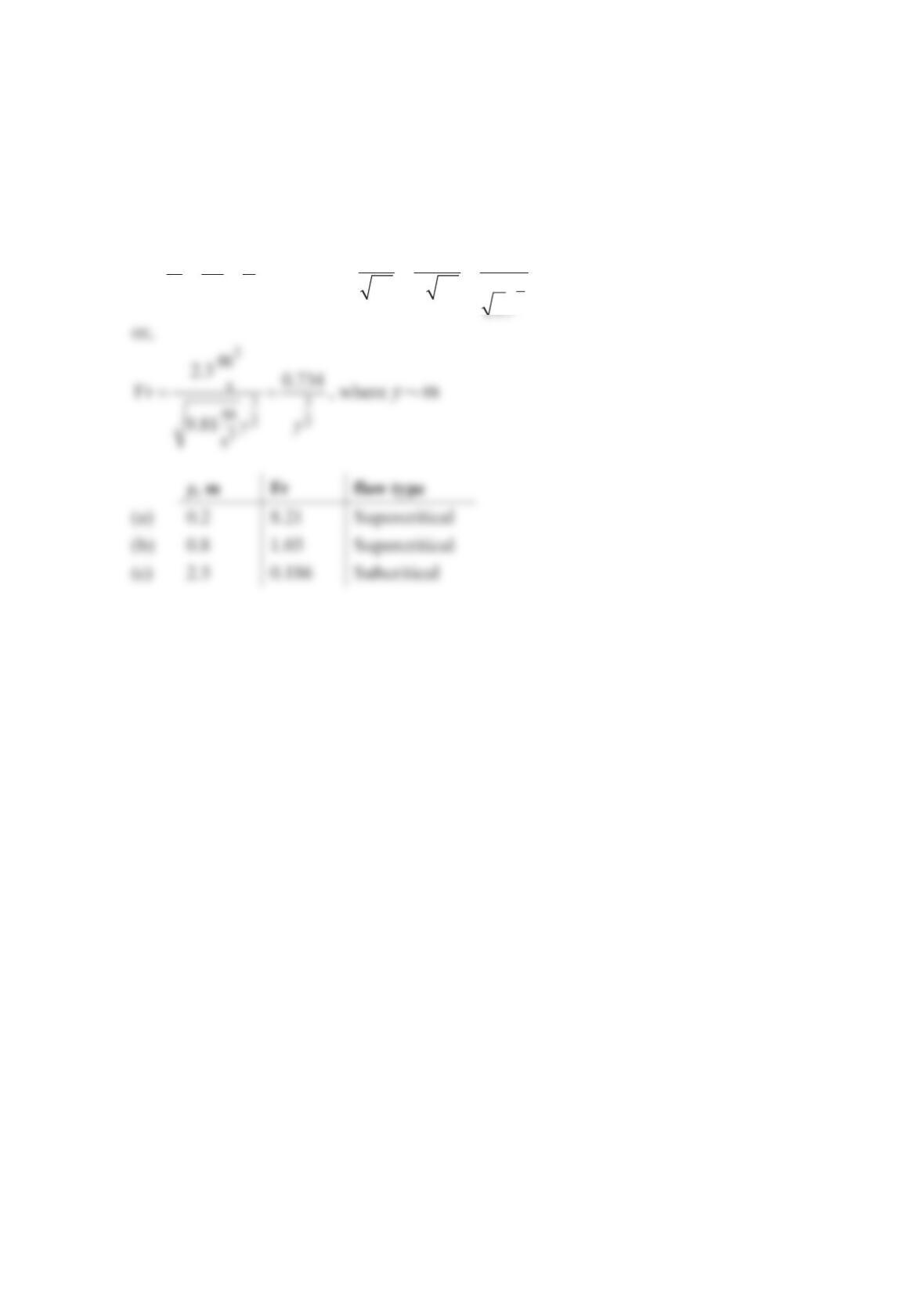
The flowrate per unit width in a wide channel is =2
2.3m / sq. Is the flow subcritical or
supercritical if the depth is (a) 0.2 m (b) 0.8 m or (c) 2.5 m?
Solution 10.2
== =
Qqbq
VAyby
so that == =
3
2
Fr Vq q
gy y gy gy
Problem 10.3
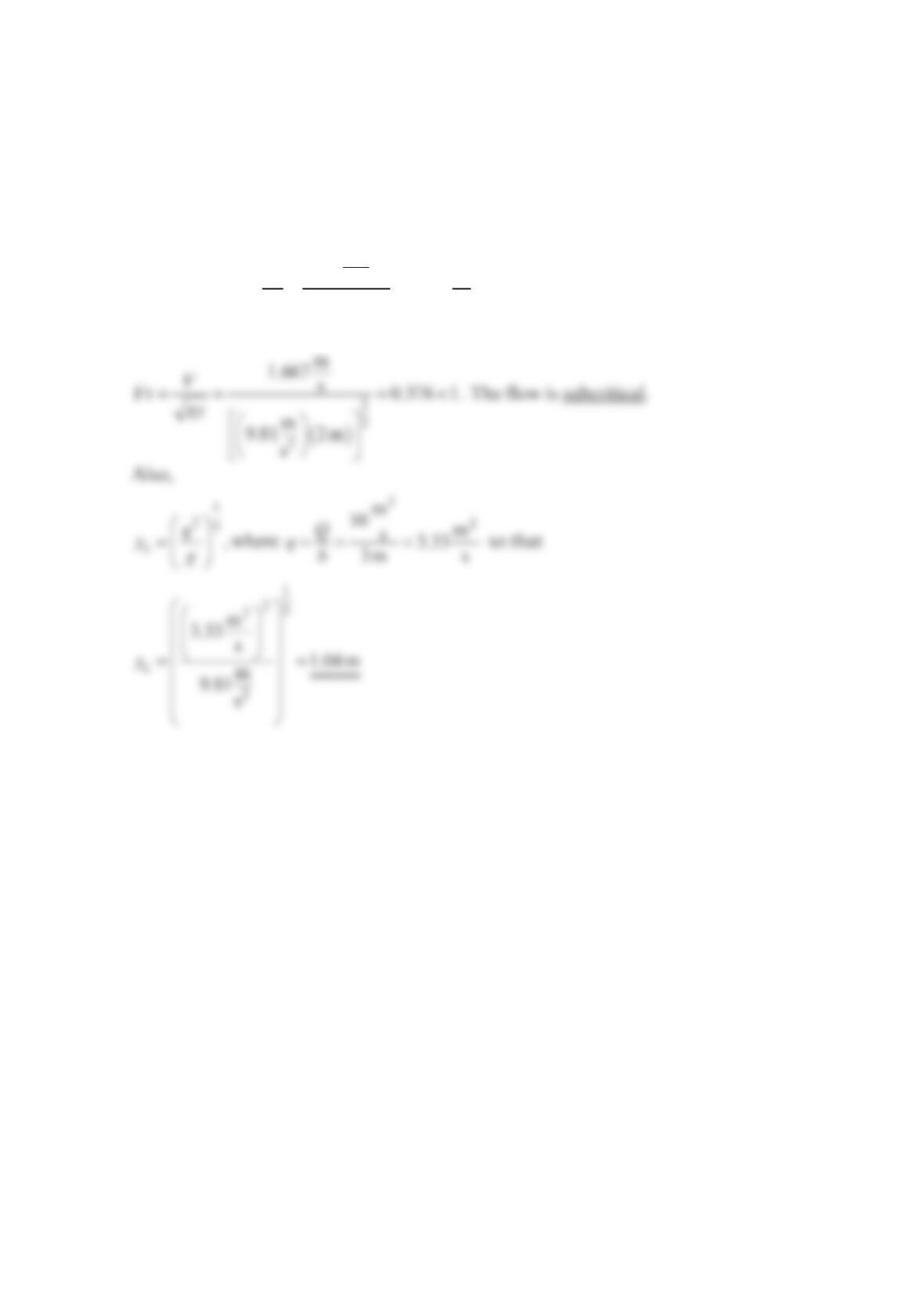
A rectangular channel 3 m wide carries 10 m3/s at a depth of 2 m . Is the flow subcritical or
supercritical? For the same flowrate, what depth will give critical flow?
Solution 10.3
=QAV
or
()()
== =
3
m
10 m
s1.667
3m 2m s
Q
Vby
Thus,

Problem 10.4
Do shallow waves propagate at the same speed in all fluids? Explain why or why not.
Solution 10.4
GIVEN: Shallow Waves.
Problem 10.5
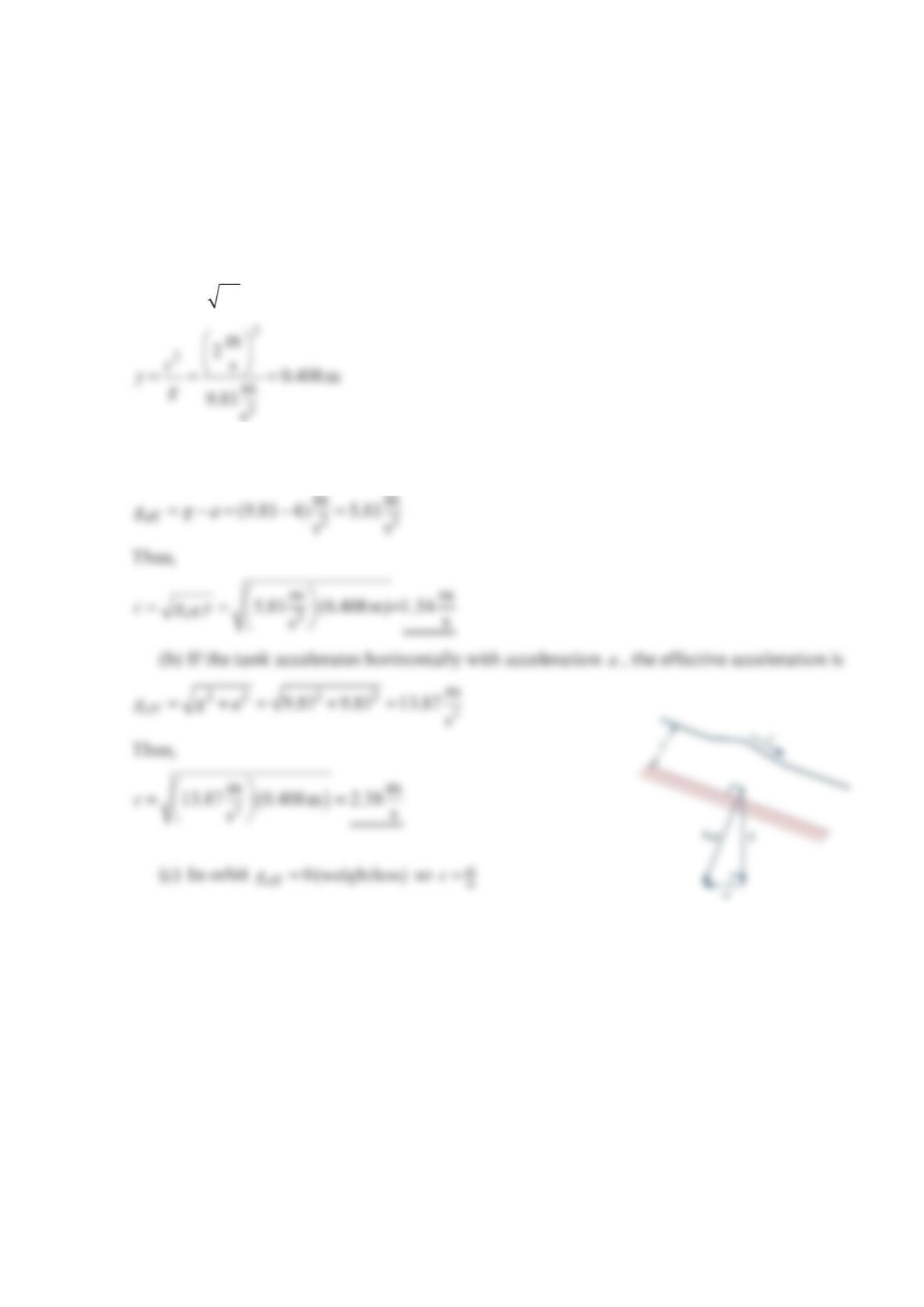
Waves on the surface of a tank are observed to travel at a speed of 2 m/s. How fast would
these waves travel if (a) the tank were in an elevator accelerating downward at a rate of 4
m2/s, (b) the tank accelerates horizontally at a rate of 9.81 m/s2, (c) the tank were aboard the
orbiting Space Shuttle? Explain.
Solution 10.5
Since =cgy
, it follows that the tank depth is
(a) If the tank accelerates down with acceleration
a
, the effective acceleration of gravity
is
Problem 10.6
In flowing from section (1) to section (
2
) along an open channel, the water depth decreases
by a factor of
2
and the Froude number changes from a subcritical value of 0.5 to a
supercritical value of
3
.0. Determine the channel width at (
2
) if it is 12 ft wide at (1).
Solution 10.6
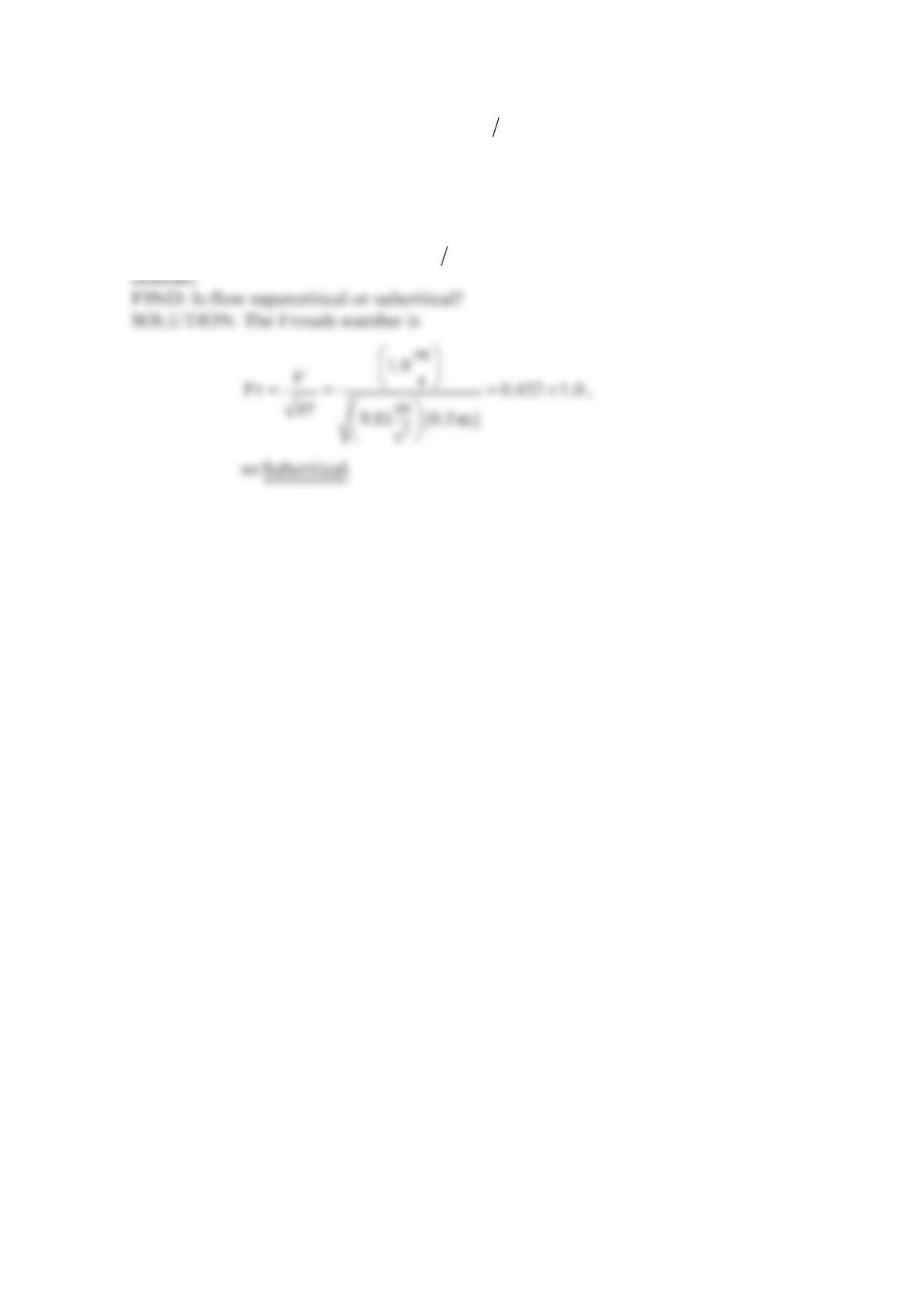
==
1
1
1
Fr 0.5,
V
gy or =
11
2.0gy V (1)
and
Problem 10.7
Water flows with an average velocity of 1.0 m s and a normal depth of 0.5 m in a wide
rectangular channel. Is the flow subcritical or supercritical?
Solution 10.7
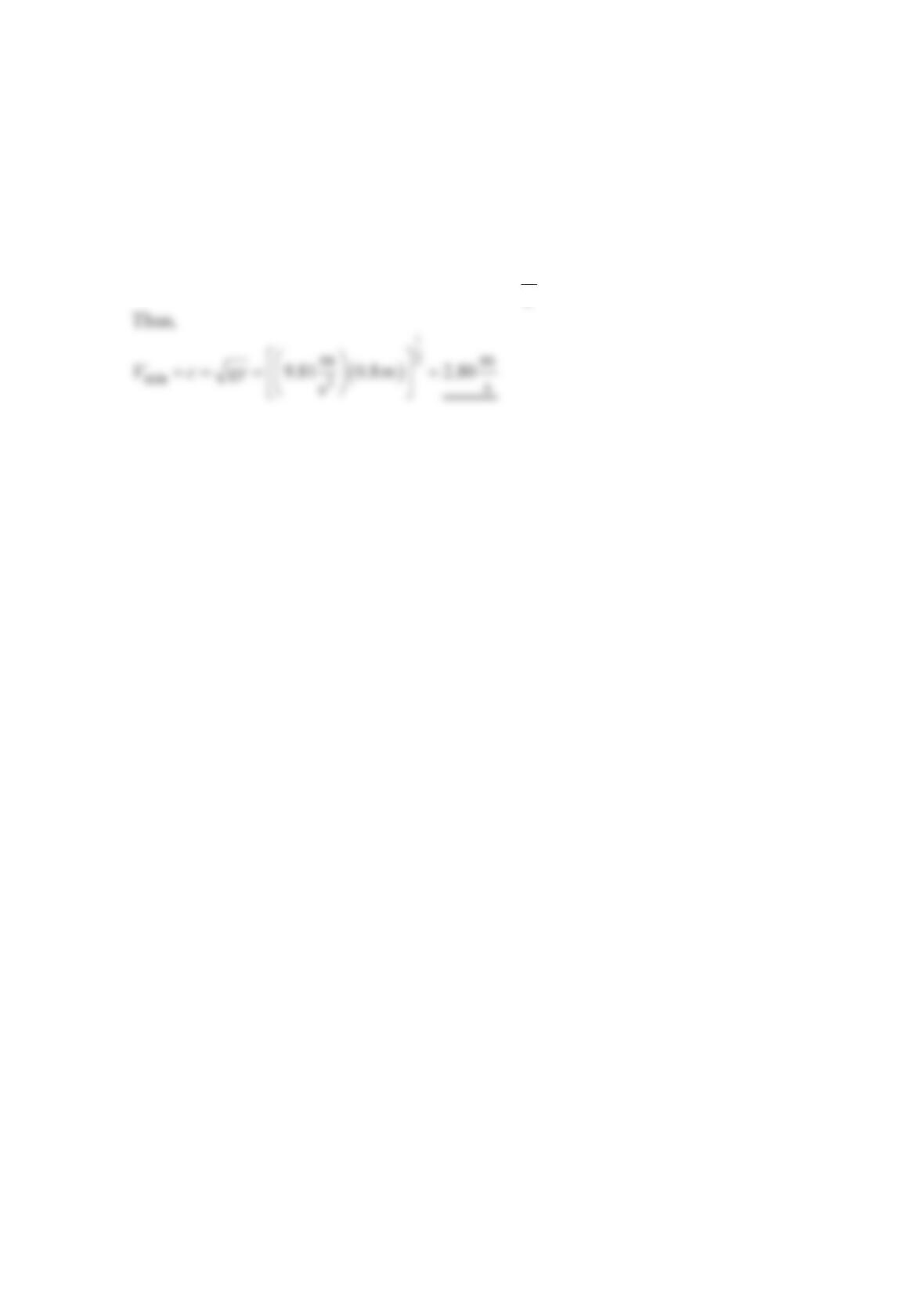
GIVEN: Water flows with =
avg 1.0 m sV and =
n0.5 mY in a very wide rectangular
Problem 10.8
A trout jumps, producing waves on the surface of a 0.8-m-deep mountain stream. If it is
observed that the waves do not travel upstream, what is the minimum velocity of the
current?
Solution 10.8
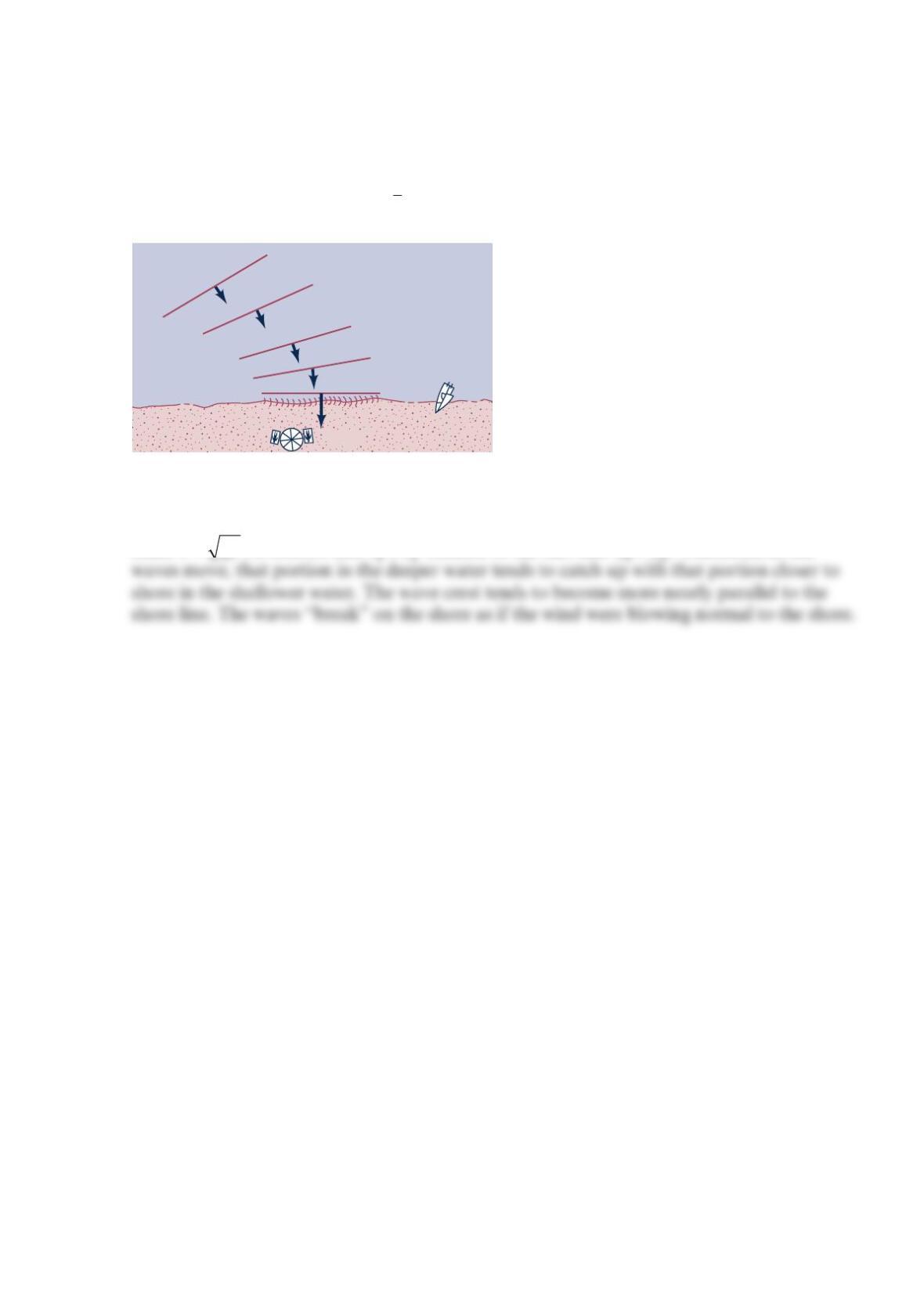
For no waves traveling upstream, >cV
, or =<Fr 1.
V
c
Problem 10.9
Observations at a shallow sandy beach show that even though the waves that are several
hundred yards out from the shore are not parallel to the beach, the waves often “break” on
the beach nearly parallel to the shore as indicated in the figure below. Explain this behavior
based on the wave speed
()
=
1
2
cgy
.
Solution 10.9
Since =cgy
, it follows that >
cc
because of the fact that >
y
y. Therefore, as the
Wave crest
Ocean
c
Beach
Problem 10.10
Often when an earthquake shifts a segment of the ocean floor, a relatively small-amplitude
wave of very long wavelength is produced. Such waves go unnoticed as they move across
the open ocean; only when they approach the shore do they become dangerous (e.g., a
tsunami). Determine the wave speed if the wavelength,
λ
, is 6000 ft and the ocean depth is
15,000ft .
Solution 10.10
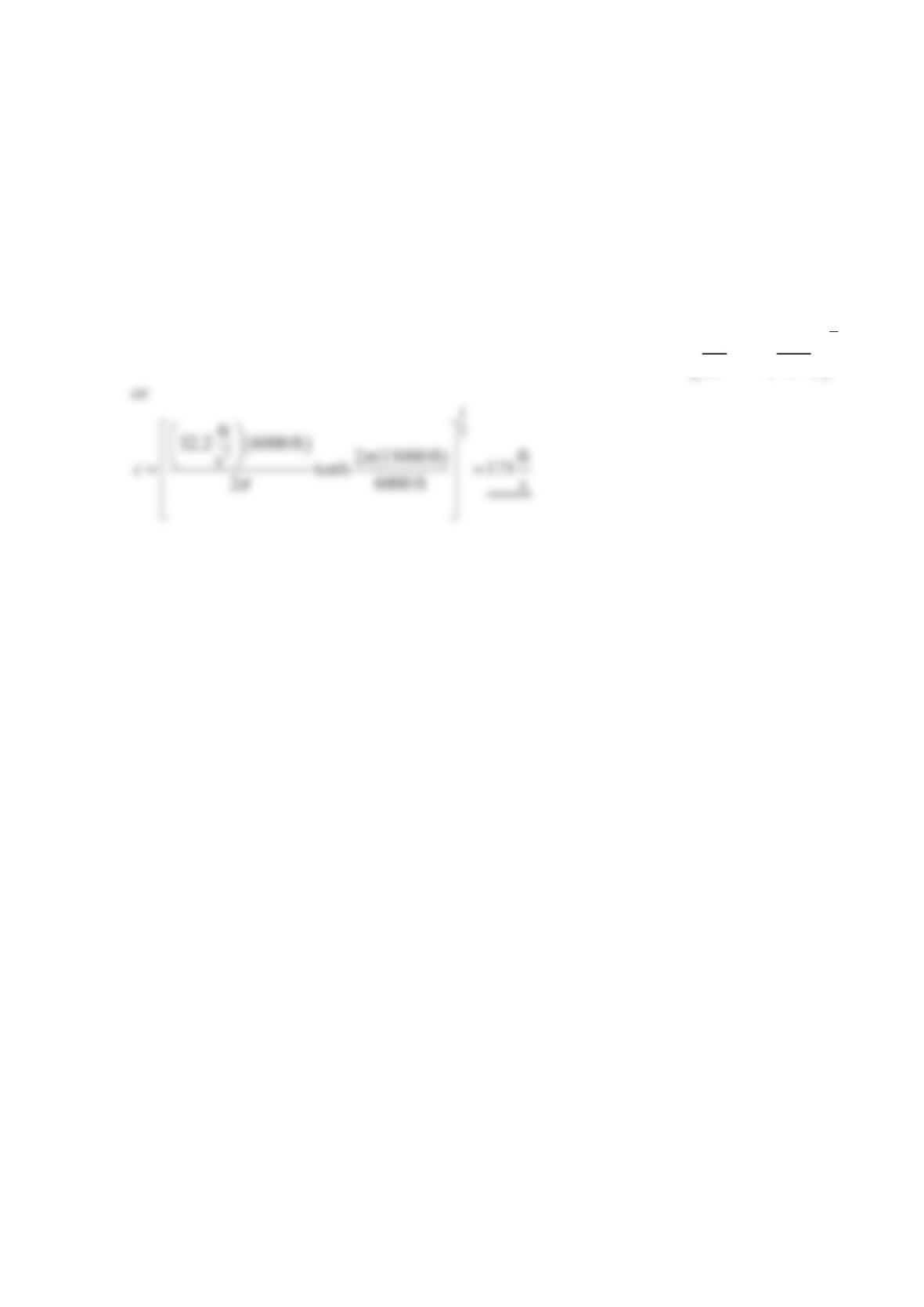
The wave speed varies with both the wavelength and fluid depth as:
λπ
πλ
=
1
2
2
tanh
2
gy
c
Problem 10.11
What is the minimum water depth necessary for a 40-ft-wide stream to handle 3
4000 ft s if
the flow is not supercritical?
Solution 10.11
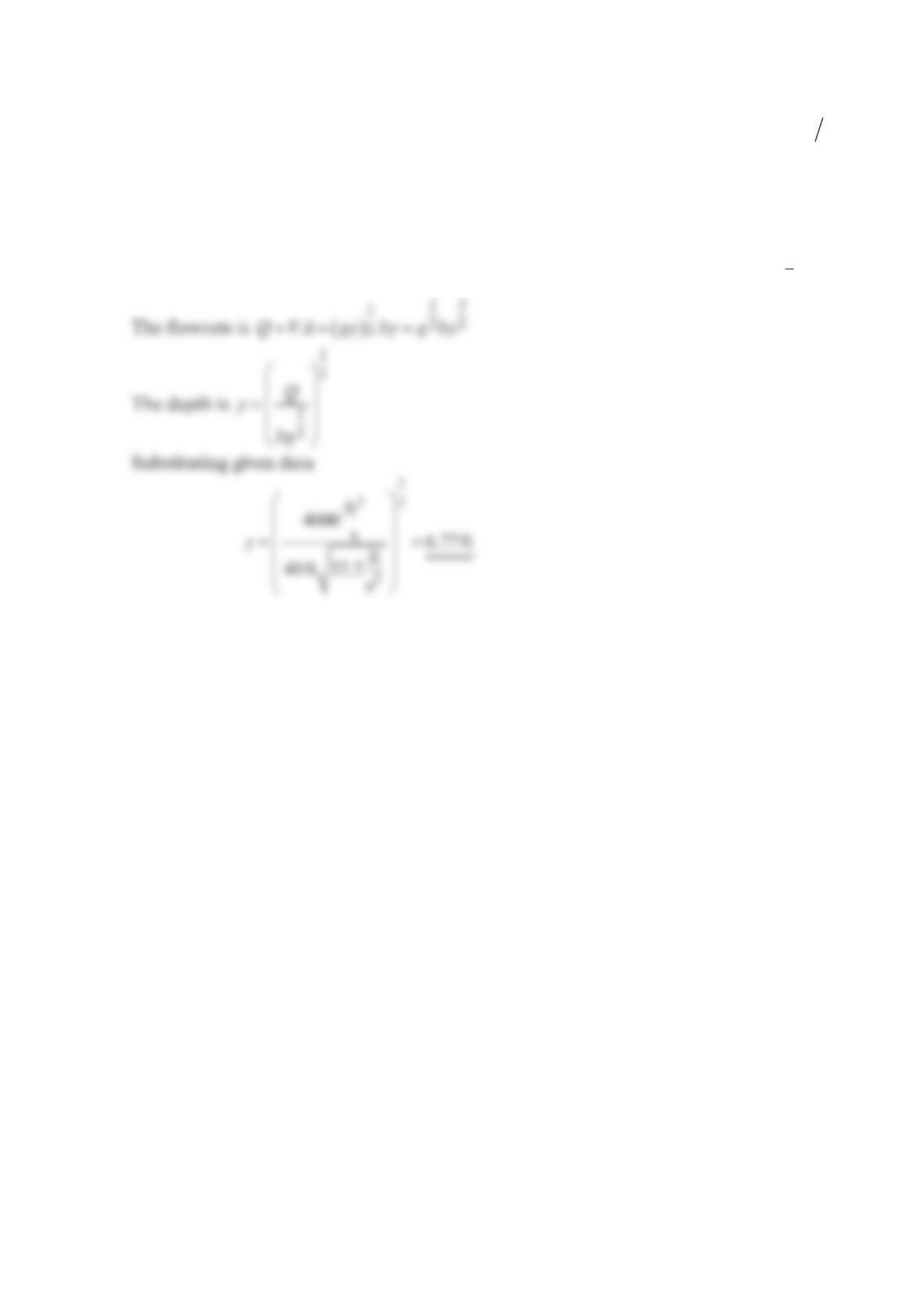
The minimum depth for nonsupercritical flow occurs when =Fr 1 and
()
==
1
2
Vc gy
Problem 10.12
Water flows in a
1
0-m-wide open channel with a flowrate of 5 m3/s. Determine the two
possible depths if the specific energy of the flow is =0.6 m.E
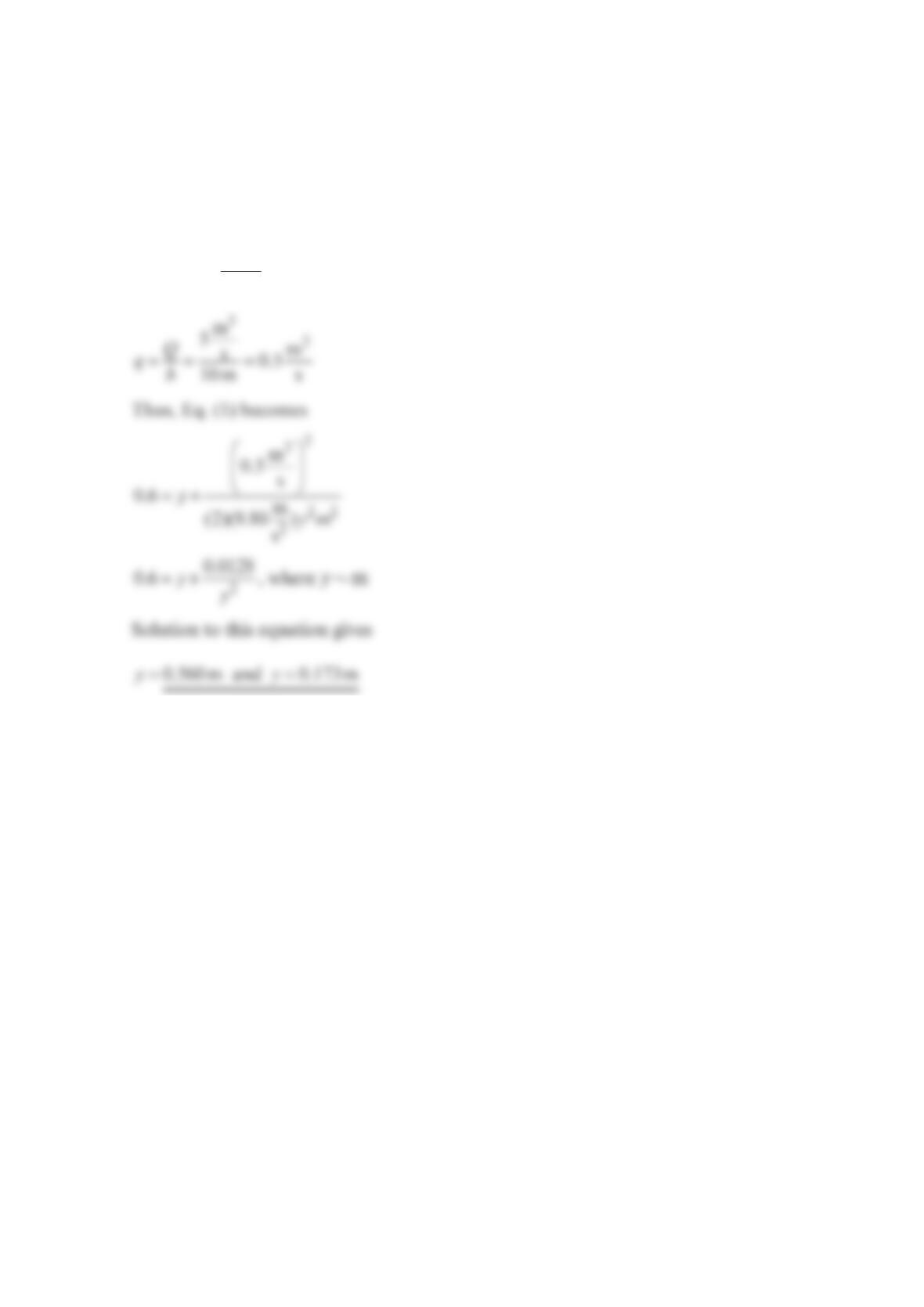
Solution 10.12
(1) =+
2
2
2
q
Ey gy , where =0.6 mE and
Problem 10.13
Water flows in a 10-ft- wide rectangular channel with a flowrate of 200 ft3/s. Plot the
specific energy diagram for this flow. Determine the two possible flowrates when the
specific energy is 6ft.
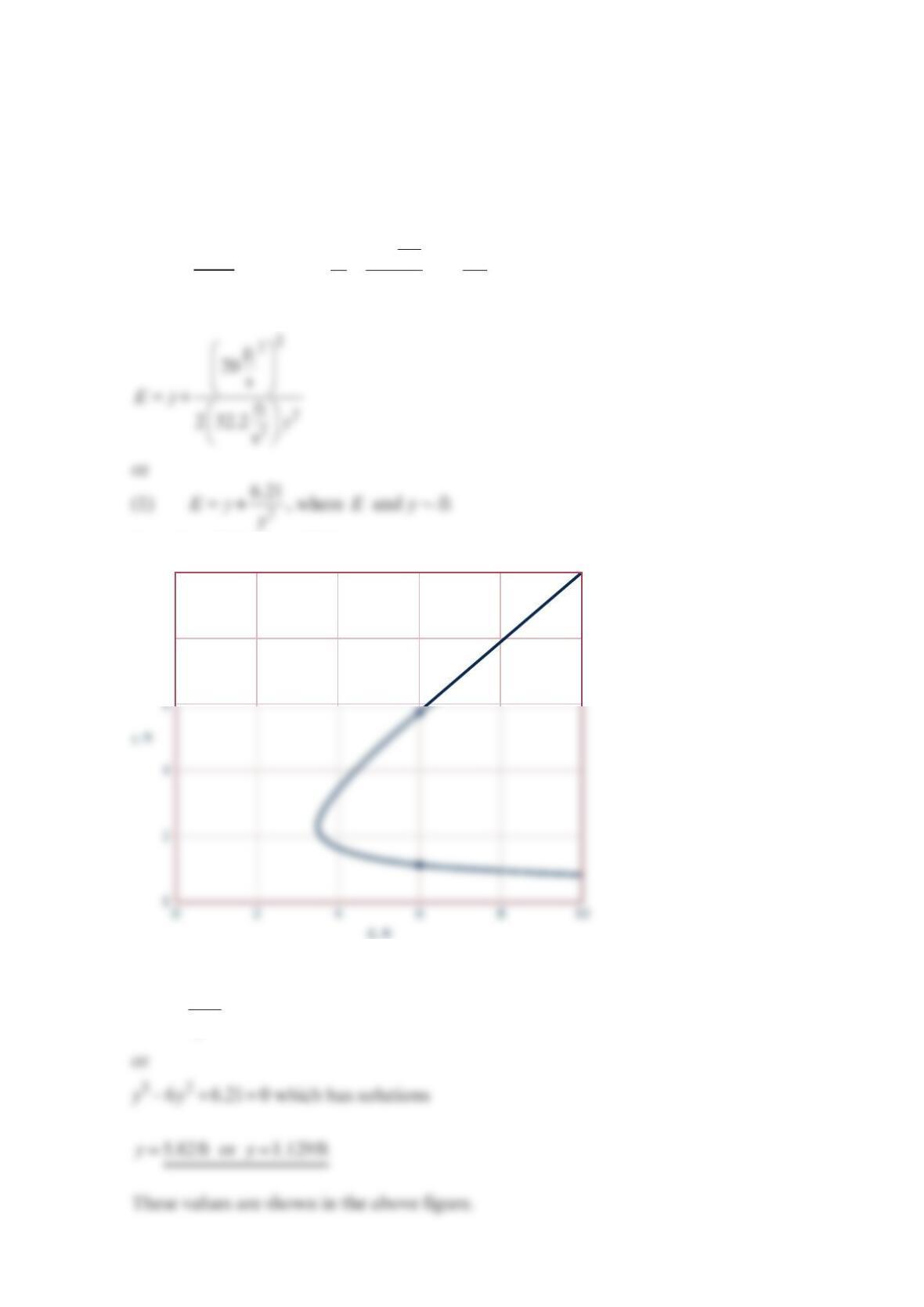
Solution 10.13
=+
2
2
2
q
Ey gy , where == =
3
2
ft
200 ft
s20
10 ft s
Q
qb
Thus,
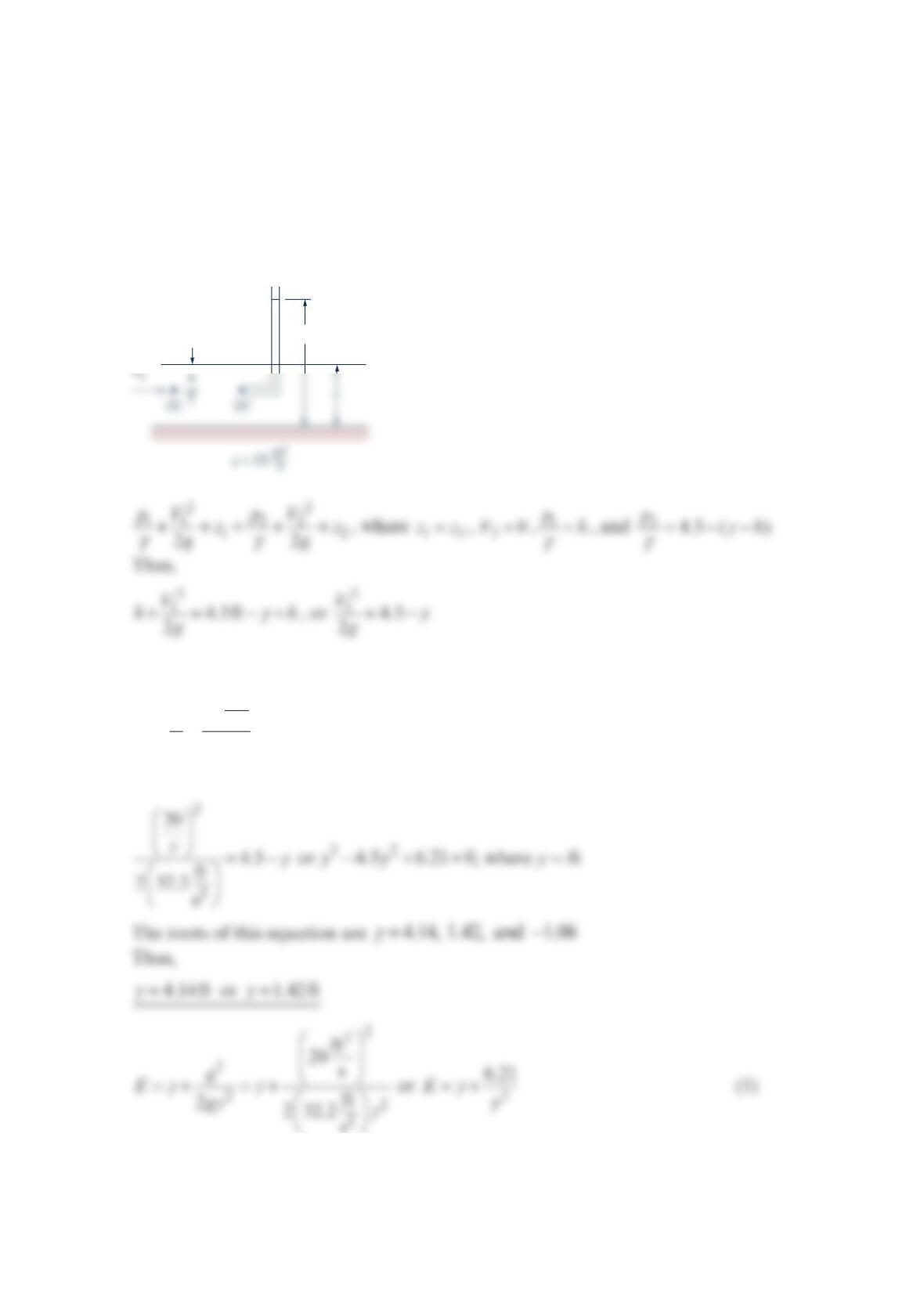
Equation (1) is plotted below.
From Eq. (1), when =6 ft,E
=+ 2
6.21
6yy
10
8
Problem 10.14
Water flows in a rectangular channel at a rate of =20 cfs/ftq. When a Pitot tube is placed
in the stream, water in the tube rises to a level of 4.5 ft above the channel bottom.
Determine the two possible flow depths in the channel. Illustrate this flow on a specific
energy diagram.
Solution 10.14
but,
==
2
1
ft
20 s
g
Vyy
Hence,
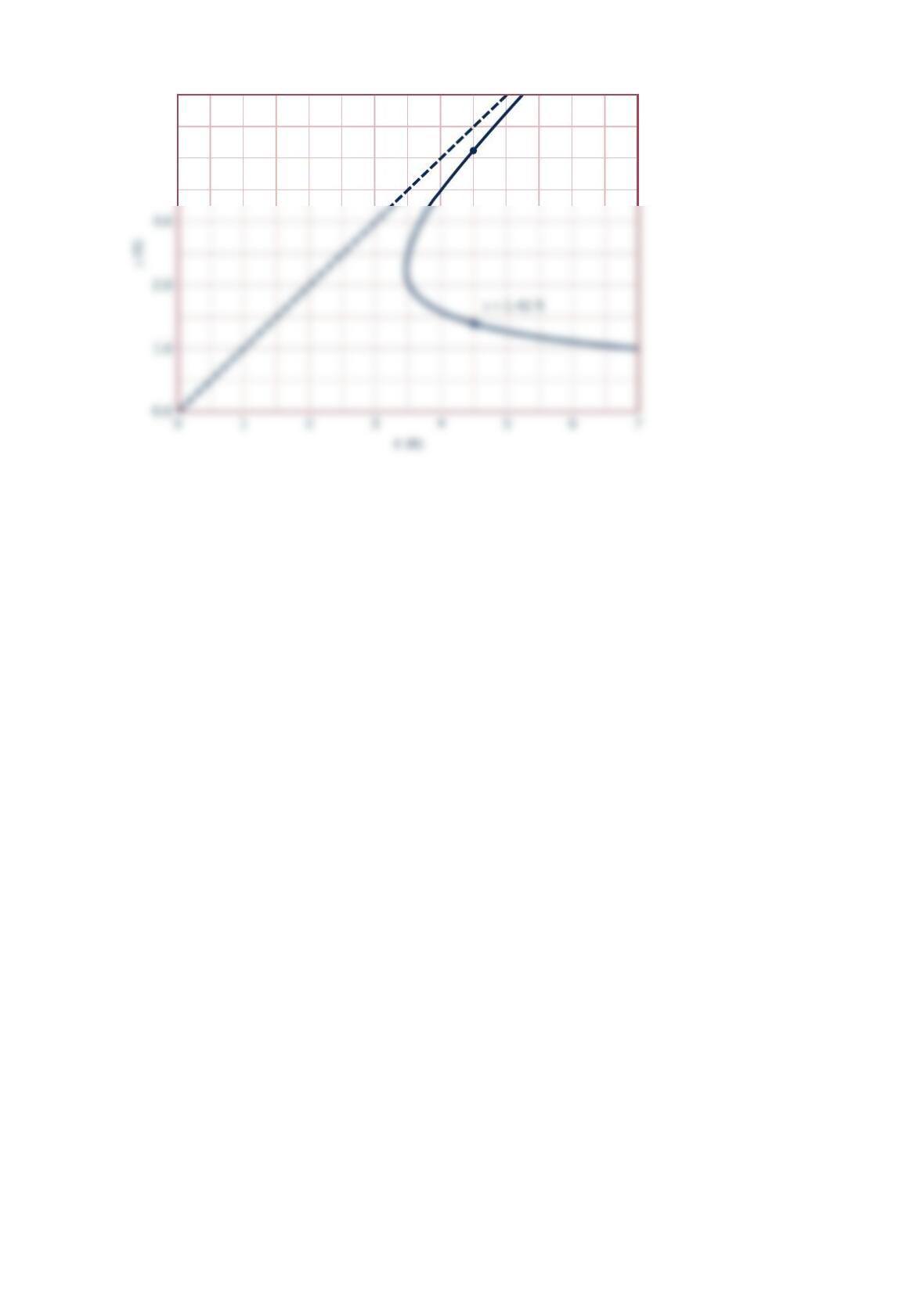
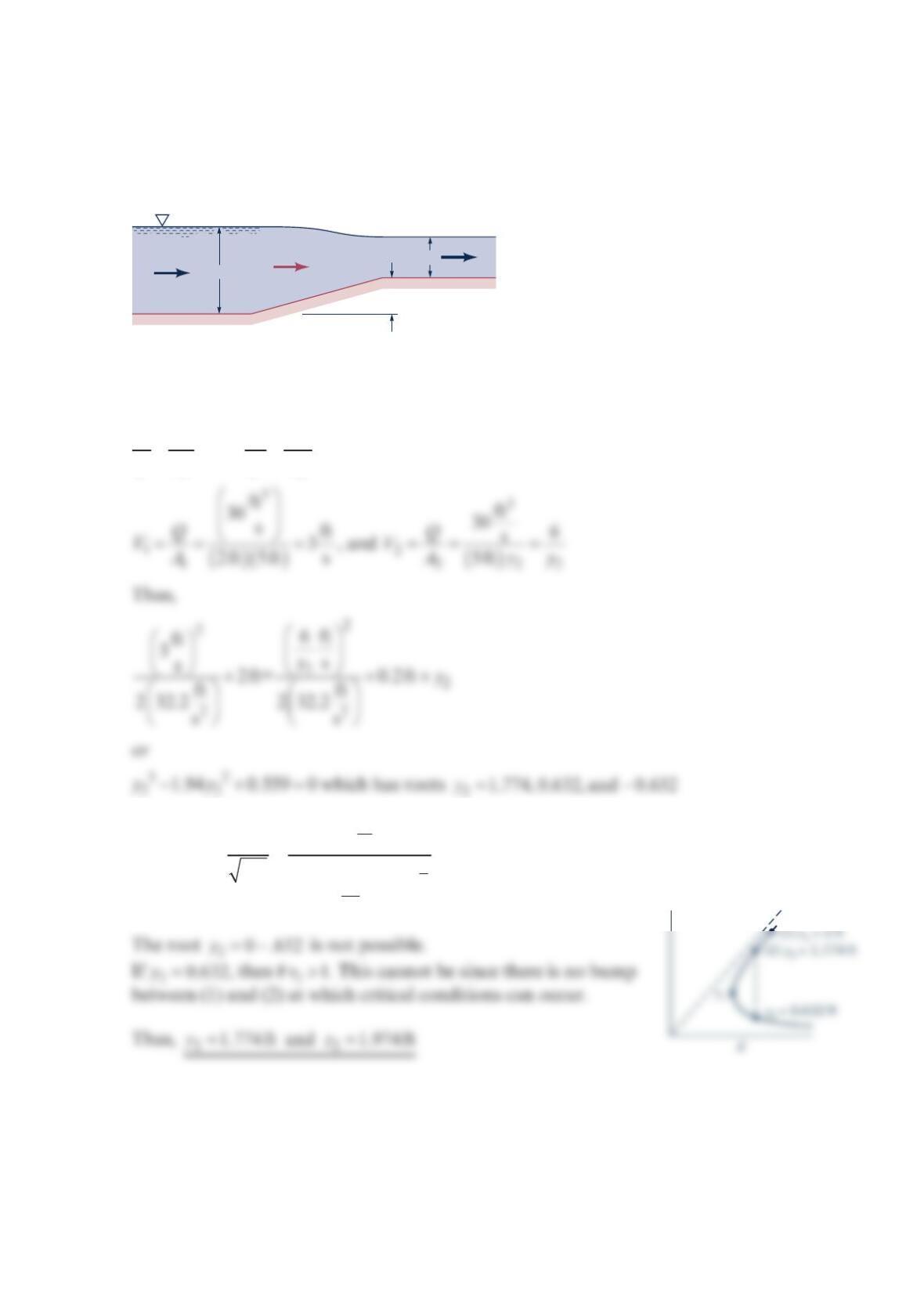
The specific energy diagram [plot of Eq. (1)] is shown below.
4.5 ft
5.0
4.0
y
= 4.14 ft
Problem 10.15
Water flows in a 5-ft-wide rectangular channel with a flowrate of =3
30 ft / sQ and an
upstream depth of =
12.5fty as is shown in the figure below. Determine the flow depth and
the surface elevation at section (2).
Solution 10.15
++=+ +
22
11 2 2
12
22
pV p V
zz
gg
γγ
, where ==
12
0
p
p, ==
11
2ftzy , =+
22
0.2 ftzy
Note:
()
== =<
1
11
12
2
ft
3s
Fr 0.374 1
ft
32.2 2 ft
s
V
gy
V1
QV2
y1
y2
0.2 ft (2)
(1)
y
Problem 10.16
Water flows over the bump in the bottom of the rectangular channel shown in the figure
below with a flowrate per unit width of =2
4m /sq. The channel bottom contour is given
by −
=2
B0.2e x
z, where B
z and x are in meters. The water depth far upstream of the bump
is =
12my. Plot a graph of the water depth, =()
y
yx, and the surface elevation, =(
)
zzx
, for
−≤≤4m 4mx. Assume one-dimensional flow.
Solution 10.16
++=++
22
11 1
22
pV pV
zz
gg
γγ
, where ==
12
0,pp ==
11
2 mzy ,=+
2B
zyz
or
()
2
32
2.20 0.2 0.815 0
x
yey
−
−− + =
where m
y
(1)
y
y
0
V
1
y
1
z
x
y
(
x
)
z
(
x
)
z
B = 0.2
e
–x
2
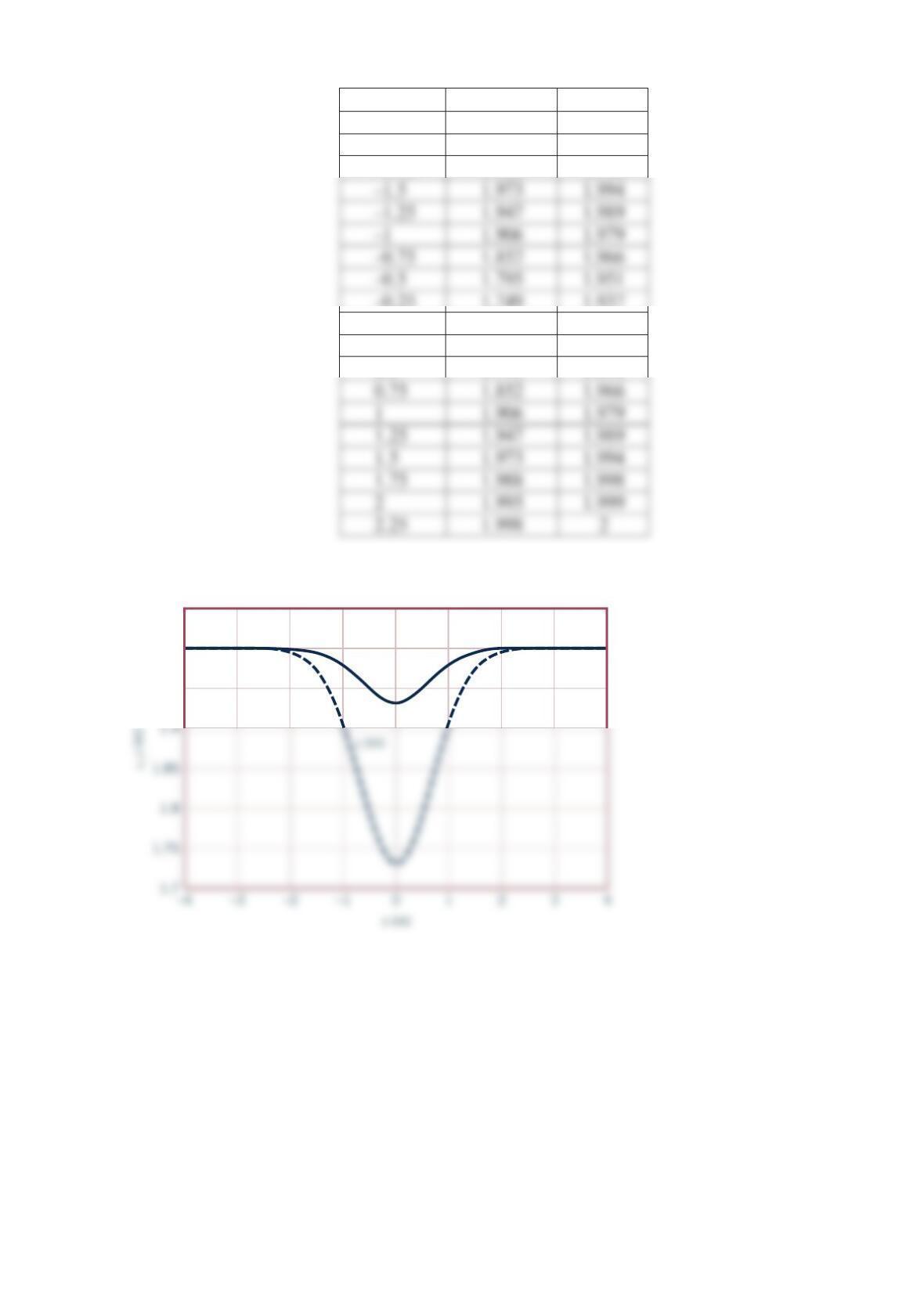
x(m) y(m) z(m)
−
2.25 1.998 2
−
2 1.995 1.999
−
1.75 1.988 1.998
−
0.25 1.749 1.937
0 1.732 1.932
0.25 1.749 1.937
0.5 1.795 1.951
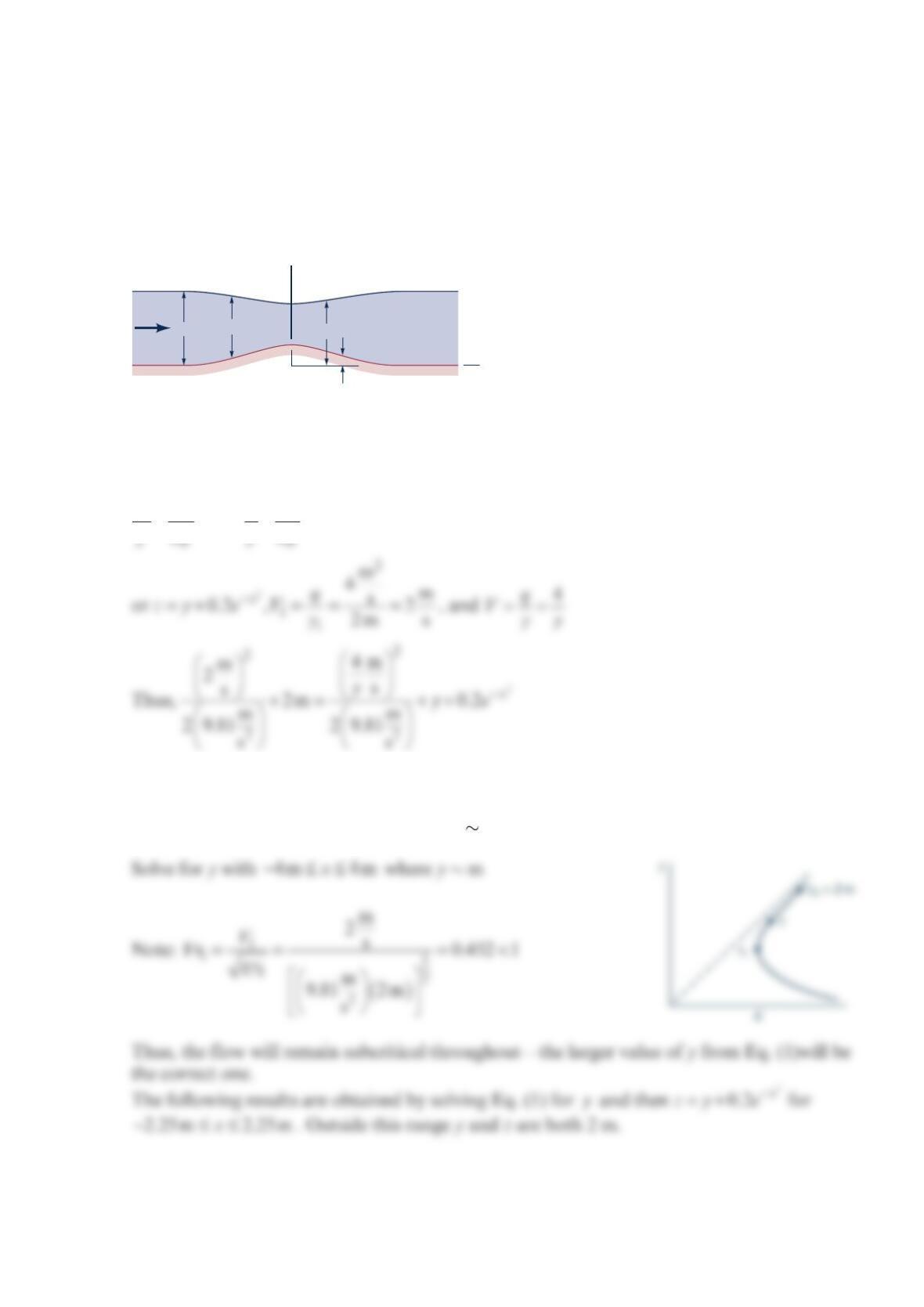
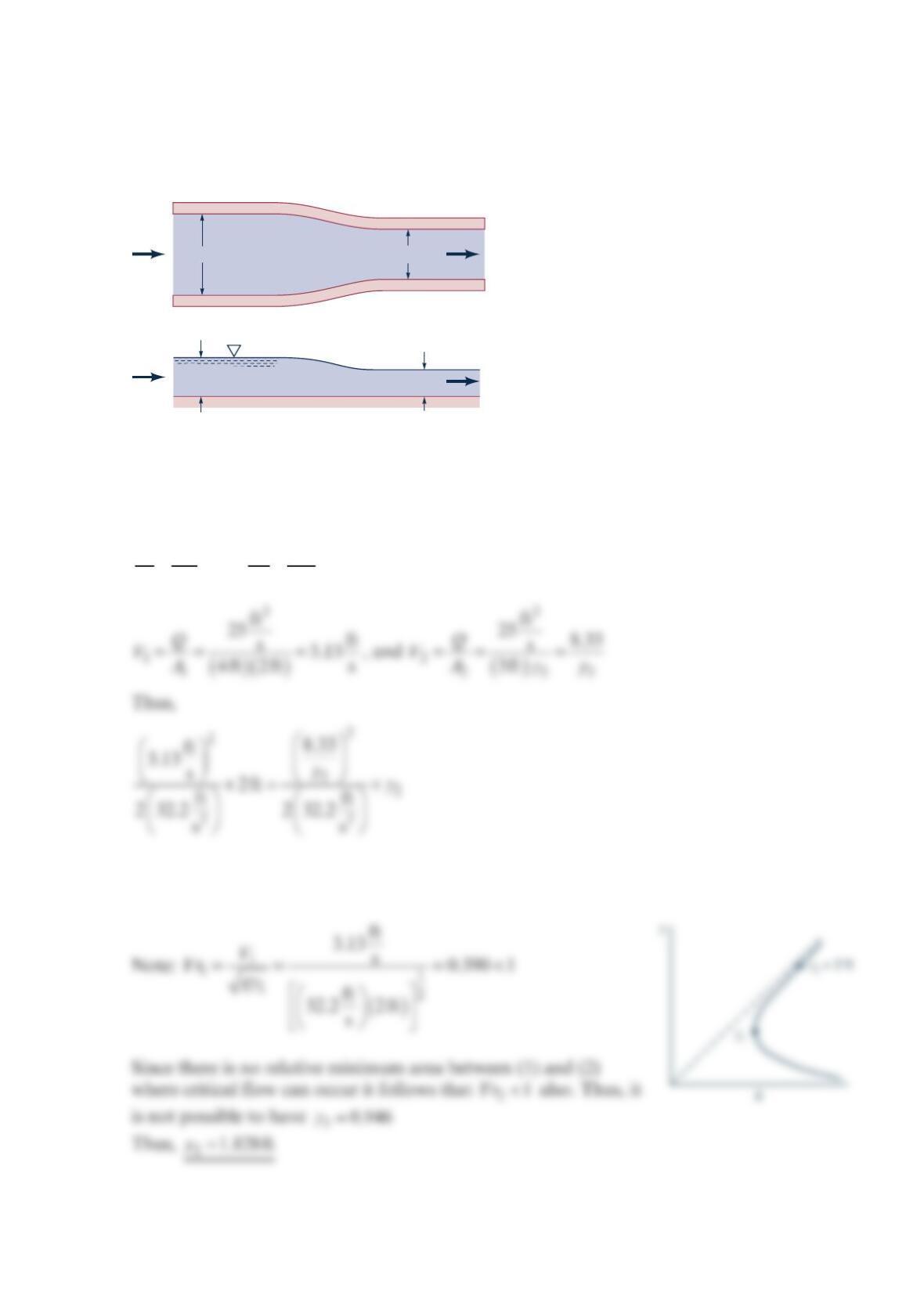
The above results are plotted on the graph below.
2.05
2
1.95
z
(m)
−
Problem 10.17
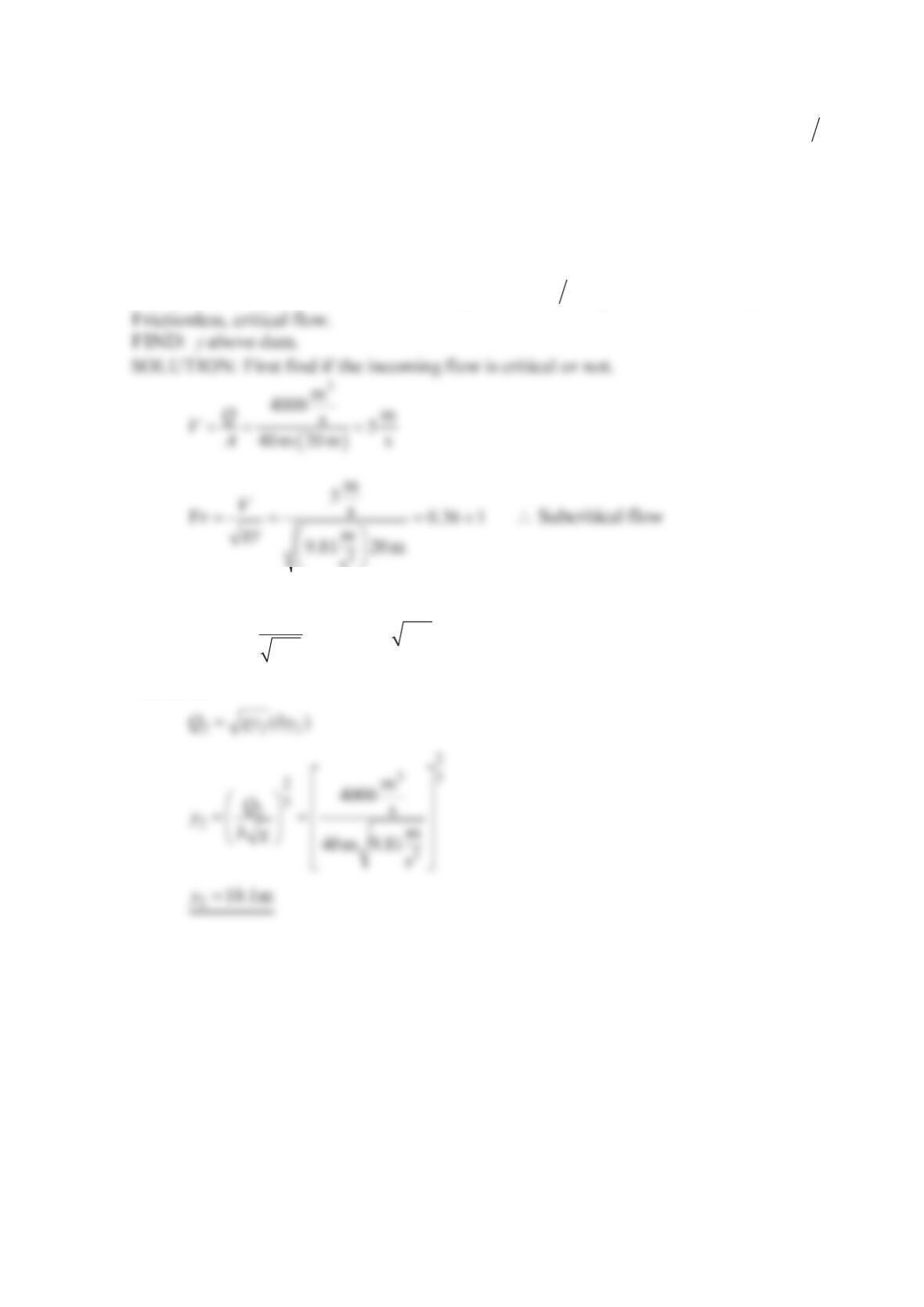
Water in a rectangular channel flows into a gradual contraction section as is indicated in
the figure below. If the flowrate is =3
25ft / sQ and the upstream depth is =
12fty,
determine the downstream depth, 2
y
.
Solution 10.17
γγ
++=+ +
22
11 2 2
12
22
pV p V
zz
gg
, where ==
12
0pp ,==
11
2ftzy ,=
22
zy
,
or
−+=
32
22
2.15 1.077 0yy which has roots =−
21.828ft, 0.946 ft, and 0.632 fty (1)
V1
V2
V1
V2
(2)(1)
y1y2
Side view
Top view
b2
= 3 ft
b1
= 4 ft
Problem 10.18
A channel has a rectangular cross section, a width of 40 m , and a flowrate of 3
4000m s .
The normal water depth is 20 m . The flow then encounters a 4.0-m- high dam. Find the
water depth directly above the dam if the flow is critical. Assume frictionless flow.
Solution 10.18
GIVEN: Rectangular channel, =40 mb, =3
4000 m sQ, =
n20 my, 4.0-m -high dam.
s
The flow over the dam goes critical, so
== 2
2
2
Fr 1 V
gy or =
22
Vgy and =
222
QVA
.
Therefore