10.85: PROBLEM DEFINITION
Situation:
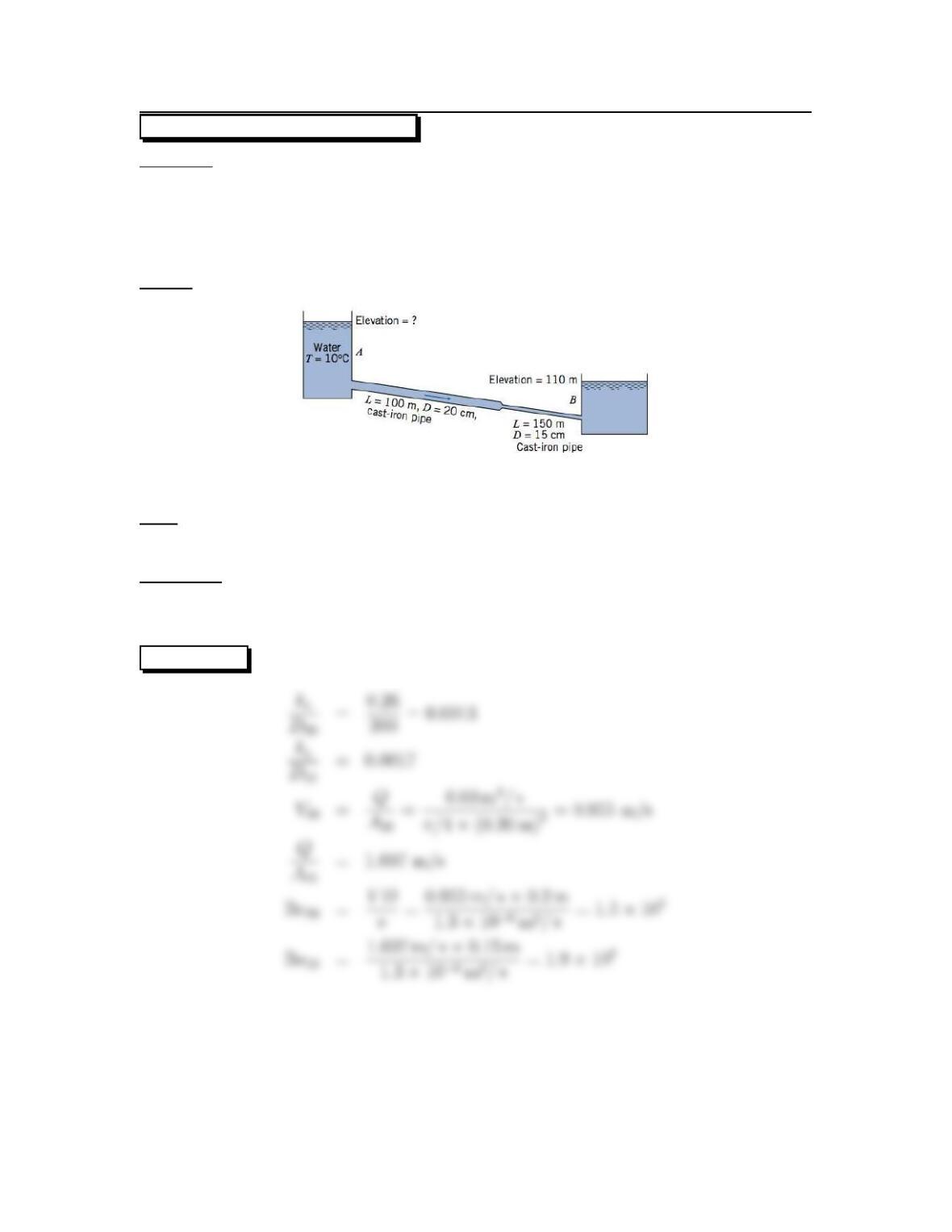
Two reservoirs are connected by a cast-iron pipe of varying diameter.
z2=110m,Q=0.3m
3/s.
D1=20cm,L1=100m.
D2=15cm,L2=150m.
Sketch:
Find:
Water surface elevation in reservoir A.
Properties:
From Table 10.4: ks=0.26 mm.
Water (10 ◦C),TableA.5:ν=1.3×10⁻⁶m2/s.
SOLUTION
141
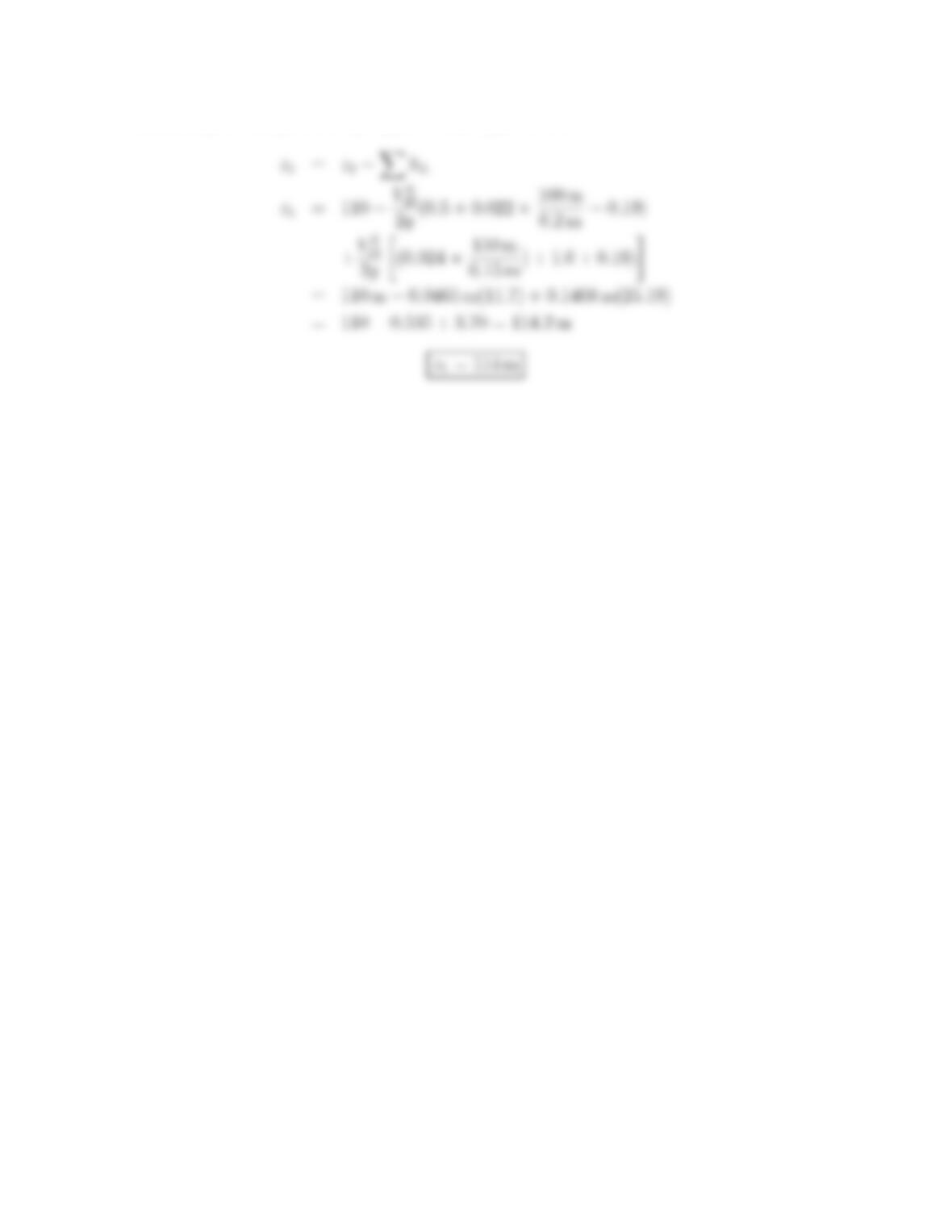
From Fig. 10.14 (EFM 10e): f20 =0.022; f15 =0.024
142
10.86: PROBLEM DEFINITION
Situation:
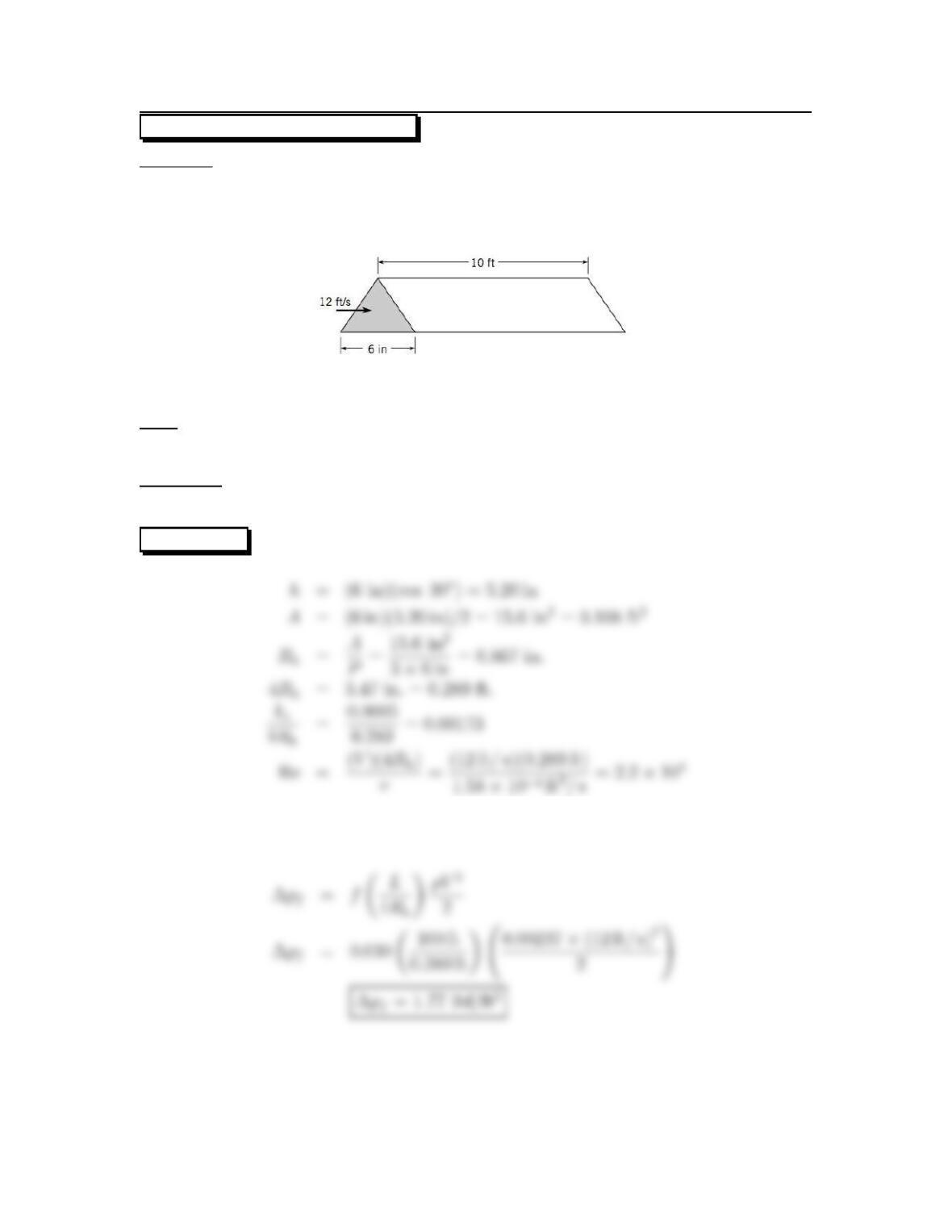
Air flowing through an equilateral triangle shaped horizontal duct.
L=100ft,V=12ft/s.
ks=0.0005 ft,Triangle side =6in.
Find:
Pressure drop over 100 ft length.
Properties:
Air (60 ◦F), Table A.3: ν=1.58 ×10⁻⁴ft2/sandρ=0.00237 slug/ft3.
SOLUTION
From the Moody diagram (Fig 10.14, EFM10e), f=0.030 so the pressure drop is
143
10.87: PROBLEM DEFINITION
Situation:
Air moves through a galvanized iron cold-air duct.
b=100cm,A=100cm×15 cm.
Q=6m
3/s.
Find:
Power loss in duct.
Assumptions:
ks=.15 mm=1.5×10⁻⁴m.
Properties:
Air (15 ◦C) ,Table A.3: ν=1.46 ×10⁻⁵m2/s.
From Table A.2: ρ=1.22 kg/m3.
SOLUTION
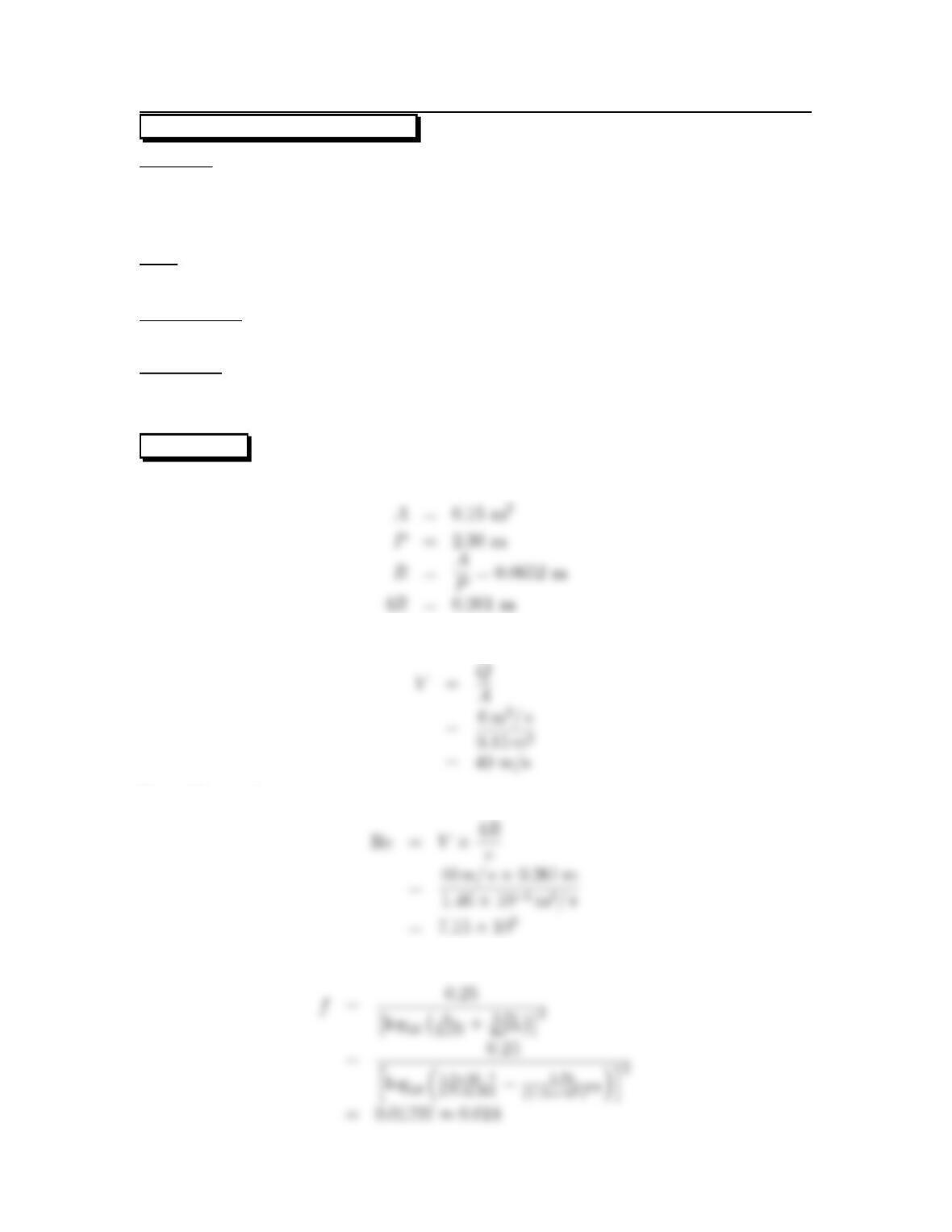
Hydraulic radius
Flow rate equation
Reynolds number
Friction factor (f)(turbulent flow: Swamee-Jain equation)
144
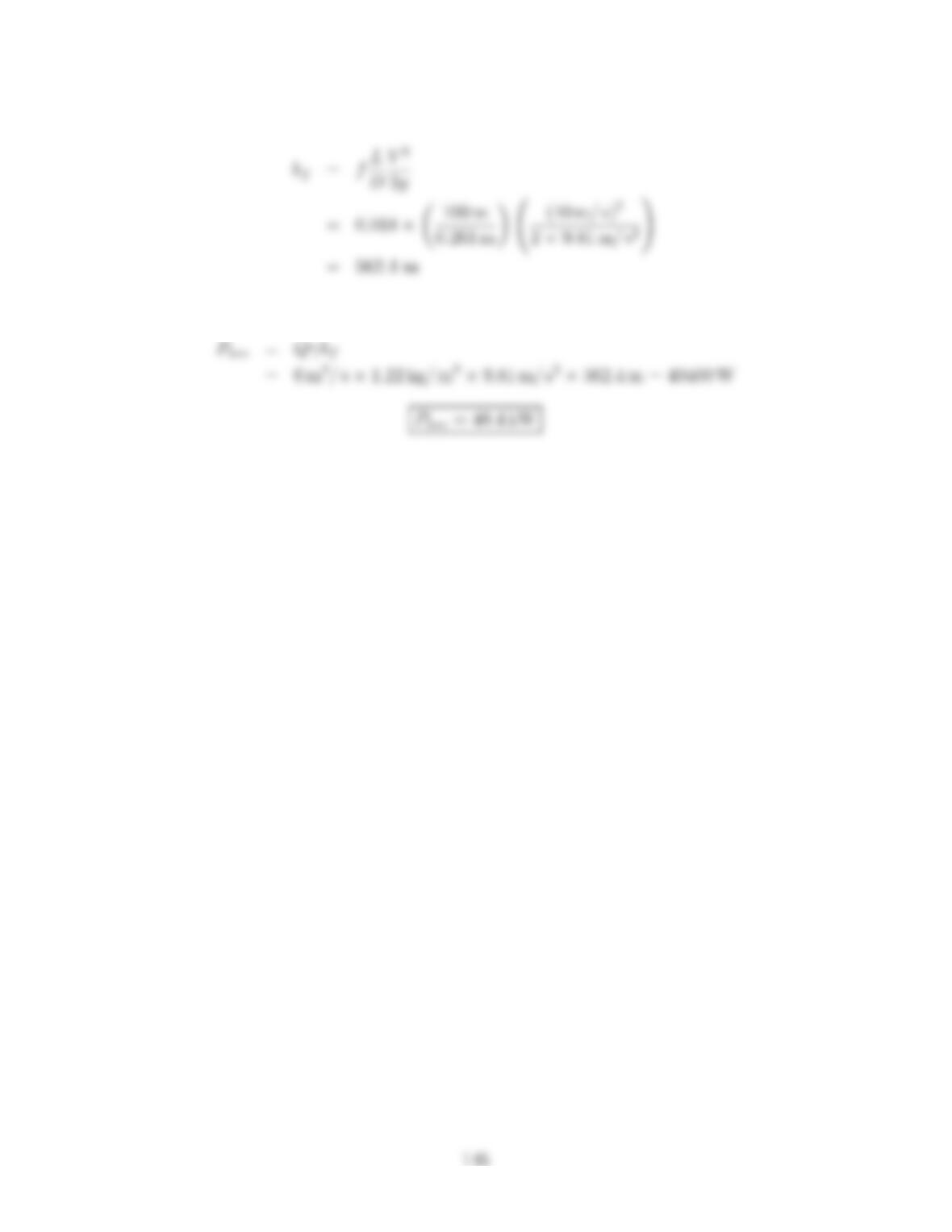
Darcy Weisbach equation
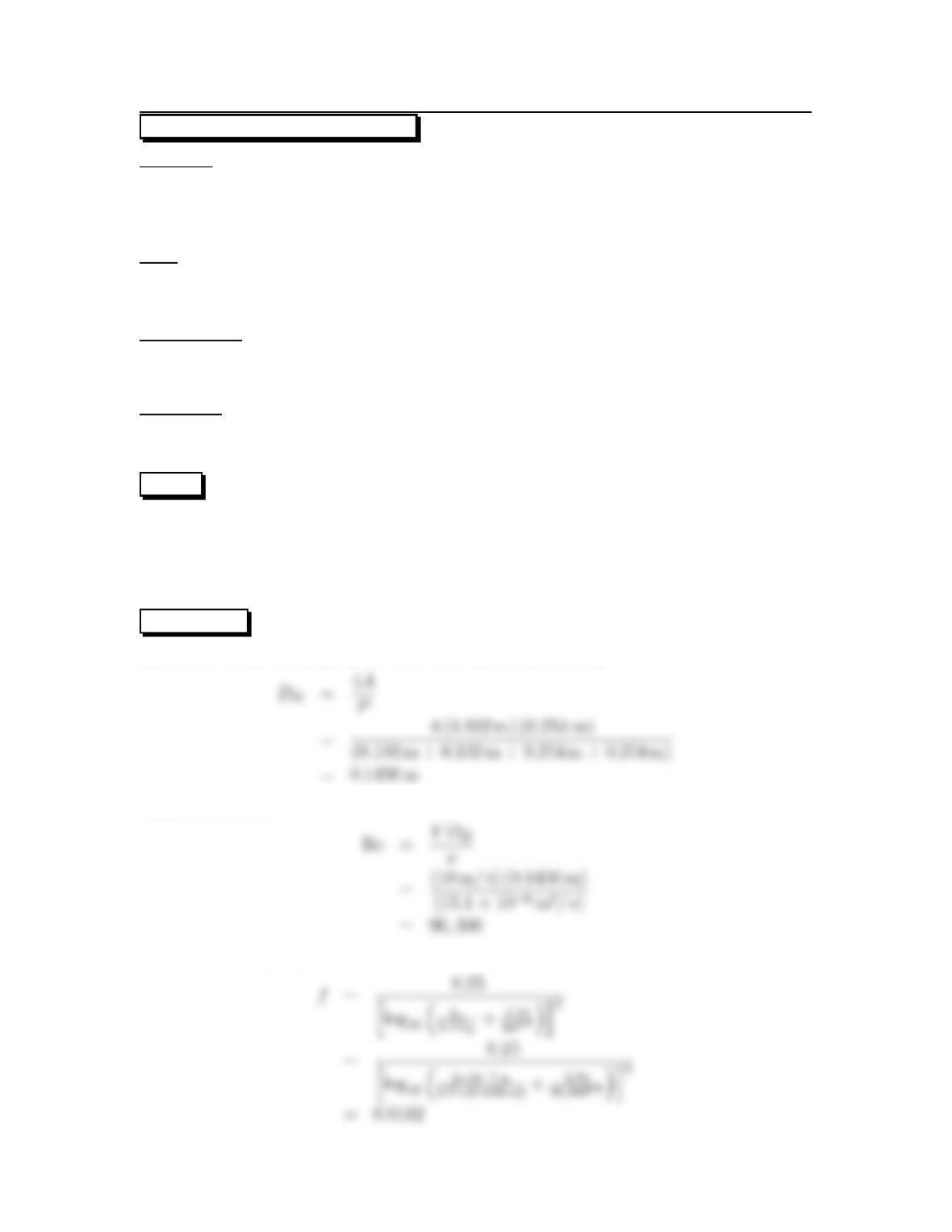
Power equation
10.88: PROBLEM DEFINITION
Situation:
Air flows through a horizontal, rectangular, air-conditioning duct.
L=20m, Section area is 4 by 10 inches.
V=10 m/s,k
s=0.004 mm.
Find:
(a) The pressure drop in inches of water.
(b) The power in watts needed to overcome head loss.
Assumptions:
Neglect all head loss associated with minor losses.
α1=α2
Properties:
Air at 20 ◦Cfrom Table A.3: =15.1×10⁻⁶m2/s.
ρ=1.2kg/m3,γ=11.8N/m3.
PLAN
To account for the rectangular section, use hydraulic diameter. Calculate Reynolds
number and then choose a suitable correlation for the friction factor (f).Apply the
Darcy-Weisbach equation to find the head loss (hf). Apply the energy equation to
find the pressure drop, and calculate power using P=˙mghf.
SOLUTION
Hydraulic diameter (DH)(four times the hydraulic radius)
Reynolds number
Friction factor (f)(Swamee-Jain correlation)
146
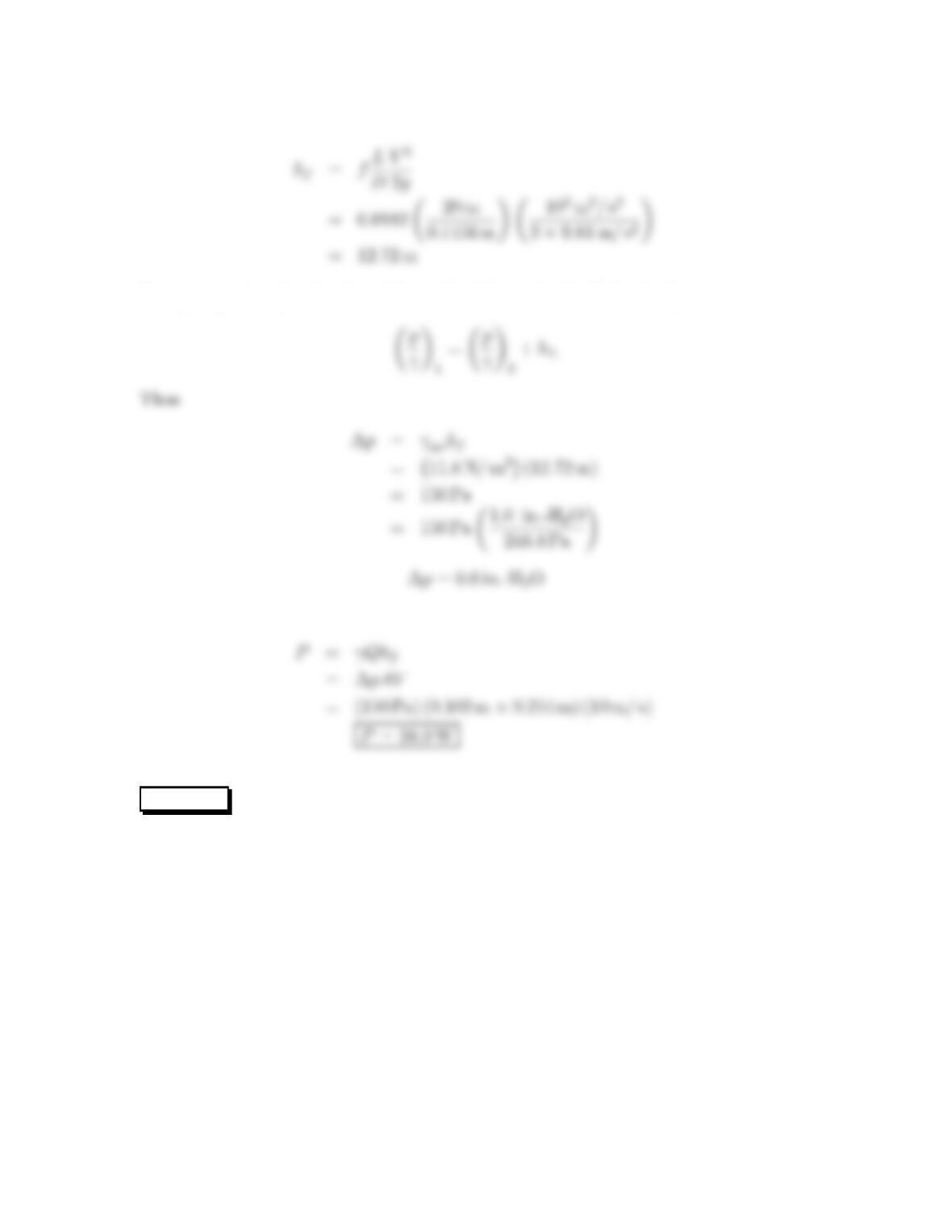
Darcy-Weisbach equation
Energy equation (section 1 and 2 are the inlet and exit of the duct)
Power equation
REVIEW
The power to overcome head loss is small (39 W)–this is equivalent to the power
required to light a small light bulb.
147
10.89: PROBLEM DEFINITION
Situation:
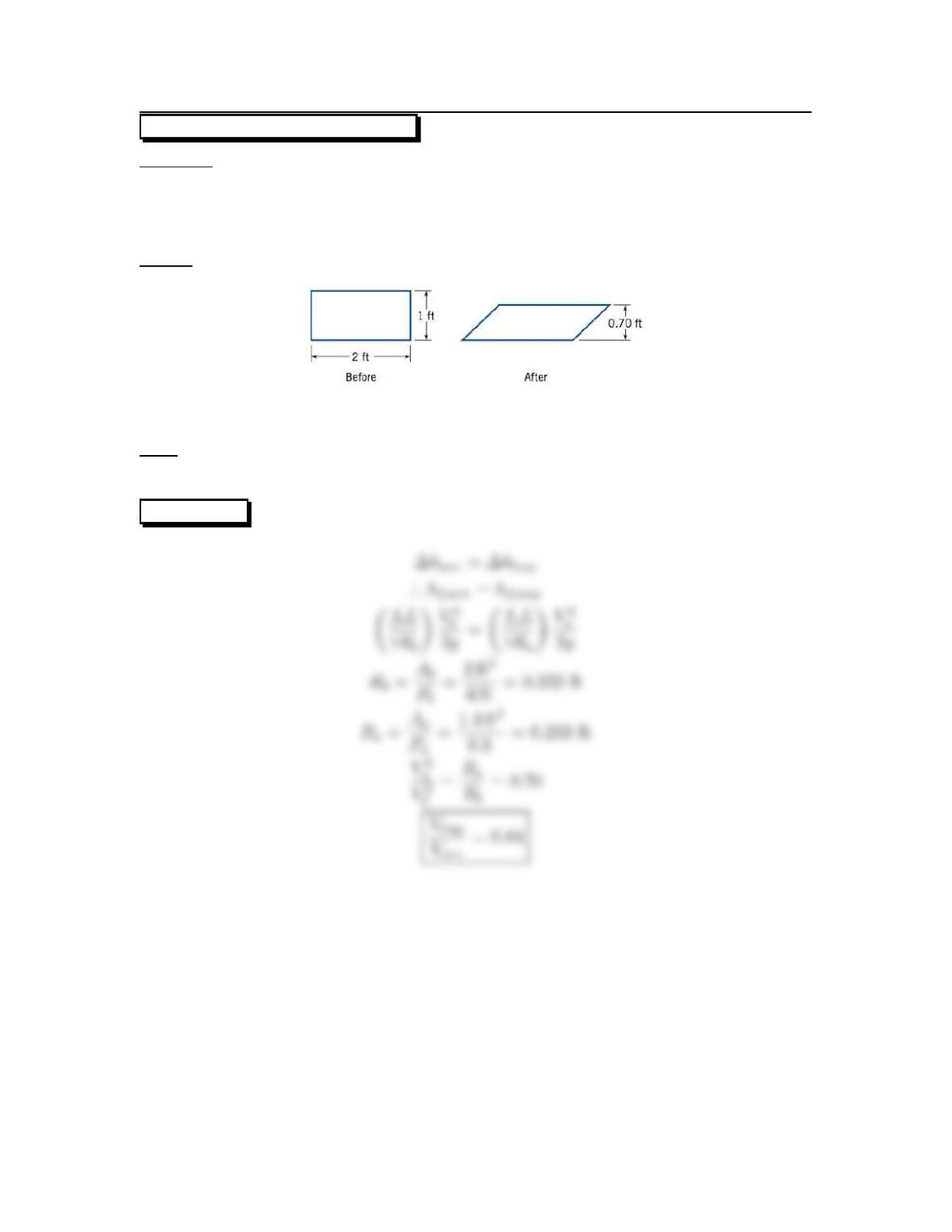
A rectangular duct (initial state).
A trapezoidal duct (after being run over by a truck).
Rectangular area is 1 by 2 feet. Trapezoidal area is 0.7 by 2 feet.
Sketch:
Find:
Ratio of velocity in trapezoidal to rectangular duct.
SOLUTION
148
10.90: PROBLEM DEFINITION
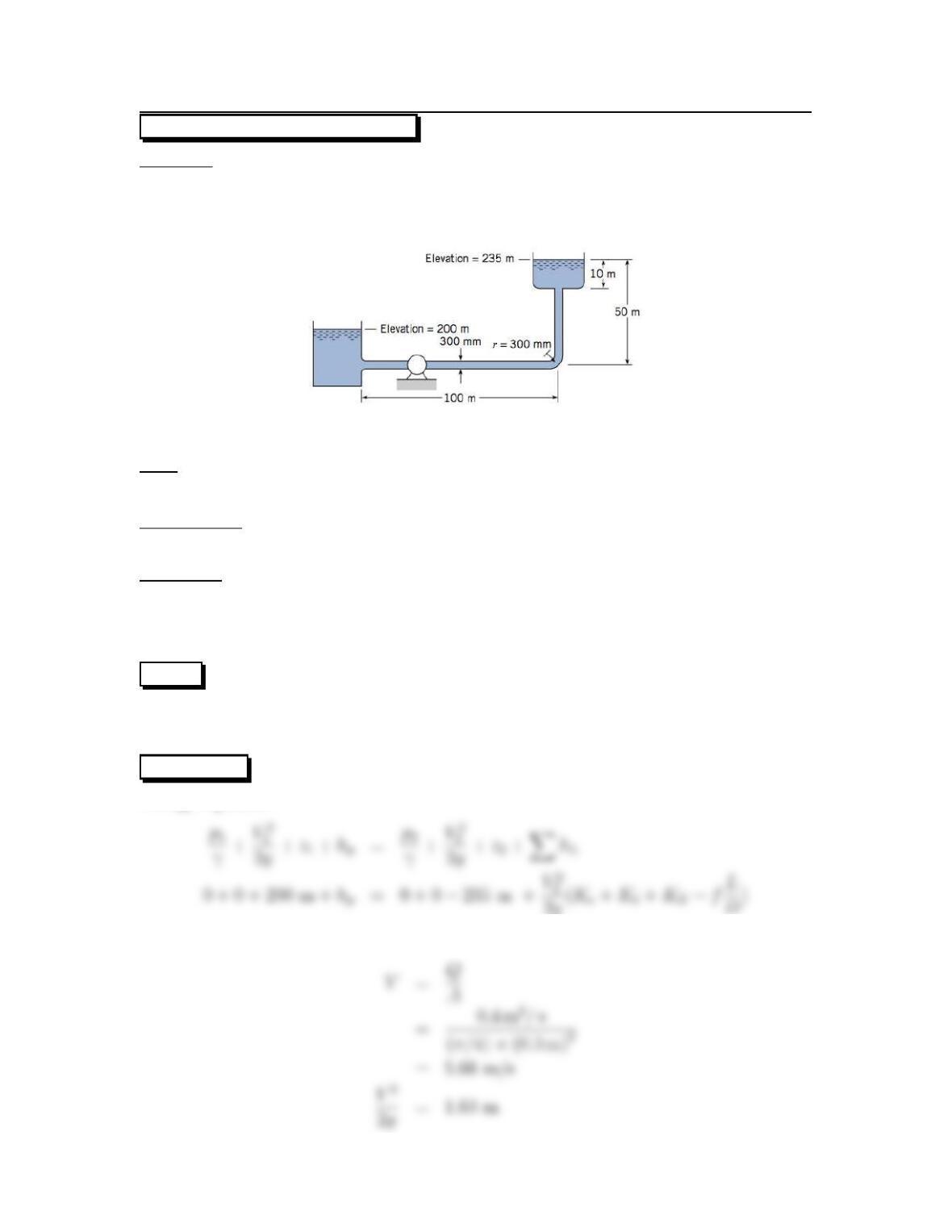
Situation:
Water is pumped through a steel pipe from one tank to another.
D=300mm,L=140m,Q=0.4m
3/s.
z1=200m,z2=235m,Elbowradiusis300mm.
Find:
The pump power.
Assumptions:
Pipe entrance is well-rounded: r/D > 0.2.
Properties:
From Table 10.5: Ke=0.03; Kb=0.35; KE=1.0.
Water (20 ◦C), Table A.5: ν=10
−6m2/s.
From Table 10.4: ks=0.046 mm.
PLAN
Apply the energy equation from the water surface in the lower reservoir to the water
surface in the upper reservoir.
SOLUTION
Energy equation
Flow rate equation
149
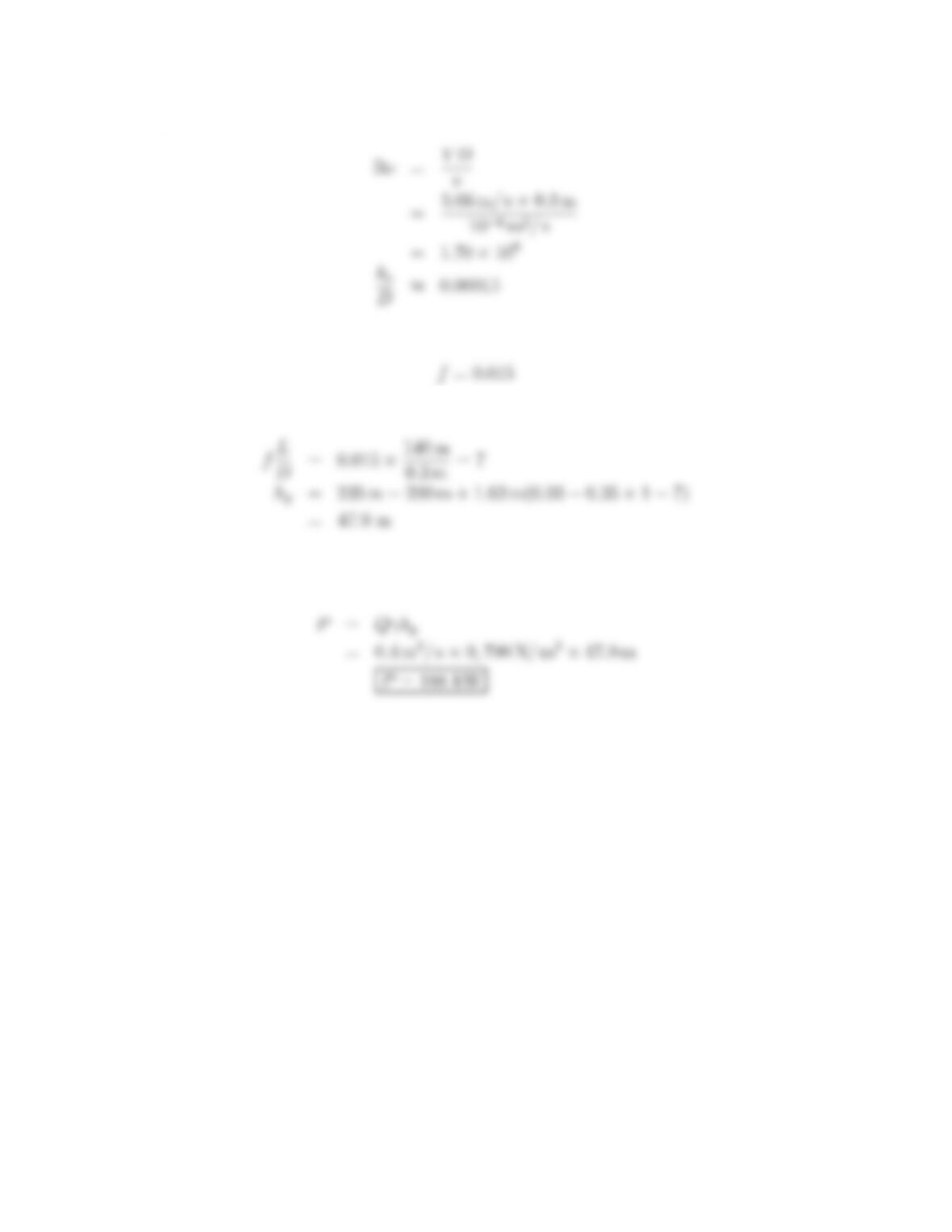
Reynolds number
Resistance coefficient (from the Moody diagram)
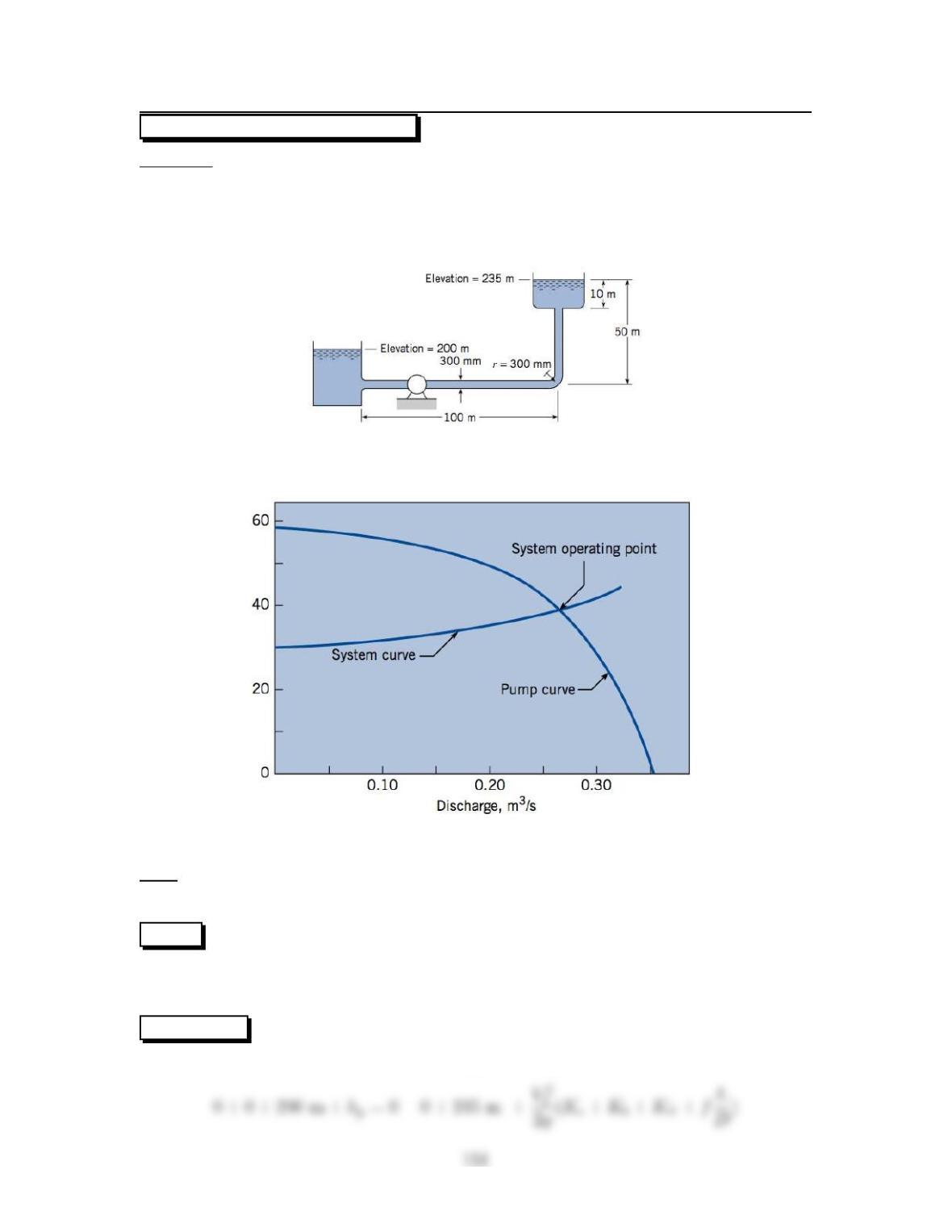
So
Power equation
150
10.91: PROBLEM DEFINITION
Situation:
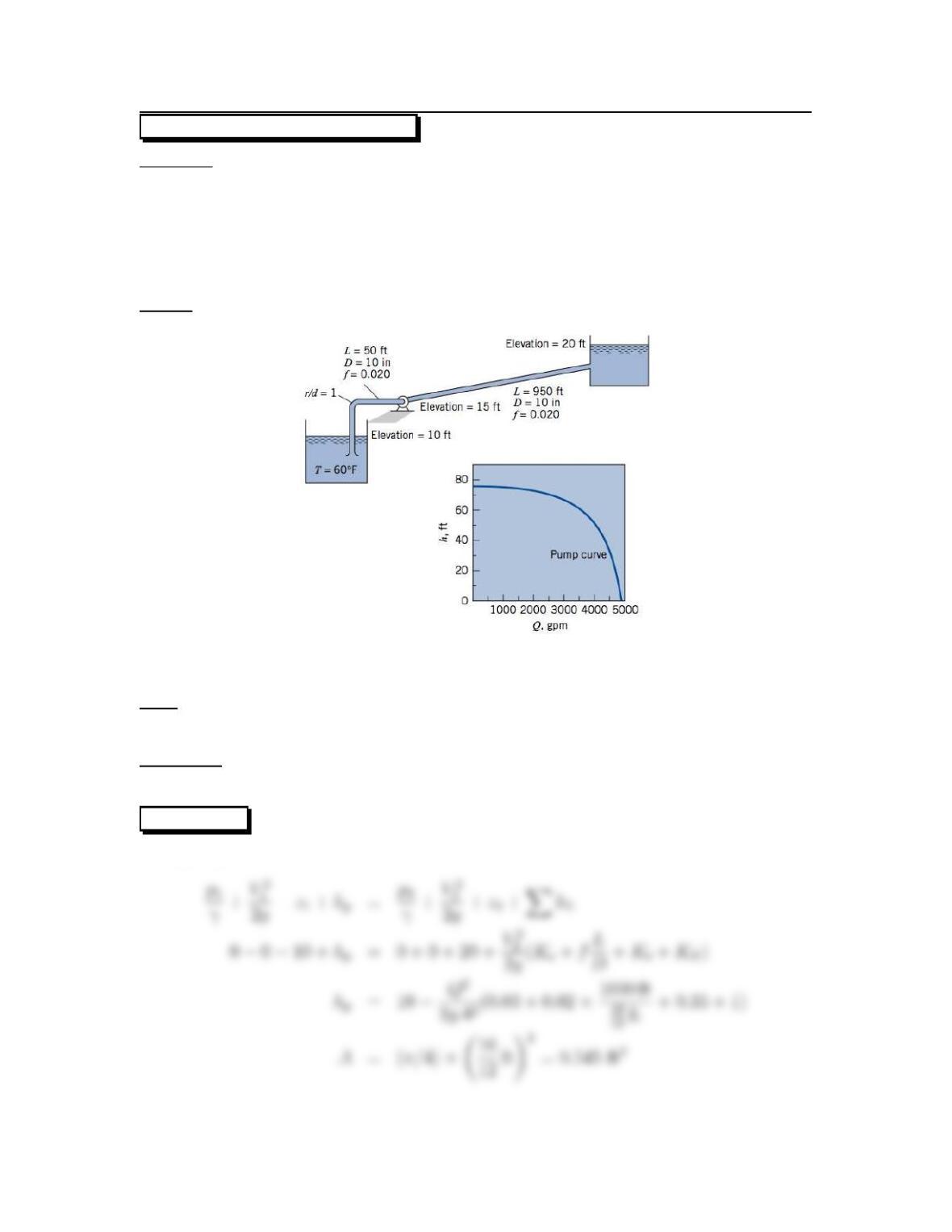
Water is pumped through the system sketched below.
D=300mm,L=140m.
z1=200m,z2=235m.
Elbowradiusis300mm.
The pump curve is shown on the figure below.
Find:
Discharge.
PLAN
For the system curve, follow the solution for problem 10.90 in EFM10e. Then plot
the system curve on the above diagram to find the operating point.
SOLUTION
The solution to Prob. 10.90 in EFM10e, gives the system curve
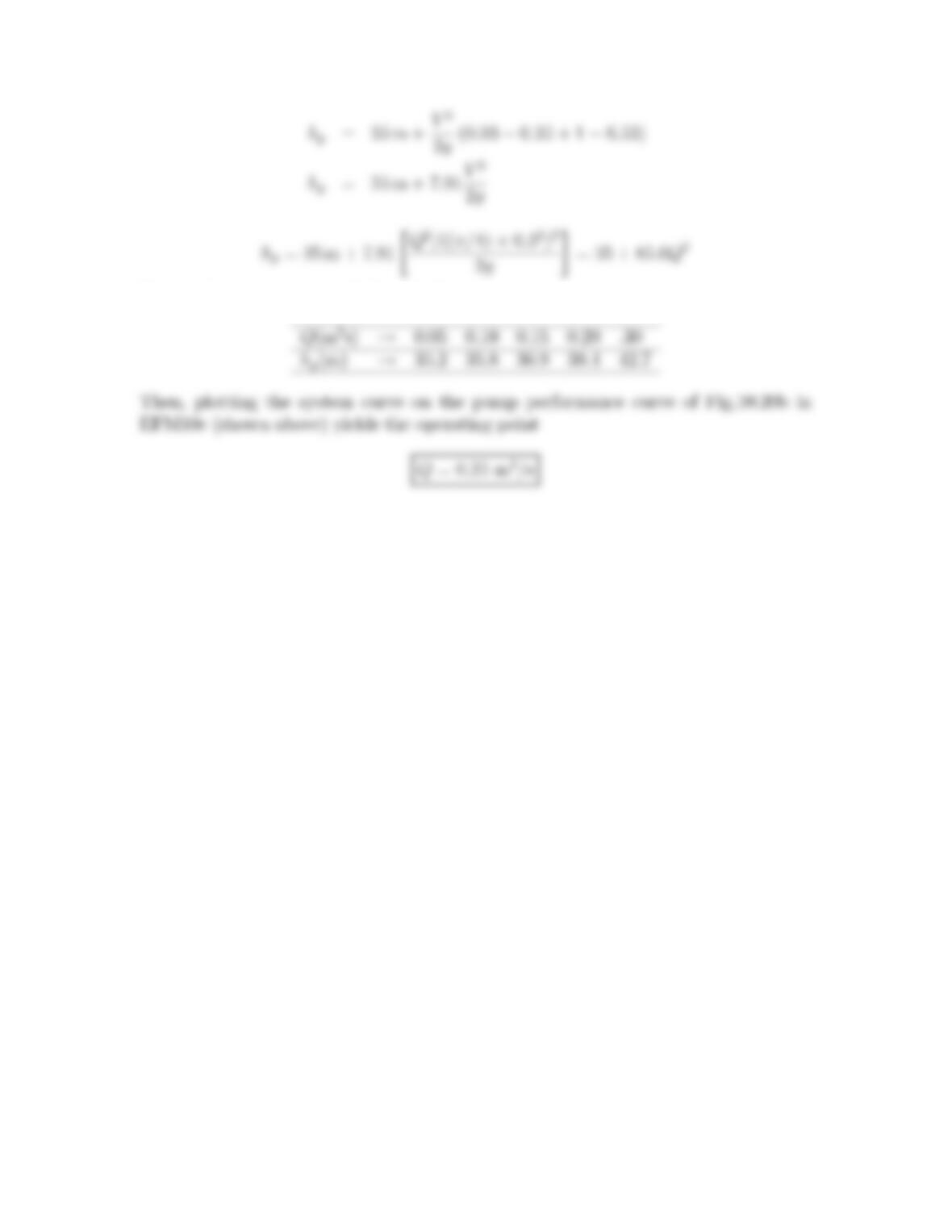
System data computed and shown below:
152
10.92: PROBLEM DEFINITION
Situation:
Water is pumped from one tank to another.
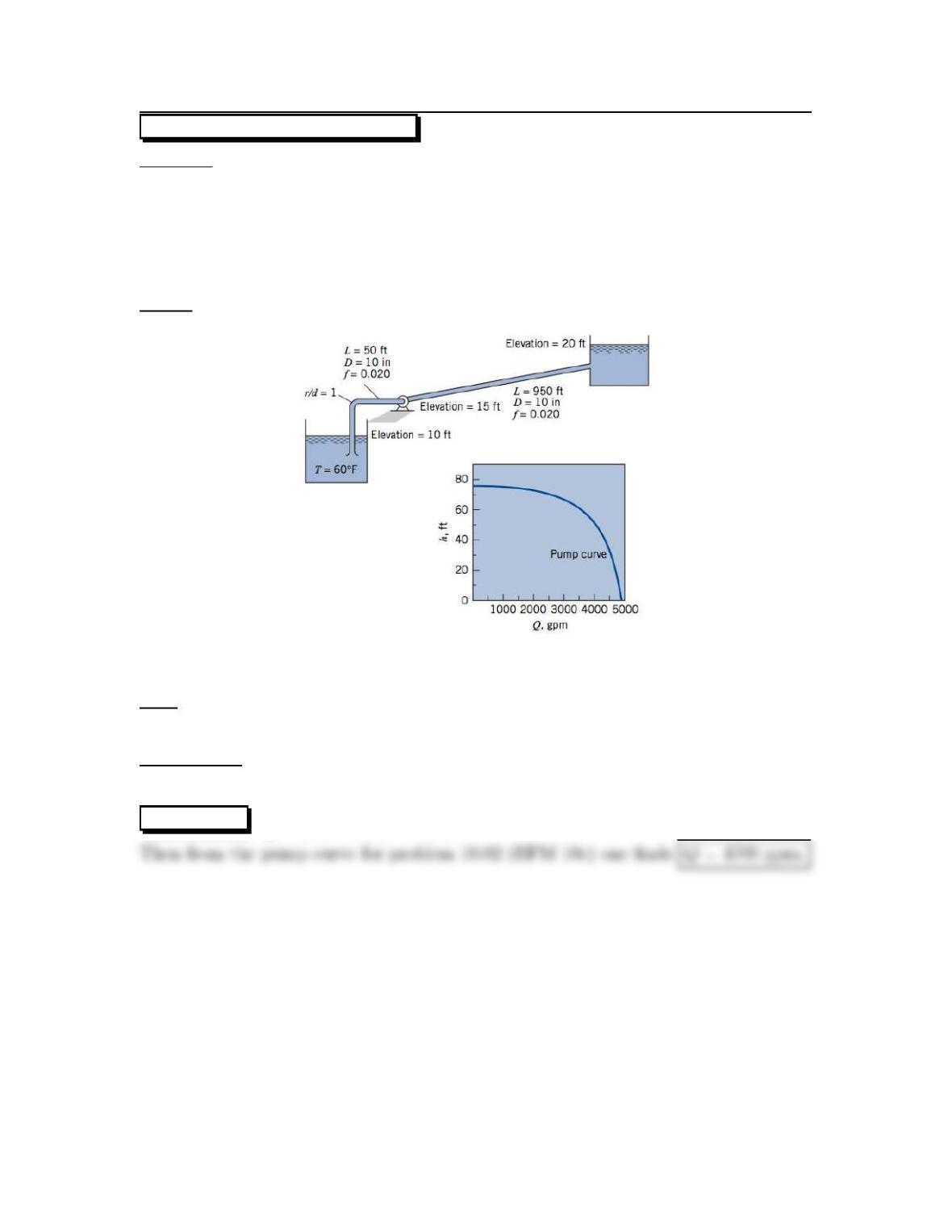
r/d =1,D1=10in,L1=50ft.
f2=0.020,z
1=10ft.
D2=10in,L2=950ft,f2=0.020.
z2=20ft,T=60◦F.
Sketch:
Find:
Discharge ¡ft3/s¢.
Properties:
From Table 10.5: Ke=0.03; Kb=0.35; KE=1.0.
SOLUTION
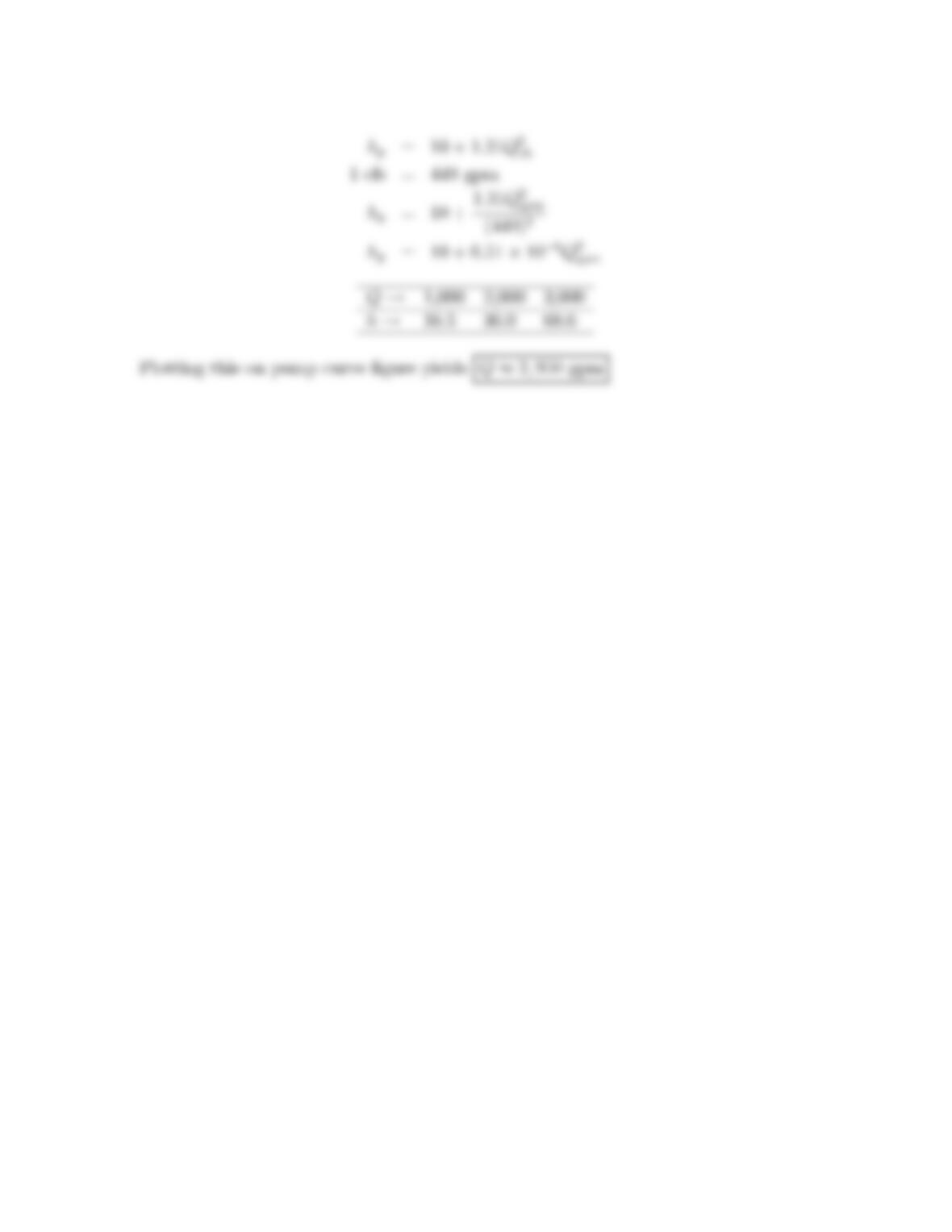
Energy equation
153
154
10.93: PROBLEM DEFINITION
Situation:
A liquid is pumped through a pipe from one tank to another.
r/d =1,D1=10in,L1=50ft.
f2=0.020,z
1=10ft.
D2=10in,L2=950ft.
f2=0.020,z2=20ft.
Sketch:
Find:
Pumping rate (gpm).
Assumptions:
No head loss for this liquid.
SOLUTION hp=20ft – 10 ft = 10 ft
155
10.94: PROBLEM DEFINITION
Situation:
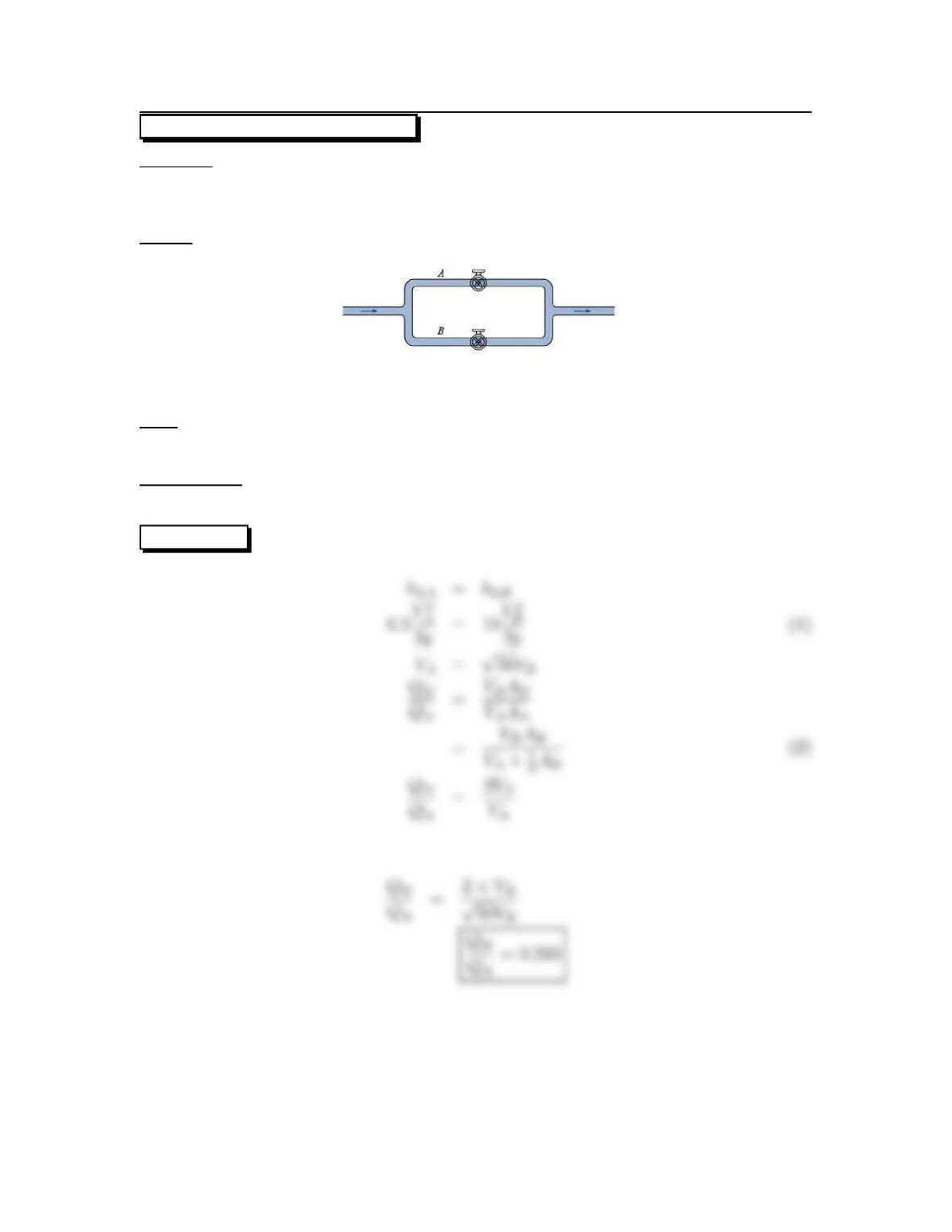
Two pipes are connected in parallel.
KvA =0.2,K
vB =10,2×AA=AB.
Sketch:
Find:
Ratio of discharge in line Bto that in line A.
Assumptions:
Head loss due to valves overshadows losses due to junctions, elbows and friction.
SOLUTION
Solve Eqs. (1) and (2) for QB/QA:
156