10–72
CA 10-5 (Continued)
(d) Client B
Treatment if the exchange has commercial substance
In this situation, the full $30,000 gain would be recognized on this year’s income statement. The
new asset would go on the books at its fair value. The entry is as follows:
(e) Treatment if the exchange lacks commercial substance
Machinery ($80,000 – $24,000) ……………………………………………………..
56,000
Accumulated Depreciation—Machinery …………………………………………..
80,000
20,000
(f) Memo to the Controller:
TO: The Controller
RE: Asset Exchanges—Commercial Substance
1. The income statement will reflect a before-tax gain of $30,000 if the exchange has commercial
80,000
Accumulated Depreciation—Machinery …………………………………………..
80,000
20,000
10–73
CA 10-6
In general, the inclusion of the $7,500 as part of the cost of the machine is justified because the primary
purpose in accounting for plant asset costs is to secure an equitable allocation of incurred costs over
the period of time when the benefits are being received from the use of the assets. These costs—both
the $50,000 and the $7,500—are much like prepaid expenses, to be matched against the revenue
emerging through their use. The purpose of accounting for plant assets then is not primarily aimed at
determining the fair valuation of the asset for balance sheet purposes, but proper matching of incurred
costs with revenue resulting from use of the assets.
(1) It may be true that these installation costs could not be recovered if the machine were to be sold.
This is not important, however, because presumably the machine was acquired to be used, not to
(2) Again, the purpose of accounting for plant assets is not to arrive at an approximation of fair
value of the assets each year over the life of the assets. However, even if this were an objective,
the question of which method would come closer to stating current market value at some later date
would revolve around the general trend of the price level over the years involved.
(3) Assuming that the $7,500 could properly be deducted, there would be some tax savings over the
years unless the tax rates applicable to the business were reduced during the following years.
CA 10-7
(a) If the land is undervalued so that a higher depreciation expense is assigned to the building,
management interests are served. The lower net income and reduced tax liability save cash to be
used for management purposes. By contrast, stockholders and potential investors are misled by
the inaccurate cost values. They will have been deprived of information concerning the significant
impact of changing real estate values on this holding.
10–74
FINANCIAL STATEMENT ANALYSIS CASE
JOHNSON & JOHNSON
(a) The cost of building and building equipment at the end of 2009 was
$8,863,000,000.
(c) The cash flow statement reports the amount of interest paid in cash
($533 million).
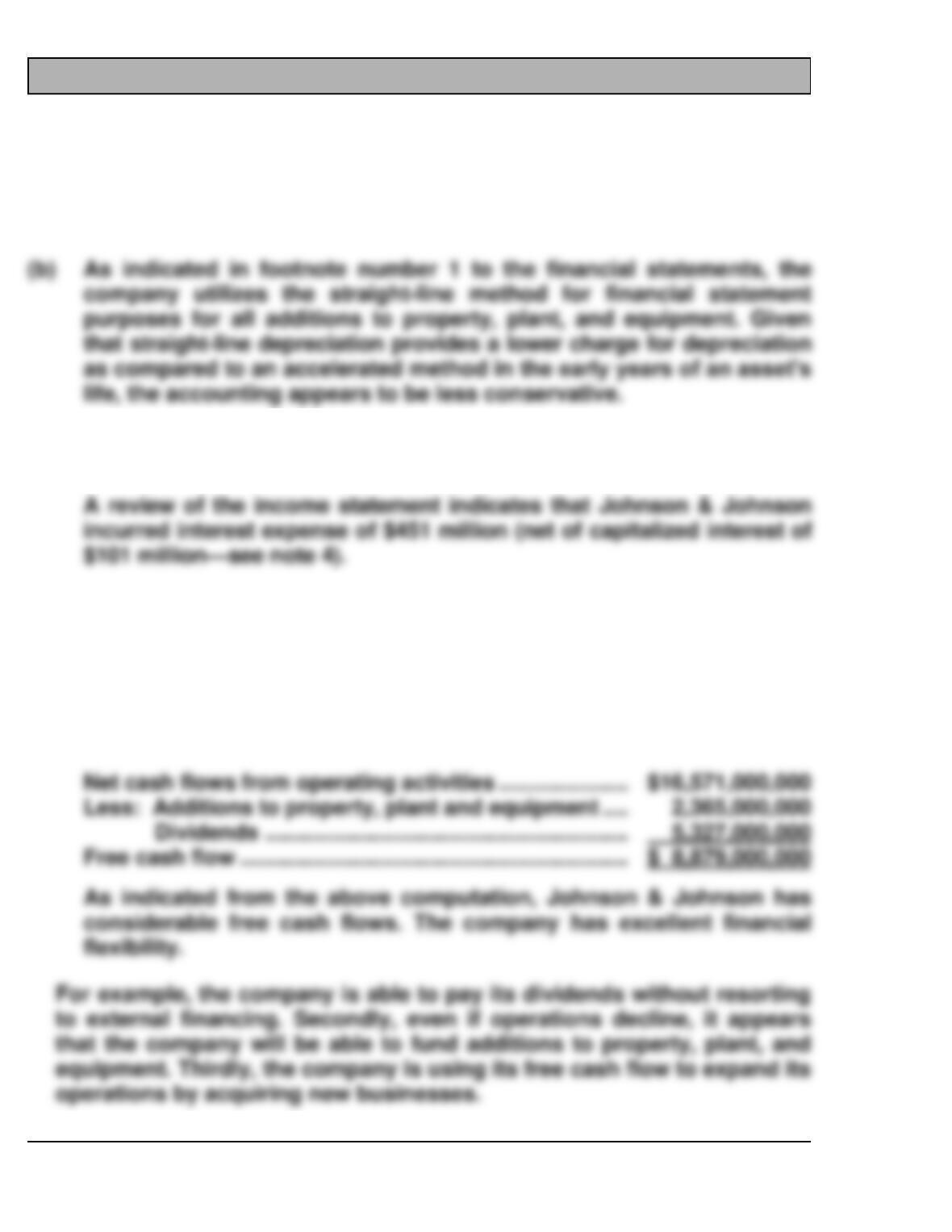
(d) Free cash flow is defined as net cash flows provided by operating
activities less capital expenditures and dividends.
Free cash flow is the amount of discretionary cash flow a company has
for purchasing additional investments, retiring its debt, purchasing
treasury stock, or simply adding to its liquidity. In Johnson & Johnson’s
situation, free cash flow is computed as follows:
10–75
ACCOUNTING, ANALYSIS, AND PRINCIPLES
Accounting
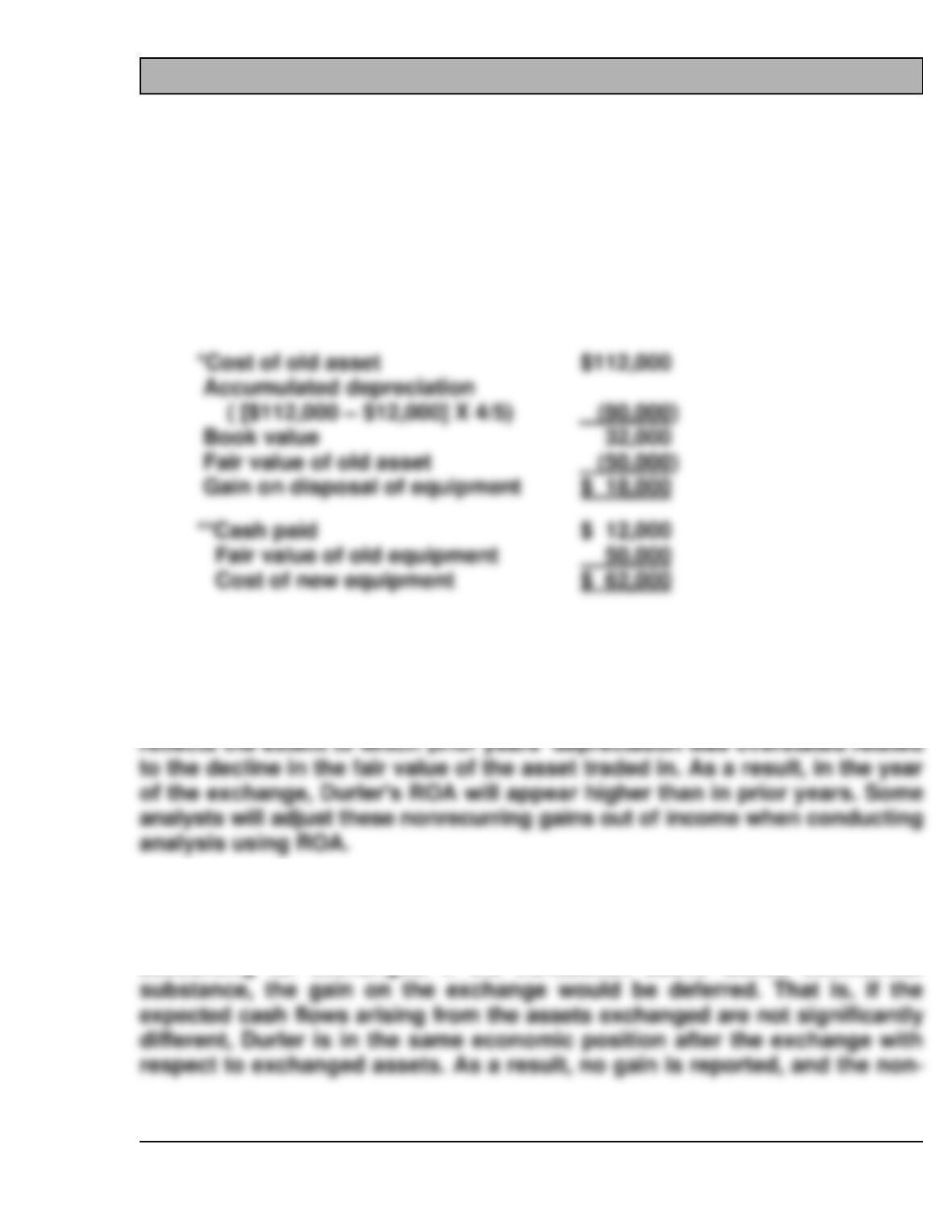
Equipment** ……………………………………………………….
62,000
Accumluated Depreciation—Equipment ………………….
80,000
Equipment …………………………..…………………………
112,000
Cash ………………………………………………………………
12,000
Gain on Disposal of Equipment * ……………………..
18,000
Analysis
The gain on the disposal increases income, leading to a one-time increase
in the return on assets in the year of the exchange. In essence, the gain
Principles
The concept of commercial substance is a fundamental element in the
accounting for exchanges. If the transaction above lacked commercial
*Cost of old asset
Book value
Fair value of old asset
Gain on disposal of equipment
**Cash paid
Fair value of old equipment

10–76
10–77
PROFESSIONAL RESEARCH
(a) Yes; according to FASB ASC 835-20-05, it is required to capitalize interest
into the cost of assets that meet selected criteria (see (c) below).
(b) According to FASB ASC 835-20–10–1,
(c) According to FASB ASC 835-20–15–5,
. . . interest shall be capitalized for the following types of assets
(qualifying assets):
a. Assets that are constructed or otherwise produced for an entity’s
own use, including assets constructed or produced for the entity by
others for which deposits or progress payments have been made.
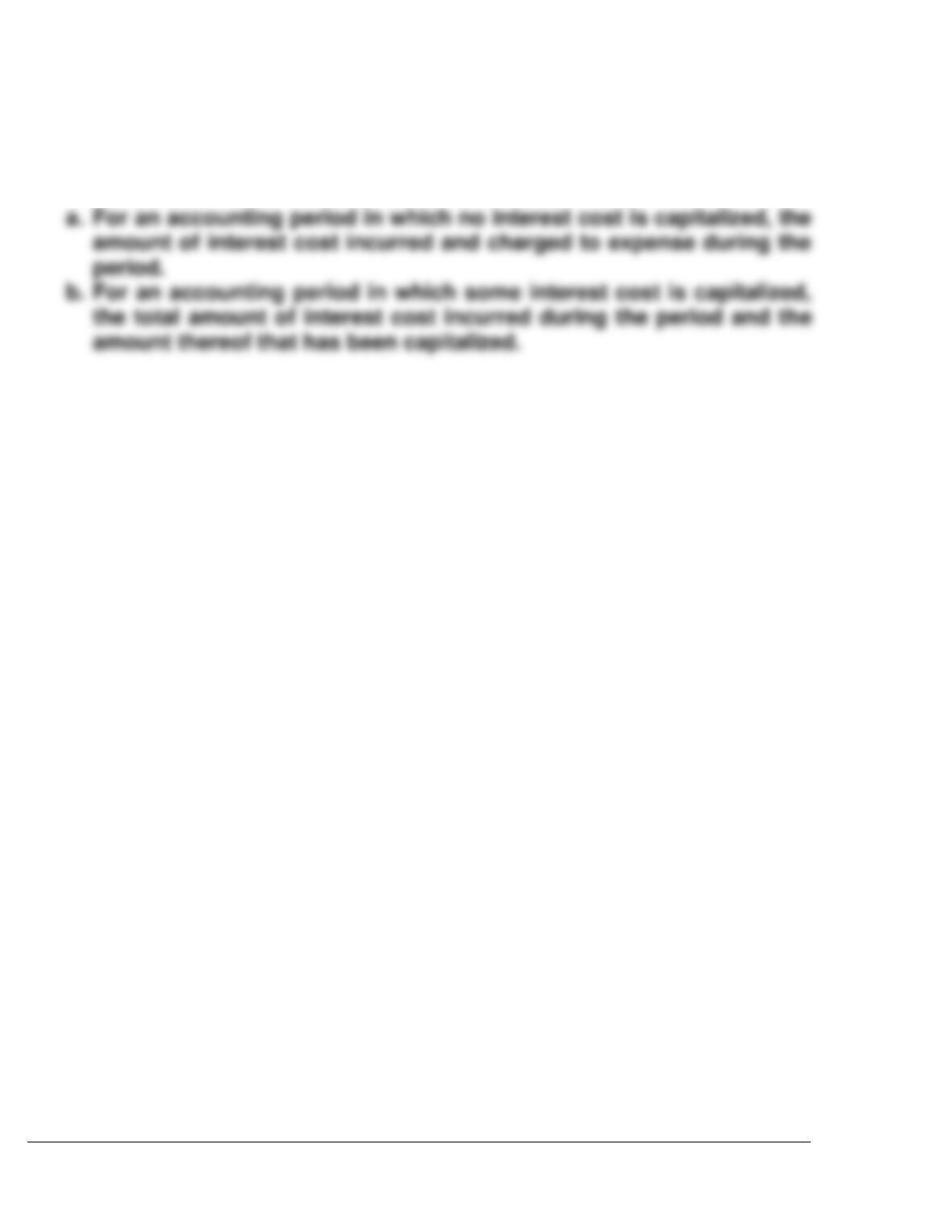
(d) According to FASB ASC 835-20–30–6,
. . . the total amount of interest cost capitalized in an accounting period
shall not exceed the total amount of interest cost incurred by the entity
in that period. In consolidated financial statements, that limitation shall
10–78
PROFESSIONAL RESEARCH (Continued)
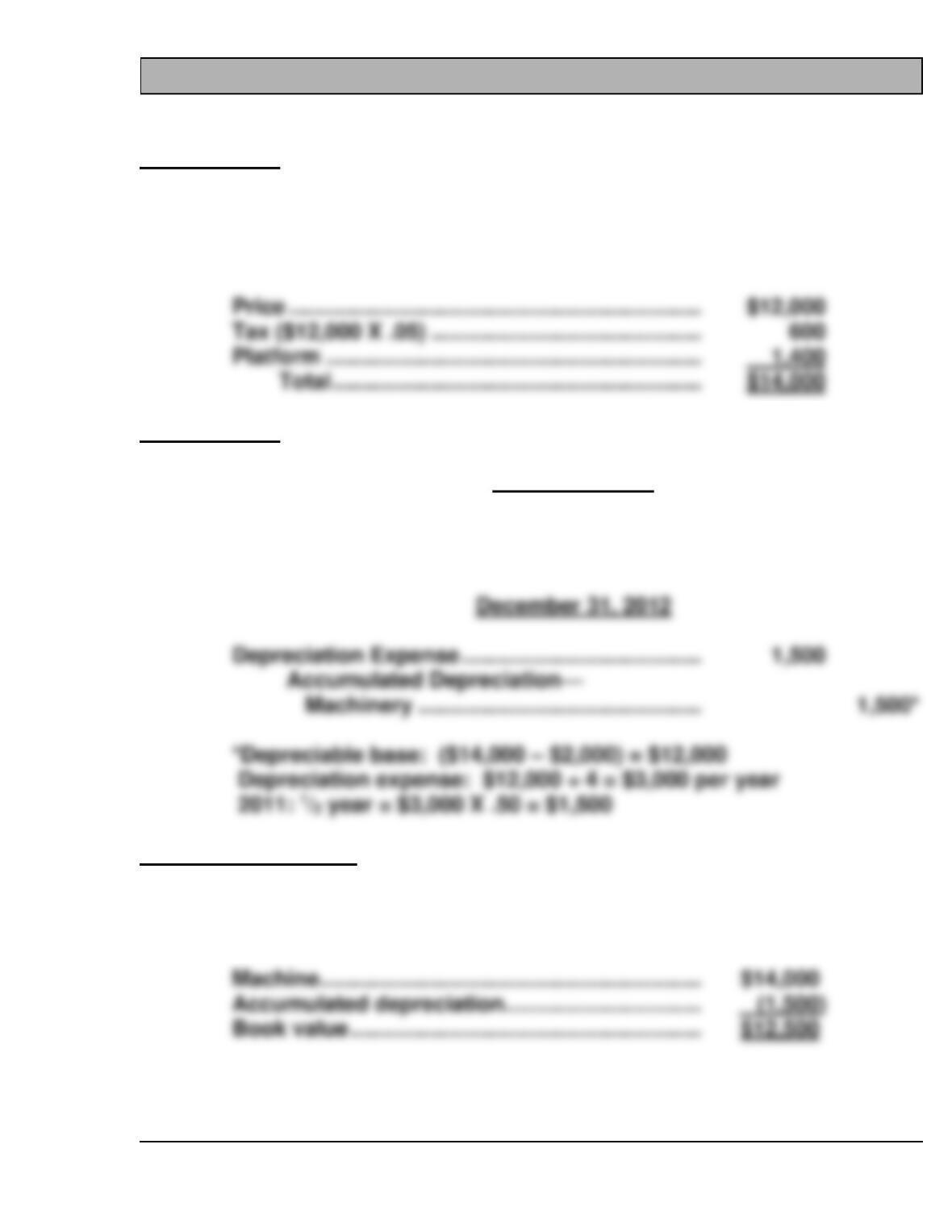
(e) According to FASB ASC 835-20–50–1,
An entity shall disclose the following information with respect to
interest cost in the financial statements or related notes:
10–79
PROFESSIONAL SIMULATION
Measurement
Historical cost is measured by the cash or cash-equivalent price of obtain–
ing the asset and bringing it to the location and condition for its intended
use. For Norwel, this is:
Journal Entry
January 2, 2012
Machinery ………………………………………………….
14,000
Cash ………………………………………………….
14,000
Depreciation Expense …………………………………
*Depreciable base: ($14,000 – $2,000) = $12,000
Depreciation expense: $12,000 ÷ 4 = $3,000 per year
Financial Statements
The amount reported on the balance sheet is the cost of the asset less
accumulated depreciation:
Machine ……………………………………………………..
Accumulated depreciation …………………………..
(1,500)
Book value …………………………………………………
Price …………………………..……………………………..
Tax ($12,000 X .05) ……………………………………..
Platform …………………………………………………….
PROFESSIONAL SIMULATION (Continued)
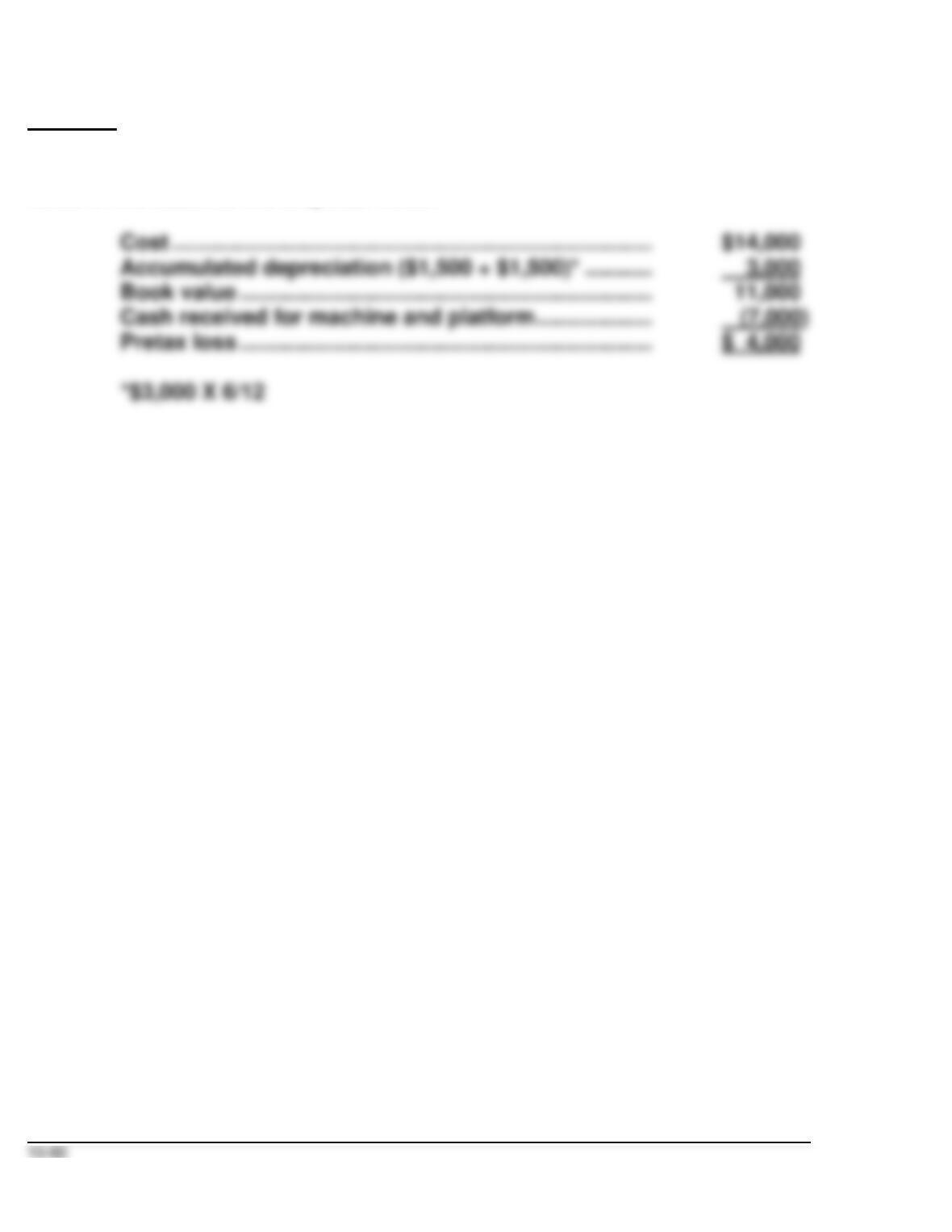
Analysis
The income effect is a gain or loss, determined by comparing the book
value of the asset to the disposal value: