
CHAPTER 10
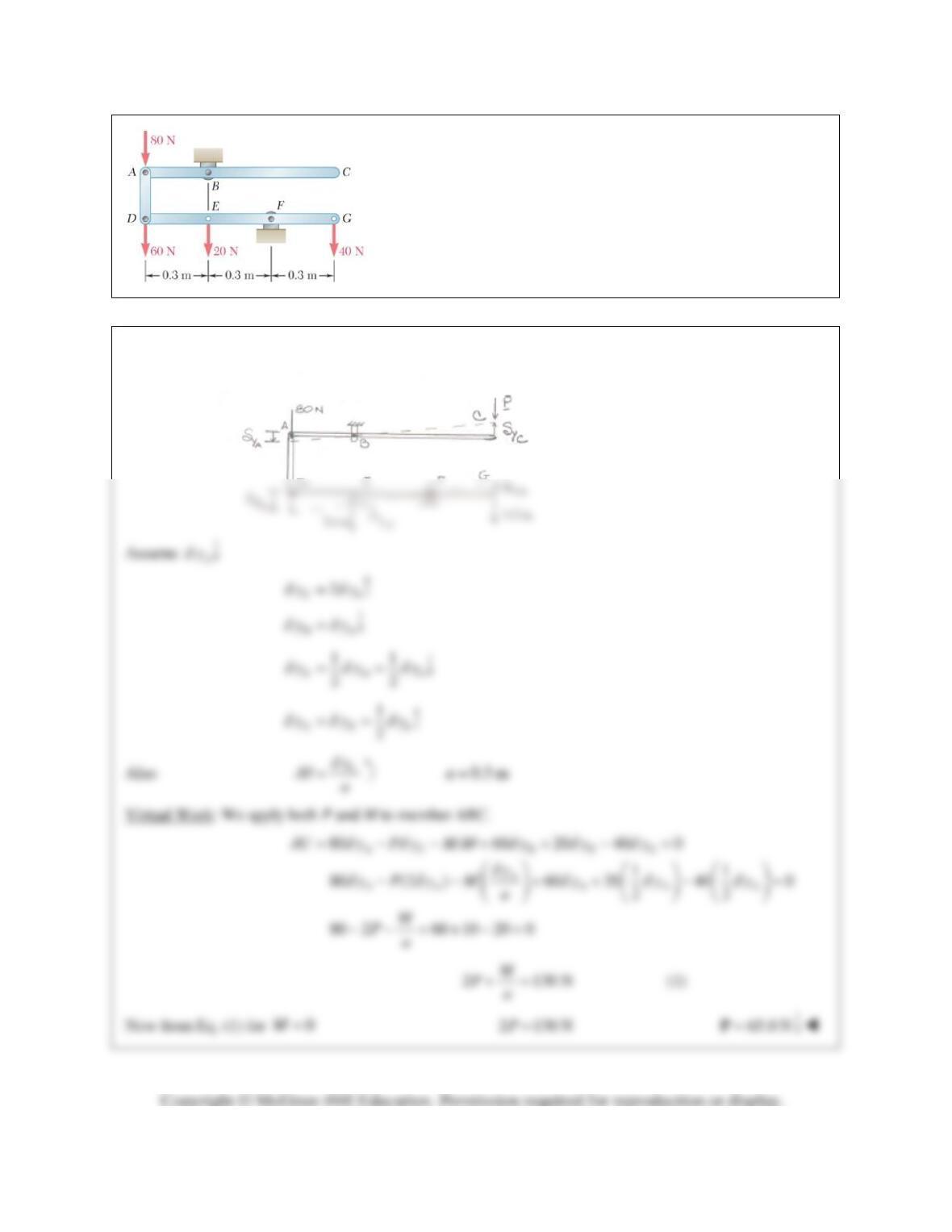
PROBLEM 10.1
Determine the vertical force P that must be applied at C to
maintain the equilibrium of the linkage.
SOLUTION
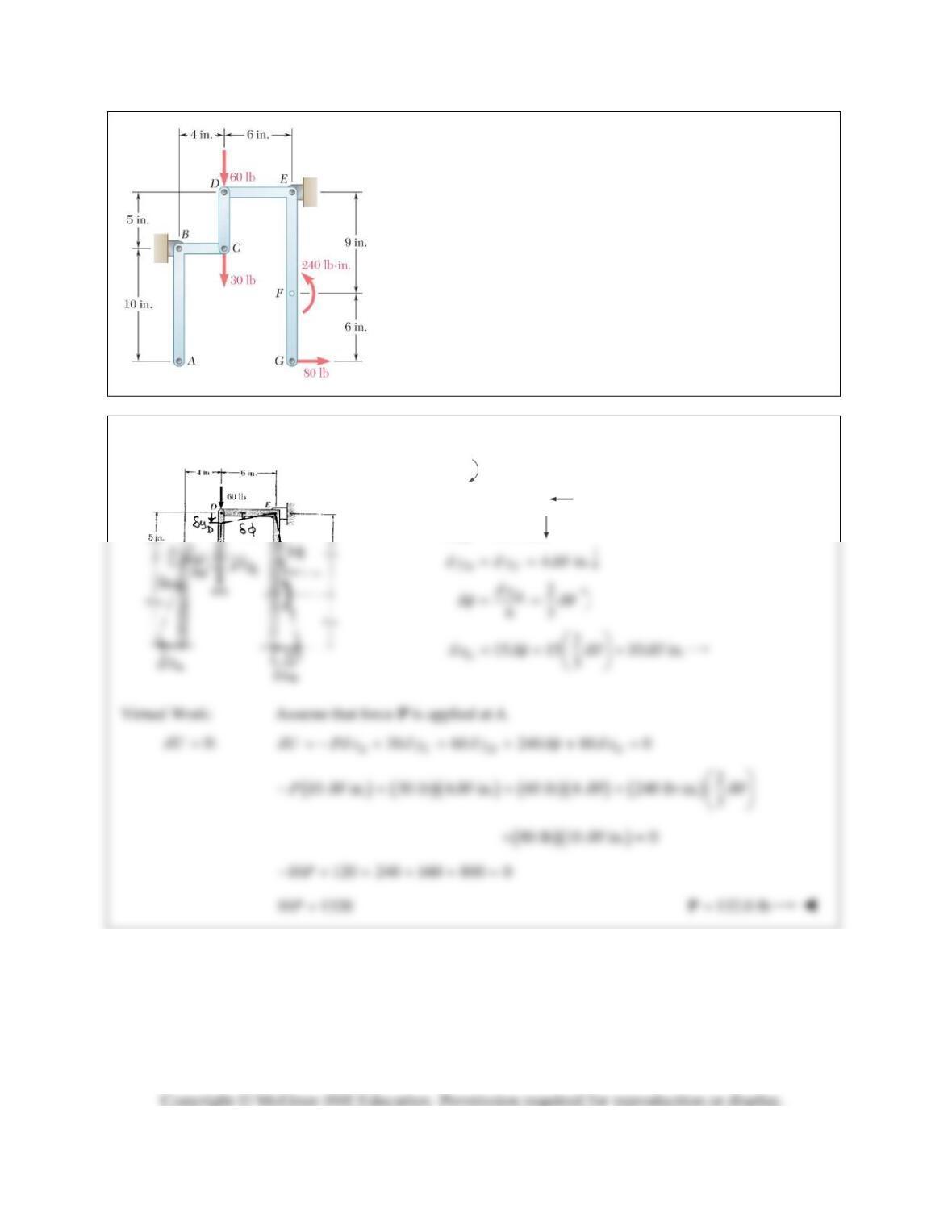
PROBLEM 10.2
Determine the horizontal force P which must be applied at A so
that the linkage is in equilibrium for the position shown.
SOLUTION
Assume
10 in.
A
x
4in.
C
y
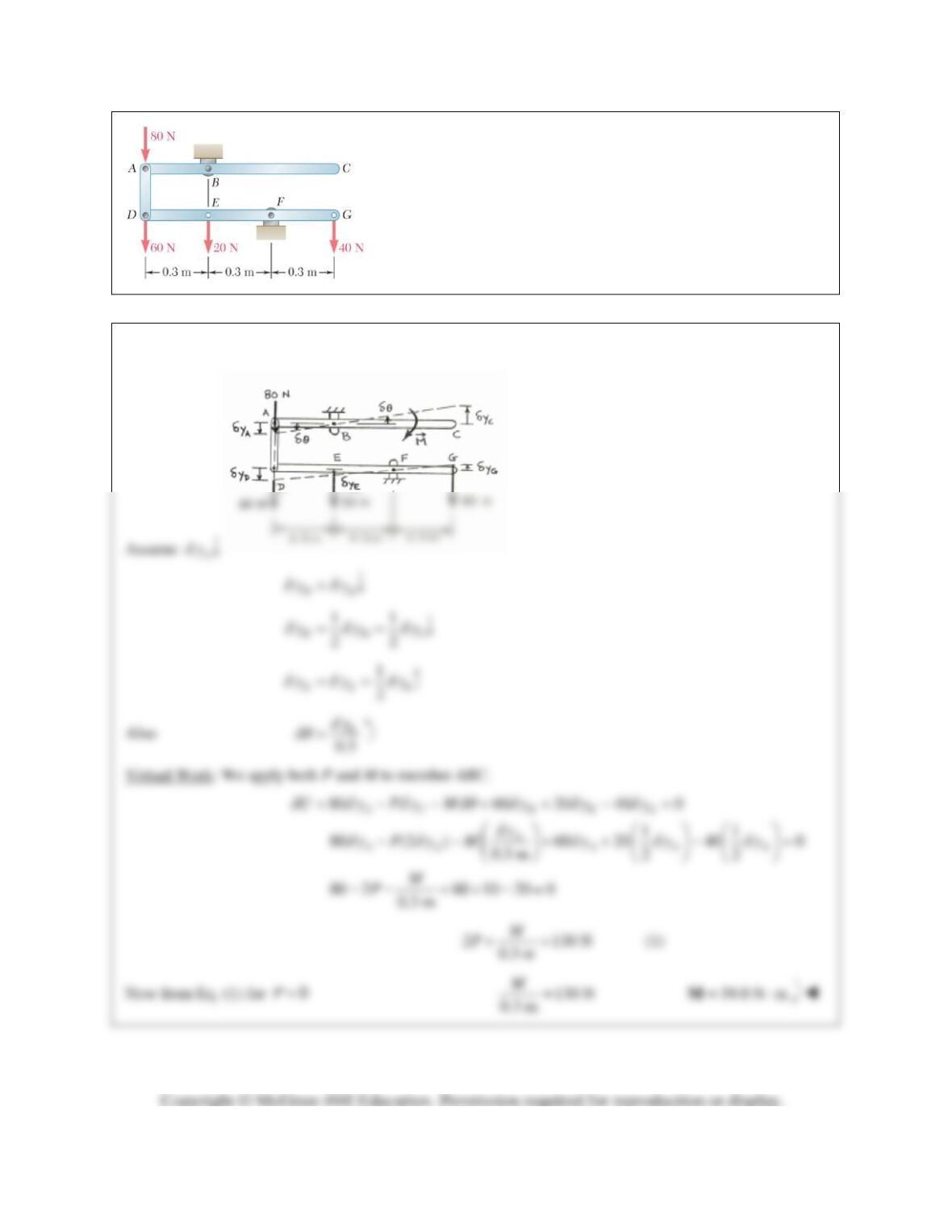
PROBLEM 10.3
Determine the couple M that must be applied to member ABC to
maintain the equilibrium of the linkage.
SOLUTION
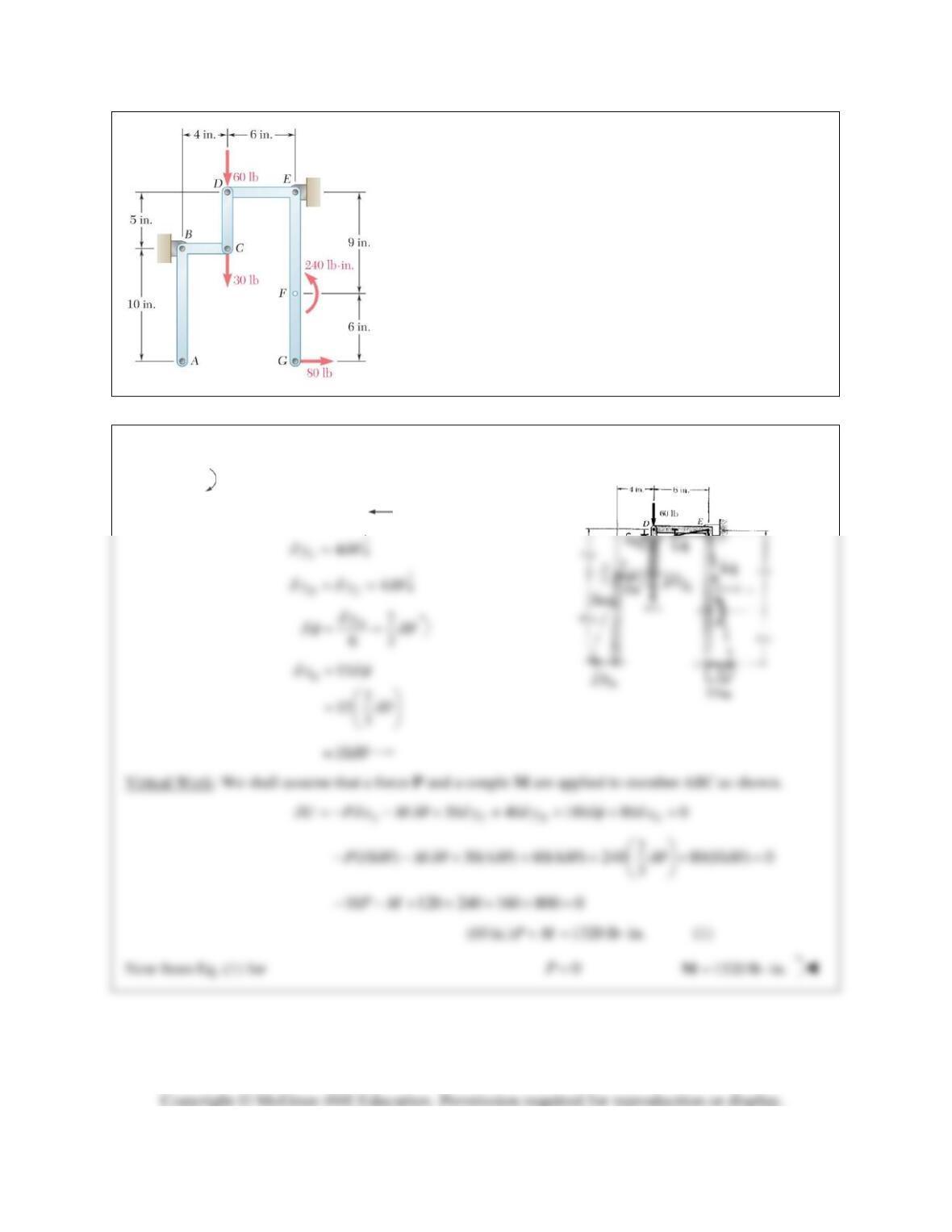
PROBLEM 10.4
Determine the couple M that must be applied to member ABC to
maintain the equilibrium of the linkage.
SOLUTION
Assume
10
A
x
PROBLEM 10.5
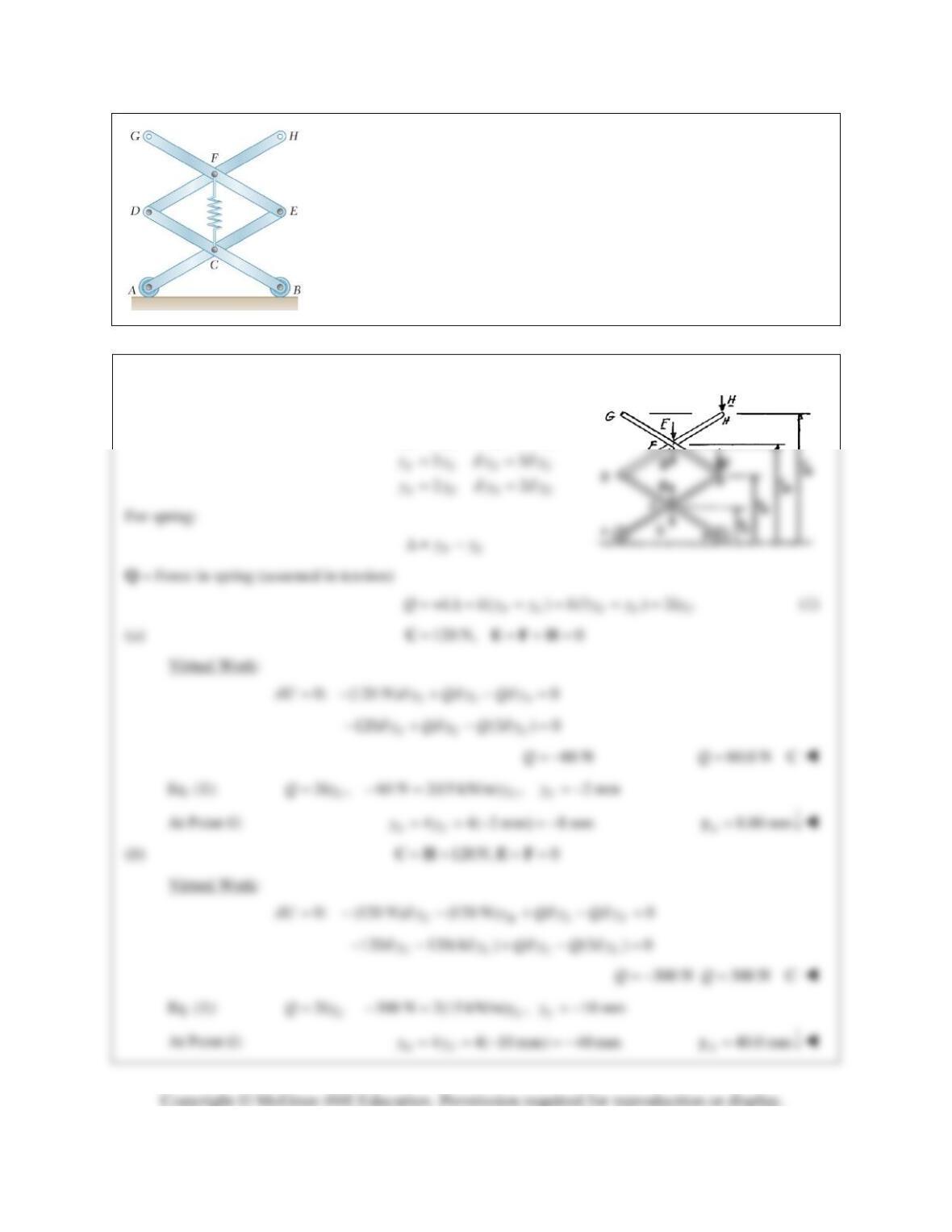
A spring of constant 15 kN/m connects Points C and F of the linkage
shown. Neglecting the weight of the spring and linkage, determine the force
in the spring and the vertical motion of Point G when a vertical downward
120-N force is applied (a) at Point C, (b) at Points C and H.
SOLUTION
4
44
GC
HCH C
yy
yyy y
PROBLEM 10.6
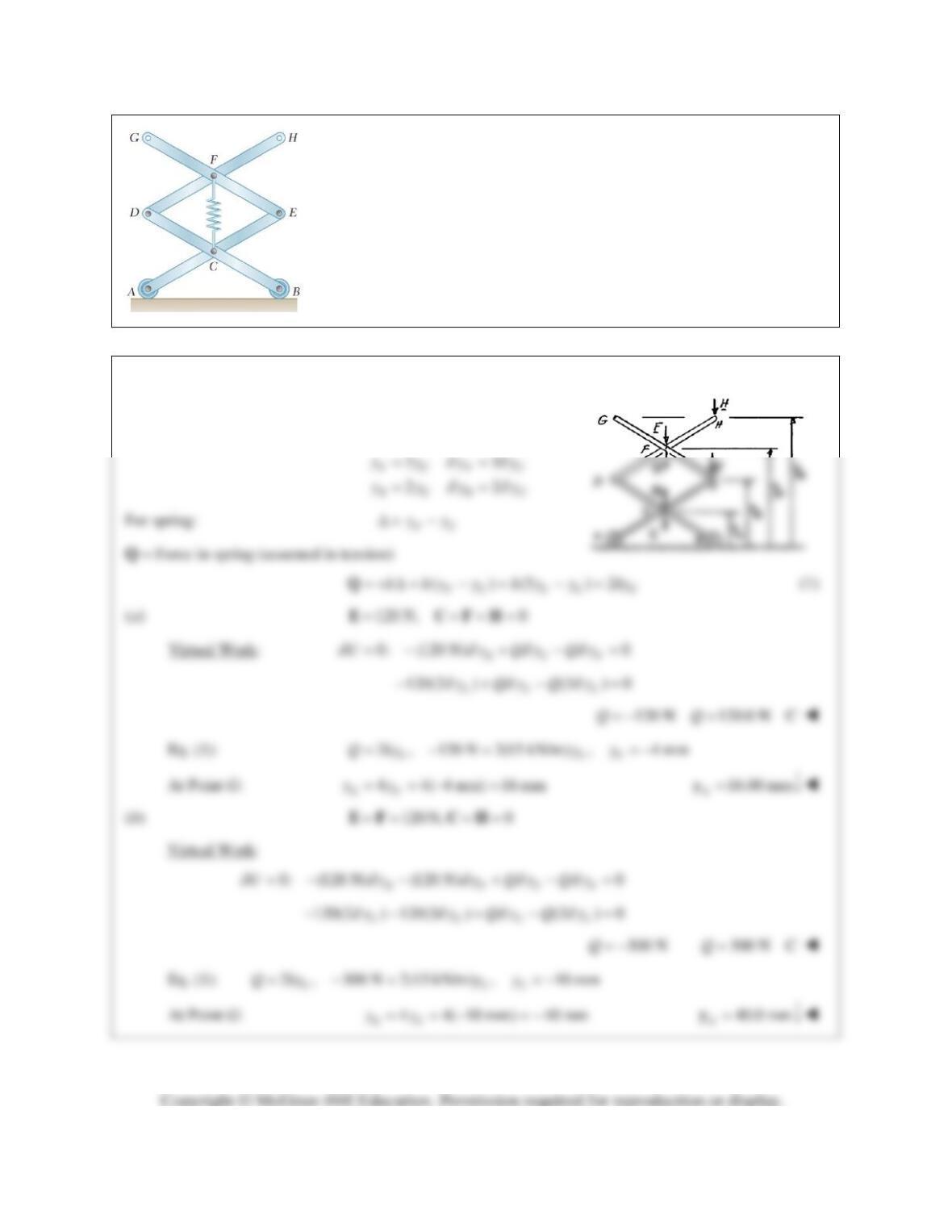
A spring of constant 15 kN/m connects Points C and F of the linkage
shown. Neglecting the weight of the spring and linkage, determine the force
in the spring and the vertical motion of Point G when a vertical downward
120-N force is applied (a) at Point E, (b) at Points E and F.
SOLUTION
4
44
GC
HCH C
yy
yyy y
PROBLEM 10.7
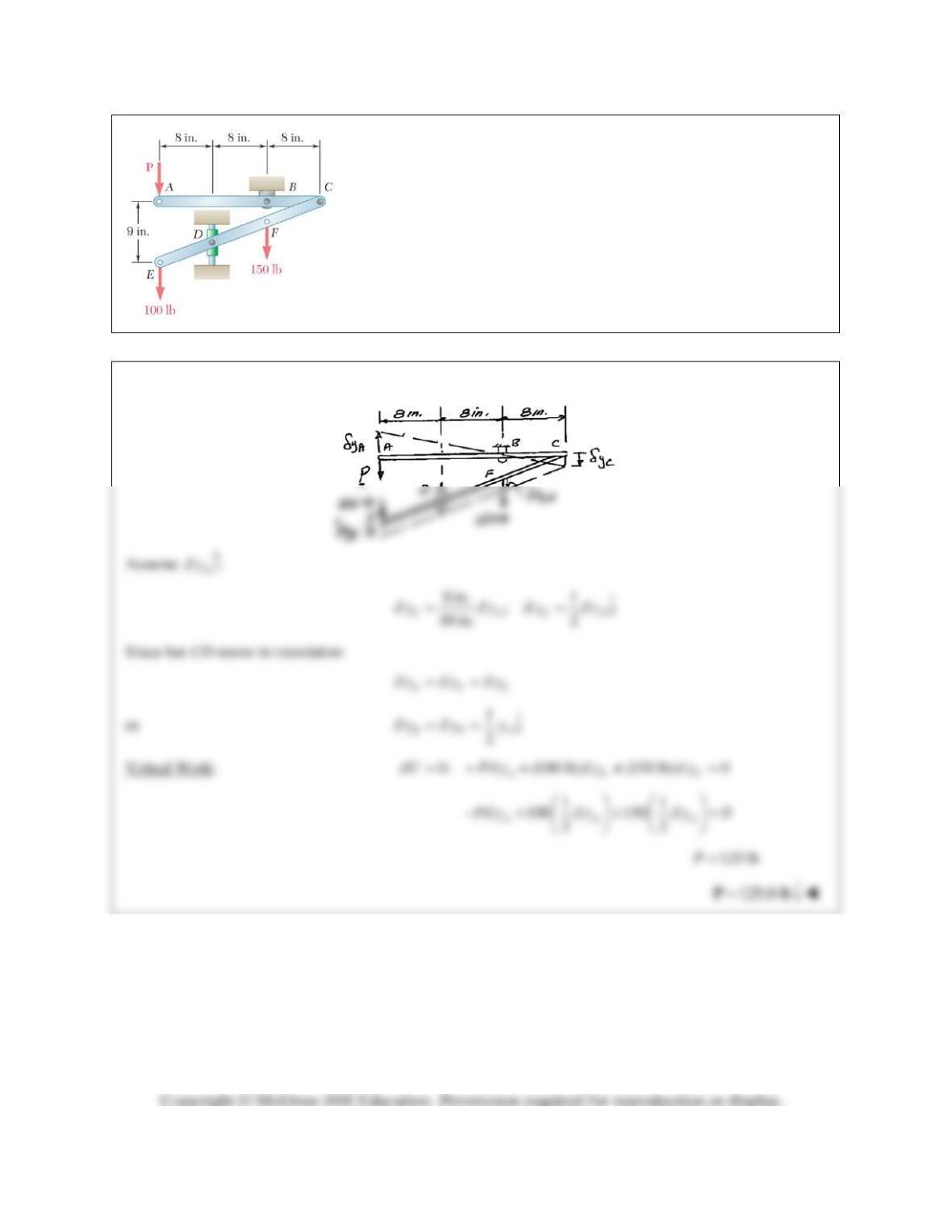
The two-bar linkage shown is supported by a pin and bracket at B and
a collar at D that slides freely on a vertical rod. Determine the force
P
required to maintain the equilibrium of the linkage.
SOLUTION
PROBLEM 10.8
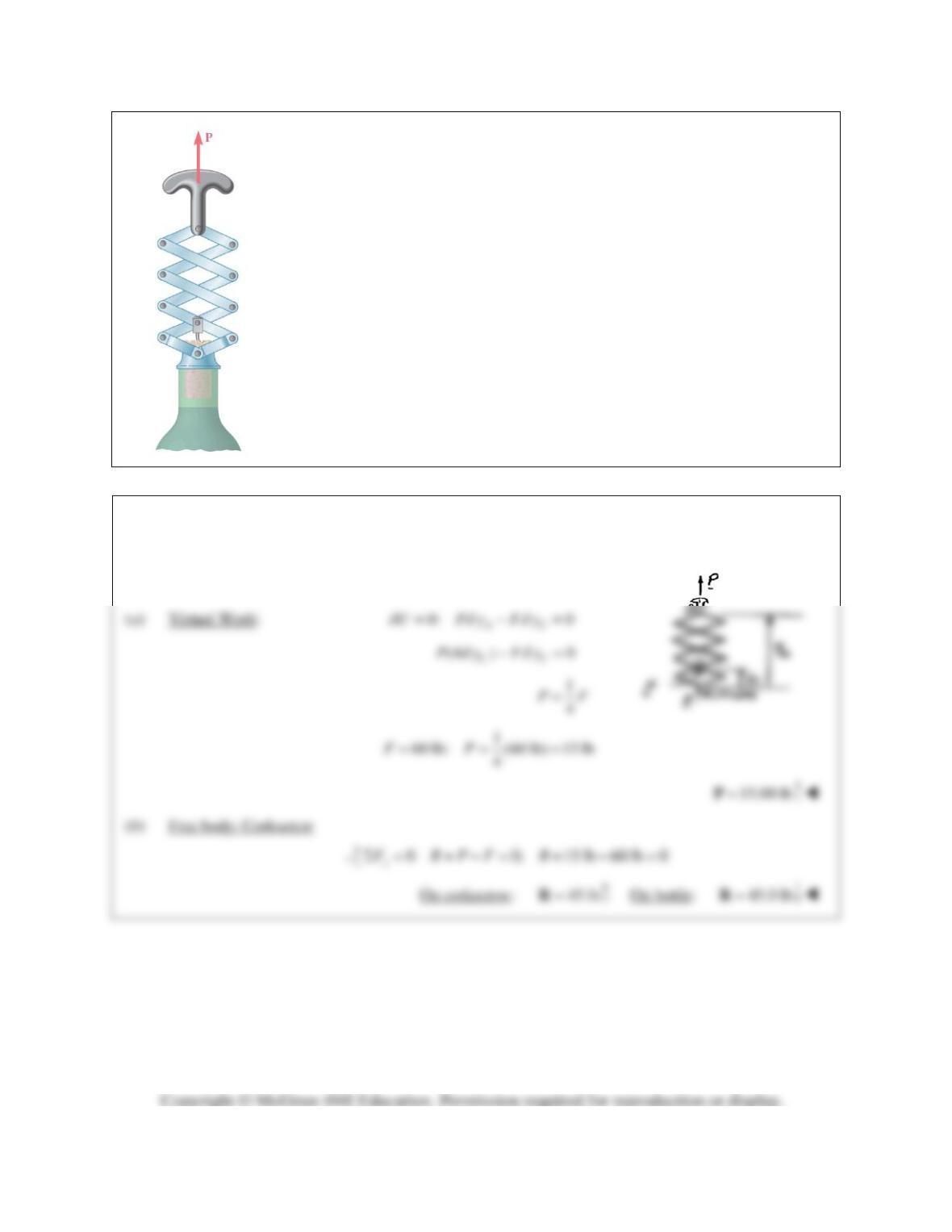
Knowing that the maximum friction force exerted by the bottle on the cork is
60 lb, determine (a) the force
P
that must be applied to the corkscrew to open the
bottle, (b) the maximum force exerted by the base of the corkscrew on the top of
the bottle.
SOLUTION
From sketch
4
AC
yy
Thus
4
AC
yy
PROBLEM 10.9
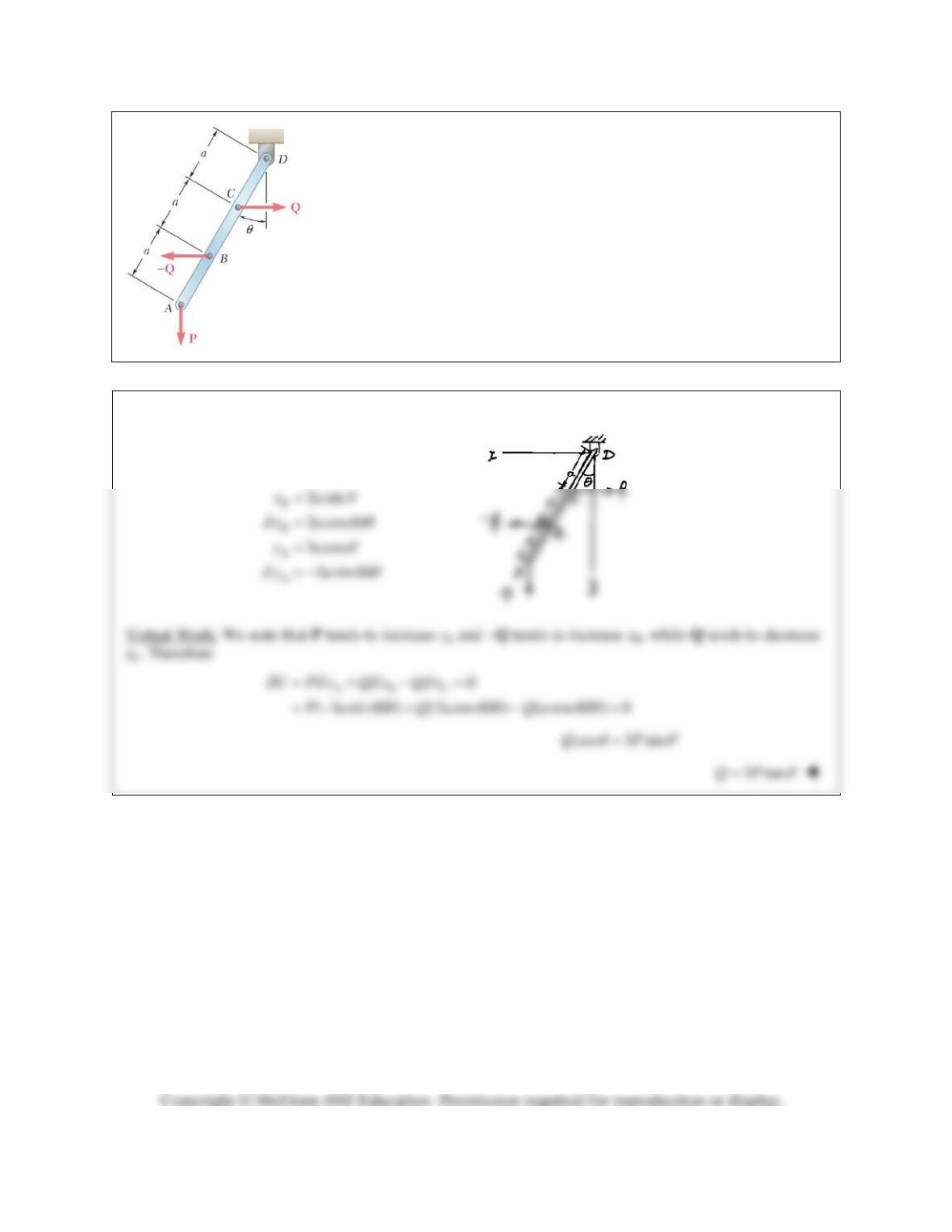
Rod AD is acted upon by a vertical force P at end A, and by two equal and
opposite horizontal forces of magnitude Q at points B and C. Derive an
expression for the magnitude Q of the horizontal forces required for
equilibrium.
SOLUTION
We have sin
cos
C
C
xa
xa
PROBLEM 10.10
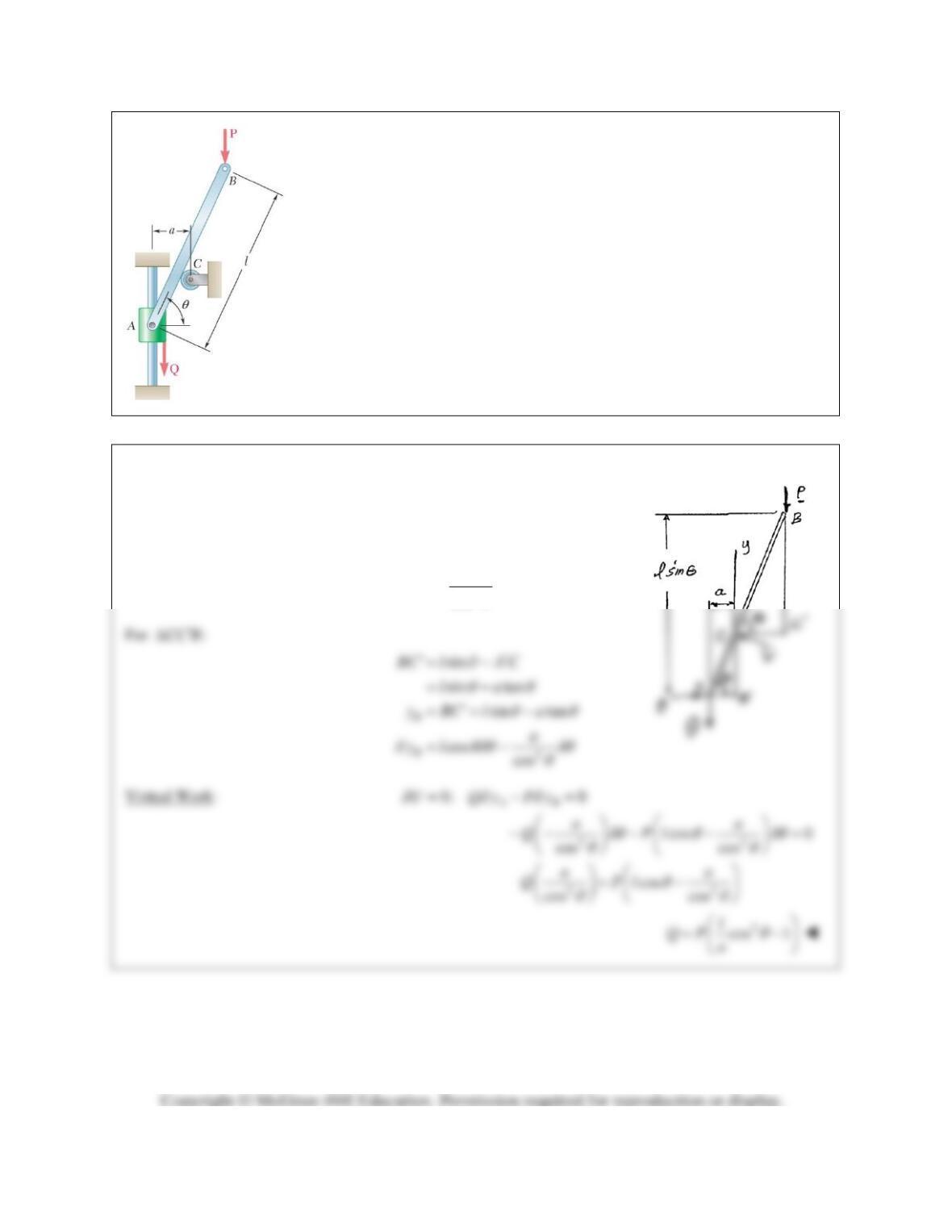
The slender rod AB is attached to a collar A and rests on a small wheel at C.
Neglecting the radius of the wheel and the effect of friction, derive an
expression for the magnitude of the force
Q
required to maintain the
equilibrium of the rod.
SOLUTION
For
:
AA C
2
tan
() tan
cos
A
A
AC a
yACa
a
y
PROBLEM 10.11
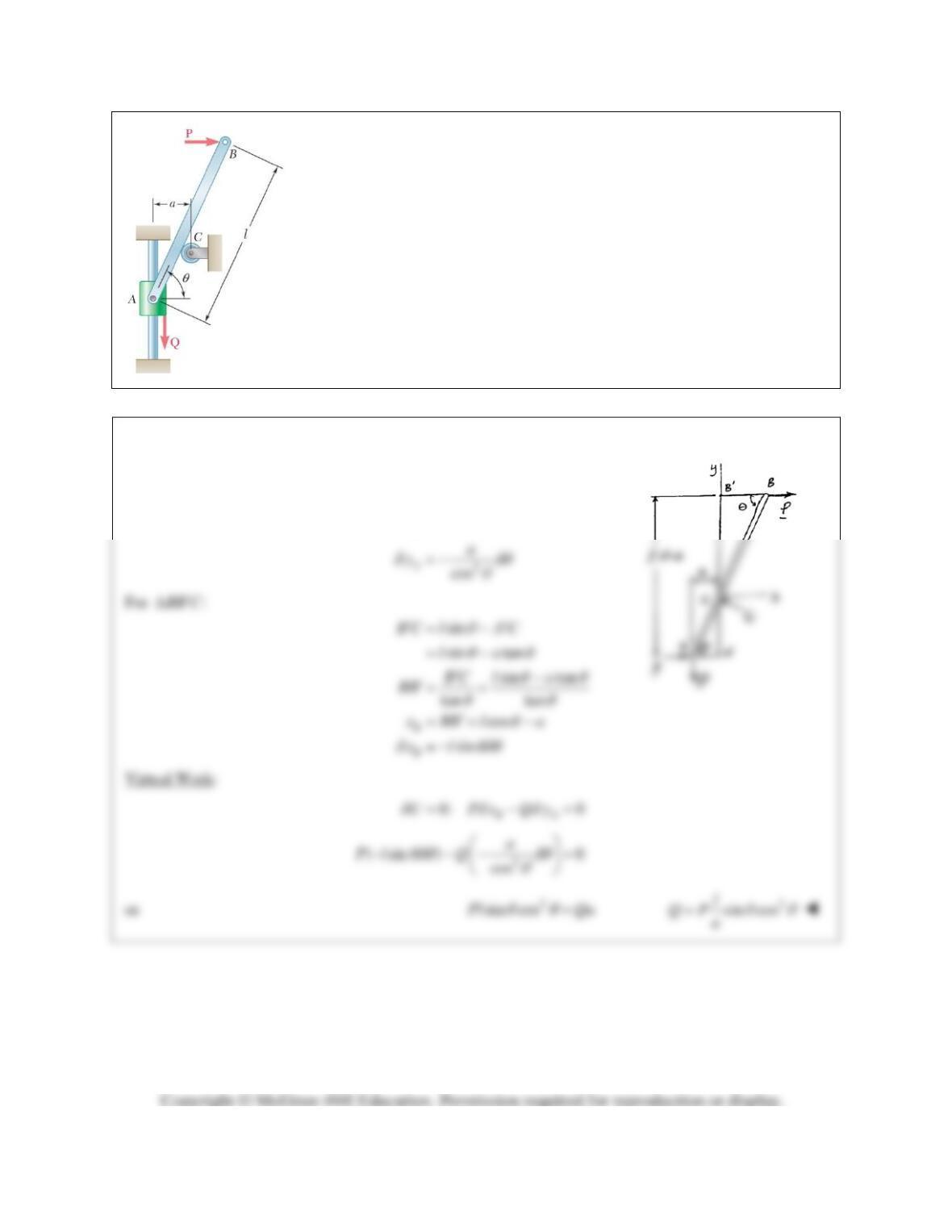
The slender rod AB is attached to a collar A and rests on a small wheel at C.
Neglecting the radius of the wheel and the effect of friction, derive an
expression for the magnitude of the force
Q
required to maintain the
equilibrium of the rod.
SOLUTION
For
:AA C
tan
() tan
A
AC a
yACa
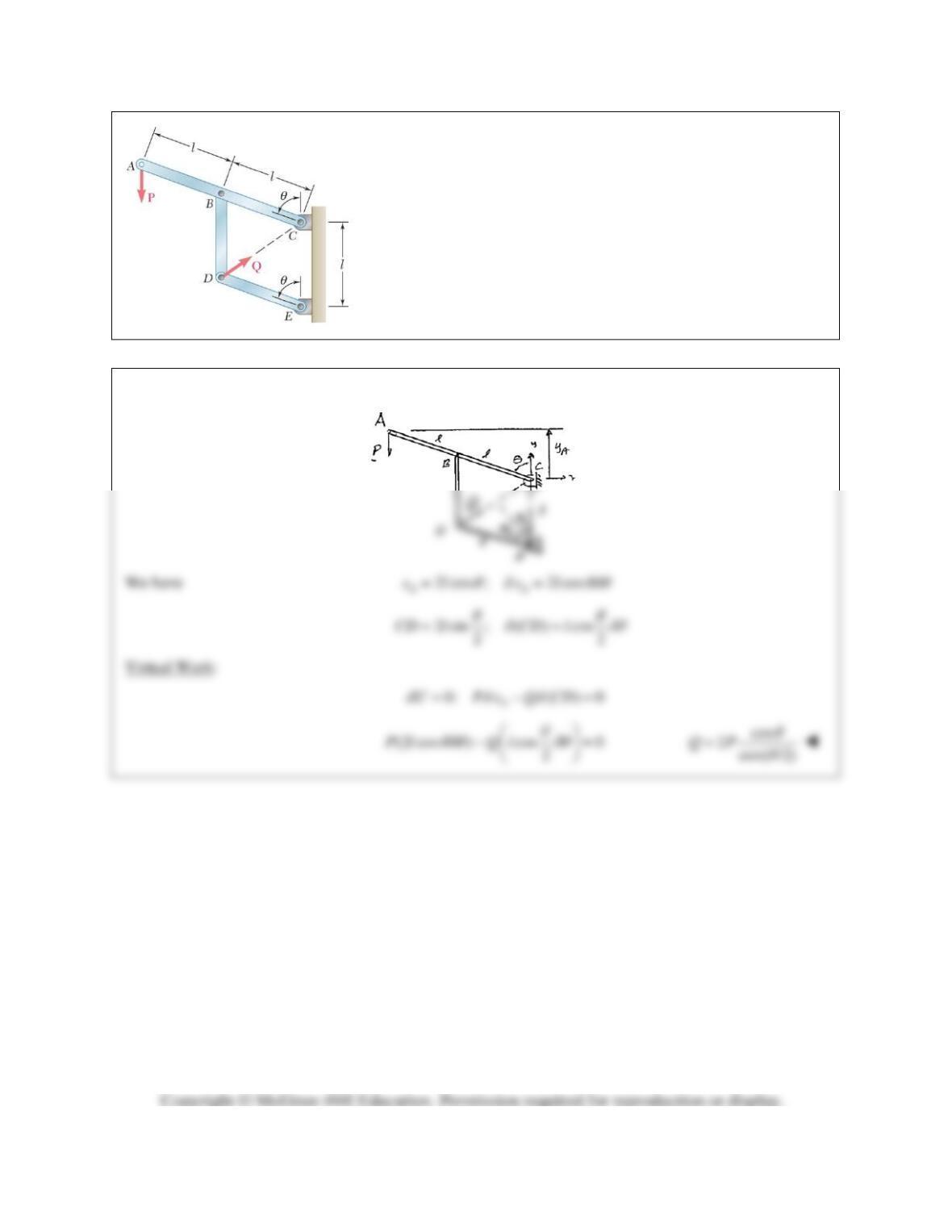
PROBLEM 10.12
Knowing that the line of action of the force
Q
passes through Point
C, derive an expression for the magnitude of
Q
required to maintain
equilibrium.
SOLUTION
PROBLEM 10.13
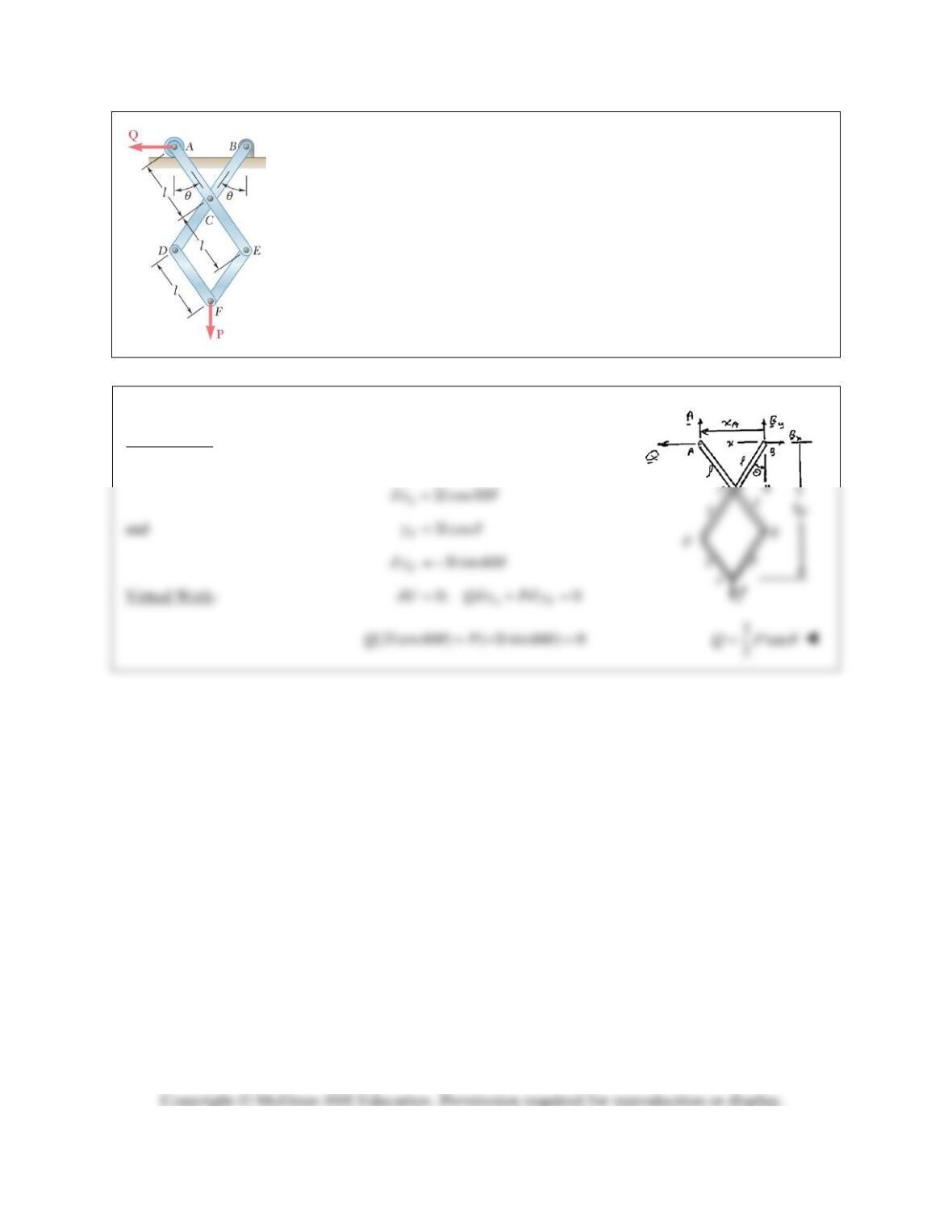
Solve Problem 10.12 assuming that the force
P
applied at Point A
acts horizontally to the left.
PROBLEM 10.12
Knowing that the line of action of the force
Q
passes through Point C, derive an expression for the magnitude of
Q
required to maintain equilibrium.
SOLUTION
PROBLEM 10.14
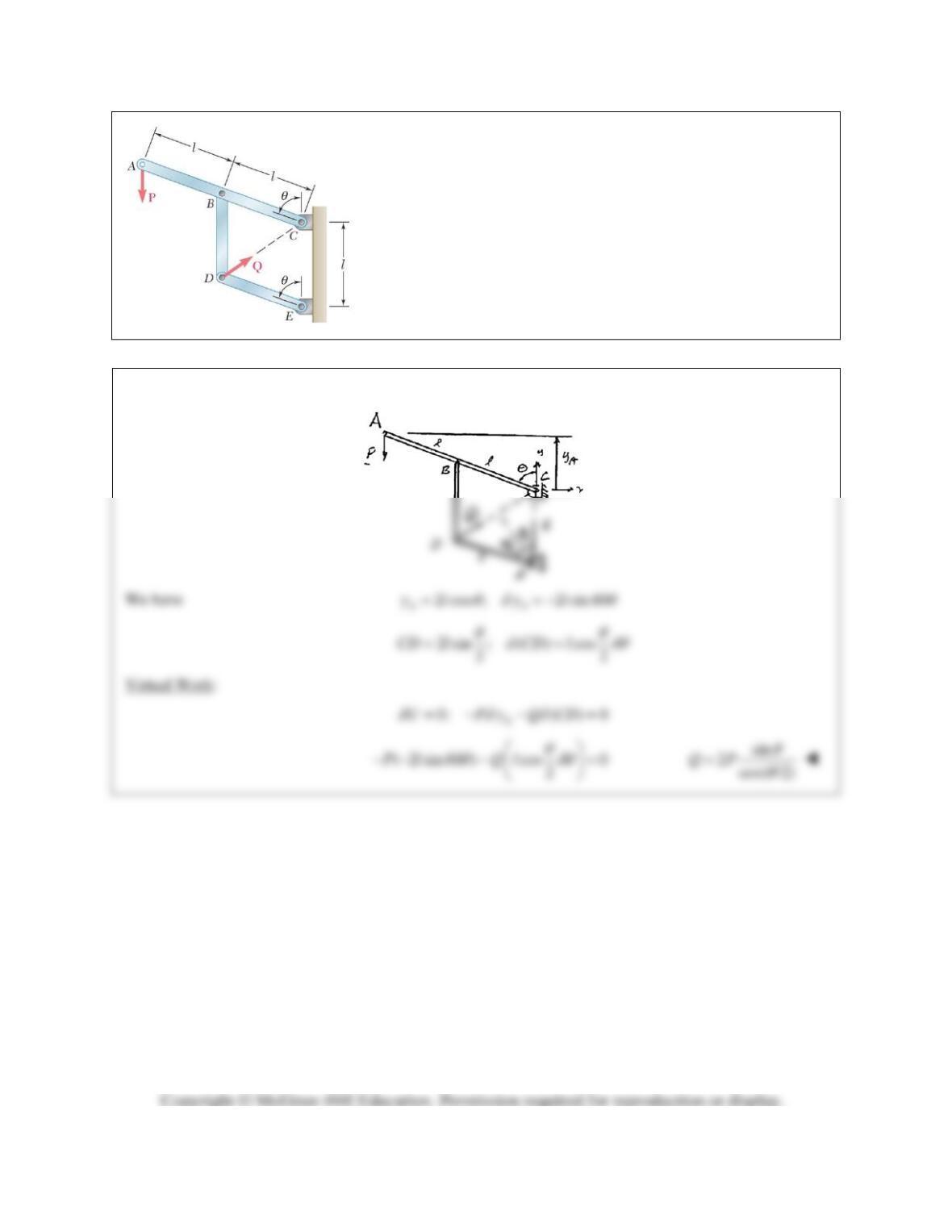
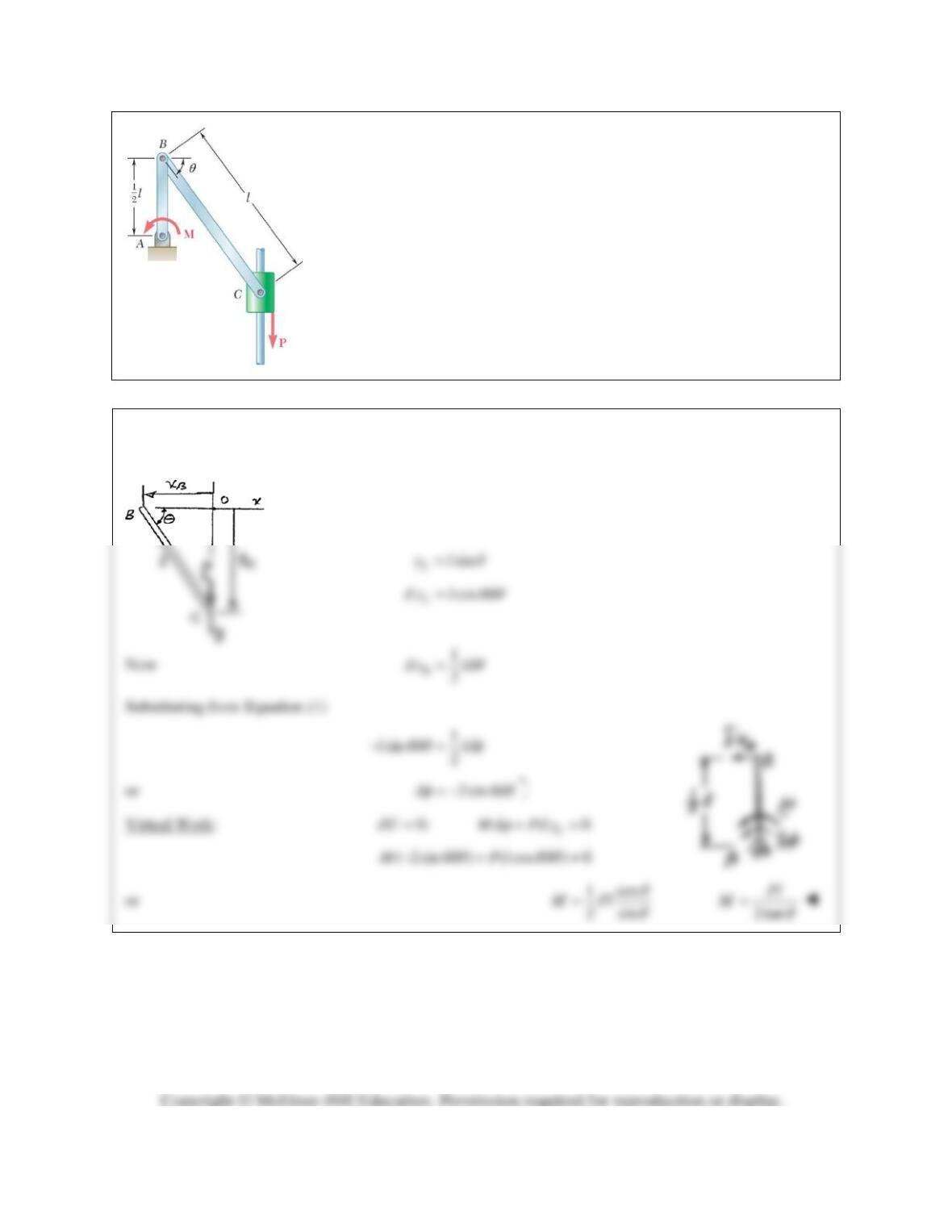
The mechanism shown is acted upon by the force
P
; derive an expression for the
magnitude of the force
Q
required to maintain equilibrium.
SOLUTION
Virtual Work:
We have
2sin
A
xl
PROBLEM 10.15
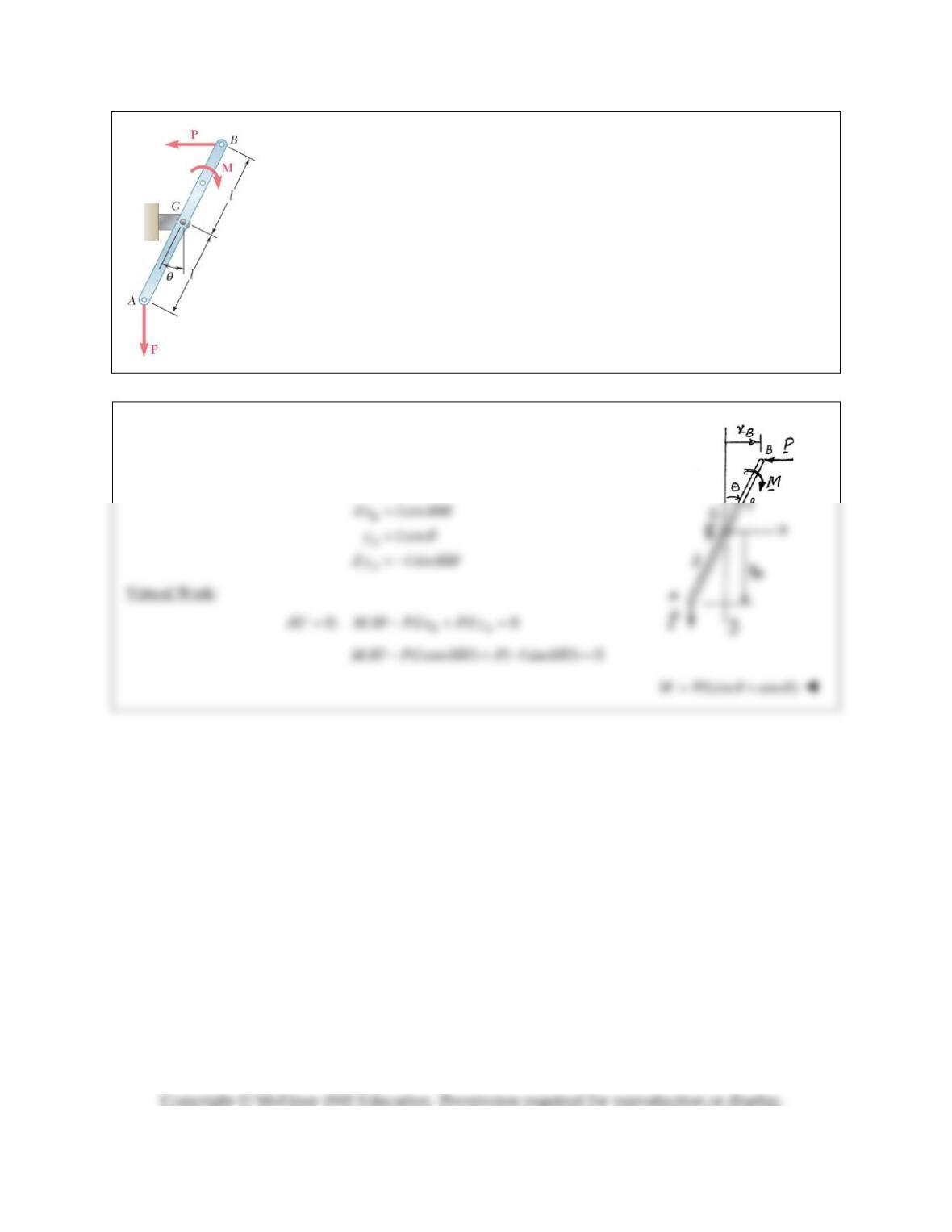
Derive an expression for the magnitude of the couple
M
required to
maintain the equilibrium of the linkage shown.
SOLUTION
We have
cos
B
xl
sin
B
xl
(1)
PROBLEM 10.16
Derive an expression for the magnitude of the couple
M
required to maintain the
equilibrium of the linkage shown.
SOLUTION
We have
sin
B
xl
PROBLEM 10.17
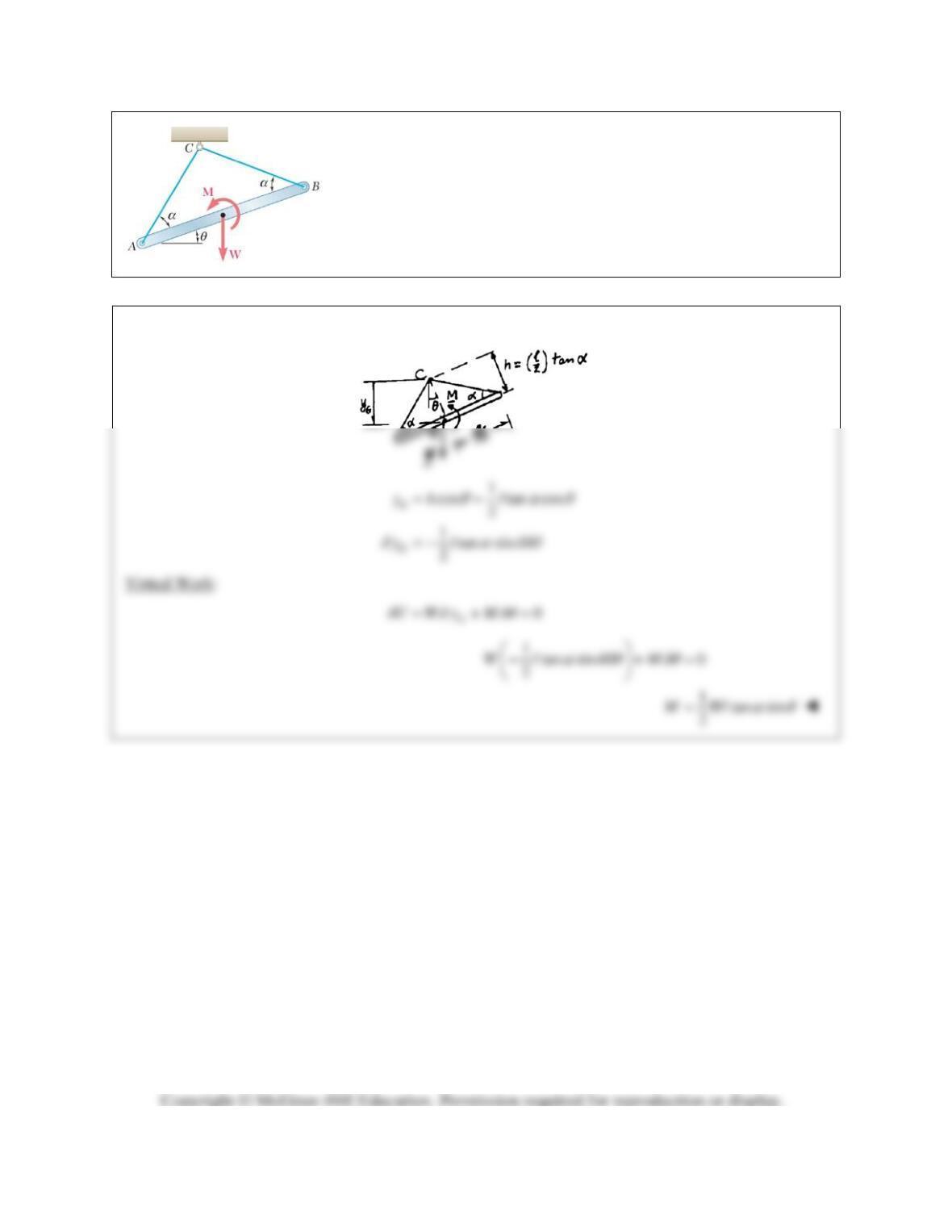
A uniform rod AB of length l and weight W is suspended from two cords
AC and BC of equal length. Derive an expression for the magnitude of
the couple
M
required to maintain equilibrium of the rod in the position
shown.
SOLUTION
PROBLEM 10.18
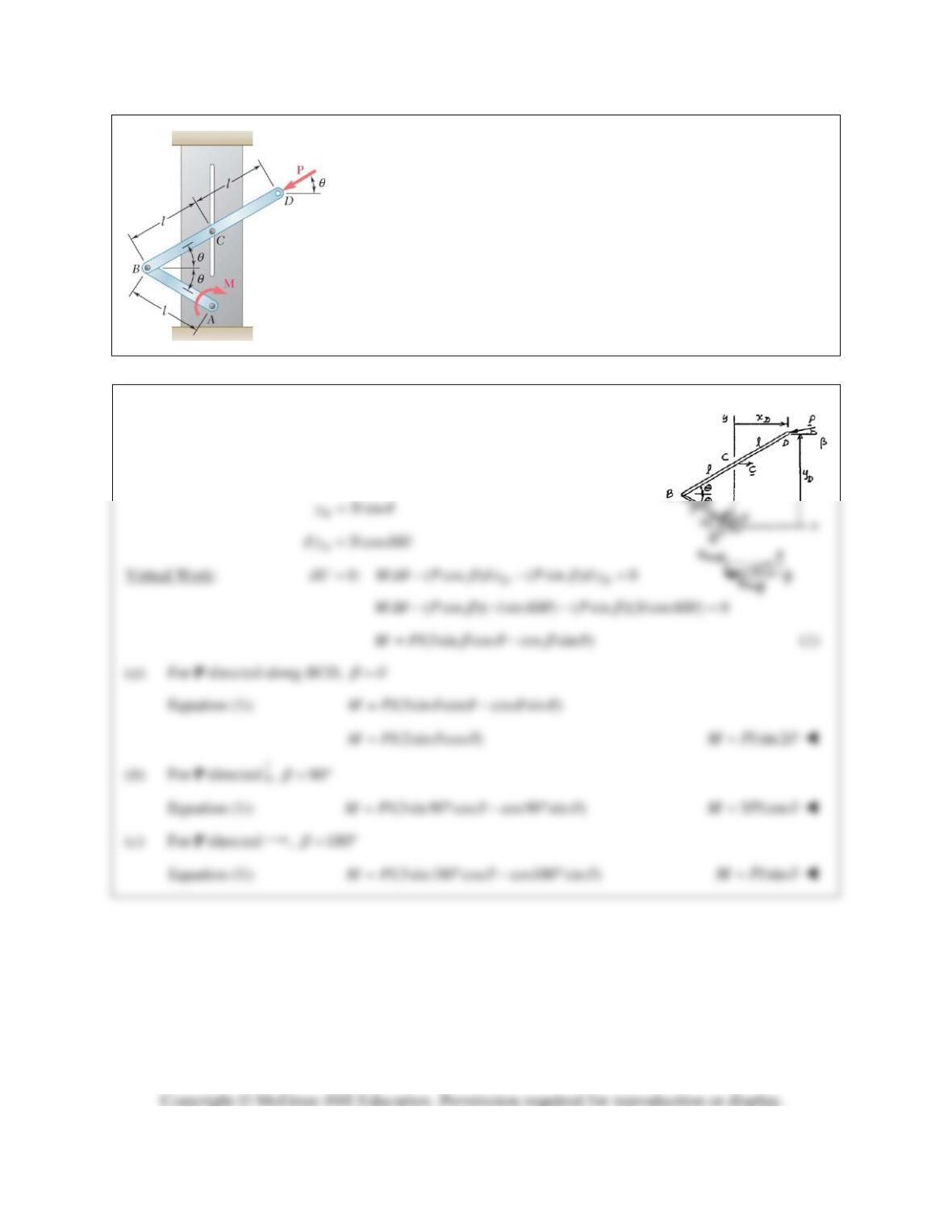
The pin at C is attached to member BCD and can slide along a slot cut in
the fixed plate shown. Neglecting the effect of friction, derive an
expression for the magnitude of the couple
M
required to maintain
equilibrium when the force
P
that acts at D is directed (a) as shown,
(b) vertically downward, (c) horizontally to the right.
SOLUTION
We have
cos
D
xl
sin
D
xl
PROBLEM 10.19
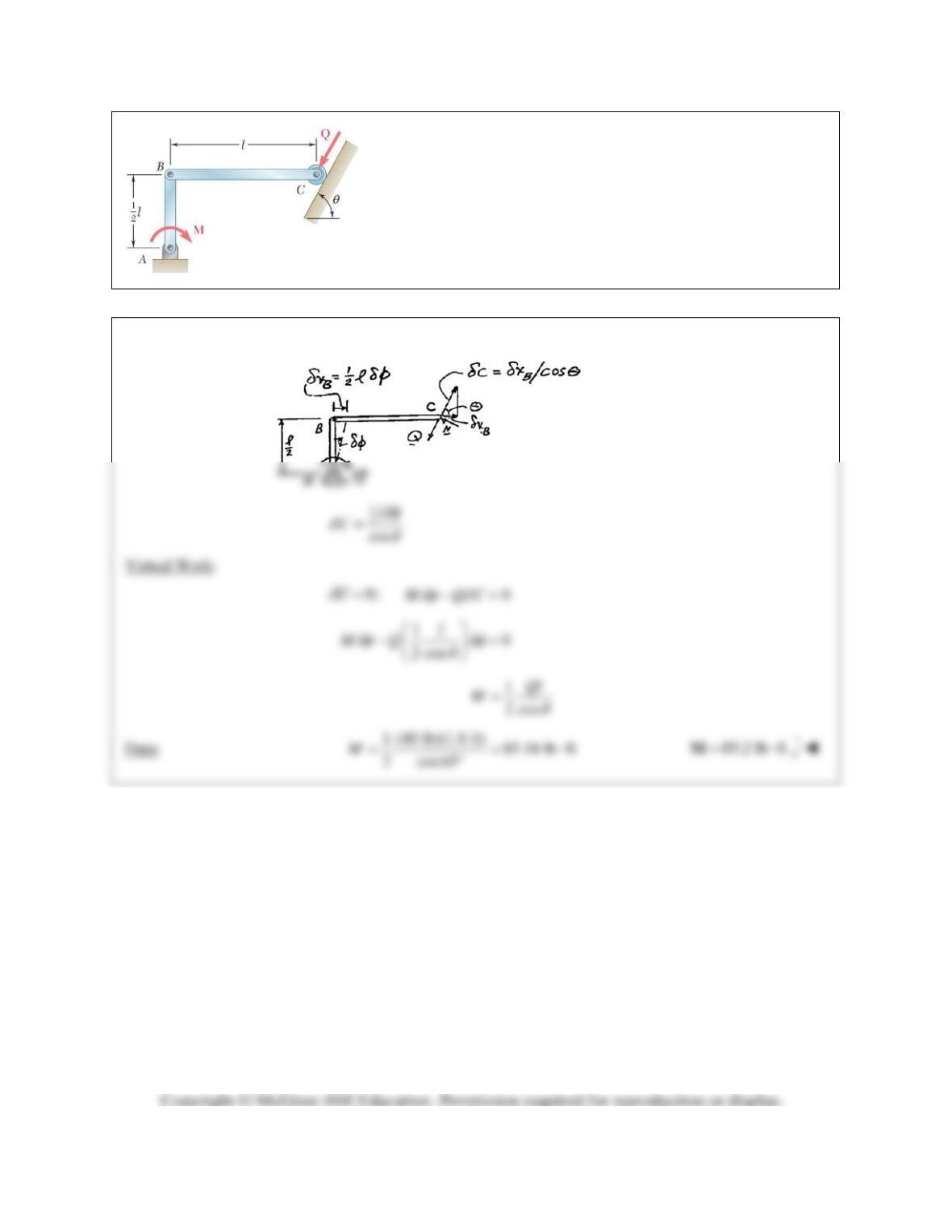
For the linkage shown, determine the couple
M
required for
equilibrium when
1.8 ft,l40 lb,Q
and
65 .
SOLUTION