4. Mass released from tank
38
1.38: PROBLEM DEFINITION
Situation:
Properties of air.
Find:
Specificweight(N/m
3).
Density (kg/m3).
Properties:
PLAN
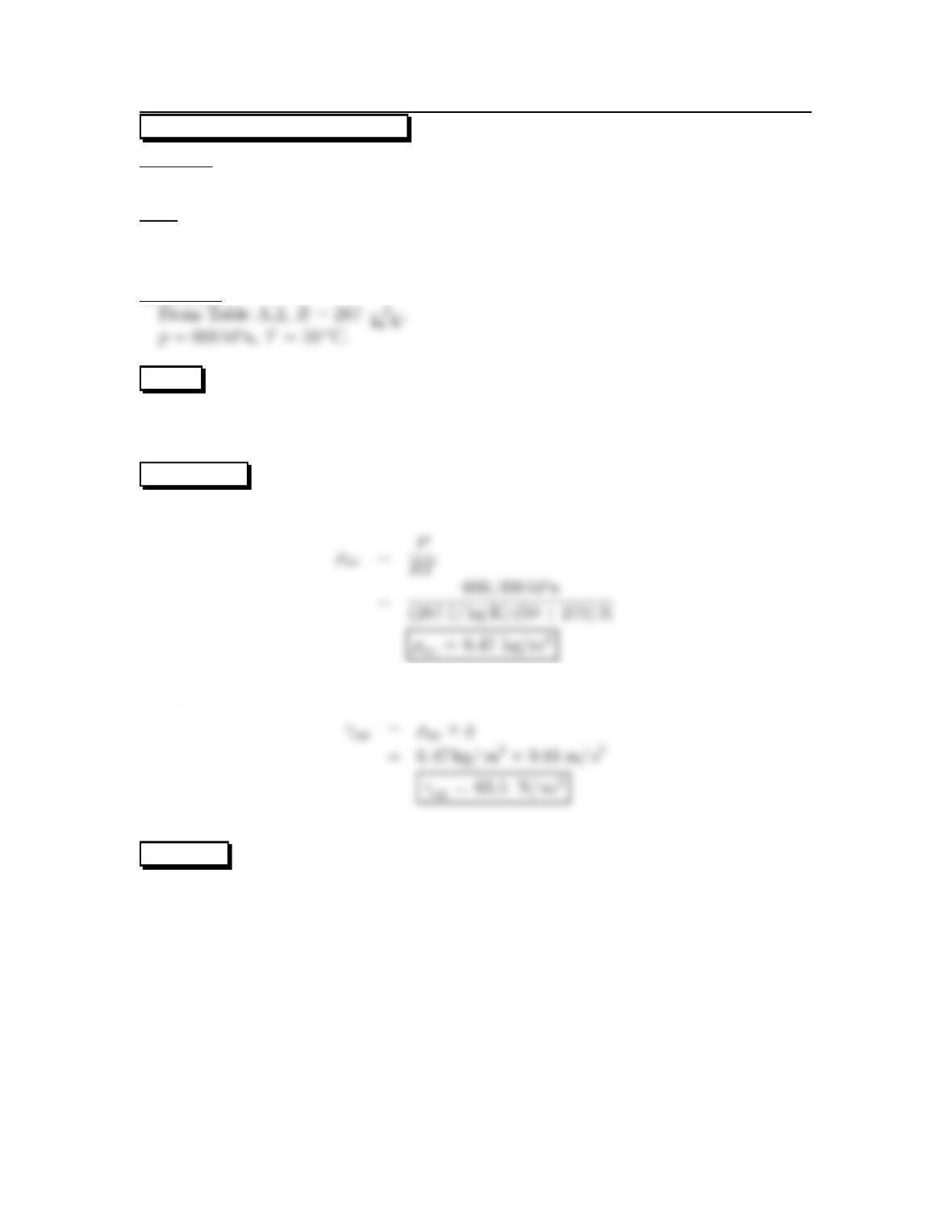
First, apply the ideal gas law to find density. Then, calculate specificweightusing
γ=ρg.
SOLUTION
1. Ideal gas law
2. Specificweight
REVIEW
Always use absolute pressure when working with the ideal gas law.
39
1.39: PROBLEM DEFINITION
Situation:
Consider a mass of air in the atmosphere.
V=1mi
3.
Find:
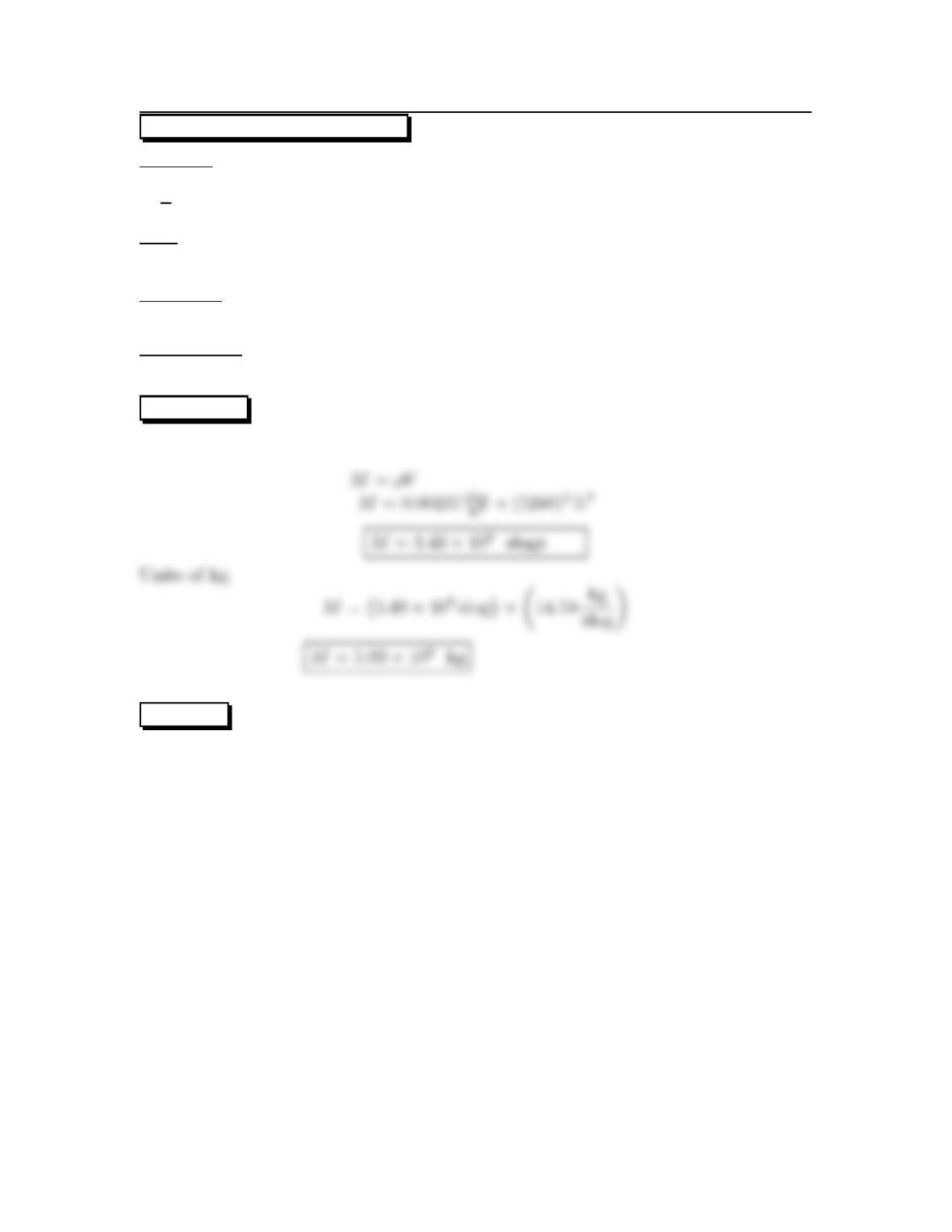
Mass of air using units of slugs and kg.
Properties:
From Table A.2, ρair =0.00237 slugs/ft3.
Assumptions:
The density of air is the value at sea level for standard conditions.
SOLUTION
Units of slugs
REVIEW
The mass will probably be somewhat less than this because density decreases with
altitude.
40
1.40: PROBLEM DEFINITION
Situation:
For a cyclist, temperature changes affect air density, thereby affecting both aero-
dynamic drag and tire pressure.
Find:
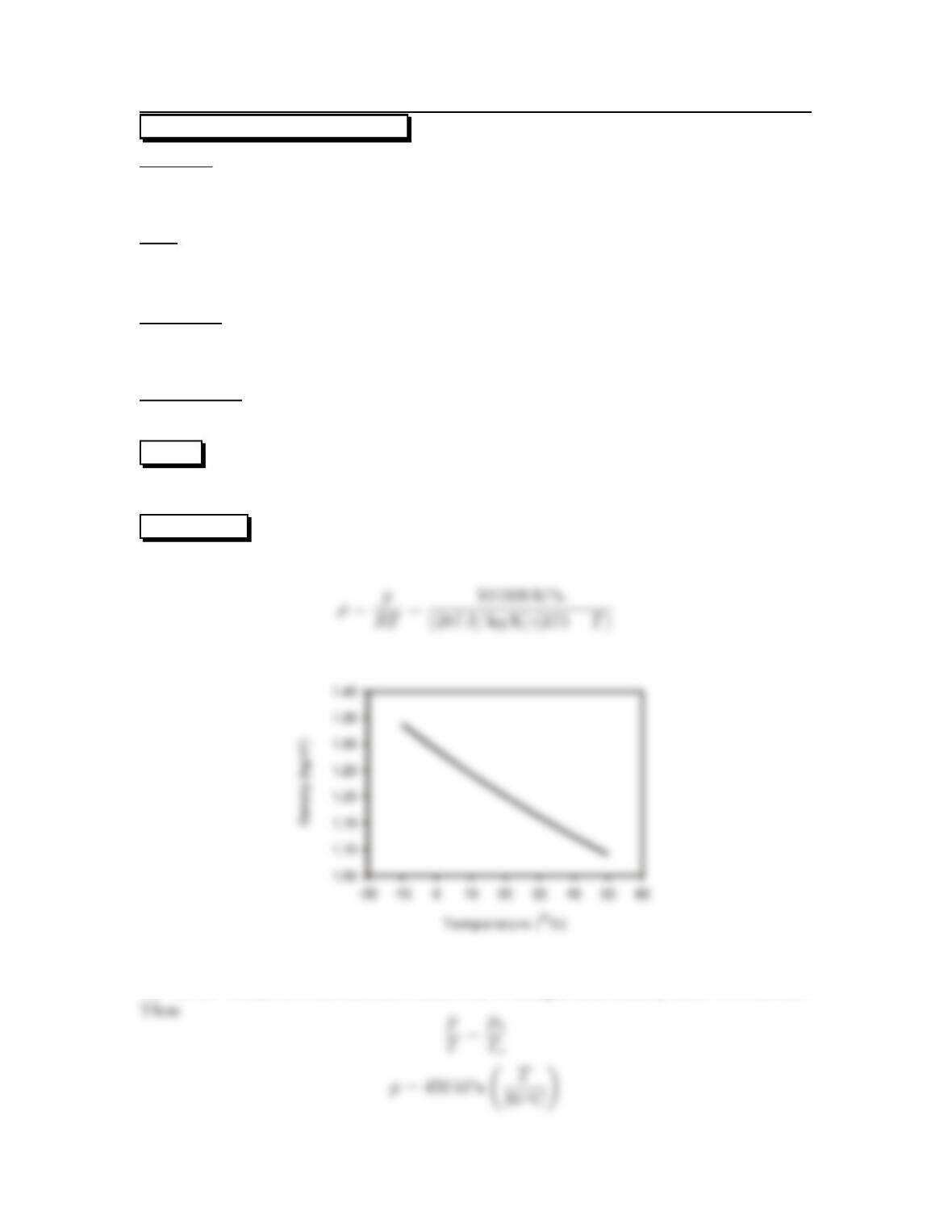
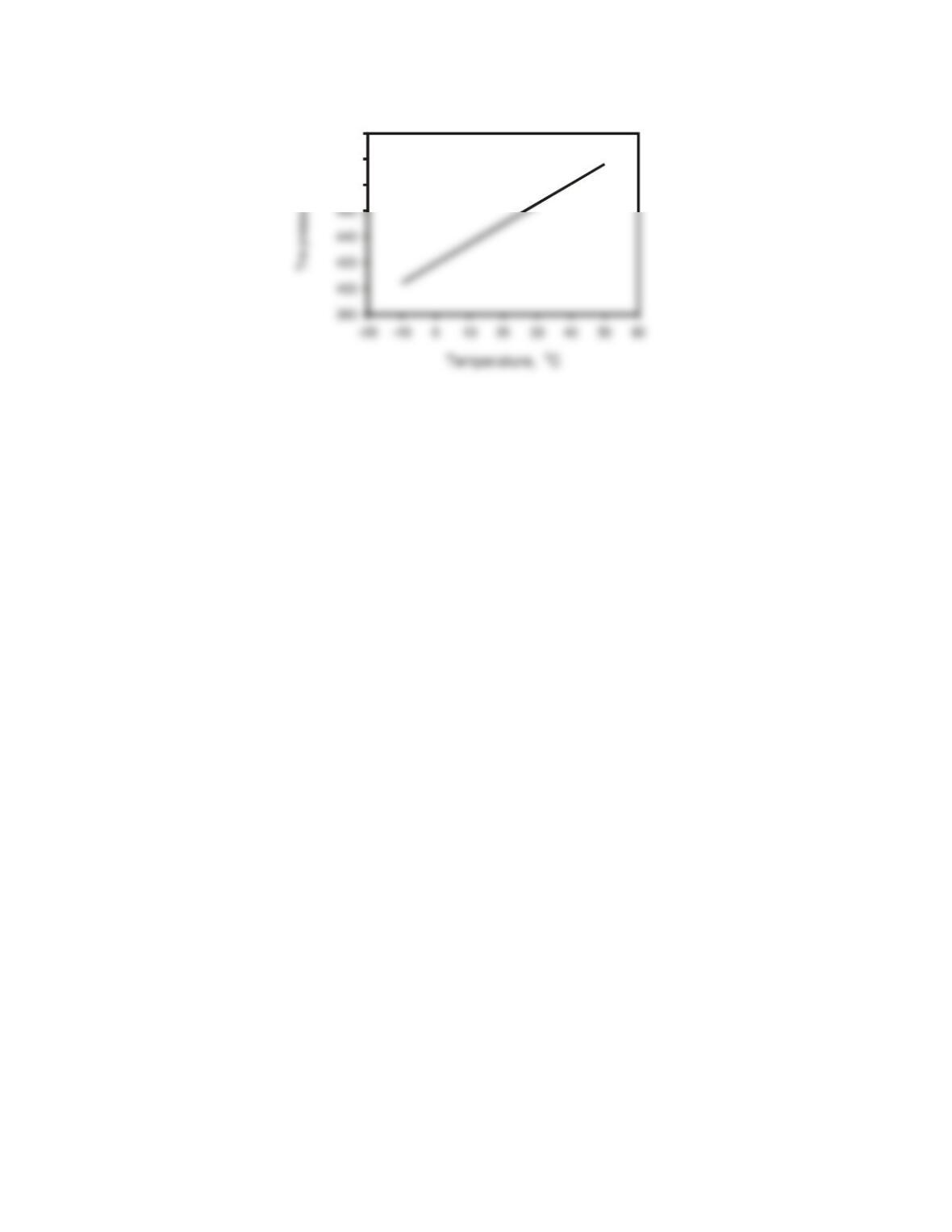
a.) Plot air density versus temperature for a range of -10oCto50
oC.
b.) Plot tire pressure versus temperature for the same temperature range.
Properties:
From Table A.2, Rair =287J/kg/K.
Initial conditions for part b: p=450kPa,T=20◦C.
Assumptions:
Forpartb,assumethatthebiketirevolumedoesnotchange.
PLAN
Apply the ideal gas law.
SOLUTION
a.) Ideal gas law
b.) If the volume is constant, since mass can’t change, then density must be constant.
41
480
500
520
42
1.41: PROBLEM DEFINITION
Situation:
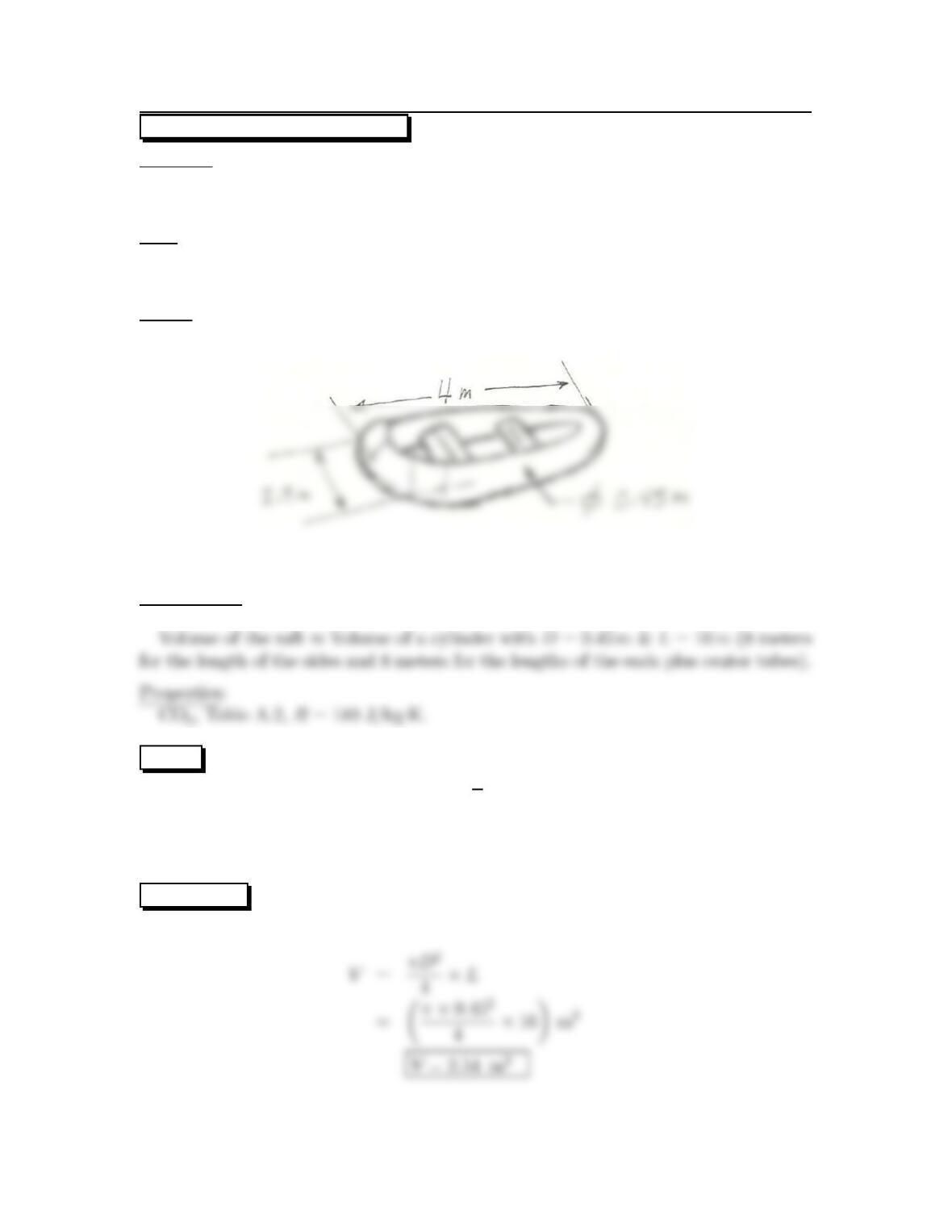
Design of a CO2cartridge to inflate a rubber raft.
Inflation pressure = 3 psi above patm =17.7psia=122kPaabs.
Find:
Estimate the volume of the raft.
Calculate the mass of CO2(in grams) to inflate the raft.
Sketch:
Assumptions:
CO2intheraftisat62 ◦F=290K.
PLAN
Since mass is related to volume by m=ρV, the steps are:
1. Find volume using the formula for a cylinder.
2. Find density using the ideal gas law (IGL).
3. Calculate mass.
SOLUTION
1. Volume
43
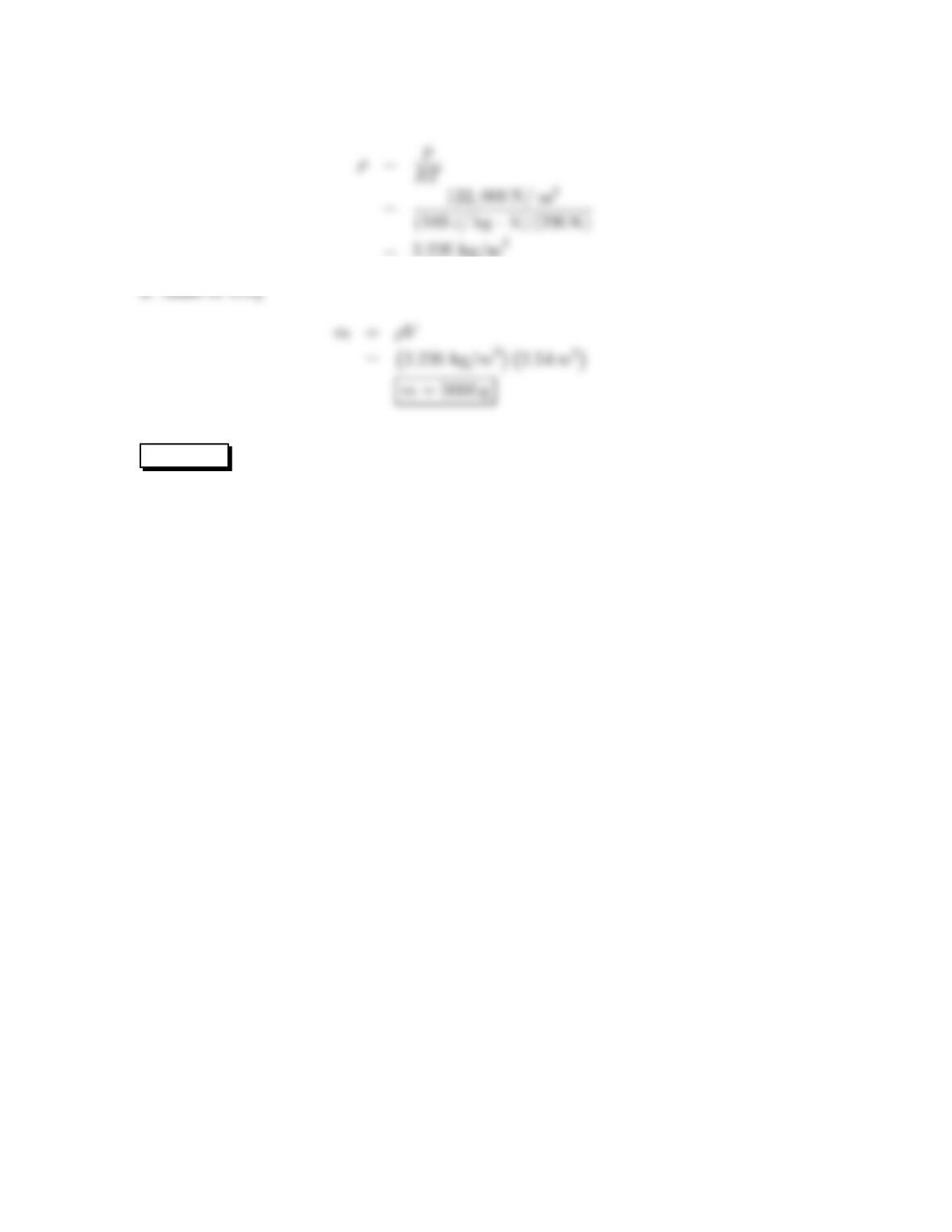
2. Ideal gas law
REVIEW
The final mass (5.66 kg = 12.5 lbm) is large. This would require a large and potentially
expensive CO2tank. Thus, this design idea may be impractical for a product that is
driven by cost.
44
1.42: PROBLEM DEFINITION
Situation:
A helium filled balloon is being designed.
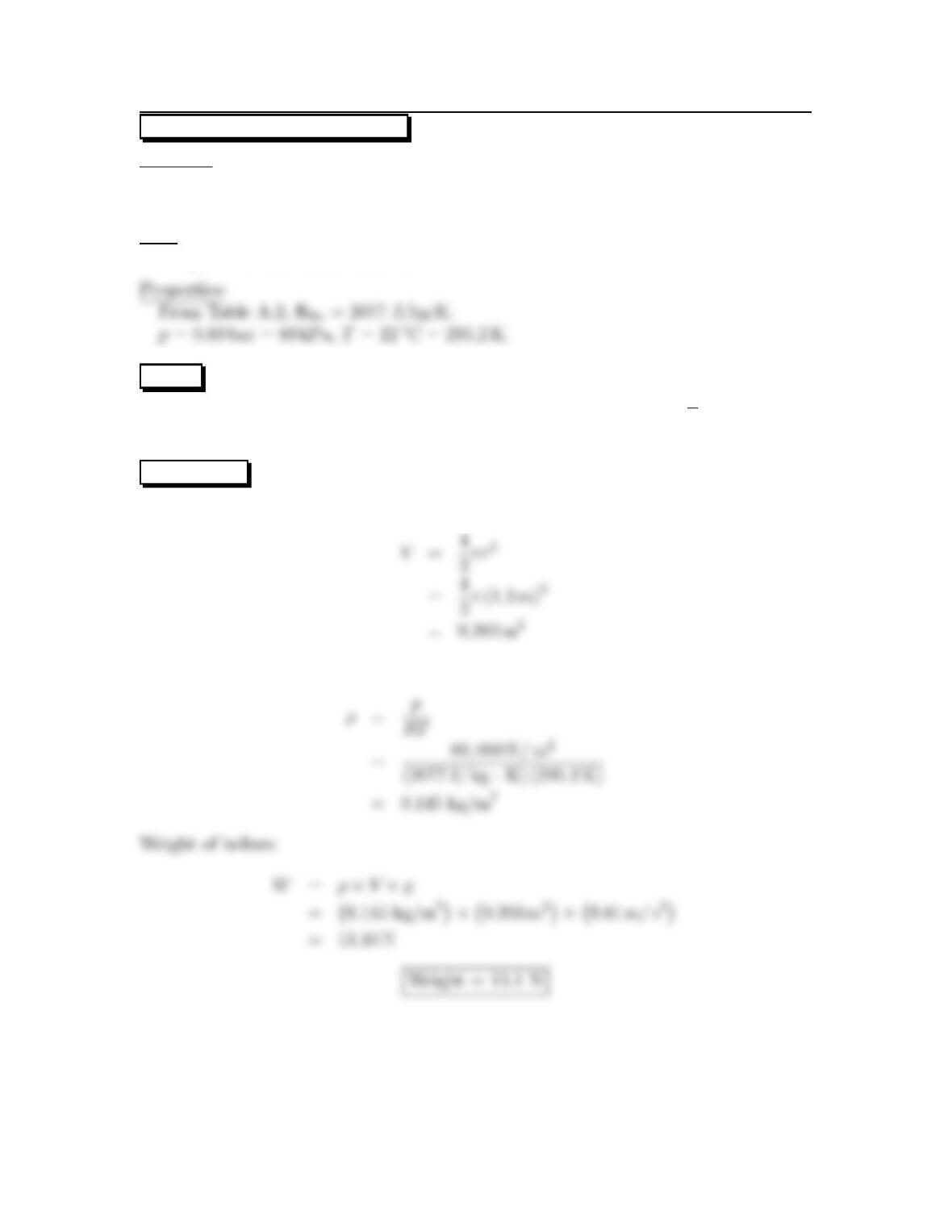
r=1.3m,z=80,000 ft.
Find:
Weight of helium inside balloon.
PLAN
Weight is given by W=mg. Mass is related to volume by M=ρ∗V.Densitycan
be found using the ideal gas law.
SOLUTION
Volume in a sphere
Ideal gas law
45
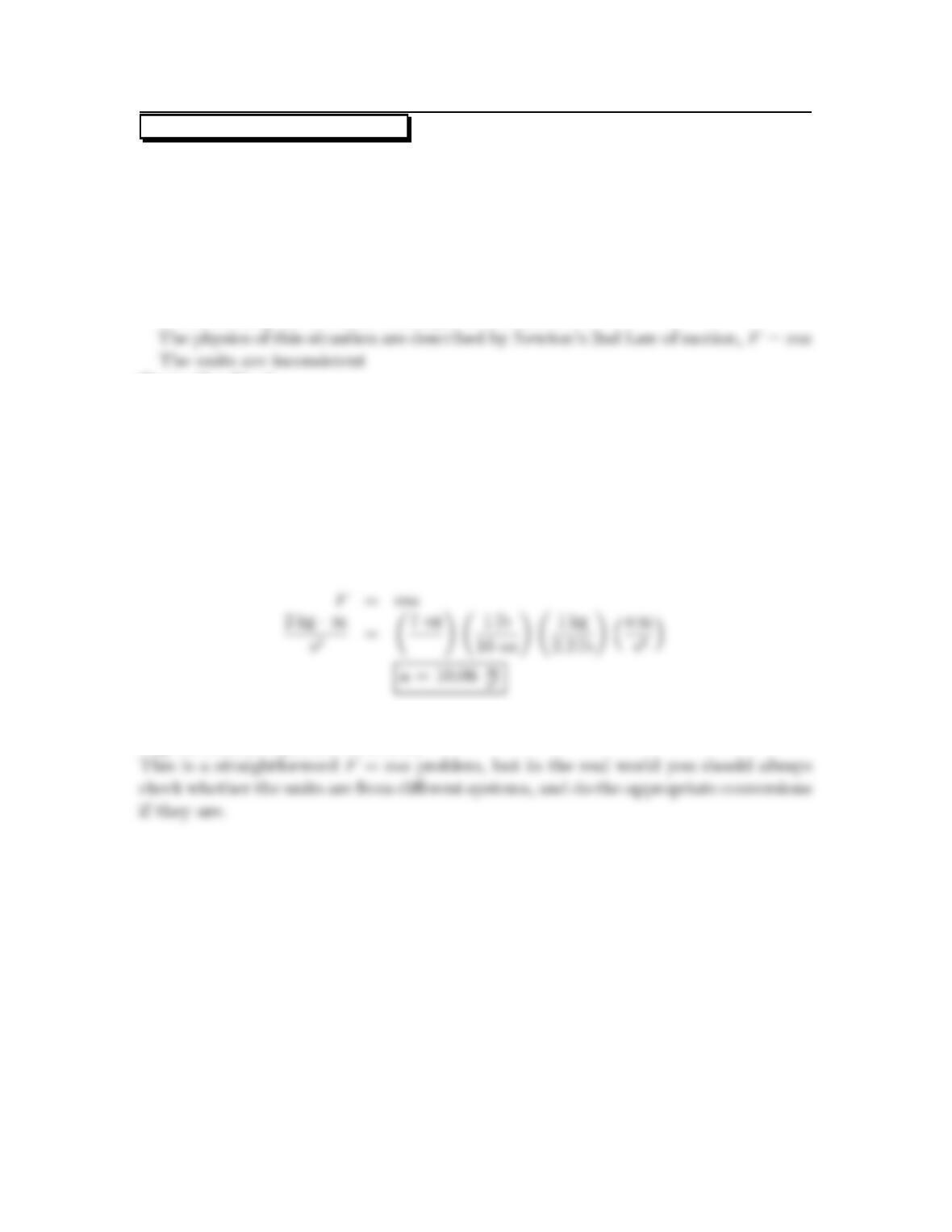
1.43: PROBLEM DEFINITION
Note: solutions for this problem will vary, but should include the steps indicated in
bold. The steps below are outlined in detail in Example 1.2 in §1.7 (EFM 10e).
With our students, we place particular emphasis on the “Define the Situation” step.
Problem Statement
ApplytheWWMandGridMethodtofind the acceleraton for a force of 2 N acting
on an object of 7 ounces.
Define the situation (summarize the physics, check for inconsistent units)
A force acting on a body is causing it to accelerate.
State the Goal
a<== the acceleration of the object
Generate Ideas and Make a Plan
1. Apply Grid Method
2. Apply Newton’s 2nd Law of motion, F=ma.
3. Do calculations, and conversions to SI units.
4. Answer should be in m/s2
Take Action (Execute the Plan)
Review the Solution to the Problem
(typical student reflective comment)
46

1.44: PROBLEM DEFINITION
Situation:
From Example 1.2 in §1.7, state the 3 steps that an engineer takes to “State the
Goal“.
SOLUTION
1. List the variable(s) to be solved for.
47
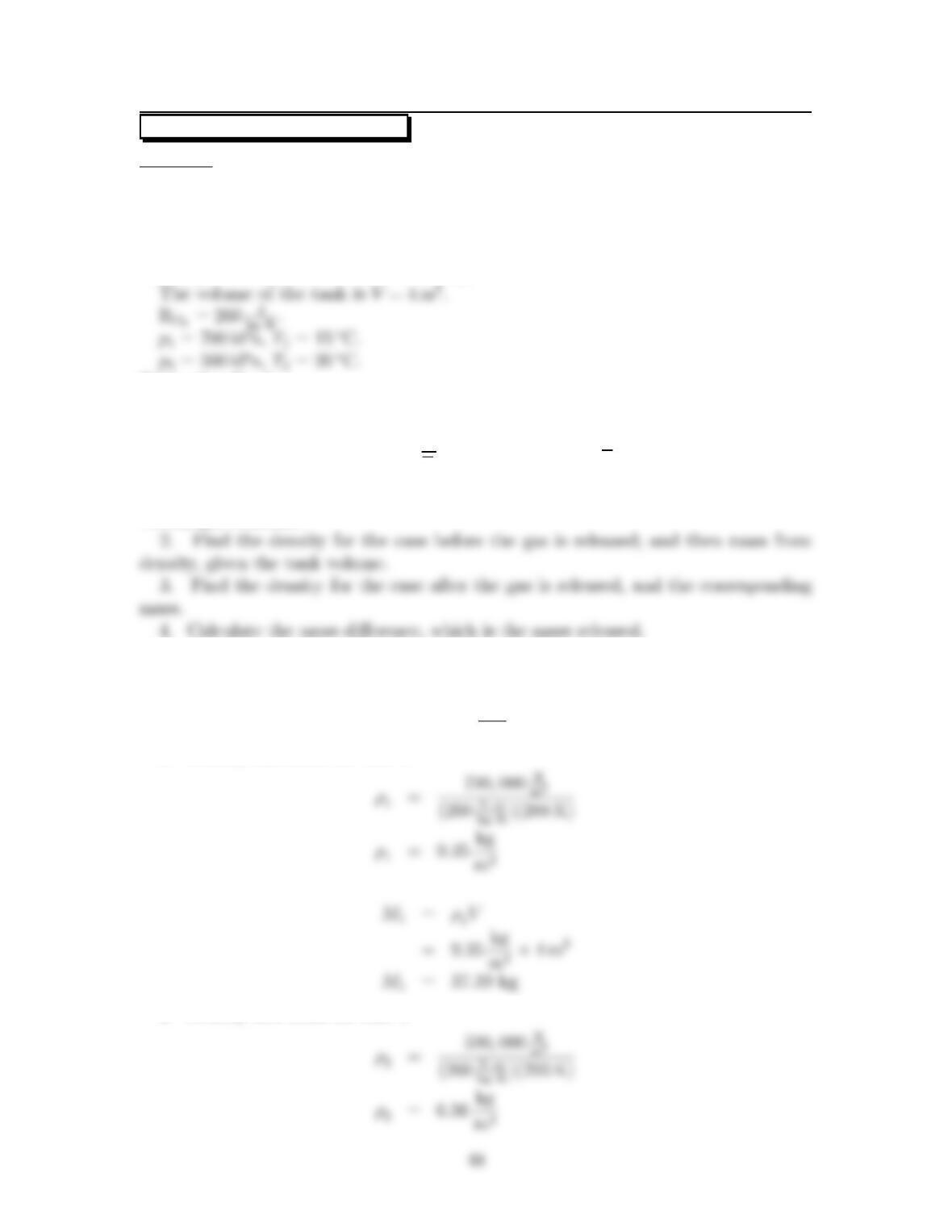
1.45: PROBLEM DEFINITION
Situation:
For Problem 1.37 (10e), complete the “Define the Situation”, “State the Goal”, and
“Generate Ideas and Make a Plan” operations of the WWM.
Answers will vary. A representative solution is provided here.
Define the Situation
Oxygen is released from a tank through a valve.
State the Goal
Findthemassofoxygenthathasbeenreleased.
Generate Ideas and Make a Plan
Recognize that density, which is M
V,is related to pand Vvia the ideal gas law.
Specificstepsareasfollows:
1. Use ideal gas law, expressed in terms of density and the gas-specific(notuni–
versal) gas constant.
Take Action
1. Ideal gas law
ρ=p
RT
2. Density and mass for case 1
3. Density and mass for case 2
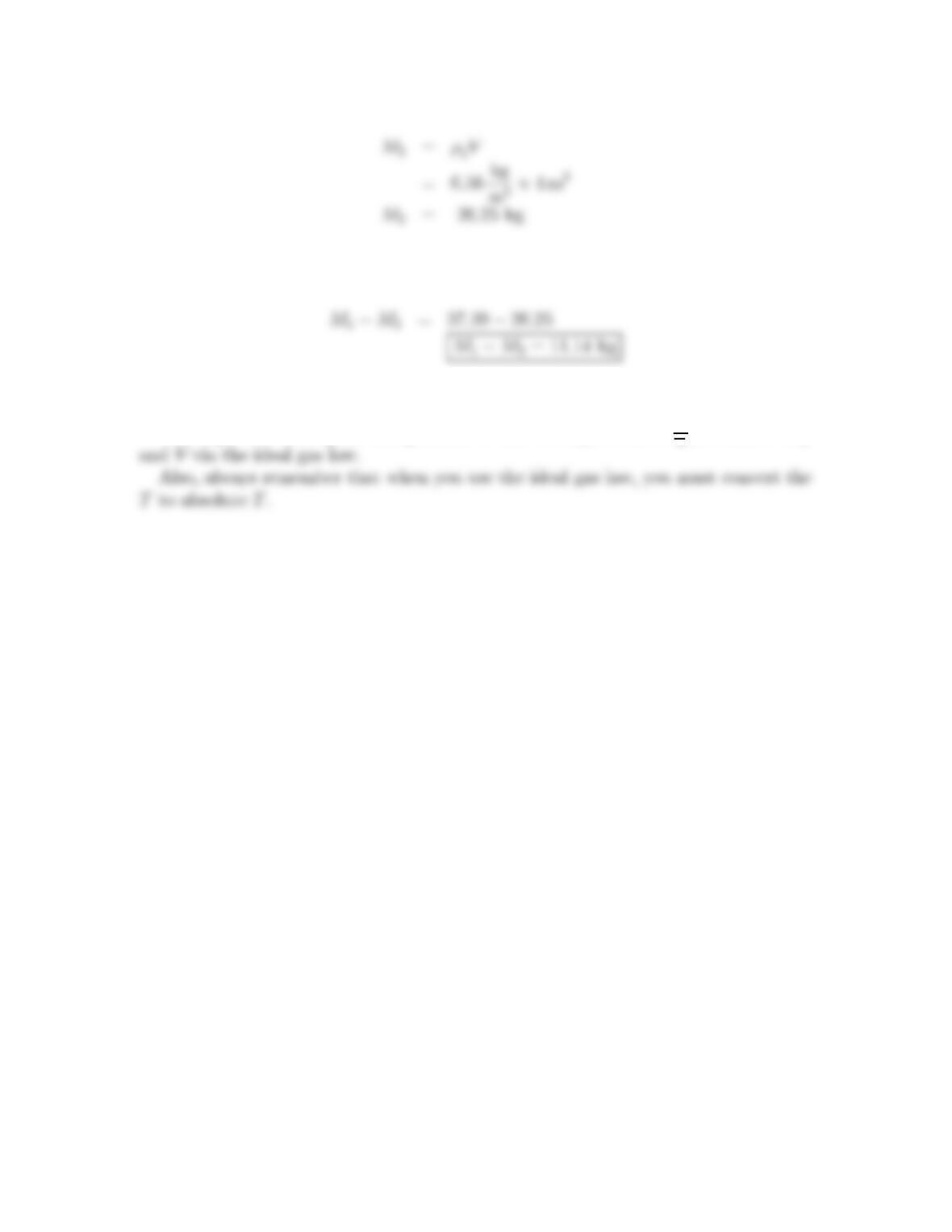
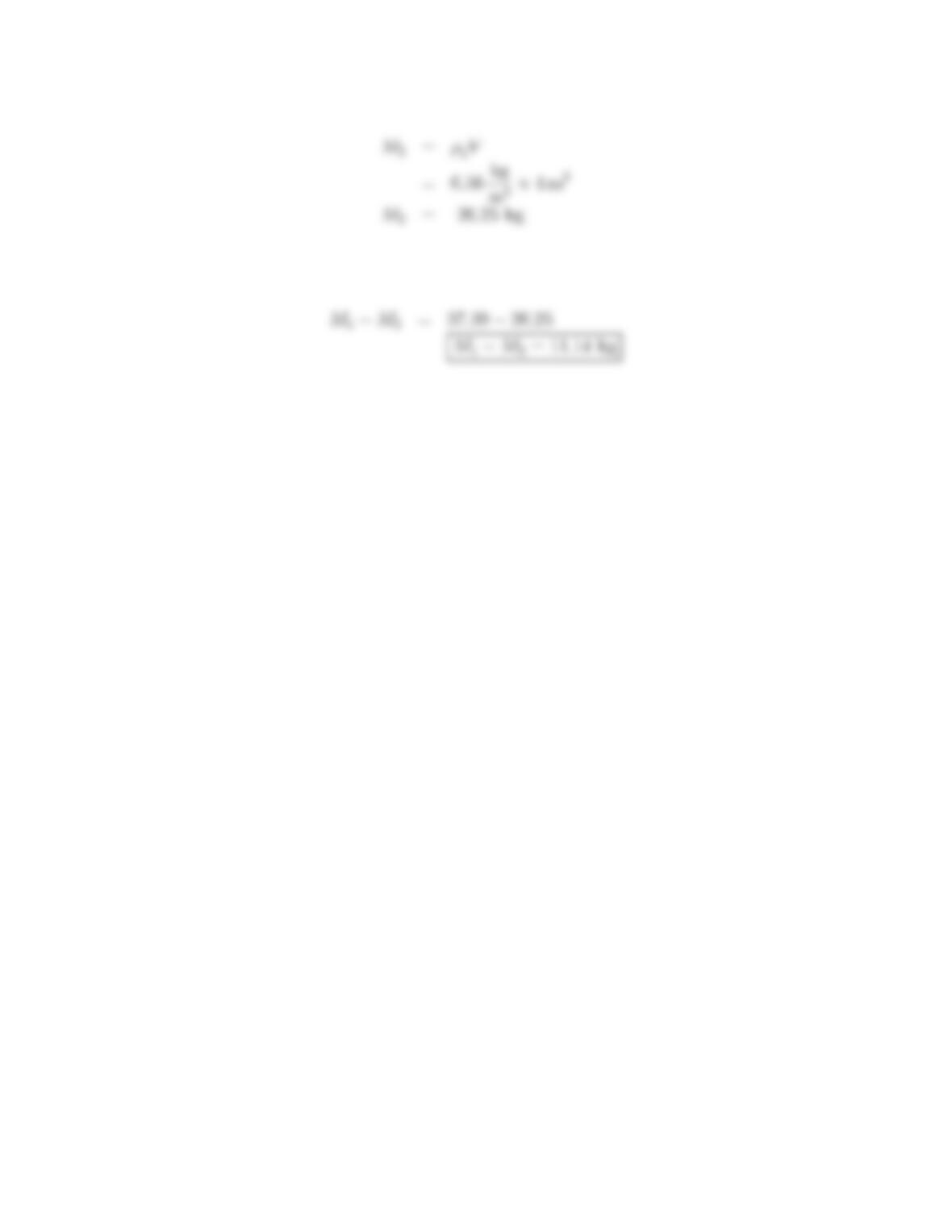
4. Mass released from tank
Review the Solution and the Process
(typical student reflections could include…)
The important concept in this problem is that density, which is M
49
1.46: PROBLEM DEFINITION
Situation:
The hydrostatic equation is p
γ+z=C
pis pressure, γis specificweight,zis elevation and Cis a constant.
Find:
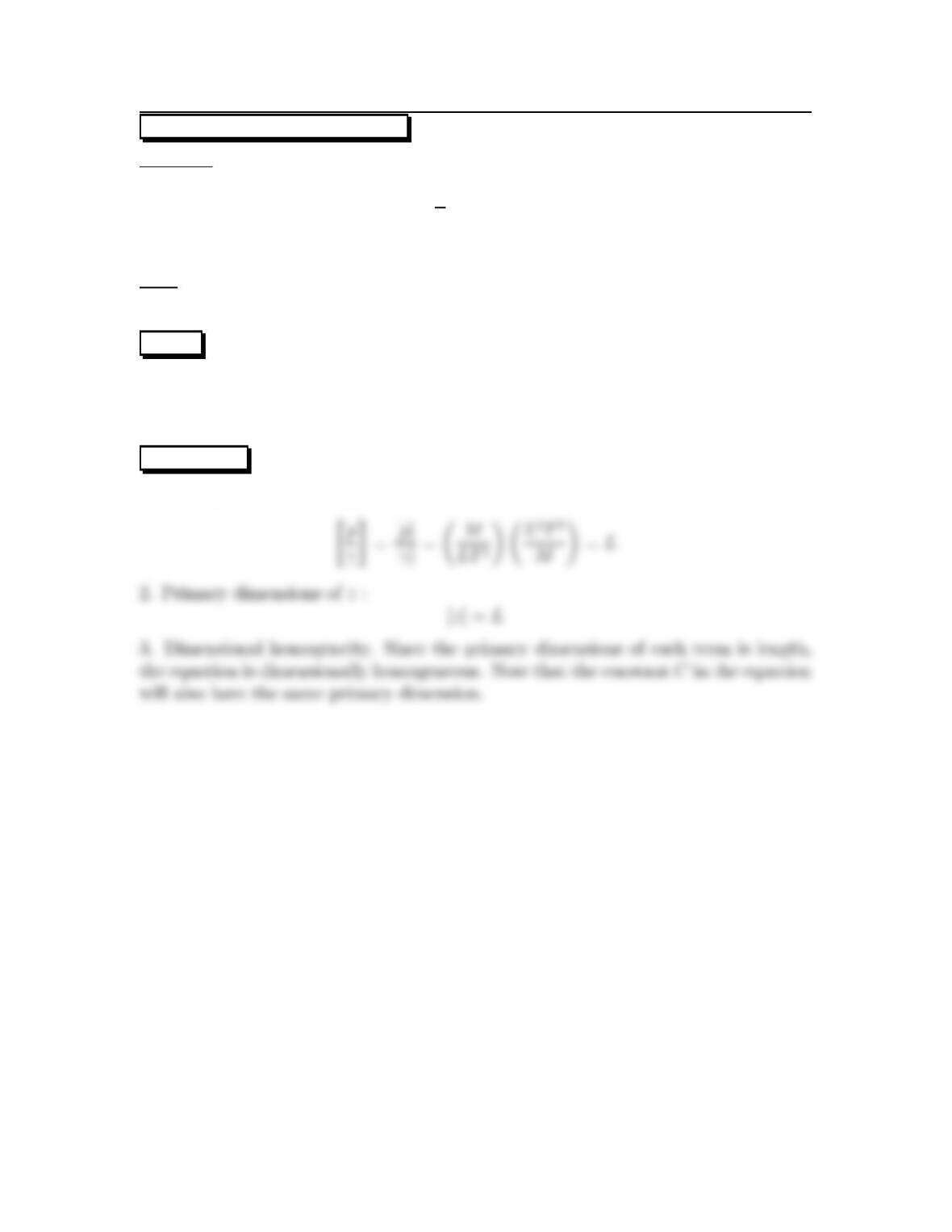
Prove that the hydrostatic equation is dimensionally homogeneous.
PLAN
Show that each term has the same primary dimensions. Thus, show that the primary
dimensions of p/γ equal the primary dimensions of z. Find primary dimensions using
Table F.1.
SOLUTION
1. Primary dimensions of p/γ:
50
1.47: PROBLEM DEFINITION
Situation:
Four terms are given in the problem statement.
Find: Primary dimensions of each term.
a) ρV 2/σ (kinetic pressure).
b) T(torque).
c) P(power).
d) ρV 2L/σ (Weber number).
SOLUTION
a. Kinetic pressure:
51
1.48: PROBLEM DEFINITION
Situation:
The power provided by a centrifugal pump is given by:
P=˙mgh
PLAN
1. Look up primary dimensions of Pand ˙musing Table F.1.
2. Show that the primary dimensions of Pare the same as the primary dimensions
of ˙mgh.
SOLUTION
1. Primary dimensions:
52
1.49: PROBLEM DEFINITION
Situation:
Two terms are specified.
a. ZρV 2dA.
b. d
dt ZV
ρV dV .
Find:
PLAN
1. To find primary dimensions for term a, use the idea that an integral is defined
using a sum.
2. To find primary dimensions for term b, use the idea that a derivative is defined
using a ratio.
SOLUTION
Term a:
53